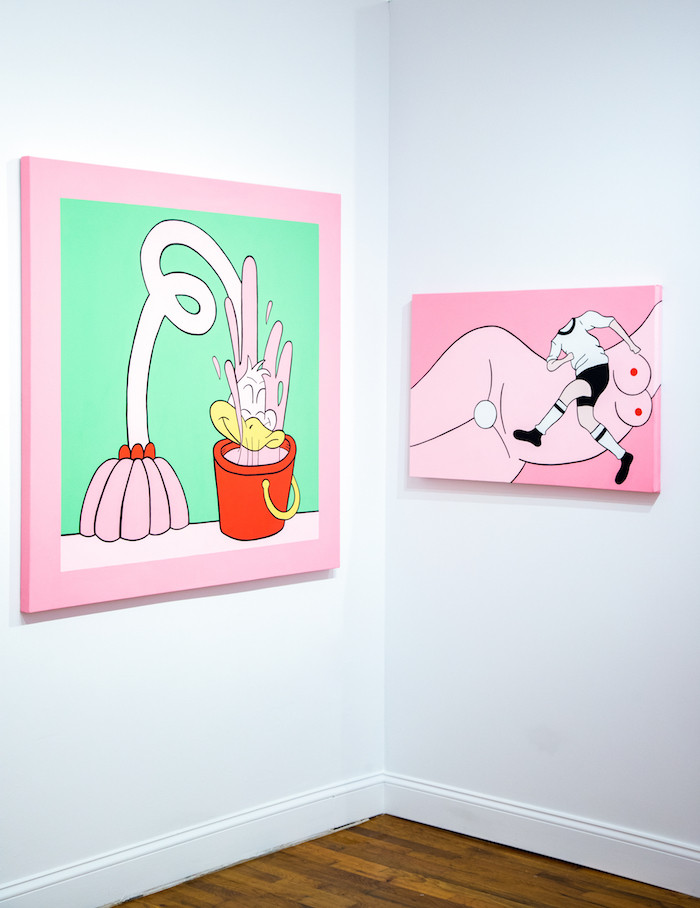
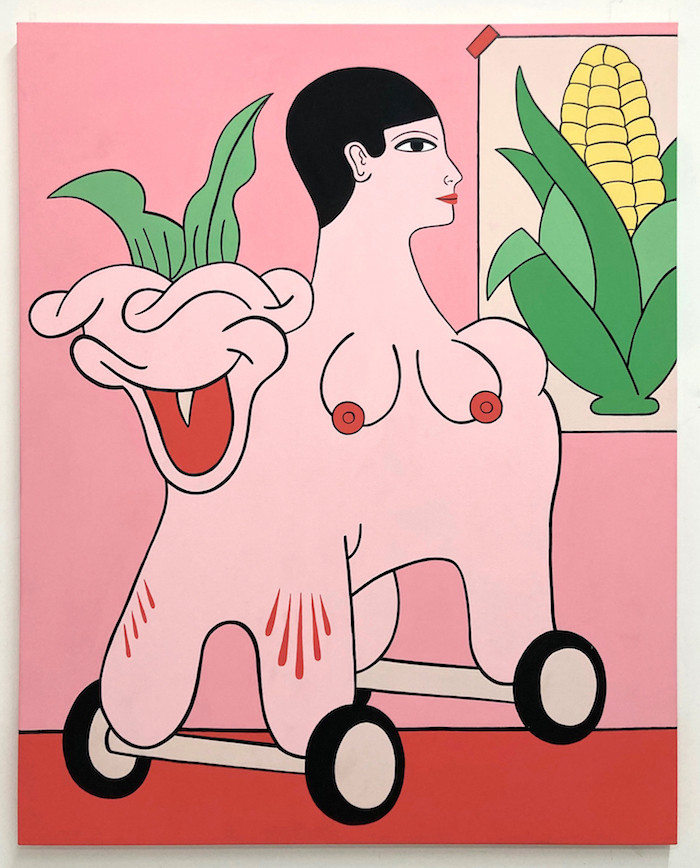
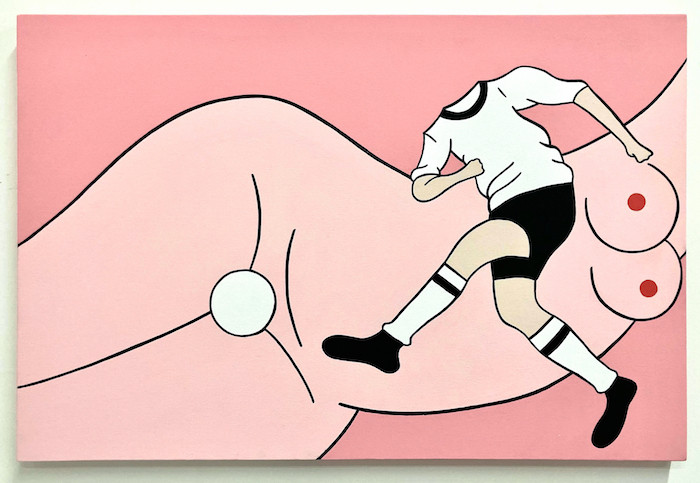
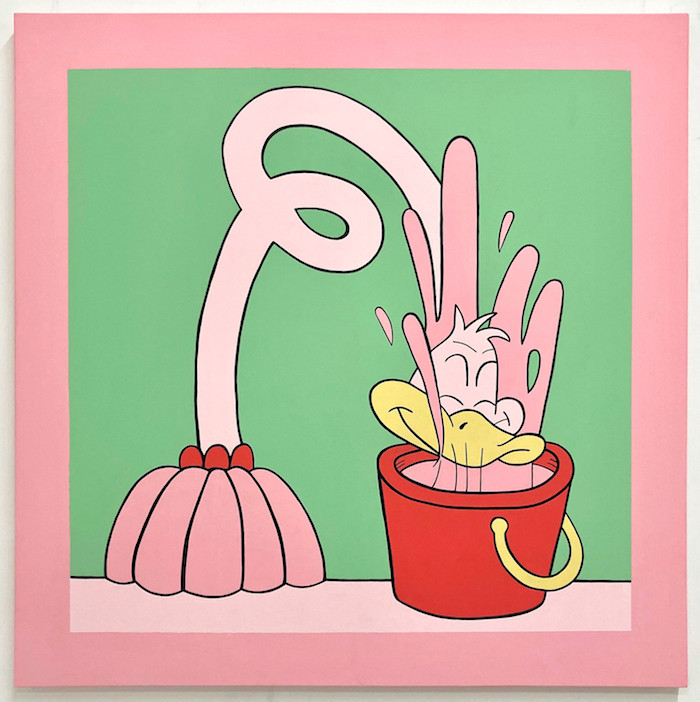
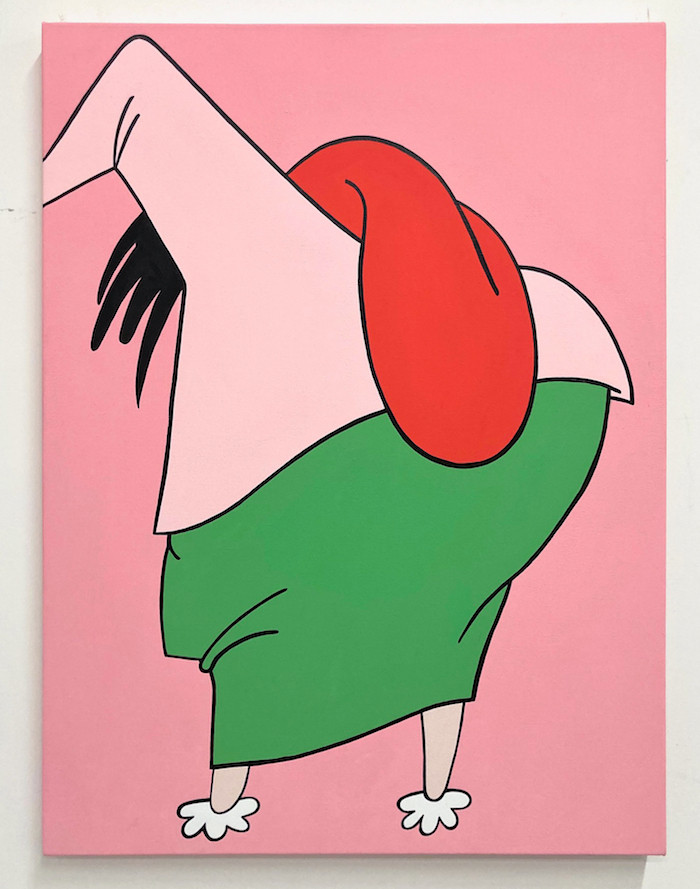
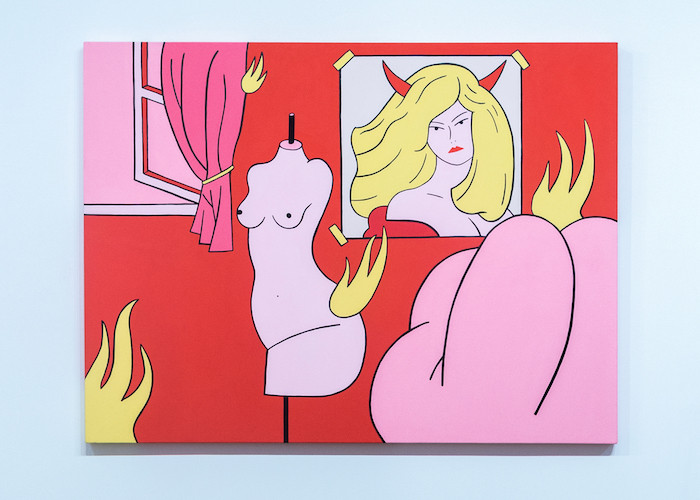
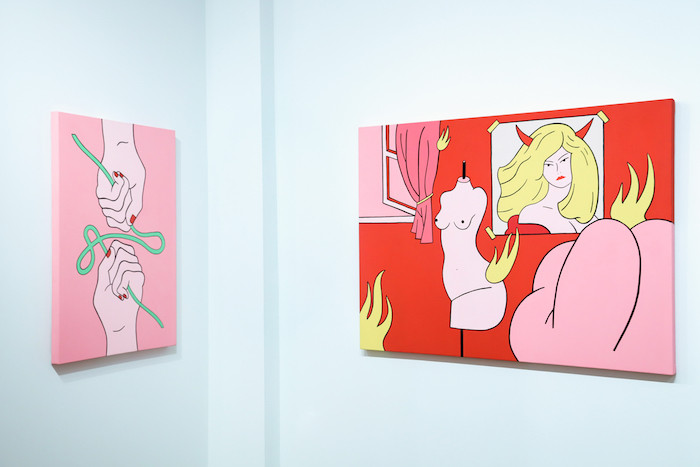
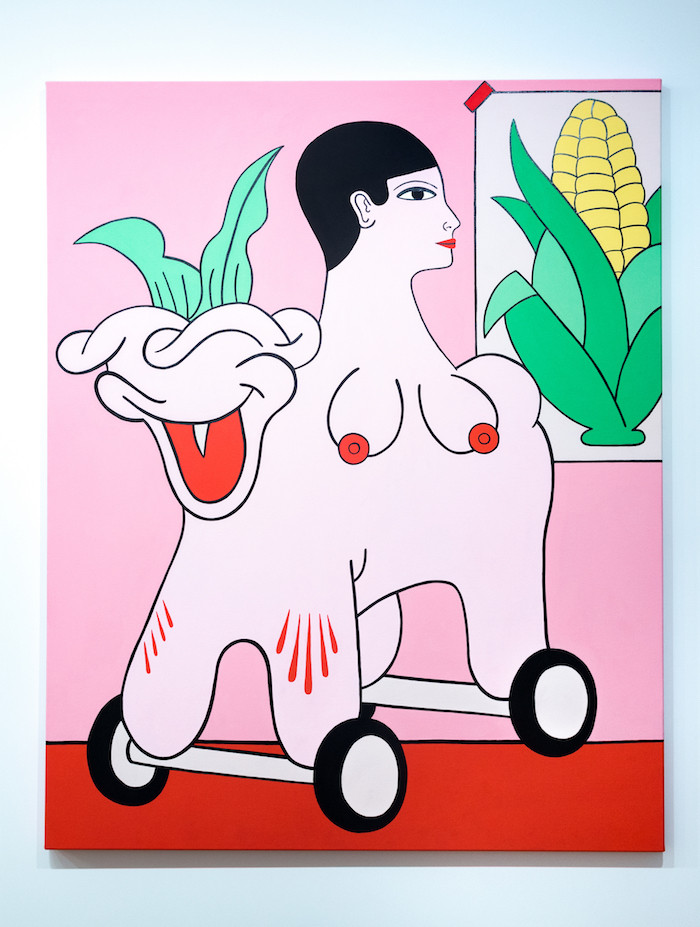
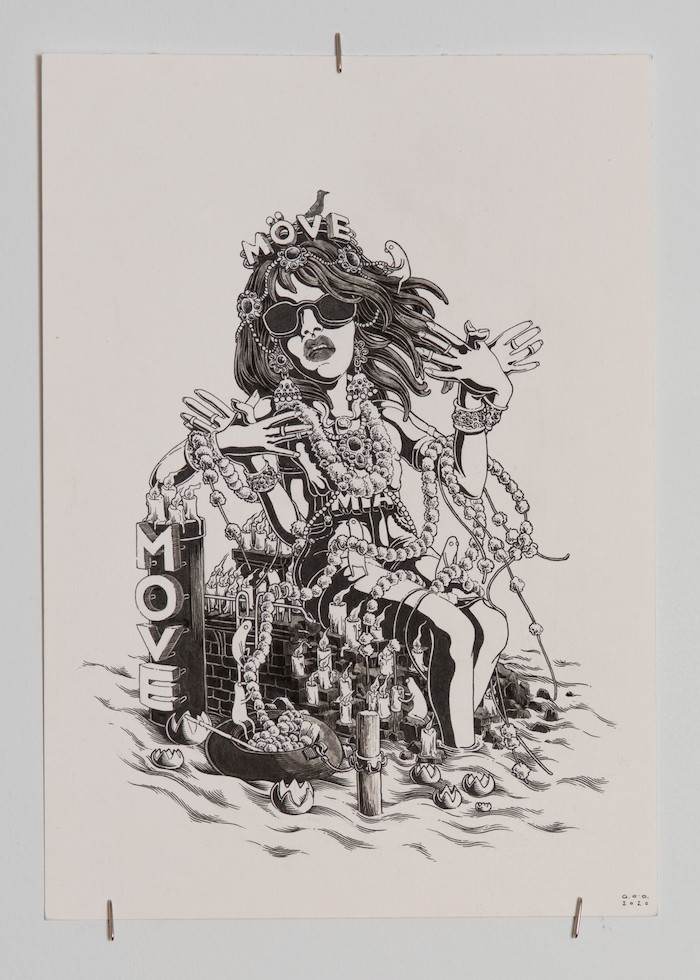
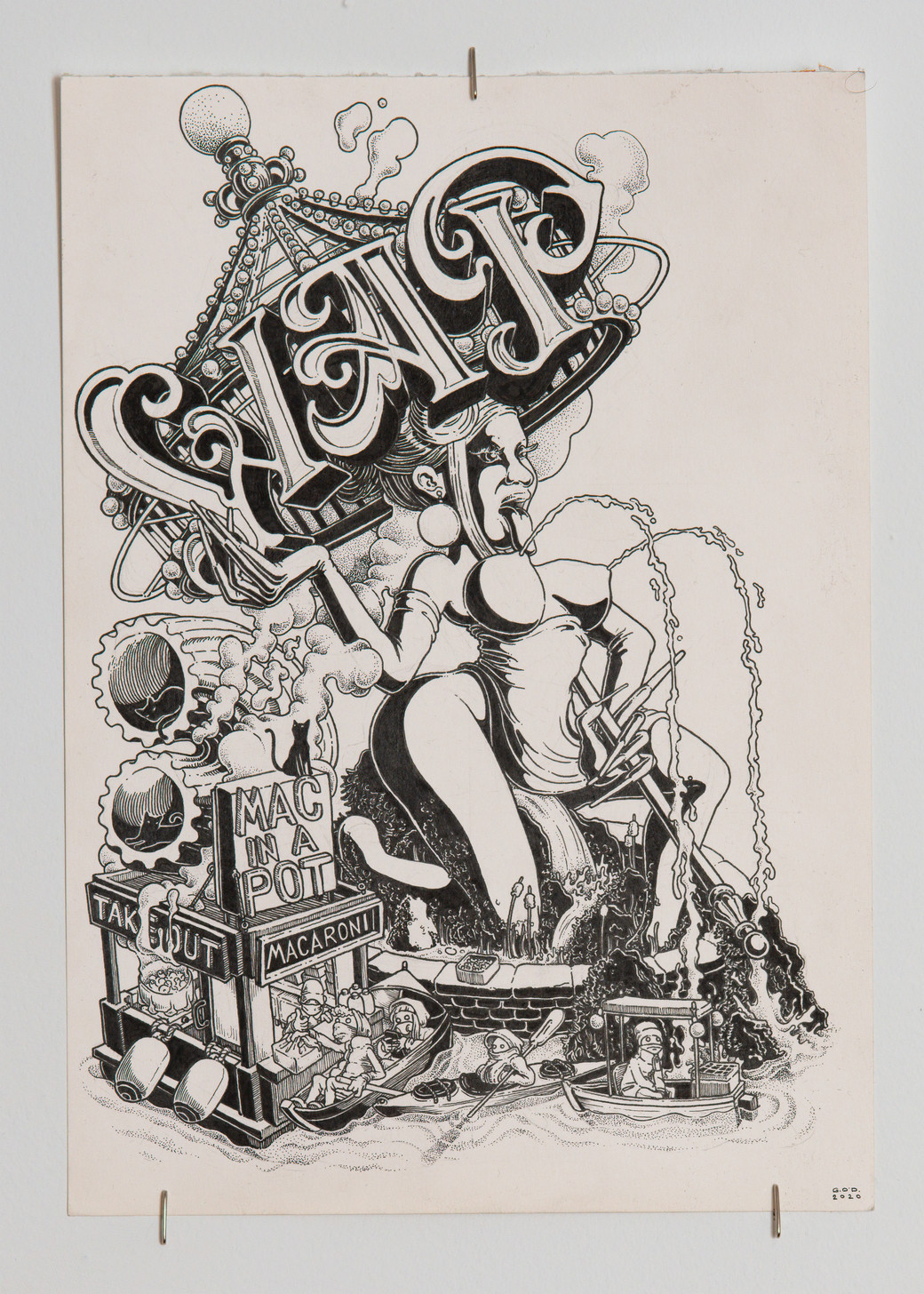
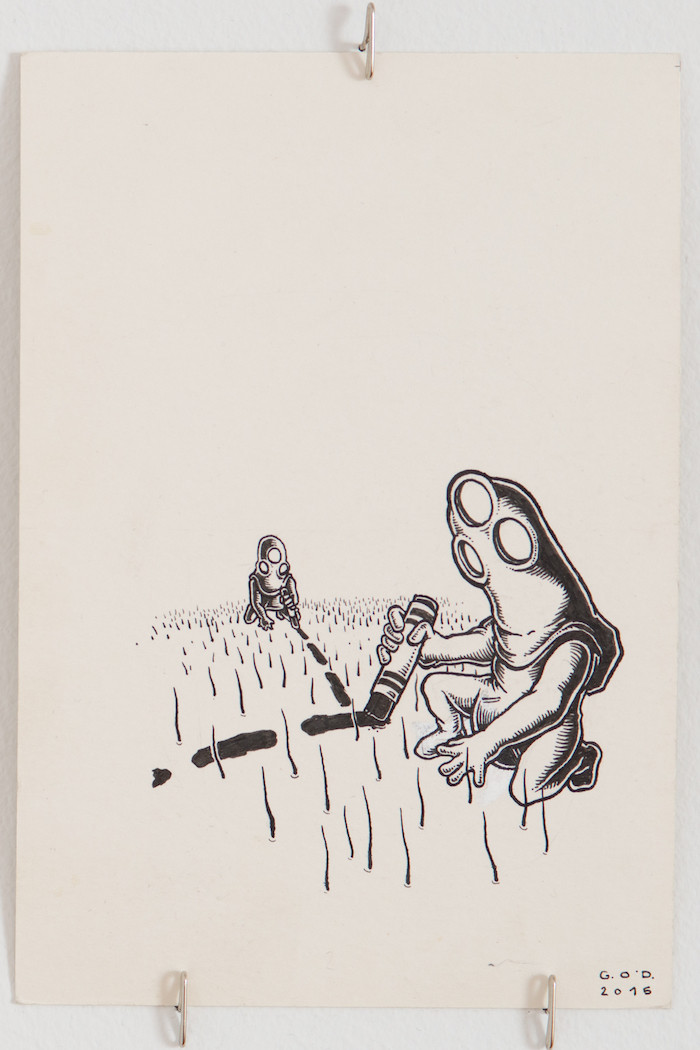
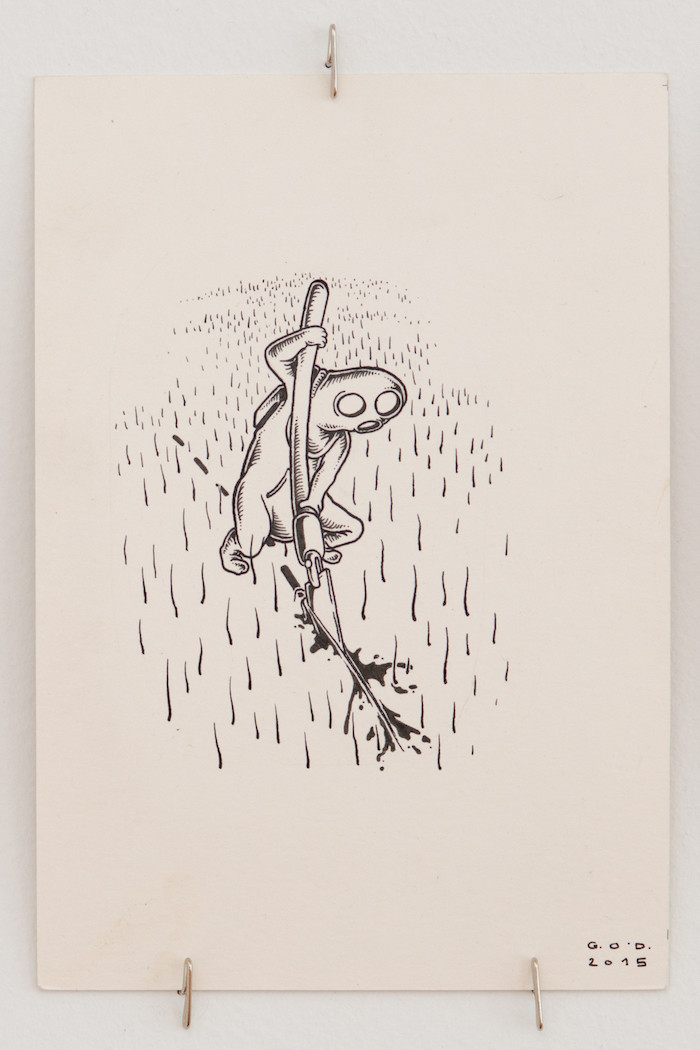
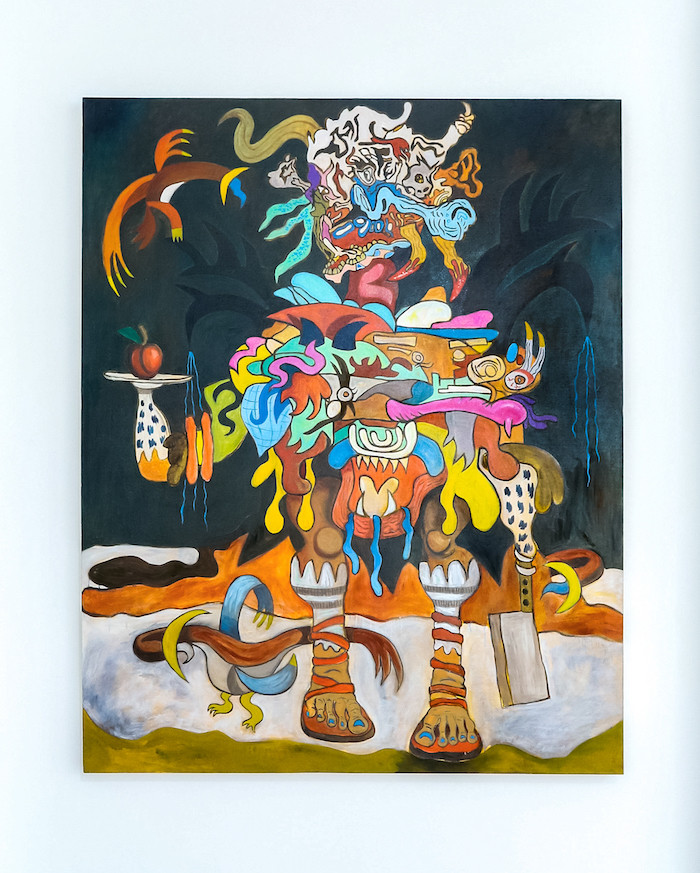
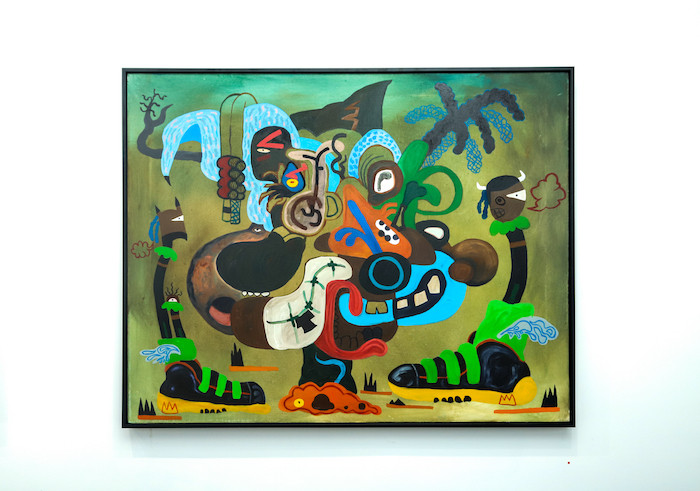
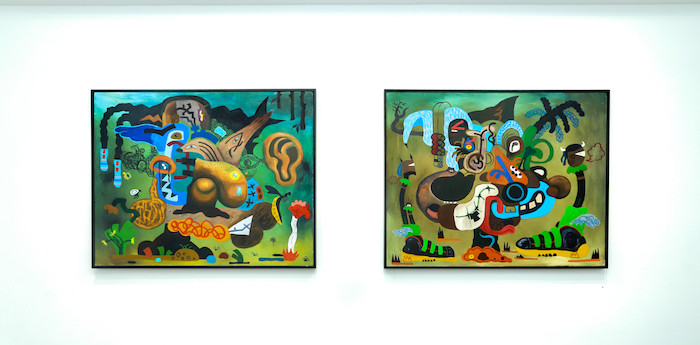
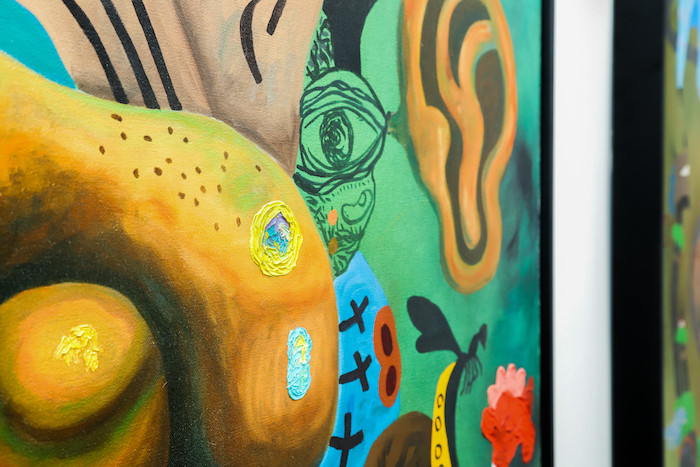
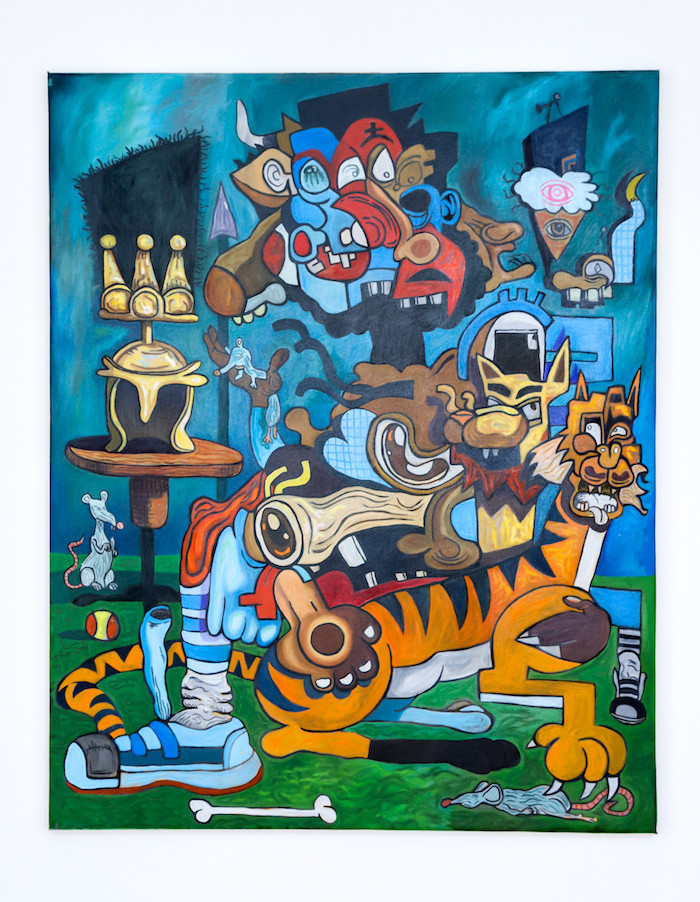
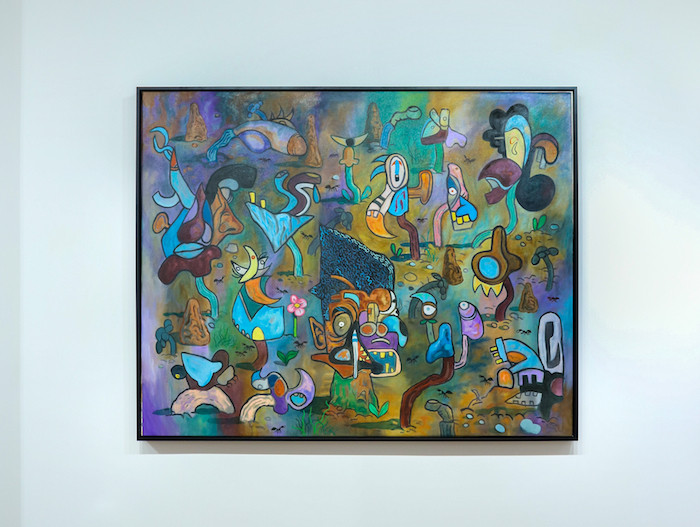
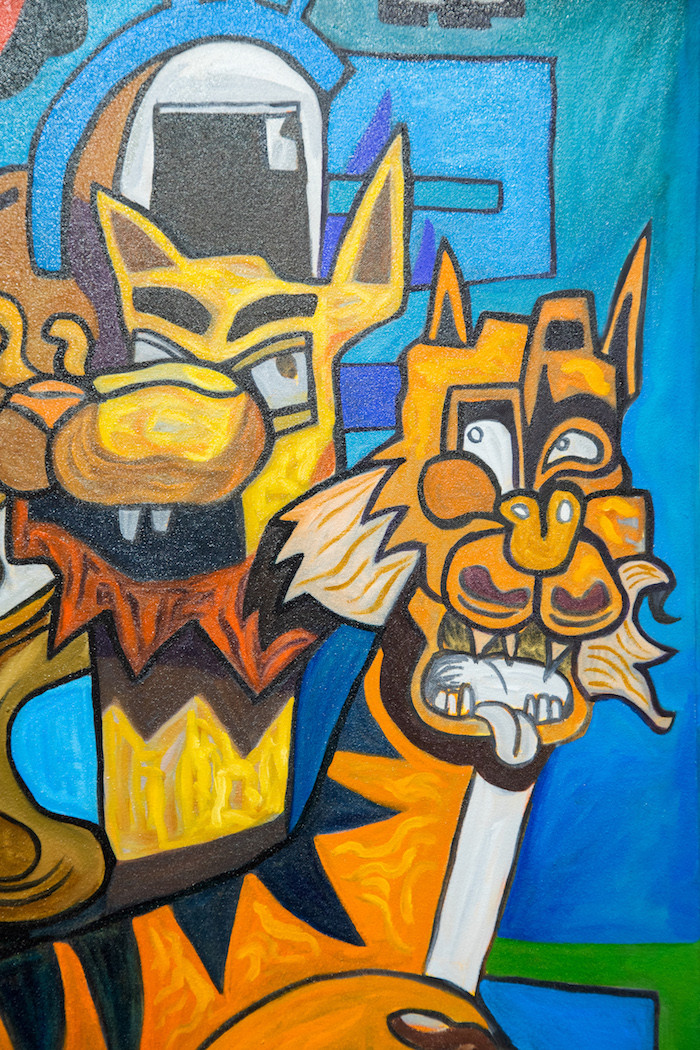
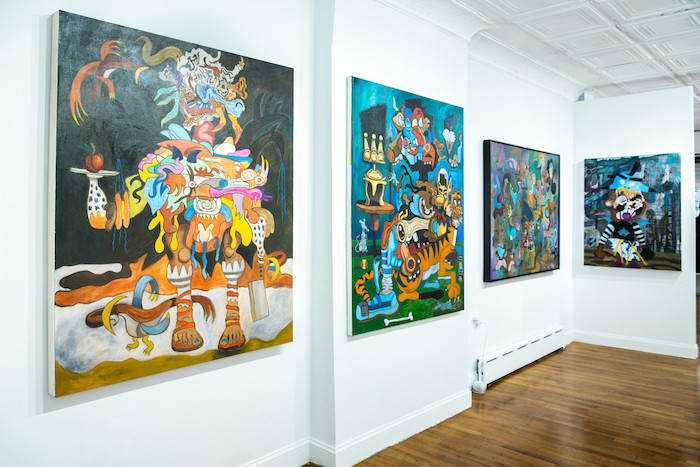
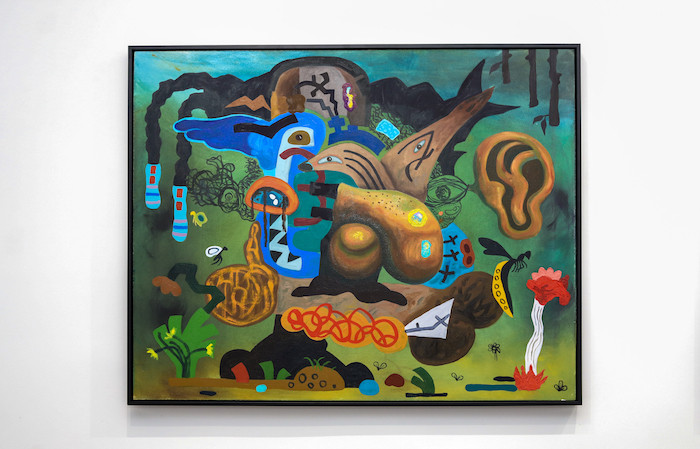
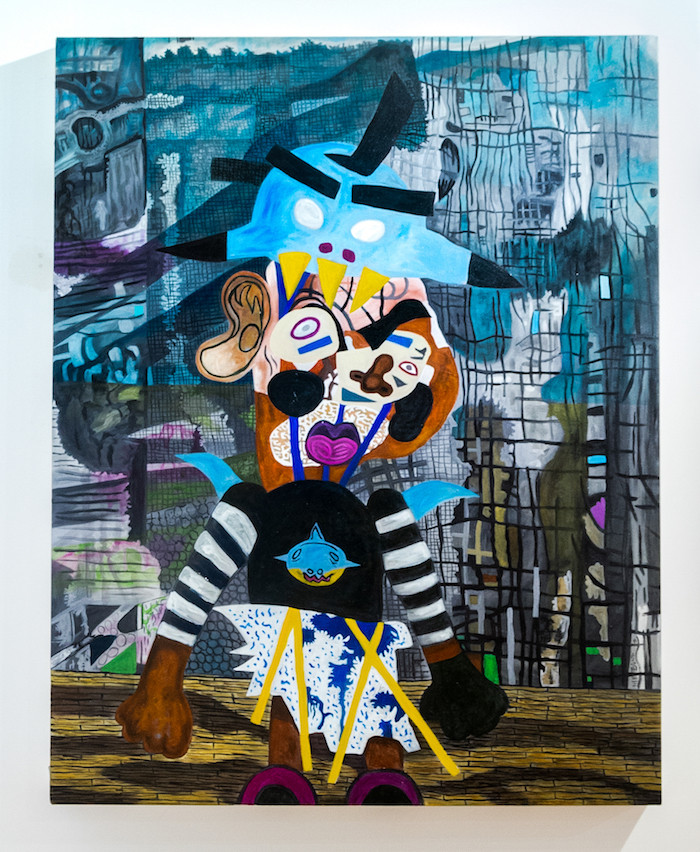
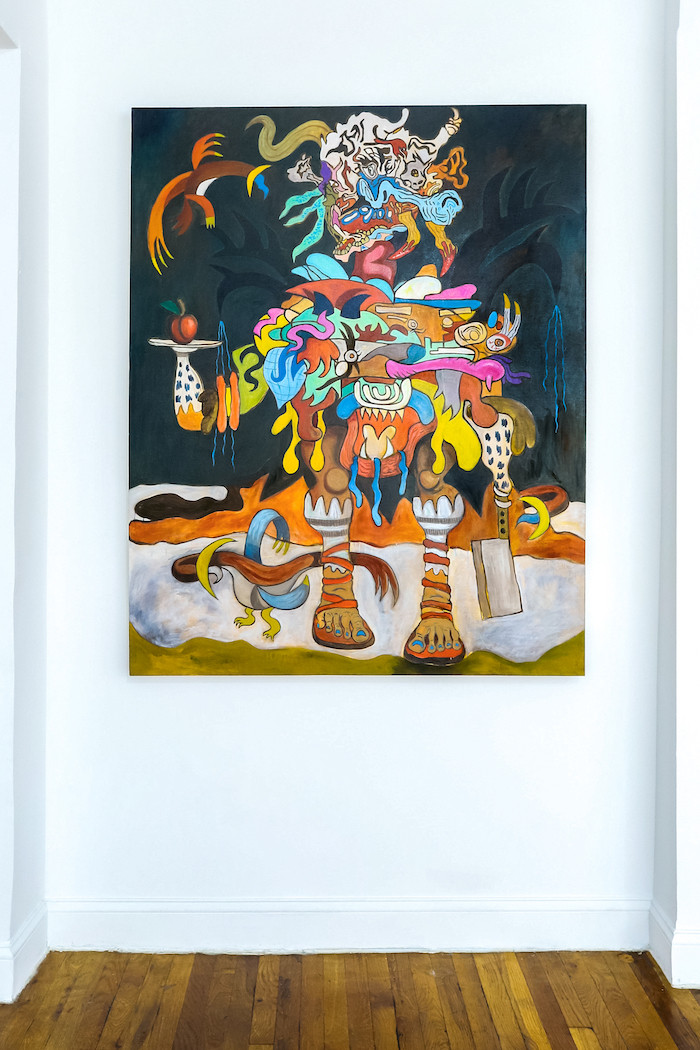
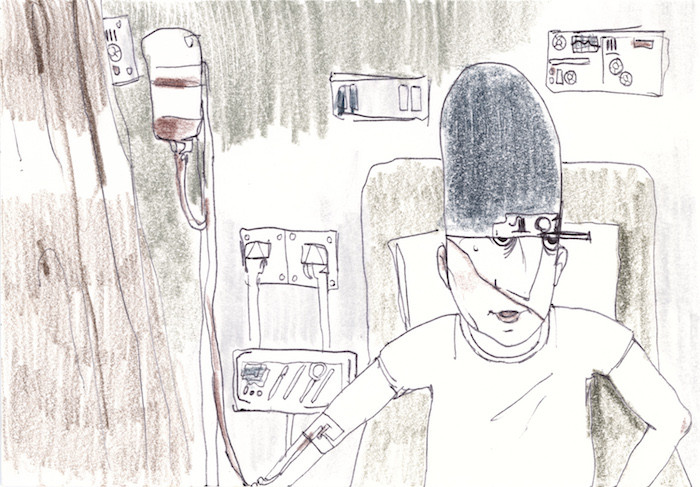
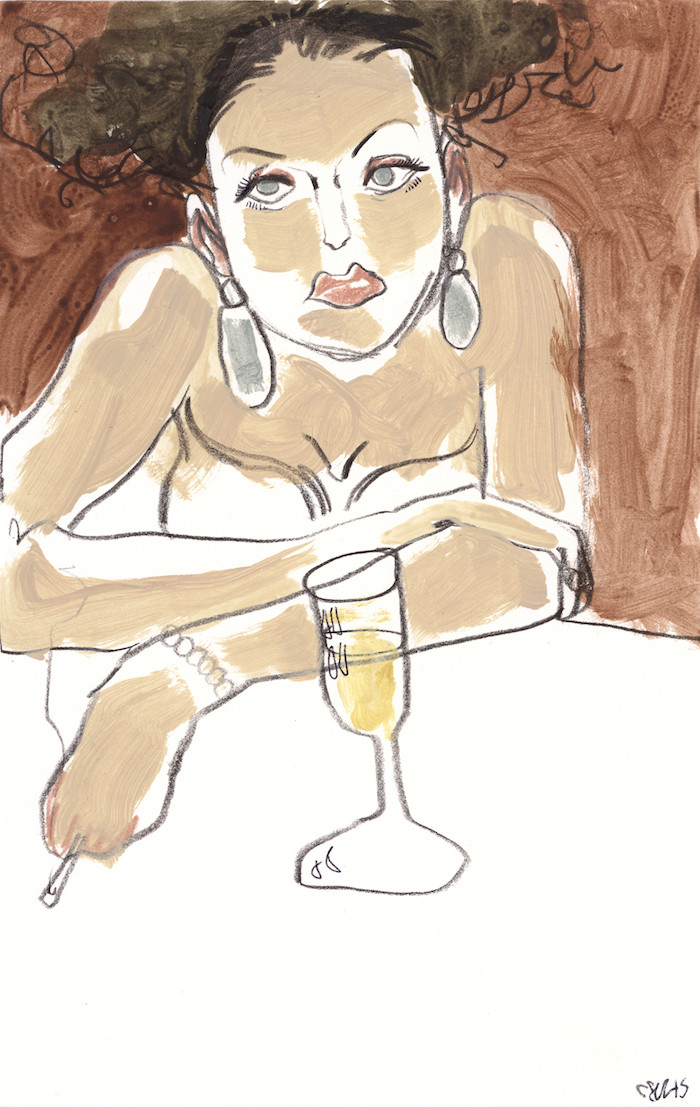
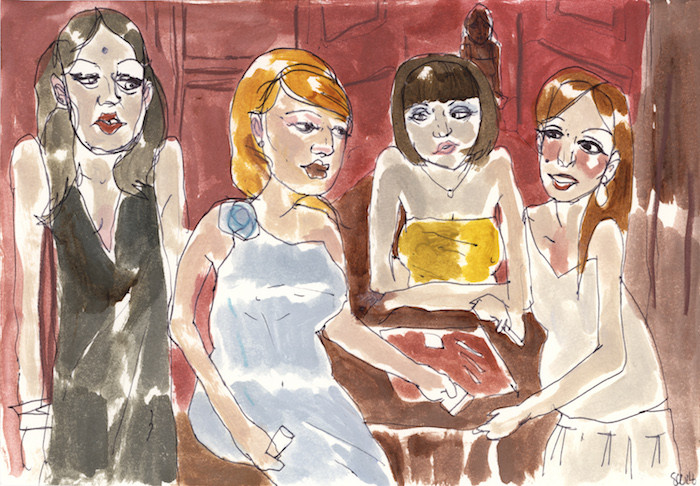
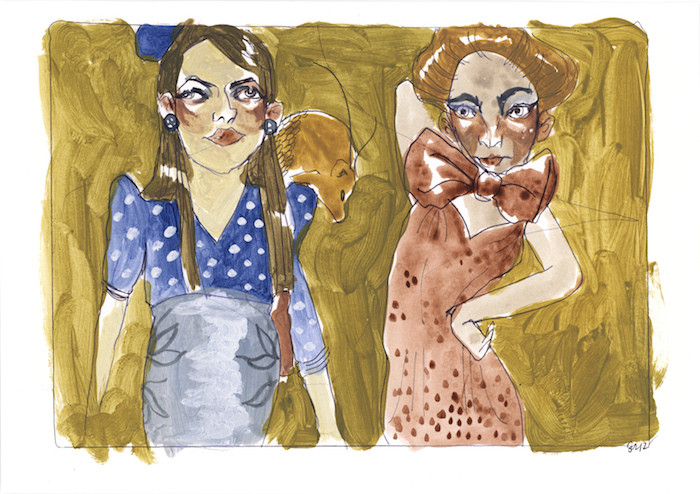
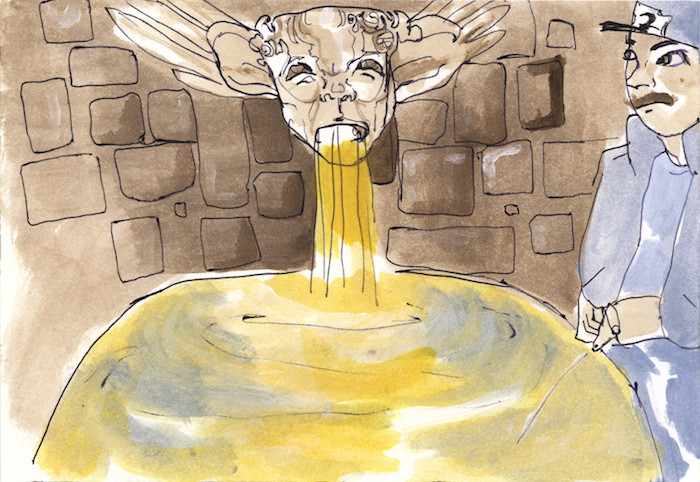
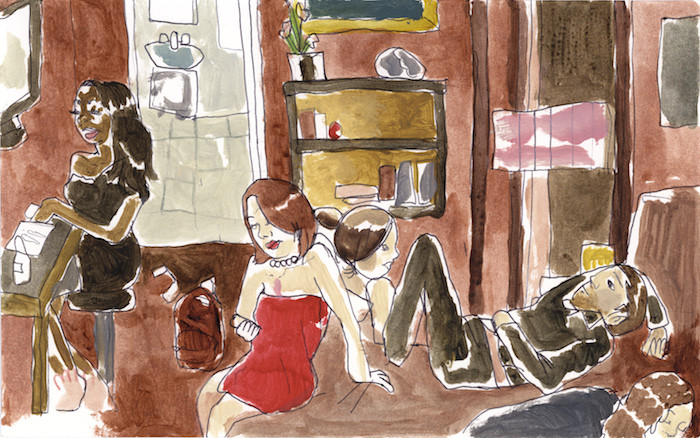
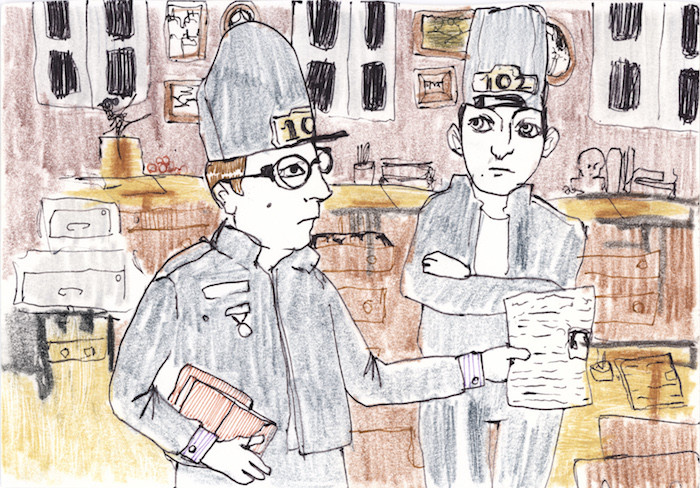
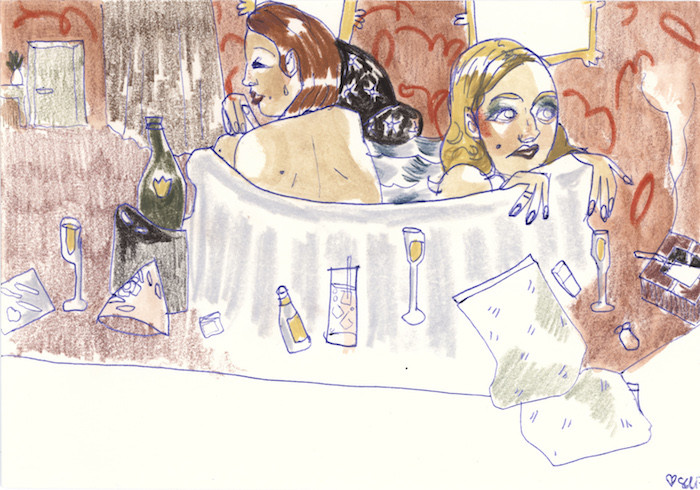
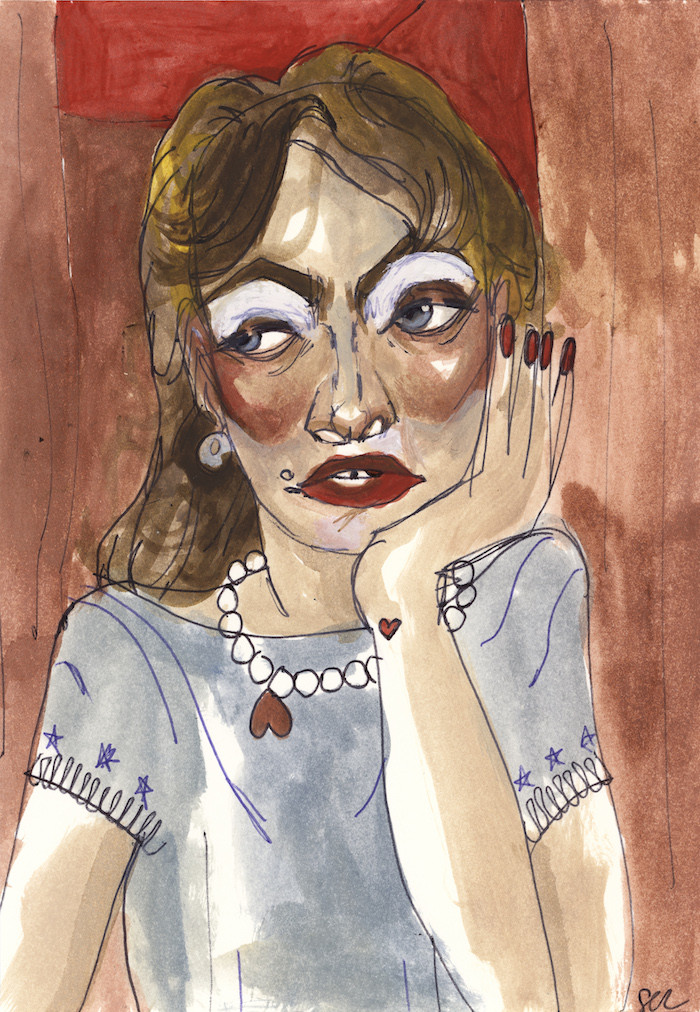
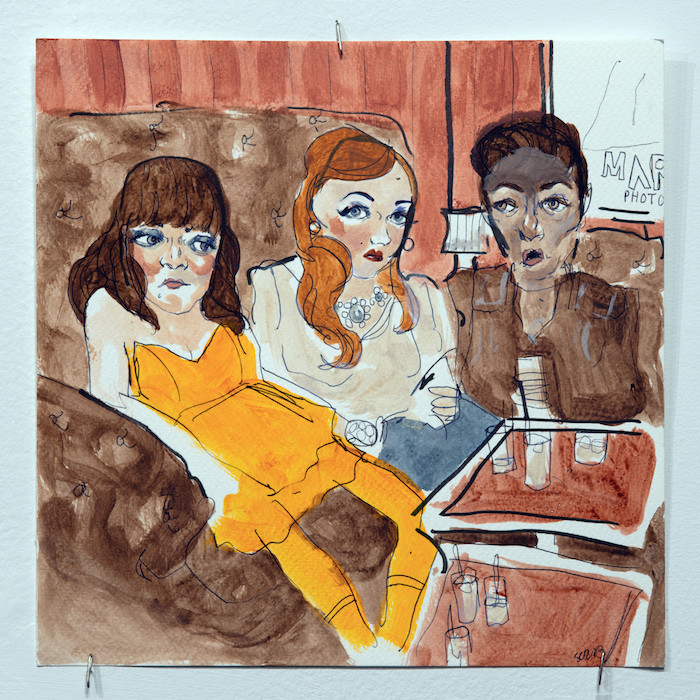
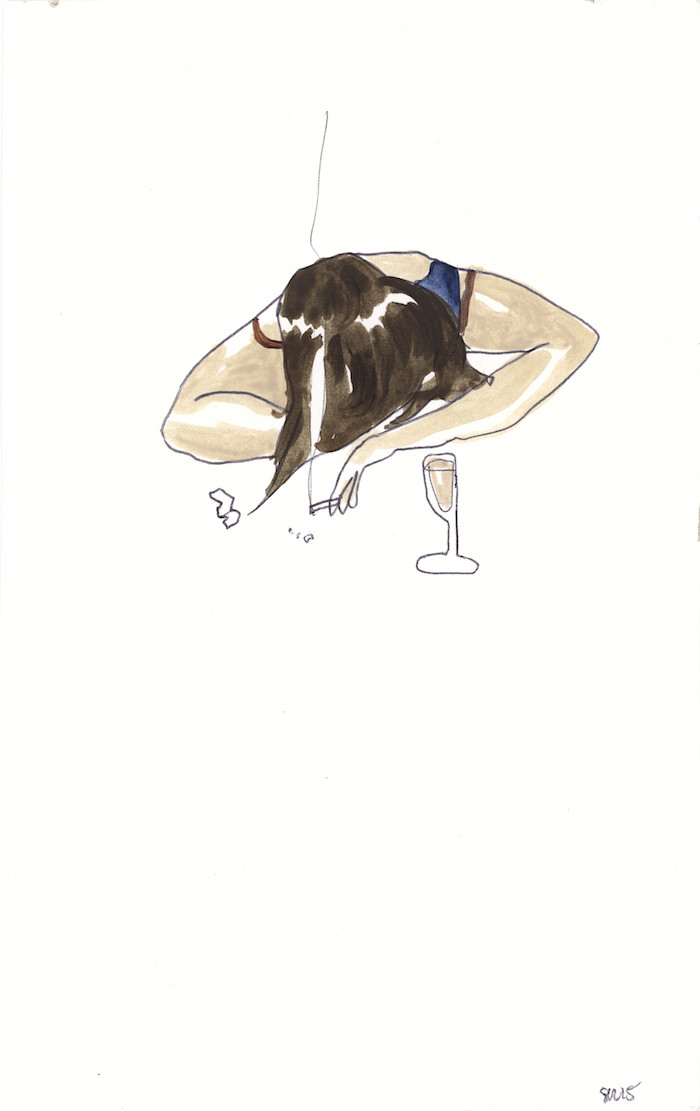
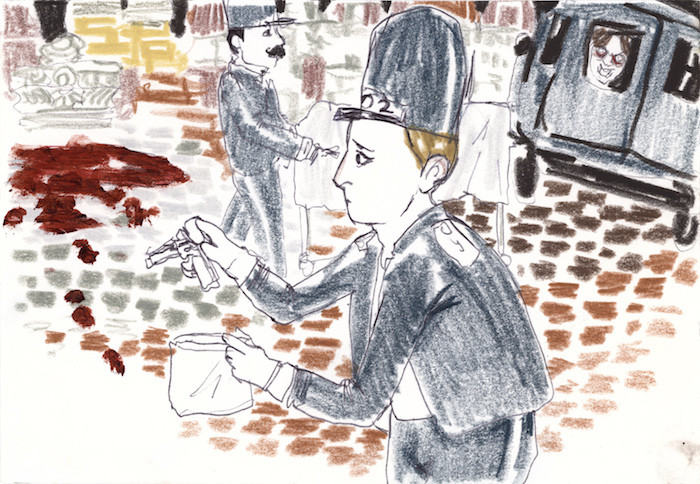
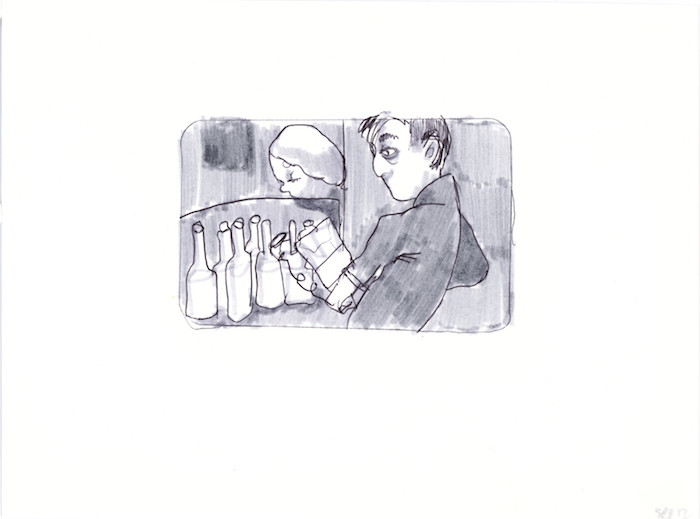
There is much to say about the pieces shown in this effervescently animated and wide-ranging exhibit, but the work truly does speak for itself. Traverse the many created worlds and perceptions through reading office’s exclusive interview with the artists below.
What influences your specific approach to world-building and the scenes you create in your work?
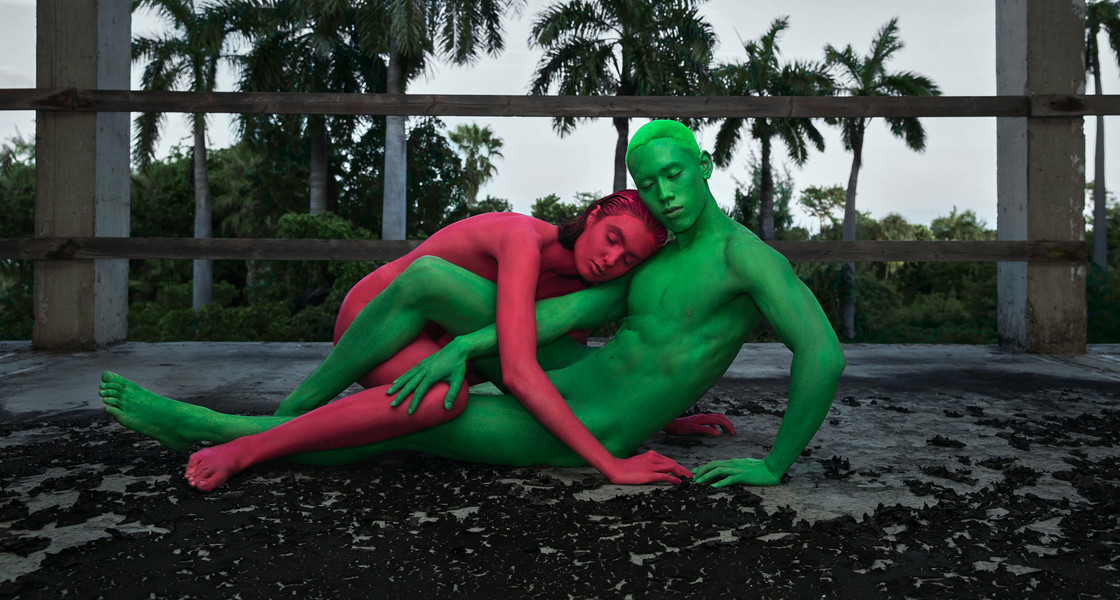
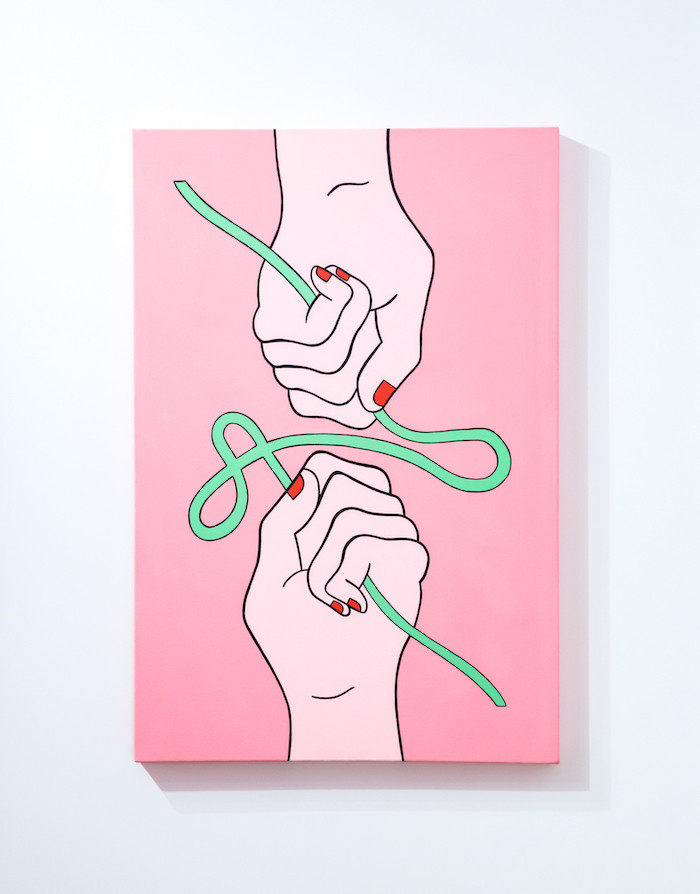
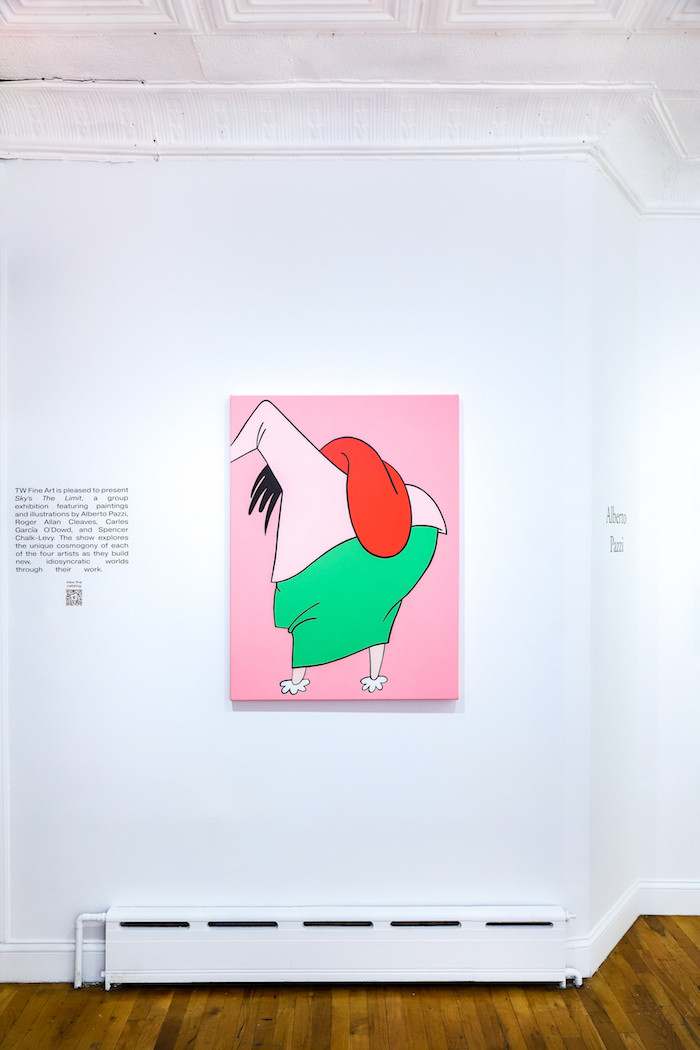
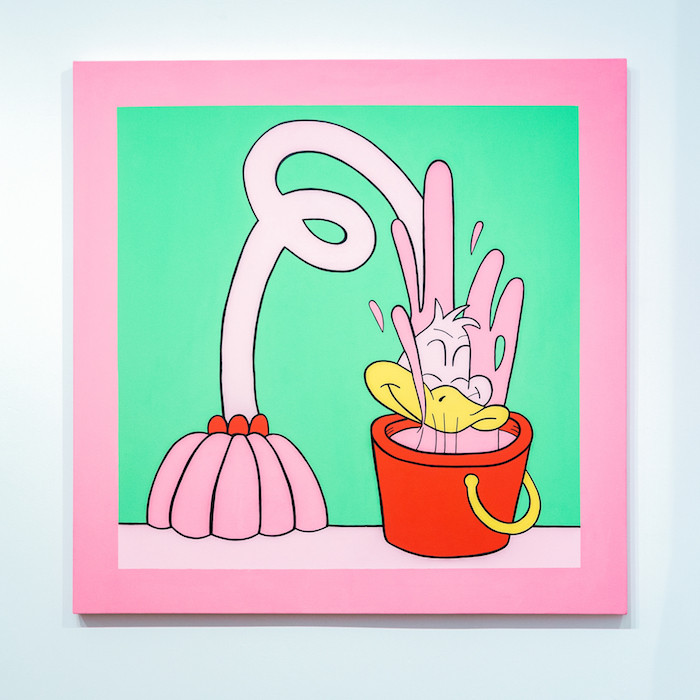
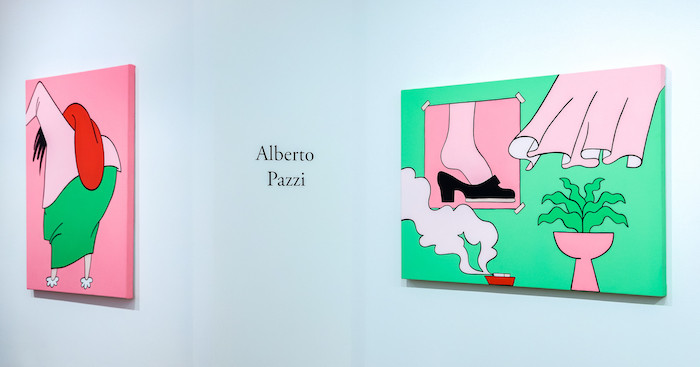
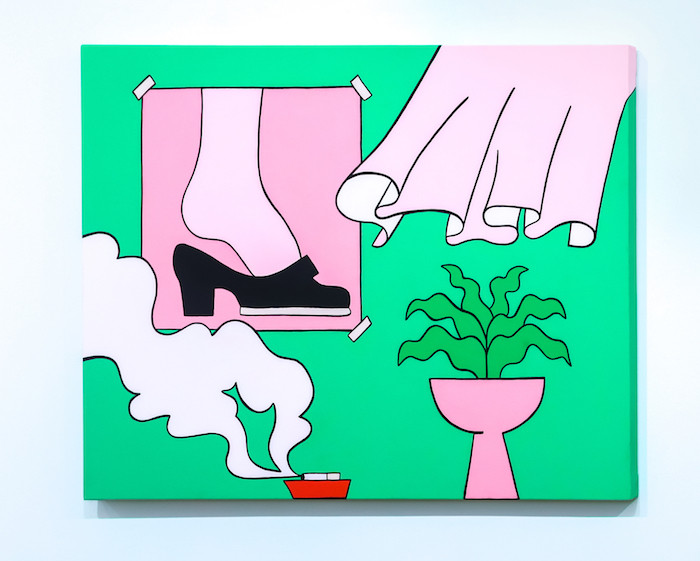
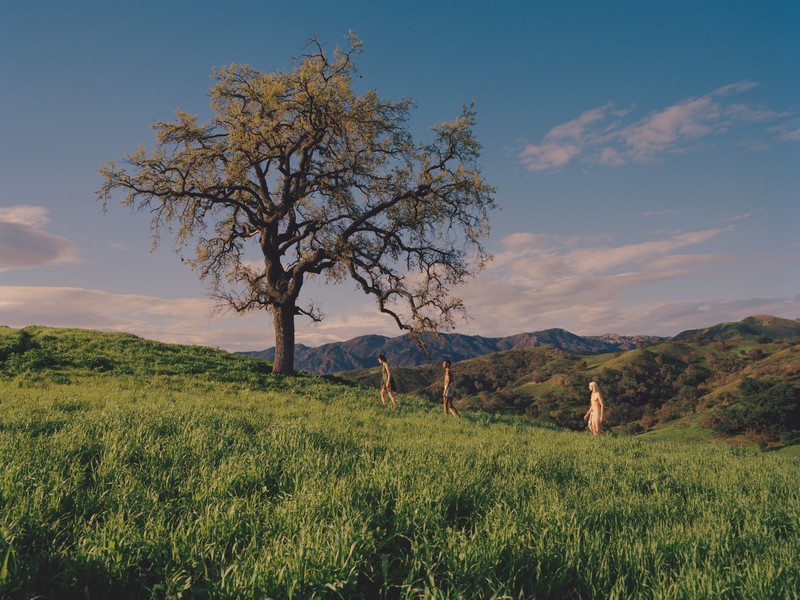
Alberto Pazzi — I’m deeply inspired by depictions of landscapes in vintage cartoons, carefully adorned in shades of pink and green. My objects, too, take on a somewhat exceptional and otherworldly nature. I aim to create worlds that are mysterious, sexy, and fun. In these alternate dimensions, there are creatures who, like us, possess their own unique inner and outer worlds. Within them — and us — are the emotions universal to the human experience.
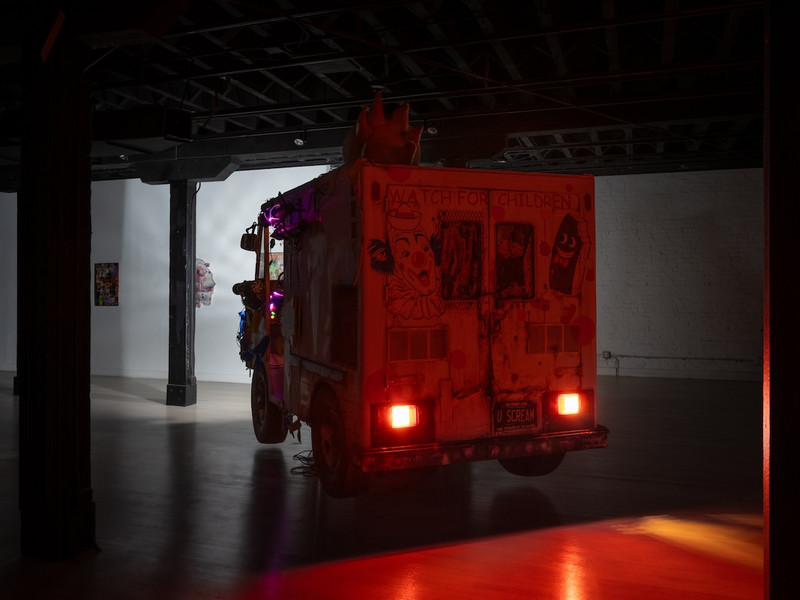
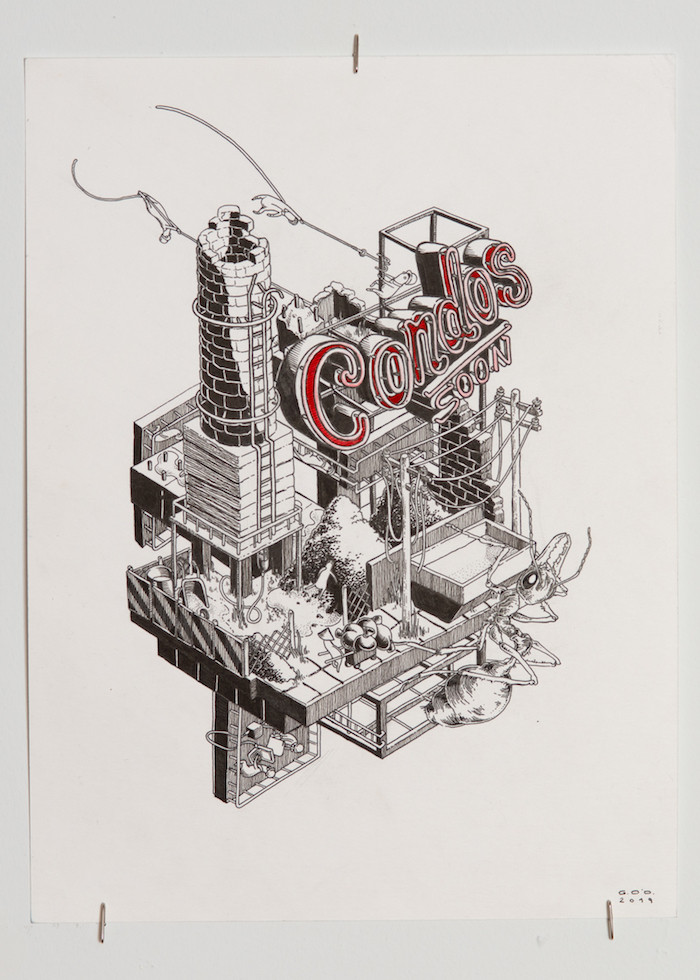
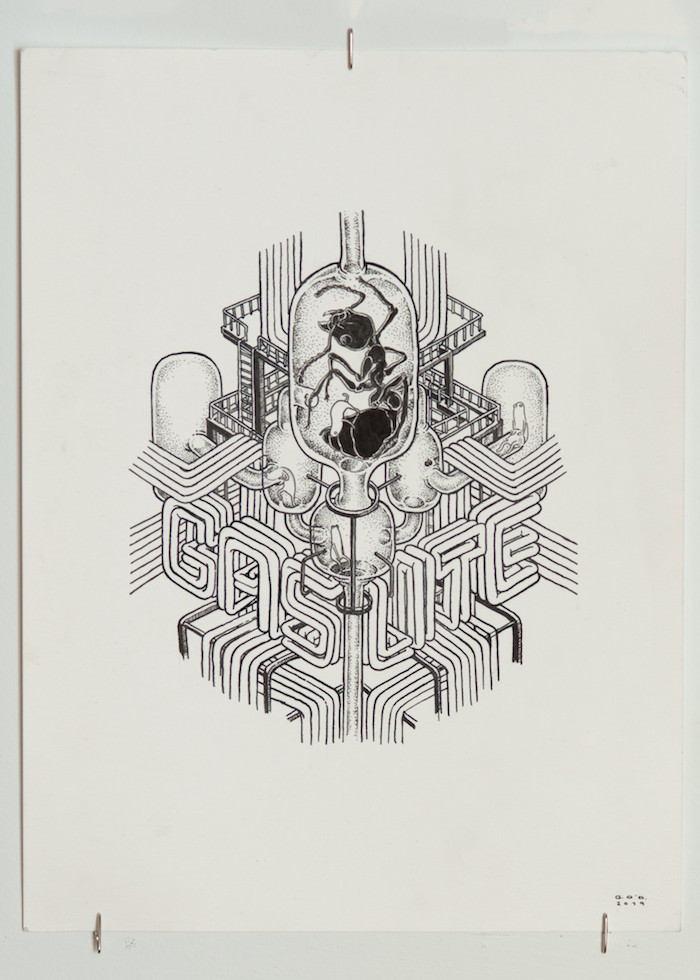
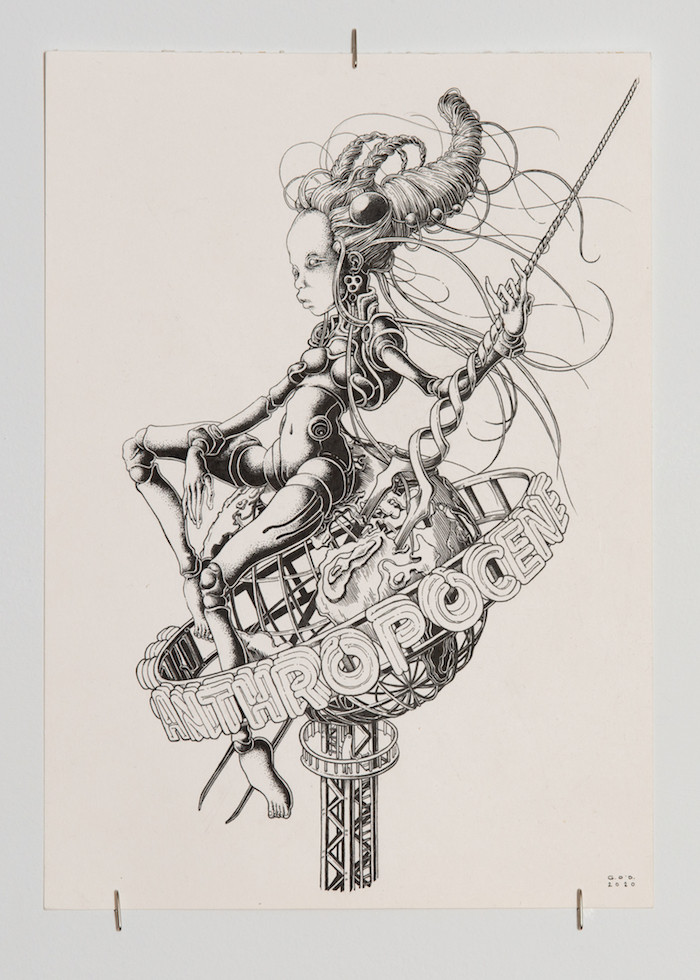
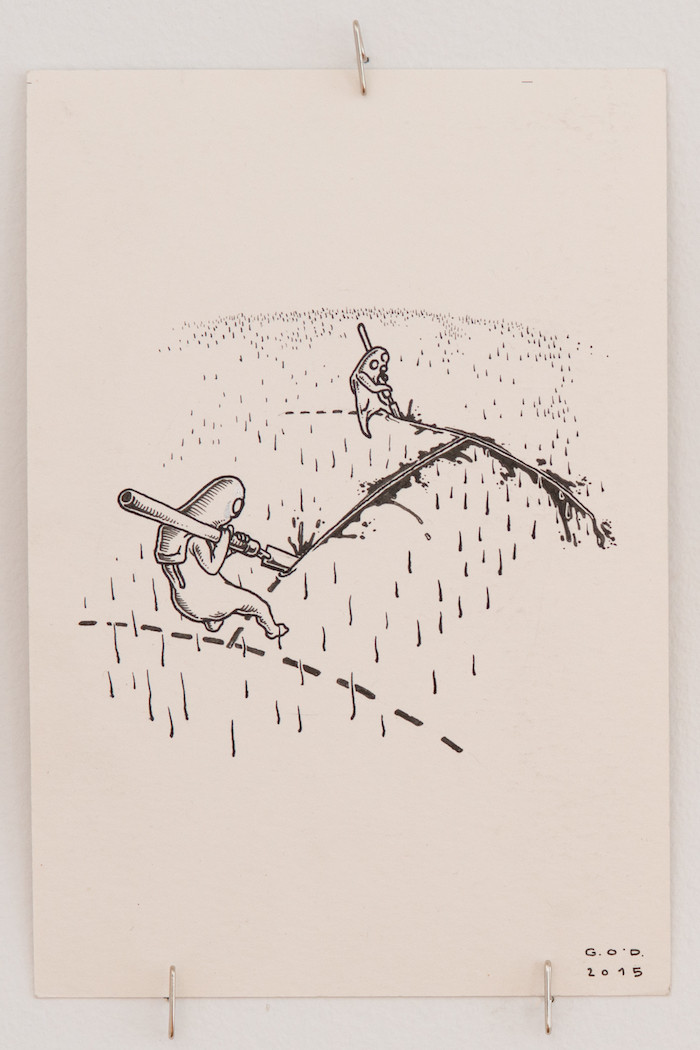
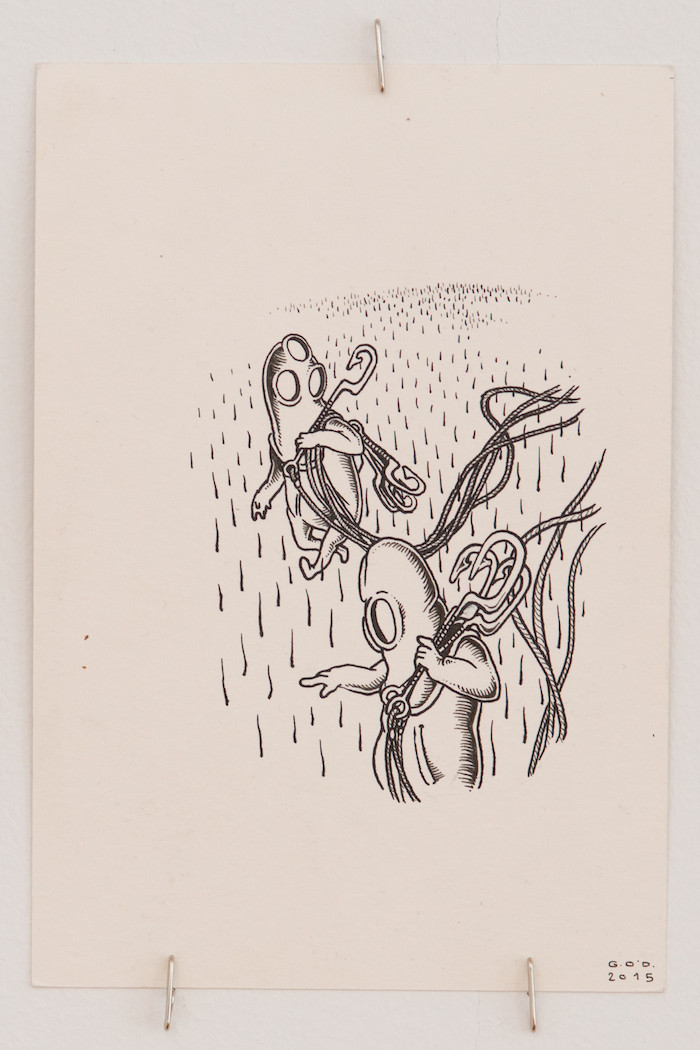
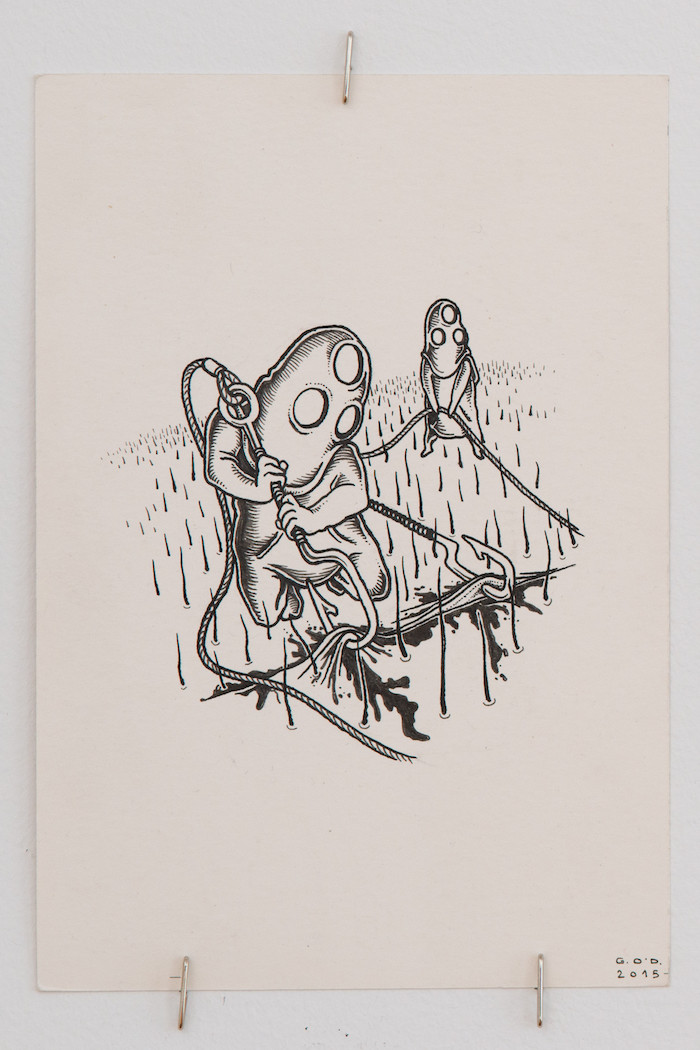
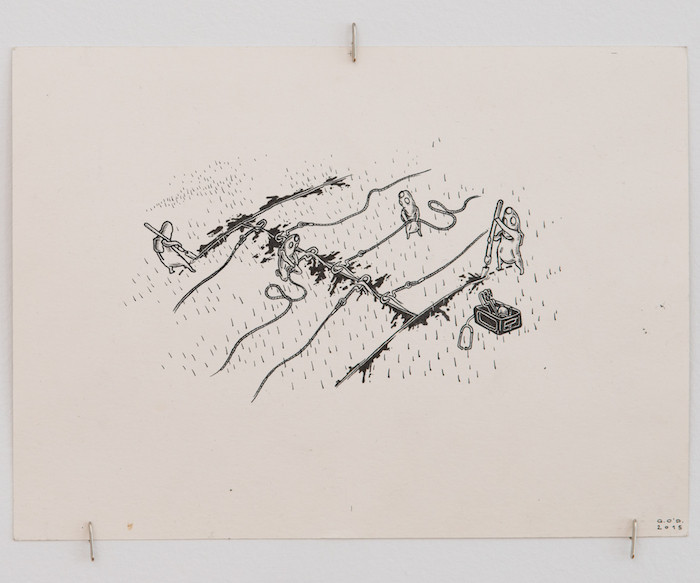
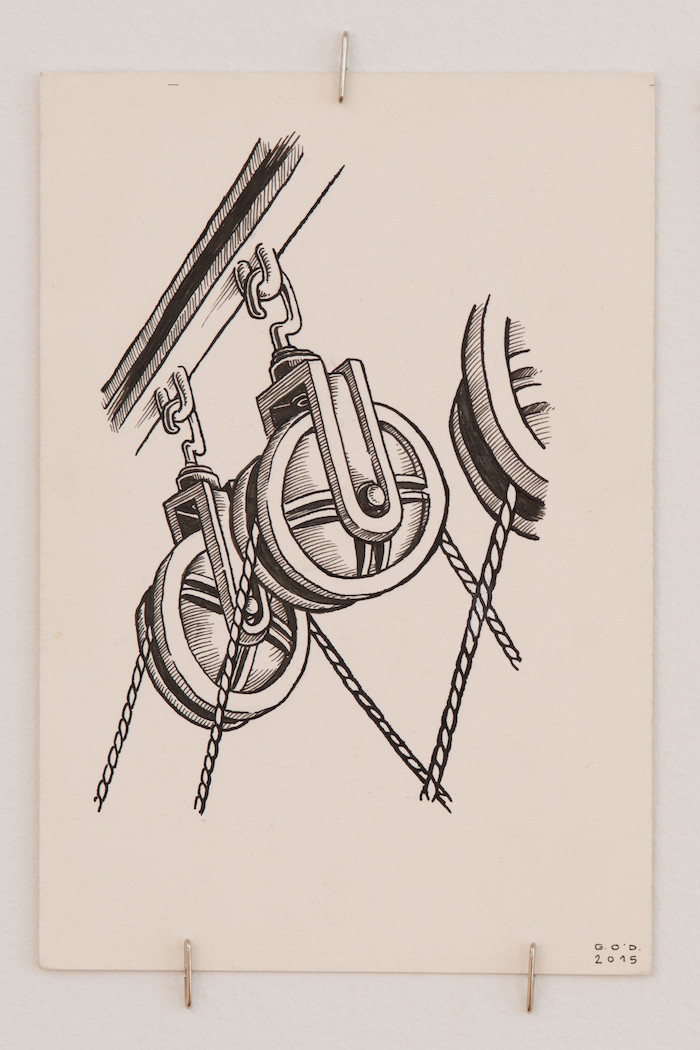
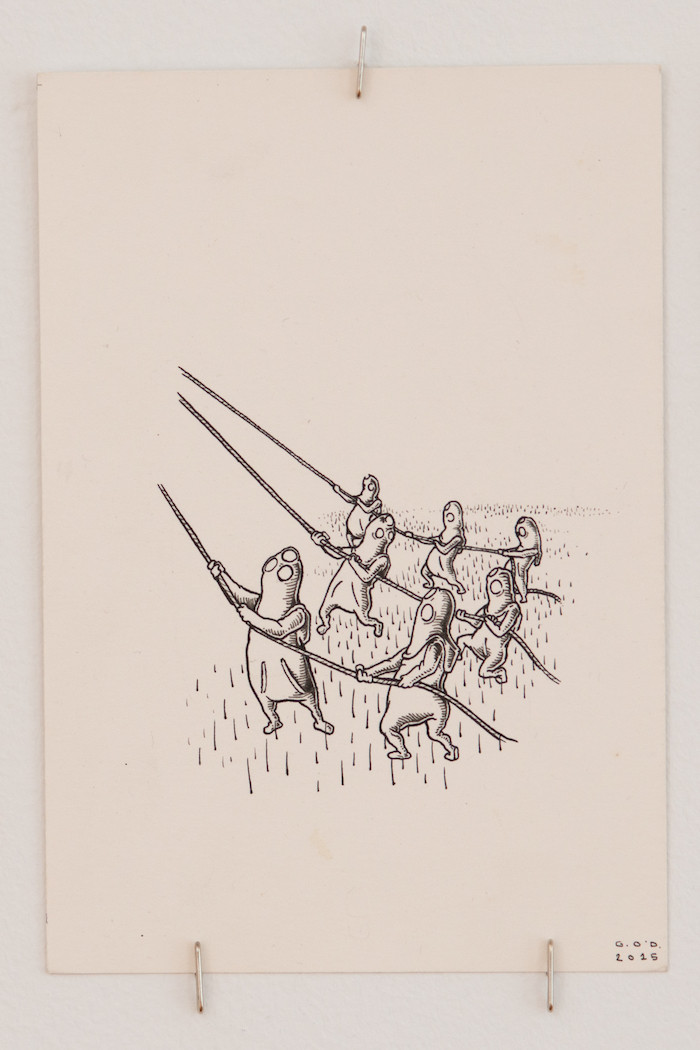
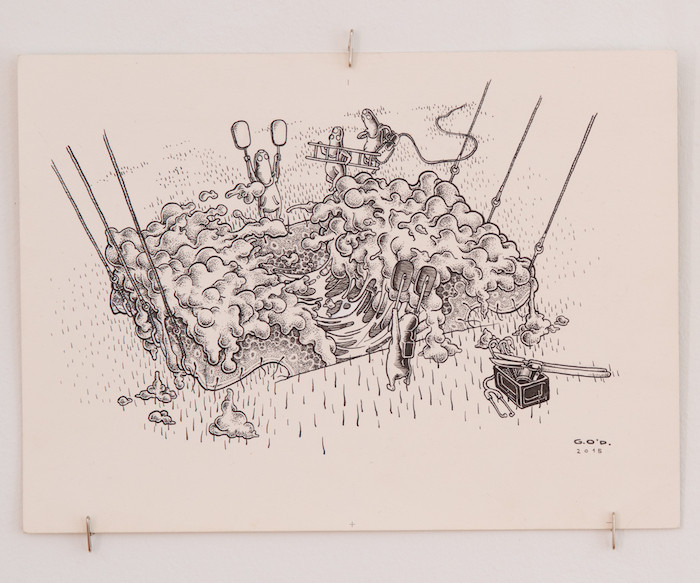
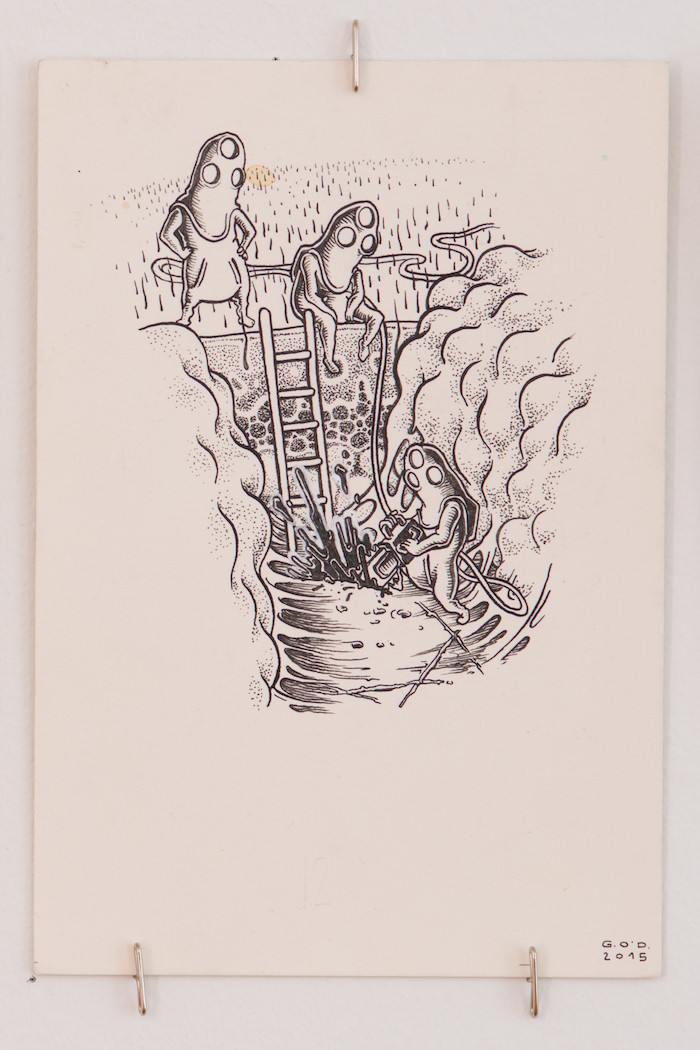
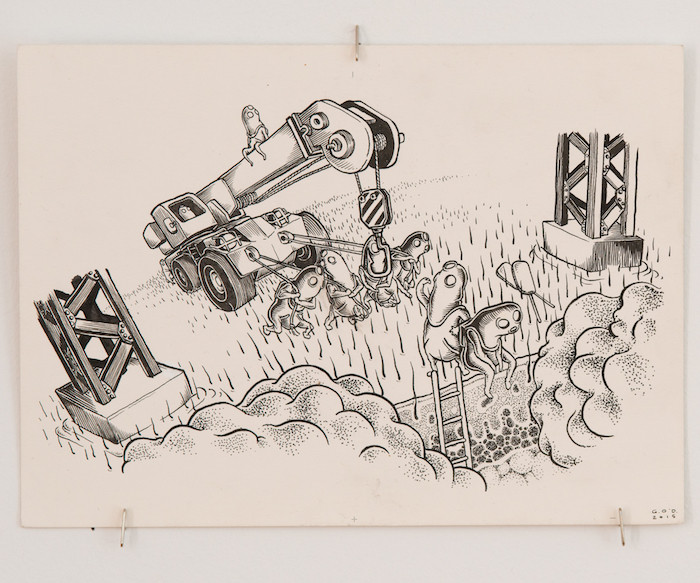
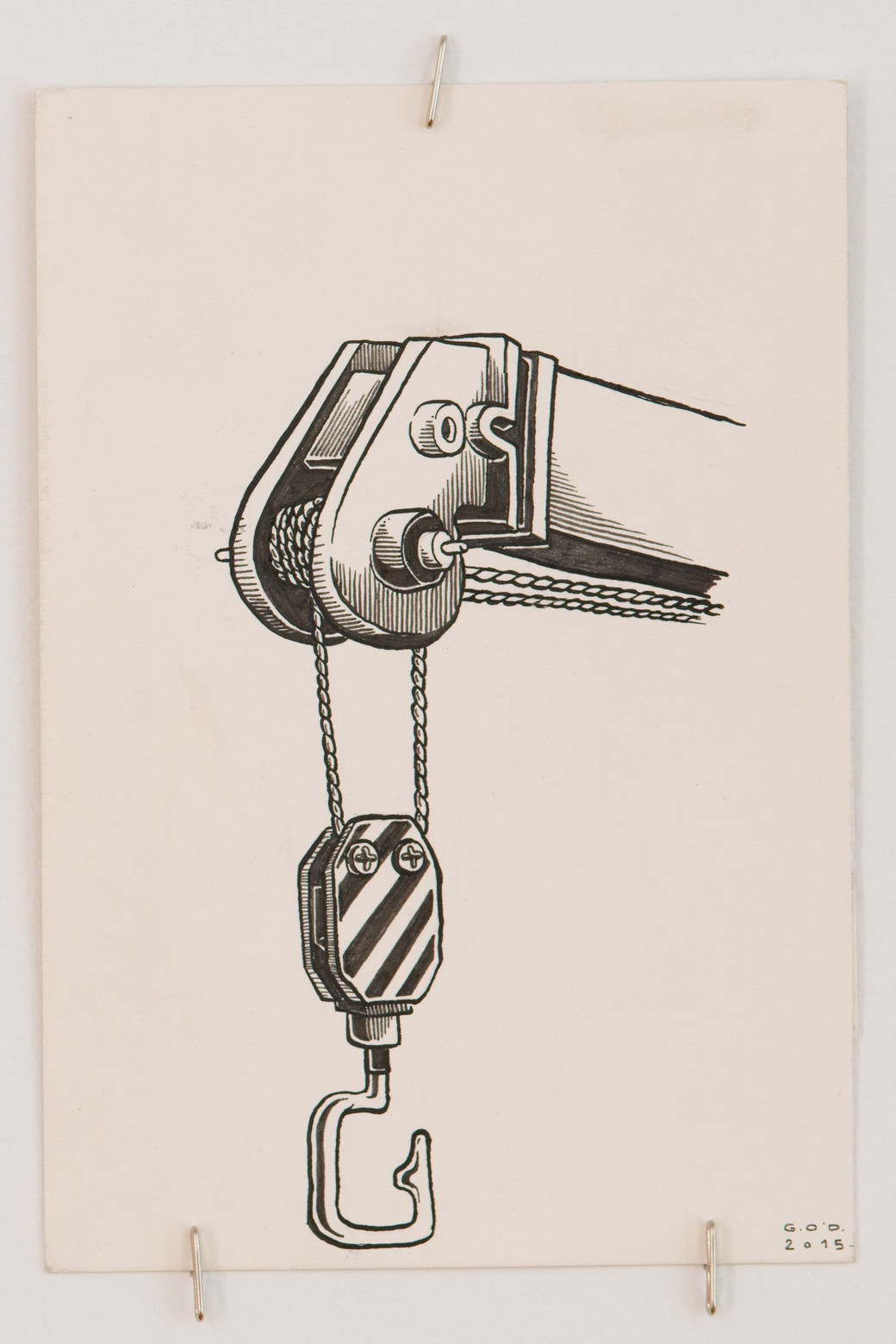
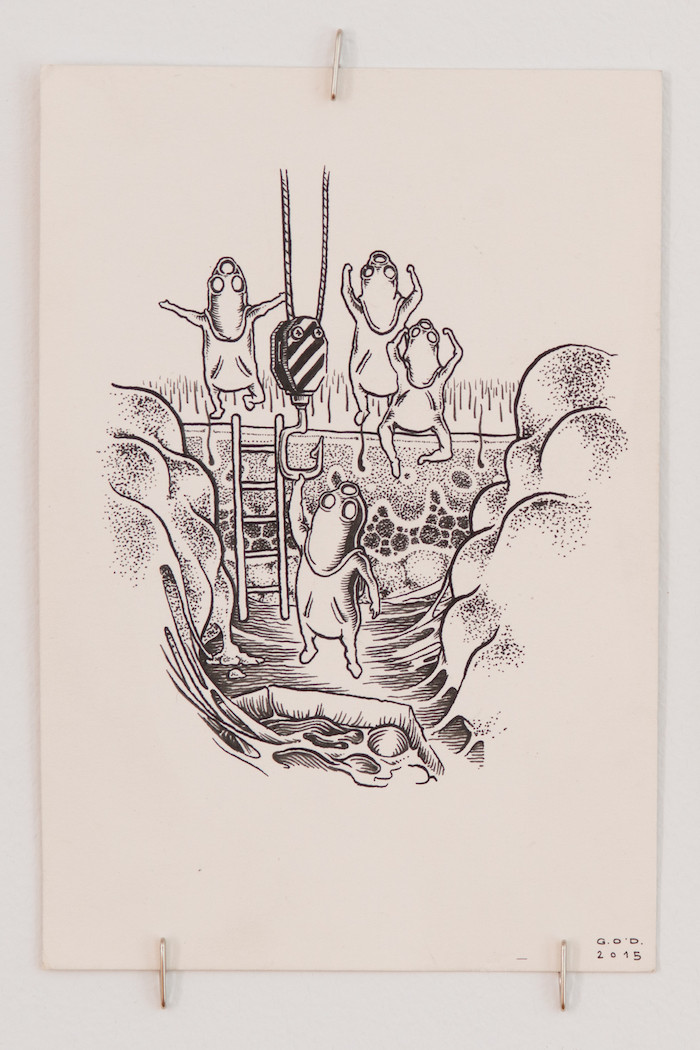
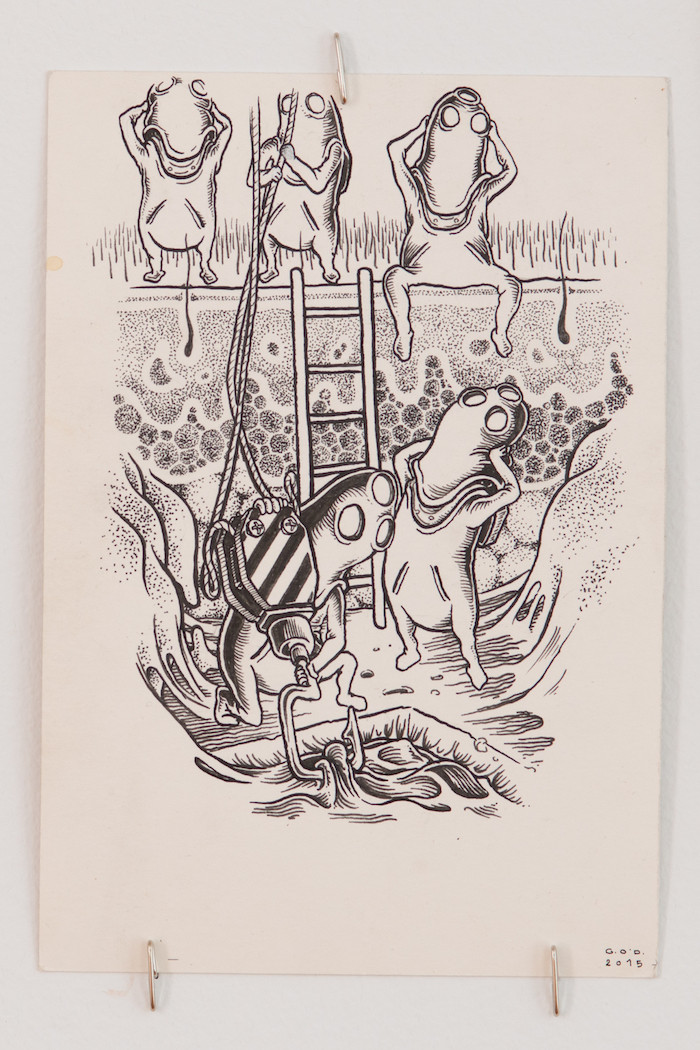
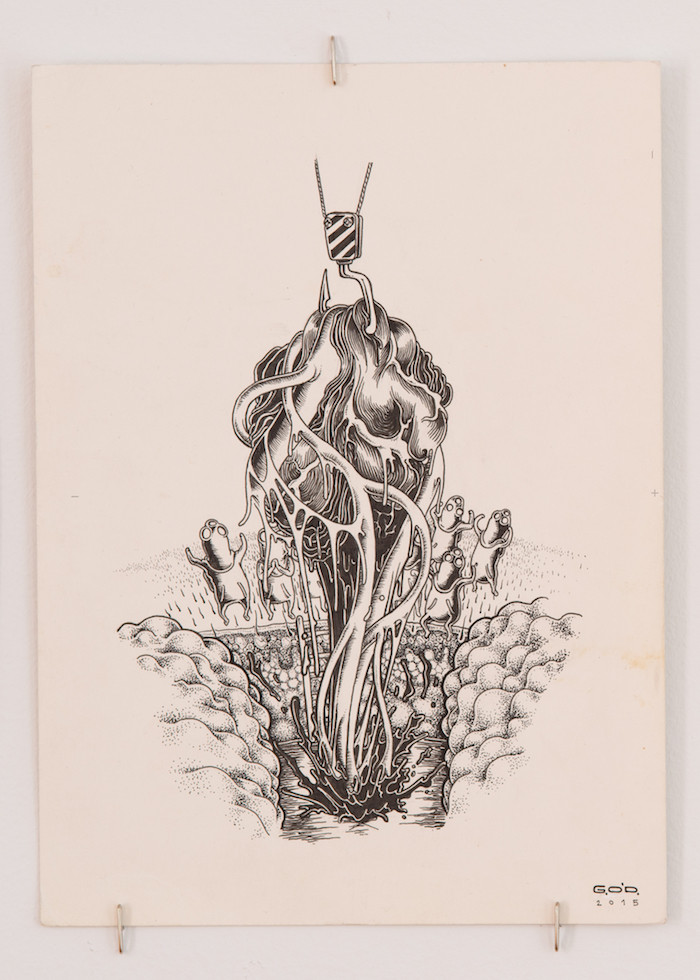
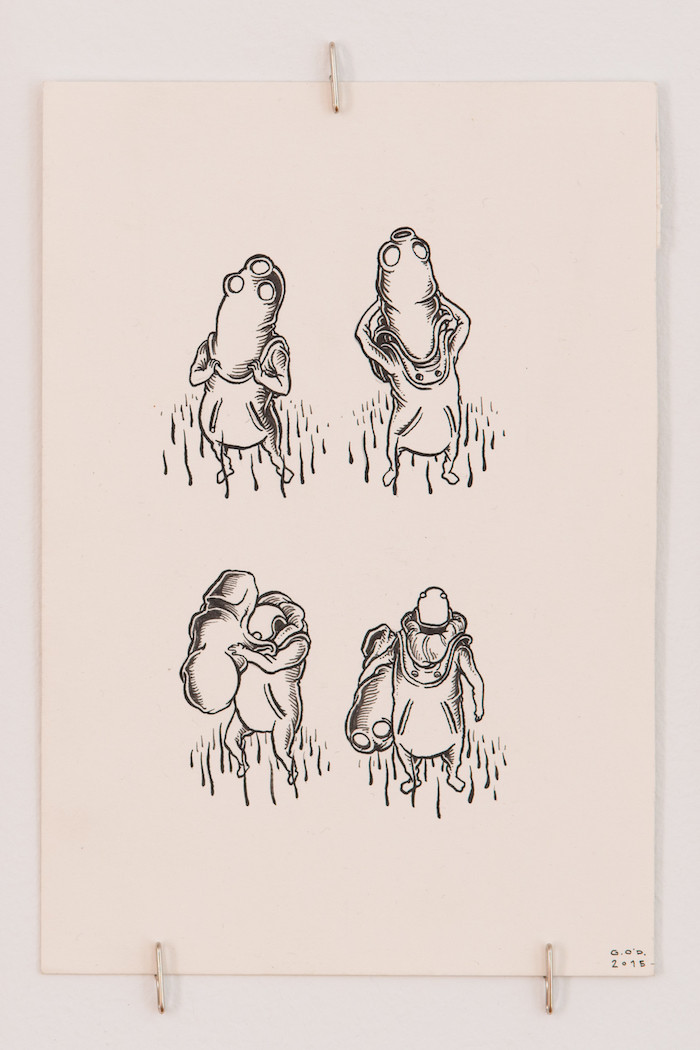
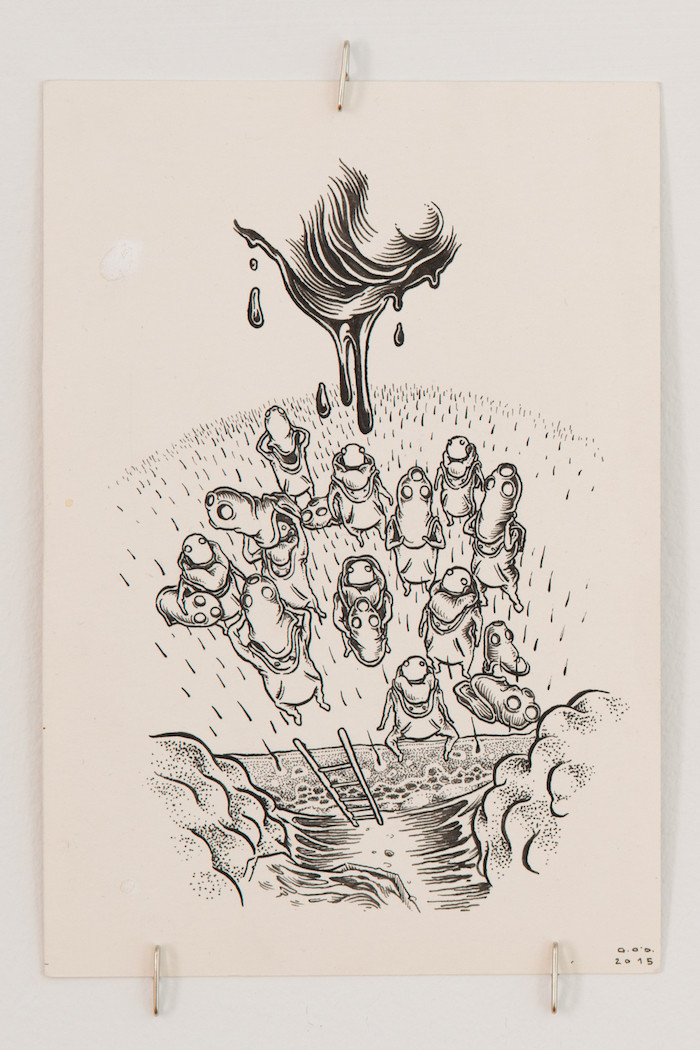
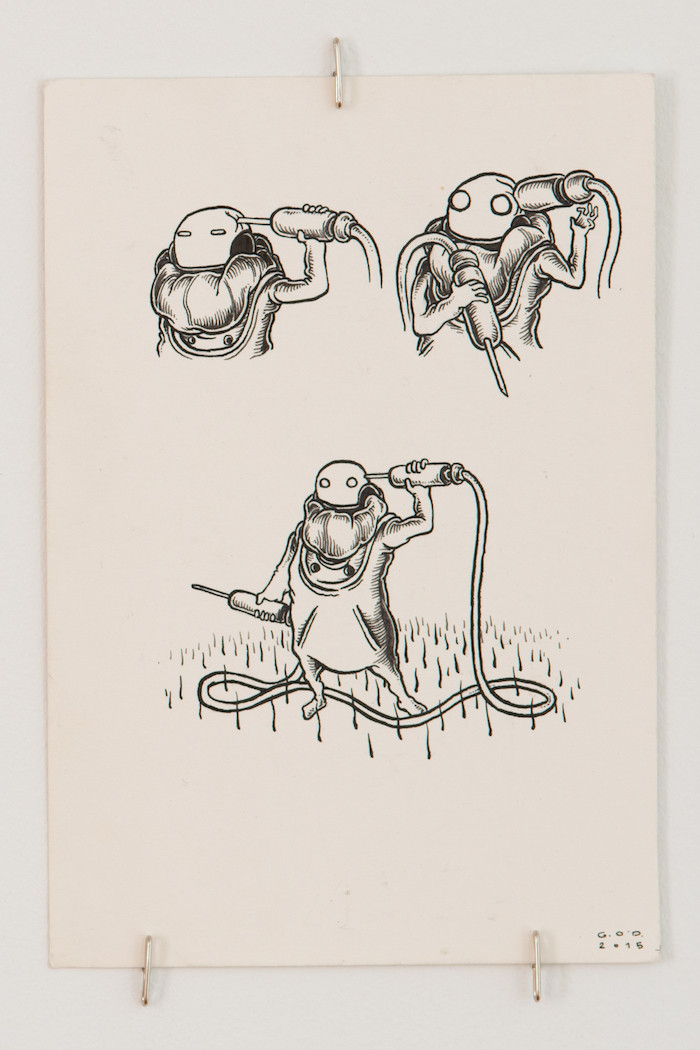
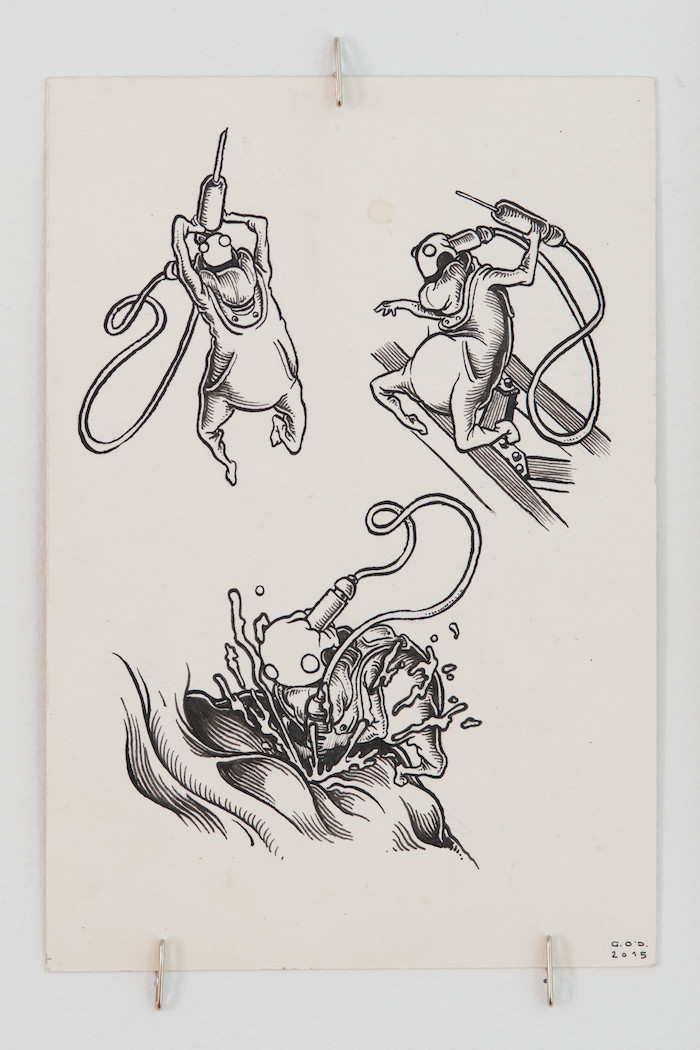
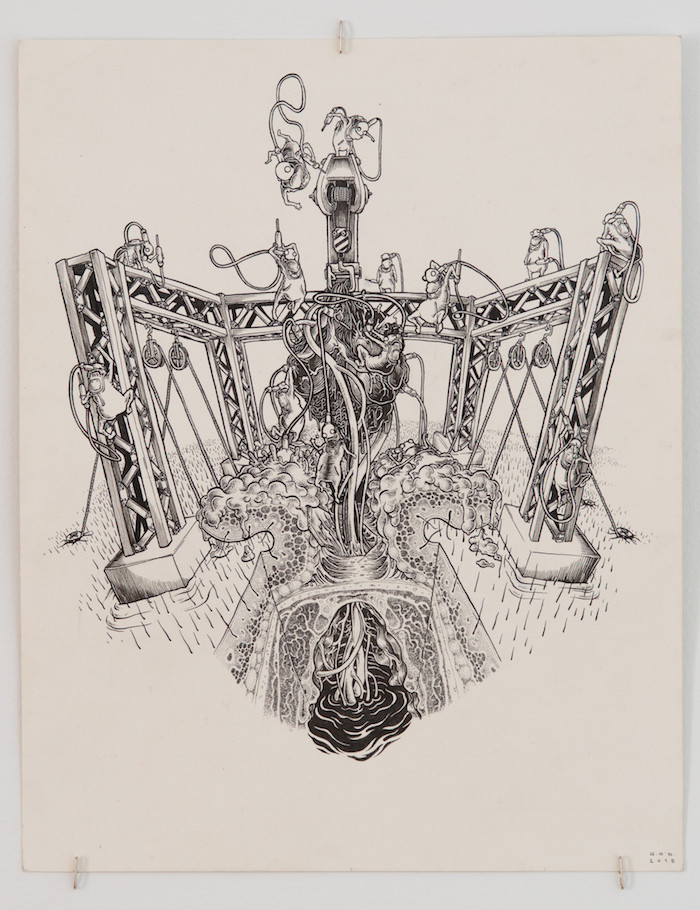
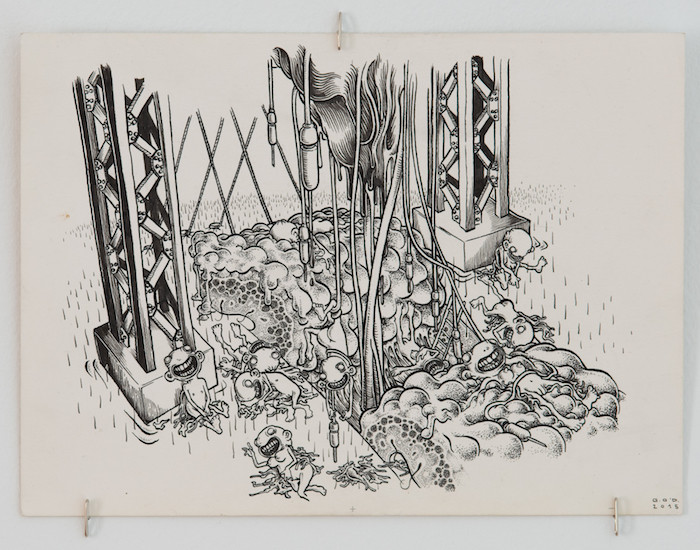
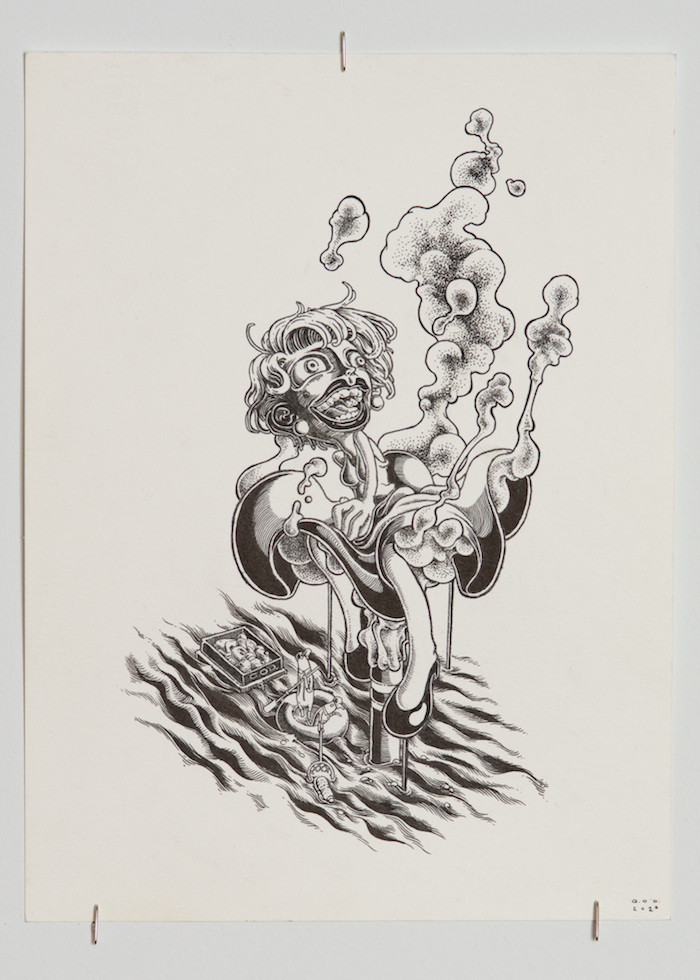
Carles Garcia O’Dowd — Growing up as a queer nerdy kid on a conservative island, comics, videogames, cartoons, and manga became the perfect escapism. I would daydream about fictional worlds and relentlessly fill in sketchbooks to materialize them as drawings. As I grew up, art history, social issues, and pop culture references would shape me as an artist, and my practice started solidifying a universe of its own: The Rise and Fall of Eden. It is a mythical cosmogony with populations, gods, corporations, creation myths, and cycles of splendor and collapse. I'm captivated by complexity and how everything is connected. Eden serves as a structure — a stage where I can cast my actors to perform a narrative. My fictional world serves as a way to make sense of reality. As I grew, art history, social issues, and pop culture nurtured this alternate world. I'm obsessed with complexity and the way everything is connected. By creating a fictional universe, I can make sense of the world around me.
Roger Cleaves — The main things I think about in my approach to world-building are narrative, methods of abstract figuration, the current social climate, and art history. Many ideas begin in my sketchbook when I am thinking about the main character. In my sketchbook, I like to take the characters through a walk in a possible storyboard. Oftentimes they start off doing very mundane things, but eventually, they run into a confrontation in the artistic form of my mind — meshing together invented problems, moments from my life, and the great history of painting that relates to current ideas I find interesting.
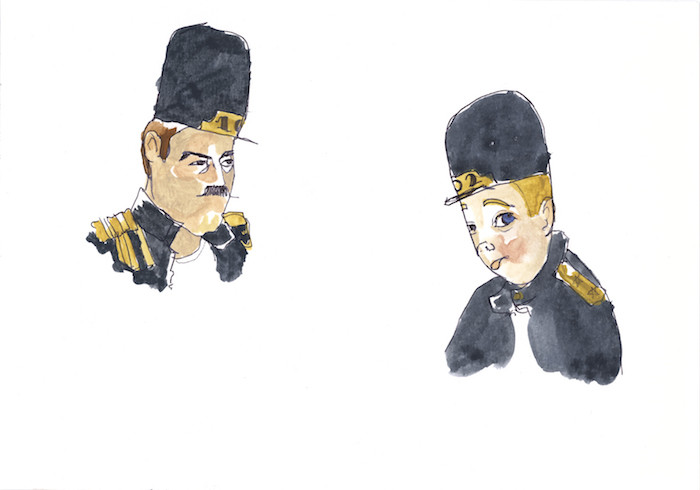
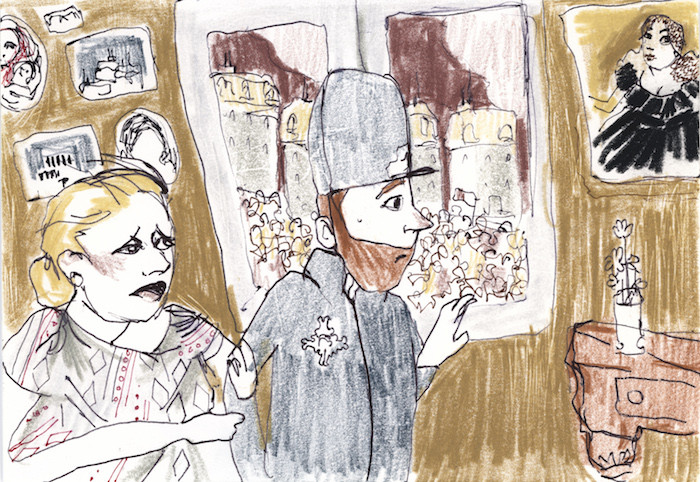
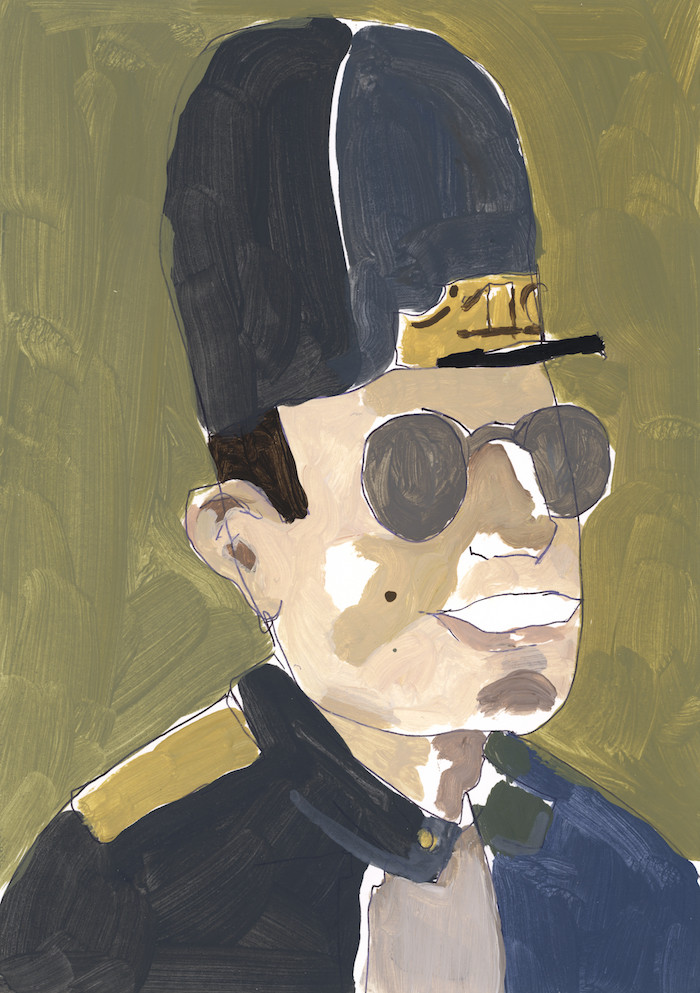
Spencer Chalk-Levy — In my work, world-building happens very organically, if not subconsciously. One series is taken from real-life experiences — specifically coworkers — somewhat from a past life, and the other series I used imagined soldiers dealing with a turbulent city representing where I was at the time.