Inside "Prey": Veronica Fernandez in Conversation with Tidawhitney Lek

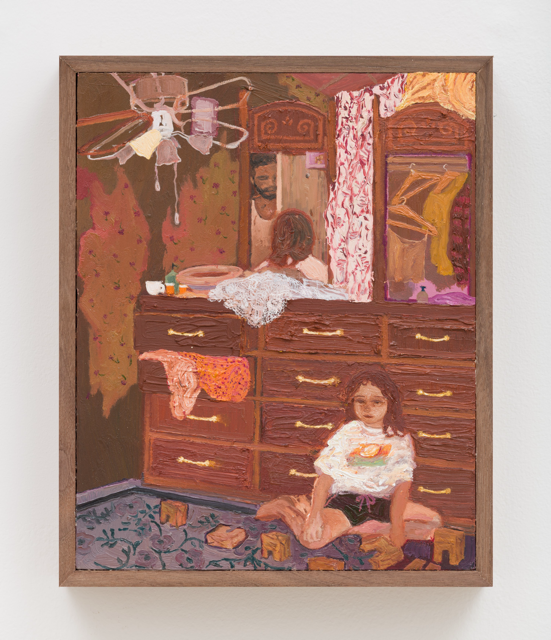
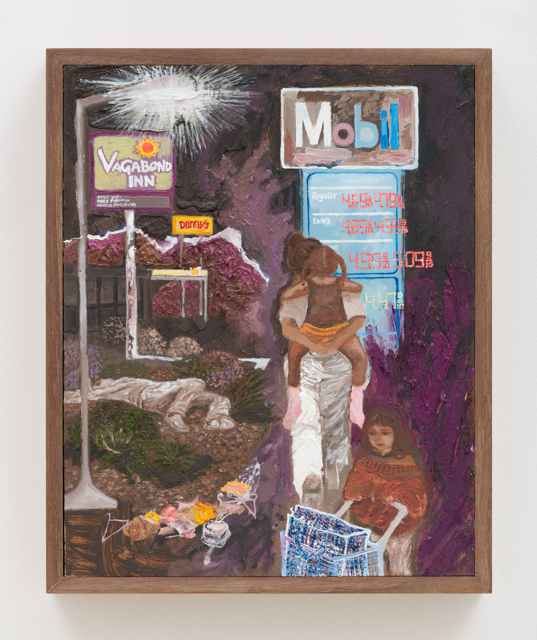
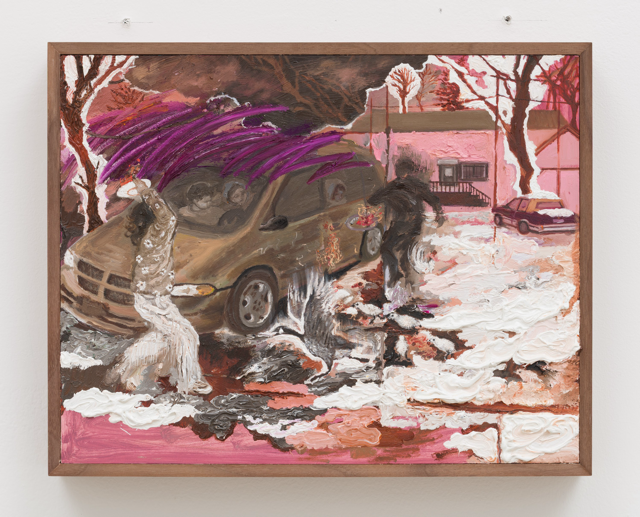
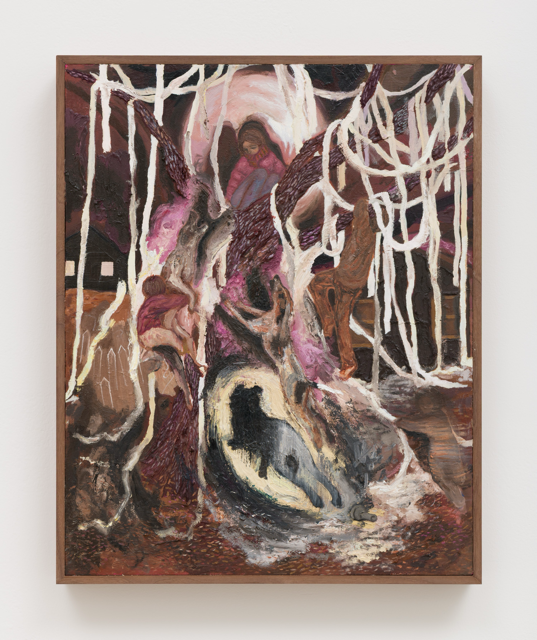
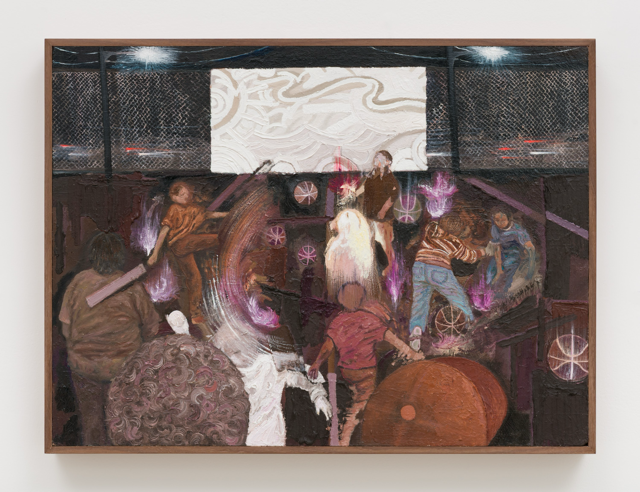
In this conversation, Lek speaks with Fernandez about her latest solo exhibition at Anat Ebgi. The show expands on Fernandez's autobiographical exploration of housing instability, centering motel interiors, neighborhood scenes, and intimate domestic spaces drawn from her pre-teen years. Across fourteen works - many at an unusually intimate scale - earthy palettes meet subtle fantastical elements, from children gathered at motel thresholds to paper houses suspended in dreamlike landscapes. Together, the paintings and sculpture trace a psychological terrain shaped by displacement, resilience, and imagination.
Tidawhitney Lek:
How do you know me, Ronnie? When did we meet? And how has the journey been?
Veronica Fernandez:
I feel like I see you as my art sister. You and I did our first solo shows with Sow & Tailor in LA. That was your first solo in LA, right?
Tidawhitney Lek:
Correct.
Veronica Fernandez:
Yeah, so from there we started going to each other’s studios and keeping up with each other’s work. Both of our practices are very personal and have a lot of threads between them. That’s why we’re art soul sisters.
Tidawhitney Lek:
Yes, agreed. Family has been a big part of the conversations we have and what we talk about in our work.
Can you tell me a little bit about the solo show you're having with Anat Ebgi in LA? What ideas were percolating on the surface or in the back of your mind, and what was the result?
Veronica Fernandez:
Do you remember how I wrote “Prey” in oil pastel on my studio wall?
Tidawhitney Lek:
Yeah, that was cool.
Veronica Fernandez:
“Prey” came from some of the poetry I wrote—you remember, I had notes and things all over the wall. It stemmed from an idea about the neighborhood as a psychological space, the people in it, and the different situations and places their bodies have lived through.
This show centers around different spaces, but one place it orbits around is motel scenes. There are families living in motels, which is something my family went through.
Tidawhitney Lek:
What time period in your life was that?
Veronica Fernandez:
When I was a pre-teen. Some of my past work has explored the instability that comes from being evicted, being in transitional phases, and having to pack up your life and carry it with you. We moved around so much.
Thinking about those feelings now, and seeing other people go through the same thing, sparked something in me that I wanted to bring into this work.
Tidawhitney Lek:
Is this the first time you’ve talked about the motel setting in your work?
Veronica Fernandez:
I’ve included it in some paintings before. I had a piece called Paper Towns when I did Frieze LA—it had these paper houses in it, like lunch bag houses. I also had a painting called Eviction Motel.
Ideas of motels, people adapting to their environments, and that underlying theme of resilience have always been in my work. Now I’m expanding on it.
My sister and I also do nonprofit work visiting families living in motels, and that’s influenced me deeply. It feels full circle—seeing families packed into those rooms with all their belongings.
Tidawhitney Lek:
There’s a particular painting I really enjoy—Vagabond Holiday.
Veronica Fernandez:
Yeah, I love that painting.
Tidawhitney Lek:
It brought me back to when my family lived in the projects. We had two identical apartment buildings facing each other, and the staircases and guardrails framed this courtyard where all the families would gather. That painting really got me. I love it.
Tell me more about the show. How many pieces are there?
Veronica Fernandez:
There are 14 works. Some involve motels, others are interior spaces, and some are exterior neighborhood environments.
Tidawhitney Lek:
And the scale is different from what you’ve done before. Most of the work is small, and the larger pieces are fewer.
Veronica Fernandez:
Yes. When I consolidated my studio into our townhome, I remember telling you I was struggling. I used to think a 30x40 canvas was small.
Now I’m working at 8x10, and sometimes I can barely see what I’m painting. The details are so tiny I have to use the smallest brushes. Some works are larger than 8x10, but still intimate—details the size of my finger.
Tidawhitney Lek:
How rewarding was that challenge?
Veronica Fernandez:
You know I love a good challenge. Art doesn’t have to be easy. Sometimes you make it harder for yourself, and that’s what you end up conquering and learning from.
Tidawhitney Lek:
What did you learn from it? Is this the first time you’ve sketched at such an intimate scale?
Veronica Fernandez:
A lot of these paintings actually didn’t start with sketches, which is unusual for me. Normally I combine multiple sketches into one composition.
With these smaller pieces, there were rarely sketches. If I could fit my entire arm on the surface, there was probably a sketch. Some works began as large paintings that I reduced into smaller ones because I was struggling to resolve them at a bigger scale.
For example, Closer to Power sat on my wall for a year. I didn’t know how to finish it. I would work on it and then destroy it. Eventually, I forced myself to rework it as a smaller painting. Finishing it—especially the gate—was incredibly difficult.
Tidawhitney Lek:
Tell me about Some Things Don’t Stay for Tomorrow. That’s the largest piece, right?
Veronica Fernandez:
Yes. It includes the paper lunch bag houses from Paper Towns. When we were kids, we’d cut brown paper bags, make doorways in them, and build entire cities for our toys. That was our way of creating worlds. I also included them as a sculpture in the show.
In the painting, they hang from trees. They symbolize childhood innocence and adaptation—creating despite your circumstances.
At first, the painting feels quiet—Christmas lights, children making snow angels. But on one side there’s a large portal, and kids are jumping into it.
That fantasy element is central to Prey. It’s about wanting something beyond your current state. The children are literally jumping into the unknown, searching for something more.
The inspiration came from when I saw children lined up outside a motel in Sylmar, California, waiting for the school bus. It was along a highway—no houses nearby. I realized their families lived there. I wrote a poem called The Line about that moment. It mirrored my own experience as a child.
Tidawhitney Lek:
Are any of the paintings accompanied by the poems?
Veronica Fernandez:
I wrote a poem called I Want to Fly that inspired this body of work. It ends with the line, “I should have prayed for other people,” which was also the title of my last show.
It’s about someone in a room that feels like it’s collapsing. They close their eyes and try to imagine somewhere else. As a last resort, they get on their knees and pray—prey. There’s guilt in surviving, in wanting more.
Tidawhitney Lek:
How do you resolve your narratives? When do you let go and tighten them back up?
Veronica Fernandez:
Poetry and references get me started. For this body of work, I used many personal references—photographs, background objects, anatomy or expressions of family members. I also include advice from family in my poems.
I only need a few specific objects or gestures to begin. From there, the world builds.
Tidawhitney Lek:
What’s next?
Veronica Fernandez:
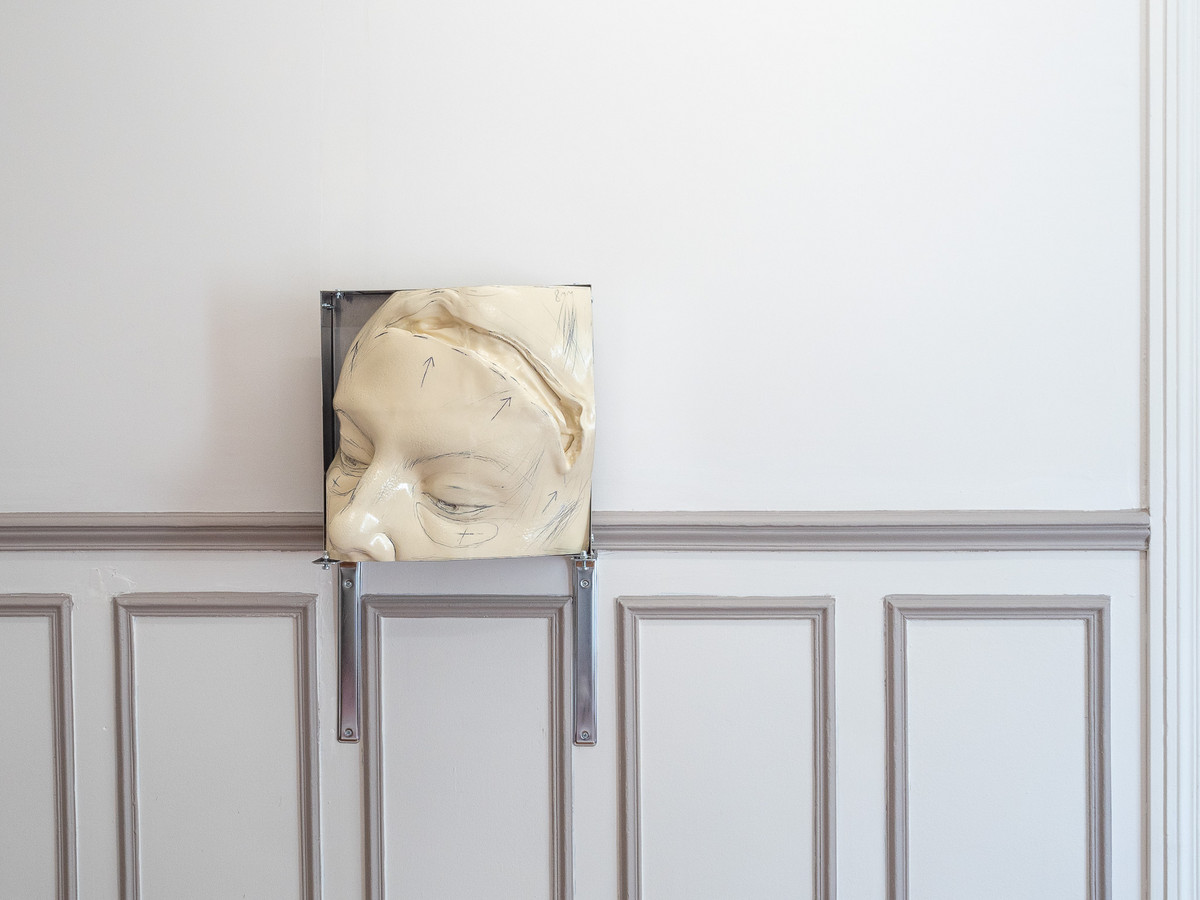
I’m excited to continue exploring sculpture. It feels like a new chapter. I’m excited to see where this year takes me.
Tidawhitney Lek:
Exciting.