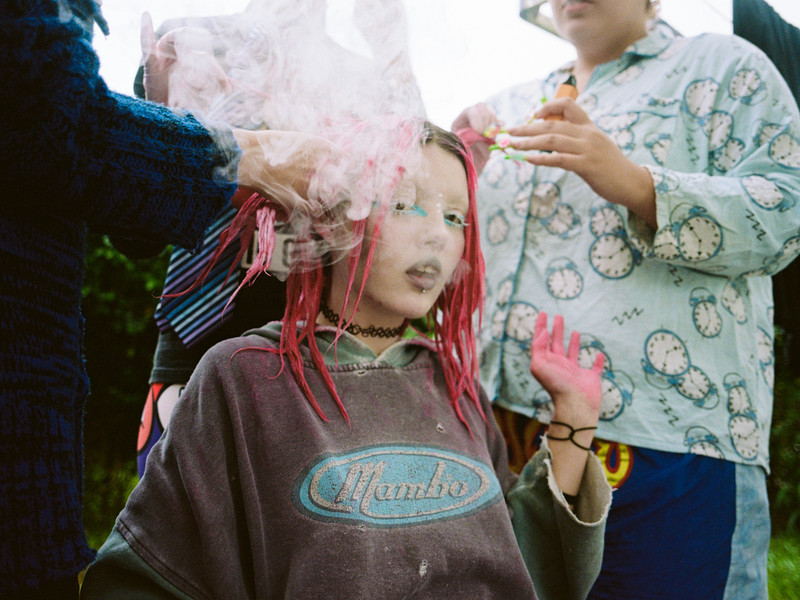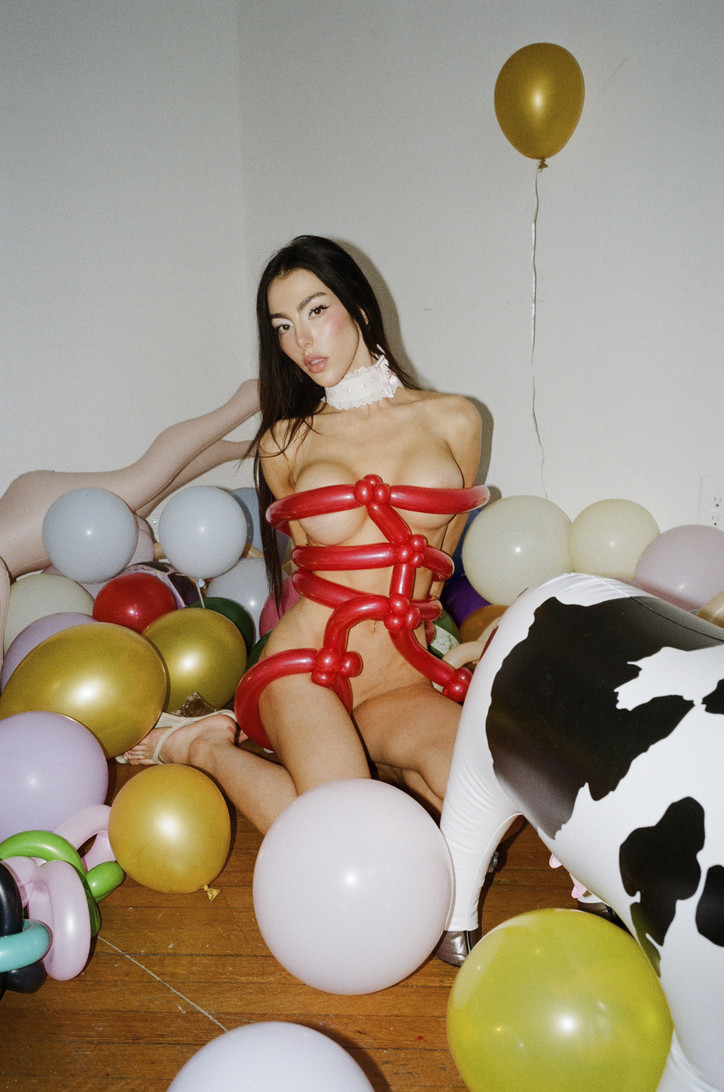
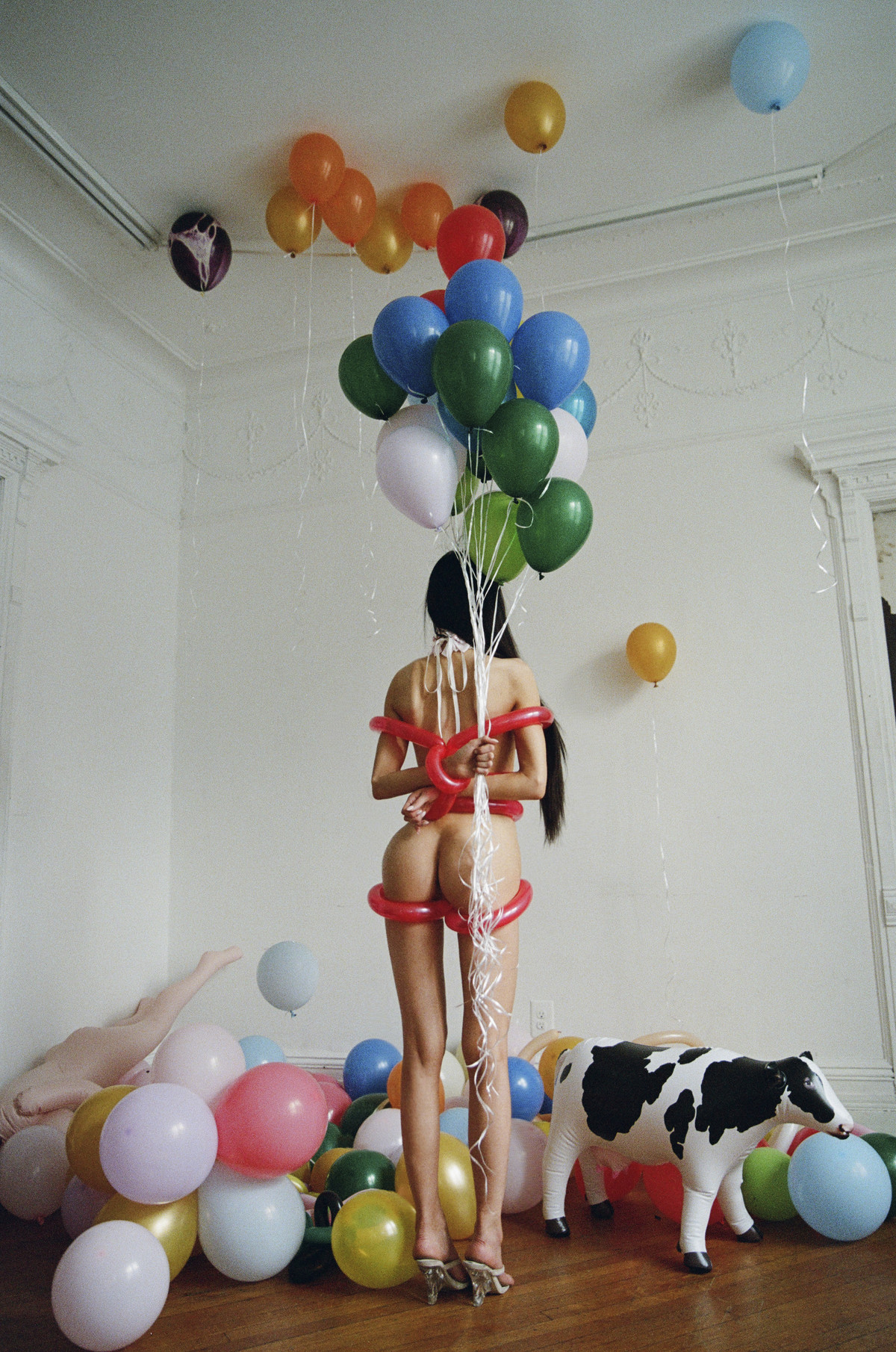
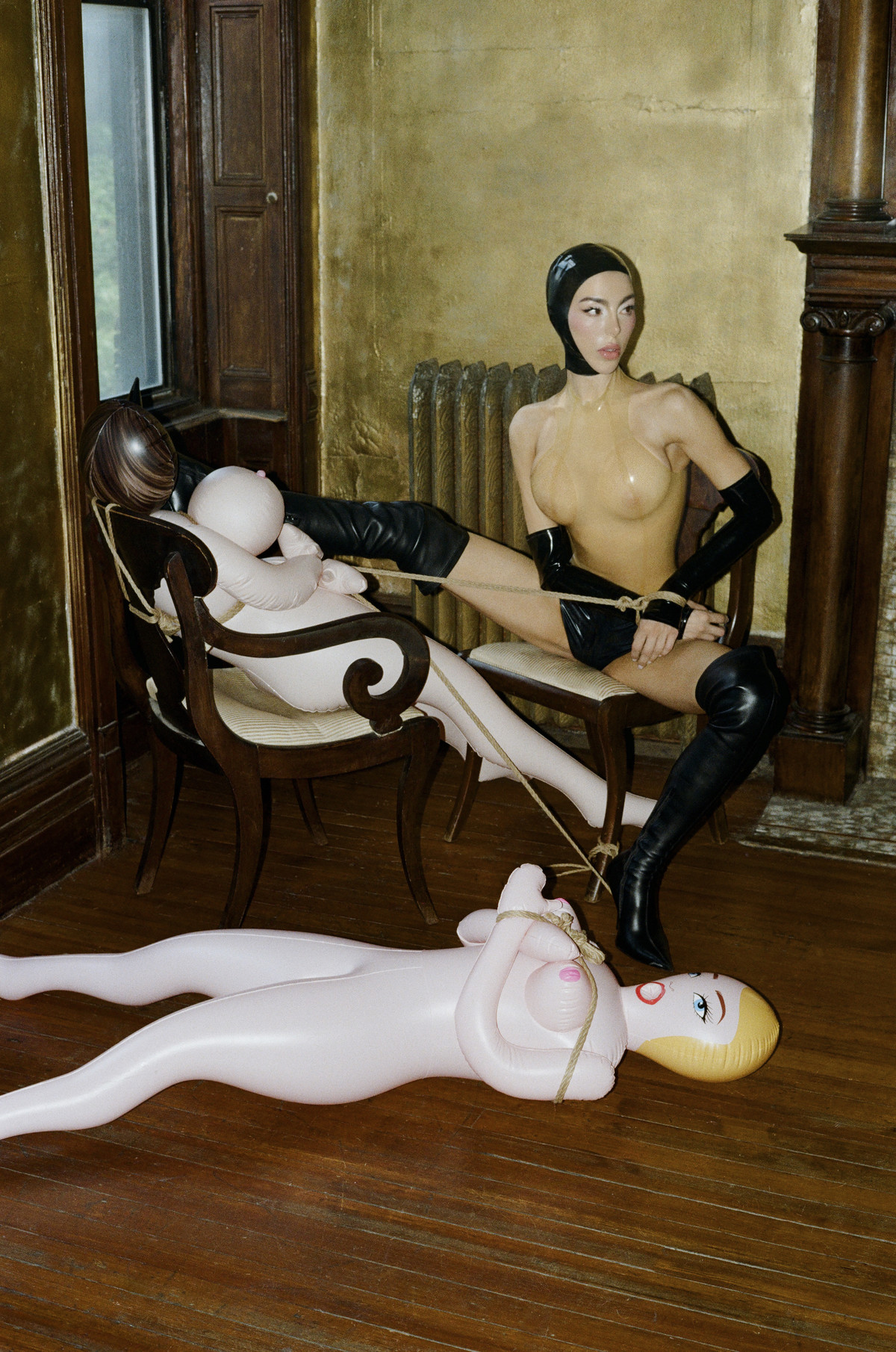
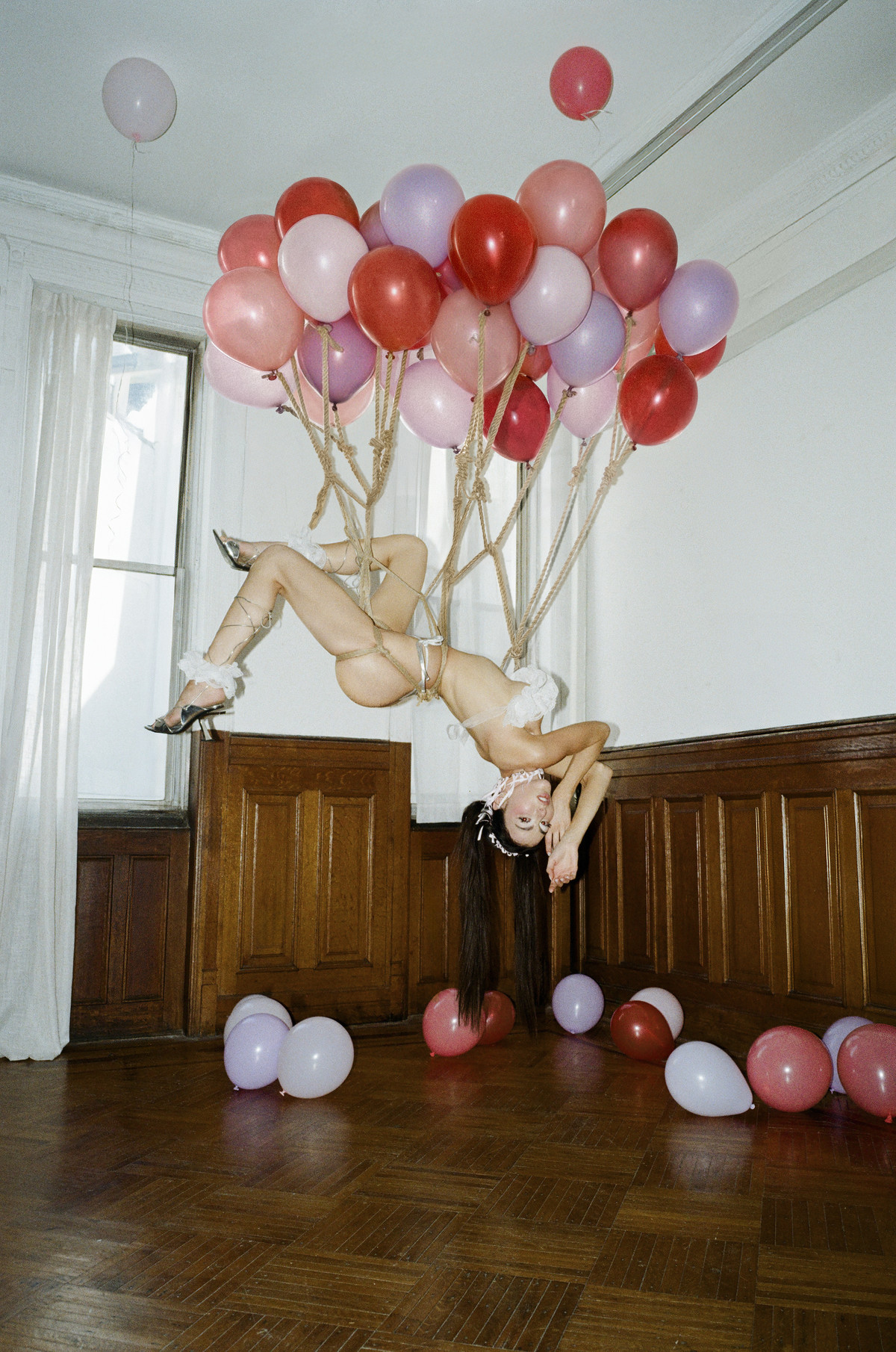


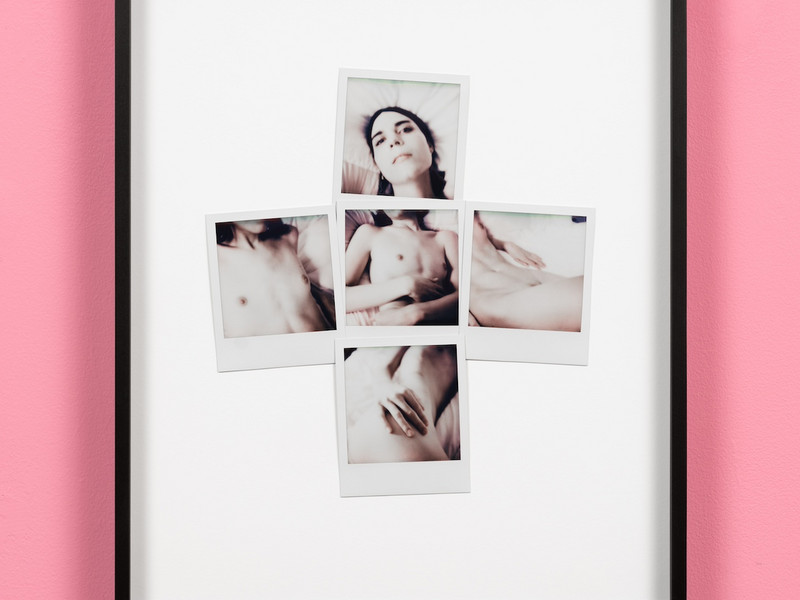



Telling stories to accompany a wealth of images taken by herself and her sister Maria, Rosales weaves a tapestry of belonging, rebellion, and loss.
Stay informed on our latest news!


It begins with a memory of the library, as a place where Rosales grew up going to escape into tales of art and adventure. As a shy kid, the stacks welcomed them, but adolescence opened up a whole new world for Rosales, where they joined a party crew and ditched school to go tagging. A new library welcomed them, one of rave flyers and smoke spots, a thriving Latino youth culture uninterested in what was on T.V. or the radio, as it didn’t reflect their world. One moment that stands out is a particular day of skipping school. Rosales remembers her and her sister stumbling out of a friend's stolen car, the brakes having been cut, and getting up to run back into school before the day’s last bell rang. It’s an exhilarating story, and it feels as singular as it should be familiar for any city kid.


One of the memories that I recall most vividly from my adolescence was hearing about a secret weed store in Echo Park. Maybe store isn’t the right word. It was a dealer’s outpost. I was fourteen, in my first year of high school, and already a stoner hanging out in parks and watching my friends’ eyes roll back between hits of salvia. My school had a reputation as a party school, and kids from all over Los Angeles would come to hang out in front of our school gates to skate, or buy drugs at the Burger King across the street. It was an odd mix of kids from downtown, East LA, central LA, and Hollywood who all wanted to go to a public art school. Skaters, hipsters, gangsters, anime kids, and run-of-the-mill art nerds all ended up in homeroom together.
My older sister, who went to the same school, initiated me into the cool kids club by chaperoning me to the aforementioned Burger King on one of my first mornings of 9th grade. Trying to stand out, I had put two star stamps on either side of my eyes. A girl with cherry-red hair and an anime-girl tattoo on her shoulder saw me and asked, “Are those face tats?” Taken aback, I responded, “I’m fourteen.” She smirked and said, “So?” I tried not to act so clueless after that.


Although we grew up in different parts of Los Angeles and in radically different circumstances, so much of the Los Angeles-based adolescence described in Guadalupe Rosales’ memoir, East of the River, resonates with me. Going to house parties and shows, student protests, ditching to just wander throughout the city, finding a world of music and culture from friends. These may be universal coming-of-age experiences, but growing up in a city and then leaving it, the rapidly changing landscape of "home" calcifies those memories as things that can’t be returned to.
Every time I go back home to visit LA, something feels different. The city is “off,” or maybe it’s just the neighborhoods I know. I grew up in Silver Lake, going between Echo Park, Chinatown, Highland Park, East Hollywood, and Downtown, where I went to high school. These neighborhoods used to be filled with people that I knew, and places that I recognized. Now, the army supply store where I would buy clothes is gone, and various family businesses are getting gutted to make way for luxury stores, draining the city of any mystery, curiosity, or comfort. It takes an archivist to remind us of how important what’s being lost is, so we can fight to preserve it.
Rosales, who is first and foremost a contemporary artist and photographer, is showing a collection of photos from their archive in accordance with the book, which was published in September by One World Press.


Paris, France, September 11th
Last spring, I rented a small attic apartment in the Marais. The tiny room I slept in reminded me of the bedroom I grew up in, in the countryside of Missouri, in a small town fittingly called Defiance. There was a ledge over my bed and one very small window. Something about it returned me to some of the purest moments of my youth.
I remember getting into bed one evening. The quiet at night in Paris feels different. It has a spatial openness to it. Lying under the covers, I could almost feel the silence sink into me.
And something came to me: Le sexe et l’esprit. The sex and the spirit.
I had been wondering what I was going to talk about with this exhibition. I had already walked through the Cité de l’architecture et du patrimoine, looking at the architectural casts and fragments from churches and cathedrals throughout France: angels, arches, portals, gargoyles. All of this religious iconography in a room that would eventually contain my work. I have a deep history with the Church. I was raised as a Seventh day Adventist until my early teens. Christianity was a large part of my family and our life. It left me with a lot of questions.
At the same time, I was studying the metaphysical world. I was curious about mystics, Sufis, gurus, and ascended masters. I wanted to understand the different systems people have created to approach what we cannot always see.
So maybe le sexe et l’esprit wasn’t something that suddenly appeared that night in Paris. Maybe it was something I had been circling for most of my life. A few years earlier, I was invited to Germany for a symposium about Hildegard von Bingen. I met extraordinary minds there, and some became close friends. One of those chance meetings was with Es Devlin. I think of Es as a kind of high priestess of performance and making. An artist whose work with light, language, architecture, and the stage can transform a space into an experience of consciousness. Her work moves from public sculptures at Tate Modern and Trafalgar Square to kinetic stage designs for the Royal Opera House and the Metropolitan Opera, Olympic ceremonies, and Super Bowl halftime shows. Her practice has been celebrated with a retrospective at the Cooper Hewitt, Smithsonian Design Museum, a Tony Award, three Olivier Awards, and a CBE.


Kennedy Yanko, The first manifestation is darkness, 2026.
Kennedy Yanko, The radical cypher, 2026.
Es and I connected through the life and visions of Hildegard, which in retrospect feels important. Hildegard was a mystic, composer, writer, healer, and nun working within the structure of the medieval Church while receiving visions that seemed to exceed it.
Through Es, and a strange series of events, I eventually found myself at Plum Village, the Buddhist monastery founded by Thích Nhất Hạnh right outside Bordeaux.
It was spring, and I had just finished installing my largest and most important installation to date at the Venice Biennale. I was grateful to have been able to build from the ideas of the late, great Koyo Kouoh in a monumental presentation at the Arsenale. I arrived at the monastery carrying all of that, and a heart that felt like it was in a million pieces.
And then, suddenly, there was quiet. At Plum Village, I began to understand the phrase and title of an earlier work, The Weight of My Sight (2021), differently: the pain that can accompany access to deep feeling.
I had spent the last fifteen years hustling in New York, trying to become the artist I had always wanted to be. And I did become her, but not without loss. For years there had been a knot in the pit of my stomach: disappointment with my industry, the longing for deep love and true partnership, and the exhaustion of remaining openhearted in a world that seems perpetually at war with itself. The violence, the ego, the constant struggle for power, the sheer amount of suffering we are asked to metabolize while continuing to live our ordinary lives.
I had been gutted by disappointment and was hanging on to threads of hope that, at that moment, I could barely see.
At the monastery, time stretched. Five minutes could feel like an hour. We woke in noble silence. We walked quietly together. We breathed with a subconscious synchronization. I began noticing the tiny sensory miracles that could take place inside a single hour: the crunch of leaves beneath a slowly stepping foot, light catching the petal of a peony, the gentle clinking of spoons against bowls during a silent meal. Somehow the absence of conversation heightened everything. The food tasted different. The light looked different. My body felt different.
Each morning I noticed the tightness in the pit of my stomach and slowly breathed into it. In my mind’s eye, I filled that space with light. I imagined the knot releasing, almost as if it were taking its own breath for the first time.
And I felt like that too. Like it had been a long time since I had breathed. There was something deeply sensual about that kind of presence. Being in a village organized around the simplicity of life and its most basic treasures somehow opened entire worlds for me. Sensuality no longer felt separate from spirituality. The warmth of food, breath entering the body, feet touching the earth, the sound of wind moving through leaves, the awareness of another person beside you. These were physical experiences, but they were also spiritual ones.

Kennedy Yanko, The weight of my Sight, 2021.
Maybe when I say my heart was in a million pieces, what I mean is that I had experienced enough of the preciousness of being human to feel devastated by the ways we continually destroy it.
I was hurt and hurting. In those dark early mornings, sitting in silence, I began picking through the pieces the previous fifteen years had left separated and scattered. The retreat allowed me to confront parts of myself that I had thought were protecting me but had also created a separation between myself and my own truth.
And at the same time, I understood that I would not have made it through without some of those mechanisms of performance. Performance can be armor. Ambition can be armor. Sometimes they are how we survive long enough to discover that we no longer need them in the same way.
Over the last five years, I’ve spent a large chunk of each year in different parts of France, and every time I arrived, I kept thinking about feminine deities and feminine energy. Although I couldn’t quite put my finger on what I was trying to understand, I knew I was looking for something.
Around this time, my brother found a book called The Magdalene Manuscript: The Alchemies of Horus & the Sex Magic of Isis, by Tom Kenyon and Judi Sion. It is a channeled text, one I wasn’t approaching with the lens of historical scholarship but with an interest in it as another mythology, another way to imagine Mary Magdalene’s voice.
And it sent me somewhere. I started to question Jesus (Yeshua) and Mary Magdalene. What was their relationship? What might intimacy look like within a life organized around spiritual purpose? What happens when sexuality is not understood as being in opposition to spiritual life, but potentially part of it?
That question became important. I moved from the channeled Magdalene text toward early Christian writings and eventually into the Gospel of Mary, a text that was not part of the canonical New Testament. In its surviving fragments, Mary occupies a remarkable position of spiritual authority. She understands something the others do not, and tension emerges around the possibility that the Savior had entrusted knowledge to her in a way that challenged the male disciples.

Kennedy Yanko, The weight of my Sight, 2021.
I kept thinking about the conflict imagined in The Magdalene Manuscript: a woman deeply in love with a man whose life’s orientation was toward a mission larger than their relationship. Her love belongs to the person; her service belongs to something much bigger.
What does it mean to love something enough to release your possession of it?
What does devotion demand?
Those questions entered the sculptures I was making for this exhibition.
One work in particular, Intoxicated Wisdom (2026), carries this tension. I developed a new technique with flocked paint skin, which creates a surface of almost infinite blackness that absorbs light rather than simply reflecting it. The darkness gives the work a depth that feels difficult to locate, as if part of the sculpture is receding somewhere beyond its physical edge.
The form itself is deeply erotic and fluid, but it is also bound. Chained. Restrained. I began thinking about the erotic not simply as sex, but as concentrated life force. The thing that pulls us toward another body, an idea, a purpose, a work. Intoxicated Wisdom sits inside that contradiction: desire and discipline, surrender and restraint, the longing to possess and the knowledge that sometimes the thing we love has to be released.
This is where my reading about sacred sexuality began to enter the work. Across different esoteric traditions, sexual energy is sometimes imagined not merely as something to discharge or satisfy, but as energy that can be circulated, transformed, and directed toward altered states of consciousness. The body becomes not an obstacle to spiritual experience, but one of its instruments.
I became fascinated by the possibility of shifting identification away from a purely mechanical understanding of the body toward something more energetic: intention, awareness, magnetism.
Not because I needed to prove these systems true. I wanted to understand why humans have needed them. Why have we continually created systems in which breath, sexuality, ritual, death, transformation, and creation are connected?
And what happens when those questions are placed inside an object?
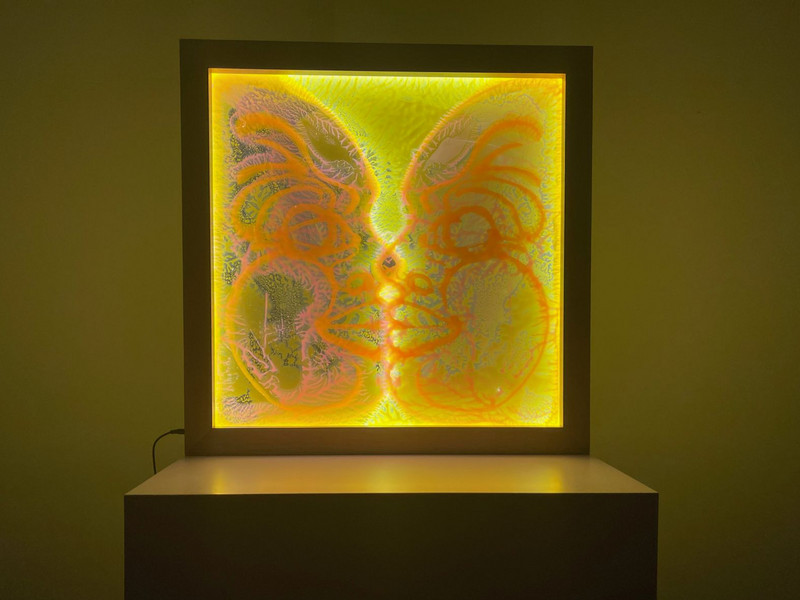
There are other early Christian texts in which Mary is represented as particularly close to Jesus. In the Gospel of Philip, she is referred to as the woman whom Jesus kisses often on the mouth. Their intimacy becomes an important and much debated image. Whether that intimacy is understood literally, symbolically, erotically, spiritually, or as some combination of those possibilities, is less interesting to me than the fact that the question has remained so charged.

Kennedy Yanko, Intoxicated Wisdom, 2026.
I wanted to know: what happened to her image? Here was a woman associated in some early Christian traditions with proximity, devotion, and spiritual authority. Yet over time, Mary Magdalene became popularly identified with the repentant sexual woman, partly through centuries of interpretation that collapsed distinct biblical women into a single figure.
It made me think about who gets to carry spiritual authority, and what happens when that authority belongs to a woman.
Somewhere in all of this reading, I started recognizing the research in the work itself.
I work through material.
I use pieces of metal that already have their own histories. They have been bent, crushed, and discarded. I don’t begin by forcing a meaning onto them. I spend time with them. I rotate them. I walk around them. I watch how a cavity holds darkness or how an edge suddenly becomes a line. Sometimes a piece will sit in the studio for months before I understand what it is asking me to do.
Then there is the paint skin.
The paint has an entirely different physical intelligence. I pour it separately and allow it to become a body before bringing it to the metal. It gathers, folds, wraps, stretches, and conceals. It problem solves and often feels like flesh. Sometimes an organ, a tongue, a piece of fabric, or a wound.
The metal holds one kind of memory. The paint another. My process isn’t about making one submit to the other. I’m looking for the moment when their individual forces become strong enough that the relationship between them produces something neither material could have produced alone.
A third thing.
That is where magnetism began to feel less like a metaphor and more like the actual structure of my practice. The sculptures are relationships.
Throughout the making of this exhibition, certain gestures began to feel like a kind of language. Characters from an alphabet that doesn’t exist. The metal speaks one way. The paint interrupts it, folds around it, obscures it, exposes another part of it. A chain might hold something in place while simultaneously making you more aware of its yearning to move.
Sometimes I feel like I’m composing more than constructing.
A line moves upward. A mass pulls downward. A skin gathers against an edge. One form leans toward another without touching it. I keep adjusting until the tensions begin to hold themselves.
This is where the research and the making became indistinguishable.
As I followed Christianity’s entanglements with older philosophical, ritual, and mystery traditions, I began reading more about sacred sexuality, Tantra, alchemy, Egyptian esoteric traditions, and the body as a site of transformation. One of the books in my notes was The Alchemies of Horus. Again and again, I encountered the idea that sexual energy could be understood as a powerful spiritual force, not simply something to release or satisfy, but something that could be circulated, redirected, concentrated.

Kennedy Yanko, This love will carry me.
One phrase appeared in my notebook: the magnetism of desire.
What does desire actually do? It focuses attention. It reorganizes the body. It changes our perception. It pulls one thing toward another. I became interested in magnetism itself: attraction as an organizing force. The possibility that desire, approached with intention, can become generative.
And that brought me back to the sculptures. Because this is how I make them.
These materials do not naturally belong together. They remain themselves while forming a relationship. I can sense when a piece needs to move. Sometimes I know something is wrong long before I can articulate why. I might walk around a sculpture for hours, and then, suddenly, the right gesture becomes clear.
My notes during this period became filled with words like clairvoyance, clairaudience, clairsentience, and claircognizance, not because I am interested in claiming a supernatural ability, but because I became fascinated by the vocabulary humans have created to describe different forms of knowing.
Knowing something without knowing how you know it. That is very close to making art.
You accumulate information. You train your eye and your body. You spend years working with materials. You read. You travel. You look at architecture. You build relationships. You experience grief, love, ambition, disappointment, pleasure, longing.
And somehow all of it becomes available when I stand in front of a piece of metal in the studio. The knowledge arrives before the explanation.
Maybe that is what I have been trying to understand through all of this research.
Why do these systems keep appearing in different cultures and across time? Why do people keep turning toward the body to understand what we cannot see? And why have religious institutions worked so hard to determine where some of those experiences could and could not belong?
Now these objects, my works, are entering a room surrounded by the architectural language of Christianity. That matters to me.
The sculptures carry Mary Magdalene, but also my childhood. They carry the monastery outside Bordeaux, Hildegard, Venice, the studio, discarded metal, and paint that was poured and peeled and allowed to become its own body. They carry my questions about partnership and purpose, desire and discipline, intimacy and sacrifice. They carry the question of what we do with all of the creative energy moving through us all the time.
I don’t think the work answers those questions.
Rather, the sculptures are evidence that I was inside them.
Maybe that is what this exhibition became for me: not a statement about sex, religion, the feminine, or the masculine, but a record of a year spent chasing a force I could feel before I could name it.
A force between bodies. Between materials. Between what we know and what we sense.
Between the earthly and whatever exists beyond it.