The Things We Carry: A Conversation with Keisha Scarville
Emann Odufu: There’s something poetic about the word “passport.” There’s crossing from one country into another, but also passing from one identity into another, with all the historical resonances that “passing” carries. The series begins with a document meant to fix your identity, while the way you use it suggests that identity is always in motion. What drew you to the passport as a vessel for migration, memory, and identity?
Keisha Scarville: There’s this ironic aspect to a passport photo: the necessity of it, the way one has to present themselves to have that passport taken, all with the anticipation of crossing a border.
In 2012, I had my first conversation with my father about his relationship to America. He was retiring from work, and I asked if he was planning on going back to Guyana. He said he wouldn’t. The ties he had to Guyana no longer existed, and so much of his life and identity was nested in America. I had not expected him to say that.
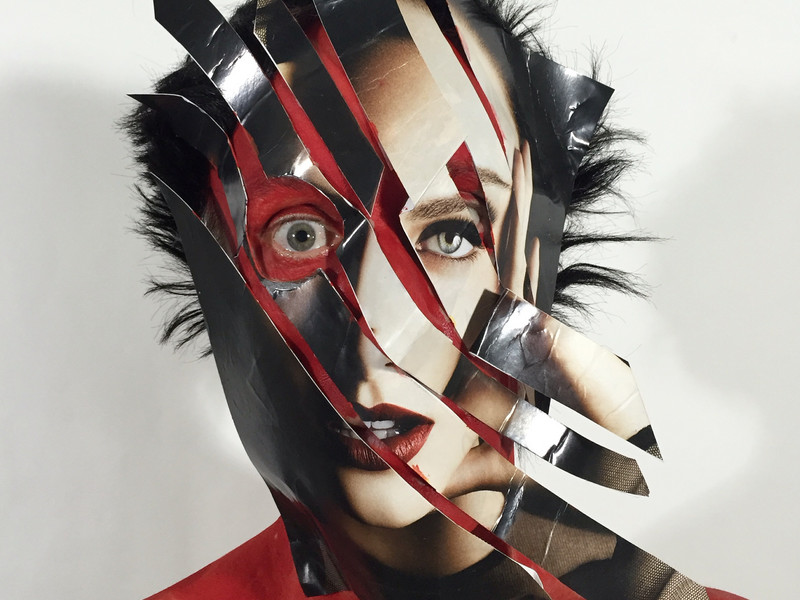
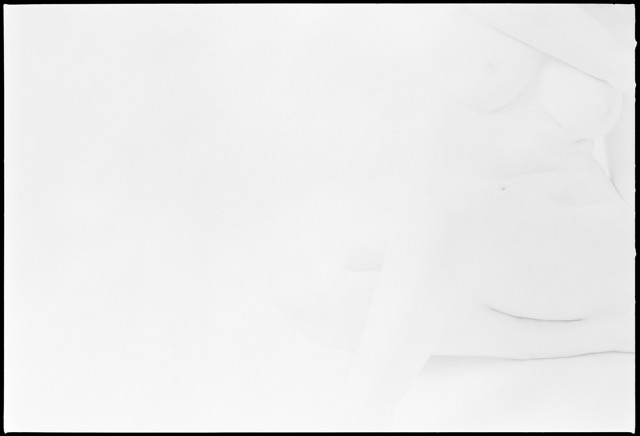
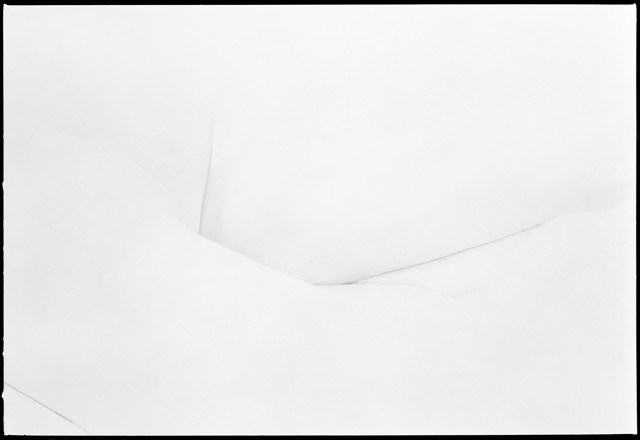
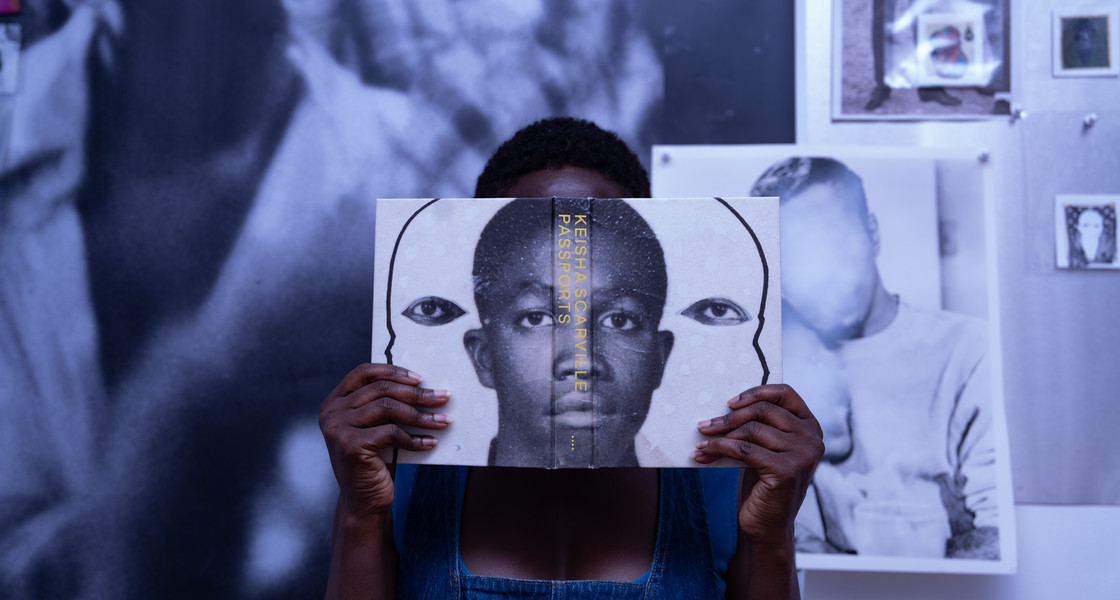
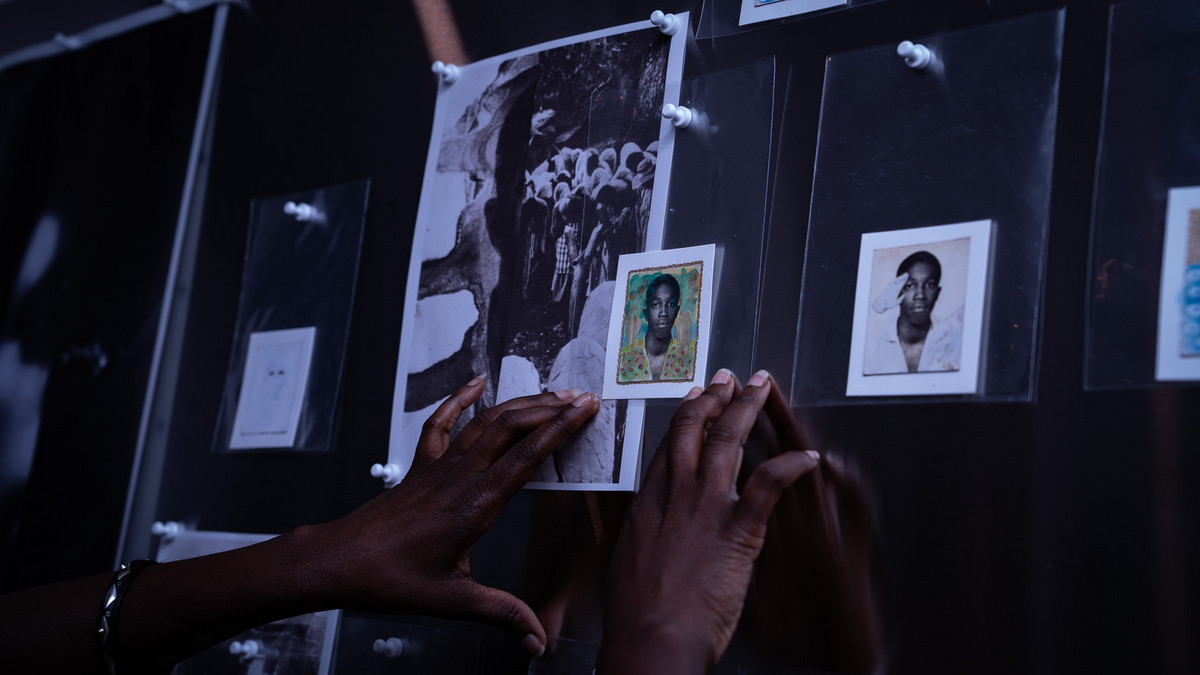
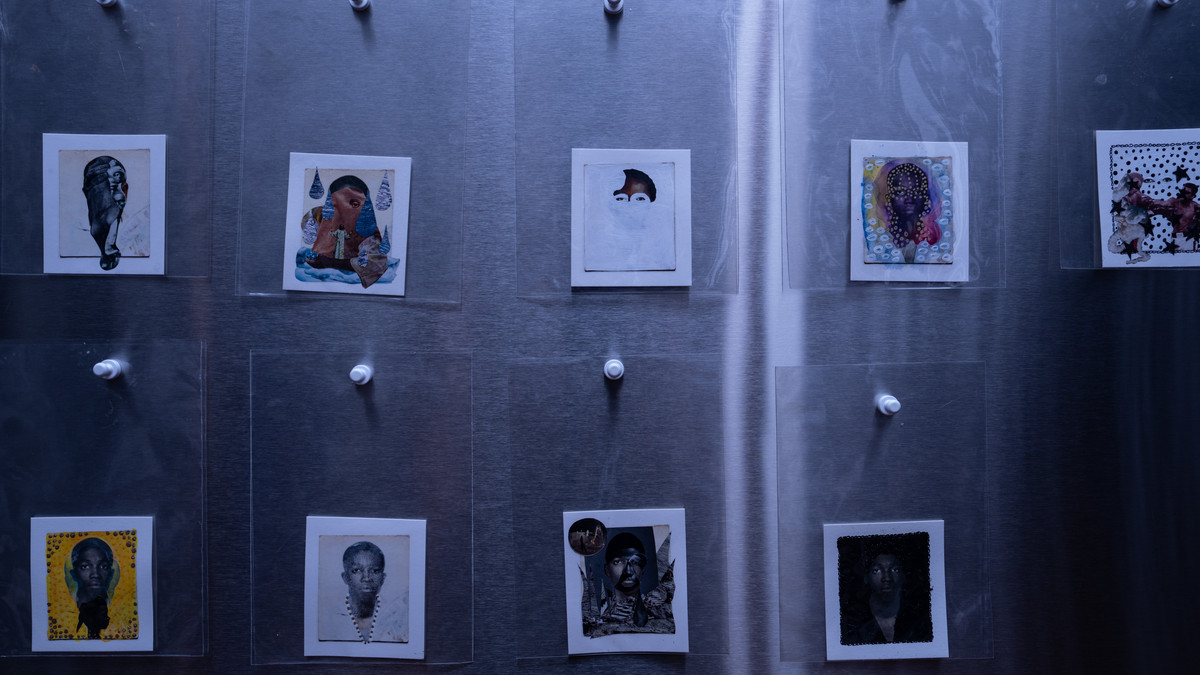
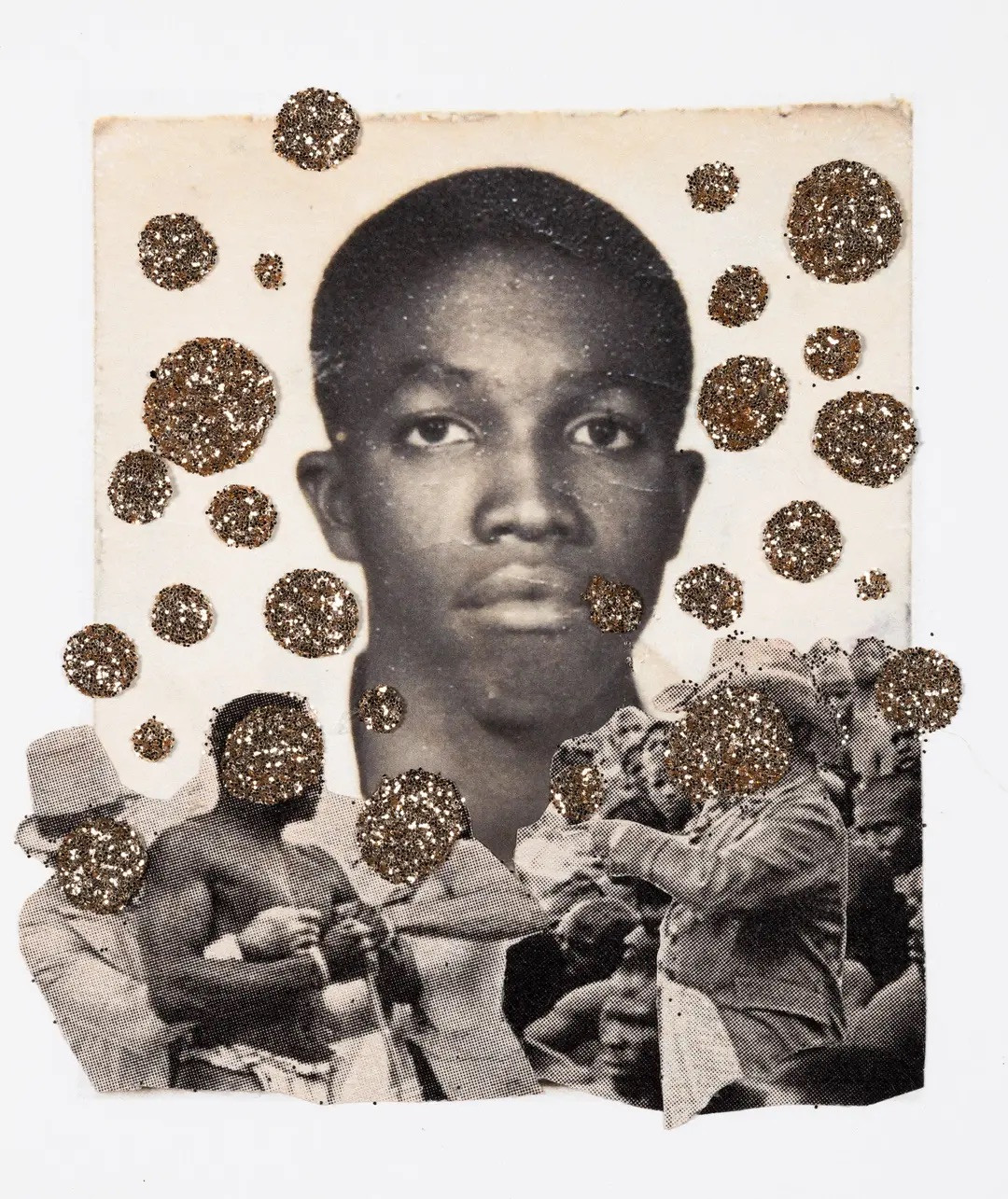
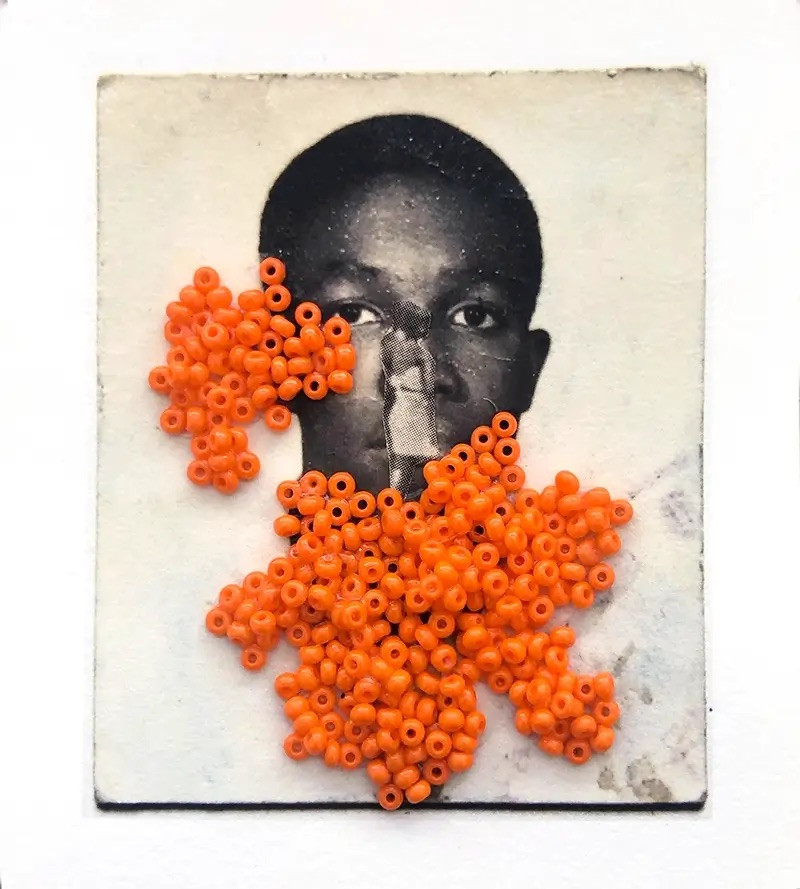
It opened up this decades-long conversation about his decision to come here. I was photographing him and recording our conversations, but I felt something else needed to emerge. As he recounted his story and his first encounters with immigration, his passport photo naturally became the place to engage in a visual exploration. It’s this deceptively mundane space, yet it’s also dense with latent narratives and histories. I gravitated toward activating that space as a way to disrupt what a passport photo could be.
Odufu: Did your perception of your father change through that process?
Scarville: It definitely expanded. This bureaucratic document, also inextricably linked to our physicality, became the place where I got to know my father. I don’t know if he would have shared the depth of his story with me otherwise. It’s an interesting process: getting to know my dad through an ID photo taken long before I was even a thought.
Odufu: When I heard you speak at CARA with Nigel Westmaas, you talked about Guyana being newly independent in the late ’60s while the UK was becoming less open to Caribbean migration. How much of your father’s decision to come to the U.S. was shaped by that larger history, and how much was personal?
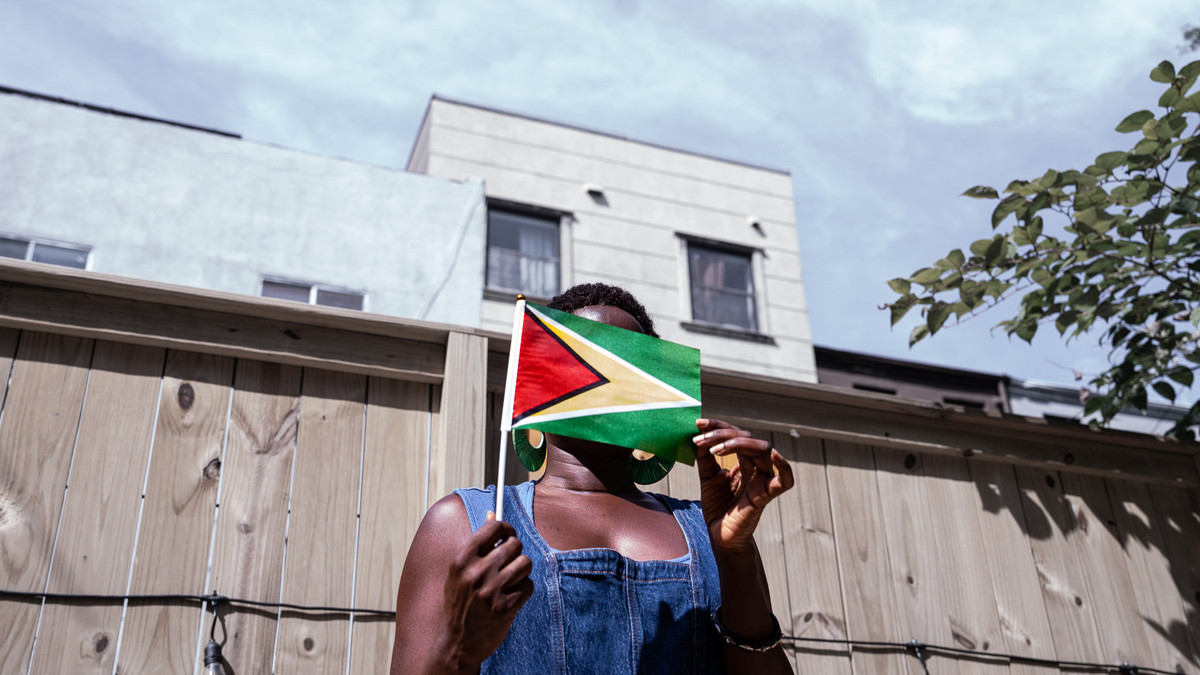
Scarville: After speaking with Nigel and doing my own research, I began to understand the context of the late ’60s in Guyana. Guyana achieved independence from Britain in 1966. While it was this newly independent land, this did not fully negate the political, social, and economic tensions that had previously existed.
One of my first questions to my dad was why he chose the United States to migrate to. He didn’t necessarily put it in the context of what was happening in the UK. The first thing he said was that he was fascinated by the movies. There was something about American cinema that he found alluring, something he wanted to experience. It had this shininess, this prospect of transformation, that really interested him. Ironically, he did not become very political until he moved here to America. That’s when he became much more politically conscious.
Odufu: And the first place he came to was Brooklyn?
Scarville: Yes, Brooklyn. My father arrived on a student visa. He had like $20, and that was all he had. A friend of his from Guyana who had come to the States previously got him a room, and he just made it work from there.
In Guyana, my father was captivated by Black American culture by way of the cinema, but also the music. Then he came here and started to understand what it meant to go from being seen as Afro-Guyanese to being seen as a Black man in America. That experience ignited his political shift.
Odufu: I learned much of my own family history relatively late. My grandmother told me that she and my grandfather had worked as part of the Guyanese government and were avid supporters and friends of Cheddi Jagan and his wife, Janet Rosenberg, around the time of independence. I later learned that my great uncle had been vocal about his dissatisfaction with the president who rose to power after independence and, in some family accounts, left Guyana fearing for his life.
He came to the U.S. to study at Cornell and eventually ended up in Newark. What fascinates me is that he goes from Georgetown amid political turmoil to Newark on the verge of the Newark Rebellion. He leaves one place undergoing enormous political transformation and arrives in another about to experience its own.
My mother and I went back to Guyana about a year and a half ago. It was her first time back in roughly 40 years, and we don’t really have family there anymore. Most of her high school friends are in the U.S. too. When I hear your father’s story, I think about different Guyanese families moving through the same historical moment in very different ways.
Scarville: Yeah. When did your family come?
Odufu: My great uncle came around 1963 and paved the way for everyone else. But my first Guyanese ancestor in the U.S. actually came to Harlem in the 1920s. He lived through the Great Depression era and worked as an auctioneer, which always bewilders me: that he was able to carve out a place for himself in that time.
Scarville: In my work, I’ve been continuously contemplating state power. So much of what happens within the realm of government creates these waves of movement, particularly how the nation-state produces the idea of citizenship. Who is a citizen and a non-citizen and what are the rights afforded to those deemed a citizen? How is the citizen protected or disenfranchised by the state? How are borders created and enforced? I became keenly aware of these connections between nation-states and migration when I started working on this project and sharing it with others.
For my father, most of his family and friends came here to America. My mom’s side, on the other hand, was adamant about not leaving Guyana. Especially my grandmother. They didn’t want any part of America. They were really invested in the possibility of what Guyana could become in the wake of independence.
So it’s two different stories. My dad’s story is almost diametrically opposed to my mom’s side, which has afforded me the ability to go back and experience Guyana in a completely different way.
Odufu: One thing I find fascinating about Guyana is that it exists along multiple cultural axes at once. There’s this deeply Creole aspect to being Guyanese. You grow up eating Chinese food, you grow up eating curry. They aren’t foreign to you. They’re just Guyanese.
But for Afro-Guyanese people like you and me, there’s also this strong Pan-African undercurrent. So there are identities nested inside identities: Black, Caribbean, Guyanese, Afro-Guyanese, and also American.
A passport wants to say: This is who you are. This is your face. This is your nationality. But the person inside that photograph can contain all these multiplicities simultaneously. Did working with your father’s image make you think differently about the fluidity of your own identity?
Scarville: The passport photo is often regarded as a fixed representation of who you are at this moment, before you cross.
I am interested in the ripples of history, but also the speculations about the future that my father carried. There’s a multiplicity embedded in that. Part of this project is allowing those different aspects of being to become seen and breaking the fixedness of the passport photo.
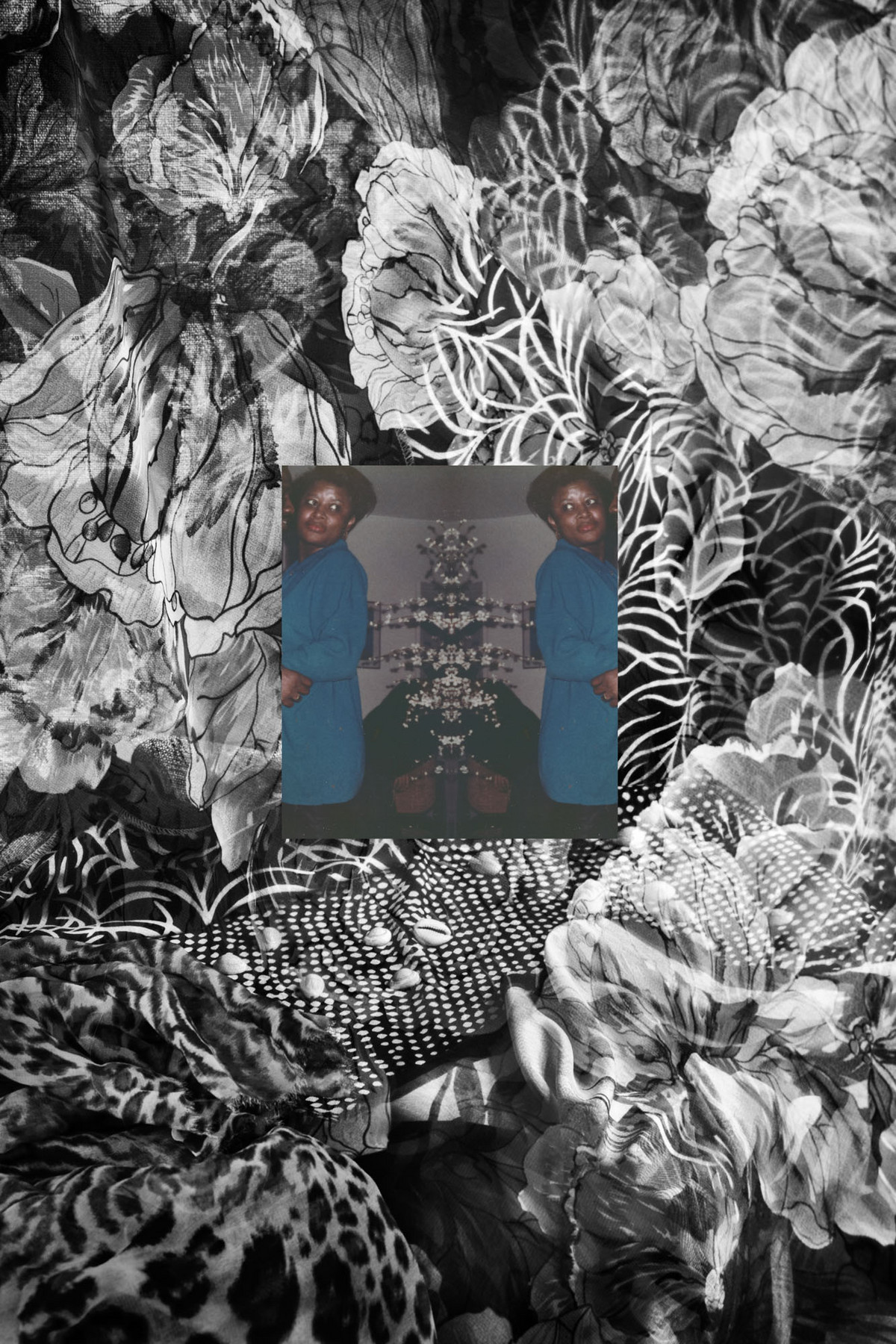
But within it, I am there too. There are also ripples of how my father’s choice to migrate here has affected me as a first-generation. It deeply influences how I think about America versus how my dad thinks about America. There are moments where I’m intentionally layering myself into my father’s image.
From a very early age, my dad would speak to me at length about what it meant to be Pan-African: what it means to define ourselves, to know the fullness of our history, not just what was taught to us in school, to know who we are as Africans within America, within the Caribbean. It was important for him to instill in us a sense of awareness.
I don’t know if I fully appreciated it until later, but working on this project, I began thinking about these concentric circles of my father’s experience, his evolution, what that was embedded in, and now my presence within that too. I keep thinking about the state because the state has so much power over how we define what an immigrant looks like, who an immigrant is, what the values of an immigrant are, or what values an immigrant should have.
Odufu: Looking through the book, there’s something almost ritualistic about the repetition. You keep returning to this one image and finding another way of making it speak.
Scarville: It didn’t start off that way. This work is a wonderful, bottomless well. I was speaking with another artist, Alex Strada, and she mentioned “the perpetual incomplete.” That really spoke to me because it’s very much in line with how I think about this project.
With every gesture and experimentation with the photo, I would call my dad and ask him a question. We’re both early risers, so we would have these morning conversations. After we talked, I would sit with it and work. Now every morning I sit with the image and think about what else can be pulled from it.
I’m thinking about photography as a tool for recording history and carrying narrative. What is the capacity of a photograph to hold history? How much can we pull from it?
I’m a decade-plus into this project, and even while working on the book, there were still things my dad talked about that I had never heard before. For me, there’s always something new to find.
Odufu: Something in your passport photos also reminds me of masquerade and the transformation of identity embedded in that. You’re continually transforming his face, and there’s this longer history of masquerade within Caribbean culture.
Scarville: There are a few where I am really leaning into carnival as inspiration for what could emerge within the passport. Underlying everything is this desire to speak back to the bureaucratic image. I am thinking about how carnival is a radical act that speaks back to the structure of the state. Carnival is an act of resistance.
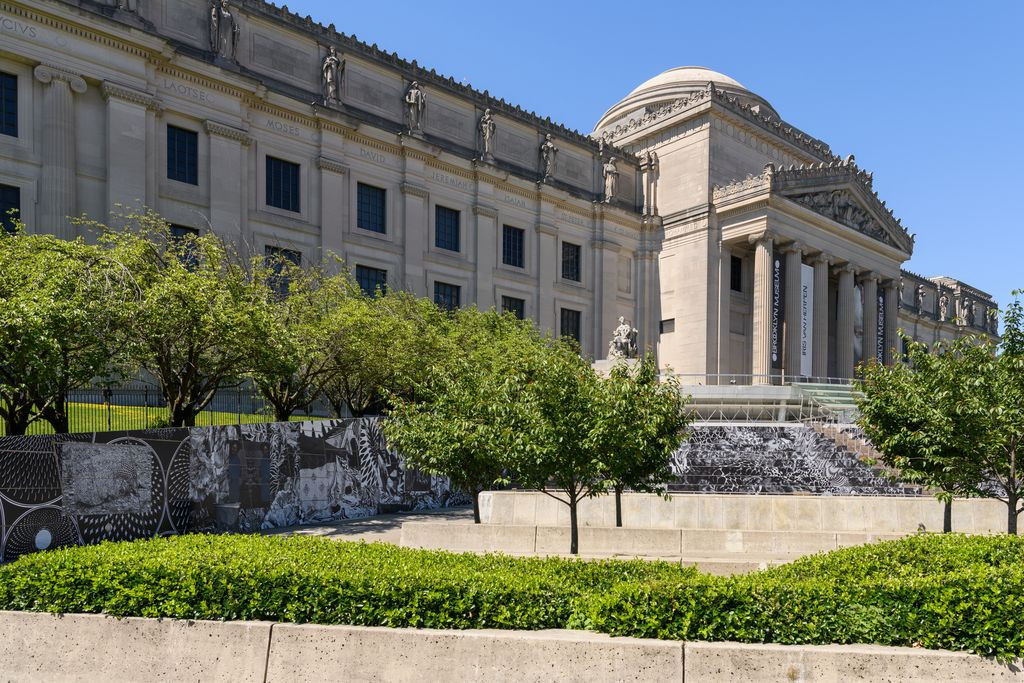
Odufu: Which makes the Brooklyn Museum installation interesting because the Labor Day parade passes directly in front of it. This huge affirmation of Caribbean identity almost becomes a performance element of the work.
Scarville: Yeah, I’m really looking forward to that. I’m going to be out there photographing by the installation. I’m really, really excited about it.
Odufu: Tell me about Where Salt Meets Black Water.
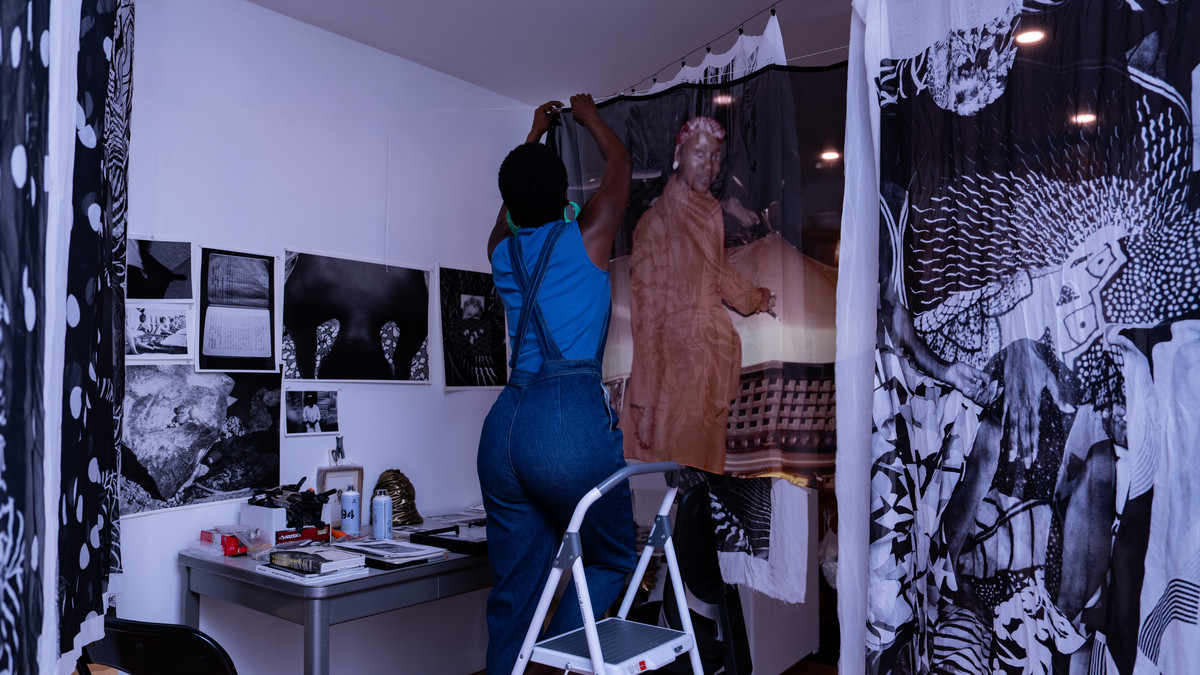
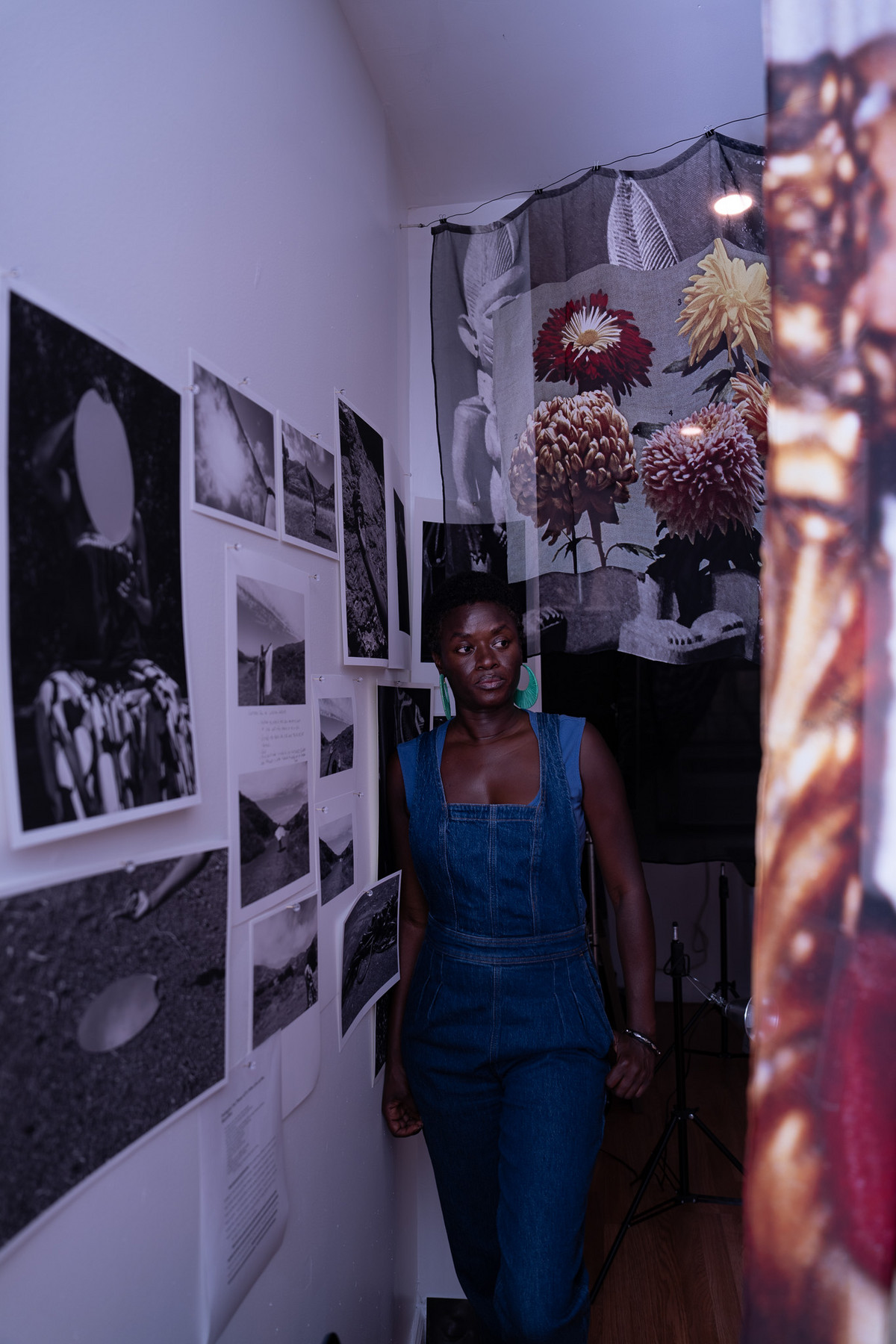
Scarville: Part of the UOVO Prize is that each year they ask an artist to reimagine the façade of the Brooklyn Museum. I knew I wanted to do something that married my relationship to the Caribbean, particularly Guyana, and my relationship to Brooklyn. As a first-generation person, there’s an in-betweenness I’ve carried my whole life as an image maker that informs the images I create. I grew up in Brooklyn, but I have been taking periodic trips to Guyana since I was a little girl.
I wanted to reimagine the facade as the space where these two places meet. I thought about the salt of the ocean and where it meets what they call black water in Guyana. The water is actually dark brown due to the surrounding foliage, which seeps into it. People go there for fun, but some also soak in it because it’s said to have healing properties. I’ve always been fascinated by it and love photographing there.
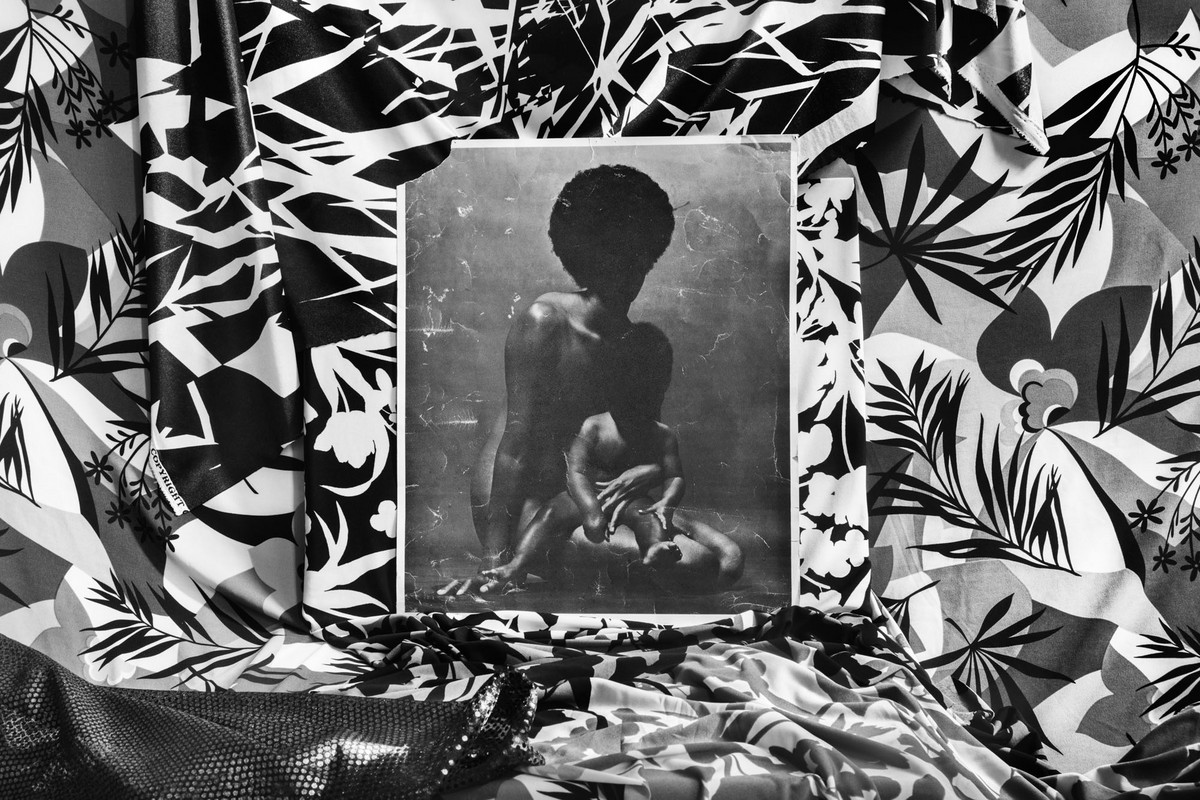
The installation has images from Guyana and images I’ve taken here. I also wanted the space to honor my mom, who passed away in 2015. My dad came in 1967. My mom came the following year, in 1968. Within maybe the first week or month she was here, she saw this photograph someone was selling and purchased it. It was part of our home growing up, and is now part of my home.
A few years ago, I rephotographed it and made interventions to it, similar to how I’m thinking about my dad’s passport photo. I made it the centerpiece of the installation. I’m thinking about how time shifts our perception. I remember first encountering it simply as an image of a woman holding her child, but now it has a more iconic presence. I wanted the space to feel monumental, for people to feel engulfed by it and reside in this in-betweenness along with me. It’s my love letter to first-generation Caribbeans, but also a way to pay tribute to my mom.
Odufu: Do you think growing up with those images shaped your pathway toward becoming an artist?
Scarville: My dad photographed a lot when I was growing up, so that got me interested in photography. My mom had this incredible way of transforming things: decorating, embellishing, and thinking about how to take the ordinary and elevate it. When she made cow-foot soup, she always saved the bones. After washing, bleaching, and drying the bones, she would paint them, write messages on them, and give them to my brother and me. That sparked an artistic impulse in me, whereas my dad made me think about the need for visual documentation.
As a first-generation person, I’m always thinking about how these things I’ve inherited are metabolized through me. My mom’s photograph: how do I interpret it now? My dad’s photo and what it meant for him: how does it get reimagined through me and speak to larger issues?
If I had to pinpoint two individuals who influenced my aspiration to become an artist, I would credit my parents.
Odufu: I’ve been thinking about the possibility of a “Guyanese school” of art. Caribbean art is often treated as one broad conversation, but I keep noticing threads among Guyanese artists: memory, migration, history, landscape, world building, multiplicity. Guyana itself occupies an unusual position: Caribbean, but physically South American and connected to the Amazon. Do you think it’s meaningful to speak about a distinct Guyanese artistic sensibility?
Scarville: That’s an interesting question.
When I think about the Guyanese artists I’m familiar with, Donald Locke, Hew Locke, Ivan Forde, Victor Davson, Suchitra Mattai, and writers like Wilson Harris, who have a very special place in my heart, I do think certain things connect them.
Each Caribbean country has its own history, and of course some things connect us all. But Guyana is uniquely interesting. When I think about these artists, I think about the ways each of them conceptualizes new worlds, new spaces, new ways of being, and how history, the surreal, and memory come into play. I also think about how the landscape ebbs and flows in their imagination.
I don’t know if that’s something uniquely Guyanese, but when I think about each artist, it becomes a kind of commonality for me. The body can occupy more than one space. The landscape can become more than something singular. They’re weaving multiple ways of languaging our existence into their work.
That definitely reflects all these different demographics and cultures that have come together, sometimes beautifully and sometimes with resistance. We carry all these different cultures, and that comes through in the work. I do feel on the periphery sometimes because I was not born in Guyana. But so much of Guyana lives inside of me, and I go back as much as I can because my family is there.
Do I want to claim it as ours and uniquely ours? Hell yeah, I want to claim it as uniquely ours!