The Queer Artists Keeping Rocky Horror Alive


For Sterling Tull, the makeup artist behind the Broadway character’s looks, that relationship started long before landing the job. Growing up Mormon, Tull first encountered Curry through grainy YouTube clips at around twelve years old, after searching for footage of his performance as Pennywise in IT. The suggested video was “Sweet Transvestite.”
“I watched Tim’s magnetic performance on a blurry screen— and it absolutely opened up my world,” Tull recalls. “I had never seen something so strange yet incredibly alluring.”
For the Broadway production, Tull wanted to preserve the film's unmistakable visual identity while pulling from British Trad Goth, New Romantics, Club Kids, Grace Jones, David Bowie, and the drag scene. The result needed to feel “authentic, messy, grimy, and punk.” And while Broadway may be the most visible iteration of Rocky Horror right now, Tull recognizes the shadow cast as an essential part of its survival.
“It demonstrates that Rocky Horror is for everyone and anyone,” Tull says. “I wanted the makeup in the show to reflect the drag and dress-up culture that kept it alive.”
That culture was on full display across New York this October, where two very different productions brought their own interpretations of the iconic Transylvanian castle to life. Both were queer and trans-led, both sold out, and neither had much interest in simply recreating what audiences have already seen.


THE ROCKY HORROR PICTURE SHOW: EXTRA-TRANSSEXUAL
The Rocky Horror Picture Show: Extra-Transsexual had three sold-out shows between The Sultan Room and TV Eye. If the original film was about embracing the strange, this production took that sentiment and ran with it, building an unapologetically trans and queer interpretation with a cast pulled directly from New York's nightlife underground.
Rather than attempting to imitate the original characters, each performer brought their own personality, gender expression, and theatrical sensibility to the role. Latex maid costumes, Sequin capes, red burlesque numbers, and theatrical maximalism transformed the production into an elevated drag show.
Lesbian Bar Princess, Malea Kimberly directed and co-produced the event, opening the night with a burlesque number as the lips. She explained that the goal was to bring in artists who were “loudly queer and trans,” particularly nightlife performers who are theatre kids at heart but feel disenfranchised by commercial theater. “The amount of trans talent that exists in New York is unreal,” says Dykes and Dolls co-founder and the production’s co-producer Anna Campbell. “We all should be hiring trans people as often as we can, both in and out of nightlife.”
For comedian Jer Block, getting to produce and play both Janet Weise and Frank-N-Furter was an opportunity to indulge in a particularly unapologetic side of transness. “As a trans woman, I feel immense pressure… to shoulder a sense of traditional womanhood, since the genesis of my womanhood is untraditional,” she explains. “Frank kicks that feeling in the teeth, and I love embodying him completely.”
The sold-out shows are a pretty good indication that audiences are hungry for exactly this kind of interpretation. What started as a passion project has become an annual Halloween fixture, with a growing cast and an audience eager for more.


LIPS: THE ROCKY HORROR PICTURE SHOW
At House of Yes, producer and director Hex Winters and a cast of flexible freaks brought their own version of the castle to life for multiple sold-out performances throughout October. Now in its fourth year, the production understands that the venue is just as much a part of the experience as the show itself. Set inside a circus-inspired nightlife space, the production leaned into the theatricality of its surroundings while keeping the original film's punk sensibility intact.
This wasn't simply a shadow cast with performers acting out scenes alongside the film. LIPS created its own theatrical moments, incorporating live performance, filmed sequences, and plenty of audience participation. The gender-bending casting was especially fun, with characters reimagined outside their original gender presentations. This show had it all: tap dancing, live tattooing, sword choreography, aerial birdcage numbers, and so many more gags that can only be experienced.
For Winters, the production is an opportunity to push the boundaries of what nightlife performance can look like. “I think we have the best performers in the world,” Winters claims. “I think our show is better than Broadway's, and you can print that.”
The real showstopper was Brooklyn drag artist God Complex as Frank-N-Furter. Bringing a sexy, carefree confidence to the character with A LOT of cigarette smoke, they managed to make the role feel entirely their own. “In the end, Frank is a rock star. A Diva. Confident in her ego. No need to explain herself,” God Complex says. “They don’t need to. They still adore her without definition or explanation. And she doesn’t give a shit. She knows she’s brilliant.”
That attitude extended beyond the stage.
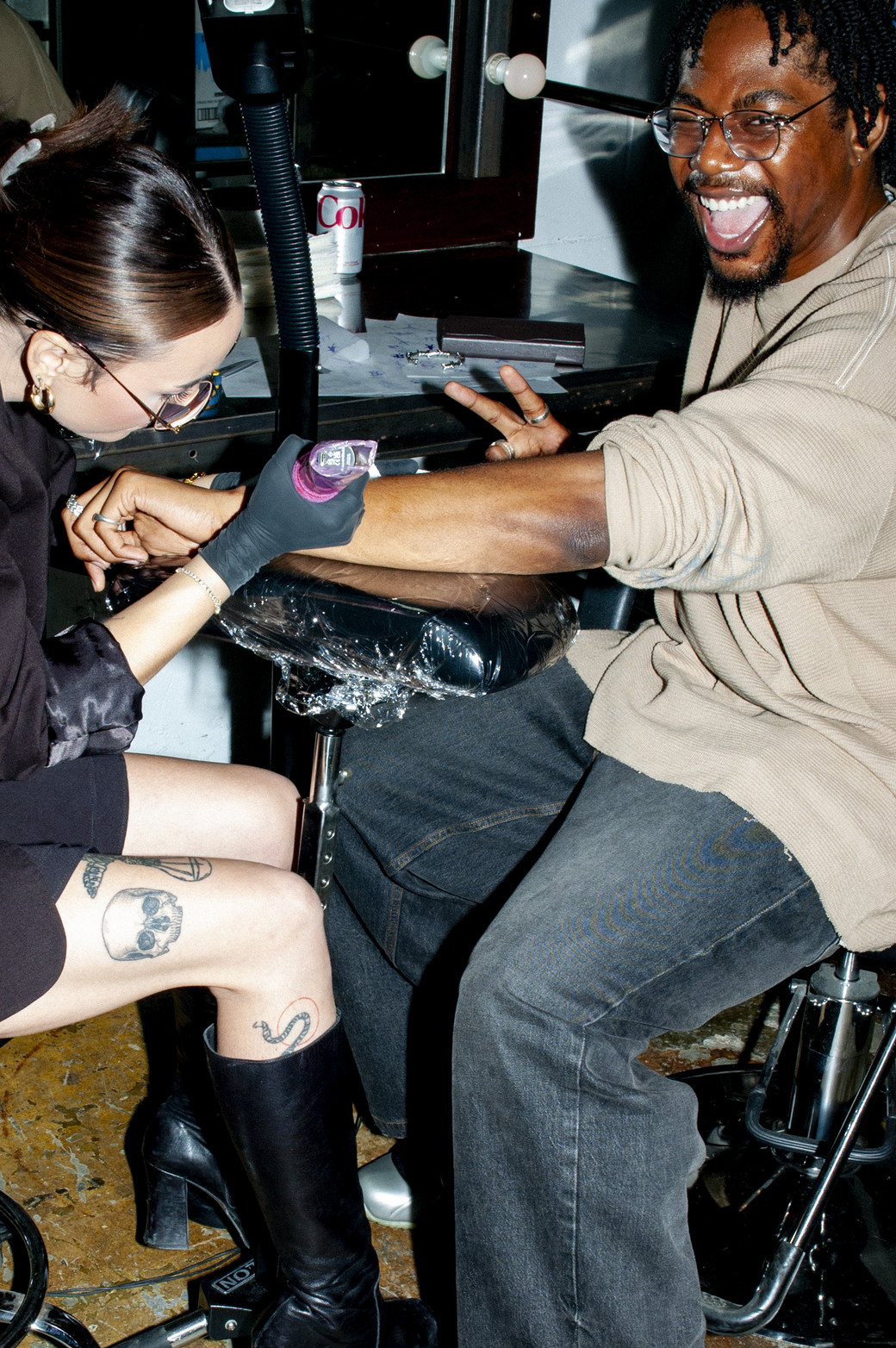
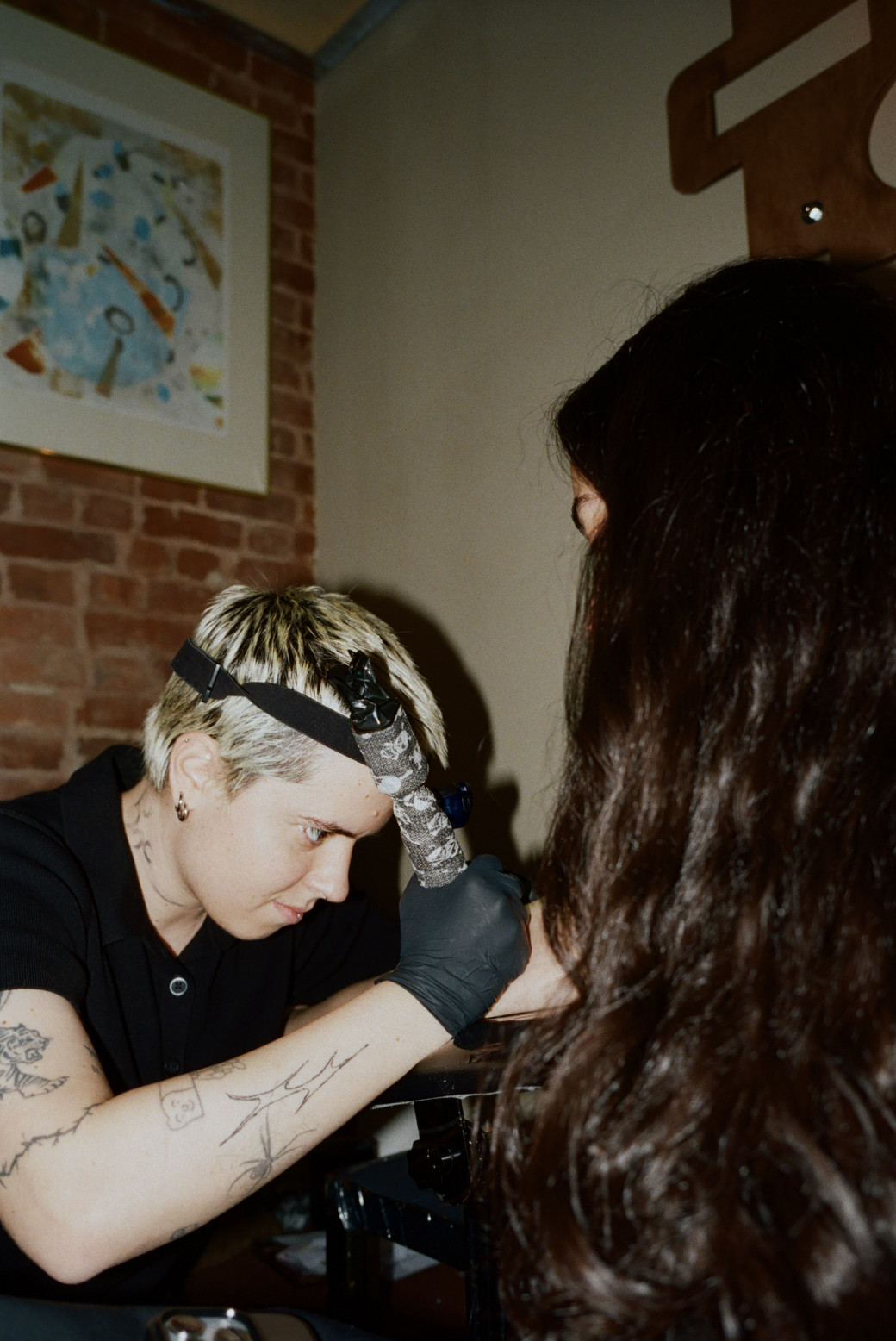
During the first intermission, Riff Raff, played by recently crowned King of Drag, Lollygag gives God Complex a tattoo live on stage. The moment was part of a larger effort to imagine the relationships between characters beyond what audiences see in the original film. God Complex describes the scene as an intimate, charged exchange, even comparing its sailor-on-sailor power play to the work of Tom of Finland. Frank's iconic tattoos, like the “Boss” heart tattoo, became the inspiration for the live collaboration.
With a cast of artists who move between drag, dance, theater, and nightlife, LIPS takes full advantage of everyone's individual talents. The result is a show that feels like a party, a play, and a very horny fever dream all at once.
“The most important thing for our version of this show is that [the audience] take[s] away queer joy and a celebration of real Brooklyn underground performers,” Winters reflects.
And that's perhaps the point. The Rocky Horror Picture Show has never belonged to just one stage, one cast, or one interpretation. Its legacy lives through the people who continue to reinvent it, finding new ways to make its outrageousness feel relevant to another generation.
Broadway might be having its Rocky Horror moment, but New York's underground has been celebrating it all along. If this Halloween proved anything, it's that the film's legacy is in very good hands. So, when next October rolls around, don't just watch from the sidelines. Put on your fishnets, learn the callbacks, and find your local shadow cast. As the song goes, “Let’s do the time warp again.” And again.