You said you've had a lot of near-death experiences. Is there one that you can think of that really changed your view, or contributed to how you think of existentialism now?
One that was kind of scary was like, I was a—[laughs]—there actually have been many. I had an infection from a spider bite when I was thirteen. I got MRSA. I was in the isolation ward. I wasn't really conscious of it then, but, I realize that I was starting to see my body as more of like a container than anything else. Even though I couldn't move, I still was having all of these internal experiences, even though I couldn't access things fully because my arm was like this big [gestures].
I know you've stated the body as an inspiration for your work, but also the natural world. What is the connection between the two? Besides the fact that humans are a part of the natural world, what specifically about the nature of humanity intrigues you?
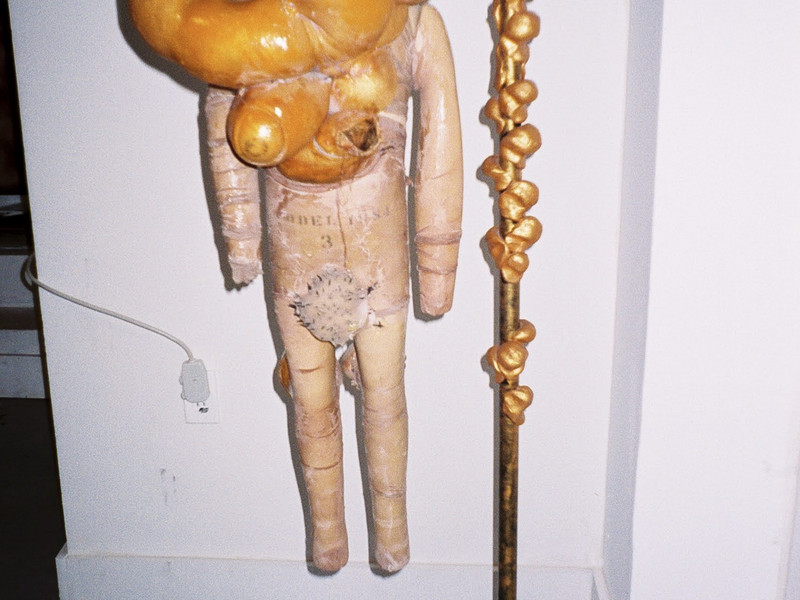
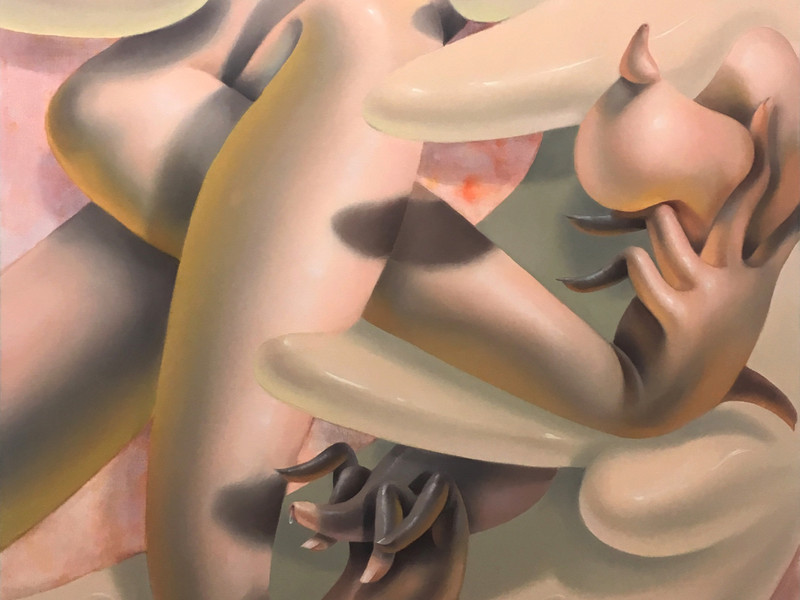
The body was really an entry point for me, maybe for like five to six years. I was doing a lot of body work. I also have taught yoga for like twenty years, and I was taking all of these anatomy classes. I was just very fascinated by bone, and how bone changes shape dependent on how you distribute your weight. Similarly to how glass is alive, bone is rigid and fixed, but it's really very viscous and fluid. So, I became fascinated by that. Although now, I feel like a lot of the work I did about the body is very limited. But, it was where I was at. Moving beyond that, into the foundation of what goes beyond the body, what is beyond the physical? That led me into the natural world, really looking at things that are a mirror to what's going on internally. So, merging these different materials or looking at the very nature of the ground of being—But, really just as a reflection of my internal experience, so less one to one.
Contradicting that question a little bit—I was reading today and something came up that reminded me of this question that made me think in a different way. I'm going to restate the concept for you: "What if the category of person, along with all of its supposedly natural elements (gender, erotic desire, emotions, intelligence etc) is actually produced by culture rather than nature?" What do you think about that?
I think that everybody is definitely shaped by culture. But then, you look back at ancient cave paintings—I don't know what it would've been like to be in a body at that time, but there was a version of culture in that as well. But beyond that, my experience has been that we are all one. We all have these different personalities, et cetera. But the soul, or the spirit, is like the ocean– a vast, vast ocean. Each soul is like one drop of water in the ocean. And we are all having these experiences that are affected by the times, by all of these things.
That’s a great analogy. I've never heard somebody explain it like that. I think it's a really beautiful way of describing the essence of humanity. It's very accurate.
That's really coming from my school, from my teacher. The path that I’m on is called The Path of Soul Transcendence. It's the direct experience of what is beyond everything physical. We're all swimming in this ocean together, and that makes me really responsible, because what I do is going to affect somebody else.