I always tell people that, at least in high fashion, that it is a show, and even if it’s a dull, purely aesthetic story about lines or something, still there always a little bit of a narrative in some way—but with you guys it is almost like analyzing an artwork with a lot of disparate elements and symbols.
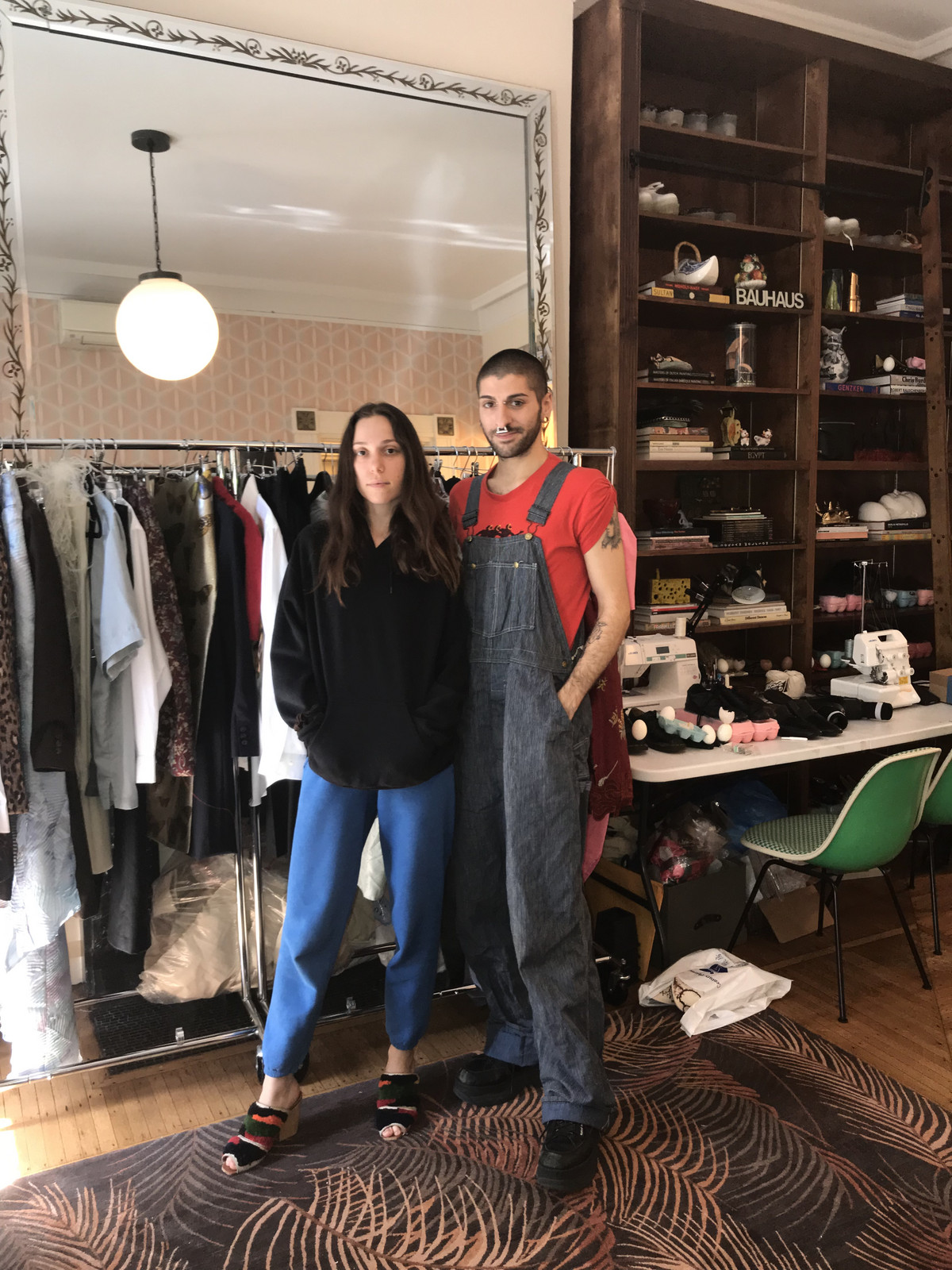
Carly: We’ve come from the fine art angle—I’m used to installing a show, I’m used to conceiving a show, I do think about it conceptually before we even start making the garments, we’re working on the boards right now for season three, and what that entails is pulling images, watching movies, finding references, but more than that having a conversation about why: why this theme, why these references, what it means to intersect these ideas. I went to art school and spent four years in critiques, so it’s the only way I know how to start a project.
From the point of view of critique—I do the same thing, I critique it as I’m making it.
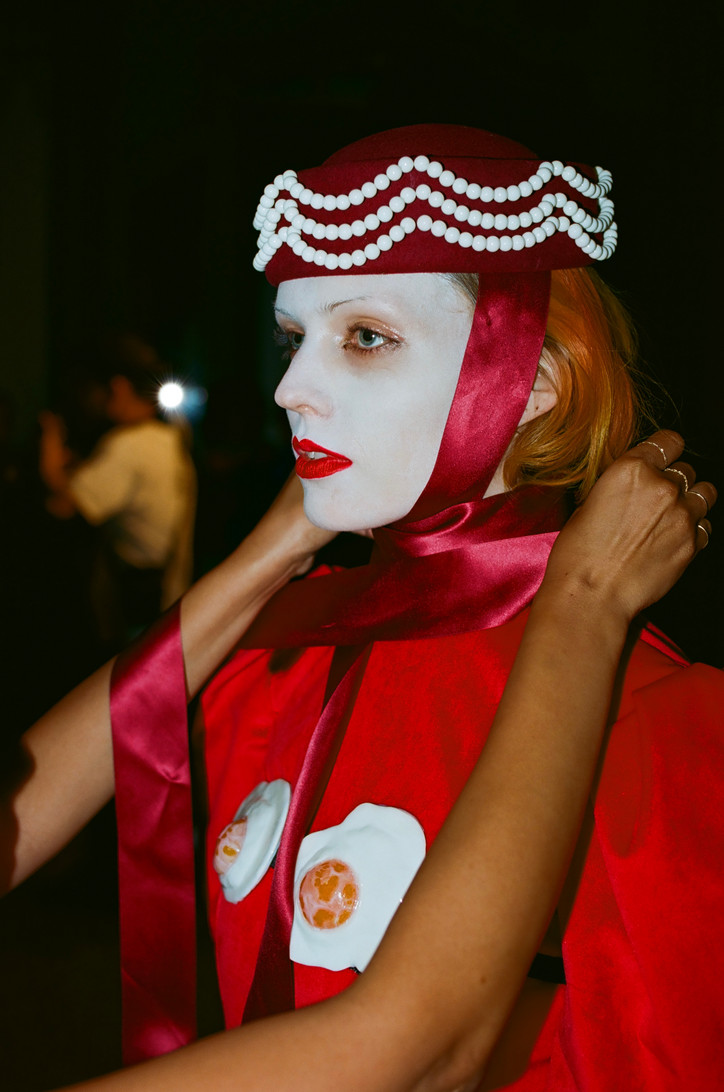
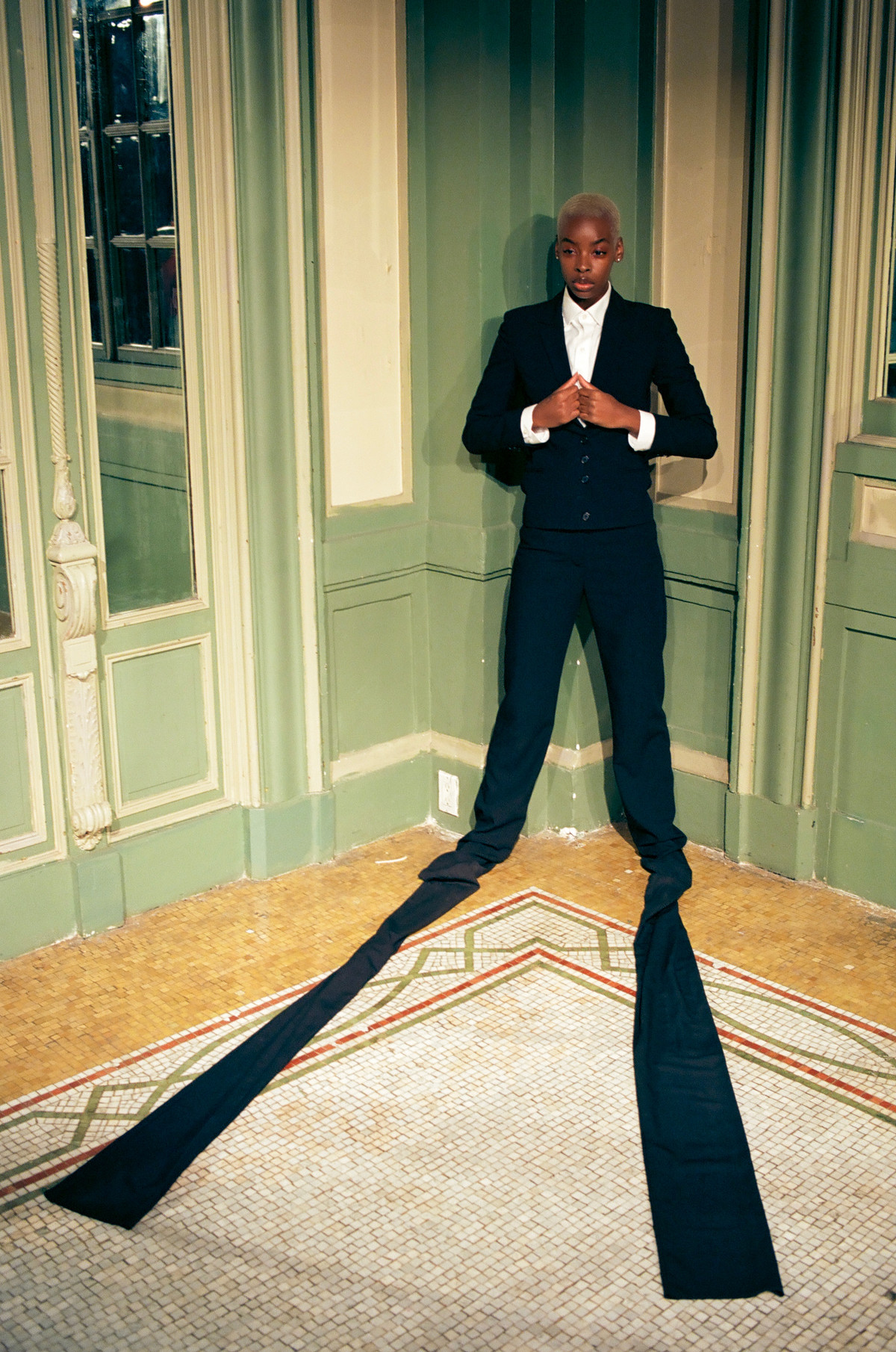
Carly: Last season, I knew I wanted us to work on a Romanov theme, I knew I wanted to focus on Fabergé, but we sat down and talked about what it would mean to make a Romanov-inspired collection as an American at this period in time given the political terrain. First we had to weigh, like, is that even a conversation we’re allowed to have—is that cultural appropriation? Or are we allowed to have it because it is such a hotbed topic right now? Because it is, we were more drawn to it, I think, and we looked at the ways it relates to America and our political situation, collusion, etc. and so we brought in the American Psycho angle in order to have that conversation. So the eggs, they were Fabergé-inspired, but once we started talking about collusion and ‘walking on eggshells’, it also made sense.
Ayla: There are a lot of eggs in cinema, too, like 80s power lunches where lawyers go and have their brunch while doing business, so it’s like this weird cross.
Carly: I’m also a huge fan of Marcel Broodthaers’ egg sculptures—he had a gorgeous retrospective at the MoMa a few years ago, he was such a poetic conceptual artist, so those were on the board as well. We gelled together all these things and also made sure they were in line with what’s going on in the world today or more specifically this country and why we’re talking about it. So that’s where we start. That’s the conversation we’re having now.
What’s going on in the world.
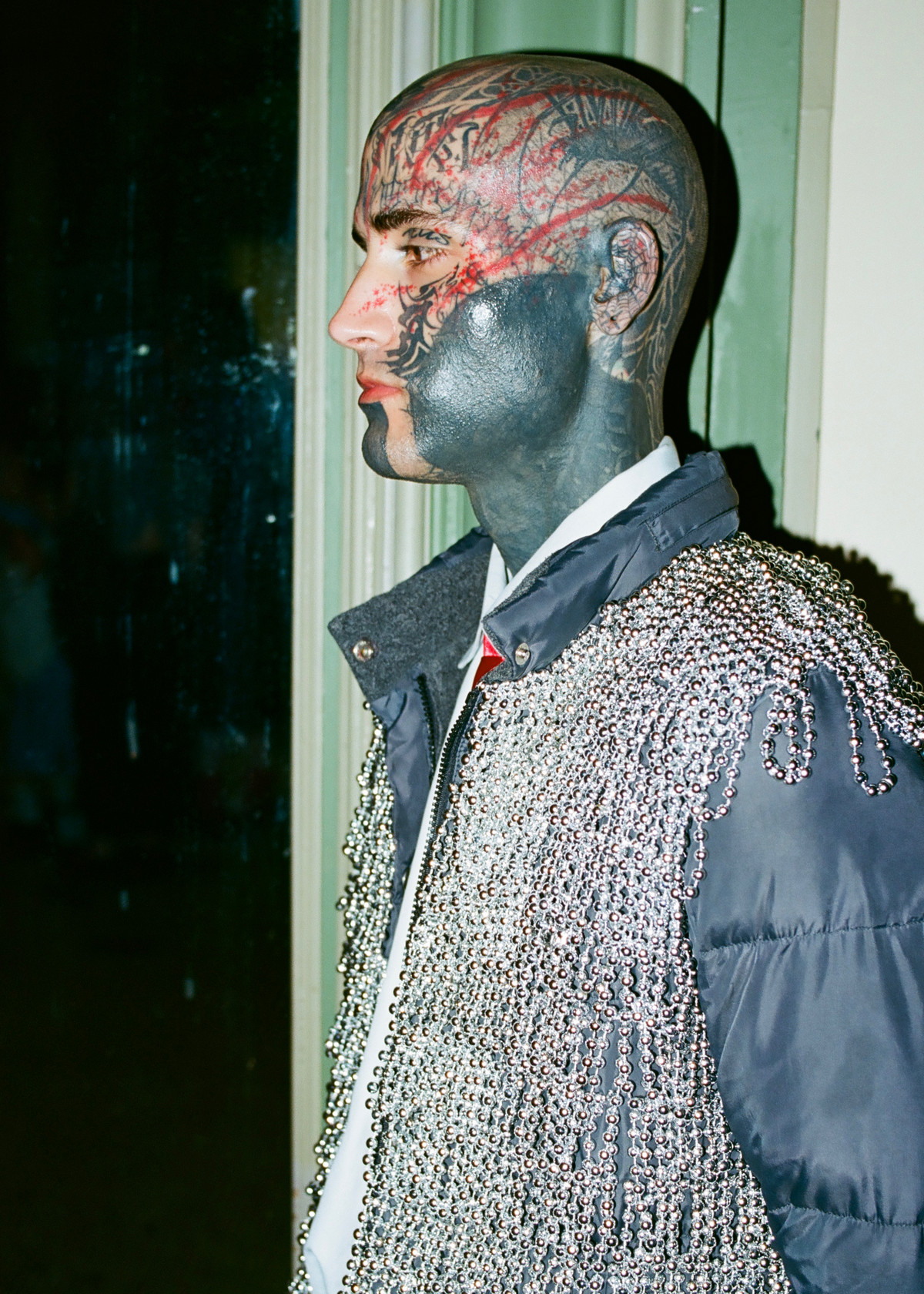
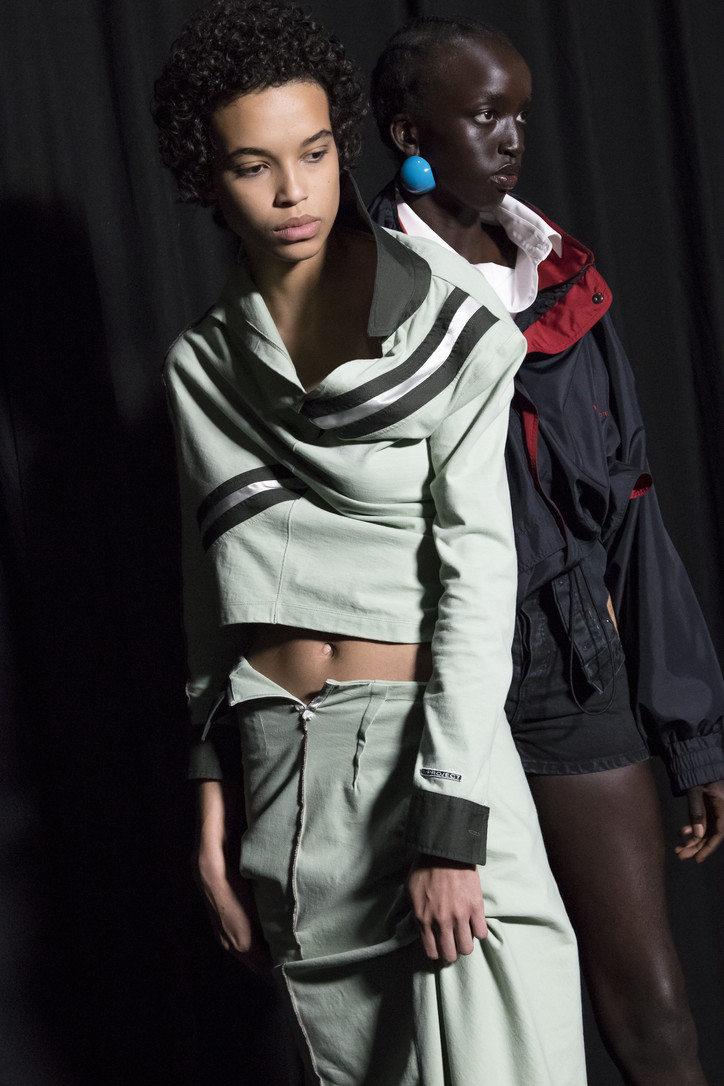
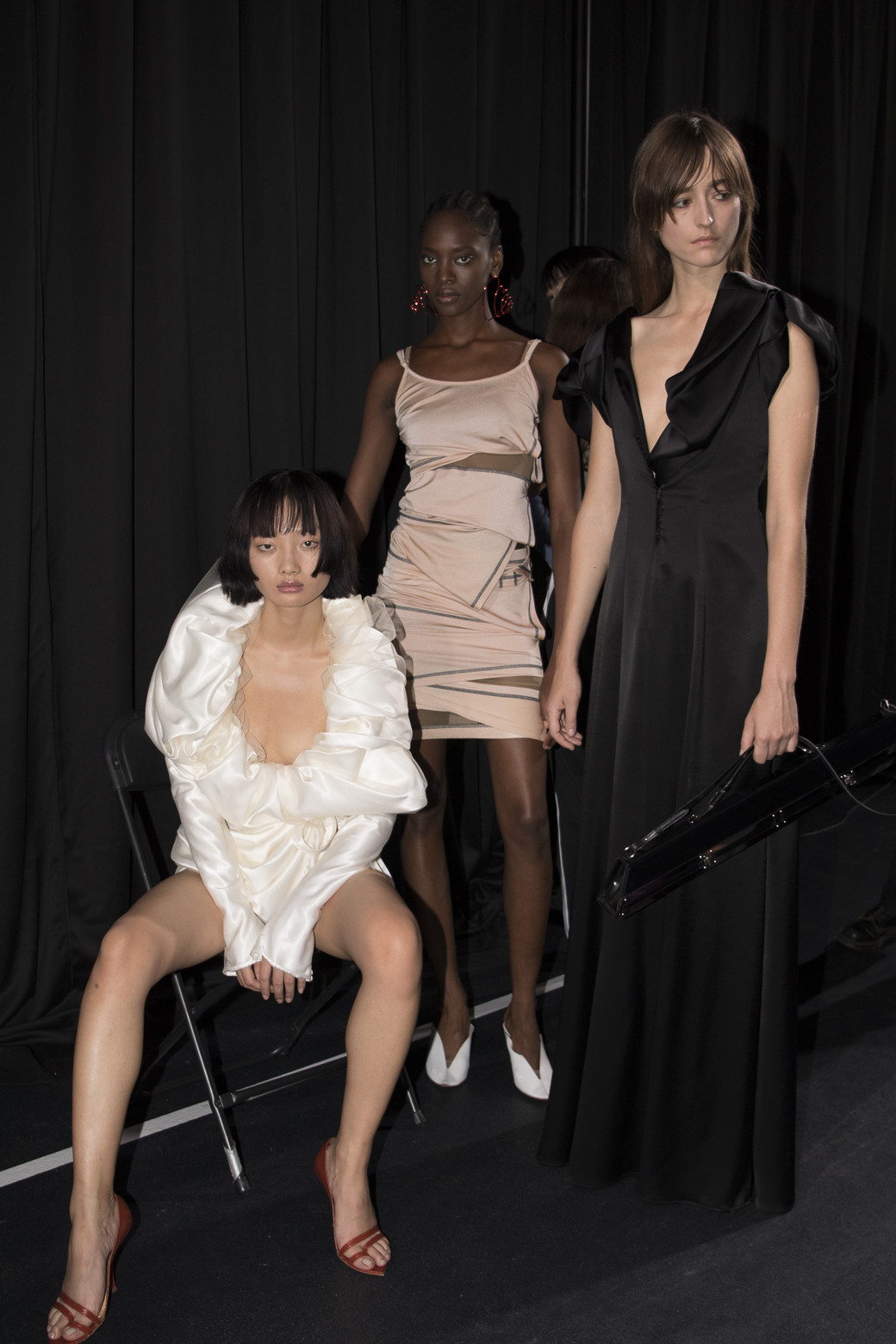
Carly: What’s going on in the world, what themes are we drawn to and why, so that we’re not just making objects, we’re not just making garments, we’re having a bigger conversation. I think that’s what’s really exciting about fashion. It’s really fast, but it reaches a large audience—bigger than fine art, in my opinion—it’s on a body, it moves on a body, and when you place it on a specific body, it changes the context of it and pushes the conversation even further. It’s a very spicy medium, and I really like that.
Ayla: I think part of it too is to realize how tangible fashion is for people to understand. Some people get so frustrated because they go into an art museum and they can’t connect with something on that deeper intellectual level, but fashion you don’t necessarily have to. We all dress ourselves, you just see something that you’d like to wear without getting the bigger reference, I think that’s okay too, it makes people more comfortable and safe to engage with it.