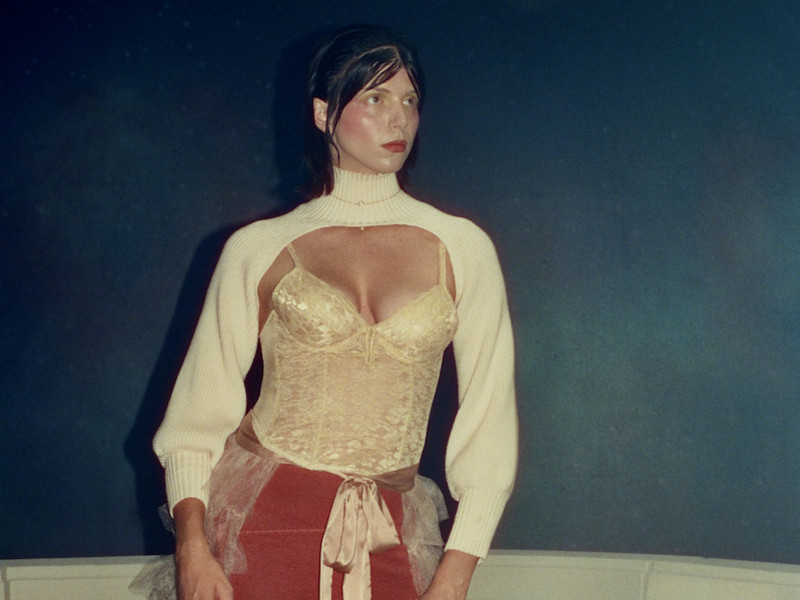
Premiere: Merely - "I'm Your Lover"
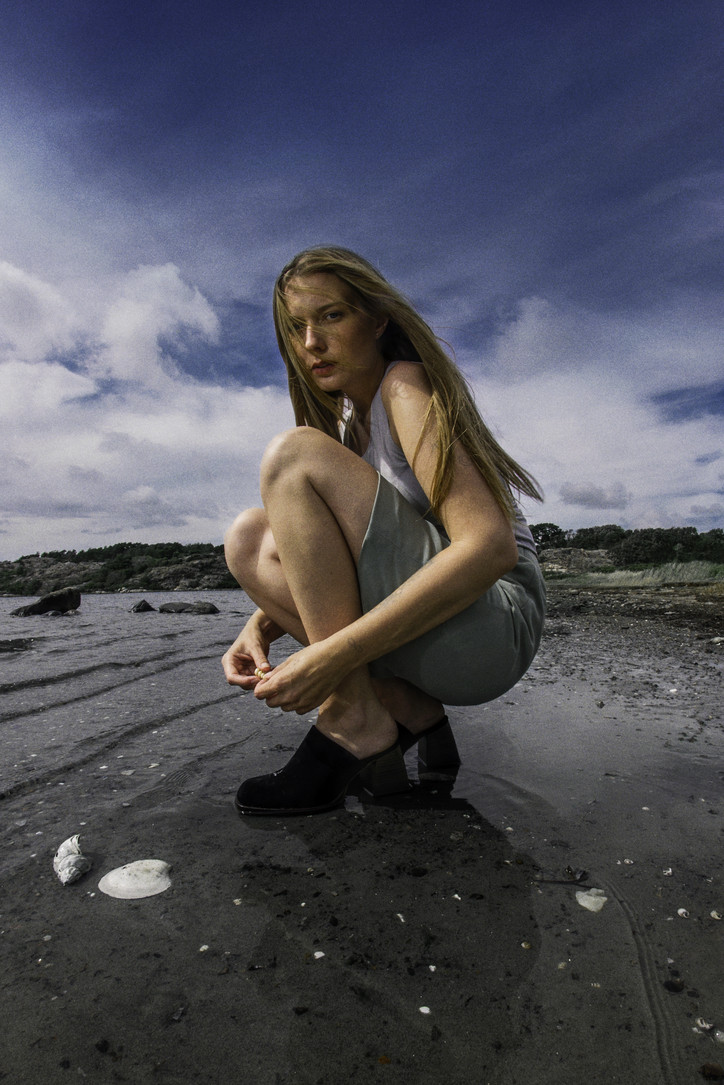
It certainly does have a direct and pop-y vibe, but still keeps with the artist's mystical energy. This song will make you fall in love, if not harder and faster with your lover, then with Merely.
Listen below.
It certainly does have a direct and pop-y vibe, but still keeps with the artist's mystical energy. This song will make you fall in love, if not harder and faster with your lover, then with Merely.
Listen below.

You grew up in Santurce, surrounded by salsa, trained as a saxophonist, studied biology, then theatre, before eventually becoming RaiNao. Which of those past lives do you hear most clearly in your music today?
Each of those stages, together with the decisions, experiences, and people that shaped them, has made me who I am and says a lot about my principles. It’s as if every moment has been an essential part of a construction that isn’t finished yet, that continues to grow and evolve in my mind. But I do believe my music is deeply nourished by three things: growing up in Santurce, Puerto Rico; my relationship with the saxophone; and my passion for theater.
You’ve spoken about wanting to “change the color” of urbano. What color is it to you right now?
It’s iridescent—it’s constantly changing, just as my music and I are constantly changing. But I can say that right now, it’s green: like hope, like Puerto Rico, and like Marcriá.

Your music can move through reggaeton, jazz, R&B, salsa, drum & bass and Caribbean rhythms without asking permission from any one genre. Do genres still feel useful to you, or are they increasingly something music needs to escape?
I believe in the power of music, and of course I turn to genres that I love and that inspire me, especially because of the respect I have for them and my desire to discover and learn. But once I begin, I like to play, to flirt with what I know and what I don’t. I move away from rigidity and rules—I try everything. I don’t create with the intention of replicating a genre, but rather of making it my own, in the most perfectly free way possible…
Puerto Rico is a small island whose music has completely reshaped global pop culture. What do you think the rest of the world understands or misunderstands about Puerto Rican culture right now?
Puerto Ricans deeply respect and protect our culture. I would dare to say that our creations aren’t pretentious, but rather filled with sincerity and an immense, healthy sense of pride. I don’t feel that we are consumed with trying to achieve certain perceptions. The magic of Puerto Rico is its people, and inevitably that magic has spread throughout the world with love and courage.


Your album Marcriá began with sensory memories rather than songs: colors, tastes, water, emotions. If you had to describe the world of RaiNao without using sound at all, what would we see, smell, touch or taste?
I know exactly what Marcriá feels like. It’s like floating in water; it’s green and it shines like an emerald. It was born in El Paraíso de la Dulzura: Puerto Rico, and it tastes like avocado. My own universe is constantly changing, but it always feels like a refuge. It may sound strange, but the best way to describe it is through silence. It feels like touching my plants or petting my animals; it smells like my home, my grandmother’s home, and sometimes like rain; and it tastes mysterious, like the sea.
You went from being afraid to sing publicly to sharing stages with Bad Bunny in front of tens of thousands of people. Has becoming more visible made you feel more powerful, or more protective of the person behind RaiNao?
If I’m being honest, becoming more visible has made me more afraid, but vulnerability is a very valuable part of art. I protect myself and take care of myself, but I dare to give enough of myself, to feel enough. It’s a beautiful way to connect and to communicate.

Urbano and reggaeton were historically spaces dominated by men, while some of the most interesting voices coming from Puerto Rico today are women and queer artists. Do you feel your generation is changing not only the sound of the genre, but who gets to define it?
I truly believe that. There is still a long way to go and many doors left to open, especially within the music industry, but this generation has created without limits, expressed itself freely, and embraced art as a tool for change.
Your name contains “right now,” and you’ve described RaiNao almost as a philosophy of living in the present. At a moment when your career is moving incredibly quickly, what does “right now” mean to you today?
The simplest, most valuable, and most fleeting things in life: my health, the people I love and my communities; living fully; my peace and my boundaries; dancing; creating freely and sincerely; connecting; learning; growing alongside my people with my feet firmly on the ground; being a messenger through art…


“I wanted to be swirled in the thick viscosity of my emotions, without having too much of a bird’s-eye view of them,” she tells me. “Those feelings are hard to remember after a while.” On the art pop album’s third track, Practical Amnesia, she explores this tension between feeling and forgetting: “I know it was like ten million wasp stings around my G-string / But in my memory, it was the kiss of a butterfly wing.”
At first, when she spoke to those around her, she felt that her feelings sounded clichéd. “But, from the inside, it doesn’t feel that way. It feels so profound and unprecedented. That tension is beautifully frustrating,” she reflects, considering the nature of motherhood. A paradoxical experience, both universal and entirely unique. “Clichés are clichés for a reason. You just have to embrace them.”


“She is my ultimate muse,” she says about her daughter, Nova. “She is more of a muse to me than anything has ever been, which was why it was so easy to write those love songs. That’s why artists cherish their muses, because it makes art easy to create.” The singer goes on to say, “It wasn’t just her. It goes beyond her. It’s the whole experience as well.” For Eartheater, motherhood is not simply a source of inspiration, but a new perspective on creativity.
Eartheater’s early experiences with motherhood have been challenging, to say the least, from undergoing an emergency C-section to fighting a serious infection and completely losing her appetite to the point of wasting away. “I developed an abscess filled with all this stuff. Sorry, this is gross,” she laughs, midway through recounting the pusfilled details of her post-birth recovery. “This sounds horrible, right?”
She speaks about an experience that could easily have been overwhelming with complete calmness and humour. “At a certain point, I just thought, ‘This is all totally fine. To get my baby, it’s all worth it,’” she says. Motherhood has powerfully changed her perspective, not by erasing the pain, but by framing it as part of a journey. “[That’s] the most surprising thing, how in any other scenario, it would all be difficult and painful, but through the portal of becoming a mother, it was so easy.”


EARTHEATER wears DRESS by MALIA QUIGLEY, BRA by SHOW PONY, RING by LUNACI and SHOES by MANOLO BLAHNIK
Eartheater is speaking to me from her childhood home, a farm in Pennsylvania, a place she has spent much of her adult life dreaming of returning to. When she was 15, her mother had to sell the property. Deeply upset, she promised her brother that she would one day buy it back. Since then, the property has been a north star in her life. A romanticized mental pala- ce to escape to in tough times.
“There was something uncanny about my attachment to the property because it became a huge obsession in my mind,” she says. “I poured blood, sweat and tears into that place, even as a kid.”
Almost two decades had passed, and to her dismay, she heard from a friend that the farm had been sold to another buyer. “I don’t think I’ve ever been so angry, because I was in a position to buy it,” she vented, having recently completed a major job for Mugler and H&M. At that point, she gave up on her dream of buying back the farm.
Around two years later, Eartheater and her husband decided it was time to buy property together. So, while visiting family in Pennsylvania, she was listlessly scrolling, looking at houses on her phone when the farm slid across the screen. At first, she couldn’t believe it. She just thought it was a similar-looking property. But as it turned out, it was the very house she grew up in.


EARTHEATER wears BRA by FLEUR DE MAL and SKIRT by NORMA KAMALI
So, the next morning, they went to visit the house. Extraordinarily, three weeks later she found out she was pregnant. As the clinic staff estimated the day of conception, it became clear that she had conceived the very night that they viewed the house.
At this point, Nova joins us to sit on her mother’s lap. Dressed in a long-sleeved striped T-shirt and neon green trousers, I remark that she is already a little fashionista. “It’s just so fun. It’s like having a little doll,” Eartheater replies.
Her own fashion taste was shaped by Alexander McQueen, particularly by his iconic AW06 show, The Widows of Culloden, in which Kate Moss appears by hologram. “I remember being about 18 when I saw that, and it changed my life,” she recalls. McQueen’s intricate world-building and delicate balance between beauty and ugliness left a lasting mark on her own musical and visual artistry. As we speak, she takes me over to her bookcase to show me her McQueen books, two of which are carefully nestled beside an issue of office.


EARTHEATER wears TOP and SKIRT by MELITTA MAUMEISTER, JEWELRY by DINOSAUR DESIGNS, SHOES by RICK OWENS
These days, Eartheater and her husband, Will, are devotees of Margiela. “My husband is a Margiela guy,” she remarks, recalling how she first found her love for the brand through his eyes. “The exposed stitching is a metaphor for how I approach sound: allowing the guts of things to pour out.”
But despite her deep love for fashion, she doesn’t really have a dedicated fashion muse. “I feel like my muse is finding so- mething beautiful in everything,” she reflects. “I’m chronically over-inspired. I’m such a romantic.”
Her romanticism finds its clearest expression on her album through its third single, Crown Jewel, an ode to Nova’s beauty: “The earth didn’t drop a flower / Until way after the T-Rex / Nature got more lovely as time went on / And it all led up to you.” Inspired by a Neil deGrasse Tyson documentary, she considers the idea that, despite how unlikely it seems at times, the world is evolving into a more peaceful and beautiful state, with her world culminating in Nova.


EARTHEATER wears SHIRT by BALENCIAGA, HEADPIECE by BLUE ACMES
Returning to the farm and giving birth has made Eartheater truly consider the personal journey she has gone on. “I entered the world picking up where my mom was in life. Through my own life, I expanded beyond that in an exponential way, in terms of openness and curiosity,” she says, thinking about how a parent’s personal growth can have an impact on where a child starts off. “It gave me such a huge feeling of excitement to know that I was bringing my daughter into the world at that level.”
Alongside transforming her artistic life, becoming a mother has also brought her closer to her own mother, whom she had previously had a strained relationship with. “My mom is really religious, and I was a difficult child for her in terms of her life, which was about saving your soul and doing God’s will,” she shares. Motherhood gave her the perspective and compassion to understand her own mother’s choices and lived experience.
As our conversation comes to a close, I ask Eartheater what traits she hopes Nova inherits from her above all else. “My sense of wonderment, and my sense of humour. And kindness. Just being kind,” she replies. Only time will tell who Nova becomes, but for now, Eartheater is content with marveling. Her work will continue to be inspired by Nova, because if one thing is true, “babies cut through the bullshit.”

You were classically trained on piano from the age of four. Classical music and techno can appear culturally opposite. Do they actually feel that different to you?
Musically, they’re quite far apart, of course, but I have a deep love for both. My classical piano training has greatly influenced the way I write melodies, which naturally carries over into my techno productions.
I also love bringing those two worlds together: combining the elegance, emotional depth and sensitivity of classical music with the darkness and raw physical energy of techno. Both evoke very strong emotions in me, even if they do so in different ways. That emotional connection is why I feel equally drawn to both.
Today everything outside the club seems increasingly disembodied and mediated through screens, while dance music is becoming faster, louder and more physically demanding. Do you think people are searching for their bodies again?
I can only speak for myself, but this is something I’ve been thinking about a lot lately. I love playing on big stages with incredible production, and the energy in those settings can be extraordinary. Fast, energetic music asks a lot of you physically, so I do think it can be a way for people to reconnect with their bodies.
But I also think part of what we’re seeing is a blurring of boundaries between scenes. Genres like hardcore and hardstyle used to have their own distinct communities, with relatively little overlap with techno. Someone deeply involved in those scenes wouldn’t necessarily have gone to a techno club or festival, and vice versa.
Today, you can hear a much wider range of genres across a single festival or even within one night at a club. Audiences seem more open to different sounds, and that openness creates more room for those influences to mix.
Ultimately, though, people choose where they go and what they want to hear. There are still clubs, events and line-ups offering different sounds and experiences. I don’t think we should overlook the fact that people actively seek out this intensity because they enjoy it. Whether they consciously see it as reconnecting with their bodies is another question, but the physical connection can certainly be there.


Hard and fast electronic music has moved from relatively specific underground scenes into fashion shows, TikTok, festivals and mainstream youth culture. What happens to an underground when everyone suddenly wants to belong to it?
This debate has been going on for quite some time, especially among people who have been part of the scene for decades, or who helped shape techno in the first place. I understand why seeing that culture absorbed into the mainstream can feel uncomfortable. But I don’t think its growing popularity is inherently a bad thing. Cultures evolve.
Techno, music and club culture have been at the centre of my life since I was young, and everyone else has the same right to discover them and make them part of their lives. Of course, when enough people become involved, something that was once underground becomes mainstream. But being new to a scene doesn’t make someone’s connection to it less legitimate.
I also find it somewhat hypocritical when artists dismiss wider recognition outright. You want your music to be heard and to connect with people; at a certain scale, that inevitably brings you into the mainstream.
And the underground hasn’t disappeared. You can still find it if you look for it. Berlin, for example, has always maintained its own identity. Some people now describe the former techno capital as outdated, but the spaces and communities they claim to miss still exist there. The same is true of many other cities, with incredible clubs and independent collectives. Those places often have very little interest in being photographed or filmed, so you don’t necessarily see them online. That doesn’t mean they’re no longer there.

Techno historically carried ideas of futurism, resistance and alternative community. When you look at the culture surrounding the music today, do you still feel that political impulse?
Honestly, no — or at least nowhere near as strongly as I used to. Years ago, when I spoke out more frequently about political or controversial issues, I would immediately receive comments from strangers saying, “Techno isn’t political.” For me, it always has been, and I wish that understanding were more present in the culture today.
I understood techno as a movement, a community that offered a sense of safety and belonging to people from different backgrounds. Unfortunately, I no longer feel that same collective spirit as strongly.
Your sets refuse to stay within one genre, moving between techno, hardcore, jungle, drum & bass and psytrance. At a moment when algorithms constantly try to categorise our taste and identity, is refusing categories important to you?
It isn’t a conscious statement against categorisation. I simply couldn’t limit myself to one genre. There’s too much music I love and want to play, and I would get bored very quickly if I had to stay within a single sound. The variety in my sets is a natural expression of my curiosity and taste.
Berlin has been mythologised for decades as a place where people could disappear, experiment and become someone else. Now that its nightlife has become a global cultural export, does that freedom still exist?
Berlin’s nightlife is where I grew up—musically, emotionally and, quite literally, into adulthood. It’s also where I met many of the people who remain my closest friends.
Nightlife in many places feels very different from what it did ten years ago. What I appreciate about Berlin is that, in my experience, it has retained more of its character than many other cities. For me, that freedom still exists. You just have to find the right places and the right people.


You’ve described wanting your sets to feel sexy. What does sexiness mean in a culture that can sometimes confuse extremity with intensity?
When I’m on a dance floor, I need groove and drums that make me feel connected to my body. When the rhythm really connects with you, it changes the way you move and the way you experience yourself.
That’s what I mean by sexy: that feeling of being completely in sync with the music, comfortable in your body and absorbed in the movement. It’s something you feel from within.
If every generation creates the nightlife it needs, what do you think the speed, darkness, euphoria and intensity of this generation's club music tell us about the world we're living in right now?
When I look at the music attracting the most attention, the increasingly elaborate productions and the popularity of huge events, I see a culture that is constantly seeking more stimulation. Social media and the need for recognition seem deeply connected to that.
Sometimes it feels as though we’ve become so accustomed to constant rewards that we’re less sensitive to what’s in front of us. Everything has to be bigger, faster or more spectacular to hold our attention.
Perhaps that also explains why a dark, fog-filled room with an incredible sound system, no phones and barely enough light to see the person next to you no longer seems to be enough for some people.