PRESENTE CONTINUO: the intimate ties between then&now
Starting May 30, PRESENTE CONTINUO will be available to purchase on presentecontinuo.com, cpcompany.com, and at the C.P. Company flagship store in Milan, Corso Matteotti 7.
Stay informed on our latest news!

Starting May 30, PRESENTE CONTINUO will be available to purchase on presentecontinuo.com, cpcompany.com, and at the C.P. Company flagship store in Milan, Corso Matteotti 7.

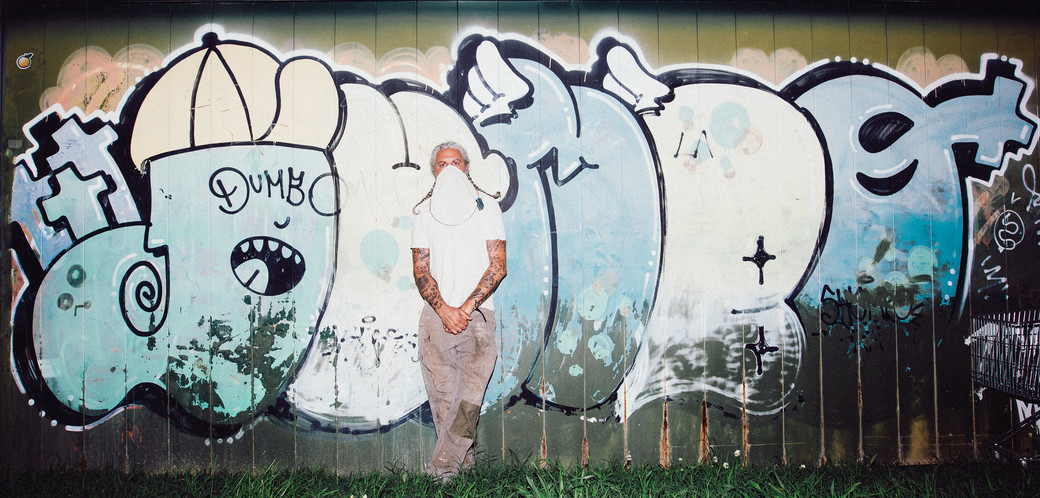
CHITO's translation of his signature characters onto new materials in his own, singular way, demonstrates his nuanced understanding of the relationship between material and subject, as well as his continuous evolution as an artist. The industrialness of the barbed wire juxtaposed with the fragility of the washi paper elicits an intersection for the dualities between strength and tenderness to play while the rough curves of the images composed by his hand have a simple, yet creative quality that reflects the novel sensibility that has fascinated his expanding audience since his start in 2014.
The exhibition, with all new artworks and an edition 'Neo-Silk' screen-print, will be a space in which to encounter the trajectory of an artist who remains enigmatic, shifting intentionally, and sustaining impact with exploration as a conduit. The sense of immediacy and almost paradoxical purity in the body of works on display in Tokyo offer a facet of his practice that is at once fresh, and familiar.


Immersed in street culture from a young age, with his surroundings nurturing an interest in graffiti, CHITO gravitated toward airbrushing as his chosen form of self-expression. From painting and tagging around his hometown to collaborating with high fashion houses and presenting his works in exhibits across the world, he has continued throughout his career to take inspiration from the context of his cultural roots, and remains committed to using his expansive platform to erase the stigma that pervades the graffiti scenes he grew up in.

CHITO's hallmark style and idiosyncratic subjects, which have become instantly recognizable and synonymous with his name, have appeared in collaborations with international brands such as Arc’teryx Veilance, Yohyi Yamamoto, Givenchy, and Supreme — his most recent mural created in October 2022 remains on view at the Supreme Harajuku store in Tokyo, Japan. His signature airbrushed writing and aptitude for transforming the ordinary world around him has entranced the international art scene and enabled him to transcend the fashion realm to exhibit artworks at group and solo shows in Mexico City, Paris, Vancouver, New York, Miami and more.
TOUCH will be on display at THE PLUG in Tokyo, Japan from Saturday 3rd December to 18th December 2022.

Through mixed media, the artist sculpts hidden reflections constructing light within darkness of their murky palate. office spoke with Bailey Rose about pain, vulnerability and the GIMP.
Can you explain origin of your show’s title?
The viewer has the opportunity to create their own meaning for my works. the pieces I made are landing marks for much deeper and broader individual thought and hopefully, conversations. A gimp in the term ive titled my show, is a submissive entity. I wanted these pieces to exude emotion not imagery.. and challenge the viewers to feel and think, perhaps creating a space where they don’t understand even. While working on the pieces the titles meaning did shift however. I began to see myself as the GIMP, I was slaving away on these works. In the end I was left wondering — who is the GIMP? Maybe it’s not the viewer or the pieces after all, maybe it’s me.
Do you feel like all art originates from pain?
I don’t think all art originates from pain, but I do think art originates from more than just an idea and I believe artists are driven through inspiration and much of that drive is emotional.
Can art exist without pain?
Without pain how do we know joy. Art is a spectrum, just like our emotions. Art doesn’t exist without emotion.


What’s the experience like for you of having these works up, having viewers engage with them? What did you hope they would feel, if anything, when you put together the show and each piece?
It’s been a little unreal. I mean I’ve been very closed off to sharing my works in the past and for some time. The feedback has been beautiful and opening up has been really rewarding. I really just hoped I could get people to think and feel and be somewhat moved by the beauty that darkness holds.
What’s your studio practice like? Do you have rituals, what do you do or where do you go to source inspiration?
Right now I have a live work studio. Sometimes it’s a bit daunting and leaves for little routine when I just wake up and start painting. Or not.. but one thing I do whenever I paint is turn the music off. I work in silence. Solitude really inspires me. Not just by being alone myself, but seeing other people by themselves. Being alone is scary sometimes but when it’s comforting there’s nothing like it.

How much of this work is inspired by personal experience?
All of it. It’s very personal.. but I like to think it becomes personal to the viewer as well and their experiences.
What was your relationship to fine art growing up?
I have always said “I want to be an artist” I grew up making art. Paint, pottery, graphic. I was in art classes as a young child and an art academy in high school. It wasn’t till recently I realized I’ve been an artist all my life.
Who is your idol?
I don’t idolize anyone. But I have artists that inspire me like Sarah Lucas, Chris Cunningham and many of my peers.

Asif Hoque's "Golden Boy" is on view through December 17th at Half Gallery's New York space.


When looking at or talking about art, the act of seeking out an art historic referentiality to the work at hand often takes such a precedence over all else and such a potent engagement of the left brain that the right’s faculties become drained and the essence of interpretation, the all important dialogue between viewer and artist, become positively eschewed. “This work makes me feel…” has its place taken by the over bearing “this work reminds me of insert canonical artist’s name.” This exercise in mental masturbation surely hinders the spell present within the seeking out of an art’s essence, instead, ejaculating a half baked projection over all that is precious in viewing.
Now, how does this relationship play into “Golden Boy” by Asif Hoque? The two references most frequently cited for the show are so absurdly different that they practically satirize the practice itself. On opposite ends of the spectrum, “Reubens” and “Agnes Pelton” couldn’t be more disparate, however, Hoque is spectacularly able to bring the two together, cancelling out the two genres that substantially separate them, and in effect, birth a unique show that stands tongue in cheek towards the trite practice of referential analysis.


The presence of these two opposing forces, which happen to be described as that of Reubens and Pelton, set a framework for the rest of the art’s internal logic. However, it would be of greater service to ditch these restricting references and instead call the forms at hand as they truly are — abstraction and realism.
Residing within these seven works is a highly calculated equilibrium, one that seeks to achieve a balance between not only abstraction and realism, but movement and rigidity, symmetry and asymmetry, Bangladesh and Miami — to name a few. On the surface, perhaps the most initially compelling aspect of the show are the colors utilized, most obvious being the gold hues that shine throughout each work. However, this gold isn’t merely an aesthetic choice, the artist explains “In a literal sense my relationship to gold is embedded in this series. As a baby, my parents gifted me a golden pendant almost like a small Den Motor or symbol of security. Except in Islam to wear such luxury as a grown man can be seen as a type of ostentation. When and how does that signifier get flipped?”


Contrasting with these divine golds are cascading scenes of fluorescent water that add intense dynamic movement, helping frame the beautiful centerpieces of each work. These centerpieces are meticulously crafted, the only aspects of the works which are sketched before hand, leaving the backgrounds and surrounding aspects of the work up to pure intuition.
The show itself in extremely engaging, and the works beg for one’s full attention, free from jargon and over analysis. Further, these trance-inducing pieces transport one into a state of convalescence, a beautiful world brought forth by the highly talented Asif Hoque.