PRESENTE CONTINUO: the intimate ties between then&now

Starting May 30, PRESENTE CONTINUO will be available to purchase on presentecontinuo.com, cpcompany.com, and at the C.P. Company flagship store in Milan, Corso Matteotti 7.
Stay informed on our latest news!

Starting May 30, PRESENTE CONTINUO will be available to purchase on presentecontinuo.com, cpcompany.com, and at the C.P. Company flagship store in Milan, Corso Matteotti 7.


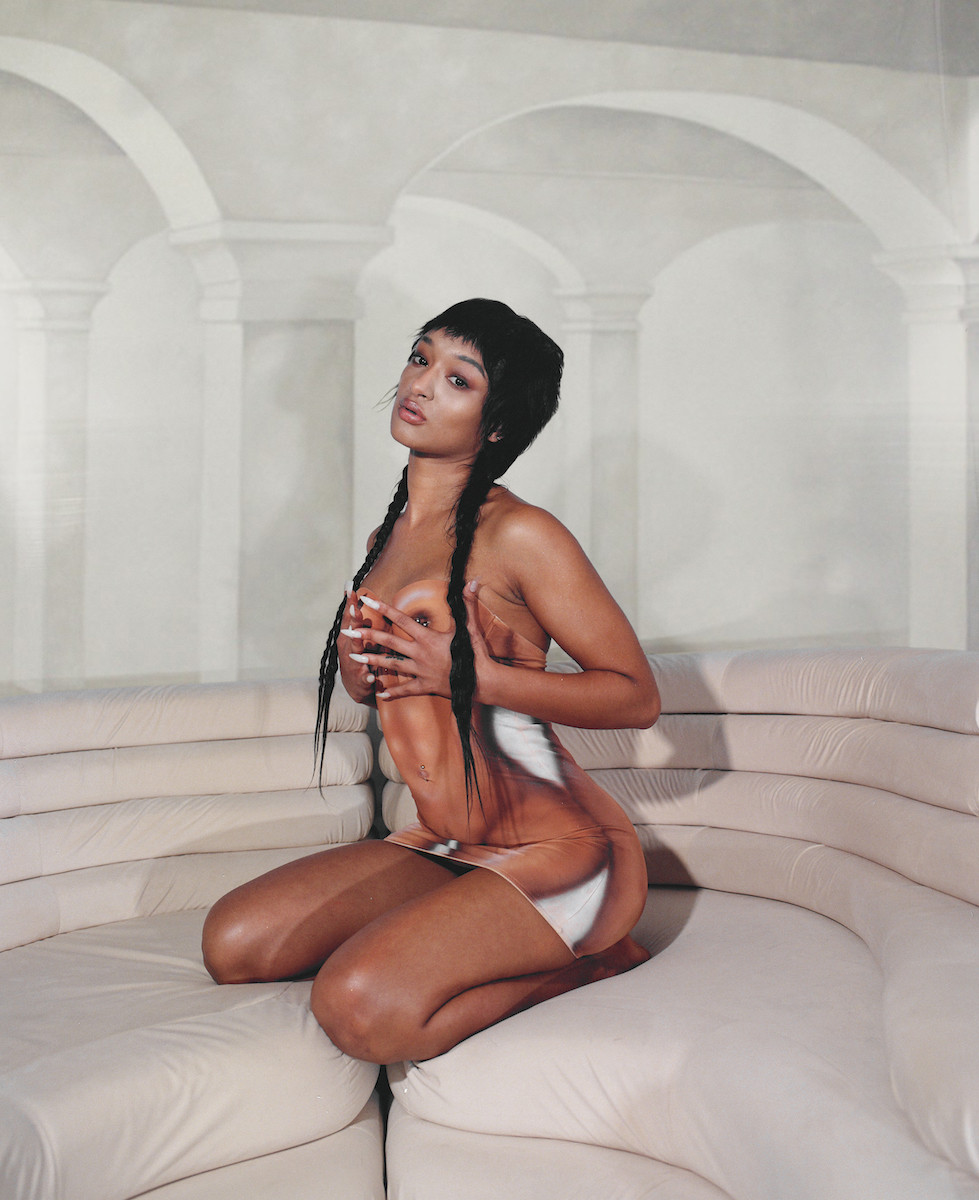
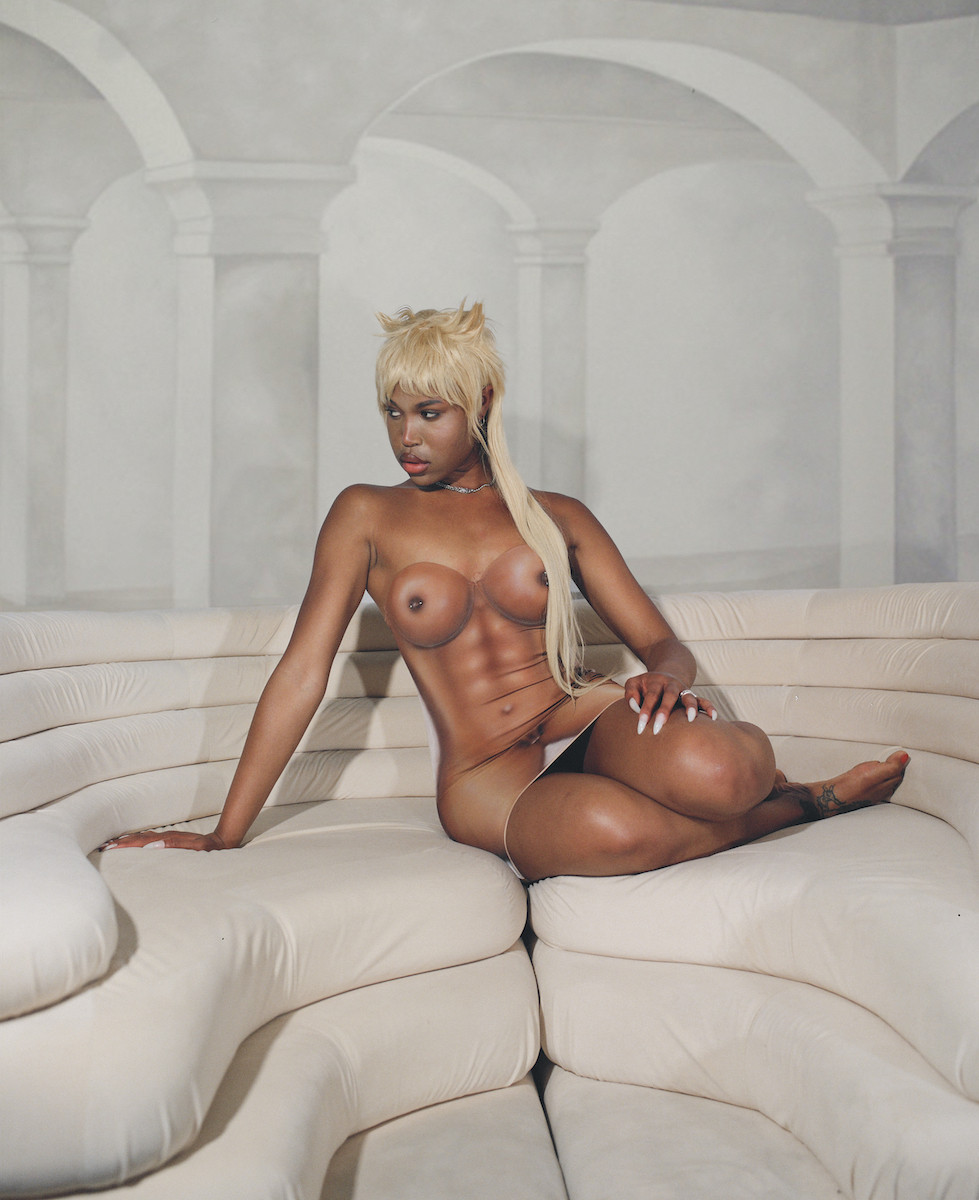
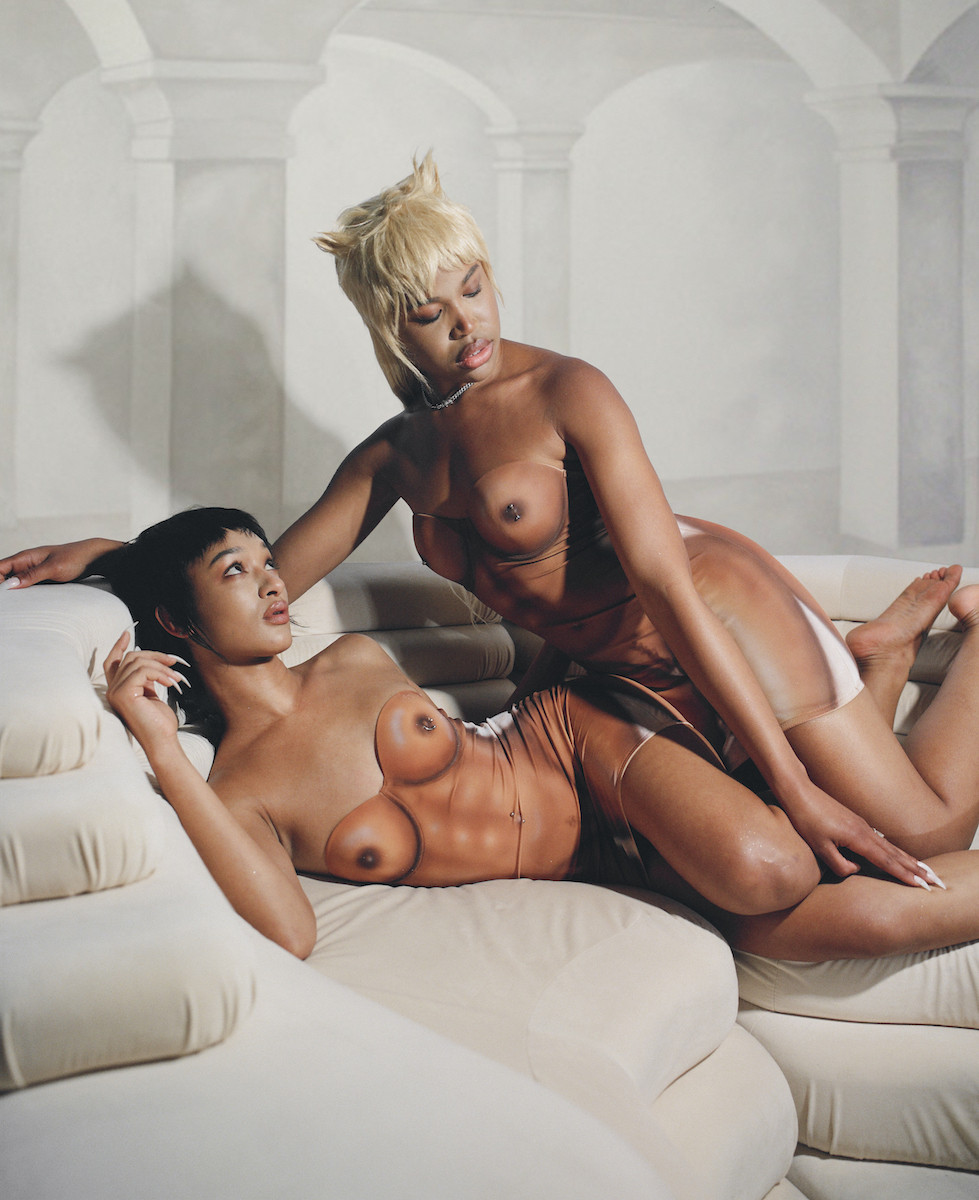
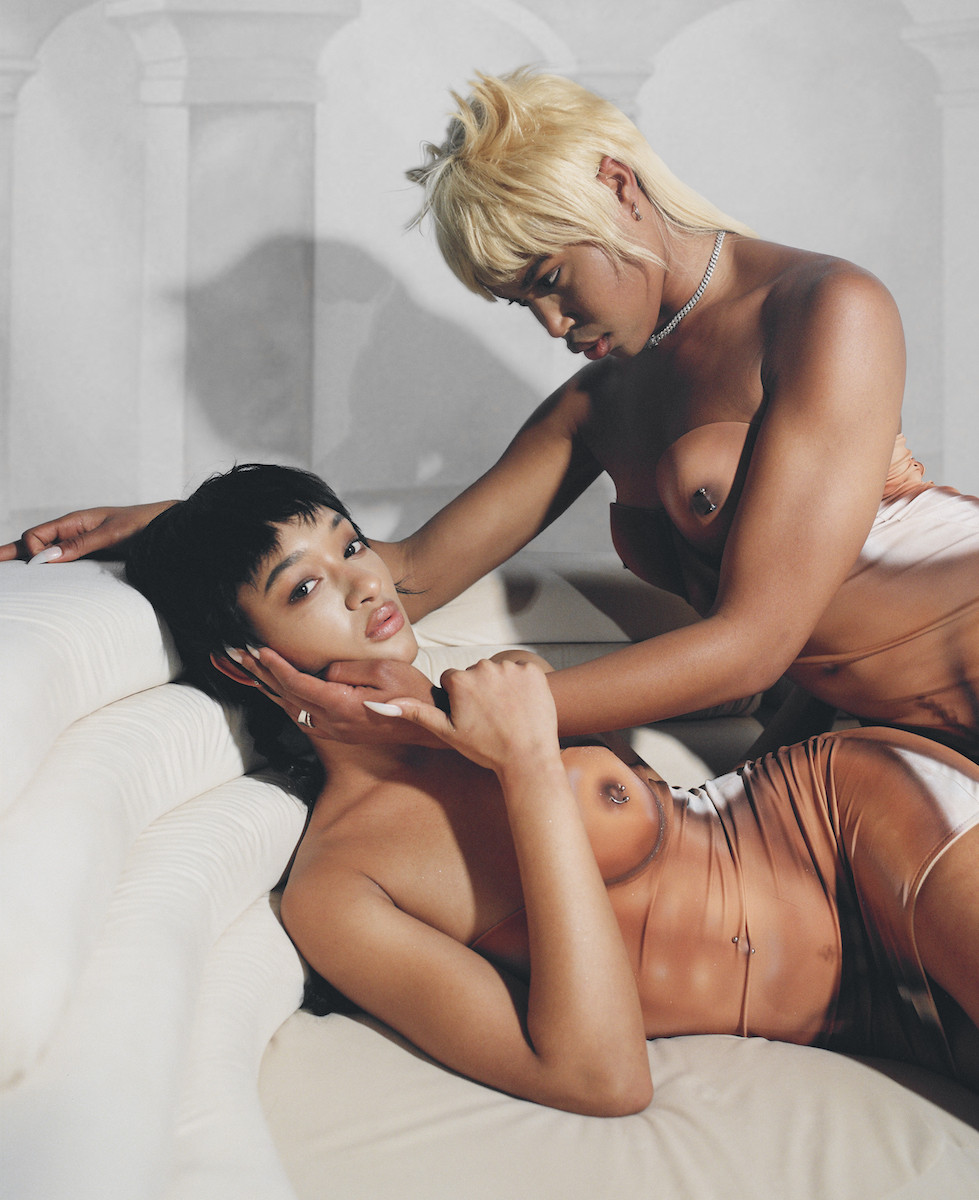
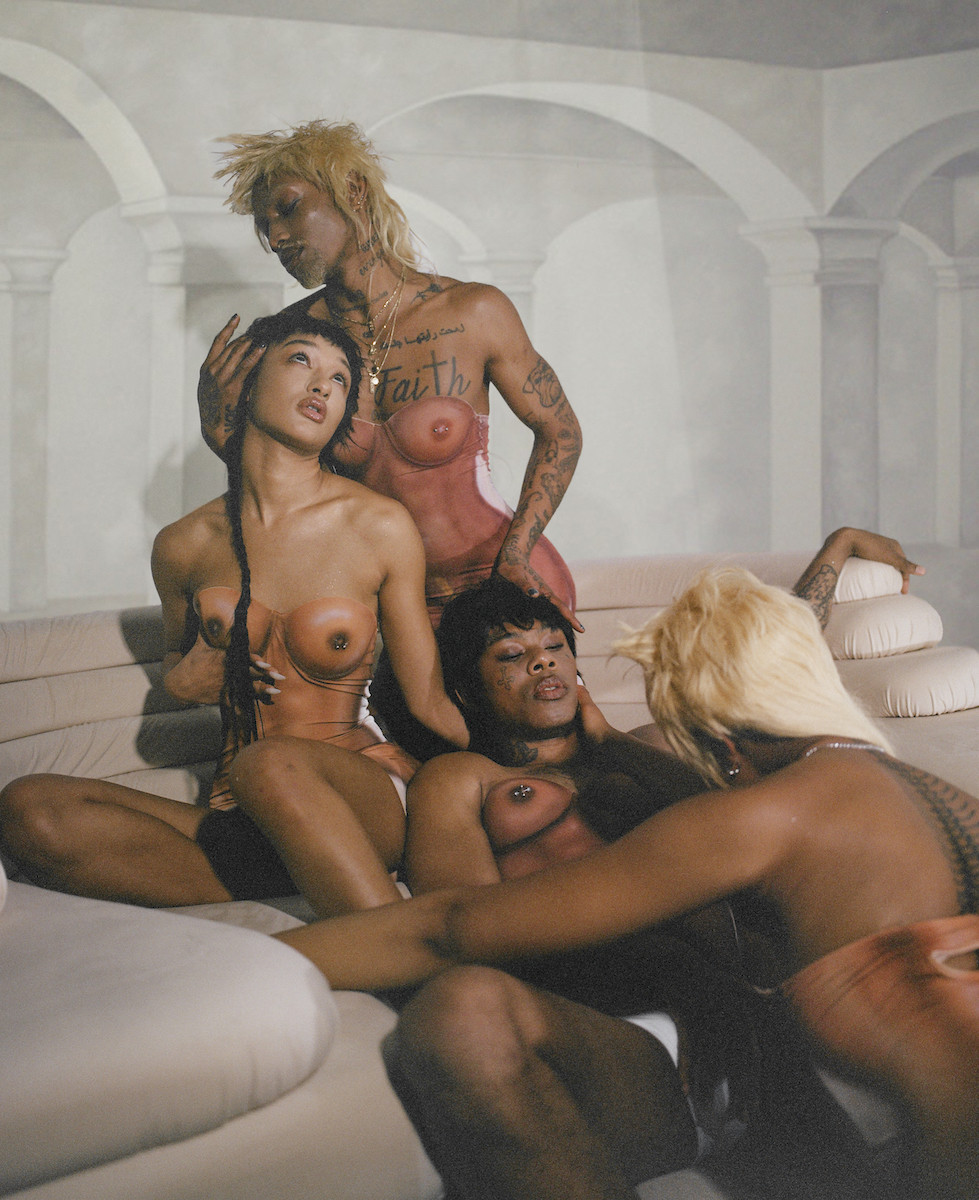
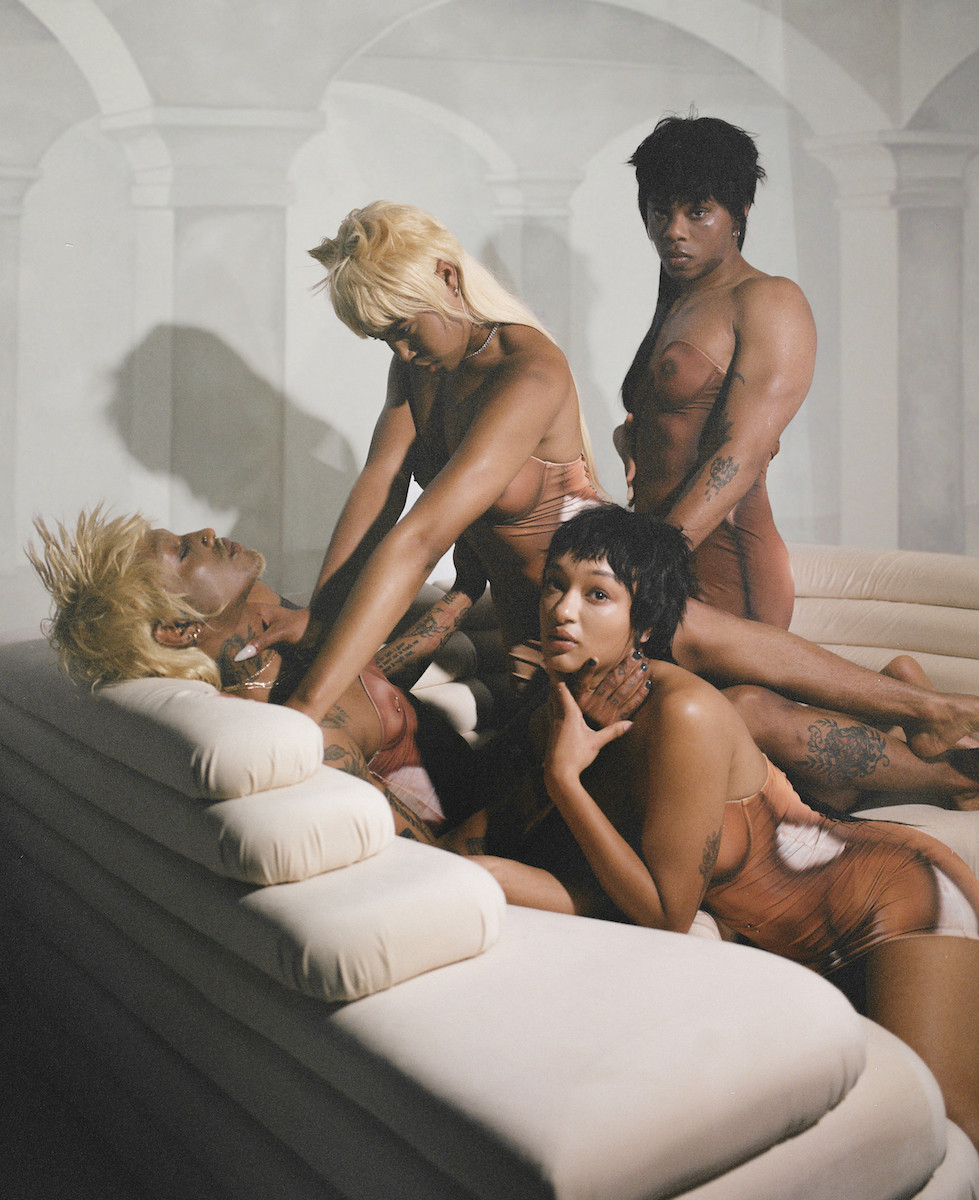
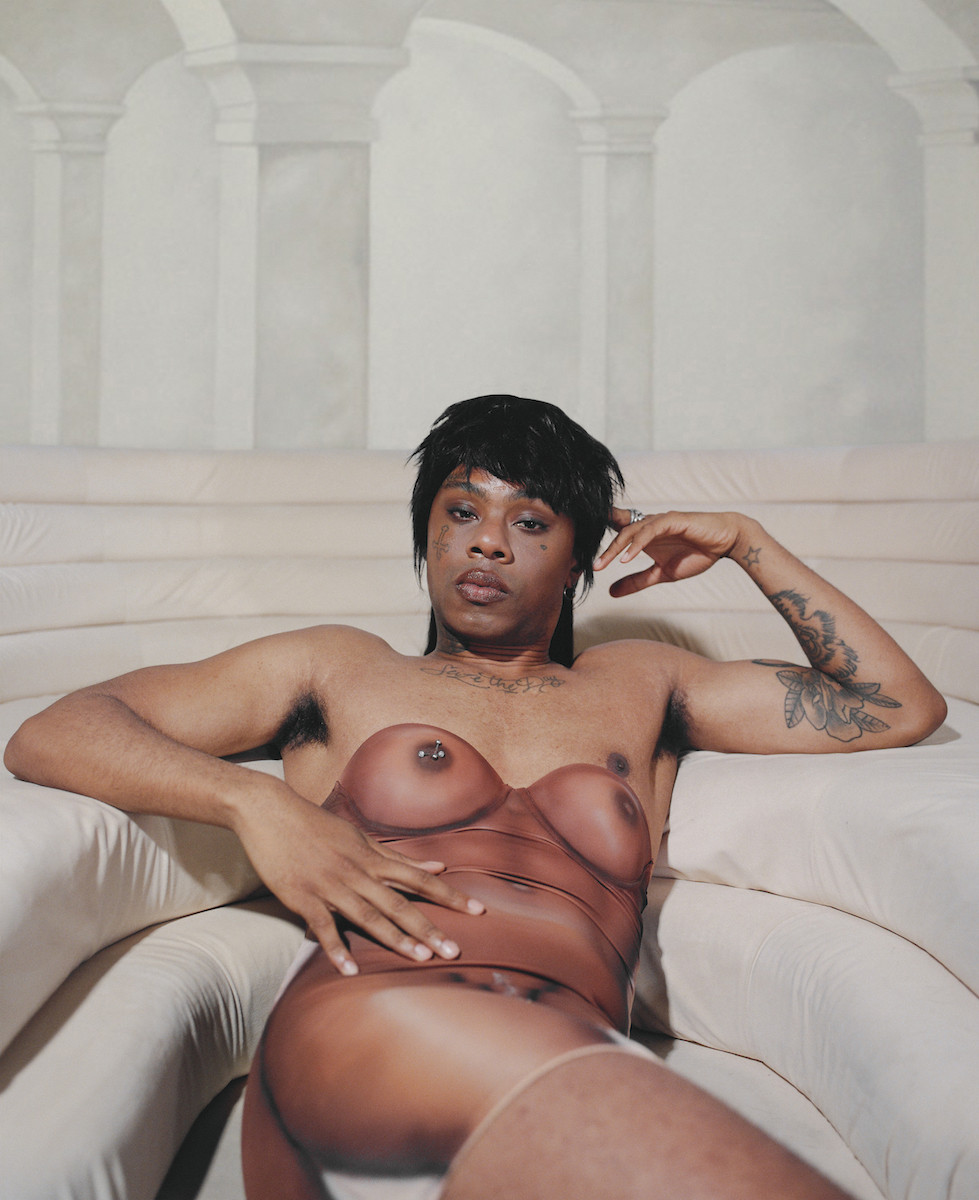
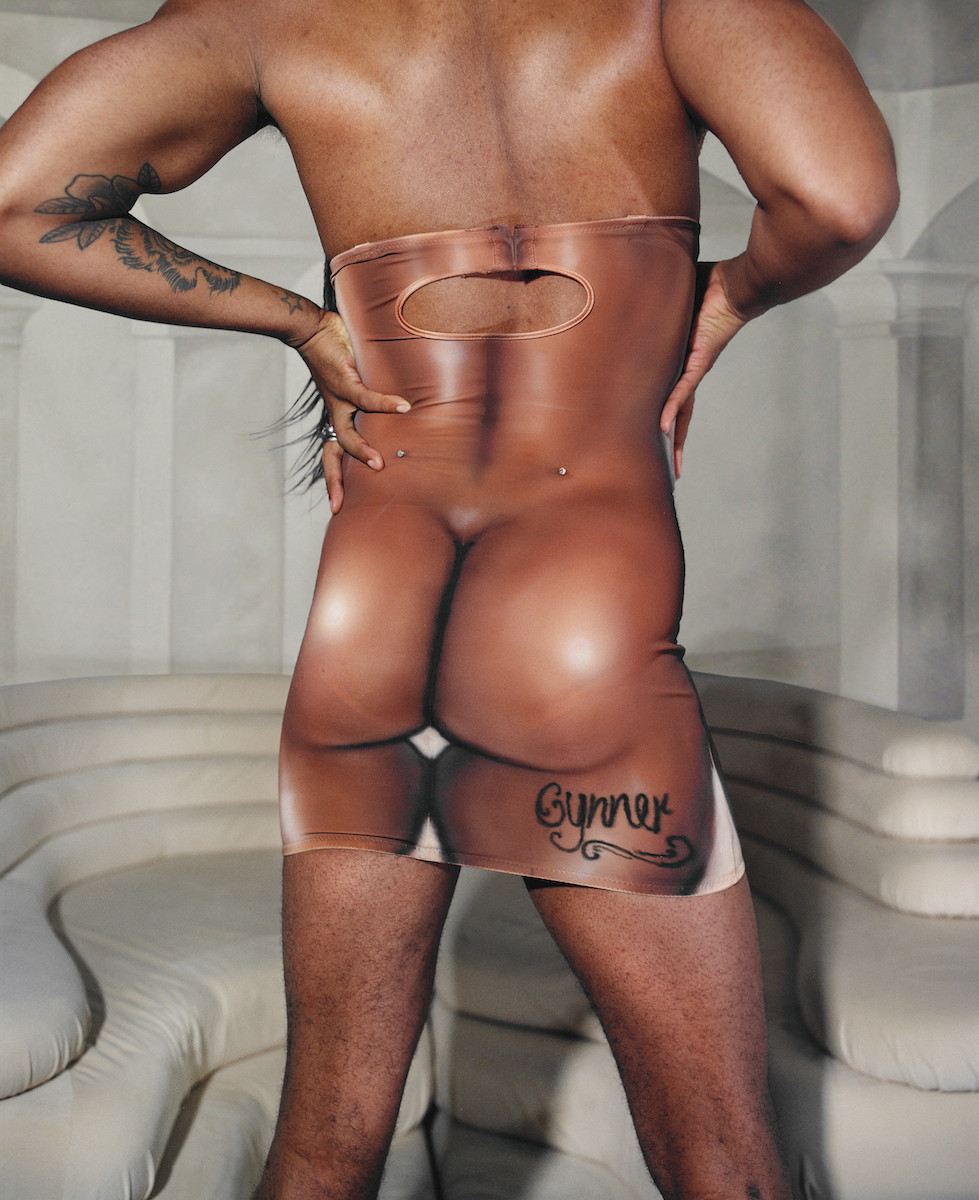
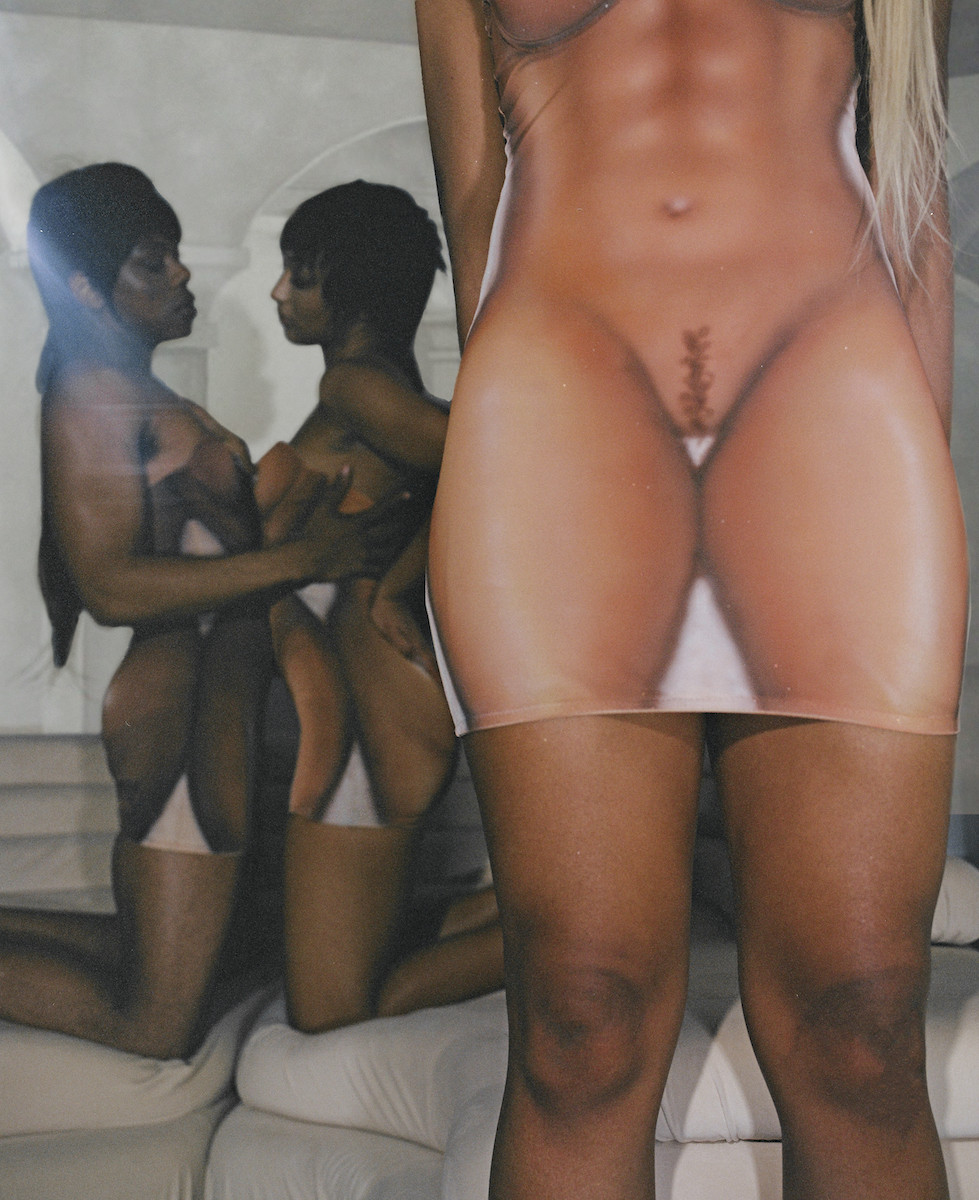
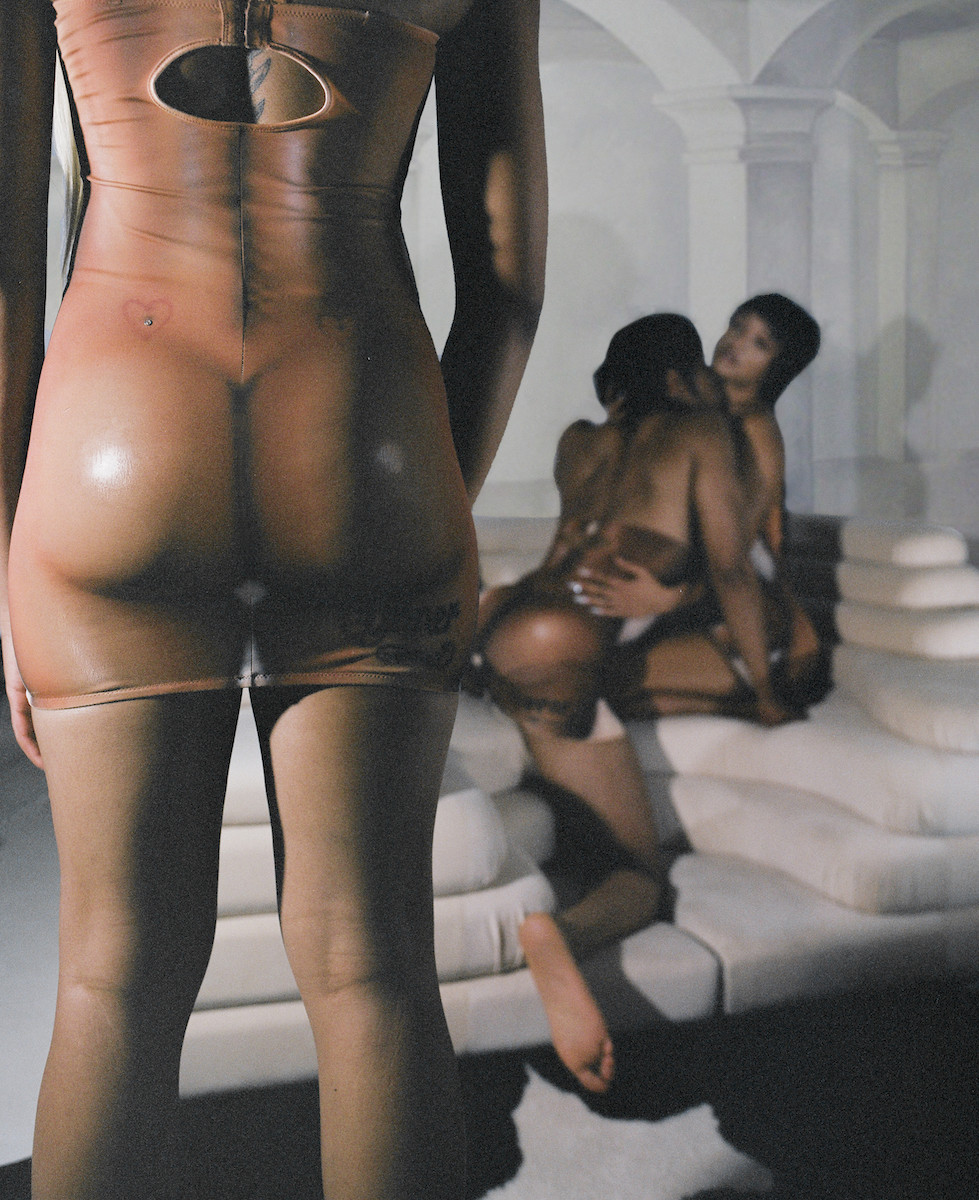
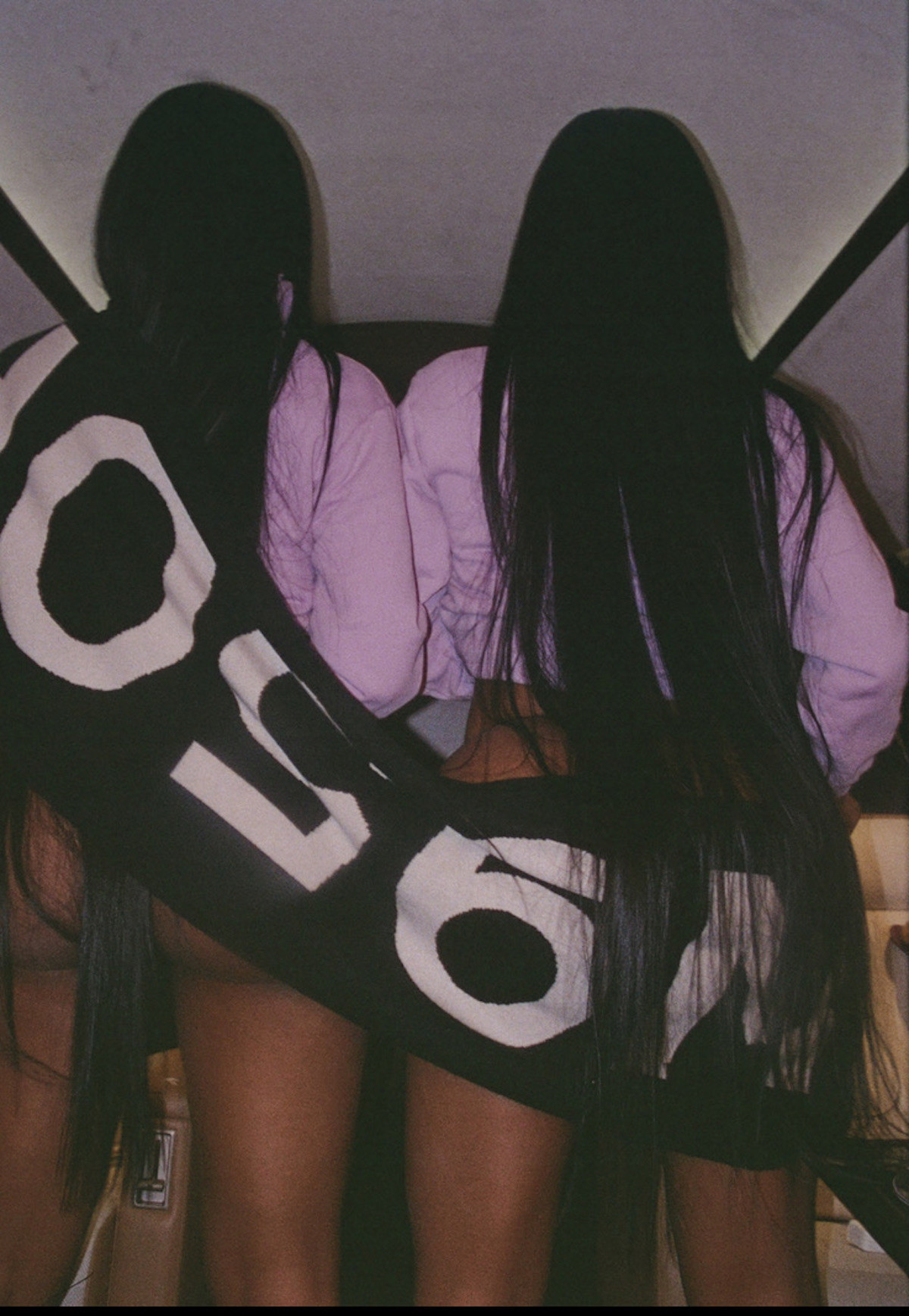
In one of her latest interpretations of Cyn, "The Dress to Cyn In," Mab has constructed full-size airbrushed dresses that are jarringly realistic and feature real nipple piercings. For the photoshoot, conducted by photographer Michael Janey, Mab chose to feature models of different gender identities, including Mab herself. The shoot is an orgy scene where the models all radiate nudity yet no intercourse is performed, leaving the viewer to behold an aura of sex without witnessing the act.
Michael Janey spoke to Mab for office about Cynner, what gets her out of bed, and the taste of happiness. Spoiler alert it's bubblegum.
Who are you? Where are you from? Birthday?
Tamia LeAnn Brown. New Haven, Connecticunt. June 15th
What’s a Gemini's greatest flaw?
“When you’re the absolute best, you get hated on the most.” – Kanye West
What is the best birthday gift to you?
Spaghetti art.
What gets you out of bed?
An egg Sandwich with brioche bread and Siracha.
Top four things that are "To die for"?
Eccentric furniture design, a distinct musky aroma, plants, and a candle lit bath after a long day.


What does Cynner mean to you? Where did she come from?
Cynner is based off of the kooky Cynthia doll from Rugrats but it all began with a vision. It was important for me to embody what it means to be unapologetically you. Taking your insecurities and imperfections and turning them into what makes me so ethereal. The toddlers put Cynthia through so much turmoil but she remained the star in her show. With cunt outfits she was ready to take on the day.
But back to the staple Cynner has on my life. I praise Cynner because of the power it holds in my life and the ways it's helped me fully tap into my femininity and my being resilient in this world while not only being a freelance artist out in New York but also a Black woman.
What was your life like when you started Cynner?
I didn’t choose Cyn, I started off as a realist painter which came with so much pressure, I grew bored. I needed a stimulant to make me fall back in love with art again. Cyn chose me.
Cynner comprises design, crocheting, 3D Design, 2D Design, animation, etc. How do you manage all these mediums? Did you make everything we see?
I get bored of doing the same thing, so I not only like to switch it up but I like to pick up new skills and get closer to my 'Super Saiyan.'
Who and what type of things inspire you for the brand?
Everything. That’s why I have to be so picky of what I allow around me.
What's "The Dress to Cyn In” really about?
"The Dress to Cyn In" is a part of my "Exhibitionist" series that pushes the social norms of feeling like we need to suppress intimacy and vulnerability in the age of social media, especially afte rthe traumatic events we all have encountered in this world. Being told to always distance our desires and hide ourselves only made me want to rebel and do the total opposite now to gain that back. Why is it when I'm out in public I all of a sudden am more easily anxious?
In this shoot we conducted a performance art of an orgy without the actual act of sex! Looking at the shoot you can feel the strong feeling of that very same vulnerability on set. I wanted to test the idea of crude intimacy and vulnerability between the Black bodies of all binaries.
Who is Cynner for?
We are all born Cynners.


List of things in the scene or nightlife or in New York that inspire you.
The DJs that play sets that take you to another place. When the icons work together and make groundbreaking shit. Ballroom scene. The fashion, of course! Creators who really live to create and create to live and keep this city alive.
What affect do you want to create upon the world?
My recent body of work celebrates the woman's body and sensuality unlike the early renaissance that used nudity to show sin, vice, and shame. So in introducing this I hope that it can help greedy thirsty ass men that catcall women just for showing some skin and shame us for wanting to embrace this work of art given to us.
What do you have to say about foot fetish requests?
I’m for it. I’ve grown to fall in love with my feet and definitely see them as a prized possession. So anyone looking for feet pics hit me up.
What do you call home when you're here? Community you're a part of?
Home is where the heart is. All those that live in Cyn.
Supernatural experiences?
Have you ever had the best orgasm of your life and astral projected into an alternate universe?
If any food could take over the world, which one would it be?
Mushrooms.
What's your favorite video game character?
Lu Bu from Dynasty Warriors.
Karaoke song of choice?
Sanctuary by Utada.
Success or happiness? What does it taste like? What does it look like?
If I’m going based on taste, I choose happiness because it tastes like bubblegum. If I'm going based on looks, success because it looks like tarnished silver.
Cremation or burial? Are cemeteries outdated?
Neither. My last wish would be to host an extravagant dinner party and have all my hot friends have a piece of me in a five course meal. Cemeteries have always been a bit sketchy for me. Do you actually believe that you are still in the ground when the cemeteries are over capacity and that they are not going to just end up digging you up to make space and that you're going to just end up being cremated anyways?
Parents influence on you?
Fuck conforming to the normies.


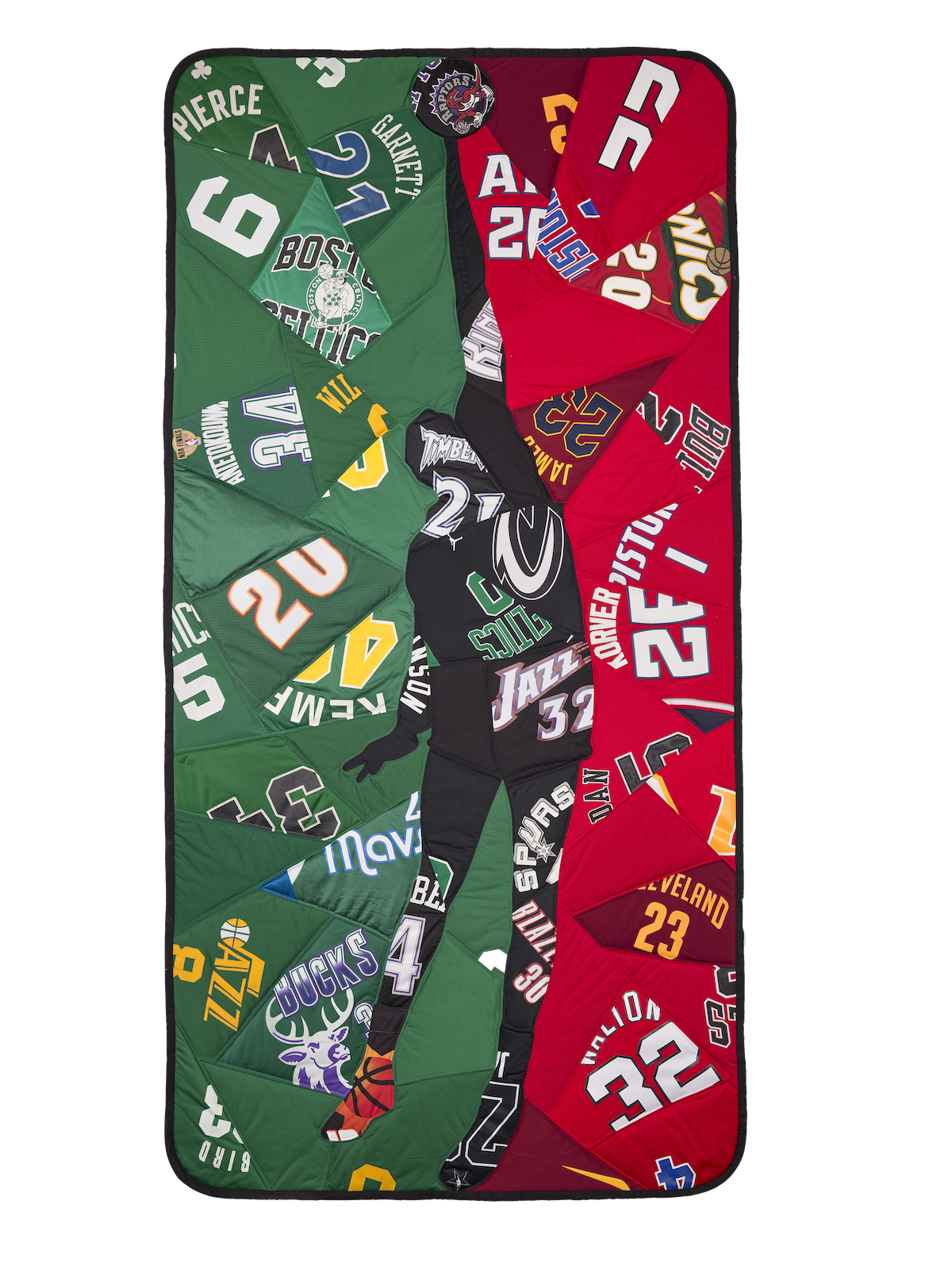
Growing up in an urban environment, sports and specifically basketball were very important to me in my formative years. In Hank's Branded series, I saw him posing similar questions that I was having about what it meant to be a Black man coming of age in America. Hank has continually returned to images of sports players and the peculiar role they inhabit in the American psyche throughout his practice. His work has continuously examined the complex relationship between sports, capitalism and the Black body, showcasing the glory associated with sports stardom, but also critiquing the power structures at play.
In Hank's Unbranded series, he deconstructs advertisements, showing how our identities as Americans are often shaped by the media and the roles corporations have prescribed to various racial, ethnic and gender groups. Look- ing at his artwork sparked within me a passion for looking beyond the surface, and questioning the purpose of vari- ous institutions, ideas and cultural practices that I previously never considered.
In 2015, I applied for a role in his studio, met Hank, and witnessed the brilliance of his mind and work in person. I was able to see firsthand how his artworks were created and get to know the small but passionate group of collabo- rators who worked with him at the time helping to bring his vision to reality. Working in the studio, I was given the opportunity to participate in a four-person team that toured his public art project, In Search Of the Truth, across 35 states and 43 cities during Donald Trump’s first presidential run. Traveling around the country in a tour bus, engag- ing with Americans from all over, and meeting artists and curators from some of the country's most elite muse- ums opened up a new world of possibilities for me as a creative. It changed the way I perceived myself as a Black man, as an American, and even the way I perceived the concept of ‘truth.’
My connection to Hank's work is much more than just an aesthetic conversation—it’s about the ideas that engag- ing with his work has sparked within me. For me, interviewing Hank for this article is the culmination of a full-circle moment that started when I first read about Hank in that book almost a decade ago, eventually getting to know and work for him, and now being able to write about him, his work and where he hopes to take his practice in the future.


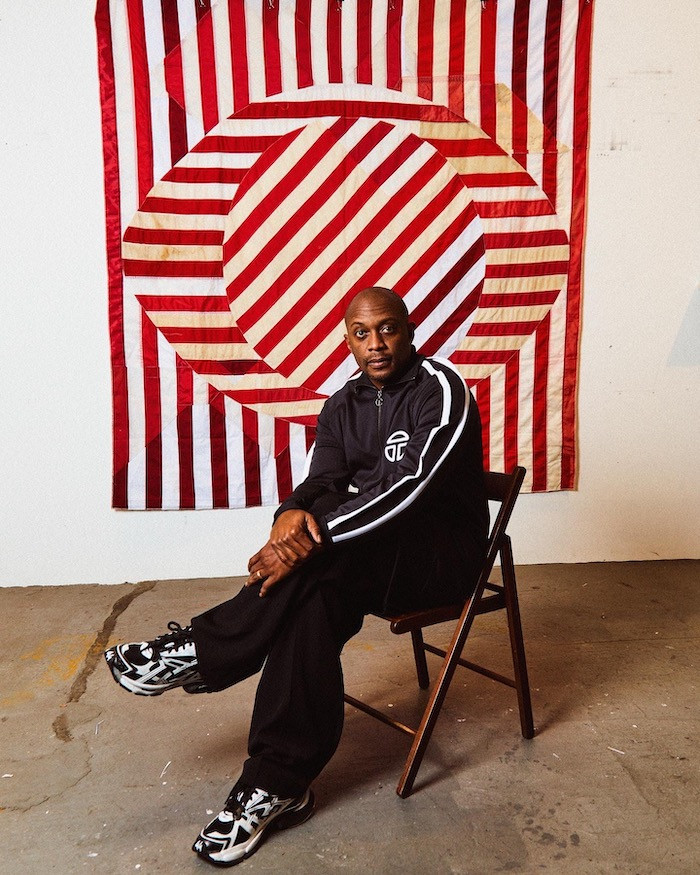
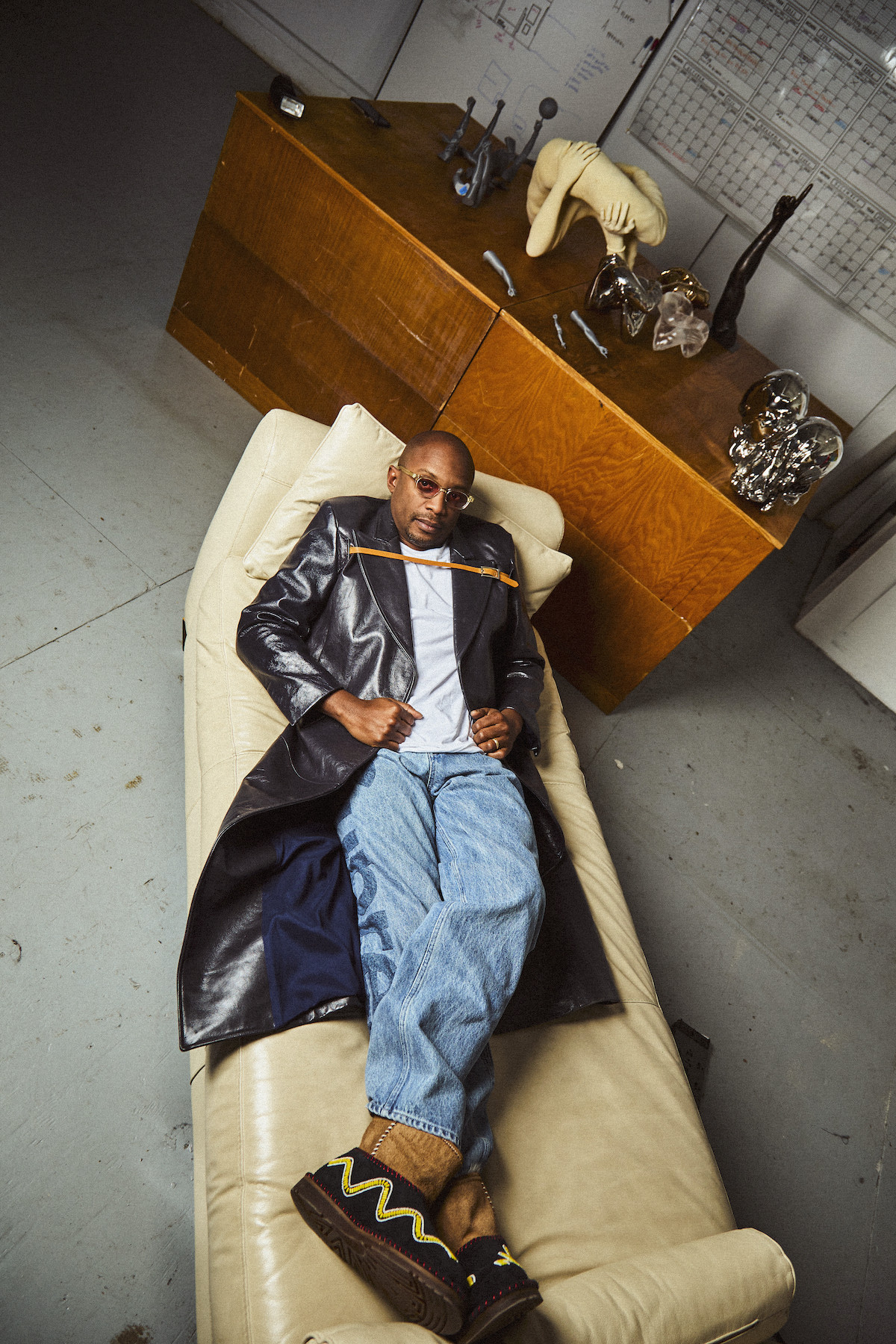
Coat LUAR, pants SUPREME NEW YORK, shoes DENIM TEARS X UGG, sunglasses FLATLIST
EMANN ODUFU—When I think of the evolution of your practice, it is constantly evolving, and you are always reinventing yourself and the type of work you create. Obviously, a framework permeates throughout your practice and your oeuvre. Still, I would like you to speak to your process of reinvention, especially when I look at your work from the late 2000s to now. Is this something that you're thinking about as you create, or does it natu - rally manifest as you change with the times?
HANK WILLIS THOMAS—For me, change is necessary for growth, and as the times are rapidly evolving, I also need to do that. The core of my work is still there, but the methods and mediums that I use to express the import - ant things have had to evolve. Also, who I'm talking to and how I'm speaking to them has changed by demand. I went from talking about brands in the early 2000s to creating brands through projects such as Question Bridge, For Freedoms and Truth Booth. They are all my own take on what a brand does, but what is for sale is different. What is for sale are the complex ideas that are at the core of my work. I am perpetually propelled and inspired by how we can attract and maintain audiences through branding and marketing and how our processes engage them.
EMANN ODUFU—Collaboration is something that is very important to your practice, even harkening back to In Search of the Truth, which was a collaboration between you and three other artists. With For Freedoms, Writ - ing on the Wall, and the Wide Awakes, the work you did took this collaborative aspect to a whole new level. One of your works that comes to mind is from your I am a man series, specifically the piece that says, ‘I am many.’ Especially when working in your studio, I noticed that your work was the product of a village of creatives and collaborators working to capture your vision. What is the importance of collaboration and community in your practice?
HANK WILLIS THOMAS—Everything we do in life is a collaboration because no one lives or works in a vacuum. A lot of the ways in which we talk about our lives are as if we're the only ones affected by whatever we're expe - riencing. So, I've always collaborated with other artists in addition to making my own work, to remind myself and others who I care about—and even people I don't know—that we all have a stake in what each other does. Creativity is an outlet and opportunity for us to think about ourselves, the things we care about and each other differently. EO—From my perspective, that process of collaboration evolved into something even larger with works like For Freedoms and the Wide Awakes, which were these mass collaborations that sparked a national movement. I'm curious to know why you, as an artist, decided to create these works?


Jacket TELFAR, pants and shoes BALENCIAGA
HWT—For Freedoms and the Wide Awakes were inspired by my desire to work with and celebrate the work of other artists. With For Freedoms, we did activations in exhibi- tion halls and a national billboard campaign that allowed us to engage audiences that none of us individually could reach. We did this by engaging billboards and public space as an artistic medium. The Wide Awakes built on this idea because it is not an organization. Instead, it is a very loose and organic collective. It was a more liberated attempt at doing the same things we were doing with For Freedoms. But there was no centrality to the collab- oration this time, so all the participants were creating it. There's an excitement to that. There's also no barrier to entry or gatekeepers. The only gatekeeper is the person themselves.
EO—How do you balance being a fine artist and being concerned with the formal applications of the creative process with your burgeoning role as an activist, a community builder, and even as a political voice?
HWT—I do that through working with the people in my studio. I'm also collaborating outside of my studio in the streets of the world and on the Internet. The people in my studio help me focus on maintaining and clarifying the messages in my work. That is an aesthetic conver- sation as well as a content conversation.
EO—Well, whatever you're doing, it's working. The seeds that you and your creative team are planting have been harvested to make an impact that stretches outside of just art. You've accomplished a lot in your career so far, and I'm sure there are other mountains to climb. However, at the present moment, top galleries around the globe represent you, and your work is in the collec- tions of esteemed museums and influential collectors. So, what keeps you motivated to go into the studio and keep creating? What’s inspiring you at this moment?
HWT—I read a book in 2019 called Finite and Infinite Games by James Carse, which really helped me to understand my purpose. Carse talks about finite games as being played for the purpose of winning and infinite games as being played for the purpose of continuing the play. A finite game is to be won by someone, and it must come to a definite end. An infinite game is a vision of life as play and possibility. So, I realized that I'm play- ing an infinite game and I am not trying to win. I'm trying to stay in a state of play. We live in a world with the illusion that there is some form of finality, and for me, play- ing an infinite game is continuing to expand and chal- lenge the limitations of the world that you know and the person you are. That's what keeps me going. When we say we're going to take an inflatable speech bubble across the country where strangers would come and share their truths, there's not really any finite rewards. The reward is the journey. The exhibition is an artifact, but the artwork is the actual journey itself.
EO—One thing I'm thinking about consistently is how the creative world has drastically transformed in the past 20 years. In my opinion, there are no boxes—or fewer boxes for creatives—and the lines between creative realms are blurring. Artists are not staying in one lane anymore, and the best example of that is probably Kanye West. He started off making music, and now he's a leader in fashion and breaking into the tech world. Even for you, I see you existing between creative fields and between realms. Can you speak to this changing atmosphere? What opportunities does it bring for a multifaceted creative like yourself?
HWT—The world is constantly changing. I think you're right that the past 20 years have appeared to be radi- cally and rapidly evolving, asking each of us to reeval- uate who we are, what we are, what we do and how we do it. But I don't think that's limited to the creative field. From my experience, it's how we're experiencing gender, how we're experiencing race, how we're experiencing class, even how we’re experiencing nationality. Over the past 20 years, the way we look at things that have been relatively fixed has become much more complicated. I don't separate the way that I live and what I do into work and not work or art and not art. It's all my life. I'm an eclectic person who has a broad range of interests, and this is something that a lot of people of African descent negotiate. We negotiate being multifaceted, complex people and being expected to conform or live within a box already prescribed for us. I don't think that's just people of African descent, but I think that the pressure of the box feels more confining for many of us in this country. So, for me and I imagine many others, excelling outside of the place where we first gained ‘validity’ is a way of finding some form of liberation or emancipation.
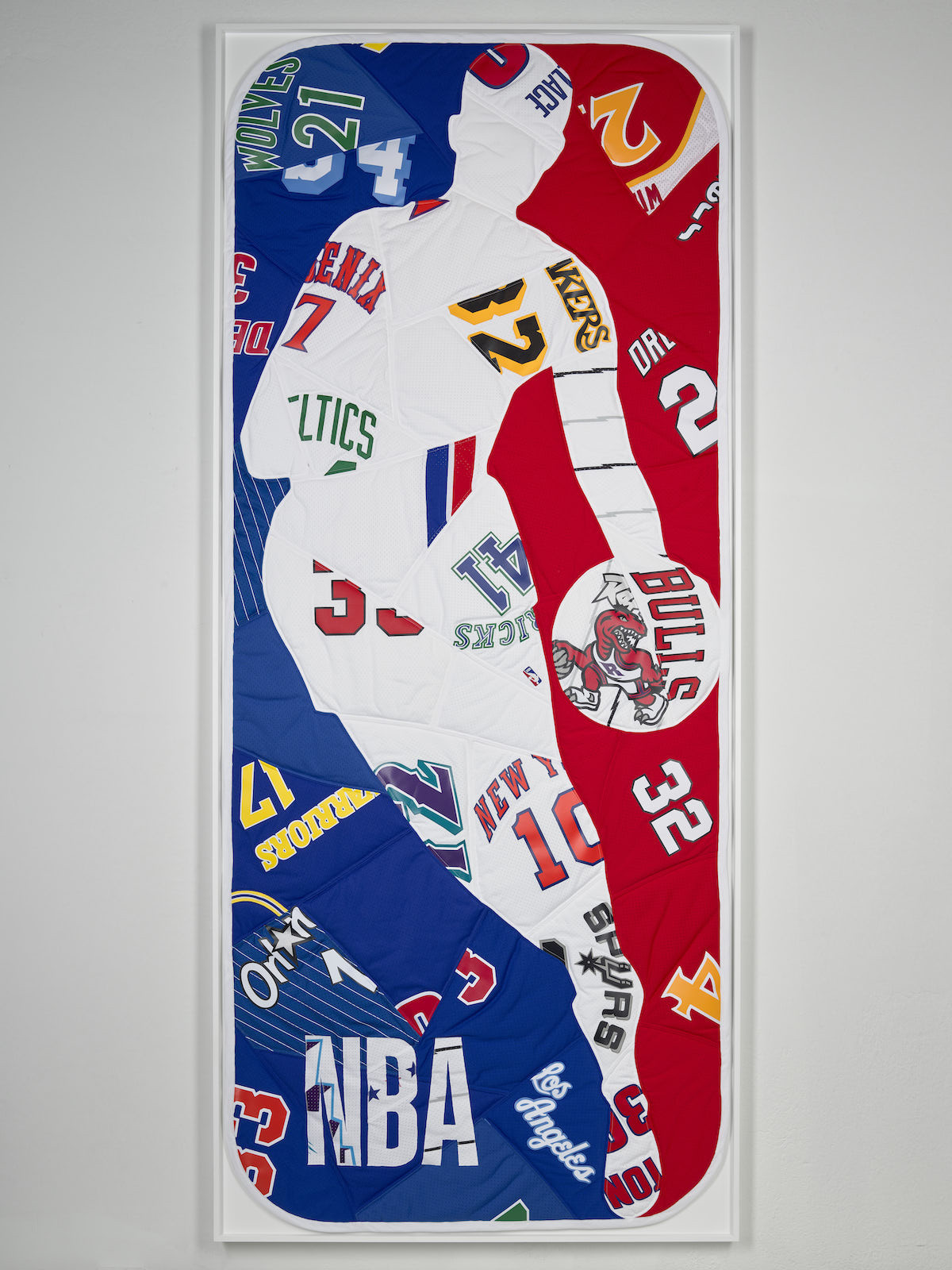
EO—I really dig that answer. I want to delve into your recent exhibition, The New Black Aesthetic. We've talked a little bit about this before, but throughout your practice, you often return to images of sports players, examining the complex relationship between the sports industry and Black men. In some of my favorite works of yours, especially the older pieces, you made powerful critiques on the sports industry. Your Liberty sculpture almost presents a different perspective when you look at it—it's more of an uplifting or aspirational type of feeling that I get from looking at it. On one end, you're celebrating the upward mobility created through these athletes' ascent into superstardom. On the other end, we see a critique of the power structures that permeate them. Can you speak to this duality and the nuanced way you enjoy and participate in the spectacle of sports, or I guess any system, while also understanding some of the deeper implications?
HWT—This question makes me think of Guy Debord's book, The Society of Spectacle. In it, he describes the spectacle or what we would call the modern-day media machine as an instrument to distract and pacify the masses and basically keep the wheels of consumerism turning. This process alters our view of reality and turns everything into a commodity. It encourages us to focus on appearances and symbols rather than genu- ine human interaction. Carce says ‘the spectacle is not a collection of images rather, it is a social relation among people, mediated by images.’ [Debord’s] book is a multi- faceted and shifting gaze on the spectacle and spec- tator. It embodies some of my thoughts in a lifelong process of finding myself in relation to the spectacle of sports and the NBA and any other spectacle in which I might be participating. In my work, I'm engaging in this conversation, acknowledging the allure of the spectacle and breaking down these symbols and images to help the viewer and myself make sense of what you called ‘the deeper implications.’
EO—When I applied for a role in your studio years ago, I remember stating that I saw you as the ‘Black Rich- ard Prince’ in my cover letter. I'm not sure if you read the cover letters or if someone else read them...
HWT—No, I read the cover letters.
EO—I like to think that was part of the reason why you guys were like, ‘Okay, we'll give him a shot.’ Obviously, you and Richard Prince have entirely different practices. Still, I think I was speaking to the ability you just referenced to take images and symbols that are recognizable in our society, deconstructing them in a way that questions the way our world operates. I view you as a social psycholo- gist and even a cultural healer. In a hundred years, when we look back at your practice, what impact do you want it to have on people on a social and psychological level?
HWT—Isn't it enough to just be remembered? That's my answer to that question, but I can expand on it.
EO—I would absolutely love for you to expand on it!
HWT—One hundred years from now, will there even be a world as we know it, based on the catastrophic forecasts we are learning about? I want people to be alive, safe and healthy in a society where the work that I/we make is still relevant. If those circumstances exist, I would hope they are somewhat proud of who we are and what we have done. Think about it: this generation knows that the world is overpopulated and that our lifestyles are creat ing irreparable harm to all future societies. This gener ation has had more privilege than any other generation of human beings collectively, yet has not overcome the desire to kill and maim other human beings and has even eradicated other species. I just hope that people in a hundred years will have mercy for us because, yes, differ ent generations might have caused a lot of harm, but they did not know what we know. So, when I think about my work, which is my life, I would love for future genera tions to think that I cared about them... But it would also be enough just to be remembered.


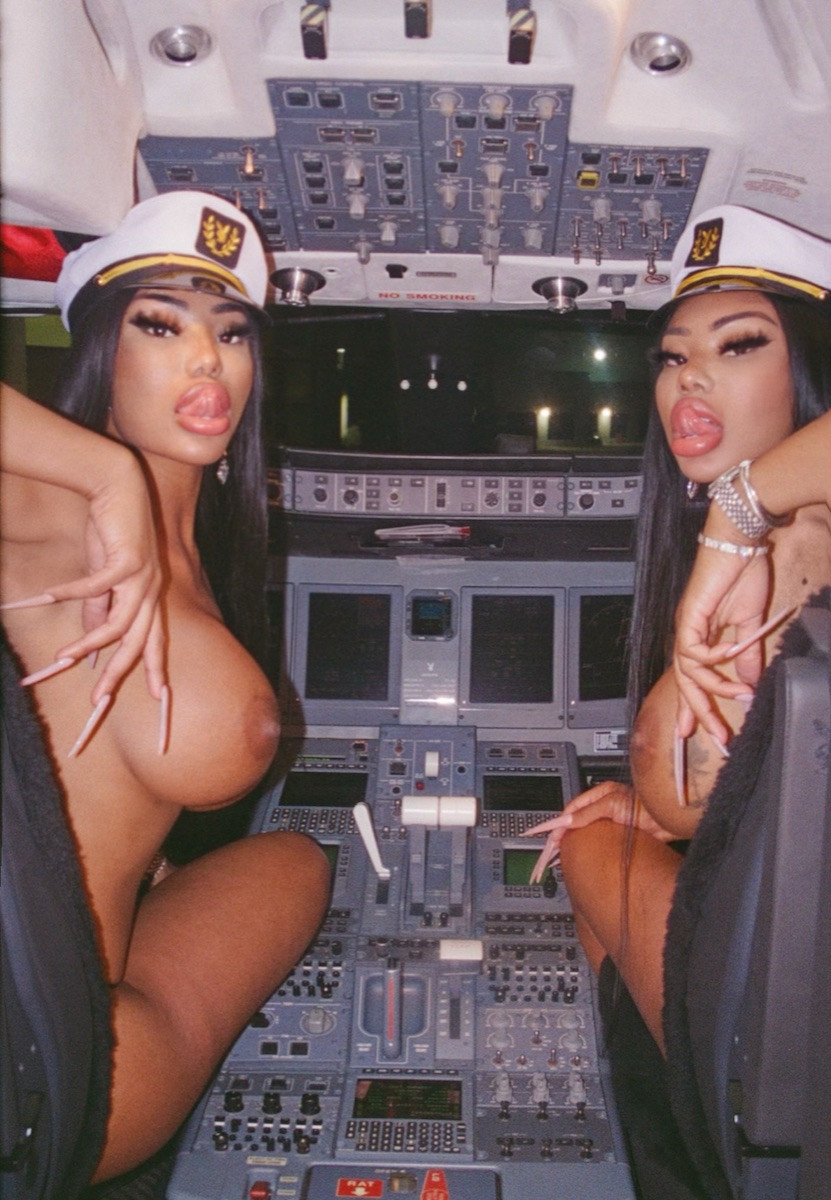
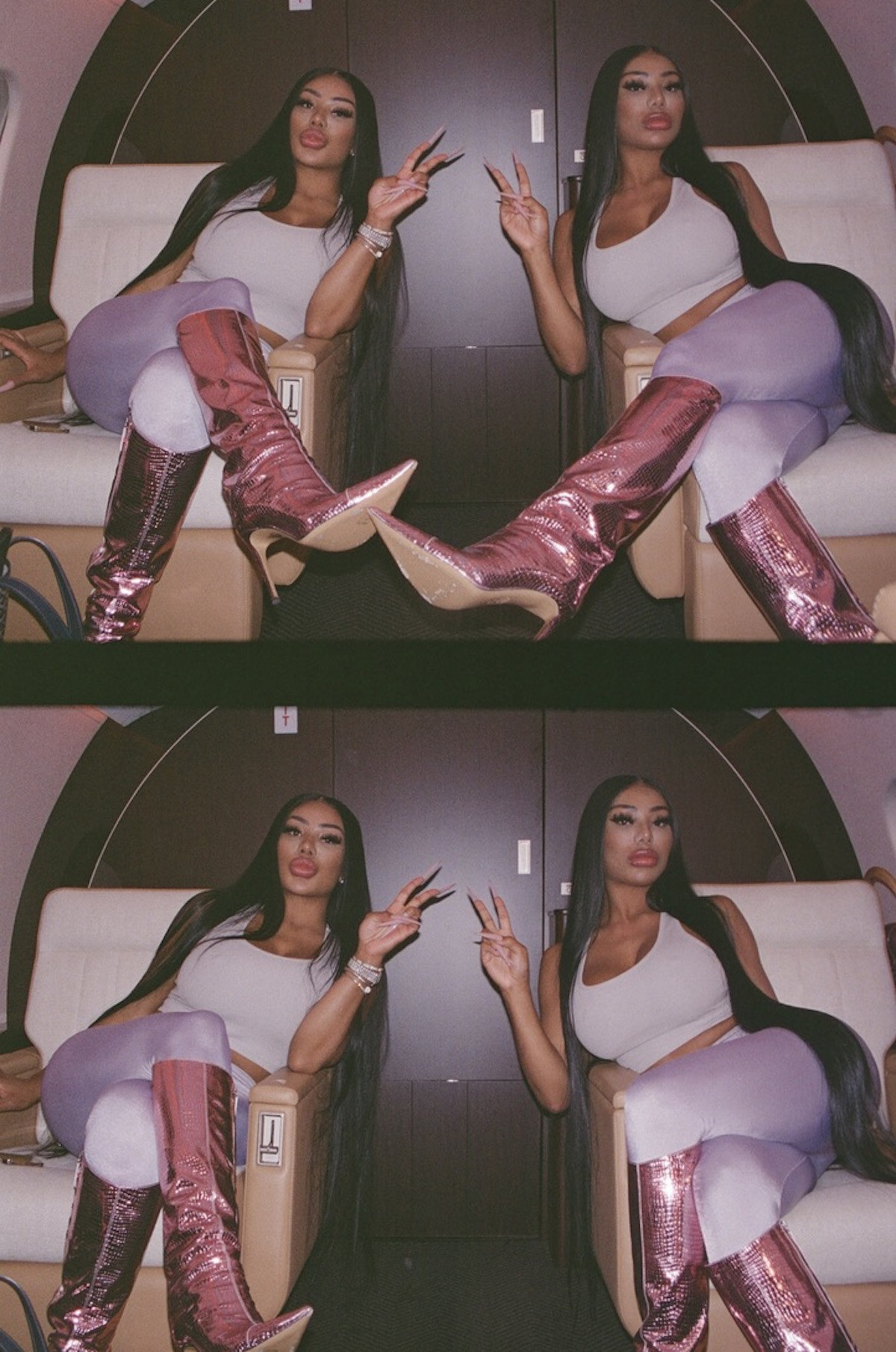
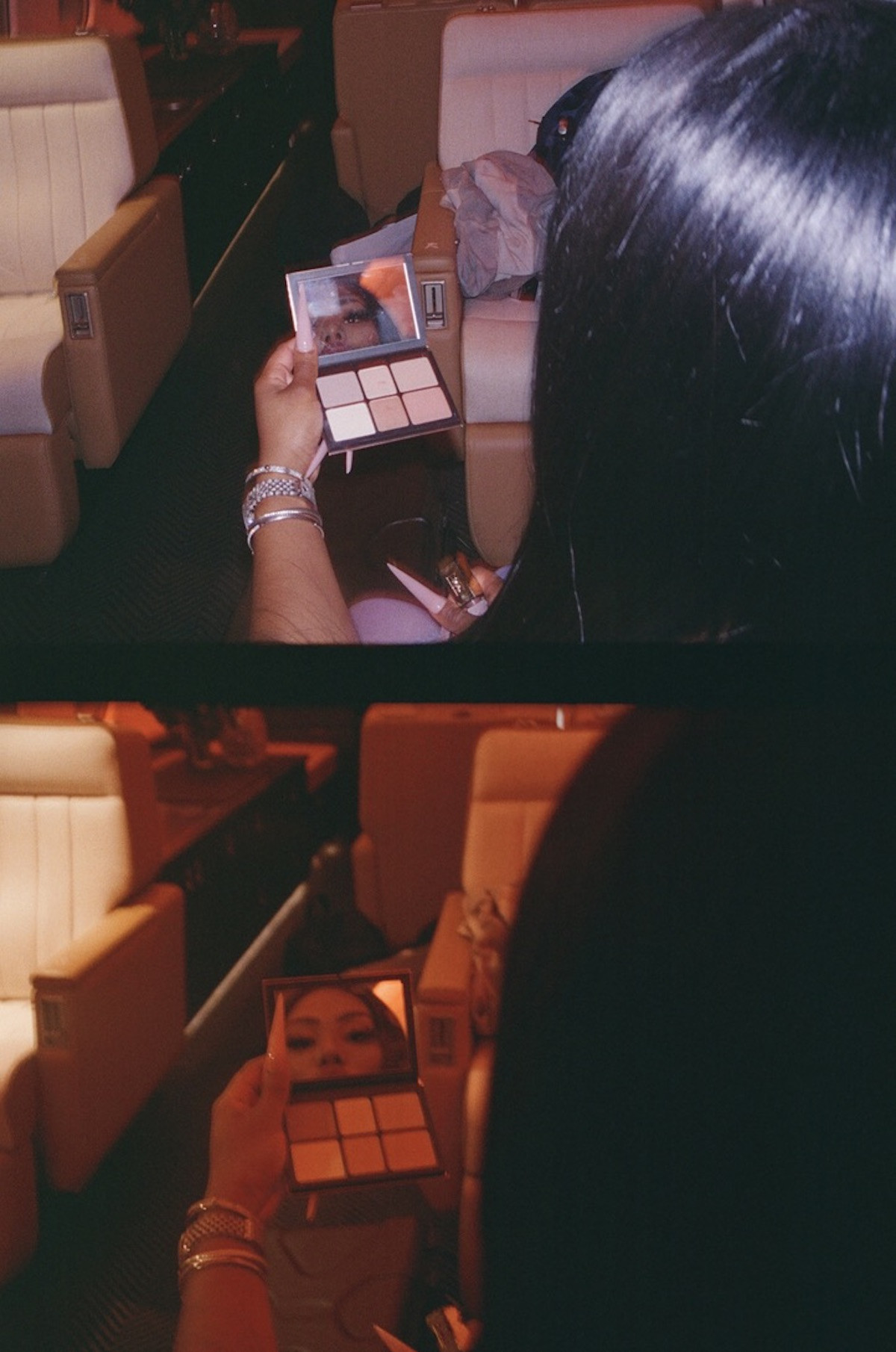
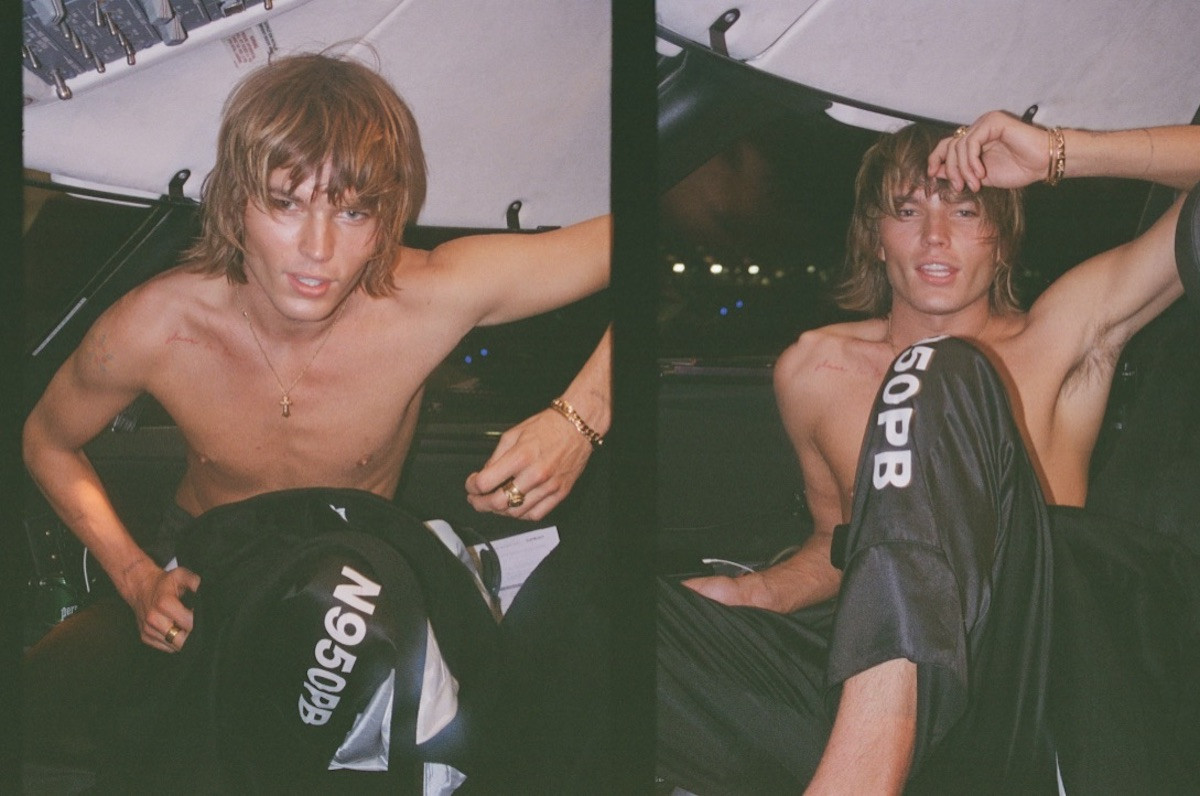
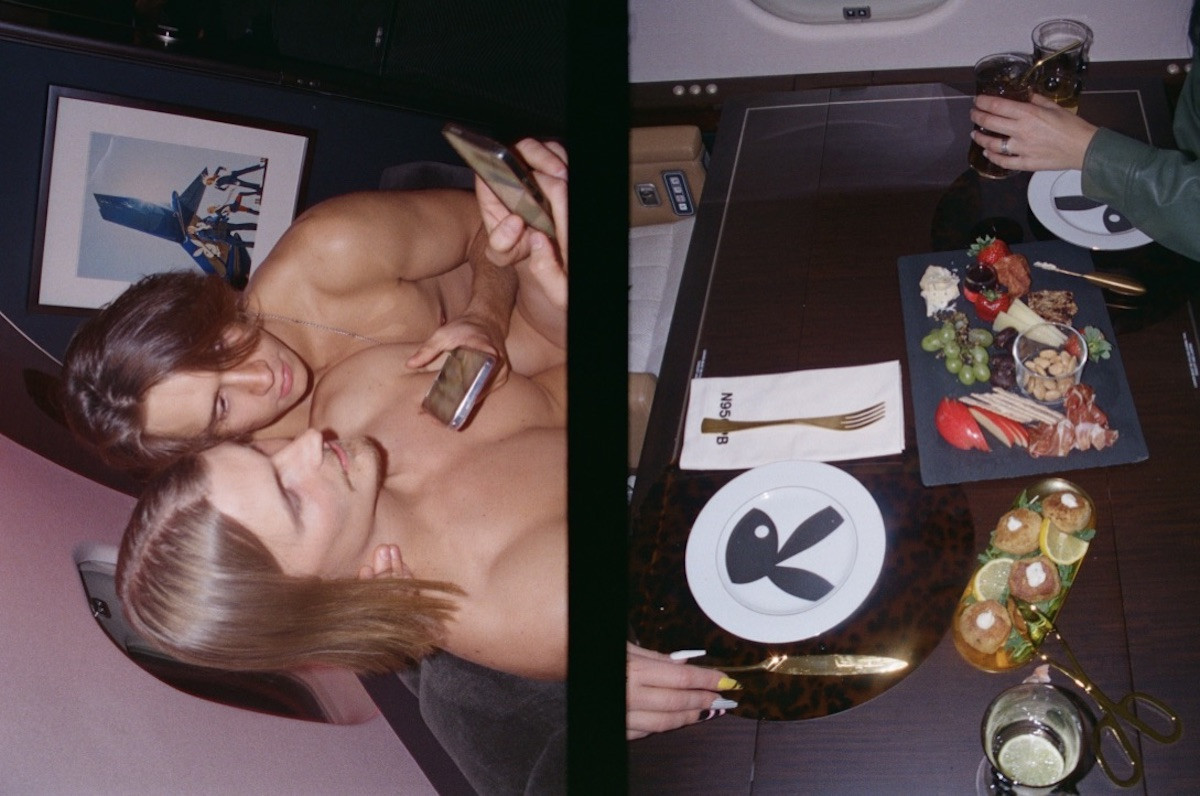
Raheem boarded the Playboy Jet on Wednesday of Art Basel week with the Clermont Twins and a number of other high profile stars. Raheem began his interviews with the Twins, who told Raheem that they only ever like to shoot portrait style. "Really tight," they said. "Even." They want to always be shot at an angle where you can see both of them together. They like to do everything together, even ordering the same drinks. Raheem wondered, though, what they don't do the same. One likes ranch, the other likes blue cheese. One loves oysters, the other can't stand the smell. This and more in the Q&A live from the Playboy Jet.

How would you describe Shannon?
Shannade Cleremont — Shannon’s a social butterfly. She’s more adventurous, spontaneous. She’s more of a risk taker. I’m more reserved. She’s the crazy one.
Would you call Shannon beautiful?
SC— Absolutely.
What is beautiful to you guys in a world full of validation?
SC— Beautiful is staying true to yourself. Self care. Whatever you’re doing you’re doing for you, no one else. That you’re happy at the end of the day, content with yourself. It’s all about yourself. If you love yourself then who cares what anyone else thinks about you. Live for yourself, no one else.
Do you guys do most things together?
SC— We do 99% of things together except relationship stuff. We don’t share guys.
What do you guys do alone? Do you guys do things alone on purpose ever? Like, do you ever need a break from Shannon?
SC— It usually just falls into place like that. For instance, she’ll go to New York with friends and I’ll stay behind, be alone. She’ll come back and we’ll work really hard. We have more breaks now, little weekends. She’ll go out, I stay in, or she’ll go out somewhere and I go somewhere else. We’re twins but we need our me time.
How would you describe Shannade?
Shannon Clermont — Shannade is fun, she’s responsible, stylish. I’m responsible when it comes to business but when it’s not business everything else is out the window. I don’t know how to act, she’s grandma. I’ll bring her out, have fun, and she’ll be like, ‘It’s time to go.’ She always knows when to leave.
You need that.
SC — We need that. I need that. I need an overlooker who’s peeping everything while I’m on the couch getting drunk.
Excited for Basel?
SC — Yes, we do it every year. We didn’t go last year so we’re just resuming the turn up. We see the parties, the art, the events.
What do you like to do alone?
SC — I like to write. I like to listen to music. Take walks. Smoke a little blunt. I don’t smoke as much as I used to but I enjoy it every now and then by myself. And watch some 'Housewives.'
You want to be on that show?
SC — I do. I would love to be a hot MILF. Have some kids. Get a man.
What are you trying to do at the end of the day? What’s next?
SC — My goal is to elevate my brand, my business, be successful. And while doing that I’m giving back as well in any way I can. Education. Help people around me. When I’m having a bad day it feels good to make someone else’s day. Making other people feel happy makes me happy.
This is now Jasmine’s third attempt to make me a drink, the first two she had to give away. How are you today?
Jasmine, the flight attendant — I am inspired.
We love that. What’s inspiring you right now?
J — Being in an environment that we helped create and watching people enjoy it.
Are you gonna be able to enjoy Basel at all?
J — I won’t because we’ll be flying right back. We’ll be flying back and forth between New York, LA, and Miami.
Are you stressed at all?
J — Yes.
Why?
J — I hope all our plans fall into place and that we do create an environment that people can enjoy. Like this morning, we were wheels up at 6am, got to Miami, reset the aircraft for new passengers, fly to New York, and now we’re flying back to Miami. It’s worth it though. We see people in their element and create on the whim in the space that you’re stressed out about.
So you’re curating whether it be spaces or a vibe.
J — It’s the part of the job I enjoy the most.
So you’re a curator of music and sound and vibe and space.
Mia Moretti — At this point, it feels like it’s who I am and what I know. Part of my soul. It doesn’t feel like I’m doing work, I’m just adding to a space. It’s setting an ambiance of what I need to feel good. Switch a mood when you walk into a space.
How much are you DJing for yourself and how much is for the audience?
MM — I’m always doing it for myself but I always say if someone leaves a space feeling different in a way that it’s better then I have done my job. And sometimes I want that person to be me.
DJing is what brings you to Basel. Is this the first string of events you’re doing since COVID started?
MM — Yes, 1000% The energy hasn’t come back. It feels like it has come back when I’m in New York or Miami or I went to France for a few gigs. I’ve been traveling for gigs but they come in spurts. It used to be so a part of my life and I would only ever get a few days off. Now I’ve retreated into my home which is really nice and good. It’s nice to get called out. It’s a total 180 for me.
Do you think it will ever feel like it’s back or do we exist in a new climate? Is it all new and we’re trying to adapt to a new space?
MM — We don’t want the same thing to come back. For me when you have that much time to reflect you think, ‘How could I have made these last few years better?’ Like, off the hamster wheel, the spin, you have a moment of reflection, you’re dying for a moment of, ‘If I could have done that differently what would I have done?’ Whether it was a fleeting split second or a year and a half. And some people didn’t stop at all during the pandemic. Being in LA though, recently relocating to LA from New York shortly before the pandemic, was for me a major retreat. I had those moments of deep reflection and thought. Do we want the same thing to come back? When it does come back what will make me really happy? How will I make every job the dream job? How could I have done it better? When I’m dying, am I going to be thinking, ‘I could have loved this way.’ ‘I could have lived this way.’ Could I have done it better? And we were so close to death, seeing death and loss in such a close way. But with such deep reflection that we had, it feels like things have gone straight back to exactly the same thing. It’s not like much has changed but we certainly know now what was wrong.
Do you think Covid changed what kind of music you’re listening to? Do you think Covid has changed what people want to hear?
MM — I can’t tell you yet I don’t know what people want to listen to but for me it has changed. I had a yearning while I was not playing to play music that made me feel rooted in the earth. I was doing some self-exploration and I wanted to feel the music. I don’t just want to play songs. The music has to make me feel like I’m connected to the earth and I need it to feel like it’s from the ground up into my body.
I think because we’ve been so depleted of external validation, there’s been need for substance and substantial validation, and it can be internal.
MM — Yeah, very true, you put it in a really nice way. And what better way than from ourselves? That’s the ultimate way. The cheap way is to get it from outside.
It’s hard to think about how much you can play yourself, work you can do to get it from outside of yourself when you can just get it form within yourself the whole time.