PRESENTE CONTINUO: the intimate ties between then&now

Starting May 30, PRESENTE CONTINUO will be available to purchase on presentecontinuo.com, cpcompany.com, and at the C.P. Company flagship store in Milan, Corso Matteotti 7.
Stay informed on our latest news!

Starting May 30, PRESENTE CONTINUO will be available to purchase on presentecontinuo.com, cpcompany.com, and at the C.P. Company flagship store in Milan, Corso Matteotti 7.

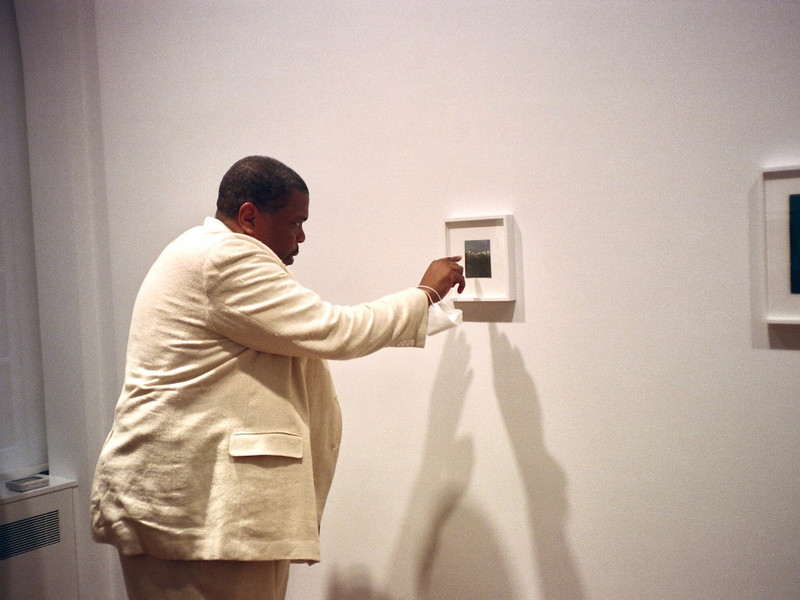
On display at the Parrish Art Museum through January 2021, Lucien chose to feature the paintings to represent his philosophy that “artists don’t need gallery representation to reach the career milestone of an institutional exhibition.” Perhaps easier said than done for an artist that has made more money from his art before turning thirty than most artists will make in their entire lives. However, Lucien has decided to use his power and much of the profit from selling his works to benefit the non-profit he began, Serving the People (STP), an online curatorial platform, “which offers support, programming, and a commission-free sales platform to artists internationally.” STP, still in its earlier stages, aims to bypass the boutique auction house system by allowing artists to independently curate their work on an online platform with no commission costs. STP is a heavy departure from a career of what many critics have described as self-indulged projects of disingenuous grandeur, but for Lucien, it is everything; it is, in his own words, his “Mona Lisa.”
Lucien Smith takes a Zoom call with office to ruminate over the Rain Paintings and discuss the return to an old form as he dedicates his life now to expanding past the world of paint. He’s wearing a gym shirt and a bright pink bandana which he uses as his COVID mask. After a quick, personalized, whispered audio tour of the museum and up-close-and-personal time with the Rain Paintings, Lucien steps into the museum manager's office. He removes the bandana to reveal a charmingly unkempt beard and a bright smile that hardly leaves his face throughout our long conversation. I ask him how much he would like to speak. “I love to talk,” he quips, “so as long as you can take it.”
Lucien reflects on the last few weeks; at the time of our interview, it is mid-August and his show had been open for about a week. He seems overwhelmed with emotion over presenting these aging works, all of which he owns. “I struck a chord, obviously,” he says about the Rain Paintings, “and I think at a very early age, I made a historical body of work.”
Like many other creatives across the arts, Lucien found fame in the early 2010s through an internet followings and by capitalizing on brand culture. “I did my first lookbook for Supreme when I was still a junior in college,” he says, “I did a cover for this Canadian magazine Bad Day Magazine that they shot it in my sophomore studio at Cooper. I was a little showboaty about it, I was proud of it, you know, as anyone would have been.”
Even before the Rain Paintings were close to conception, Lucien was making a stir with his sense for creativity beyond the antiquated systems of the art world, but once his senior show premiered and he was introduced to the life of auction houses and galleries, he held confidence that had both the potential to manipulate as well as to be manipulated by the art world. “I did not know how certain things could hurt my career or not,” he says. “Obviously with any sort of haste for success comes the handful of criticism and outside opinions. And as a young kid, you know, that was just a lot for me to deal with. It quickly became about money and all this other stuff and not about the art.” Imagining myself, or any of my twenty-something artist friends that I consulted before this interview, receiving as much money as Lucien did for his paintings at our age is nothing short of nonsensical.
In many ways, Lucien was deprived of the growth that comes with seeking institutional successes over the career of artistry. “Most artists spend their whole lives, you know, maturing during their work and maturing themselves and then get to a point of recognition,” he says. “I didn't. I wasn't able to have any of that. I wasn't ever able to sit with work and decide if I liked it or not.”
When the Rain Paintings first premiered, they were quickly chastised by the art criticism world as being disingenuous attempts to make fast cash; one major blow to Lucien’s reputation was a piece in Artspace by Walter Robinson where he coined the phrase “Zombie Formalism”: “‘Formalism’ because this art involves a straightforward, reductive, essentialist method of making a painting […] and ‘Zombie’ because it brings back to life the discarded aesthetics of Clement Greenberg, the man who championed Jackson Pollock, Morris Louis, and Frank Stella’s ‘black paintings,’ among other things.” No matter what you, I, or even Lucien may interpret this critical classification to suggest, or even if it was a good or a bad designation at all, art snobs ran with it. “People would come up to me like while I was eating dinner and scream at me and call me a zombie formalist,” he says with a laugh, “People read these art blogs and shit, and then they go out there believing this crap. It was too much for me to deal with.”
Lucien had little time between his experimental, flashy moments in college to being featured on lists, brandished with art world commodified labels, and classified by people who had existed in his new world for longer than he had been alive. “I had sort of lost belief in myself and what I was making,” he says. “So I had a little bit of a breakdown, a meltdown, you know, I wanted to self-destruct because I wanted to destroy the thing that I built, as this sort of façade and dive into some, you know, identity crisis and to figure out like who I was so that I could come back in a moment like this and be much stronger in my foundation and be able to handle criticism.”
To many, going from a hungry art student to international recognition in the elite circles of art curation is a dream, but for Lucien proved to be an unexpected challenge in a lifetime dedication to art. In art school, they teach you how to find ways to make money; no class explains how to handle the stresses of becoming one of the youngest artists in the Whitney biennial. However, Lucien isn’t shy about his participation in the speculative art world nor does he deny his lust for the recognition. “I wanted to be the youngest artist to ever to sell a work in auction over a million,” he says. “A lot of what had happened in my early career was definitely my own doing, don't get me wrong. You know, it was just a little of a, ‘Be careful what you wish for,’ sort of situation. With anything in life, you have to take what you're given and turn it into what it is that you want or need. What I can say is that I've been given a tremendous amount of insight and perspective on something at such a young age that I still now have thirty, forty years ahead of me to create something special, you know, from a, from a unique position.”


Lucien created the Rain Paintings after deep processing with considered inspirations and mood boards. He describes the paintings as autobiographical, emotional depictions of the feelings he held inside at the point of creation, pulling past works or contemporary inspirations together according to personal synthesis. "I don't just make stuff so that I can make money,” he says. “The art that I make are things that I just want to see out there in the world, little breadcrumbs that I want to leave.”
For Lucien, finally, the work can receive the air and space to be considered outside of the politics of the gallery space and auction system. I think the work deserved the opportunity to be seen outside of a commercial context,” he says. “That's what a museum is. That's what an institution is. It doesn't care about how much money the paintings sell for, it's just about the integrity and the quality of work.”
After many years in the spotlight, in the face of criticism, and as a sort of creative butterfly all over the art and design world, it is a point of healing for Lucien to present the works plainly as paintings from the artist Lucien Smith.
At this point, I mention to Lucien something peculiar that I noticed while researching him: I wasn’t able to find even one article that mentioned his race, and if he found it as peculiar as I did. “I mean, shit, man. I'm glad you brought that up,” he says. “I've been thinking about it a lot, definitely because of what's going on in the world today. I come from a mixed background, you know, my mom is Asian. My dad is African American. I've had to move to so many different schools because of my parents' situation that I was thrown into so many different identities, you know, like going from public school to private school, playing sports, and being more art-oriented. I've always been a chameleon sort of way, adjust to the demographic of my surroundings.”
Lucien speaks on his attempts to address his relationship with his race and the distance he had with it when he was younger. “I'm not proud of that,” he says. “it wasn't that I was a fraud as a kid, but I feel embarrassed, like when I was in Louisiana, why wasn't I just myself, why did I act like I was more into sports than I am, you know? And it was just because at an early age I was moving around so much that I was never really able to form a real identity, you know? Every moment that I finally felt like I was becoming who I was, I would be thrown into another situation. I would get lost and I've kind of carried that with me. I think that is why I have never been able to identify as a person of color, you know?”
Lucien believes that, because of the sort of racial ambiguity he adopted throughout his childhood in his attempts to fit in, he wasn’t restricted to racial expectations. “I've been able to live my life free of some of the stuff that other people who are of color have to go through,” he offers. “I have always tried not to include race in my art because it's not really who I am, you know? I want to make my art and what I'm doing accessible and inviting. I understand that other people want to make theirs as a means to open up a window into their perspective. And there's nothing wrong with that. There are just two different types of ways of creating."
As we are currently living in a time that systemic racism and the ways race pervades through all systems of western capitalism have been brought to the public sphere, Lucien has begun to rethink his place in his art. “Looking back now during all this stuff, I'm starting to wonder if that was the right thing to do, you know? Am I not being true to my roots and my heritage? I'm not making Black art, you know, because I'm not fully Black and I'm not making Filipino art because I’m not fully Filipino. I think about it all the time. I'm not shy or embarrassed or insecure about my ethnicity. I just don't think it defines me. And I think that that has transferred into my work and has allowed people to perceive my work outside of just my identity.”
Lucien points to Black artists like David Hammons, the legendary artist who has been a defining figure in not only postmodern form but in our modern understanding of what is possible in art creation. He acknowledges with respect that artists like Hammons and his attention to race is not only essential to his form but adds to his revolutionary nature. Though, Lucien’s paintings, to Lucien, is about Lucien, and he’s not trying to claim any more than that.
I ask Lucien if he thinks his abstract form and the absence of any overt mentions of race in his paintings have anything to do with his early embrace from the art world, as artists of color, more often than not, are left out of the conversation of transformations of the American canon. Lucien, categorically, does not believe the art world embraced him at all. “I would think of it more like Luke Skywalker and Darth Vader. They’re intertwined but they're always battling one another.”
For someone that has had success as great as his, especially his financial success at such a young age, it’s hard to believe that the art world doesn’t like him. He begins to concede that perhaps there is truth to the assertion that his color-blind attitude toward his art may have affected his success. “I feel much more like an outsider, you know, even though it may not appear that way,” he offers. “I've never felt welcomed. The art world to me is like twenty-five people who I can name, who don't like me very much, you know? It’s hard for me to say.”
I offer that perhaps his choice not to include race in the Rain Paintings in favor of an adherence to abstract expressionism was in a way a rebellion against what the art world expects from an artist of color. Lucien then reconsiders and begins to suggest that he felt uncomfortable bringing his race into his art as he never felt the effects of racism personally enough to justify including it in his artistic expression. “I'd probably get in trouble for this, but I just didn't want to play the ‘Black card.’ It just didn't seem right to me because I didn't grow up with a lot of that.” He is more concerned with issues like poverty or education access, issues that are not exclusive to communities of color. Although, he does stand firm that the art world does not do nearly enough to address economic or racial issues and in many ways perpetuates them. “I've seen the inner workings of the upper echelon,” he says, “and I understand why art is so wealthy or is so speculative because it's the bragging rights. It's the highest you can go. There are cars, there are houses, there's real estate, but then it's like, ‘I own this many Andy Warhols or this many Basquiats, you know?’”
To Lucien, art and politics are intertwined because of the elite’s obsession with high art, and the ignorance that artistic institutions perform only reproduces the inequality in the art market. “I don't take art that seriously,” he says, “and I don't take people in the art world are markets that seriously, but they should be taken seriously because they are involved with people who decide how our lives are run.”
For someone so against the functions of the high art world, it’s somewhat confusing that Lucien has ever been a pariah for the accusations of intentionally making art to be “flipped.” Although Lucien has made a considerable amount of money from his art, his art has at times sold exponentially higher on the secondary market, profits of which go to auction houses. Bearing in mind the confusing relationship Lucien has with this system, both benefitting from it and objectively being exploited by it through the secondary market system, it’s no wonder he began Serving the People. “STP, in other people's words,” he says, “is a creative incubator and digital platform. It was born out of necessity. It was born out of a lot of the lessons and a lot of the shortcomings that I noticed in my field, which is fine arts.”
Though much of Lucien’s creative life has been in the realm of confusion, drama, and controversy, it has born in him a precise and focused revolt against the corrupted art market he was exploited by. “Someone once told me that an expert is someone who makes the most mistakes in a very narrow field. I think as far as art's concerned, I can call myself an expert in some way. The paintings and the stuff that I was making were self-servicing, but I think art can serve a wider demographic. And I feel like my paintings weren't doing that. And so, I wanted to take the knowledge that I had and give it to others and allow them to use me as a platform. And so that became STP.”
He doesn’t view STP as self-servicing in the way his paintings were; he receives that outlet these days through his film work. He has several projects on the way, including a challenging, if not concerning in its nature, film from the perspective of a disabled person. “It's the type of movie where I think a lot of people will walk out of the theater,” he says, gleefully, “but I think that's the point.”
No matter what any of the critics from the past may have written in stone about Lucien, it would be difficult to paint a wide brush against STP and call it formalist in any sense of the word, for its entire purpose is to break down a system. It would be naïve to write STP off as another successful creative attempting a half-baked attempt at charity work. It’s obvious that STP, to Lucien, is a sort of magnum opus; he wants to change the art world and it is what he wants to be remembered for. In his own words, he wants to be a “cultural entrepreneur,” though what exactly that entails is yet to be known. Is it Tumblr 2.0? Is it Craigslist for art? And will it be big enough for such a powerful force like the boutique auction house system even care? It’s yet to be seen. For now, though, one thing has been made clear: the Lucien Smith that first created the Rain Paintings in 2011 is not the same Lucien Smith that has put the same paintings back up on display in 2020. For an artist who achieved fame at such a young age, he will inevitably be engaged with a constant return.
“I’m not coming back into this, in the second phase of my career, or whatever you want to call it, to do the same thing again,” he says. “I’m working on my next trick.”

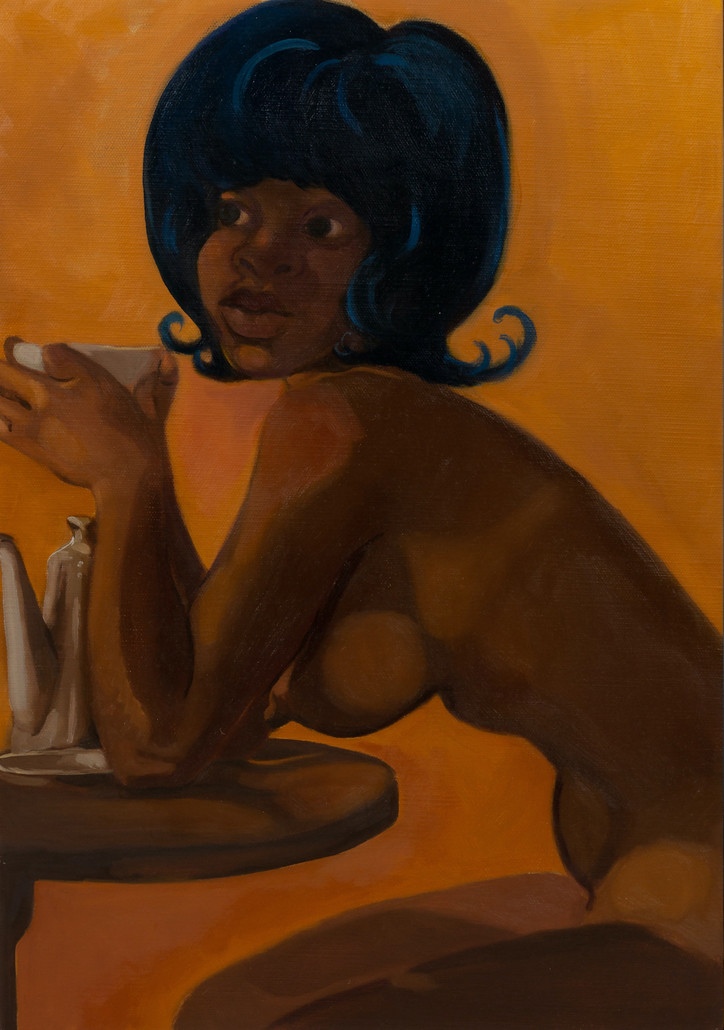
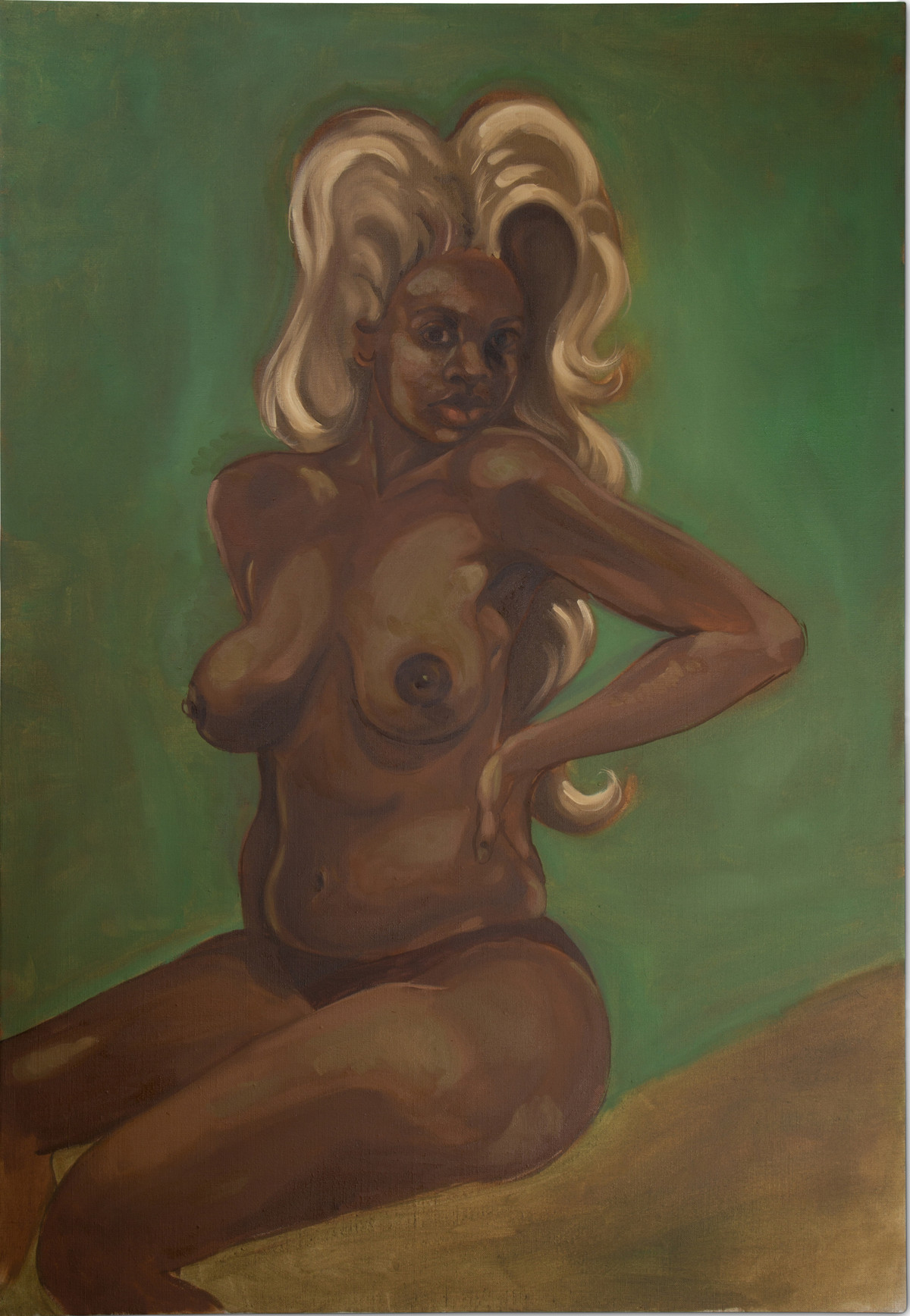
Critchlow’s portraits are like jazz: erotic, intangible, experiential, and wonderfully opaque. There is an electric verbiage to her visual language that celebrates the process, the dance, of questioning rather than the pursuit of a binaric ‘truth’.
Following her exhibit, 'Underneath the Bebop Moon', at London's Maximillian William gallery, Critchlow was interviewed by American artist Tschabalala Self to discuss the iconographic significance of the Black female body in contemporary culture.


Can you tell us a little about your backstory? Where are you from? Large family or small? Favourite childhood activity?
I was born and raised in South London, my mother’s side of the family descends from Caribbean, Irish and British heritage while my father’s family is from Nigeria. I grew up in Streatham, which is an interesting place. The rapper Dave has a song named after it. My experience of growing up was as part of a large family on my mother’s side. Her own mother, my Grandma, Gail, also comes from a very large and interesting family that arrived in England from Kingston, Jamaica in 1919. My great grandmother, Pauline Henriques, was an incredible woman; she was both the first Black Magistrate and the first Black Woman on British TV. She was one of six children, there is a book about the family, The Jippi-Jappa Hat Merchant and His Family: A Jamaican Family in Britain. I’ve been learning a lot about them recently; it’s been helpful in light of current events. The childhood activity that I probably remember most was spending time in my grandpa Keith’s studio at the end of my grandparent’s garden. I got to learn about Islamic patterns and Geometry, and it was where I first discovered oil paint. You could get lost in that room for hours, amongst piles of papers and books, in the heady, musky scent of rose incense while listening to gothic sounding classical music like The Sixteen Miserere Mei Deus, it was quite a contrast to the reality of growing up in a place like Streatham.
When did you first become interested in art? Who was the first artist you knew?
I first became interested in art seriously after being taken to see a Pipilotti Rist exhibition in Barcelona at the Foundacio Joan Miro by my mother. It was titled Friendly Game – Electronic Feelings and I must have just turned eighteen and been finishing up sixth form. I was blown away by that exhibition and how intensely I was moved by the experience. You’re entirely submerged in Rist’s universe, which seems to abstract reality, creating alternate nonsensical versions of all things that seem familiar. There was a piece of work in the show titled Sip My Ocean, a projection of people swimming around in the Ocean and Rist singing "Wicked Game" by Chris Isaak, she drifts in and out of softness to a more hysterical sounding singing. I think seeing that exhibition had a really profound effect on my interest in art.
The first artist that I can remember knowing was probably Rembrandt and looking at all of his self-portraits, drawings, watercolours and etchings. I think I knew him in a way of trying to understand and learn about draughtsmanship and the craft of art. My grandfather scanned a ton of pages from his books and put them all in a fact file for me.


How have you been feeling during the first half of 2020? How have you been spending your time? Have world events influenced your work or perspective?
It’s been really tough, and then at the same time I have been so lucky as I have been able to open my first solo show in London. Initially I was in a very strange place trying to pull together the show that I had been working on for over a year and a half, when Coronavirus hit and the whole world started going through this huge shift that we’re still experiencing now. I also think that change and the sudden excess of slowed down time that having to stop and stay at home has given us, has really explicitly highlighted the inequalities of contemporary society in a way that many people could no longer ignore. There has been a lot of questioning the systems in place and how we live. I have been spending a lot of time in my home listening to podcasts and catching up on reading as well as drawing, more than painting, which I think at the beginning was easier for me to navigate what I was experiencing through its immediacy. A way to grasp back at reality, which felt a bit like it was slipping through my fingers— I’ve always been a bit of an anxious person and I find drawing very grounding. I think less when I draw and just sort of let my subconscious take over. I think a lot of world events have, for me, kind of reinvigorated the basis of my work; that there is a need to view things in a new way and question what you think you ‘know.'
How have you found America during your travels to the states?
I have found America both interesting and strange. It is very culturally different to the UK and then at the same time there are similarities. I do always feel quite disturbed by the stark inequality and lack of fundamental things like health care, and you can really see the effects that this has on people. I remember seeing quite a few people who had lost a limb out in the streets or in the subway, more people than that should happen to when there is modern medicine ready and available. It makes me conscious of the UK and how desperately important it is to hold on to the National Health Service and to not take it for granted. Then, when I look at and get to engage with the art scene, I am amazed by the community of people that come together and support art. I haven’t really seen enough of America to create any sort of overall view, as it’s so big and I imagine things really range from place to place, but I do find New York amazing. The number of galleries, projects, independent bars, restaurants and concepts that people put together is exciting in a way that I haven’t really seen before, which is very special. I really hope that New York is able to preserve that despite all that’s going on right now. I think the communities are super strong and resilient. I also think it’s a complex political landscape and you experience that in the culture.
Do you believe your work is viewed differently in the USA vs the UK?
Yes, I think so, but I’m convinced that a lot of the difference comes down to social political context, in that, as places, the UK and the USA are quite different cultural environments. I think the UK is more traditional and slower to move forward when it comes to supporting emerging artists, and work like mine is easily overlooked in the same way that we overlook who and what it represents. While in the USA I think there is a greater demand, want and awareness for this variety and in some ways, I think there always has been. Perhaps it’s because the UK is tied to this vast European history of art that it can’t seem to get away from. I also haven’t exhibited in the UK enough to have formed a full personal opinion on how my work might be viewed differently in the US from the UK. Most people think I’m a New Yorker because I’ve predominantly exhibited in America which is something that has happened quite organically. However, I do think since the opening of my solo show in London people are willing and interested to view the work with open eyes in a much broader context than I might have expected. Despite what is considered quintessentially British I personally feel very British and that my work is representative of that while it speaks to the fact that I’ve grow up in a westernised world and there is an influence from American and contemporary culture which is relevant in both the USA and the UK.


What do you find unique about your position as a Black British artist?
I think in a very simplified way my position is unique because there are not many Black British artists with a contemporary platform. I think there are about 12 or 13 black women represented by galleries here in the UK, which is crazy. I think it is also a shame that we have to think about that when we focus on Black British Art but it’s important to note that there never really has been many established Black British artists and that is still the case. Though I think things are changing. I think my position, personally, is unique because of the environment that I grew up in as a black girl in an almost all white-passing family that ironically is descendant from Afro-Caribbean. I love British culture and I think there is so much to it, and that has all come from the mixture of history and tradition and the influx of people migrating in and out of the UK and the new culture developing out of that. I feel like I’m a reflection of this and while being a Black British Artist is a complex position to hold, I find that like all things that invoke further observation and not just acceptance it can be a powerful place to operate from.
Do you think such questions are ridiculous?
No, I don’t think such questions are ridiculous, in fact I am sure that they are necessary. I think they are hard and complicated questions that as an individual I can offer a view on, but I don’t always have an answer to. I’m very aware of the terms that I operate within being Black and female and wanting to be a painter and sometimes I find that overwhelming. I don’t think it is my responsibility to have answers nor is it possible. These are grey areas, which I hope can be treated with the depth of complexity and investigation that they require. In the same way, I hope my work will be viewed like that too and that it can offer insight into the matter of being a Black British artist, as well as a sense of self-awareness.

Future’s inclusion, especially, is jarring. His music videos are shot in mansions, in satanic trap houses, in millionaire strip clubs. In “Pardon Me,” the all-star rapper is humbled, as if someone found some rare early 2000s footage of pre-fame Future radiating the freedom found in the anonymity of geeking with friends.
When the video ends, you’re a little stupefied by what you saw. It wasn’t a high-production, flashy, corny music video that we’ve become used to with some of the creative excess in music industry. It isn’t someone dropped into the industry with a bag full of money and told, “Go.” It’s someone with a honed-in craft and style. It’s someone who knows what they’re doing with a camera, as if the footage itself is a character with a personality. It’s someone who knows what the fuck they were doing, and was just waiting for a chance to flex. And you can’t help but wonder, “Who made this?”
At the end of the video, in marker-drawn lettering on a flashing collage of photos hand made by the video's creative director Raheem Hercule, the words “DIRECTOR ZHAMAK FULLAD” show on the screen, and rest there for a moment, as if to stare you in the face and say, “This is who the fuck made this video.”
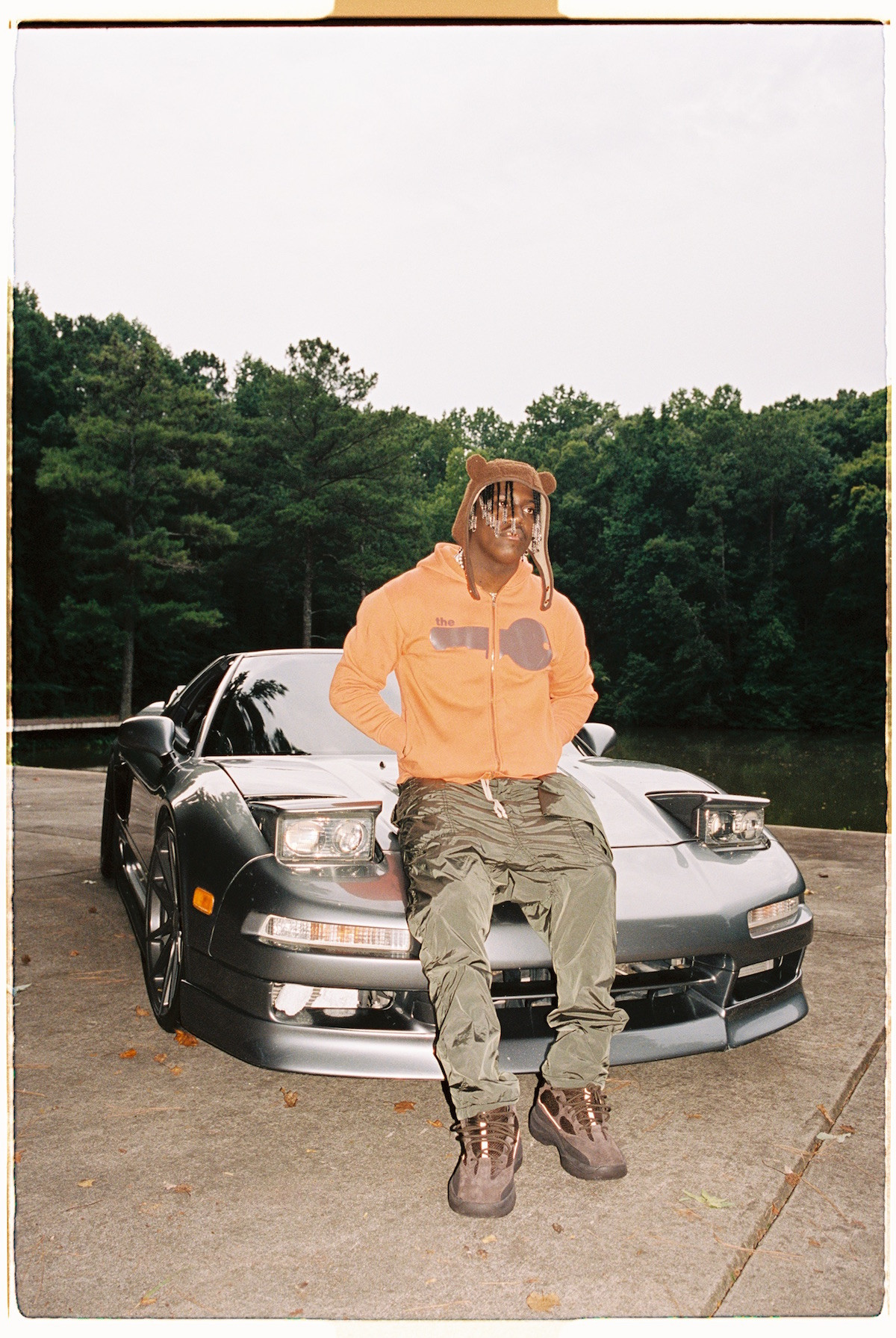
I sat down with Zhamak Fullad, a fellow Iranian, born in Tehran and based in Los Angeles, to speak at length about her journey. She worked for years as a behind-the-scenes photographer for some of the biggest artists in the music industry including Drake, J. Cole, and Migos and has done editorial shoots with the likes of Rico Nasty. After years of crafting her skills and hustling, she landed the director spot for Lil Yachty's "Pardon Me" after a friend put them in touch.
She is the first brown woman to direct a music video for Future or Lil Yachty. We spoke on her move to America, the friction she experienced in western schooling, Iranian culture, and her struggles and ultimate triumphs in Hollywood. Zhamak also has many thoughts on how other brown girls can do it too.


What is up, dude? How are you?
Nothing, I just had like five phone calls and I was like, ‘I gotta go.’
What were the phone calls about?
These edits! Drowning in work. It's great.
How have you been feeling about the video?
It's been cool! You know, it's not cinematic like I made a short film. It's everything else about it. The vibe, it’s me. The style is close to what we wanted for once. Henry went crazy on the edit and Raheem's guidance and direction with the whole project, from coming up with the ideas to executing all the animation, brought me closer to what I would proudly put my name on. A good team is very important.
And no one has ever seen Future in this light before. So I'm getting a lot of positive feedback, even when I'm like lurking the YouTube comments. I'm like, 'Oh, I haven't seen anything bad.' Everyone’s like, ‘This is great stuff!’ So that’s cool.
Have you heard from like Lil Yachty and Future's people? How did they feel about it?
They felt great. They love it. It was the first time they had a video without any notes. We had version one, And then they were just like, ‘Sick, can we get this export?’ It was done.
Let’s get into the nitty-gritty. You were born in Iran.
Yeah, Tehran.
How old were you when you moved to Vancouver?
I was 12 and a half or something.
What was it like growing up in Iran?
I mean, you don't know anything different and when you're there, that world is your whole life. And then you move on and you're like, 'Whoa, everyone's racist.' [Laughs] Wow, hate it here. But, I dunno, everyone there is so different. Everyone matures up so quickly. Even the school system, the curriculum is so different, you’re doing finals since grade one. Like our fucking art class, I don't even remember it being anything crazy. It's very science and math-oriented. And you're in school with all girls and boys are in school with all boys. Everyone’s wearing hijab from grade one and it’s weird. Like you’re six and you’re like, ‘Why do I have this shit around my head all because men can’t control themselves around my wrists and ankles.’
So why’d y’all move?
My mom’s an artist and my dad's an architect. They just wanted to move for better opportunities and a better life for us. I have a sister too, my younger sister. I can’t tell you our age difference, though, people will be able to guess my age.
Oh, don’t worry I got you, Iranian man to Iranian woman. No one will know your age. All my aunts are twenty-nine.
My mom has been twenty for my entire life. I don't even know her fucking age. I'm not even capping, I don't know her age. I've been lied to my whole life. So, I’m twenty-one, whatever.
I’m interested in how growing up in Iran and learning about art within Iran affected your artistic upbringing. What ideas of art did living there give you that were different from here?
Everything has to be done sneaky. You don't have freedom of speech. You have to figure out some way that you can talk about sex, but not talk about it directly. I'm talking especially about cinema. It's like, okay, we're in Iran. The man and the woman in the movie can't even fucking touch. We got to somehow say they had an affair. You have to be extra creative to go around all the bullshit. It exercises your sense of using metaphors and a lot of symbolism in your work and talking about one thing but showing another. You have to be like a ninja, how to dodge all the taboos things. And I think that's the best thing. It’s almost poetic. There is so much metaphor going on.
That’s why Iranian cinema is so fucking good. 'Cause there's so much nuance.
And it’s so underrated.
That’s why Asghar Farhadi is so amazing…he says so much with so little because he has to.
You have to. And another thing with Iranian artists is they get banned, they go to jail. Sometimes they're like, ‘Okay, you're not allowed on TV or anywhere on the news for like 10 years.' People get banned left and right. Even if they're not speaking politically, it still happens. You can’t make art there.
So, you moved to Canada, and with all those ideas you mentioned of art and creating in mind, how did it clash with what you were told was the right way to make art and be creative in the west?
Well, first of all, I wasn’t even ‘making art’ in Iran. In Iran, everyone's an artist. You have to make art, even if you're like a doctor, a lawyer, or something, you're doing something artistic on the side. Just to keep your sanity. This is probably so cocky, but we could do anything and that's how I grew up. Like all of our family, friends, everyone did something artistic. Be it playing the piano or playing the fucking sitar or the santur, someone could do it! Everyone knew how to do something.
But I grew up in a house that was all about arts, but I was more interested in sciences and stuff. My mom would force me to sit and draw and I hated it. She would do classes at home where she would teach kids how to draw and stuff and I was forced! I was like, ‘I don't want to fucking do this. I hate drawing.’ But then last week, I'm like, ‘I wish I knew how to draw.’ This sucks, it would have been great.
But from that we moved to Canada and I was still into sciences and I was like, you know, fucking getting graded straight A's and being the perfect Asian child, coming from that strict system of schooling, It's not very passive. It's not like, ‘Oh, la-di-da, you can do arts and you can smoke weed, every break and fucking do whatever,’ you know, it's different. You have your school. Your school is your escape from society, to escape from home, whatever is going on at home, you just want to build your future. Like you're in grade two and thinking, ‘Okay, I need to get my shit together and be a doctor so I can have a family and have a poppin’ life,’ you know? ‘Cause it's hard. You just want to be set for your future.
And then coming from that and being in Canada where no one's taking school seriously, no one’s taking anything seriously. It's not a matter of life, things aren’t that deep. And I learned English in a month and then again I was doing art in school that I didn't want to do.
And then I randomly got into an elective and they were like, ‘Oh, you have a camera at home, you could take photos.’ And I was like, ‘Okay,’ I didn't pursue it. And then I was in university and I dropped out, I was just like, ‘I’m gonna make art now.’
When I went back to Iran a few years ago after twelve years, I was like, ‘Okay, I need to pay more attention to what is here and how I'm related to my culture,’ or how my roots are in Iran and that’s my culture, how do I bring that into the light? Shooting a lot of music stuff, there's no real way to showcase that. Being a photographer and shooting music, there's nothing that I can reflect from my culture into that photo, it's all about the subject matter. They’re already their own person, their own icon. Where do I fit into this picture? I’m just the brown girl with the camera. Yeah, of course, I'm representing my people and my gender and all of that. If I have a photo of Drake, are you going to see that was by me or by an Iranian girl? No, you don't think about that shit. Just, ‘Oh, that's Drake, cool. Next.’ The most someone would say would be, ‘Oh, this was taken by a brown girl. Cool.’
I feel like with painting and writing and filmmaking there’s much more room for that stuff. And when I started getting into making videos and making short films for myself and I do a lot of passion projects and I shoot a lot of videos for myself, that's when I'm like, ‘Okay. This is more of me.’
I guess with celebrity photography you’re more of a device, you’re not in it.
You’re not seeing eye to eye with the artists. They don't look at me as another artist. They're like, ‘Oh, that's just like another photographer.’ I just want to be looked at as an equal artist.
How are you treated differently as any Iranian woman within these circles? I'm sure there are many ways in which people treat you differently, but what do you experience that I, an American-born man, wouldn’t experience.
Right off the bat, anywhere I walk into there’s misogyny. It's been like that. It is like that. And it's always going to be like that. It doesn't matter what race or ethnicity I deal with. I walk into a room, I’m immediately against misogyny. And apart from that, I'm never fitting into any sort of group, everyone cliques together. Different ethnicities, different races, and stuff. They all that kind of bunch. Do you ever see a group of Persians in an art collective?
Oh do not worry about it, I know exactly what you’re talking about.
Even if there is a bunch of Persians together they’re probably just gossiping.


You're constantly floating between different circles. Of course, being in any POC circles is better than being in a white circle.
Absolutely. But you're never fully welcome in any circle. It doesn't matter what race it is. It doesn't matter. It's weird. And then sometimes I'll do a project and it’s a bunch of brown girls, ‘Sick!’ And then always, I don't know why, but it goes so wild. It gets so crazy. Everyone's so opinionated and strong, Middle Eastern women. Oh my God. It's like, I'm talking to myself times 10, everyone’s so stubborn. But still, I would rather work with that than a group of white people.
That's the caveat forever, ‘It's still better than working with only white people.’
Yeah! No matter how weird I may feel in a POC circle it’s still better than hearing racist passes at me on a set.
Constantly feeling like you’re undervalued, not even having to question it.
Absolutely. And obviously, the Black people on sets have it the fucking worst. I've been on sets where it's like, ‘Okay, you're not being directly racist towards me and might be cool, but you're being fucking whack and saying weird shit about Black people on Black culture,’ you know what I mean? Hip-hop was invented by Black people. Being around a lot of white artists, they're imitating all of that. Like, this is so corny of you. And it's weird. Cause you’re dumb and young and probably don't even like, think about the fact that you’re being racist.
Which is worse because they're not expected to think about it, there's no reason to think about it.
There’s that, and then there's saying the n-word. Oh my God. Once on a set, I was talking to my other photographer friends and she's like, ‘Yo, we gotta start invoicing for therapy because I was put on a white set.’ I was like, I'm down to start doing that, especially those in the Black community.
And sometimes I have to think about it, the fact that I'm even here and being in this community and shooting music stuff, it's because of Black people. We're all profiting off of this, but white people don't just don't want to drill it in their head. Without Black people these music labels won't be anywhere, you know? I'm not saying that there are not talented white artists, we all listen to them, rock and roll is mad white people. But don't get it fucked up. We all owe it to Black people.
But for me specifically, it’s misogyny. And then there are white girls getting the job over me, you know? So if it's not a white man, then it’s a white girl.
And then there’s the issue of people sometimes not even knowing what race I am or where I come from. People can tell I’m not white but they don’t know where the fuck I’m from. It's more of an American ignorance thing. They’re like, ‘What? Iraq?’ I'm like no, Iran. How do you know Iraq but you don’t know the larger country that’s right fucking next to it?
Or they know where it is and they’re like, ‘Aw shit right that country that wants to blow us up.’
Oh my God. Dealing with cops. It's always, ‘When was the last time you were in Iran? Does your family work with a government? Are you guys spies and stuff?’ You look at me and you think I must be a spy or a terrorist? And that's the first fucking question you asked me?
We were like shooting a video for a friend two months ago or something. And then I guess we were on in an area that was restricted but we didn't see the signs. And we were just shooting those like four of us at night cops pull up, fucking investigators. It was me and my sweet friends and they're all Black. And it's like, okay, here we go. This is going to be the worst fucking thing. An Iranian with three Black guys, sick. So they questioned everyone. And then to my surprise, they questioned me the longest like, ‘Oh, so you're from Iran. Oh, you were there two years ago. Okay. Yeah, let's talk more.’ The guy was like, ‘Okay, so what does your mom do? What does your dad do? Do you have family in Canada? Do you have family in America? What does your uncle do? What do your cousins do? What are their full names? Do you have your passport?’ And I was like, ‘No, why would I have my passport on me?’ I have my ID. They thought my ID was fake. My Toronto driver's license. I hated these guys. It was so wack. I have been to Iran once in like twelve years and it’s a big deal.
Something you brought up a second ago that I wanted to ask more on, how did you feel the transition of racial politics when you got here?
I grew up somewhere with my kind. You’re only around your own kind. They run the economy, the run the country. When you see white tourists, that’s the most you'll see white people. Coming to Canada was the first time that I experienced racism off the Internet or books or TV or movies. Like when you watch a lot of movies, it's like, ‘Okay, like this is racism.’ Watch it on the news. This is racism. Your parents tell you, this is racism. It's not cool. You don't treat other people like that, you know? And then you come and move to somewhere that's white dominant and you're like, ‘Whoa, why am I the weird one?’ Why is my outfit weird too? I used to wear tracksuits and Nike's. And my school, my white ass school, I used to get bullied for that make weird. But I was in a super white suburban neighborhood, if I was buying the same fit in New York, that's a whole other story. It was a shock. Like, ‘Wait, why am I the weird one?’ Why am I the one that outsider?’ It just feels lonely. I hate that I have to adapt to your routines and your way of running things.
Do you still have experiences where you go in and no matter what you've been assigned or who has hired you, you have to prove yourself?
I'm constantly fucking trying to prove myself. It gets exhausting. I go on sets where the director has the tiniest I’m getting treated like I'm the amateur. I've been doing BTS (behind the scenes) photography. Being on music video sets, no one gives a shit about BTS photography. They get paid nothing. You’re always getting bitched at. ‘You’re in the shot!’ Get out of the shot!’ Blah, blah, blah. And then most of the time they're not getting paid and not getting paid on time. Everyone uses the photos, nobody tags them. It’s just a lose, lose, lose, lose situation
This video, ‘Pardon Me,’ was the biggest fuck you to anyone that was ever like, ‘Oh, Zhamak? The BTS photographer?’ No, bro. I'm not just the BTS photographer. My photo career is seven years old now. The BTS photography, the past three, four years was my means of income and my networking. Learning and putting in my 10,000 hours.
No respect for the hustle.
No, absolutely not. And being a girl, someone’s always like, ‘You're here to fuck someone, or you already fucked someone.’ And people don’t take chances on you. I have mad artist friends that are big and that I work with a lot. And sometimes they do a project where they switch to male photographers or male directors. And I’m like, what was I doing wrong that made you feel you couldn’t trust me? What was I doing that wasn't good enough for you? Because you’re gassing me and saying I'm one of your favorite photographers. So why am I not getting hired?
No one’s giving me a break. No one's ever giving me a chance to just be like, ‘Here's a project, do whatever the fuck you wanna do.’ So that’s why I'm super thankful for this project and Yachty because he picked me. We had talked because one of my friends put us in touch and that's how it worked out. We started talking and shooting photos in Atlanta and he saw my work and I was like, ‘What if we do a little video?’ And I wasn't even thinking about doing anything crazy. And he was like, ‘I'm with it.’ And then it just turned into something else. He trusted me with one of his favorite songs on the album too. This is what I mean, this is what's important. I even told him, ‘I appreciate you and love you forever. You took a chance and you finally gave me the break that I needed.’ And being the first brown girl to shoot him and Future. That’s important to me.
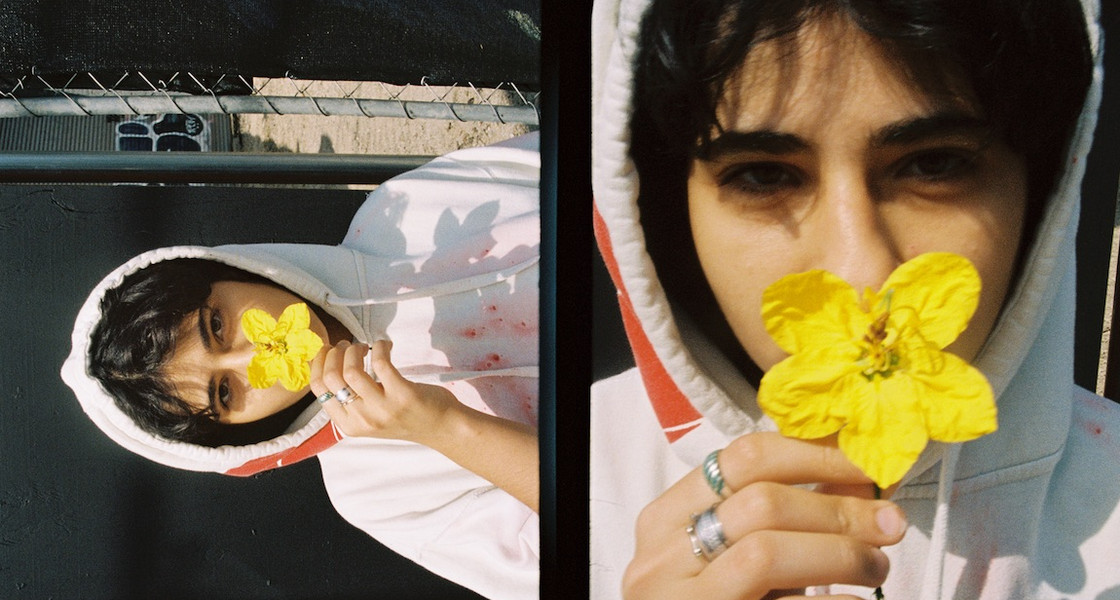
And it’s also like, y'all can do it too! Just work hard. And you don't have to fuck anybody. You can just work hard and it'll take a long time, but it'll pay off eventually.
How does being put in these boxes affect your level of creativity? What do you wish you had more access to?
I just want to be looked at equally. But that's like asking God to drop a million dollars on my lap just right now.
So what’s your dream project?
Short-term, I’m trying to manifest shooting a video with Rihanna. She sounds sick. She uses a lot of women and this sounds like a dream job, you know, trying to get that this year. But dream job is where everything aligns. Everything works out. Each part of the project works out. There are no obstacles. There's no budget shortage. There's no one trying to one-up me or try to get in my way or. My word is accepted. If I'm directing or if I'm shooting and if I'm leading the project, that's trusted and that's backed up and no one is trying to come in and direct for me. And a team where we all work together and help each other and back each other up.
Do you feel like the work that you're putting out now is like properly defining you? Is that if not, what?
No.
What would you change?
I would love to work with more female artists. Healthy. Nice. Nonviolent. Just saying down with the patriarchy. Fuck all this shit. And also bringing my culture into the work. Go back to Iran. Fuck around. Bring me and my people into my work.