PRESENTE CONTINUO: the intimate ties between then&now

Starting May 30, PRESENTE CONTINUO will be available to purchase on presentecontinuo.com, cpcompany.com, and at the C.P. Company flagship store in Milan, Corso Matteotti 7.
Stay informed on our latest news!

Starting May 30, PRESENTE CONTINUO will be available to purchase on presentecontinuo.com, cpcompany.com, and at the C.P. Company flagship store in Milan, Corso Matteotti 7.

I did the show very quickly, Nino gave me the okay in mid-November or something, which was in the middle of the magazine. So I didn’t have a lot of time but I have to say that this thing as very professional. Though, it has been a long time since I did any curating.
I was a curator in the '90s, and maybe 2005 or 2007 was the last show I did. 2007, I think, was a show in a big institution in Paris. I used to curate a lot of shows. In the '90s, I curated a show almost every month. I love curating, and there was a time in the '90s when curating was really interesting to me. It was a way to say something with art, and art was changing in the '90s. I was really into making a statement on what could be art today, in the time of commercialization of art. Art had really commercialized in the '80s, and then in the '90s there was a movement going back to the more interesting, non-commercial avant-garde.


Left - Ex, 2019, Amanda Wall
Right - Brad Phillips, October 13, Age 44, 2018, Brad Phillips
But then it became super commercial once again in the 2000s and I got tired of it and didn’t want to curate anything anymore. And not curating, for me, is also a statement. I am not interested in galleries, I am not interested in museums. They became a payment system, very commercial and very predictable. So I did not want to curate any shows anymore. My connection to art was entirely connected to my magazine. In the nineties, it had gone hand-in-hand— curating shows and creating a magazine, to me, was a very similar activity.
But then the situation changed again. Now, because of social media, you have access to a lot of artists without the need to go to a gallery. You don’t need the art world to promote and make art public. So in this new situation, the artists still need to sell their work, but do not need the art system to express and show their work. To me, Instagram is an open gallery. Over the last eight years, I have ended up following a lot of artists and especially painters that I have never met. I have no idea who they are, but do not need to know who they are, how old they are, whether they have a gallery or not. This is a new situation for me, and to the art world, where the artist and their art can be disconnected from the art system again, by way of social media.


Left - Two Worlds Colliding, 2017, Alphachanneling
Right - Double GTO, 2019, Joe Andoe
I thought this could be the starting point for a show, based on painting, but on painters that I have never met, and don’t know anything about, but I like it because I have been following what they do on Instagram. That was the idea, and I didn’t stick totally to the idea because I wanted to also show some friends and artists that I knew before social media— some aren’t even on social media. Urs Fischer is not on social media, and I am not sure if Paul McCarthy is on social media…
They offer a point of view on what it is like to paint today. Instagram was just the starting point. Selecting people I don’t know because I truly don’t have time to go do studio visits anymore. My life is a nightmare I'm just doing my magazine, which is constant and permanent work. But this show is about even more than painting today, too, it is about what painting means to me today. I came from a generation where art curators and critics in the late eighties were against painting, which was a very controversial move against the avant-garde of the seventies.


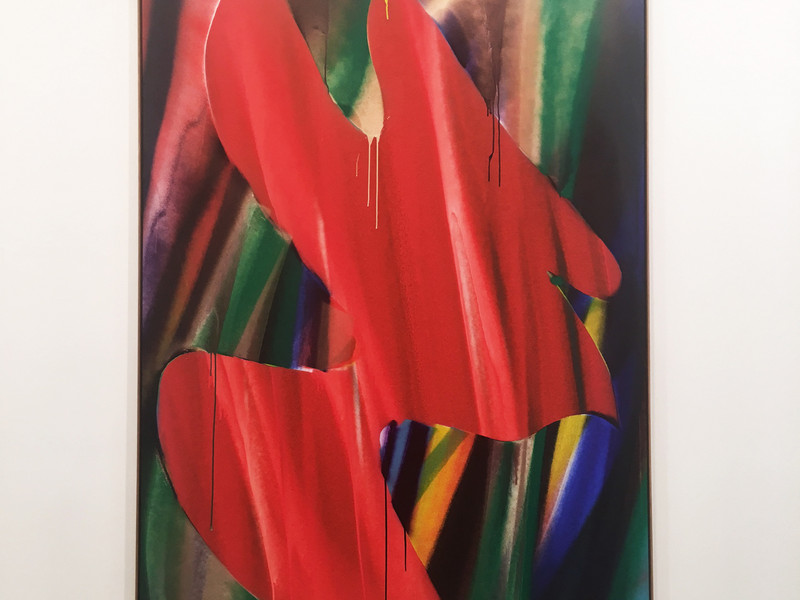
Left - Sleepless Night, 2019, Luca Giavagnoli
Right - South of France, 2019, Alison Elizabeth Taylor
So my generation in the nineties, we were attacking what was called the “trans-avant-garde” at the time. All of these artists like Julian Schnabel were reacting to the idea that painting had become really conservative. I was more into the graffiti scene, and the movement in the nineties called, “Bad painting”, and the artists who really used painting as to make a point. This was my connection to painting in the late eighties and nineties, which was problematic. I was not against painting, I was fighting for painting that was fit in with the idea of Bad painting, using painting as a weapon. I was part of the group of people who loved the Boxing collaboration between Jean-Michele Basquiat and Warhol. Everyone said, “this is the end of Warhol, he’s trying to be too trendy and Basquiat he is trying to be recognized under Warhol’s label”. But I loved it, it was totally punk rock to me.
The punk rock approach to painting today is to see it as a free, spontaneous medium outside of the art system. So that is the idea, and painting means a lot to me because it is also connected to a deeper way of picturing everyday life. Picturing movement, emotion, love. Life. I deal with so much photography, because of my magazine, but I consider painting as a different category of photography. It is actually an anti-picture—a form of resistance to the permanent flux of photos that we have to see every day. And not only on social media but everywhere. Painting is an opposition to this constant communication consumption, it is a way to slow down. We are consuming imagery, but with painting, we have a chance to interact. It is a one-on-one relationship with the painting in front of you, and mentally with the painter. It is quiet and intimate, and very connected to love. A delicate moment. And this is what I wanted to express. Painting can change our life, and how we communicate with each other.


Left - Birth of the Universe, 2014, Judith Bernstein
Right - The Outdoor Type, 2003, Mike Kuchar
For the installation of the show, I did a sort of different layout. I wanted everything to be on the same line, like Instagram. Every painting is on the same level— those from famous artists, as well as unknown artists. The eye-level layout is a political statement, as much as it is trying to tell a story. Just like a magazine layout, each piece is purposely installed very close to each other and has elements that relate. I also used the floor, because generally the floor is not used in painting shows. It gave me a bigger format and was inspired by an installation by Yayoi Kusama. I liked the idea that you see the back of the painting too, you’re immersed, almost inside of the painting. I was afraid to have so many different artists, but in the end, I loved the diversity and the lack of over-intellectualization. These are cool artists telling the story of their everyday lives, painting their girlfriend, picturing their mental state… Day to day emotion.
Check out To Paint is to Love Again while it is still up, at Nino Meier Gallery.


Palace of Errors — Closes February 2
Lila de Magalhaes — Deli Gallery
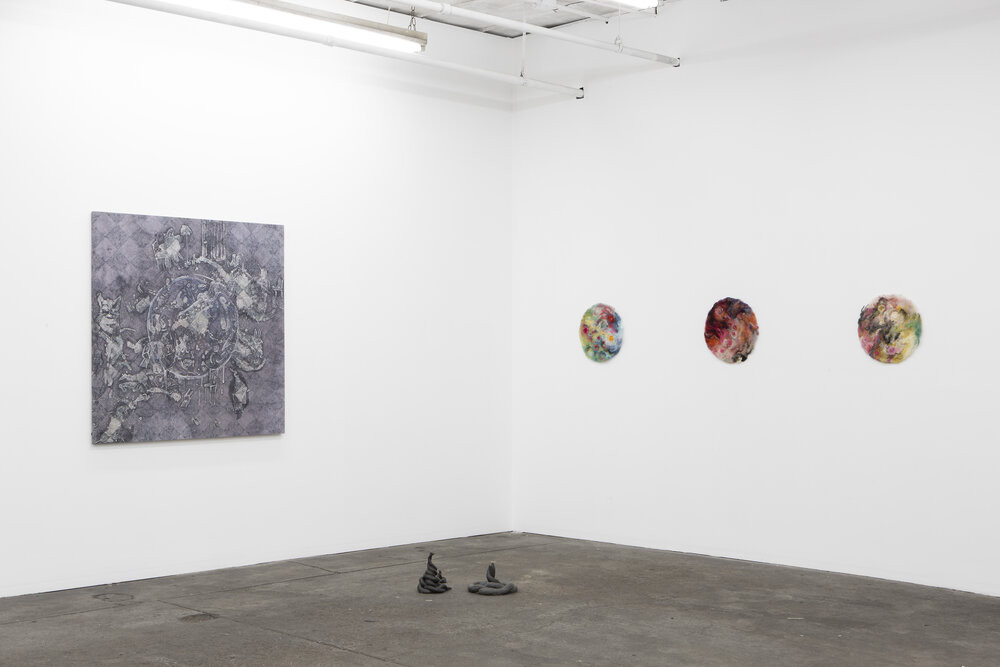
In a small, nearly-bare gallery space, the Brazilian-born, LA-based artist Lila de Magalhaes accomplishes something special—a deconstruction of consumption, abundance, and longing.
Palace of Errors is as playful as it is erotic, tackling mass production within the context of sensual desire through a series of embroidered, dyed bedsheets and two sets of ceramics. One mother-of-pearl glazed group, titled Milky Gummy, offer curious little creatures, while another set of slate-gray sculptures, named Sssssss, Sssss, Sss, and Ss, are all, well, snakelike coils that wind into piles on Deli Gallery’s floor. Each snake stares up at the lush tufts of vibrant fabric and the scenes threaded into soft-hued sheets.
de Magalhaes’ show is precious and precocious, whimsical and unnerving all at once.

Photo courtesy Gustavo Murillo Fernández-Valdés
Insurgency of Life — Closes February 8
Goldin+Senneby — e-flux
When the Stockholm-based artist group Goldin+Senneby talk health care, it’s a little more abstract (and compelling) than what you’ll hear at the Democratic debates. At e-flux Gallery, they’re reaching deeper underground, to examine the parasitic fungus that blooms from the head of a cicada; back in time, to the moment the artists’ left foot went numb; and into the future, when robots perpetually shake phones in order to confuse, and ruin, the patient pedometer data harvested by insurance companies.
Don’t get that glazed-over look just yet—this isn’t a health exhibit per say. It’s about the reality of the human body, our relational dependencies, and the commercialization of conditions. And it’s more off the wall than your average gallery, so to speak. Credential line ups for the exhibition cite x-ray physicists, biologists, mycologists, musicians, designers, and YouTube machines. Plus, if you see Insurgency of Life on January 30, you can also catch Triple Canopy's event Crying Pine Tree hosted by the artists.


Every Crack, Every _ _ _ _ — Closes February 9
Martin Beck, Amy Lien & Enzo Camacho, Elle Pérez, Charlotte Prodger, and José López Serra — 47 Canal
How do you quantify emptiness? What noise do you make in a quiet place? How gentle can (should) you be? Maybe more than anything else, 47 Canal’s latest group of artists want to know the answer to the question: “What’s been overlooked?”
Every Crack, Every _ _ _ _ hosts a wide range of artists, including Martin Beck, Amy Lien & Enzo Camacho, Elle Pérez, Charlotte Prodger, and José López Serra, interpreting a variety of landscapes with an open mind. On the whole, it’s an optimistic show. The artists each offer their own approach to trading ignorance for possibility, withdrawal for integration, eradication with regeneration.
There’s something for everyone here. Perez’s’ intimate photography, collage work by Serra, Beck’s sculptures, and videography by Prodger are all worth seeing on their own, but are only made more exciting in conversation with the work of their peers.


Currents: An Overwhelming Response — Closes February 9
Mimi Bai, Sera Boeno, Nikesha Breeze, Becky Brown, Caryl Burtner, Bernadette Despujols, Priscilla Dobler, Debora Hirsch, Elektra KB, Nsenga Knight, Le’Andra LeSeur, Nikki Luna, Stefana McClure, Rosemary Meza-DesPlas, Nelson Morales, Pamela Rush, Alicia Smith, Caroline Wayne, & Connie Zheng — A.I.R. Gallery
As you can imagine, an open call for artists to submit work on gaslighting in 2019 might get An Overwhelming Response. The 19 artists that Brooklyn’s A.I.R. Gallery chose to show in their latest exhibition show work under a title referencing Le’Andra LeSeur’s videos, which examines resistance to Black women who report sexual assaults.
The entire exhibit is a multimedia homage to experiences of manipulated realities, and it’s as full as you would hope and expect. Expect to be vindicated. Expect to feel hurt. And, breathe a sigh of relief, because Currents leaves us hopeful of healing.


LINEAR MOMENTUM & THIS MUST BE THE PLACE — Closes February 16
Stephen Somple, Russel Tyler — The Hole
Stephen Somple and Russel Tyler, at first glance, have very little in common. But visit both solo shows at The Hole on Bowery and you’ll find yourself happily exhausted by the endlessness of either artist.
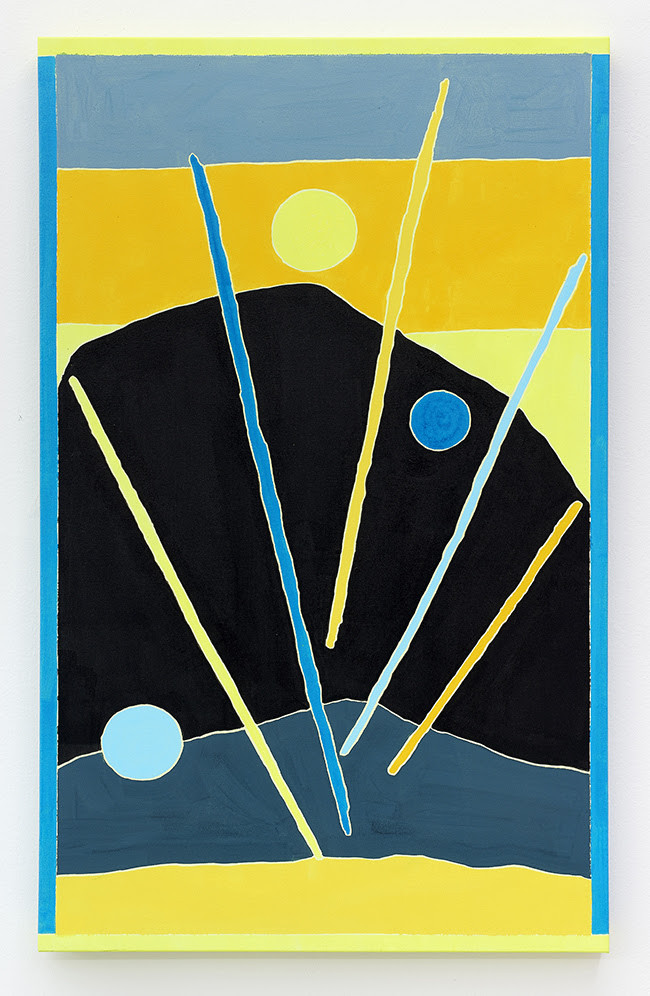
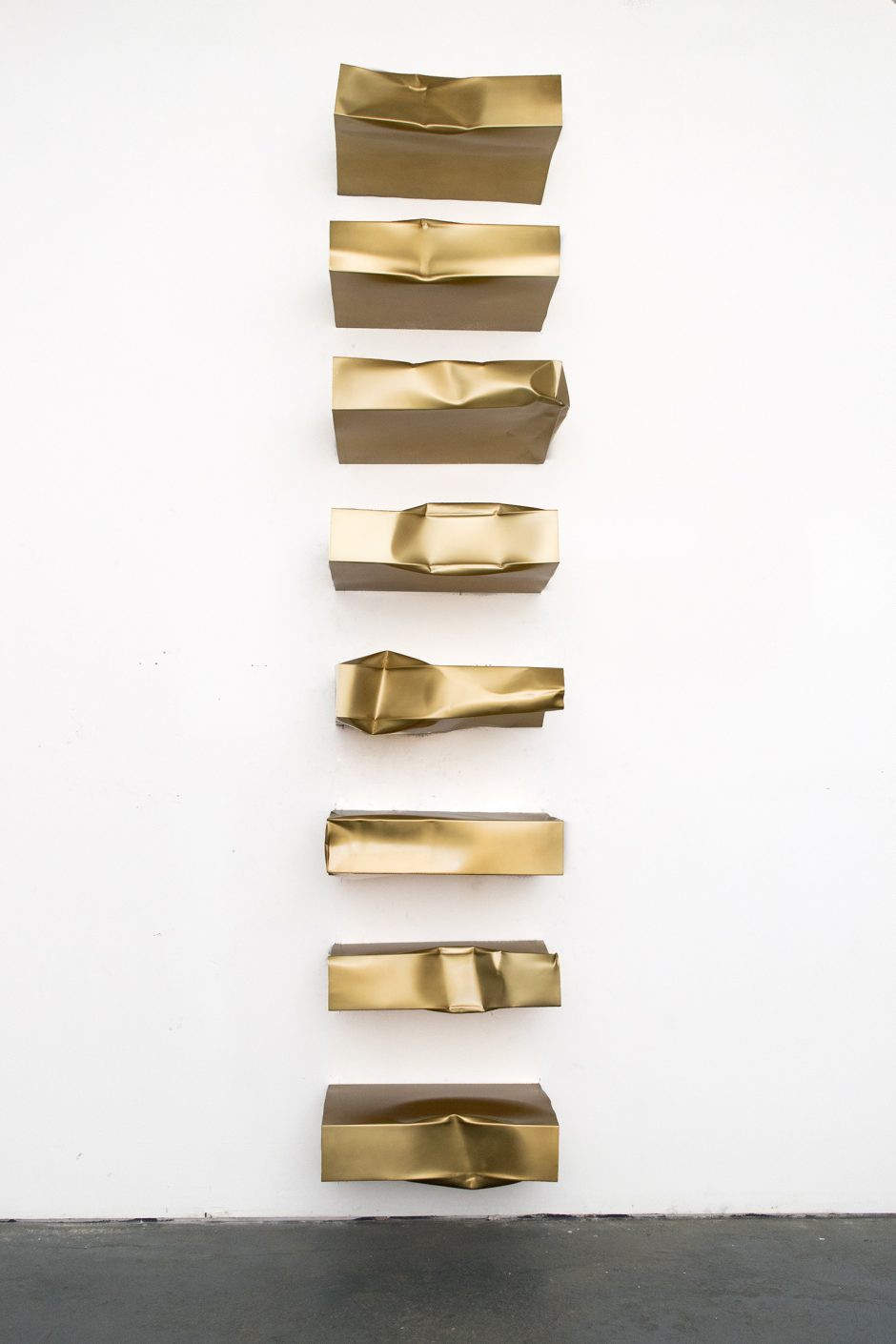
Somple’s Linear Momentum is a room lined with gold and black brass hunks, one even dented by the weight of his own body. Tyler’s fluorescent painted colorfields stand in stark, contained contrast, yet almost every single canvas is graced with the same line and circle forms. In either show, there’s something physical at work echoing throughout the gallery space that’s worth seeing for yourself in person.


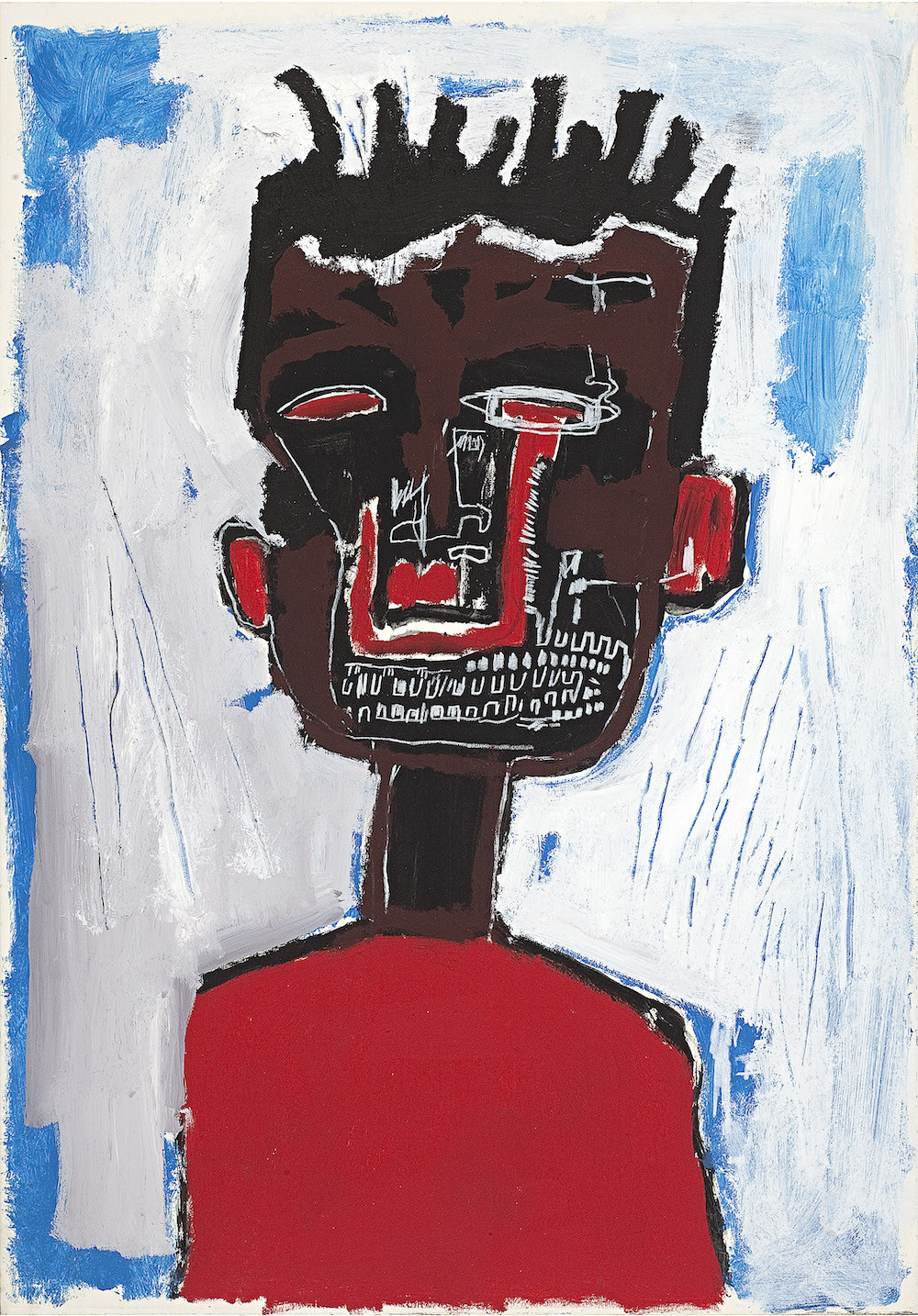
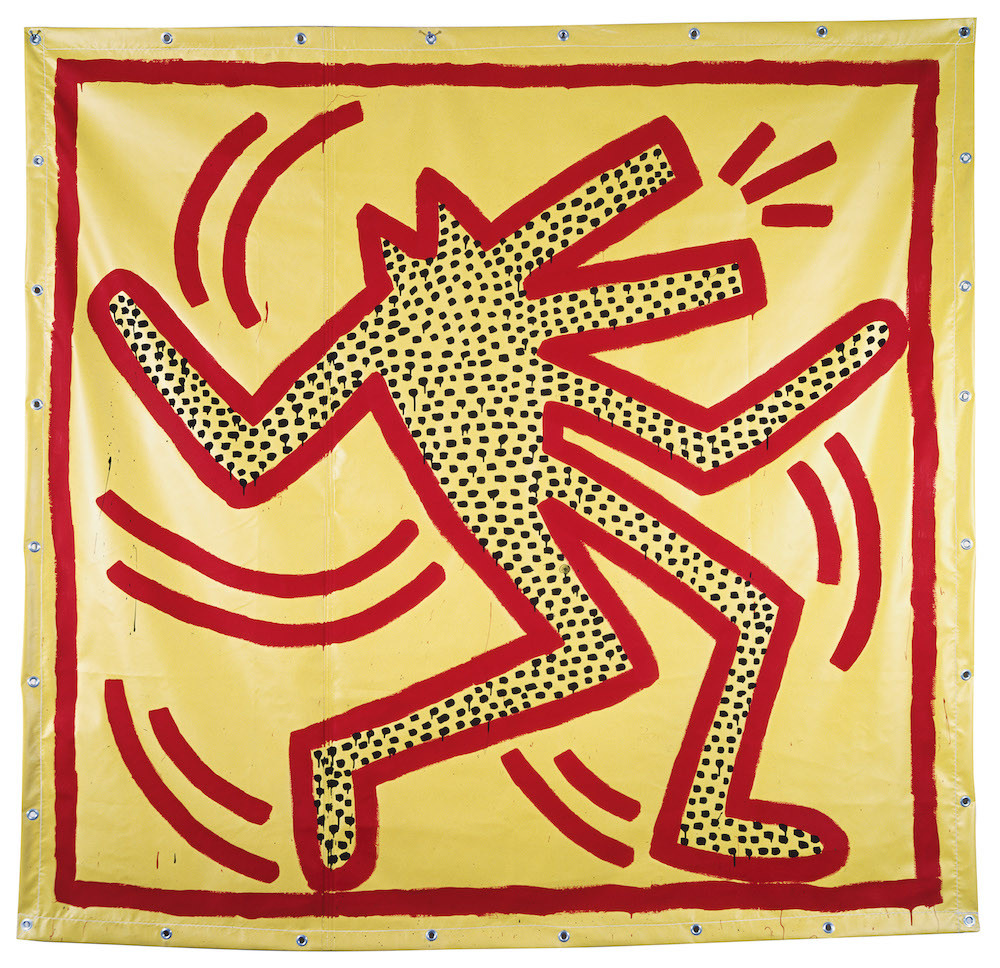
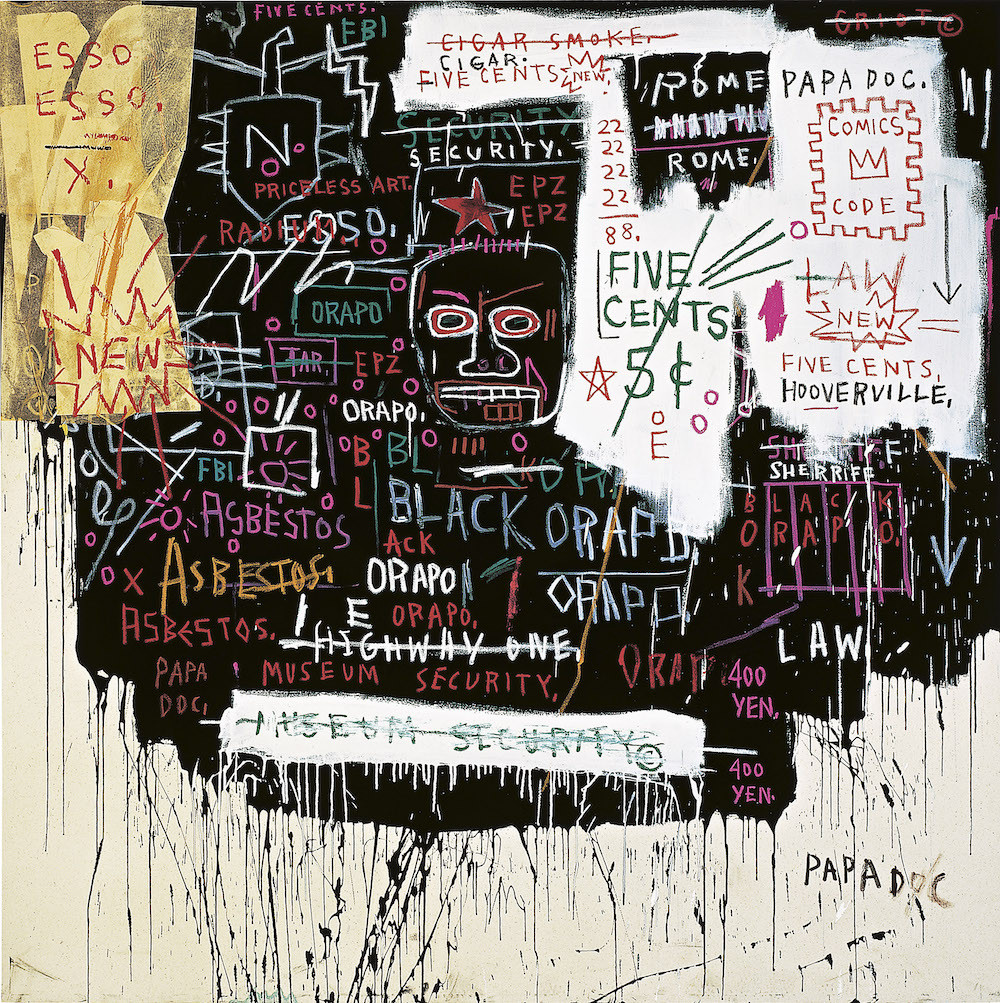
Buchhart points out that being part of the “Downtown” scene in the ‘70s and ‘80s meant working in a variety of performative disciplines—both Basquiat and Haring worked as DJs, videographers and photographers, and in a variety of mediums as artists, especially collage work. “The overcoming of traditional lines separating individual disciplines and cultural realms created a structural openness that led many of the artists of the Downtown scene, including Haring and Basquiat, to partake in artistic collaborations,” Buchhart says.


Left - Jean-Michel Basquiat. "Self portrait" (1984); Acrylic and oilstick on paper mounted on canvas, 98.7 x 71.1 cm. Private collection © Estate of Jean-Michel Basquiat. Licensed by Artestar, New York.
Right - Keith Haring. "Untitled" (1982); Synthetic polymer paint on vinyl tarpaulin with aluminium eyelets, 213.5 x 220.0 cm. J W Power Collection, University of Sydney, managed by Museum of Contemporary Art. Purchased 1982 © Keith Haring Foundation.
You’ve connected artists before that don’t usually hang side by side. But the Keith Haring and Basquiat pairing is more of a no-brainer; they had shown together in their own lifetimes. What’s new in the NGV exhibition?
As the exhibition title implies, we focused on the crossing paths of these two exceptional artists: the intersections in their lives, practices and ideas. Thanks to the generous support of The Keith Haring Foundation and The Estate of Jean-Michel Basquiat, we had access to an immense pool of archival materials that allowed us to document both their private and working relationship to an unprecedented extent. Interviews with their contemporaries—Patti Astor, George Condo, Diego Cortez, and Jenny Holzer—also gave us invaluable and previously unpublished insight.
Haring/Basquiat: Crossing Lines demonstrates how, despite having very distinct languages, the idiosyncratic imagery, radical ideas, and complex sociopolitical commentary of both artists created an indelible legacy that continues to influence contemporary visual and popular culture today. And while, as you say, it should be a "no-brainer" to explore this friendship (and rivalry!), Haring/Basquiat: Crossing Lines is a world premiere exhibition, the first large scale museum exhibition dedicated to these two outstanding figures of 20th century art.
What’s the value of these connections in a time where both the works of both Basquiat and Haring are achieving popular success among younger generations? Is there anything people overlook about these artists now?
Interesting question. Today, both are considered among the most influential artists of not only the 1980s but more broadly of our time. Both are relevant to global youth culture today; in fact, they have never been more relevant. While Basquiat anticipated today’s "always-on" culture of communication and contemporary knowledge spaces, Haring foreshadowed emojis with his image-word. This universal system of communication remains a positive, humanistic meme in the collective struggle against ignorance, fear, and silence.
An aspect that is perhaps overlooked is the importance and decisive nature of their artistic collaborations with other artists and performers from various backgrounds.


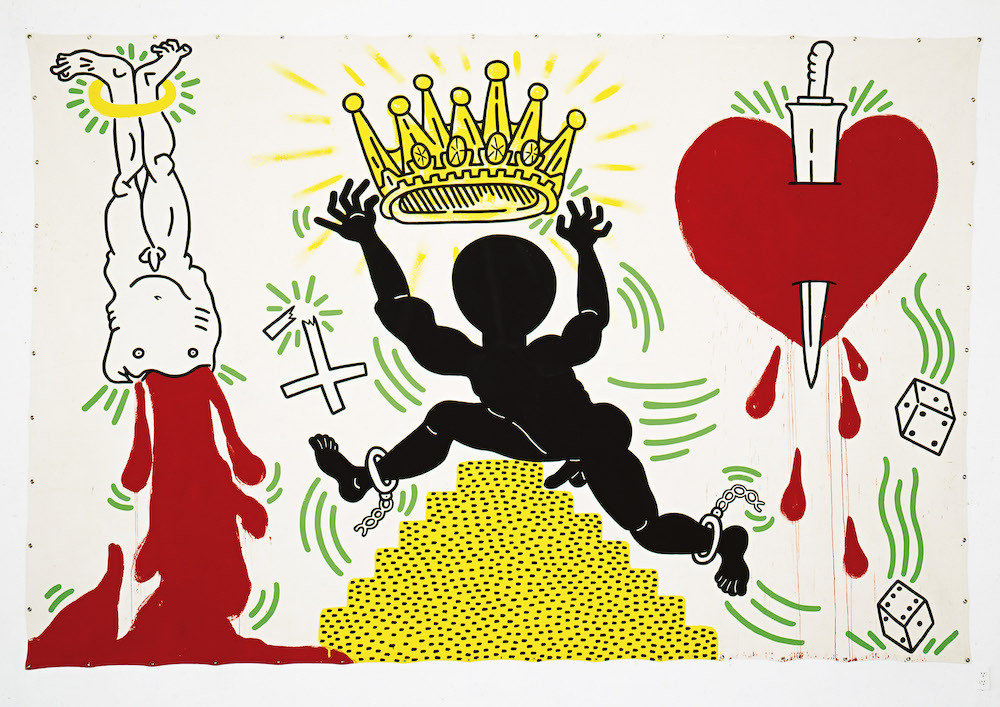
Right - Keith Haring. "Prophets of rage" (1988); Acrylic on canvas, 304.8 x 457.2 cm. The Keith Haring Foundation, New York © Keith Haring Foundation.
What legacy have these artists left in the NYC art world?
Their legacy is not limited to the art world of New York City, but an integral part of art history as a whole. They were both visionaries that not only inspired subsequent generations of artists, but also anticipated the present. Their works are like codes and keys to yesterday, today, and tomorrow.
Is there any significance of the show's location in Melbourne?
Keith Haring's visit to Melbourne in 1984 is well-documented, as is Basquiat's sampling from Aboriginal iconography. But these ties are not what speak so clearly for Melbourne as the ideal location for our ambitious presentation. We live in a global village, and Melbourne is an incredibly dynamic city and cultural hub.
What made both these artists so successful, even within their own lifetimes, and what draws you personally to their work?
I was first drawn to the works of Basquiat, because I saw the same energy in his works from the 1980s that I saw in the works of Edvard Munch from the 1880s. Munch was radical. He would scrape off all the paint from his canvases. He was like no other artist before him. I saw this same energy in Basquiat and started researching his work. Very soon, it was clear to me that he was not a neo-expressionist or expressionist at all. He was a very intellectual, conceptual artist. And that's what got me really interested. I became aware of Haring’s oeuvre through my work on Basquiat and my research into the art of the 1980s. What especially caught my attention in Haring’s work was his unique political line.
I believe that the key to the continued interest in Haring and Basquiat’s art is the relevance of it. Their work is of our time.
Basquiat was one of the first Black American artists to gain a sort of superstar status. Haring’s existence and production, on the other hand, was in some ways backed by the establishment. How does the exhibition engage with these themes?
Both Haring and Basquiat were most definitely considered superstars. While it is true that Basquiat, unlike Haring, did not have any formal art training, it is important to note that he was equally backed by the art world "establishment." The genius of both was noticed very quickly by the establishment, something that is reflected, for example, in the astounding number of international group and solo exhibitions that both participated in during their lifetimes.
Both artists received critical attention early on in their careers, although some projects they worked on were perhaps not fully appreciated by all of their contemporaries—Haring's progressive Pop Shop, for example, or Basquiat's collaborations with Andy Warhol and Francesco Clemente. The show includes many works which were first shown in some of the artist's most decisive early shows, works from the New York/New Wave exhibition, for example, or from their seminal presentations at the Fun Gallery.
You can see Crossing Lines at the National Gallery until April 13.