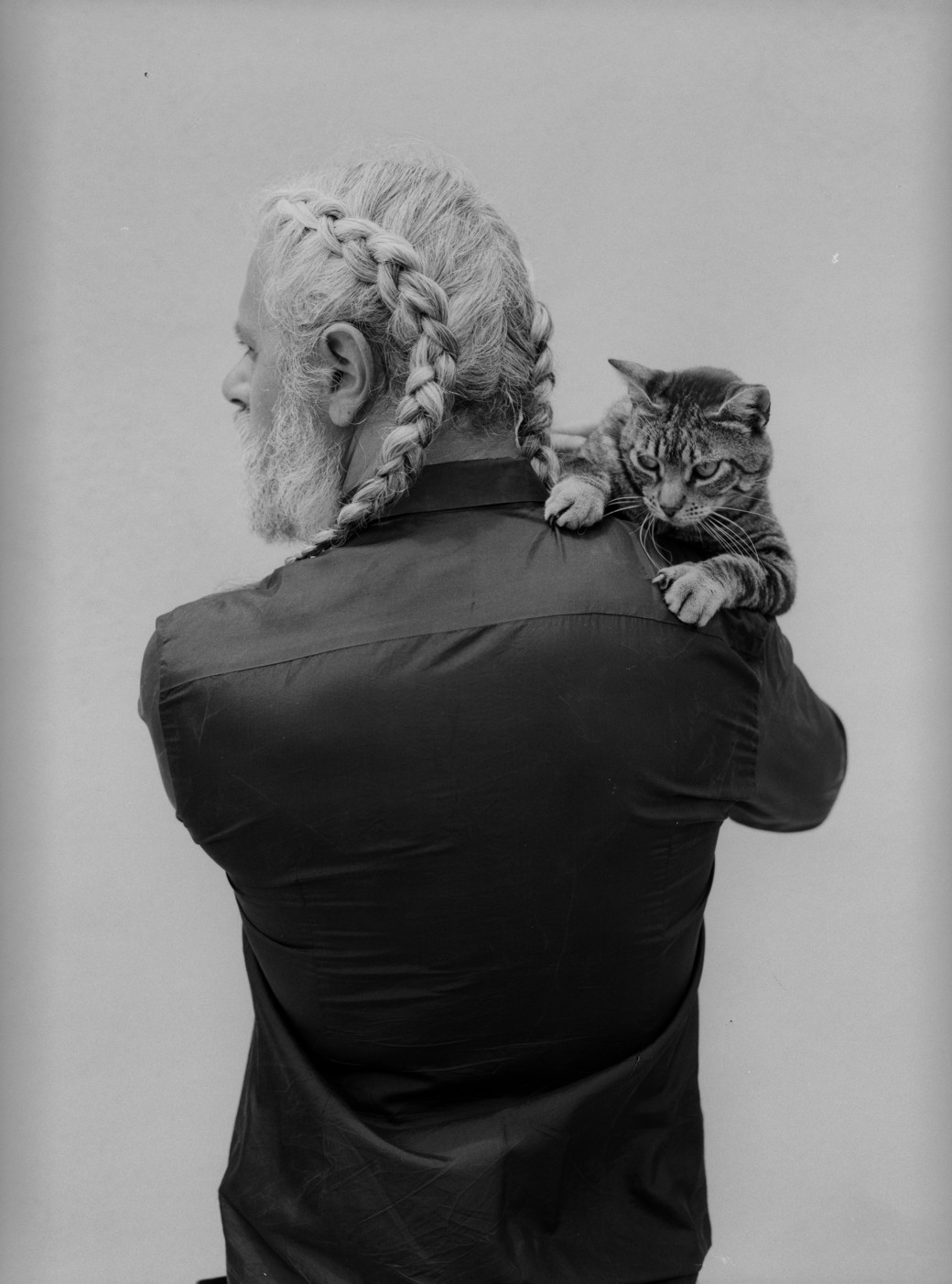
PRESENTE CONTINUO: the intimate ties between then&now

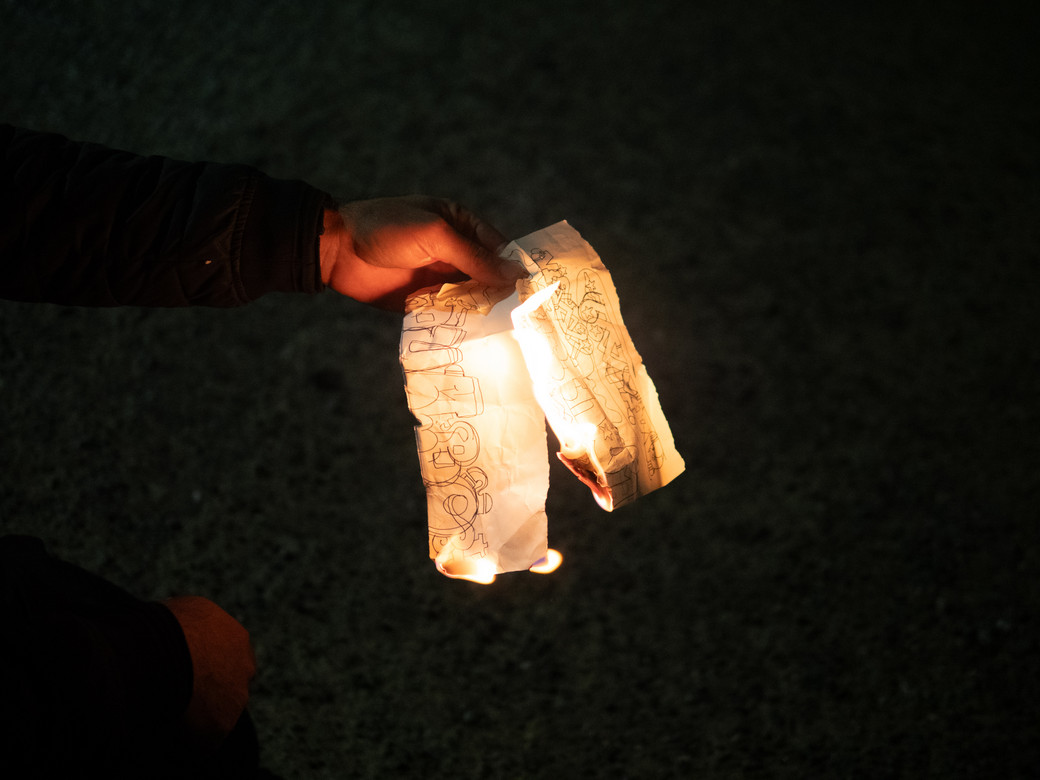
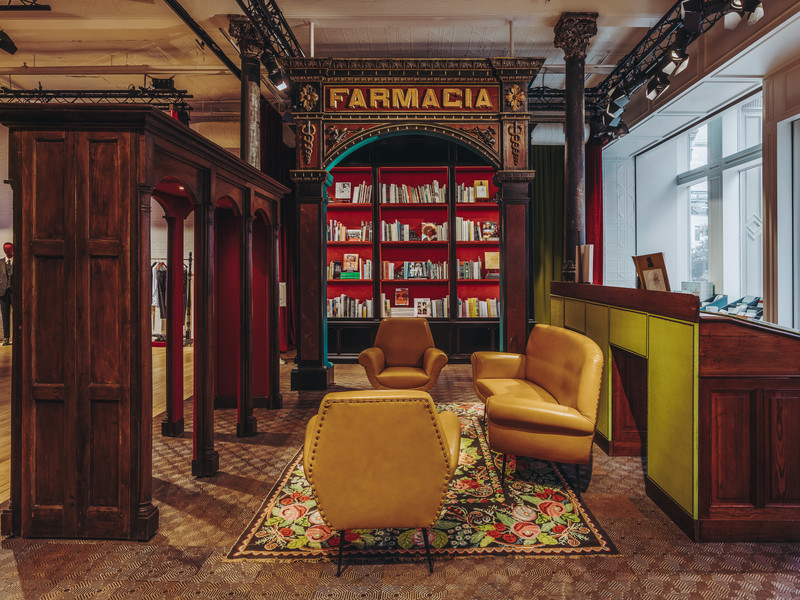
Starting May 30, PRESENTE CONTINUO will be available to purchase on presentecontinuo.com, cpcompany.com, and at the C.P. Company flagship store in Milan, Corso Matteotti 7.
Stay informed on our latest news!

Starting May 30, PRESENTE CONTINUO will be available to purchase on presentecontinuo.com, cpcompany.com, and at the C.P. Company flagship store in Milan, Corso Matteotti 7.

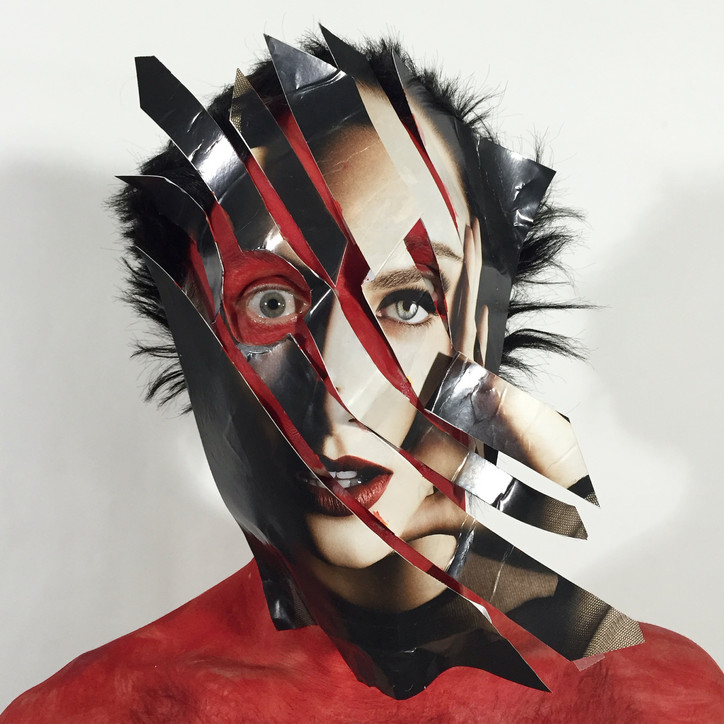
That faces are products to be consumed is no great mystery—but here there is a double subversion, a concealment that heightens revelation, a revelation that heightens concealment. Identity becomes a tie-dye version of itself, questions of ‘who’ and ‘why’ melting into each other like trickling rainbow hues in a groovy optical imbroglio.
This could be due to the fact Nobody Jr. has turned social media itself into his latest artistic medium. Known for delightfully outrageous performance pieces that take place over long spans of time that are both playful and heady (in the interview below, the artist describes his fake 2000 campaign to elect Donald Trump president—a bizarre, legendary Cassandra moment if ever there was one), it is little wonder that he has made the point of his presence on Instagram to subvert and investigate the platform itself. His use of costume, makeup, and surrealism form a poignant critique of how we shape our lives around social media, often using it as a way to create our own sparkly, surreal masks for the world to admire. I know I do.


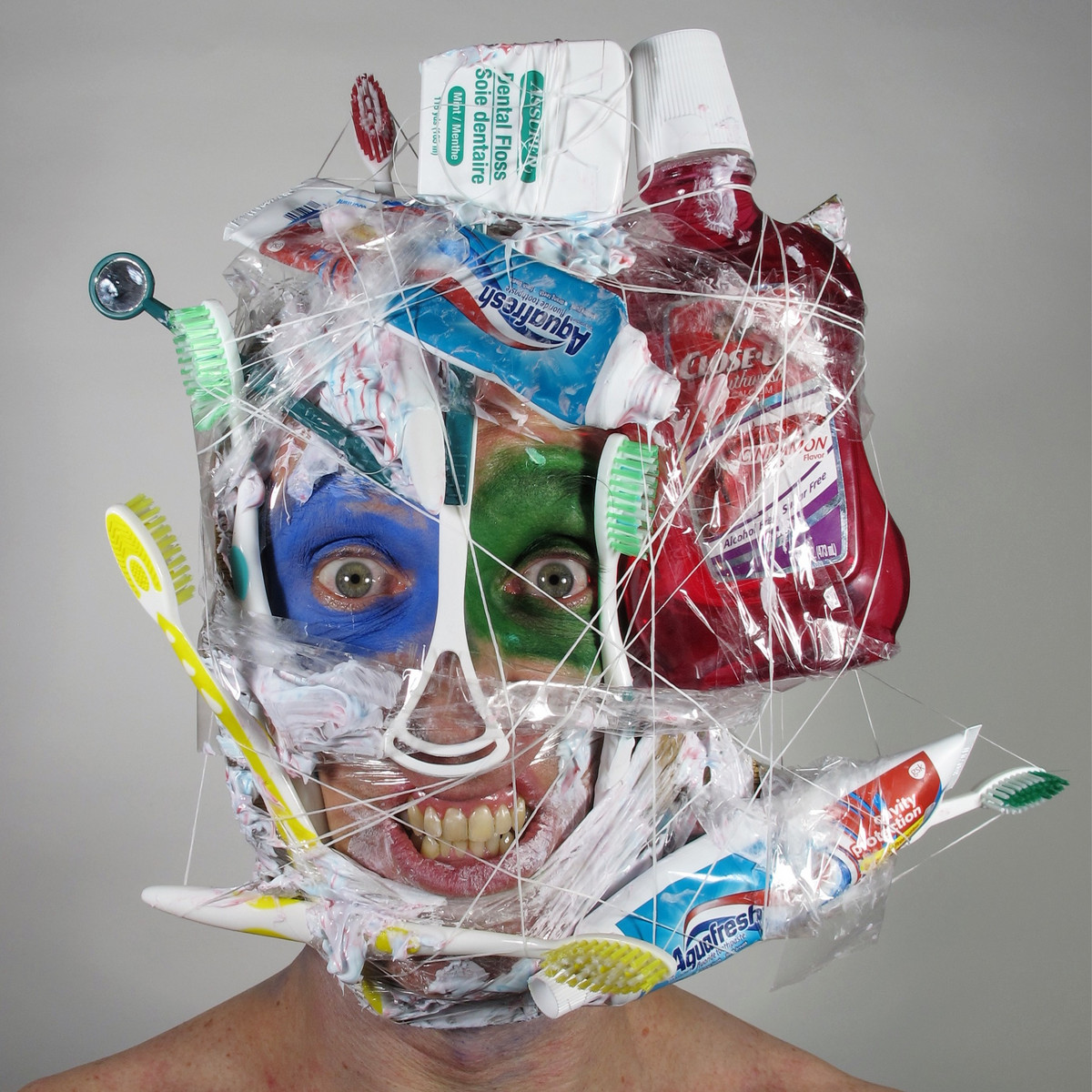
'Alfred E. Liberty' and 'Cavity Creep.'
I met David initially at a coffee shop in Brooklyn, and I’ll be perfectly frank: I was surprised he wasn’t twenty-something, which is perhaps testament to his ability to create masks. In person, he’s a bit like Tony Hawk—forever young, cool, and svelte, but nonetheless not without the signs of living hard and fast in the '90s. He reminisced about how drivers used to carry baseball bats as he walked me to his studio around the corner.
Upon entering, I was immediately delighted by his two cats, who took a shine to me and I to them. While tea brewed on the stove, the artist walked me around the tidy living space and showed me the controlled chaos of his studio—a wall of wigs, an immobile mannequin, shelves full of dolls, the splendid clutter of a hyper creative mind filled me with a familiar joy. Once the tea was poured, we began to talk about his performance the night before at Contra Gallery, his punk rock influences and the importance of garbage, among other things.


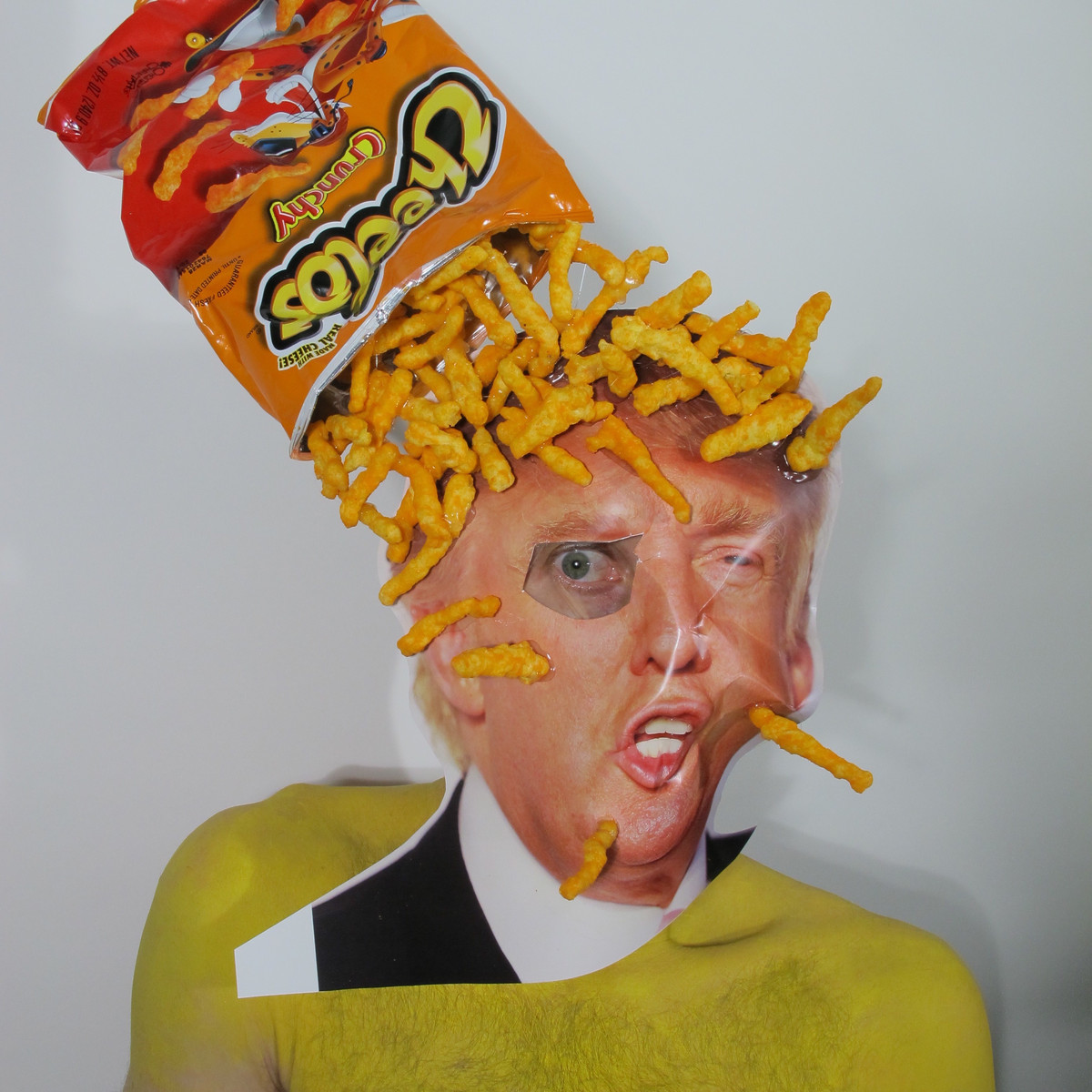
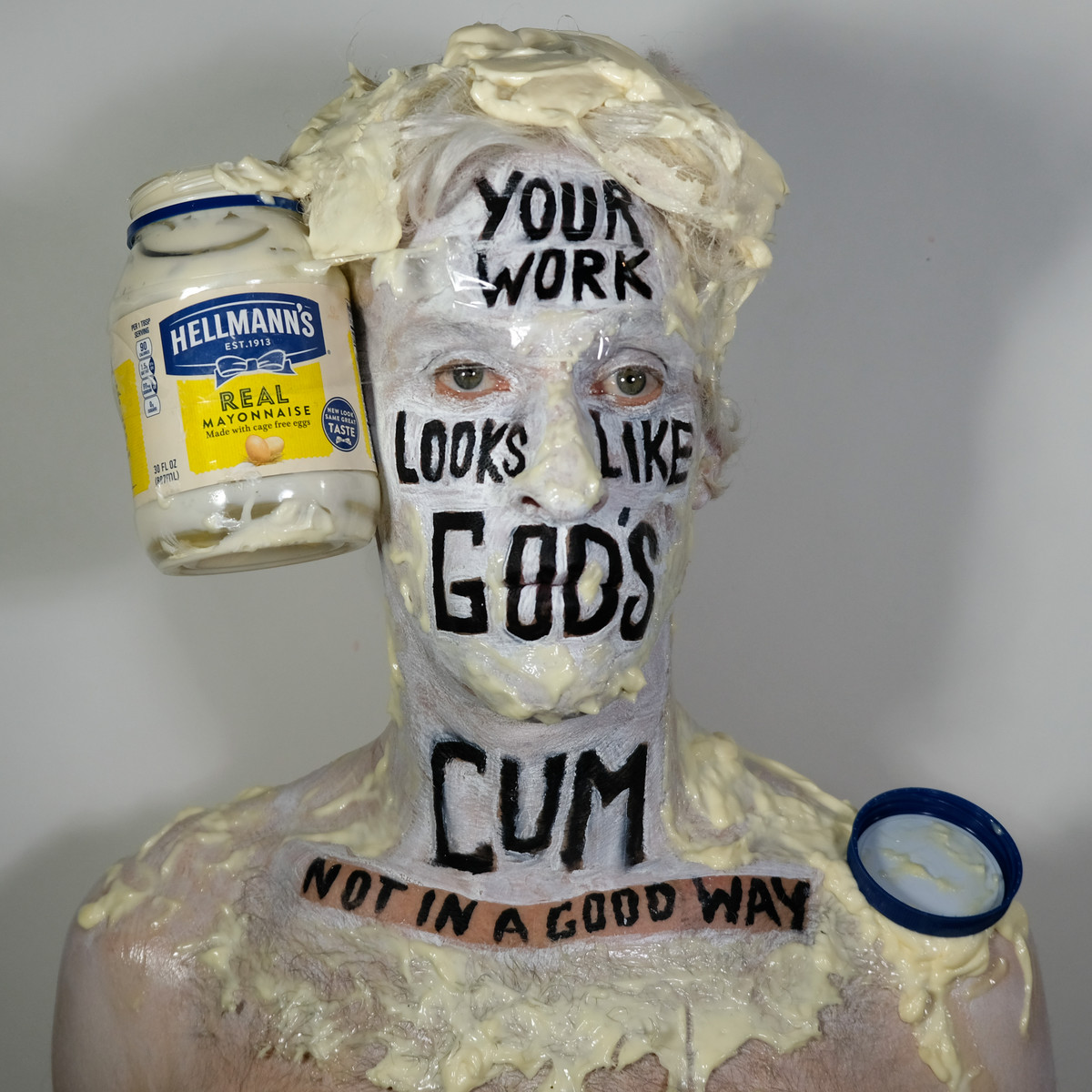
'Cheetos Trump' and 'God's Cum.'
Tell me about the current body of work.
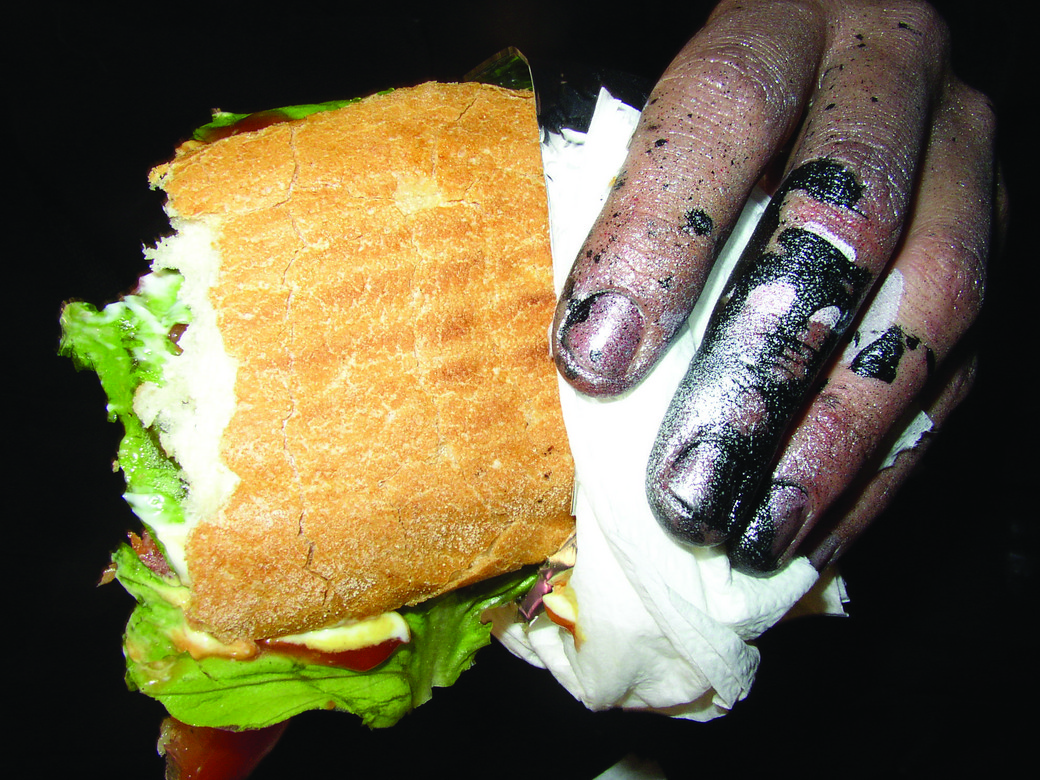
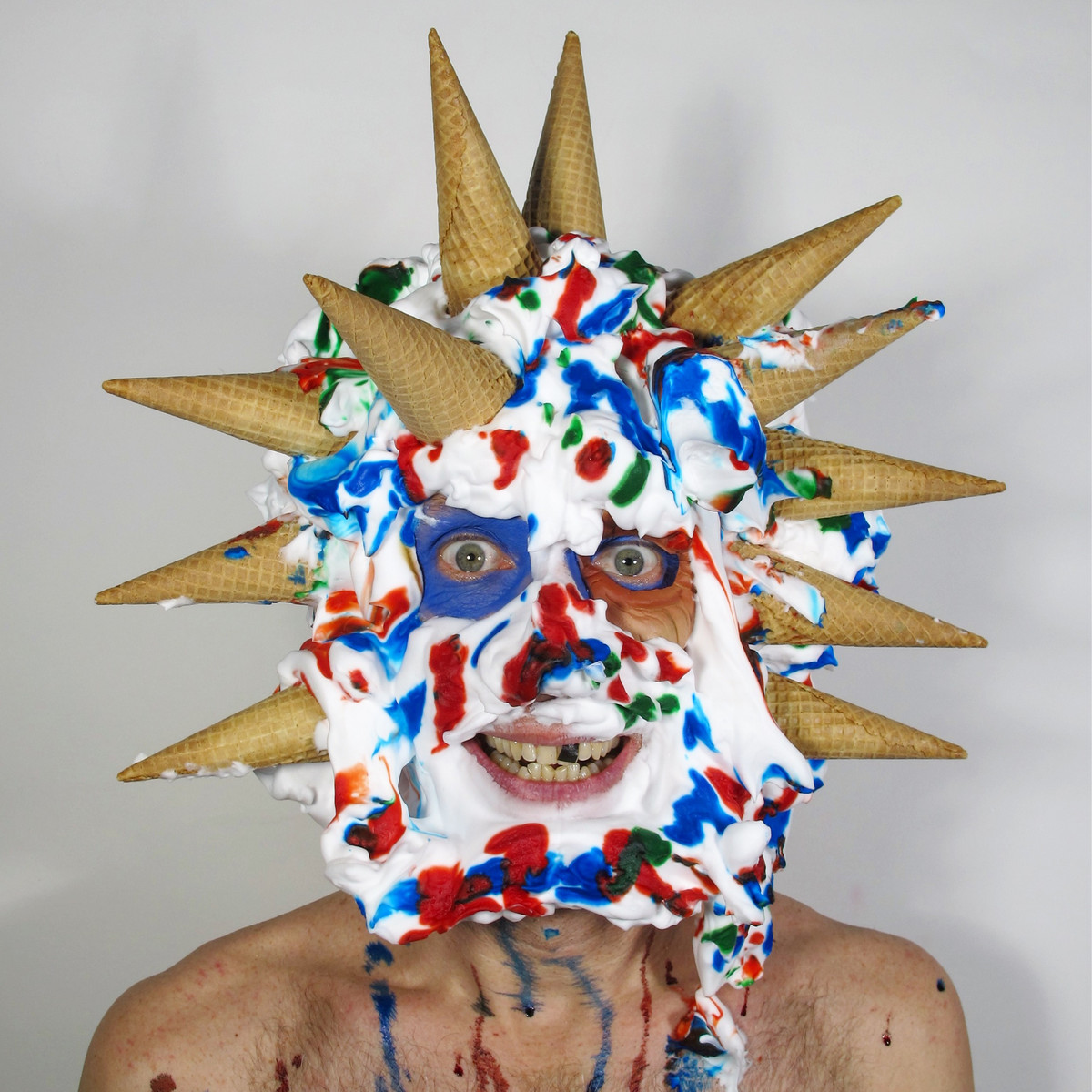
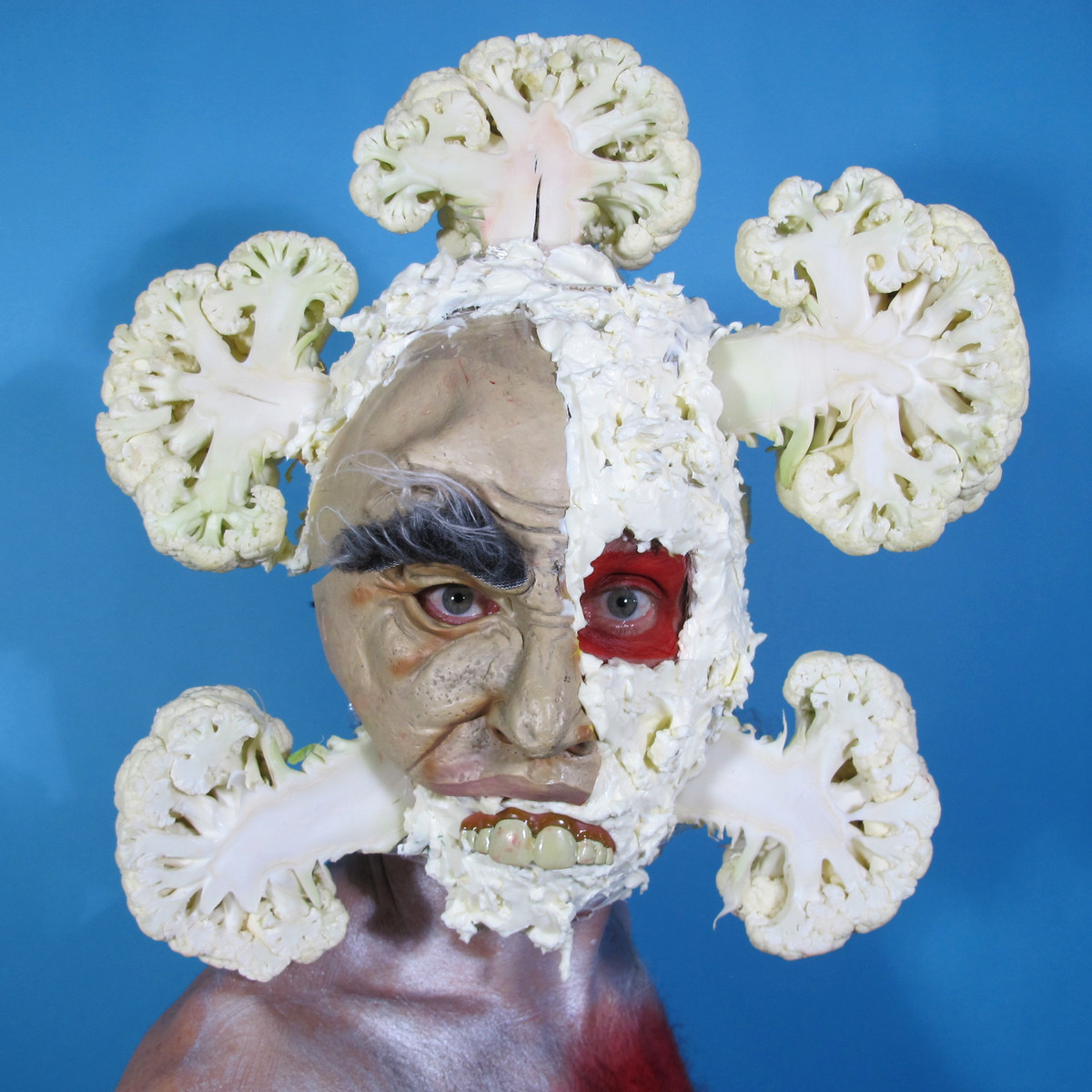
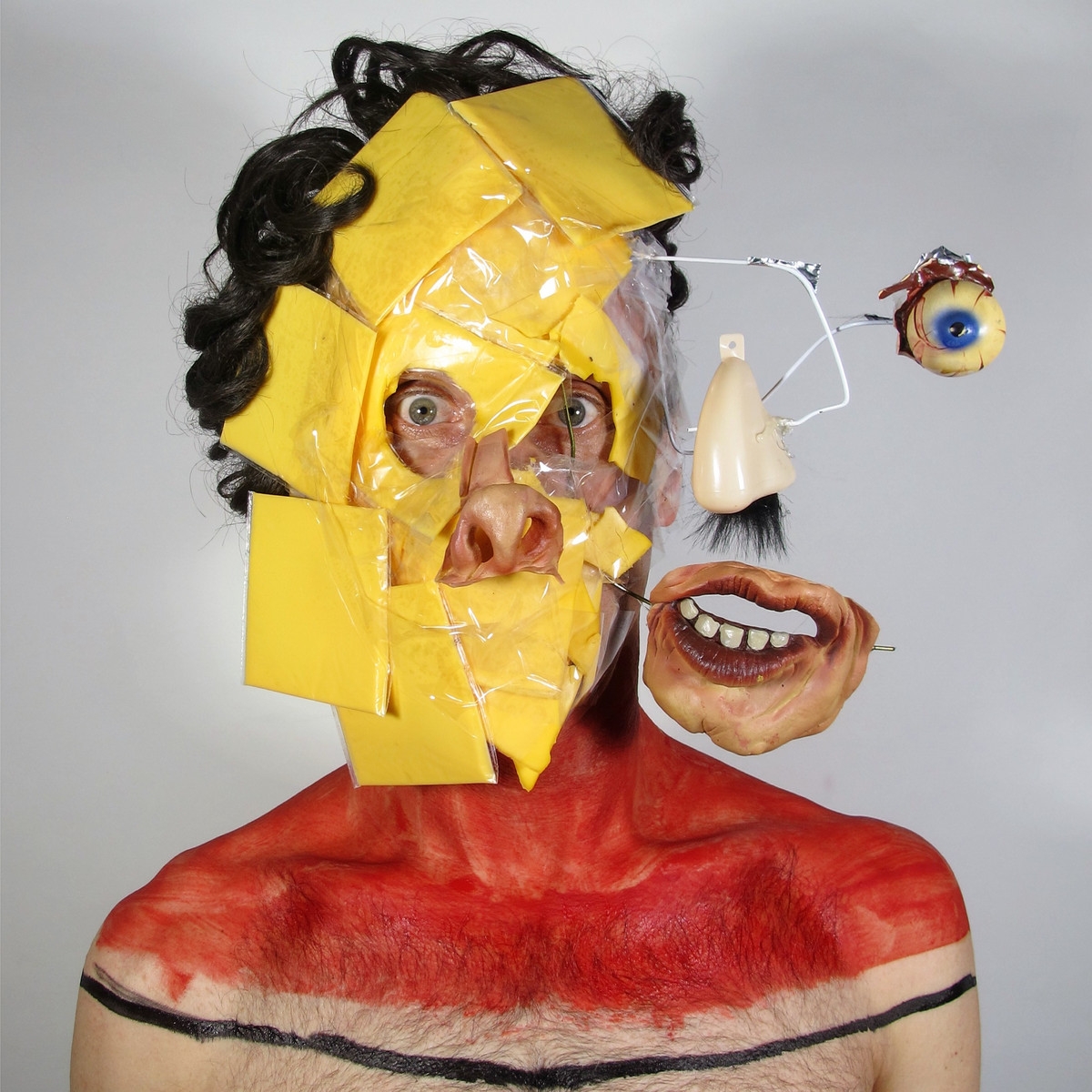
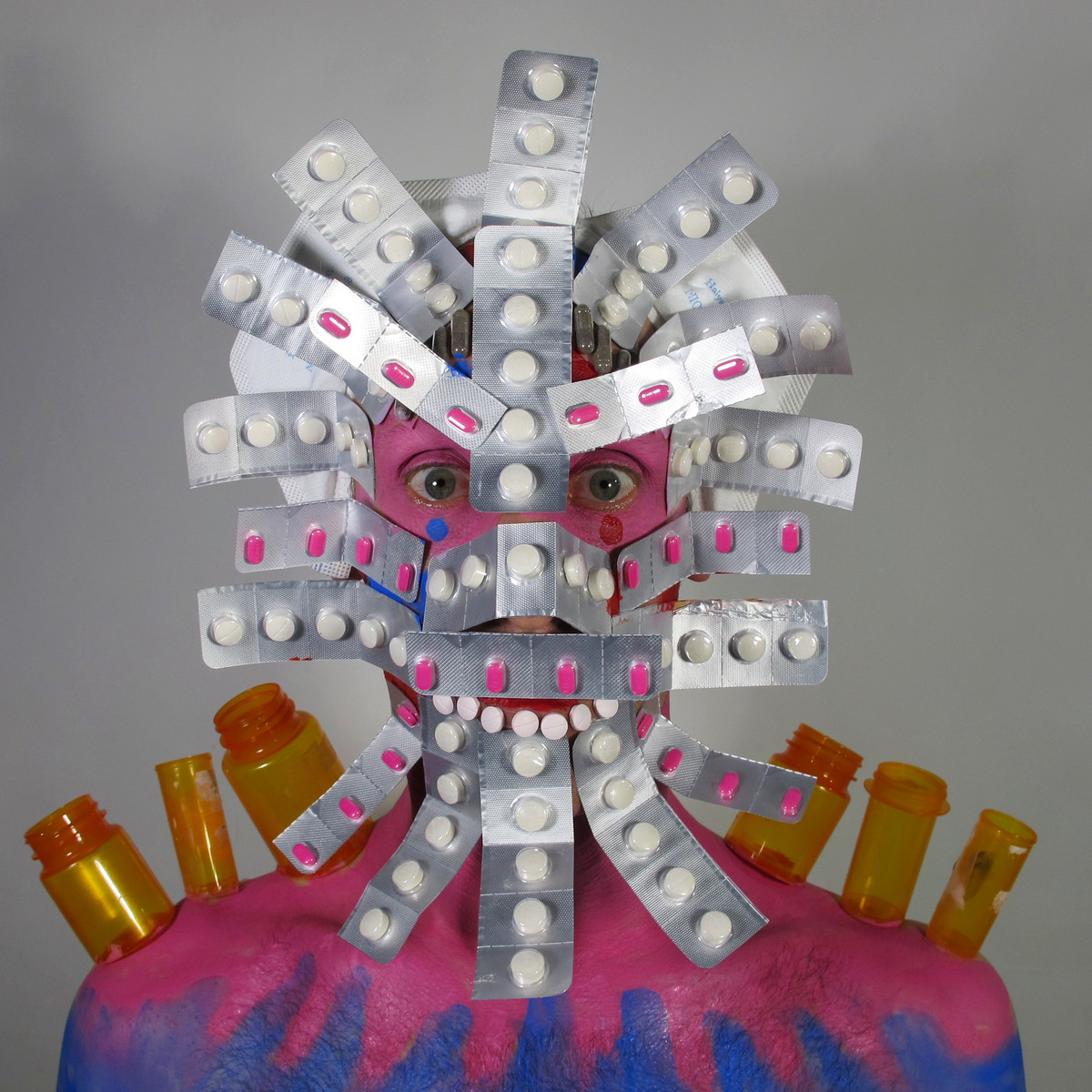
I call the current body of work ‘resemblage.' It’s a word I made up—a combination of the word ‘resemble’ and ‘collage’ and they’re kind of meant to look like CGI or PhotoShop, but everything is done physically and is real. I use food and food scraps, waste, consumerist detritus like weird garbage I find, weird props I find in junk stores, whatever catches my eye. Some of them are highly pre-meditated, like, ‘Hey I want to make myself into the Hamburger Helper guy,’ for example, which I did—I covered myself in a pound of hamburger meat; and some of them are more stream-of-consciousness, kind of improvised. They take anywhere from two hours to a few days, and sometimes I’ll do multiple takes. If you look at my camera roll on my digital camera, you can see from start to finish—I’m just trying different things on my face, and making recordings. As I make them I kind of transform into something else—I almost brainwash myself into being something else. I’m trying to get my subconscious to come out, so I sort of trick it to come out. It’s smarter than my ego, my intellect, on a certain level, it’s my intuition.
It’s interesting that you’re using food to do that, because it’s so connected to the body.
Food usually moves through your body, but in this case you’re wearing it. When you wear stuff, I feel like you feel it in a different way. When you’re so used to eating food and digesting it, you don’t really think about what you’re doing because it’s so reptilian, it’s so primal. But when you wear food—I don’t know whatever it is, but you’re wearing it and taking photos of yourself and it reinforces to your mind that you’re becoming this food or whatever the objects are. I morph myself to it. I create a relationship with the face paint, the sculpture between the thing and myself. It becomes much more symbolic by wearing it.
I also become a scapegoat on the internet, which I want to be—for whatever it is. If it’s McDonald’s and I become McDonald’s, it becomes political. ‘Why are you wearing McDonald’s?’ ‘Why are you wasting food?’ Well, I’m wasting because the subject is waste. When I wear it, it charges it more, I’m owning it, I’m taking responsibility for it, and people project at me. That’s why my Instagram has gotten bigger, too—because it’s provocative. It’s not just putting something on a canvas. I’m parodying it. It’s probably a bit annoying after a while.
Specifically, your Instagram is a part of this as well?
The working method of turning yourself into a symbol or an illusion in real life is a long-term thing of mine in all my bodies of work. This character, David Nobody, exists on Instagram and in live performances. It’s a character that’s creative. It’s like how a writer would write from a character['s point of view].
I do a little drag, so it reminds me of drag—you become a persona.
I’m for sure influenced by drag, yeah—it’s liberating.
Do you know drag queens?
I did a solo performance at MOCA Tucson in September, it was a great gig. The curator, Ginger Porcella picked me, and for that I collaborated with seventeen local performers and a lot of them were drag queens. It’d been a minute since I’d worked with drag queens. I had two of them in a bed with 150 pounds of peanut butter in it, and they were nearly naked and smearing, sexually, peanut butter all over themselves, and the audience’s jaws dropped. The performers came out on a runway, it was kind of a fashion show. It was called ‘Edible Wardrobe Malfunction,’ so it was a fashion show that was designed to completely implode and go insane. So, I had them as part of the piece, but there were many things happening concurrently, that’s usually how I work. But they were in this bed together rubbing peanut butter all over each other very sexually—the curator told me to shock the audience, but I know I shocked the fucking shit out these people, man. It was so good.
And this was in Arizona?
Yeah, but Tucson is a very blue city in a red state. It has a strong arts community and there are a lot of drag queens.
There is something about performance that is different from something hanging on the wall, it’s not still, it’s real people, it’s flesh and blood, and then to take something like peanut butter—even to see a bed made out of peanut butter would be a little shocking, somehow.
You’re bringing it into reality. There are more moral and ethical conundrums to it. It might be an image that sticks with you stronger, there’s smell, there’s sound to it, there’s time—so many different things. Performance isn’t the only way I work—I also work in periods where the characters actually want to make paintings. So, it just depends.
You’re kind of a changeling—a shapeshifter.
Sure, like David Bowie. The artists that I look up to changed a lot, too. But there’s always a voice. People say, ‘Wait, do you know who you are?’ and I’m like, ‘Yeah, I always know who I am. Always.’ I just like to fuck with my reality a lot.


'Behind the Body of Reality' and 'Cerebral Cauliflower.'
That’s a good way of putting it. I love this idea of waste.
Wearing the waste.
How did you come to that—'wearing the waste?'
Well, I’m very critical of the United States, and this culture that we live in, in a lot of ways. I’m very critical of consumerism. But it’s also like, I’m hypocritical, too, because whatever I criticize I’m part of. It’s immerstionist—you can criticize it, but you’re part of the problem. I guess wearing the waste is coming out of a statement about that. But there’s a history of movements in music and art that have dealt with it, specifically, I would say punk—especially in the 1970s, if you study it, which I did a lot, and listen to it. Like Johnny Rotten from the Sex Pistols—they were like, ‘Hey Johnny, why do you guys wear ripped up, dirty clothes with safety pins and stuff like that?’ and he talked about how there were huge garbage strikes in the working class neighborhoods in London in 1977 and 1978, and the garbage people stopped picking up the trash. So, there were football field-sized mountains of trash. There was trash all over the place. This theme carried over—he said, ‘The only way to deal with the garbage was to wear it.’
It’s my own intuition to look to alternative culture, punk rock, drag queens—all this stuff. But it’s very important too that this work is influenced by the medium of the internet, and there’s a definite psychology to how I do it. I like to say that I realize more and more that the internet is a fascinating medium. It’s the first medium that looks more into you than you look into it—every time you look at it, it looks at you a thousand times. It’s a machine, it records everything you’re doing. It’s weird, and let’s not pretend that it’s not. So, the David Nobody characters are expressions of turning yourself inside out, in a way, because there’s a sort of clash between the world of appearances and the exposed world of emotions in this computerized reality. It’s bizarre. So, I’m trying to explore this [idea]. I definitely joined Instagram to deconstruct it, through this performance. That’s why there was this big press hook in the beginning—I was on BBC, I was on Vice, because they realized I was talking about social media in an exaggerated manner.
It’s hard to say, how art looks now and how art will look twenty years from now—maybe what I do now will look super fucking telling in the future more so than now. Or maybe not. I actually predicted the Trump presidency in 1999 in another body of work—this was before the Internet work, but I stalked Donald Trump for a year as a performance. I tried to meet him as many times as possible as a piece. He and the turd, Roger Stone—thank God he got indicted because he’s such a fucking dirt bag. I posed as a conservative Trump operative and tried to infiltrate the organization as a piece, basically. At the time, Trump was flirting with the media, saying that he might run for president. So, I was doing this piece and met him six times in one year. I have five 8x10s autographed in gold that are in a safe place—a friend of mine I told about them said, ‘Wow, you should hold onto those, that’s like having your picture taken with Hitler and having it autographed—those are going to be something some day.’ Anyway, he kept hinting that he was going to run for president, and there were no ‘Trump for president’ signs, and I worked with a graphic designer friend of mine and we made one. I went around in Manhattan, on Wall Street, a couple times with a videographer that I use, this guy Richard Sandler—he’s incredible—posing as a Trump operative. I took my ‘Trump for President 2000’ sign out and asked the public if they would vote for him. We got a wide variety of responses. Then one day, we were passing by the Stock Exchange and Micheal Moore was shooting an illegal music video with Rage Against the Machine, and they saw me with my sign and were like, ‘Dude, come here!’ So, I’m in that music video—"Sleep Now in the Fire." It’s actually kind of a meme on the internet. So, I predicted the Trump presidency with that piece!
Did you ever think it would actually come to pass?
I don’t know. Now, you never know what’s going to happen in the future, right? I mean, no I didn’t.
That’s the thing about the future.
No, I thought it was a joke, you know?
People still think it’s a joke.
It kind of is a joke. It’s scary, though. I like to think that, through my intuition, I was sending out a warning shot, and nobody listened to me. You people don’t listen to me!
So, you’re kind of focused on the future in a way—on looking forward.
Warhol said, ‘We live in the future, we just don’t realize it.’ Consumerist pop culture already is really futuristic. The history of twentieth century art really deals with simulacra—simulated reality, from Duchamp onward, really. That’s the strand of conceptual art, that as society became more industrialized, we would become more artificial, and our view of reality would become more artificial. There are philosophers that I learned about later that were very influential—the most obvious one is Guy Debord’s Society of the Spectacle, a very important piece that was written in 1967. He predicted Instagram and Facebook in the year 1967—the year I was born. So, people understood what was going to happen. Duchamp understood what industrialized society would do, that it would dehumanize us. So, here we live in this shit, and what do you do? I turn to my creativity to keep my humanisms and my spirit up and running and alive.
That’s the thing about the landscape of social media—it’s actually quite internal, and it’s actually not social at all. It’s kind of lonely in reality.
That’s what Debord says—the mediated appearance of social interaction will replace actual social interaction, leaving you feeling more alienated. That’s it, in a nutshell. It’s very important—punks in the '70s and '80s, especially in Europe, they read that, they understood it, it was in their music, it influenced culture when I was a teenager and I didn’t even understand it yet.
It’s always interesting to talk about social media and the way we modify ourselves for it.
We don’t know where it’s going! But yeah, for sure, you gloss over to make yourself look more interesting than you really are. And David Nobody makes himself look more interesting than he really is, probably, to a certain extent—or maybe I defy that, I don’t know. I’m also interested in humans as a complete wreck. We’re animals. I saw a quote from Francis Piccabbia, he said, ‘Man can be understood by his faults.’ This is all the stuff I think about, and I’m playing and having fun, but my work is very serious and there’s no doubt, not to sound arrogant, but I’ve been out to change art since the beginning—I'm definitely out for blood.


'Cheeseface' and 'Coming Apart at the Seems so it Seams.'
So, what will be displayed at the show? Videos of the performances?
There are forty photographs, and I did a special canvas print edition. The photos are usually sold as sets of five, 16x16. And there are only forty released of the hundreds I’ve made, the strongest ones, or the ones I want to be available. There’s a compilation reel of 25 videos. At the opening, we had three performances. I dressed up as ‘Smoke and Mirrors.’ I took a suit and glued little vanity mirrors all over it, and on my face as well. It was really beautiful.
Was that the name of the character?
Yeah, that was the piece. Then I carried a smoke machine with me. It was so cool. I also had a woman painted gold, and later on, some peanut butter involved.
Always peanut butter!
Yeah, those ones that I’m drawn to are comfort foods. There was a lot of anxiety in my family—I don’t want to get into why, it was nothing out of control—but I think me and my sister kind of turned to comfort foods to chill out. Things like American cheese and peanut butter are comfort foods for me. But peanut butter is so cool because it’s cheap, you can put food dye in it and color it, it sticks well to you, you can actually temporarily glue things to yourself, it’s not that hard to get off—if you get it in your hair it’s bad. I wear wigs when I work mainly, so I don’t get shit in my fucking hair, or if I tape things to me I don’t rip what out what little hair I have left on my head.
Anyway, Tiffany Helms was the performer for that. She’s a very talented art model that I’ve worked with a bunch—I love her—she’s contortion-y, she’s unbelievable. I just look at her and think, ‘God, what was I doing when I was 24? Not this.’ She travels the world and models everywhere.


'Plate Techtonics of the Mind' and 'Pill Person.'
Kids these days.
Some of them! They’re really ballin’ on the internet, and they're really creative. A lot of people aren’t, though, too.
You’ve got to seize it.
Yeah, I think with social media, it’s really excellent if you’re a kind of creative producer. I don’t have to wait for a museum or a curator to really like me. I can go around anyone now. It’s really empowering. I wish I had this a long time ago. So, Tiffany was this golden woman, in her undies only, and she was on a pedestal high up, arched over backwards and also in different positions, and I had her moving around. She was pretty high up, around six feet up—she was originally supposed to be suspended from the ceiling, which didn’t work out, but it’s based on a Louise Bourgeois piece with a golden figure arched over backwards called ‘Arch of Hysteria’—wow, what a title. So, I wanted to make a living ‘Arch of Hysteria.’ That was really cool. She performed for three hours up there, with only a couple breaks.
Then I also brought in this other performer, this woman Masha, and she’s a professional face painter. I had her do gestural face painting on anybody who wanted their face painted, to kind of animate the audience a little bit—to make them to feel like they were part of the artwork. For a lot of work recently, I really covered myself in a lot of food, it’s kind of like splooshing—I’m definitely fascinated with splooshing, by the way.
What is splooshing?
That’s when people like to have sex covered in food, basically. It’s a fetish, of course. I mean the sexualization of food is really interesting, it’s fun, and it looks really bizarre. So, I’ve been covering myself with food a lot, and for this one, I decided to change it up a little bit. I did that for the last four or five shows—I just always have to keep changing.
'Fake Smears and Facial Food Fiascos' is on view at Contra Gallery through February 15.
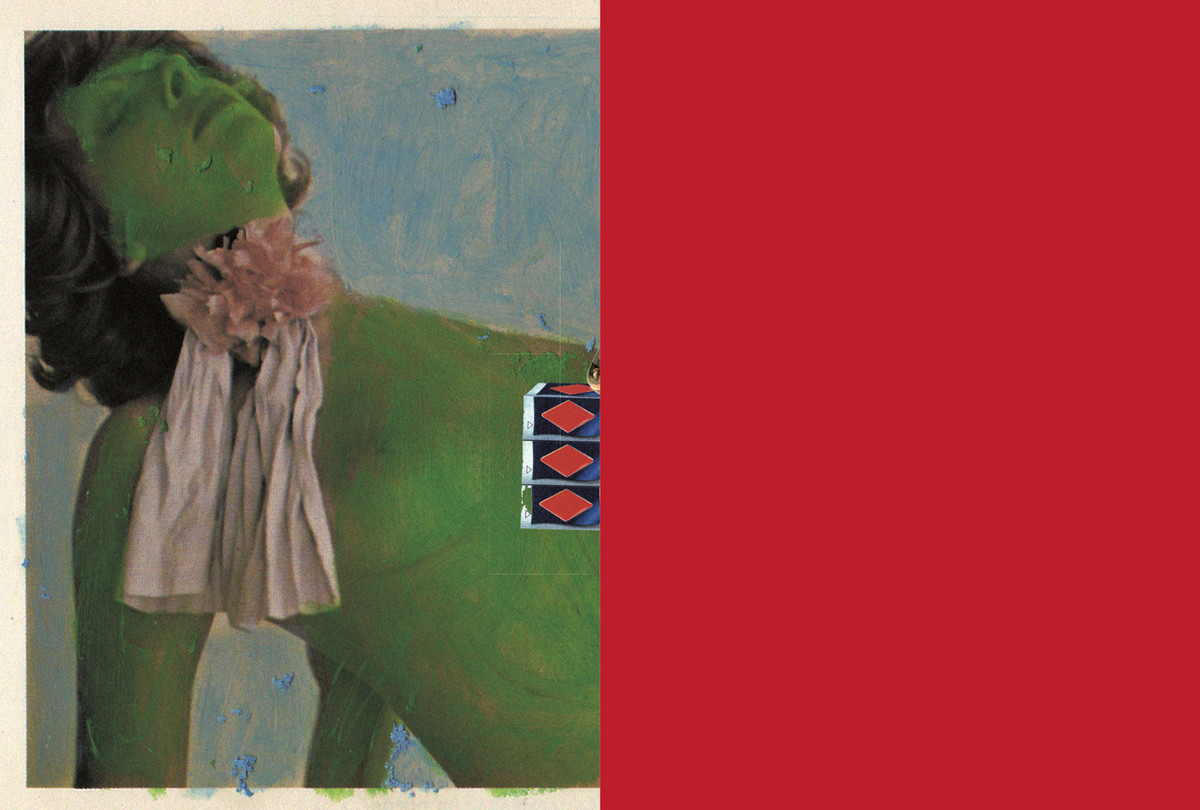
Lead image: 'Fragmenting Head in the Red.' All images courtesy the gallery.

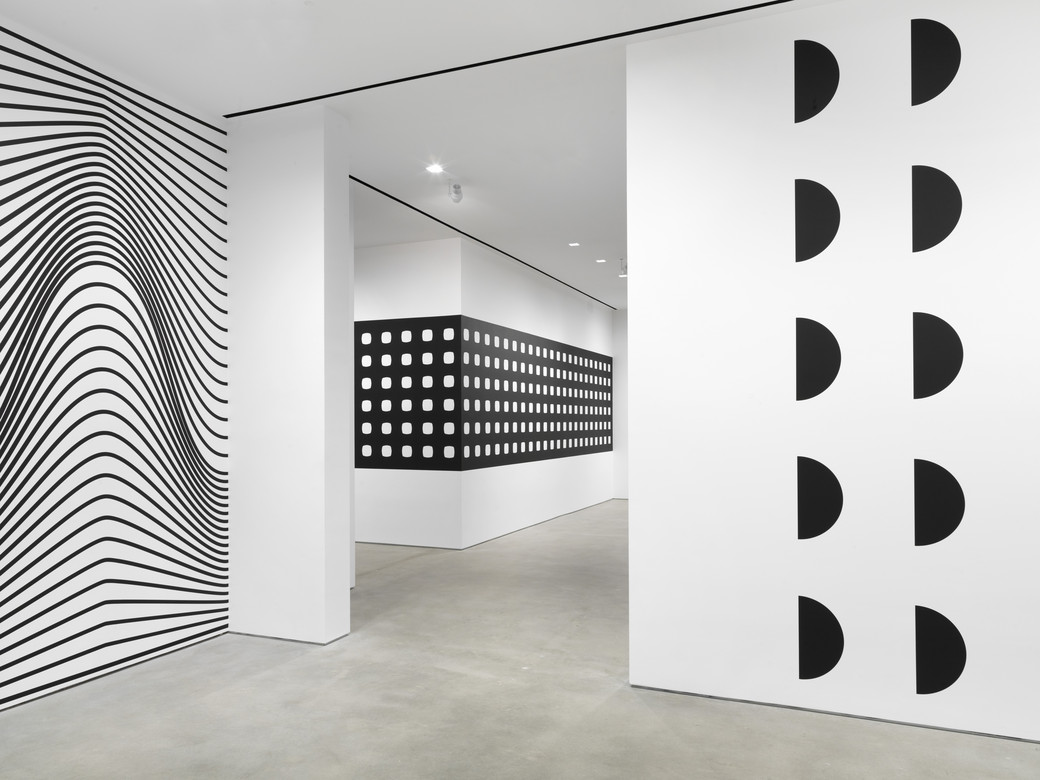
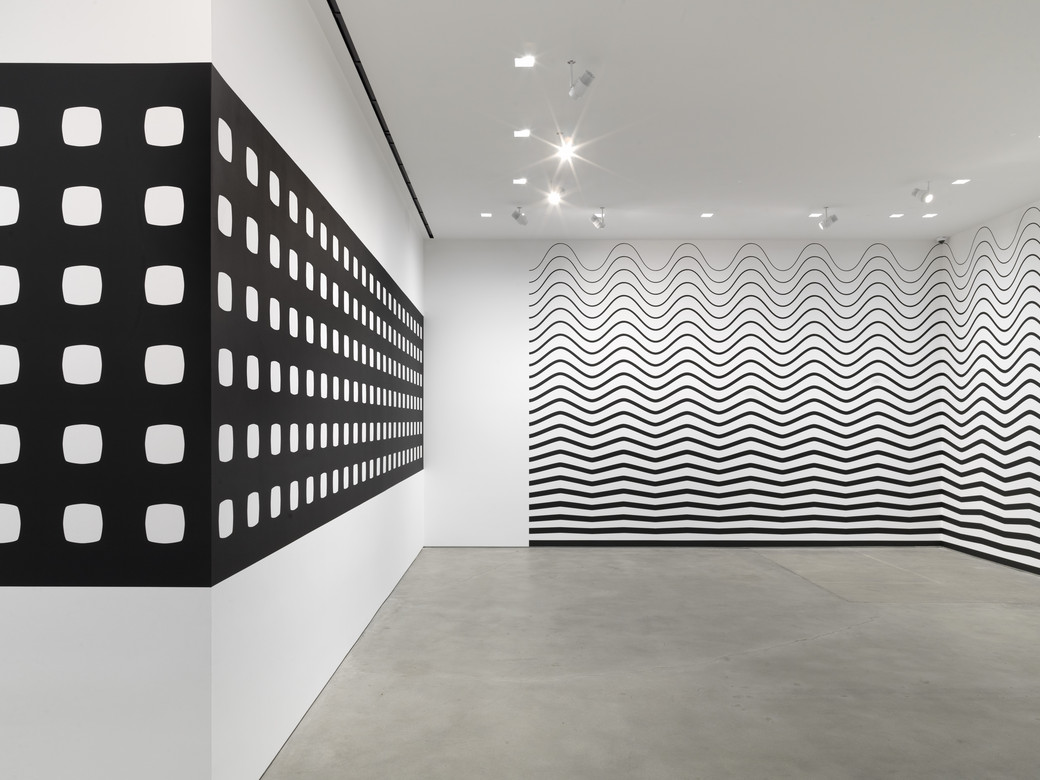
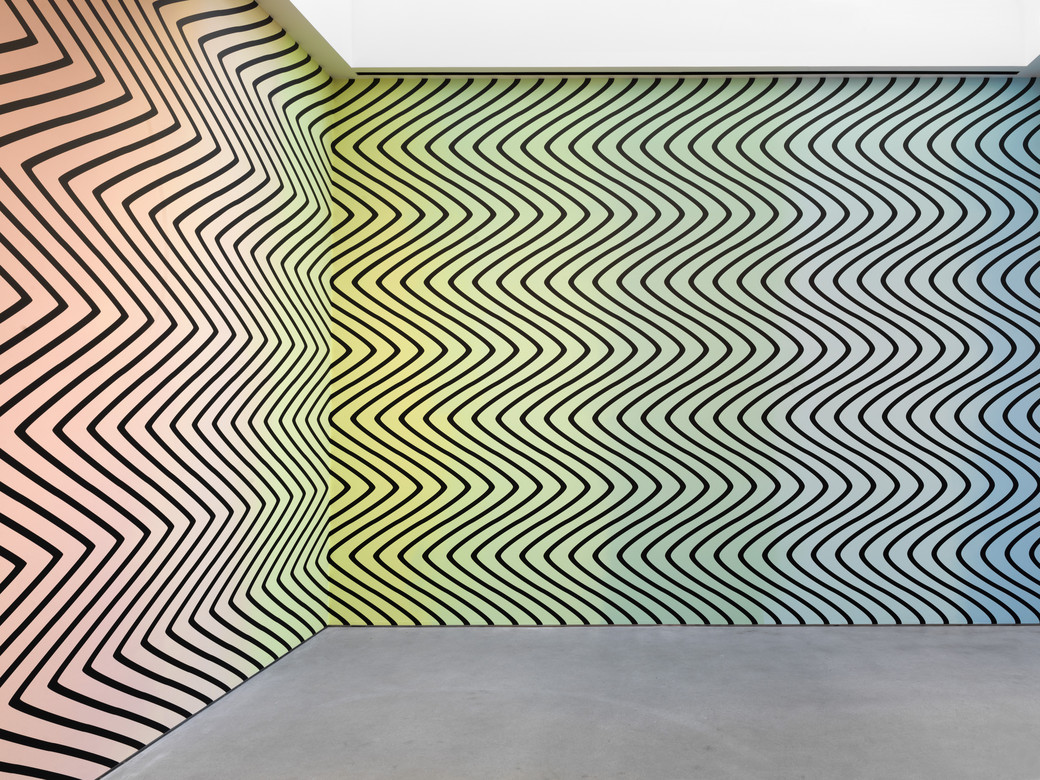
Combining the idea of ancient cave paintings with modern science may seem like an impossibly daunting task, but Comte makes the leap across the entire spectrum of human history with seamless alacrity. One is reminded of Plato’s ideal realm—the purity of this miniature world Comte has created feels almost like art heaven, where lines are born and shapes rest between their nine lives.
office spoke with the artist to discuss her enchanting exhibition, The Morphing Scallops.
I love the idea of using something we know exists but cannot see—like a sound wave. How did you arrive at using something so scientific in your work?
My work always oscillates between what seduces on the surface and what lies hidden beneath—or rather, I am attempting to reveal something a little more out-of-sight, ungraspable, oblique or mysterious. Insofar as music and art are already infused with basic mathematical truisms that stem from our natural environment, my work is always already incorporating nature’s scientific tools. It intrigues me to make naturally occurring shapes and patterns more visible, more evident.
What natural force that isn’t visible to the naked eye would you most like to be able to see?
I would love to see all sorts of 'energy flows,' like nervous systems as they ripple through trees, as they flow through bodies, in humans, in all animals. It would be truly astonishing to see the aura of things—to learn to empathize faster and to understand our surroundings sooner.
Your work is both primal and intellectual. Do you feel these two forces are at odds with each other in the modern world?
While it’s paradoxical, when these forces are in balance rather than in opposition, something powerful is created—something that leads me in the right direction artistically. We understand that the human condition and the world we inhabit are vast and complex. For this reason, it feels productive to embrace cognitive dissonance, hybridity, ambiguity and paradox, or more to the point, non-binary thought processes, especially when considering the environment or identity, for example. It enables a more inclusive and expansive mode of thinking. After all, it can rain while the sun is shining.
There's this idea of the cave in the installation—can you talk about that?
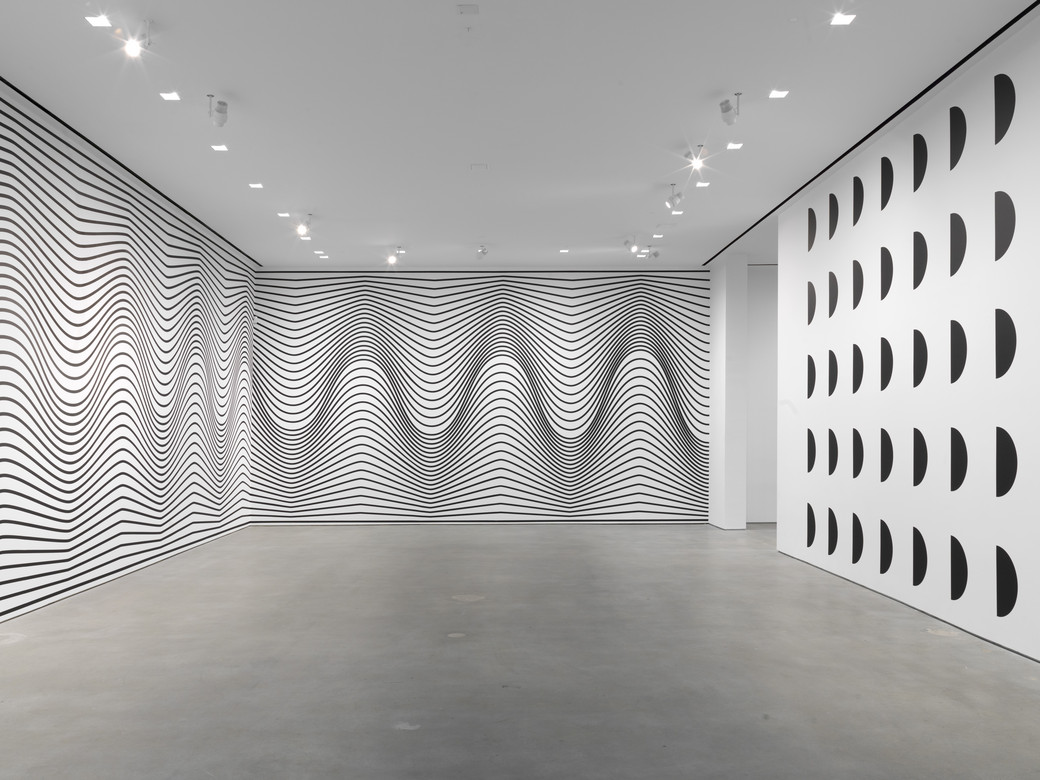
The cave painting is a metaphor for a primal mark-making method—something that existed since the beginning of humankind. This is also what makes this exhibition so appealing to me—to keep objects out of the gallery and apply paint directly onto the walls as if the painting might permanently be there. Here, of course the walls cannot be preserved. Instead, I’m providing a concept that is transferable to a public space or to a collector's home. But what if these wall paintings were eternalized for a few hundred years? What would they say and how would they be read from this distance?
Does it make you sad that an installation like this is, by its very nature, temporary? Does that play into its potential impact?
For quite some time now I have created many different types of wall paintings and patterns and have split them into different families. I actually have dozens and dozens of sketches on my computer of forms and shapes already conceived just waiting to be transferred onto a wall one day. Now, some of them have materialized in the physical world, while others are still in sketchbooks. They all exist, nonetheless, in one shape or another, so its really more exciting than sad.
'Claudia Comte: The Morphing Scallops' will be on view at Gladstone Gallery in New York City through February 16.
All images courtesy of the gallery.

With the first issue alone, the duo has made it pretty clear that, when it comes to the conventional ideas and rules that go along with creating a magazine, they give zero fucks. Take the traditional timeline of releasing issues along with the seasons, for example: Buscalferri and Hadelova DGAF. Less concerned with fleeting cultural resonance of the hot new thing or any kind of momentary hype, they’re instead focused on highlighting those whose creative authenticity translates seamlessly into their own radical craft. The title MATTO—the Italian word for ‘crazy’-- is, in itself, a perfect embodiment of what the magazine embraces: a little bit of this, and a little dash of that, with no subject too taboo to be left in the cutting room.
Read our interview with the duo below, and pick up a copy of MATTO at the office Newsstand.
Tell me a little about yourselves and your magazine.
Aldo Buscalferri: My name is Aldo, I’m Italian from Milano, but I’ve lived in Paris for the last nine years. So, I just consider myself European. When I lived in Milano, I always worked for magazines—mostly men’s fashion and style magazines—and when I moved to Paris, I shifted towards contemporary art magazines. I studied in art school in Milano, as well.
Dominika Hadelova: My name is Dominika and I am Czech, but I’ve lived in Scotland for quite a long time—I went to art school there. Then I moved to Paris to study printmaking—I’ve always worked with paper and print, in that kind of medium.
How did you guys meet and start the the magazine?
Dominika Hadelova: We met in a bookshop that specializes in art, photography, fashion books and magazines. They’ve been around for about twenty years, and I worked there when I first came to Paris. One day, he came in and I saw him, and sold him some expensive books. We knew each other for some time before we created the magazine—it wasn’t like we met and said, ‘Okay, let’s make a magazine.’ It was way more organic, more natural. We had this idea in our head for some time, then suddenly it started to snowball into something much larger—it started to consume our lives.
Aldo Buscalferri: Actually, we had a lot of doubts about MATTO because there are so many magazines around the world—we worried about if starting a magazine was the best idea. But after some months we thought, ‘Fuck it.’ This is something that we love so much, and something that we enjoy doing, especially because this magazine is our own project, which is something very few people decide to do.
Dominika Hadelova: That was something we realized in the first two months—how important it is to have your own project. The amount of time and energy you are willing to invest in something that is yours is incredible. Everything becomes an opportunity or a reason—everything just becomes connected to that one thing.
Aldo Buscalferri: When we started to do some precise points in mind—most of which concerned how not to repeat some of the bad experiences we’ve had in the past when we have worked in the same field—one of the main points for us was to be really free in our thoughts and expressions. We decided pretty early on that for our first issue, we didn’t want to include any advertisements—we wanted to be absolutely free, and to create a genuine product. Maybe in the future we could see if we wanted advertisers, but in that moment, we decided to have it that way. What normally happens in the publishing world is that most of the time everything sits at the top of the table—special marketing, advertising, those kinds of things. For us, these things were something that hindered our creative process, so we said, ‘No, let’s do something different.’
Dominika Hadelova: Yes, we didn’t just want to be another photography magazine, another fashion magazine—we didn’t want to do another series demunde. We wanted to mix all of these fields and cross things over—we wanted the form of the magazine to reflect us.
Aldo Buscalferri: Yes, it’s quite simple. We are passionate about contemporary art and music, etc. It wouldn’t have made sense if we didn’t incorporate all of these passions within our design.
Dominika Hadelova: Yes, exactly. I think it’s the perfect reflection of us. In fact, when we were printing, it was quite nice to see that each page wasn’t purely Aldo or purely Dominika, but rather this incredible chemical mix of two things coming together. I think really we made something that mixes everything up but still possesses a thematic fluidity. At the beginning of this process, when we were approaching people on the street for interviews, people would always ask us, ‘So what is this magazine about? How would you describe this magazine?’ At that point, we had already come to the conclusion that we didn’t want to over-define MATTO. We felt very strongly that once you define something too much, you put a border around it. When something is concretely defined, a kind of mental and emotional movement is hindered. Staying fluid is something we really wanted for the magazine, so that it doesn’t feel forced in any way.
Aldo Buscalferri: Yes, the problem is that with this market, especially if you are a normal magazine working with advertisers, they typically need a clear statement, a clear-cut explanation of what the magazine is all about. Of course, we have some of these ingredients, but we really didn’t want to have one predominant ingredient. For example, if you work for a generic art magazine, you just talk about contemporary art, you don’t touch anything else most of the time. Fashion magazines, you just discuss fashion, and so on.
Dominika Hadelova: In this issue, we have an interview with this Scottish installation artist named Claire Barclay, and I think that because we are not art critics or journalists, our interview is much more accessible to the reader. Also, because we speak directly to the artists, they never write something up really fast or prepare something to say—what they say on the spot comes from a profoundly genuine place. In that way alone, MATTO isn’t your ordinary art magazine—it’s all open conversation.
Aldo Buscalferri: The experience is super important to us, and that’s why we always ask to meet every individual we choose to include in person. With real encounters, you can discover so many things about the subject that would have been lost in translation if you communicated via email, telephone or Skype.
Dominika Hadelova: For example, we went to interview this artist in Brooklyn for our next issue, and when she opened the door, we noticed that her studio was just full of things—like no joke, things everywhere! Then she went into this long-winded monologue that lasted for about twenty minutes, and Aldo and I were looking at each other like, ‘What is this woman talking about? I don’t understand anything she is saying.’ It was an experience similar to when someone wakes up and has a really vivid dream, and tries to retell that dream to another person, and that person has no idea what that other one is talking about. It was only after she showed us some of her work and played us a 45-minute video piece that we started to grasp her artistic identity and the underlying concepts of her pieces. After that initial ‘Eureka!’ moment, you immediately want more. Something just shifted in our understanding, and that experience you can never have with an email interview, you can never have that over the phone, you simply can’t. Or even in a conversation that we had with an artist in this issue—as you speak, the conversation suddenly becomes about materials, not just about her work, but her experiences working with different materials. Real life conversations have this fluidity that can’t be recreated.
Aldo Buscalferri: Yes, especially when we touch on contemporary art precisely because it’s not our background—we don’t have the technical, critical approach that we find most of the time in other art magazines, which is sometimes very big if you’re not inside that world, you understand nothing. I mean, this is also very important.
If there is one thing you want your readers to take away from MATTO, what would it be? Who are your readers?
Dominika Hadelova: I think our reader would be someone who is curious, someone who is open-minded, someone who would like to experiment and someone who is not afraid of things being mixed, and being open.
Aldo Buscalferri: I think also a secret ingredient to our magazine is erotics, or sex, which is a subject that could be a bit touchy, cheesy or cheap, or whatever. Luckily, we had a good concept of themes throughout the series.
Dominika Hadelova: Again, I think these qualities are a reflection of us. We chose everything, we chose the graphic design, the layout, the content—everything.
What do you hope to accomplish with your next issue? What’s something that you wanted to explore a little more in this issue that you realized only after the fact?
Dominika Hadelova: In some ways, I can already picture the second issue, but I really feel like it’s going to be a continuity, a progression of the first—this issue is the baby, and the second issue will be a little more grown up.
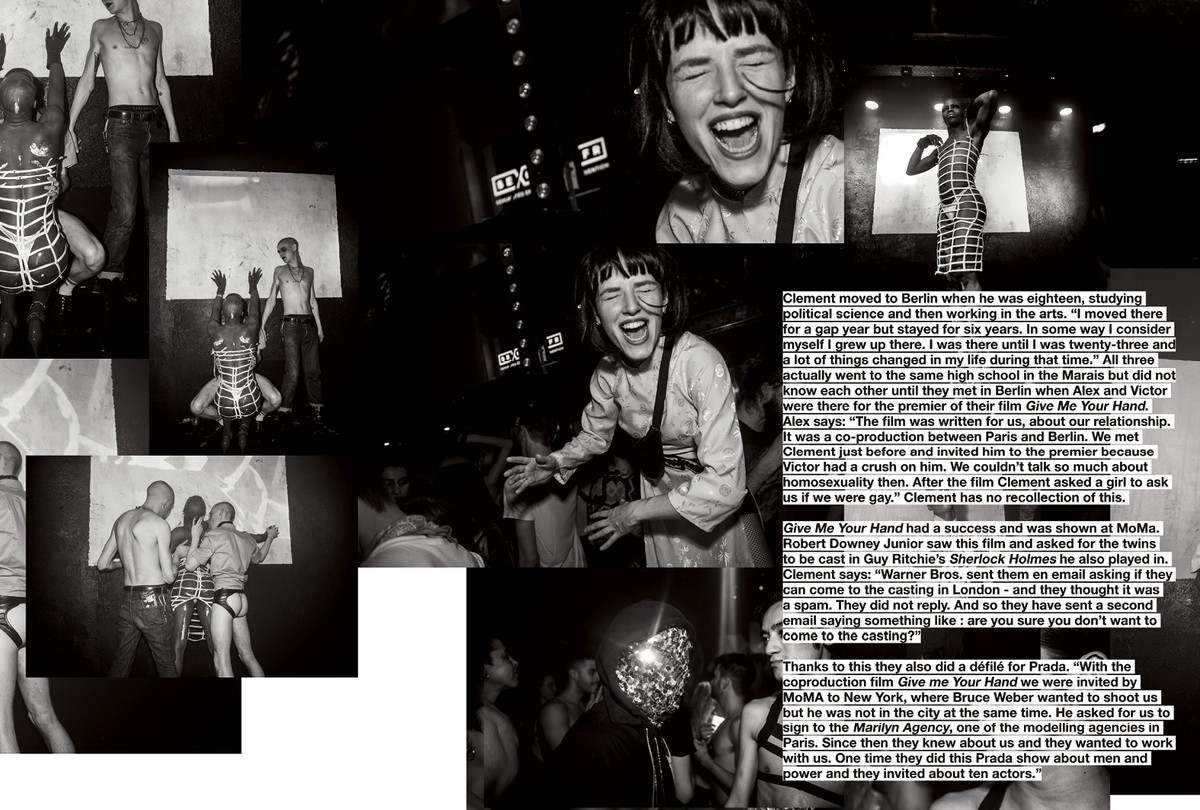
Aldo Buscalferri: For sure we would like to have more content, so adding more pages. Maybe in this issue we have two pieces about clubs, the first being the Kinky Club in Tokyo, and the other, the Extravaganza Club in Paris. Maybe in the next issue we take one club around the world. We came to New York and took advantage of our time here to meet some new people, do some interviews, collaborate with some people we didn’t expect to collaborate with—our work process is like that. We’re going to London in January, and we’re going to meet someone we discovered in Tokyo at the end of May, and we liked the music very much. So, we set up a meeting in Brooklyn—that’s how we create content. It’s also important to have a big part that you don’t know yet, so we can stay surprising you.
Dominika Hadelova: This is a really unique quality that Aldo has—it was something in the beginning that I was quite impressed by: the way he knows what he wants and what he likes or doesn’t, but his mind remains so open. You meet people, you can speak to them and you are always willing to try new things, and I think that is such an important quality in this industry—staying open.
What do you think is the role of art when it comes to shaping culture? How do you think we are affected by it?
Dominika Hadelova: I’m going to talk about this from the other side, from the perspective of someone who sees art but doesn’t make it themselves: I think art compels someone to question things, enables you to realize things about oneself, to ask questions that you would normally not have to ask if had a normal nine-to-five job. I think that can open up really interesting discussions and modes of thinking. Yeah, I would say to question things you formerly accepted as truth.
Aldo Buscalferri: To question yourself. Firstly, the work of art should talk to you emotionally, otherwise, without that vulnerability, your connection with the piece means nothing. Then, after this inward introspection, it should make you question the society that surrounds you.
Dominika Hadelova: Exactly. I think to be an artist, there are certain freedoms that you have to have, but those freedoms come with a lot of anxieties that most people in this realm don’t really talk about. These anxieties are exactly the reason as to why one questions how things work, and how these things could work differently. It’s something that can make a cut—to open up some wounds, bring about something fresh.
Aldo Buscalferri: Art should open up doors and windows—like you see something that you didn’t catch before. I think that art should give someone new vision, and it should resonate with you on an emotional level.
Dominika Hadelova: For us, seeing an art exhibition, to do those kinds of things, it’s like eating food—it’s something that I just can’t imagine not doing. I can’t imagine not doing all the creative things that I love.
Where does the title, MATTO, come from?
Aldo Buscalferri and Dominika Hadelova: The word MATTO means crazy in Italian. Even though we didn’t choose the title for any specific reason, we found it to be rather well-suited in the end because it is crazy to create yet another magazine. Now we like the word MATTO because it works nicely as an adjective attached—for example, we had this idea of making a sexy and glossy middle section of the magazine, which would be called Sessomatto, which translates to ‘crazy sex.’ Then there is MATTO Project—beyond making the magazine we also work on graphic design, produce video and writing as a creative studio.
Is there one thing that you now know, or an experience that gave you guys some sort of clarity you didn’t have when you began this process?
Aldo Buscalferri: You never realize the amount of time that you are going to spend on the project, quite happily though—it’s never a pain in the ass.
Dominika Hadelova: Sometimes we think we’re going crazy, you know? There are moments when you really think that you are on the borderline of insanity, and I think that really it makes you question so many things.
Aldo Buscalferri: But as I say, if you start a project like, ‘Okay, we’ll sit down at the table, what are we going to do? These economic factors… blah blah blah…’—you actually aren’t doing anything. Sometimes, it’s just about following your instincts and listening to that little voice inside your head. Then everything will figure itself out, even if it takes some time.
Dominika Hadelova: See, but it’s really quite amazing; I think that four months ago, Aldo and I didn’t know we could work in this way together. That discovery was incredible.
Aldo Buscalferri: I always told Dominika that I wanted to do a project just like this for a very long time—the project was never realized because I didn’t have the right person in front of me. But this partnership is just… fuck!
Dominika Hadelova: It literally feels like when you ignite something—I can’t believe that four months ago MATTO was just a thought that even we didn’t really believe in. Often it can feel really crazy because you’re just working from home on your own, and you have this idea in your head, and now four months later, we’re sitting here at this table talking about something we have created, something so real. It’s incredible how much your head can shift in that time if you stick with something. There were so many moments when we could have gone, ‘Fuck this,’ moments when we were exhausted, and all the emails and what not, but you just have to keep going.
MATTO Issue One is out now. Buy it here and at the office Newsstand.