PRESENTE CONTINUO: the intimate ties between then&now

Starting May 30, PRESENTE CONTINUO will be available to purchase on presentecontinuo.com, cpcompany.com, and at the C.P. Company flagship store in Milan, Corso Matteotti 7.
Stay informed on our latest news!

Starting May 30, PRESENTE CONTINUO will be available to purchase on presentecontinuo.com, cpcompany.com, and at the C.P. Company flagship store in Milan, Corso Matteotti 7.


ANDY SERWER-So you guys working together is really interesting. Maybe that's a good starting point. Can you talk a little bit about your collaboration—how you two met, how far back does it go, and how deep is it?
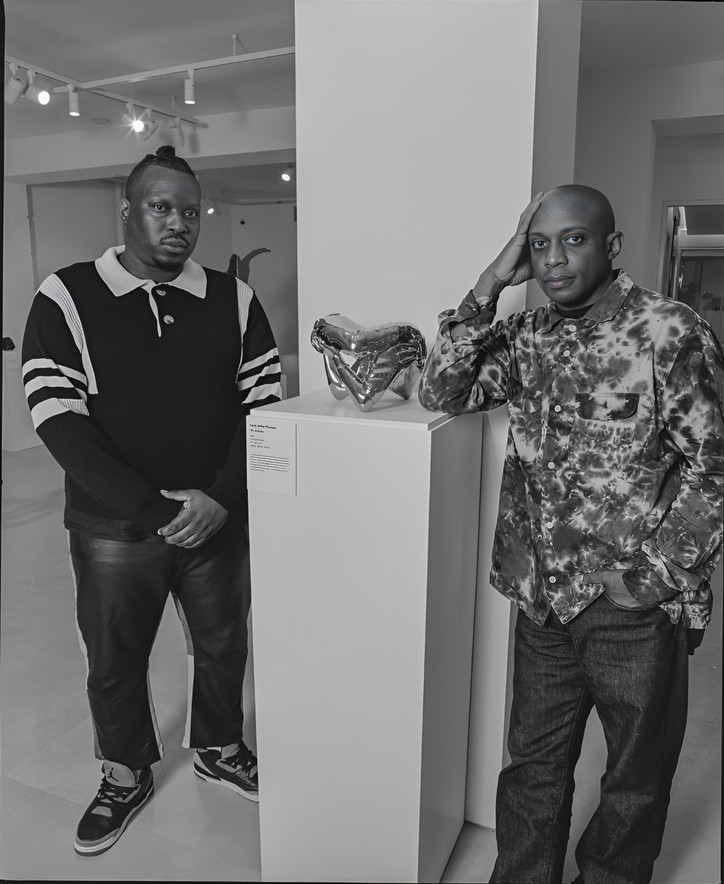
EMANN ODUFU-It's actually really interesting how much of a full circle moment this is. I feel like I first started learning about Hank through a book titled Who We Be: The Colorization of America by Jeff Chang. That was around 2014. It was one of those books that shaped how I understand the intersection of art, politics, and culture. There was a chapter that focused on Hank and some other artists, but Hank really stood out to me. Later I saw a posting on NYFA for an internship with Hank. This was around 2016. I applied and got the gig. That’s how I ended up in his studio. One of the projects I got to a on was In Search of the Truth — a public art piece that’s a giant speech bubble you can walk into and answer the prompt: "What is the truth?" We toured it across the country during the 2016 presidential election. It gave me an on-the-ground understanding of how people felt about politics, identity, and more. And through that process, I really came to understand Hank’s practice on a deeper level.
AS-So what year was that again?
EO-2016.
AS-OK, so nine years ago. So you cold-called him, basically?
EO-Yeah.
HANK WILLIS THOMAS-Emann is a man of many talents and deep curiosity. He always wants to engage and bring people together. The Truth Booth project was a great opportunity for that—we were literally inviting strangers to open up and be vulnerable. They took it to 35 different cities. I only made it to a few because I was also launching For Freedoms that year. But Emann and I stayed in touch. He later interviewed me for Office Magazine, and I believe we’ve had at least one public conversation before this. I think he even curated some of my work for another project.
EO-Yeah, we brought a few of the Unbranded works into a prominent ad agency in NYC. It was about sparking dialogue around how advertising shapes perceptions and using Hank’s work as a tool to disrupt that.

AS-Hank, I want to ask you about your work—especially in conjunction with Liu Shiming. Your art clearly draws from both the modern and the historical. How do you see your art evolving in that continuum, and where does Liu’s work intersect with yours?
HWT-One of the most profound things about Liu Shiming’s work is how timeless it feels. Even though many of his pieces are decades old, they could have been made yesterday. The figures, the postures, the situations they reflect—they're still relevant. I come from a different background as a photographer, as an American. But like Liu, I’ve always been drawn to observing the everyday. My work often reframes historical moments—especially those involving people engaged in nonviolent civic action. In a moment where that kind of activism feels urgent again, I think there’s a powerful resonance. Seeing Liu’s work made me reflect on how subtle, poetic gestures can hold just as much weight as overt activism.
AS-That leads to a question about political identity in art. Some artists are labeled activists, some aren’t. How do you see yourself? Is it binary, or more of a spectrum?
HWT-All art is political. In Western society, art functions like a kind of cultural currency. If it weren’t political, cultural institutions wouldn’t be seen as threats by governments. Even abstraction can be threatening—because it asks people to engage with their heart, not just their intellect. That alone makes it provocative.
AS-Emann, what about you?
EO-I wouldn’t call this exhibition overtly political. But I do think it expresses a kind of quiet resistance. Liu Shiming’s work often operates that way—it’s poetic, reflective, rooted in a shared human experience. The political message is more implicit than explicit. And in that sense, it can sometimes reach people more deeply.
AS-Let’s talk about curating this show. What was the process like? Where did you start?
EO-My brain naturally looks for connections. When I first visited the Liu Shiming Foundation and learned about the artist’s work, one phrase kept coming up: "everyday people." That stuck in my mind.
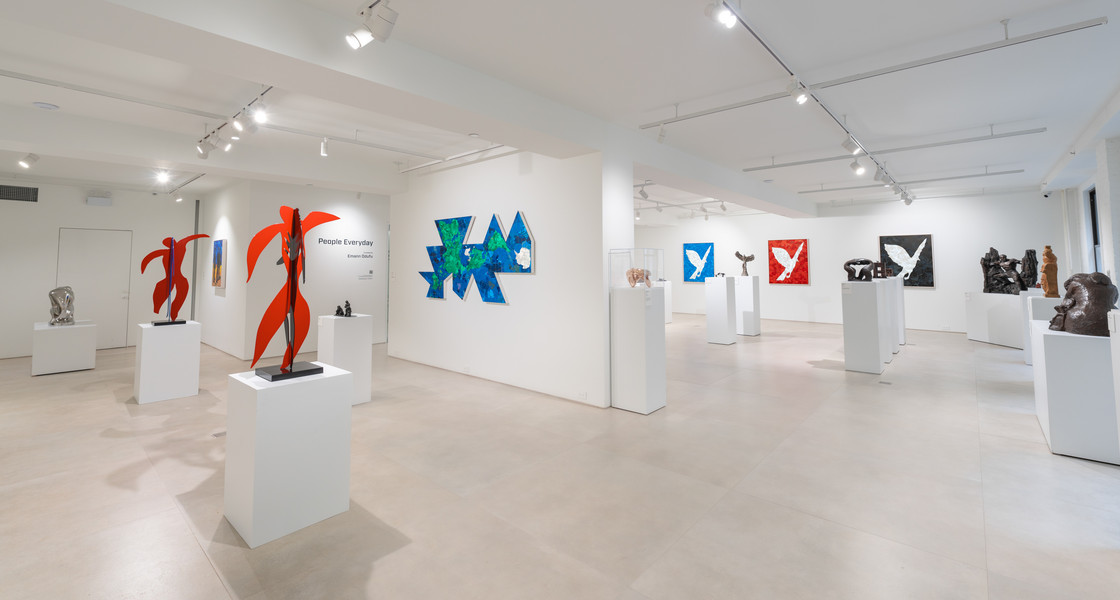
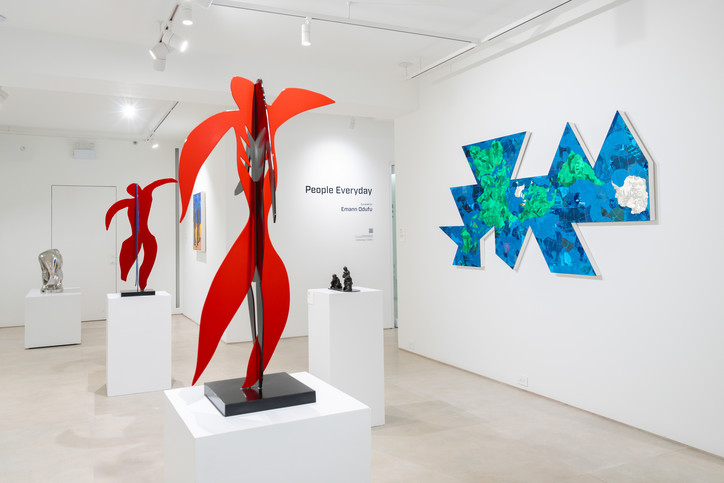
Then I thought of the song "Everyday People" by Sly and the Family Stone. I kept playing it during the early stages of planning the show. I was also listening to the Arrested Development version, which samples the original. Both are calls for unity. Originally I wanted the show to be titled Everyday People. But Hank suggested flipping it to People Everyday, which felt more contemporary. It created a more active tone. And the title captures what ties these two artists together—their radical care for everyday life, for ordinary people.


AS-Hank, what was your reaction to seeing your work alongside Liu’s?
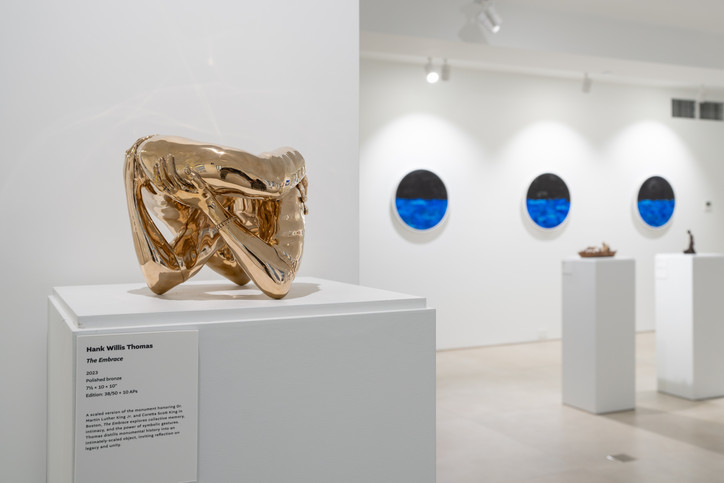
HWT-I was honestly moved. It’s rare to have such a direct dialogue between your work and another artist’s. I saw echoes in form and theme that I hadn’t expected. The wrestling pieces, for example, really resonated with my work The Embracein ways I didn’t anticipate. It speaks to this idea that artists, across time and cultures, can tap into a collective unconscious.
AS-And this evolution of your practice—from photography into sculpture, public art, and more—how do you decide which direction to go next?
HWT-I studied photography at NYU, and right after I graduated, the iPhone came out. Suddenly everyone was a photographer. That shifted my relationship to the medium. My photos were always more conceptual anyway. So I started exploring other ways to express those ideas.
Take The Embrace, for instance. It’s a 24-foot monument in Boston Common honoring Dr. Martin Luther King Jr. and Coretta Scott King. It's based on a photograph taken the day he received the Nobel Peace Prize. I focused on just the hug, turning it into a sculptural form. While I’m not sculpting in the traditional sense like Liu did, I am sculpting in my mind, using digital tools to render emotion and meaning in physical form.
AS-Does working in public space change how you think about your art?
HWT-Absolutely. When work is in a public space, it belongs to everyone. That’s humbling. Most people won’t stop to analyze it, but maybe they'll glance at it. In a gallery, it’s more intimate. People come because they want to engage. That kind of attention is an honor. It means something.
AS-Emann, as a curator, what do you aim to accomplish? What resonates most for you?
EO-I see art making and curation as a form of storytelling, sublimation, and symbolism. The artist brings symbols into the work, consciously or not. As a curator, I add another layer of interpretation. And when I put two artists’ works together, I’m creating new symbols and meanings.
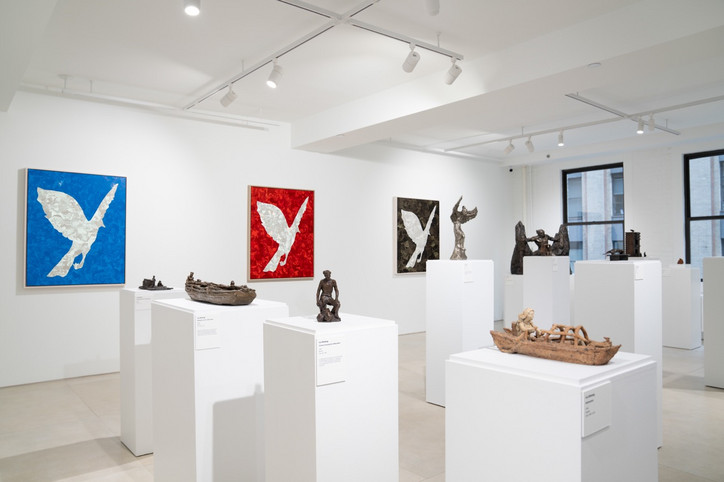
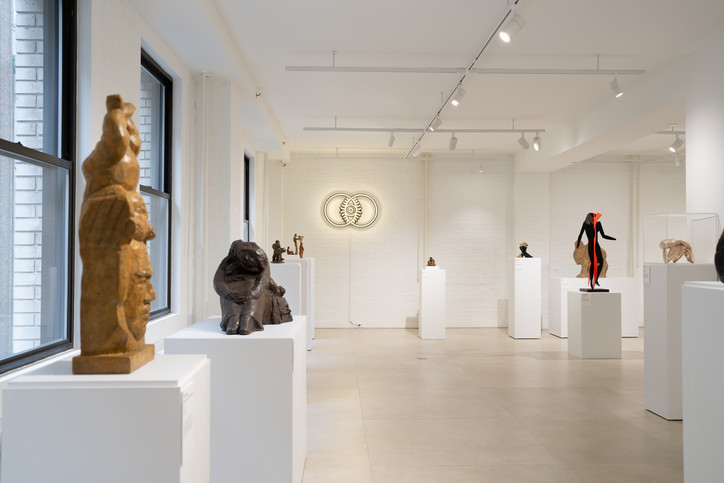
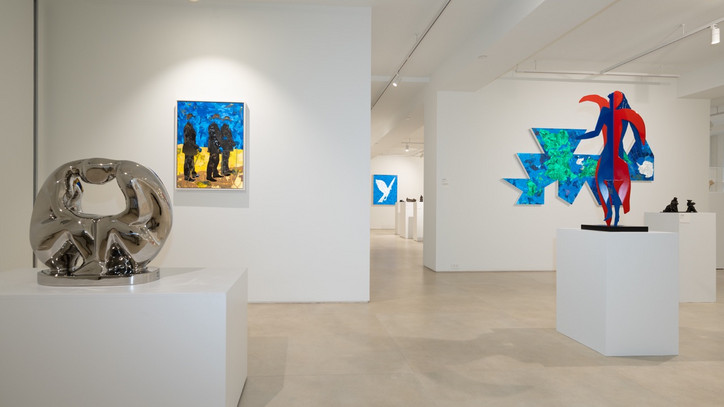
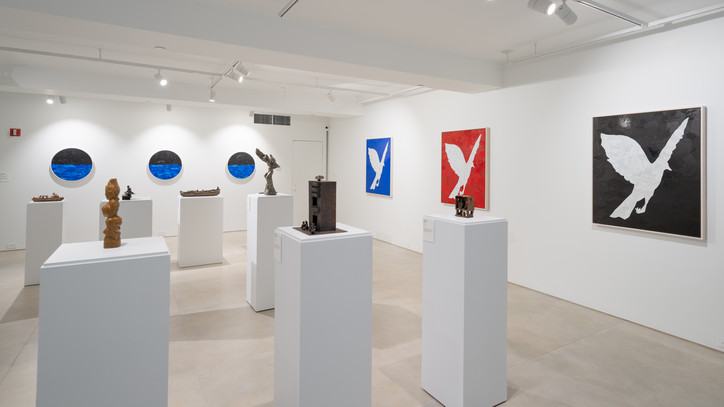
For instance, someone might be drawn to the connection between Hank’s Godspeed series and Liu’s boat sculptures. Others might resonate with the pairing of The Embrace and Cutting Through Mountains to Bring in Water. The goal is to make space for layered interpretation, to let people find their own way into the show.
AS-Can you both speak about one of the specific pairings? Like Archimedean Solid and Measuring Land?
EO-The maps we use to navigate the world reflect man-made borders—constructs we've created. Liu Shiming’s Measuring Land was one of his breakthrough works early in his career. It’s such a foundational idea—literally, how we make maps: by measuring land, plotting, dividing. I thought pairing this piece with Hank’s work spoke to how we think about territory and society today. It also made me reflect on how borders—whether natural ones like rivers and mountains or political ones—shape our lives. These lines aren't neutral. They’re tied to current events and geopolitical tensions, both here and abroad.
AS-And what’s the medium? What is that piece made from?
HWT-It’s made from retro reflective vinyl. Like a lot of the work downstairs, this piece has two viewing modes. Under normal light, it looks one way, but when you shine a flash or a flashlight on it, you see it’s actually a collage of hundreds of photographs—most of people participating in nonviolent civic actions around the world.
The shape is inspired by Buckminster Fuller’s Dymaxion Map. He was fascinated by the idea of using technology to measure and more accurately represent the Earth’s surface. There’s also this concept he explored called the "polydetahedron"—a series of 13 triangular forms used to rethink the world’s shape. We usually think of the Earth as a sphere, but it’s more like...a potato.
Andy (laughs)-Right—something you could unpeel.
HWT-Exactly. And all maps, to some extent, are distortions. The Mercator projection, which most of us are familiar with, was created by northern Europeans who exaggerated their own region’s scale, which had lasting effects on how we perceive global importance. This piece tries to reimagine a more democratized version of mapping—something both Liu and I are exploring: how people shape space and reality through measurement.


AS-Didn’t expect we’d get into Buckminster Fuller. The geodesic dome guy, right? Love that. You were telling me earlier about discovering this reflective material. Can you share that?
HWT-Yeah. I hope everyone gets to see the show downstairs, if you havent already. The two-dimensional works down there are made using retroreflective vinyl—the same material found on street signs. It reflects light directly back to its source, so at night, a stop sign only lights up when a car’s headlights hit it. I was interested in taking this material—used for wayfinding—and repurposing it to explore history. Because history itself can be distorted or obscured. Using light to reveal layers beneath the surface became a metaphor for illuminating forgotten or overlooked narratives. The first time I saw the material was in a sign shop. I had this epiphany: if I printed green ink on green retroreflective vinyl, it would disappear. But if I printed blue on blue, it would become visible. That sparked the idea of working with visibility and invisibility—literally and metaphorically.
AS-Do you have to prompt yourself to have these kinds of revelations? Is it a discipline, or do they just hit?
HWT-Good question. If I could prompt myself on demand, I’d probably be much happier. (laughs)
AS-Yeah, it's that pressure. You sit there thinking, “I have to come up with something.”
HWT-James Baldwin once said the artist’s struggle for integrity must be seen as a universal human struggle—to become truly human. That quote stays with me. In my work, I’m just trying to be the best version of myself—and often failing. But artists get comfortable with that—failing, and doing so publicly.
AS-Don’t be so hard on yourself! But that’s part of the territory, right? I avoided becoming an artist for that reason. Though my field has its failures too. Also, props on quoting Baldwin—that’s no small feat. His sentences just keep going! Okay, let’s talk about the Embrace and the two Liu Shiming pieces you paired it with. Emann?
EO-Sure. One of the early connections I made as the curator was between Hank’s The Embrace and Liu Shiming’s Cutting Through Mountains, Submerging in Water. Both works subvert traditional notions of monumental sculpture. Historically, monuments have been about glorifying power—leaders, institutions. But Liu was doing something different. When he created Cutting Through Mountains, he was still at the academy in Beijing, and it was considered unusual, even frowned upon, to incorporate landscape into sculpture. He broke with tradition—kind of like Rodin’s The Thinker, but instead of focusing just on the figure, he included the environment. And with The Embrace, Hank zooms in—not on a whole figure, but on a gesture. A hug. Instead of a towering heroic pose, he monumentalizes love. It honors Dr. King and Coretta Scott King, but also speaks universally. Anyone can relate to a hug. Just like how Liu’s figures—riding bikes, working in boats—are universally resonant. So both works challenge the idea of what a monument can be—and who it’s for.
HWT-Exactly. And when I look at Wrestling and The Embrace, I see echoes. These sculptures were made decades apart, but their forms resonate. I didn’t know about Liu’s Wrestling when I made mine, but there’s an undeniable kinship. The tension in the arms, the closeness—it reminds me of The Thinker, but rendered in motion, in intimacy. And to cast that in bronze—a cold, static material—while still trying to convey warmth and vulnerability, that’s a challenge I embrace.
AS-It’s kind of Jungian, right? Like shared archetypes—Mayans and Egyptians both built pyramids without knowing each other. Maybe these gestures of embrace or struggle are just embedded in the collective unconscious.
EO-I love that. And it’s fascinating—Embrace and Wrestling are almost opposites emotionally. One is love, the other is friction. But both involve touch, engagement, presence. Wrestling can be playful or aggressive, but it’s still a connection. The forms are similar, but the emotions are flipped.
AS-Do you look at ancient or modern art for inspiration? Or do you try to stay in your own head?
HWT-I love history. Looking at historical art is like time travel. And if I can bring an idea like the Dymaxion map into the present, it feels like I’ve pulled an artifact through time.
AS-And what about current events? Are they influencing you right now?
HWT-Absolutely. I’m inspired by people taking to the streets, using their voices, standing up for democracy. That takes courage—especially in an age where our devices mediate almost all interactions.
We think we’re connected, but these platforms are programmed—literally. We don’t even understand the code that’s shaping how we engage with each other. That disconnect worries me. So seeing people here today, putting their phones away, listening—that gives me hope.


AS-Maybe that’s what we’re all craving, after so many hours on screens. Have you explored that idea in your work? Or maybe used AI?
HWT-I’ve experimented, but haven’t made anything I felt needed to exist in the world. The tech evolves so fast—by the time you finish, it’s already outdated.
EO-Same. I’ve used AI more personally—it’s like a sounding board or even a kind of therapist. Which is weird, because it makes me wonder: if we’re already so isolated, what does this added layer of mediation do to our humanity?
But on the flip side, I sometimes think about a utopian future where AI frees us from labor, so we can focus on deeper questions—healing the planet, understanding each other. Maybe that’s naïve, but it’s a vision I hold onto.
AS-Yeah, but the dystopian version always seems closer. I was just playing with Midjourney—type in a prompt and boom, you get this surreal image. Wild stuff.
HWT-I was just at a conference—Tesla's already building humanoid robots. They’re supposed to roll out next year.
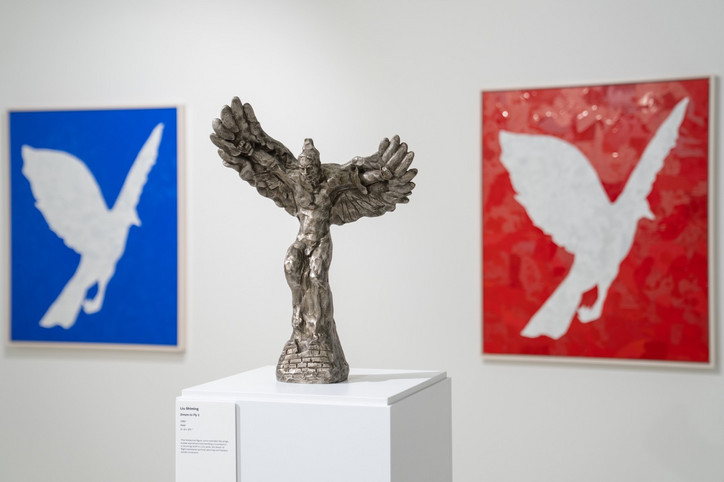
AS-Wild. I’m surprised they weren’t in the parade this weekend... or maybe they were, who could tell? Last pairing: Hank’s Icarus in Sunlight and Moonlight, with Liu’s Greek Mythology.
EO-Right. So the Icarus works and Liu’s Greek Mythology- Centaur made me think of the Silk Road—not just as a trade route but a cultural exchange. These artists come from different times and places, yet both explore Greek myth. That says something about how ideas move across borders.
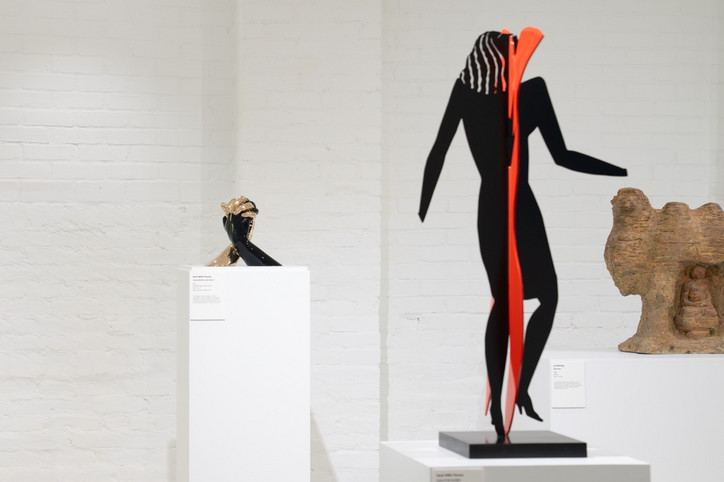
HWT-The silhouettes in Icarus in Sunlight and Moonlight draw from Wallace Thurman’s The Blacker the Berry, but visually I was channeling Matisse and Aaron Douglas—who was a major figure of the Harlem Renaissance. Matisse actually visited Harlem and was influenced by the aesthetics he saw there. So there’s this layered lineage—Douglas influences Matisse, Matisse influences me, and I connect it back to Greek myth. The figures shift depending on your angle—sometimes you see Douglas, sometimes Matisse, sometimes both. That multi-perspective is intentional.
AS-And the color? Red and blue, sunlight and moonlight?
HWT-Exactly. The red sculpture has a glowing heart—it’s from Matisse’s Icarus in his jazz series. The blue one uses a silhouette. I was also thinking about Keith Haring when I made these. It’s a blend of influences.
AS-You mentioned Liu once said he wanted viewers to have a “silent dialogue” with his work. You said that resonated with your process?
HWT-Yes. When we make art, we’re not thinking about legacy—we’re just making. But then you imagine Liu’s work being shown in New York decades later, and it reminds you that once you release the work, it has a life of its own.
AS-Okay, before we open up to questions, one last one for Emann. In Chinese tradition, “poetic quality” is considered the highest form of art. What do you see as the poetic quality in Liu’s and Hank’s work?
EO-Both artists embed community and symbolism in their work. That’s the poetry—each piece holds multiple meanings. For example, Hank’s Godspeed series, with water and hidden photographs, could represent actual rivers, but also life’s flow—or the transatlantic passage and the trauma of displacement.
Liu’s boat sculptures remind me of migration too—fresh off the boat, so to speak. These works are layered. A bird isn’t just a bird—it might represent aspiration. That’s the beauty of this show. It doesn’t lead you to one answer. It invites you into a space of abstract reflection on what it means to be human.

What are some of your earliest memories of clothes and the construction of identities?
My earliest memory is from when I was at school. We didn't have to wear a school uniform, but I made my mum buy me one. I just wanted to be a schoolboy. I wanted to have a little blazer. I didn't want to fit in. It's a story my mum tells me about how strange I was as a kid. I got into skateboarding when I was about 13. And then I wanted to look like an LA surfer. You know, even though I lived in like the shitty part of the northwest of England, I wanted to look like a shaggy blonde.
What was the last subculture that sparked your interest? Do you think that the internet dissolved the subculture?
In England, we call them roadmen. Sort of comes out of drill music, grime. It's when they wore tracksuits, head to toe, The North Face. I kind of like Playboi Carti too. I like what he's doing. It's mad. It's a bit Balenciaga-ish, which I don't love, but kind of black Goth. I think something is interesting watching a Black African American man taking Goth, which is the whitest kind of style. He also looks like a pop star. I like pop stars. And then in terms of the subculture thing, I guess you could say that the internet changed time. Before the internet, everything was kind of periodic. So you could go like 50s, 60s, and everything's marked out.
And then it all collapsed.
Yeah, because there's an idea that the digital converted time into space. So you're not moving linear forward anymore. You're going across in all sorts of ways. Linear time isn't natural, you know, if that comes out of light and of print, because print is linear. So when you move away from print, you get a different conception of time.


You have a dope music taste!
Oh, thank you!
I heard you playing Meat Computer in one of your NTS mixes. How does your music search engine work? Do you rely on algorithms or do you search for it?
I search, but I got resources. To be honest, a lot of the stuff I get is from this guy called Billdifferen. I don't know where he gets it from. He posts loads of stuff, like he was the one who turned me on to baile funk and sigilkore. Axxturel, Sellasouls, this kind of young rappers. Everything sounds really broken, and they just whisper. It's like you can hear the internet.
What was the best party you’ve ever been to?
Probably the Burning Man in the early 90s. It was still very real. It was very organised but completely boundless. I hung around with this guy for three days, didn't know him and never saw his face because he had a gas mask on all the time. In the desert. Gas mask guy, had a fishing tackle box just full of drugs. Built his own shed in the desert; it was just crazy. People were going out to this range and shooting stuffed toys.
It feels like being in a sci-fi film.
It was the nearest I've got to another world. The fact that there's a structure that allows for anything to happen is very magical.


I remember you mentioning Philip K. Dick’s quote “The symbols of the divine show up in our world initially at the trash stratum.” Would you expand on that in relation to Burning Man?
That’s good, that's sort of built from trash. I like that quote for a number of reasons. The first real music I ever got into was Little Richard. And I think he embodies that quote. He's like a gay, poor Black kid down in South America when it was really racist and religious, and everything that they despised, he kind of turned into something powerful. He's my icon. I think that the ability to alchemically transform disadvantages into charisma, power, whatever you want to call it—I love that! And I think the first time I got really into fashion, I used to call it casual. We wore a lot of brands, before people were really into brands—70s, early 80s. We were all working-class kids without any money, but you're taking this stuff that shouldn't belong to you, that you shouldn't be wearing, and making it yours. I always like it when fashion does this kind of conversion.
When did your fascination with Medieval Art begin?
At a foundation course—it was part of art history. Nearly everyone else I knew got taught from Duchamp, Warhol, but for some reason, he taught us early Renaissance painting. I got introduced to art history through Giotto and Fra Angelico, all these pre-Renaissance painters. And then during lockdown, I started looking at it again and had a new appreciation for it. Your jacket is quite medieval.
Oh, thank you! It's a Fred Perry wool jacket that I put in the dryer, and it shrank. And it became so much better!
Oh, that’s great! It’s got some Elizabethan shoulders. To Paige: I like your skater back in the 70s, you look very kind of LA 70s.
We're all in 70s cosplay.
My favourite year is 1971.


Why is that?
Because it's the end of the 60s, and there was a kind of darkening. The kind of utopia had collapsed, and no one really knew what was gonna happen next. And so there’s this kind of exploration of everything. And musically, there’s still money around, so they give people money to make obscure, weird records. It’s like the beginning of nostalgia. Go back to 71, they’re starting to already look back to the 50s—kind of catchy and camp—that’s where it all begins.
It resonates with what's going on today as well. The big emphasis on nostalgia—it’s almost like that's all that’s left.
Yes, I’m in nostalgia. I mean, the difference then would be a very small bunch of people, like Malcolm McLaren, Westwood. But now it's like nostalgia is everywhere. And everywhere is at different levels of nostalgia.
You talked about the iconography of an image and how an icon transcends the representational meaning and becomes a portal. The icon is looking back at you as you look at it. What is the equivalent of an iconographic image online?
Icons on paintings are doing something else. They're not an aesthetic object at all. They're there for a reason, and the reason is to commute. I think it's like you feel safe in the gaze of those up in the heavens, right? I think images are becoming less about what they represent and becoming something else—especially with AI. Images are literally looking back at you. They’re gathering information.


It’s like a mirror—neural technology. Icons are mirrors as well.
Yeah, I think there's something kind of alien about it and otherworldly—and all these things that you would kind of feel when you were looking at an icon that doesn't belong to this world. We're trying this new way of understanding the world that starts to emerge. I'm interested in what kind of stories we tell ourselves about it.
Do you think there's a connection between the algorithmic media rise and things like the manifestation trend?
I don't know, the spiritual thing slightly unnerves me because about two years ago, I had quite a profound spiritual moment. I thought it was coming from me. And then I started looking at ways that I could establish a practice that would allow me to have these moments again. So I started reading about religion and spirituality, and I found that it's a thing. I think there is something in the idea that, even though this kind of global connection is producing some bad shit, it's also at the same time literally connecting us. And so there is some kind of emergent group consciousness—or something of that—is developing.
Can you describe the experience?
I was in the park, it was the end of lockdown. I was with my youngest daughter, pushing a pram and listening to music—listening to this song from 1971 by Judee Sill. You heard of Judee Sill?
I love Judee Sill!
Nice. I was listening to “Jesus Was a Crossmaker.” It was a fucking beautiful song. The sun came through the trees. Restrictions were being lifted. I just felt this joy—and then the joy kind of grew and became kind of too great. It nearly felled me to the ground. It was so powerful. I was just moved—everything seemed alive, and everything seemed both in time and outside of time. It was the nearest thing I've got to understanding something described as a sacramental reality. I go online, and it’s like, “Ten things you should know about the new spiritualism.” *[laughs]* Years ago, I grew a beard because I was getting old and it looked better. Then you go out on the street and everyone's got a beard. You know what I mean?

What motivated you to take this project on?
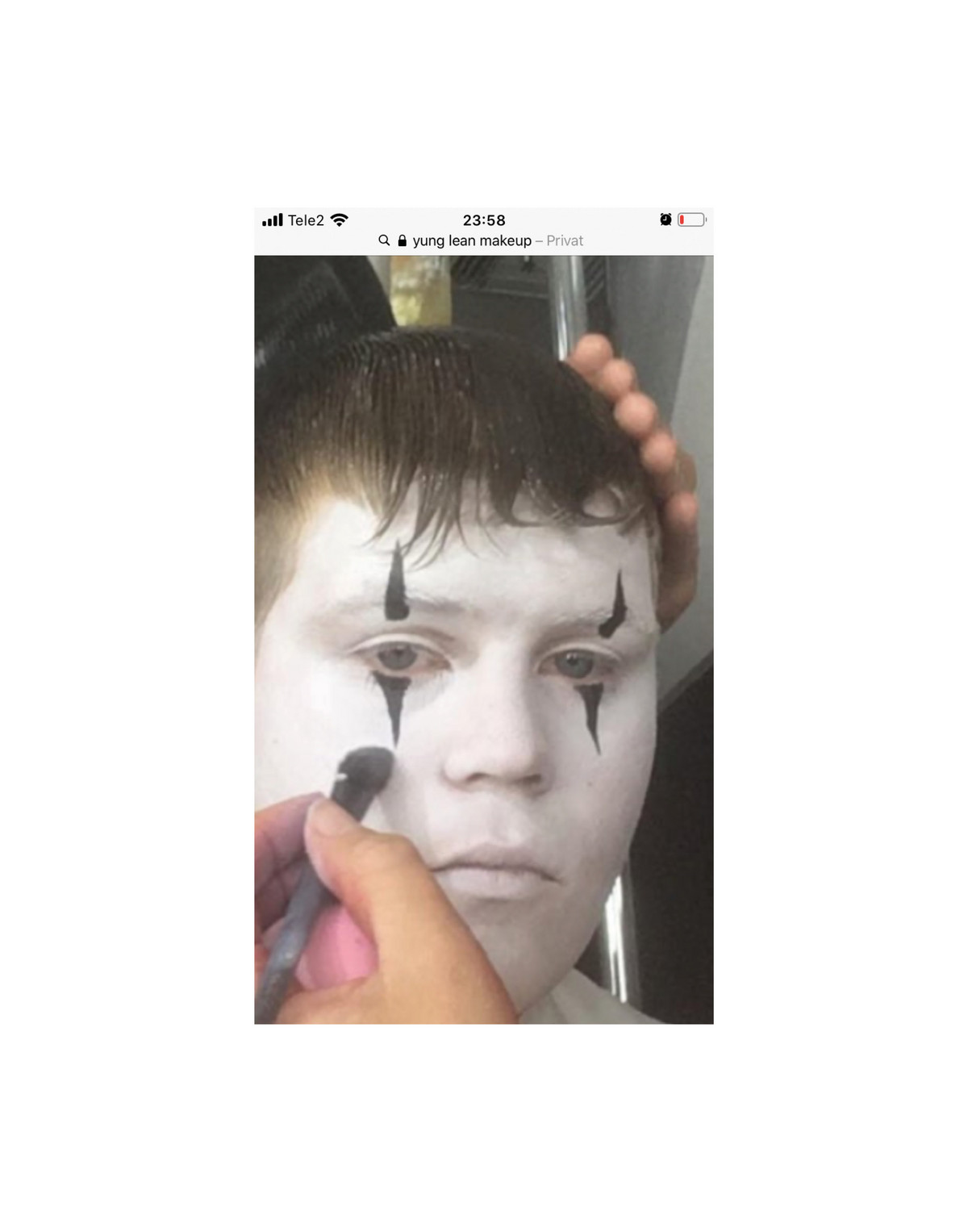
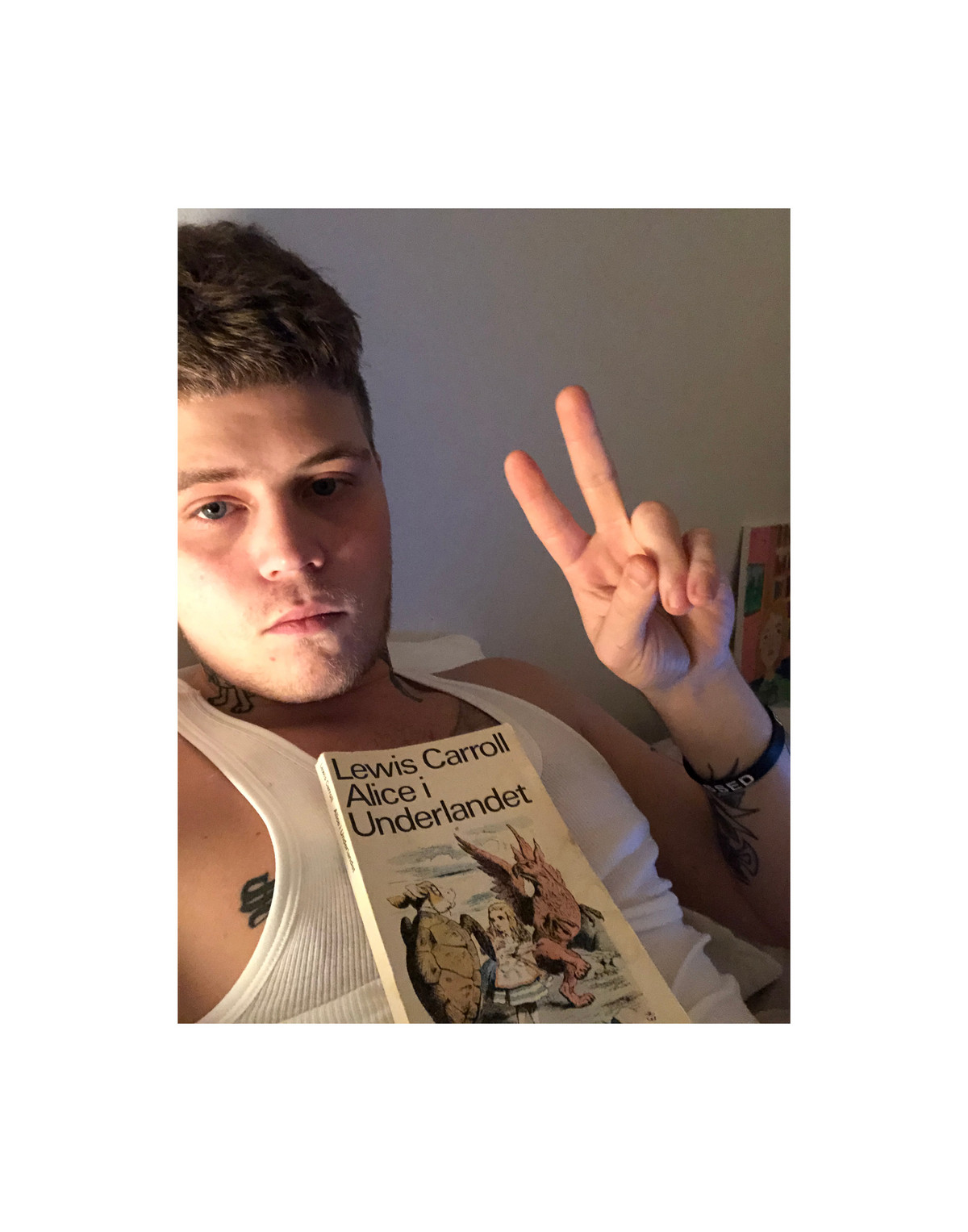
Leo Siboni : I was in New York in the studio with Yunglean in October 2022. We were talking and I told him we should do a book about you. He then transferred all the photos from his phone over a period of 10 years to me on a hard disk; I ended up with around 80,000 images. That's how it started. I went back to Paris and started looking at everything, sorting and selecting.
Rory McGrath: The offer to make a book for such a cult icon and with such a treasured archive of material was such a great opportunity, the rest is history.
Tell me more about your relationship with Yung Lean and his involvement in the process.
LS: I have a long and close relationship with Jonatan ( Yunglean). I directed 8 music video for him. I've known him for ten years. My first music video for him was on the Hoover track and the last one on Babyface Maniacs. As for the book, Jonatan trusted me; he gave me his photos and I remember that he suggested organizing the images by color. He wanted to do something honest.
How did you all collaborate together?
LS: It was a pretty smooth process. At first, I worked alone, making a layout of the book with my selection of images. Then I met Rory and Olly (OK-RM) at Offprint in Paris. I told them about the project and sent them the mock-up of the book. They were immediately very enthusiastic. From then on, we started to think about the book as an object, its shape, size, material etc. As a photographer and filmmaker, I had no experience of publishing. OK-RM was a perfect partner, and I knew very quickly that we were going to do something special together.
RM: Leo and Yung Lean were very clear about why they wanted to work with us. The approach we took is to get into the source of a pure book form, we started by presenting a thesis of the archetypal book and how this would relate to the content. We made a suggestion of additional content layers. Like for example, the blunt language associated with the captions within the classic image index. Our thoughts and visions was always met with enthusiasm and respect so the approach maintained a bold confidence embedded in the final book.
How did you go about designing the layout? What did you pull inspiration from in creating the graphics and design?
LS: I didn't want to make an object that would age over time. So we quickly thought about emblematic books, and one of the most emblematic books is probably the Bible. I really like the idea of a book that's very classic in form, but which contains Yunglean's memories shot on an iphone. The contrast is very interesting.
RM: Exactly. Many of the approaches you can see in the book are in line with classic vernaculars - the contrast with the content is where the beauty exists. Describe the visual world of the book that you were aiming to create. LS:Something raw, non-chronological, honest. RM: Something that works with polarity and tensions and extends both aspects into a singular project.
What inspired you to produce it in Italy using methods that pay homage to bible-making at Legatoria Industriale Artigianale’s premises in Cava de’ Tirreni?
LS: As I said, we wanted something timeless, something that would propel iphone-shot visuals into another dimension. The Bible was our main reference and Okrm had the great idea of collaborating with this printer in Italy. It was perfect.
RM: Exactly every decision has to be inline with a book like this to produce the authenticity and resonance desired, cava de’ Tirreni are masters of this kind of book and the lithography at Longo in North Italy is some of the best available.
How did you integrate notions of nostalgia, surrealism and melancholia into the pages?
LS: I think it comes naturally. Jonatan has a sharp eye, and I think he's a very good photographer. He has a kind of strong visual intuition.
RM: Couldn't agree more the content does a lot of the work but to see it clearly and to give it space to perform the pace, clarity and organisation of the images needed to be perfectly tuned.
The nine chapters are organized by color…how did you decide this and what’s the significance of this?
LS: Jonatan is a synesthete. He associates sound with colours. It seemed logical to organize the images by color rather than chronologically. What's more, Yunglean is passionate about color, which is very important to him, not only in his music but also in his paintings.
In which ways did you infuse Yung Lean’s essence into the book?
LS: I don't know, these are the personal images from Jonatan's telephone. Somehow they speak for themselves.
RM: There’s also this juxtaposition within all that Yung Lean does and also a tendency to always find a mood or approach that tests the boundaries of this given context.
Do you have a favorite part of the book whether that be a chapter, a font, or a detail in its construction?
LS:I love the object, the fact that you can hold 10 years of Yunglean's life in your hand. A sort of paper hard drive.
RM: The total artwork is what we try and pursue with all our work. The whole is greater than the sum of its parts!
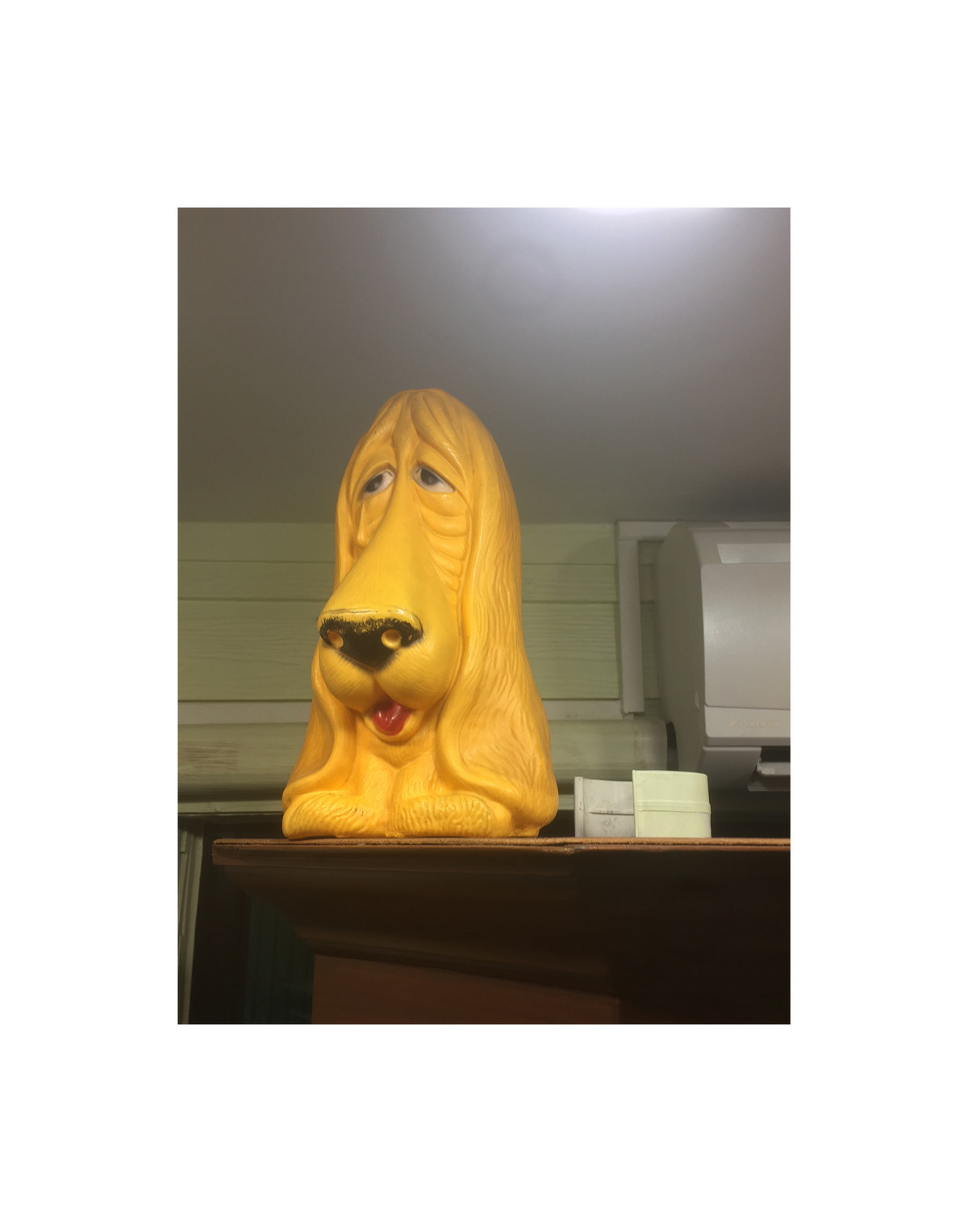
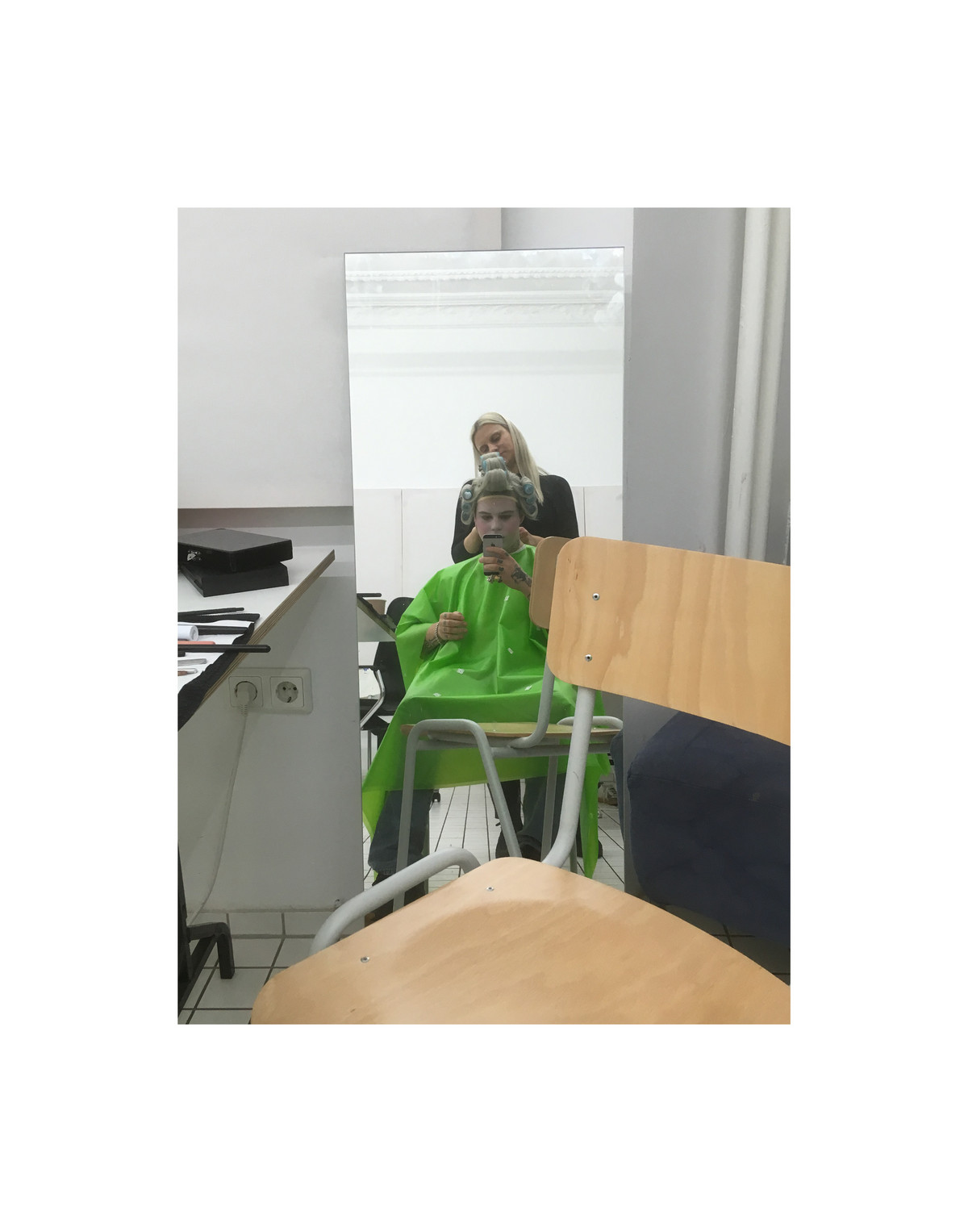
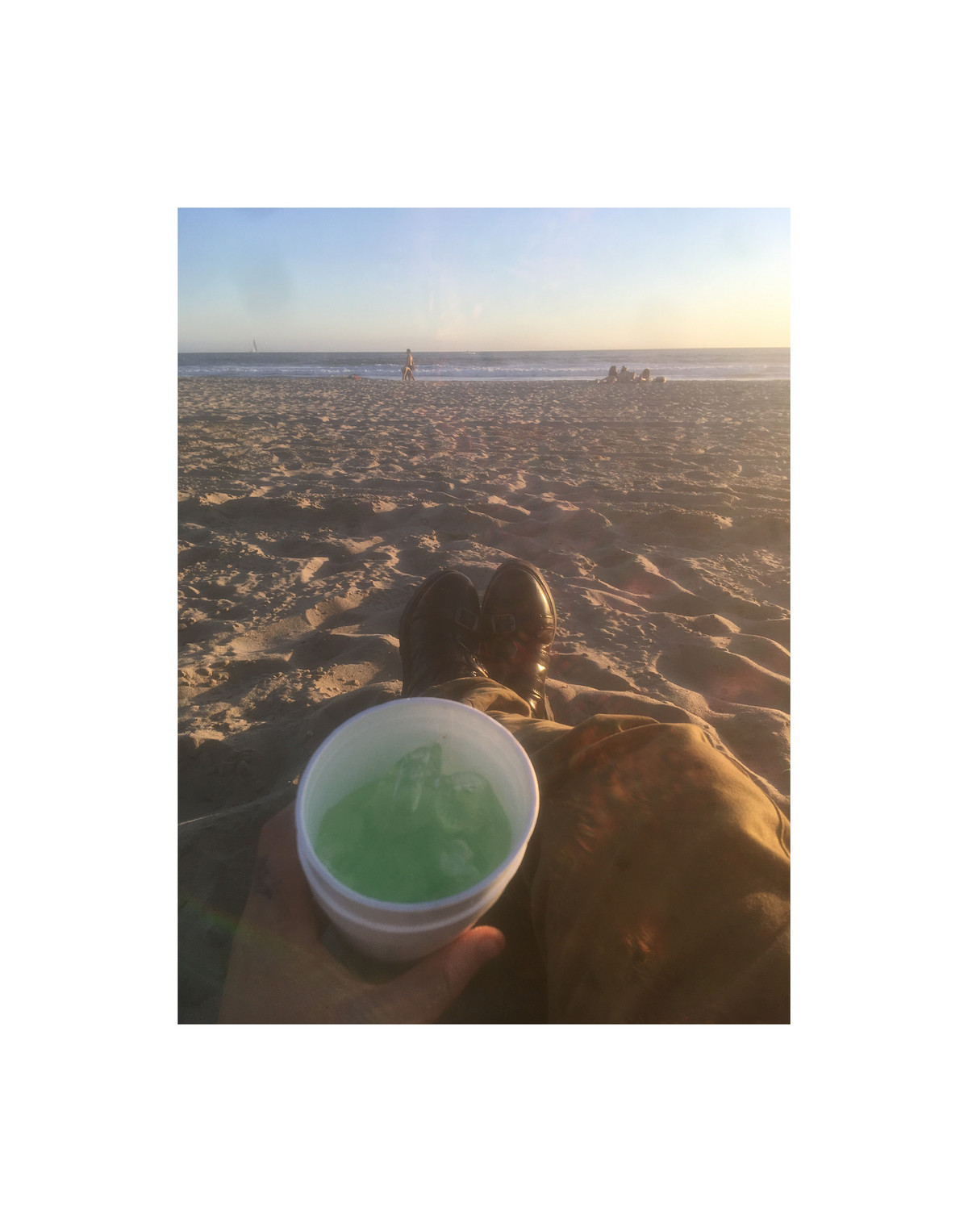
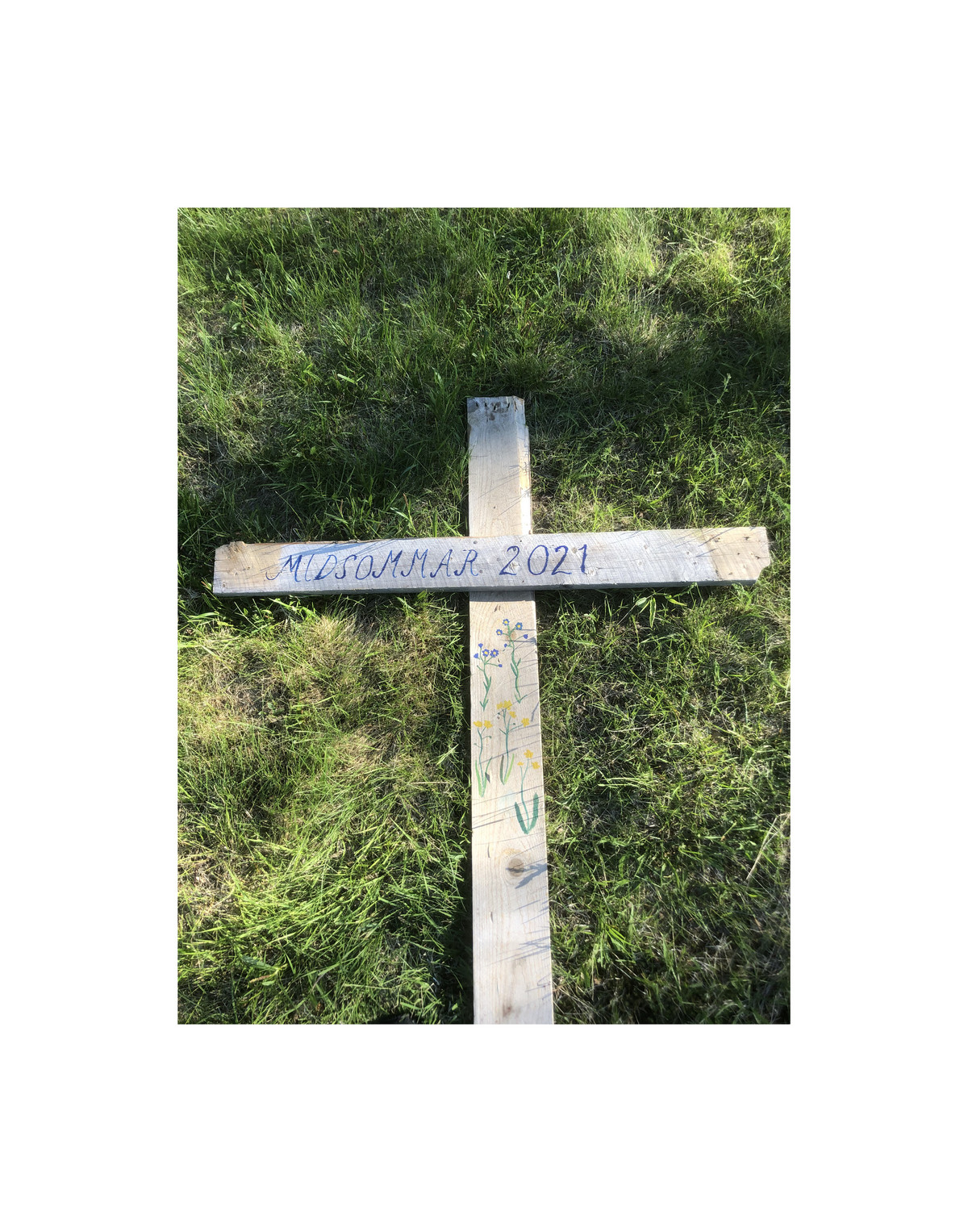
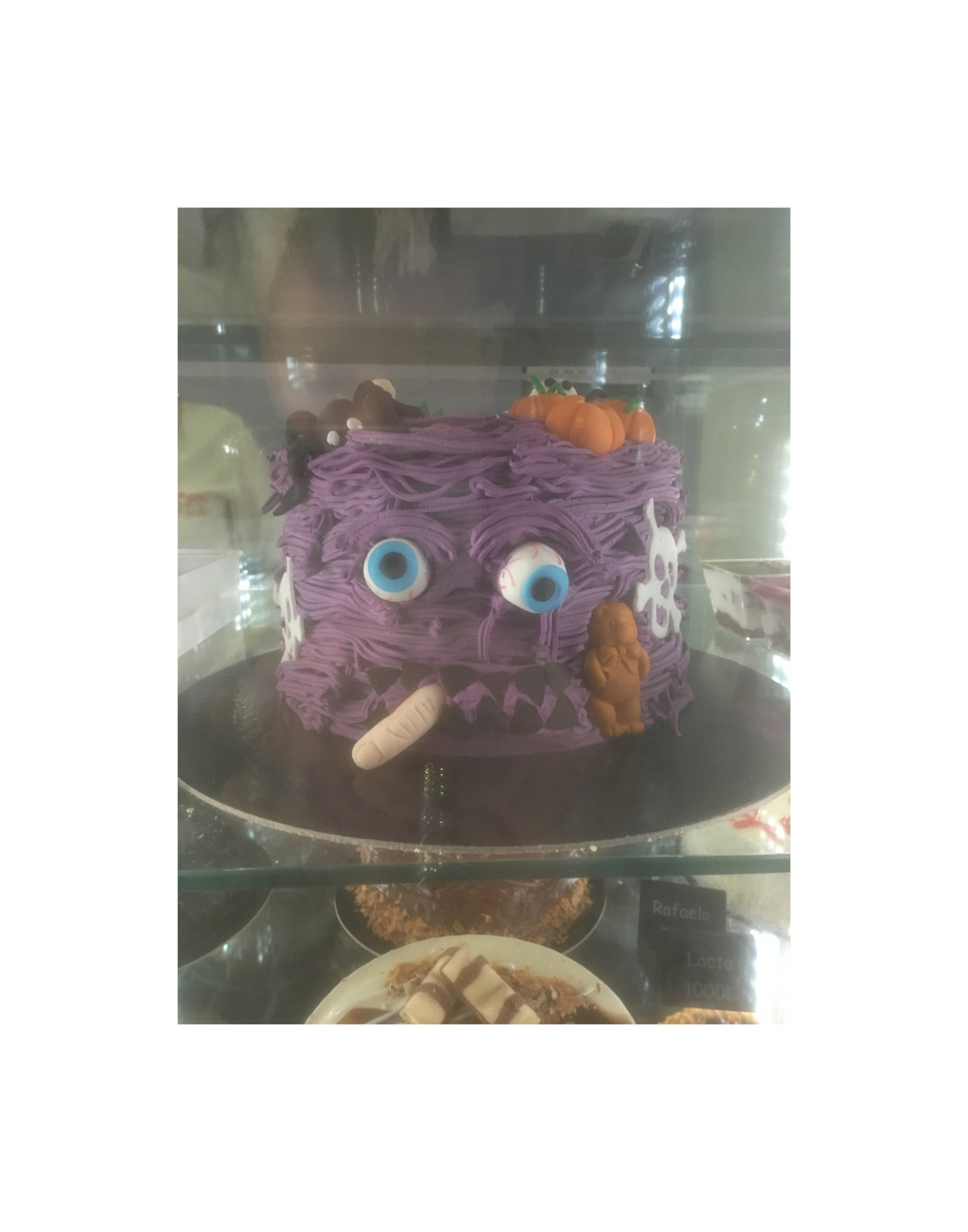
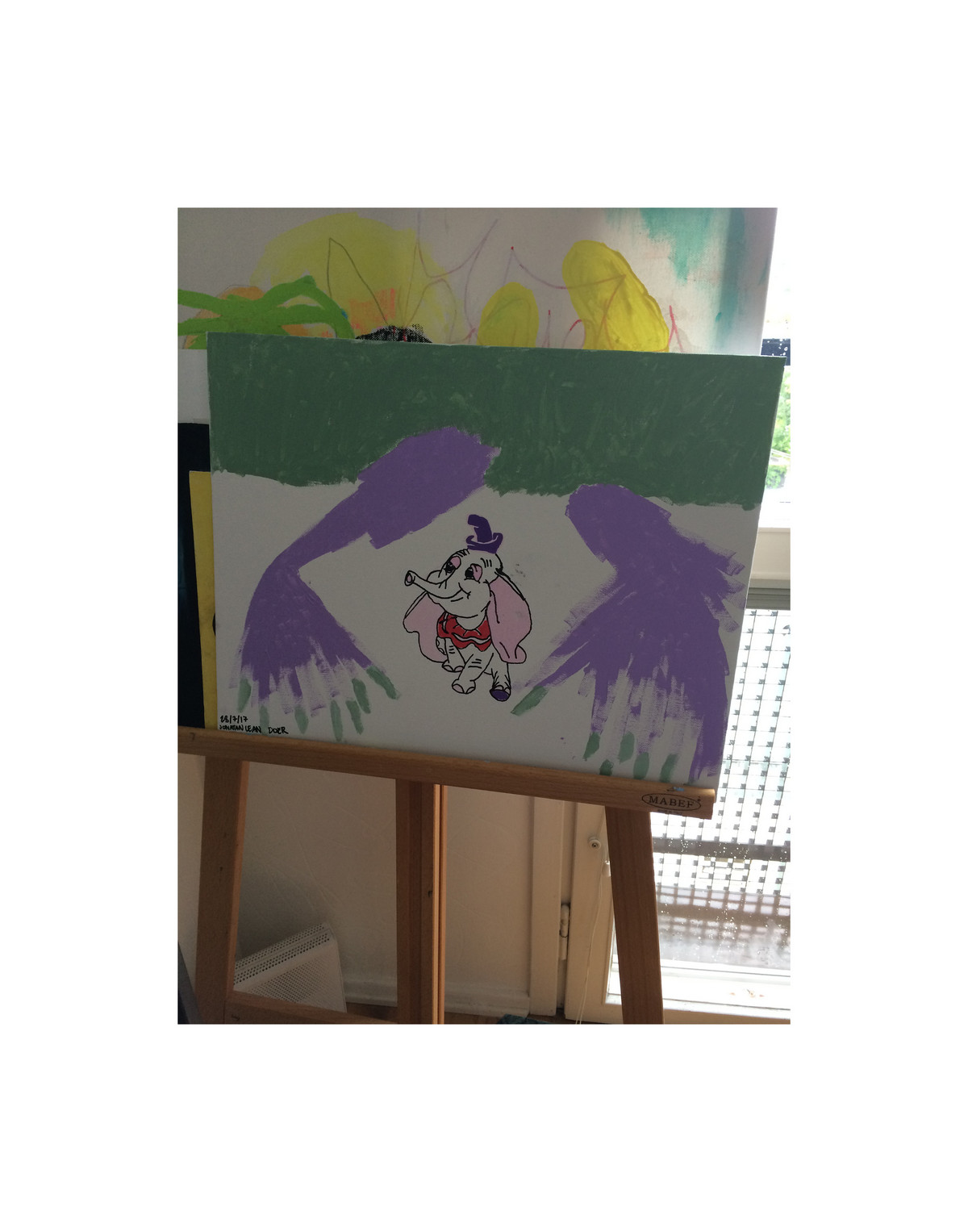
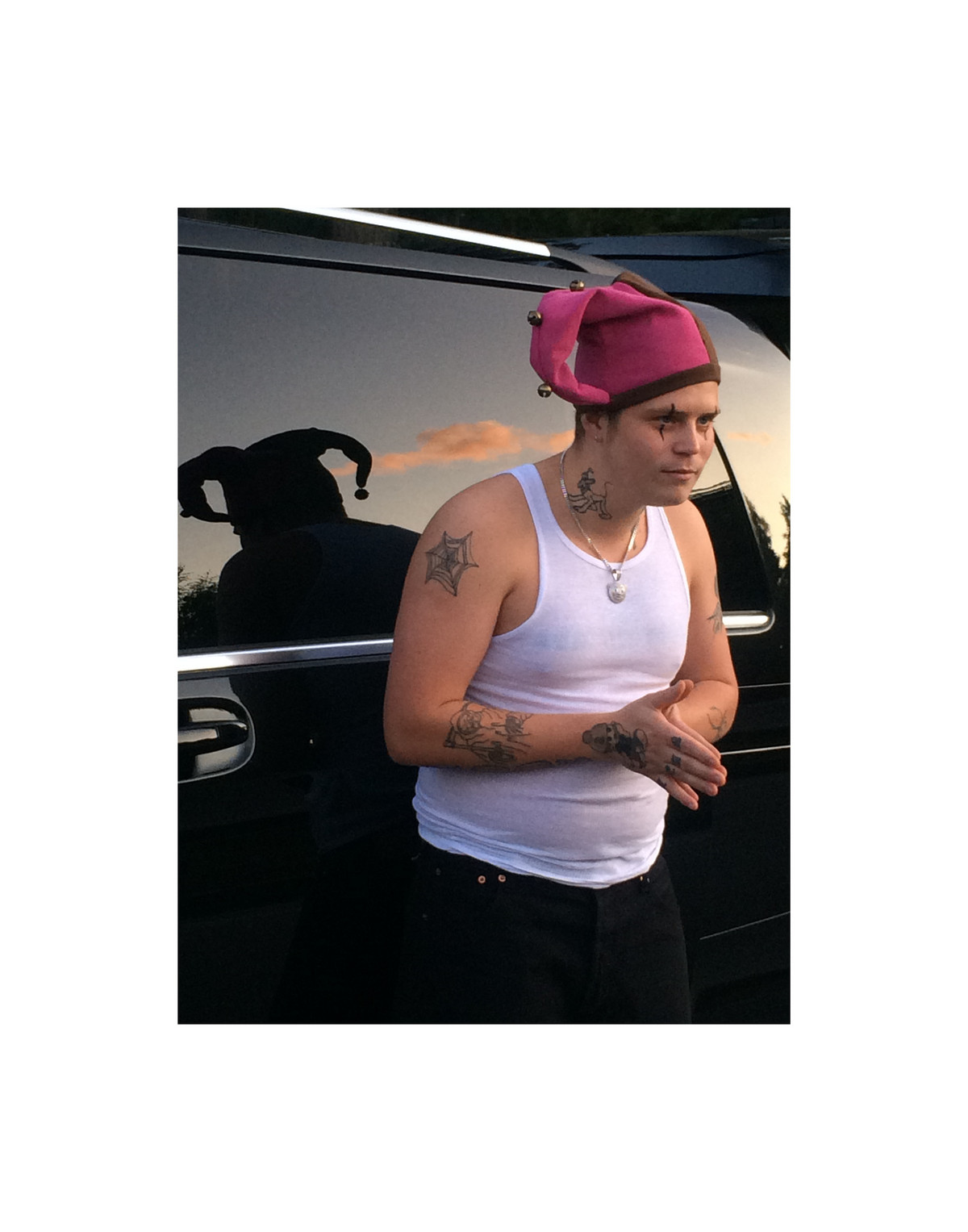
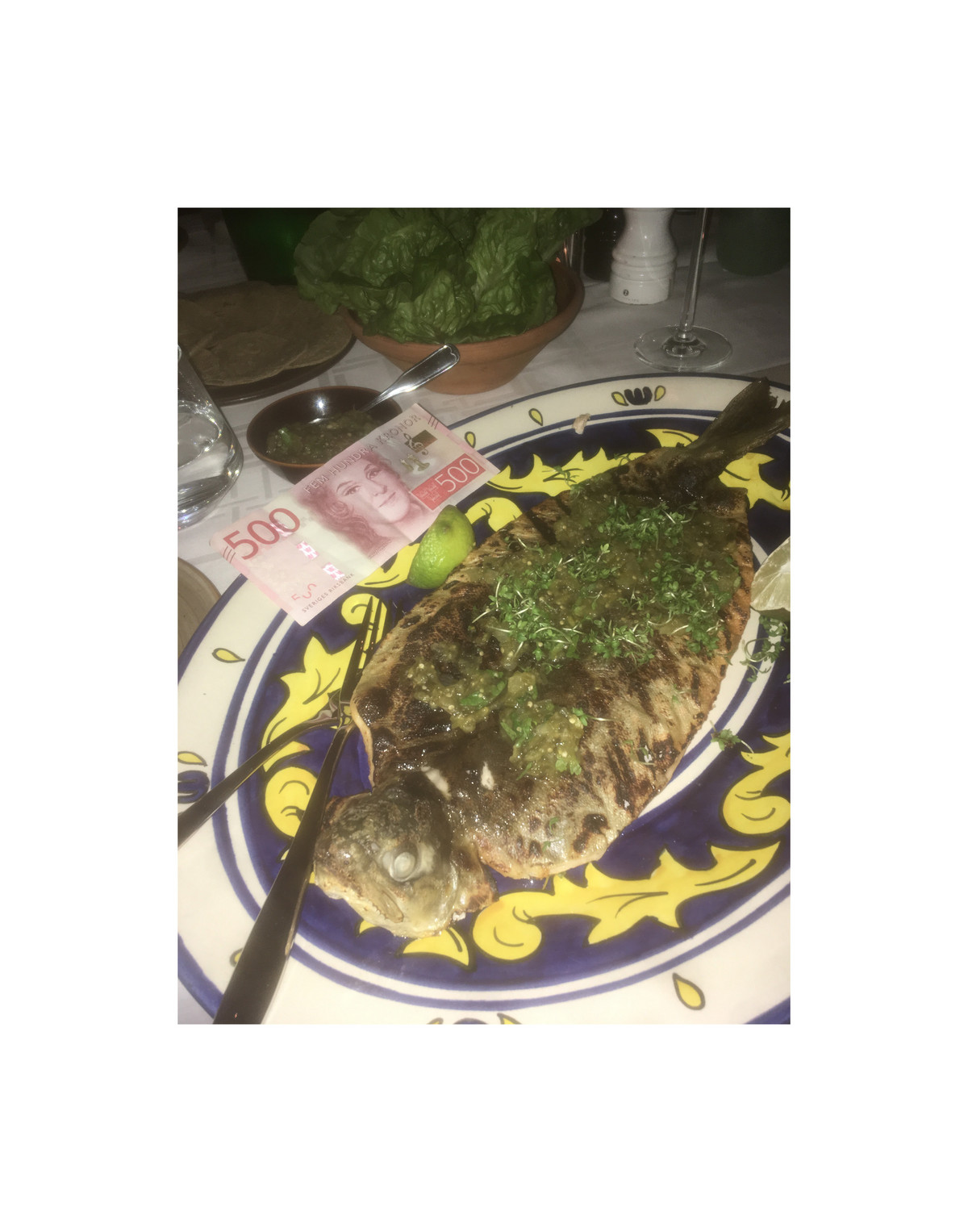
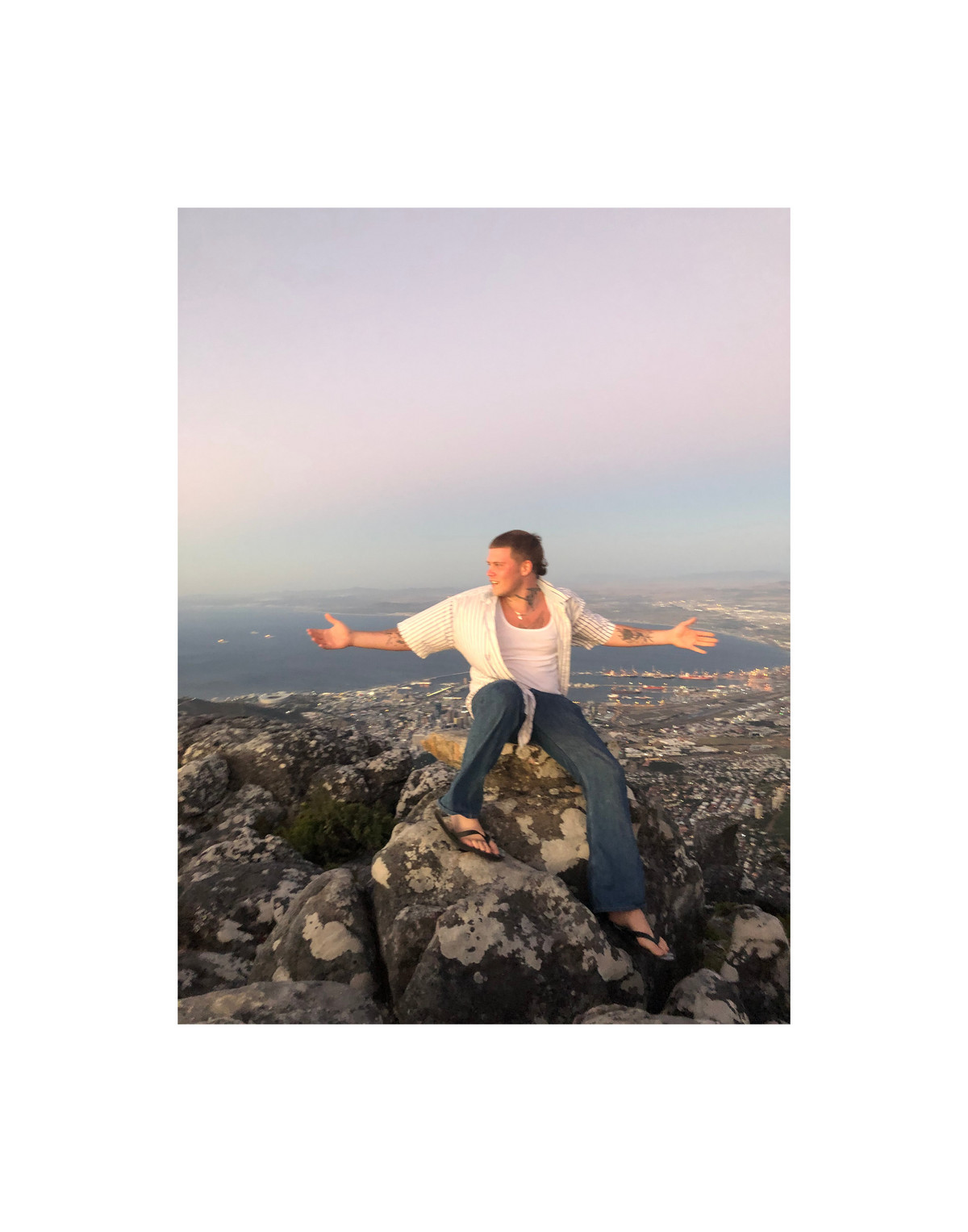
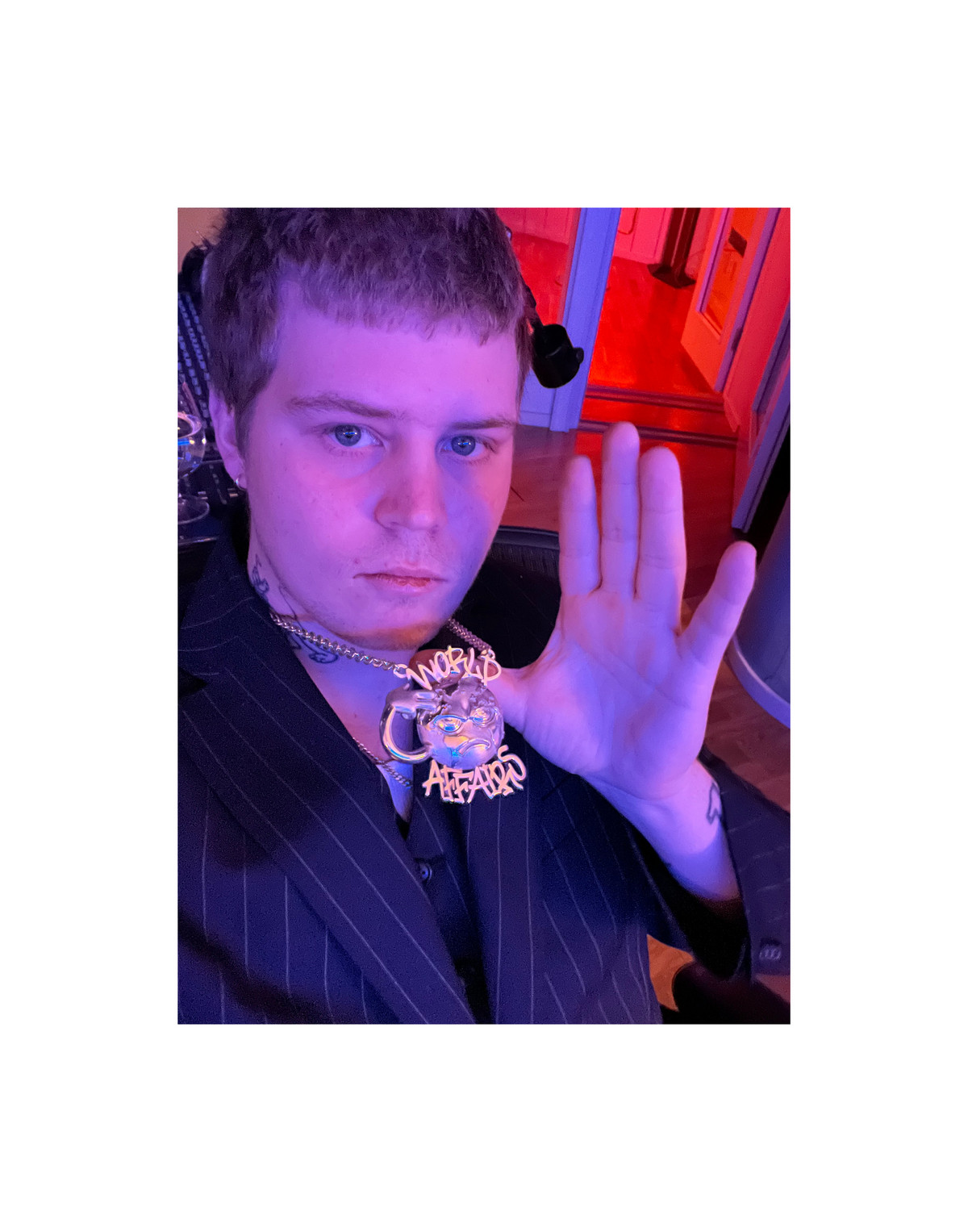
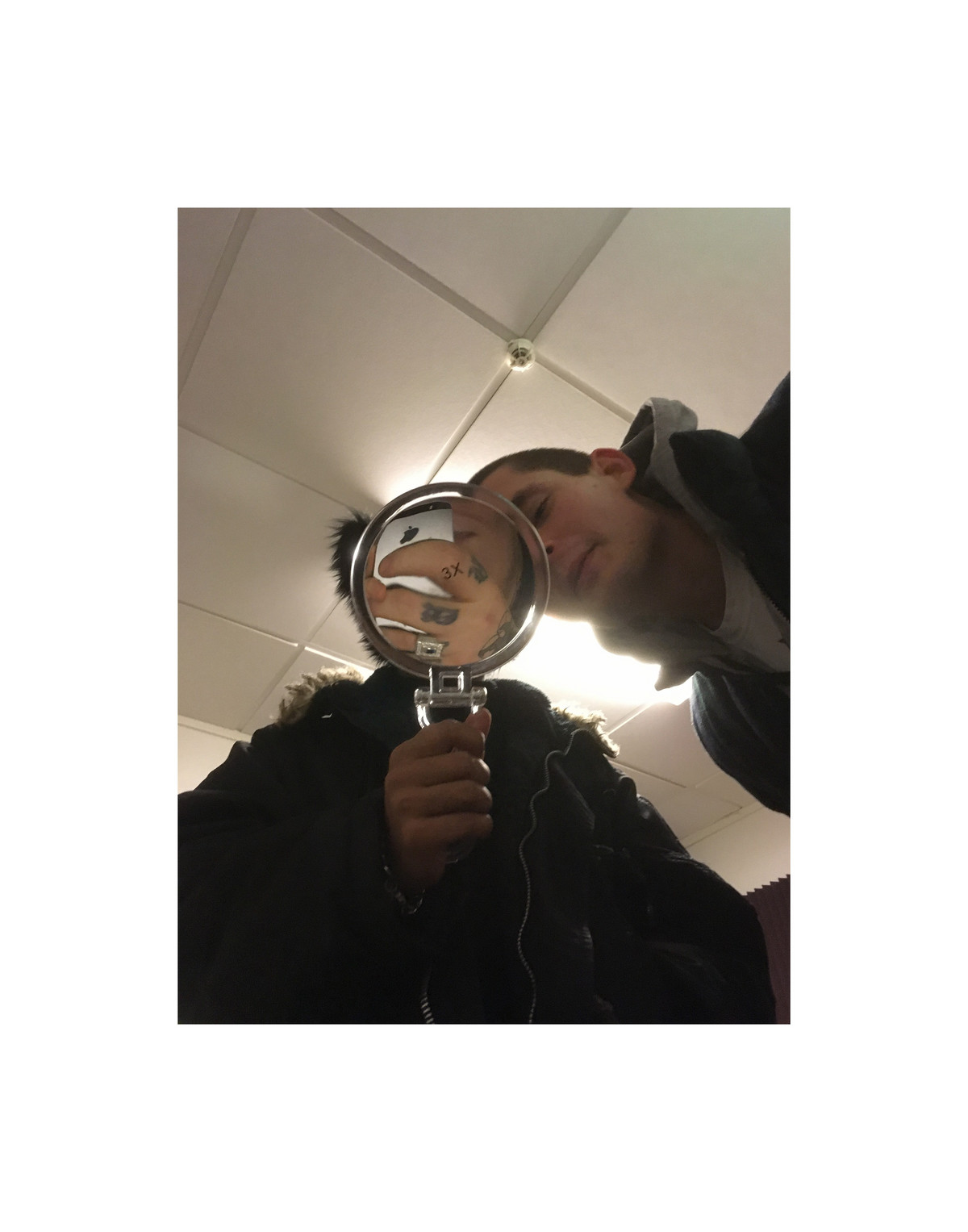
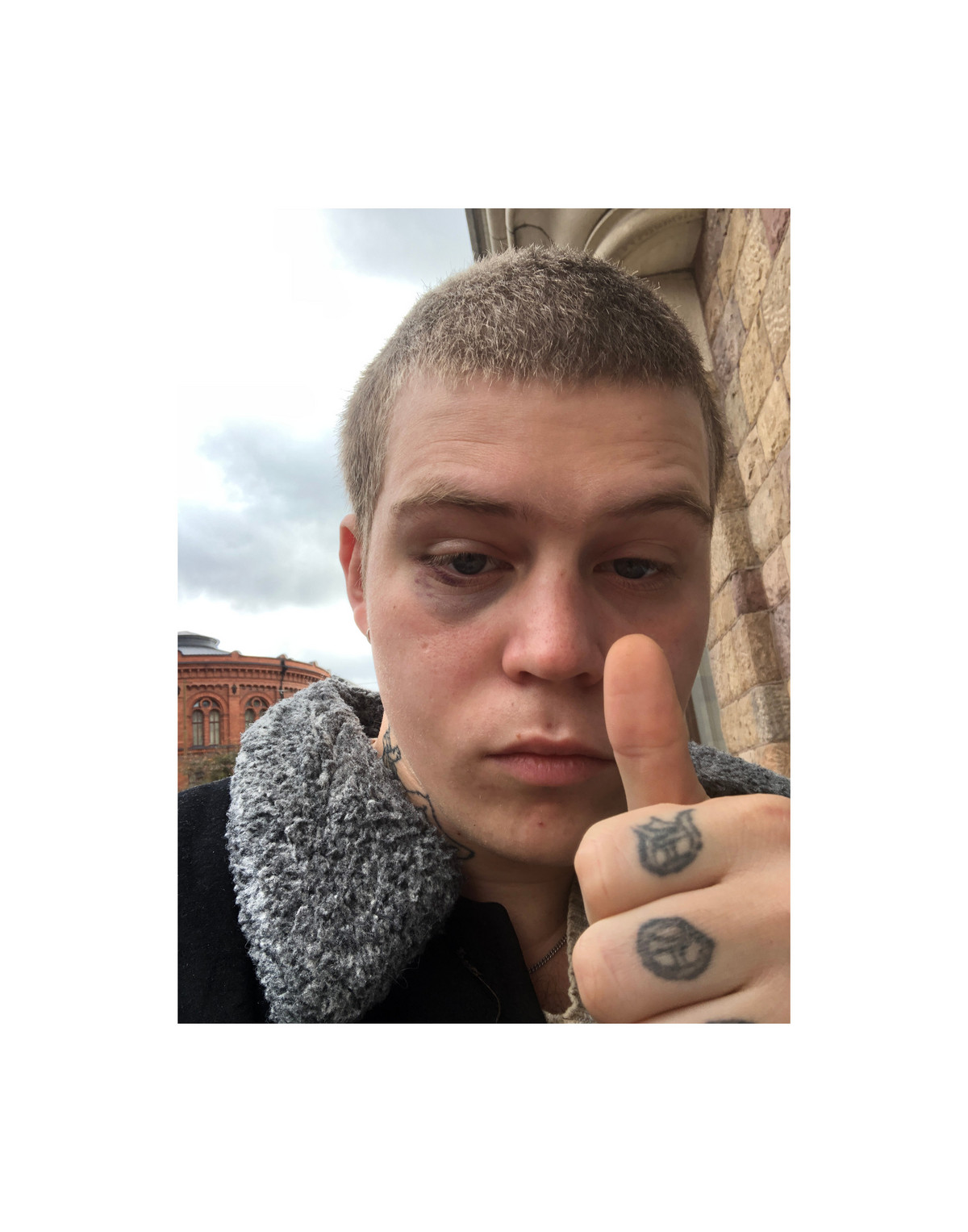
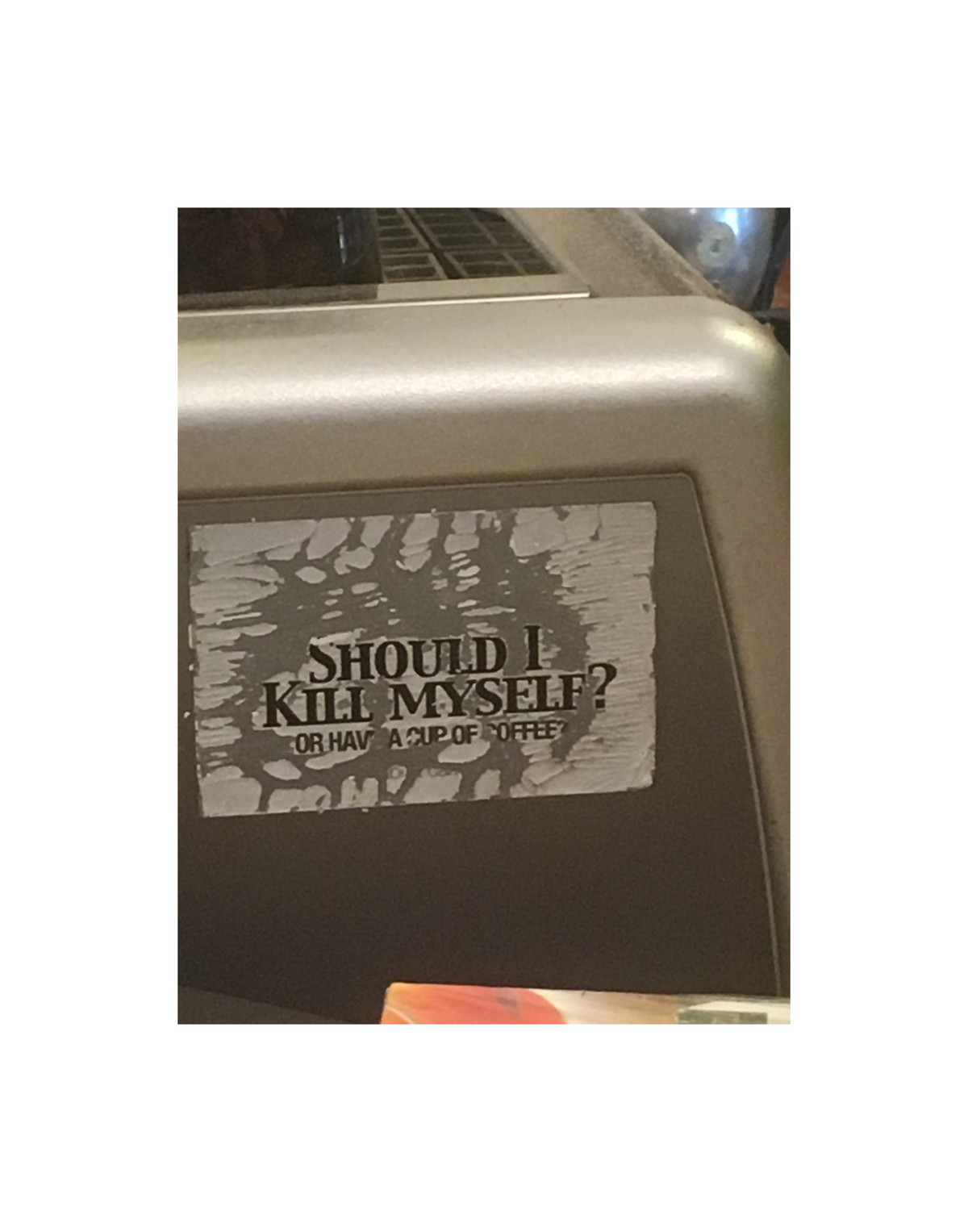
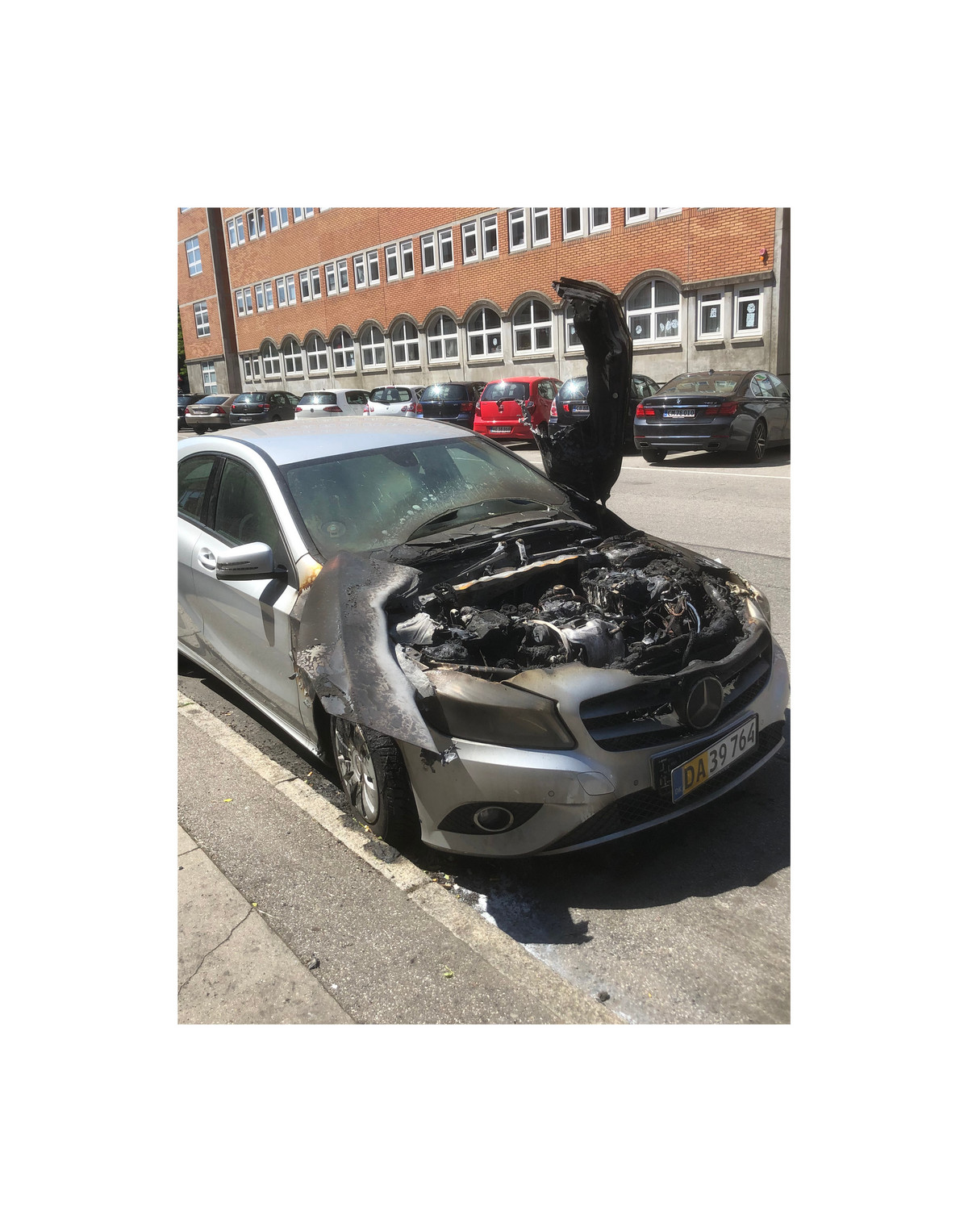
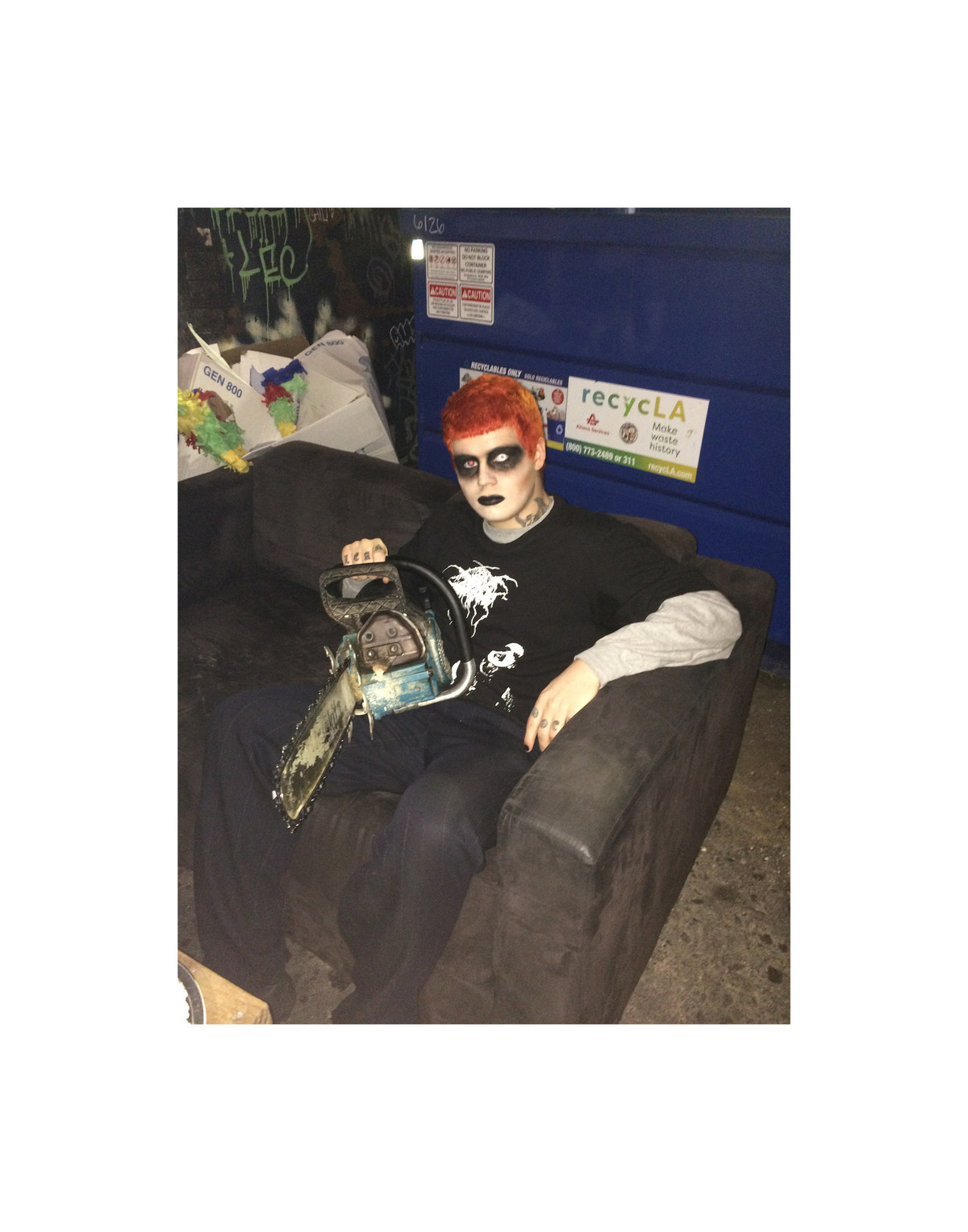
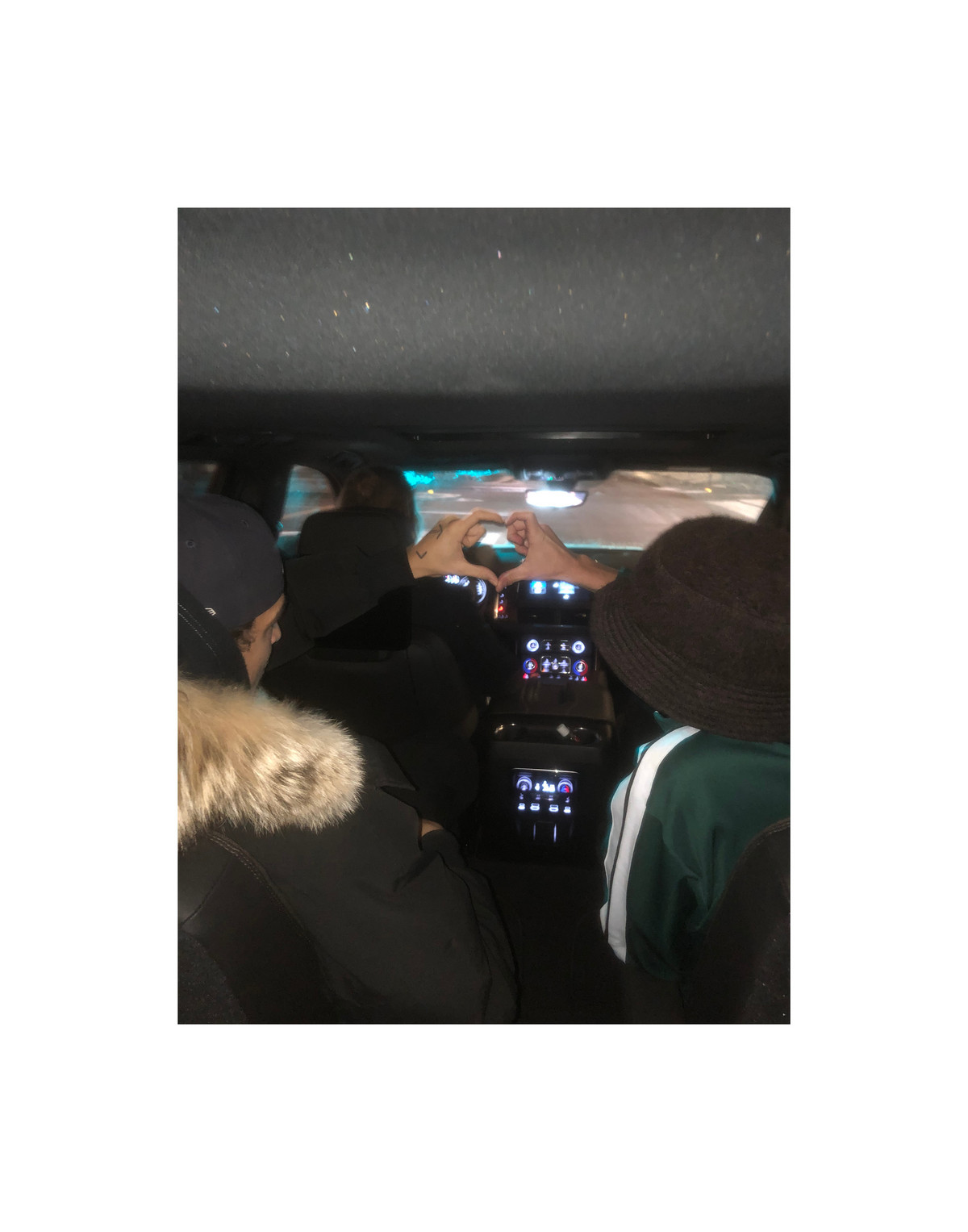
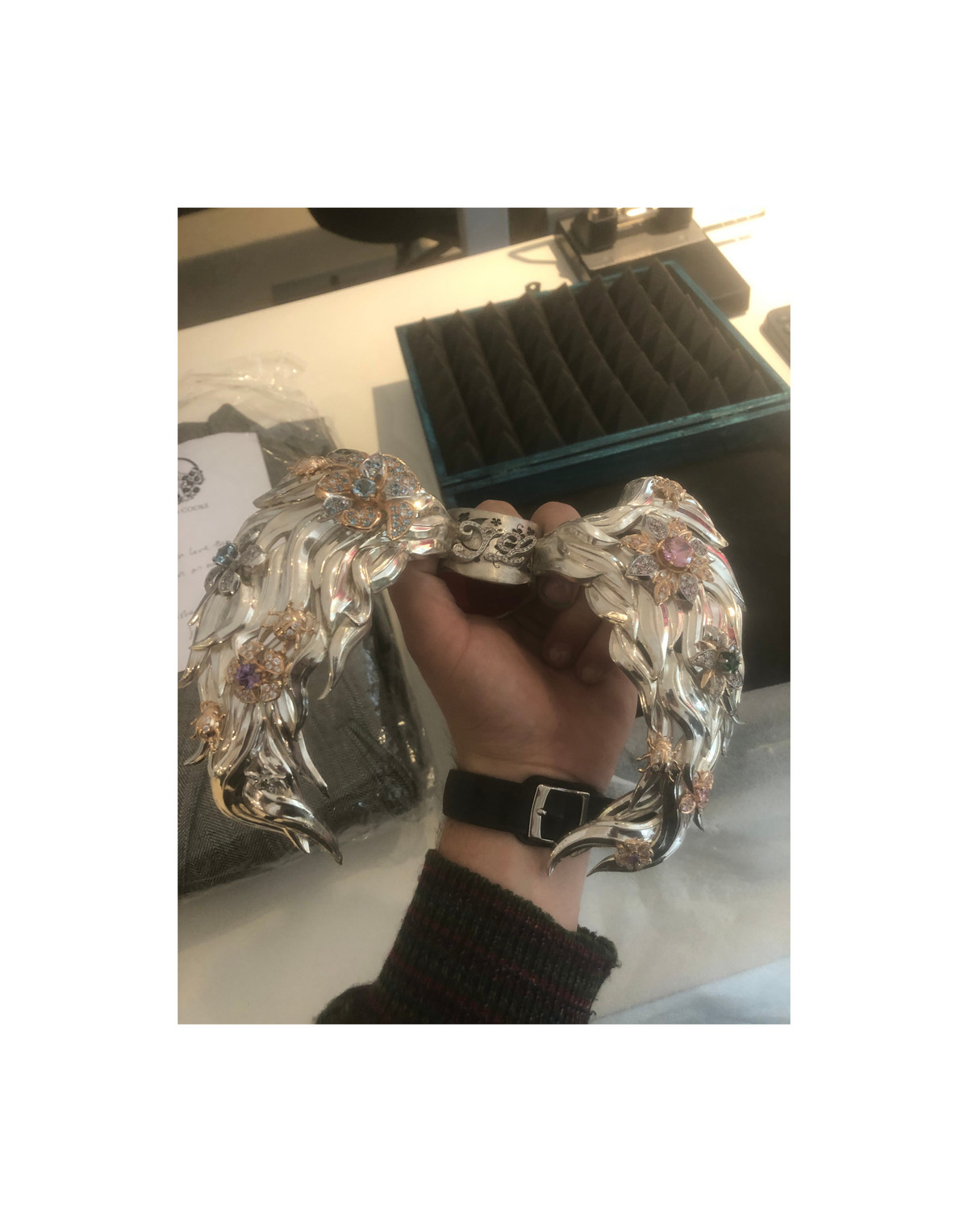
Preview some of the images from 256 GB below.