PRESENTE CONTINUO: the intimate ties between then&now

Starting May 30, PRESENTE CONTINUO will be available to purchase on presentecontinuo.com, cpcompany.com, and at the C.P. Company flagship store in Milan, Corso Matteotti 7.
Stay informed on our latest news!

Starting May 30, PRESENTE CONTINUO will be available to purchase on presentecontinuo.com, cpcompany.com, and at the C.P. Company flagship store in Milan, Corso Matteotti 7.

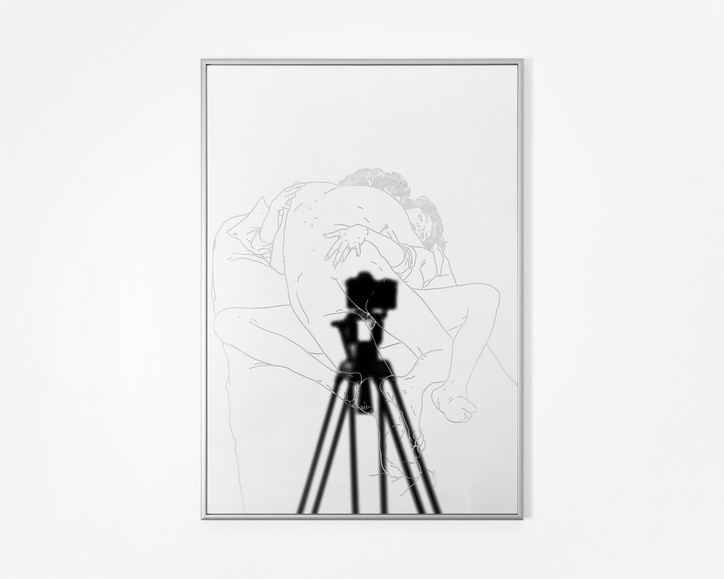
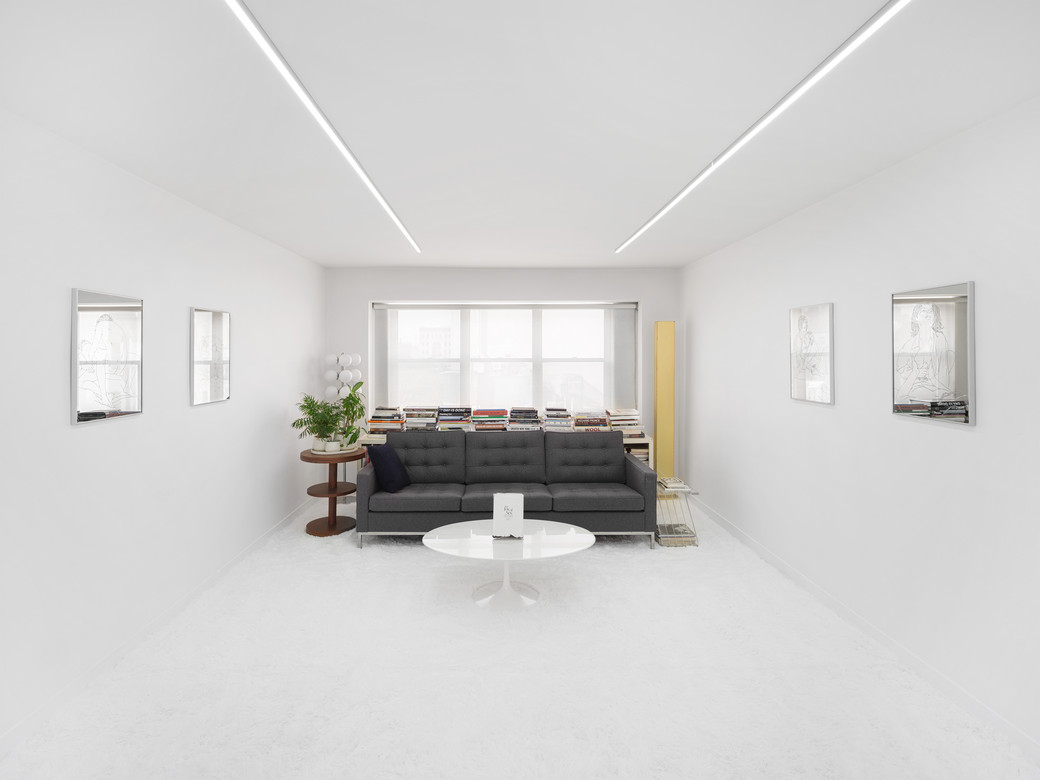
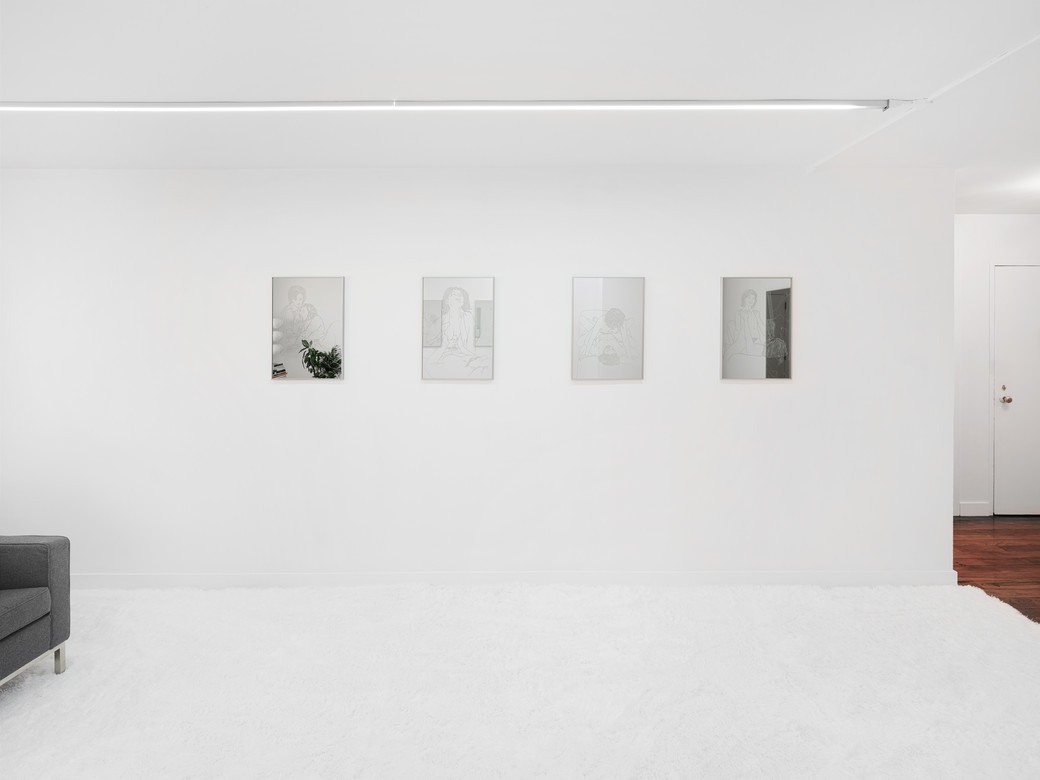
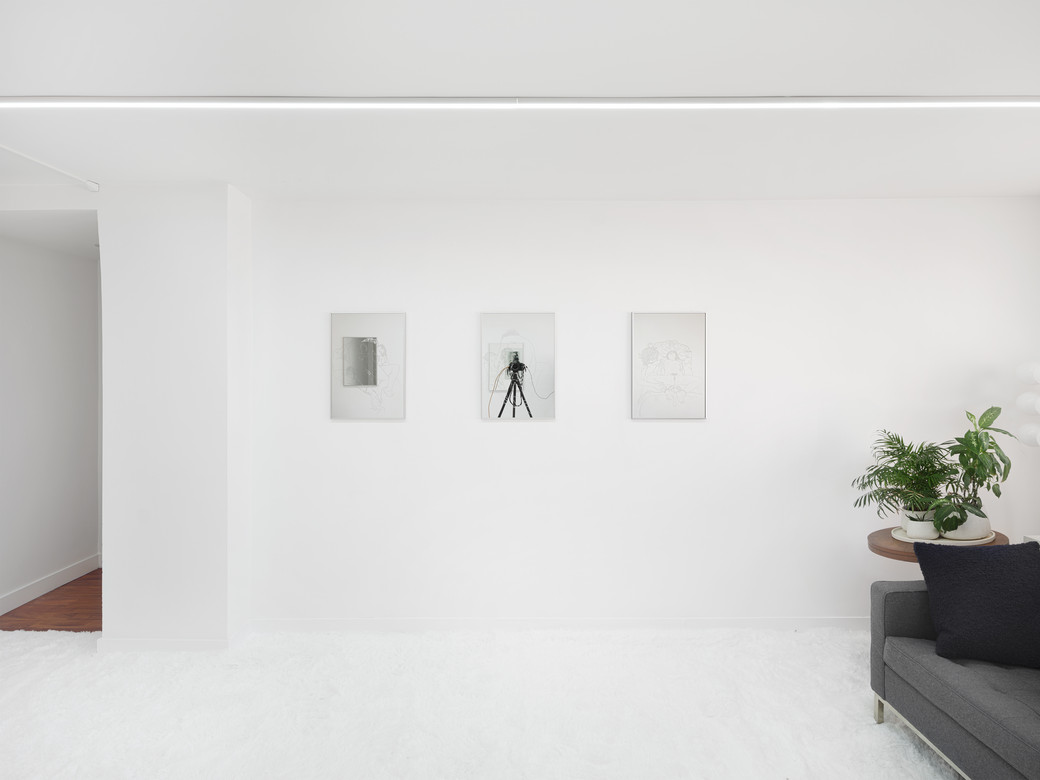
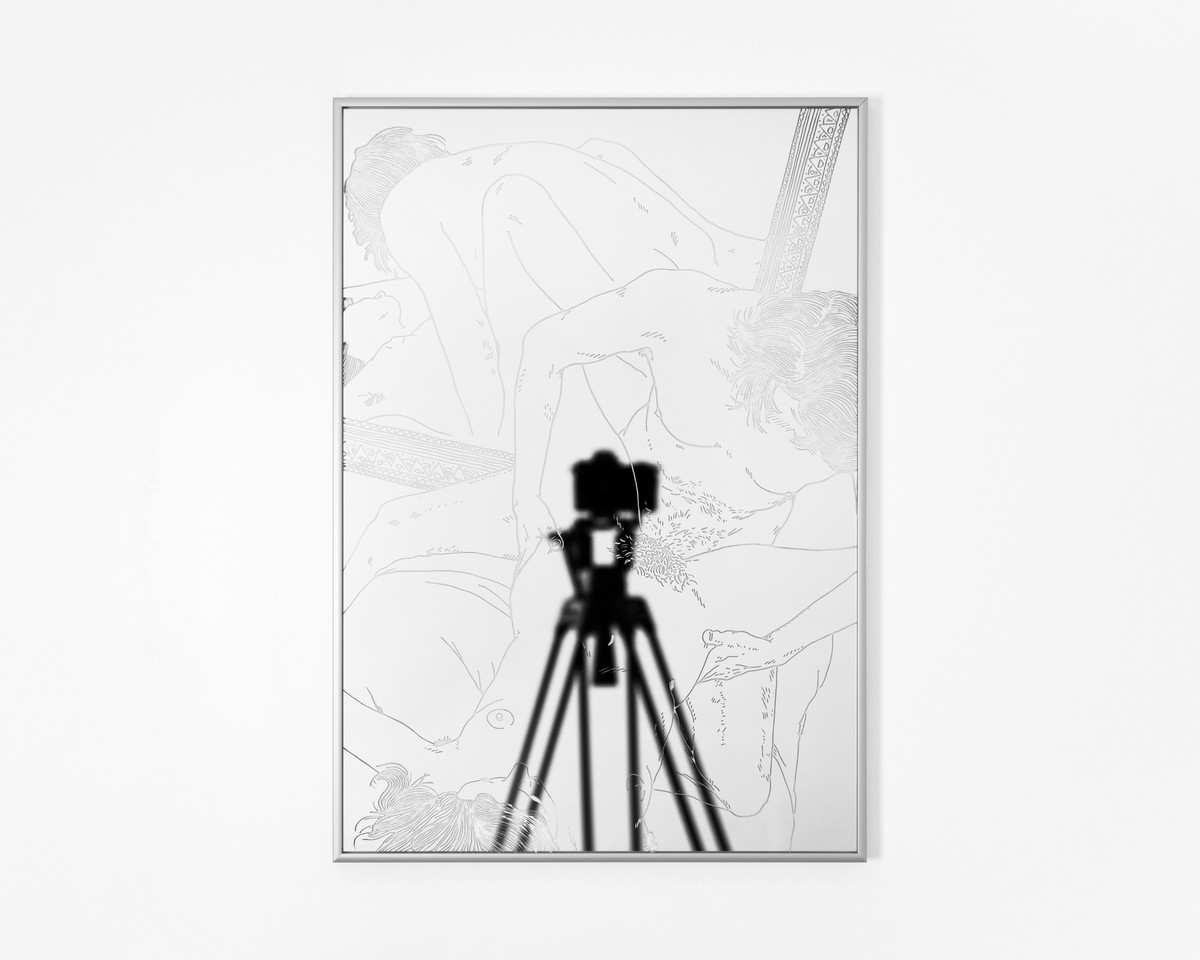
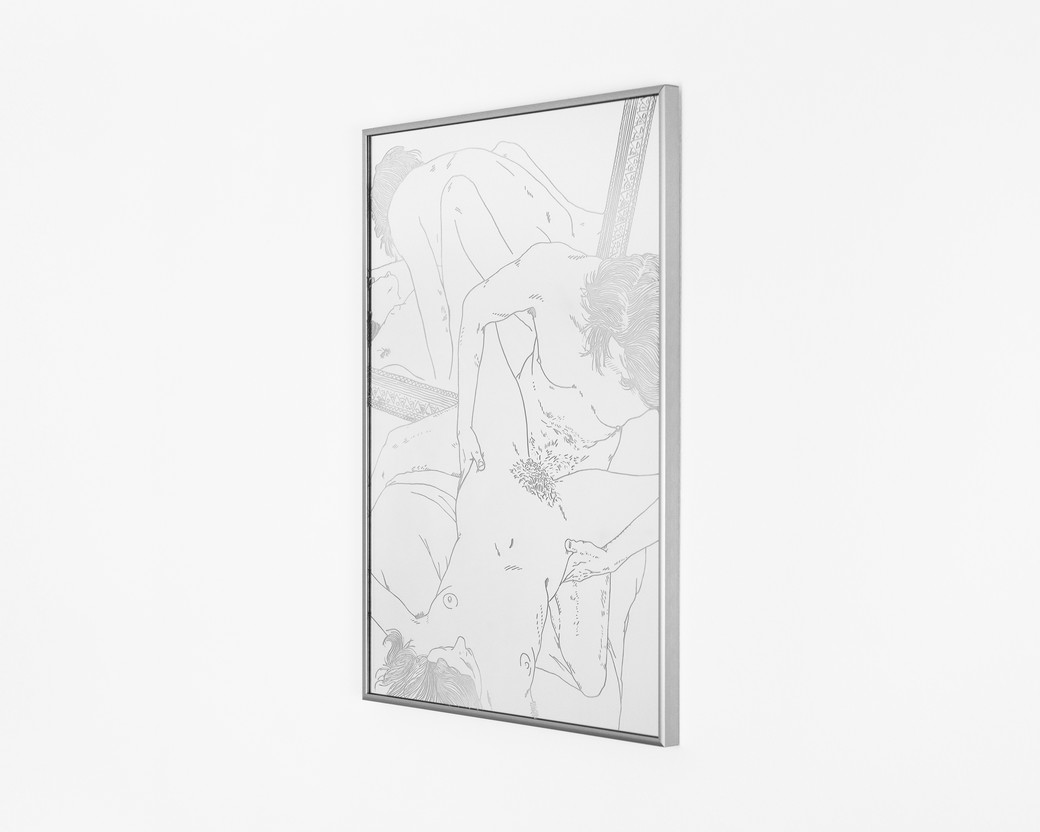
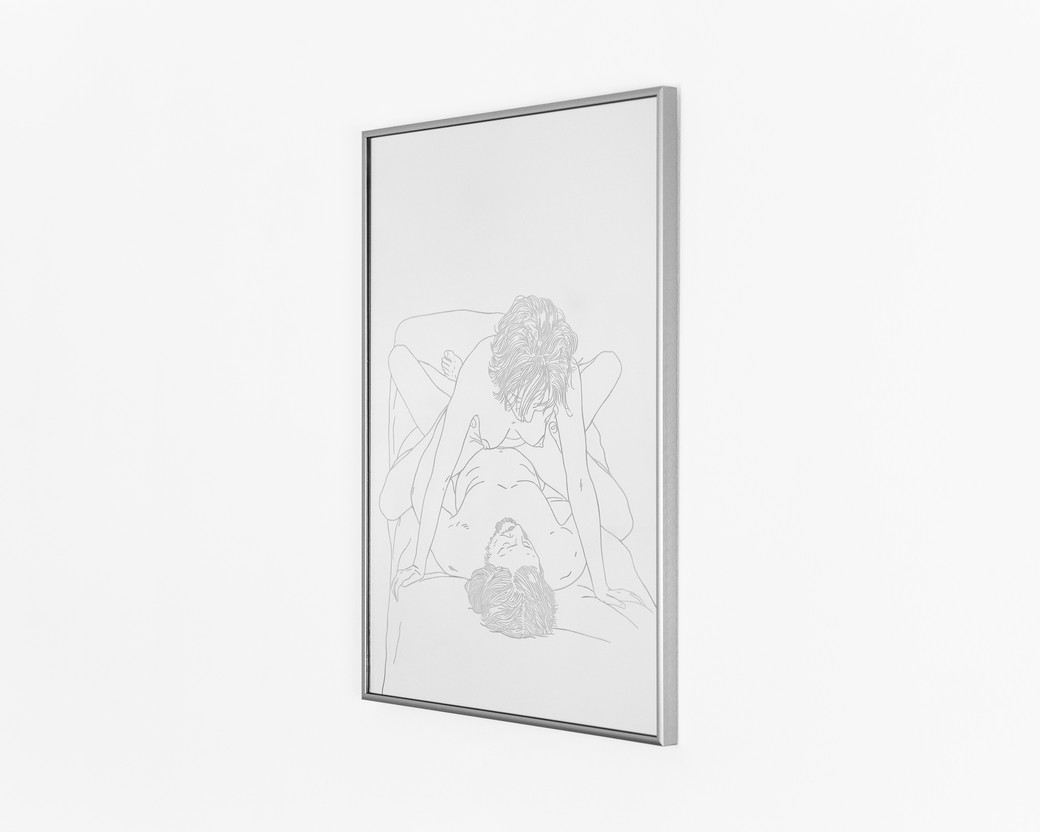
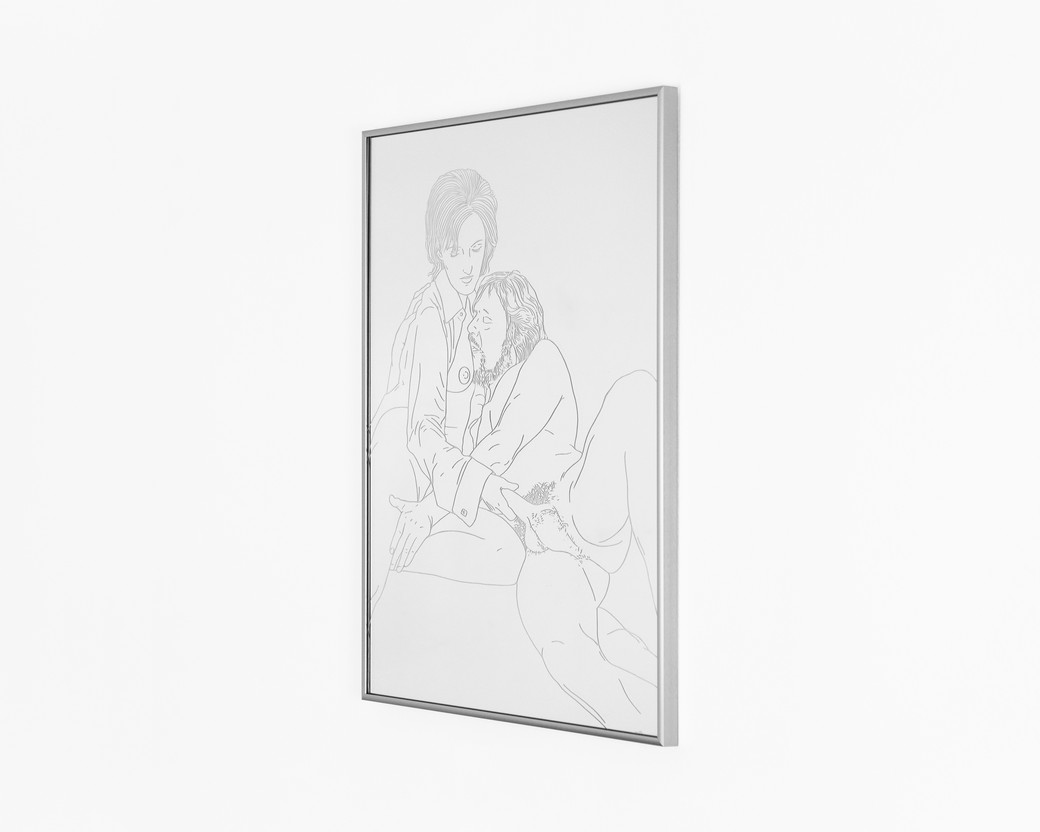
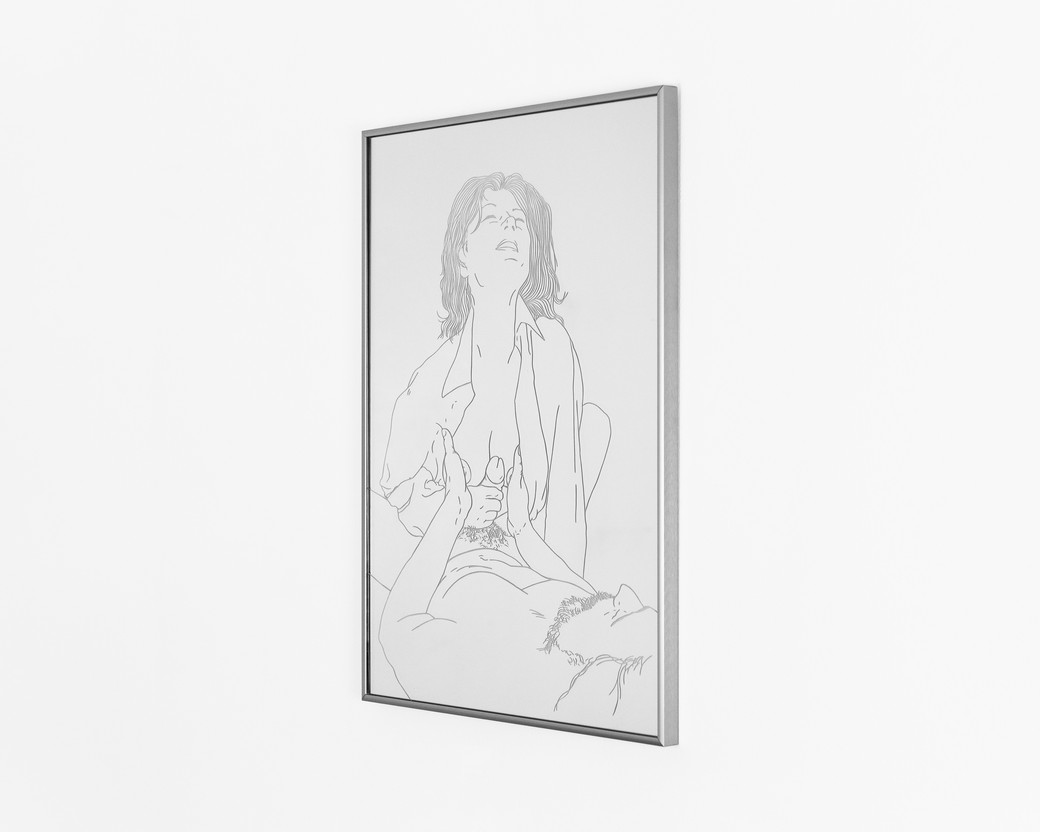
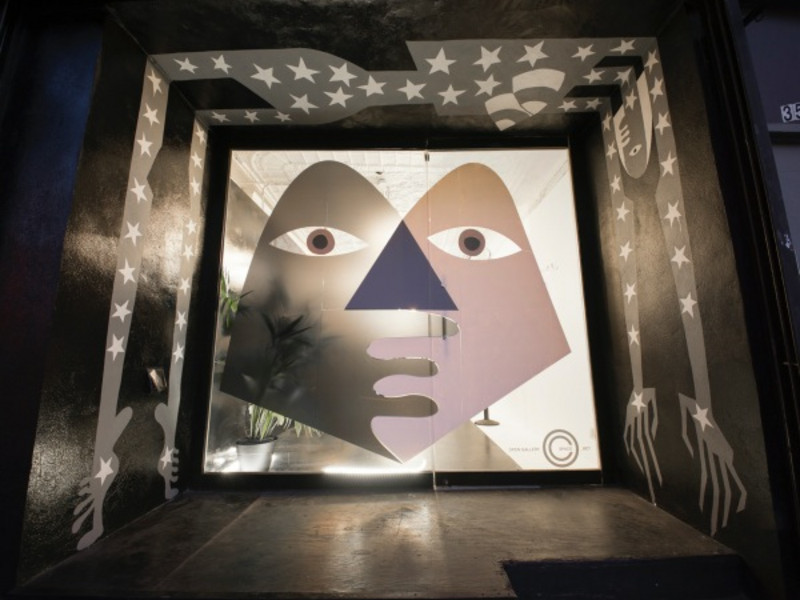
Partial undress in required to enter The Meeting, where a pile of shoes greets visitors, as Bennett has installed a white wall-to-wall shag carpet in the apartment’s living room to accompany what is presumably the gallerist’s furniture: a grey mid-century couch, a stack of art books, and a circular white coffee table on which The Joy of Sex is displayed for visitors to peruse—all so aptly suited not only to the era of the book’s publication but to the form and function of Bennett’s work. After taking off your own shoes and sliding across the soft carpet in socks, you’ll find yourself caught in the reflection of eight mirrors, each etched with a drawing inspired by the publication’s illustrations.
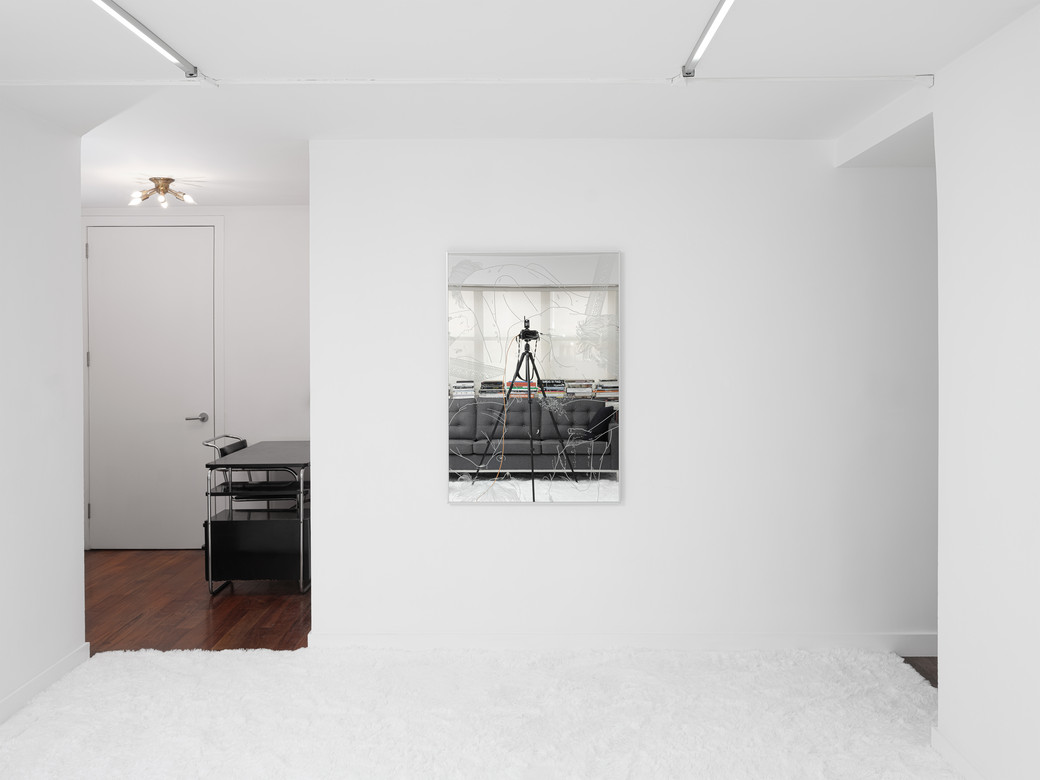
Given the content of the drawings, their re-presentation as mirrors—particularly the largest of the group which pictures a couple copulating on the floor in front of a full length mirror—recalls a view one might encounter in a bedroom outfitted with mirrored sliding closet doors. I used to think that such fixtures were the epitome of a tacky aspirational middle class, installed in apartment buildings with dirty beige carpeting and linoleum countertops for people deprived of good taste or self respect.
A mirror in this context seemed, to me, equivalent to Le Corbusier’s Unité d’habitation apartment building in Firminy where highly streamlined spaces for an efficient existence proved widely out of touch for the low income demographic that they were built for. Excess belongings, veritable garbage, piled up on the balconies when the individuals that inhabited this modernist building couldn’t afford or maintain the curated lifestyle and Platonic ideal that Le Corbusier believed would simplify their economic and domestic lives.
Mirrored doors, across from one’s bed, seemed to perpetuate the same false promise. Instead of picturing a refined existence, and an effortlessly, permanently sexy self, these doors would inevitably reflect back at the individual the overflowing stuff of their unmanicured existence—piles of clothes, unhoused makeup and toiletries, a stray condom wrapper—and the various bodily experiences that we deny experiencing, even to ourselves.
But I recently stayed in a beautiful apartment, admittedly beyond my means, that had mirrored closet doors across from the bed—and there is now nothing I enjoy more. Bennett’s work only serves to compound this realization. His drawings, like The Joy of Sex, outline various positions and are titled accordingly: frontal, hand work, matrimonial, breasts. While none are remotely surprising—I’m sure any and all teenagers have encountered far more explicit content—they are, simply put, satisfying: bestowing upon the viewer the opportunity to see into the private lives and behaviors of other people, to take stock of what was once societally believed to push the boundaries of “normal” fetishization.
On opposite walls a series of three and four sequences unfold across the mirrors, one picturing a man on top largely obscuring the woman beneath, and concluding, somewhat unexpectedly, given the rather, let’s say, tame nature of the positions, in bondage; and the other chronicling the woman’s “hand work.” Her eyes are at first closed, but in the final image as she rides her partner, his hands on her breasts, she makes eye contact not with him but with us, the onlooker. It is this moment, and this sequence, more than the others, that engenders a visceral experience.
Many female friends have recounted to me an out of body experience during sex, whereby it is not so much their partner but themselves that they fantasize about. At the opening, which proved ripe for admissions of both exceptional and traumatic sexual experiences, a friend recounted an encounter with a too short, excessively hairy man in a hotel room with a mirror on every surface including the ceiling. When I inquired how this could have possibly been “some of the best sex of her life” given her description of the man and decor, she clarified “I only watched myself.”
A sexual experience, any experience, in front of a mirror becomes a performance, in much the same way that an experience in front of a camera becomes a performance, irregardless of an audience. The photographic documentation of Bennett’s exhibition that pictures a frontal view of the works includes a reflection of the camera on a tripod such that it simultaneously becomes an avatar for the voyeur and a threat of your own capture as a participant.
Despite the absence of the camera in the moment of viewing, we anticipate its existence, not only evidenced by our own instinct to take a picture, but by our bodies, which intuitively alter their behaviors to account for the voyeur’s eye. Echoing this phenomenon, the press release sites Jean-Paul Sartre’s “Being and Nothingness,” wherein the author describes the realization that he is being watched while looking through a keyhole at a couple having sex: “When I am aware that someone else is watching me, I experience a transformation. I am no longer simply a being-in-the-world, freely exploring the environment; I am now a being-for-others. I feel myself pinned down by their gaze, transformed from subject to object, as though their perception of me has defined me.” I would extrapolate this for the present to say that we know we are always being watched and, in a culture that privileges images over experiences, we intuitively perform for the phantom camera.
In the second episode of Sex and the City, Carrie’s artist friend, Barkley takes the most pride not in his paintings but the nonconsensual videos he records of his sexual exploits with models. Carrie, and most people, find the practice horrifying, Samantha finds it thrilling and endeavors for the rest of the episode to sleep with him so that she might too be secretly recorded and thus validated as “as beautiful as any model.” She makes it into bed with Barkley, but when she remarks about the absence of a camera, he says he only tapes models, though eventually consents to make an exception. So as the little red light turns on, Samantha turns her attention to the camera and makes eye contact with us, the viewer.
Samantha’s performance—like my friend’s and, I would assume, that of most women—is not so much for men, but for herself. The men are there, yes, we need them to complete the fantasy, but ultimately we are most turned on by ourselves. The anticipation and desire for one’s own image encapsulated by this scene seems like the logical evolution of Lacan’s mirror stage, which asserts that around six months old a child can first recognize themselves as an object in a mirror as opposed to fragmented collection of experiences. The ensuing self-alienation unlocks a libidinal desire. It is, you could say, objects rather than subjects that turn us on. Samatha is most compelled by her own objectification, so is my friend, and, admittedly, so am I.


Bennett has explored a similar binary prior in a video titled Subjects and Objects (2022) wherein found footage chronicles a wide range of instances in which people have developed emotional attachments to objects: falling in love and, even, expressing a desire to make love to them. While he examines in particular the affective presence we project onto objects and their ensuing double ontology as both inanimate stuff and pseudo-sentient characters, when considered in conjunction with Lacan’s mirror stage and the fact that we must all confront our own objecthood, the emotional attachment to objects exhibited by the individuals in Bennett’s video becomes far less surprising or abnormal. In many ways their attachments are no different than our own—we all love objects.
If The Joy of Sex was once evidence of a sexual revolution, it seems almost fitting, whether intentional or not, that Bennett chose some of the most tame illustrations at his disposal. A reflection perhaps of our present, as author and former sex worker Charlotte Shane writes in a recent essay in ArtReview that "We may dwell in a pervert’s paradise," referring to the proliferation of content at our disposal: OnlyFans accounts, dating apps like Feeld and Grindr, endless free porn, "but no one invokes the specter of sexual revolution or utopia, not anymore. We venture few dreams for the future, erotic or otherwise." What was once explicit may now be banal, but that doesn't mean that we live in a more sexually liberated world: Shane chronicles the criminalization and curtailing of sexual and reproductive rights as well as the personal and activist responses to these trends that increasingly take the form of abstinence and, in the case of the 4B movement, swearing off men altogether.
My own sexual fantasies are politically incorrect. But while men might welcome this, women recoil, so I have become loath to share such thoughts openly and am by extension a participant in our collective self-censorship. Bennett's work may be further evidence of this inward turn: the sex we have is more often than not with ourselves and our reflections, whether that be in the blacks of your computer screen while on PornHub, or the mirror across from your bed. What he provides though, via his doubly ontological gambit—that reprises a device for introspection as one of public performance and consumption—is a prompt and maybe, even, an invitation.

Henry Whitford: Did both of you guys grow up in New Jersey?
Ben Krueger: We did. I grew up in South Orange.
Doug Krueger: I grew up in Union.
Doug, when did the photography thing begin for you? Was it something that started at the beginning of your life or did it come around later?
DK: My father would shoot while growing up, definitely more casually than anything else. The camera he would shoot on was a Canon A1 which would eventually end up in my hands at the age of 13 or 14 years old. My passion eventually started growing at the age of 21 when I picked up a Yashica T4 brand new from the store. I still have that camera. I still shoot that camera. Henry: Did you get this Camera in the city? Doug: Yeah I got that in New York City. I was working in New York City at the time and I dropped by at a local camera shop afterwork. Picked up the Yashica and the guy working behind the counter said to me, “Oh, you're going to love this camera”. From there, what really kicked me into high gear was when I took the camera on my honeymoon and I came back after going to Portugal and I was showing some of my photos to some family members, and they said, “Wow you really have something. You really have an eye.” From there, after getting some encouragement the photography took off, and then I was full force into it.
That's great. I'm always curious to hear about the story where someone's interest in photography begins. I have another question for Doug, when you were first shooting, were you doing the processing yourself?
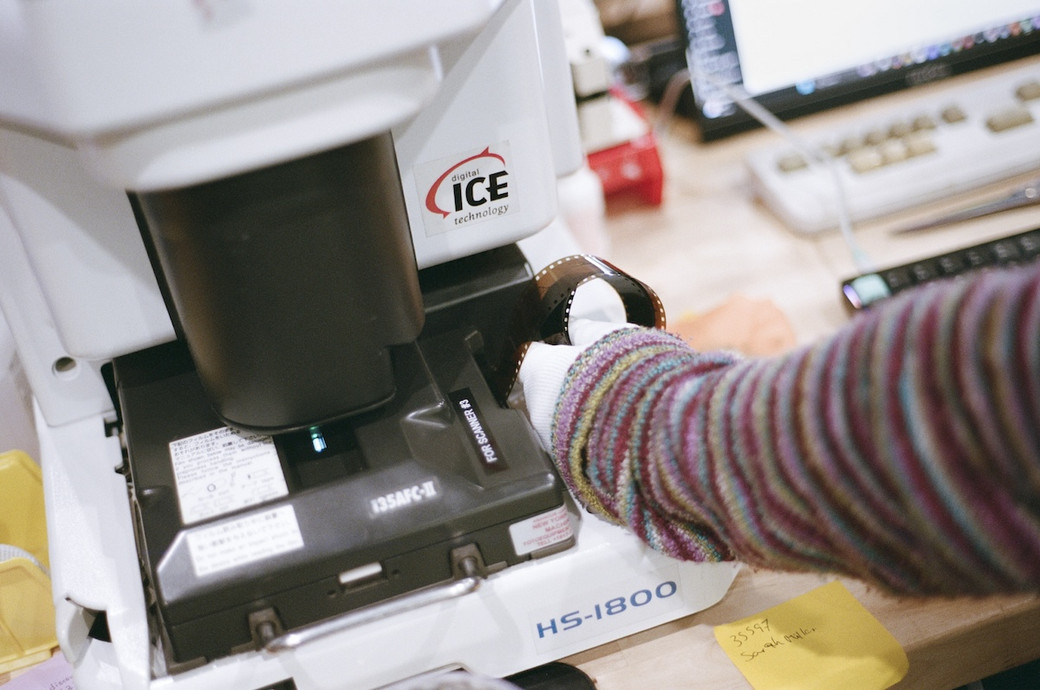
DK: No, I was just going to the local labs at the time. For me, it was more about the shooting and that whole process of creativity on that side. Back at that point in my life I never had any interest in the processing side of photography. It was not until this journey of starting our own lab began when someone had moved us to go buy this machinery for processing did we start figuring this shit out.

And what was that learning curve like when you guys dove into the processing side of the film world?
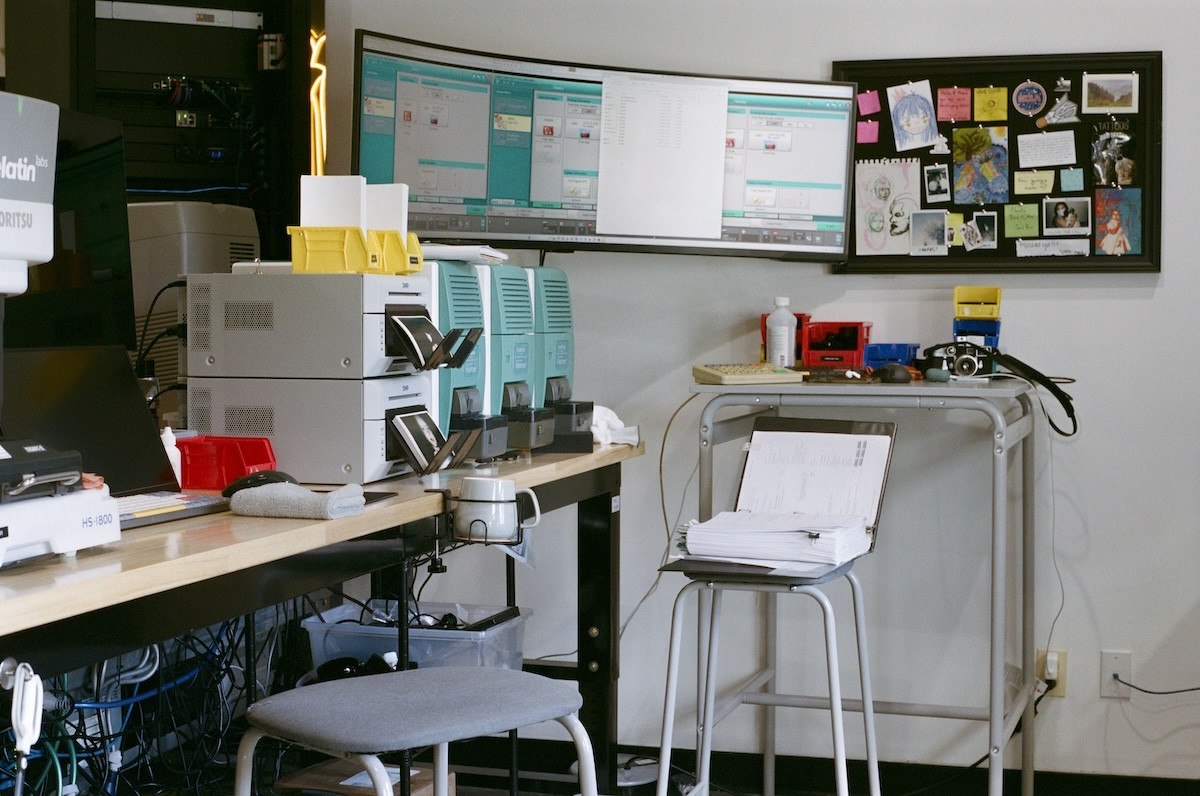
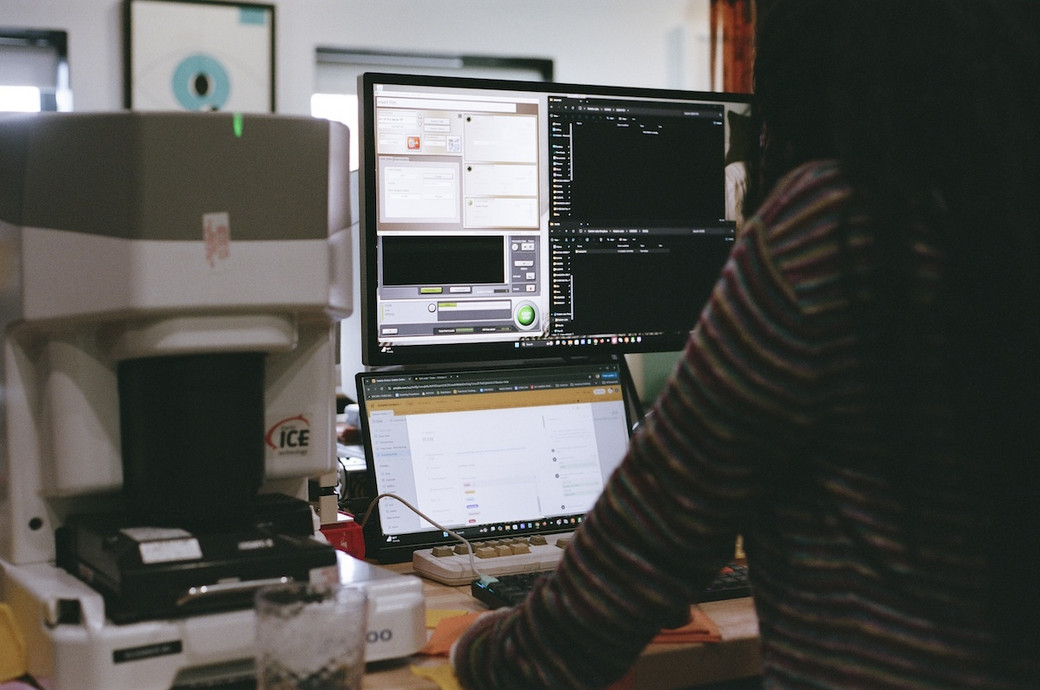
DK: So what happened was in our naivety, We found a place, I guess, online that was selling machinery. And then, Ben and I were like, Oh, it'd be cool if we could just come home and start scanning our own photos and do our own process.
BK: We also wanted to archive all the negatives that Doug had shot over his lifetime. But, also I was really getting into analog about nine years ago. Once I was on the analog train again, then Doug got back on the analog train after being on the digital train for so long. But with wanting to scan negatives of photos taken of our family we wanted to get the best possible scans possible. Which pushed us even more to take on this challenge of doing it ourselves because the majority consumer options were average. Which brought us down the rabbit hole of trying to find out what is available that is lab grade and can get the job done.
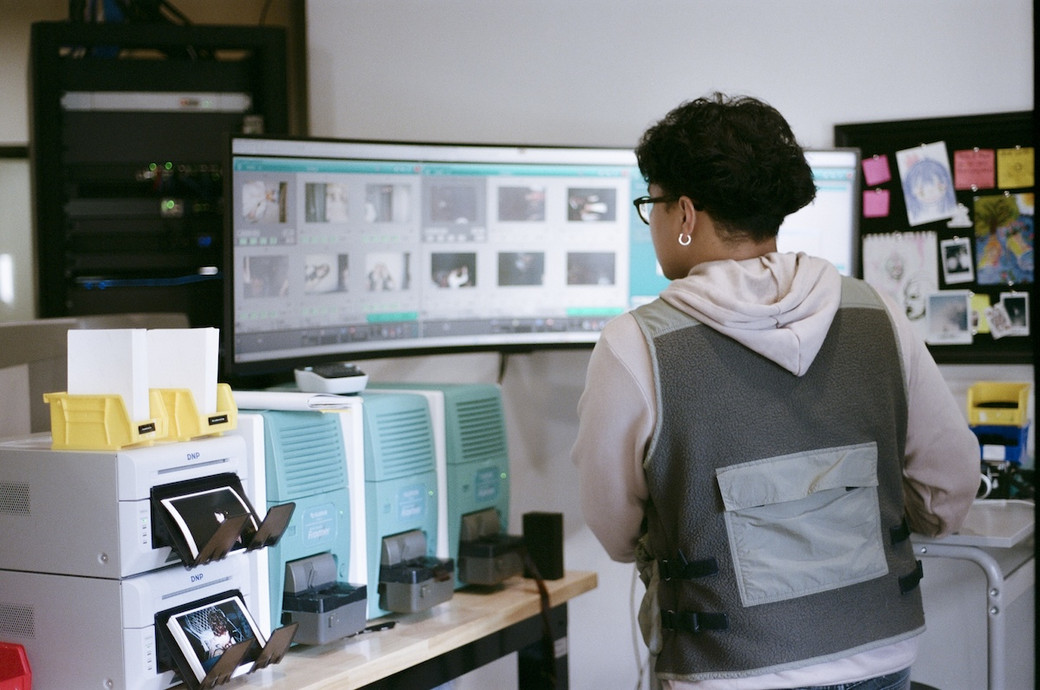
DK: The rabbit hole was that we found a wholesaler where we bought our first Noritsu scanner, the 600. While we were at the same place we went into the back and saw all these machines for developing film. The seller was trying to get us to buy one of the developing machines but we decided to hold out to see how the scanning would work out.
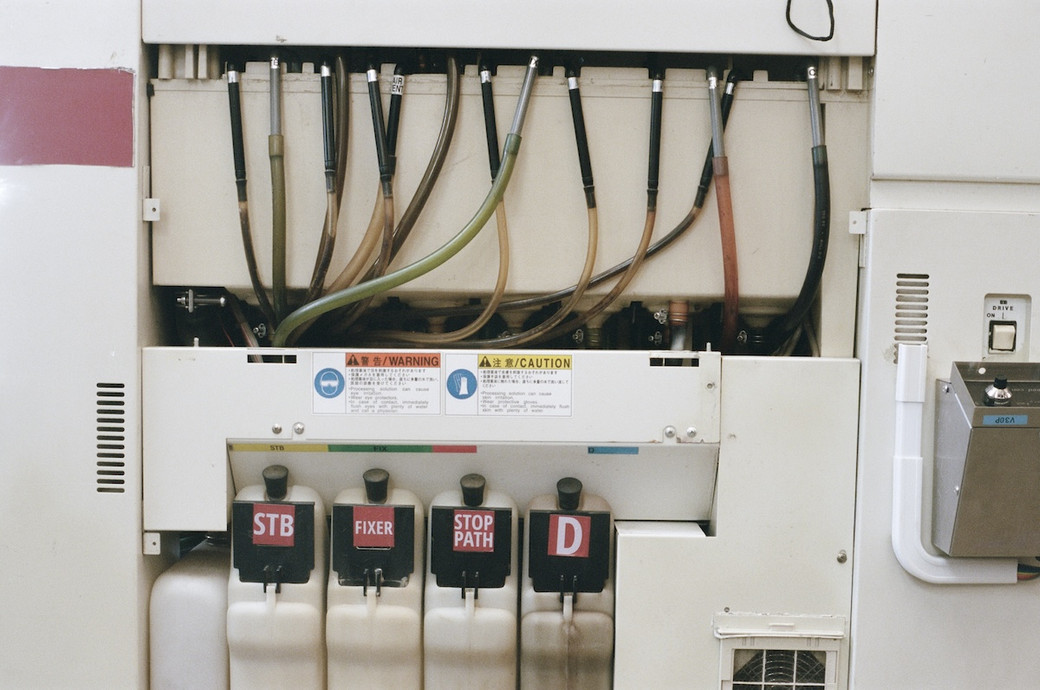
DK: Then a couple of months pass by and we think to ourselves that it would be kind of cool to own a developing machine. We're like, we could probably get it down to the basement. We go back, we pick up the machine. The guy brings it to us. Unfortunately, the machine had to get down these very steep basement stairs from the outside of the house. It's a 200-pound plus object. It's awkward. You don't want to break it. You don't want to drop it. Well, needless to say, we got it down there. But, man, let me tell you something. It was really like sweat and bullets getting this thing down.
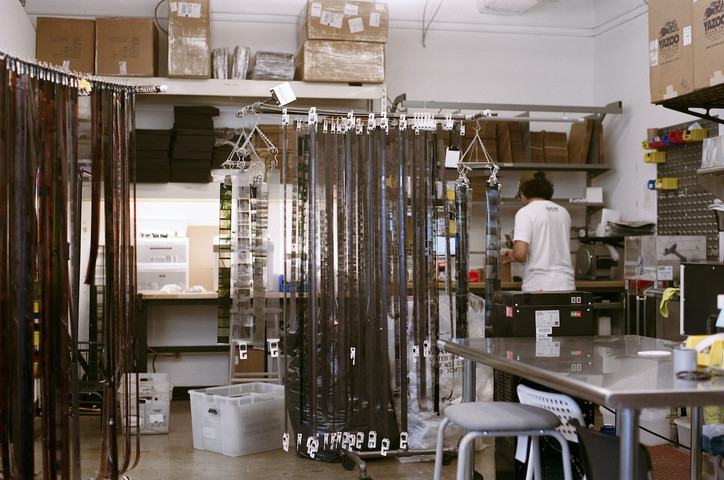
BK: It took three months to get the machine running. Three whole months to get the machine running. I think that really, looking back on this, it's a testament to just how difficult it is still. There's no college degree in starting a photo lab. There's a lot of the legacy people that were involved in that industry that either want nothing to do with it anymore or have since passed because that was another era. There's a lot of figuring it out for yourself. But then there's the real issue because you have to constantly run the machine. Which we weren't really made aware until the thing was operational that you got to run the machine. At that time with that machine, it was at least 10 rolls a day, which we weren't shooting that much between the two of us.
BK: What we resorted to was reaching out to friends and asking them if they need any development done. And that's how the ball started rolling. During this time I was being trained to create what's called a flat scan and something that you can work from the negative that you can tailor and edit to your liking. I was doing that, and we were dialing in our machines that way, and people started to take note of that when we were sharing our work on Instagram and when we were talking to friends. It was this moment where people were recognizing that there was something different going on here and we began operating as a pop up.


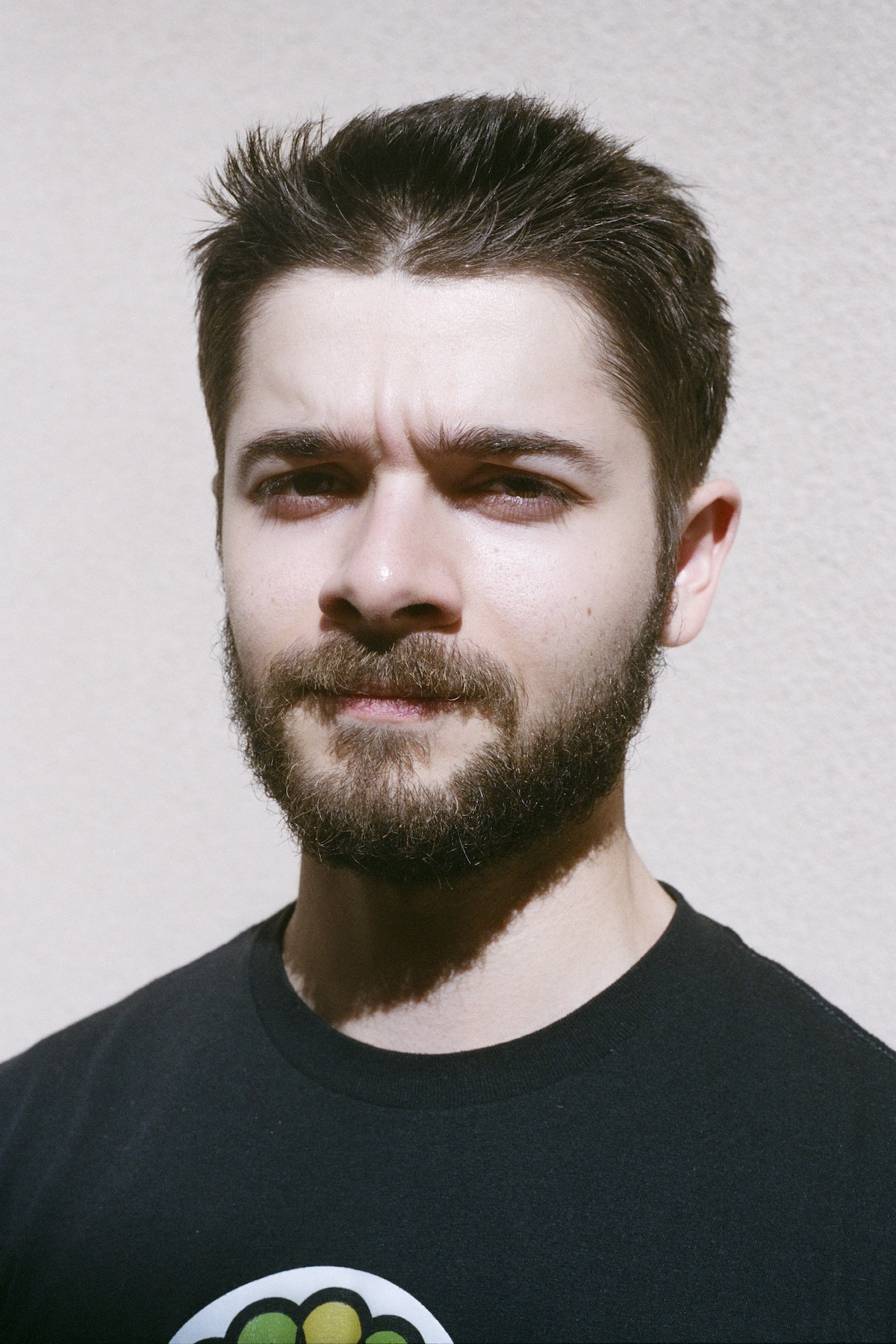
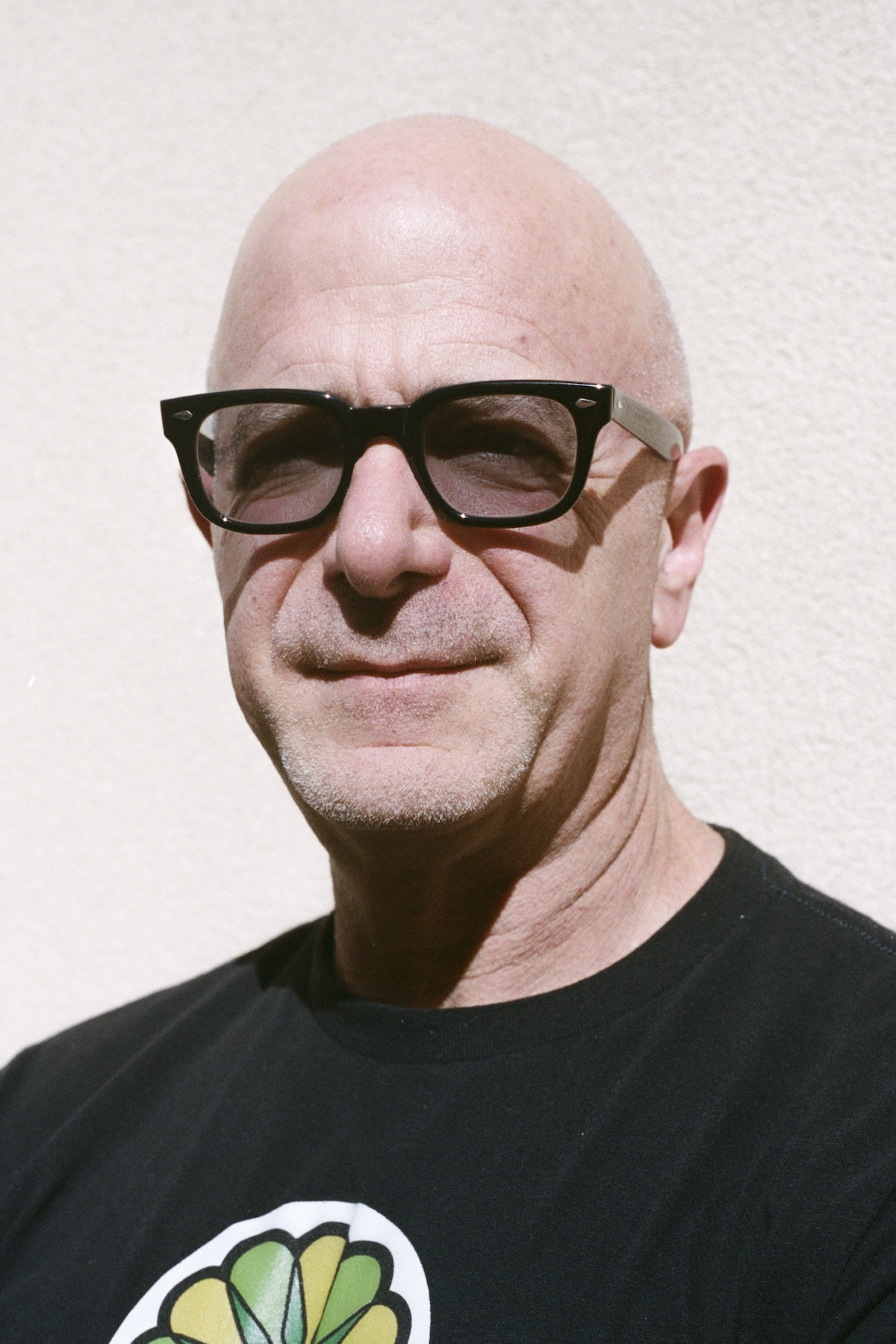
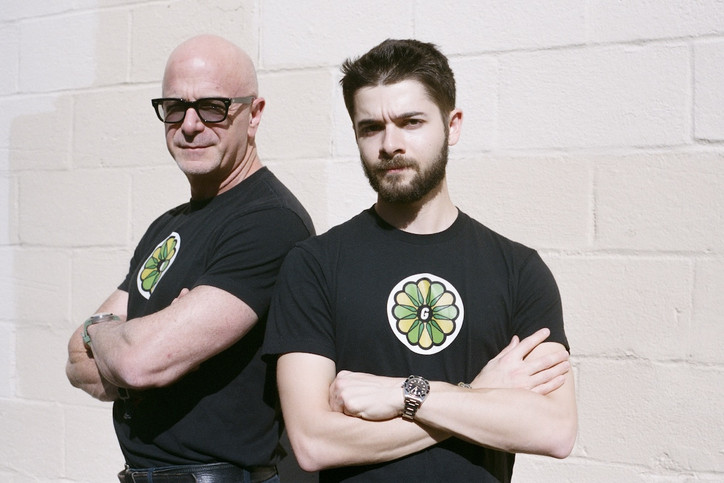
LEFT: Ben Krueger, RIGHT: Doug Krueger

How long were you guys operating from the basement?
BK: We started the summer of 2018 which is when we got the developing machine working. That's really where we consider the beginning of this because the scanner was the year before, but it wasn't really with any idea of creating a complete lab service. Then in December 2018 we started operating as a pop up. In short, we were in the basement from 2018 to February or January of 2020.
What was it like operating from the family’s basement?
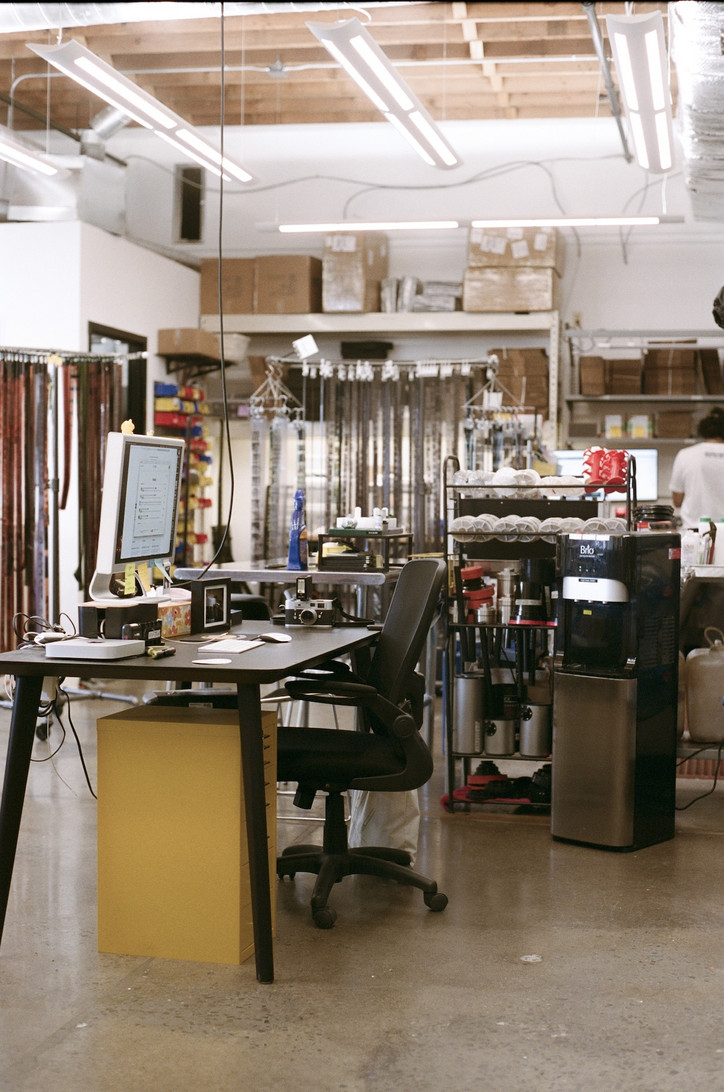
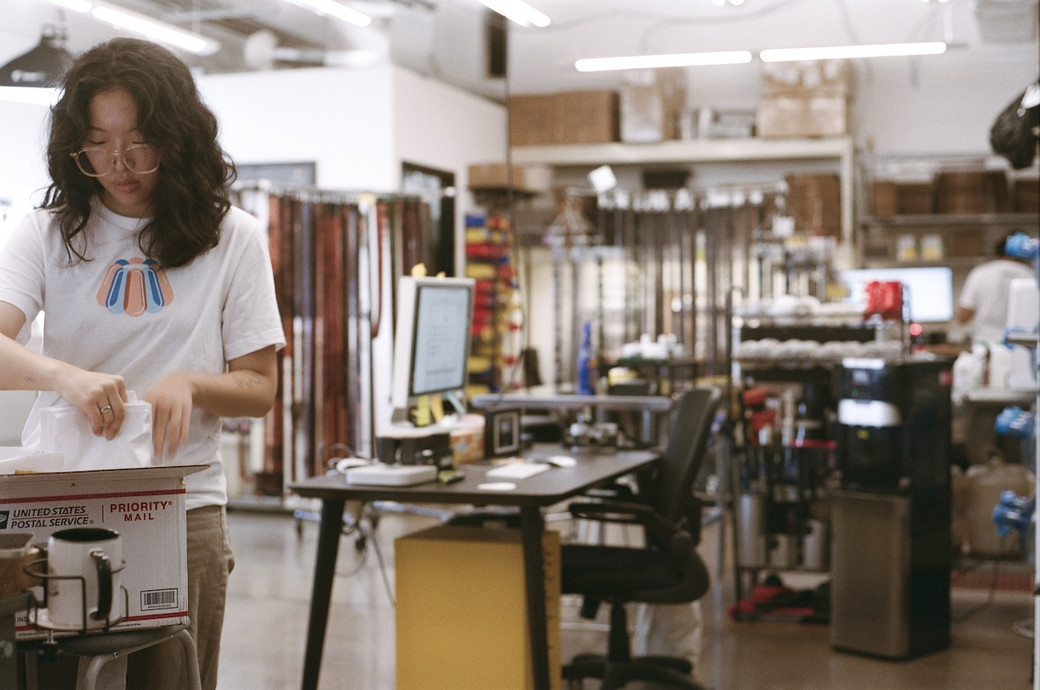
BK: We had two machines at that point down there. We had probably about four or even five people working at a time on rotation besides us being managing the operation. The mail would come through the backyard, in these big bags and we would do this handoff in the backyard. Like a drug deal. It was a great place to kick things off. But once the fishbowl got bigger, so to speak, we really grew into that very quickly, and that's when we moved.
After you guys left the basement where did you move to?
BK: We moved just the town over to Maplewood. We moved into this really great commercial office building. Within a year of moving in I would say our team doubled. Then that's really when we could start growing things properly and taking it really seriously.


I saw on your website that you have dropboxes for film around NYC and even in Savannah, Georgia. I was wondering if you could elaborate on how these dropboxes function?
DK: The idea of the Dropbox is that we want to have a presence in neighborhoods. We want people to be able to feel like they don't have to ship their creative process. We want to simplify the process as much as possible. Also a part of our other ethos is collaborations. For example, in New York City, we have a drop box in a store called Knickerbocker.
BK: With Knickerbocker it's very cool because it is more of a human interaction that occurs because you go up to the counter and talk to one of their team members, and they then provide you with the envelope to put your film in. In a similar fashion to the way people mail into us, all they do is they just place their order on our website ahead of time, and then they just fill the envelope, write their name and order number, and they can be on their way.
Is there anything that you guys do to keep your prices affordable for your customers?
BK: I think we constantly are evaluating not only our process, but we're very much on the page of quality first. Then I think that the benefit of having our headquarters in New Jersey is that we can have more space and more equipment and at a fraction of the price that it would cost to be building in New York. That also is a key factor here that we are a New Jersey-based lab that can service the whole country, and that you can live anywhere, you can mail to us, you can drop off at a box. But our headquarters being in New Jersey, I think allows us to keep prices affordable, which is important in a world where film is not a necessarily affordable medium.
DK: By having New Jersey function as the main headquarters for the lab, we have been able to maintain competitive prices and keep a very high quality product. A product that is in our minds, but also in our customers' minds, one of the best.
What would you guys say is your favorite part of being in this business?
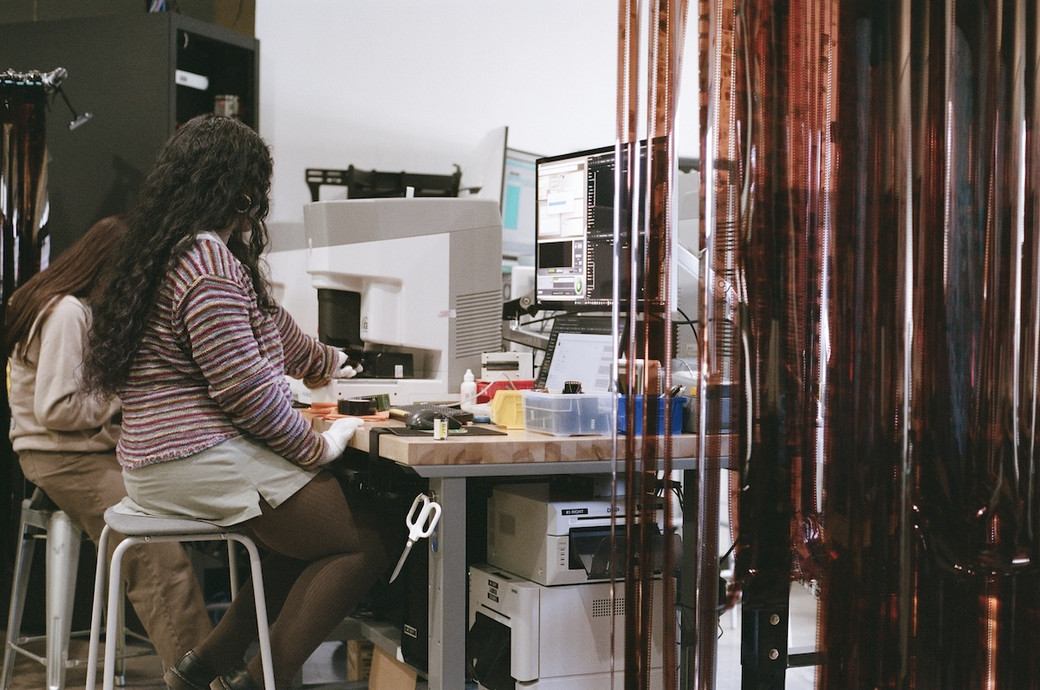
BK: For me there are a few things, one is I do enjoy working with our team. Our team is very passionate, and very committed to photography. Which is important to us because there is a connection that you can make to the quality of work someone will contribute to the team and the work that they're making themselves. We try to foster a creative environment for our time so that they improve their work and continue to work on personal projects. We conduct critiques where we talk about our work, and we always are interested in the latest developments in the community and in the industry.
DK: I will add to that. I have just three points. One is being in business with my son, so that would be the first. Working together, going through the creative process together to work and to grow Gelatin. Two I would say is community involvement. What I really love is the whole community of photographers and the privilege it is to know a lot of these photographers, which to me is very wonderful and exciting. The third would just be, really, at the end of the day, building a business. That, by the way, is really the icing.
I also understand you take a lot of orders via the mail. What is that process like of shipping negatives to Gelatin?
BK: Yeah. I mean, 90 % of the orders that we fulfill are mailed to us. And we have customers in all 50 states. So that's been amazing. This business model really started during the pandemic where a lot of labs were closed, but we were operating out of our basement. A lot of the same clients that were using us then, still to this day, send us film. And we are continuously working on making that process as stress free as possible. We have even developed a serial number system that allows us to give our customer updates on every stage of the developing process.
With this business model of receiving film via the mail, do you ever find yourself excited about the fact that you have the privilege to see photos from all around the country?
DK: I love it. I'm amazed by the passion and by the fact that people are still picking up a freaking analog device and choosing to spend more money. I'm touched by the fact that we are able to function as a central hub of where all this stuff is coming in and going out, and we're able to process all of this.
BK: I think that there's inspiration from getting work from customers and the community that's working with Gelatin. There's inspiration there for us to keep going and keep building. I hope that what we're doing is inspiring people to go out and shoot, and that by them shooting and sending their film to us, we then in turn are inspired to make that process better for them. I see people growing their communities, following their art, being a part of shows in the city. I think that that loops back to us and we say, wow!
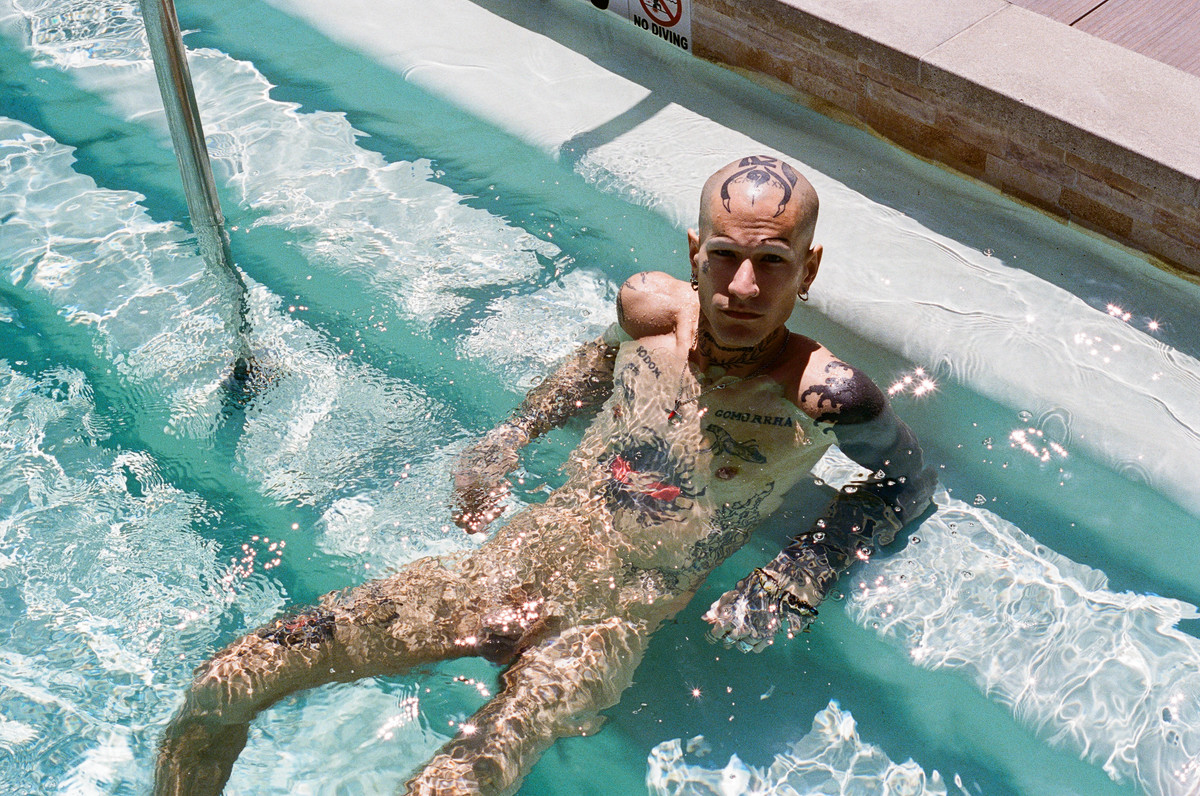
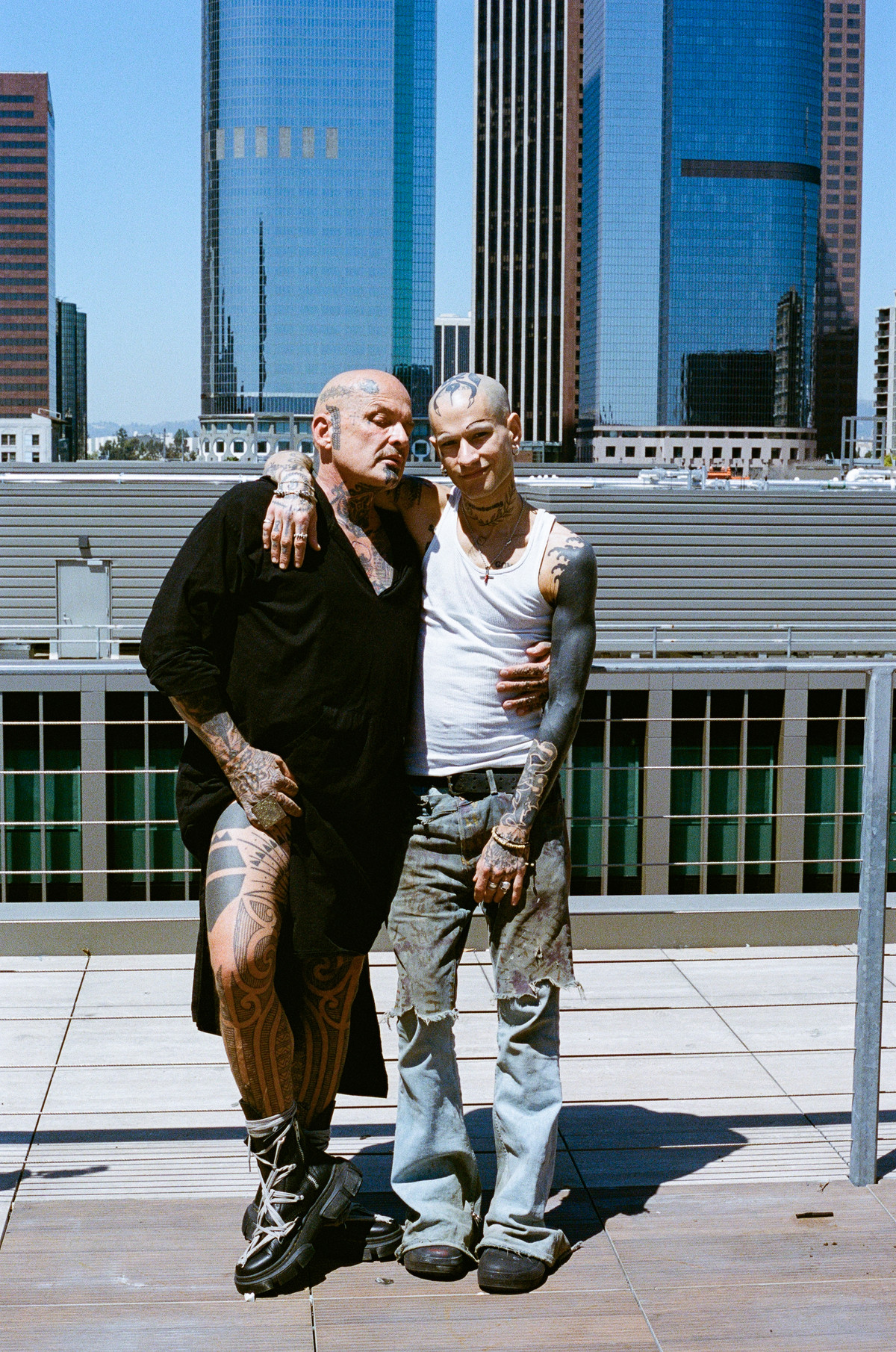
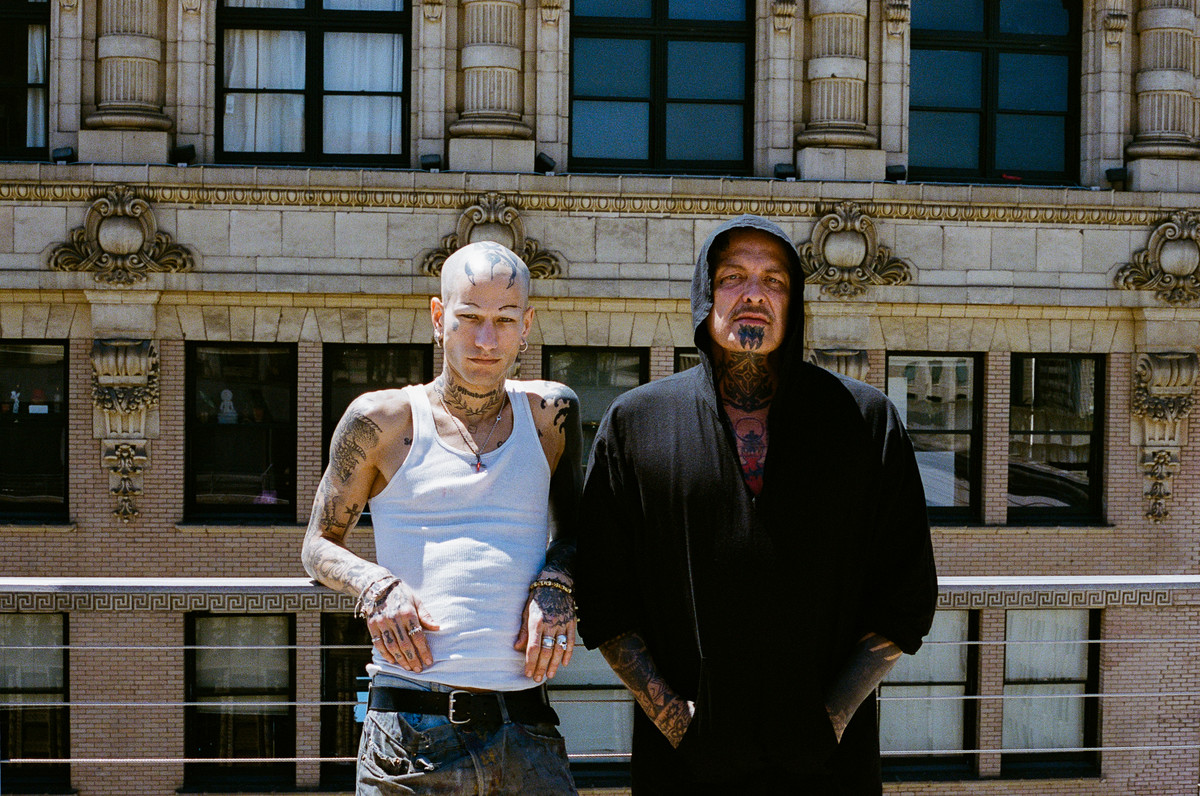
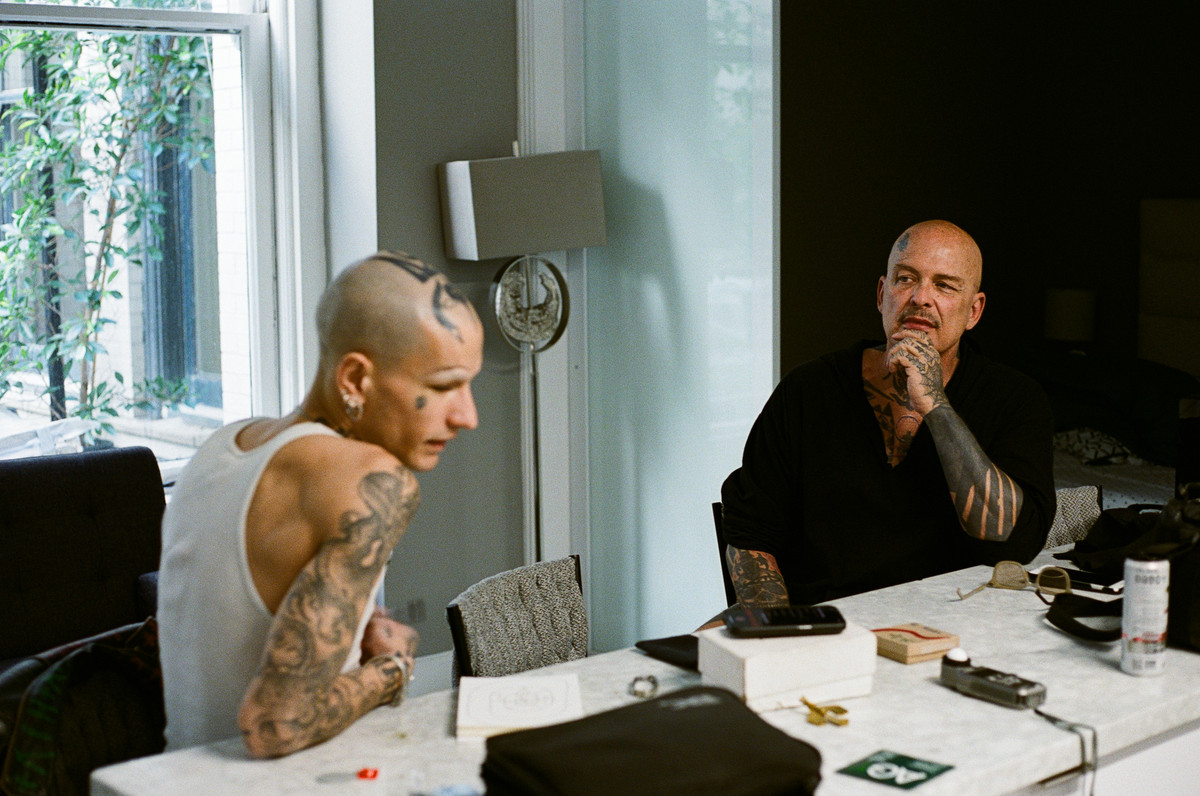
MCMLXXXV— Do you remember meeting on Instagram?
RON ATHEY— Yeah.
M — You DM’d me after I tagged you in some stories. It was the first time I came to L.A. I was at Akbar with Violet Chachki and Latex Lucifer, and our friend Mark Saldana was wearing this t-shirt with a quote from the British press saying: “Scots churchman slams sick HIV show. Bloody disgrace. Ex-Junkie who stabs himself with needles.” I had to post a picture, but I thought you were dead. I actually believed your pieces where you staged your own death.
When I found out you were alive and that it was actually you who messaged me and not just, like, the Ron Athey estate, I was so honored. So then I was like, okay, I'm coming back to LA. I have to meet him!
Can you describe that faked-death series a bit?
RA — In my performance work since 1990, I would display myself as dead—really, as a sexualized corpse, lying in state. I have an obsession with the miracle of incorruptible flesh and a metaphor for the living dead. Even the new work, “WILLENDORF, act two” is a riff on bejeweled catacomb saints.
M — Where will you perform it?
RA — I'll be bringing it to London soon. It’s based on a piece I made for Lee Bowery when he died called “The Trojan Whore.” Now I've brought it back as an even bigger lady in the BBL era. It's a fertility goddess for non-reproductive futurity, leaning into that Lee Edelman book, No Future: Queer Theory and the Death Drive, and thinking about why we got into such a big-ass-and-non-baby era. And the second part is inspired by Hyacinth, the catacomb saint, where I have people put jewelry on me, laid-in-state in a bed of viscera.
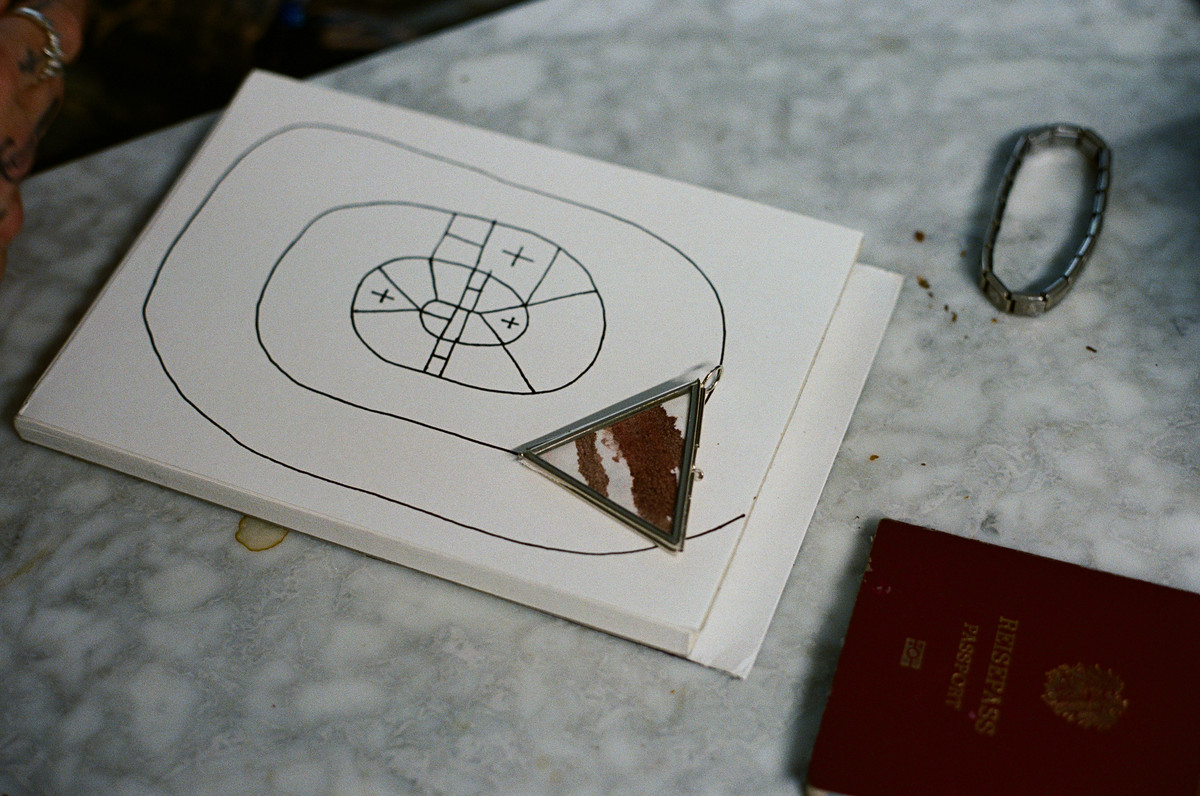
M — You gave me a relic with your HIV+ blood on it. What does that artifact mean nowadays when we have medications?
RA — Before it was literally a remnant of a living virus, and now it's of undetectable blood. Just like water from the Castalian Spring at the Oracle of Delphi still has a trace amount of psychedelics in it, my blood still has some remnants from 1986, when I was diagnosed.
How many years is that? Too many. Almost 40. Oh my God.
M — You must have had some crazy mutations in your body.


RA — Well, if there's anything to the theory of a weak strain, I think I must have had one. I was never sick sick. I just had complications. I had my spleen removed in like, 1990, because I was eating my platelets up and became a hemophiliac. But I never had low T-cells or pneumonia or anything like that.
But how old are you, and how long have you been positive?
M — I'm 34 and I have been positive for seven or eight years. I felt sick immediately, but I went to the doctor 76 hours later instead of 72. It was just too late for “the pill after”. I still didn't speak so much about being positive until the pandemic, which was when I started to research the history of the AIDS pandemic more and make paintings.
RA — I need to know more about you and your expression, through our generations’ gap! I only know that you DJ and make graphics with an HIV polemic. Morbidity, ostracization, endless big pharma (including Prep and Doxy Pep): how does your experience of HIV steer your work?
M — I was spiraling at home during the pandemic, which is how my HIV-spiral painting came into being: a visual representation of the mental process I was going through in that moment. And I had always made clothes. I always wanted to wear the yellow Star of David around my arm or have it sewn onto my clothes. My grandmother was in the Jewish resistance and ended up in Auschwitz, and I always took so much pride in her story and being a Jew in Europe after they tried to exterminate us.
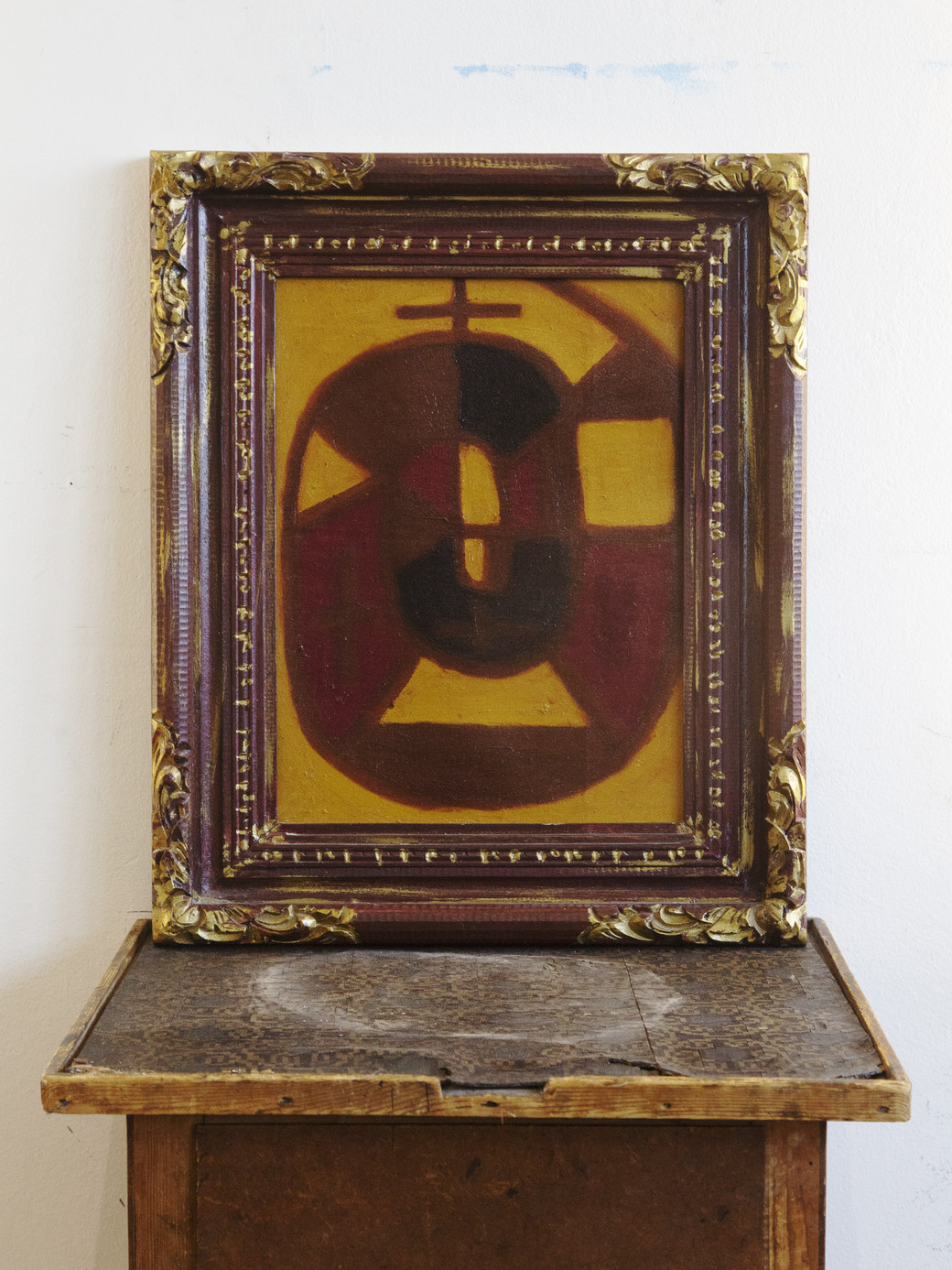
So my idea was to do the same with HIV by making these spirals and writing “HIV-plus” on clothes. And then I started to color in the spirals, and I was like, wow, it actually looks like a church window. So I got more and more into church references. I put two things together that seemed separate and they became one. I realized I could do the same with visuals that I did as a DJ.
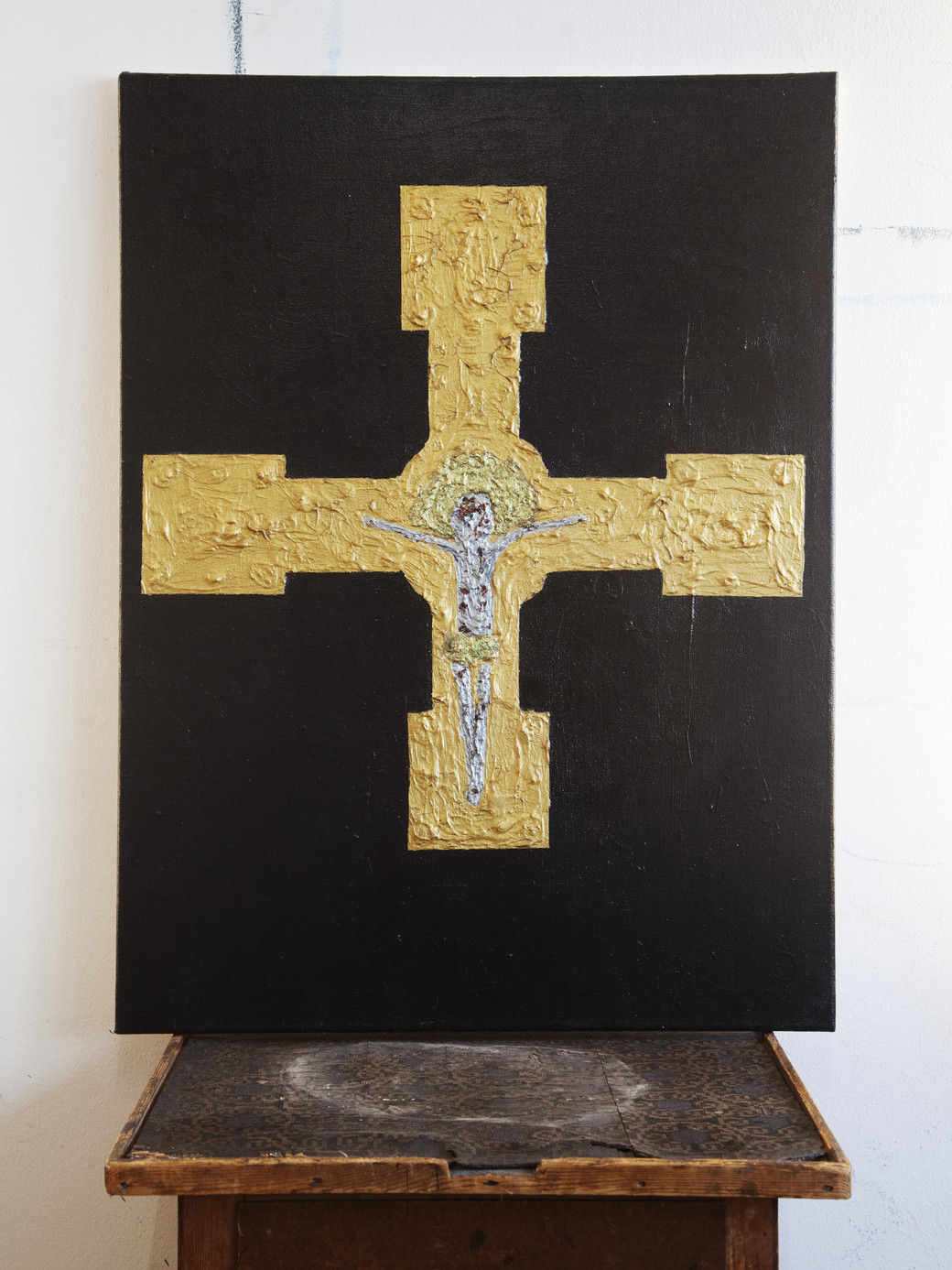
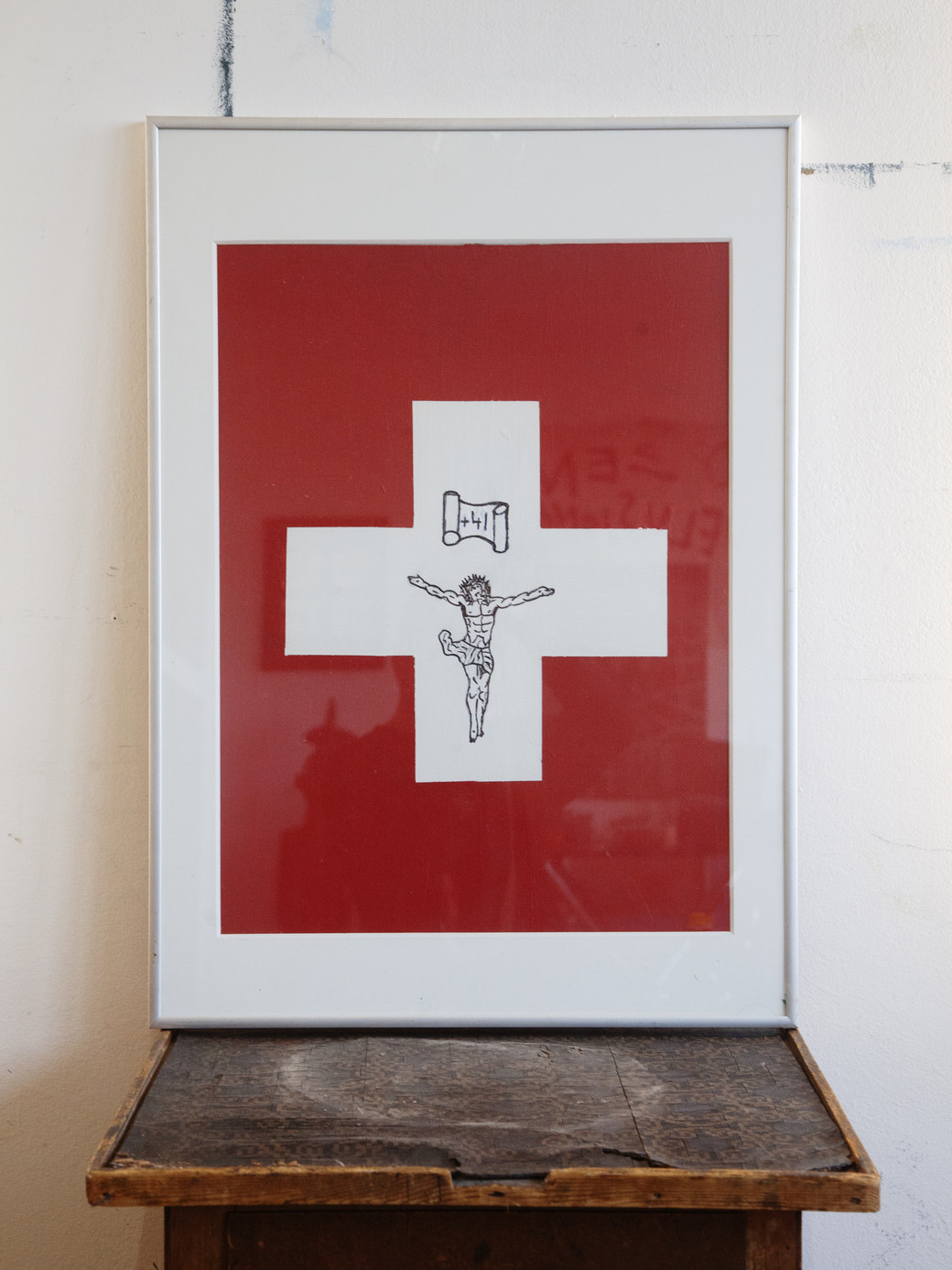
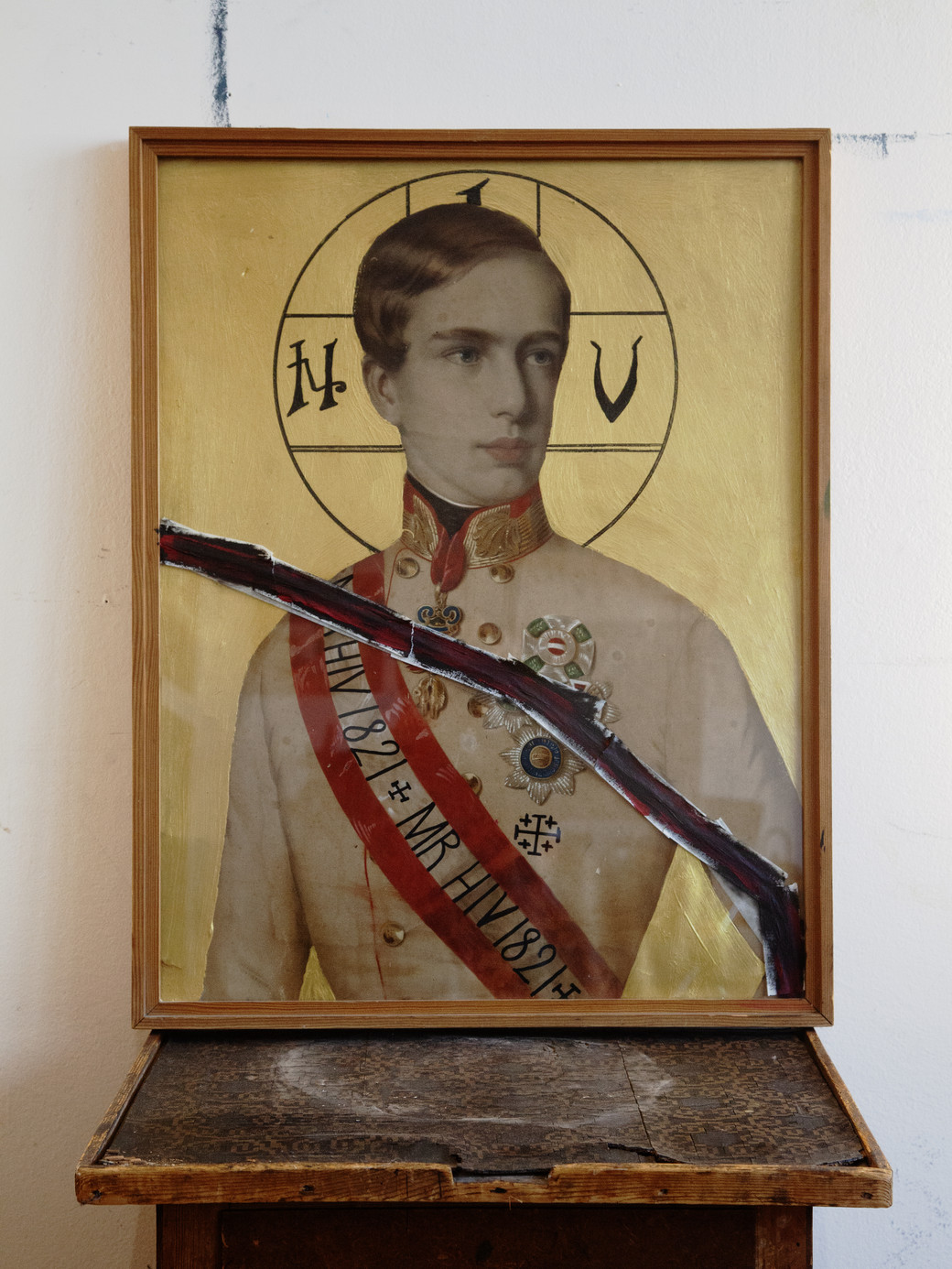
And then at some point, my ex-partner was wearing one of my HIV-plus jackets, and I found this crucifix and I put it on the plus-sign, and I was like, Oh my God, this is it. This is the Church of Positivity. This is Jesus on the Plus. It was the perfect symbol, the perfect logo. I started to appropriate more of these symbols from the church, and all of a sudden you have HIV everywhere, all over the church. It was so interesting to me, because in my research, I read how the religious establishment blamed the gays for spreading AIDS. “This is God's punishment for you,” but that is actually totally bullshit. The pharmaceutical companies played a much larger role.
So all of that culminated in a project called the Church of Positivity. Put Jesus on everything; show the hypocrisy of the world that we live in; refuse to shut the fuck up; be vocal; give people hope to feel better about themselves. That's what the Church of Positivity is about. I come from an extremely Catholic country, which I always hated. This is a new church, with the cross replaced by a plus.
I know you came from a very religious upbringing. How did that inform your stance on religion in your work?


RA — Well, I would like to say I look at it a different way. I went through all this religious stuff—and I did have a period of hating it—but then I actually started to call it ‘gifts of the spirit’. Even if I remove Christ from the equation, I still have these ecstatic gifts that you can't take away from me. I still have these archetypes of saints: tales of strength and martyrdom, which I found plugged into AIDS deaths really easily. So rather than being a rebellion at that point, it became survival skills, I think. And I still see through these ridiculously visionary metaphors.
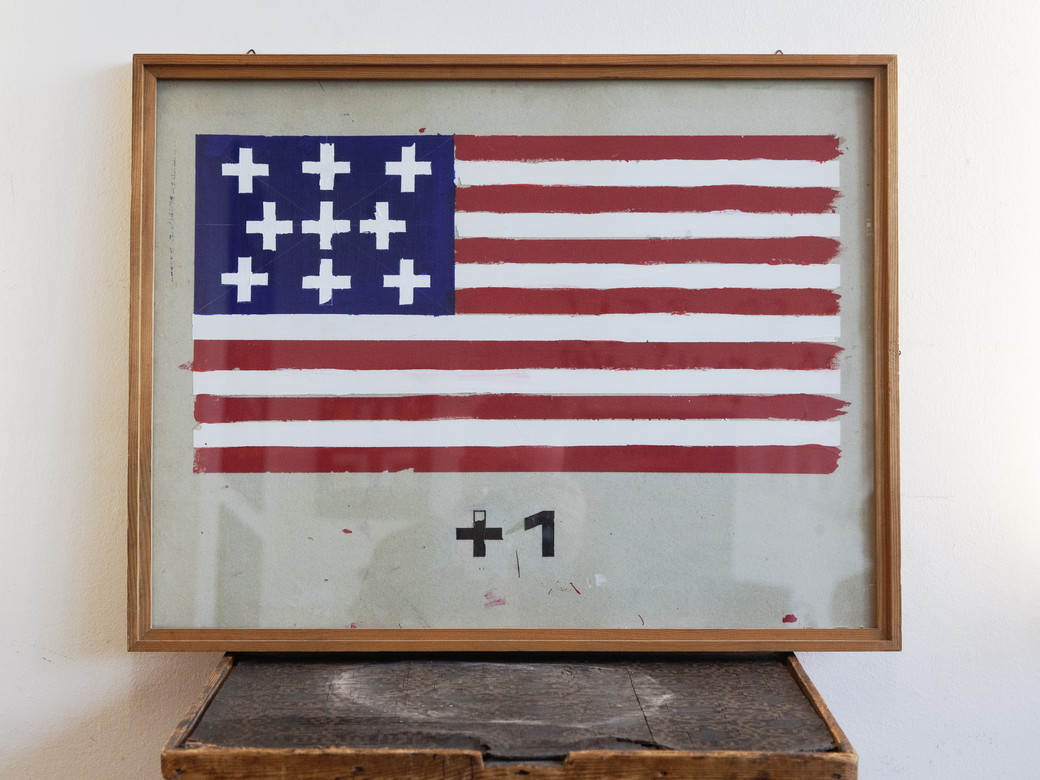
M — My take always was a little bit of revenge: a revenge on the church by using their exact symbols, but making it something associated with positive faggots, which for a conservative Catholic person, I'm sure is one of the worst things they can imagine. It’s why I do the same things with symbols of nationalism. For example, look at what Germany is doing now.
RA — You're talking about the squash on Palestine protests?
M — Exactly. Again, it feels like nothing has changed, which is why I'm using old German, nationalist symbols, which often look like a plus. And this is also my personal revenge on what the Germans did to my family. I take their symbolism, and I turn it into what they hate the most. If a nationalist looks at my work and sees symbols that they used to think were cool—but then they represent only positiveness in the sense that I mean it—I find pleasure in that. And the best thing would be if one of them gets a heart attack.
RA — It is an interesting moment with symbology. I would like to tell you a story though, where it's not the outside threat, but the inside one. It was a gay journalist named Randy Shilts who had all the bathhouses and sex clubs closed in New York and San Francisco. So I think some of the “fuck you” in my work has been against the inside-censoring of the eighties, when gay culture was polarizing “good girls” versus “nasty girls.” That our internal punishment for AIDS was going to be that we either have to be sexless or monogamous and adopt or have a surrogate.To join reproductive futurity and be good people. You had people like Larry Kramer just screaming his head off that no one would grow up and blah, blah, blah.
But whether our future is the death drive or healing and starting families—that is still an individual choice. I don't need another gay person telling me what I have to do because I have AIDS.
Before PreP and protease inhibitors, AIDS was this nightmare that killed everybody interesting, basically. So then everyone not-interesting stepped forward and had a bigger voice, distorting gay culture by saying people just wanted to have children and marriage. That was the more conservative agenda, but I didn't think that's what everyone was fighting for and what half the people died for. So sometimes it is hard for me to understand what era we're in now with PreP and doxy Pep, and I guess there's just too many fragments.
Even with tender queers taking over the queer movement…
M — …Tender queers?
RA — The ones who are butt-hurt over anything. They try to shut you down. It's the same people who used to say, “Oh, there's a child two doors down. We can't be naked in here.” The specter of the child, the specter of the tender: it’s a passive aggressive way to make everybody dull down.
M — Sounds very suburban America. I imagine you have to deal with that a lot in Los Angeles?
RA — We have a certain suburban chic that is dialed in. If you play it right, it's a good time. There's nothing like a big house with a pool and toys.


M — How does L.A. define your identity and your work?
RA — I am an L.A. person above anything else. I’m from there and lived there my whole life except for six years in London. In the late ’70s through late ’80s, the climate in L.A. was both an incredible music scene and the epicenter of the porn industry. Public sex and dozens of leather bars, saunas, and gay sex clubs were the legacy of the ’60s and ’70s. I think this sexual L.A. gave me the post-porn element to punk, death rock, goth.
In 1981, I started making my first performances in this climate. “Premature Ejaculation” was my music project with Rozz Williams, my first boyfriend, of Christian Death fame. This was not a queer scene so we had to be strong, and it was effortless! I was inspired by the artist Johanna Went and the movie Deep Inside Annie Sprinkle (and her publication LOVE magazine that featured the first photos I saw of Fakir Musafar, as well as a urine fountain design from Günter Brus). I think the tacky shadow of Hollywood on everything in LA forced the underground to be more extreme—an anti-mainstream impulse.
M — People like you are very inspiring for me for that reason, because provocation is such an important aspect of art. I recently moved back to Vienna, and I feel similarly about my hometown. I realized it was always my hatred for that heavy, conservative Austrian society that inspired me to provoke. The more I find out about Günter Brus, the other Viennese Actionists of the sixties, and the Austrian avant-garde of the turn of the century, I see how all their art was always fueled by hatred of the extremely suffocating society and people around them.
RA — The more shit that's going on, there's more to press against. I mean, the Actionists were the most extreme out of nowhere. They were just filming themselves taking a shit. It was horny. It was pornographic in a grotesque way. And I think Brus is more of the aesthetic: cutting himself in half, drawing a line, bifurcating himself emotionally, maybe. I was always more with Hermann Nitsch.
M — Exactly.
RA — A bloody ritual over and over and over again .
M — He was iconic.
RA — But some women influenced me more, like Carolee Schneeman, Linda Montano, Valie Export. Her piece Action Pants, Genital Panic is outrageous— to be with your crotch out in a cinema.
M — I need to check that one out.
RA — She gets lumped with the Actionists but isn't. She’s more of an independent feminist.


M — Oh, right. Because that's also how I knew her. She's always mentioned in that context. Similarly, you’ve said in an interview that you’ve been characterized as an AIDS artist, which meant that your medium was AIDS, and that you didn’t agree. But to be honest, I find it really funny. I would definitely say about myself that my medium is HIV.
RA — Well, let's say it was considered a stigma at one point, so some people concealed it and I didn't because that is my polemic. I don't have a political statement except to bear witness and to be truthful and honest that I'm here being myself and pay the price for it. To still live your life, I think, and find joy and pleasure in the middle of all the rottenness: we can't lose that. That's a strong politic to me.
So I did maybe pay the price for the AIDS artist, but I never made work specifically about AIDS, maybe philosophical questions about AIDS and other parts of life.
Things are always described by sensation. Yeah, I'm a bloody disgrace. That's my headline.
M — I love that.
RA — I'm not going to get a trophy for being respectable, so I'll be the bloody disgrace and do that.
M — I think that's the biggest honor. The more we can annoy certain people, the more of a reward, in my opinion.
RA — I do think if you have something to press against, the work gets more interesting. And why there's trouble in utopia. There's nothing to press against.
M — Yeah, exactly. I feel like I need those Austrians to get me angry here and there so that I keep on getting inspired.
RA — I mean, I don't want to be miserable to make art, but a lot of people do their best work in the tension. In the tension of the moment, the art makes itself, I think.
M — Sometimes there has to be friction. I mean, there is no light without darkness, but you have to wear the right glasses to be able to see in both lights or log the absence of light.