"I'm never led by fear. I'm led by curiosity and passion and fantasy, trying to create a world for me that I see myself in."
— Elias Medini
He grew up in a provincial French town with two schoolteacher parents. A happy childhood, he says, but one in which he never quite felt he was where he belonged. He was a queer kid with a Muslim upbringing that was open-minded, almost enough. So he escaped inward first, through cinema and eleven years of drama at the local Conservatoire, and then outward to Paris, where he arrived determined to reinvent himself.
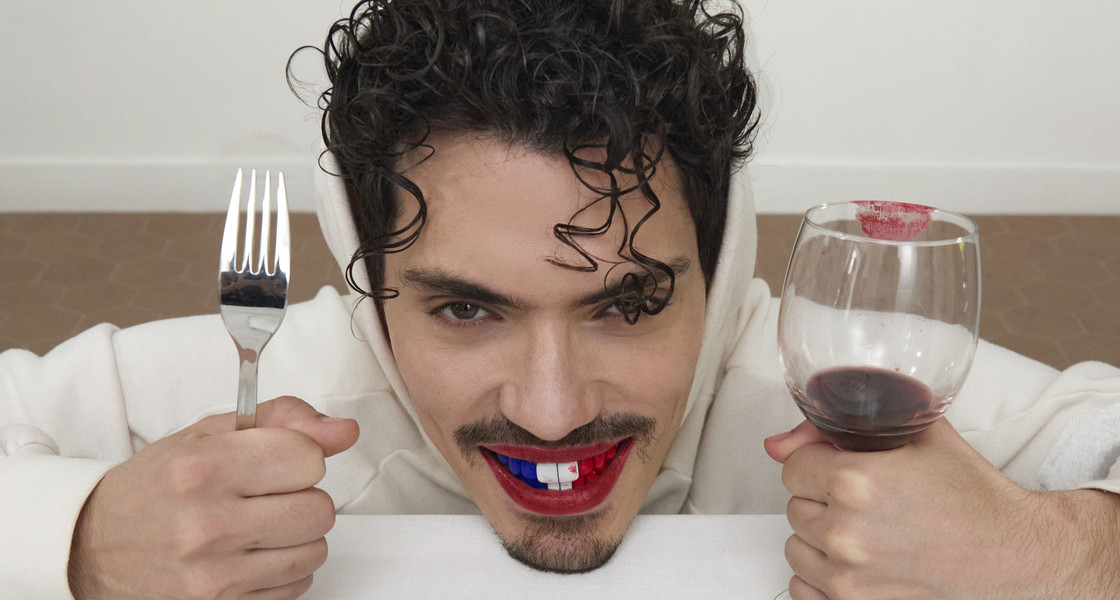
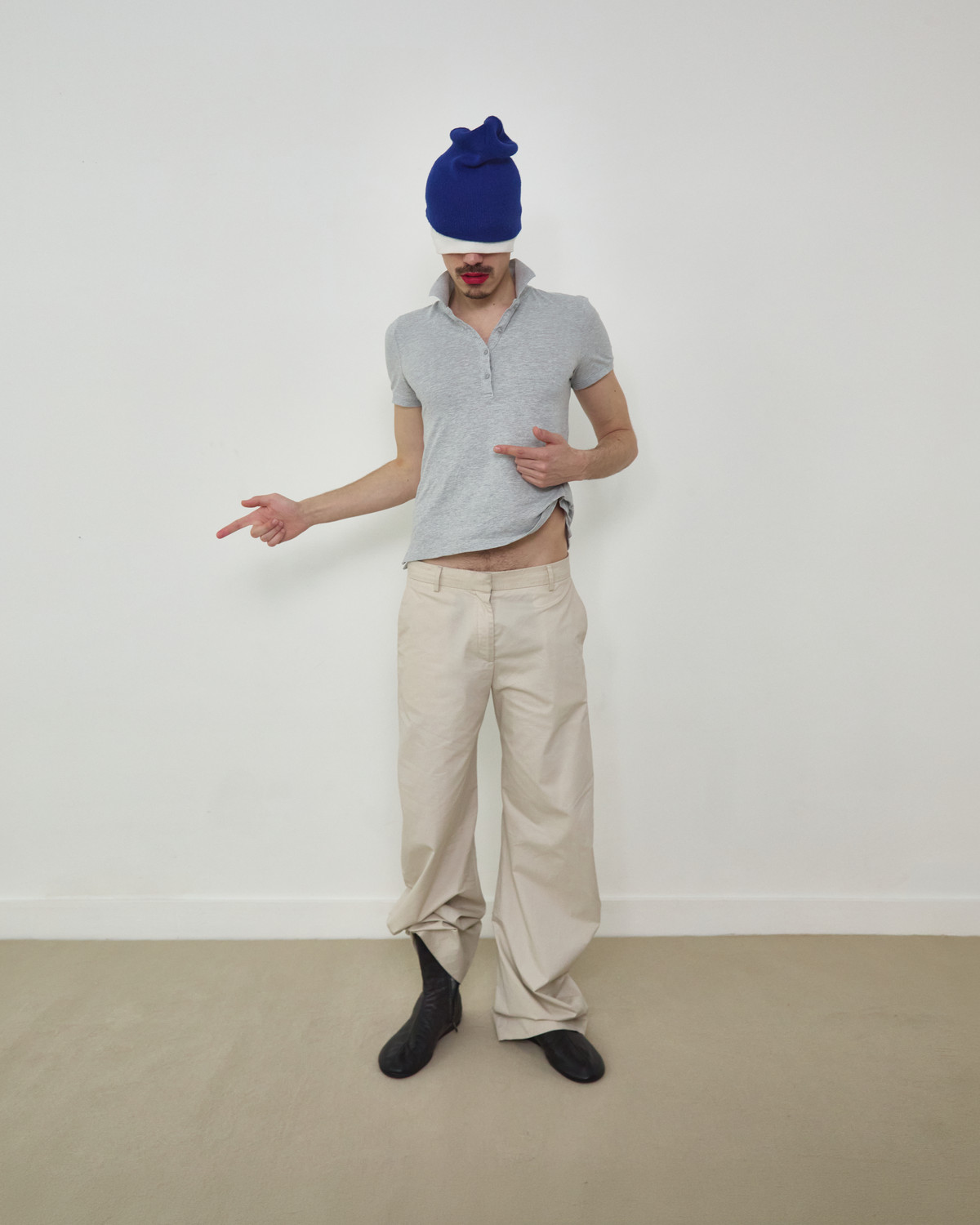
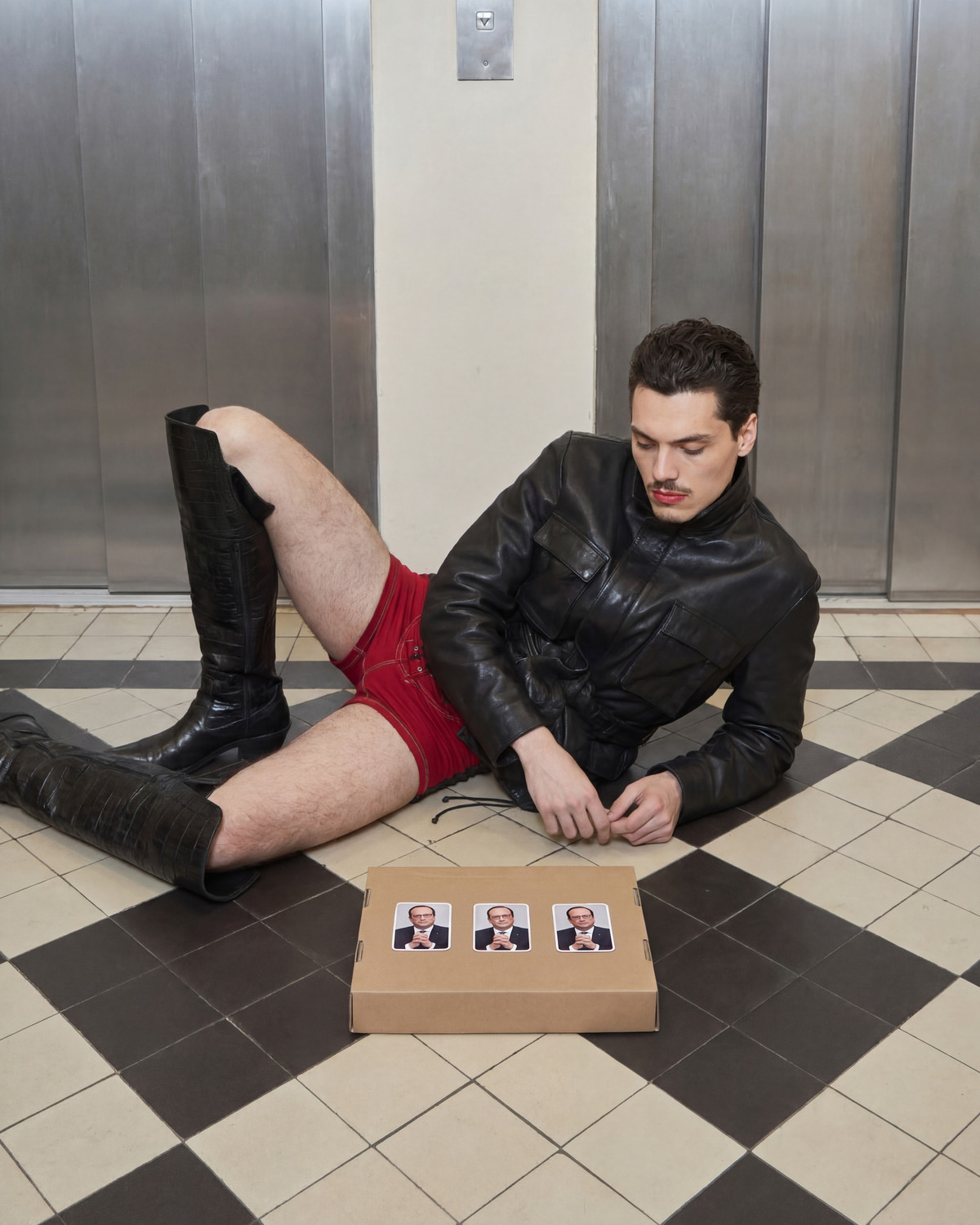
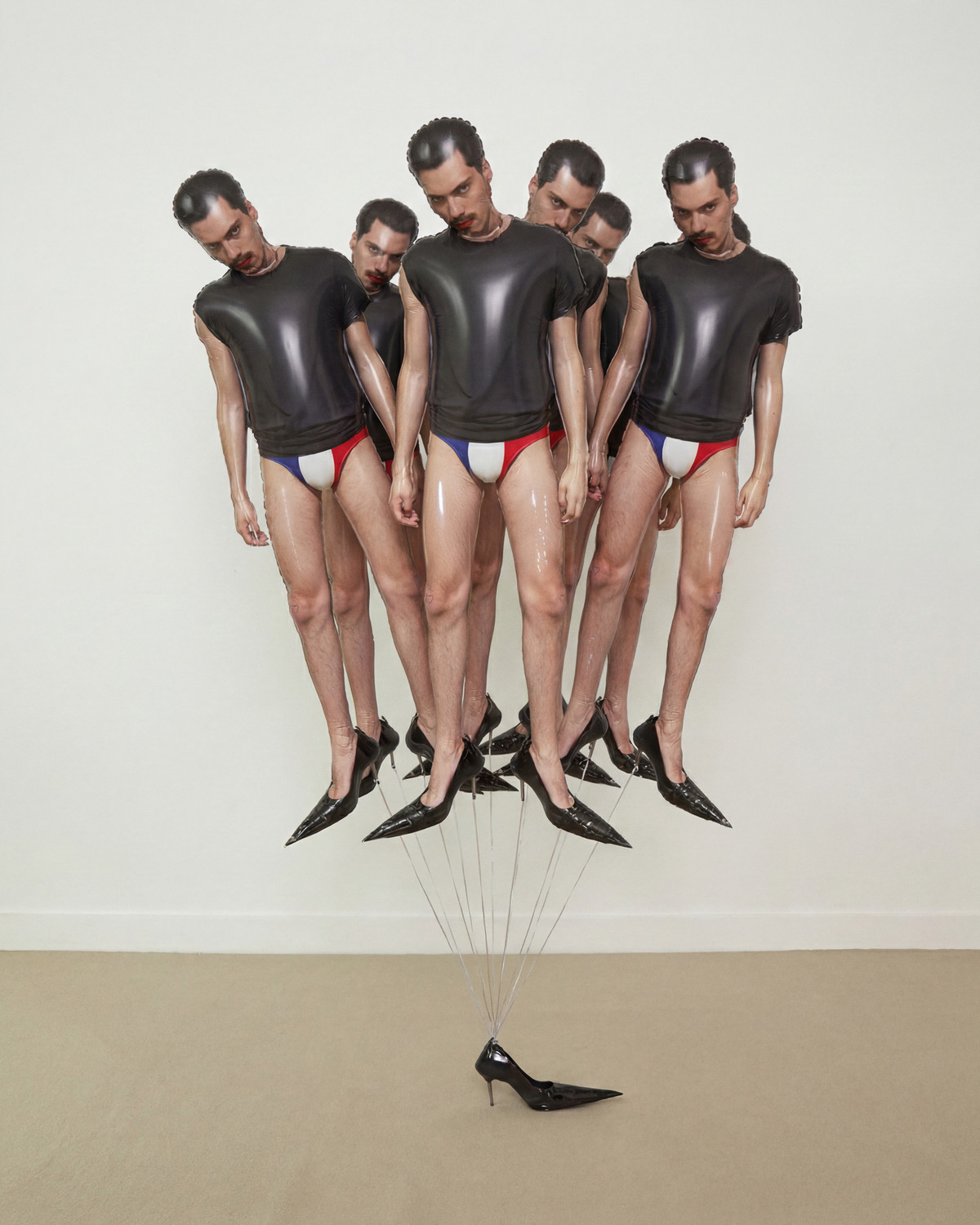
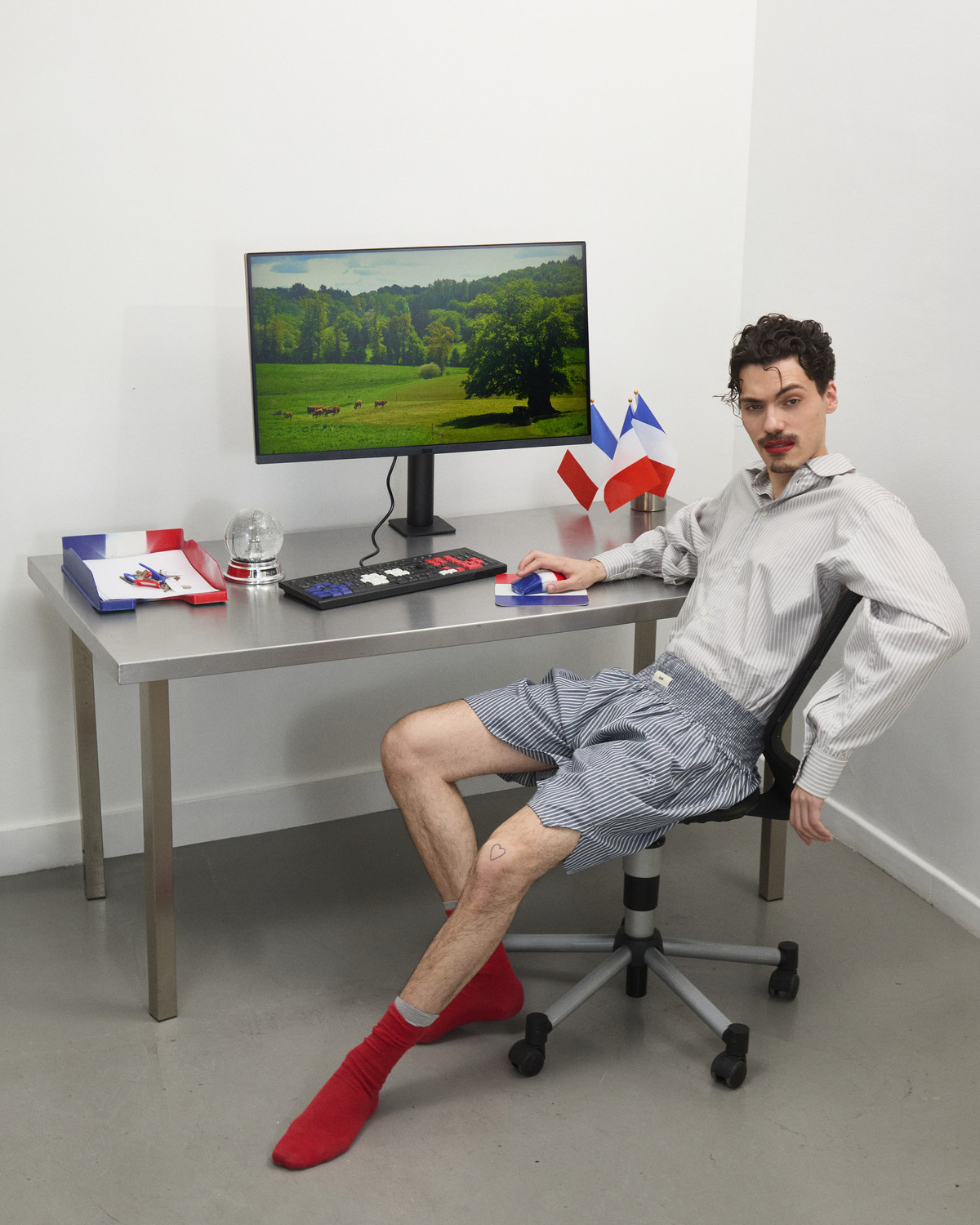
Fashion became his laboratory. Not fashion as aspiration, or fashion as status. Fashion as a series of propositions about identity. The red lip he wears now is not an aesthetic accident. It is a claim. It is, he says, something that has been feminine coded for so long that when a man wears it unironically, without the vampire deflection, without the safety of black nail polish, it becomes a statement of ownership. "Men want to appropriate feminine culture without taking the risk," he says. "I think it makes my lips sensual." He is colour blind and cannot always replicate the same shade. He does not especially care. It is always red. That is all that matters.
The story of La Watch Party begins, as the best stories do, with a rejection. In June of last year, Medini was not invited to the Dior show, a show he had attended before. He boarded a plane, furious, and spent the flight trying to find a way back. He considered sneaking in and filming it. He thought better of that. And then, somewhere over the French countryside, it arrived: an epiphany that would become the center of his whole creative life.
Why not just watch it in a bar? Like a football match. Something that belongs to everyone.
He dragged his own television to a Paris bar. He invited his community, a few years' worth of English-language social media followers who had gathered around his particular frequency of fashion commentary, irony, and conviction. They watched the show together in real time, strangers pressed close around a screen, the way people used to gather around things that mattered.