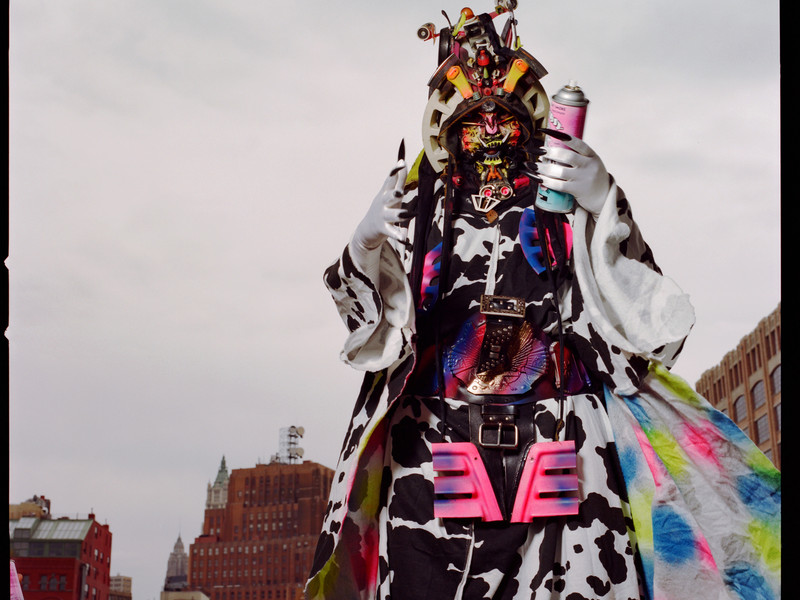
office caught up with the creator to chat about her project, inspiration, her source of creativity, and more.
Check out the interview below!

office caught up with the creator to chat about her project, inspiration, her source of creativity, and more.
Check out the interview below!
First and foremost, I have to ask, what is the overarching theme of your work and where did your design journey begin?
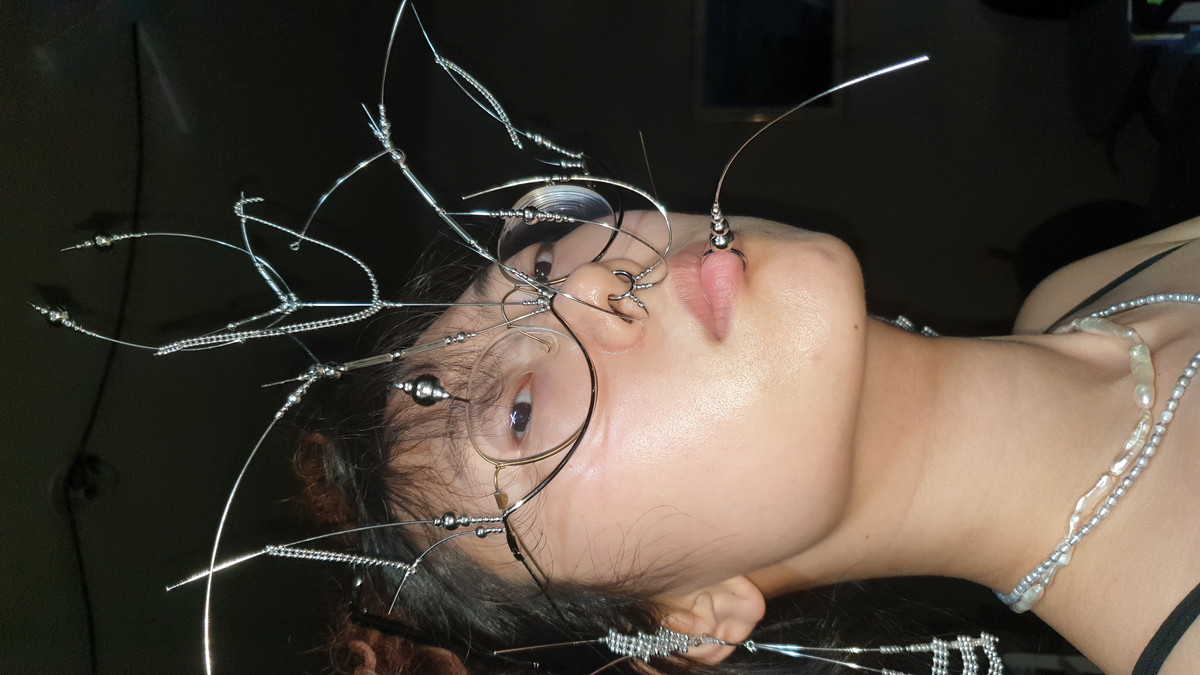
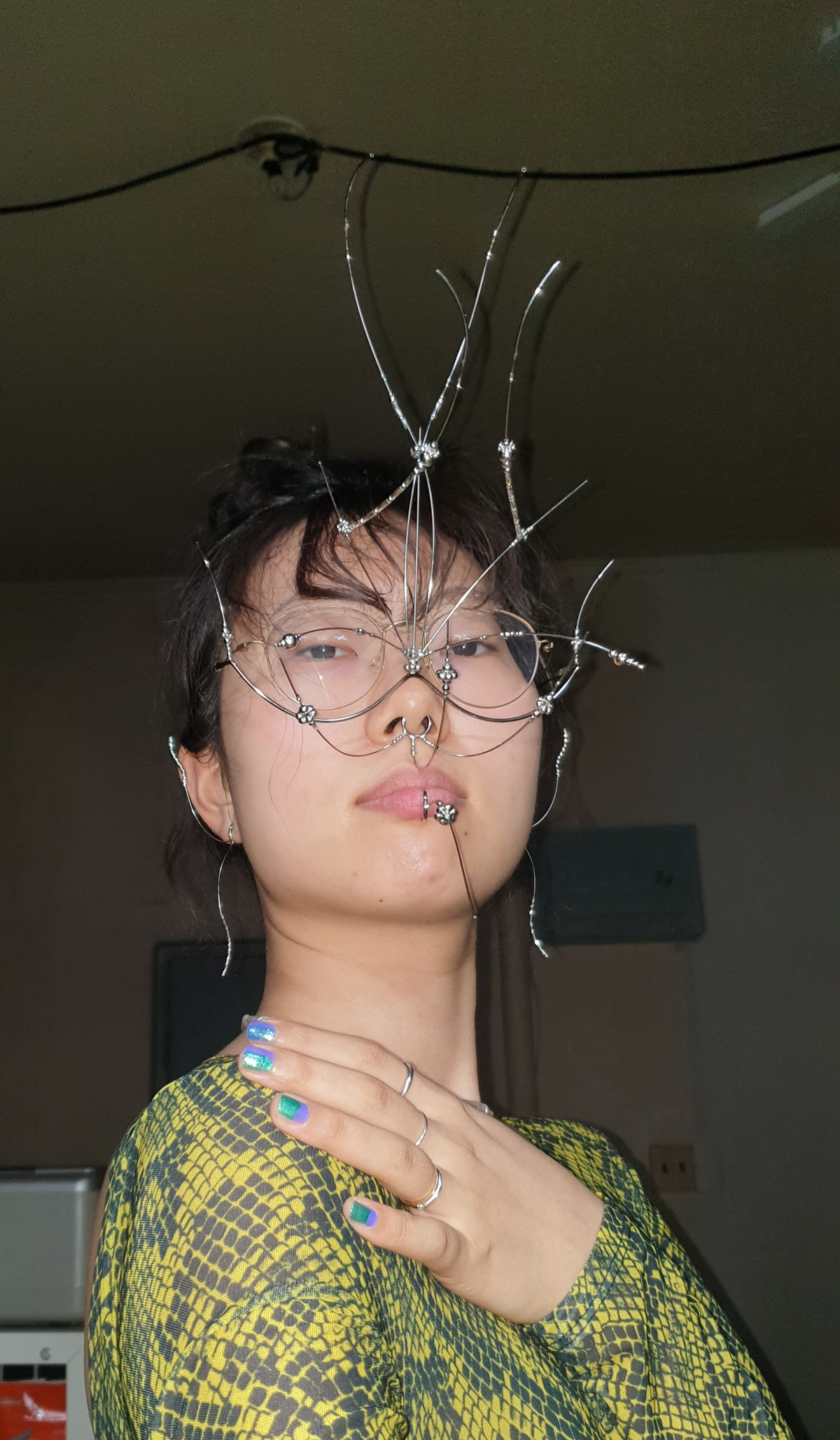
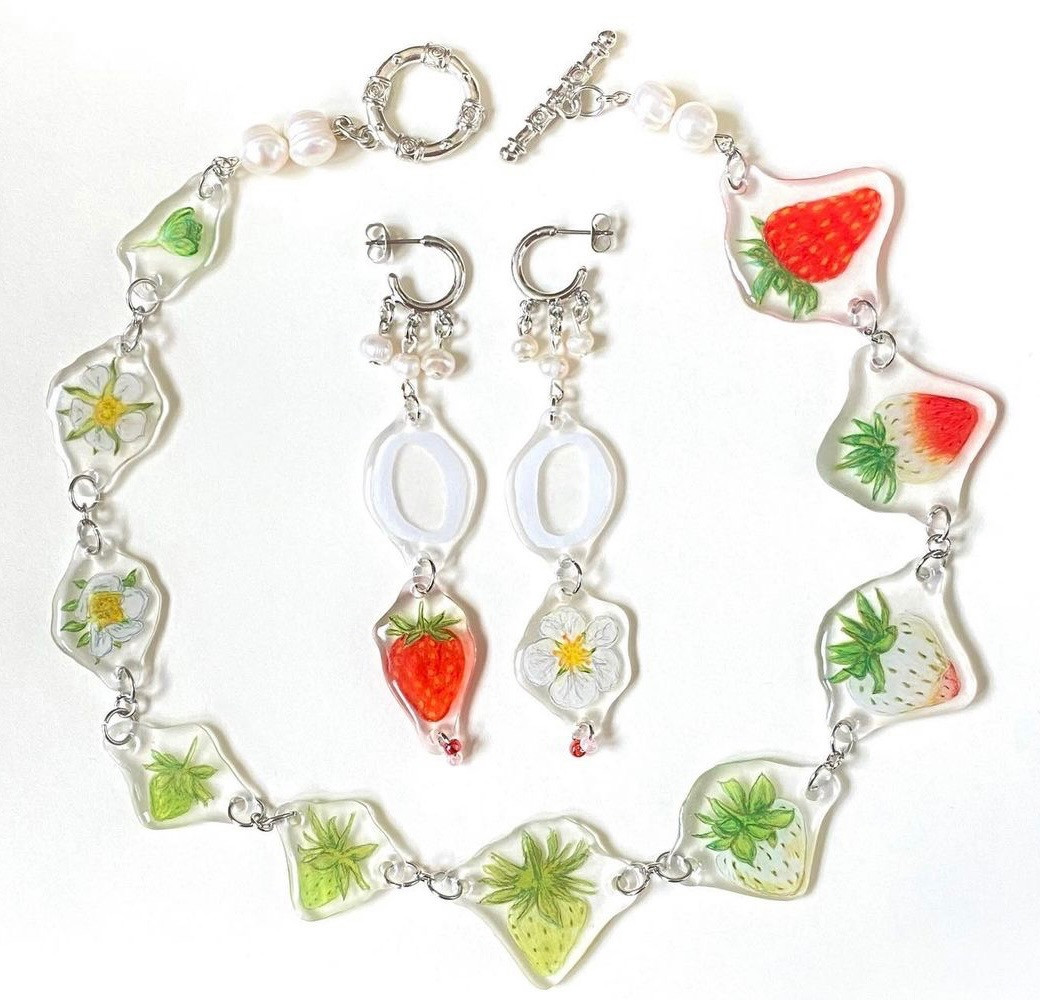
The theme of my work is upcycling. The visuals and materials may differ, but the message is always the same. My foray into upcycling started while I was at my previous job. However, sustainability and being mindful of the environment have been with me since I was a kid exploring the outdoors.
In general, I love the concepts of each design. How do you come up with these ideas and how long does one design usually take?
Thank you. My inspiration comes from everything, but mainly from the materials themselves. Ideation can be pretty quick when something clicks into place, but it's a lot of trial and error most of the time. Things might start one way, but you never know how it will go during the making process. It's best to be patient, flexible, and open-minded about what you end up with as your final product.
Your designs have a mixture of playfulness and innovation to them 一 it's a peculiar type of chic glittered over with a forward-thinking mindset. What makes this such an irresistible combination for you and the consumer?
I try to incorporate fun and functionality into everything I make. Doesn't everyone want that?
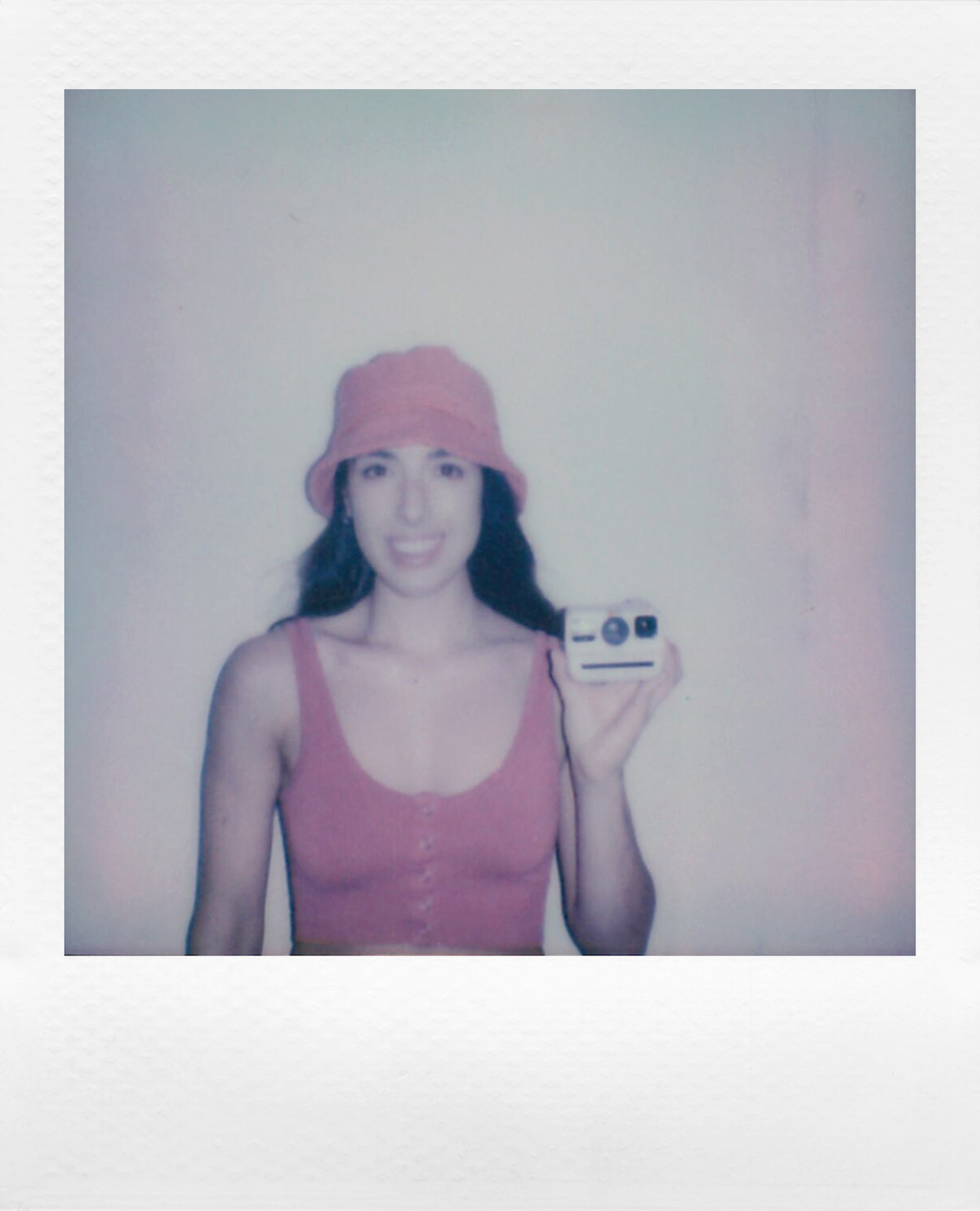
You've recently launched your newest venture with Polaroid, talk to me about that.
I've been a long-time Polaroid fan; the i-zone was my first and, honestly, the perfect camera for a kid getting into photography. So it's great to work with them on this project to highlight the new Polaroid Go. We're so used to using our phones, so it was nice to step away from that and incorporate an extra element of tangibility in my design process.
In essence, what does the phrase: "Go Create" mean to you?
I'm all about just going for it, so "Go create" is about trying something new, not being afraid, enjoying the process, and being in the moment.
What was your creative process like for this project? How did you conceptualize your vision?
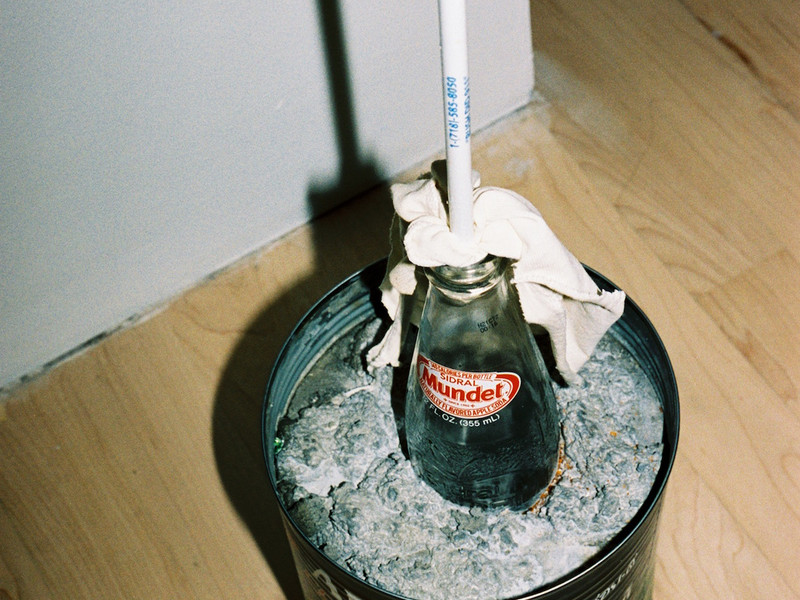
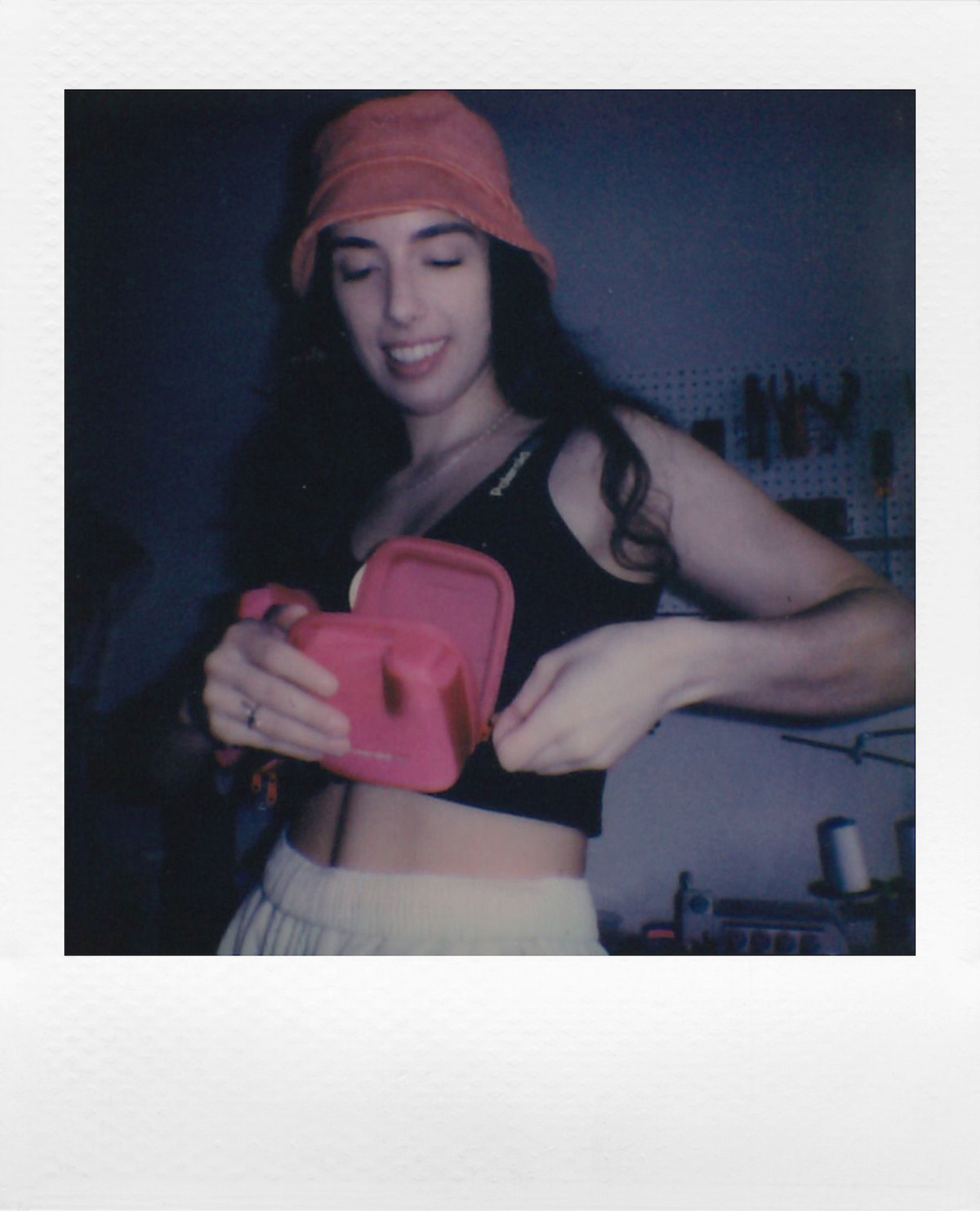
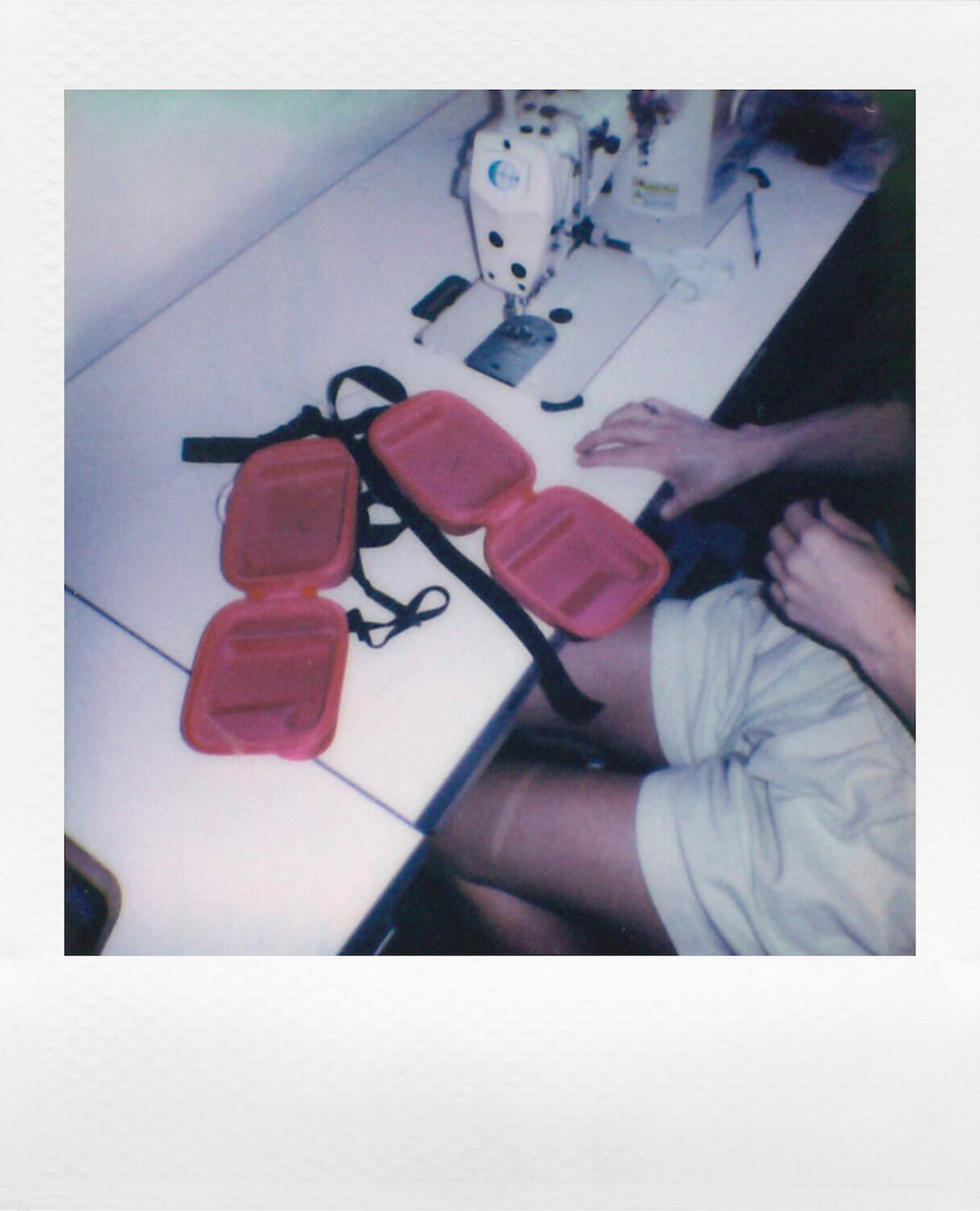
It's hard not to tread into familiar territory when working with something iconic like Polaroid and its film. For instance, making something out of the film makes me think about the dress costume designer Lizzy Gardiner made out of American Express Gold cards for the Oscars and its many reiterations. I played around with several ideas and landed on my camera case harness. Traditionally, people would assume it's a bra, but I try to be mindful of that and make my pieces unisex. It's also fun, functional, and adds a nice pop of color. It has storage, easy access, and you can capture things quickly, so you don't miss out on important moments.
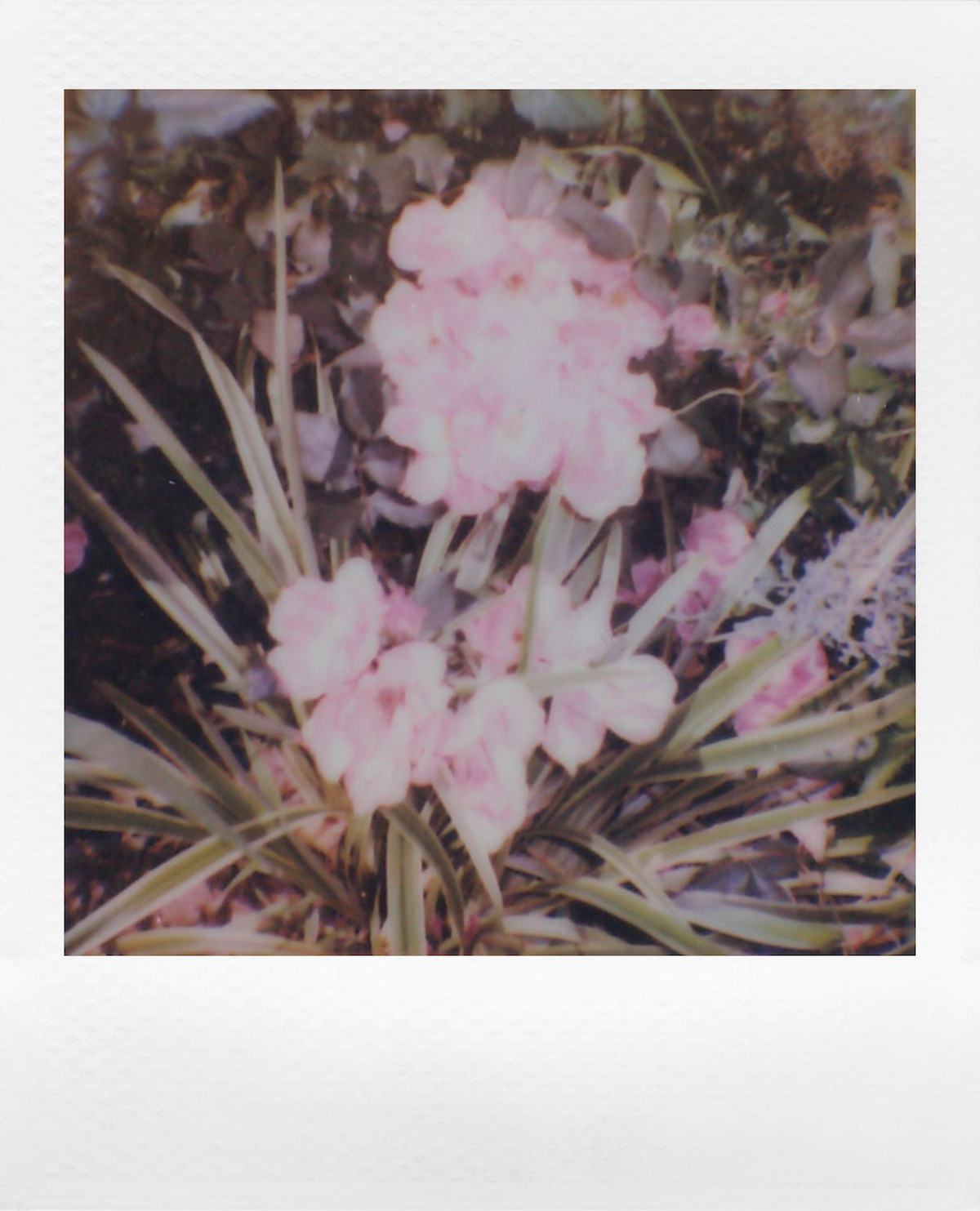
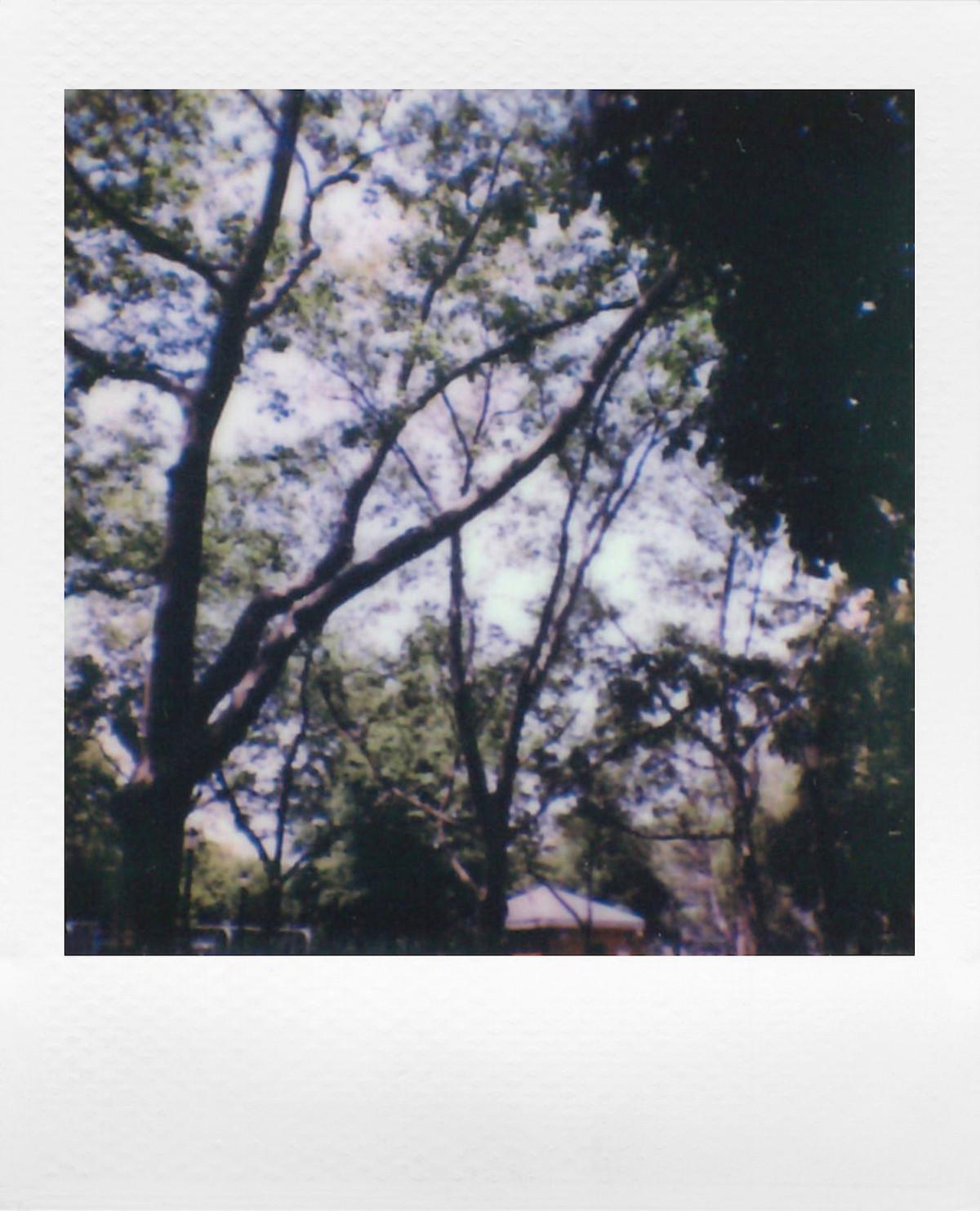
How did Polaroid Go help you amplify your story? What did it feel like to be a part of a project where you were granted so much creative control?
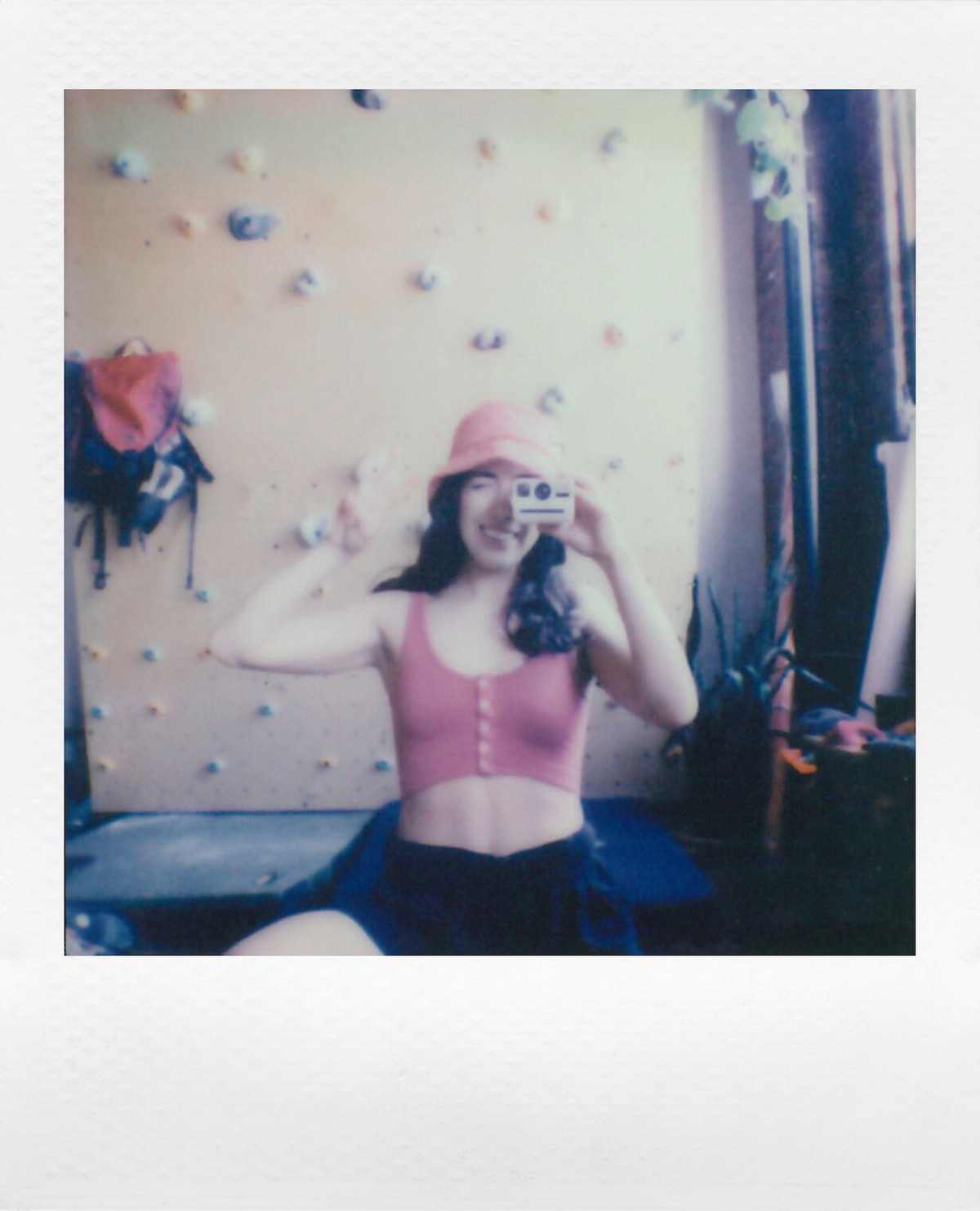
Polaroid really encouraged me to capture my process as much as possible. Using the Polaroid Go was fun, and I got to see my journey unfold at a different pace than what I'm used to, which was cool. And I love instant film because you never know what you're going to get. The lighting, the lo-fi feel, unexpected saturation, and those very forgiving slight blurs that make for some fantastic portraits is what I love about using instant cameras. Taking selfies was also a lot of fun.
What's the biggest takeaway that you want people to get out of this project?
I don't usually show my process, so it was nice to share that. And capturing those moments of making gave me a different sense of enjoyment.
Where do you hope to take your designs? What can you tell us about any future projects or designs that you have coming out in the near future?
My goal is to inspire others to learn more about sustainability and incorporate it into their own lives. I'm currently working on upcycling-focused workshops with Arc'teryx and Puma and getting ready to launch a charity auction with LG Electronics utilizing second-hand clothing from their used clothing drives. LG couldn't donate the pieces I used, so it was challenging but fun to try and give them a second life. I'm also working towards future goals that include education and charitable opportunities.


When did you start the Ap0cene online community and how did the idea come to be?
Mackenzie— I think we started the actual Instagram in 2017.
Alicia— We had personal accounts and we followed a bunch of different designers that we thought were up and coming, but they just weren't reaching mainstream media. Originally we started the account to showcase all these different designers. We were hoping that the account would grow and reach a wider audience for these designers, but it just kind of started as this fun thing that we were doing.
Mackenzie— It was a place to keep a collection of images. It was kind of an outlet, I think for us too, at the beginning.
Alicia— Definitely, a creative outlet. And then once it started growing, and when we started getting closer with the different designers that we were featuring, that's when our identity morphed into what it is now.
Mackenzie— There definitely were trials and tribulations in figuring out exactly who we wanted to be and what we wanted to do. It wasn't a clear path, which I think is also kind of cool. Because it's emblematic of the creative process. Sometimes it's not exactly what you planned. I think we figured out exactly what we wanted to be earlier this year. It became very clear and solidified in our heads that supporting small creatives or emerging creatives is very important to us and that's what we want to focus on.
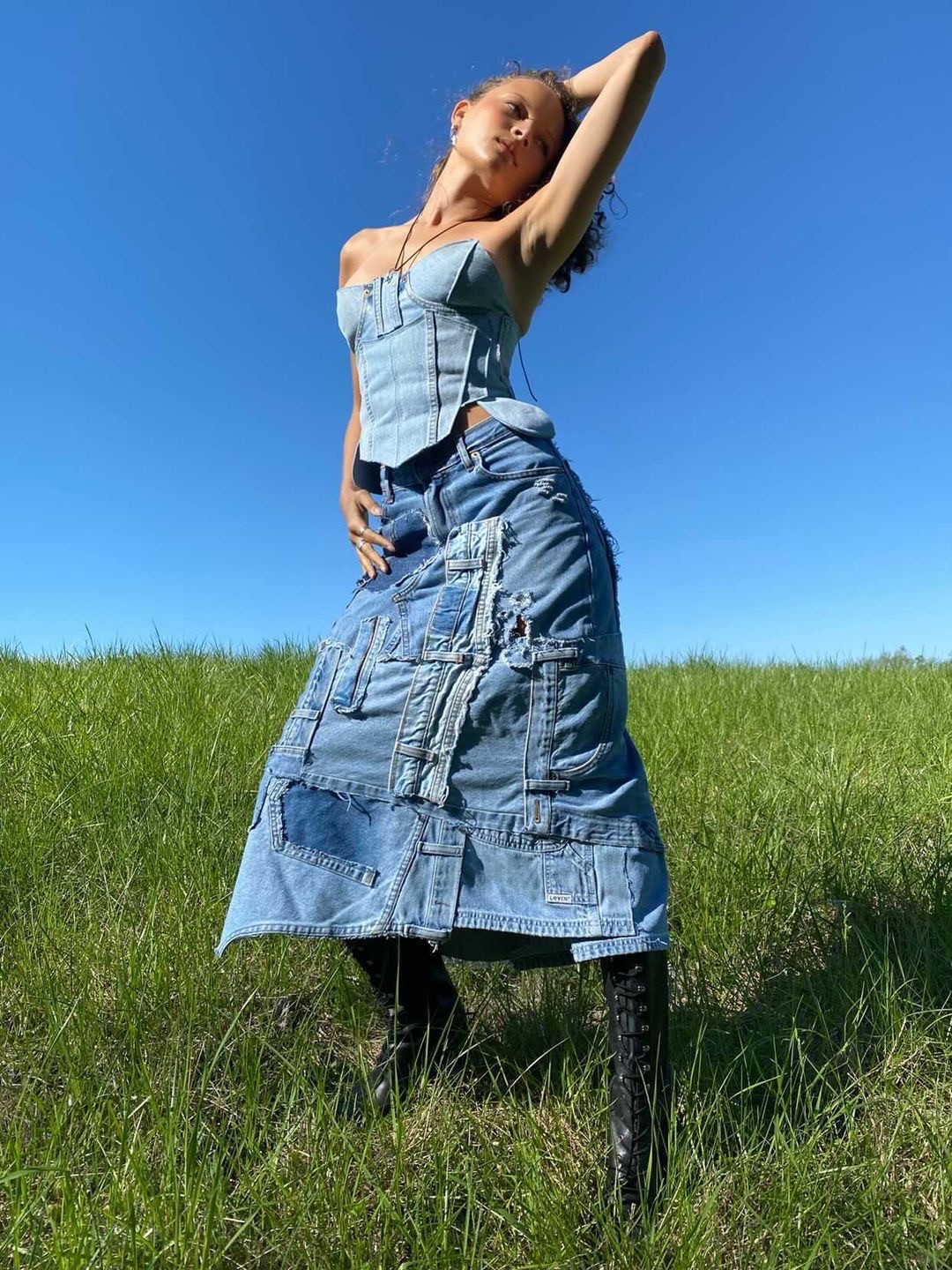
What is the inspiration behind the name “Ap0cene” and the logo?
Alicia— The name actually came from when I was sitting in a geography class and the professor was talking about the Anthropocene, which is the ecological era of humans making an impact on the planet. And I noticed that that connected to all the designers and their art that I'd been seeing. All of their art was so avante garde and so different, and so reflective of the fact that we've been making such a big impact and change on the planet. So we kind of shortened it to Ap0cene.
Mackenzie— Yeah. I think also on the same token of the impact that humans have on the planet, we often think there's kind of a negative connotation that goes along with that. And so trying to uplift small creatives as an avenue towards choosing to be more conscious consumers and supporting small creatives, as opposed to large corporations, also feeds into that idea of the impact that humans can have on the planet, in terms of reframing that connotation to a more positive one as well.
Are either of you involved in your own personal creative endeavors?
Mackenzie— We both are creatives — at the time when we initially started the page, I wasn't, but I am now... or I guess everyone is always creative, but in terms of actually making things like I do now, I wasn't back then. And I think Alicia has always been.
Alicia— I was a visual art major in university; I just recently graduated. So now I actually have more time to input into Ap0cene, but I'm more used to making gallery exhibition art. Changing that and outputting my creativity into the digital realm has definitely been such a shift for me. Now that I've been creating more digital art, I want to focus Ap0cene towards going in that direction of NFTs, the digital 3D community, AR...and all that stuff. Mackenzie has her own brand as well.
Mackenzie— I design and sew clothes, which is also very grounding for me, because, we kind of joke sometimes about how we find the best stuff when we're in an Instagram hole. Going from page to page, to page, to page. And then it's kind of sometimes like, 'I don't even know where I am anymore.' So I feel like doing something with my hands sometimes is a nice contrast between the fact that Ap0cene is so digital and online. I also think that Alicia and I complement each other really well in terms of our personal skills and the things that we excel at. I think that's one of the reasons why we have stuck with this and been able to have some sort of impact. Because, you know, we can push each other when we need it. And, we're just good partners.

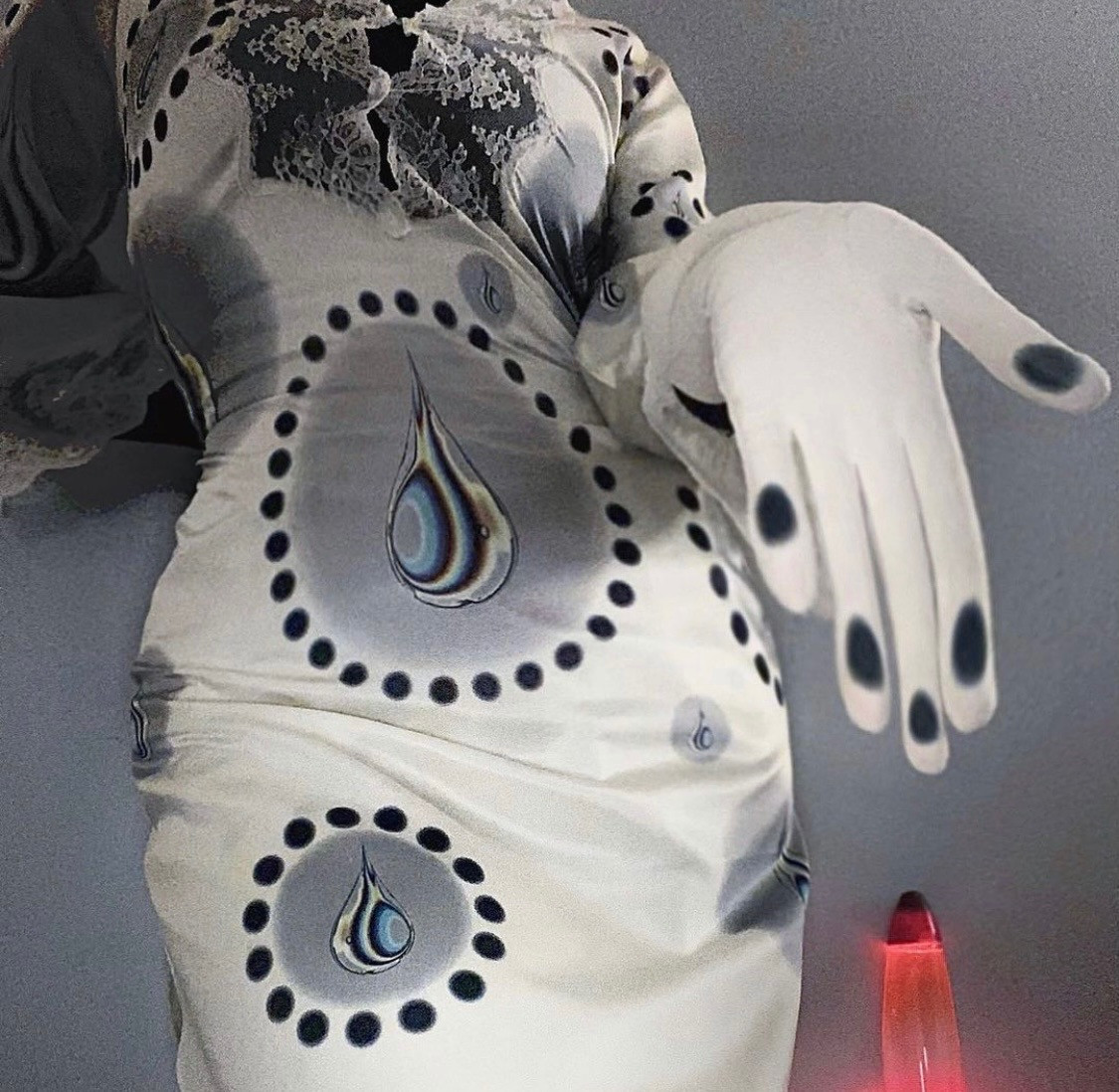
Social media has created so many new ways for people to connect and unite upon common goals, such as art — was Ap0cene originally created with the intentions of being a fully digital community?
Mackenzie— So when we started to grow, we definitely had the idea of being a print magazine or a digital magazine. At the beginning, we even called ourselves a magazine, as opposed to a community. So that was kind of on the horizon of things we wanted to explore. We decided to stick with the digital community. And now, I think Ap0cene is literally the epitome of how powerful social media can be for small creators. It's really fulfilling because sometimes small creatives who we repost will say, 'This person saw my work because you reposted me,' or like, 'I was like losing faith and this re-installed, you know, some sort of hope in me,' which is really exciting for us too. I think it's really powerful that one random day, who knows who's going to see your work and that could turn things around. You know what I mean?
You have experienced a growth of Ap0cene’s online community on Instagram from 50k to 95k in just under six weeks. When you first launched Ap0cene, did you expect this much growth?
Mackenzie— No. And I think that that period of time is kind of when we really put a lot of time and more curatorial energy into Ap0cene, and we engaged more with the artists that we were featuring and the people who engage with our page as well.
Alicia— Yeah. I guess that spike was literally at the exact time when we kind of solidified, directionally, what we wanted to be.
Mackenzie— I remember there was a point in time, in the spring maybe, or March-ish, when we were getting about 700 to 900 new followers every day, and we were like, 'Whoa, this is kind of crazy!,' because I mean we're still just two gals.
Alicia— But we definitely are still striving towards how we can build a sense of community, a deeper connection between all of the designs and all of the creatives. That's also something we focus on — we don't discriminate between art, because art at the end of the day is art. It could be a sculpture, it could literally be performance art. It could be clothing, jewelry, shoes, make-up, or dance — any form of expression. We really want to invite that diversity. And we also really focus on making sure that we curate inclusively — all different people of color and backgrounds and ethnicities, and the LGBTQ community. We want to focus on amplifying their voices and their designs because we find that the Instagram algorithm always silences them. It's crazy.
Mackenzie— We don’t really plan —
Alicia— Yeah, we hate planning our feed.
Mackenzie— It works so much better when it’s organic and we’re inspired, naturally, by something that we see.


How do you select independent brands to collaborate with for drops?
Mackenzie— It's something that's pretty new to us. The two jewelry collabs we've done were artists that we had built previous connections with. We've been reaching out to graphic designers as well to have them create their take on our logo.
Alicia— We give no criteria — in terms of freedom, it is completely the artist's creative outlet. And a few of the collaborations have been not just us asking them, but they kind of came forward and came up with this idea and we went along with it. In terms of future collaborations, our criteria is definitely a designer that is avante garde and shows new sustainable measures. A lot of small artists are doing that already. They use deadstock material; reusing or repurposing material and jewelry. We've noticed that collaborations can be a long process in terms of coordinating on our end and the time it can take artists to produce the work. In the near future, we want to create a marketplace where the artists could just sell their original work on our platform for purchasing exposure. So we have a little shop coming up hopefully next month.
The Ap0cene Fund, in which you select a creative applicant and support them with 10% of the proceeds from Ap0cene drops, is a way that you have chosen to directly support creatives. Can you tell me a little bit more about this?
Mackenzie— We launched it a couple of months ago, so we haven't reached our goal yet. We wanted to give $500 to each person. Our ultimate goal is $5,000 so we can give to multiple artists at once. That's also something that is motivating us to launch the shop because a portion of proceeds obviously will be going to the fund to help reach that goal. It's been so exciting because the small creatives that we approached to have on the shop even have been receptive to contributing to help raise money for the Ap0cene fund.
Alicia— We take a very, very low cut of collaboration profits, and most of that goes to the fund anyway. We ensure that the artists get the majority of the profit cut. We're launching a fundraiser soon to raise more for the Ap0cene fund and we're also looking into grants as well to support the funding. But it's definitely been a learning process in terms of raising money for the fund.
Mackenzie— We have a GoFund me right now so that anyone at any time can go and donate as well, on top of the 10%.
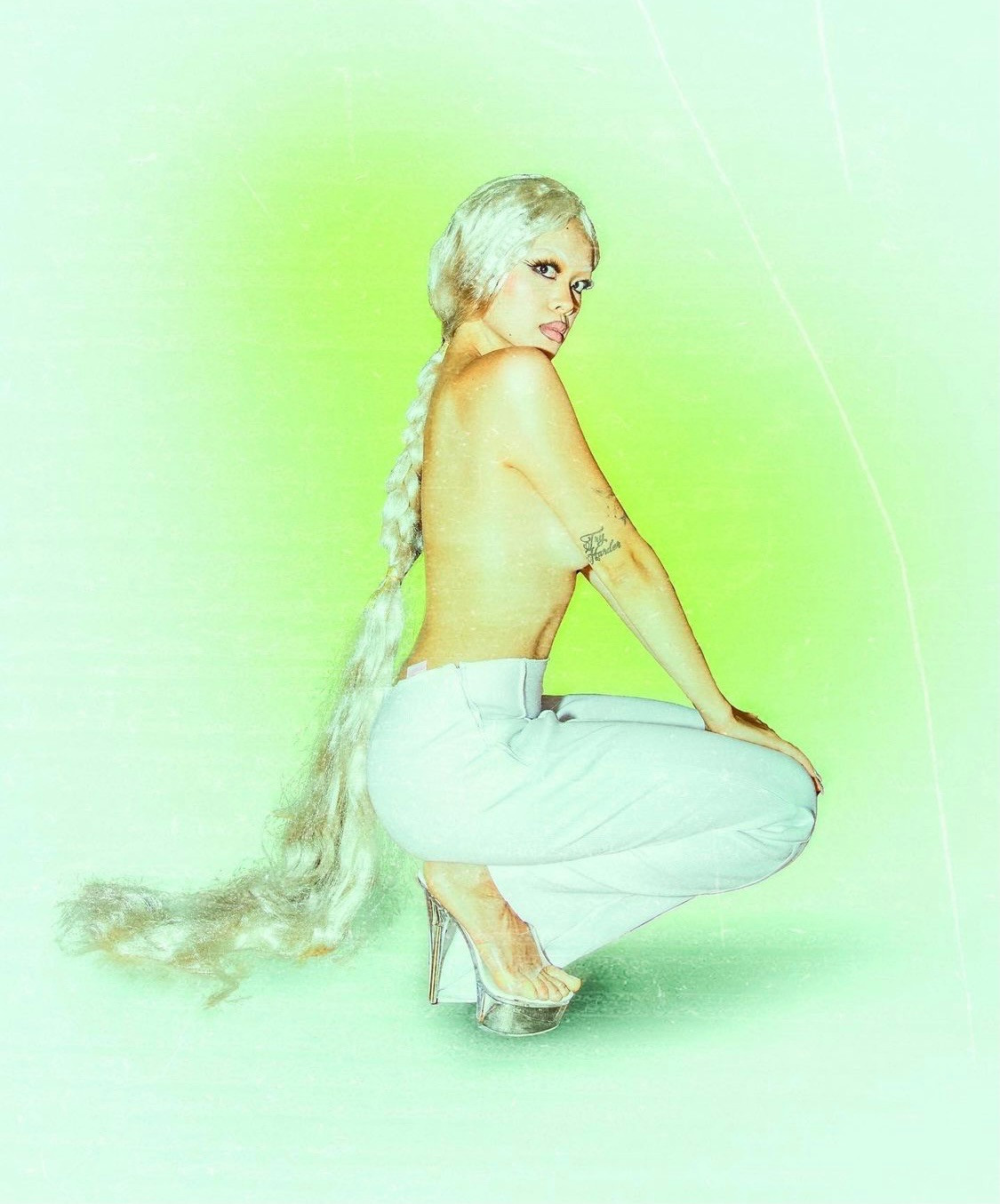
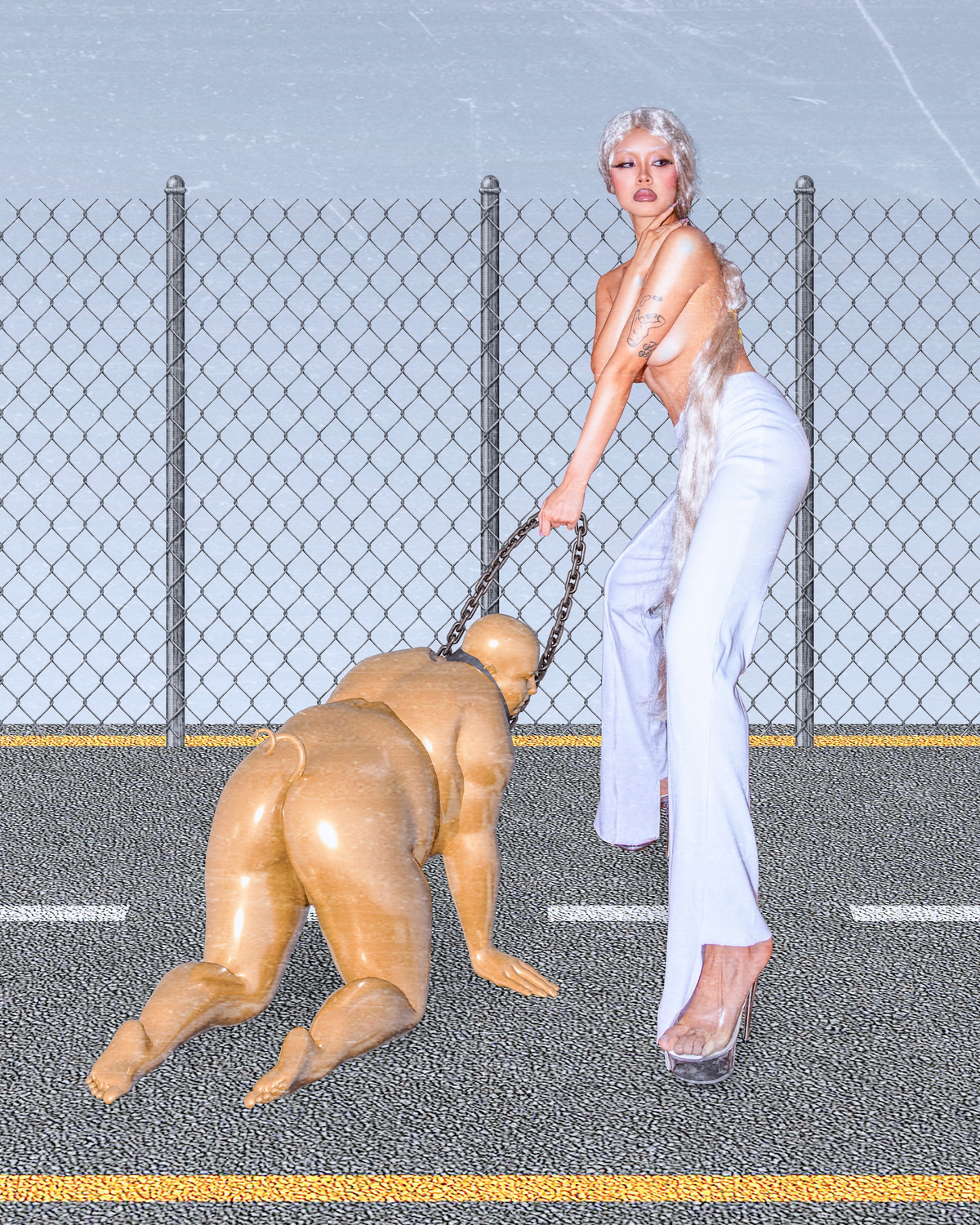
How does environmental awareness play a role in the creatives you collaborate with and feature?
Mackenzie— A lot of the artists we've approached pretty much do small batch or small collections, handmade, and have a low ecological footprint...and that's super important to us as well.
Alicia— But at the same time, we don't send away artists who don't follow all of those guidelines because I think that it's not your fault if you're not able to produce something completely sustainably.
Mackenzie— It just sometimes is very inaccessible in a sense.
Alicia— Inaccessible, expensive, time consuming — which is totally understandable.
Mackenzie— If you're able to, then you should. But for a lot of small artists who are self-funded, it is difficult.
Alicia— We definitely encourage products to be sustainable though.
Mackenzie— Another thing is that we wanted to have a variety of price points too. On the same note of accessibility — for a consumer as well — there are a lot of barriers to sustainable consumption, and I think the biggest one is cost.
Who are some of your favorite independent artists or designers right now?
Mackenzie— That’s such a hard question. I think one is Cami Árboles.
Alicia— We love her. She’s an amazing pole dancer. She recently was working with SZA, and performed for her, which I think is so cool. She’s been supporting us for so long and she’s very authentic.
Mackenzie— There’s a few others…
Alicia— Marco Garro, Floating World…
Mackenzie— Bead Salad...
Alicia— Lesly Did Them; her nail art is so cool. Like very out of this world. Oh and Xi-Dentity, definitely huge. Shout out to them. We're currently working on our own line, and they're designing it for us essentially. They're creating this whole AR virtual try-on of the clothes as well. Their whole thing is about merging the digital world with fashion and having digital show rooms and digital AR filters, which I think is very different and forward thinking, because when you have digital fashion, it's also much more sustainable as well.
Ap0cene not only highlights small/independent creatives, but acts as a community where individuals can connect through music, forums, and more. Are there any future plans to expand Ap0cene past the realm of art and fashion?
Mackenzie— We like the idea of having some sort of place where artists can talk to each other. We were looking into Slack maybe, or a forum. We want to have artists helping other artists with marketing and anything involving the creative process, or business. We want artists to be able to speak with each other about those kinds of things.
Alicia— We've also noticed that when we have conversations with designers or creators, they would send us other creators that they think would be interested in being featured or working on a collaboration. That kind of sparked our idea of having a specific community forum.
Why do you think it is important to amplify the voices of small independent creators and designers?
Mackenzie— There are definitely levels to that question. I think the first thing is that there's just so much creativity that exists and so many different things that people create and having a way to showcase that and small artists is really important. And then along the line of sustainability and switching the connotation of the impact we have on the planet, being able to make it more tangible or possible to be more sustainable through the support of small artists is also so important.
Alicia— Every day we are hit by so many new designs — clothing and accessories by big corporations and fast fashion houses and never, ever, ever do we hear about who designed them. Who were the artists that designed those pieces that these giant fashion houses are profiting from?
Alicia— One last thing we wanted to mention is during NYFW, we are having a showcase and we partnered up with Legitimate Tech to highlight different emerging designers’ work. The whole idea of the showcase is to encompass the future of fashion and emerging technologies. All of the physical garments will be tokenized and sold using Legitimate Tech’s sustainable NFT sidechain system. It will be happening September 10-12th, and we are acting as the curatorial panel.
Applications to showcase your work in Ap0cene’s collaboration with Legitimate Tech can be found at this link: nyfw.legitimate.tech. You can find more information about Ap0cene’s NYFW Showcase, and check out the incredible, dynamic work featured on their instagram page: @Ap0cene.


On the show’s opening night, July 22, Daisies was in full bloom, boasting 2,000 attendees among the ranks were Gossip Girl’s Evan Mock and Uncut Gems’ Julia Fox (the two were almost turned away according to Daisies’ debut on Page Six). The show’s opening night was a melting pot of it-kids, alt-kids, and art-kids alike, with an opening reception from 7:00 - 9:00 p.m. followed by a rooftop afterparty featuring dj sets by DeSe Escobar and Nick Hadad.
Like even the best bouquets, the Daisies showcase was fleeting, coming to an end July 29.
If you had to describe the Daisies experience in one word, what would it be?
Lumia— Lively
Agusta— Yes! Lively.
Frank— I would say inviting.
Tell me about what you’ll be showcasing in Daisies 2021.
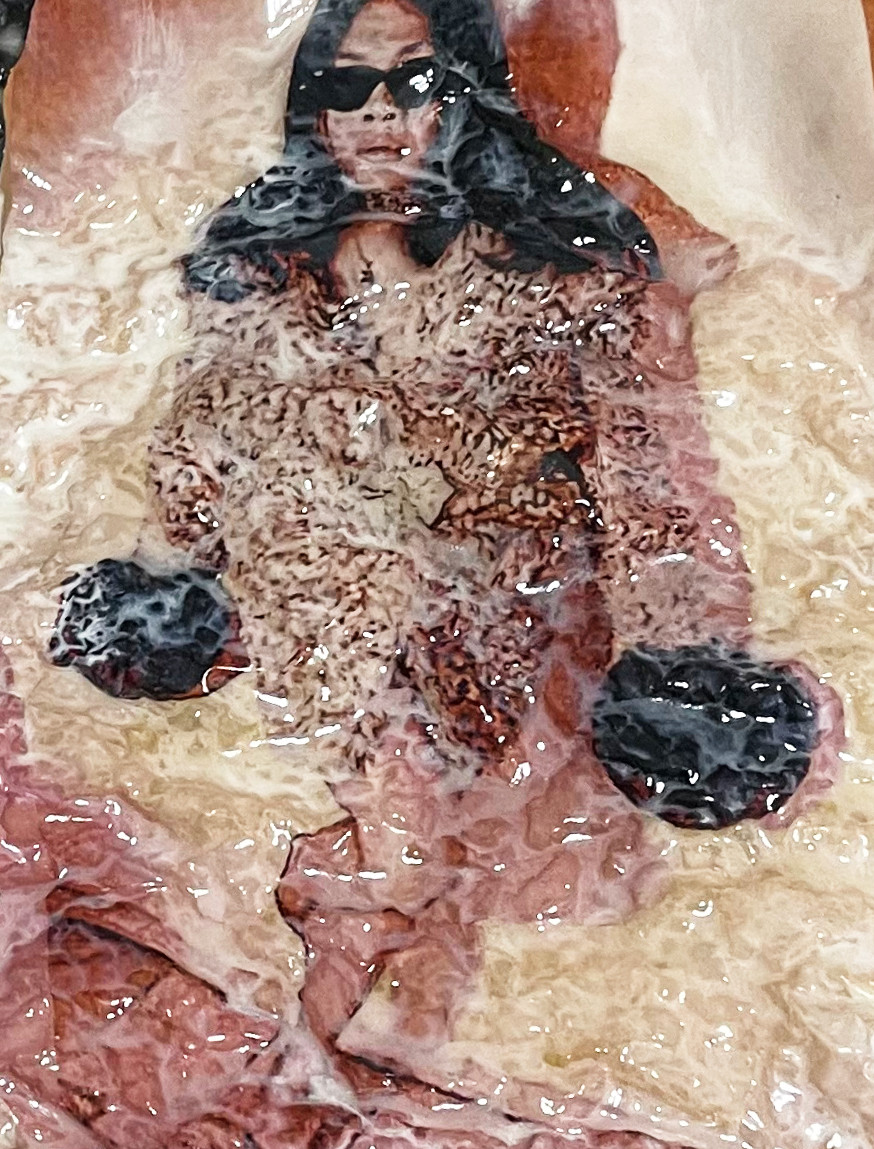
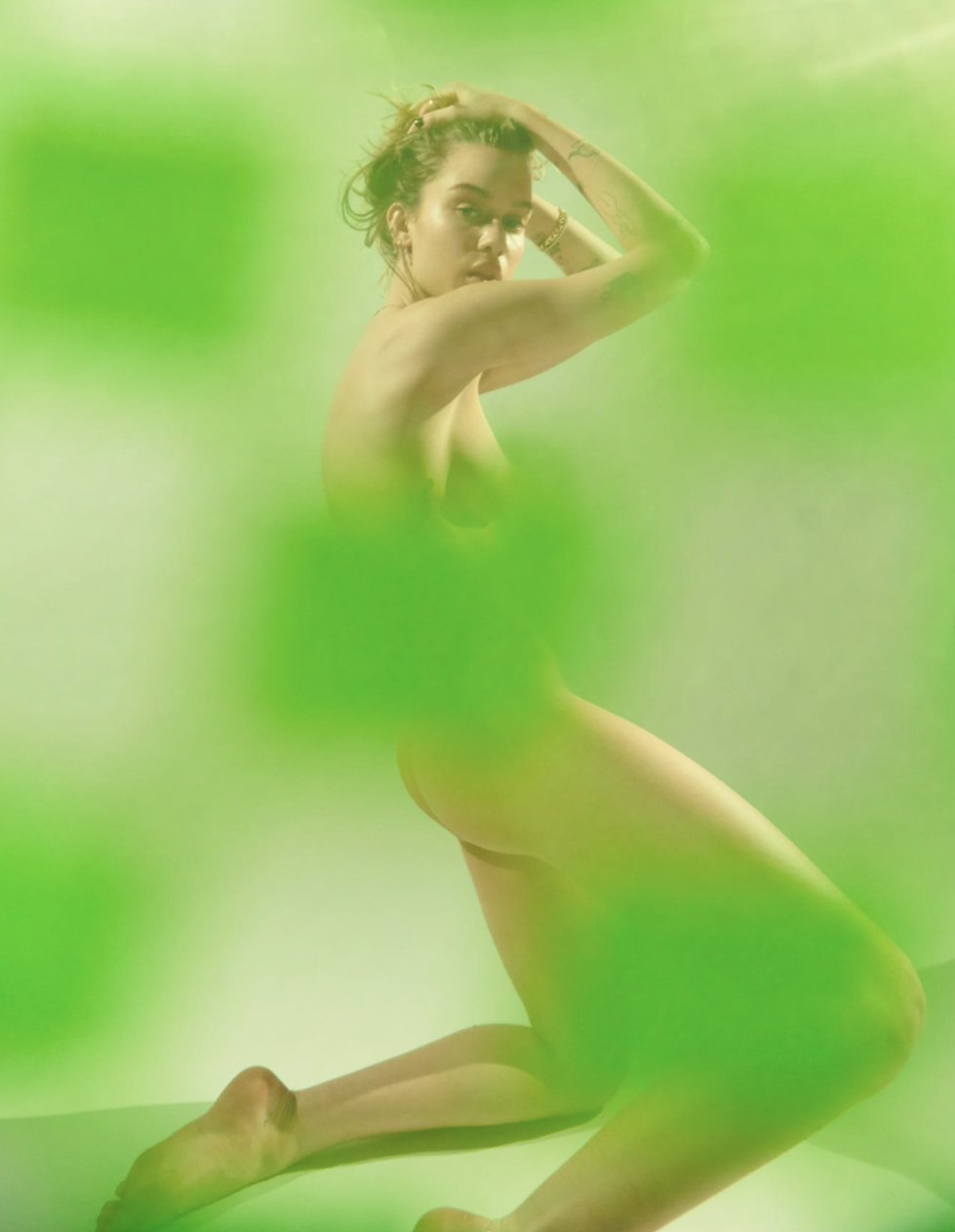
Agusta— When Paige asked me to be a part of the show, she explained the concept was a weird ‘90s black hole sun vibe and I knew exactly what piece I wanted to show. The piece is called 155 Frost Street APT 3B.
Lumia— This is an image I made last year in studio. Most of my photos are created on film, and not in an environment as controlled as a photo studio, so this image is very different from what I usually know myself to make in terms of my photography. Which aligns with the other works in the show, which all seem to have been produced using some form of an additive process.
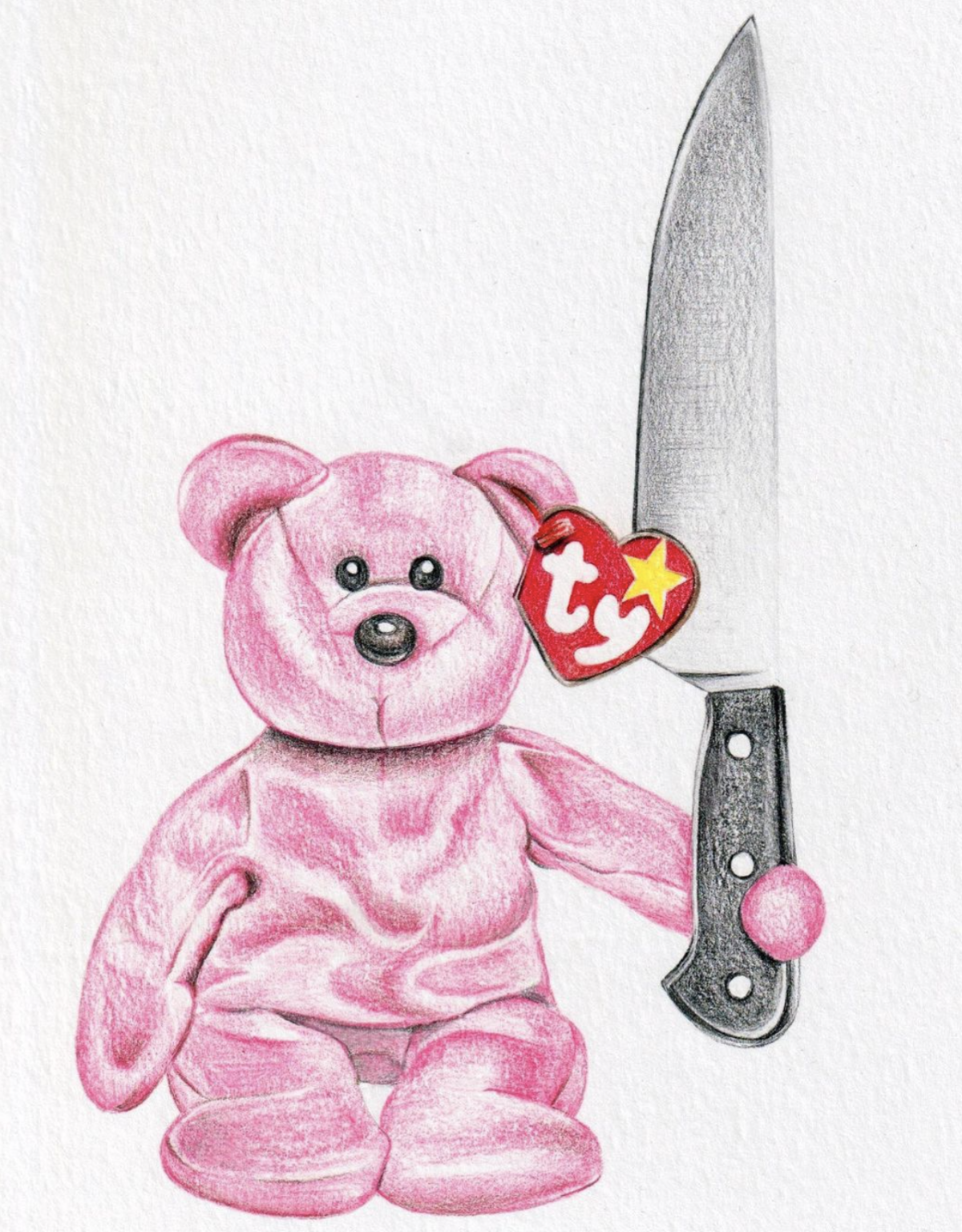
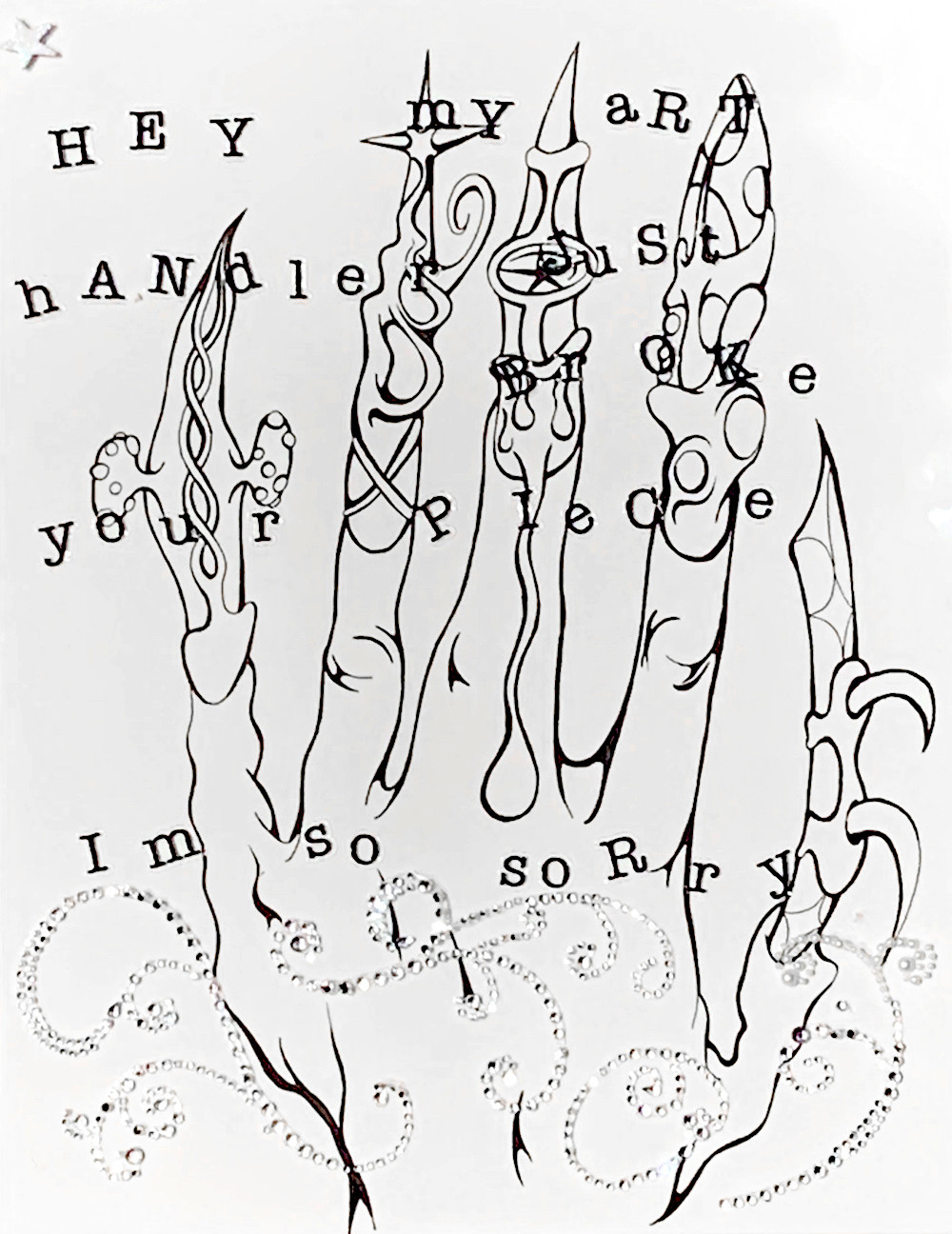
Frank— While I am familiar with the other artists showcasing work, I have no clue what specific work they’re showcasing —so I guess you can say I’m just assuming things will mesh well together. But as for me, I will be showing two works “Blackmoonlilith” and “Simple Life.”
What experience do you want viewers to have?
Lumia— I want them to feel like they’re glissading.
Agusta— I want the viewers to feel like they are in the actual room. I always love creating things that feel like you are taken out of the world you live in.
Frank— I really don’t know what reaction to expect or what feeling I want people to feel. All I know for certain are my own reactions and feelings. Some people tell me that they feel understood and seen through my work so that is something I think about all the time.
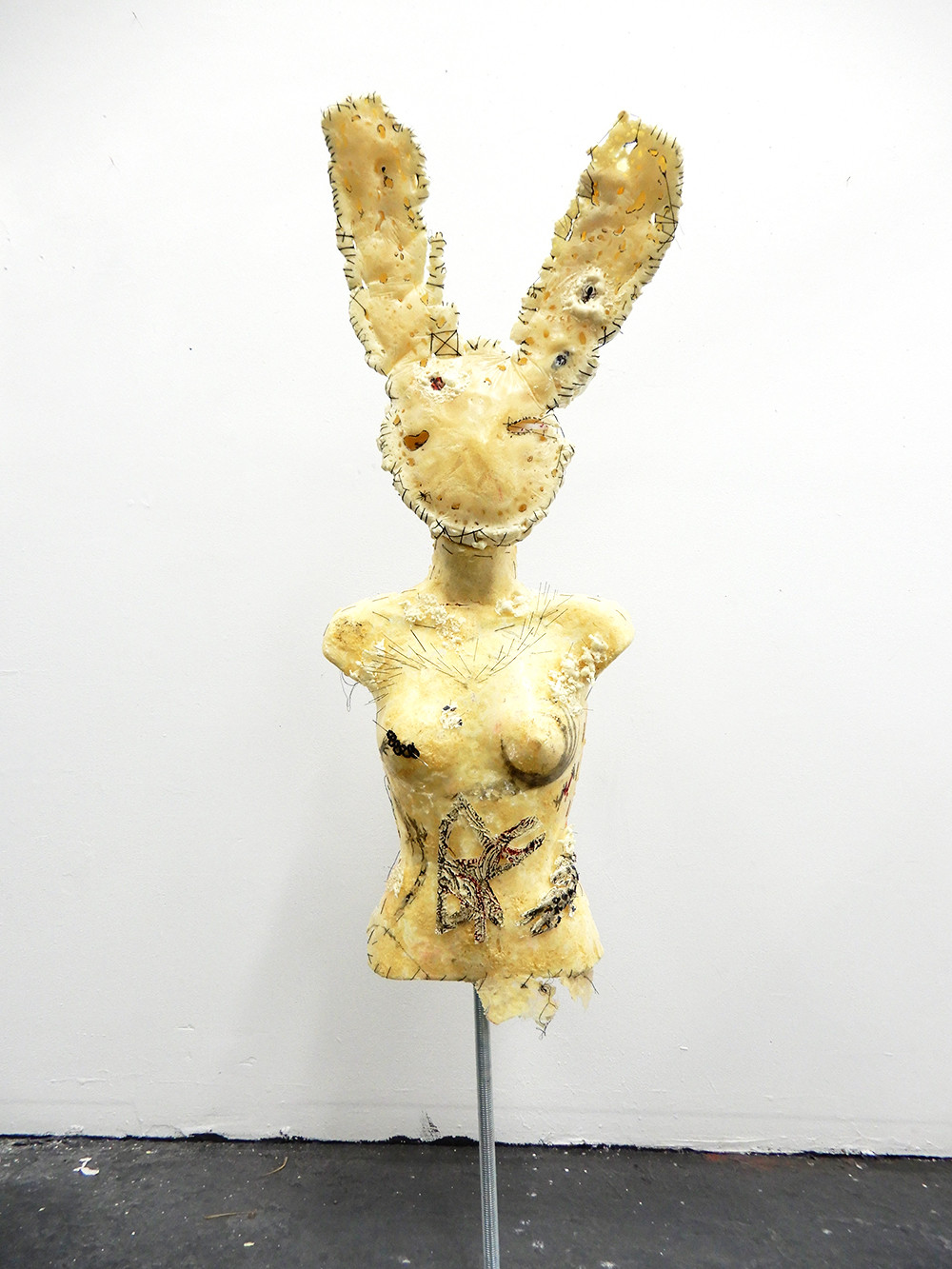
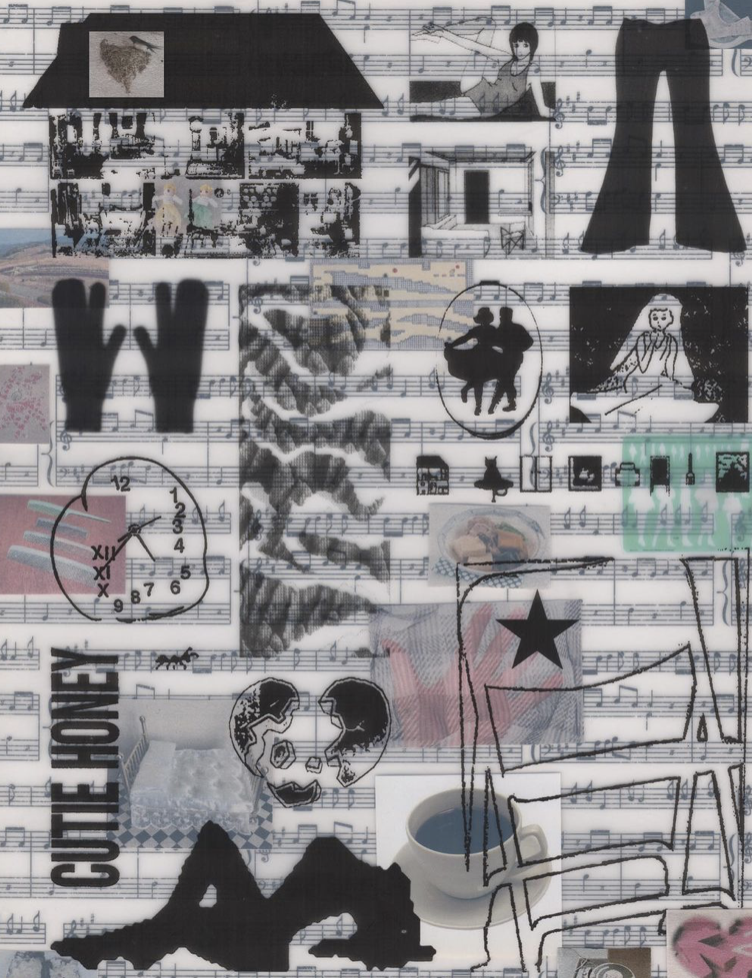
Agusta, much of your work transfigures the bodies of its subjects (yourself and otherwise) across digital contexts. What role do identity and technology play in your art and personal life?
Agusta— Identity is something I never really struggled with, but I love the idea of playing with identities and how people are perceived across different mediums. In my day-to-day life I’ve realized the internet in a sense isn’t real and so much of my time before had gone into that. I’ve been trying to live more outside of technology and just experience things in real life instead of experiencing it through the lens on my phone. I do however think that pushing myself to live outside of technology has helped me push what I make a little further and create spaces that teeter on real and “fake.”
Lumia, you’ve worked in commercial spaces like on HBO’s Betty, and in collaboration with brands like Adidas, how do you maintain authenticity in your artistic practice?
Lumia— Commercial and fashion work may not have a direct creative influence on what I produce in my personal practice - but it has taught me that I would like the majority of my work to be created with the intention of moving the viewer. The core concepts of my commercial and fashion work are birthed from ideas that I explore within my personal work.
What is the importance of the live experience to your work, and how did COVID impact it?
Lumia— I don’t like showing work virtually if the work wasn’t created with the intention of being presented in a virtual space. My senior thesis show was an in-person show, and only a handful of people outside of the Cooper Union community were allowed to attend due to COVID restrictions.
Agusta— Well I think my work functions both online and in person. The beauty of Covid for me was that I could still work and showcase everything — just in a digital world.
Frank— 2021 was the first year I started doing shows! COVID,of course, was an inconvenience and terror, but I’m glad it didn’t stop too many people from enjoying things. Experiencing a work of art in person is much different than looking at your phone or laptop. Whatever environment the work is placed in —it’s almost like the work finds a way to build a home there —a personal sanctuary that pulls in those that resonate with it. So I feel strongly about live work and its impact! It can tell a different story to anyone that wishes to listen at that moment in time. For me, all my work is digital so it has to be printed in order to be tangible. I feel what I most gain from the live experience is scaling my work to a much bigger size than how I publish it on the internet. Feels nice being face to face with all of the imagery.
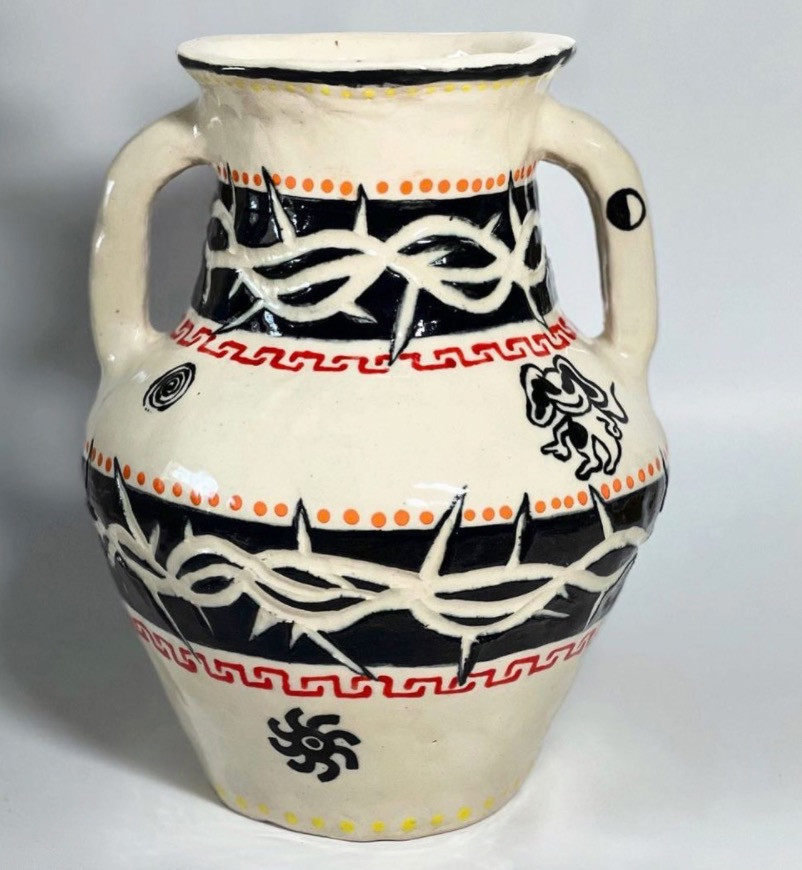
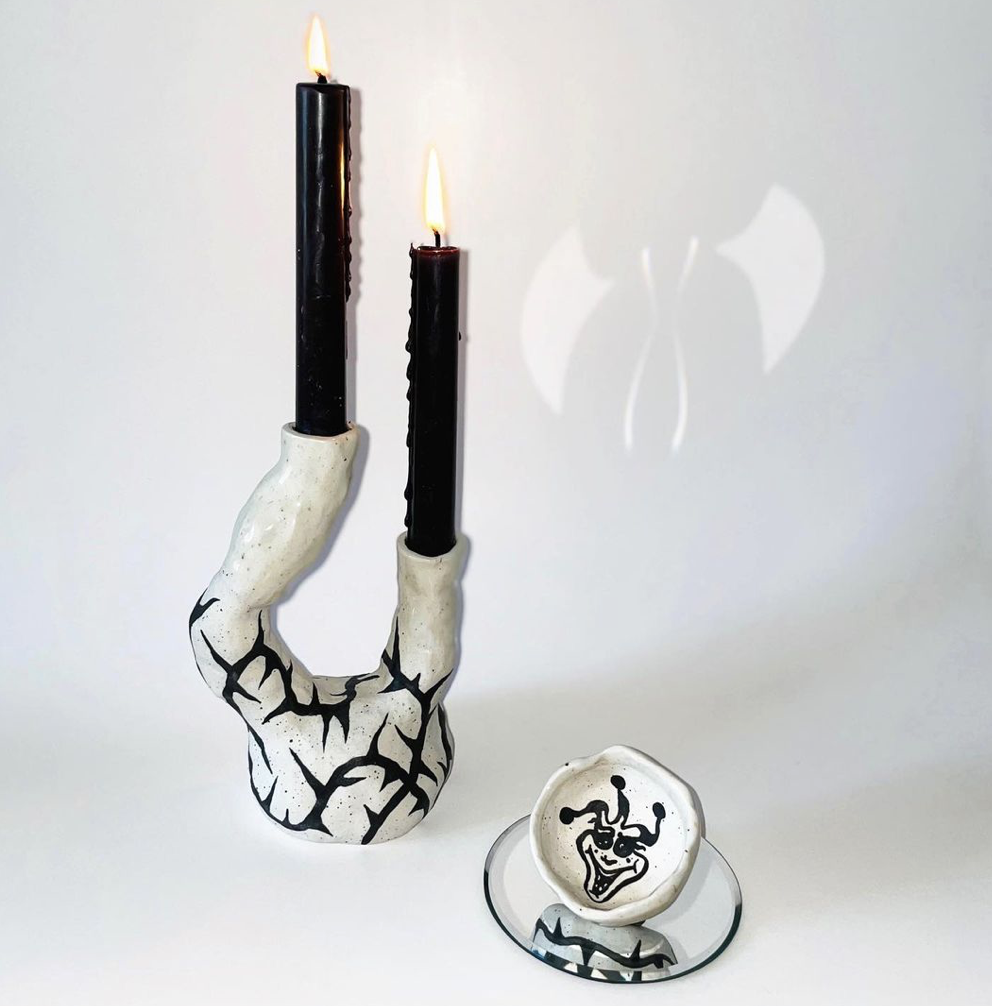
Right! You design in PicsArt on an iPhone 8, so the imagery is usually much smaller. How did you start working in that medium?
Frank— I didn’t know what to call what I was doing, I was just doing it so it wasn’t anything serious at all, but eventually I started digging deeper and deeper into the app and deeper into myself and realized I could literally make anything with any tool because of my resilience in articulating what I see in my head. That realization happened after high school and it propelled me to take more risks with how I create and what I create with! My process is very sporadic because I never know when inspiration will strike and when it will leave. When I’m inspired I work hastily with full tunnel vision but when that inspiration withers, I drift away from the work so it can breathe new life.
Your work does often feature friends and collaborators, how has being a part of Daisies impacted that approach?
Frank— Being a part of Daisies has definitely widened my perception of what art looks like. The February show was such an honor —showcasing work alongside so many amazing artists really allowed me to feel accepted and unapologetic about my work. Felt like we were all cheering each other on through our expressions existing in the same space at the same time.