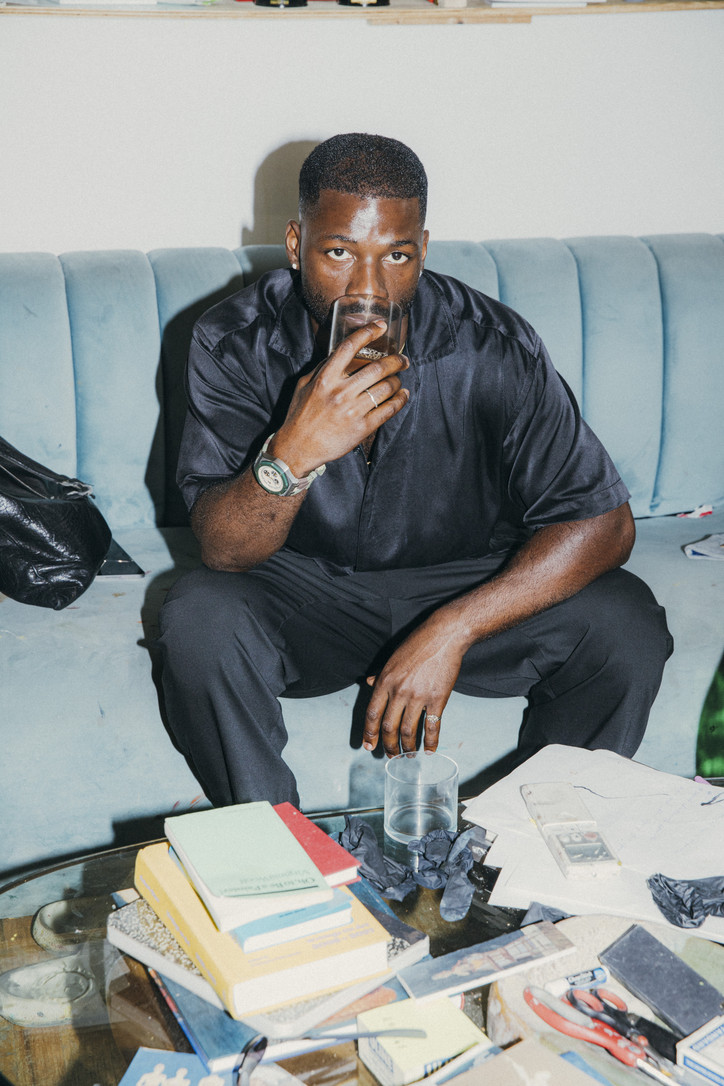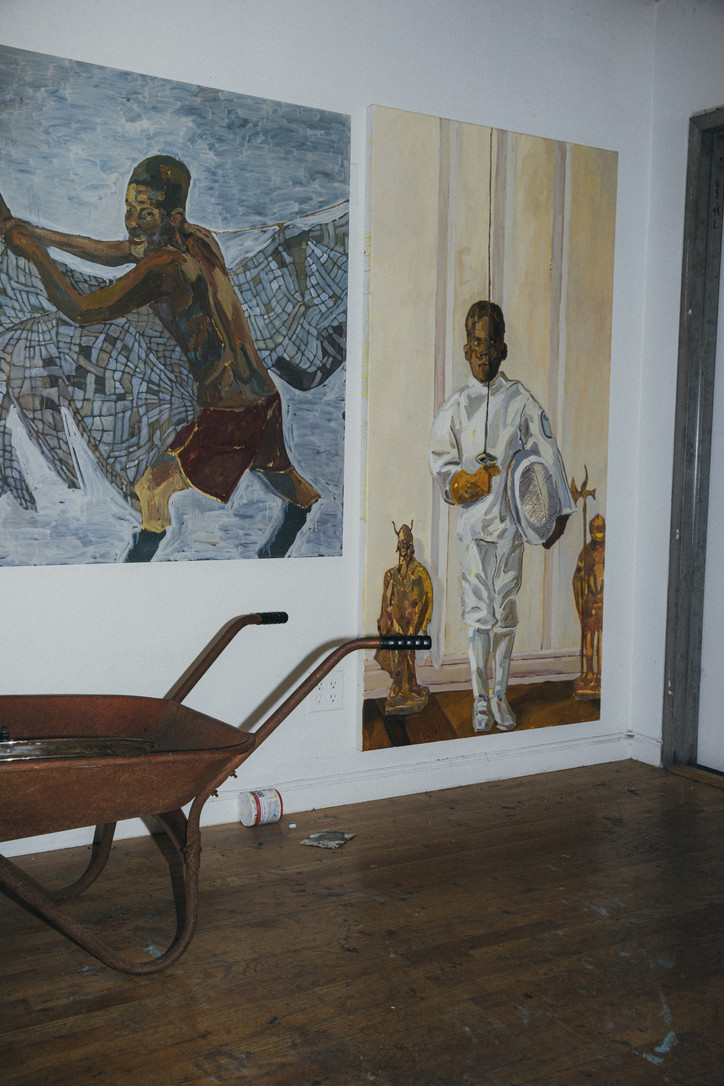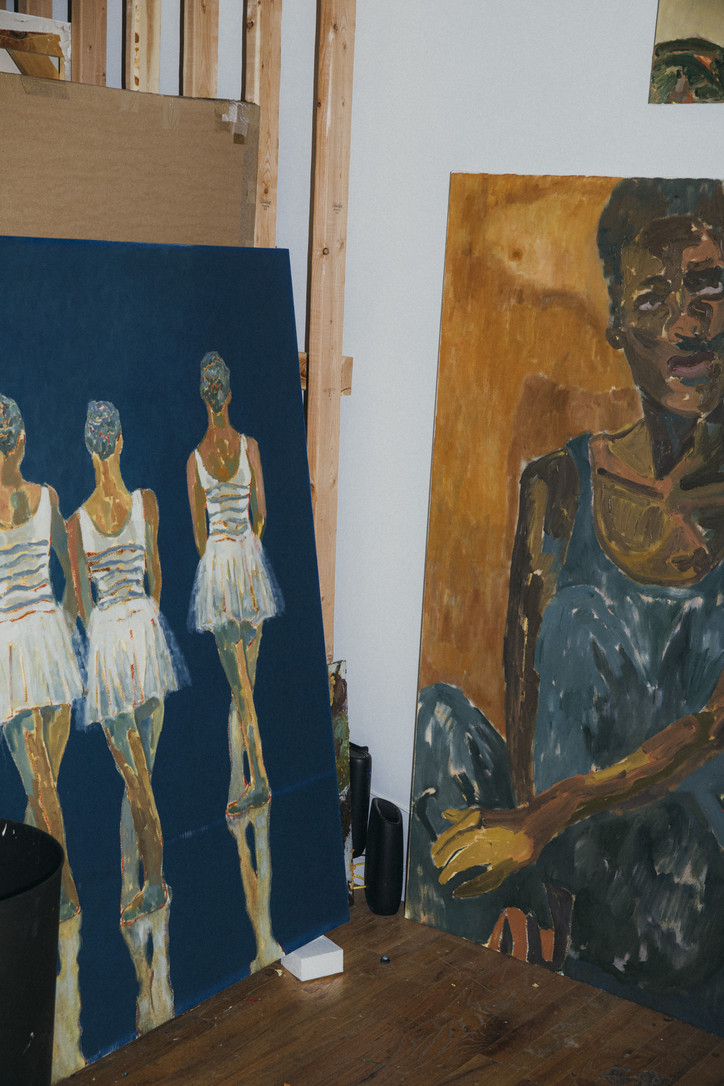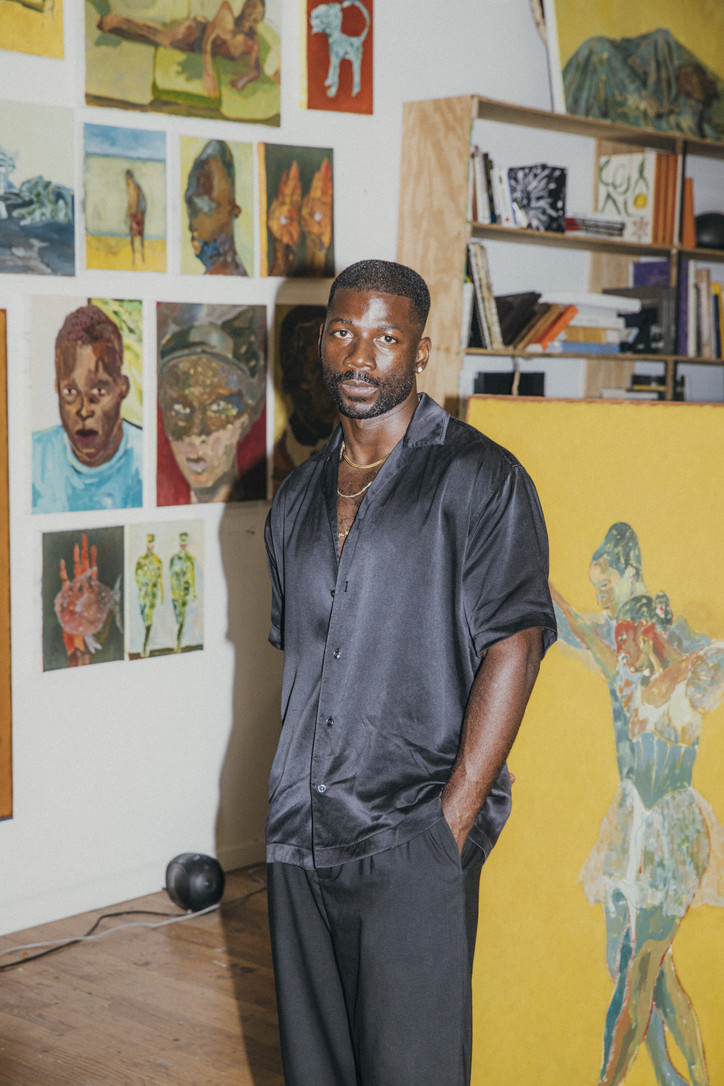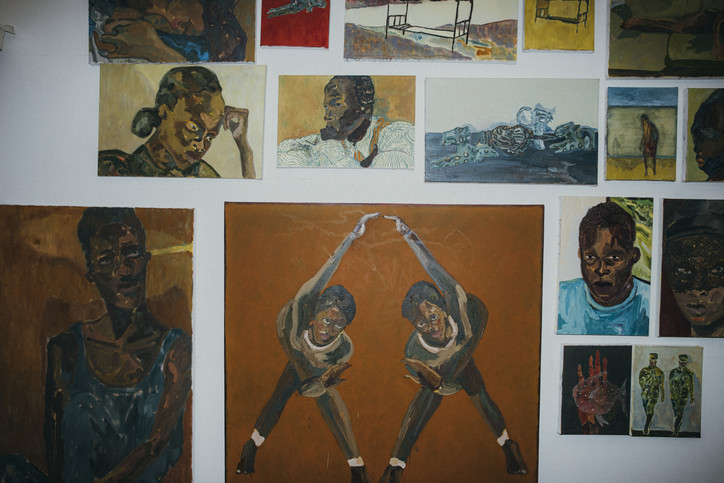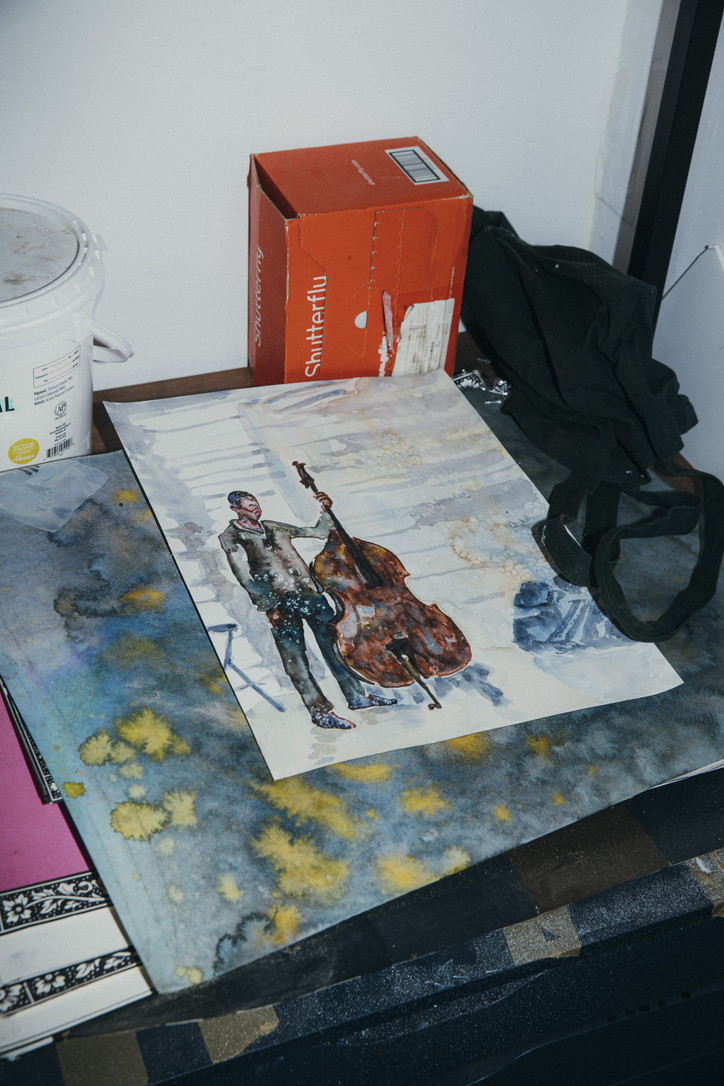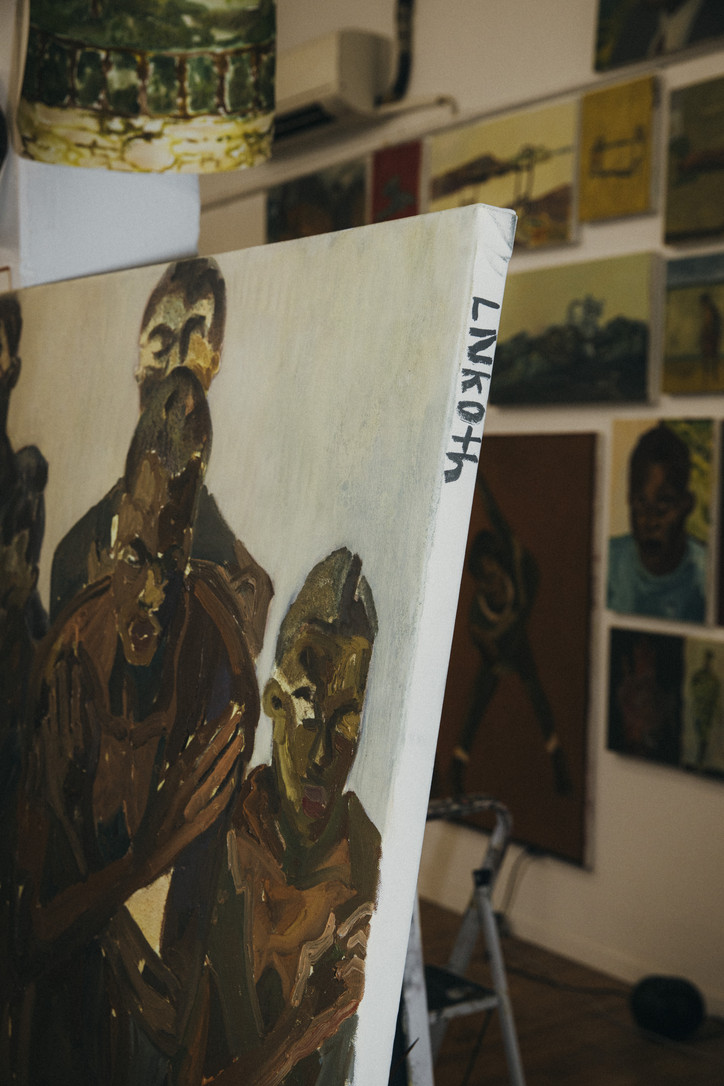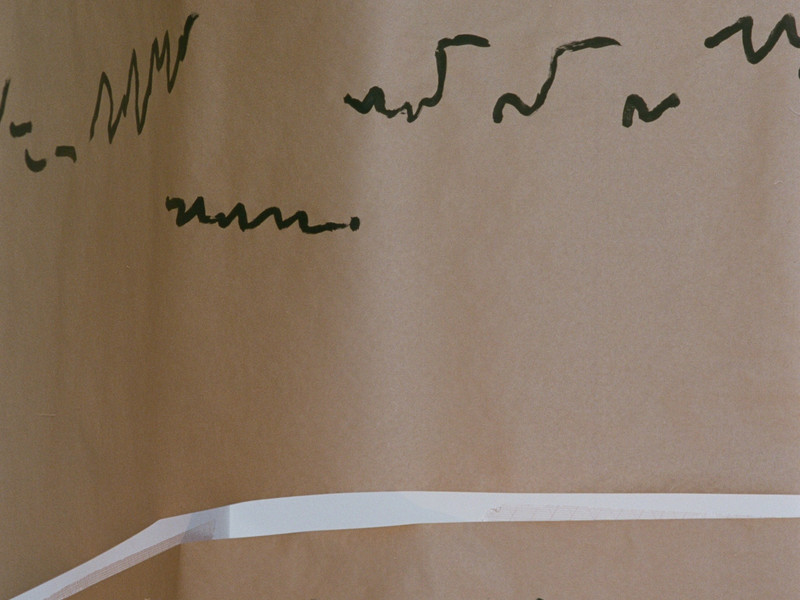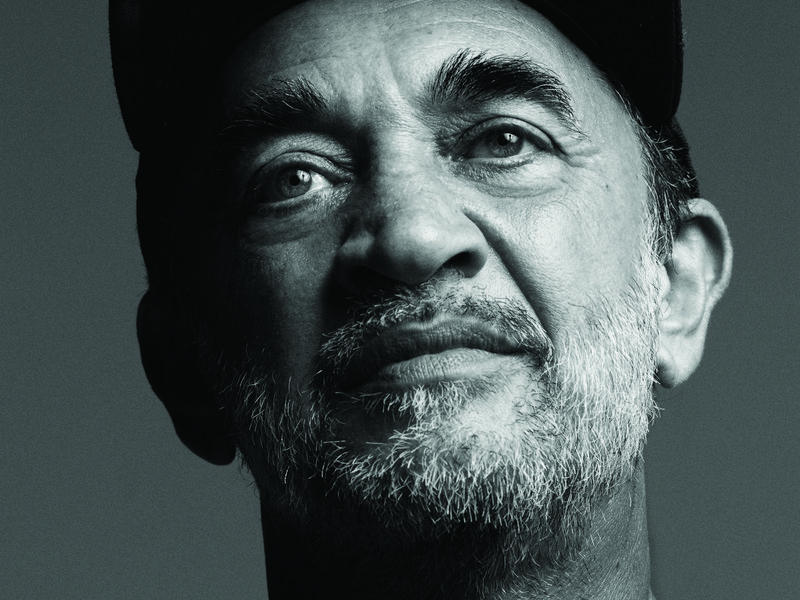
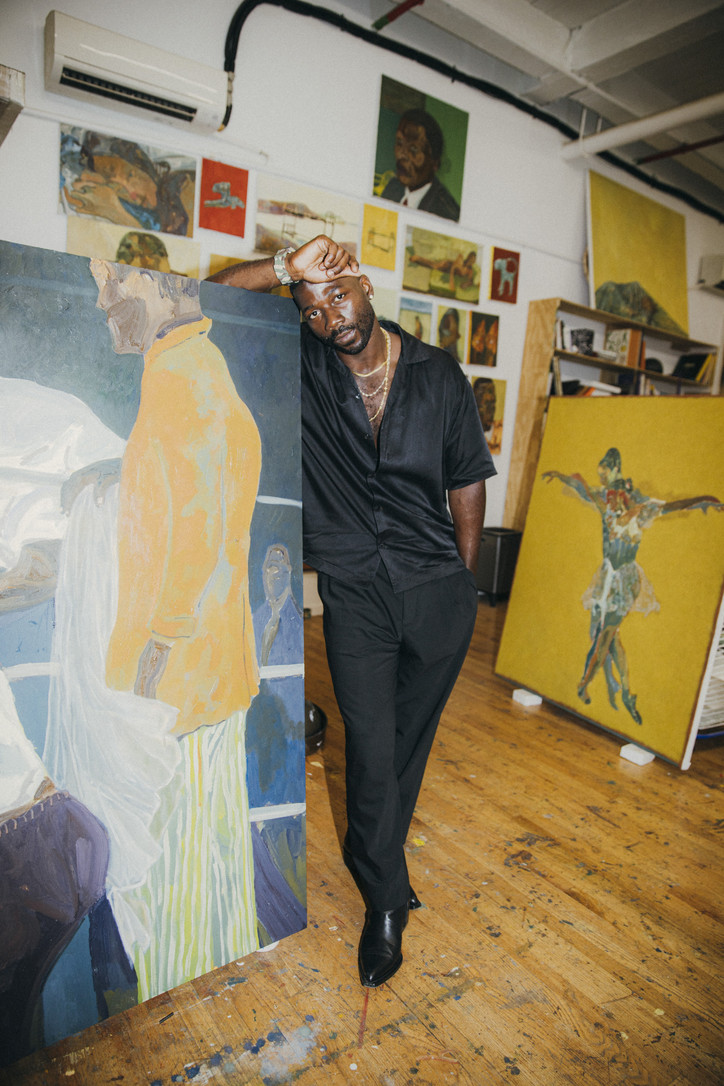
That all happened amidst Nkoth’s Parisian era. When I visited, he was back in the New York groove, polishing off his forthcoming solo show at MASSIMODECARLO in Milan, titled “Physical Proof.” He’d been working at it for eight months, departing from breakneck pace he’s maintained since earning his Hunter MFA and entering the orbit of stars like Naomi Campbell in 2019. “Physical Proof” marks his fitting debut in slow-drying oils, after years of concocting miraculously impastoed acrylic paintings. “I wanted to prove to myself I didn't need oil… until I did,” he said.
Those comparatively ancient oil paints empower Nkoth’s deft hand with new hues, shimmering layers, and textural vigor. A massive canvas featuring a boxer heaped down in the ring hung in the main workspace of Nkoth’s studio when I visited. The hectic scene, teeming with cornercrews, culminates in one stark magenta line—a wound the boxer sustained on his pec.
Nkoth consistently draws from art history. You can feel the echoes of Harlem Renaissance star Charles W. White’s figures throughout Nkoth’s own, and in 2024, his ode to Edvard Munch’s “Love and Pain” (1895) showed at Art Basel Hong Kong. Last year, Nkoth did a residency in the south of France. There, a critic who completed a PhD on Caravaggio gave Nkoth and his cohorts a presentation on Caravaggio’s “The Incredulity of St. Thomas” (c. 1601 - 1602.) In it, the original ‘Doubting Thomas’ sticks his finger in a gash Christ sustained amidst his crucifixion.