Sometimes Brutal, Sometimes Tender
The first time Victoria Vassiliki Daldas ever felt truly loved was by Berlin.
The city met her with an expressive pace of life and a sense of artistic abundance. It acted as a muse. The experience couldn’t have differed more from the one she had in her small hometown, where she often felt misunderstood and out of place. She sought out Berlin because she was seeking out herself. She sang to Berlin and Berlin sang back to her. The city had an innate musicality, and it was a breeding ground for passion, filling her cup in all areas of life.
The second time was when she met Theo.
It was 2 a.m. at a casual, if not run-down, bar in Neukölln. The two had matched on Tinder, and the idea of a spontaneous outing had been thrown out there. Why not? Theo ordered a vodka soda. And he ordered it with such a thick accent that, despite the two having conversed in English thus far, Victoria was prompted to say, “Oh, I can speak German too.” They laugh as they recount this. Probably because they recall it being a moment from that first date where the ice broke and tenderness set in. They spent the rest of the night illuminated by the glow of a phone screen, scrolling through YouTube videos as they bonded over their shared musical taste. DAF was a hot topic. They had chemistry romantically, platonically, artistically. It was an electric reverberation that would propel the decade that followed as they formed their techno punk band, Brutalismus 3000, and, of course, their relationship.

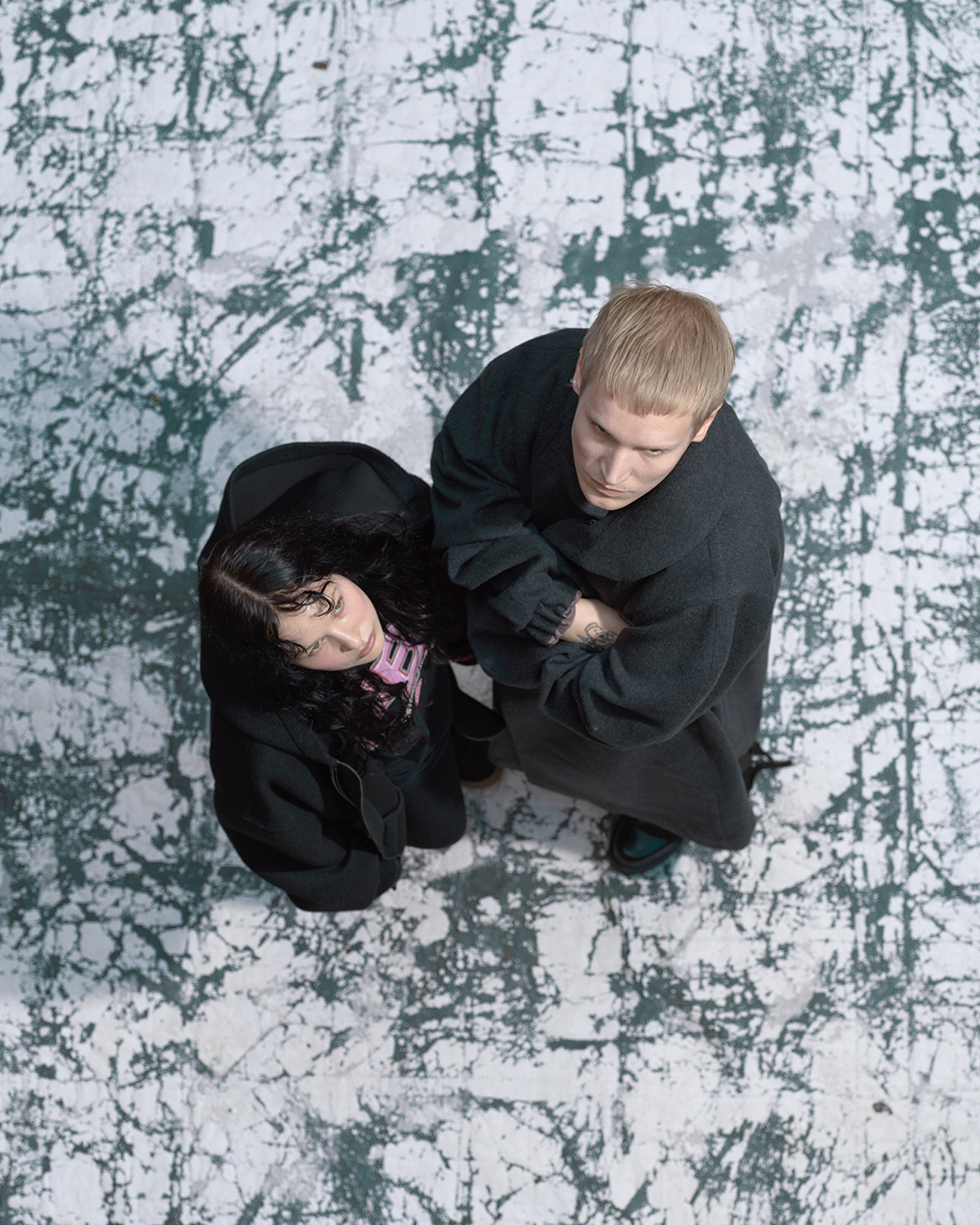
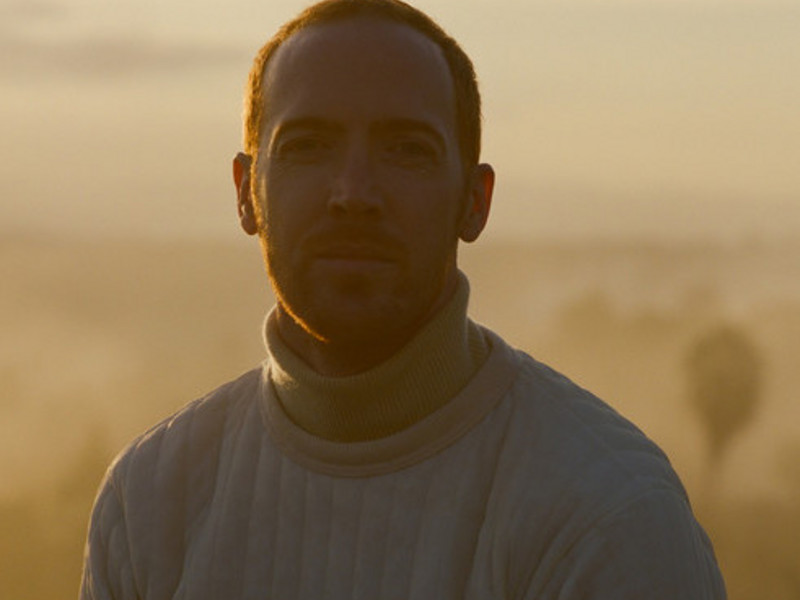
THEO wears BOMBER JACKET by 032C, CARGO PANTS by 032C, SHOES by NIKE.
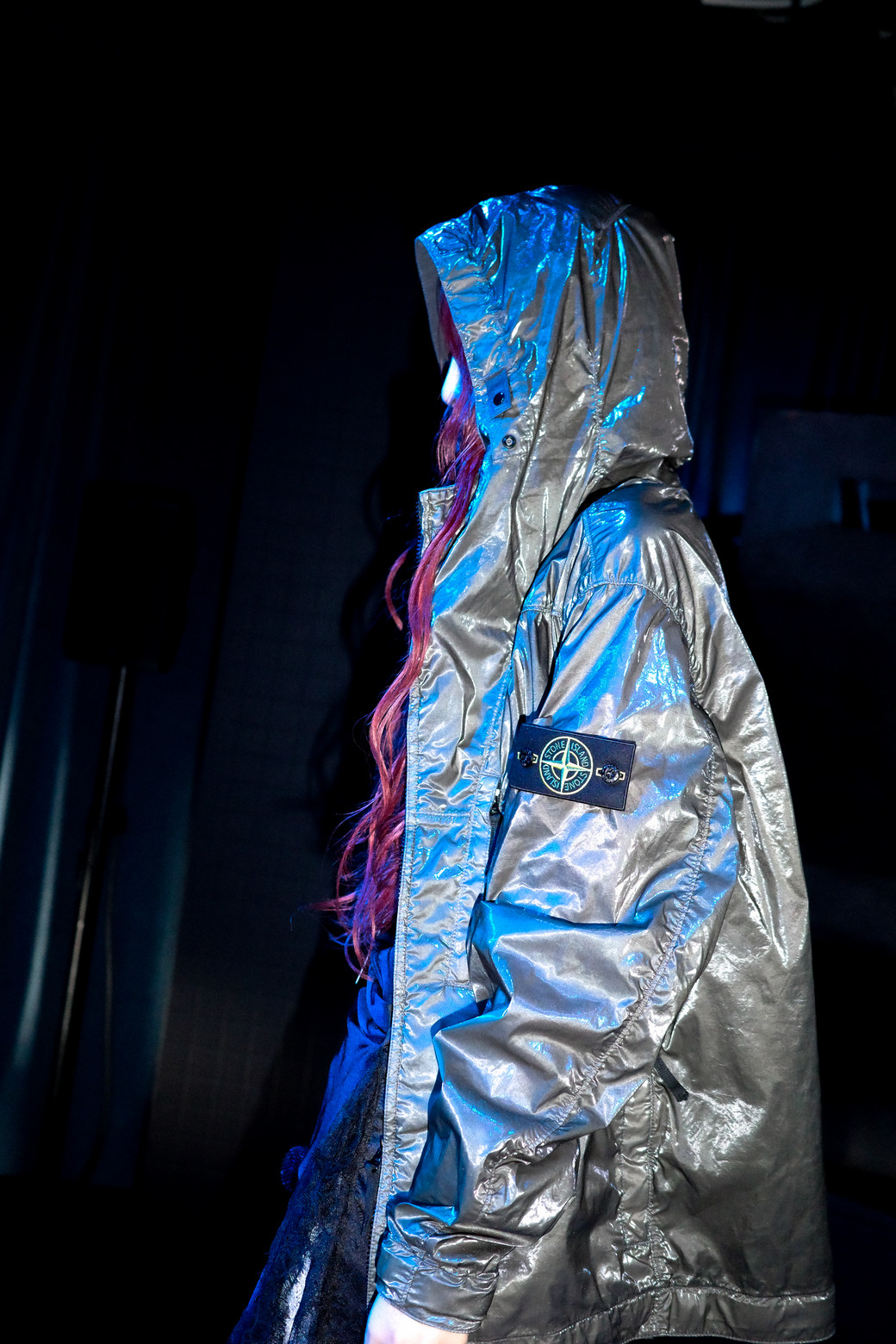
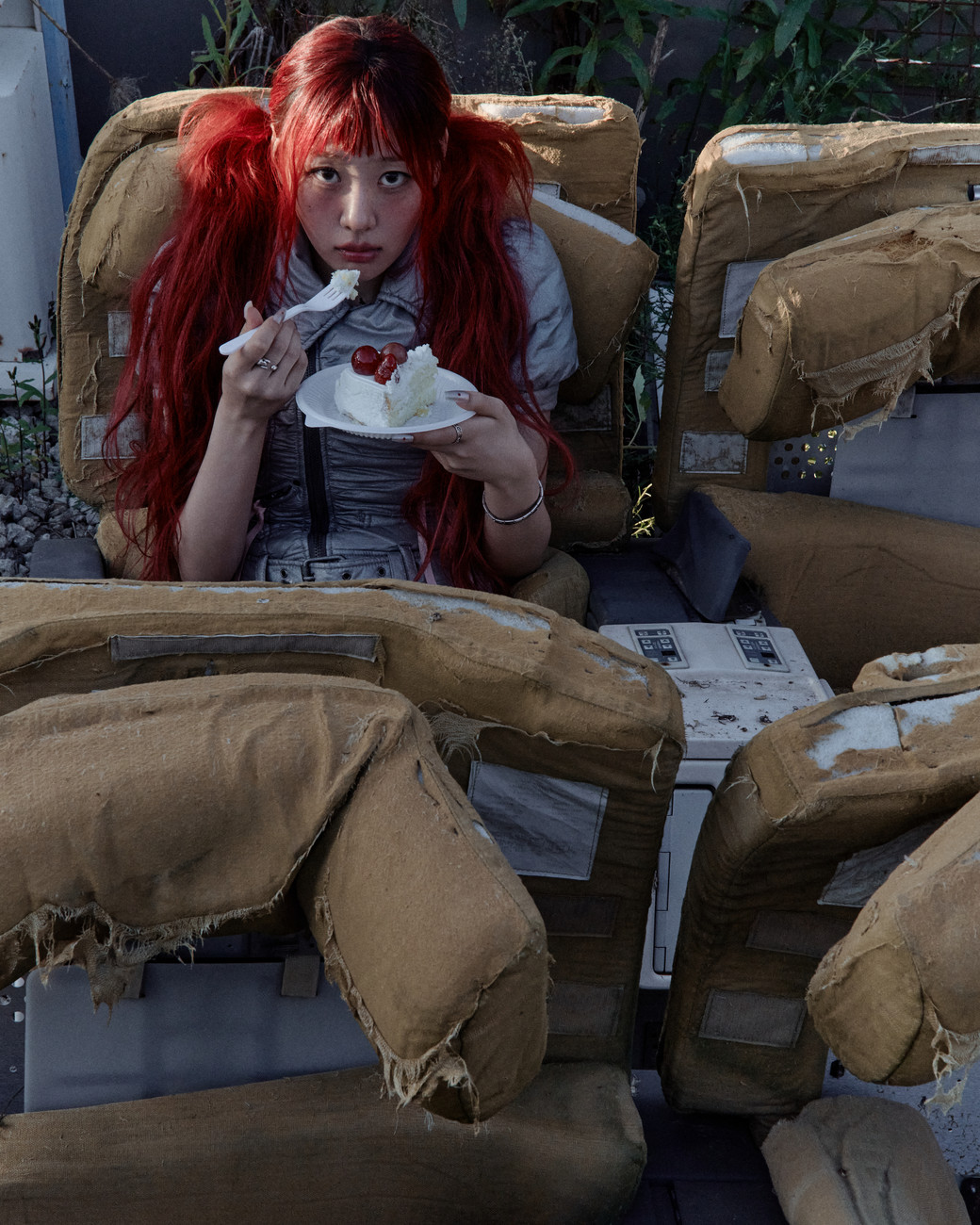
VICKY wears JACKET by SEBASTIEN MEUNIER, BELT by ACNE STUDIOS, JEANS by DIESEL, SHOES by OTTOLINGER.
THEO wears COAT by VIVIENNE WESTWOOD, PANTS by CAROL CHRISTIAN POELL AW99/00, SHOES by XYZ.
VICKY wears SET by 032C, T-SHIRT STYLISTS OWN, SHOES by OTTOLINGER.
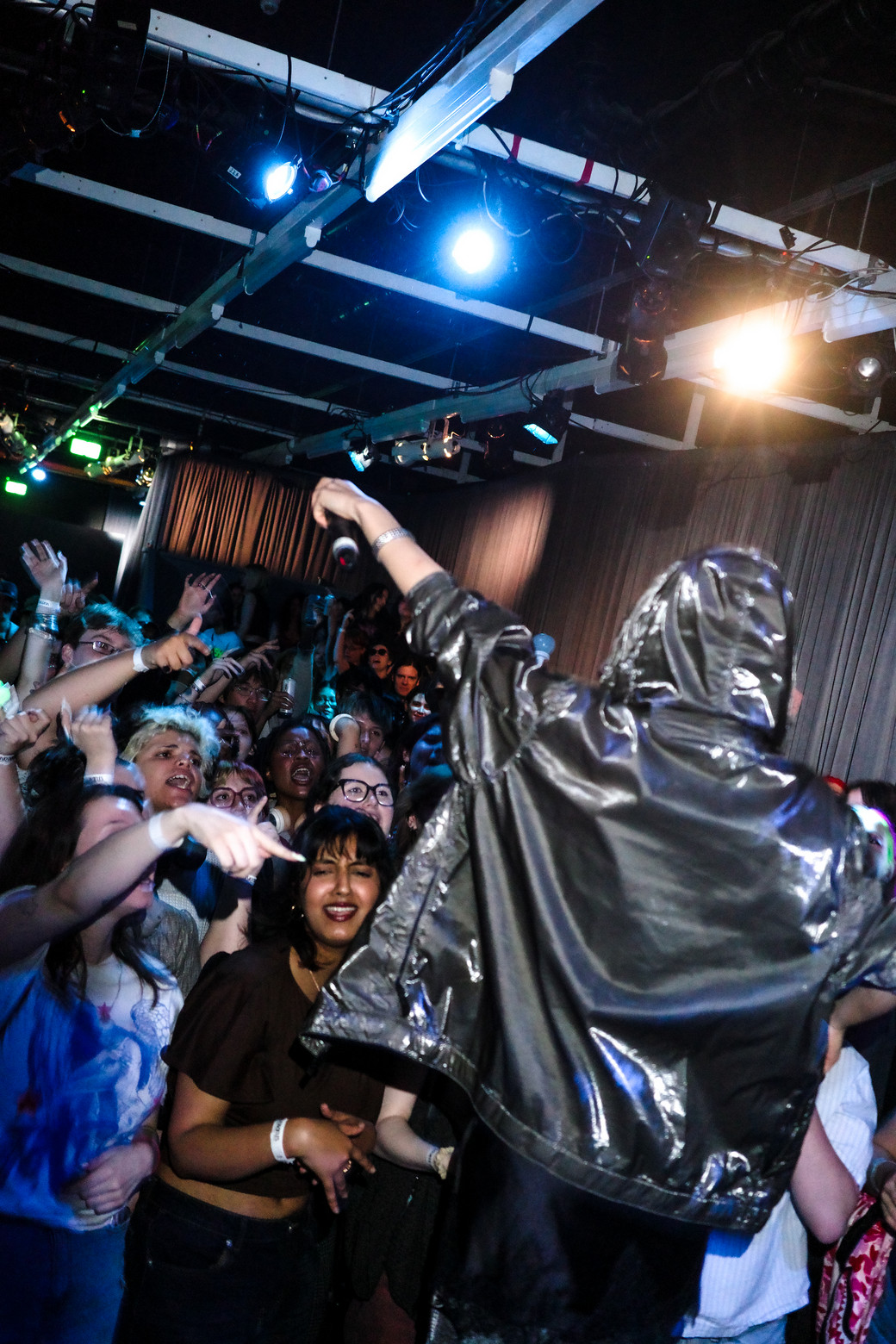
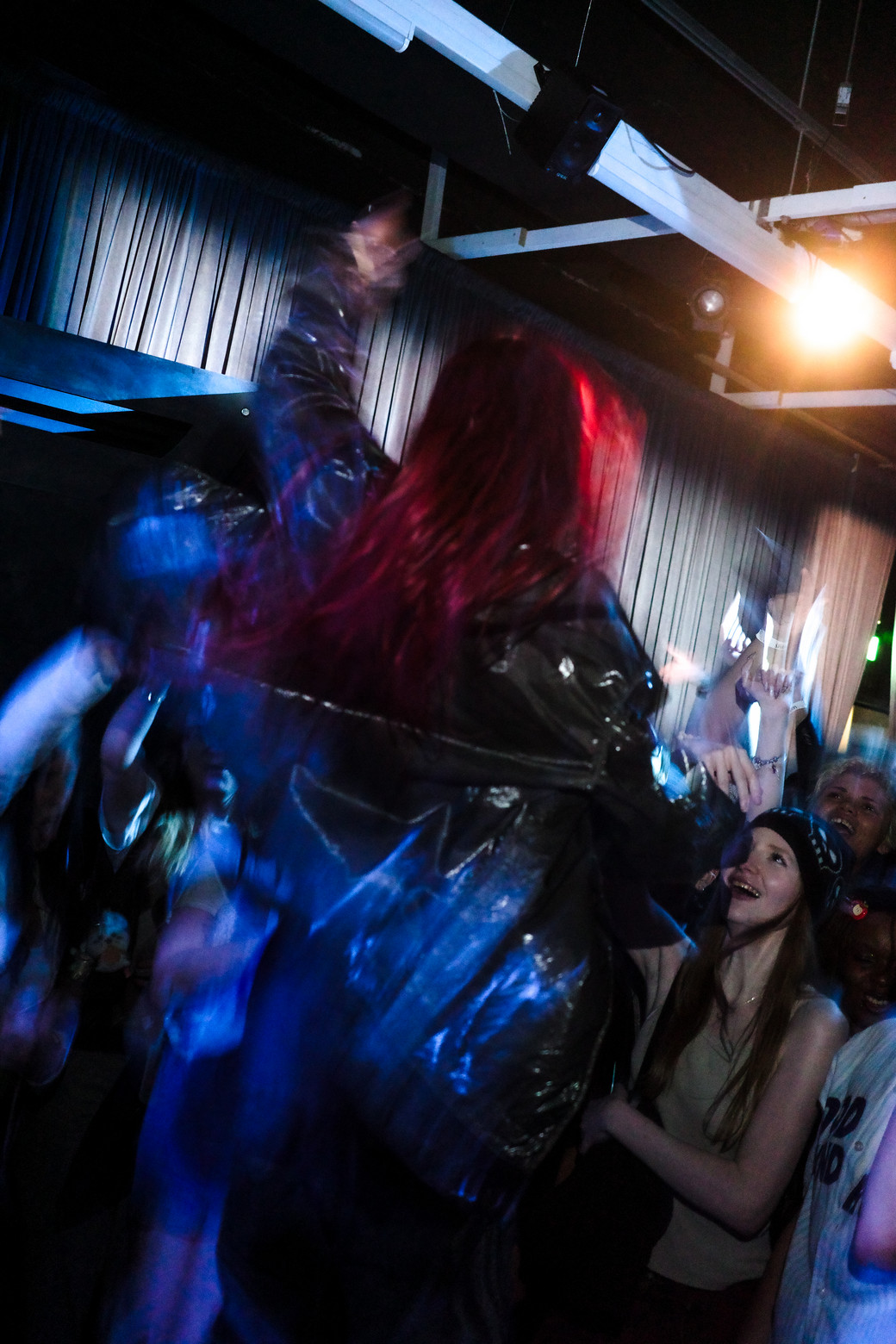
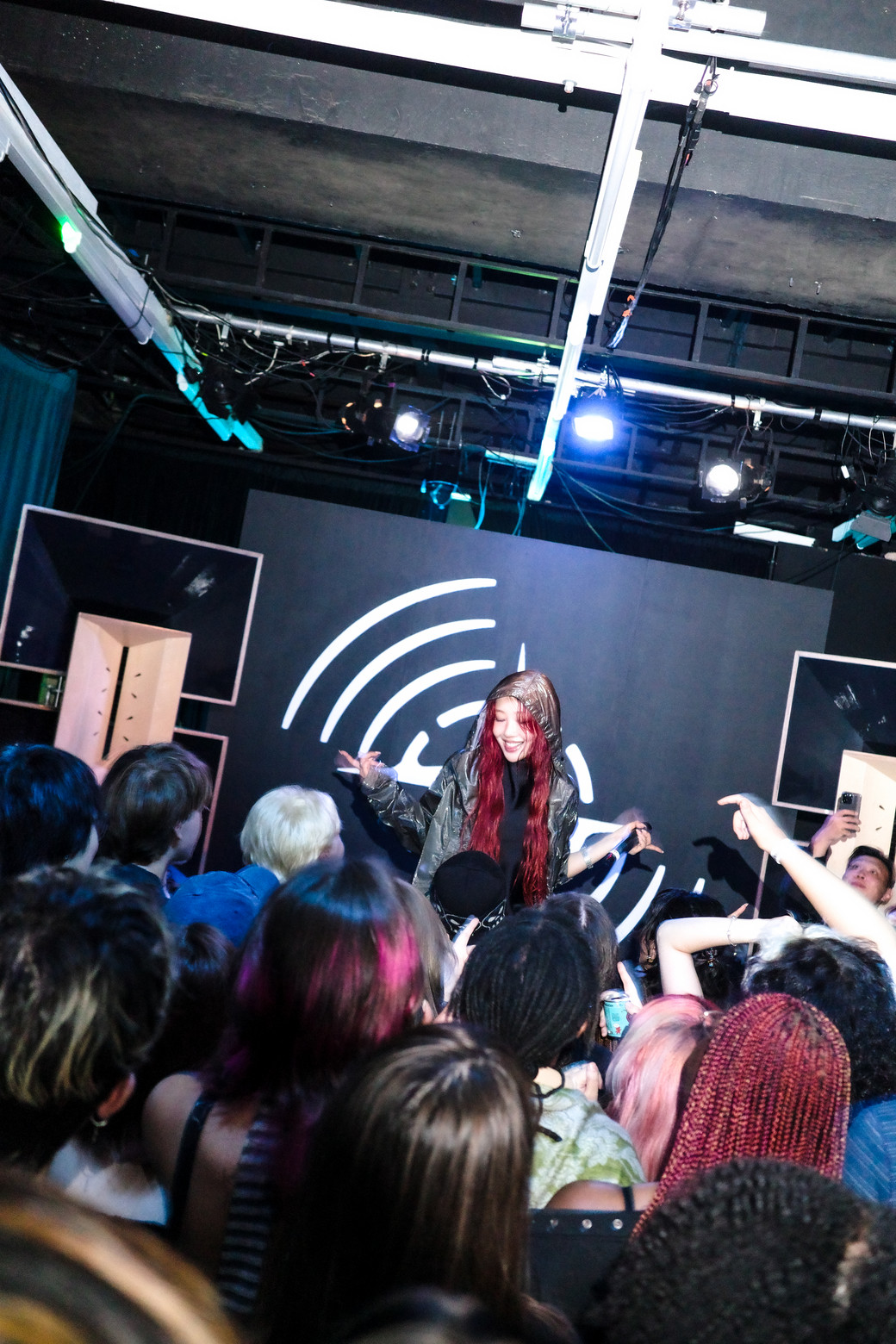
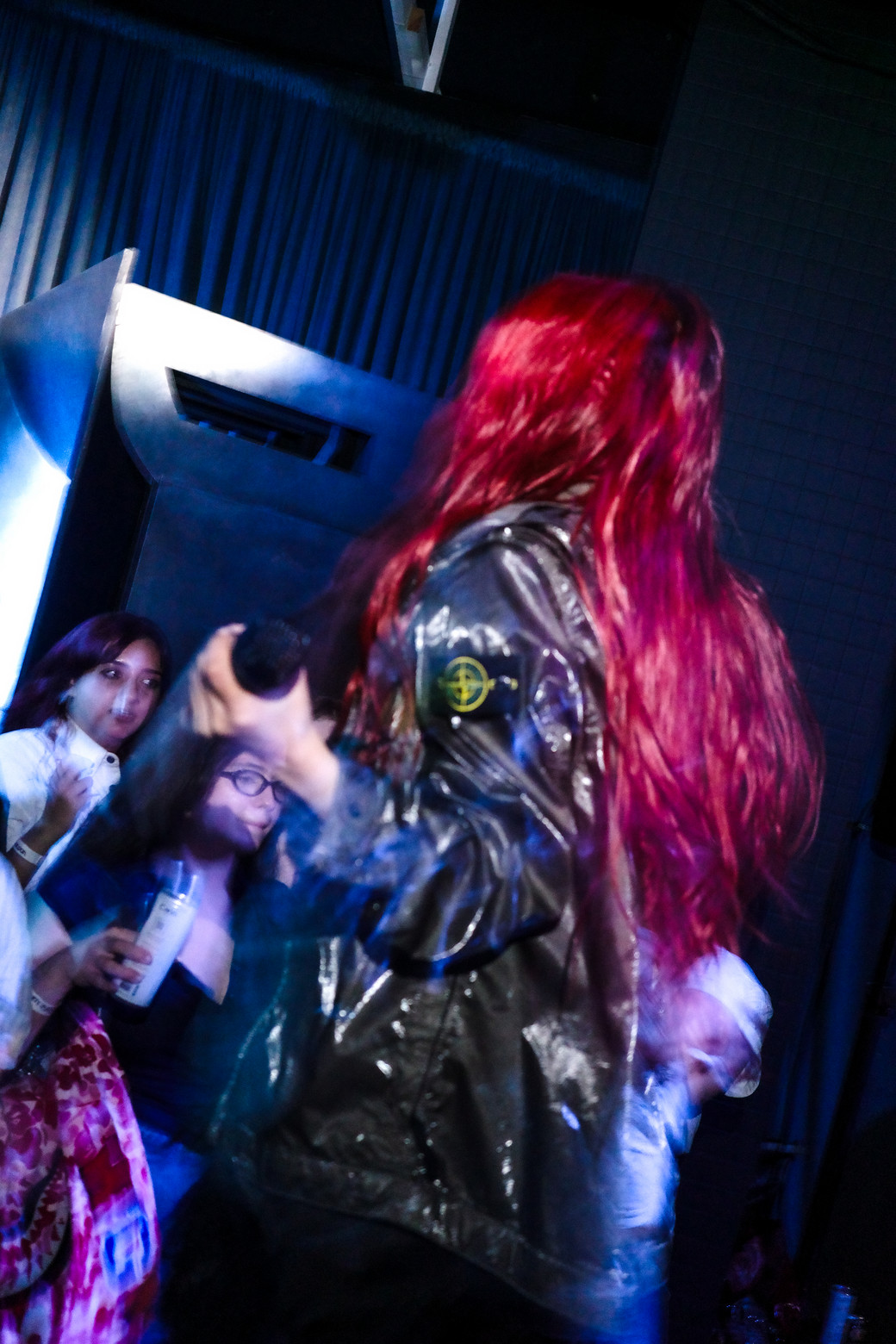
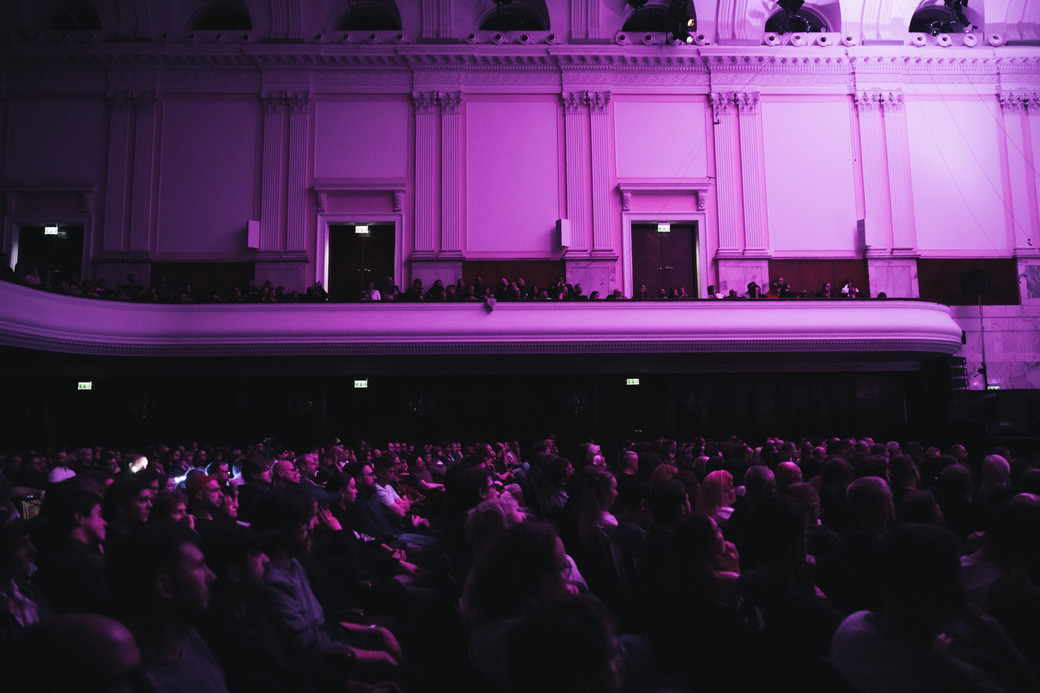
I catch them just after they’ve spent the weekend headlining Ikarus Festival, and before a seven-hour drive back to Berlin. Which is to say, they are in an in-between state. A space of exhaustion and excitement. A state they are no stranger to. The electronic duo is known for their presence in European nightlife, where they’ve become masters at building crowd energy, inciting something of a euphoria, and leaving you utterly fatigued (in an orgasmic sort of way).
Victoria loves to watch the crowd squirm animatedly. She loves when they do mosh pits, and when she can observe them as individuals. “It can be one specific person just in the crowd that gives me a certain kind of energy or vibe.” She wants to “see the emotion in someone's face, whatever it is, [whether] it's aggressive, headbanging, or tearing up.” On vocals, she can do all of this. But Theo has his hands busy. He’s looking down as he’s on decks. Theo says, “You can do the crowd work. I’m more focused on just playing. But also, I can hear it if we get a good reaction.”
The crowd can hear them too. Spoiler: Victoria screams. She gets cathartic. She lets it out. She sings the lyrics she writes with such vigor that she is practically self-gutting. Known for her shrill, for the distress in her voice, I have to ask, “What else in life makes you scream?” Everything, she says. “I'm always really vocal when I don't like something; it was always like that since [I was] a kid. My father used to say I [was] not gonna make money with my screaming, but look at me now.”
In a similar vein, whatever vein in our bodies holds all that pent-up fury and unrest, I ask who they hope hates their music. We’ve been talking about love so extensively that this subversion feels necessary. Theo says, “Always good if snobs hate it. They're like the enemy of art, and especially techno has so many fucking snobs. It's so annoying. They will never move. They never want anything different,” and goes on to say, “and obviously if Nazis get angry, then it's good.” They are satisfyingly defiant. Such that we can’t help but ruminate on rebellion. So, I question, “What are you rebelling against the most?” The answer takes me by surprise. “Boredom,” Theo says. He’s right; there is nothing I consider to be more brutal than boredom. They cure that void by distracting from it with music that Theo claims is “so aggressive and different that it feels like [you’ve been] punched in the face when you listen.”


THEO wears TRACKSUIT by PS5, SNEAKERS by BALENCIAGA, SUNGLASSES by GUCCI.
VICKY wears ZIP UP by MAISON MARGIELA SS96, PANTS by VETEMENTS, SHOES by OTTOLINGER.
THEO wears BOMBER JACKET by 032C, CARGO PANTS by 032C, SHOES by NIKE.
VICKY wears JACKET by SEBASTIEN MEUNIER, BELT by ACNE STUDIOS, JEANS by DIESEL, SHOES by OTTOLINGER.
Despite having made a name for themselves as a duo that makes aggressive music, their sophomore album, Harmony, is affectionate toward a more melodic tone. Tracks like “You Were Never Really Here But I Miss Ya” and “Kairo” add emotional texture to their ever-evolving sound. Victoria believes this progression was an inevitable one. She mentions, “We were a little bit bored of the scene we emerged in, so I think for us it was just natural to develop further.” Theo expands on this, reeling in his contention with the conformity in club culture. “It wasn't really on purpose that we made only club music. I think it was just the scene that we lived in, and the gigs that we played at 4 a.m. Then you automatically make the music that fits that.”
Undoubtedly, the most sedated and most distinctive track on the record is “Morning Is For The Happy.” It meets the ear through spoken word, performed by Anya Taylor-Joy, whom the duo met one night at a festival in Budapest and befriended. The song began as a poem that Theo wrote. In the quiet darkness of a beastly hangover, he’d found himself reflecting on all the happenstances that had sucked him dry. A revolving door of touring, partying, and surrendering all you’ve got to these collective moments of adrenaline. “I just have no energy,” Anya reads, before the song cuts out. Theo was utterly drained. Poetry was, and is, his way of reviving. He mentions that many of their songs start as poems. It’s a safe space, a non-restrictive creative environment where he can pour out personal feelings without encountering the constraints that come with sonic production.
In the midst of the whiplash such a demanding career begets, Brutalismus 3000 are grounded by not only romantic love, but platonic love. Their steady base of friends is something they take seriously. These shared friendships are where they seek refuge from the storm of a chaotic day-to-day lifestyle and constant emotional and artistic disembowelment. “We try to also connect them into the B3K world,” says Victoria. Their inner circle has worked on their music, videography, and more. When you can confide in someone personally, it is often easier to confide in them creatively.


THEO wears COAT by VIVIENNE WESTWOOD, PANTS by CAROL CHRISTIAN POELL AW99/00, SHOES by XYZ.
VICKY wears SET by 032C, T-SHIRT STYLISTS OWN, SHOES by OTTOLINGER.
This universe of love that exists for Victoria and Theo is intercontinental. While Theo is adamant that New York’s nightlife is slacking off, he admits to having a long-standing crush on the city. Ever since he was a child, he’s romanticized New York. “You just want to be there,” he says, “be where it all happens.” Be swaddled by glistening towers in a frenzy of awestruck tourists and hurried locals and tortured artists. Finding yourself caught up in obscure conversations at even more obscure hours. Or wandering the streets with a heart hopeful for moments of serendipity. Victoria calls it “pulsating.” Theo knows “America is super fucking flawed,” but he loves America, and he loves American movies, late-night shows, and music. “It's kind of still the same feeling every time I come to New York,” he explains, “the same kind of goosebumps.” I think back to what fires Theo up, what maddening thing he rebels against most: boredom. Perhaps this is why the duo has an affinity for art, people, and places that are so erratic. Why many of us do. To throw yourself into the unknown of heightened experiences is scary, but it is much less scary than throwing yourself into an even greater unknown: dullness, not living at all.
When we think about Brutalismus, we think about the grittiness, the belligerence. But the truth is that they are full of juxtaposition. They scream and incite headbanging, and they stand on their political opinions furiously, but they are also full of love and light. They laugh in unison and lock eyes fondly. They have shy smiles and exude a lightheartedness you would never expect from a band with such an intense persona. They even admit to this profound dichotomy when asked what their love language is. “Being stupid probably,” says Theo, “Our music is pretty serious sometimes, or aggressive, so we kind of counterbalance it with being very silly when we're alone.” Victoria notes that when they make this “aggressive” music, they aren’t in a bad place at all. They’re happy. It’s just about channeling different aspects of your psyche at different times. The mind and the heart are capable of multitudes. That is what Brutalismus 3000 shows us. We are all sometimes brutal, sometimes tender, and always paradoxical.