Stored
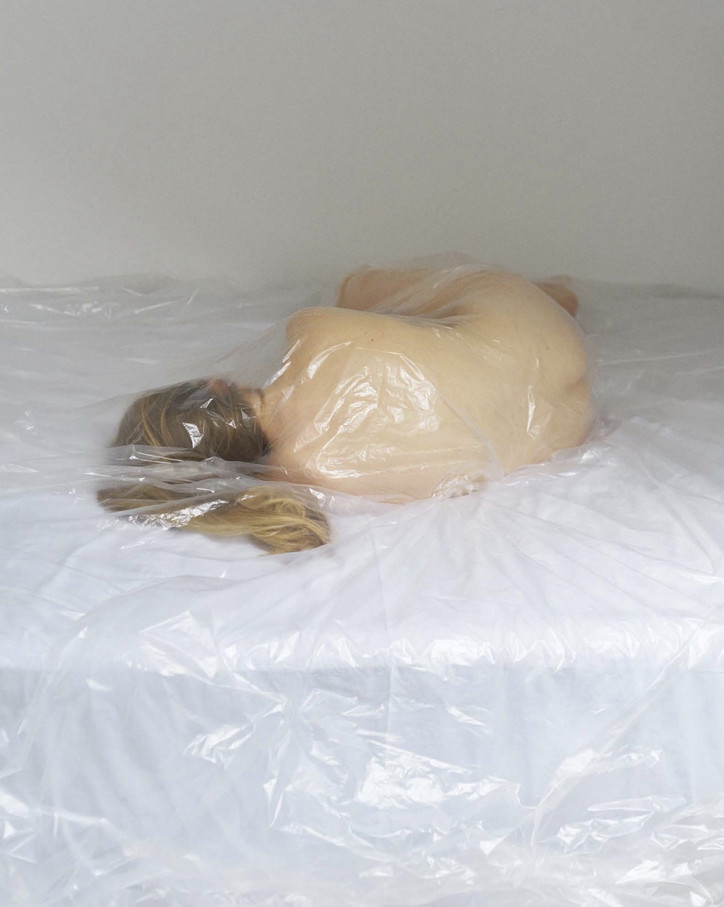
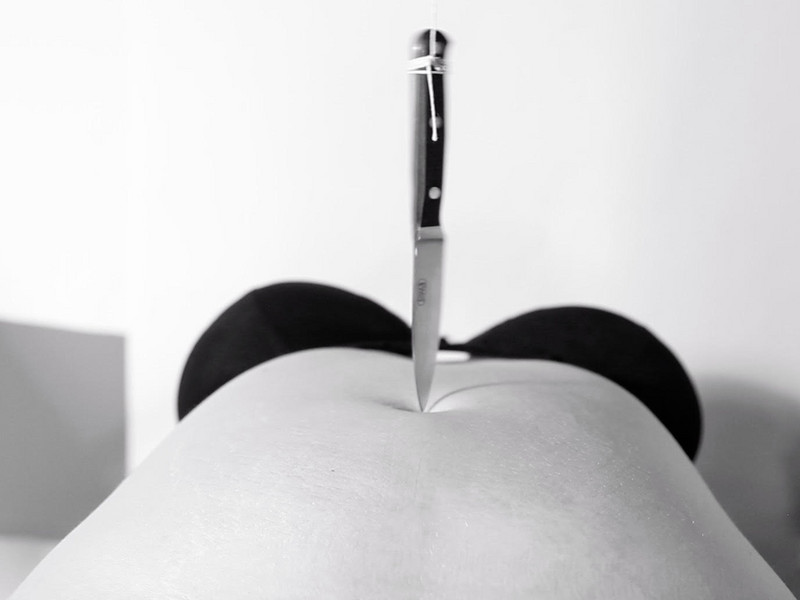
The series produces an eerie prediction for what's to come. "A day in summer 2020. Social isolation has become normal. The new disease is called hypochondria," says Roché.
Check out the rest of the series below.
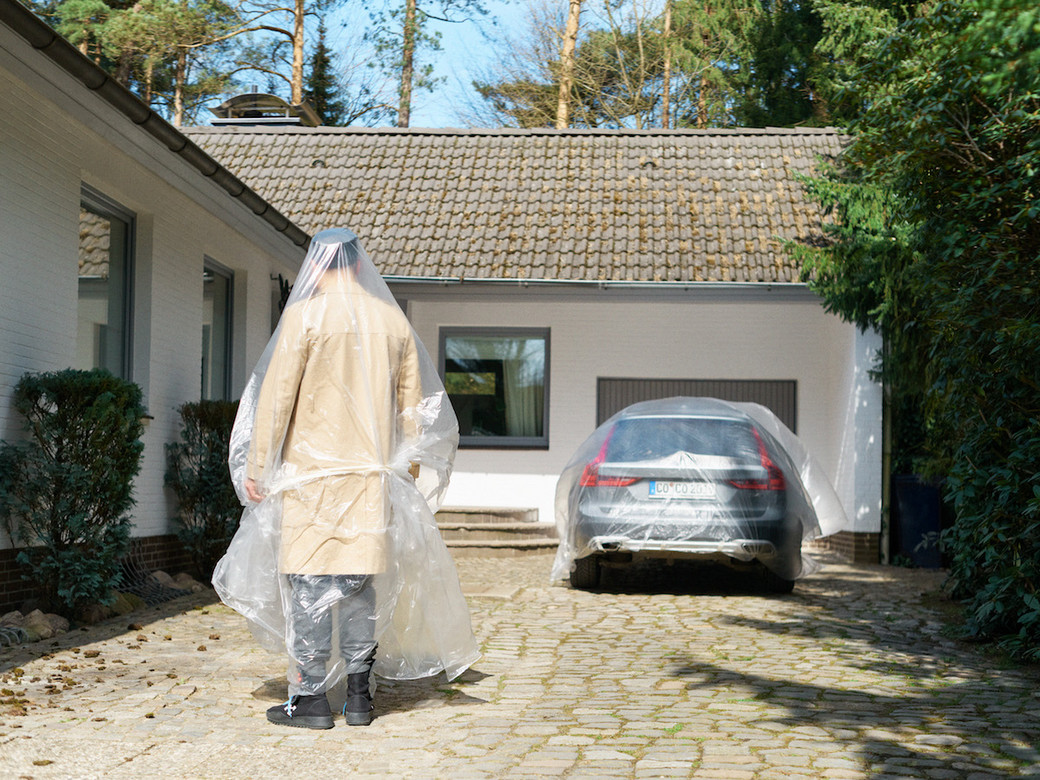
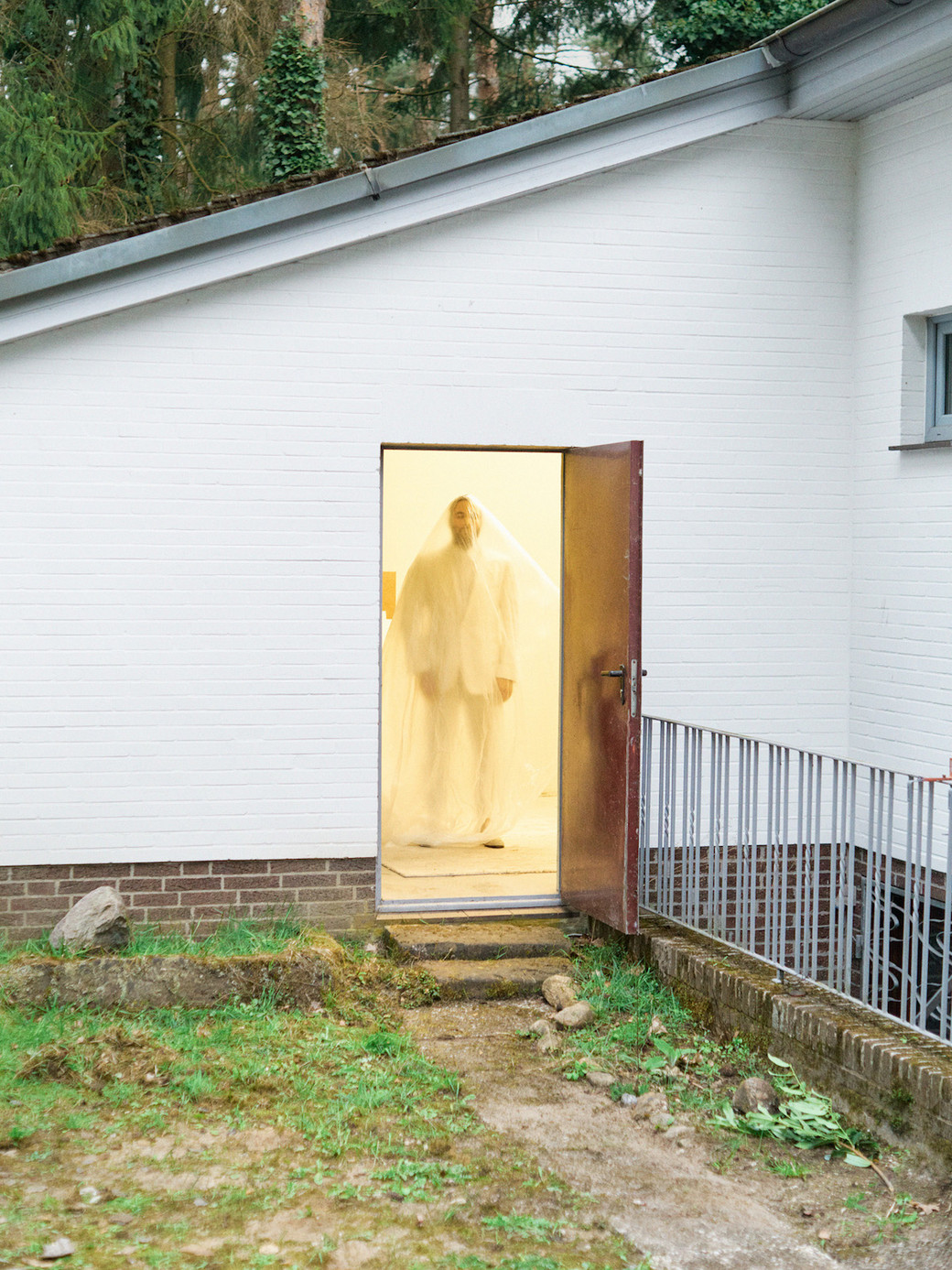
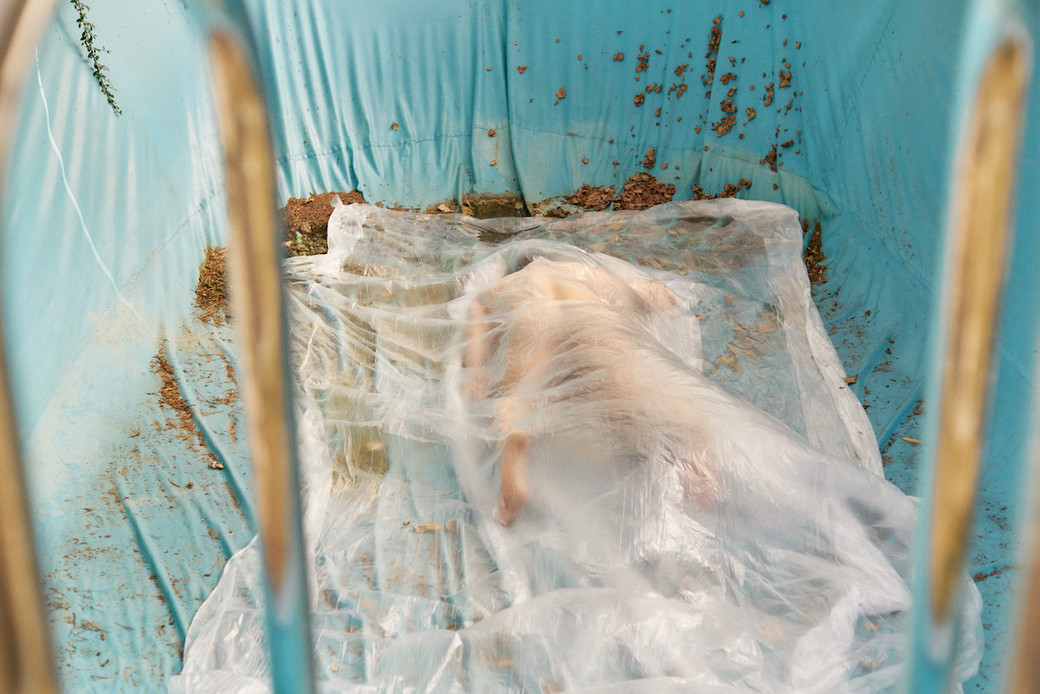
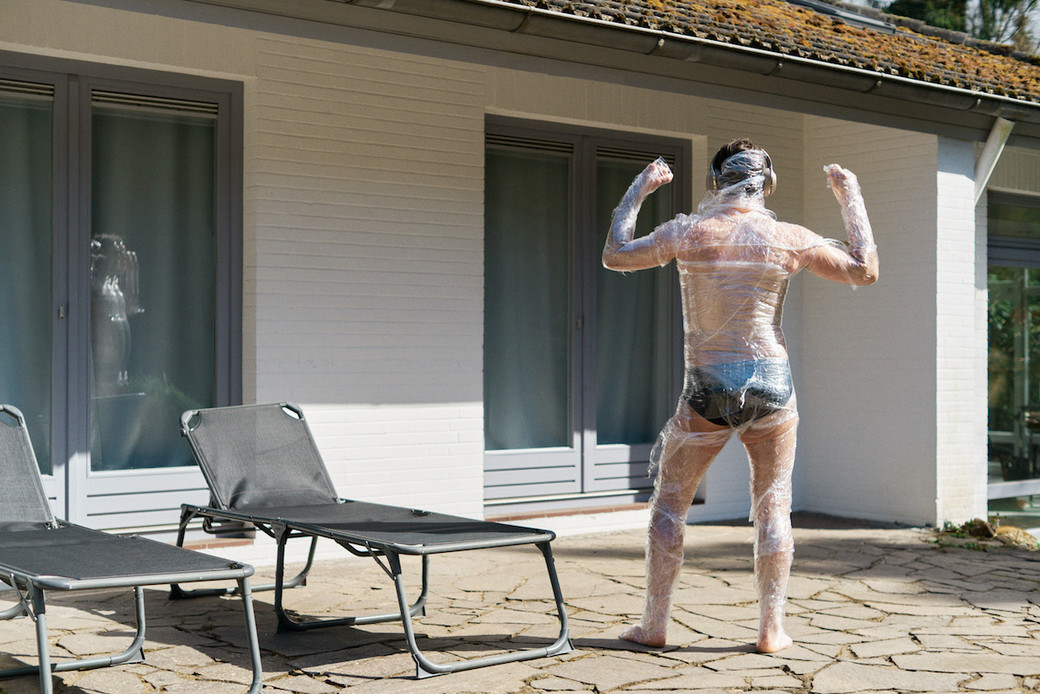
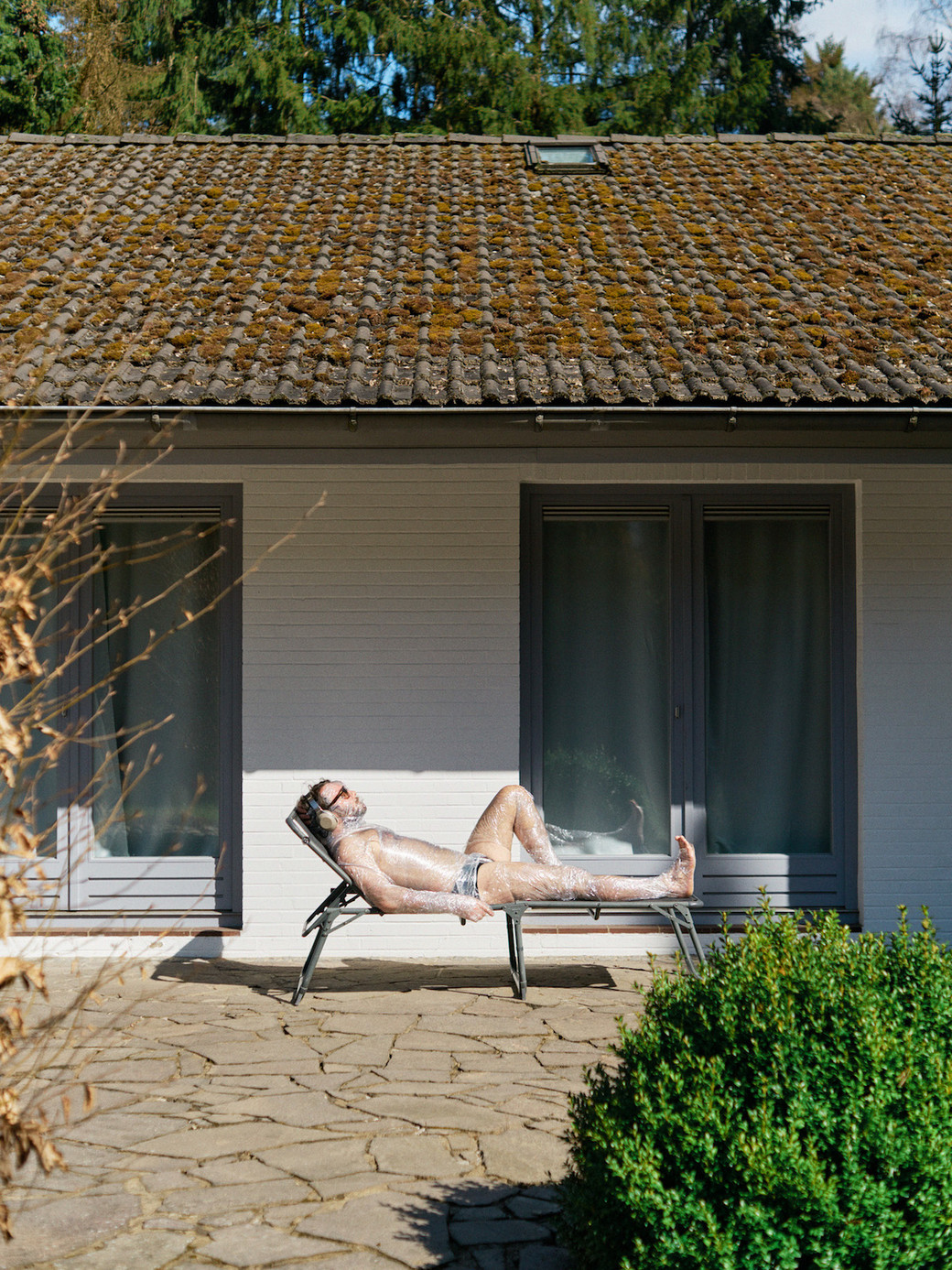
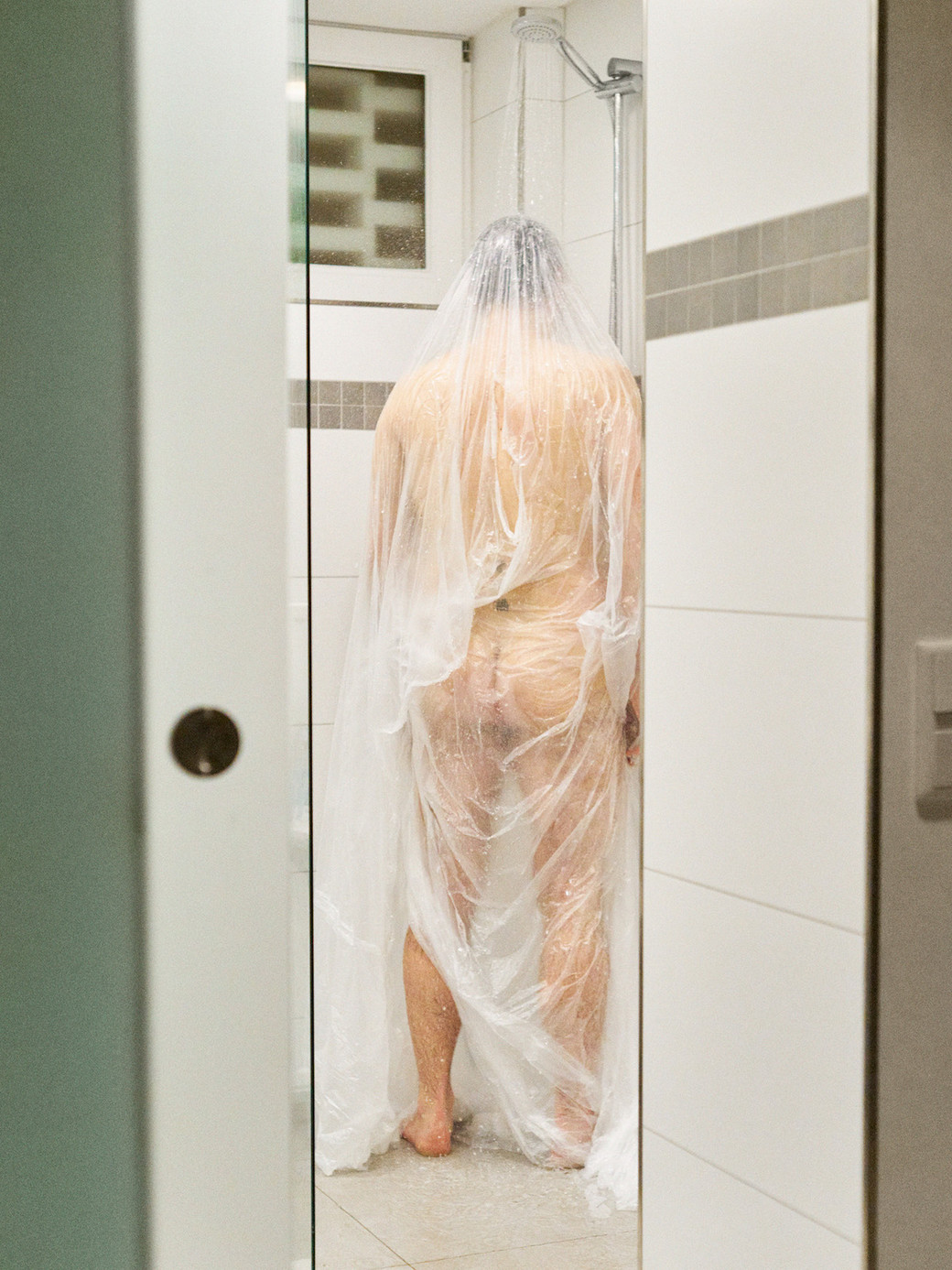
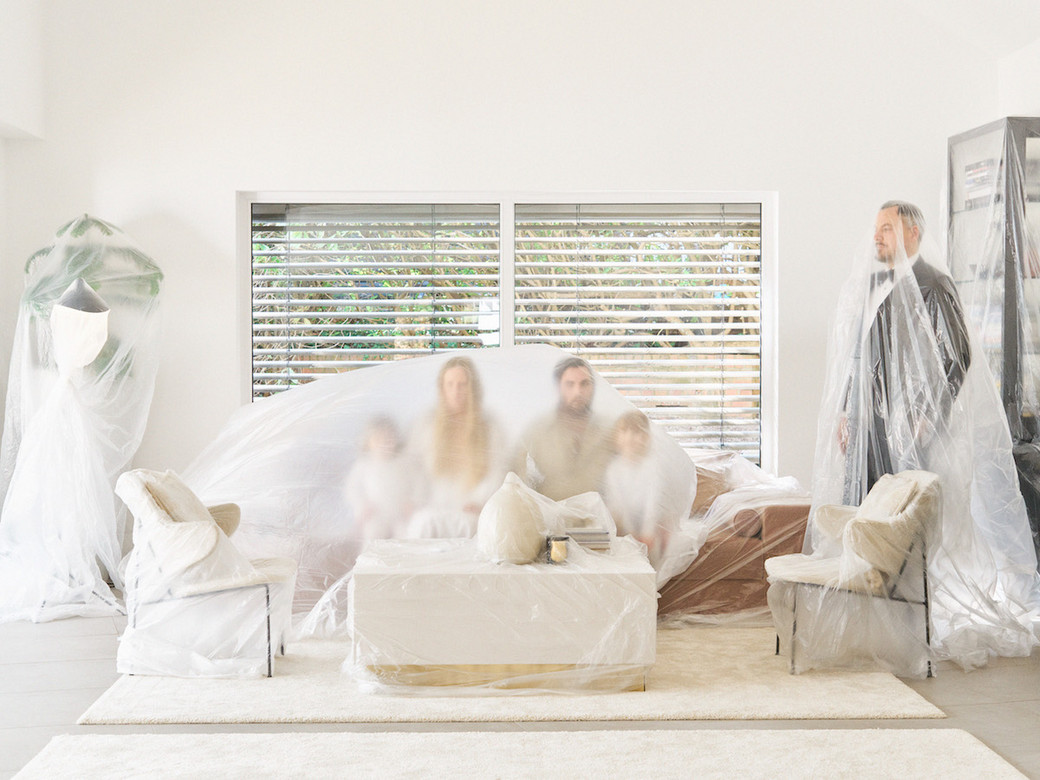
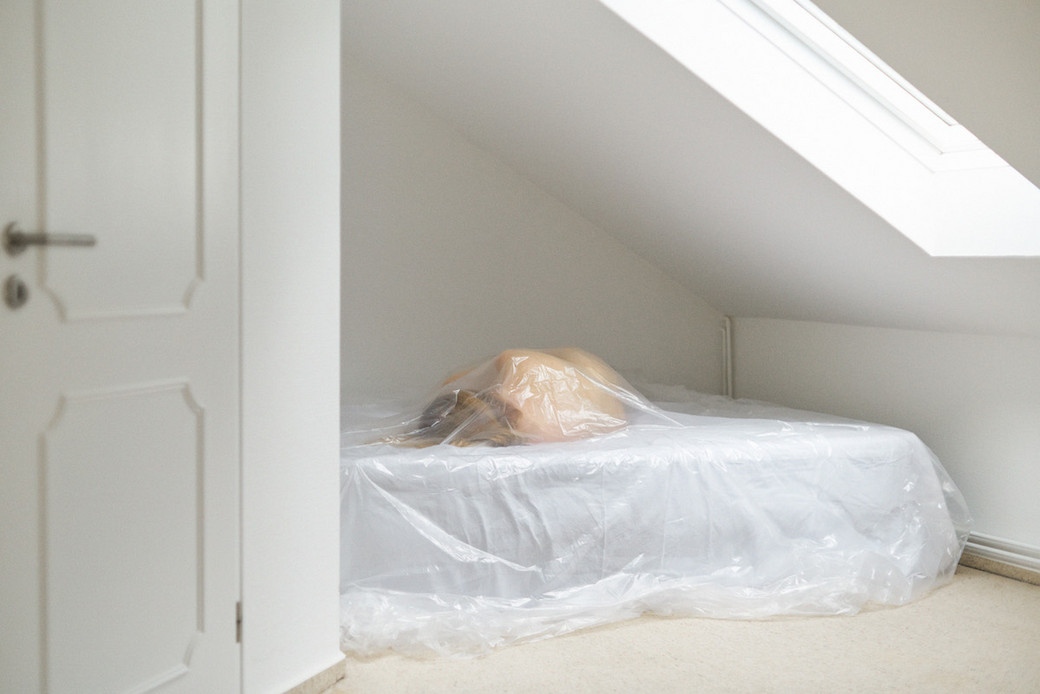
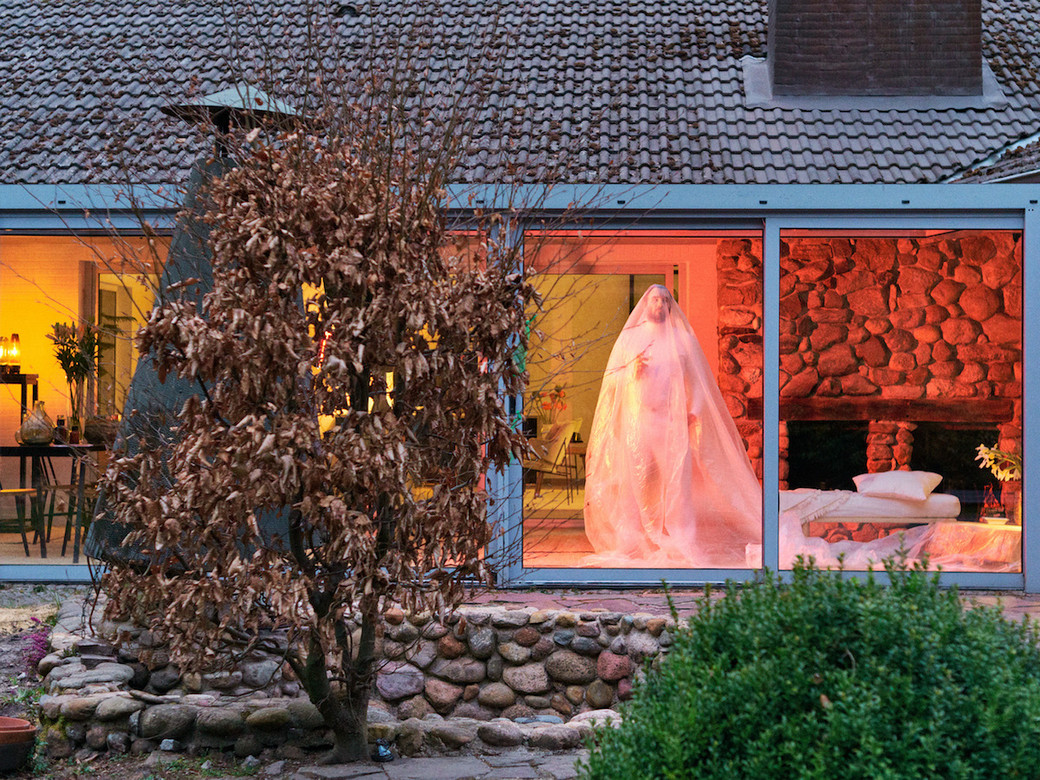
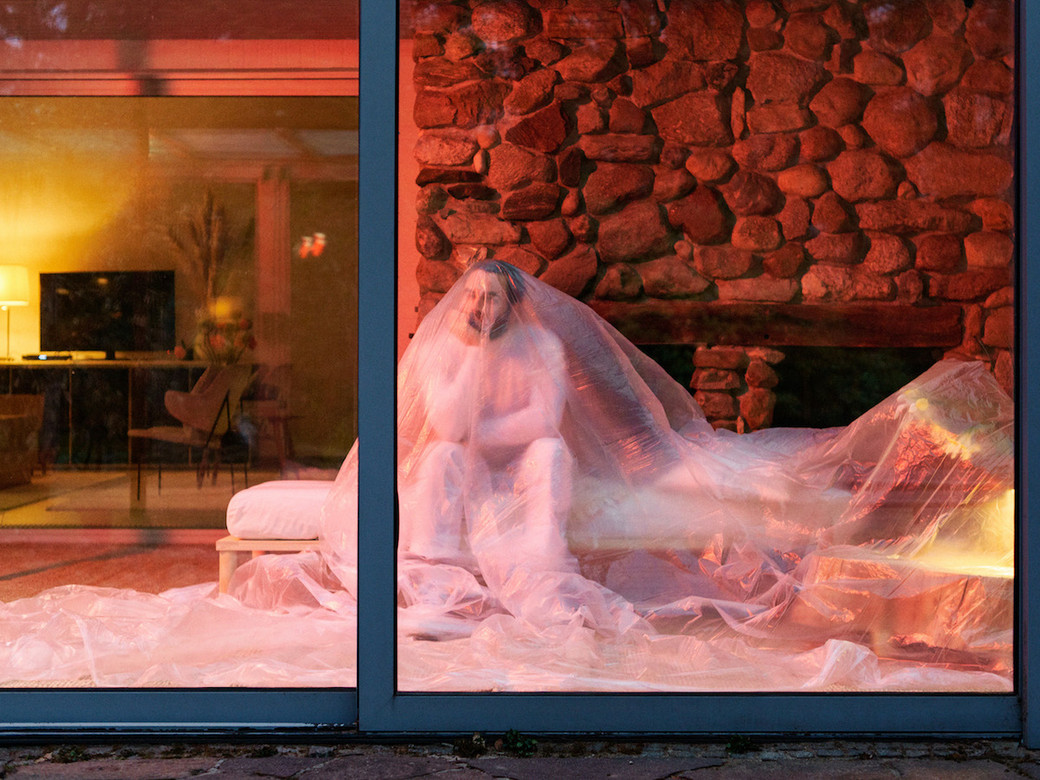
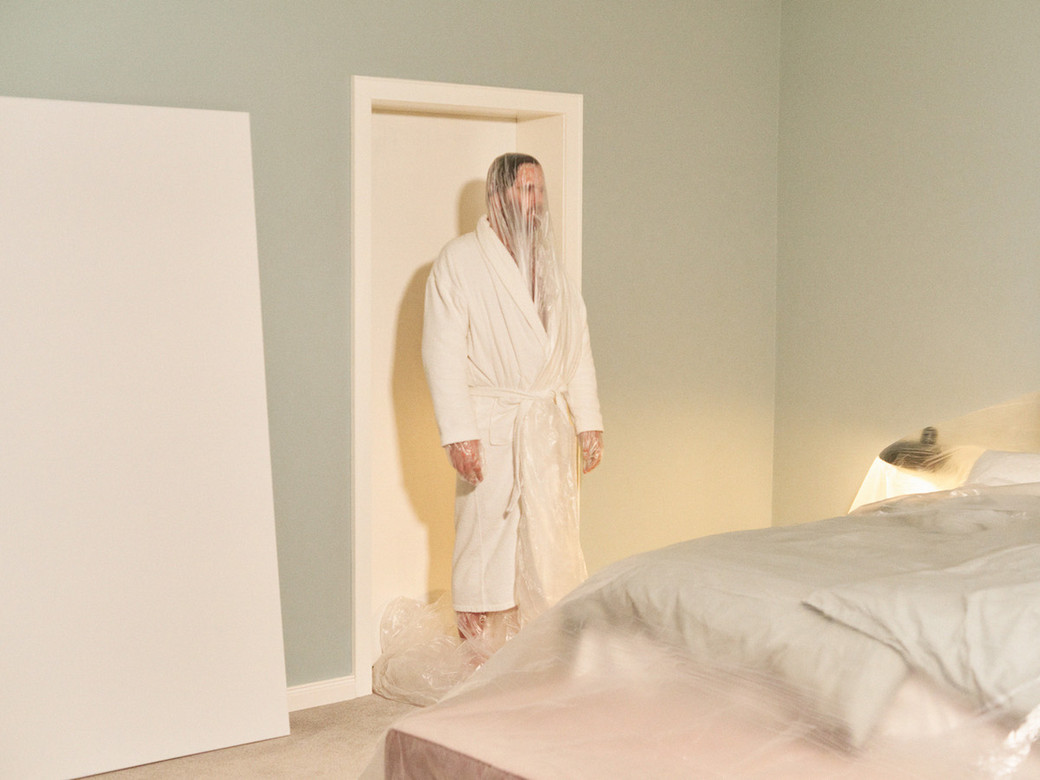
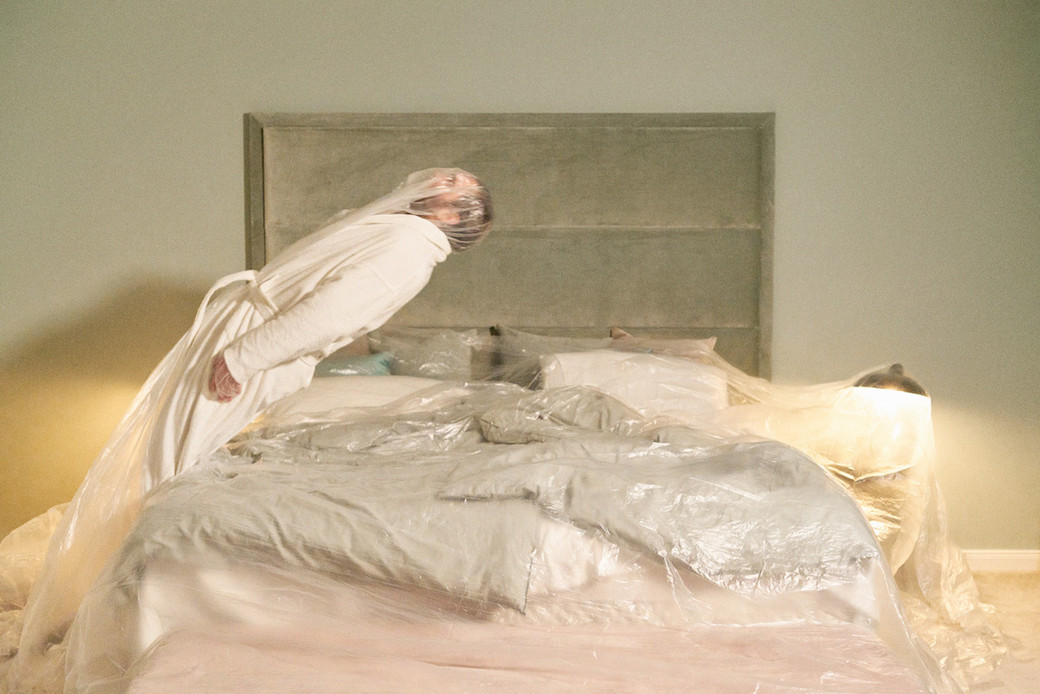
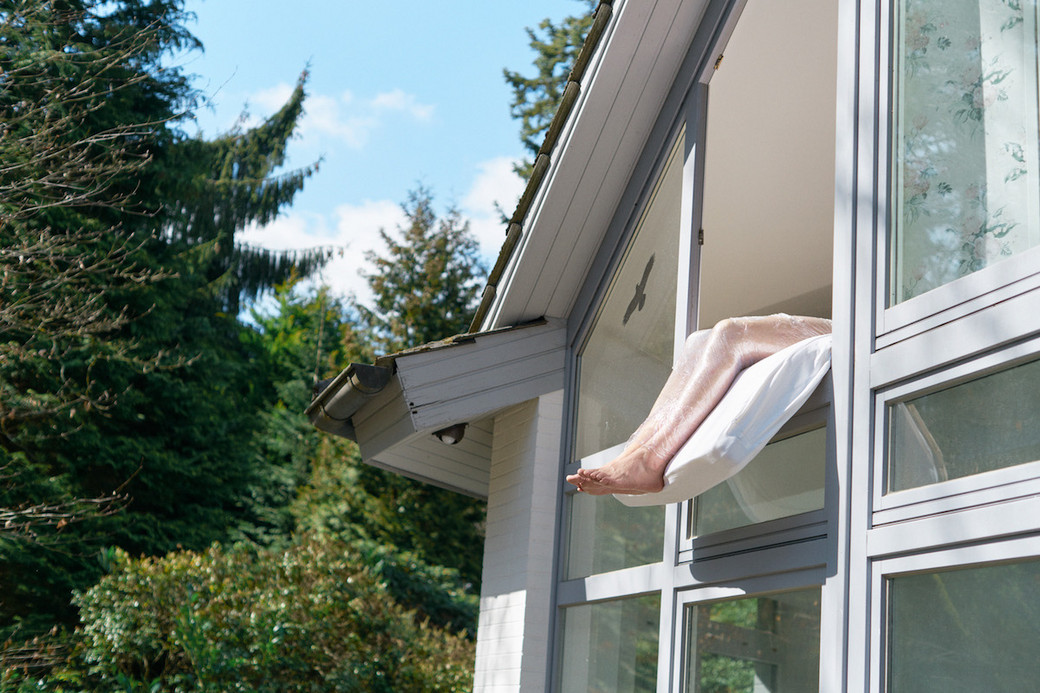
The series produces an eerie prediction for what's to come. "A day in summer 2020. Social isolation has become normal. The new disease is called hypochondria," says Roché.
Check out the rest of the series below.

So, you’re getting ready for your show. How’s that going?
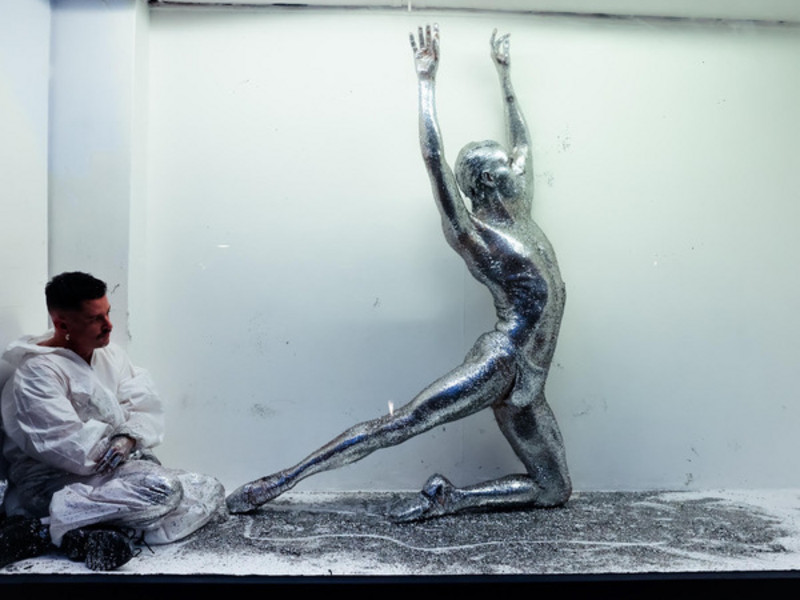
It’s good. Not everything’s done, but it will be. Basically, I’m making an almost five-foot glass tree for it. Which is not done, but it will be by next week. I have my baby trees here—everything else is ready. I’m one of those people who likes to do things ahead of time. I'm not a last minute-r, but [laughs] sometimes you can't control it.
I think a natural place to start this [conversation] is by talking a little bit about your spirituality. What do you believe in? Do you consider yourself religious?
I just got a Master's in Divinity from the Center for Religion and Advanced Spiritual Studies. I'm not religious. Maybe religious in the initial meaning of the word, to link back up to the part of the teachings that my teacher brings forth, in really linking myself up to the divine, that I am and everybody is. My direct experience, my path, and my studies were a combination of scholarship, and then direct experience, through specific meditation techniques, et cetera. It's liberating for me because it's not looking outside myself, or too high in the sky. It's really all experiential.
I think considering religion or spirituality not from a theological perspective, but as something scholarly, at least for me, has allowed me to see more of the intricacies of what people are believing in, instead of just believing it because somebody said so.
Exactly. That is fascinating because if you go back to the beginning of monotheism, which was in ancient Egypt, that was when they started to look at one unifying God; before that it was a bunch of different Gods. But for me, it's not a God in the dogmatic sense, but really in spirit—the oneness that is everything.
We're also at a point in history where religion doesn't really need to be an explanation for something; it can be a really personal journey. Not even just religion, but spirituality in general.
Exactly, and I'm experiencing the shaking up of all of this—shit that's been happening in the world; people are really looking for something. There's so much unknown; there's so much uncertainty.—even with COVID. That's when I really started my spiritual practice. Before that, I was my mom's yoga baby, before yoga was that popular. So, I’ve done yoga my whole life. I was always looking for a spiritual teacher and thought that I was going to find it in India. There are certain dispensations in India. It's called the Sound Current path. It's a Bodhi path, so it's devotion and surrendering everything. Negativity, pain, hurt, attachments, all that good stuff.


Sculpture is a very physical art form. Why do you think it is the best medium for you?
I was always searching for materials, because of the limitations of the physical. But in my practice now, I feel like I'm being led. For a really long time, I was trying to control and manipulate different materials, but I have noticed, really through heat—I feel like heat is my main material, honestly—heat is a catalyst for transformation. Through heat, I've been able to allow materials to show me what they are, when they break up into their fundamental components. So, I've been doing a lot of work for a long time, uniting glass and stone, or metal and stone. Using the physical to show my internal experience. I tried a lot of resin stuff for a long time. Resin always kind of fell flat. That's why I fell in love with glass, because glass is an amorphous solid or liquid, depending on how you think about it; the crystalline structure is always changing. Even in medieval window panes, it's thicker at the bottom than at the top. They're not sure if that's because the structure is changing. So that's why I love glass, but I think there's also just naturally how I work. It's just through sculptural materials.
Your artistic process intrinsically mimics natural processes; how does that disposition affect your relationship to the final product?
It's been a lot of trial and error. So many things [that] I consider failures are really a conversation with the materials, and letting them show me what's next. So, I've had to get to know the materials. I've been doing these experiments with glass and stone, and merging them with stone and metal for ten years, if not longer. Each time, I learn something. Now I know when to stop. But anything else, it's just been practice. There have been a lot of times where I’ve gone way too far. Now I hear really clearly, like "stop!" and I'm like "okay, okay."
That’s a good trait as an artist to have–to know when to stop. It's really hard to find that line, especially with something so personal like a sculpture where it's literally in your hands.
Yeah. It’s hard to stop.
Going back to your philosophies. I read an interview where you stated: "The truth is bigger than the brain will ever cognitively understand. It's limitless." How do you cope with this kind of existentialism?
I mean, a lot of fear comes up. So, [it's] a lot of releasing that fear. To be honest, it's been at the heart of my work since I was a teenager. I look back, when I was maybe seventeen or eighteen, I was making work about how the bubble is going to pop. I also think I've had a lot of near-death experiences. Really, because of my spiritual practice, it's like my experiences [are] that I'm wearing the body, that my soul is wearing the body. So, it's almost like letting go of identifying only with the physical, and then it makes it easier to accept how limitless everything is. It’s expanding my consciousness.


You said you've had a lot of near-death experiences. Is there one that you can think of that really changed your view, or contributed to how you think of existentialism now?
One that was kind of scary was like, I was a—[laughs]—there actually have been many. I had an infection from a spider bite when I was thirteen. I got MRSA. I was in the isolation ward. I wasn't really conscious of it then, but, I realize that I was starting to see my body as more of like a container than anything else. Even though I couldn't move, I still was having all of these internal experiences, even though I couldn't access things fully because my arm was like this big [gestures].
I know you've stated the body as an inspiration for your work, but also the natural world. What is the connection between the two? Besides the fact that humans are a part of the natural world, what specifically about the nature of humanity intrigues you?
The body was really an entry point for me, maybe for like five to six years. I was doing a lot of body work. I also have taught yoga for like twenty years, and I was taking all of these anatomy classes. I was just very fascinated by bone, and how bone changes shape dependent on how you distribute your weight. Similarly to how glass is alive, bone is rigid and fixed, but it's really very viscous and fluid. So, I became fascinated by that. Although now, I feel like a lot of the work I did about the body is very limited. But, it was where I was at. Moving beyond that, into the foundation of what goes beyond the body, what is beyond the physical? That led me into the natural world, really looking at things that are a mirror to what's going on internally. So, merging these different materials or looking at the very nature of the ground of being—But, really just as a reflection of my internal experience, so less one to one.
Contradicting that question a little bit—I was reading today and something came up that reminded me of this question that made me think in a different way. I'm going to restate the concept for you: "What if the category of person, along with all of its supposedly natural elements (gender, erotic desire, emotions, intelligence etc) is actually produced by culture rather than nature?" What do you think about that?
I think that everybody is definitely shaped by culture. But then, you look back at ancient cave paintings—I don't know what it would've been like to be in a body at that time, but there was a version of culture in that as well. But beyond that, my experience has been that we are all one. We all have these different personalities, et cetera. But the soul, or the spirit, is like the ocean– a vast, vast ocean. Each soul is like one drop of water in the ocean. And we are all having these experiences that are affected by the times, by all of these things.
That’s a great analogy. I've never heard somebody explain it like that. I think it's a really beautiful way of describing the essence of humanity. It's very accurate.
That's really coming from my school, from my teacher. The path that I’m on is called The Path of Soul Transcendence. It's the direct experience of what is beyond everything physical. We're all swimming in this ocean together, and that makes me really responsible, because what I do is going to affect somebody else.


Shifting back to your debut show in New York—congratulations, by the way—And The World Came Apart, you've been working on it for over a decade. What has been the easiest and hardest thing to handle?
A lot of the work I've been carrying very close to my chest, particularly these experiments that I’ve been doing with the stone and the metal. I have been doing the same experiment for ten years. The definition of insanity is doing the same thing over and over and expecting different results [laughs]. But it’s not doing the same thing over and over, each time its slightly different. It’s a slight iteration of it. I feel like the biggest challenge in general has been not allowing what people [say] to throw me off kilter. The biggest challenge has been somebody being like, "That's never gonna work," and like going with my knowing, "No, it is gonna work, I just haven't gotten the right combination yet." Going with that, and staying with that, and letting go of whatever anybody else says. Also, with the glass trees, I'm making these trees that are extremely textural, and glass doesn't really want to be textural. So, to give it that really textured surface is really hard. It's been so much experimentation to get to that point. I feel like staying with "No, I know that is going to work, I just have to keep going."
But a decade is a very long time to develop and sit with a body of work. How did you work through any block or fatigue?
I mean, it's been different iterations of the same process. So, I think just having fun with it. I have so much fun when I'm working. I went to art school, which was amazing. I love my art school. But, even there, they didn't really teach it. I think a part of me thought I had to physically suffer because I wasn't suffering in the actual making because I just love making. So like, even when it's hard, I just love it. I thought that, oh if I’m really good, I really have to suffer. So, I would carry these hundreds of pounds of rocks, and do all this insane stuff [laughs] because I have to suffer. But honestly, I'm so grateful I get to do it.


You mentioned your travels to India. I'd love to hear about your travels and how it affected this project.
I’ve been going to India for the past seven to eight years. Every year, I go to this teeny, tiny village, to this residency called Art Ichol, where I get to experiment with stone and metal. I went having never been to India, with a tiny carry on bag. I started experimenting with the stone and the metal at the next iteration, in India. Everything is done 100% by hand. which I love, because so much here is mechanised; it loses the natural feeling. I love that for the work. The place has become like my second home. I've become really close with all the people there. Even if we don't speak the same language, we're like best friends [laughs].
The language you speak transcends words, or language itself.
Yes! It does!
So you'd say the physical aspect is what differentiates the work that you do in New York versus India?
I’m in a tiny village, where there's nothing much around. The nearest town is like an hour [away], and I'd consider it a big city, but it’s not. You're off the beaten path. Over the past years, I've always found it really helpful doing residencies where I’m off the grid. Obviously I have my phone, but the wifi is spotty, and it feels like I have so much quiet time to let the work tell me what it wants to be. Although, I do feel as I’ve gotten spiritually stronger, it’s easier for me to do that in New York.
In terms of actual processes and working with people, here it’s just money driven, and I have incredible people I work with here and I’m grateful for that. But in terms of how slow and methodical the process is, specifically with the metal there—basically, when you're steaming out the wax, we make a hut for the molds. We start a fire and let the wax steep out. The molds sit in there for a couple days while the wax melts. I don't know where I would find that here. There's something about just the fire, the heat, the transformations, it’s not like, "Oh we only have x amount of time to do this, let’s speed it on up." It's like, "We need to wait for the fire, we need to wait for this, we need to wait for that." It’s almost like the materials are going on their own kind of journey. But, I do most of my glass work in the states. I work with Shiny Sparkle Studio in Brooklyn, and they're incredible and it’s very slow as well, because it takes us forever to work through these processes. Maybe I've kind of mimicked that in a way, but being in the middle of a tiny village with your materials cooking for two days; that's like its own thing.
Does the slowness of this process seep into other parts of your life? Do you think that you've learned how to live slower through your very long artistic process?
I have. I used to run around like a chicken without my head on; I taught yoga all over the city; I was running around like a nut, just packing things into the day. Now I am very methodical about how I choose to spend my time or spend time that I've been given, just allowing things to unfold more, even if that means seemingly doing less. When I really give things the time that they need, everything works out.

Paris, France, September 11th
Last spring, I rented a small attic apartment in the Marais. The tiny room I slept in reminded me of the bedroom I grew up in, in the countryside of Missouri, in a small town fittingly called Defiance. There was a ledge over my bed and one very small window. Something about it returned me to some of the purest moments of my youth.
I remember getting into bed one evening. The quiet at night in Paris feels different. It has a spatial openness to it. Lying under the covers, I could almost feel the silence sink into me.
And something came to me: Le sexe et l’esprit. The sex and the spirit.
I had been wondering what I was going to talk about with this exhibition. I had already walked through the Cité de l’architecture et du patrimoine, looking at the architectural casts and fragments from churches and cathedrals throughout France: angels, arches, portals, gargoyles. All of this religious iconography in a room that would eventually contain my work. I have a deep history with the Church. I was raised as a Seventh day Adventist until my early teens. Christianity was a large part of my family and our life. It left me with a lot of questions.
At the same time, I was studying the metaphysical world. I was curious about mystics, Sufis, gurus, and ascended masters. I wanted to understand the different systems people have created to approach what we cannot always see.
So maybe le sexe et l’esprit wasn’t something that suddenly appeared that night in Paris. Maybe it was something I had been circling for most of my life. A few years earlier, I was invited to Germany for a symposium about Hildegard von Bingen. I met extraordinary minds there, and some became close friends. One of those chance meetings was with Es Devlin. I think of Es as a kind of high priestess of performance and making. An artist whose work with light, language, architecture, and the stage can transform a space into an experience of consciousness. Her work moves from public sculptures at Tate Modern and Trafalgar Square to kinetic stage designs for the Royal Opera House and the Metropolitan Opera, Olympic ceremonies, and Super Bowl halftime shows. Her practice has been celebrated with a retrospective at the Cooper Hewitt, Smithsonian Design Museum, a Tony Award, three Olivier Awards, and a CBE.


Kennedy Yanko, The first manifestation is darkness, 2026.
Kennedy Yanko, The radical cypher, 2026.
Es and I connected through the life and visions of Hildegard, which in retrospect feels important. Hildegard was a mystic, composer, writer, healer, and nun working within the structure of the medieval Church while receiving visions that seemed to exceed it.
Through Es, and a strange series of events, I eventually found myself at Plum Village, the Buddhist monastery founded by Thích Nhất Hạnh right outside Bordeaux.
It was spring, and I had just finished installing my largest and most important installation to date at the Venice Biennale. I was grateful to have been able to build from the ideas of the late, great Koyo Kouoh in a monumental presentation at the Arsenale. I arrived at the monastery carrying all of that, and a heart that felt like it was in a million pieces.
And then, suddenly, there was quiet. At Plum Village, I began to understand the phrase and title of an earlier work, The Weight of My Sight (2021), differently: the pain that can accompany access to deep feeling.
I had spent the last fifteen years hustling in New York, trying to become the artist I had always wanted to be. And I did become her, but not without loss. For years there had been a knot in the pit of my stomach: disappointment with my industry, the longing for deep love and true partnership, and the exhaustion of remaining openhearted in a world that seems perpetually at war with itself. The violence, the ego, the constant struggle for power, the sheer amount of suffering we are asked to metabolize while continuing to live our ordinary lives.
I had been gutted by disappointment and was hanging on to threads of hope that, at that moment, I could barely see.
At the monastery, time stretched. Five minutes could feel like an hour. We woke in noble silence. We walked quietly together. We breathed with a subconscious synchronization. I began noticing the tiny sensory miracles that could take place inside a single hour: the crunch of leaves beneath a slowly stepping foot, light catching the petal of a peony, the gentle clinking of spoons against bowls during a silent meal. Somehow the absence of conversation heightened everything. The food tasted different. The light looked different. My body felt different.
Each morning I noticed the tightness in the pit of my stomach and slowly breathed into it. In my mind’s eye, I filled that space with light. I imagined the knot releasing, almost as if it were taking its own breath for the first time.
And I felt like that too. Like it had been a long time since I had breathed. There was something deeply sensual about that kind of presence. Being in a village organized around the simplicity of life and its most basic treasures somehow opened entire worlds for me. Sensuality no longer felt separate from spirituality. The warmth of food, breath entering the body, feet touching the earth, the sound of wind moving through leaves, the awareness of another person beside you. These were physical experiences, but they were also spiritual ones.

Kennedy Yanko, The weight of my Sight, 2021.
Maybe when I say my heart was in a million pieces, what I mean is that I had experienced enough of the preciousness of being human to feel devastated by the ways we continually destroy it.
I was hurt and hurting. In those dark early mornings, sitting in silence, I began picking through the pieces the previous fifteen years had left separated and scattered. The retreat allowed me to confront parts of myself that I had thought were protecting me but had also created a separation between myself and my own truth.
And at the same time, I understood that I would not have made it through without some of those mechanisms of performance. Performance can be armor. Ambition can be armor. Sometimes they are how we survive long enough to discover that we no longer need them in the same way.
Over the last five years, I’ve spent a large chunk of each year in different parts of France, and every time I arrived, I kept thinking about feminine deities and feminine energy. Although I couldn’t quite put my finger on what I was trying to understand, I knew I was looking for something.
Around this time, my brother found a book called The Magdalene Manuscript: The Alchemies of Horus & the Sex Magic of Isis, by Tom Kenyon and Judi Sion. It is a channeled text, one I wasn’t approaching with the lens of historical scholarship but with an interest in it as another mythology, another way to imagine Mary Magdalene’s voice.
And it sent me somewhere. I started to question Jesus (Yeshua) and Mary Magdalene. What was their relationship? What might intimacy look like within a life organized around spiritual purpose? What happens when sexuality is not understood as being in opposition to spiritual life, but potentially part of it?
That question became important. I moved from the channeled Magdalene text toward early Christian writings and eventually into the Gospel of Mary, a text that was not part of the canonical New Testament. In its surviving fragments, Mary occupies a remarkable position of spiritual authority. She understands something the others do not, and tension emerges around the possibility that the Savior had entrusted knowledge to her in a way that challenged the male disciples.

Kennedy Yanko, The weight of my Sight, 2021.
I kept thinking about the conflict imagined in The Magdalene Manuscript: a woman deeply in love with a man whose life’s orientation was toward a mission larger than their relationship. Her love belongs to the person; her service belongs to something much bigger.
What does it mean to love something enough to release your possession of it?
What does devotion demand?
Those questions entered the sculptures I was making for this exhibition.
One work in particular, Intoxicated Wisdom (2026), carries this tension. I developed a new technique with flocked paint skin, which creates a surface of almost infinite blackness that absorbs light rather than simply reflecting it. The darkness gives the work a depth that feels difficult to locate, as if part of the sculpture is receding somewhere beyond its physical edge.
The form itself is deeply erotic and fluid, but it is also bound. Chained. Restrained. I began thinking about the erotic not simply as sex, but as concentrated life force. The thing that pulls us toward another body, an idea, a purpose, a work. Intoxicated Wisdom sits inside that contradiction: desire and discipline, surrender and restraint, the longing to possess and the knowledge that sometimes the thing we love has to be released.
This is where my reading about sacred sexuality began to enter the work. Across different esoteric traditions, sexual energy is sometimes imagined not merely as something to discharge or satisfy, but as energy that can be circulated, transformed, and directed toward altered states of consciousness. The body becomes not an obstacle to spiritual experience, but one of its instruments.
I became fascinated by the possibility of shifting identification away from a purely mechanical understanding of the body toward something more energetic: intention, awareness, magnetism.
Not because I needed to prove these systems true. I wanted to understand why humans have needed them. Why have we continually created systems in which breath, sexuality, ritual, death, transformation, and creation are connected?
And what happens when those questions are placed inside an object?
There are other early Christian texts in which Mary is represented as particularly close to Jesus. In the Gospel of Philip, she is referred to as the woman whom Jesus kisses often on the mouth. Their intimacy becomes an important and much debated image. Whether that intimacy is understood literally, symbolically, erotically, spiritually, or as some combination of those possibilities, is less interesting to me than the fact that the question has remained so charged.

Kennedy Yanko, Intoxicated Wisdom, 2026.
I wanted to know: what happened to her image? Here was a woman associated in some early Christian traditions with proximity, devotion, and spiritual authority. Yet over time, Mary Magdalene became popularly identified with the repentant sexual woman, partly through centuries of interpretation that collapsed distinct biblical women into a single figure.
It made me think about who gets to carry spiritual authority, and what happens when that authority belongs to a woman.
Somewhere in all of this reading, I started recognizing the research in the work itself.
I work through material.
I use pieces of metal that already have their own histories. They have been bent, crushed, and discarded. I don’t begin by forcing a meaning onto them. I spend time with them. I rotate them. I walk around them. I watch how a cavity holds darkness or how an edge suddenly becomes a line. Sometimes a piece will sit in the studio for months before I understand what it is asking me to do.
Then there is the paint skin.
The paint has an entirely different physical intelligence. I pour it separately and allow it to become a body before bringing it to the metal. It gathers, folds, wraps, stretches, and conceals. It problem solves and often feels like flesh. Sometimes an organ, a tongue, a piece of fabric, or a wound.
The metal holds one kind of memory. The paint another. My process isn’t about making one submit to the other. I’m looking for the moment when their individual forces become strong enough that the relationship between them produces something neither material could have produced alone.
A third thing.
That is where magnetism began to feel less like a metaphor and more like the actual structure of my practice. The sculptures are relationships.
Throughout the making of this exhibition, certain gestures began to feel like a kind of language. Characters from an alphabet that doesn’t exist. The metal speaks one way. The paint interrupts it, folds around it, obscures it, exposes another part of it. A chain might hold something in place while simultaneously making you more aware of its yearning to move.
Sometimes I feel like I’m composing more than constructing.
A line moves upward. A mass pulls downward. A skin gathers against an edge. One form leans toward another without touching it. I keep adjusting until the tensions begin to hold themselves.
This is where the research and the making became indistinguishable.
As I followed Christianity’s entanglements with older philosophical, ritual, and mystery traditions, I began reading more about sacred sexuality, Tantra, alchemy, Egyptian esoteric traditions, and the body as a site of transformation. One of the books in my notes was The Alchemies of Horus. Again and again, I encountered the idea that sexual energy could be understood as a powerful spiritual force, not simply something to release or satisfy, but something that could be circulated, redirected, concentrated.

Kennedy Yanko, This love will carry me.
One phrase appeared in my notebook: the magnetism of desire.
What does desire actually do? It focuses attention. It reorganizes the body. It changes our perception. It pulls one thing toward another. I became interested in magnetism itself: attraction as an organizing force. The possibility that desire, approached with intention, can become generative.
And that brought me back to the sculptures. Because this is how I make them.
These materials do not naturally belong together. They remain themselves while forming a relationship. I can sense when a piece needs to move. Sometimes I know something is wrong long before I can articulate why. I might walk around a sculpture for hours, and then, suddenly, the right gesture becomes clear.
My notes during this period became filled with words like clairvoyance, clairaudience, clairsentience, and claircognizance, not because I am interested in claiming a supernatural ability, but because I became fascinated by the vocabulary humans have created to describe different forms of knowing.
Knowing something without knowing how you know it. That is very close to making art.
You accumulate information. You train your eye and your body. You spend years working with materials. You read. You travel. You look at architecture. You build relationships. You experience grief, love, ambition, disappointment, pleasure, longing.
And somehow all of it becomes available when I stand in front of a piece of metal in the studio. The knowledge arrives before the explanation.
Maybe that is what I have been trying to understand through all of this research.
Why do these systems keep appearing in different cultures and across time? Why do people keep turning toward the body to understand what we cannot see? And why have religious institutions worked so hard to determine where some of those experiences could and could not belong?
Now these objects, my works, are entering a room surrounded by the architectural language of Christianity. That matters to me.
The sculptures carry Mary Magdalene, but also my childhood. They carry the monastery outside Bordeaux, Hildegard, Venice, the studio, discarded metal, and paint that was poured and peeled and allowed to become its own body. They carry my questions about partnership and purpose, desire and discipline, intimacy and sacrifice. They carry the question of what we do with all of the creative energy moving through us all the time.
I don’t think the work answers those questions.
Rather, the sculptures are evidence that I was inside them.
Maybe that is what this exhibition became for me: not a statement about sex, religion, the feminine, or the masculine, but a record of a year spent chasing a force I could feel before I could name it.
A force between bodies. Between materials. Between what we know and what we sense.
Between the earthly and whatever exists beyond it.


Where do you find inspiration?
I hyperfocus easily and can get lost in small, seemingly unremarkable gestures and in-between moments. I’m fascinated by how differently people inhabit the same 24 hours, even when their lives look similar from the outside. I love learning about their rituals.
Behind that curiosity is a fear of death and an interest in how we respond to the knowledge that our time is finite. I find beauty in people’s pursuit of life—in their hopes, their rituals, and the inner worlds they build. I’m especially drawn to people who live at the fringes, and to the dreams that sustain them.
Many of the themes come from philosophers and sociologists whose work interests me. For this series, I was very inspired by Marc Augé’s idea of non-places. Visually, a scene pops into my head, usually something surreal, and I can’t leave it alone until I find a way to make it. The conversations with my subjects are where those two threads meet. Their stories give the imagined scenes a personal meaning, and the image takes shape from there.
Most of your subjects look outward; what does this represent?
Each person carries an inner world with them all day, and so little of it can be explained to anyone else. Our daydreams sit alongside the tangible lives we can point to. They have their own continuity, their own characters, and a logic only the dreamer can follow. We can see a face and follow the direction of someone’s attention, but we cannot know where their mind has gone.
What photographic techniques do you use to distort your images?
Everything happens on set, in-camera, without post-production. I construct scenes where the subject appears layered, obscured, or held in more than one place simultaneously. Those overlapping layers suggest how we experience ourselves, with memories, daydreams, and the present moment existing together.
I like leaving certain things unresolved. You can recognize the person, but you can’t grasp everything at once. I want the viewer to spend time with that feeling.
How did living in Paris affect your work?
Paris encouraged me to question things more deeply. A catch-up with friends could easily become a philosophical conversation that lasted late into the night. There’s even the expression philosophe de comptoir, the bar philosopher, which captures something I loved about living there.
That connection began before I moved to France. I grew up with a French parent and a French education, so the language and culture were already part of how I understood the world. Living in Paris deepened that influence and gave me an appetite for questioning things that might otherwise seem ordinary or settled. That curiosity carries into the images.


Now that you have moved to New York, how has that also impacted your work?
Moving back to New York was unexpected. I was born and raised there, so I never quite understood why people from elsewhere were so drawn to it. After almost a decade in France, I returned feeling like an expat myself, and I saw the city differently.
There’s an openness here that makes people approachable and possibilities feel within reach. I feel less constrained by ideas of how I should behave or what I’m supposed to be doing. Paris encouraged me to question things deeply, and New York gave me the freedom to act on those questions before I had all the answers. I wasn’t working in art before, and I didn’t know I could make it. Here, there’s a lightness to trying something without needing to know where it will lead.
I’m also fascinated by how many different lives coexist in such close proximity. You’re surrounded by people, yet you know almost nothing about the worlds they carry with them. That feels connected to this series: being close enough to see someone, while knowing there is so much you cannot see.
Do you believe a single image can capture the essence of a human?
The series began with that question. I wanted to photograph someone’s essence, but the more I worked on it, the more complicated that ambition became. The setting, the moment, and the relationship with the photographer all shape which version of a person appears.
I don’t think one photograph can hold a whole person. Much of what makes someone who they are lives in their inner world, and no camera can record that directly. The abstraction leaves room for the viewer, like a painted portrait. I wanted to make portraits that work the same way. I’m not trying to show the essence of my subjects outright. I’m trying to create something open to interpretation, where the feeling does the work and the viewer fills in the rest.
What does the title “Liminal States” mean to you?
It describes the space between places: you are neither here nor there. Each subject is caught in that in-between, holding the person they are now alongside the people they were and the ones they still hope to become. I’m interested in how those selves coexist, sometimes comfortably and sometimes in conflict. The title invites the viewer to spend time in that uncertainty, without needing to resolve the person into a single identity.