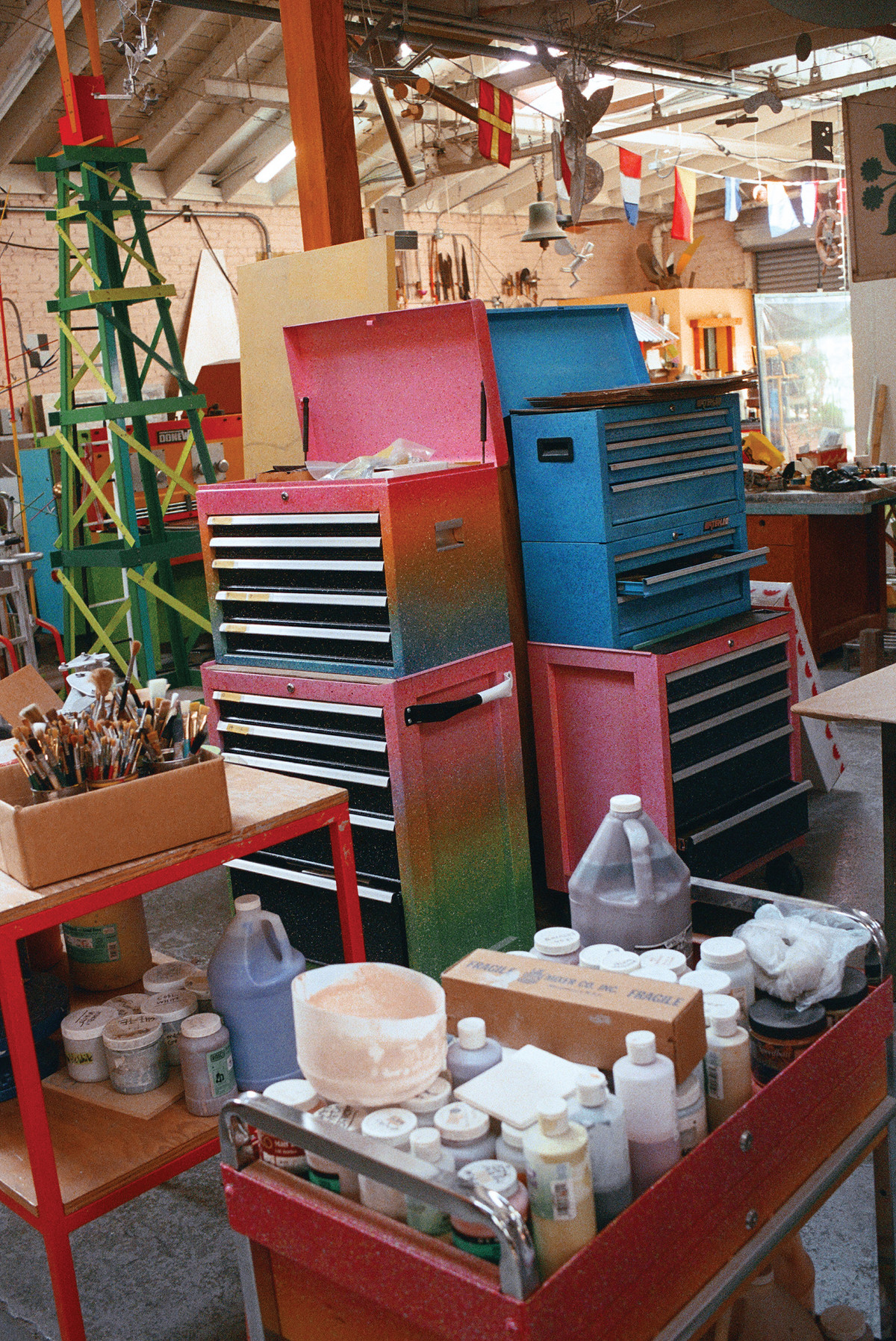
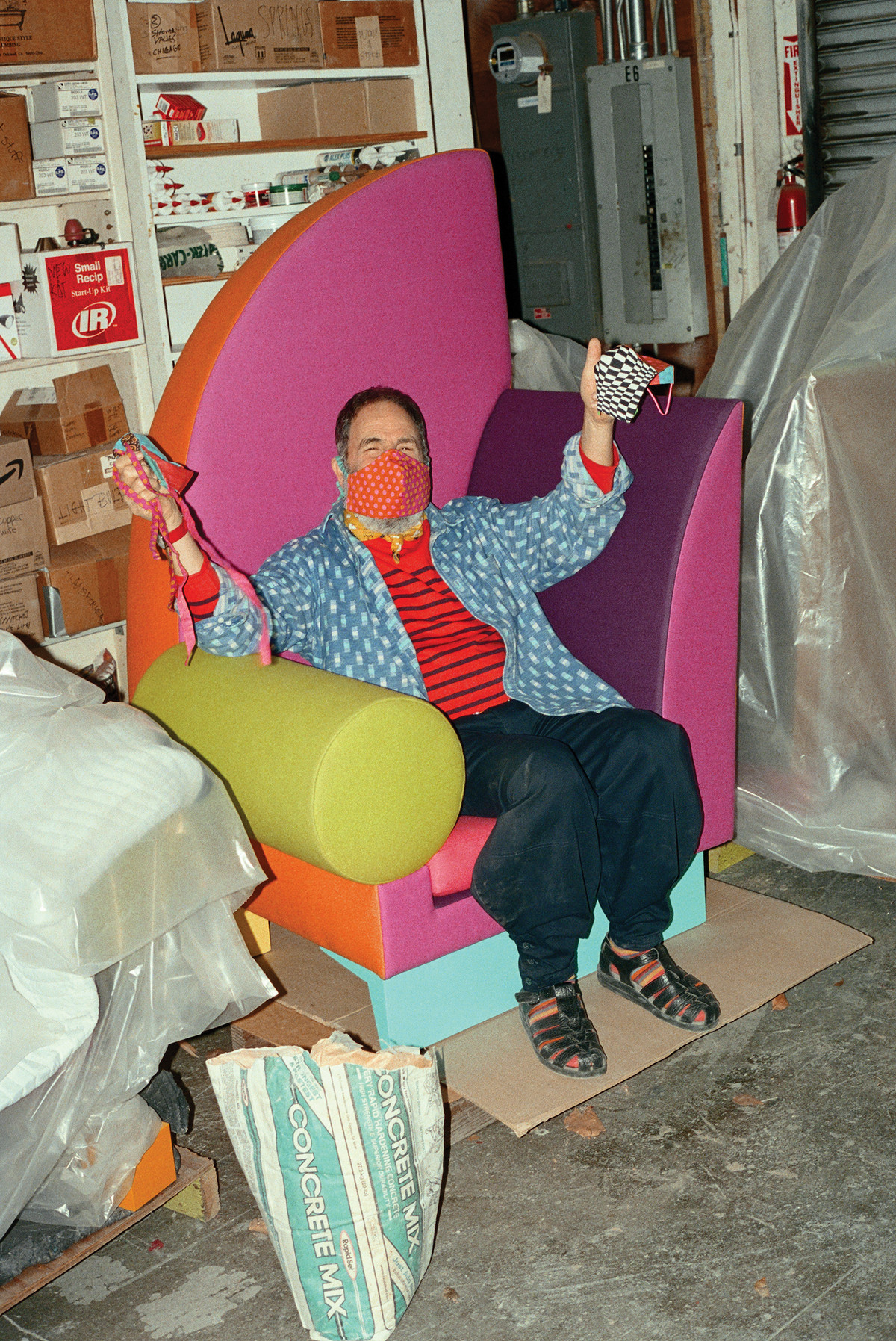
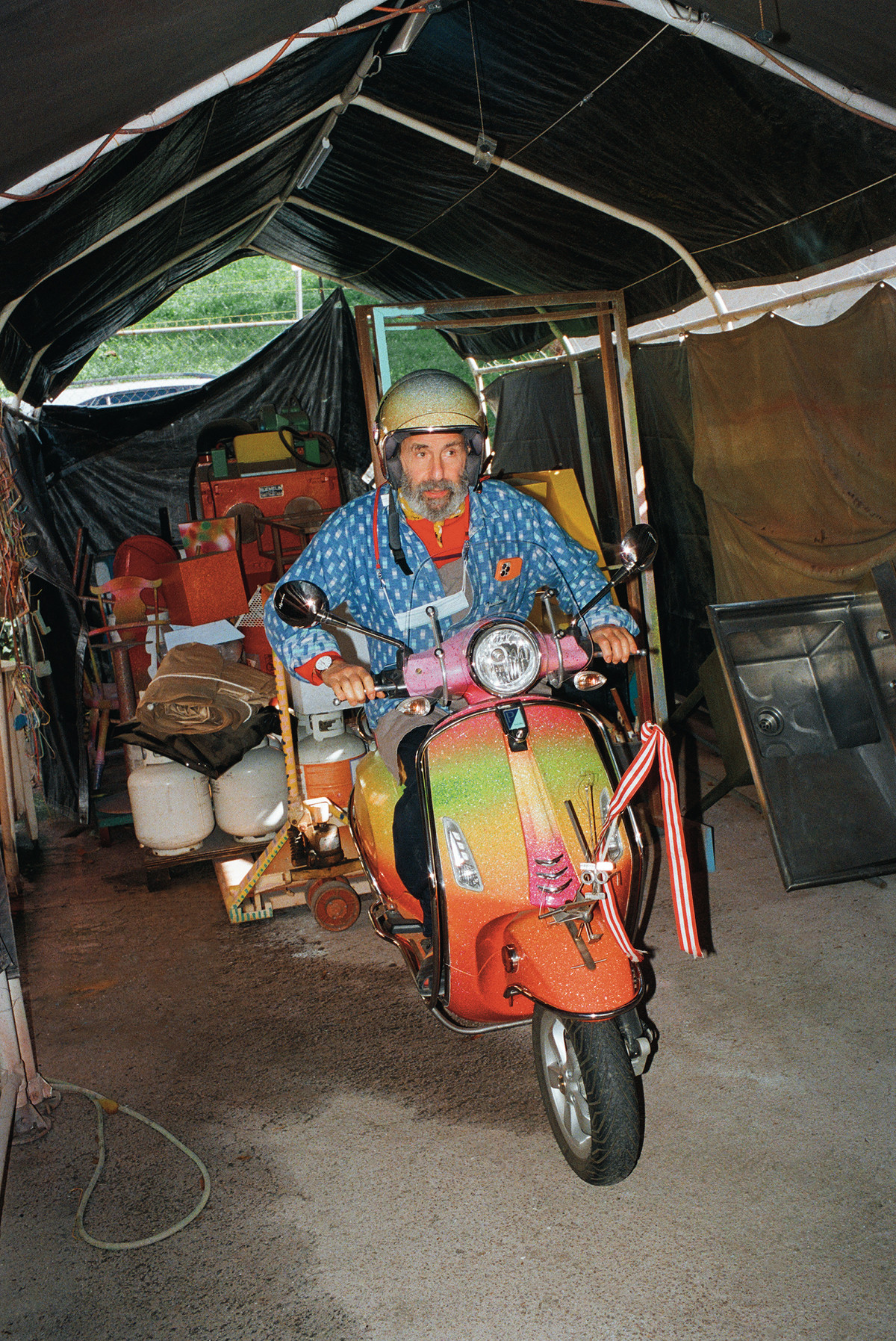
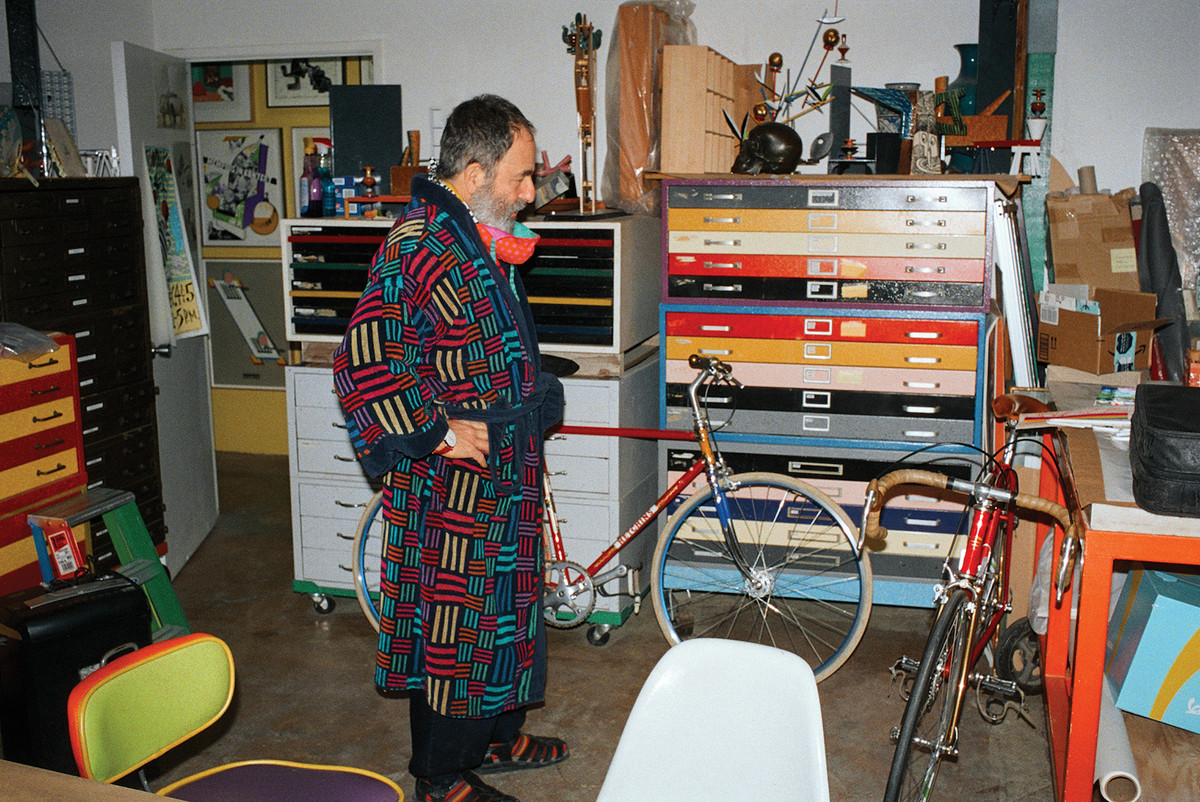
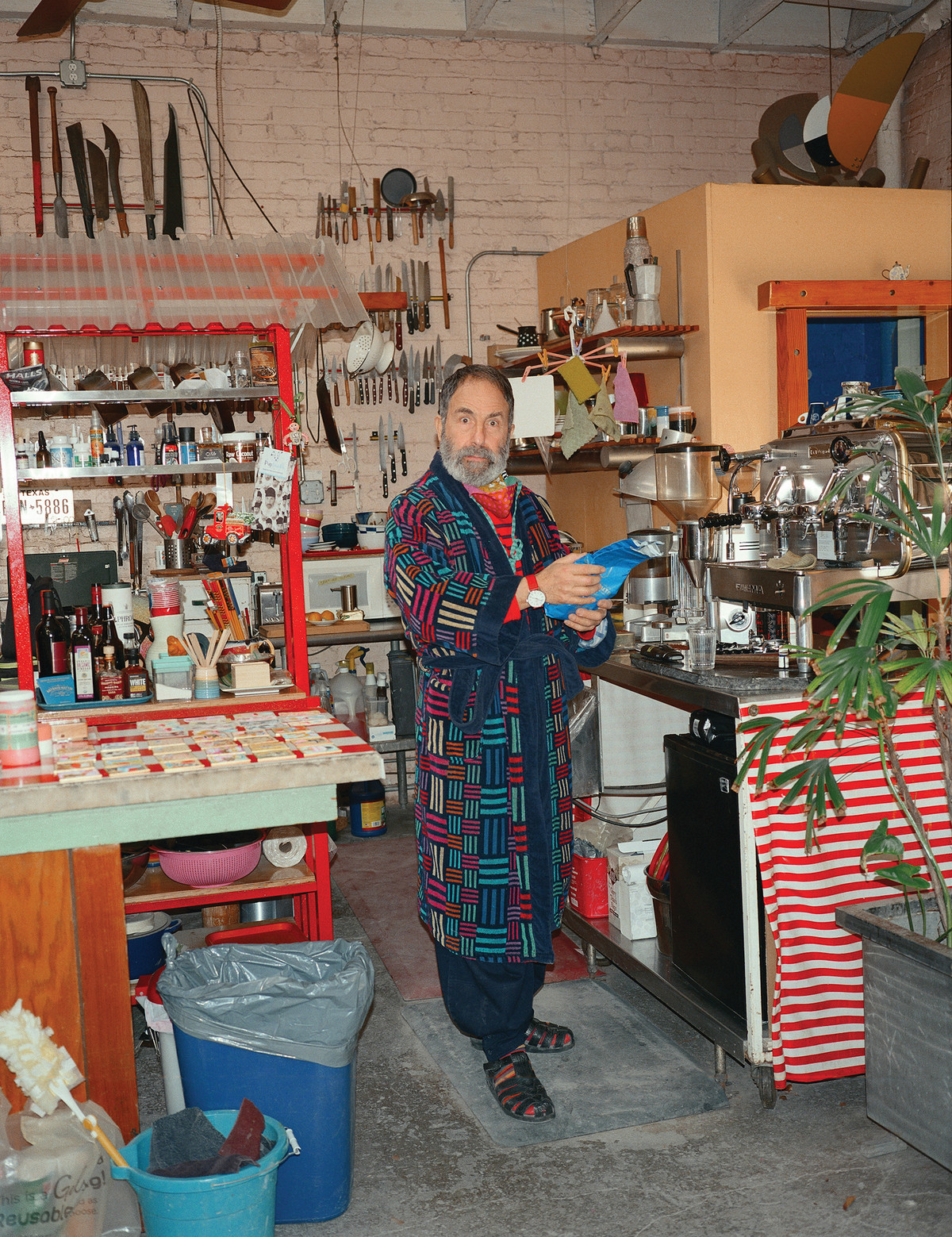
The diversity in Shire’s interests is well suited to his multifaceted, multimedia work over time, which he has shown at an immensely long and impressive list of galleries across the globe. Shire rejects labels, his position in the art world being self-described as “mobile”, approaching utilitarian arts like ceramics, furniture and toy making rather than the core “fine arts”, but applying the highest quality classical craftsmanship. Every reference Shire interprets, from Bauhaus to Art Nouveau to Futurism, he does so in his own very distinct narrative. Glancing around his studio, he pointed out to me the pink tones used on some of the new work. Against the ceramics’ angular shapes, the pink was a play on the traditional Bauhaus red, blue, yellow palate. I wouldn’t say his work is outright sarcastic, but there is a respectful, thoughtful levity that translates through everything Shire does. And this is the unique narrative that has roped the artist into much of the postmodern critical debate that arises in the art world. And not unlike his pieces, Shire, in person, was full of levity— and full of facts. It was a perfect pairing, to wander around the workshop while he gave me a wild oral history of LA, which somehow seemed better suited to the story of him and his work than Memphis history or the famed teapots themselves.
AZ — Do you feel like using mediums that are maybe historically more utilitarian, while making objects that are more eccentric aesthetically was your a reaction to all of that, that idea of liberation?
PS — Obviously, that’s part of it. The thing that we that we’re driving at, that I’m thinking about these days, is that there was a period which is still holding over in many ways, where the middle class became convercent in the art world. They became somehow, if not interested, semi- included, and became a new market if you will. I used to joke with myself because I’d go to these various cities and they take me there visit some of the people that bought things, they all seem to do red, yellow, blue. We would like to call them the red, yellow blue collectors. These were lawyers and doctors and middle class people that were buying art. This is what they understood. It’s interesting. Art is an old story, but it’s a social signifier as much as everything else. And having it, you know, comes with prestige, but why? One of the dealers once told me— and that’s an interesting thing, to call them like drug dealers— said, “We always look for the A type person and get them to buy one first, and everyone else will want one.”
AZ — That’s kind of infuriating, in a vague way. But it makes sense. A necessary evil?
PS — It’s an interesting endeavor, financially. And you know, you’re a small business person to the state of California and the federal government. I’m a small business person, I got all my licenses, they come and check my sewer for pollution and all that kind of stuff. The paperwork is daunting. We’ve got this thing to support and the billing and the cost of things becomes very funny, you know, sometimes it’s on a multiplier of prestige, which we attribute intrinsic value of some sort, which is, which is a polite way of saying prestige and status. And the question always is, if the city was enveloped in soot, like Vesuvius and Pompeii, and everything was perfect, and they dug it up centuries later, how would they read it? Would they choose to look at this, or not look at that.
AZ — That’s a really interesting perspective to have on this matter, very philosophical.
PS — Social anthropology. They probably would put it all together, but it would be much more revealing, much less diversion and diverting. “This is a rich neighborhood, they got this kind of funny thing here, a big old table. And this is what they must do.” My joke is that virtually every house has Mickey Mouse in it. And people that think they don’t would be surprised.