You were ahead of your time regarding activism for Palestine and #SayHerName. How did you sit with those thoughts and feelings about what you believe in and what you want people to hear and join in on the cause?
I think a lot of my relationship to the work or the way I see the world is not because I have any unique, significant, gifted approach, or anything like that. I think it's like, if you're a human being living in the world, I would hope you care about the world that you're essentially responsible for.
It’s a place that we all have to live and coexist. It's funny and it's frustrating. How can you be a living, breathing human and not just care about the air we breathe, the quality of the water, or whether or not we have access to good food? This is impacting everyone. What’s happening in our country is not sustainable. Not only is it not sustainable, it's just not smart, it's not intelligible, it's not emotionally intelligible, it's not intellectually intelligible, it's not spiritually intelligent, it's not physically intelligent. We will not survive if we continue this way.
People start to call you an activist because they see your frustration and your angst, and then they wrap you up in, sometimes, this limited identity around your frustrations or your angst or your anger or the things you want to change. And it’s really just all deep love. That's a real deep, profound, radical love that motivates one to do something different, to see their role in it, to want to participate. That's all it is. It's just a deep, radical love that's willing us towards participation.
I think, from a very pure, selfish perspective—I want to live. I want to live abundantly. I want to enjoy life. I want to be around other people who are enjoying life. It does not help me to see other people hurt. I do not feel good. I do not get joy out of that. I do not think there's anything about my life that enjoys seeing other people suffer. All of us have some level of accountability we must answer to. That's where I get inspired. When I see people show care and solidarity, when I see a world that reflects a politics and ethics of love
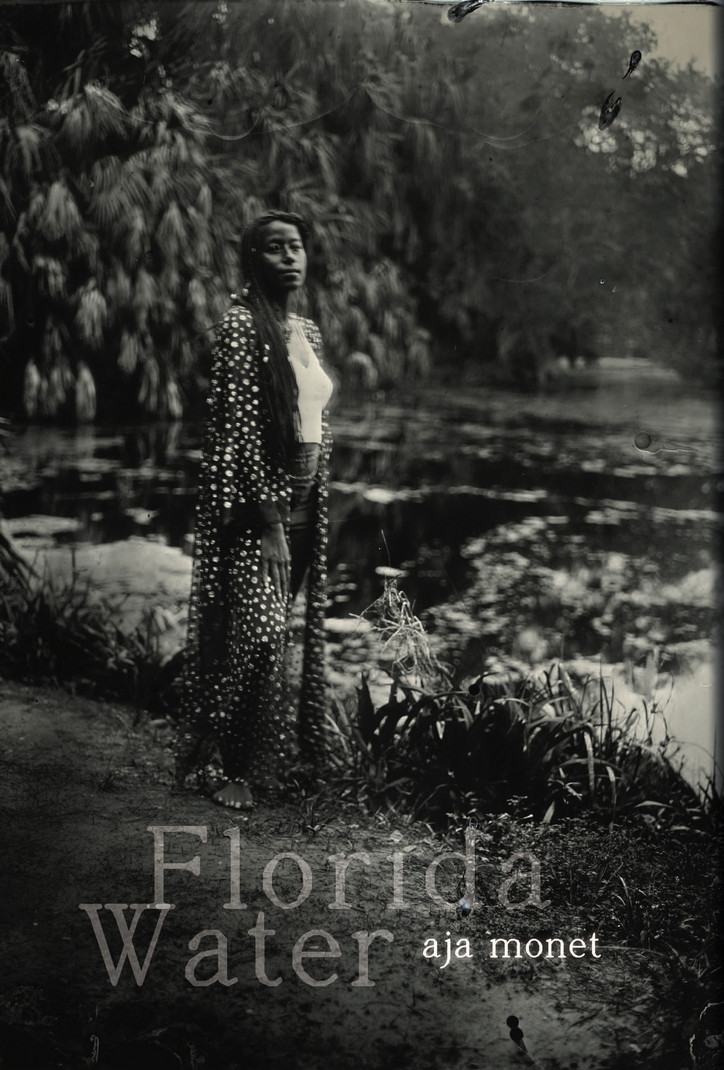
Can you talk a little bit about why you moved to Miami from New York, and what that process looked like as you were writing Florida Water?
Well, Florida Water wasn't an intentional thing. I wasn't like, “I'm going to write a poetry book about Florida, or my time in Florida.” It was just a reflection of the time and the experiences, and the collection of poems that happened in that period. I moved to Florida because I was invited by the Dream Defenders to go on a delegation in 2014 to Palestine. It got delayed because of uprisings across the country. So we ended up having to go at the very end of the beginning of 2015, and I met an organizer there who was one of the co-founders of the organization called Dream Defenders. We fell in love in Palestine and got connected with other organizers in the organization. I went back home, and we made a decision for me to move to Florida together.
I was so excited to meet this organization, to meet people from this organization who weren't just like talking about the changes they wanted to see. They were doing things that reflected that. While in Palestine, I think what we learned about ourselves, we learned about our organizing, and we learned about the world. It uprooted a lot of the things we thought prior, and I think we became way more aware of our international class consciousness, and we became more involved in making connections by what's happening at home in the States and what's happening abroad, and how those things are coordinated.
That sort of connection-making manifested in this way, where it was like, I need to be closer to these individuals. I wanted to be around people who get it, who are working to change these things. The Dream Defenders was one of the first organizations that uprooted our generation. I remember seeing, for the first time, young people taking to the streets when Trayvon Martin was murdered, and they went to the governor's mansion and took over that. That was a huge thing to see as a young person. I was like, “Wow, these kids are standing behind what they believe.”