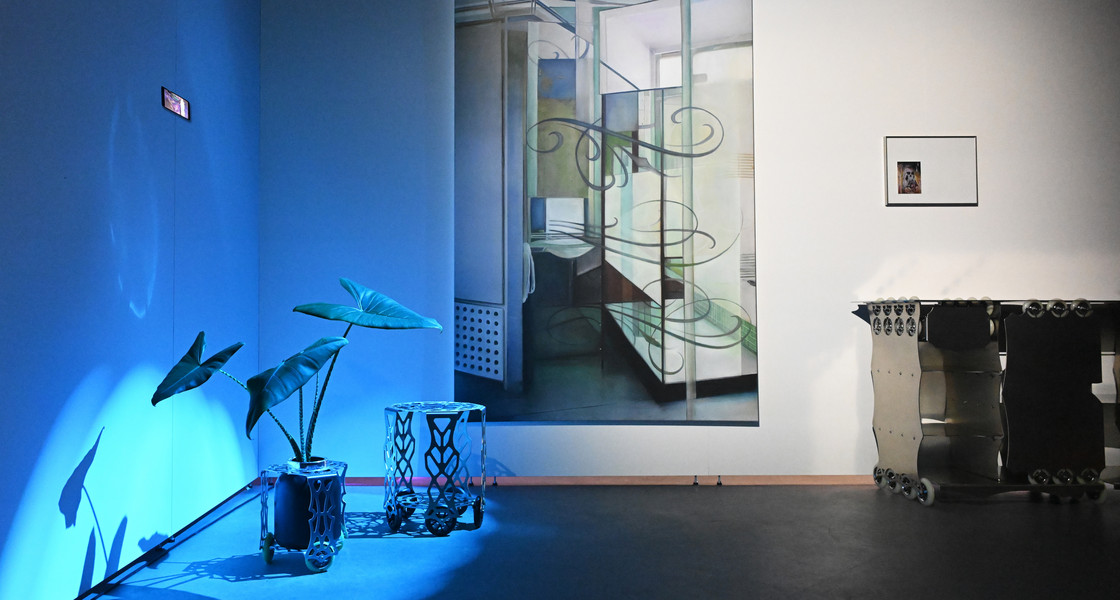
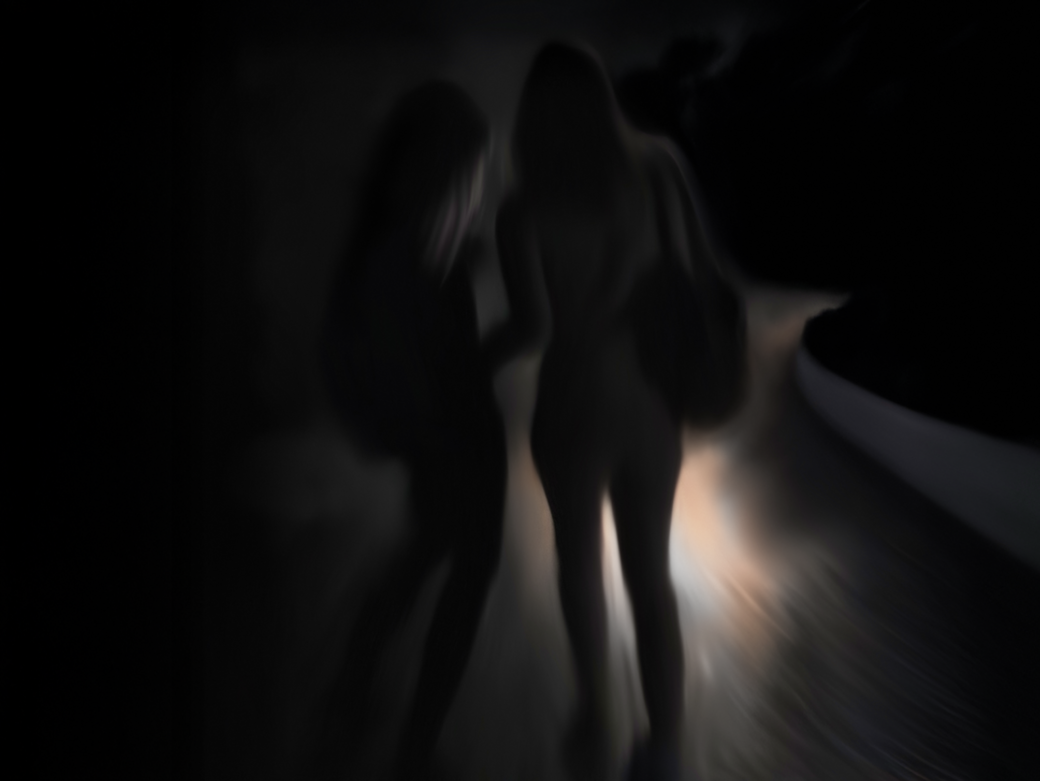
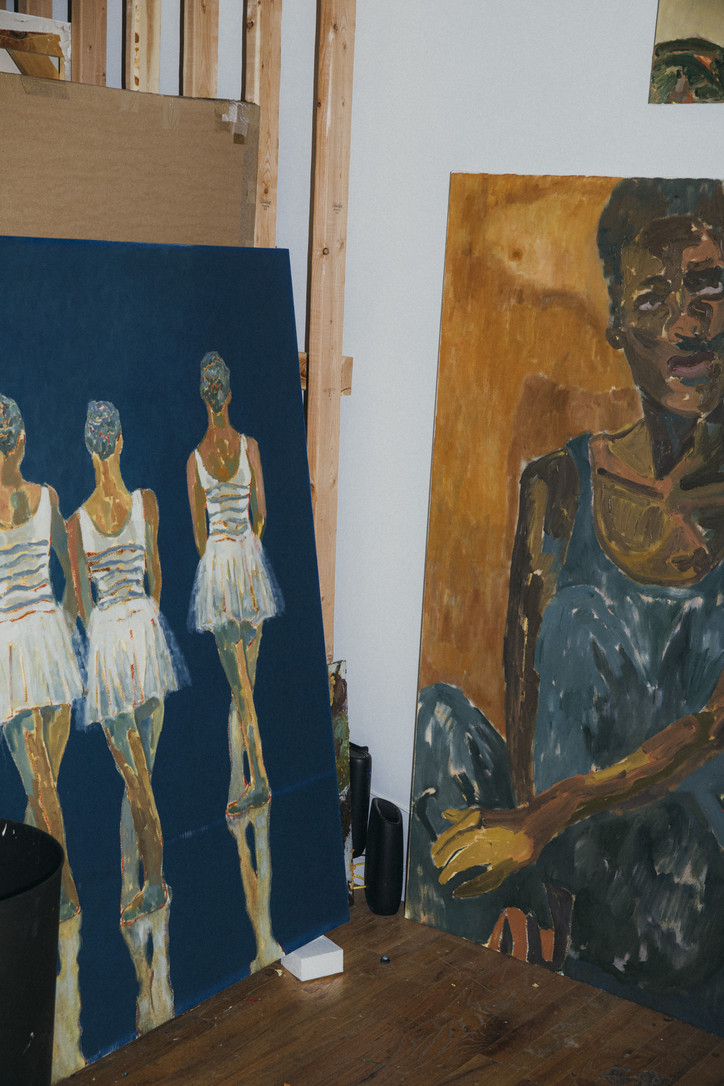
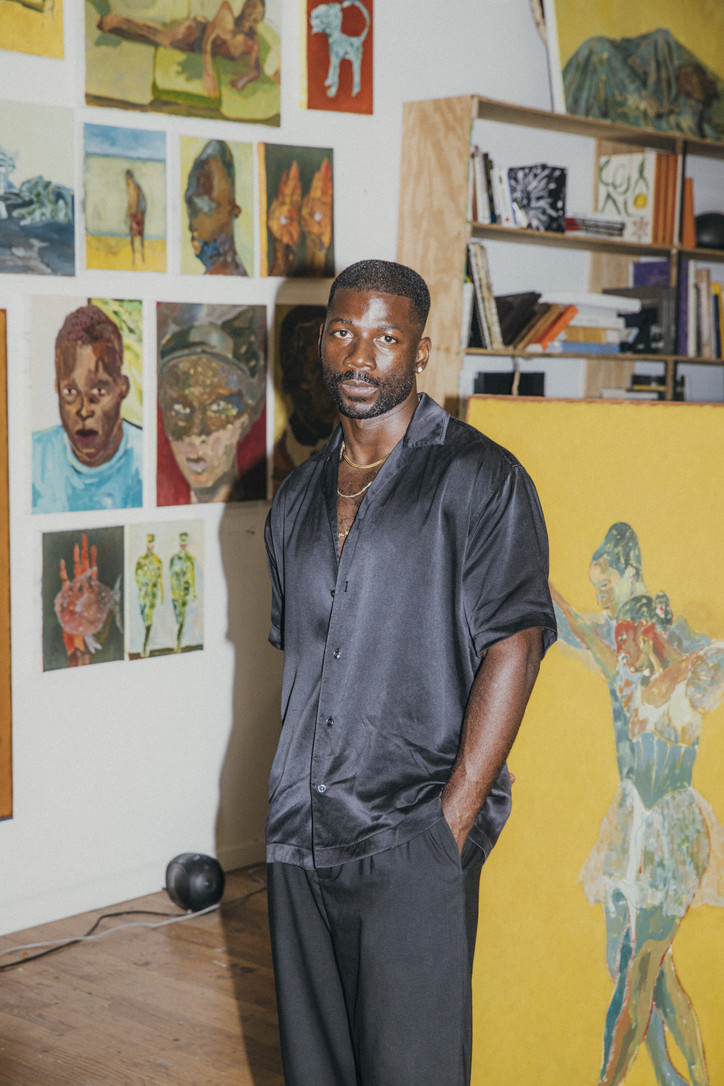
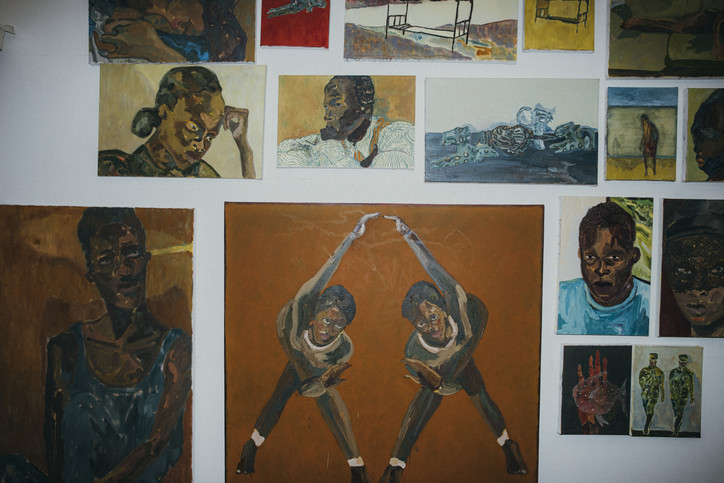
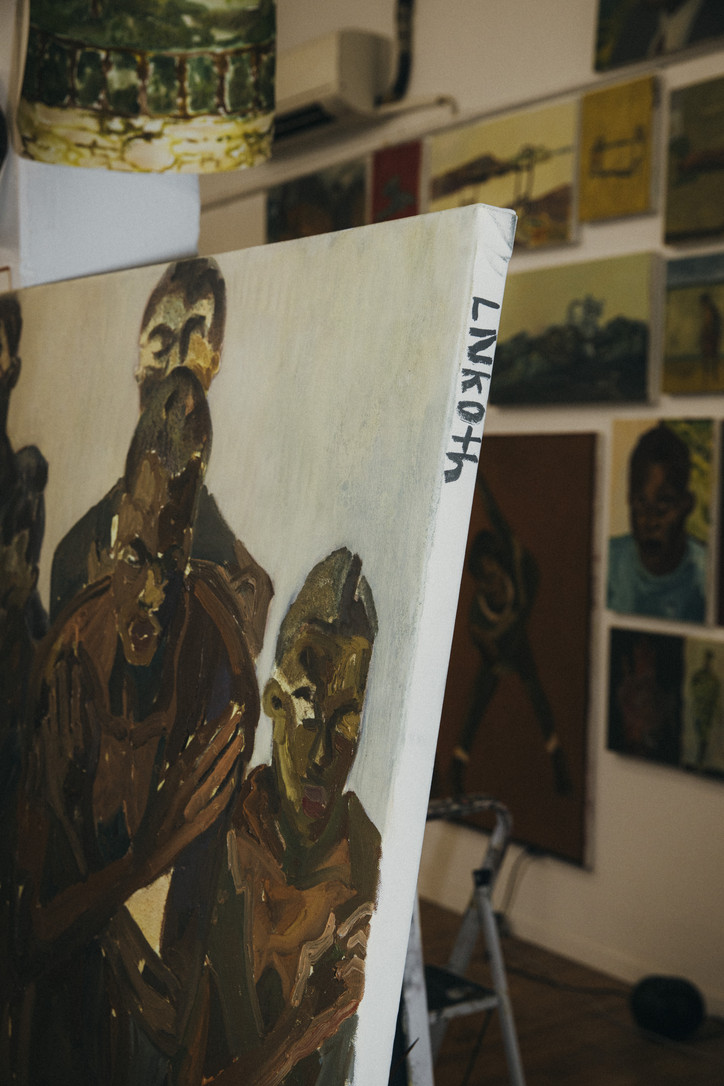
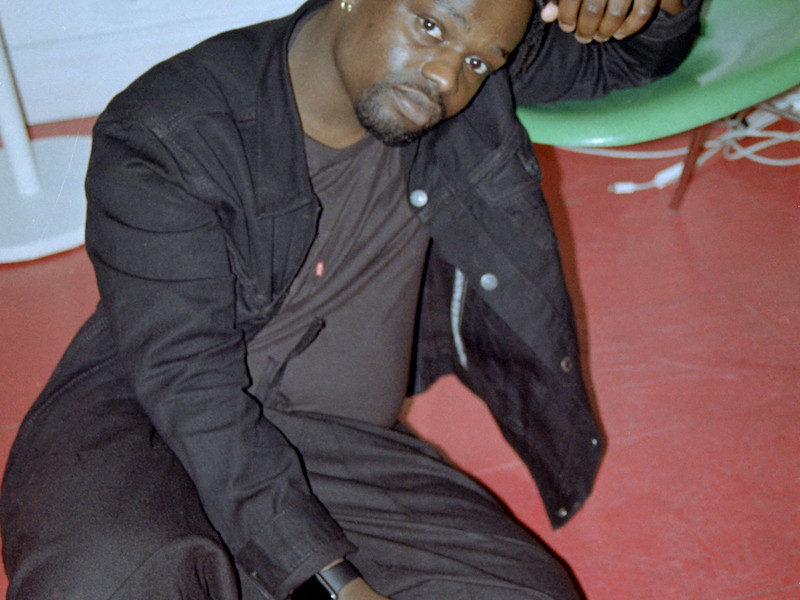
“When I moved here, I was told the American Dream is going to a good school, having a good job, getting a big house, and having kids,” Nkoth said. Dancers cavort before the dream home, their movements drawn from footage Nkoth shot on selfie mode in his studio. With time, he said, “I started understanding that there's a lot of performance that has to happen for you to attain any of this.” And is the prize even real? Well, this one looks like a mirage, an ode to Nkoth’s love for Dalí. “That was such a crazy human,” Nkoth said. “He was just painting dreams. I love dreams.”
As a talent shrouded in Spartanburg, Nkoth simply busied himself painting beautiful things. Grad school taught the artist that his own life is worth plumbing. The resulting paintings rendered Nkoth a known wunderkind. His new works foster a more universal, narrative-driven experience.
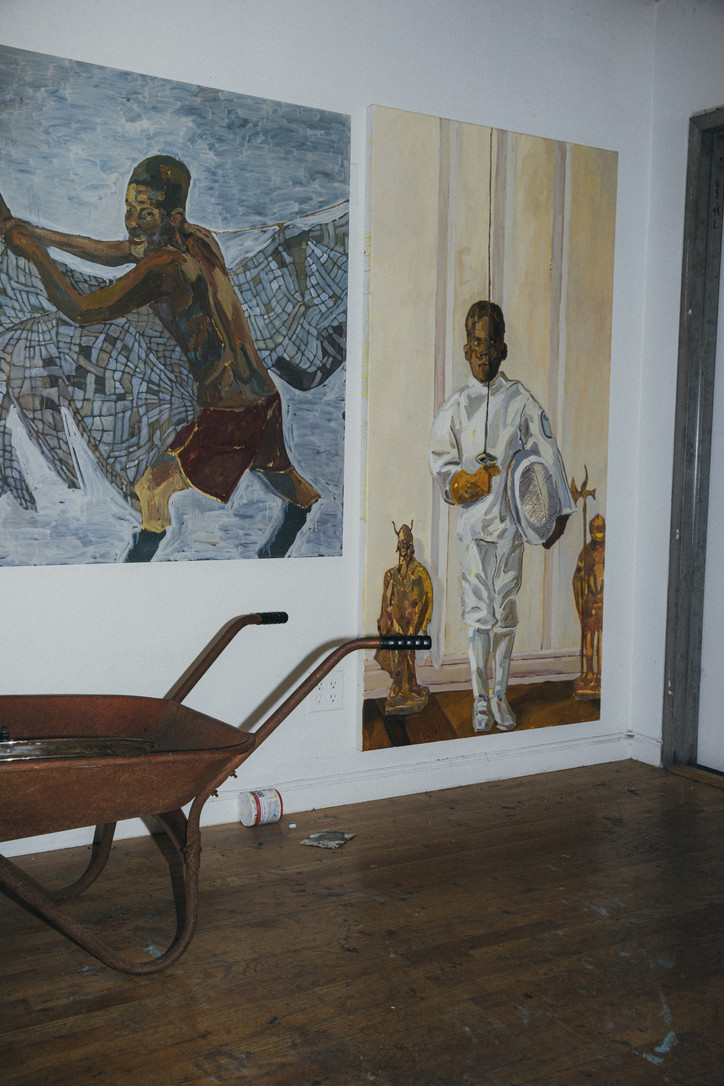
That language can make it sound like Nkoth’s adapting to the anti-DEI era. Actually, his storytelling efforts underscore Black culture’s distinct power. Parents, babies—families—often animate Nkoth’s work. There’s less family album energy in this exhibition, though family bonds do still appear. In “Mapping the Seas”, a group of three deploys fishing nets at night. In “Tides”, a boy wields one during the day. Both times, the nets’ warped grids evoke Mark Bradford’s maps.
“What does that mean to have a map on the sea, on the Atlantic?” Nkoth asks, returning to ocean as symbol four years after presenting “You Sea Us” at Luce Gallery. The horizon line underpinning “Mapping the Seas” invokes the universally terrifying feeling of looking out and not being able to tell where ocean ends and sky starts—amplified by the Transatlatnic Slave Trade’s spectre. In truth, the paint just dried like that, and Nkoth went with it, learning to heed the work’s cues “I think the pieces feel more current and of the moment in that way of working,” he stated.