Vulvatious

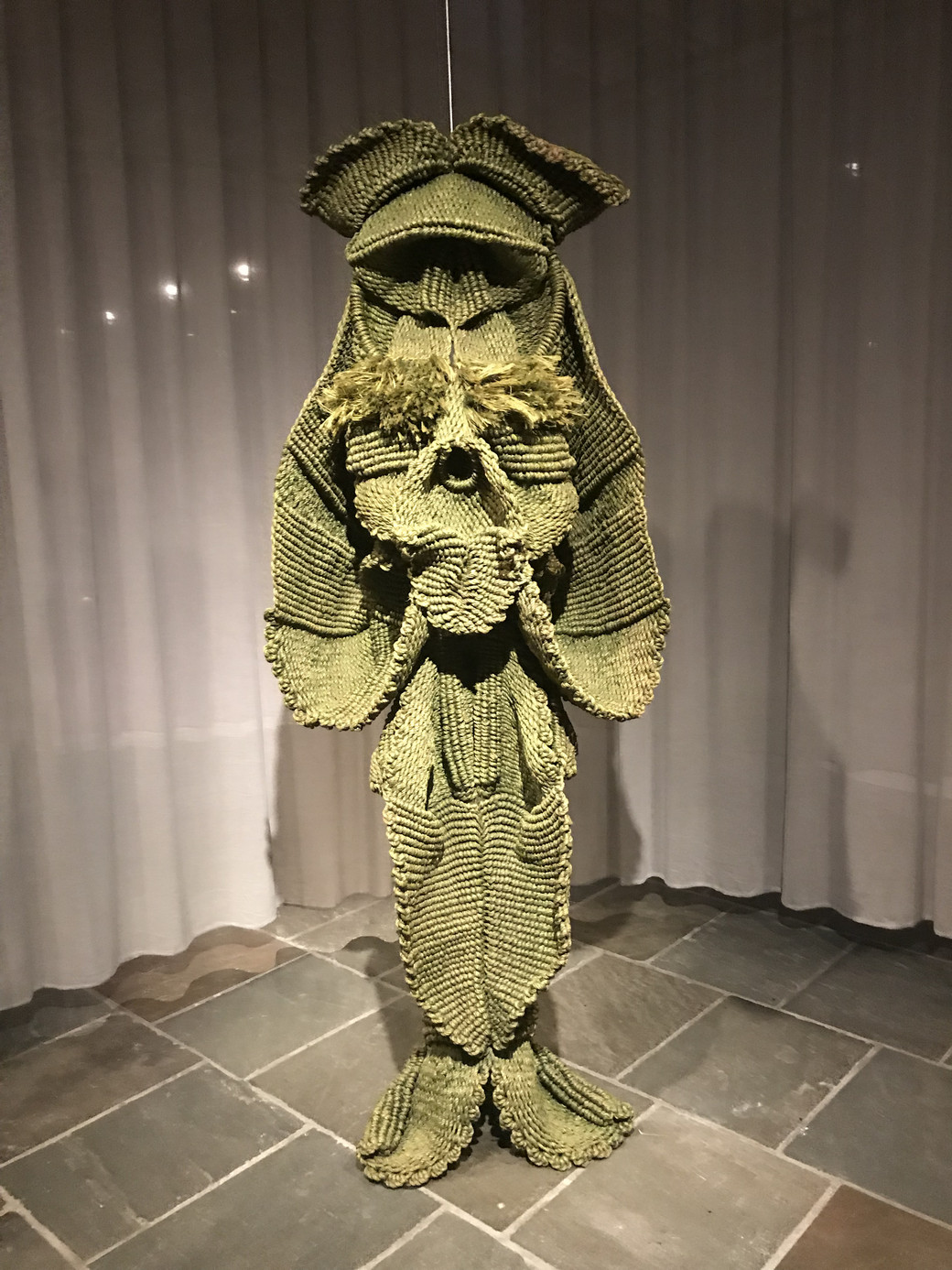
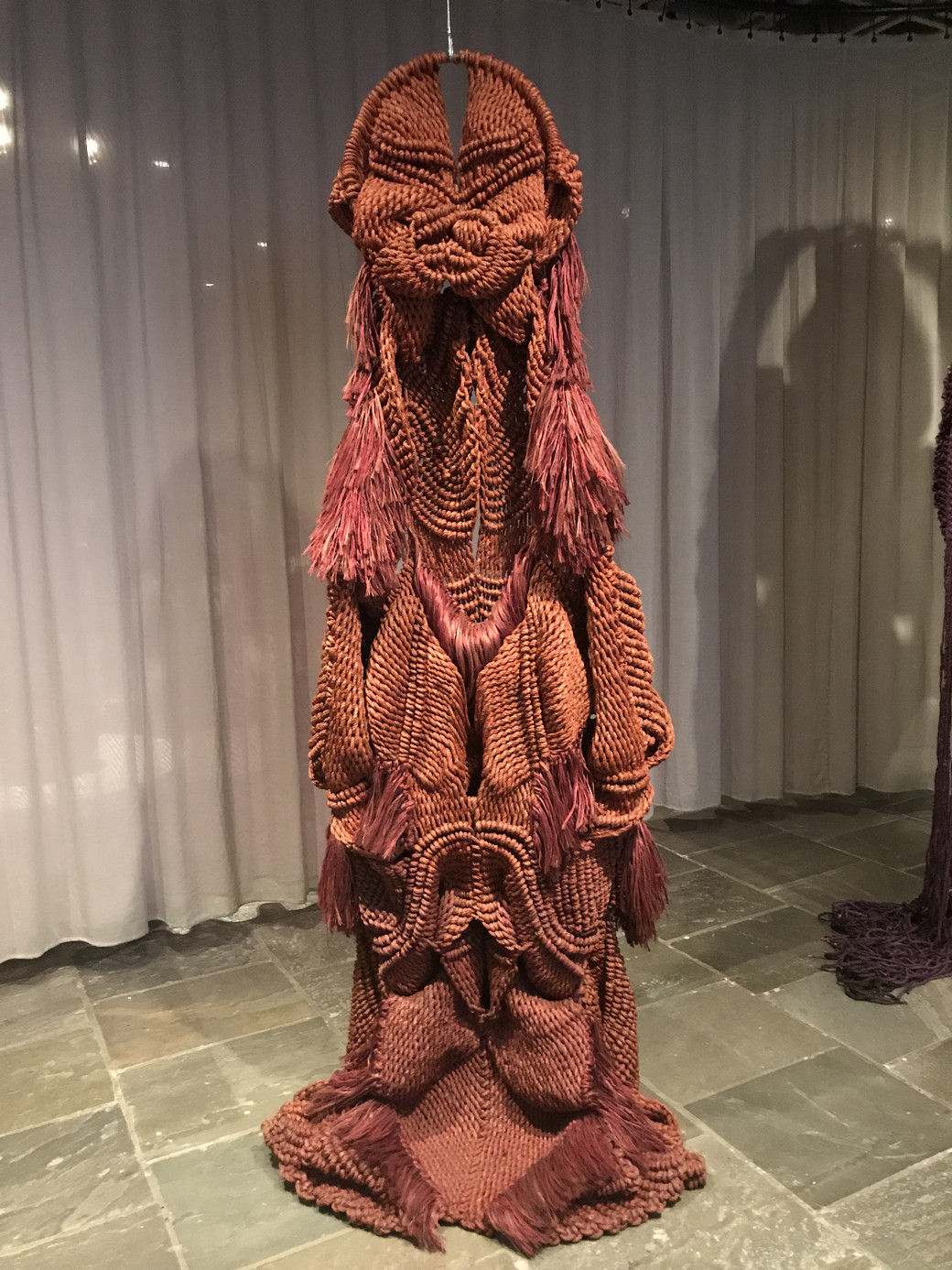
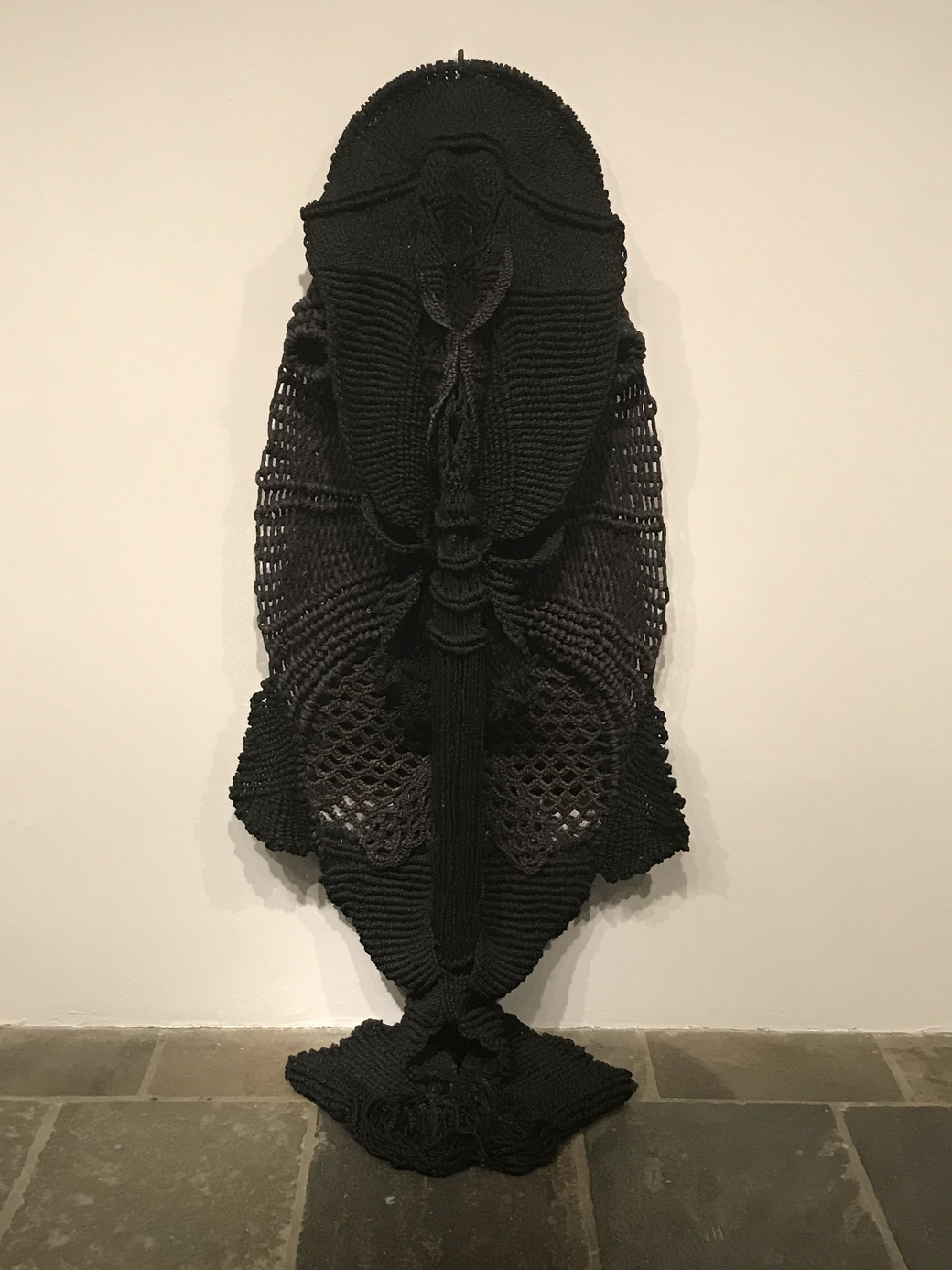
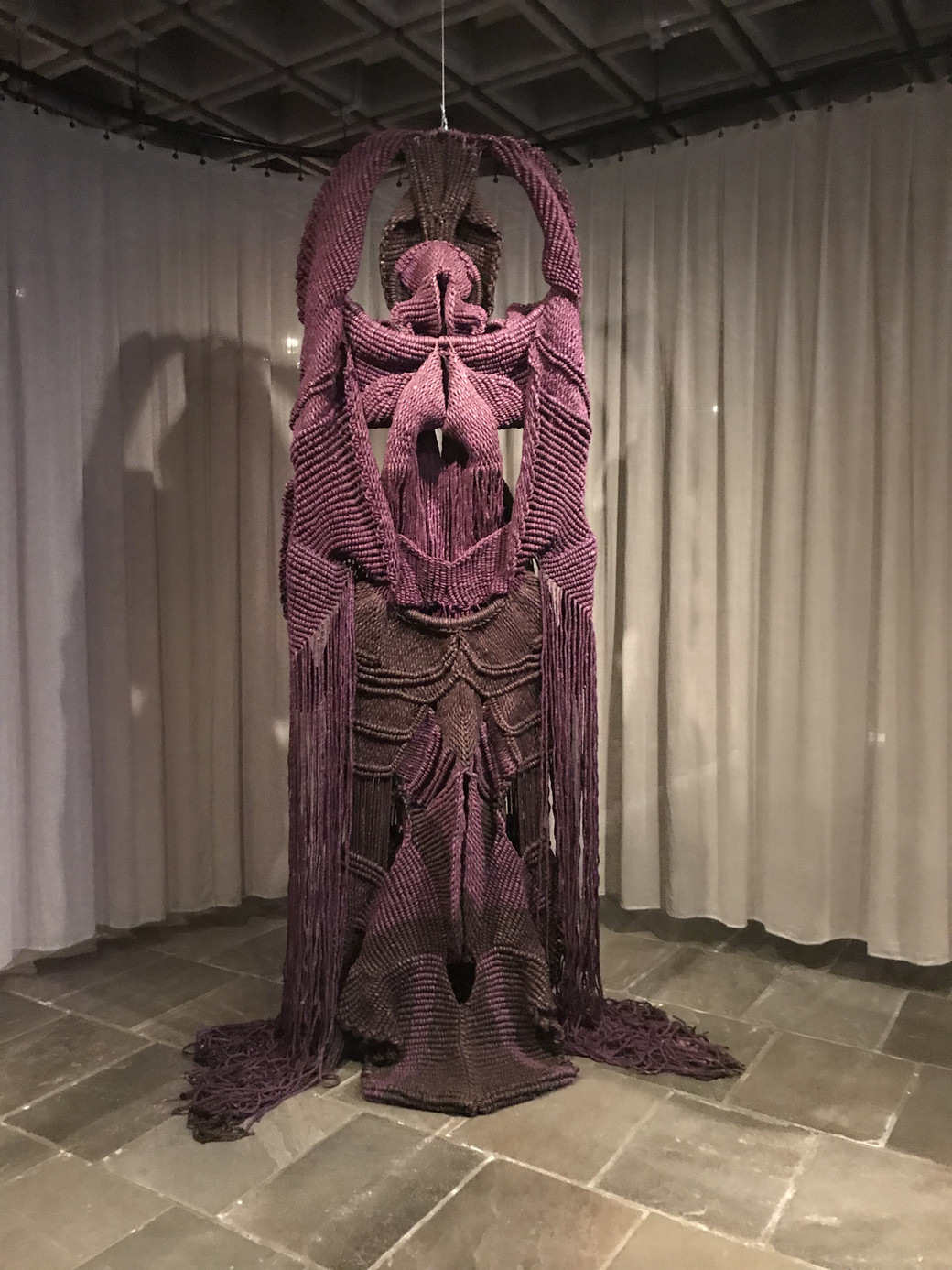
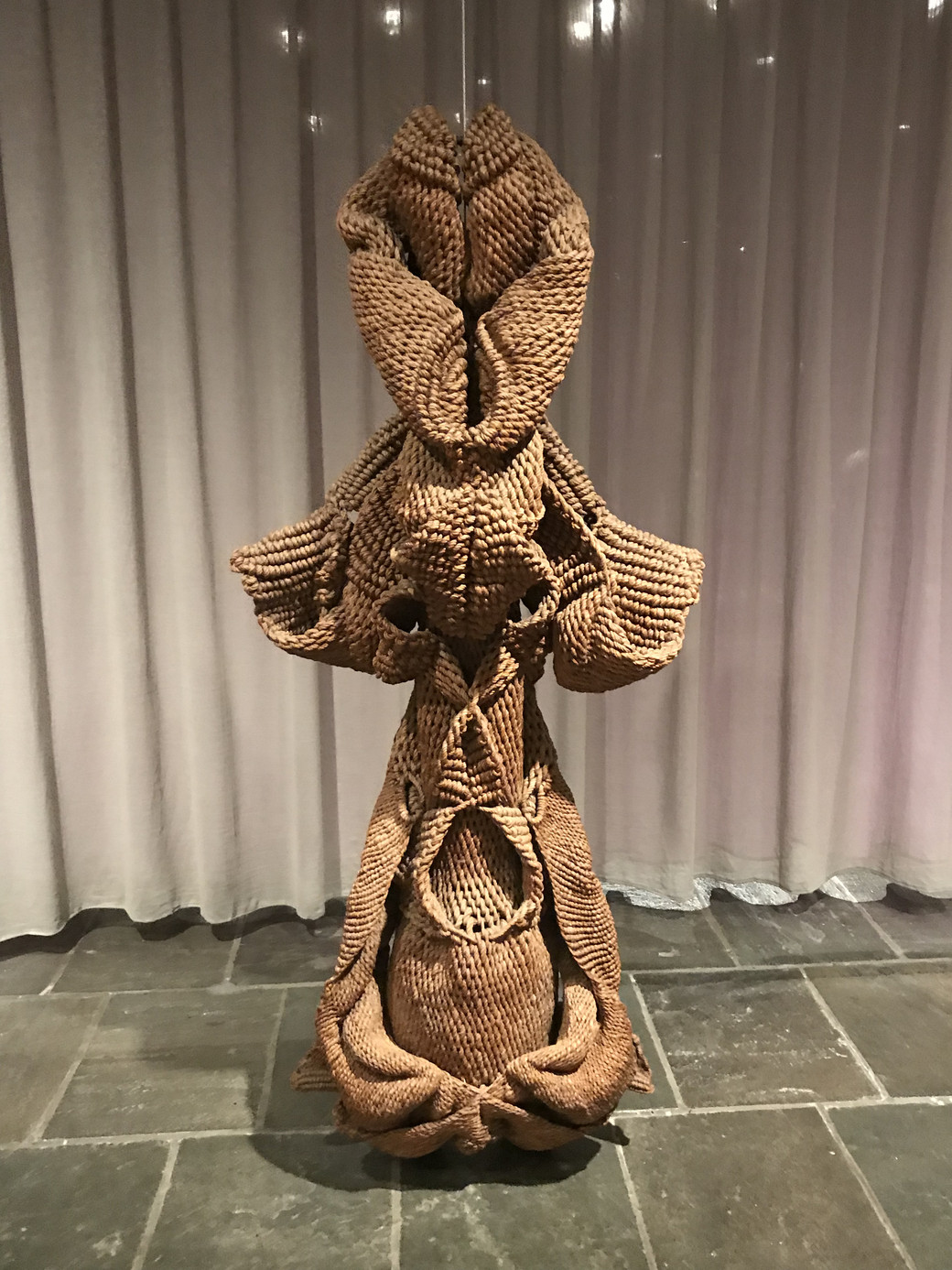
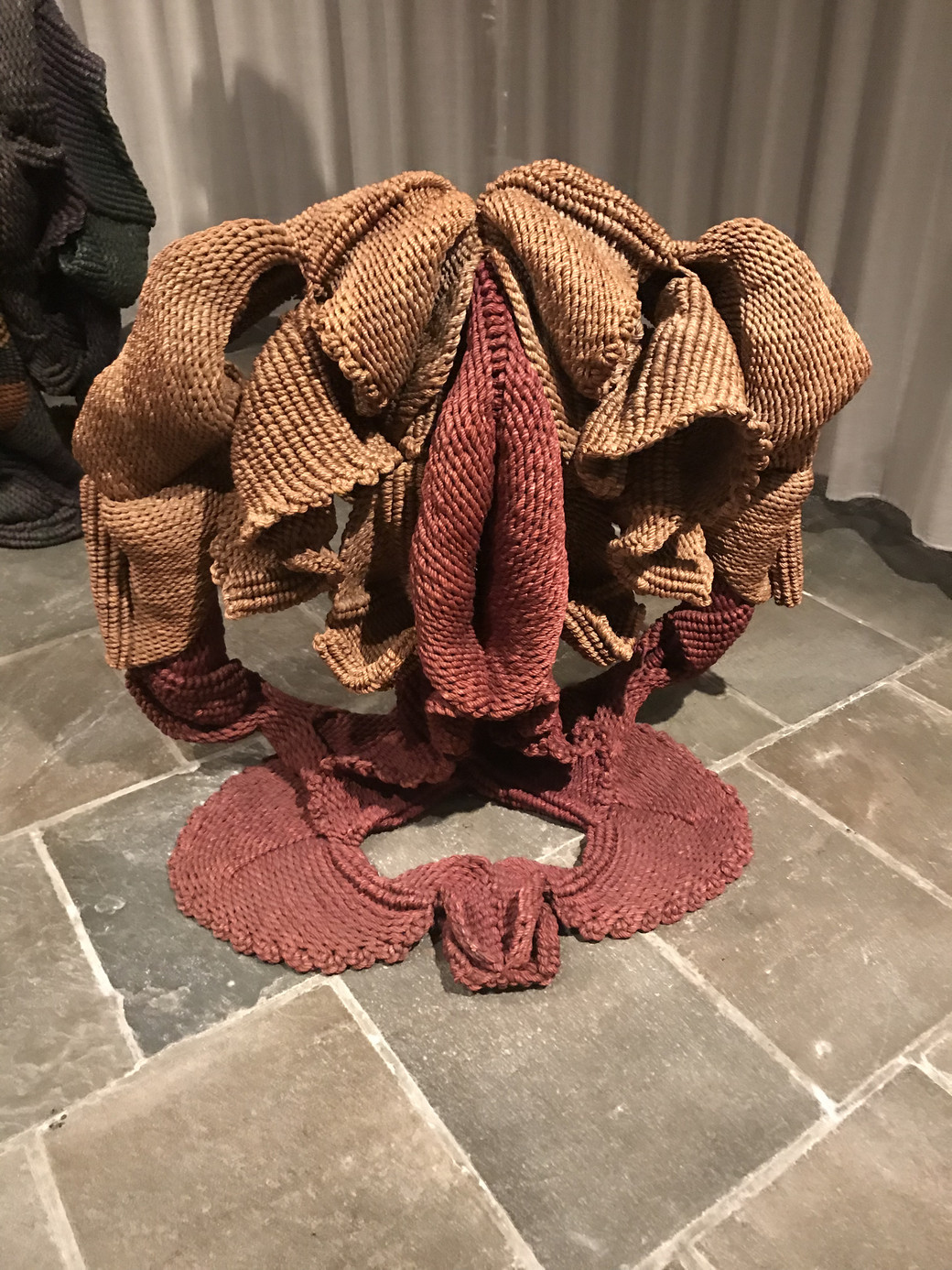
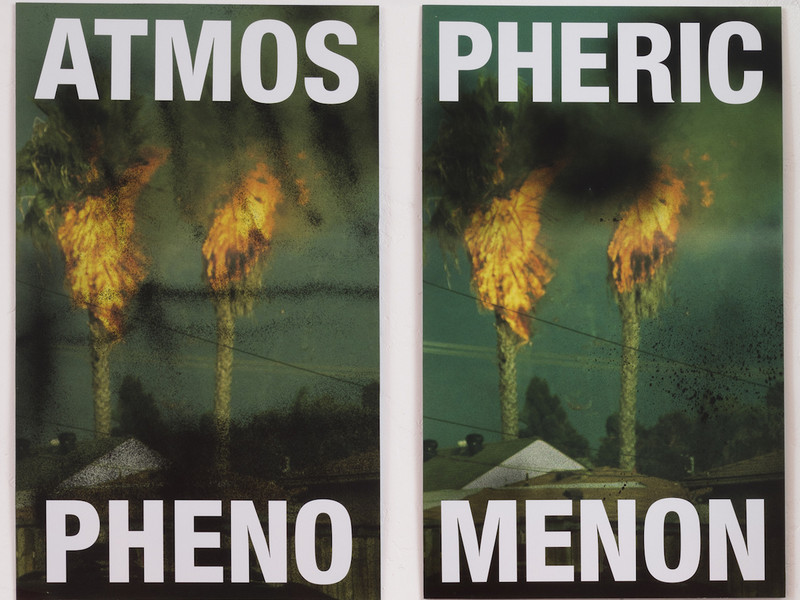
"Phenomenal Nature: Mrinalini Mukherjee" is on view at the Met Breuer through September 29th, 2019.
"Phenomenal Nature: Mrinalini Mukherjee" is on view at the Met Breuer through September 29th, 2019.

The idea that a centralized market dominated by the power that high-brow art galleries held could be deconstructed, reformed, and distributed equally, while working within the current systems in place was deemed utopian to Paul. And in 2021, that mission that was once deemed illusionary came into fruition through an online platform, exhibitions, artist residency programs, artist grants, and now the Strada Friends project.
Joined together on a rainy night in New York, Strada rang in a sea full of art lovers and curious by-passers alike. Familar faces popped up at 208 Bowery for Strada's fifth official installment, which featured 9 emerging artists across all disciplines like Quinn Wilke, Fred Smith, Lauryn Levette, Ryan Lee, and more. The space that served as the precursor to what pieces can be bought on the online gallery, stood welcoming in nature and ubiquitous in conversation. And though there are many moving parts, underlying factors, and quests to lower the barrier towards comprehension and adaptability to the art world’s ever-changing landscape— it appears that one thing Strada hones in on is centering the art for the artist's sake.
Post-show, office was able to catch up with the mastermind behind Strada to uncover all of its intricate layers.
So post-show, can you explain a little bit about your process and the community Wallet? Usually post-show, people are putting pieces up for physical auction, selling or giving them back to the artist. You're doing something a little bit different by putting it into a digital world.
Yeah. We already do that. For collectors who bought works, we're putting those artworks in the hands of those collectors. We have had artworks on consignment for like a month now. So we're just reaching out to different collectors, seeing who wants what, and then selling things in the meantime.
But yeah, what it looks like digitally, is that we are working with just many artists, like the physical artists who we've been working with so far, like Quinn Wilke, Isolina [Alva], Sophia [Wilson]. And we're having a physical artist start designing accessories for the Strada Friends [NFTS] because we created the 3D character builder. So now, these avatars will be created by artists within our community, as well as just general members who want to submit stuff as part of the contest. So, if you're just a general member of our communities, not on our radar, you can be like, "Hey, this is something I design," and then we'll have a little contest.
If it gets approved, then we'll take those designs and render them and have those as an option, for people to customize their own Strada Friends. But the main thing about the wallet, beyond the artist side of things, is that it's full autonomy for our community. This is the most decentralized organization and community for our artists and collectors to build on their own, without Strada controlling what happens and the decisions that are made— which isn't seen in the art world whatsoever.
So what was the issue you originally saw within the art world?
The issue that I saw, is that artists and collectors have almost zero say within the current art market that we operate in. The majority of the decisions that are made about which artists rise in popularity, as well as which artists are selling their most work, is decided by gallerists, art dealers, and art advisors. To even get to that role of being a top-selling artist, you have to get a Bachelor's in Arts, a Master's in Fine Arts, and then get signed to an art gallery.
This already limits people just due to financial flexibility because there's almost zero financial resources for people to have financial aid for, say a Bachelor's in Arts, but then also did a Master's in Fine Arts. But then once you are sent to a gallery, art galleries take like 50% commission. Having a process where — now my first solution was a form of half autonomy, where our Strada holders will be able to vote on the future of the art market that we're building. Where Strada holders will be able to vote on exhibition locations, future artworks, as well as have pre-access to available artworks. But that's only half autonomy because at Strada, we would be the ones providing which locations they vote on, as well as the artists that will be in the exhibitions, and then which artworks will be available for the community to vote on— that's half autonomy.
So I just wanted to take a step further and see what we could do with our full autonomy in allowing Strada holders and artists to just build a community on their own. But we are the ones who are centralizing the funds and just the financial resources for them to do that, and providing a structure and clear guidelines on how to do this most effectively. But they're the ones who are pitching their own projects. They're also the ones who are voting on it and having a final say on which projects receive funding.
I feel like you place such a big emphasis on community that we haven't seen before in the art world. Can we just rewind a little bit and go back to your first impression and experience within exhibitions and art galleries? Especially as Black people, we're told that this certain space isn't for us. So what made you want to make Strada so community-driven?
I've always been building stuff my entire life, even as a kid, just taking apart robotics and just trying to put them back together. Then I got into high school and I was the athlete. I was playing football, running track, and I was one of the top wrestlers in the state, but I wanted to join the robotics team and the school was like, no. They thought I was joking, in part, because I'm an athletic Black kid, at a predominantly white boarding school. Most of the Black kids that they have, they're on scholarships or receiving some financial aid, are there for the purpose of being athletically scouted.
But then, I was able to get to college. That was where I had more freedom and flexibility in kind of choosing my own path and doing what I wanted. Then, I moved back to New York and started making screen prints. Screenprints were my first introduction to the art world. That's when I started realizing all the flaws and barriers for artists, in growing their careers. And diving a little bit deeper into that, when I go into— this is not a unique observation, It's something that's very commonly felt and thought about or subconsciously thought about, by most BIPOC people. Is that when you are walking into an art gallery and even museums, it's not a welcoming environment.
When most people think about who an art collector is, they mostly will think about older white males. Most people who are like us and look like us, can never really identify with that or really want to identify with that. Because they see it as something that's almost unattainable, but also something that's not of interest. So when designing Strada, from the very jump, from the very jump I wanted to focus on these tenets, which were accessibility and transparency. The art world operates very ambiguously. So, I wanted to make sure that transparency is there, but also welcoming environments. Just making sure that people understand that they are welcome to come to the public opening nights.
People who come to Strada exhibitions and are familiar with the art world, often say this key difference. They're like, "Oh my God. The difference between going to a Strada exhibition and the difference between going to another art show is that I come in here and I feel like I can talk to people." People actually feel comfortable to go up to strangers and have conversations about the artworks, about other artists, and about their thoughts on art and culture. Whereas in other art galleries and exhibitions and opening nights, a lot of people feel like it's just there to go. You look around. You say one or two words to a couple people, and then you leave. It's not really a place where you go and have conversations about artworks and the artist. So yeah, I think we've done a really great job with that. That's one reason why we have these amazing turnouts for each opening night. We've been able to attract a lot of amazing collectors. The majority of our collectors, so 65% of our collectors are BIPOC. 85% are female/non-binary, and then over 90% are Gen Z/Millennial, which has been really cool.
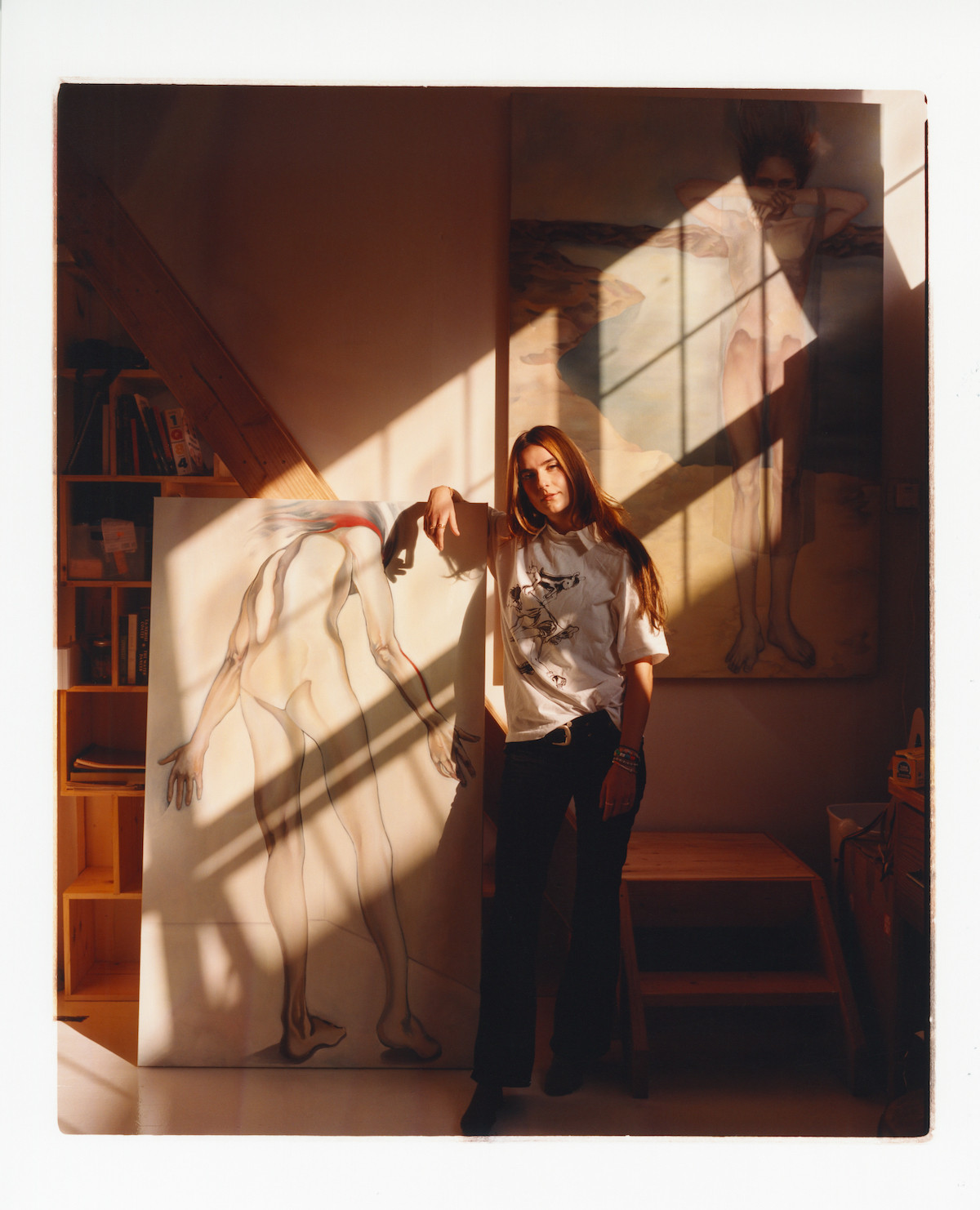
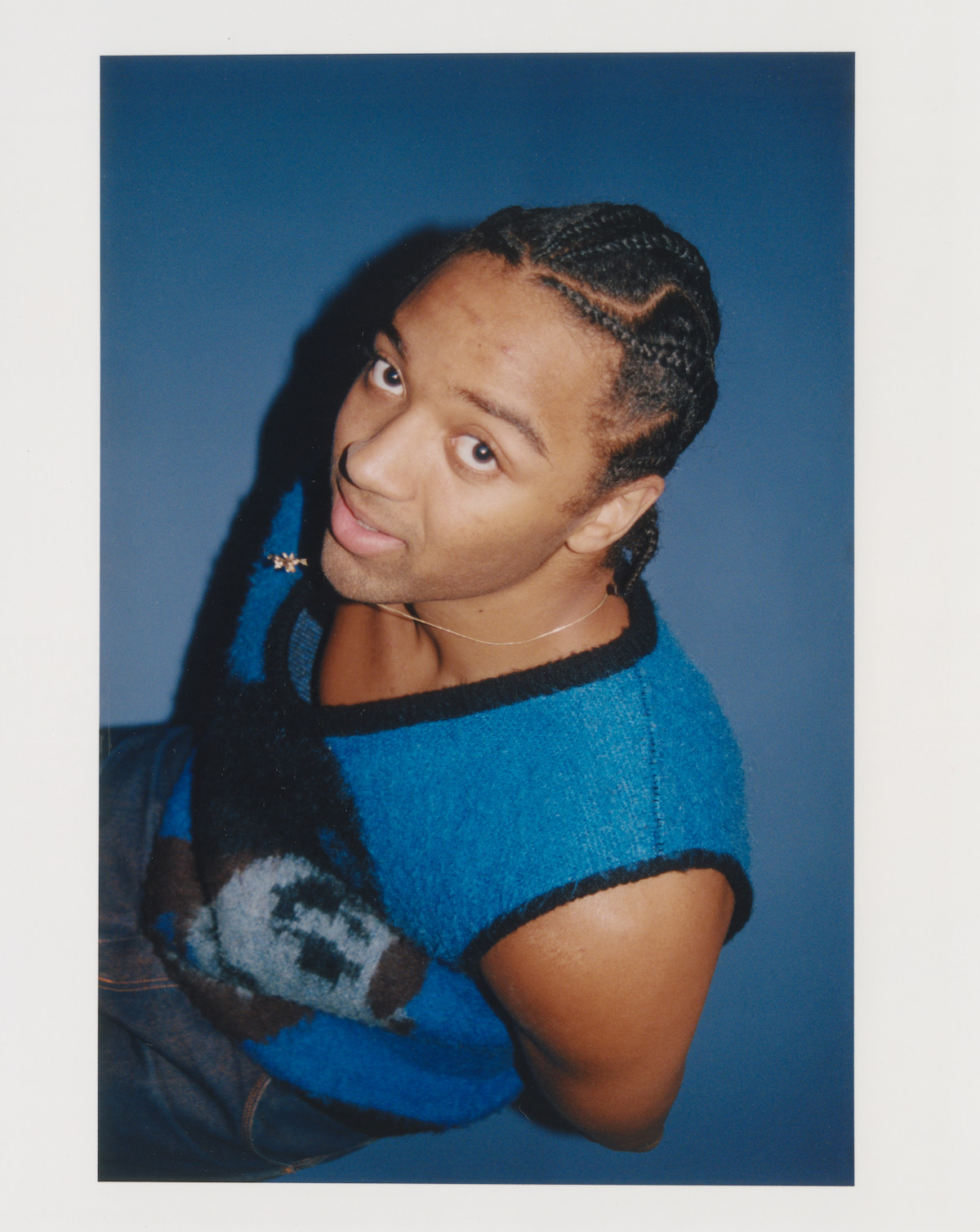
Yesterday, you texted me that Strada is more warm and inviting. Do you think that there's some psychology behind how you set up a Strada opening?
I mean, there is some psychology to it. I try to make sure it's an open room and not a room that's blocked off with barriers, you have to go through different doors to enter different rooms with artworks. This is kind of a silly thing, but it's also part of the psychology of it, only posting the promo and flyers and invitations on sunny days.
But also, with just the artists that we show as well. So, the majority of the artists that we show, are from marginalized backgrounds, either via race or gender. For New York City shows, we try to keep them as local as possible. So, we try to keep it 75% local and then fly in artworks from across the country, for the other spots. And then we had the culture exhibition, which was really personal to me, given that I don't think I'd ever walked into an art gallery before or known of an art gallery that focused on celebrating Black culture, intentionally, and creating a space for young emerging Black talent.
It's something that's a very rare occurrence, but I want to make that a staple of Strada and making sure that we have these culture exhibitions. Where we're able to highlight different marginalized cultures and a very clear theme, that focuses strictly on that background and providing space, one, for those artists, but also for any performances that want to happen as well. Anything that falls under this umbrella of "fine art," 'wanting to make sure we do that and we excel in that, for sure. We had the two performers who danced, as well as a live hair-braiding session at the culture exhibition, with one of the performers being a dancer from Beyonce's "Black Is King." That was a highlight, one for myself, but also for the majority of people that ended up coming there. It's stuff like this, that's just opening up the doors.
I've been very slow to introduce NFTs and Web 3 to the physical art community, just because they weren't there yet. But now, we have something that's very clear, very simple, and also needed for a lot of people. Because a lot of the barriers that we're seeing for independent artists, one is the financial barrier, two is connections to one, other collectors, but also other artists, to receive advice and to sell their work to. So, being able to create one spot and authenticate who is a part of this organization, through this one mobile artwork that they design, and they are an artist just by going through this process of minting this Strada NFT, is going to be key. I'm very excited.
When you're picking the artist for the certain showcase, are you mostly going by theme, or are there just artists you've been wanting to speak with and show their artworks for a while?
:
The artists that we've shown so far, the past two exhibitions were themes. They were both themed. Prior to that, it was really just focusing on celebrating young, emerging artists who have artwork that we love, and then just placing them all in a room together. But for moving forward, it's going to be way more cohesive and focused, following the last two exhibitions. One was the culture one, then also the utopia exhibition.
When you're picking these artists and they're confirmed to be in the show, are they making complete new artworks for the show, or are these pieces that they've already shown?
It depends. Some already had the pieces done and were just looking to showcase them in an exhibition with a gallery that they like. Then, others were creating pieces specifically for exhibitions. So in this last show that you went to, the two pieces on the back wall by Ryan Lee, he made those specifically for the Strada exhibition. Fred Smith made a piece. It varies. So sometimes it's just, they have it there, and they're ready to present i,t and sell it to collectors. Other times, we ask them, "Hey, do you want to make a piece for an exhibition?" Or the artist is like, "Hey, I'd to make a piece for the exhibition." They ask if they can just make one specifically for the show.
What is most exciting to you about the world of Strada at the moment, or for what's to come?
What I'm most excited about for Strada is that if we were on a Venn diagram, we are in the middle of one community, but also innovation. It's just like, we are always making new stuff that people need. We started off just providing spaces at exhibitions, that are way more welcoming and inviting, and selling works at a commission, where artists retain a majority of the proceeds. Which counters the art world's status quo, where galleries retain 50% of the proceeds and artists also get 50%. But for the exhibitions, we've done 30 %and 40% on Strada, and then the artist receives 60% to 70% of the sold artworks. But yeah, what I'm most excited about is just continuing to, I don't know, provide new inventions and things that the art world needs.
The main focus, we released an MVP. We released our very first prototype of Strada Friends, which is the online marketplace. Artists would list their artworks, make their own profiles, talk to collectors and sell their artworks. We're getting ready to revamp that and build the next stage of that platform. That is going to be extremely revolutionary. One for a community, but for artists at large, because that provides all the resources that we've been talking about for independent artists to go to careers, but from one platform. So, artists can just do that, literally just build your own career from your studio, specifically for fine art, without having to worry about harming your brand, your image, or anything.
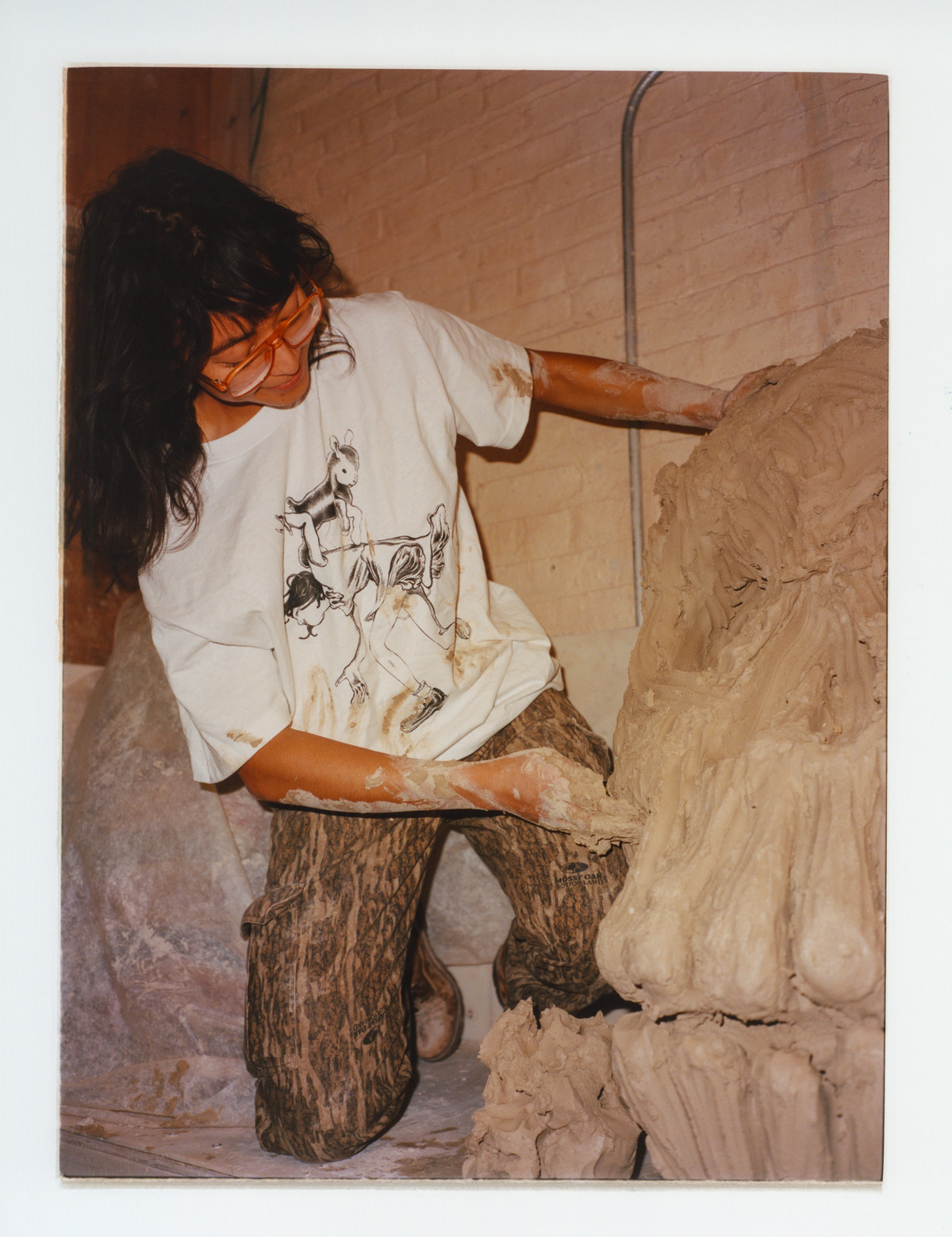
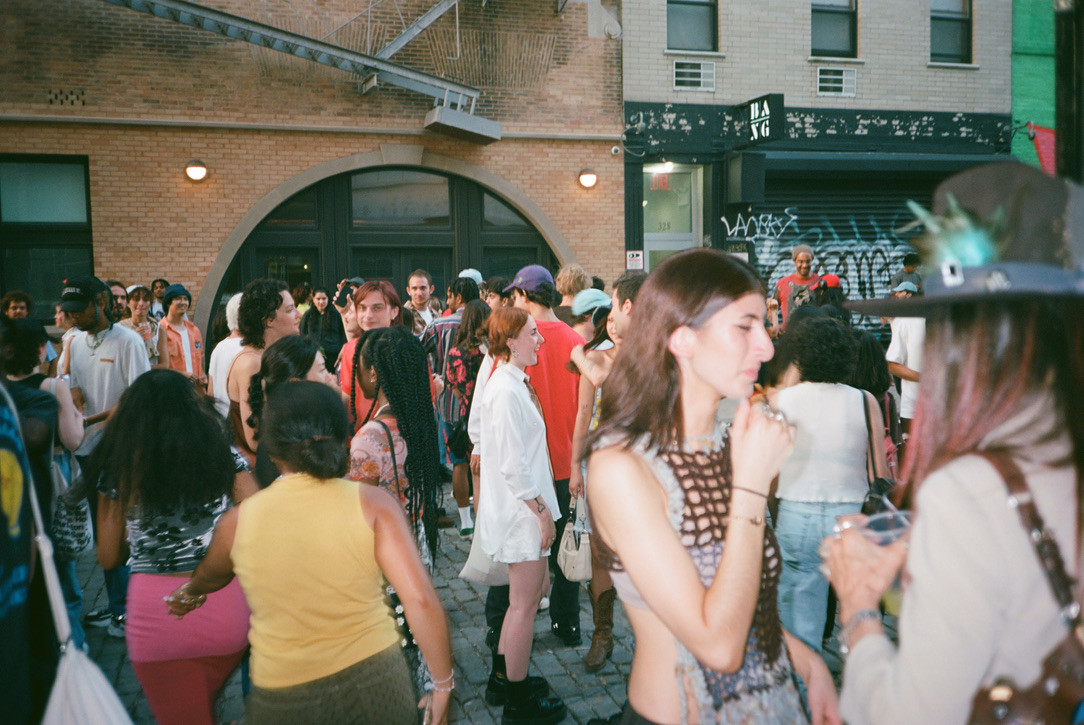
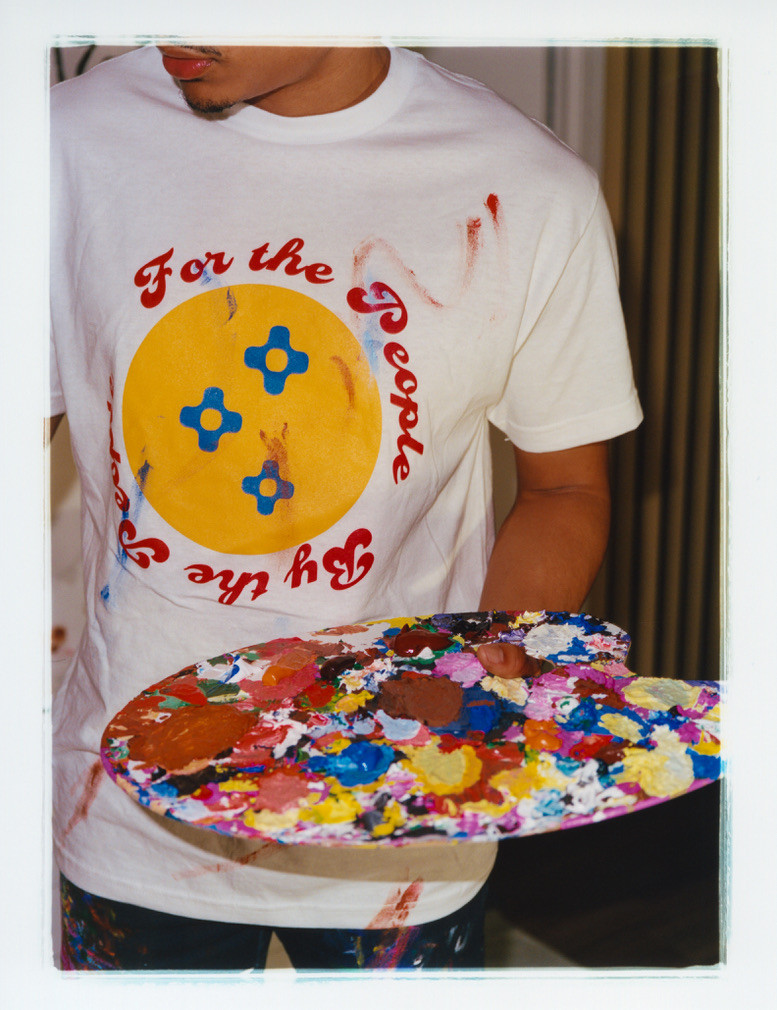
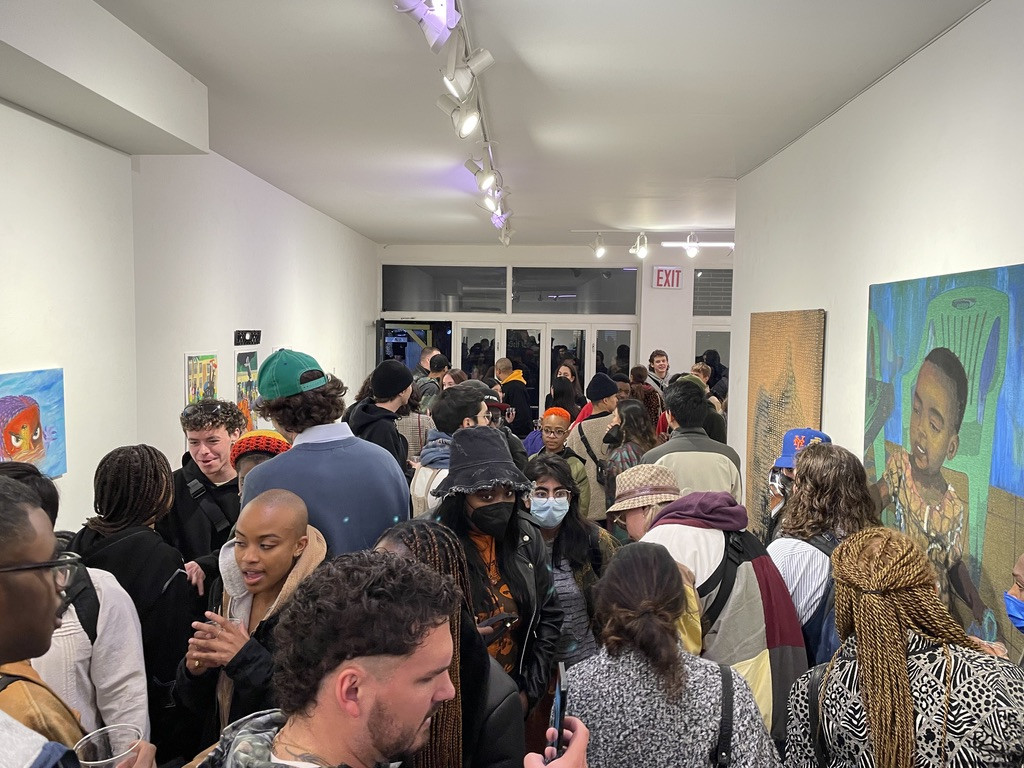
I feel like, within the art world, there's sort of stiffness that still lies within its current state. Sometimes diversity's not enough. What type of destruction or maybe reconstruction do you think needs to happen within the world of art?
I mean, so I do future trend forecasting as a little side hustle. So a trend that is here and is growing, is that the largest collectors and the largest collector demographic are millennial women. We're seeing that the rates of people purchasing online or purchasing artworks online is growing significantly. Soon, that'll just be the norm, to purchase your artworks online. For our generation specifically, what we will be asking for or which galleries and institutions or organizations will be thriving the most, are ones that focus on transparency and community. Community, I've been saying it since the fall, but community is the biggest word of 2022. For any organization or even company that wants to thrive, they need to have a community beyond just the product that they're selling. So without a community, things just aren't going to last for that long.
I would say that the biggest thing that needs to change within the art world is a stronger acceptance of technology as the backbone and foundation of how things operate. As well as how they make things more accessible for people. As well as an emphasis on building a community that starts off or has a foundation based on transparency and trust. This is a big change because the art world currently does not thrive or it's not built on any form of community or transparency.
I literally say this word a hundred times a day. Community, but it's true. It's like everything that we think about. Every time we talk about in the future of Strada, it's always, okay, what does the community need, and then how do we do it with them? How do we guide them to a certain point to do it with them?
You're now encouraging people to make art of their own or at least have the resources and tools to make art within the city with Strada workshops.
I love Sundays. Sundays are my favorite day of the week. My cat's name is Sunday, but I love Sundays. It's just like a restoring day.When we're looking at art galleries in the art world, after opening night, it doesn't matter if you're the biggest gallery in the world, like Gagosian or David Zirner, your space will be empty most of the time, most of the day. So, I was looking, I was like, okay, space is going to be empty. What are we going to do with it?
We have the financial resources to, one, have this space, whereas many artists do not. So, the first thing that we're going to do is start providing this space to artists within our community, that have projects that they want to share with the larger community, without charging them to use the space. So Isolina has been wanting to have this ceramic, clay-making workshop for I think the past month or so. I asked them and they're like, "Yeah, I'd love to do it in this space." So, we just made it happen. There's also something that we knew our community would love and really hop into that. And it's just something that we're going to be continuing to do now, going forward. It's going to make a very consistent thing.
I think every Sunday, the first Sunday of every exhibition, we'll have a workshop or event for people to come into. Whether it's just having a dancer or performer come in and do a live performance piece or it's having a musician come in and a composition that they've been working on. Doing that and having a mix of— we're just trying to have it be as accessible to our community as possible. So, that's the main focus, is just having a day where, one, very little is happening anyways.Even if we get to the point of being the largest art institution, art organization in the world, does not matter. We'll still most likely have pretty empty days. So, might as well fill it up with something that people care about, which is artwork, performances, and interactive experiences.
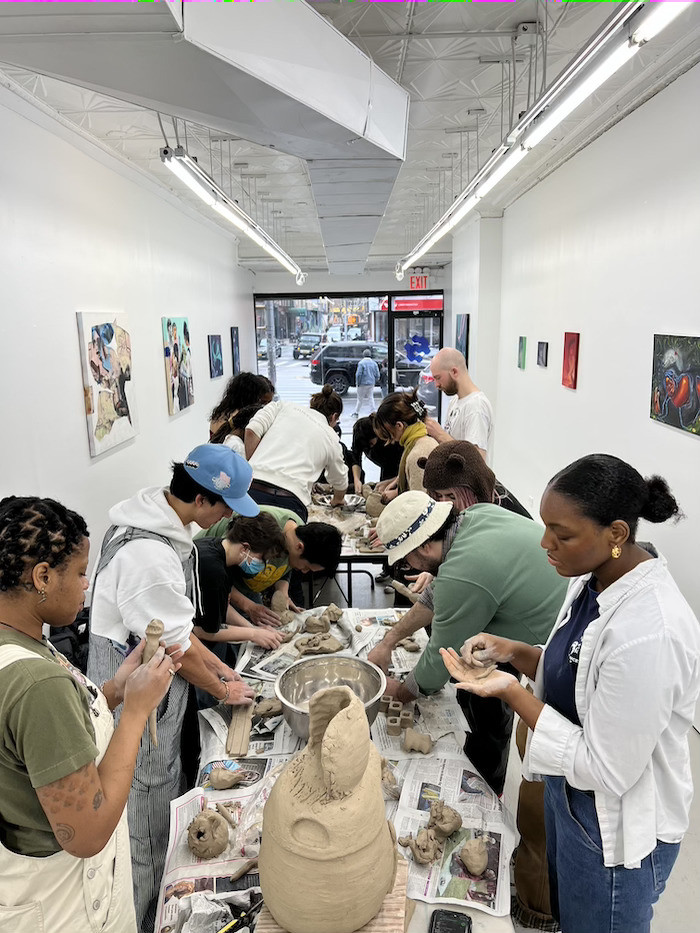
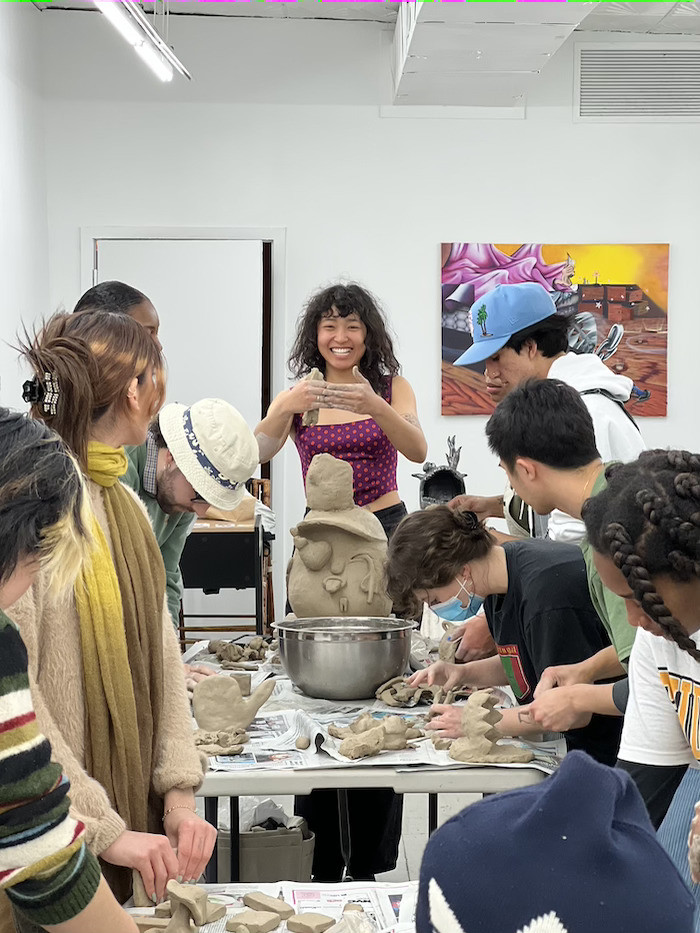
Can you describe the feeling and the difference between what these artworks feel like when there's a bunch of people in the room versus when you have those empty days?
Overall, the entire experience is the reason why I do everything, beyond just knowing that we are making a really positive change in the art world, so it's fun. I just literally have so much fun. But the artworks, usually if they're being flown in or dropped off, they'll come to my apartment. It was just filled up with artwork. And then moving them into the space, then having them installed, and then I come in after they're installed, just to kind of do a little walkthrough on my own look at everything. It's really amazing to see certain artworks that have been packaged up, and they've only been unpackaged when they're ready to be hung up on the wall.
So, I don't even see them until I walk into the space and I'm noticing all these other details. And even the scale of some of them, that are massive and you don't see them, because they're rolled up and they're being unstretched and framed and hung, once they're in the gallery.
It's exciting. It's also just really exciting to know that most of these artists are just young, emerging, and come from a background where it's not as easy for them to grow and thrive in the art world as it is for people that come from more privileged backgrounds. But then I get so anxious. I don't get anxiety, it's like my anxiety goes down once the whole space gets filled up. It's a consistent thing. Now, my anxiety's been going down 'cause it's just like 'okay, I don't know why I'm worried about people showing up, when people fill it up and fill up the outside every single time. This is silly.' Even rain or shine, this was a thunderstorm that night and we still had a full exhibition.
And it was still packed. I'm like, that's dedication. We literally have one of the most dedicated art communities that I've ever seen, and then especially one of the dedicated art communities in New York City.
You kind of talk about how you want to outsource outside of the Western world. How do you think you will tackle that in terms of finding art and talent? What will you mostly be focusing on versus if you were to focus on a New York show?
I mean, 'end of the day, what I think draws a lot of collectors to Strada, is that we are focusing on what is hot, early. We are the ones who are providing the artists, who are very early on in their career. We are the ones who are seeing the potential that these artists have and presenting them to the larger art community. And doing it successfully, in a way where we're able to help these artists, one, sell their work, but also to show it to an art collector community that's paying attention to us because we have really cool artists. So honestly, not planning on differing too much away from the approach that we have right now. The current plan, the next step for Strada is London in terms of an international approach. We do want to go to Chicago and LA prior. I mean, when we go to London, that's moving with— I'm going to say it again, community, moving with the community. It's just a matter of adaptation, which is literally the Strada logo, is focused on this innovation adaptation, which is where you see the different blob shapes.
Very international, both the logo and the name.
Literally, the name is Italian. It means "road," 'cause I wanted to provide a new path for artists to take within the art world.
What does Utopia look like for you?
It's already fictional. I mean, the dream world, everyone who inhabits it has the powers to create anything that they think of, as long as it doesn't harm anybody else. So, you literally have the ability to make whatever you want. Whether it's like, you want to create your own other planet or you want to build your own house or create a sculpture or painting. Just from the thought of it, you're able to do it. That's my version of utopia. I've been asked that question before about, what does success look like to me? Success, to me, looks like that, the financial resources and connections and knowledge to create anything that I think of. So, utopia would be like that, but everybody can do it.
Strada Friends launches on May 29th, 2022 check out more information here.

Rovegno makes revelations in book-making aswell, a hand-crafted photo book made with risograph printed covers and inserts that takes the stage in term of functionality and encompassing a personable look. The interior pages are bound with tape, heated, melted, and trimmed by hand, the book serves as a dedication to the art form of bookmaking. And it adds an unexpected experience to the work: the seamless process of opening and closing and reopening this book transports you to Rovegno’s own viewing experience as if you were the one thatc crafted the project yourself. With the same vision as origami, every fold and unfold is a new vision into Rovegno’s every day. The soothing chronology of the photography connected anxious and pointed moments of life. It’s a reminder of the peace caused by obsession-made art.
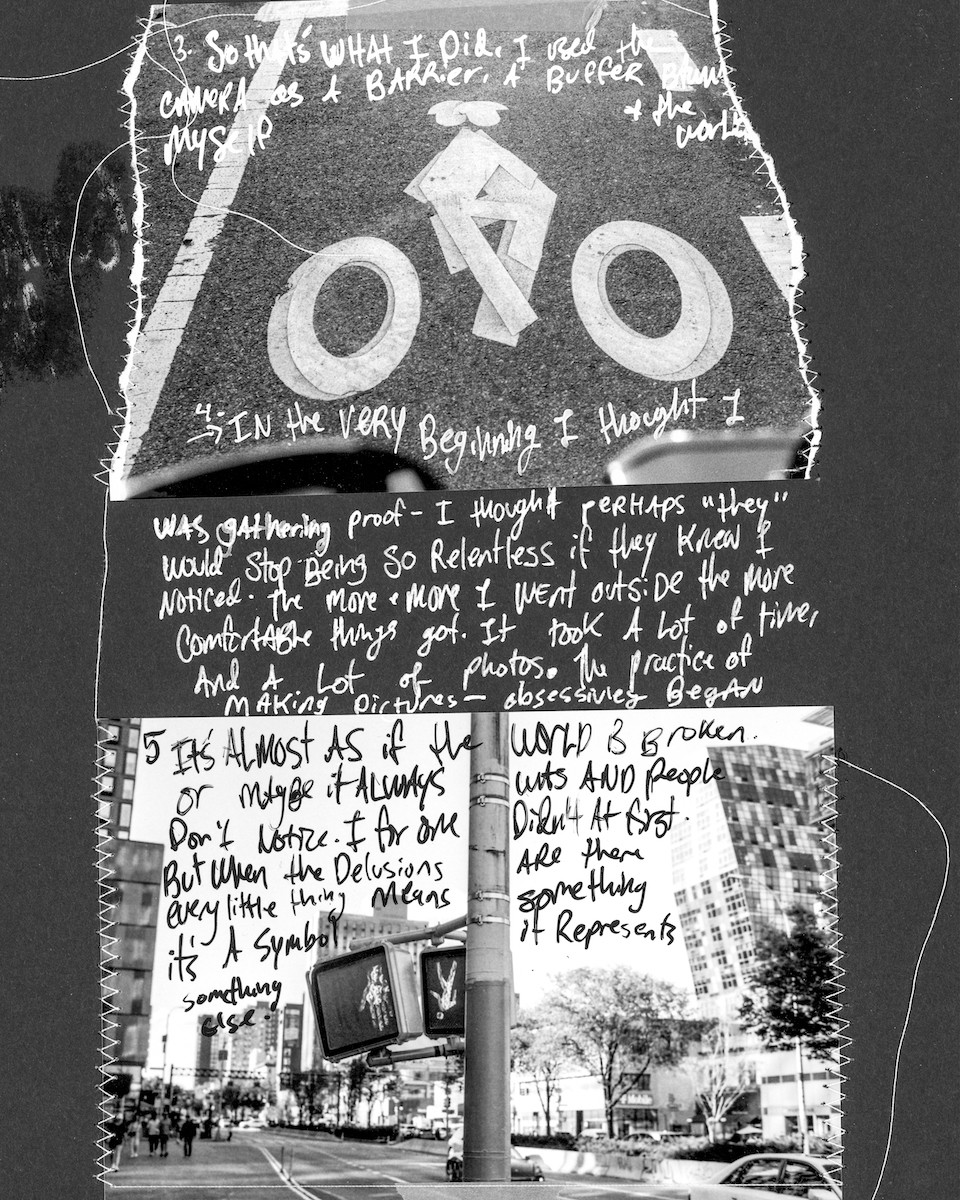
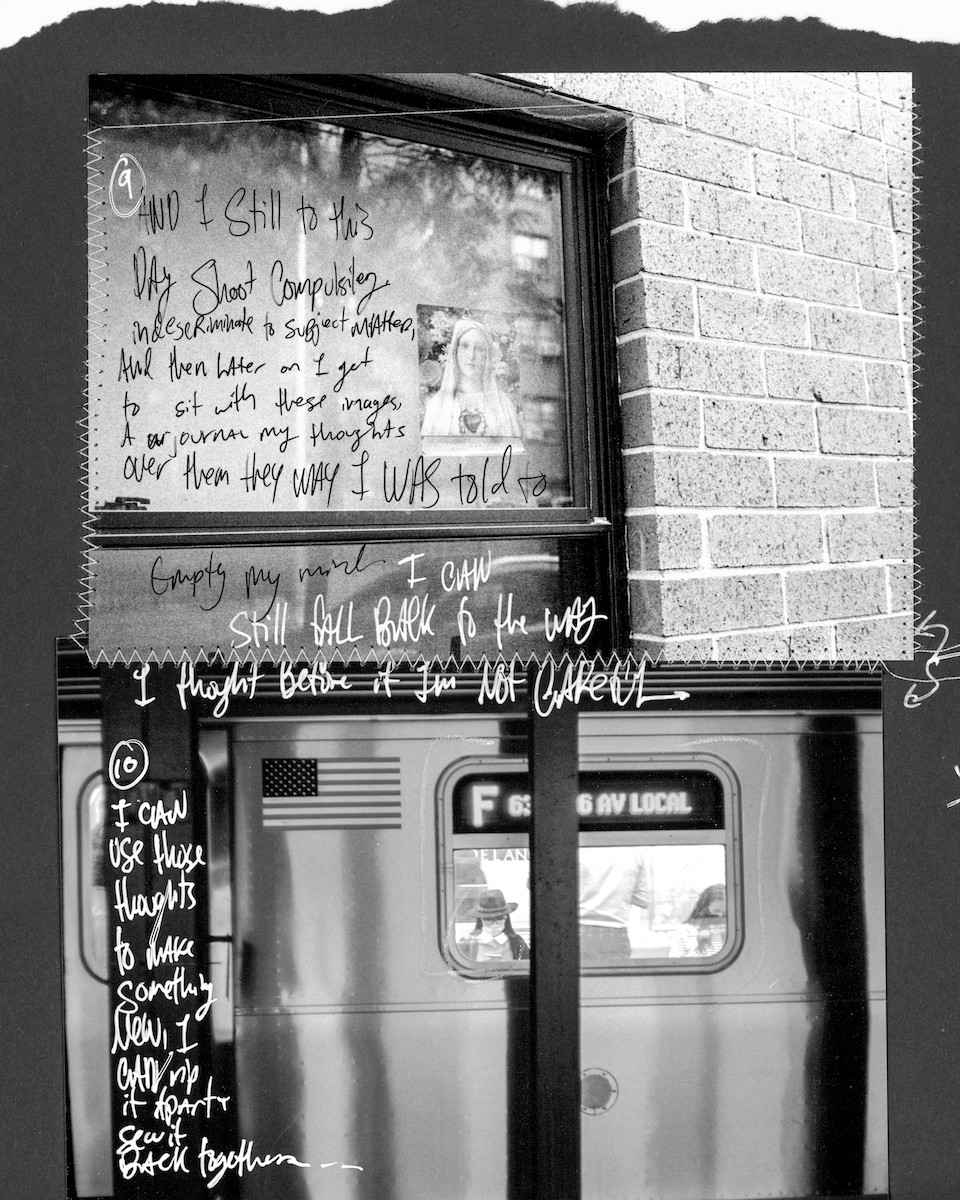
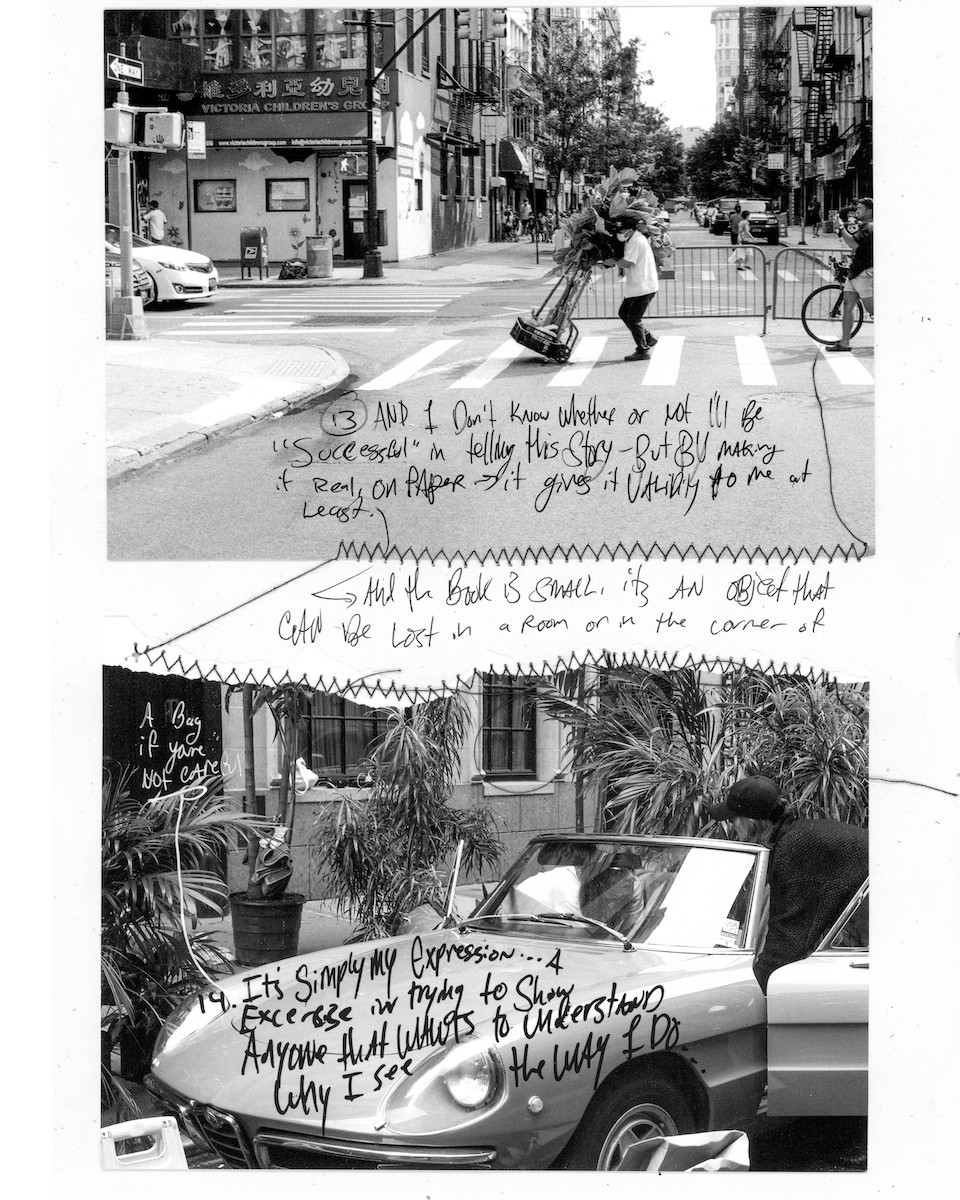
office asked Rovegno to take a different approach to his interview. Instead of having one of our writers speak to him, we asked him to interview himself. The conversation is physically transcribed over a few of Rovegno’s selected photos. It’s a true example of the peace an artist may find only with himself. Rovegno speaks on experiencing the form of fixed delusion called “ideas of reference” and how photography brought control into his world.
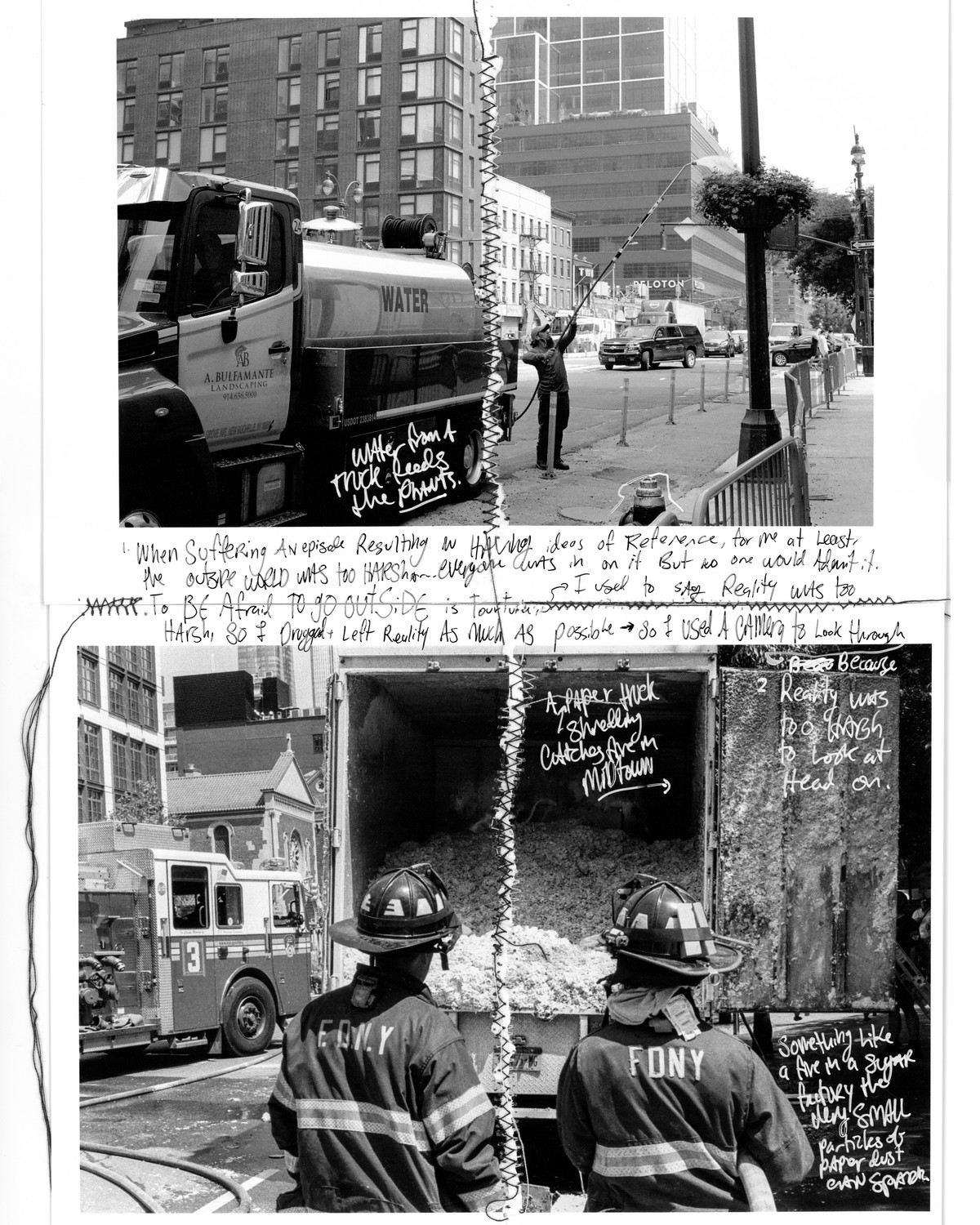
Left — When suffering an episode resulting in having ideas of reference, for me at least, the outside world was too harsh… Everyone was in on it but no one would admit it. To be afraid to go outside is torture. I used to say that reality was too harsh, so I drugged and left reality as much as possible. So I used a camera to look through because reality was too harsh to look at head-on.
Right — So that’s what I did, I used the camera as a barrier, a buffer between myself and the world. In the very beginning, I thought I was gathering proof—I thought perhaps “they” would stop being so relentless if they knew I noticed. The more and more I went outside the more comfortable things got. It took a lot of time and a lot of photos. The practice of making pictures—obsessively—began. It’s almost as if the world is broken. Or maybe it always was and people don’t notice. I for one didn’t at first but when the delusions are there. Every little thing means something. It’s a symbol. It represents something else.

Above — To acknowledge it’s broken and accept it cannot be fixed or maybe it’s my thinking that’s broken. It’s not like I could be talked out of these ideas… Slowly…very slowly, the obsession with the outside, the inconsistencies, the paranoia, were able to take place behind the camera, while viewing this world I made for myself. Since then…4 years ago, also 5 years ago, also two years ago, I compulsively photographed the world around me, the small inconsistencies, the strange or out of place whatever it was.
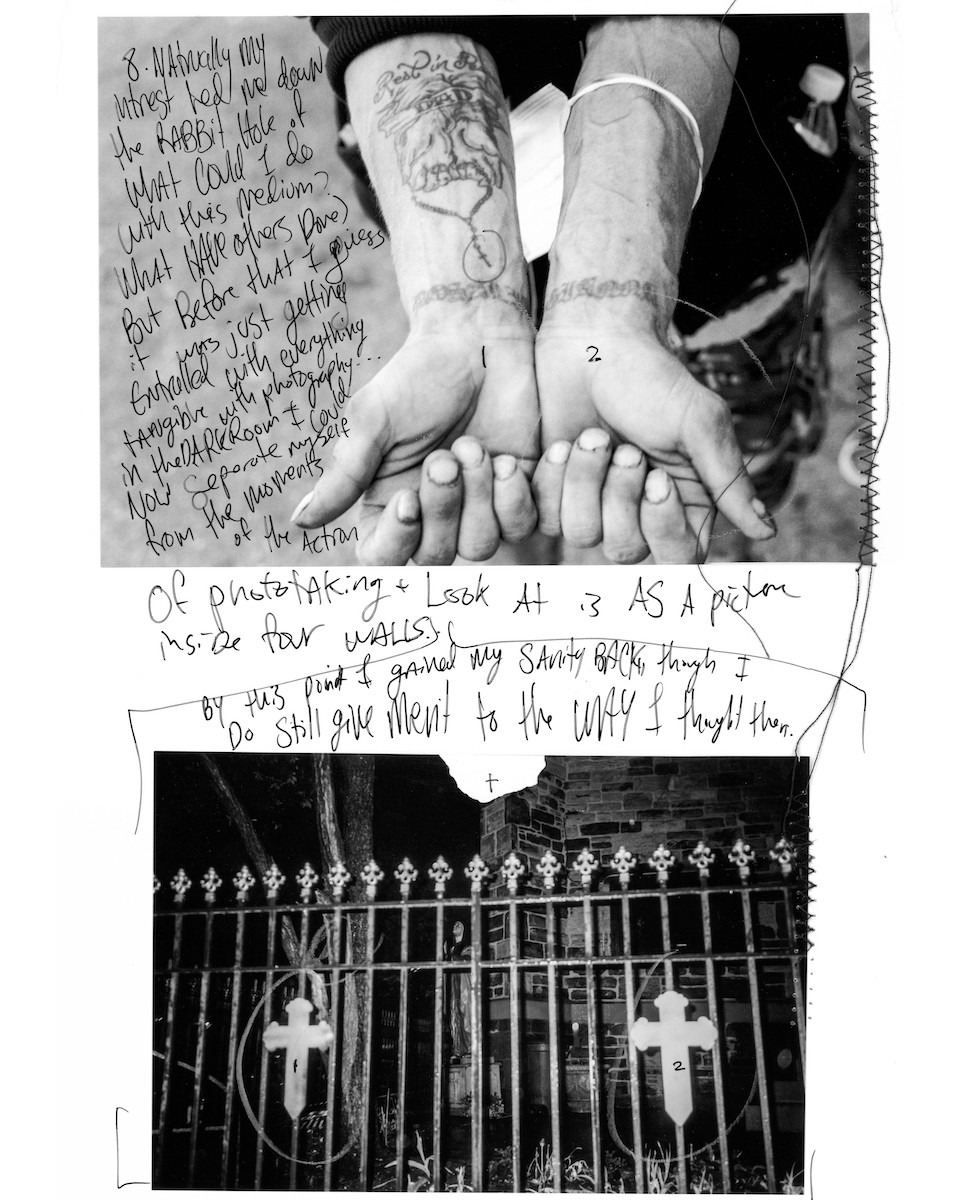
Left — Naturally, my interest led me down the rabbit hole of, “What could I do with this medium?” What have others done? But before that, I guess it was just getting enthralled with everything tangible with photography… in the darkroom I could now separate myself from the moments of the action of photo taking and look at it as a picture inside four walls. By this point, I gained my sanity back, though I do still give merit to the way I thought then.
Right — And I still to this day shoot compulsively, indiscriminate to subject matter, and then later on I get to sit with these images, I journal my thoughts over them the way I was told to empty my mind. I can still fall back to the way I thought before it I’m not careful. I can use those thoughts to make something new, I can rip it apart and sew it back together.
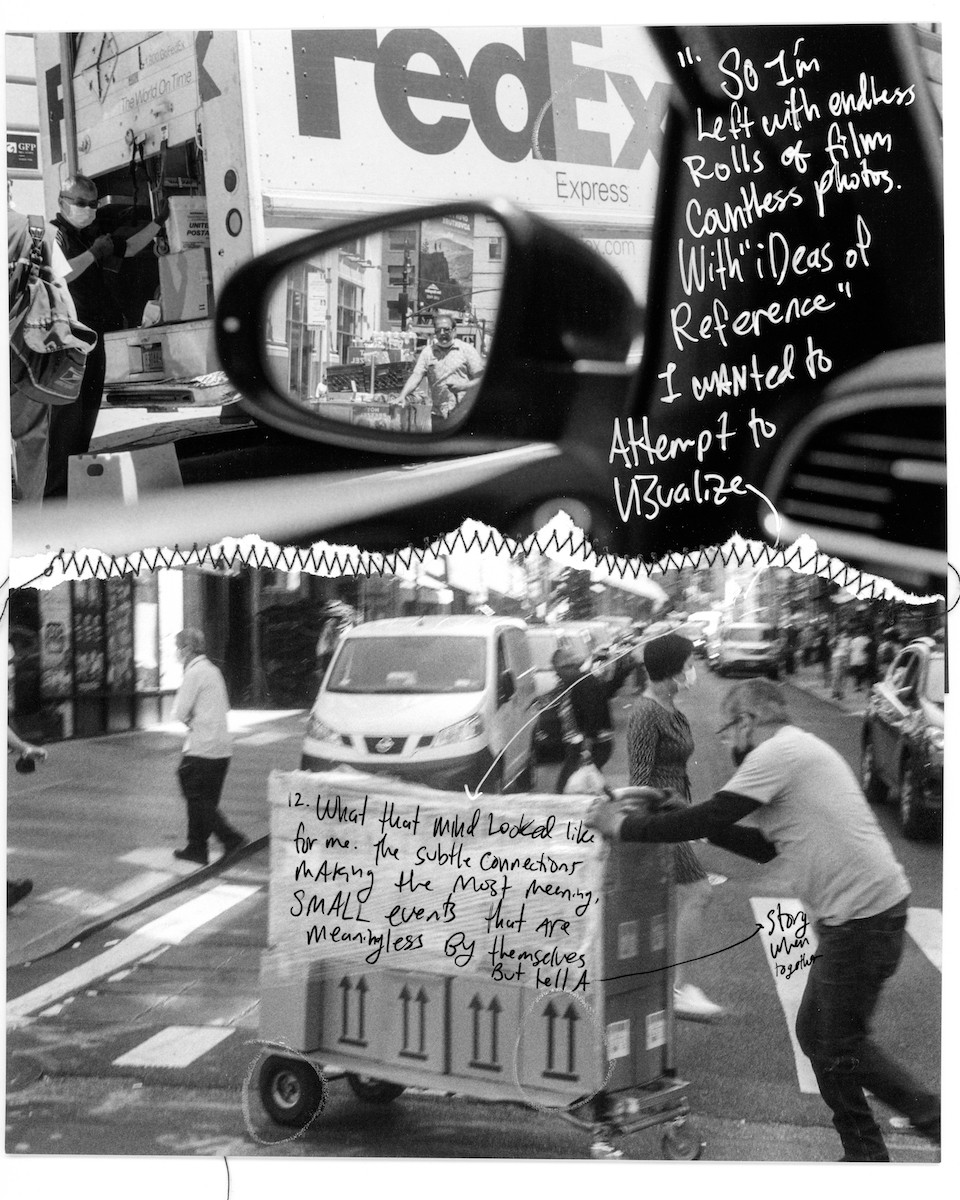
Left — So I’m left with endless rolls of film, countless photos. With “Ideas of Reference” I wanted to attempt to visualize what that mind looked like for me. The subtle connections make the most meaning. Small events that are meaningless by themselves but tell a story when together.
Right — And I don’t know whether or not I’ll be “successful” in telling this story—but by making it real on paper, it gives it validity to me at least. And the book is small, it’s an object that can be lost in a room or in the corner of a bag if you’re not careful. It’s simply an expression… an exercise in trying to show anyone that wants to understand why I see the way I do.

Above — My small world, out of a slice of our big world. Limited by my own perspective but aware that I’ve seen the world in ways many do not get the chance to.
Joe Ro, 2022.
The "Ideas of Reference" book can be purchased here.
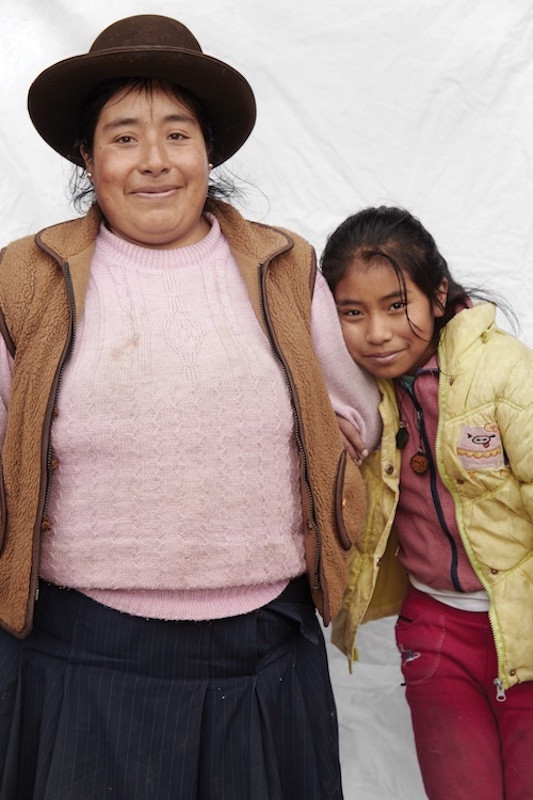
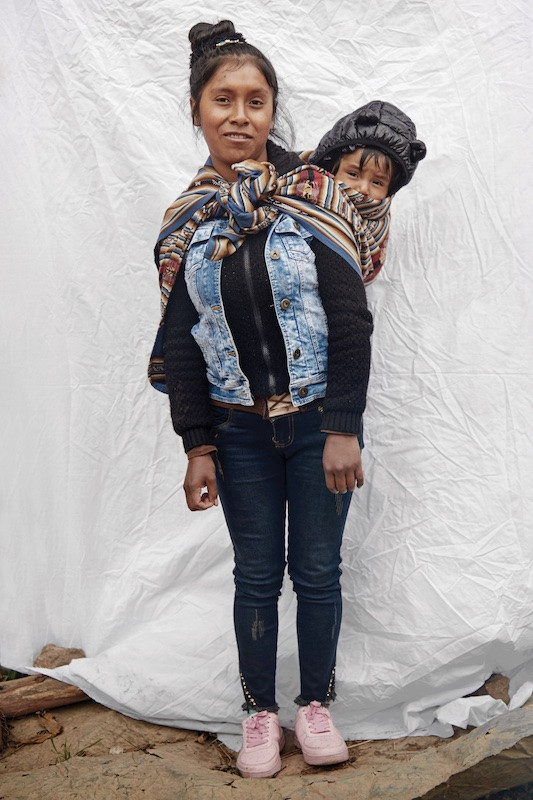
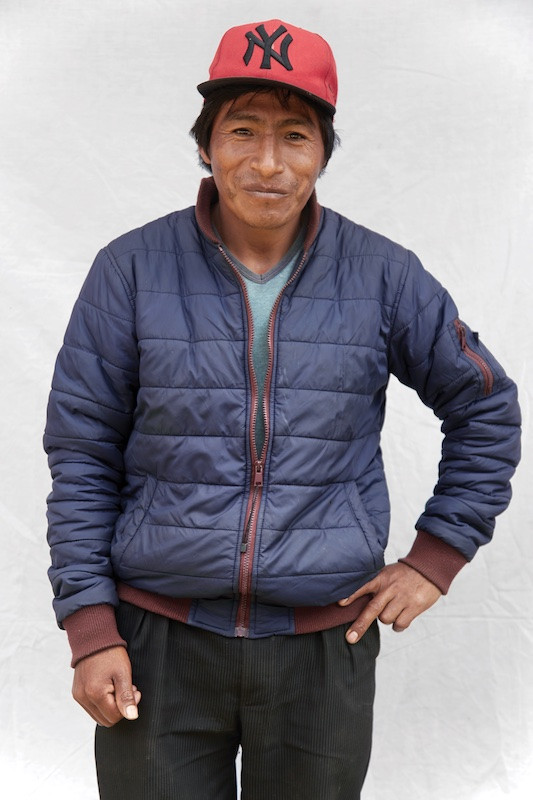
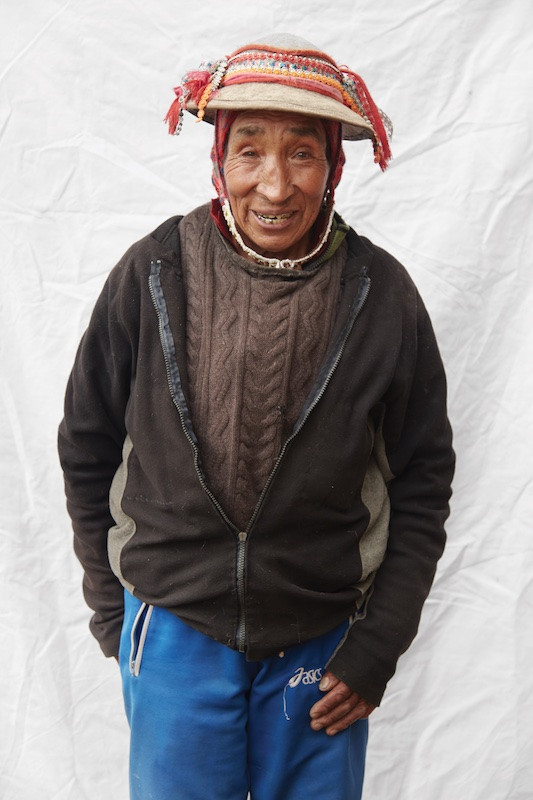
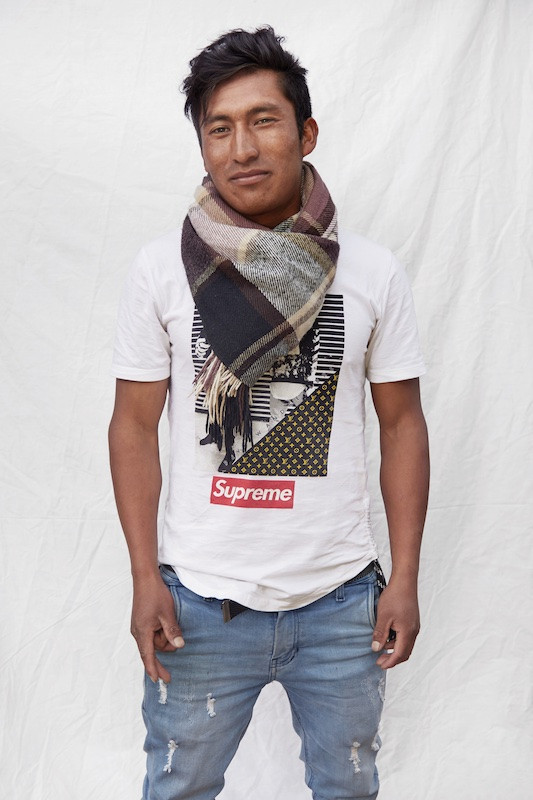
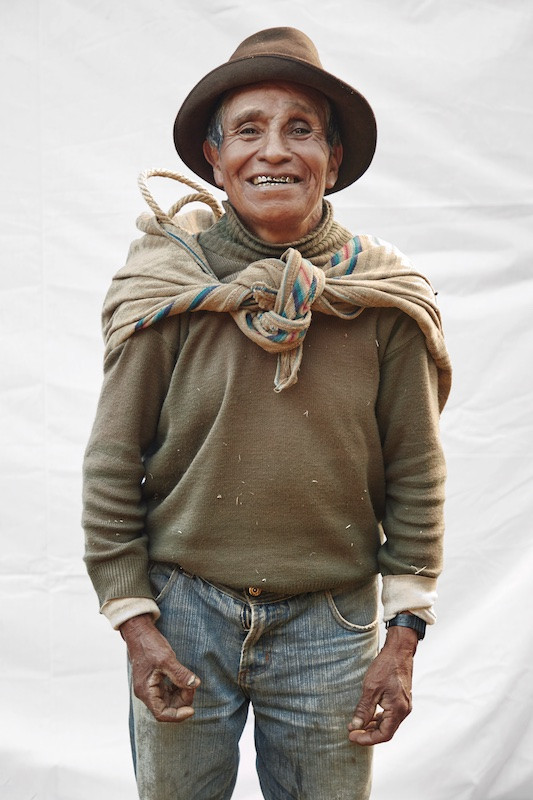
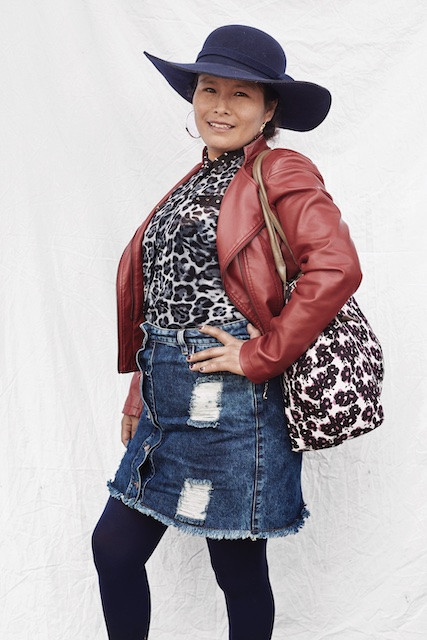
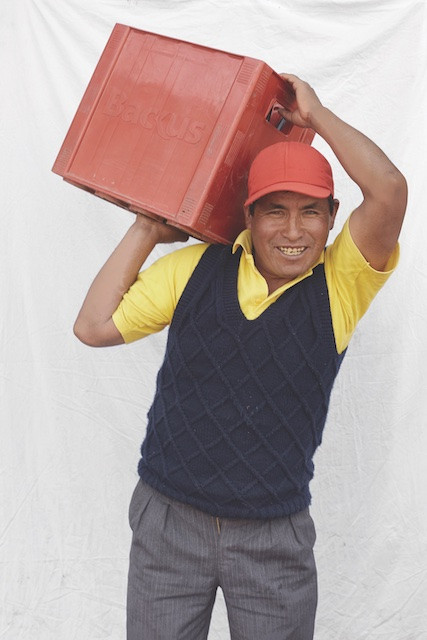
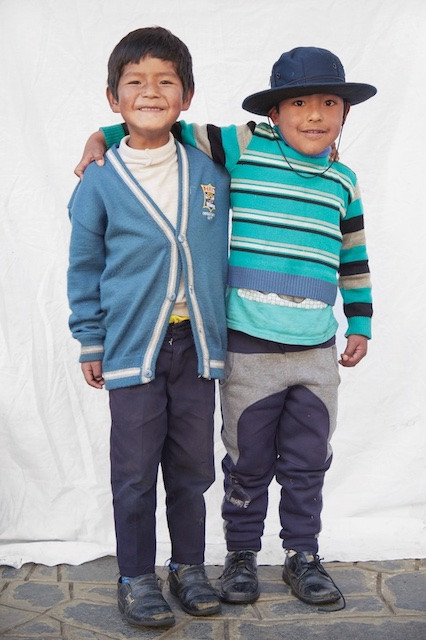
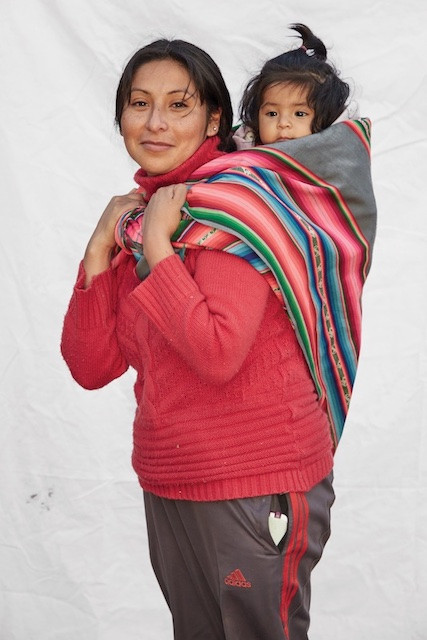
Bentín's first photobook, published by Rizzoli, depicts Cusco locals against their built environment, to reinforce an understanding of Los Andinos as they coincide with modernity and to remove the romantic versions of indigenous people pictured against their landscape and devoid of social context.
Adding another layer to his portrayals, Bentín collaborated with anthropologist Francesco D’Angelo to build a socio-anthropological photographic study offering commentary on the spatial modernity, social hierarchies and struggles against the idealized depiction of indigenous people.
Each image is accompanied by observations of nearby community members to guide readers through individual expression, and cultural modes of recognition. The paired images and commentary serve to articulate modernity in Andean society, creating new language and access points to go beyond documentation and bring life to representations of indigenous people.
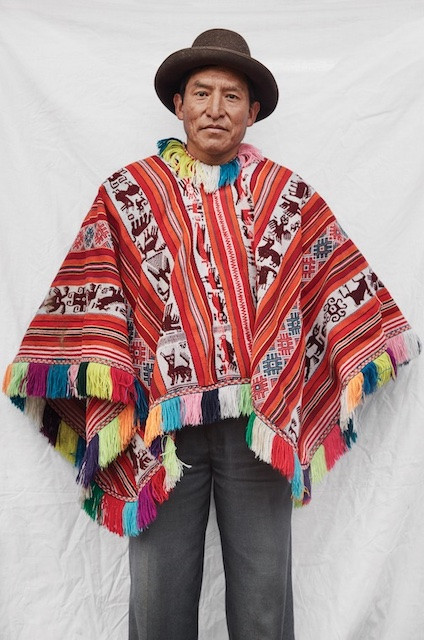
Inspired by the popularity of Humans of New York, Bentín saw the resonance of connecting people across physical space. Focusing on commentary around ways of dressing, types of work, and occasions, Bentín creates universal touchstones to build recognition between readers and the subject of his images.
Read Bentín’s own observations in our interview below.
What does the publication of this book mean to you?
I started working on this project right after I left high school in Lima, Perú, and as I was moving to New York City to study photography. I really had no idea what I was doing, but my curiosity and determination to understand the realities of my country firsthand kept me going. Initially, this was only meant to be my thesis for The School of Visual Arts, but as the project moved forward, I started dreaming about the possibility of making it a book. Never in my wildest dreams did I imagine we would end up working with one of the most important editorials in the world, Rizzoli New York, and publish their first book on Peru by their first Peruvian author and one of their youngest authors ever published. I am beyond grateful for the trust that everyone at Rizzoli had on this project and me, especially my editor Martynka and our publisher Charles Miers.
Tell me a bit about the process of working with Francesco D'Angelo. How did that shape your work?
Francesco and I have known each other for a very long time, our families have always been close, but we had never worked together before. After my initial experience in the Andes in 2016, I had thousands of questions, crazy ideas in mind, and a lot of energy, so my first thought was to speak with Francesco. At the time, Francesco was living in a community in Maras, Cusco, as the anthropologist for a restaurant that was opening nearby. He helped me settle on the first community I visited, Kaccllaracay, and we spoke about many of the ideas from the project. Francesco became officially involved in 2019, after I had spent many months living with and photographing the Andes, when I started to question how we could use these portraits to create a dialogue between Andinos.
Using the portraits I had taken during my travels, Francesco devised the methodology to interview neighbors from nearby communities about who they thought the people photographed were, where they thought they lived, and what they thought they did for work, among other questions. By doing so, we meant to break through the stereotypes often associated with Andinos and see how the people themselves see each other based on the perspectives of local people about other Andinos.
Through these captions, we are able to see how Cusqueños relate the traditional, to the rural, and the modern to the urban; progress and modernity are understood as the distance a person stands from the “dirt.” One can see this interplay in the interviews with local Andinos, as they note the dichotomy between themes such as: open shoes versus closed shoes, high altitude versus low altitude, uneducated versus educated, and agricultural versus nonagricultural. At the same time, symbols of modernity stand out to people, such as a laptop representing a good education, a paid job, and a home in the city. These interviews show the complexity of defining modernity in simple terms, as well as the social logic at play in local Andean perspectives.
What feeling or understanding do you aim to convey to readers of this book?
One of the main purposes of this project, even before the possibility of a publication existed, was to help demystify Peruvian culture. Many of us who are not familiar with the realities surrounding the Andean society of Cusco view them through a problematic dichotomy. On the one hand, “The Perfect Postcard” shows the Andes as a magical, lost-in-time place, and the Andinos as pure and almost magical people who are a static version of old folkloric tales. On the other hand, in “The Image of the Poor,” we can observe an insensitive and antiquated postcolonial narrative elaborated by the people of the capital to project a sense of superiority over those who did not inhabit the economic center of the country. With the publication of this book I hope to bring awareness to the realities of the Andean Society of Cusco and to compel the reader to get to know the campesinos, so often looked at through Western perspective as “others.”
How does your photography convey both tradition and modernity, do you feel they are at odds in your work and Peruvian culture?
One of the most fascinating aspects of Andean culture, which I learned during my time living in the rural communities of Cusco, is their ability to assimilate new cultures or ways of thinking into their own. This is mostly visible nowadays through the way Andinos practice religion, the syncretism they have achieved between their traditional beliefs on the earth, mountains, and the sun with the Catholic teachings of Spanish conquistadors blend in a truly remarkable way. From small details, like the Virgin Mary always wearing a triangular robe in the shape of a mountain, to bigger feats like the “Virgen del Carmen” Festival of Paucartambo, where you’ll find masked characters dancing around the town for days on end revering both Christian and pagan beliefs alike.
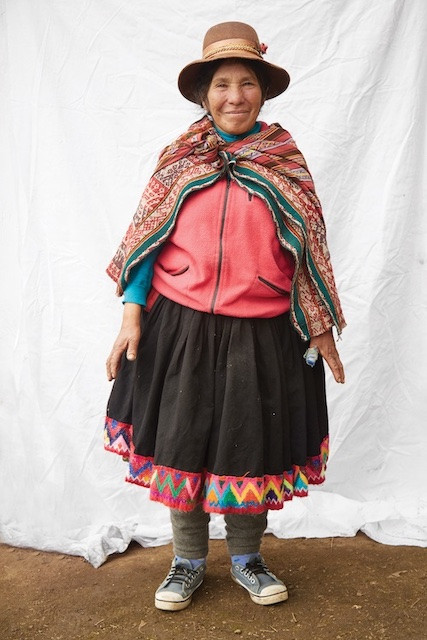
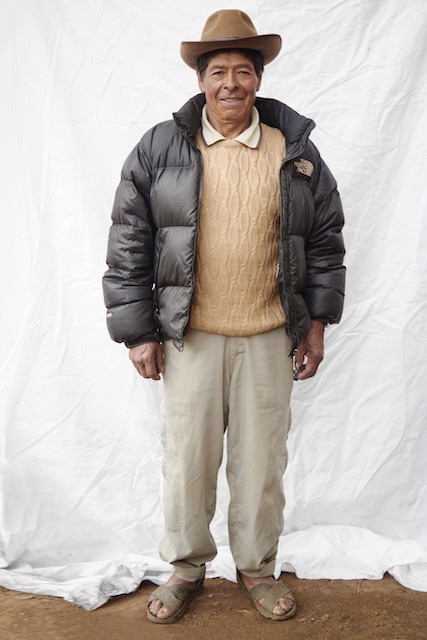
Just like with their religious beliefs, Andinos are seen conveying both modernity and tradition through their clothing, their poses, and their appearance, as a whole on the photographs taken for this project. For example, Lucia, who you see in a beautiful hand sown “pollera”––a traditional Andean skirt––is also wearing what appears to be a pair of Converse sneakers or Eulogio, who is wearing “ojotas,”––traditional Andean sandals––formal pants and a dress shirt is wearing a North Face jacket to keep from the cold instead of a traditional “poncho”. These photographs are meant to fill the gap between what we define as modern or traditional by encouraging individualism to portray the complexity of being a contemporary Cusqueño.
Are there any photographs that have a unique story/significance to you that you'd like to highlight?
Most of the photographs in this publication have a unique story and significance to me. As I thought about how to approach this project back in 2017, I came to the realization that the only way to truly understand Andean culture would be to completely immerse myself in it. To do so, I moved to 5 different rural communities in the Andres, where I lived for about three weeks each. For the first couple of weeks in each community, I wouldn’t take my camera out of its bag at all, the only purpose during those days was to build relationships with the individuals who lived in these communities. From cutting down trees and making firewood to help us keep warm with Luis in Cuyo Grande, to going every Sunday to church and singing “Apu Yaya Jesucristo” to the top of my lungs with Saturnina and her family in Choquecancha, or celebrating Corina’s 5th birthday with Evelyn, Alain, Andrea and the rest of the family in Choquepata, and even drinking Chicha de Jora––a traditional alcoholic drink from the Andes made from fermented corn––with Hipolito and Gabina until sunrise, as we shared stories from our childhoods overlooking the Sacred Valley in San Isidro de Chicon, these experiences are what this book is made of. I have always been someone who loves photographing the people he loves, from family trips to casual meetings with friends, my photography shines the most when there is a relationship behind the camera and in front of it. There is a warmth, a sense of love, and respect in these photographs that were naturally born from the relationships I built with every Andino featured in this project.