Vulvatious

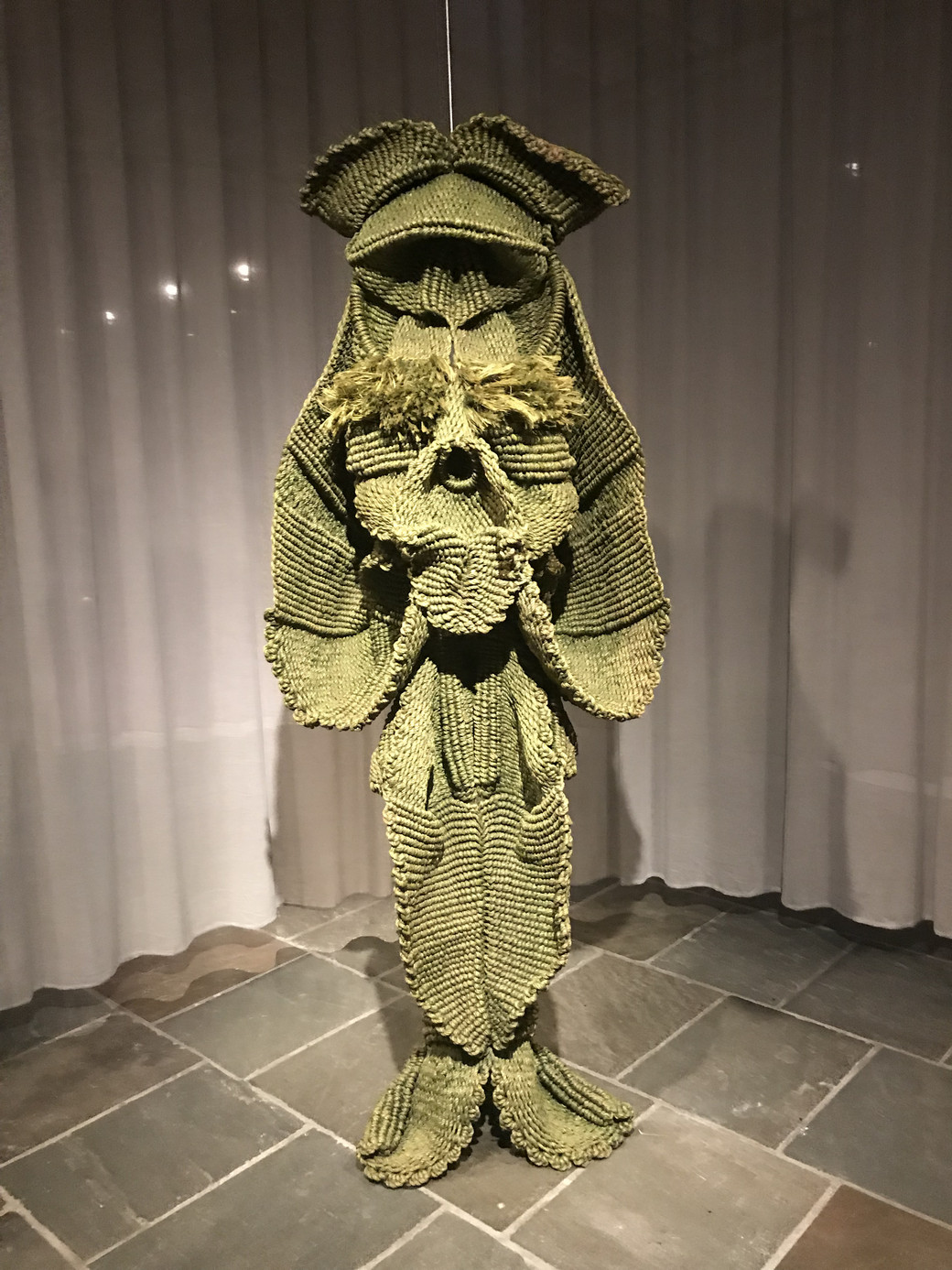
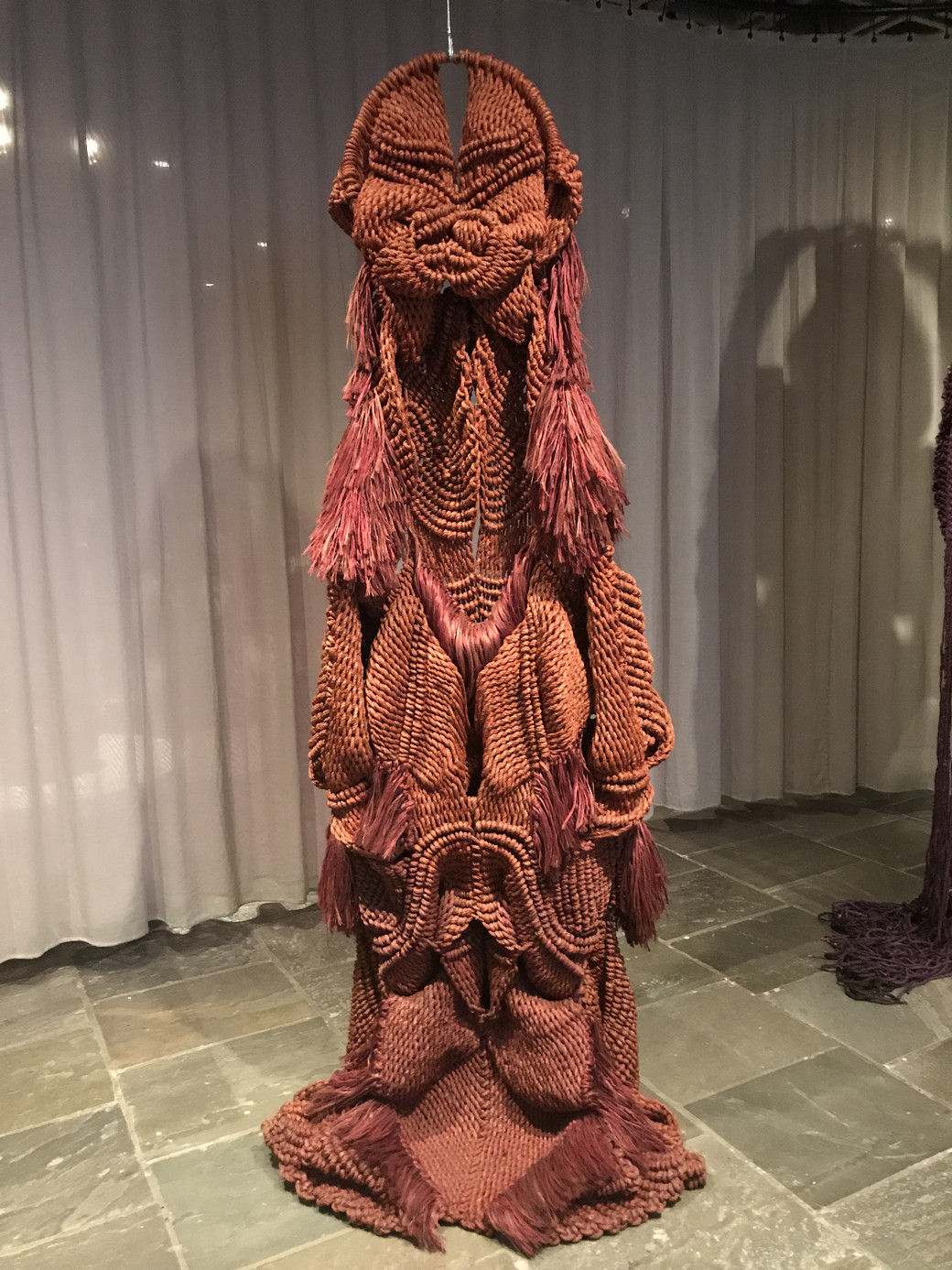
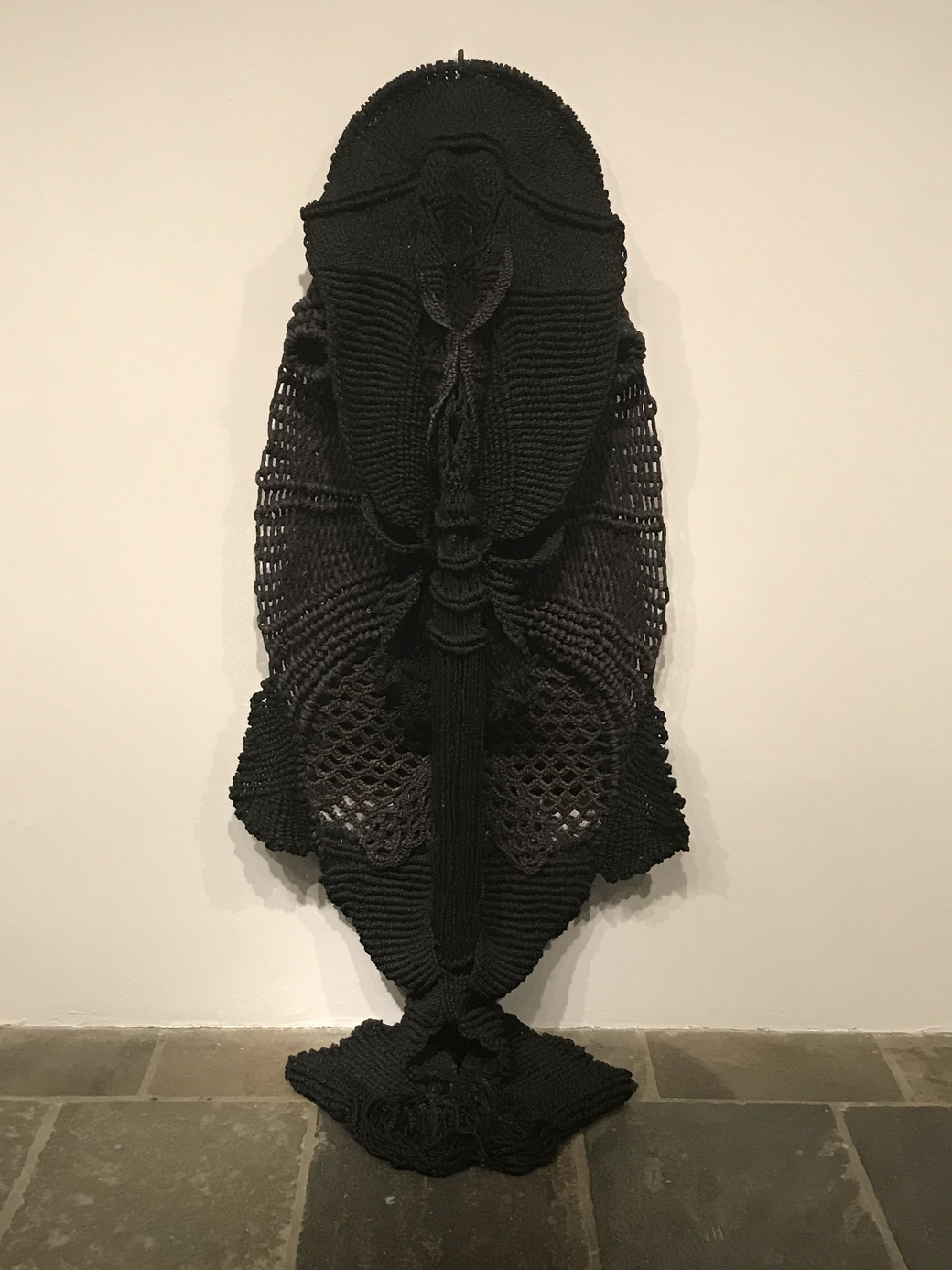
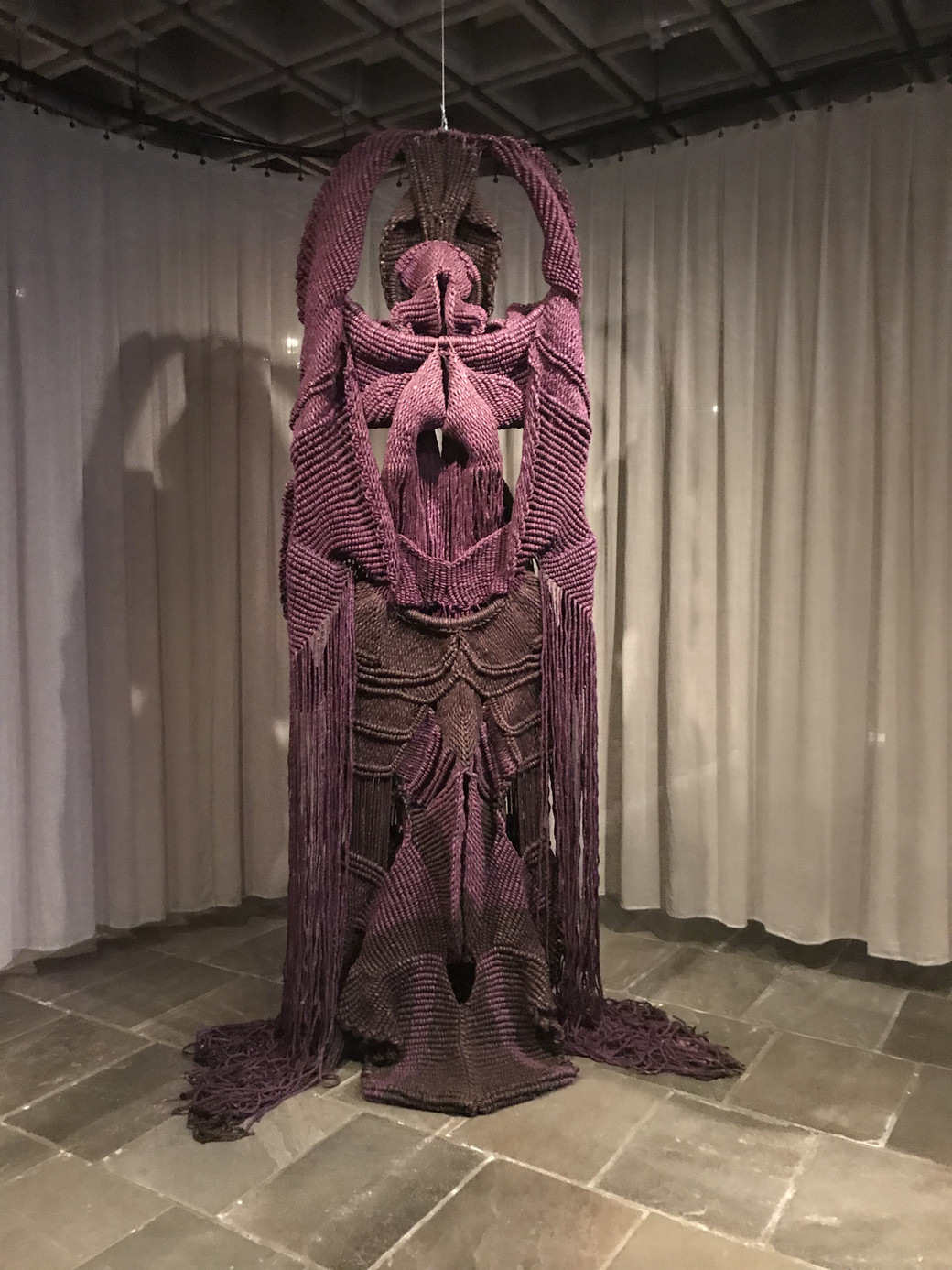
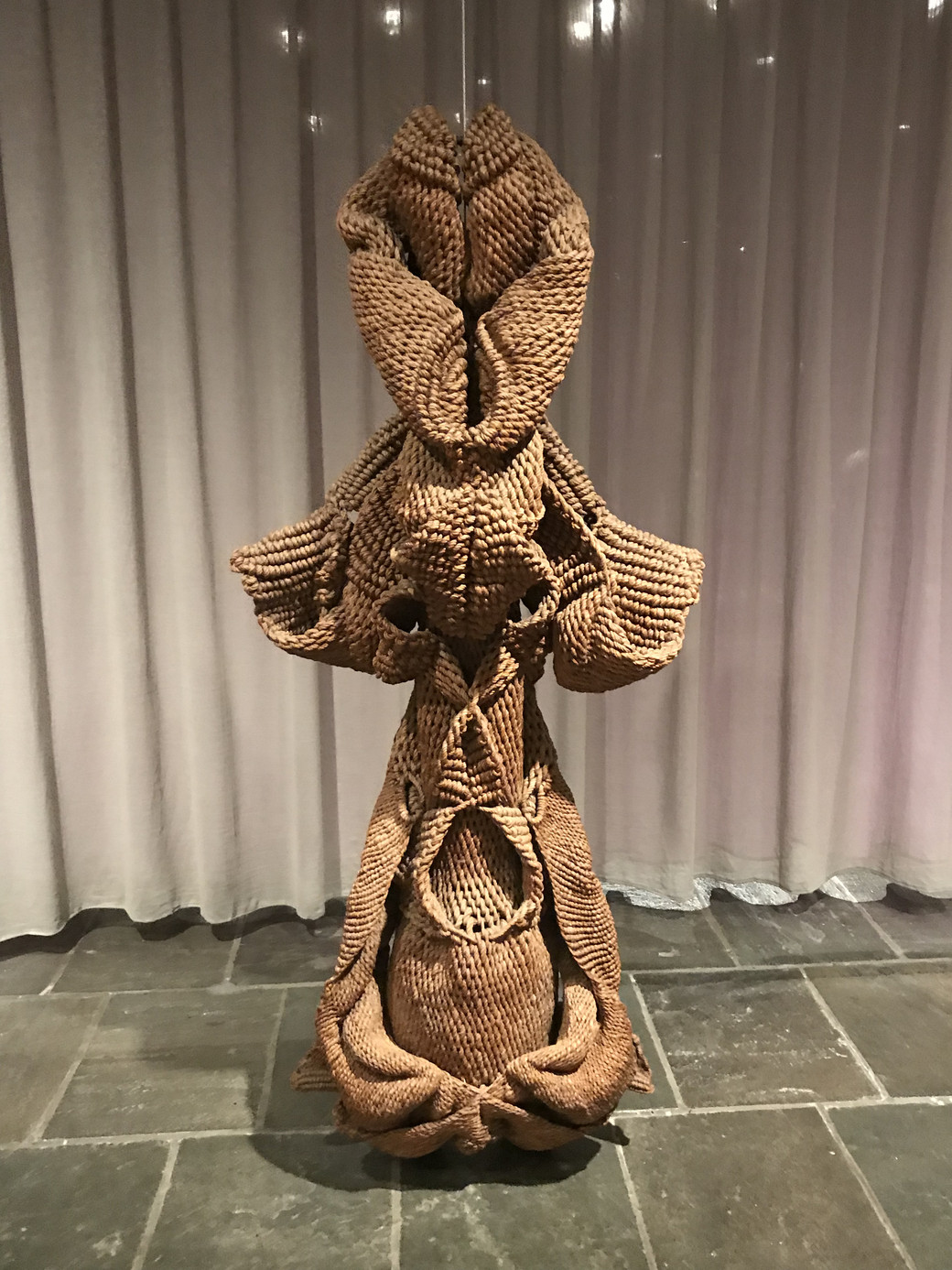
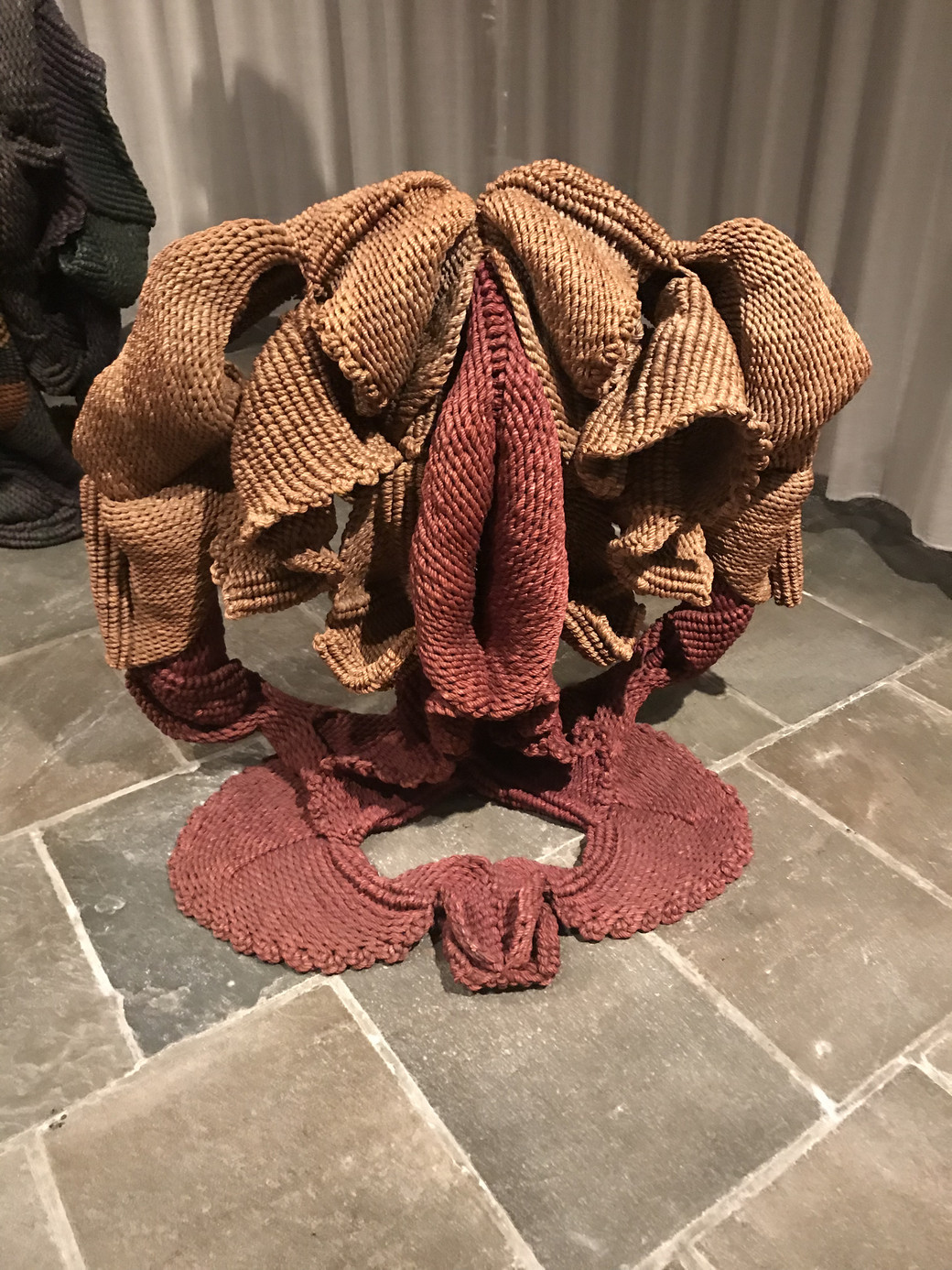
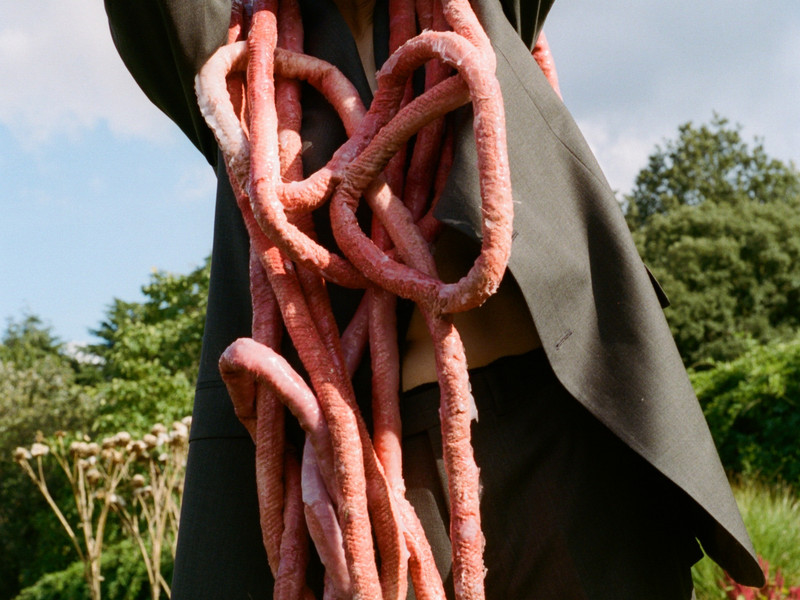
"Phenomenal Nature: Mrinalini Mukherjee" is on view at the Met Breuer through September 29th, 2019.
"Phenomenal Nature: Mrinalini Mukherjee" is on view at the Met Breuer through September 29th, 2019.

Inside the landmark Ford Foundation Center for Social Justice building on 42nd Street, the artists behind Radical Love conceive for viewers a positive display of human interaction, one where “otherness and marginality is celebrated, adorned, and revered.”
A water sound installation trickling through the gallery’s lush indoor garden; soft black figurine sculptures from the 1970s; an underwater wheelchair spectacle video; 24-karat gold encrusted acrylic canvases - together, every piece forms an empowering antidote of our collective experiences, of love, glory, and pain.
The visual opulence of Radical Love, in all its vivid colors and glitzy installations, speaks for itself in its story of love redeeming injustice. For as defined in the exhibit and by its curators, love is the “commitment to the spiritual growth and interconnectedness of the individual, their community, and stewardship of the planet.” It definitely is a radical idea, that’s for sure.
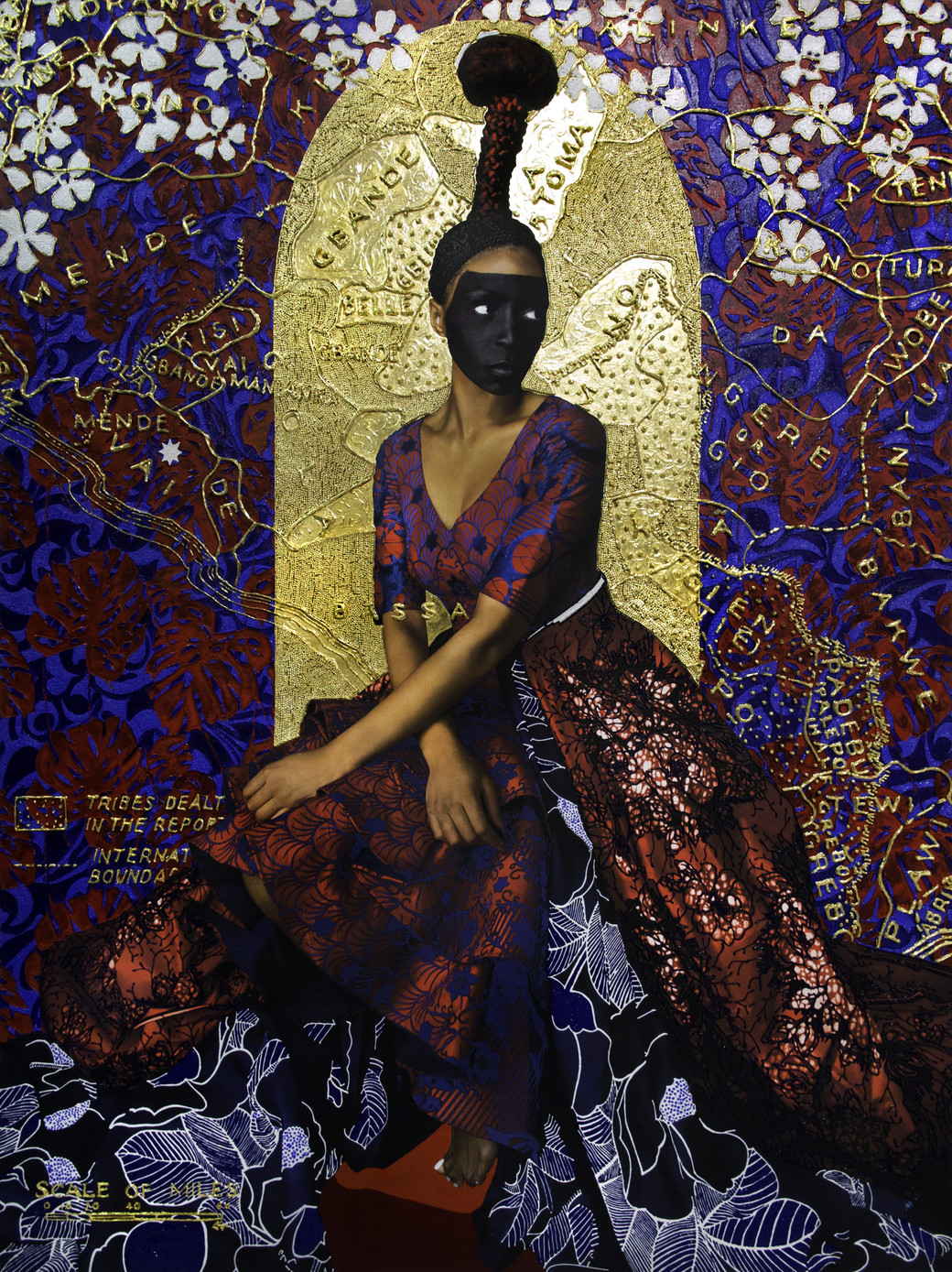
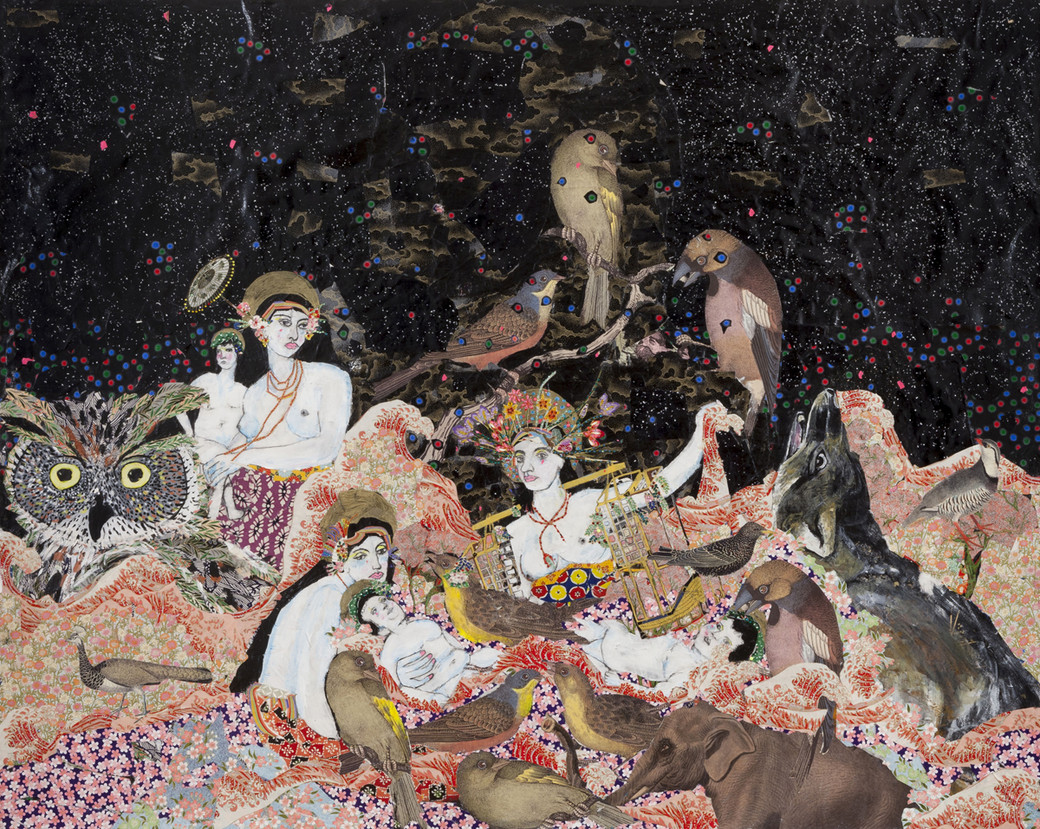
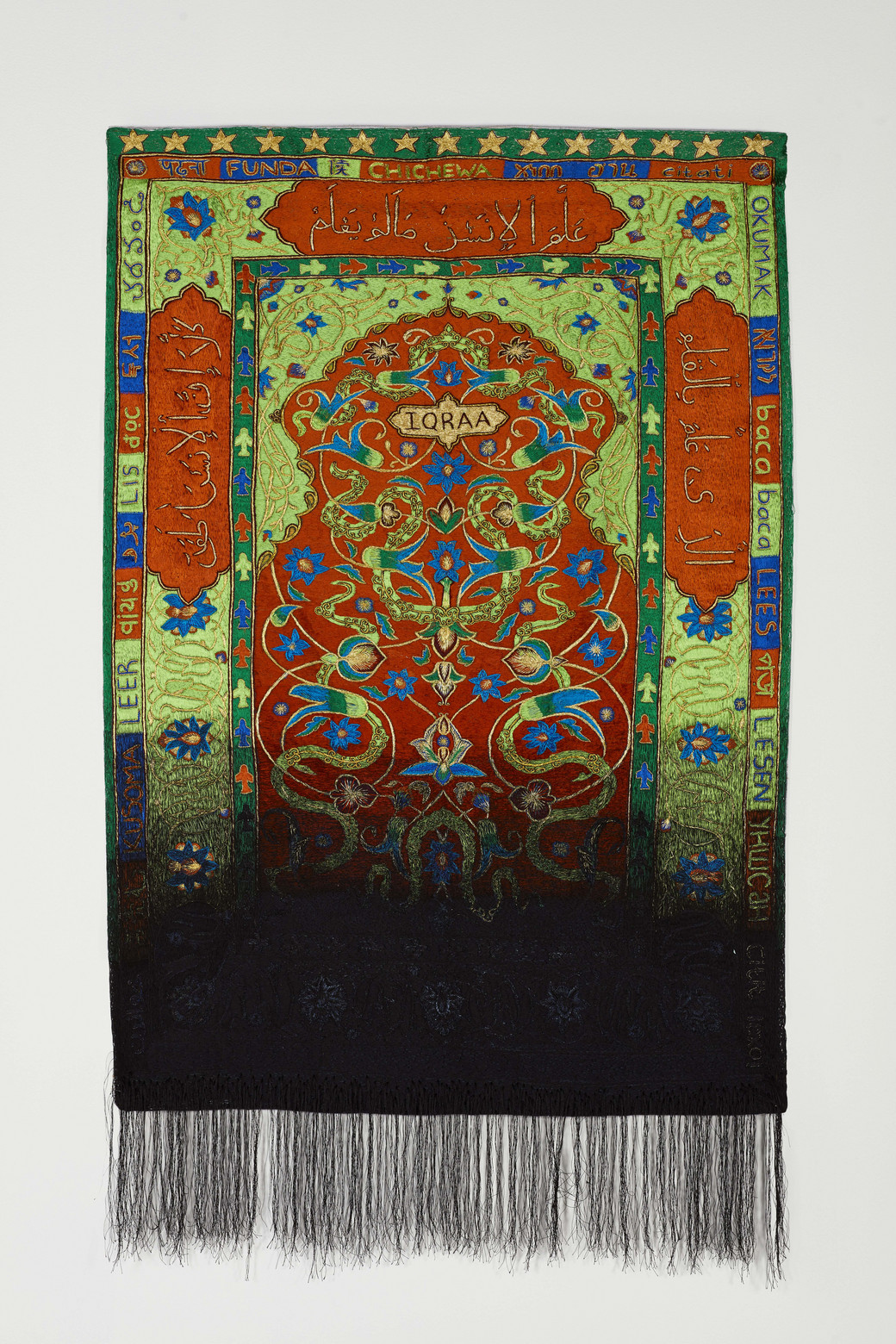


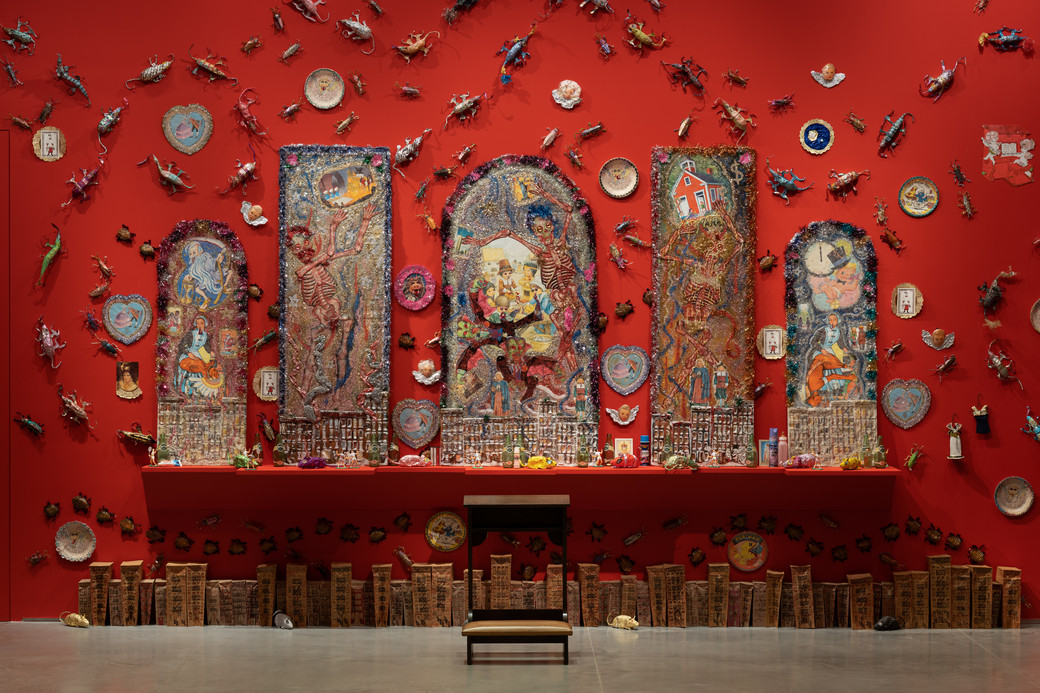
'Radical Love' is on view at the Ford Foundation through August 17th. All images courtesy of the Ford Foundation. Lead image: Athi-Patra Ruga, 'Umesiyakazi in Waiting'.

Tell me about the show. It’s in that little house, right?
It’s in the Mike Kelly Mobile Homestead, yeah, which is a replica of Mike Kelly’s childhood home. So I guess that was the starting point, the invitation to do something in that space. I’ve been working on different wellness machines or wellness sculptures, or wellness processes. It seemed like the perfect place to keep going with that idea. So one of the ideas was that this house space reminded me of these converted homes that are used by chiropractors or different wellness practitioners, where on the exterior it’s a house but on the interior it’s not really institutional but it’s a medical office-type space.
Is it an active spa? People can have services done?
All of the work is functional, yes. You can make an appointment—anyone is free to make an appointment to come use it. There are three people at the Homestead who run it, there’s Amy the curator, then there’s Micheal who’s the education director, and Mike the docent—so they’re what you could call the attendants, or they’re the ones who are responsible for guiding people through an appointment. So what an appointment consists of is you would come in and use the sauna shelf, that has cedar from the front yard that are part of the landscaping, and then after you steam in there you would have the choice to take a hot shower outside in the back alley in this shower sculpture and/or have an orange juice from the orange juice collection. And that’s it, that’s what an appointment is.


Above: Install views of 'Wellness Center'
The people themselves seem like a big part of the idea.
Yeah, definitely. At the same time, going to a spa or participating in wellness is kind of a private activity, so there’s this tension where I didn’t want to make the appointment a public thing, you know? You can make an appointment outside of the normal hours of the homestead, and it’s not something I necessarily need to document—although I do intend to document a few appointments with the permission of the participants. But it’s a little bit or mythological than something that’s exposed and photographed or something like that. It’s more mythological than performative.
Mythological? Can you talk more about that?
As opposed to people interacting with the work or going through their treatments in a performative way, it’s more like through word-of-mouth, sort of like telling the story. For example, you go use the steam spa, you may have some photographs of that, but it’s more of a private space. So it’s more something that’s transmitted through a myth rather than through documentation.
Where is the interest coming from in regards to wellness? Why wellness?
Everything that I’ve done for the last five or six years has to do with this dichotomy between labor and leisure. For example, a past project was using a swimming pool as a concrete-casting facility to cast sewage pipes out of concrete. Another swimming pool project was using a swimming pool as a soap factory, where large pieces of soap were cast in empty swimming pools. There’s always this question of what does work look like and what does leisure look like, and I feel like wellness is right now at the epicenter of that line. It’s sort of like collective hobby that’s taken over the world to some extent, on different levels. It ties into economics, as well, because it is this tension between labor and leisure, which is kind of the elephant in the room. This felt like an opportunity to do something that wasn’t explicitly luxurious, it’s in the replica of a middle class home, so there’s that kind of thread running through it.


Do people have to pay to use the homestead spa?
No. That’s part of the mandate of the homestead, that the activities that take place there are community-oriented. So I think it was very important that there not be any kind of cost to make an appointment.
It’s interesting too that it’s community driven and yet you’ve turned it into something very private. I love the idea of private vs. public.
That was really important. I think that the space demands that, to be honest. I don’t know how much you know about the space, but there are these tunnels underneath the house, they’re totally off-limits, nobody is allowed down there, just a few of Mike Kelly’s friends are allowed to go down in the tunnels, but no one else is. And what’s cool is it’s totally mythological, it’s not documented, but it’s still something that people talk about, there’s this presence, so there’s this private feeling. The flip side is that the inside of the house is not a domestic interior, it feels like a public school, there’s a water fountain, gray institutional flooring, there are a lot of exit signs and fire alarms everywhere, it doesn’t look on the inside what you expect it to from the outside.
I have actually been there, and now that you say it’s funny because I remember thinking, ‘Is this exit sign or this fire alarm part of the art?’ It’s funny that you picked up on that as well. It’s sold as this domestic space but as soon as you enter it’s extremely obvious that it is not a domestic space whatsoever.
I couldn’t ignore that. It’s not necessarily the most comfortable space. It definitely puts you in a strange mood. I think that the work I put in there and the experience of using the work, it’s not an entirely comfortable experience. There’s something off about the space, and that carries through. I’m still processing it, actually, like what is that off-ness, what does it consist of.


Have you ever been to a spa?
Oh, yeah. This isn’t a very earnest kind of stance, I’m not trying to critique spa culture. I love steaming and I love getting massage, going into a cold pool, all that stuff.
What’s the best spa you’ve ever been to?
Actually, in Detroit there’s this little infrared sauna space, it’s called the Metaphysical Wellness Center, and I had a really good time there when I was doing site visits. They have these infrared saunas and a juice bar and a shower—it’s very modest, and very accessible, like you get a discount if you bring your own robe and slippers. In Miami, we don’t have anything like that, you’re pretty much locked into a $200 spa minimum, there’s no real accessible spa experience here because everything is geared toward the luxurious end.
That word is so interesting, ‘metaphysical.’ I love what you were saying about how wellness exists at the axis of economics and self-help, but it also exists in a spiritual axis as well.
Yeah, totally. The spiritual aspect of it, for me being completely nonreligious as a person—when we talk about wellness or go and participate in wellness practices, I think we want a little lack of definition, or we want a mystery. There’s this idea that we have to treat a trauma that we can’t quite put our finger on. We have to make ourselves well, but it’s just the trauma of living. We’re trying to assuage that somehow. And I think metaphysical questions have to do with the undefined in that way.
'Wellness Center' is on view at MOCAD through August 4th. Lead image: 'Triple Rose Mask Residue Test (Rose water hydrogel, gooseberry hydrator, Cannabis pain creme, double phalaenopsis).' All images courtesy of MOCAD.
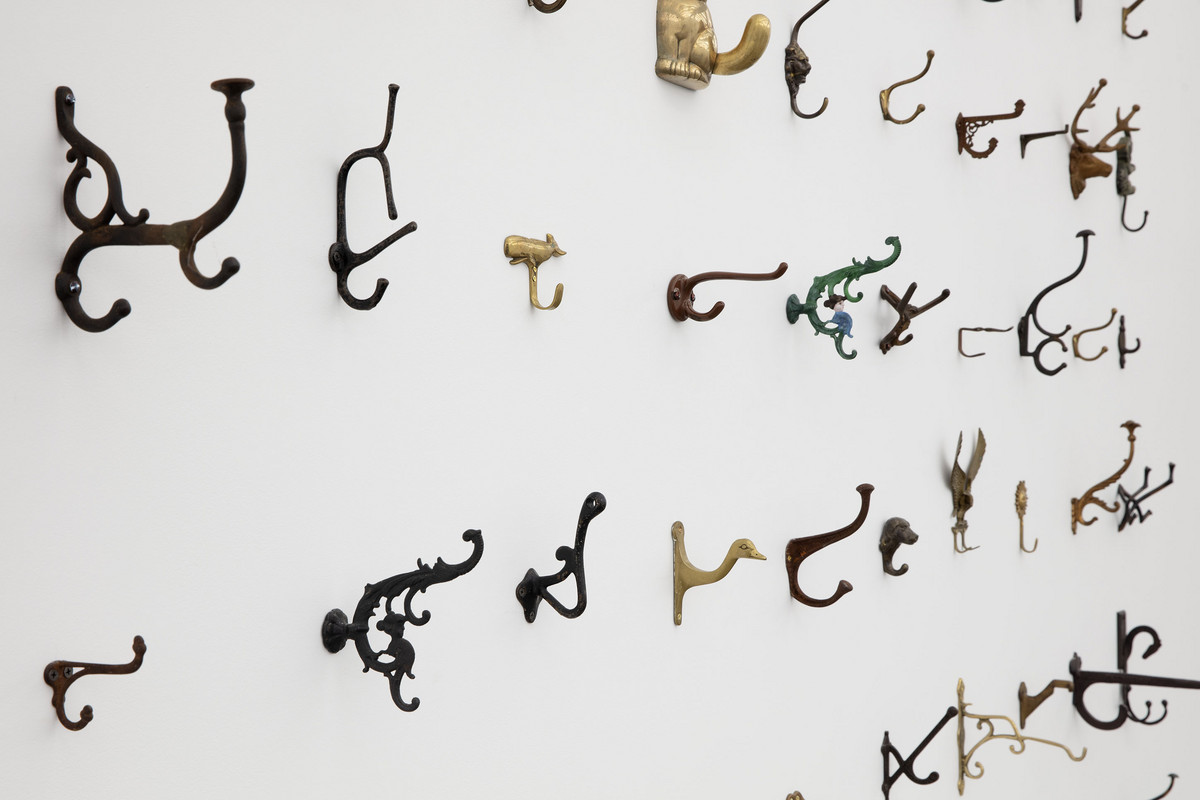
Hailing from rural Pennsylvania, Ziegler developed an admiration for distinct Americana style early on. His piece “Hooks” (2018) contains 100 different antique hat hooks, including duck heads, spindly tree-branch like hooks, and one of a perched bald eagle—visitors can even add their own hats or other treasured head adornments to the piece.
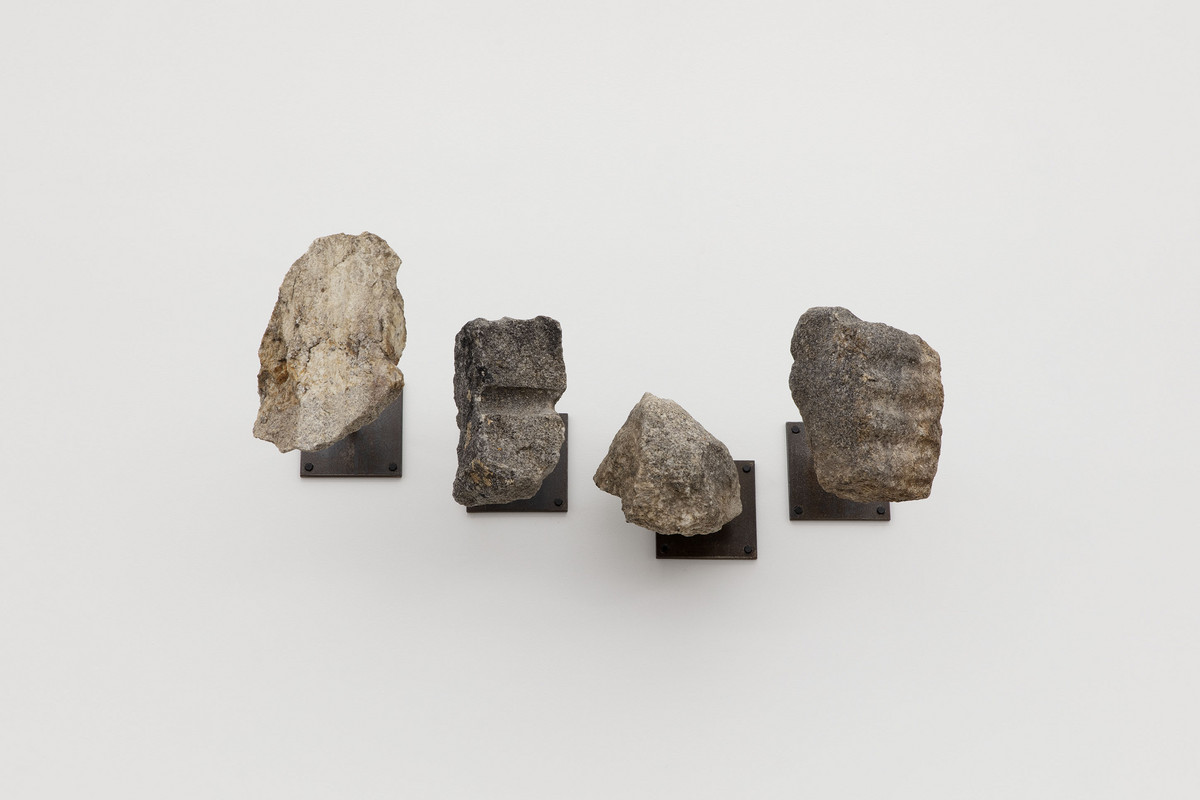
Despite his rustic roots, Ziegler does not shy away from poking fun at American values at large. For example, Ziegler and Ericson’s 1986 piece “From the Making of Mount Rushmore” contains stones that the artists took from the historic monument and displayed them to look like the four presidents—an act they later would admit to being one of “civil disobedience.”
office spoke with Ziegler about his current exhibition and upcoming projects. Read the interview below.
Tell me a bit about what you’re doing now with the Sandhills Institute.
I run an artist residency program in the Sandhills in Nebraska. That area is mostly sand and grass that’s used for cattle ranching and it has an incredible ecosystem. I had no real connection to this place, until I took a family trip to Mount Rushmore, Devil’s Tower and Badlands National Park. We drove through the Sandhills on our way back home and I just fell in love with it. So I bought a ranch out here about 13 miles from Rushville and my wife and I bought an old 1950s grocery store on Main Street in downtown Rushville that we’re making into an art gallery and cultural center.
I invite artists to the ranch and I teach them through professional workshops about the grasses, cattle ranching and grazing, as well as the history of the community. We have a dinner with the matriarchs in town and they tell us stories. We also have a community picnic and we’re beginning to work with the local high school and Chadron State College.
All of the projects are community-driven and involve some level of social engagement. So, I require the artists to make at least three visits here to do research and get to know the community here before they can propose a project. The institute’s been slow in the making because I require these three visits, but we’re beginning to get some proposals in place and we’ve now completed two major projects.
How do you make yourself a part of a community in order to create something that’s within and reflective of it without disrupting it?
That’s the key issue. I mean it’s not an easy thing to do and I don’t think all artists can do it. First of all, I like a lot of lead time if I’m being asked to do a project. I like to have a year and a half to two years to develop a project because, if I am involving community, it’s important that I get to know that community in the process.
I also try to develop projects that can engage the community and use the language that’s central to that place. So if I’m doing something with ranchers, for example, then I try to make the project about ranching. These are some of the things that I do to integrate into a community without disrupting it. But I also don’t mind a little bit of disruption. That’s what creates an interesting artwork. It’s good to raise questions and issues and expose things that don’t normally get exposed. But I’m invested in Rushville long-term, so the most important thing that I’ve learned here is that I have to gain trust so that people understand that I’m here to stay and I’m serious about what I’m doing. I’ve joined the chamber of commerce here, I get physically involved in things that happen.
The grocery store restoration project that I’m doing on Main Street’s huge, it’s important to the economics of Rushville. But I think it’s really a matter of getting to know people. I think that’s a really critical thing. That’s what I try to get the artists to think about.
Is that where the idea of artists making three visits to Rushville before proposing a project comes from?
Yeah, it’s really to get to know the community and do some serious research. I pay for the artists to come here and develop the idea, I provide housing and airfare. Then they get funding to develop their projects.
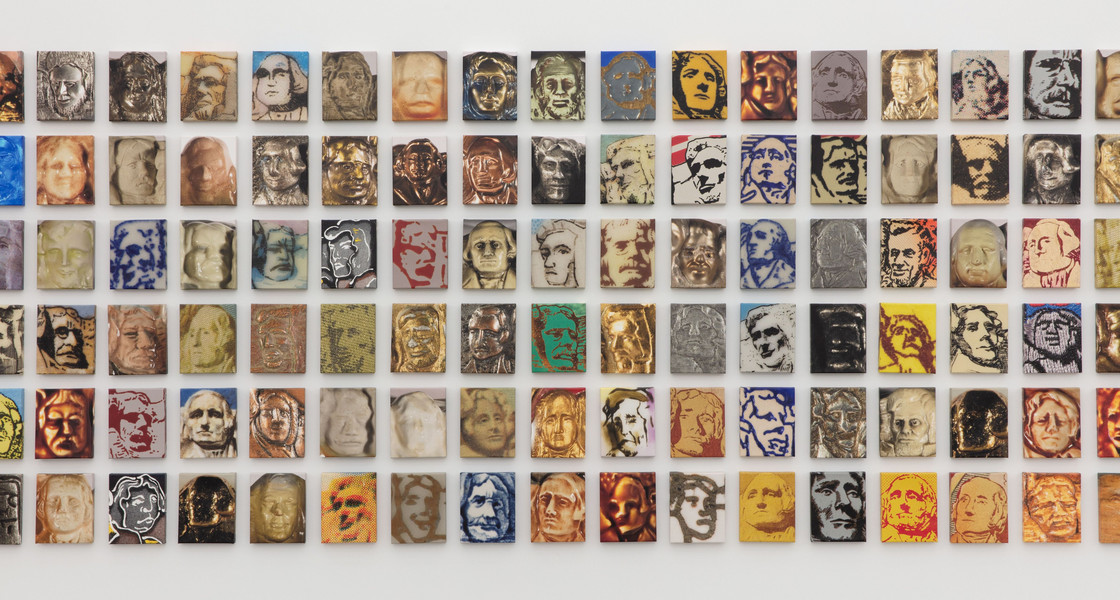
Regarding the Activated Artifacts exhibit, particularly the “1000 Portraits” piece, what is the significance of displaying it now?
Activated Artifacts is what I call a lot of my work because I tend to respond to things and somehow manipulate them or represent them. So I’ve been working on this series of projects that are made from collected items like the coat hangers but reactivating them in a way that involves social engagement or objects that have a social history to them.
Mount Rushmore might be considered a problematic monument because of all of the politics surrounding it and the fact that it exists on Native American land. There’s also all of this questionable history around the monument’s sculptor, Gutzon Borglum, and whether or not he was a member of the KKK. It was actually initially developed to be a tourist attraction, which it is. It brings over 2 million people to that region every year so it’s an economic force in the Rapid City area. I was very fascinated by all of that and I began collecting vintage Mount Rushmore souvenirs because each one also has its own history. I did that for about 10 or 15 years.
Late last year, I was invited to show a piece and participate in a conference at Cornell on the discussion around problematic monuments and what to do with them. So, I proposed this project in relationship to the conference and they provided some funds for me to produce it.
Regarding “Hooks,” how does location play into that piece? What do you think New York will add to it?
I’ve been asking people to put up something that is really hard for them to part with because it has a history to it—to me that adds the possibility of stories. Having lived in New York, I know the diversity and the uniqueness of individuals. I’m hoping that some interesting hats will end up as part of the piece. I think every time it gets shown it will have a different relationship to the community.
A lot of your work is about both celebrating and critiquing American values and practices, especially in rural America and the Midwest. How, if at all, has your perspective on the region changed over the years?
Well most of my work responds to a kind of iconography of American history and American icons so there’s always a built-in critique of what I’m trying to accomplish. For example, I created a piece with 50 American flags, one from each state. They were all torn and tattered flags that I collected from people in exchange for a new one. It was first shown at the Tang Teaching Museum in relationship to the 2016 election. I couldn’t have known that what happened was going to happen, but it was interesting to display it and talk about American values at a time when so much is in question and so many things are happening. I think the work has a built-in critique.
I’m not promoting any particular value system—it’s about questioning the value system. You can see the piece and be conservative or liberal and have issues and questions with it. I try not to be dogmatic about a particular point of view.
I’m curious about why you have always thought it was important to show work based outside of New York and L.A. art spaces?
Well, I grew up on a dairy farm so my background and my relationship to the world is probably different from a lot of other peoples’. I grew up in rural America and eventually found myself in the middle of the New York art world. I think there are a lot of important, good things that come out of it, but I also feel at times that it’s extremely insular, that it speaks to itself. In that way it doesn’t interest me as much. And I feel like I respond more to Rushville, Nebraska than I do to New York City at this point in my life.
There’s also an idea in America that the big cities on the East and West Coast have one way of thinking while the middle of America has another ideology. I think there needs to be more of mixing of viewpoints. I would love to promote the idea of more artists coming to rural America and working, not to change minds, just to have more openness and more willingness to have discussions about things. It’s not easy for some artists. I had one artist say that they didn’t want to come back to the Midwest after Trump was elected. And that really upset me because that’s the wrong attitude to have. You should want to come back here and have an engagement and a dialogue. People here are smart, educated and they have their own ideology about things. And there’s nothing wrong with that.
I consider the Sandhills Institute an extension of my work. I think I’m doing something really important here. Right now, my energy, my time and my ideas are really focused on rural America and Rushville, Nebraska. But it’s important to me to keep that dialogue and sophisticated discussion about the art world going.
Activated Artifacts will be on display at the Perrotin Gallery until August 16.