Vulvatious

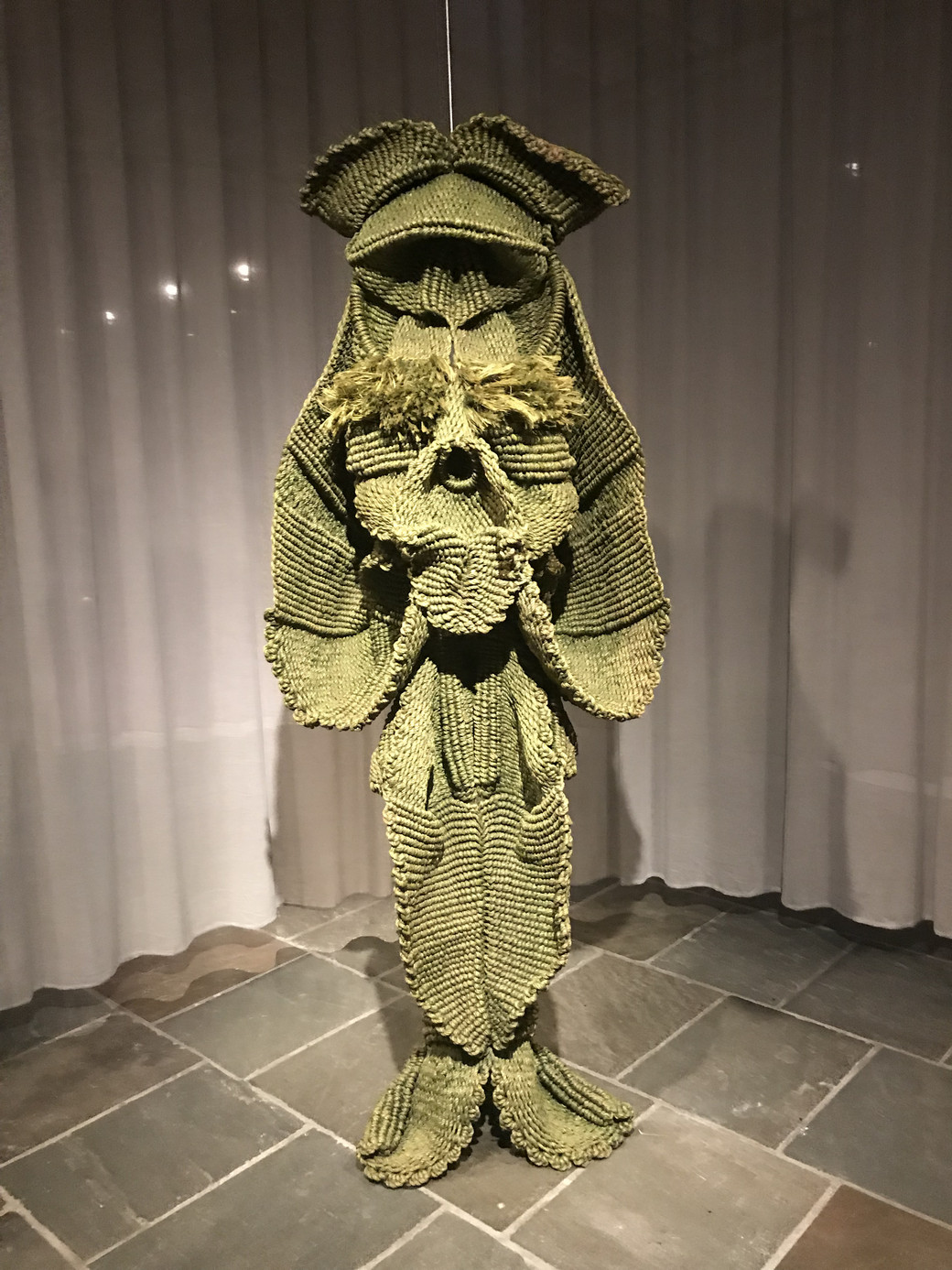
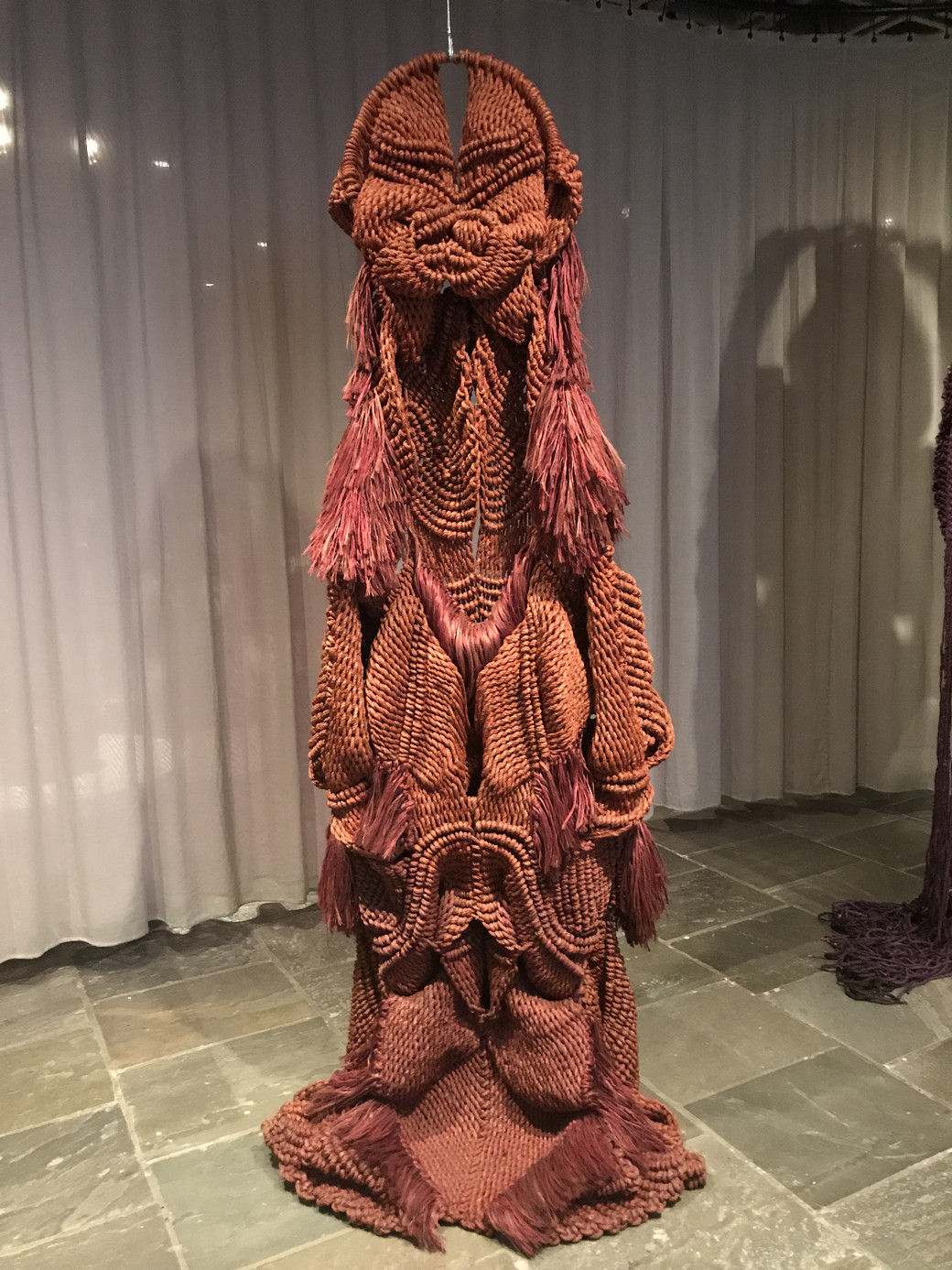
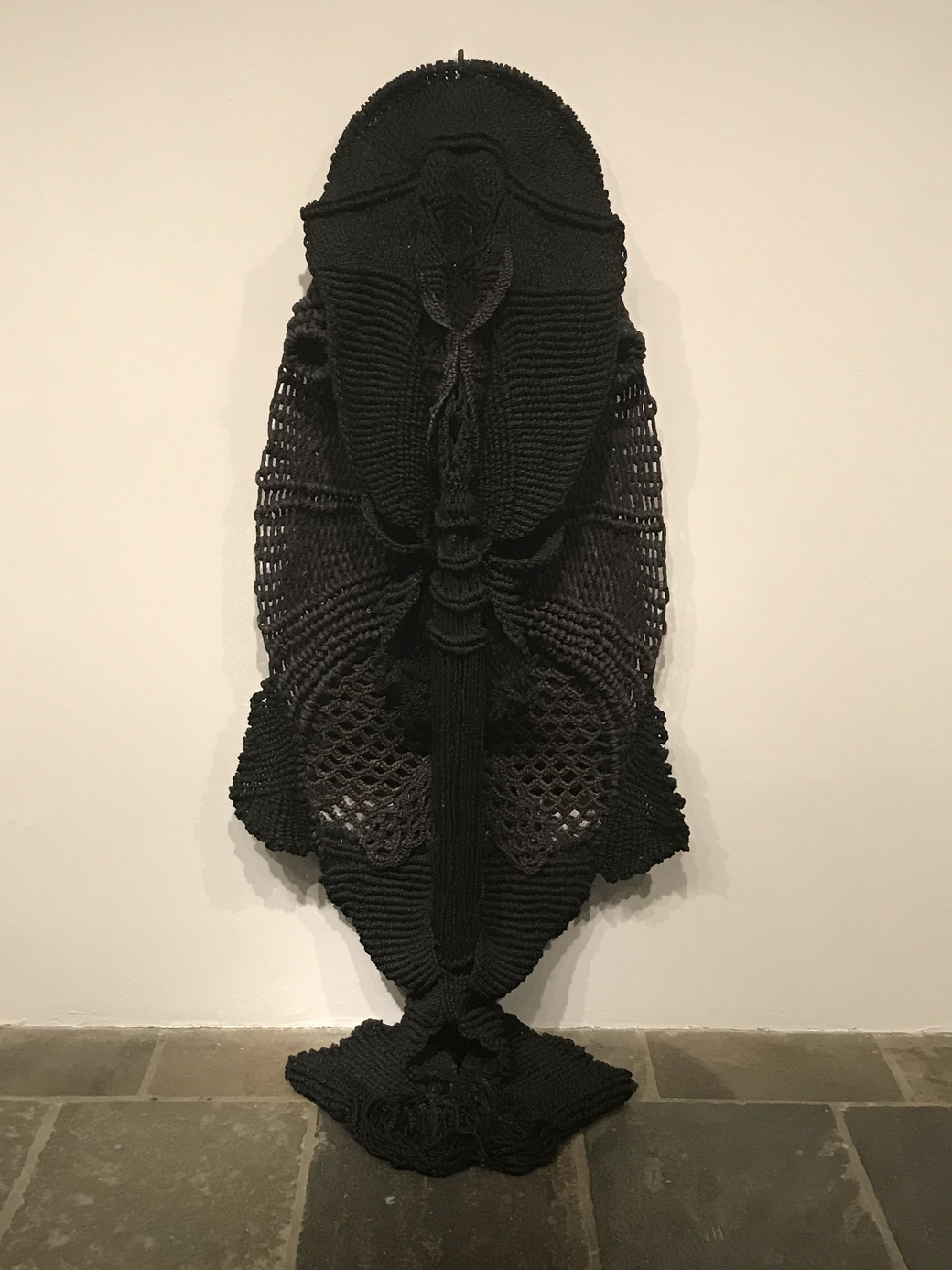
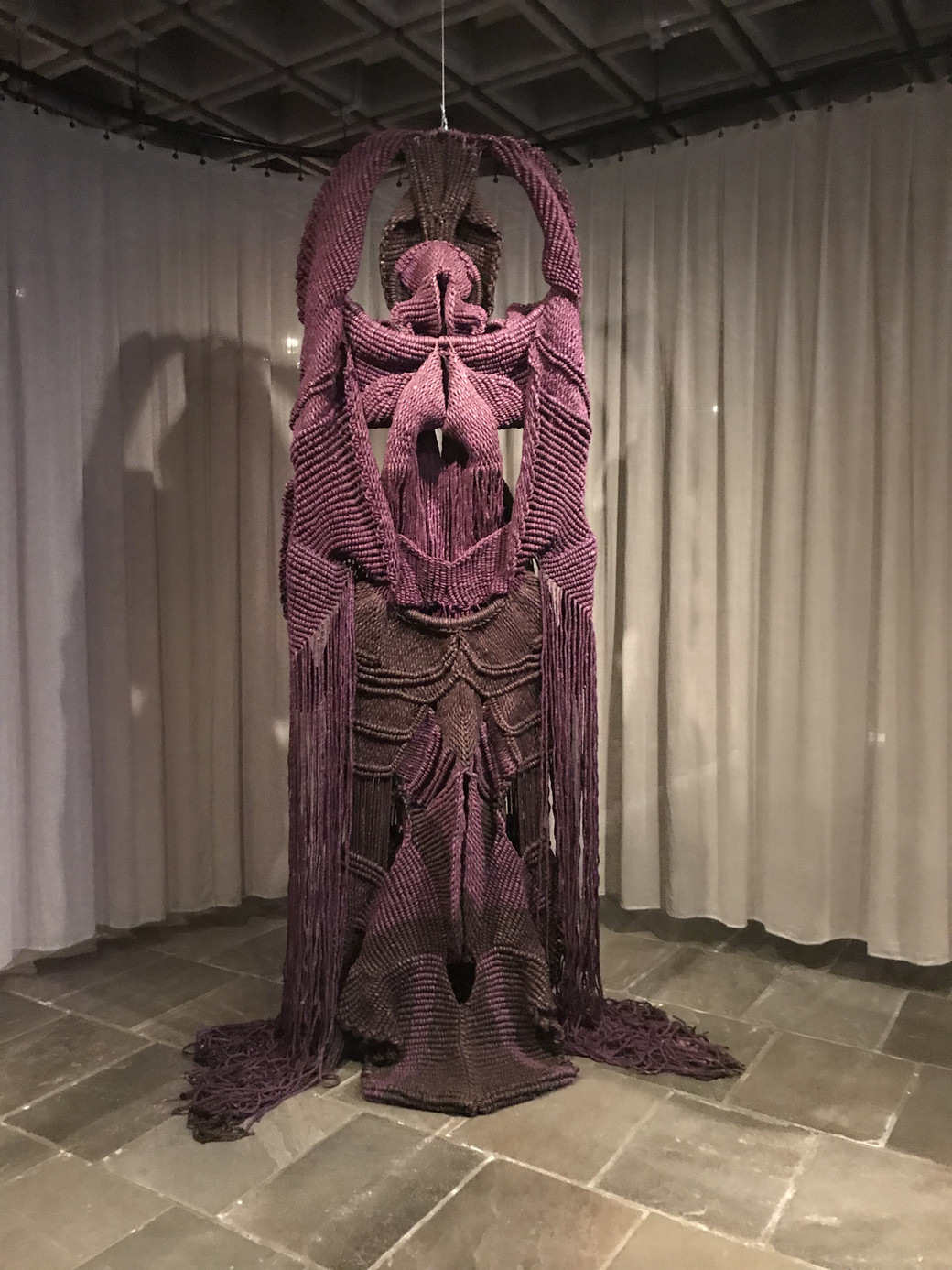
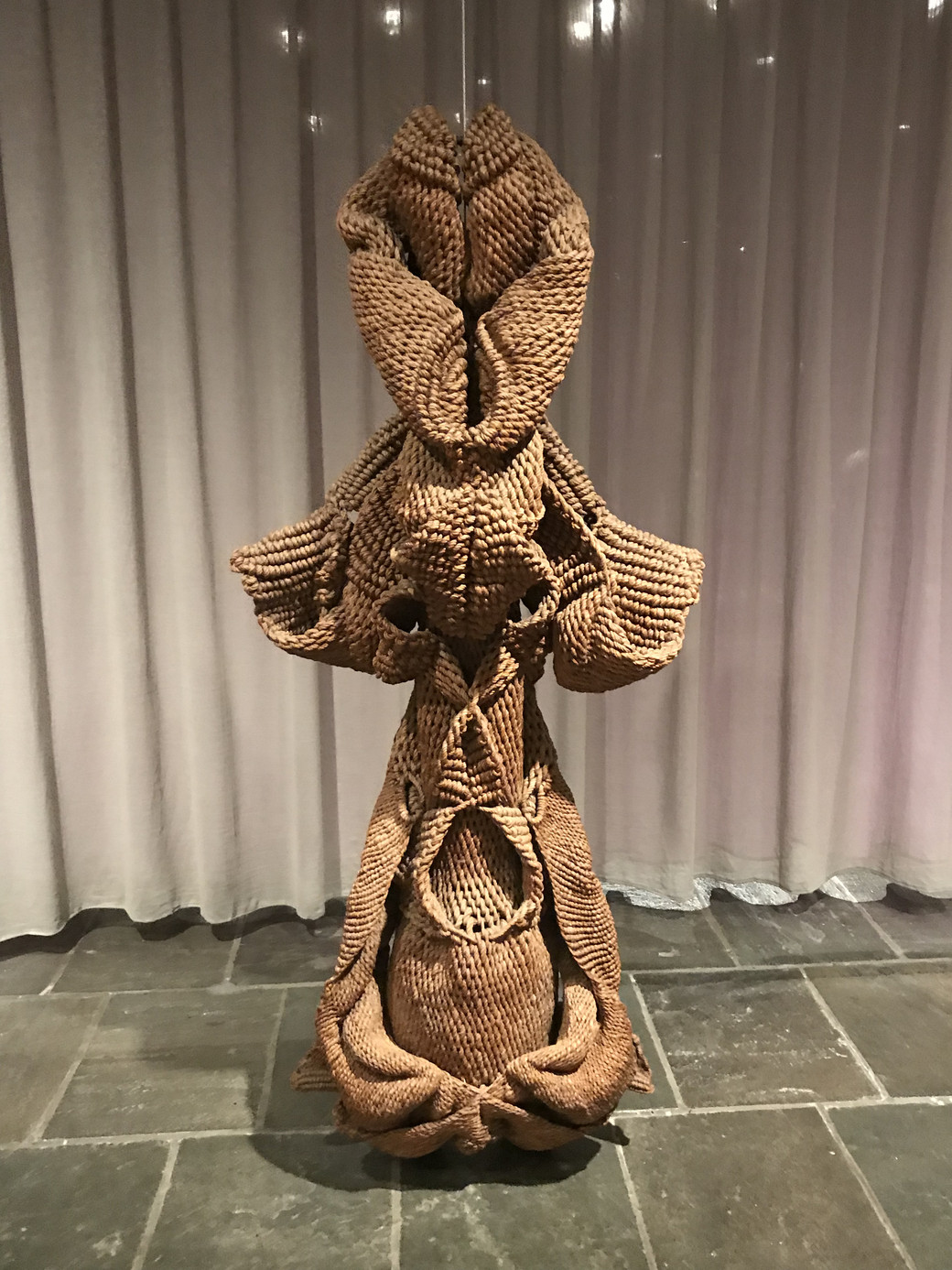
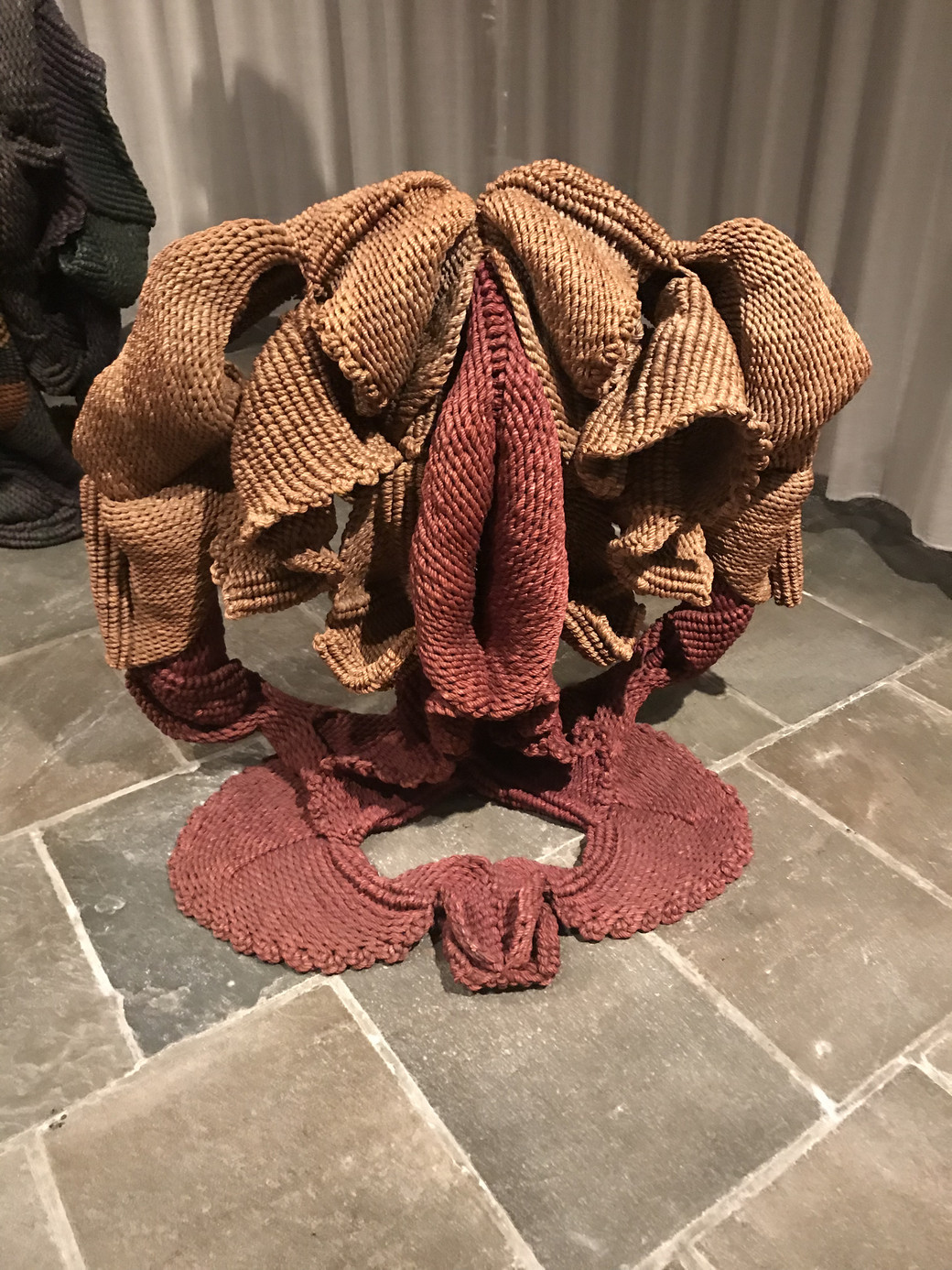
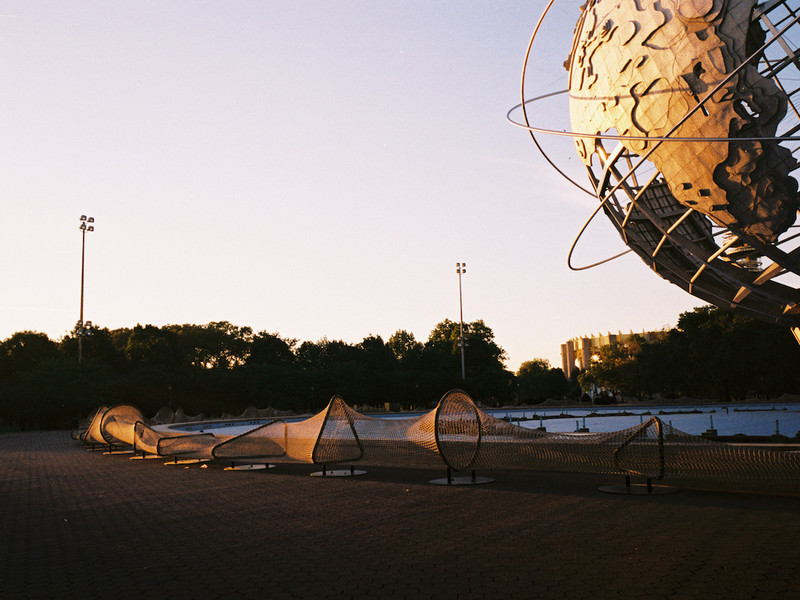
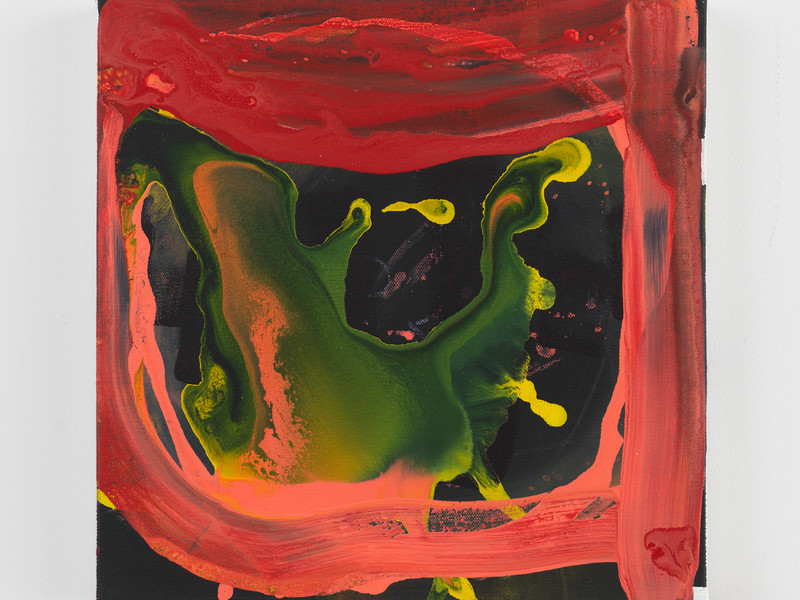
"Phenomenal Nature: Mrinalini Mukherjee" is on view at the Met Breuer through September 29th, 2019.
"Phenomenal Nature: Mrinalini Mukherjee" is on view at the Met Breuer through September 29th, 2019.

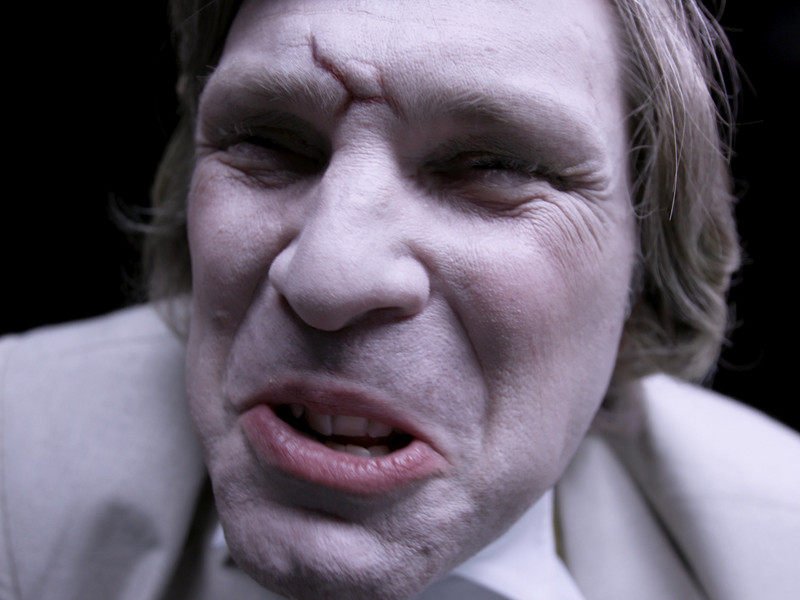
But if I were to take away one thing from the short, it would be the feeling of hope, a genuine belief that through death, in this case being through the death of the karmic cycle that is a toxic relationship, comes life, renaissance and rebirth. Stricker masterfully uses film as a medium not only to create a dialogue about gender, art and identity, but to explore in the visual realm what it means to be female in the first place.
office had the pleasure of catching up with Cara to dig a lil’ deeper into the themes of her new film.
Describe your personality in three movies.
Maya Deren’s At Land, Lost in Translation by Sofia Coppola and Persona by Ingmar Bergman.
How do you think your multidisciplinary artistic background informs your approach to film and how you capture the human subject?
Sound and movement, for me, play as much an integral role in telling a story in film, as do characters and script. I try to capture a sense of an overall feeling with this in mind when approaching film.
In Maverick, it appeared to me that color was employed as a means of denoting a particular emotional atmosphere, or as a signifier of certain moods. Can you tell me a little more about how color was used within the film?
In terms of the set, the color palette was very specific. The hue of red is used throughout the film to signify and nod to Napoleon’s infamous red cape he wore to battle and depicted throughout history. In the film, these symbols come further into play.
The lighting tone shifts throughout the film, visualizing the inner battle that Maverick is experiencing. It begins quite natural, and as the film progresses, the world becomes more surreal. As Maverick’s perspective shifts, the colors unravel to mirror the flipping power dynamics between Maverick and Richard.
There seemed to be an emphasis on language throughout the film—literature, spoken language (and the disconnect it can cause between two people), learning bits of a new language, etc. If language was a physical tool, what would it be and how was it used within the film?
It would be one of Franz West’s objects, Passstücke (Adaptives): Paravent (Passstück) (and Passstücke (mit Video mit Verwendungstipps) (Adaptives [with Video with Usage Tips]). These objects are intended to be interacted with, and ask how objects can function both as physical extensions of the body, and as representations of the human experience.
Within the film, language is used to explore ways that one can employ power over another, as well as capture a feeling of dissociation. It’s also used as a score device, to reflect the inner experience of Maverick’s journey. Symbolism is also used within the language of the film, to gesture toward the gaslighting environment that Maverick is in.
Can you elaborate on the meaning of the proximity of abundance to death and decay? What was that meant to denote, and how was this juxtaposition used to advance the narrative?
The abundance within Maverick’s house alludes to the fact that she is caged within herself, unable to leave her current state, and stuck in the home. The property functions as a progressive commune, and operates as a system that functions uniquely in its own way alongside the traditional societal system. She has enough to survive for long periods alone, on the grounds. 'Though its very ordinariness made it subversively utopian.’ Maverick’s process of overcoming the caged environment, engages an internal battle—the death and decay in the film embodies this theme. She is looking for a way to almost be reborn, and must go through her inner battle to get there. The Chicken Marengo dish she prepares, otherwise known as Napoleon’s Dish of Defeat, is a meal Napoleon cooked for his troops after conquering a country. Maverick, in her own way, must go through a battle to get out the other side.
What would you want buried with you so you could use in the afterlife?
Wings.
As you probably know, the title Maverick has a very specific definition. Can you explain the relationship between the title of the film and its content? Was the title a representation of Lee’s character?
The title encapsulates the plight of our character Maverick. The film is her journey toward the independent-minded person.
What surprised you most in the making of the film? What was the biggest challenge?
Every step of the way, from writing and conceptualizing, to raising funds, pre-production, scoring and post production, was as all-consuming as each other. They all had their own puzzles to fix and work around. I guess that was the most surprising and simultaneously the biggest challenge. I feel grateful for the village that was able to make this film together.
What's next for you?
A feature film!
For more information on Maverick, click here.
The content of the ongoing streaming art films is connected to the history of the Hudson River and its surrounding environs—and not just the part that touches New York City, but all of New York state. Oursler’s lexicon of references is so vast it requires a site map for viewers to discern the connections (a companion piece in and of itself). From the upstate Oneida commune to the invention of LSD and the psychedelic movement it spawned (also upstate), to Grand Master Flash of the Bronx and the confrontation between white settlers and the Native Americans, as well as facial recognition software and other spooky progressive technology, Oursler draws on a vast and variegated history to compose an incredibly engrossing and original outdoor artwork, the likes of which has never really been seen before.
I was reminded of a drive-in theatre—my only real reference from life to compare an outdoor film experience. This was something else entirely. The projections become almost living things, three-dimensional in a way a projection almost never is—as you walk by the weeping willow, the image becomes elongated and distorted among the branches, a moving orb of light.


To a giddy group of journalists, the artist spoke about stumbling upon different places in the city and how you inevitably connect them to your personal experience and memories—something he’s clearly working with, since I’ll never walk by this pier again and not think of his piece. He also mentioned the Hudson’s original Native American name, Mahicantuck, from the Lenape tribe, which means ‘river that flows in two directions,’ and became a propelling metaphor for the piece, which is clear from its multifaceted and clashing-yet-working mentality.
Oursler knew his history—he spoke of the problematic Hudson River School, which was, debatably, the first American art movement, and a rather staid one at that, but one that led to the first land-preservation. It’s this unexpected trajectory that was his artistic muse, as well as ideas about the transmitting of information—Deep Blue, the first computer ever to beat a world-champion in chess, was invented by IBM here in New York, and finds its way into the piece as well, as a harbinger of a new era of data transmission.
He is summoning ghosts from history as well as the cloud—our lives are lived on the net, after all. Looking at his piece is like looking at a scrambled Google search through Hudson river associations flickering this way and that, a parsed collective memory that speaks through its absence as much as its presence, in the same way a projection is not really there, cannot be touched, but its image is nonetheless powerful and magical. Tony Oursler has created a magnificent work of art, but once it is removed, only the gantry, the pier and the river will remain—a majestic note on the power of the ether as well as of visceral, lived experience, since it is a piece that can only really be experienced in person.
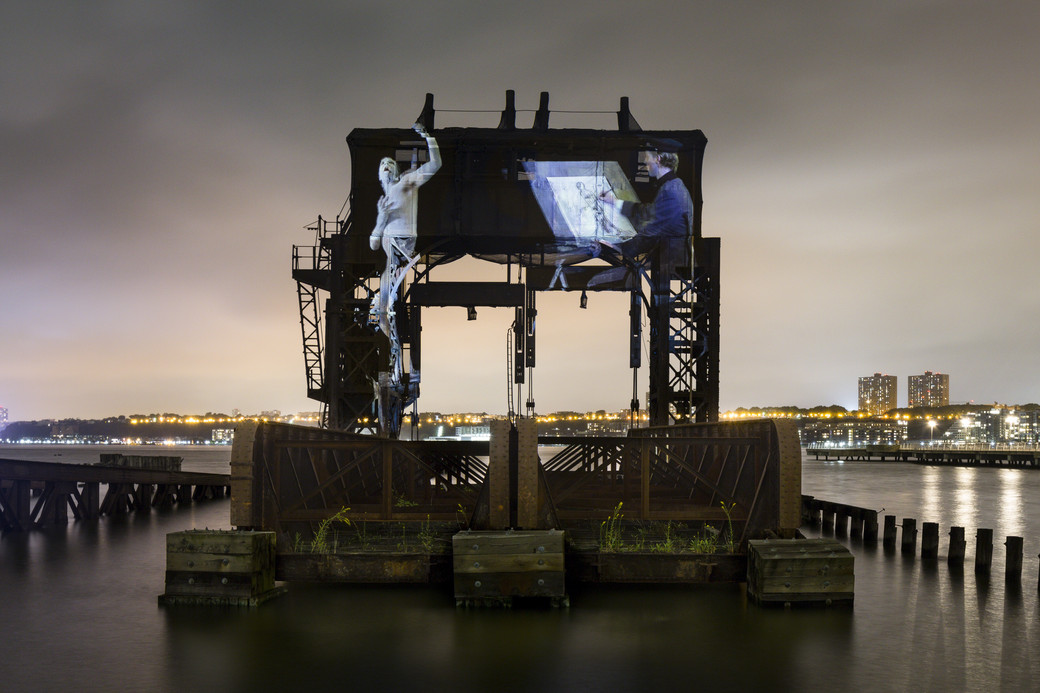
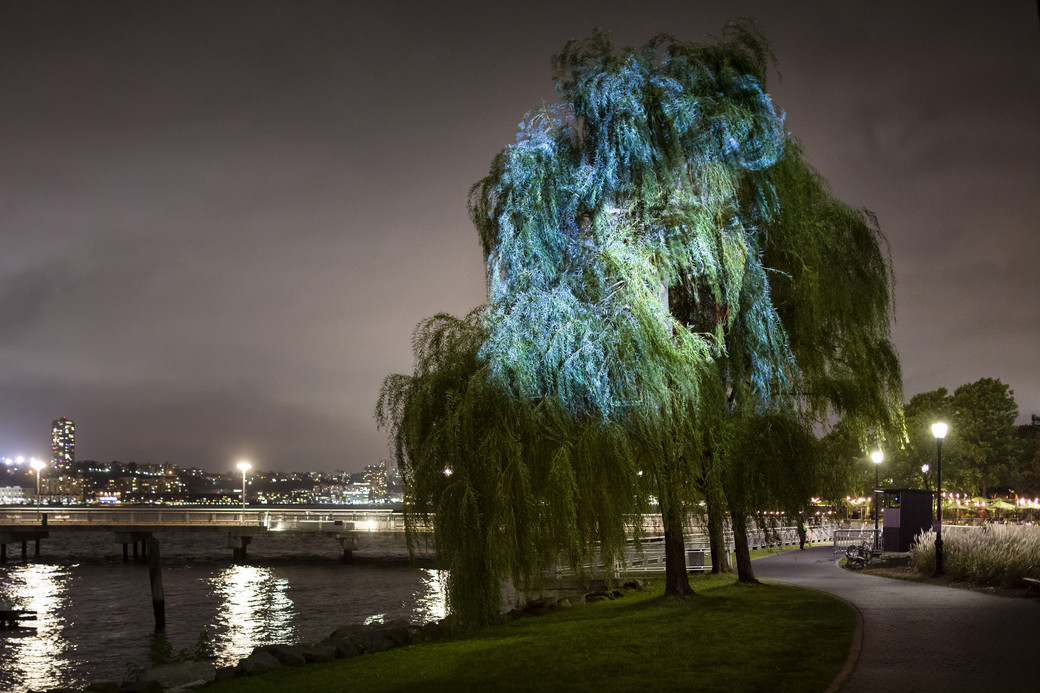

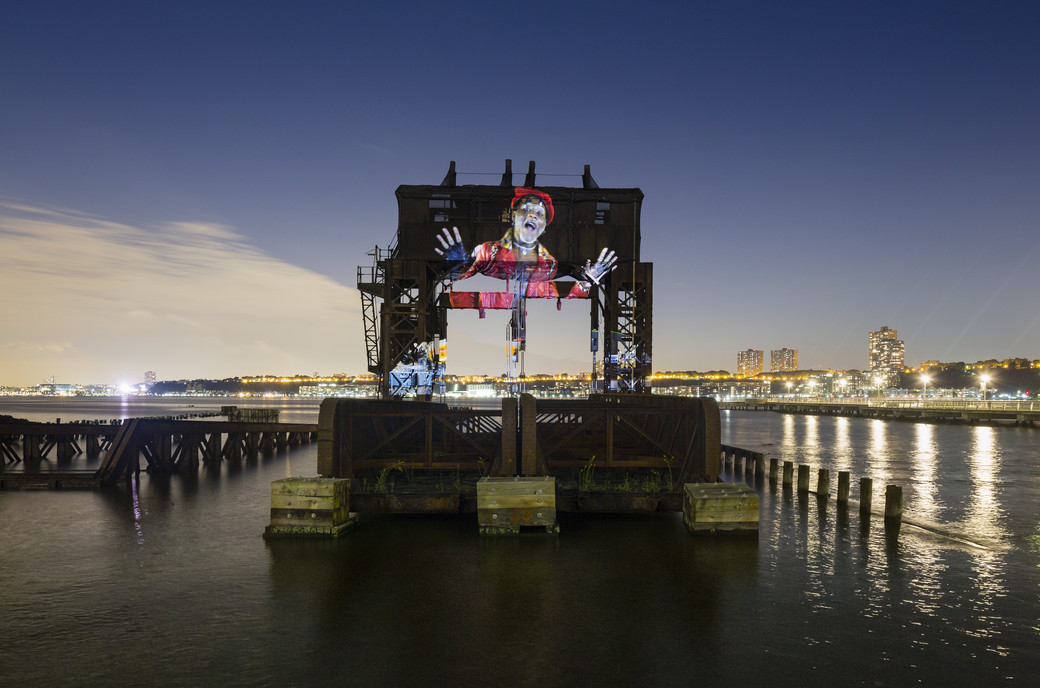
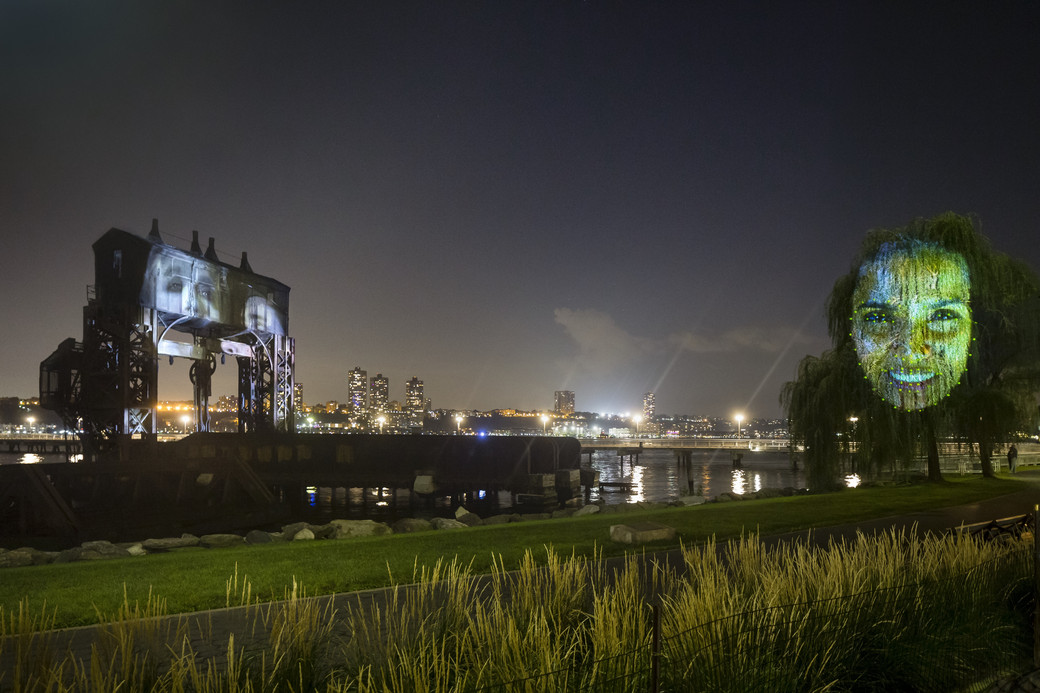
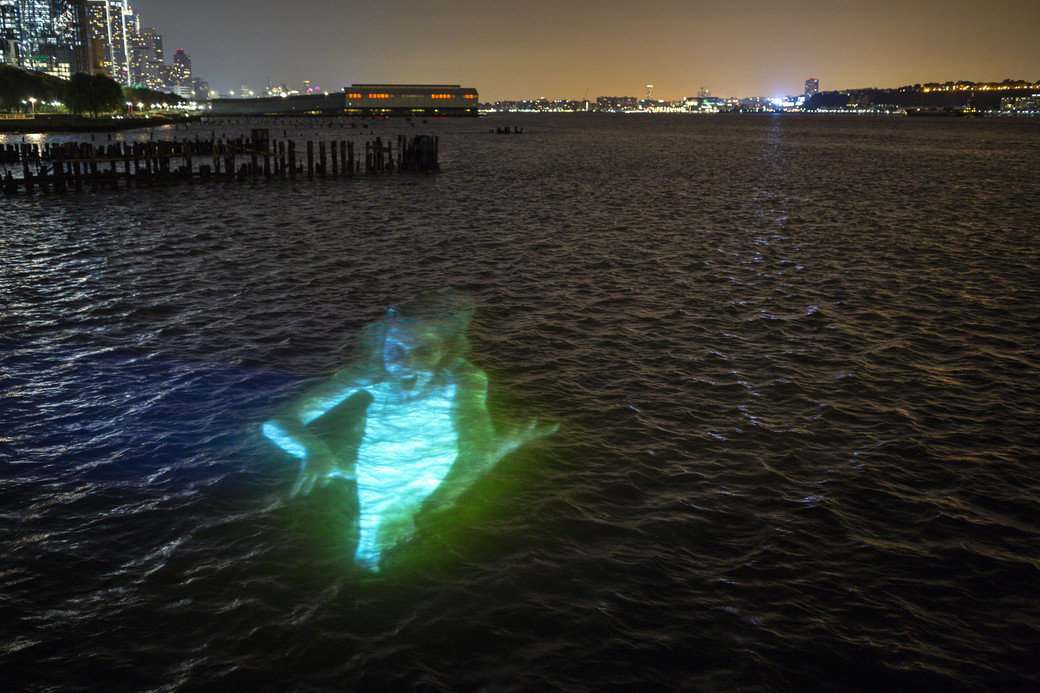
'Tear of the Cloud' will be on view through October 31 at the Riverside Park Pier I (near 68th and 70th streets), in New York City.
All images courtesy of the Public Art Fund.

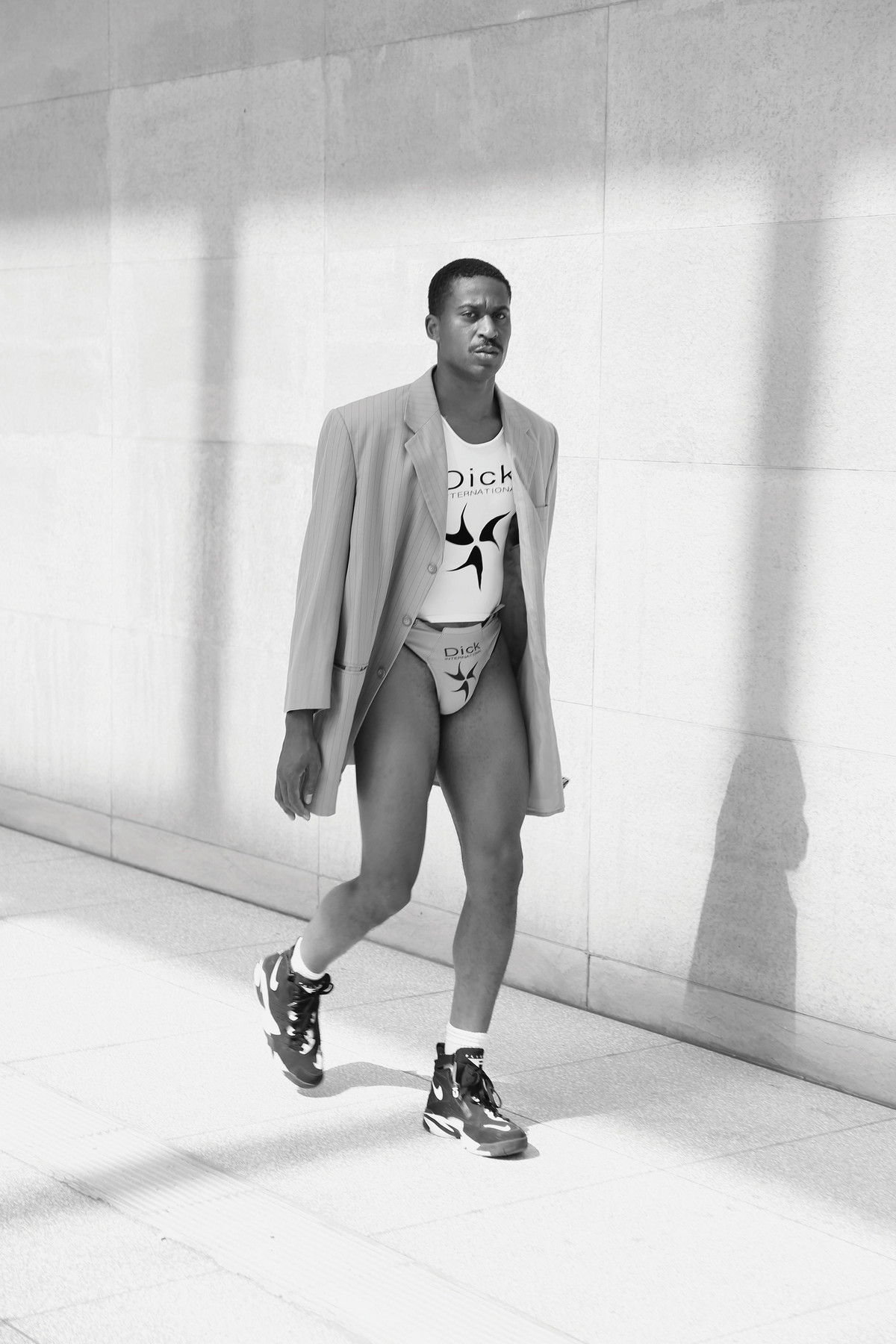
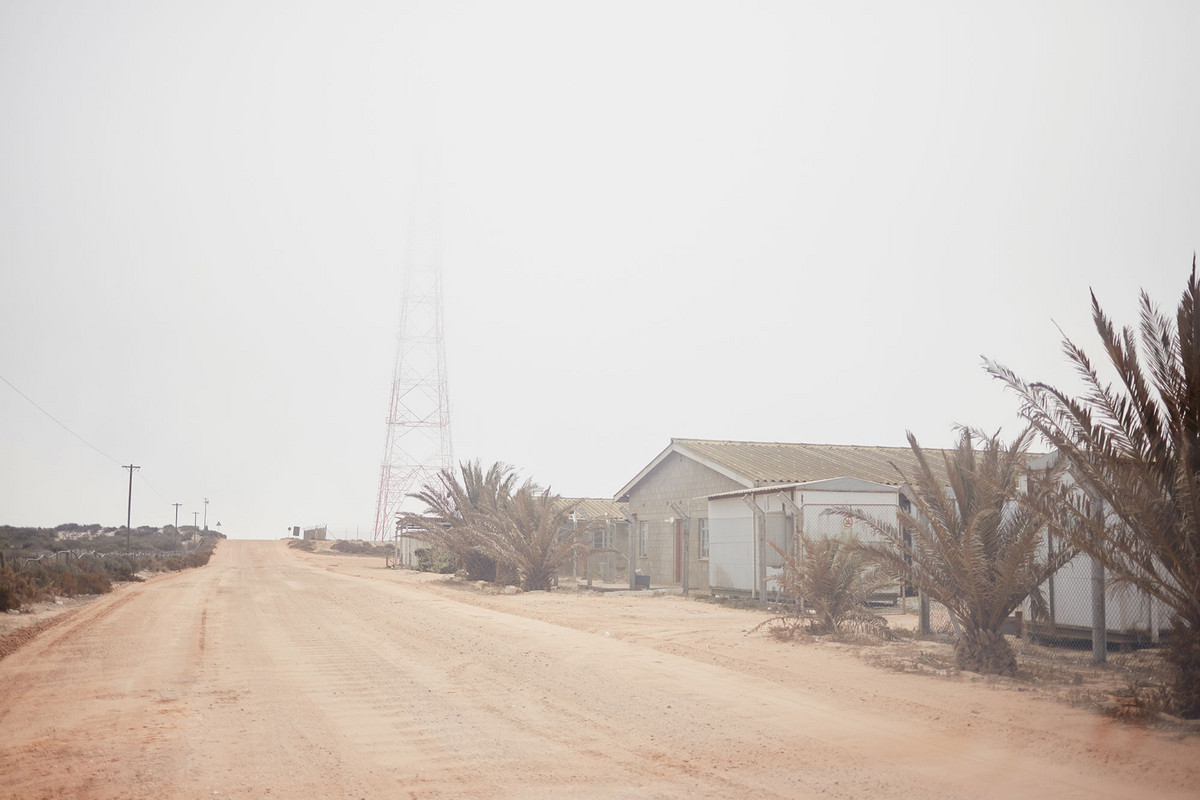
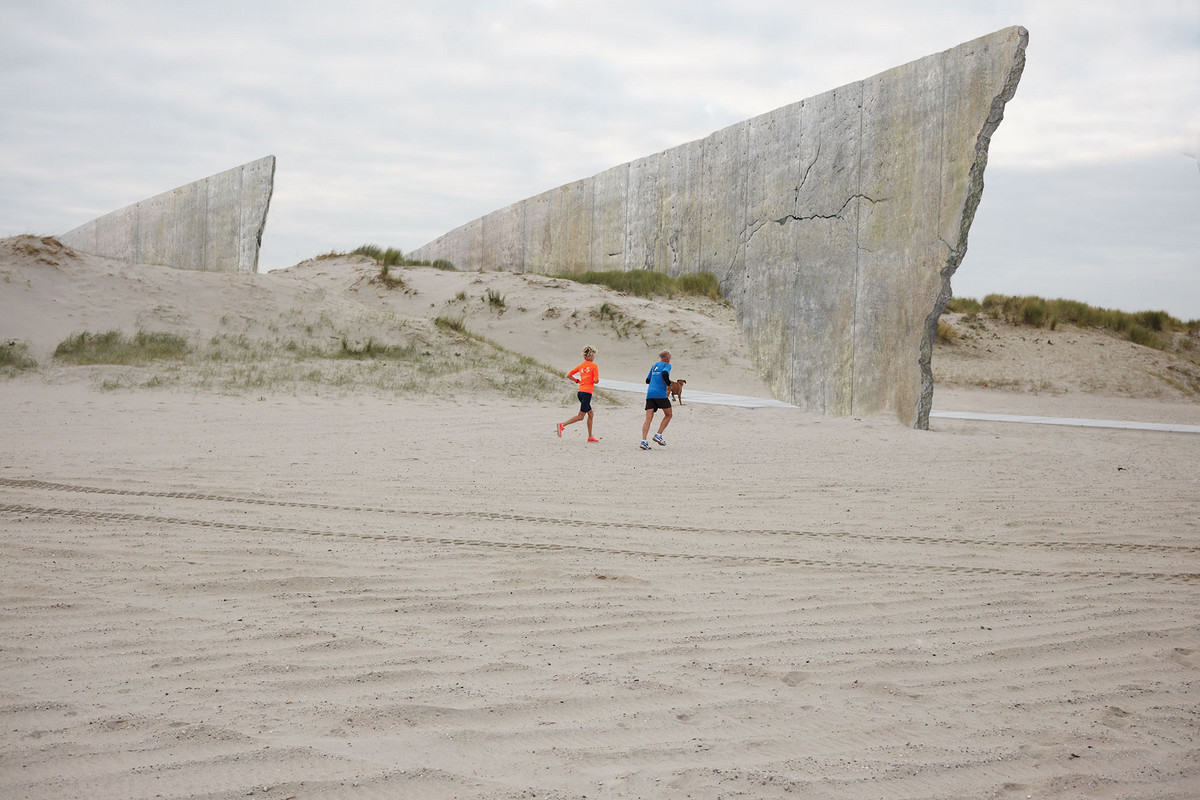
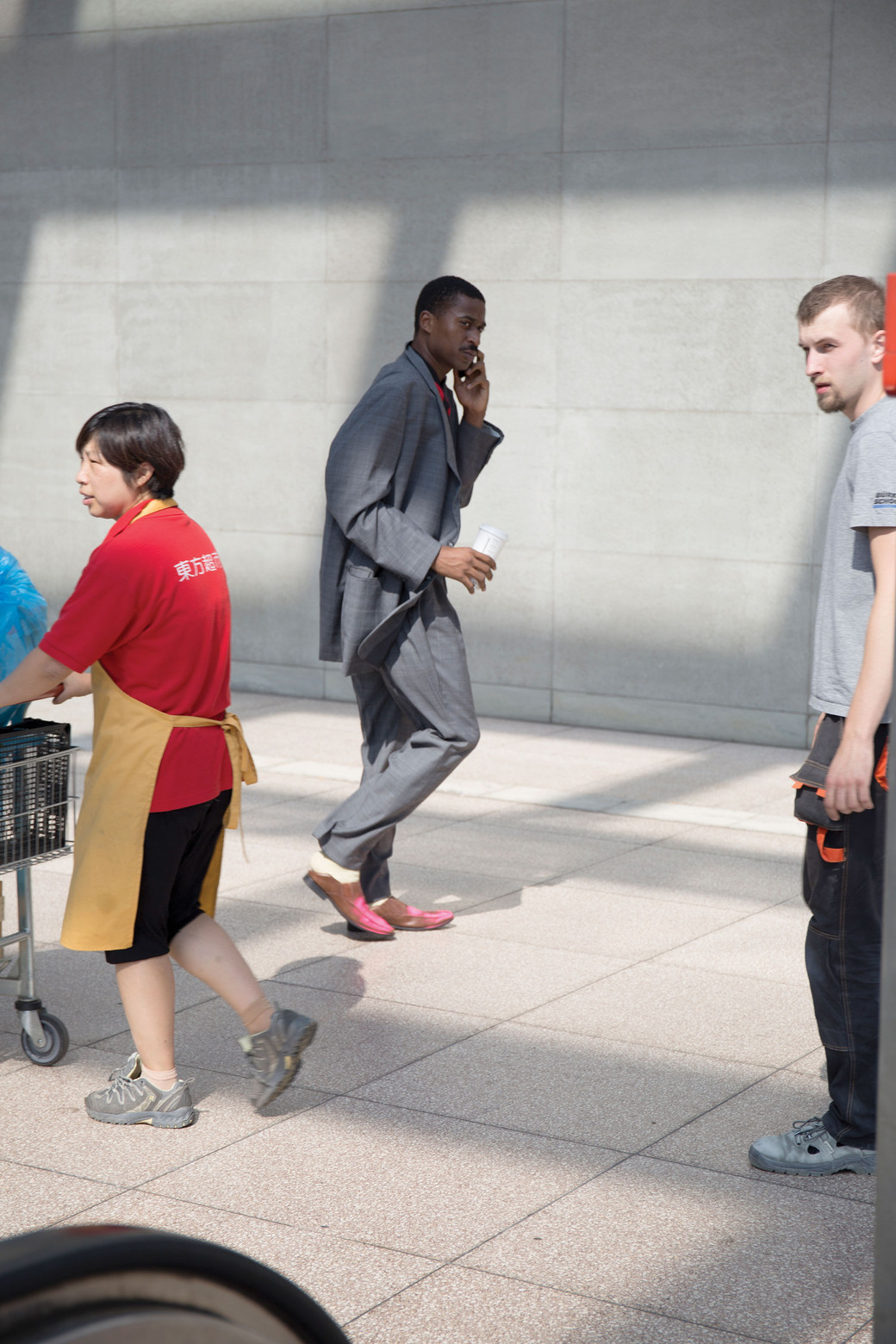
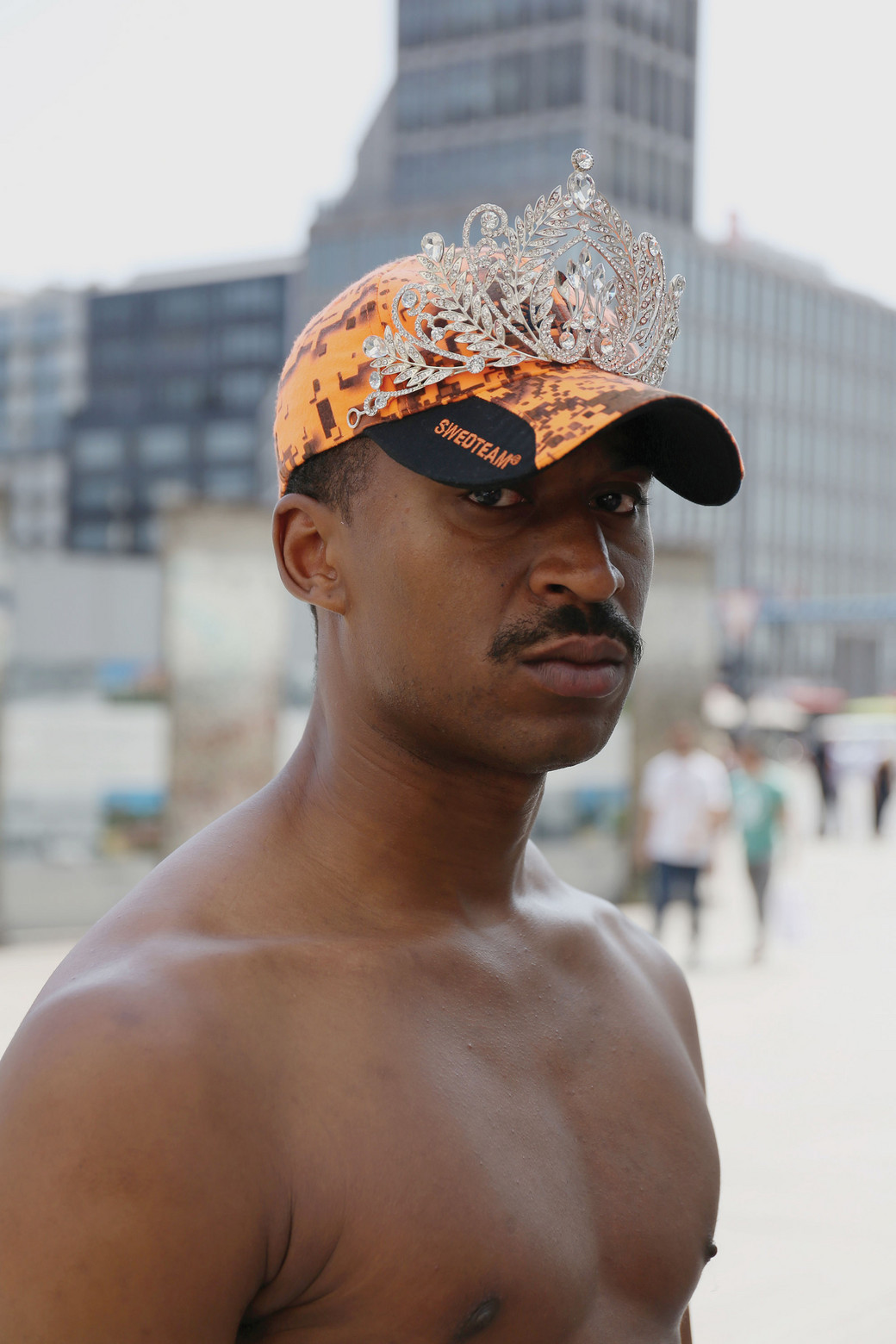
The second chapter, ‘Walls,’ which we’re dropping exclusively below, grapples with the theme of borders in an entirely different way. Comprised of two parts, the first shot by photographer J Ari King, and the second by Henrik Alm, this section explores variations of borders that occur both naturally and artificially within a given landscape. Inserting 3D sketches of the historical Greek columns, icebergs, plots of land, and concrete walls, as well as images of model Josh Johnson in front of German landmarks like the Berlin Wall, the photographers demonstrate that though we are surrounded by examples of division and separation, these examples should not inform how we regard one another.
"With the book, we want to propose, instead of otherness, we want togetherness, coming a bit closer to one another and just seeing things in a different way," the publishers explained.
BORDERS serves as a beautiful reminder that there should be none. We should all take a page from this book.
office caught up with Walker and Haal to discuss BORDERS. Read our interview, and view images from ‘Walls,’ below.
Tell me about Borders.
Nicole & Anders: The book itself consist of 4 chapters: ‘Proxima B / Temporary Planets,’ ‘Walls,’ ‘Post a story of the protest, later delete it,’ and ‘What We All Do.’
In ‘Proxima B / Temporary Planets,’ Alex de Brabant presents parts of HAAL S/S ‘19, as well as the HAAL Duplex Lens depicting Earth versus Proxima B, the planet predicted by Stephen Hawking as our second home to be—our second chance after the ultimate fuck up. With ‘Walls’—borders are carved into the idea of the landscape of our planet. In this chapter, we have images by photographer J Ari King from different places around the globe, along with inserted 3-D sketches of the domesticated fence, the historical greek columns, the concrete wall, the ever sinking iceberg; photographer Henrik Alm also shot performer Josh Johnson by the remains of the Berlin Wall, as a good reminder that we don’t want history to repeat itself. In Chapter 3, photographer Chris Maggio’s photos portray the reality of everyday human life in America, and in “What We All Do,” Valter Törsleff documents his close friend Sasha Melnychuk and their trip on the French Riviera. We all sleep, fuck, eat, drink water, cry, smell, and take a shit.
What was the impetus for curating the book?
Nicole: I have been upset for years—upset about Trump becoming president, about right wing and Nazi parties growing bigger all over Europe. So, I felt that I had to do something that speaks for the opposite of all that, opening minds and eyes for peace—a book that questions the ideas of borders, which also define today’s media landscape, but to do it in a rather poetic way. I approached my friend Anders Haal, and we decided to make it happen together. The goal: making a book that questioned the separations between humans, the idea of we versus them, and showing absolutely zero tolerance for racism.
What do you hope to achieve with it?
Anders: With the book, we want to propose, instead of otherness, we want togetherness, coming a bit closer to one another and just seeing things in a different way. Also, seeing that we, as creators within the fashion and art community, have the power to raise our voices louder, to fight hate and racism in every possible way.
Why do you think now is such an important time for a project like this?
Nicole: There is a lack of belonging in today’s society—the world and the universe feel bigger than ever with all the information we’re constantly being fed, and scientists finding new planets in the galaxy every day. Now is the time to be closer and to break down our own personal borders. There is no them—only us.

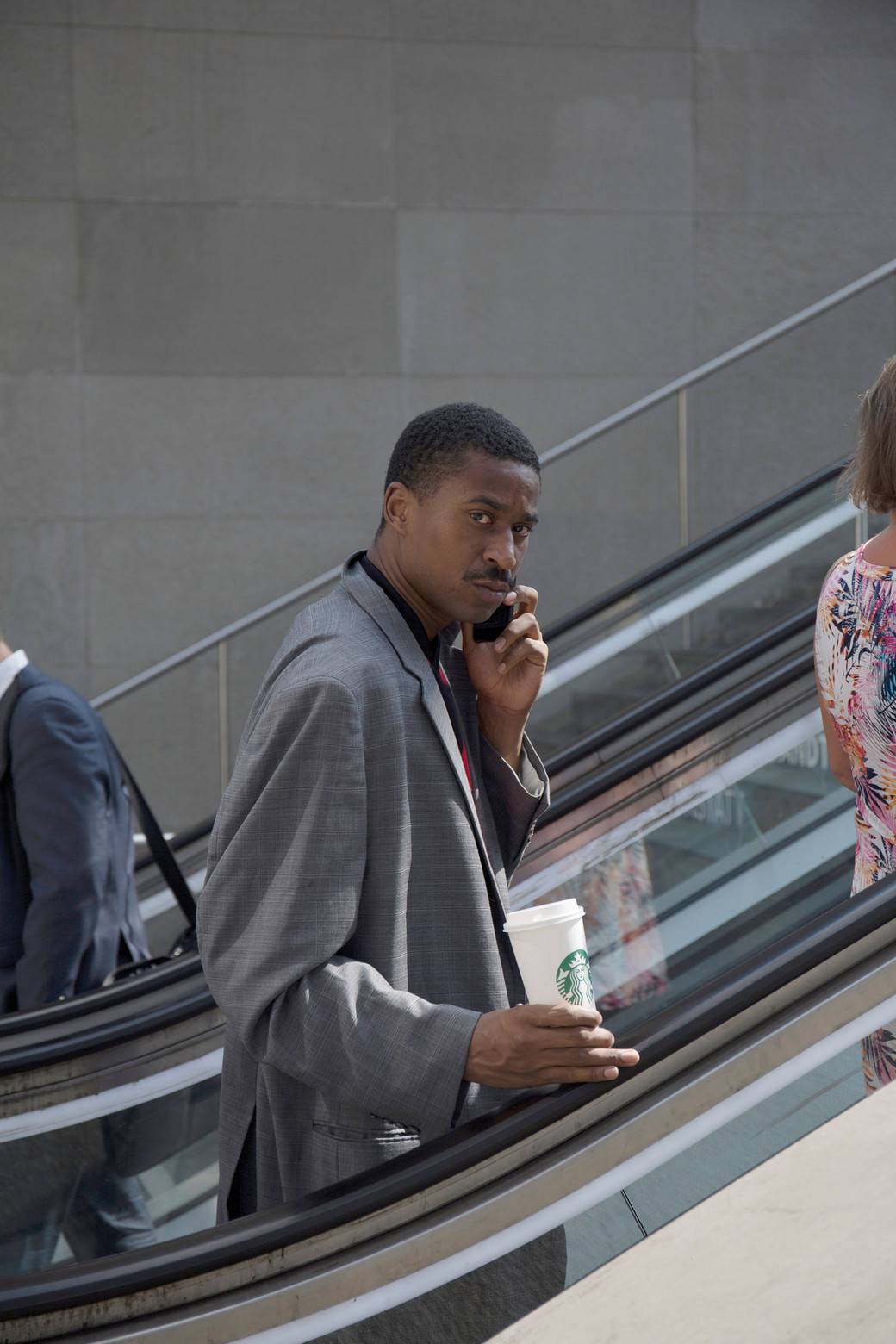
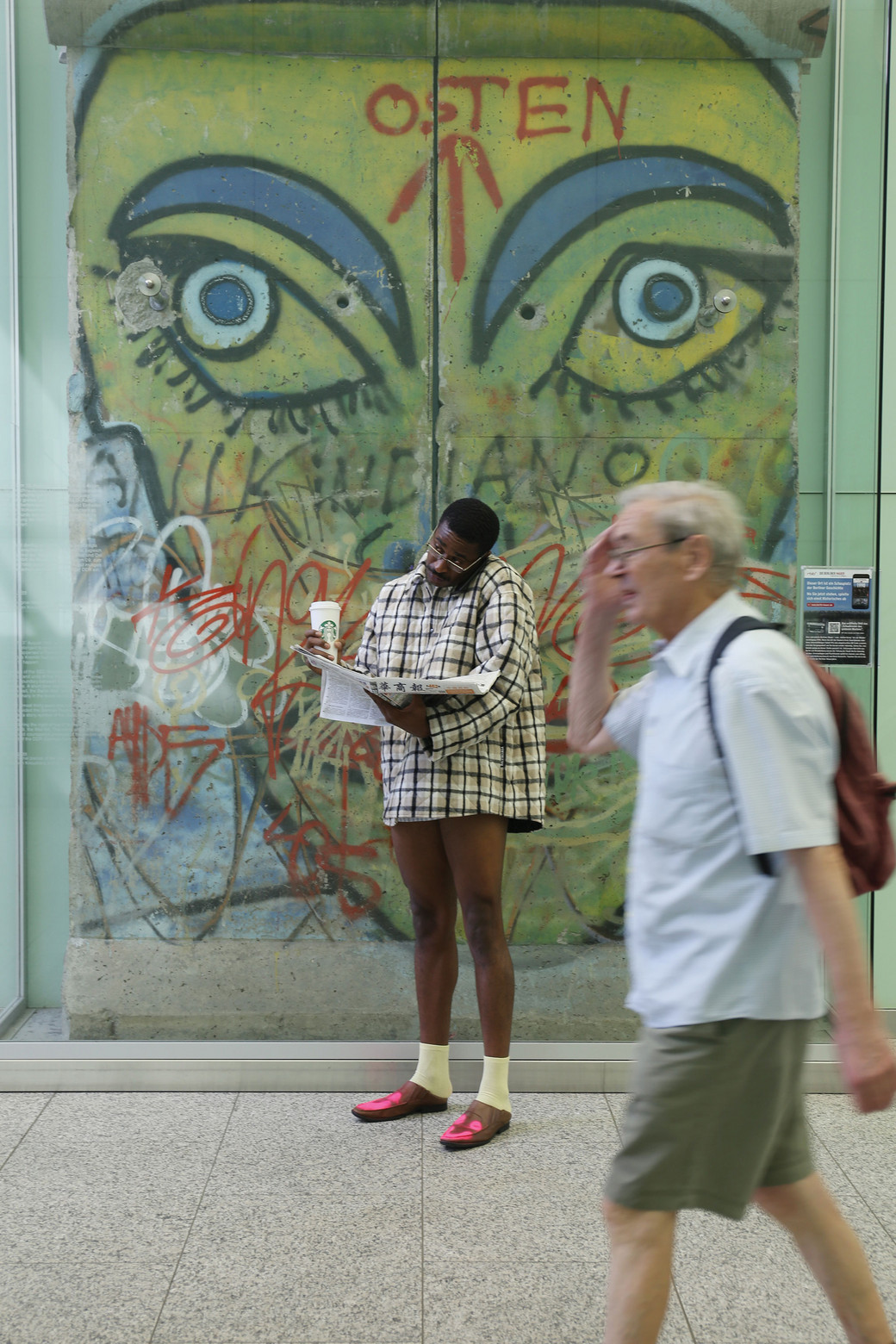
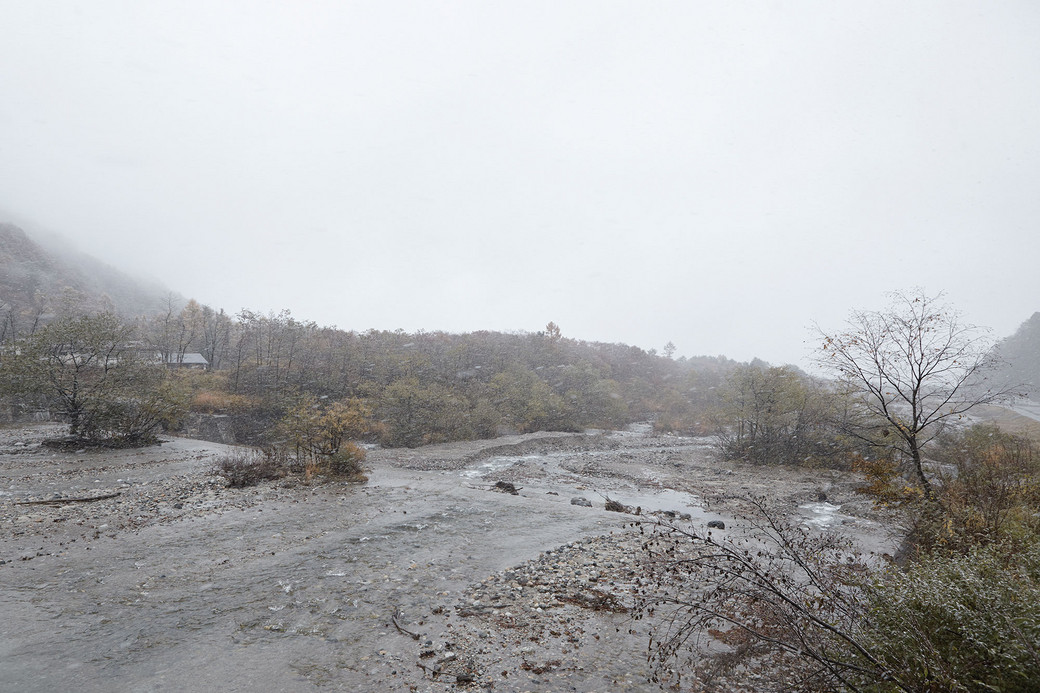
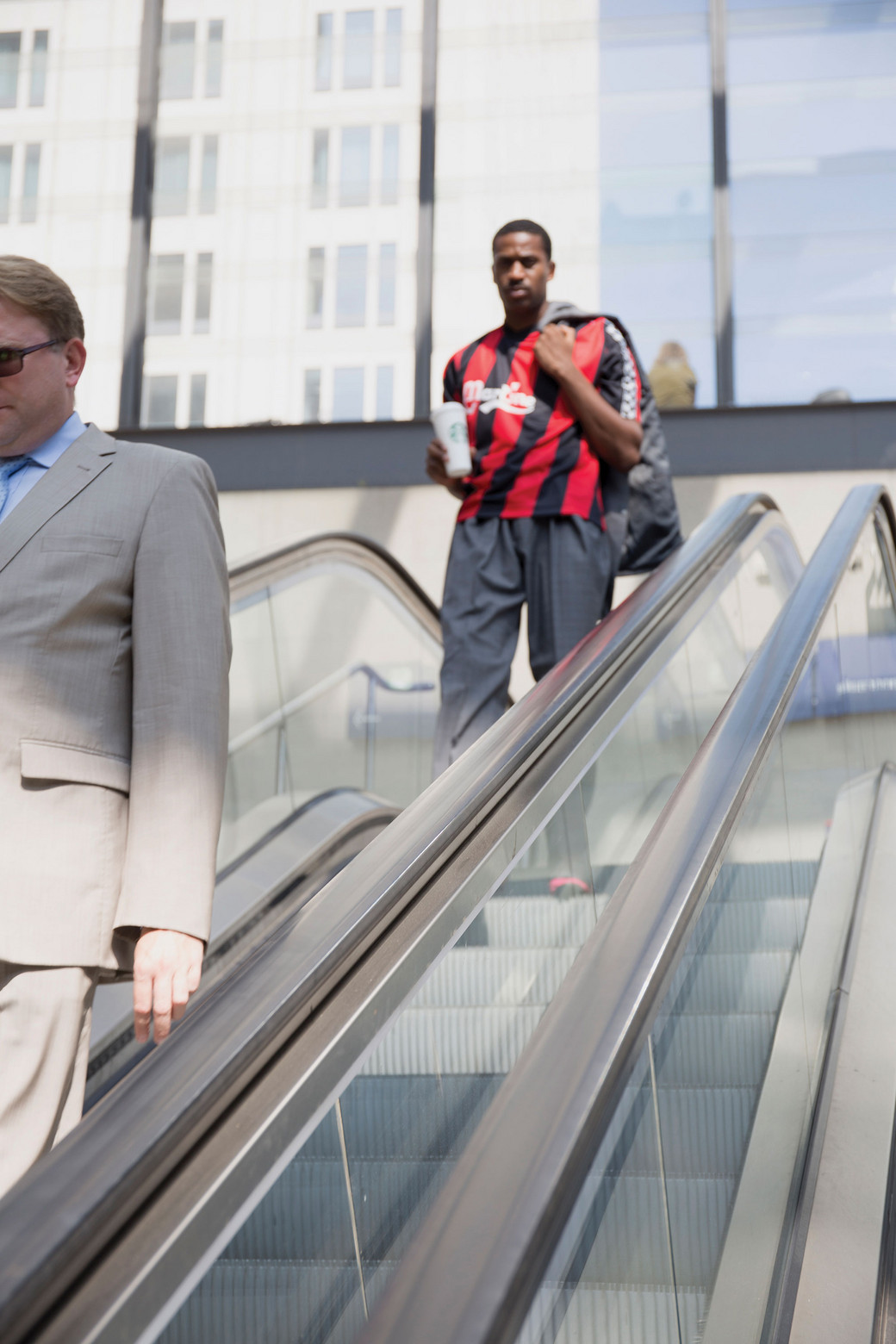
Chapter 2.1 'Walls:' Photos by J Ari King, 3-D Modeling by Malcolm Carter, Art Direction by Nicole Walker & HAAL.
Chapter 2.2. 'Walls: Power Dressing:' Photos by Henrik Alm, Casting & Styling by Nicole Walker, Art Direction by Nicole Walker & HAAL, Styling Assistant: Freia Fee Wolter, Model: Josh Johnson wearing Balenciaga, Burberry, Calvin Klein, Dick International, Dressman XL, Martine Rose, Starbucks & XXL. Shot on location in Berlin.
All photos courtesy of Nicole Walker & Anders Haal; book supported by Swedish Fashion Council.
'Borders' is out now.