Angèle Returns


Stay informed on our latest news!


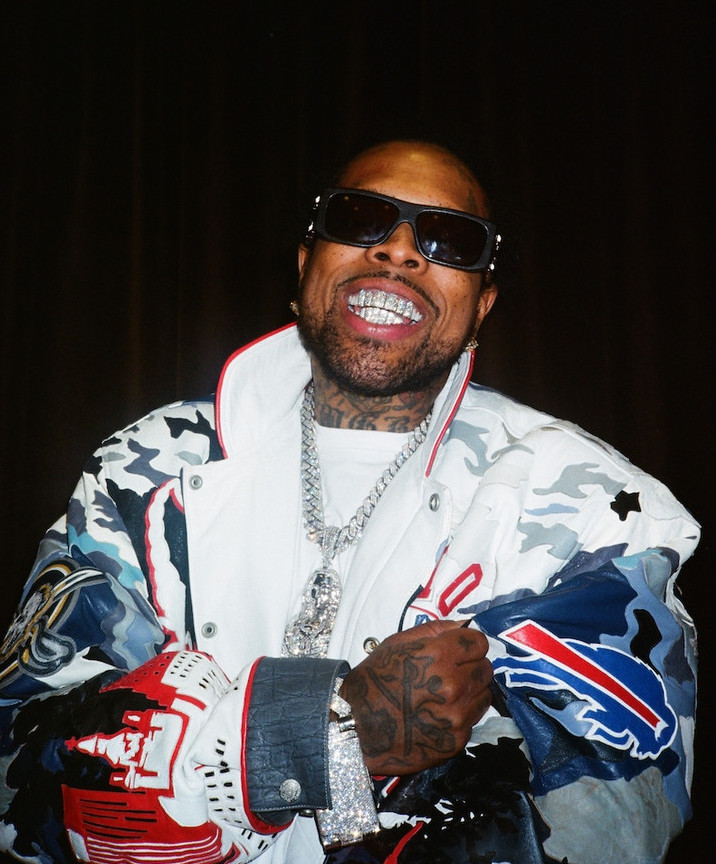
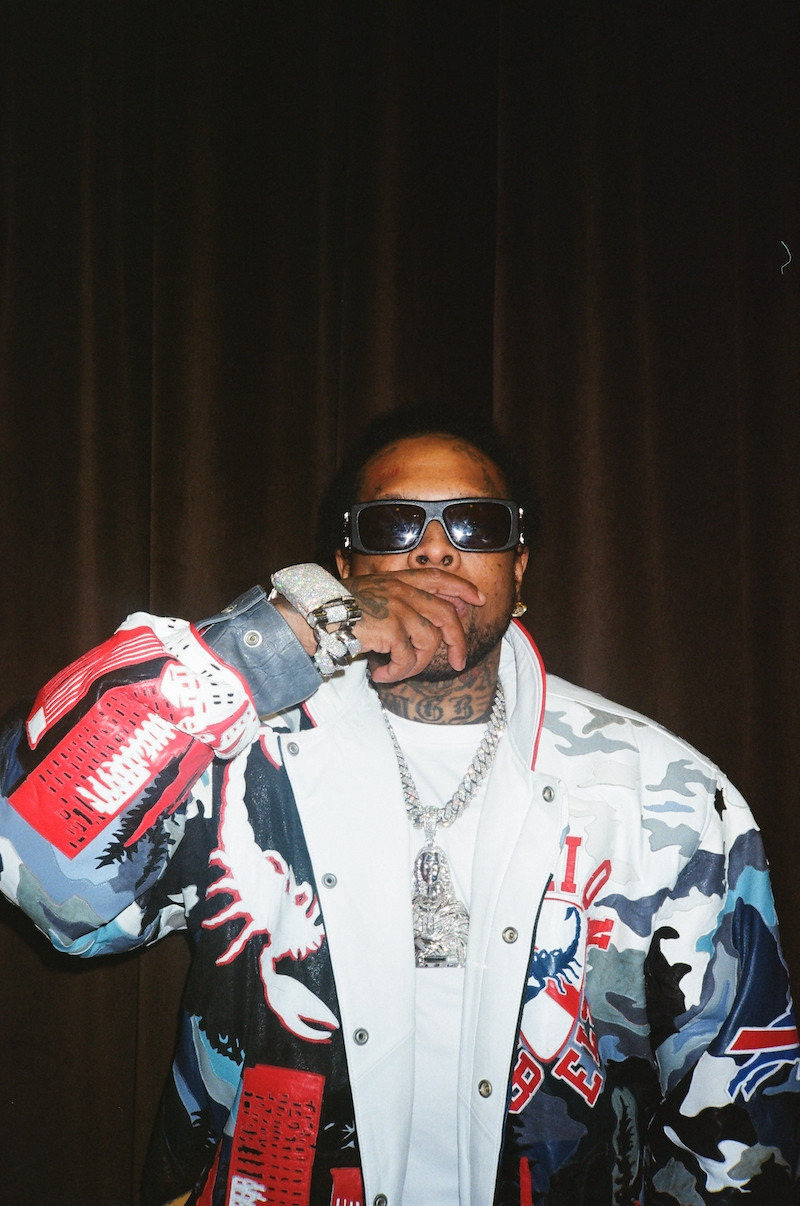
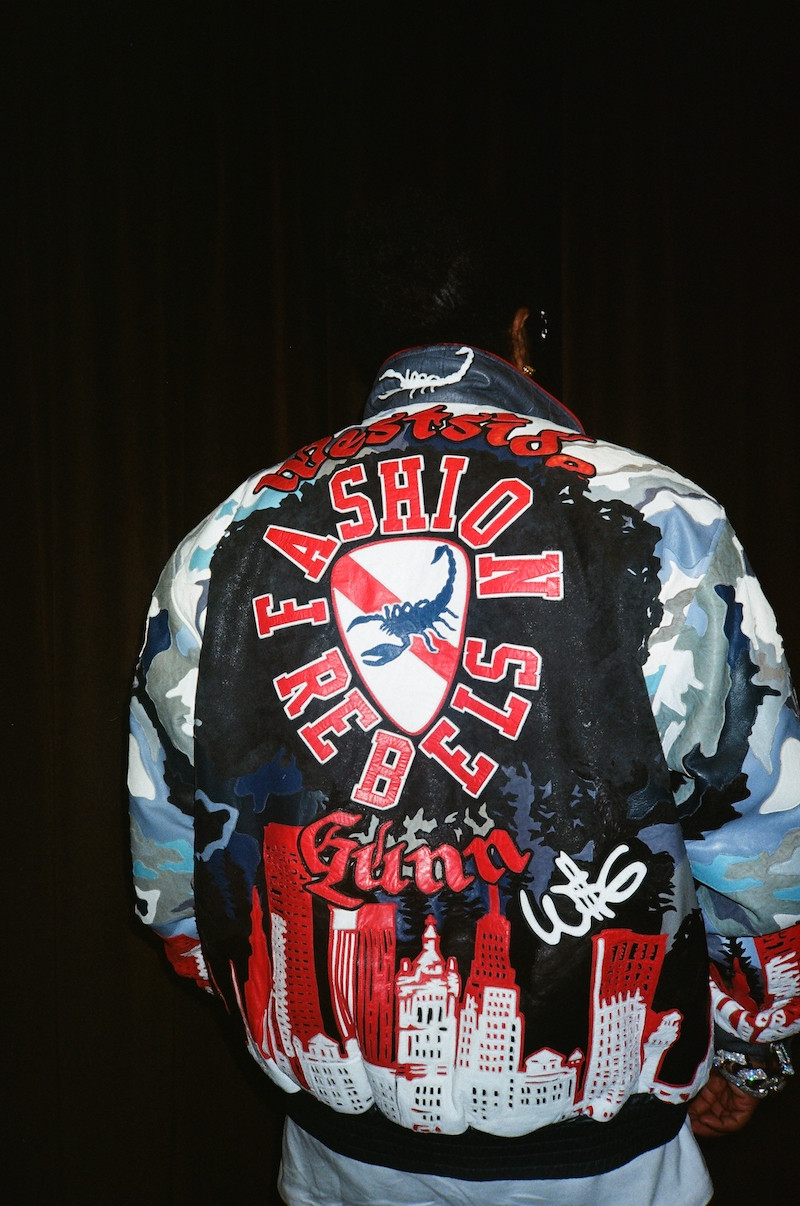
Last Thursday night, Gunn hosted a listening party at Goldbar — a venue that perfectly matched the theme of the album: luxury. Here, we saw some familiar faces who popped out to support the rapper, such as Tremaine Emory, Benny the Butcher, and more.
office sat down with Gunn to discuss the making of And Then You Pray For Me, his end to studio albums, and what’s next for the Buffalo, New York rapper.
How was the listening party for you, and what’s been the feedback so far?
The listening party was dope because I never have listening parties. I never have parties at all. It was cool to see a lot of my peers, day-one-supporters, and family come out…It was super dope. I want you to hear the album all the way through and pay attention to the art.
Where was the album created?
It was done in Paris, Copenhagen, Denmark, and so many different parts of the world. I went to Athens and Santorini, Greece. I was just in the zone. Paris Fashion Week inspired me in January, like the first time I went in January 2020 with Virgil. I had that same feeling again. It was my first time since Pray for Paris. Not to sound corny, but it was the spirit of Virgil. He wasn’t there physically but spiritually. Let’s finish what we started.
Does scenery give you a lot of inspiration?
For sure. That was one of the top reasons why I did Pray for Paris. Leaving the country and going to a place like Paris is mind-blowing because I’m from East Side Buffalo. A lot of people will never see the Eiffel Tower in their life.
I’m hearing that this is your last album. Is that true?
It’s my last album as far as making over 20 songs, 15 songs of a full-body album. I’m more into making a song today and dropping it tomorrow like the Soundcloud, raw Griselda days. Instead of focusing on an album, only dropping once a year, and putting all of that energy into trying to present one project, I’m like fuck that. I might make a song and drop it tomorrow, even though my album just came out. I finally have people’s attention. Some people love it, some people hate it. They don’t even see the bigger picture, they’re just worried about today.
What does this mean for Griselda?
I’m never going to stop curating. That’s the thing about my team. If I call Conway the machine right now and say, ‘Pack your bags, we’re going to Poland for a month and about to record,’ he’ll be like, ‘Let’s go.’ Griselda is a family. When you sign to Griselda Records, it doesn’t mean you’re signing your life away to Westside Gunn; it means you’re my family.


I want to talk about the album cover of Caravaggio’s The Entombment of Christ. The late Virgil Abloh created it?
As soon as I was done with Pray for Paris, V told me to send a picture of all my chains individually. I laid my chains out, and he started sending me different art pieces with the chains on. At first, I wanted this to be kind of a trilogy series and have Mona Lisa represent the Pray for Paris series. I got the blessing from his family and everyone involved. Unfortunately, he passed. When I was going to do part two, I didn’t have the energy to do it. The time wasn’t right. I felt weird even trying to do it, it wasn’t even a thought. I let it (the covers) breathe for a while and get some air. Like I said, once fashion week came around this time, it felt like the time. He (Abloh) sent me there again.
I think it’s important for Black people to travel the world, especially where they’re least expected.
Especially because nobody’s even seen a motherfucker from East Side Buffalo. We’re a different breed. We never get respected because we’ve always been in no man’s land. I never took offense to it. I’m just going to work harder than everybody I know and put my city on – and I accomplished that.
Because Pray for Paris and And Then You Pray For Me albums are similar, are the albums correlated?
This is the sequel, but I didn’t want to call it Pray for Paris Part II. When I made Hitler Wears Hermes Part II, I made a song with Eric B., and in the song, I say, ‘Pray for Paris, then you pray for me.’ This was a line I said a decade ago.
There is an interlude in the album of Tyler, the Creator, saying you’re one of the reasons he wants to continue rapping. How does that make you feel?
It’s a blessing because that’s what I’m here for. Some people only come into this shit for money and with hidden agendas. I came into this shit so pure, I always did it my way. I’ve never compromised my art. I always stuck to my heart. I basically controlled my own destiny all the way through.
Now that you’re over long studio albums, what’s next for Westside Gunn?
I’m excited to just watch my kids grow. I have a daughter that’s only two and a son that’s four. This is the most I’ve ever been away from home, but they came with me everywhere. I’m not the only one who went to the Pyramids; they rode a camel, too. Now, I’m just gonna have fun. There’s no more pressure on me to do full albums. I can just give you art when I want, how I want, and when I want. I think it’s going to be even better. You’re going to get a better version of Westside Gunn. Long live Michelle, long live Virgil.

After teaching himself the music and songwriting process from scratch, Guy released his debut project Who’s Taken Time?! Act I — a reflection of the self. Now he brings a new layer to his artistry with the project’s B-side, Who’s Taken Time?! Act II — a departure from the “I” and newfound focus on the “we.” office sat down with Guy ahead of his first headline show in New York City to peel back the layers of his artistry, diving into Philadelphia’s influence on his sound and learning to embrace vulnerability.
Starting at the beginning, we grew up in the same place and I feel like a lot of your craft now is shaped by that upbringing. How did growing up in Philly shape your creative outlook?
When I first started to really think that music was the thing for me, I had a lot of resistance to even thinking about Philadelphia in the context of my creative process and my music. I think I felt a lot of resentment towards where we grew up. So I kind of spent my first year in LA being very ego-driven. It wasn't until I put out the first part of this larger Who’s Taken' Time?! Act I that I realized everything was really coming from that place. I was reflecting on relationships that I had sort of fallen out of touch with and, generally, that separation from East Coast and West Coast. And I think through starting to write a lot of records with that lens, I realized that I was totally wrong and I was writing from a very dark place. It was a very self-centered, self-focused place. There were a few big moments since then, like going back East and reconnecting with my brother, that changed my perspective. We had gone to the Brandywine River back in West Chester and had a day. It was fall, so the water was freezing cold, but it was this really amazing moment. This is my big brother and I hadn't seen him for almost two years. And also that river carried all these memories to us from when we were younger — but it was a place that we never really thought about as this sacred, special place. But when we were there together, we felt like there was some sort of — it sounds crazy — but some spirit amongst us. It brought me close to the land that we were raised on and it was a crazy turning point for me. I kind of switched up my whole flow. I scrapped the back half of the project and I rewrote everything after that journey back home.
And these new songs on Act II are all about community. They're about the ‘we;’ they're about togetherness. It was telling stories that weren't just about myself or my struggle, whatever that is. It was an appreciation for everyone that's there for me in my life. And I think also sort of a quest for community, bringing people in and stepping outta myself. I also just think it’s cool to care about things. I mean, I always cared and had so much love for home, but I think I just was able to finally remove the resentment and realize that this place is actually so important for me and my growth and it's not something that I want to really erase from my past.
If you could go back and tell high school Noah anything, given your accomplishments now, what advice would you give him?
I think that I was very scared. I felt like there was only one practical path and that was just getting the four-year degree and not really leaving a lot of time to reflect on what I really wanted to do. I think it was really hard for me to be fearless about being vulnerable. I was so afraid of being vulnerable and sensitive around other dudes in our grade. You know, there were social structures at our school, at least to me, in my head. I think I had a hard time relating to that. So I would just tell him to just be very fearless about the things he loved. I always loved music. I always loved film and the intersection of those two things. And I always loved singing. And I think towards the end of high school, I got a bit more open to kind of embracing those things.
But there were so many years where I held back when I was really pushing for basketball. That was, initially, the thing I wanted to try to do in college. I always think back to this instance. I was posting these Vines of me singing and — this is so crazy that I'm telling you this story. But I was thinking about it the other day; I had posted a Vine beatboxing and then I did a little singing moment. It was this cute little vibe. And then my basketball team saw it when we were traveling for an away game and I just got roasted into oblivion. I was just like, 'Okay, no music.' I was beatboxing for the acapella club though, 'cause that was still kind of 'cool.' That was sort of permissible. But it took me a really long time to break that circuitry. I think it's about just being fearless with my belief system and not being afraid to be a vulnerable dude. Being vulnerable and being sensitive doesn't make you weak. I think that's being a man. That was also a lot of what this project was for me — thinking about my masculinity in those terms as well.
When you're 16, it just seems, I guess at the moment, so much cooler to be like everyone else. And sharing music, sharing writing, sharing anything that is an art is really personal. I think that when you're that age, you don't want to let people see those parts of you. And then you get older and realize it's so much cooler not to be like anyone else.
For sure. And now that I've had time to sort of reflect on it, I've also found so much love in my heart for everyone we grew up with. I see them on my timeline and it makes my day to see what everyone is doing now. So I think it's also recognizing that this path isn't this miraculous thing that I'm doing. It was what I was supposed to do. You're supposed to create and make art and do that to the best of your ability, but there are also really incredible things that other people are doing too. We're all just figuring it out.
How did it feel to record your debut EP from your childhood bedroom, after experiencing such a life transition and returning back to where it all started? That was in 2021 — how have you changed since then?
It was such a wild experience. So I was going to NYU and then when everything went online, I just couldn't justify paying an NYU tuition. And then there was an opportunity for work so I went home. I was very fearful of fully committing to music. But through this bizarre kind of silver lining of the pandemic, it sort of forced that hand for me. And I went back home 'cause I didn't have anything to do, like all of us. Every day I had this setup — and this is such a privilege, right? The ability to have my parents host me and support this new creative thing. I'd never recorded myself before. I had no equipment. I'm like a grandpa with technology, so I had to learn the bare essentials of how to just get my voice on a microphone and I was using Garage Band. I had this $15 Walmart microphone and I wasn't taking it seriously — it wasn't a very professional sound. But I was really able to learn a lot about songwriting. And I think I started to find my voice through that project. It was four records I had made over a span of maybe three or four months before moving to LA.
That was also around a time when I really started to do a lot of music listening as well. Music from Philadelphia. I really fell into this whole deep dive during that year. Philly’s music history is just so rich and I had always grown up listening to Motown and loving it. But I didn't even really know where these songs and these sounds came from. I had gone to a bunch of record shops in Philadelphia during that time and I would crate dig and find things that were inspiring to me. Hip-hop became a huge thing for me as well. I was studying a lot of East Coast hip hop and also a lot of Americana and folk music that came from Philadelphia. For instance, there's this one artist who has really bled into my whole listening experience and the inspiration for this whole Act II. Jim Croce was this Americana, folk singer and songwriter. An absolute legend that has some of the craziest hits — if you heard a Jim Croce song, you'd know. But he grew up right down the road; he had a house on the Brandywine. I kind of became a music historian over those months and fell in love with Philly music and Philly music history. I think that became the foundation of what my sound is.
Your sound is a unique blend of R&B, hip-hop, and soul. Who were some of the earliest artists you remember filling your playlists with?
The first CD I ever bought was this album called The Ecstatic by Mos Def. Mos Def is one of my favorite rappers of all time. I was very curious about music discovery from a really young age; I got that in the fourth grade. That album really shaped me a lot. But really the first music I listened to was my dad's Motown's greatest hit CD — it got stuck in his jeep when I was a kid. He was so resistant to getting a new car [laugh] so for pretty much the first 10 years of my childhood, it was the only thing we were listening to every time we'd go in the car. It was The Temptations, Marvin Gaye, just a lot of these classic soulful pop records from the sixties and seventies. That's the music that I always come back to. So most consistently, it's these songs that were super soulful and also just very catchy. But they were presented in a very creative way — with the vocal layering and the dynamics of it all. That all led me to think today, 'How can I make something that's a little bit more left of field, but that still has this sort of universality?'
What did you feel you were uncovering about yourself through that process of writing and creating Act I?
I started to notice, as I was moving through creating these songs, that I'm pretty good at self-isolating and cutting myself off from people. People that maybe really love me and want to be there to support me. But, for some reason, I was very resistant to that. And, at the time, I also thought that part of the craft of music-making was this idea of struggle. That starving artist mentality that I needed to adapt at all times in order to make the best music. I think I thought that music couldn't really spawn from a happy place, at least for me. I needed to struggle through life in order to find those golden nuggets. So I started to catch myself in the act of doing that. I met a lot of incredible people over my first year in LA — but it definitely was really hard. I was working multiple jobs and certainly coming to terms with the fact that this music stuff is not easy. I didn't have rose-tinted glasses anymore about it. I realized that this is a lot of hustle and definitely not for the faint of heart. And through making those songs, I kind of started to push away from people. I had a hard time really holding on to connections and I was spending a lot of time on my own. I got to this point where I felt like the best music needed more than just me coming in and servicing the records. I needed to tell stories that weren't so heavily inward-facing and brooding.


Tell me about one of the hardest songs to write from Act I — how did it feel to confront certain emotions in that process and really create professionally for the first time?
I'd say probably the song, 'Small Talk Carolina.' It was the last song I made for the project, but it was sort of my first moment where I was speaking on and speaking directly to Philadelphia, folks back home, and my feelings toward those things. Carolina was this fake muse that represented a lot of friends — I had a couple of people in mind, specifically, from my childhood. I used the Brandywine as this motif through it all. This idea of purifying and washing away. It was really difficult for me to write. It brought forth stories that were uncomfortable for me to talk and think about. But it became this turning point. Once I finished up the record, I was like, 'Okay, I think there's something to this.' It was my first moment of really speaking about anything beyond just myself. I was talking about other people. I was telling the story of what a privilege it is for me to be out here talking about myself and this sort of ego journey that I experienced. There are people everywhere who may feel the same way I did and want to express themselves creatively. But they may not have the means to get out and create and explore. It really comes down to what a privilege it is to be an artist. Or to have the ability to at least start and make this journey happen for yourself. So that was the first moment where I really started to think about community in those terms. I woke myself up from the idea that the world was against me.
I think a lot of artists eventually have that discomforting confrontation. It's this feeling that the work won't resonate with people unless it's coming from this deeply emotional or pity-invoking place. But you needed to go through the process of making Act I to come to that revelation. You mentioned that Act I was more of a meditation of the self, while your recently released Who’s Taken Time?! Act II is more collaborative. Tell me about some of the collaborations on this project and what they mean to you.
After I wrapped up Act I, there was a two-month in-between period where I made the decision that the five other songs that I thought were gonna be sort of the B-side of this project, didn't represent the story I wanted to tell anymore. It was a perspective change, even outside of the music, just generally in life. And I'm fortunate that my closest collaborator and executive producer is like my brother. I work on all my stuff very intimately with my roommate Choob — Devon is his name. We first met online and he was the first person to send me a beat pack. So I went to him first and I was like, 'Yo, I really feel like we need to refocus our efforts here and try to find some new songs to make because I just feel very exhausted by the ones we have.' I thought there was a better story to tell.
So we went up north to this little cabin in this town called Lake Arrowhead. We needed some sort of separator and we were there for about a month. We started inviting friends up from Los Angeles — session instrumentalists, other artists, my friend Amaria, Braxton, who's this saxophonist and one of my heroes. He's an incredible jazz musician. They all came up, even folks that weren't really specifically working on the records, just people to spend time with. And that became the overall ethos of the project — it became very clear that we wanted to do something that was very community-driven. And we wanted the records to sound that way, so we really leaned into a very live and raw sound. We tried to leave things very unadulterated where there's not a lot of reverb. There's not a lot of things that my vocals are hiding behind. Act I was so busy. So I think taking time and holding space for friendship and just slowing things down during our time in Arrowhead, also bled into the song structure generally too. We just let the moment breathe. So I genuinely think that the spirit of that experience, on a friendship level and on a human level, that exactly translated to what the records became.
I feel like when you take on a creative undertaking, you become so prone to doing so many things at once or trying to supplement one thing with another. And it's just interesting that you expressed how things became fuller when you slowed down.
Do you feel like you're able to still create space to be mindful and present and slow down? Or do you think that is something you wrestle with? Because for me, it's still a journey. There's a lot of growth there that needs to be done.
I feel the same way. I think it's really hard. I'm not really thinking about that first achievement because I'm already thinking 20 steps ahead.
That's the whole crux of what the project was. Taking time to appreciate your accolades or the milestone moments you're reaching. It was like, 'How are you taking time to actually process what's going on?' It's so hard when the finish line is always moving for us, you know? Which I'm sure it is for everyone — it's a universal experience — but I think you definitely feel that way when you're doing something that's a little bit more unconventional or creative.
This industry just breeds a lot of comparison. So I think that's also part of it and part of being present. It's near impossible to do so when you're also focusing on other people, but it's also near impossible not to do that as well.
I think that the ultimate lesson is that no journey is replicable. You have to just be so dauntless and recognize that my journey is my journey and however that shakes down, that's what it's gonna be, you know? And I'm gonna just keep putting the work in and that's really all you can do. I think we do our best work when we're feeling more and thinking less.
You studied film at a point in time, which explains your heavily artistic and narrative-driven visuals. How do these other elements, like your artistic persona and even your personal street style, shape you as an artist — especially in this social-media-driven era?
The bane of my existence has been short-form content. I think we're in such a bizarre world right now where all these new artists, including myself, are coming up in the TikTok era. But prior to this, there was the blog era. There was SoundCloud — but I think it was very show, not tell. Now it's very tell, don't show — and tell everything to everyone. Tell them daily and find the easiest, quickest, most clickable way to do so. And I think when you're the one doing all of the talking, you don't really leave much for yourself as the artist. Some of that magic and some of that allure kind of goes away. That's why I think it's so hard to build a brand in this TikTok era — at least it's been challenging for me. Of course, there are ways to do it and it's become a necessary tool. I'm always thinking, 'How can I use this to my benefit?' I don't have the answers to that yet, but for me, I need to still be very committed to not sensationalizing my music. I just like the idea of making a really cool music video even though it's not really an era for music videos right now because I don't think the industry really rewards a great music video in the way we used to. But for your core fans who really love your music, that still matters. The ability to pair a visual with the audio experience — those things have always been two-pronged for me. I grew up loving film. That was kind of my first joy but I didn't really take a lot of time to share those interests with other people.
On that note, if there was a movie about you, what would it be called and who would you want to play you?
Well, recently I've been trying to get into my acting bag. I've got a couple of scripts I've been reading. But I think a throwback rom-com A-lister would be cool. Like Paul Rudd. I'm a pretty goofy, awkward person and I think he would translate that well. In terms of the name, I think I would just call it Who's Taken' Time?!

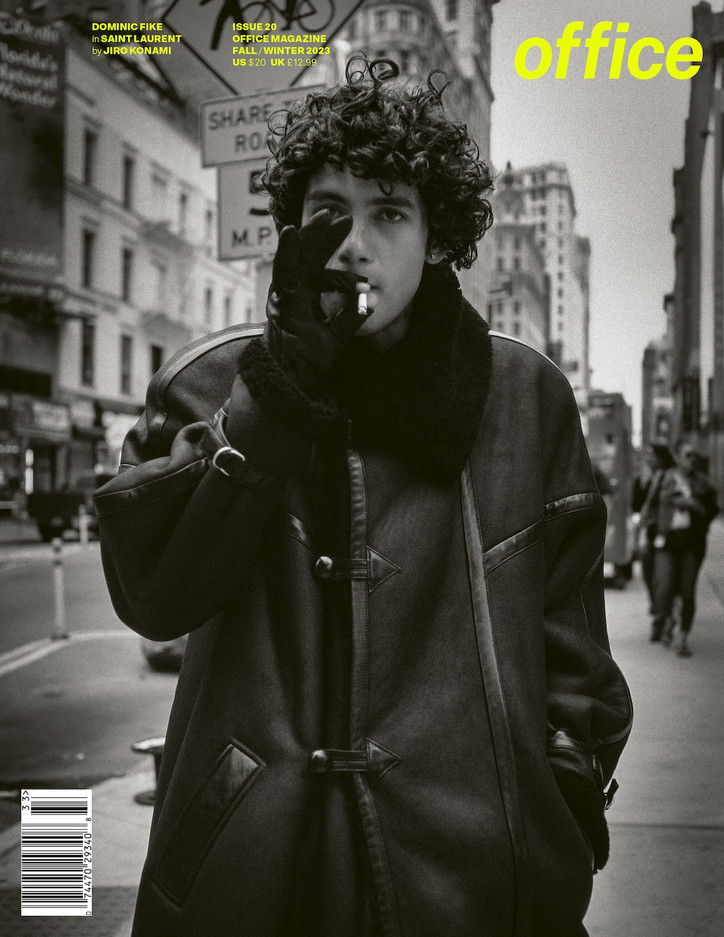
Sitting in his home in Laurel Canyon days after releasing his sophomore album, Fike seems at ease. What continues to set him apart is how genuine he remains, playfully downplaying his charm with self-deprecating humor — the kind that would make you forget he went from dropping music on SoundCloud to being one of the most prominent artists today, with over 4 billion streams on Spotify alone, and having starred in Euphoria, the second-most watched show on HBO since 2004 behind only Game of Thrones.
Sunburn is arguably Fike’s most honest work to date; a heartfelt ode to his hometown of Naples, Florida, and a window into the people, places, and belief systems that gave him perspective along the way. Fike’s story is a reminder that, as drastically and quickly as your life can change, what matters most is remembering where you come from.
[Originally published in office magazine Issue 20, Fall-Winter 2023. Order your copy here.]


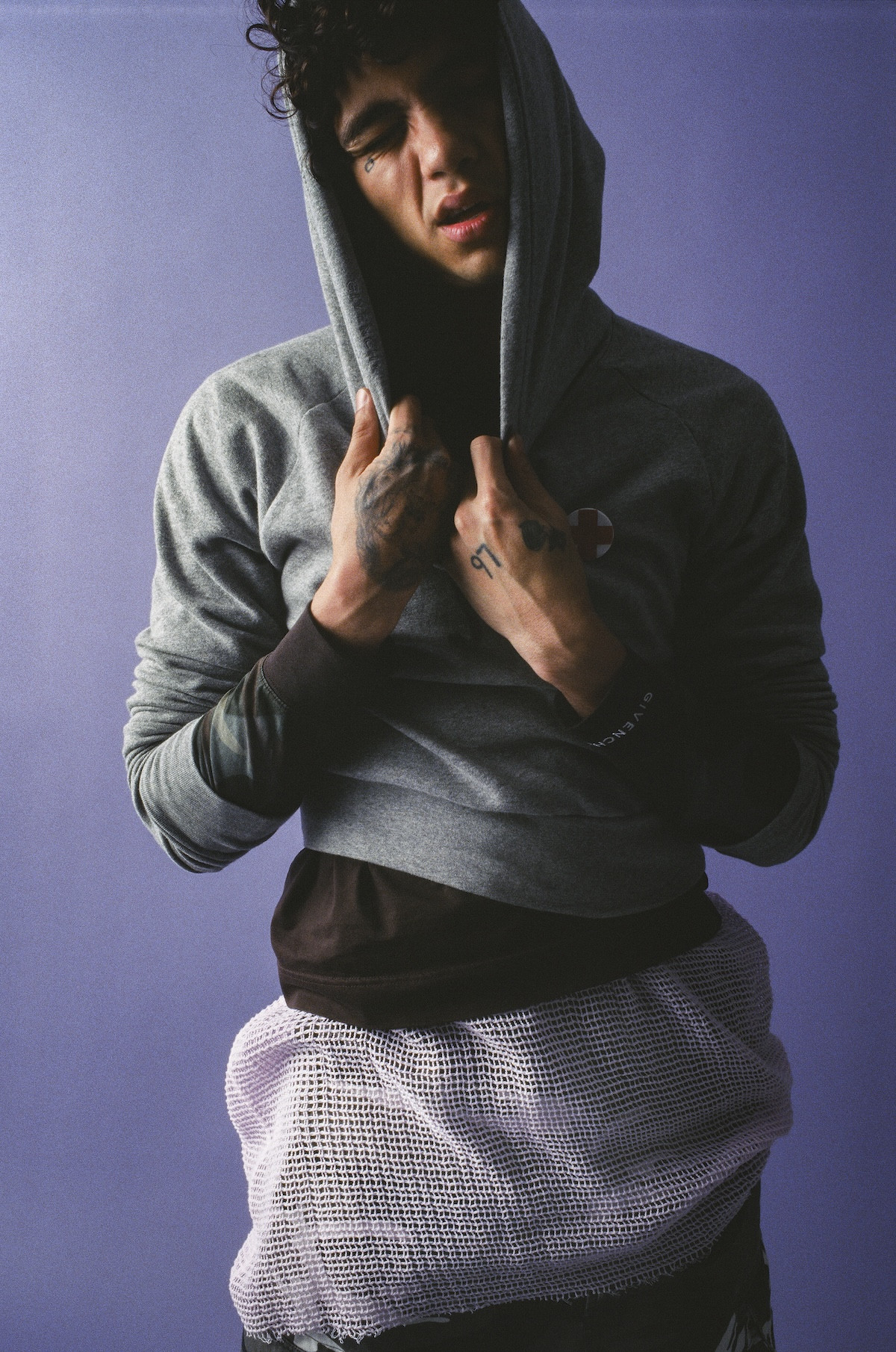
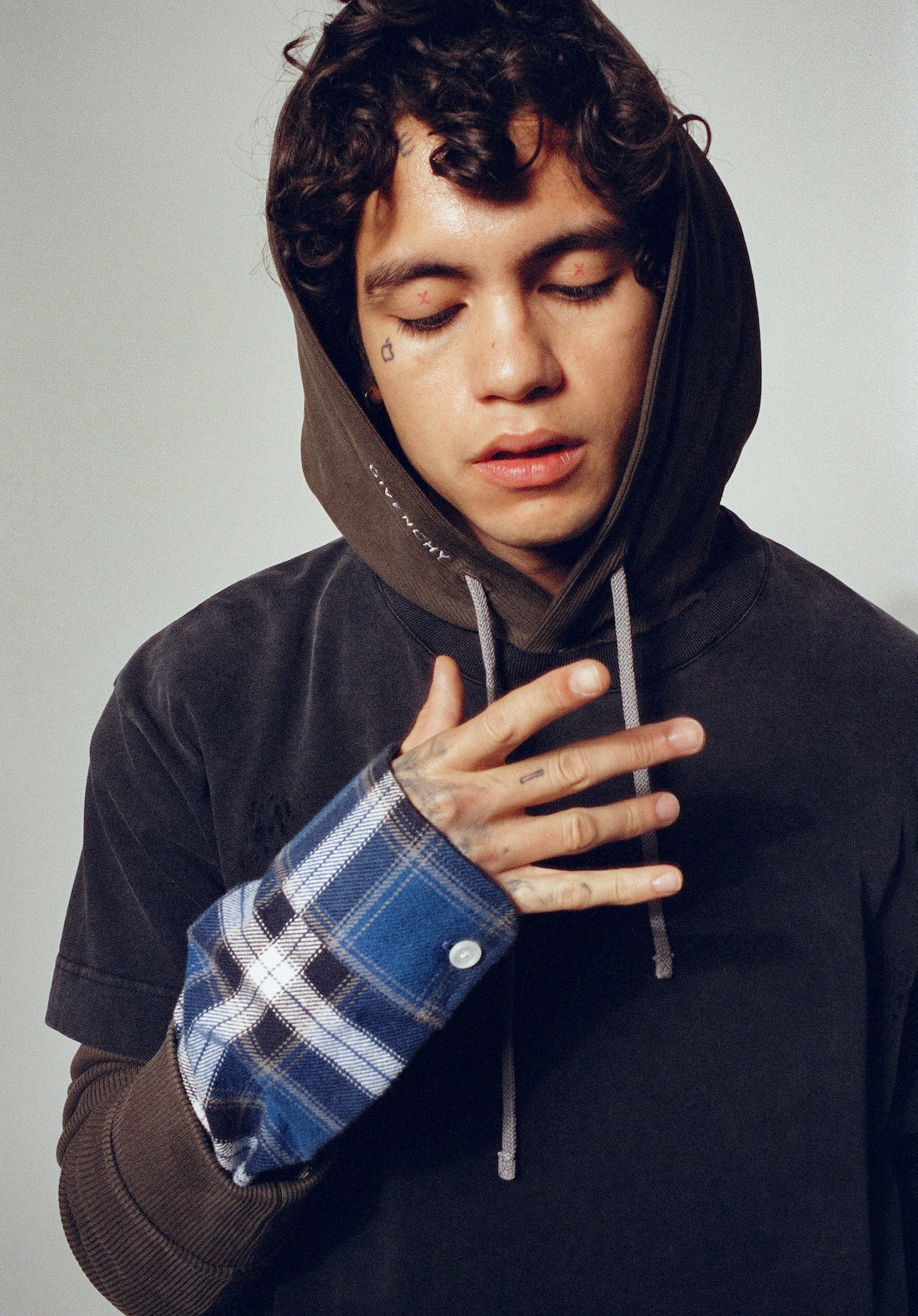
DOMINIC wears PANTS, SHORTS, MESH TOP, LONG SLEEVE TOP, HOODIE by GIVENCHY, SHOES are TALENT’S OWN (left)
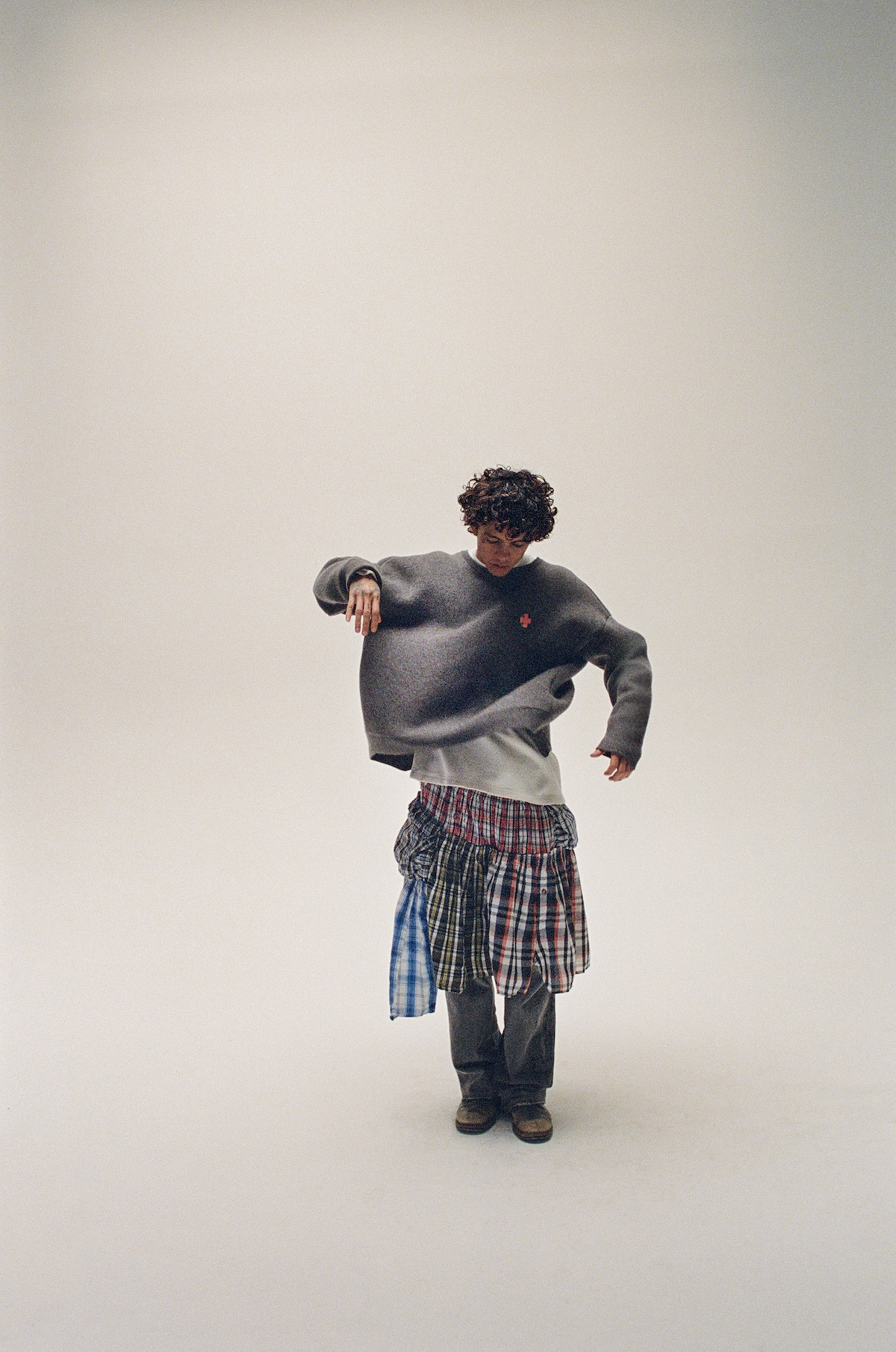
DOMINIC wears SKIRT by DUALITY JUNKIE, THERMAL by GUESS, SWEATER by LOEWE, JEANS, SHOES are TALENT’S OWN (right)
Was there a moment in your adolescence in which you thought “Okay, I want to do that"?
You know when you’re a certain age and you snap into consciousness and that becomes your first memory, like everything before that you might as well have been a fetus?
Yes.
My earliest one of those was kind of sexual. It was funny. I opened up one of my mom’s CD books — she loves R&B, especially women leading that shit, but I remember opening it to that album where Lil Kim is like sitting down and it was just a view of her back and her legs and giving it to my mom. She put that into her CD player without thinking about it because obviously she loved it. I recall it playing through the speakers and hitting me and realizing what was going on, and using my facial expressions to convey the emotion. That was like a big flipping of the consciousness switch for me.
Then, I don’t remember whose house I was living in at the time, but at some point as a kid I’d sit in front of the TV and eat cereal with these other kids and watch MTV videos back when they would always have music videos and performances going on. I thought that was so cool. I remember Eminem came on stage to perform “My Band” with D12 at one point and he looked so goofy rapping. I just thought about how fun that looked and that maybe one day I could do that. It’s funny how that was the moment, because it’s just a fucking parody song. It wasn’t like I saw the Beatles live or some shit.
At what point did you start playing guitar?
I went through a darker phase as a kid, when my mom was hanging out with the richer people in Naples and drinking a lot more. Those people get fucked up, man. They drink hella wine and I’m pretty sure they all swing. I’d imagine that they all get drunk and fuck each other. You know, that kind of shit rich people do when they’re bored and all they have is wine and Jimmy Buffett?
They used to play a lot of Uncle Kracker, songs like “Dancing in the Moonlight,” which by the way is a great fucking song even though I've heard it a million times outside of every bar in Key West. I would hang around them because obviously I’m with my mom, waiting for her to go home so I could go to sleep. And I always had my guitar with me; they would ask me to play a Led Zeppelin song or something by the Eagles, so I took it upon myself to learn them so that when an old ass drunk man would ask me to play, I could get him to shut up. That’s when I really got into those classic rock bands. People in Naples really respected those guys. I didn’t really care for them growing up — musicians like Don Henley and Paul McCartney — because none of them ever looked like me, but their melodies were instilled in me so I continue to listen to them throughout my life.

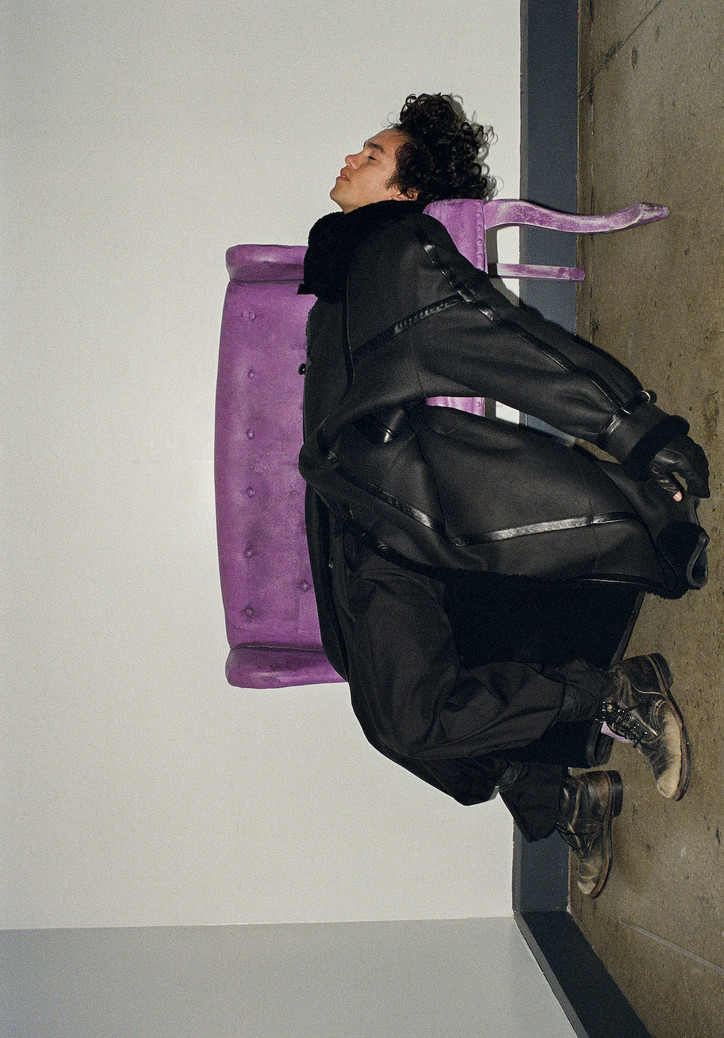
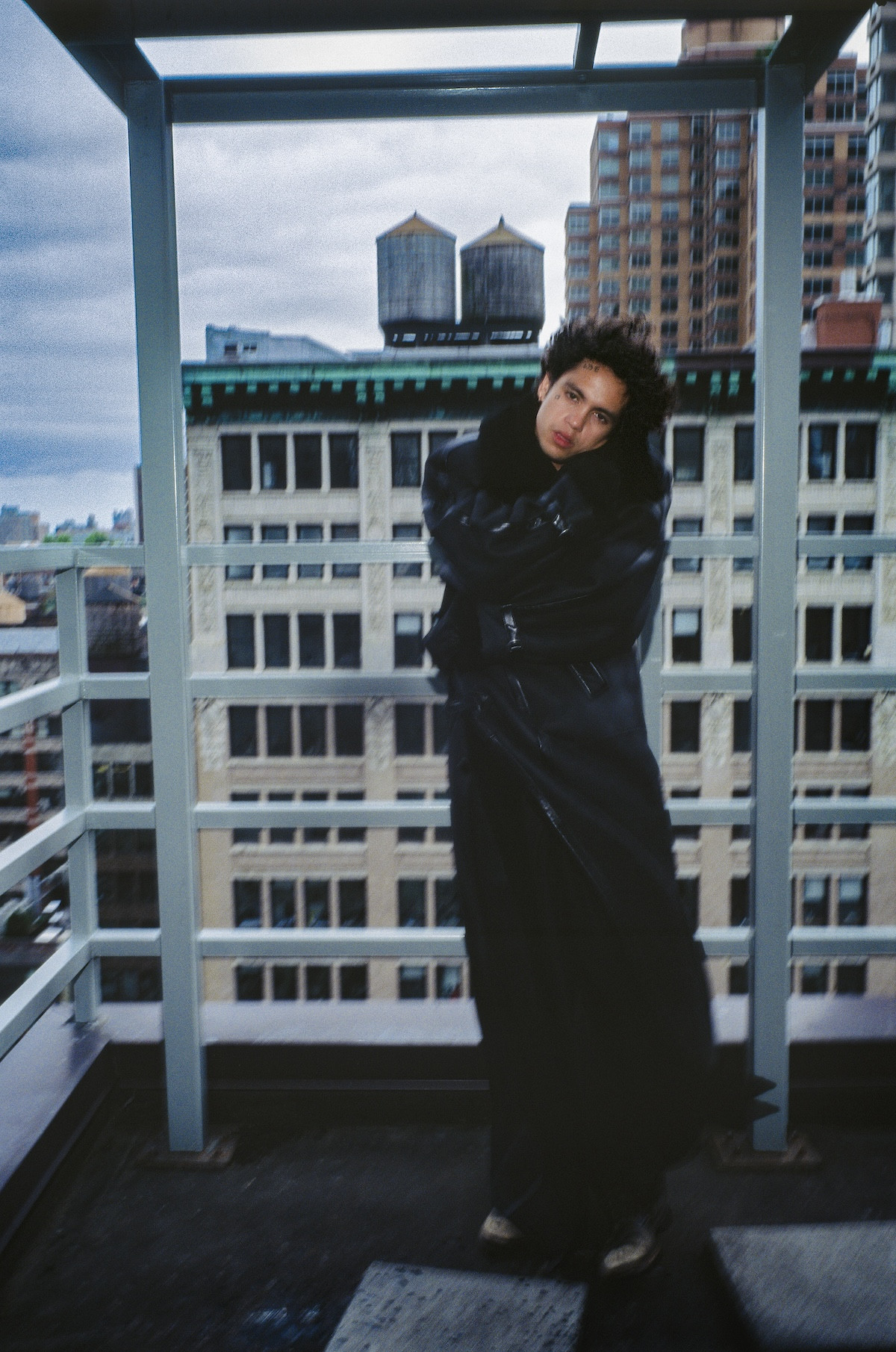
DOMINIC wears JUMPSUIT, GLOVES, COAT by SAINT LAURENT, GLASSES by JACQUES MARIE MAGE, HAT is VINTAGE, SHOES are TALENT’S OWN
How did you bridge these early influences to the rap sensibility that flows through all of your projects?
In high school people were shocked that I didn’t listen to rap music. Other kids would tell me that I’d have a hard time relating to anyone there if I didn’t. Then I got my first iPod and Limewire came around so I really explored and figured out what I liked. I listened to a lot of Lil Wayne and Emimem, and other rappers that were really good with lyrical strategy; Eminem was good at making sure that vowels weren’t too close to each other.
As well as a lot of my mom’s favorites like Usher, Omarion, Mario, Chris Brown, Mariah Carey. Of course Biggie … and Puff.
MTV being one of the only channels for music consumption back then meant everyone was looking at it. How do you deal with being in the public eye with social media today?
I think that I’ve done a great job of laying it all out there and that honesty is going to set the tone for the rest of my career. I won’t have to worry about creating some kind of story or maintaining an image. With honesty, all that other shit goes out the window, giving me time to focus on what matters and is bringing people together, which is the music I’m making.
Where were you when working through this project?
A number of places physically, and honestly I started the record pretty fucked up mentally. I was addicted to a lot of different substances at the beginning and had to take some time to get myself together, but after about a year, I was able to finish the songs, taking them where I initially imagined, and finding myself here now.
Now that it's out in the world, does it feel like you’ve expelled the experiences and emotions that went into the record?
Realistically it is an old album, considering I made the songs a long time ago and they’re just coming out now, but I feel that it’s a little too early for me to actually treat it like an old album. I would say that the release has taken a lot of pressure off. I was stressed out the days leading up to it, because it had been such a long period of time since I had dropped any music. I was worried that it would flop, but putting it out there took all of that stress away and so far the reactions have been positive so that’s nice.
To me, there’s a clear upward trajectory from your demos to your first album to this tracklist. You continue to draw from very personal experiences, yet transmute that into lyrics and sonics that are universally relatable.
I agree. I think it's a step up no matter how you look at it.
Even if people don’t relate to the subjects exactly, the sonic narrative draws people in. You don’t even need to understand the words. It’s almost seductive in that way, like something by the Red Hot Chili Peppers or The Ramones.

DOMINIC wears SWEATSHIRT by MADE BY MENA
I think that I’ve been good at writing lyrics and leaning into the sonics with them, making sure that there’s some kind of collaboration between both. “I’m Sick” is a good example, because it’s like a revenge song with a very playful backtrack. It’s a weird juxtaposition that I think drills the message in that nothing is ever that serious, which is another theme that I have been trying to hold on to through this chapter of my life. It was even the last lyric in my last album: “Don’t take that shit too seriously.”
Has there been a growing pressure to take yourself seriously?
There wasn’t one at first, that kind of developed later on. When I started reading articles and tweets about myself on the internet, that’s when the pressure really settled in, but I’ve since been able to ground myself and always try to remind myself that, again, nothing is ever that serious.
What was it like seeing yourself on a TV show for the first time?
Nerve-wracking! It was literally my first time acting and I didn’t know if I was going to be shit on from all angles or not, but people were pretty receptive up until that guitar episode. I always say that you do what you can and just put your best foot forward when possible. I actually rented out a theater and invited a bunch of my friends and people from the show to watch the premiere and realized that I do not like seeing myself act no matter what, even if people tell me it’s good. I was in this movie that just dropped, Earth Mama, and I haven’t even seen it yet.
I have to go do ADR right after this, which is basically when you overdub the audio of a movie and I can’t stand watching or hearing myself when I do. Once I walked out of this ADR session I did and David Schwimmer came in at the same time as I left and was like, “The acting is phenomenal man” and I’m there thinking the complete opposite.
[Laughs] What goes through your head when rewatching?
I’m just like, “Look at this stupid face, this stupid guy right here, like what are you even doing?”
Do you approach acting the same as you do music?
Ideally, it would come from the same place, but sometimes it comes from a more jaded area in the brain. I'm just like, “Ok, gotta look cool … make sure your eyes are okay, make sure you're breathing properly.” “Do people blink like this … when they're saying these words?” It can be super vain and self-analytical, but when it’s done right, I feel like it’s pure just as with music.
You mentioned earlier how the experience of making music can feel ephemeral to you despite hours passing. There’s also this childlike whimsy — maybe the word is openness — throughout the album that makes me wonder if there’s an age you defer back to when you write.
That’s a good question. I’d say that a lot of it addresses current themes that are taking place in my life right now, and then I sort of use bits and pieces of the past to string it all together. Except for a song like “Ant Pile”, which is definitely written about high school. That one was almost like a writing assignment in which I wanted to tell a story. I think that was the only song that I consciously made a decision to reach back and pull from the past.
The title track, “Sunburn”, seems to thread it all together into one coherent narrative. Do you mean it literally when you say, “When I die baby, lay me in the sun”?
“Sunburn” is really an ode to Florida, like when it’s all said and done, that’s where I grew up, where my moral compass was developed, and where I want to be when it’s over. I mean, not super literally, like when I die, bury me in Florida no matter what, even if I’m living in Little Canyon. But that’s where my heart is, those are the people that raised me and I’m sticking to that.
Does your mom like it?
She loves it. I called her like ten minutes before the record dropped, and was like, “Man, I think people are gonna fucking hate this shit mom.” I made it so long ago, I started having doubts that it was a good time to drop it, like I missed the mark or something, but she was very encouraging and told me that it would be fine.
She’s honestly been so supportive throughout my entire career, although the amount of time we have to spend apart is a bit saddening. That being said, it’s still such a step up from the life that we lived and I imagine that she’s very proud. I know that if I had a kid I would want them to do what they have to do, as much as I may want to hang on, be around and love them.


DOMINIC wears FULL LOOK by GIVENCHY (left)
DOMINIC wears JUMPSUIT, GLOVES by SAINT LAURENT, HAT is VINTAGE, SHOES are TALENT’S OWN (right)
Could you have imagined any of this? Releasing your second album, preparing to go on tour...
I mean, like, I wasn't super young thinking to myself, “Okay this is what’s gonna happen and this is how I’m gonna do it”, but the closer I got to it, the more I could see it as a possibility. However, I never imagined something of this scale. I always thought that I’d be like an artist’s favorite artist, or something like that. More like Daniel Johnston than someone with any actual commercial success.
I wasn’t hyperfocused on artistic integrity, but that eventually became the backbone of what I was doing. I just wanted to make music that sounds like this because I hadn’t heard anything like it. I knew that I had to make it myself. The closer I got, it became more unexpected and so much bigger than I first imagined. You have to dream bigger, I guess, which is an odd thing for me because I just wanted some bread and some listeners and I would have been good, but I feel like there's so much more to do now.
I guess that’s just the way life goes. What’s your next move now?
Just as I’ve released this album, and am preparing to go on tour, I’m sitting here worried that this is the end of my career, you know? I still have no idea how it goes every time, which can be rewarding, but is also sometimes very stressful. To answer the question, I have no fucking idea what’s next. I mean, I don’t even know what's gonna happen the day after next, like… a lot can happen in an hour.

DOMINIC wears SWEATSHIRT by MADE BY MENA, SHORTS by 3MAN, SHOES are TALENT’S OWN