Angèle Returns


Stay informed on our latest news!


The album itself embarks on a similar thematic journey, delving into the peculiar ways we change when we become passionately fixated on something — whether it's another person, the latest news, or those perennial, unanswered questions about life that we all contemplate.
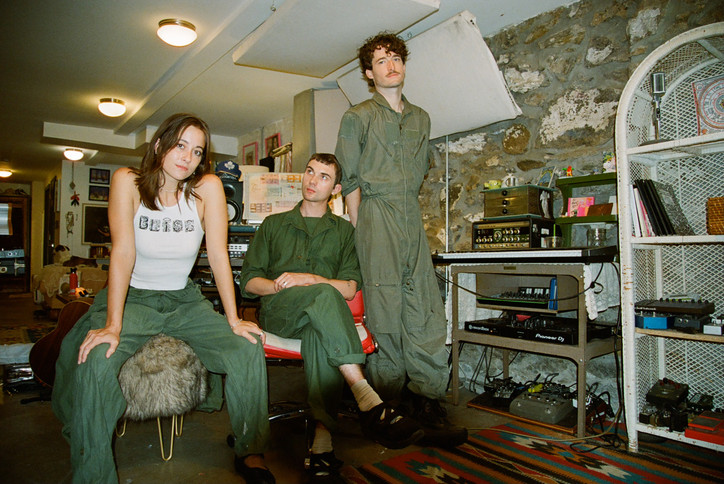
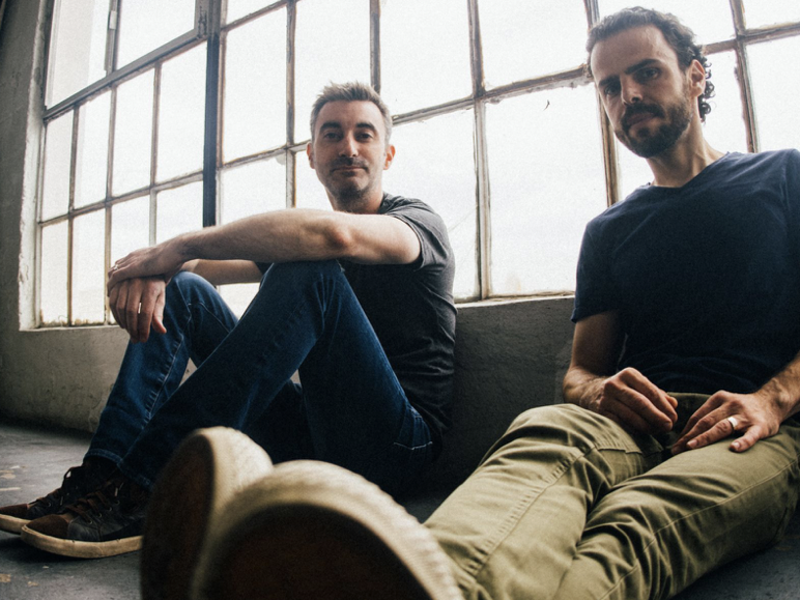
Last month, office stopped by their Brooklyn-based studio to talk about yearning, hobbies, Shakers, and the divine.
What have you been up to?
Aidan Noell— We played some festivals and shows on the West Coast and Europe, which feels like a lifetime ago.
Ian Devaney— We were in Germany, then Poland, flew from there to San Francisco and did some West Coast festivals. There's this Baltimore show, then we have iNDIEPLAZA at Rockefeller Center put on by Rough Trade, the record shop. It’s an outdoor show, there’s a ton of bands, it’s going to be fun.
When you're not on the road, is there something you all love to do together? Aside from making music...
ID— I feel like as soon as we get off the road, we're all just pedal to the metal, always working or mixing something new. But when we're on the road...
AN— We really like eating, going to restaurants together, shopping together
Alex MacKay— We have a lot of common interests. We share music, podcasts, books, all that stuff.
Being on the road is sort of a liminal space in and of itself — you spend a lot of time in-between destinations. Does that allow you any creative freedom?
AN— We try to make the most out of the time that we have on the road, seeing things in-between cities or exploring the town we’re in. I always bring two books and say that I’m finally going to read, and then I get in the van and immediately I’m just sleeping, listening to music, and zoning out for hours at a time.
AM— Yeah, I like to tell myself that I can focus in the van to a similar degree, but it's definitely not true. I've been trying to crack that code a little bit, because we've been on the road around four months a year, and that's like — a third of my waking hours. So if I have other interests or relationships, I need to find a way to actively nurture those while I'm on tour.
ID— I kind of look forward to letting my brain brain off on the road. Because this time when we’re working on new songs — it feels like the busiest and hardest work — making sure the songs are fully thought out the first time you hit the stage with them.
AM— There’s the writing stage, when you’re in the world of ideas, which is fun. Although, if you have choice anxiety, like I do, there’s something very challenging about that sometimes. But then you’re in the recording phase, the world of technology. And finally, you're on the road, back in the physical world and its straightforwardness.
ID— At that point, you get to achieve the flow state in the live performance. That’s the ideal each night, to lose yourself in it.
AM— That's what I think is somewhat liberating when you’ve been stuck in the other two phases for a long time. Now, all we have to do is the thing. We know what the songs are. The real magic of performing — if there is such a thing — takes place when you've internalized everything, and then you start to focus what's happening energetically in the room.
AN— The goal really is to lock in with eachother — become the machine together, let yourself give up all of the thoughts going through your head.
Totally. That makes me think of bands like the Ramones — even if you don't listen to or understand the lyrics, you're still experiencing a profound rush of energy when you see them live together.
ID— They’re also a great example of a band that practiced so much. They would play their whole set backstage before they went on stage, so that when they went on, it was like they'd already done it.
I really love the imagery that’s been a part of the Strange Disciple lead up; it's so absurd, very in tune with our day-to-day. How did you figure out how you wanted to visually translate the sonic message of the record?
ID— Up until this record, all of the design work has just been me, even though I have no training in it. Thankfully, I knew that I wanted the vibe of the band to be rooted in a kind of minimalism — which was convenient because I couldn't do anything more than that. For this record, I wrote the song “Sole Obsession” and there was this line about a strange disciple in it, which felt like a title that could unite the project. Because so much of it is about obsession. It felt like a strange disciple represented what we become when we’re infatuated with someone and tie ourselves in knots.
A friend of ours connected us with the artist Christian Little, who collaborated with us on the painting on the album cover. It came together in a very cool and natural way.
AN— It’s also funny because the disciple's pose on the cover — it's basically an exact outline of Ian's hands. Ian had this very specific vision of the person in the house, so we took a picture of his hands and sent it to Christian. It's his hands, and several people have gotten them tattooed on their bodies.
The record makes me think about a book I've read a few times, Eros the Bittersweet by Anne Carson. She talks about desire and infatuation as a circumstance of proximity. Obsession as the distance between yourself and the thing you desire, and how shortening that distance until it’s gone depletes the initial infatuation — she paints obsession as a feeling that always exists outside of and adjacent to you.
AM— Yeah, she talks about the ice that melts in your hand.
Exactly. So, how did obsession become the thematic element of the project? Was it something realized subconsciously?
ID— When I sit down to write, I want to take myself to places where I have been feeling the most, in my own life and what I’ve witnessed in my friends’ lives. And I guess I must have really been on a mental kick about the times in life when you want something so bad — whether or not it's good for you to want it. Basically being between agony and ecstasy...
It's like you exist between death and salvation when you’re obsessed with something. It’ll either kill you or fulfill you.
ID— Yeah, exactly.
AM— That’s what I should've gotten you for your birthday, Eros the Bittersweet.
Aidan Noell— I did just get an Anne book because I'm obsessed with volcanoes.
Autobiography of Red?
AN— Yes, and I’m also reading a Susan Sontag book called The Volcano Lover, which is a historical fiction book, which is not something I’ve ever read by her — any fiction at all. It’s this beautiful love story that gets twisted in all directions around Mount Etna in the 1700s. It feels so much about yearning, love and these intense, fiery emotions, which aligns perfectly with the phase that we’re currently in.
ID— The thing that I like about yearning, and in particular, unrequited yearning — is that there’s almost a joy in the pain. It's the most alive you can feel because you’re feeling so much and that in itself is such a beautiful thing — to know that you are so alive, even if you’re also having an intense emotional experience. It makes you realize how profoundly you exist.
It’s interesting to realize that duality of existence, how you can be obsessed with the shadow of yourself — what you want to become part of you. Then, when it does, if you do get what you desire, the intensity dies out and you're out searching again.
AN— It’s a different state of being.
ID— I’ve been reading the book, I Love Dick, by Chris Cross. In it, this woman and her husband meet this man, become obsessed and start furiously writing him letters that they never send. So he becomes part of this bizarre love triangle that he has no idea about. But to them it’s this raging, passionate thing. They have these stacks of letters piling up and they’re contemplating ever even sending them to him.
AM— It’s that triangle of desire: you, the beloved, and the idea of yourself with them. When you meet them, you recognize that there’s a part of you missing, but in trying to fill that space with the beloved, it’s like they dissolve right in front of you.
AN— Because the reality will never be the same as the expectation. It might be better, but it's still never going to be what you perceive it would be, which awakens a void within you where you're like, "I thought I knew what I was, but now I don't." It's insatiable.
As if the hunger remains because you need your expectation of your existence validation? I didn’t think about it like that before.
AN— Yeah, I think it’s really interesting when people don’t let themselves experience those feelings, like people who marry their high school sweetheart. They just decide to be in a monogamous relationship and never allow themselves to experience those feelings as an adult.
AM— Or people channel it into something else. We were just at the Shaker Village yesterday, which is an intentional society that is completely celibate and doesn't allow marriage, don't allow sex or having children. The only way they continue their community is by fostering orphans, giving them the choice to remain in this very specific Protestant Christian sect.
ID— No kidding, like, “Hey, do you want to stay here or do you want to get laid?”
AM— Not an easy sell for a 15-year-old who has only known a life of labor. But yeah, I was just thinking about that a lot yesterday because they must have had to channel their desire towards their relationship with God and spirituality. There's probably some people who can do that and others who really struggle with that. I would say that I’m part of the latter, but it's a really amazing thing to think about.
AN— Yeah, there’s also those therapists or friends or family members that are like, "Try to watch a show, or why don’t you try knitting?" And that’s just not going to change my thought process. I can't funnel my energy that way.
There’s this need for us to categorize things and to interpret. There’s also this idea of human choices, creation and destruction — or destrudo and libido, the urge to create, the energy that arises from the Eros (or “life”) drive. Or to Freud’s point that all humans are driven toward death and destruction; self-sabotage is that, but so is something like marrying young and accepting that this is the life you’ve chosen to die with.
AM— There’s the religious urge to save yourself from certain things because they’re labeled as demonic or devil-work, which is understandable. Those things can destroy you. The highs can be high, the lows can be lows, but people also don’t talk about how cool the Devil is [laughs].
ID— He’s a good hang!
[Laughs] I mean yeah, it also feels like a commentary on the never-ending cycles we find ourselves in, an exaggeration of the masked life we've adopted as humans.
ID— Christian Little had used and iteration of the mask in one of his older paintings.
[Alex brings down the record for reference]
ID— Previous to that, I had all of these images of monks and other things, but once I saw the way he used these masks in his paintings, something seemed to click for me. A monk felt a little too serious, it just didn’t achieve this sort of absurd levity — the absurd places you find yourself emotionally when you feel so dedicated to something…
AM— A little bit like a clown.
ID— It’s what you were saying before that as soon as you sort of have this feeling once, it’s something you’re always seeking. I feel like, in the sequence of the album, the first song “Weak in Your Light” is pretty much the purest sort of love song that the band has ever written. Then the album ends with the song “I Will Never Learn.” In my mind, the record is a sort of roller coaster of highs and lows. There’s a sense of self-doubt and then an acceptance that you’re never going to stop doing this, so it loops back into the purest giving of yourself to something else, upon which everything begins again.
AN— In terms of the videos thematically, exposing the absurd nature of these obsessions in our video for “Too Much, Enough”, is much more heavy-handed in its absurdity than the “Soul Obsession” music video. It’s a song about the 24-hour news cycle and people who become obsessed with the rush of watching the news and want that feeling all the time. They seek out bad news to be pissed off about.
There’s the familiarity of an obsession. Sometimes you’re not chasing the beloved, but the feeling that you’re used to — of desiring something.
ID— Yeah, if you ask most people, they’re not going to say that they want to be pissed off about what some Congressmen did yesterday.
Sometimes it feels like I need something to do because I know I’m dying one day, so how do I pass the time while I’m here? Do I fill it with nothingness or some drama fed to me through this screen?
AN— [Laughs] Yeah, I know people who have MSNBC on all day long.
ID— Fox is what directly inspired the song, but then I did start to see a similar obsession on the left with Democrats. You kind of associate this mindset with Fox, but this is not a both-sides-ism, because Fox news is definitely, definitely worse —
AN— But the point is that we can all fall prey to being obsessed with bad news. During the election cycle, it was all anyone could talk about and that’s coming again, but I think we’re going to be better this time and learn from our social criticism.
AM— I think a lot of people are running from personal despair and it’s easier to move from that towards outrage. Outrage can feel more righteous, which I think is a much safer space away from yourself.
AN— In the Susan Sontag book, there’s a lot of this talk about the mob coming after French revolutionaries that were in Italy, and all the lower class people of the town who were coming to kill or steal shit from the bourgeoisie who were either for or against the Republic — they didn't actually want any social change, or the positive that could come of the Republic. They just got into the mob mentality and became addicted to coming together and screaming and putting someone on stake.
AM— People like to feel a part of something.
That's true, so they don’t have to feel so alone maybe.
Watch their newest music video below.
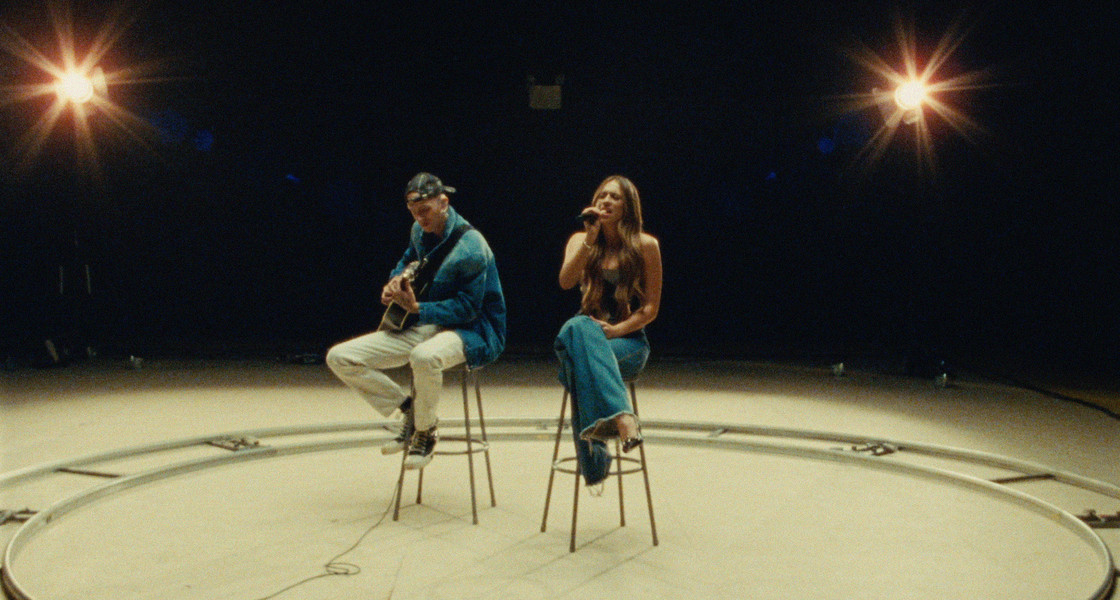
Watch the "greedy" acoustic performance and read the interview below.
FASHION CREDITS
TATE wears top DION LEE, jeans GUCCI, necklace TATE'S OWN, bracelet and rings ARSN, shoes R13
Michael— A lot of stars don’t really do acoustic covers of their own songs, yet you have quite a few. What drew you to doing acoustic covers of your own music?
Tate— When I first started writing songs, I used to post videos on Youtube with just me and my piano. And that's still my favorite thing to do — just strip back with only my voice and an instrument. I feel like that’s when I’m the most artistic and the most raw — when I’m playing an acoustic set. Sometimes when I'm on stage, my dancer instincts kick in and I just like to overperform. At the same time though, it’s really good for me to just sit down and get really into the music. That’s when I’m the most true singer version of myself.
When I first was introduced to your music — on a Spotify playlist — I didn't know your backstory at all. I heard one song and thought, “Wow, this girl is an amazing vocalist.” but I wasn’t aware of the fact that you emerged as a dancer. At what point did you realize that you could also sing?
Honestly, I've never thought of myself as a vocalist. I think I was really like an emotional kid. I had a lot of feelings but as a dancer you're told to shut up. And that's how you live your life: You shut your mouth and you dance. And I think there’s something about that that’s very wrong. Obviously, there’s so much that I want for dancers. But the biggest thing for me — aside from dancing — was writing. I’d dance for however many hours a day, and then I’d go home to my keyboard and write poetry and short stories and songs. That was my only way to express myself, communicating to people. So during middle school, I’d go through troubles with friends and relationships, and I’d always just go to my piano and process it through my own vocals. That was the only way I could get a perspective on things — if I wrote about them. I’d call myself more of a songwriter than a vocalist, because I feel like the songwriting is more the passion and the catharsis.
Did dance ever start to feel like work?
When I was around 16, I felt like I missed out on a massive part of my childhood. I didn't go to school very much. I was at an all girls ballet school and I was like, “Oh my God, I never got to experience anything that a normal child experiences.” And so I went through a phase where I absolutely hated dance, and all I wanted to do was hang out with my friends and write music. I really drifted away from it until recently, when I re-found my love for dance as a singer, because I realized it doesn’t have to be stressful, it doesn’t have to be forced. This is my true passion — I’ve loved dancing ever since I was a baby, and it came back this year just about when I turned 20. I feel like my passion has resurfaced, but it took a second, for sure.
Let’s talk about “greedy,” which is charting more than anything else you've released. How do you feel about that? I heard it was considered a risky decision to release a song like this?
I don't know why, but my natural instinct is just not to write a song like "greedy". It was really something that I pushed myself to do because I wanted to be able to dance. I was scared, I kept asking myself if I really could put it out, thinking that “This could potentially be the worst release in my career,” but I couldn’t refuse the sound at the beginning of the song, it's so new to me, and that ecstasy was too good to stray away from.
Once I first heard it I was like, wow you've really grown up — not that your other songs were younger — but , somehow this feels like it could be like number one, it has got that spell on it, you know what I mean?
Yeah, this one definitely feels like a progression and surely feels as if I have matured. At the same time, it feels like me exactly at this point in time in my life, which is a lovely reflection. That fear ahead of making it available to the public — also comes with great excitement, that particular point where you’re like “ok, crossing my fingers, hope this doesn't ruin everything.” I'm really happy with how people are reacting to it, they are loving it!
Besides for us just now, have you performed it live for an audience yet?
Yeah, last week in Philly actually. I performed it with the audience about an hour before it officially came out and — even the parts that I’ve only teased so far — they know every single word, the whole lyric. It's a very surreal sensation.
How do you feel about platforms such as Tik Tok, in relation to promoting your music?
There's a part of me that hates having to do social media. I hate posting, I hate commenting. I hate doing shit that stresses me out. Yet when it comes to teasing, it's the same shit I’ve been doing since I was 13, I just put my favorite sections of the song lyrics on a screen. So that part doesn't really feel like a pain in the ass. Neither does connecting with my fans. It doesn't feel like a chore but overall — going on social media, logging on Twitter, posting on Instagram — makes me wanna die sometimes, because I feel like it's such a draining thing. Unfortunately, today there seems to be no way to escape it, it follows the so-called business model.
I hear you’ve also been writing in Sweden — what’s that like, why is Sweden such a hub of pop?
Writing in Sweden was an incredible learning experience, but aside from that it was also so much fun. The writers and producers I worked with approach pop music as math — quite literally figuring out which equations make for the catchiest melodies. It really broadened my understanding of all the ways I can tap into my artistry and live out my pop girl-era, especially working with Max Martin Camp, he’s like the king of pop.
However, I don't know if I will end up releasing any music from Sweden, because my melodies aren’t my number one priority. My lyrics will always come first, they are my primary element, hence it was amazing to be around people who have various approaches to writing.
You grew up in Canada, is that what inspired the hockey rink in the "greedy" video?
I grew up in Calgary and my brother is a hockey player, so hockey has always been a part of my life. When I was contemplating how I envisioned the Greedy music video, I had just watched “Whatever Lola Wants, Lola Gets”. I was so inspired, envisioning myself dancing in a locker room and driving a Zamboni. With the help of my creative director, Bradley J Calder, it all came together. I am thrilled with how it turned out – I feel my vision was painted perfectly by Aerin Moreno, the director.
The colors are insane. I love it.
Oh my God, yes! Music videos are her language. She helped me execute exactly what I desired -every set up that I would describe to her, I'd be like “The hockey room needs to be green, needs to be this and that,” and she gets it right every time. Her execution is flawless. And it felt right to right to all of us, for every person on our team it just made complete sense.
That's so precious, it’s a rare feeling.
Well, I feel like there have been a lot of earlier things I’ve put out where I just got put in clothes, various colors and elements that just doesn't really translate to me on a personal level, that’s why I felt like I struggled a lot after releasing my first album. I got told to do so many different things and present myself in such a specific way, it made me question the necessity of it all, and myself in the long run.
Around that time, people would always come up to me and say things like “ah, you're so much cooler in person!” And I’m like “I don’t know if that’s a great thing?”. It got me thinking about what I really want to say at the end of the day, and why I am pursuing this. I took a step back, cleared my head, and that space ended up being so crucial for going forward with my vision for this next album.
I really think that's such a common phenomenon - everyone's first set of visuals is usually far from what they really want to be. If you want to describe your next era, like in a certain color, what color would it be?
Definitely green and blue, that’s the vibe. I have always been such a tomboy, always teasing my feminine side but never really exposed it fully. Today I feel like I’m at a point where I’m finally able to mend the two together. I like wearing basketball shorts and crop tops on stage. And if you don't like that, you don't like hockey. I like hockey jerseys. And I like wearing a hockey glove on stage.
That's amazing, speaking about on stage — how is the tour going?
Tour is going on right now! We're almost halfway through, heading for Nashville tomorrow. It’s been awesome. I think the energy of the band has changed in the last year. I feel like they're so pumped and “die hard.” So I feel very lucky.
I just did two nights in New York and it was unbelievable. It was like my biggest venue and I was very grateful to be in front of so many people. It was sold out, full of people who know my lyrics, it’s truly so flattering.
A couple of nights ago you had a fan crying in the audience, how do you navigate those moments, are they socially awkward?
It's a super weird dynamic because if I'm internally feeling awful and feeling socially awkward, then my interactions with my fans are so awkward! But usually, I would say that I'm pretty good at it, like 98% of the time. I believe in the fact that if you want to make something awkward, you can make it awkward but you can just as easily make it less uncomfortable. I mean, I'm singing sad love songs, of course people are going to cry sometimes, it’s a weird profession. It feels a bit like a fever dream.
When you're at this level of success, do you ever have an existential crisis?
I had a massive month-long midlife crisis last year. I was like, who am I? I'm living in LA alone. I've been touring for a year now. What's going on? I can't just keep releasing music that I'm not super proud of. And I think that crisis was really important for me, because I was literally forced to go sit in the grass outside, and be like, “OK, Tate, who are you? What do I want in life? And where do I want to go?” That really brought me clarity. Basically, you have to figure it out for yourself when you're and I think hitting a low, that’s when you know progression is potentially coming your way.
Yeah. So I know that you're in the "bad idea right" video for Olivia Rodrigo, directed by Petra Collins. How was that?
It was so much fun. All those girls are the best girl ever: Iris, Maddie and Olivia, and then Petra is just like a fucking vibe. I finally found a girl group in LA that I think hype each other up and support each other and it's really hard to find some honest people these days. My circle is so tiny, and it’s by choice, because I only want friends around who are able to provide the best vibes for each other; do favors left and right. The video was so inspiring. I love Olivia, she's so talented.
I almost feel like we have entered a new era in pop, where people are generally more genuine towards each other amongst younger generations, do you know what I mean?
Yeah, honestly I think that the fans think there's way more drama going on.
Most of the time we're just best friends and no one gives a shit. There's a lot of bad ass females in this industry right now that are fucking killing it. And I think that we're all like you're in your lane, I'm in my lane. Let's crush it together and I think that's super cool and very unheard of.
Ok, last question. Do you have a favorite song off of GUTS?
Of course, my favorite is “making the bed”. Like the rest of the world, I fell in love with Olivia’s lyrics. The way she takes ownership of herself and her actions in the most poetic and relatable way possible. “making the bed” is so intelligent and elegant. It’s also just gut-wrenchingly beautiful.

Expanding into more funk/ electro-house beats in his latest single “Hope You Heal”, Kota reminds us to brush off other people’s negativity; creating room for the brighter side of hip-hop and continuing to speak on the topics that bind us together. Kota can't be bothered with the drama and the “bad vibes'' that accompany this industry. He wishes all the best to his haters and in the meantime, he's gonna keep doing him.
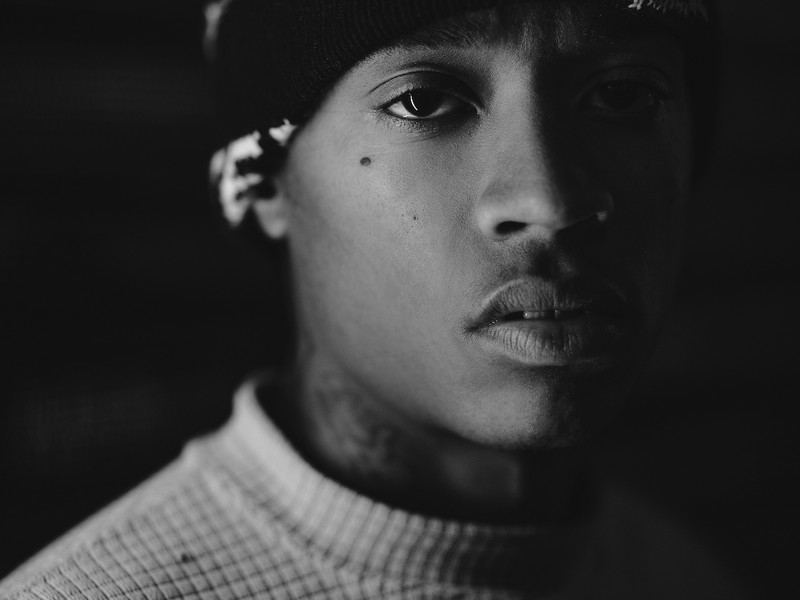
office sat down with the indie hip-hop artist and producer to discuss his recent investment in NYC Sports Network, how he avoids negativity in the industry, and what fatherhood has taught him about giving back to the people he loves.


Your music provides an escape for a lot of people from the everyday noise, negativity, and allows them to listen to something more authentic and uplifting. How do you use making music to work through everyday challenges on your own?
For me, writing and making music is a way to express what's going on in my mind and all the inner chaos that’s happening. Sometimes I can’t really communicate something until I write about it, so writing about it through music has always helped me make sense of what’s going on in my head.
How do you incorporate your upbringing in Brooklyn into your music?
I think it comes in and out depending on what song it is or what the song is about. But I’m always incorporating Brooklyn, where I'm from, things that I've been through and how things that I’ve been through are affecting my life now, how they have helped me, how they kind of toughened me up, you know but what I write about is my life, my real life.
Given that you grew up in NYC following high school sports, how does it feel to have that full circle moment now that you’re investing with NYC Sports Network?
Yeah it feels good to give back to roots, I feel like that was a time in my life when I was shooting videos for the NYCSNetwork like high school sports and you get invested in the kids that are coming up. It’s cool to see those kids come from High School to College and then get into the NFL or the NBA. I remember seeing the feeling that these kids would have when somebody was taking videos and reporting on them and making highlight reels of them when they were in high school. They appreciate it so much. So it would be a good thing to be able to like support them in that way again, you know.
You talk a lot about how you value authenticity in your music, how do you balance the pressure of producing commercial music while simultaneously creating an authentic album?
I feel like for an artist it’s always a struggle to stay authentic and I think I balance it just by leaving the music alone and trying to keep the music authentic no matter what. Whether it’s profitable or not. The money side will figure it out on its own, you know. If the music is not making as much money then you know it we’ll do something else that’s why we get into real estate, whatever, I just like to stay authentic on the music side no matter what.

Tell me about the artwork for the album cover of Protea that you incorporated into your collaboration with Dinner Service. What inspired this scene of a gathering on the beach?
I wanted the artwork to really be classic and to remind me of the artwork that I saw growing up in my house. Like the African American artwork that I would see in my mom’s house or my grandma’s house. The cover art has different elements, like my wife is from Dubai so it takes place in the desert, there's music instruments involved, it looks like there’s a wedding, there’s a hot air balloon because hot air balloons are big out in Dubai too, so it was a few things. Kinda like everything that I love about my life rolled up into one and I just want it to look like I wanted it to look like a classic art piece.
Your single “Hope you Heal” is one of your more up beat tracks that talks about brushing off negativity from others. How do you keep this mindset in such a competitive industry like hip hop?
I like to keep the mindset by not participating in a lot of industry stuff. I like to keep my music pure, I like to just keep it about the music and kind of leave everything that taints it, out of it. I’m kinda in my own lane, I play my own game, I do things my way so it's a lot of stuff that I don’t have to deal with when it comes to the industry.


What inspired you to add more electro house beats into your recent albums?
I’ve always been inspired by that kind of music and I think at that time I was just listening to a lot more house, electronic and different sounds and it became something I wanted to experiment with.
A lot of your music, specifically your latest album Protea, talks about your wife and raising a family. What is the biggest thing you’ve learned from fatherhood?
The biggest thing I’ve learned from fatherhood is you have to give space when space is needed, you have to get closer when that’s needed, and you have to learn the nuances.
Lately, one of my biggest things has been finding a way to do something special for the special people in my life, every day. I think about when it comes to my son, and when it comes to my daughter, I just like to do something that they like to do every day. When you have people in your life that are important to you, you have to make sure that everybody is kind of living a good life. You wanna do things for yourself, and you wanna do things for everybody in your life whether you have a wife, you have kids, make sure that everybody is enjoying their time on this earth and I try to do my best at that.