Tomokazu Matsuyama
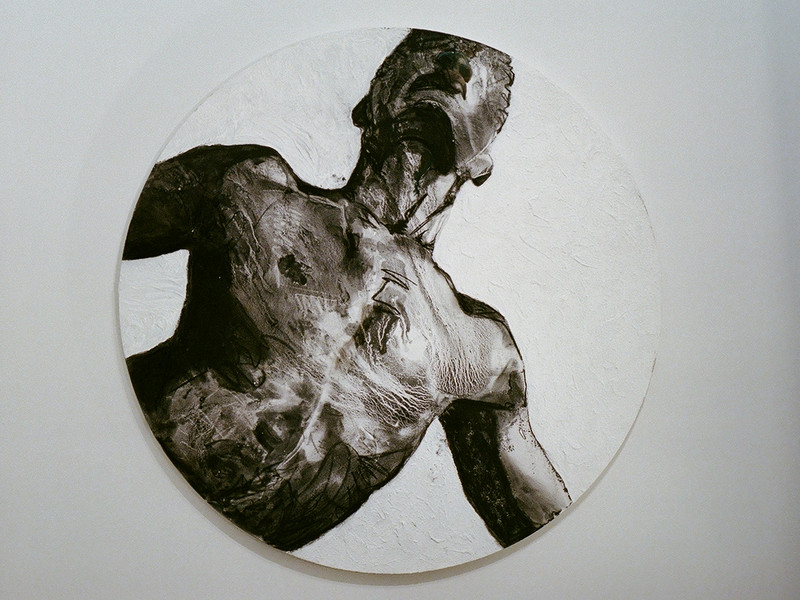
EO: Your painting Color of the City No.48 is more compact in scale compared to some of your
monumental works, yet it still carries your signature layering of patterns, cultural fragments, and
symbols. What does working at this scale allow you to express about “space” that might differ from your larger canvases?
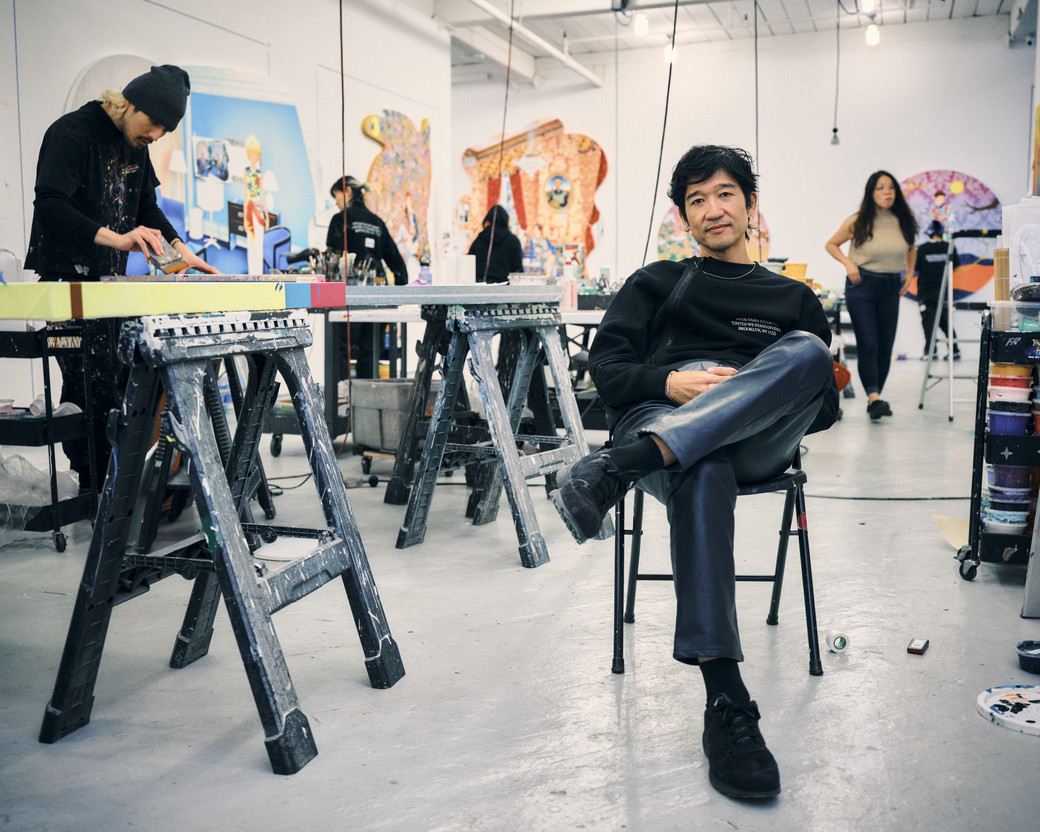
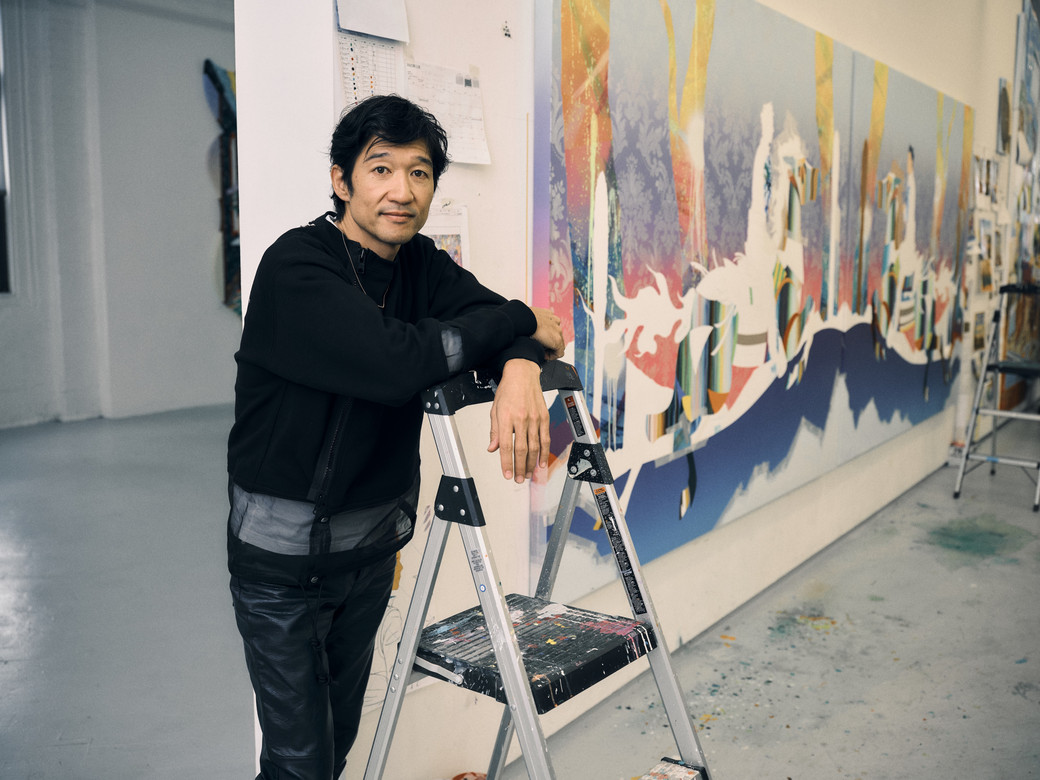
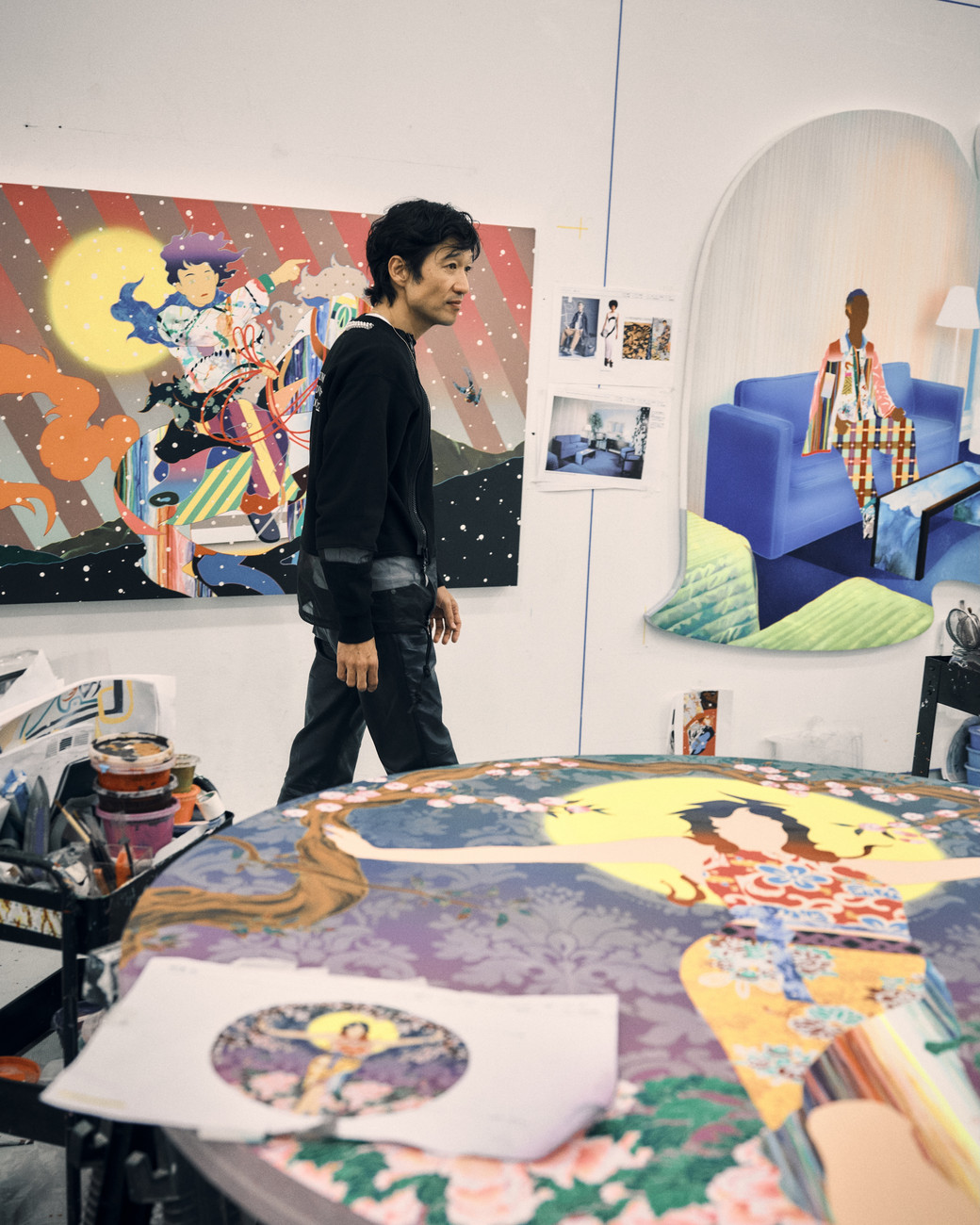
TM: Even in a smaller format, I try to hold onto the same density of references that runs through my bigger works. What really shifts is how viewers experience the space. A large canvas can surround you, almost like stepping into another environment, while a smaller piece feels more like a direct conversation. In Color of the City, the scale does not reduce the complexity, it accentuates it. The fragments of patterns, portraits, cultural symbols like “the East and West”, sit closer together so the tension between them becomes more immediate. For me, that compression mirrors how space is lived in cities like New York; crowded, layered, and full of unexpected proximities.
EO: Your recent solo exhibition at SCAD Museum of Art grappled directly with the idea of space; particularly the tension between interior and exterior, and the line between private and public environments. How do those investigations of space carry forward into your contribution to Places & Spaces?
TM: At SCAD, I was very conscious of how works lived simultaneously inside the museum and in the Jewel Boxes that face directly onto the street. That duality; contemplative interior space versus the unpredictability of public encounter, reflects the way I want my paintings to breathe. In Places & Spaces, that same investigation continues, but in a different context. My contribution engages with the exhibition’s idea that space is not just backdrop, but something charged, contested, and psychological. The layering in my work destabilizes boundaries. In them ornament meets politics, intimacy at times collides with spectacle. By doing this, I hope the paintings remind us that “space” isn’t neutral. It carries memory, exclusion, and possibility. Whether compact or monumental, public or private, the works are about inhabiting that unsettled in-between space.
EO: Both your practice and another artist in Places and Spaces, Dennis Osadebe, highlight the duality of tradition and modernity; history and contemporary culture exist in constant dialogue. How do you approach this balance in your own work, and what possibilities do you see in navigating that tension as part of your visual language? Also, why is it important to look forward as well as backward when envisioning new possibilities for the world we live in?
TM: I have always moved between cultures, Japan and the U.S., tradition and pop culture, being both insider and outsider in different contexts. I do not see history and modernity as opposites, I let them speak to each other. A kimono pattern might sit beside a Renaissance motif or an image from streetwear, showing how meaning shifts when they share space. Looking back matters because history holds unresolved questions of identity, justice, and belonging. But looking forward is just as important, since art must imagine futures not limited by what we inherit. For me, layering fragments creates a language of coexistence. It honors the past while opening space for something unexpected, reminding us the future is always built from what came before