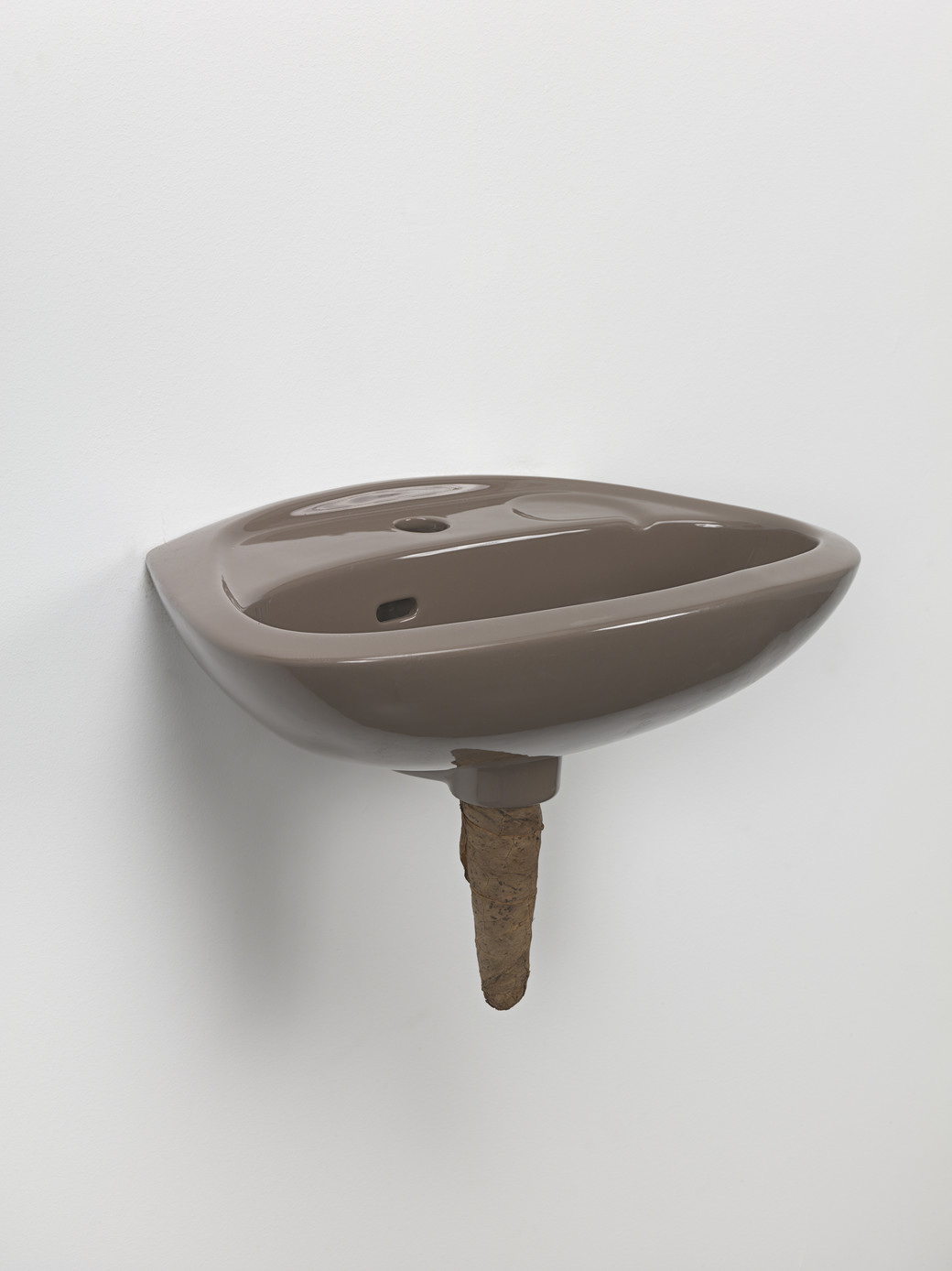
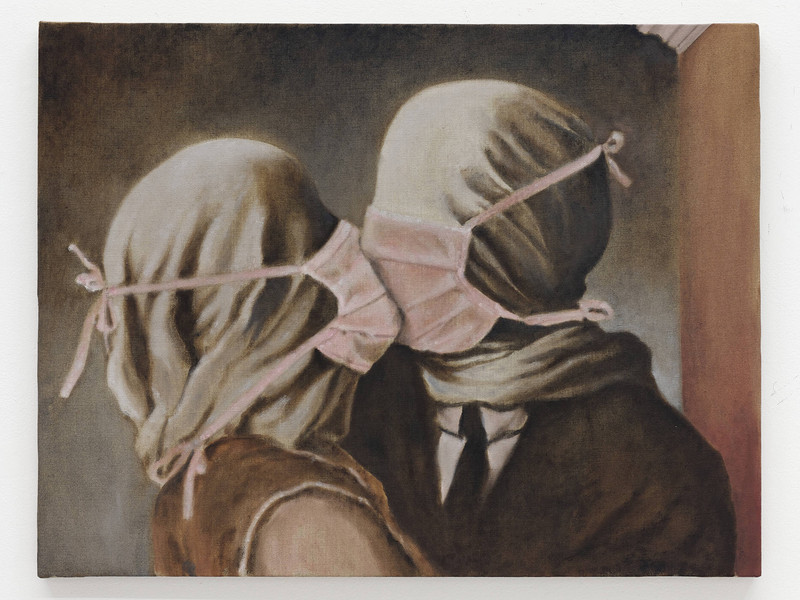
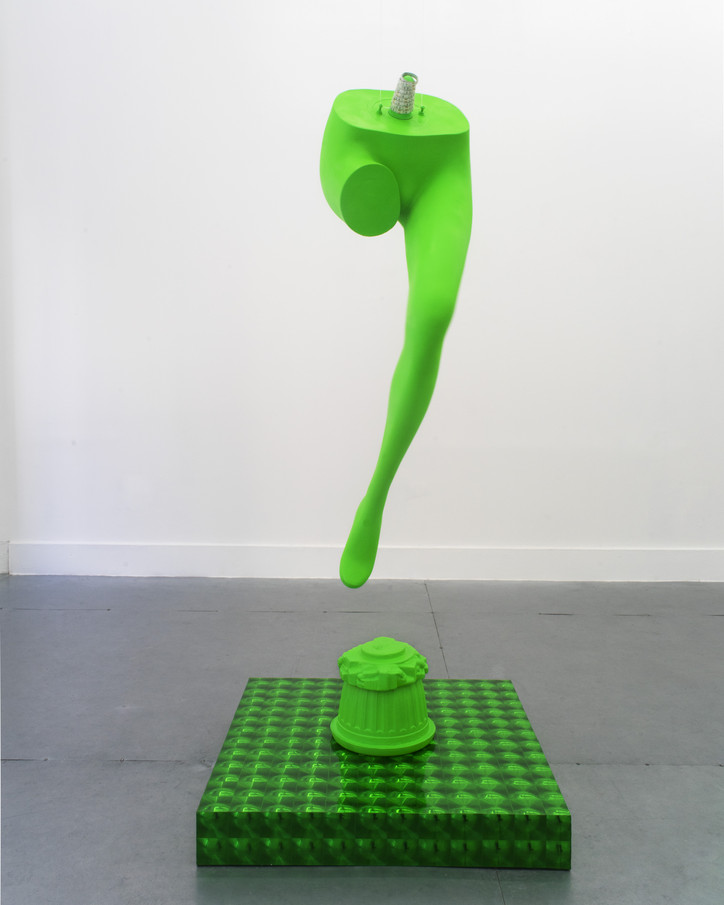
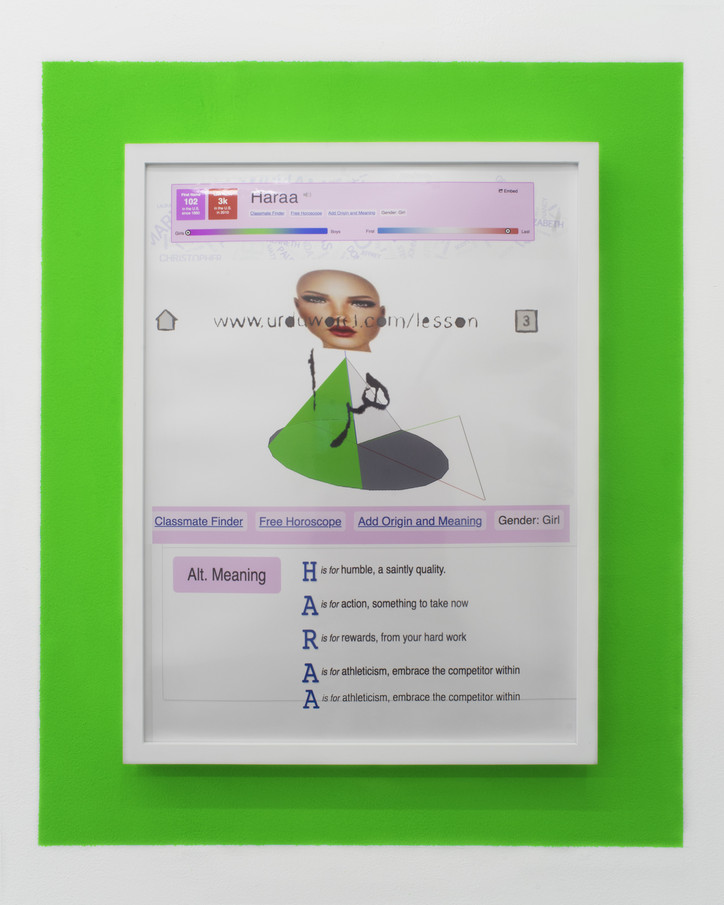
Her aesthetic is drastic simplicity crossed with florid intellectual eloquence: internet Clipart and a robotic digital audio voice clash, mesh and blossom through concepts of God and country, nuclear power and nature, family ties and, of course, the digital interface that has become the go-to medium through which we navigate it all.
After a walk through Rubber Factory, office spoke with Majeed about Islamic kitcsh and theoretical physics.
Tell me about the show.
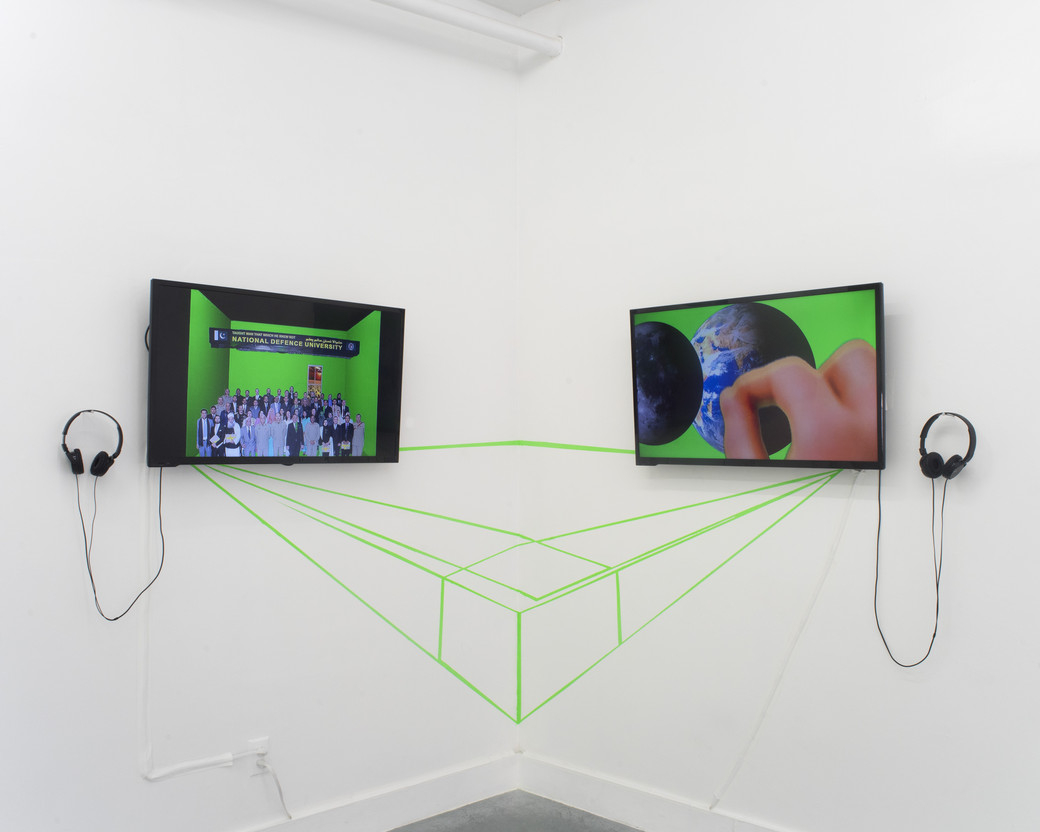
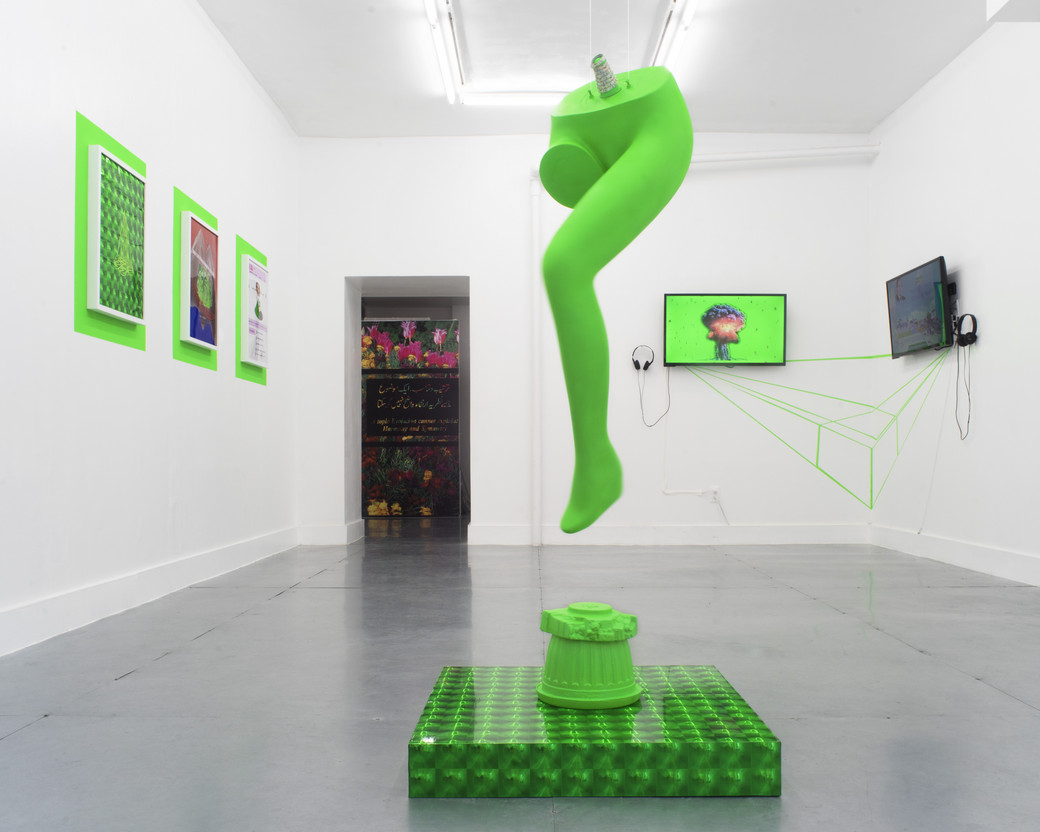
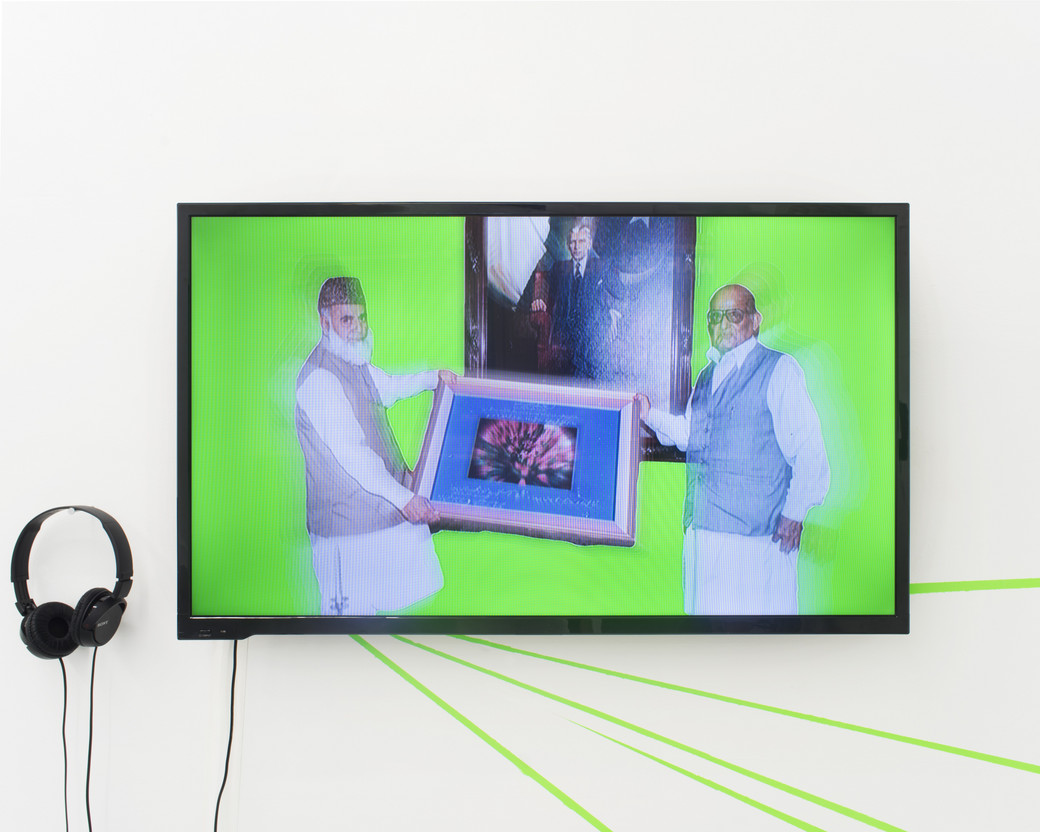
So, the show is called In the Name of the Hypersurface of the Present. It’s based on two years of research I did around the nuclear history of Pakistan. The investigation started with looking at a monument that commemorated the nuclear armament that happened in the 1990s, and the monument doesn’t exist anymore, so in a way, the research and the work retrace this recent past. I use both material I got from Facebook, nationalist groups around Pakistani military, and also I looked at my grandfather’s photographic archives—he was an analog photographer, and he had nationalist leanings, so his political stance was very pro-Pakistan. Then, I also looked at Urdu literature around science and poetry—Urdu is the language of Pakistan.
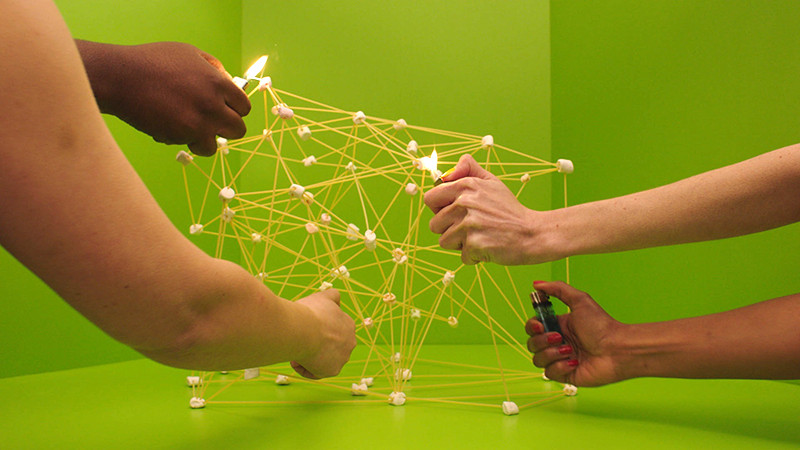
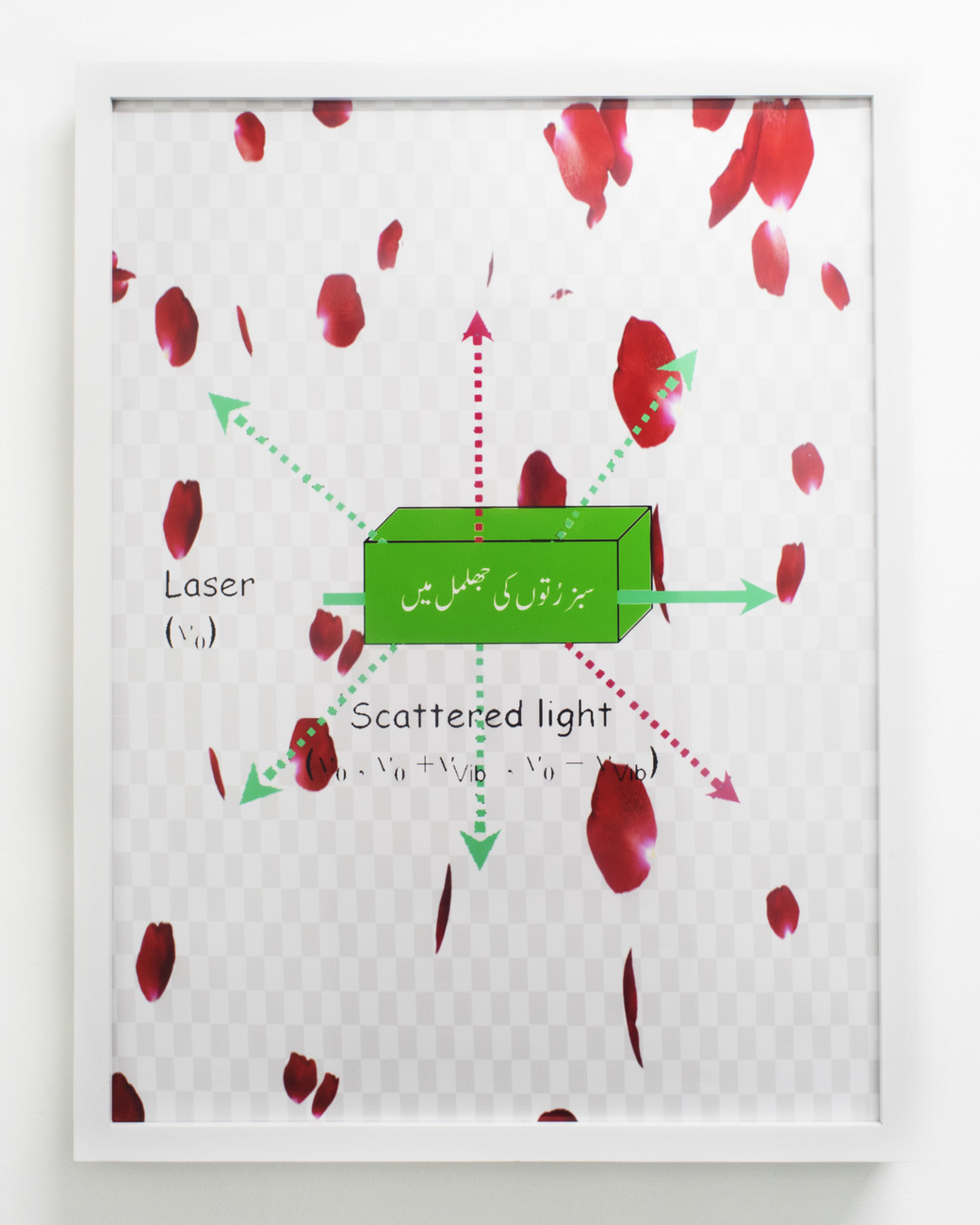
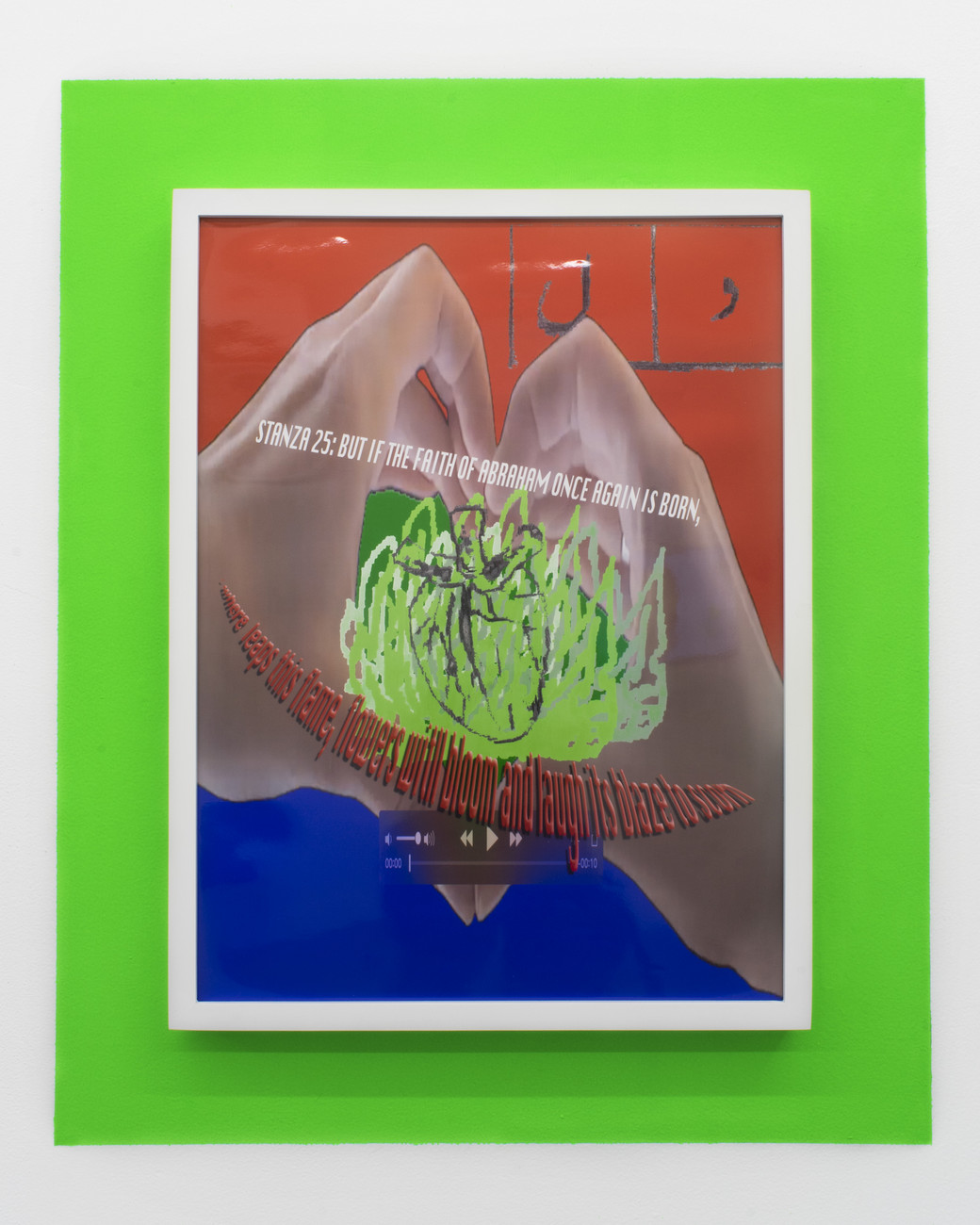
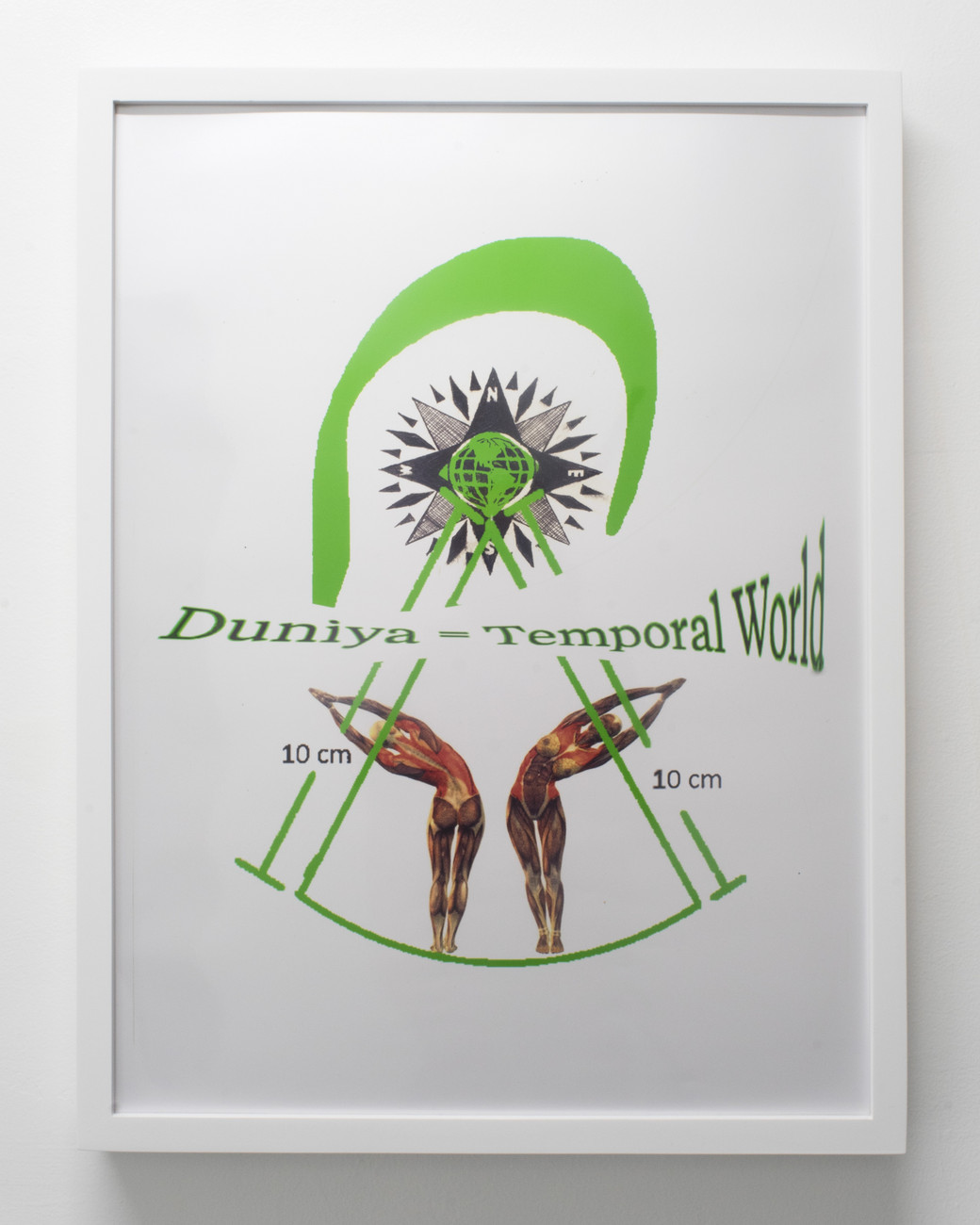
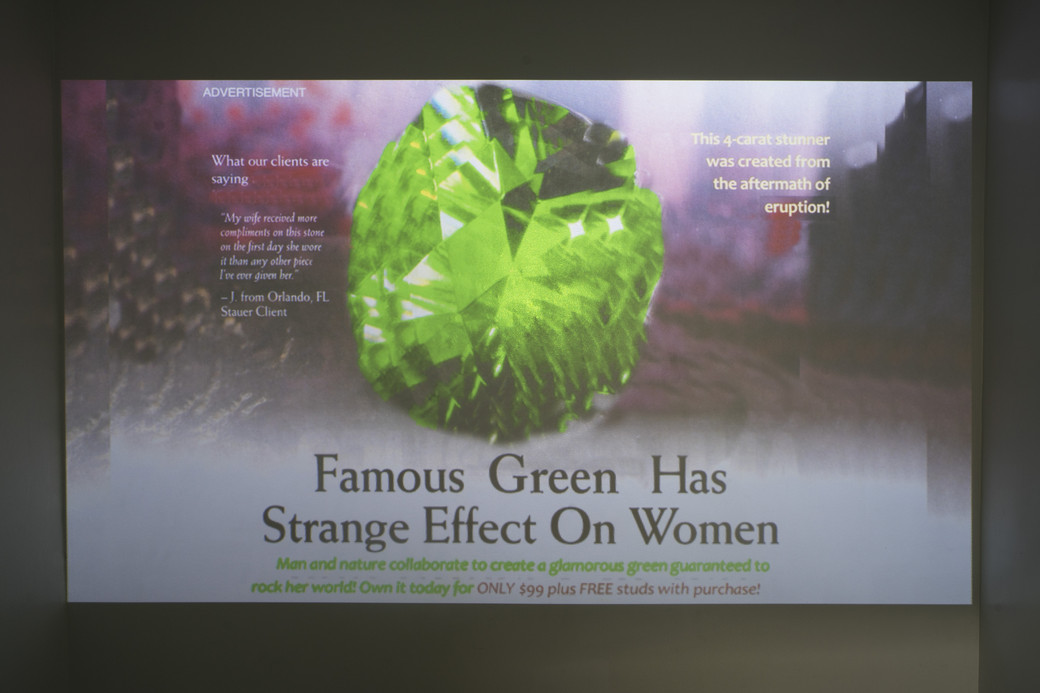
So, it’s an amalgamation of all these things, but when you go to the show, it’s based around this idea of green, and the green kind of represents an intersection of Pakistani nationalism. But it’s also the color of Islam, which it’s known as. Saudi Arabia uses green as a color, and Malaysia—multiple countries look at the color green as the color of Islam, so it gets used in a lot of Islamic kitsch. I also refer to green as the digital interface, this idea of green-screening, a space for projection. Green is also representative of the military, and I'm looking at the nuclear history, the military history. Using the color green also refers to landscape, homeland, so in a way, when you enter the show, it’s an unfolding of that—where green refers to landscape and body, and this intersection of poetics of love for homeland, as well as science and state propaganda that’s used to uphold nationalist love. So, it’s a mix of all these things.
Do you know what happened to the monument you were referring to?
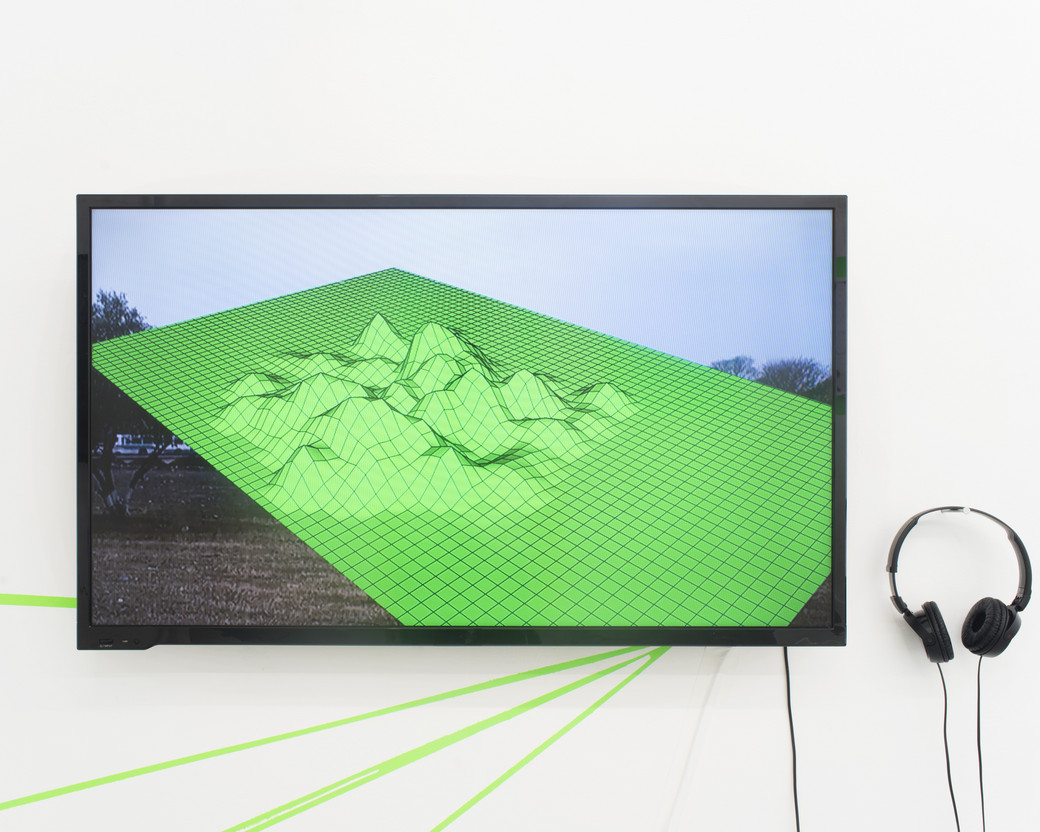
I’m actually working on putting together a lecture performance where I chronicle the history of the monument, looking at the rumors. Because the state monument is this really ugly fiberglass reproduction of a mountain, it basically is not taken seriously by architects, academics. So, the the motif of the mountain itself becomes like looking through the perspective of a monument, a kind of alternate history. That’s how I was trying to look at it—through this monument. One part of the lecture performance is basically gathering all the pieces of information that have been put out there by the state. So, for example, the monument was built in the 1990s and it was built to commemorate a holiday that translates to ‘The Day of God’s Greatness,’ and it happens every year, and the monument was built to bring the public—meaning men, who occupy public space—to come to the monument to celebrate.
So, it was built in different metropolitan cities—in Karachi, Lahore, and Islamabad. In Karachi, it was destroyed in the early 2000s because the father of the atomic bomb in Pakistan—the guy who headed the nuclear project—he got arrested by the state because there were rumors that he leaked nuclear scientific knowledge to other countries. So, he was under house arrest for ten years. During that time, because of the weight of nuclear history and religiosity is so intertwined, they look at this person kind of as a figure to represent their religion and nationalism all in one. So, when he was arrested, the public—and by ‘the public’ I mean very specific male patriarchal, the dominant class—they ended up burning the monument. In Lahore, the monument was built near a railway station and it was taken down by the state because there were rumors that the station was invaded by terrorists and they used the monument as a shield and attacked people in the railway station. Then in Islamabad, the capital, in 2016, the monument resided in this roundabout, and due to the current urbanization policies of the recently deposed prime minister, they were expanding roads throughout the country, and the monument was supposed to be relocated. It was removed and destroyed so they could expand the roads, and it was supposed to be relocated in a major park in another part of Islamabad.
One of the main videos I made for the show starts with the relocation of this monument. It’s thinking through this monument that is returning to a kind of pure, natural—even though a park is not necessarily a pure landscape—but in a way, it’s a return to origins, a return to nature. So, that’s where the entire show is encapsulated—these references to flora and fauna and landscape and the garden and the way of the garden.
There’s a kind of female re-imagining of history happening as well, correct?
In the first two videos in the first two rooms, is my voiceover, but my voiceover is through a fictional poet. So, there’s a querying of this poet, who represents the state. It’s a feminist re-articulation, but also making visible how women are used as containers for state propaganda. The atomic bomb or landscape can also be intertwined with the idea of the woman, the rebirth of the nation—so, in a way, making that visible is a part of the project. The female form is visible even in the reference of the flower—in both of the videos in the front, there’s a constant reference to flora, and that is a direct reference to the woman. In the back room, in the projection piece, there is the visibility of the female as a kind of sampler of the way in which you can gain the purest national love, the performativity of pulling the ear, and allowing the green light to enter certain parts of your body. I actually published a spec fiction piece about green light entering the body igniting the motif of the cone. This overall large, two-year project is continuously expanding, so what I’m showing at the gallery is like an excerpt to test your taste about all these ideas.
It almost reminds me of a video game—it feels like there’s a plot.
One of the narrative tools is looking through the interface. I used certain imagery, certain memes, and collaged them and played with them to see that there’s a kind of violence within this imagery that is disseminated and passed down.