Bendik Giske Is Creating on the Edge of Failure

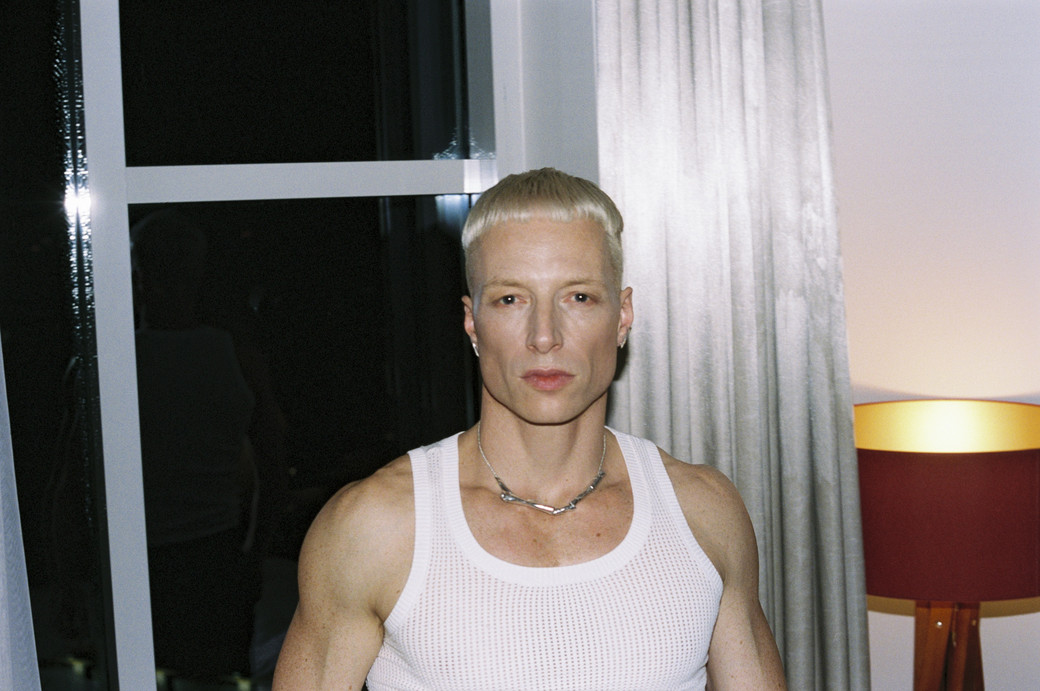
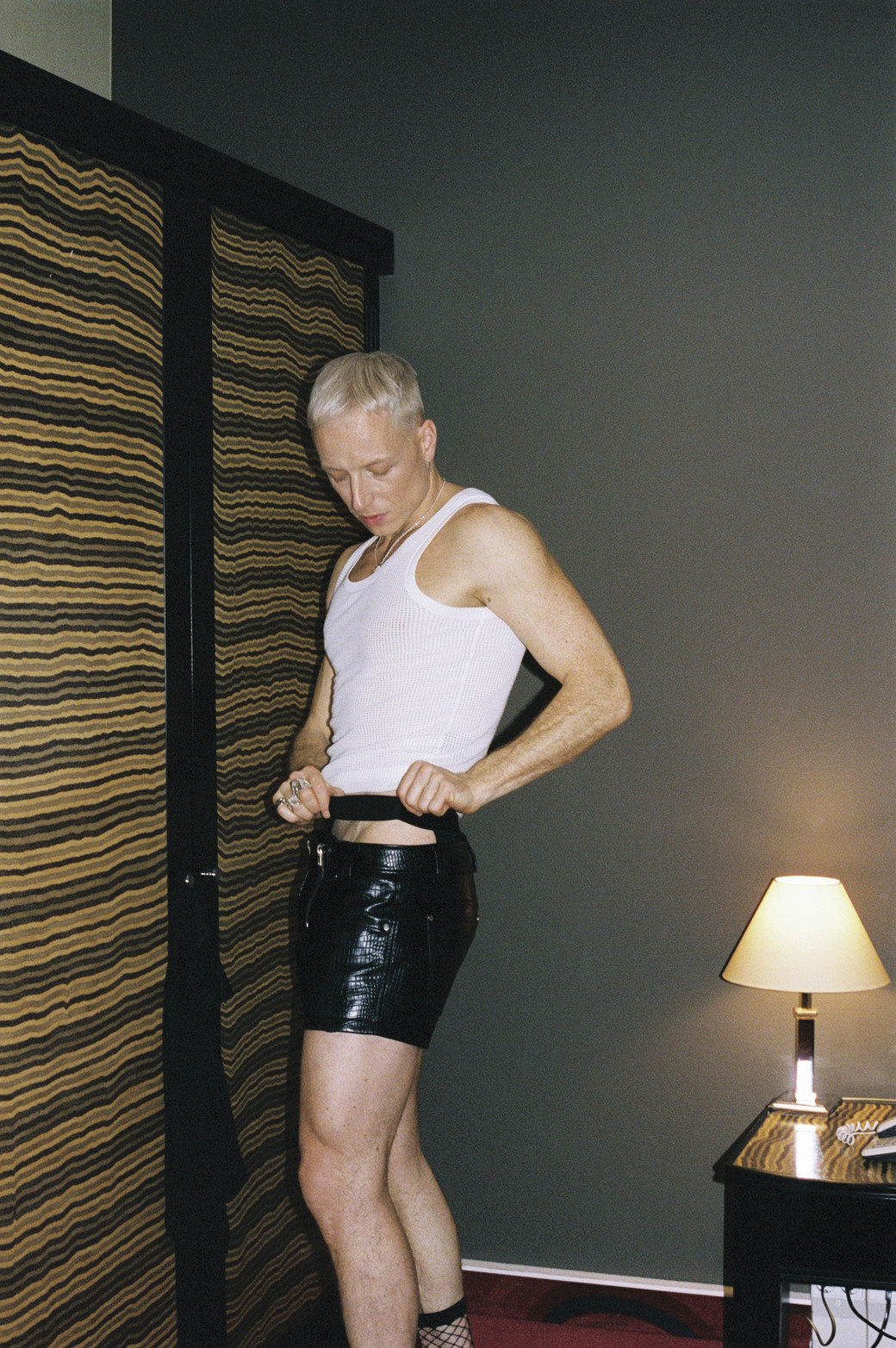
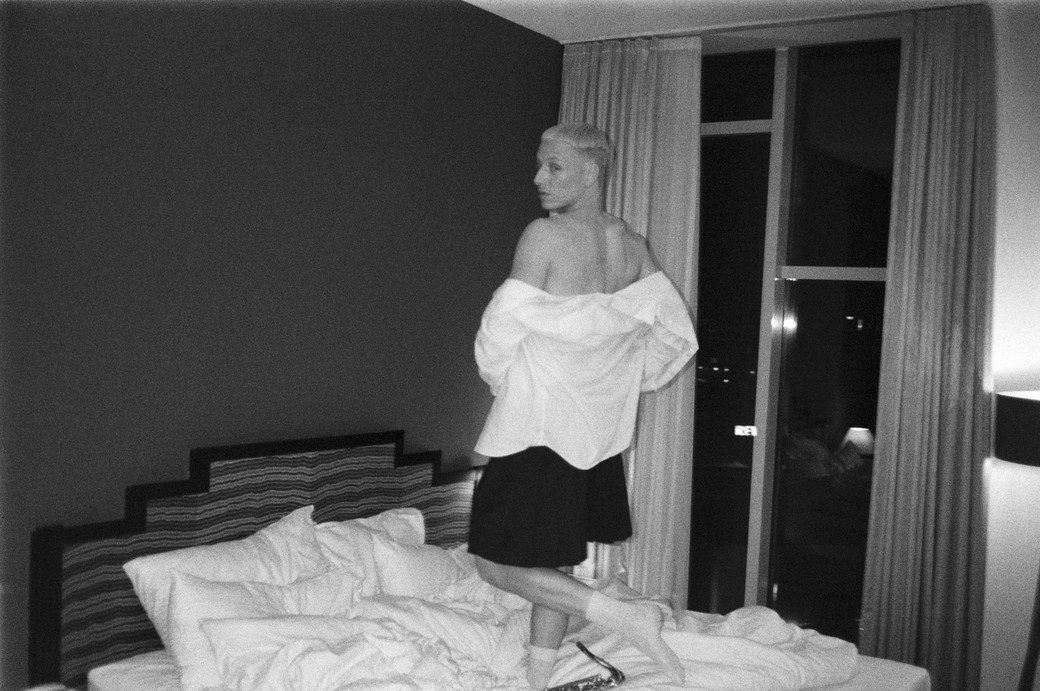
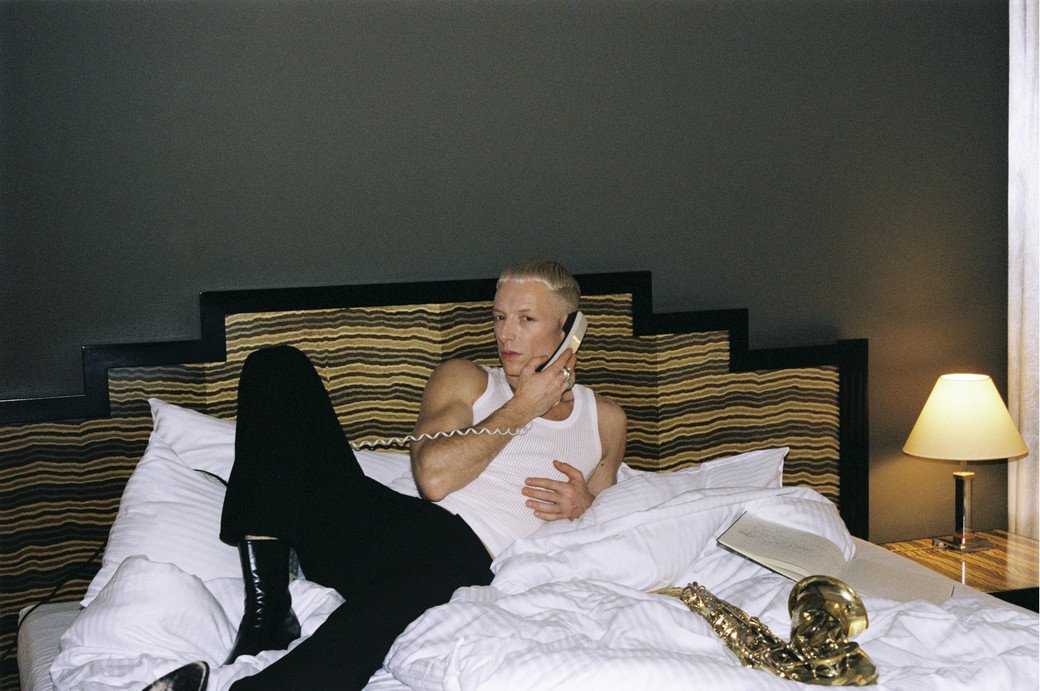
What’s something about religiously playing the saxophone that most people might not know?
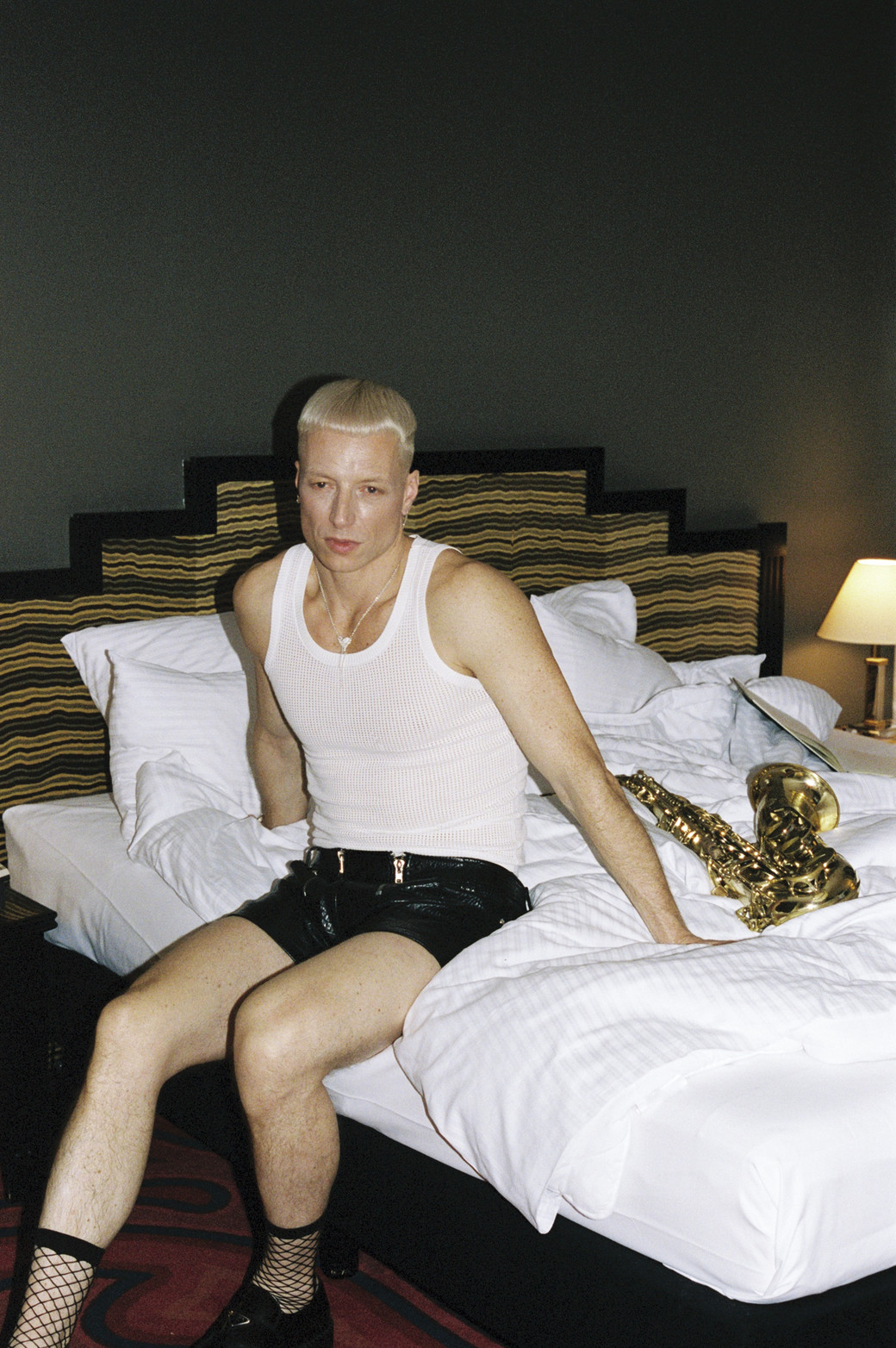
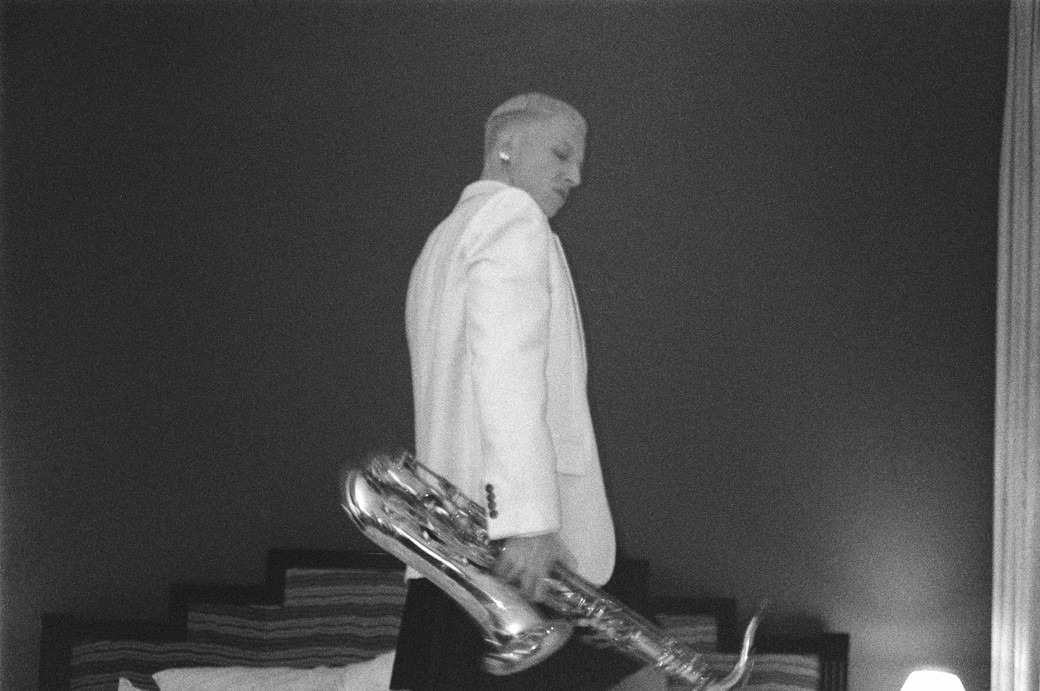
What most people don't know is that it's such a physical practice. It requires quite a lot of physical upkeep to kind of stay comfortable with the muscular requirements of playing the saxophone. The saxophone is quite heavy. It's a lot of metal, and there are a lot of keys, but the muscular challenge happens around the mouth. So I think the facial muscles are what most people don't consider when they think about playing the saxophone. I take quite a physical approach to the instrument, so for me it's about staying with it for a duration of time. It's not something that I can leave for a longer period of time and then come back to. It's something that I constantly keep with me. So maybe that's it, that people don't know that it's a daily practice. So when I say I've played it for 32 years, it's been more or less every day for 32 years.
Sonically, you have a very unique style. How would you describe it?
Thank you. Well, this is a problem I have to describe the style because I think my style of playing has a lot of references, and I feel like it’s the result of my own experience and my own curiosity. Again, it's been going on for decades for me, and through those decades, I've had different interests, and where I'm at now is a culmination of all those interests. But I'm looking for kind of a sense of precarity in the sound. I'm always looking to create a fundamental kind of pattern or state to set the scene, and within that setting, I'm looking for wildness, and I'm looking for the edges of failure. I'm looking for the points where it almost falls apart. And to be able to stay in that territory, that's what really tickles me. Durational playing on the edge of failure.
What are your thoughts on perfectionism?
I don't believe that perfectionism leads to perfection. The word has taken on quite a popular meaning, right? People use it without rooting it in philosophy, necessarily. I think for me, the perfect can occur as a discovery and not as something that is constructed from control. In my own recordings or my own performance, when I feel like things come close to some sort of perfect state, it is through a discovery of mine. It's when I've put in tripping wires for myself, or I've allowed myself to do something that is on the edge of failure in a way. So, perfectionism is not something that I relate to at all. Perfection is something that occurs naturally. When I see perfection, I see it in the natural world. I see when things are in balance, and things are the way they're supposed to be. And I don't see myself as capable of perfection unless I surrender to a greater whole.
What sort of spiritual state do you enter when you traverse the world of music?
I think a large part of spirituality is community, and it's the sense of being a part of something larger than the individual, and that’s something that I approach. I think of music-making as one of many contributors to a collective experience. And I can say, for my own sake, that performing music is such a specific, highly focused state of being where time evaporates. It becomes a state of being instead. At the best of times, when deep focus can occur collectively, we're in good shape, you know? That’s when it gives meaning to me.
You just released a single titled “Alignment, Orbits” with Caterina Barbieri. Tell me a little bit about the title and what the song represents for you.
The two titles represents the duality in this project. Caterina and I are two very different individuals, and although there are similarities and meeting points that we really wanted to approach in this project, we approach it from very different places. What I wanted out of that project was to work with Caterina’s style of composing, and perform with her approach to synthesizers, and utilize that pattern-making and those nuances and those transitions that she uses very consciously in her compositional work. It was a desire for some sort of alignment. It's not a static state, it's something that keeps moving. It's also meaningful to me in the sense that Caterina and I have been working together for five or six years. I mean, it might be coming up on seven, actually, and this release marks that period of time. So it's in a way a retrospective for the both of us, where we're looking back on those years together.
The repetition in your songs feels almost meditative. How do you view this element?
Part of the reason why I've stuck with the saxophone and playing a wind instrument for most of my life is because of the breath work, and the sonicity of it. The sound as a consequence of breath is something that I'm conscious of most of the time. When I work with the saxophone, it's more of an inward experience. It's me trying to find the connection between my intention and what my body does. And that is this deep focus. The world at large, or any daily problems or global problems, remain at a distance. This becomes a very peaceful area for me. Very meditative. The repetition is something that I can't get over. And the more I look and do research, I see that repetition is kind of an integral part of the human experience, and it's something that humans have approached for millennia. It has a big role in religious practices as well. For me, I use repetition to establish a state of being, and I think about it more as inhale/exhale, or heartbeat, seeing the scene that a performance, message, or thought can happen within. So it's meditative in the sense that it is establishing a state of being.
What does instrumental music relay that language struggles to?
I have this experience of dancing to music with other people, music that relies on a steady pulse. Stories like the one about the Tower of Babel and many others paint a picture where language is fraught with friction. You can reduce words into sounds, sonicity, rhythm, and ultimately, you can reduce it down to a “Four to the Floor” beat, which nobody can disagree on. In the scenes where people get together and dance to a beat, there is an opportunity to experience each other as humans. Even though disagreement is very valuable, I think finding places to coexist with other humans and respect each other as beings is important now. I think instrumental music, and the way I want to approach it, potentially has an openness to interpretation, which is also an invitation. It means that I attempt to say as little as possible in terms of words, of what this music should be, or how it should be experienced. Now, I'm not shy about talking about where it comes from, what sort of intentions brought me to this place. But I want a degree of audience participation, and I want people to bring their own meaning to the music. And I think instrumental music, wordless music, in many ways, has the potential for a greater openness. Now, there are many ways to use words, obviously. So a little caveat there…
What’s one of your earliest memories of electronic music?
It's an album from 1980, which predates me, and it's called Commercial Album by The Residents. Technically, it's classified as experimental rock, but it has a lot of electronic music elements in it, so that's why I think of this album. It is a commentary on the format of commercial music at the time, which means all the tracks are 3 minutes and thirty seconds long. And it reinterprets classical songs like “This Is A Man's World” by James Brown, and songs like that, and put them into an electronic context. Hearing that album, I remember thinking, wow, there's possibility here to be explored. And obviously, it was quite dated by the time I'd heard it, but still, the electronic elements of that opened things up. And it's something I think about to this day.
Where is the music industry headed, and where would you like for it to be headed?
I think a lot of us who are in the music industry, we hold kind of a disillusionment at arm's length. I probably shouldn't speak for others, but I know that's true for my own sake, where I see that not only do revenue streams dry up and opportunities become scarce, and you also have to be a persona beyond music. Also, in most instances, it's clear that you have a generational shift, that there's the old and the new music. The old music industry managed to cultivate artists who became these canonized characters of history. The new music industry probably won't do that in the same way. I'm saddened by the kind of hostile takeover of the tech industry and the subscription and streaming models. A lot of people want to leave Spotify, but they feel that so much of their experience and identity is tied up in the playlists that they’ve collected and shared over time. Leaving Spotify becomes a difficult gesture, like leaving one’s CD collection behind was for many people a couple of decades ago. The subscription model is kind of holding people hostage, right? Ownership of music is such a large part of people's identity building and community building. So I don't know where I see the music industry heading, but I know that I and a bunch of other people are making some pretty conscious pushes towards taking it back into reality, into three-dimensional space, and making it a community space, where things can exist untethered from the digital world. I know what I want my contribution to be, and that is to get up in front of people in big and small rooms and play my heart out and try to create some sort of collective experience.