When did you first start making music?
Back in 1998. I started fiddling around with an old Akai sampler and an Atari gaming computer with the music making software Cubase, together with a friend of mine. We were mainly sampling old disco records and making these loopy jams, very inspired by Masters at Work and Daft Punk. Quite quickly we got signed, and in 2000, we started DJing and touring full time. After we stopped working together around 2005, I started producing my own solo albums and touring alone. My first album was released in 2007. Five mainly club music based solo albums later, I am now releasing The Fifty Eleven Project on Kompakt which is something completely different than I have ever worked on before in almost every aspect.
How would you describe the personality of The Fifty Eleven Project?
The Fifty Eleven Project, which is named after the department at the hospital I was frequently going for consultations and test results, is first of all, a deeply personal story told over two hours of instrumental ambient music as the narrative—describing the anxiety, fear and other dark feelings I experienced after I was diagnosed with cancer in November 2011, quickly operated on, and in the following five years of regular hospital check ups. Luckily, I didn’t have to have any chemotherapy or radiation treatment, so in that sense I was very lucky. At the same time, I had a very hard time shaking the fear of relapse and that evolved into full blown anxiety attacks, which to me, in some ways, was an even more scary experience than the actual cancer.
The second half of the album, however, is brighter and reflects on the light and love I felt in my life when I became a father, and also the gratitude of being healed from my illness. So, it goes from the darkest moment to the brightest, in that sense. I lost friends and family to cancer in the same period and somehow a cancer diagnosis is a club, that once you have become a member, you can never really leave—even after you have been given the all clear. Somehow it's still always with you.
What was your writing process like?
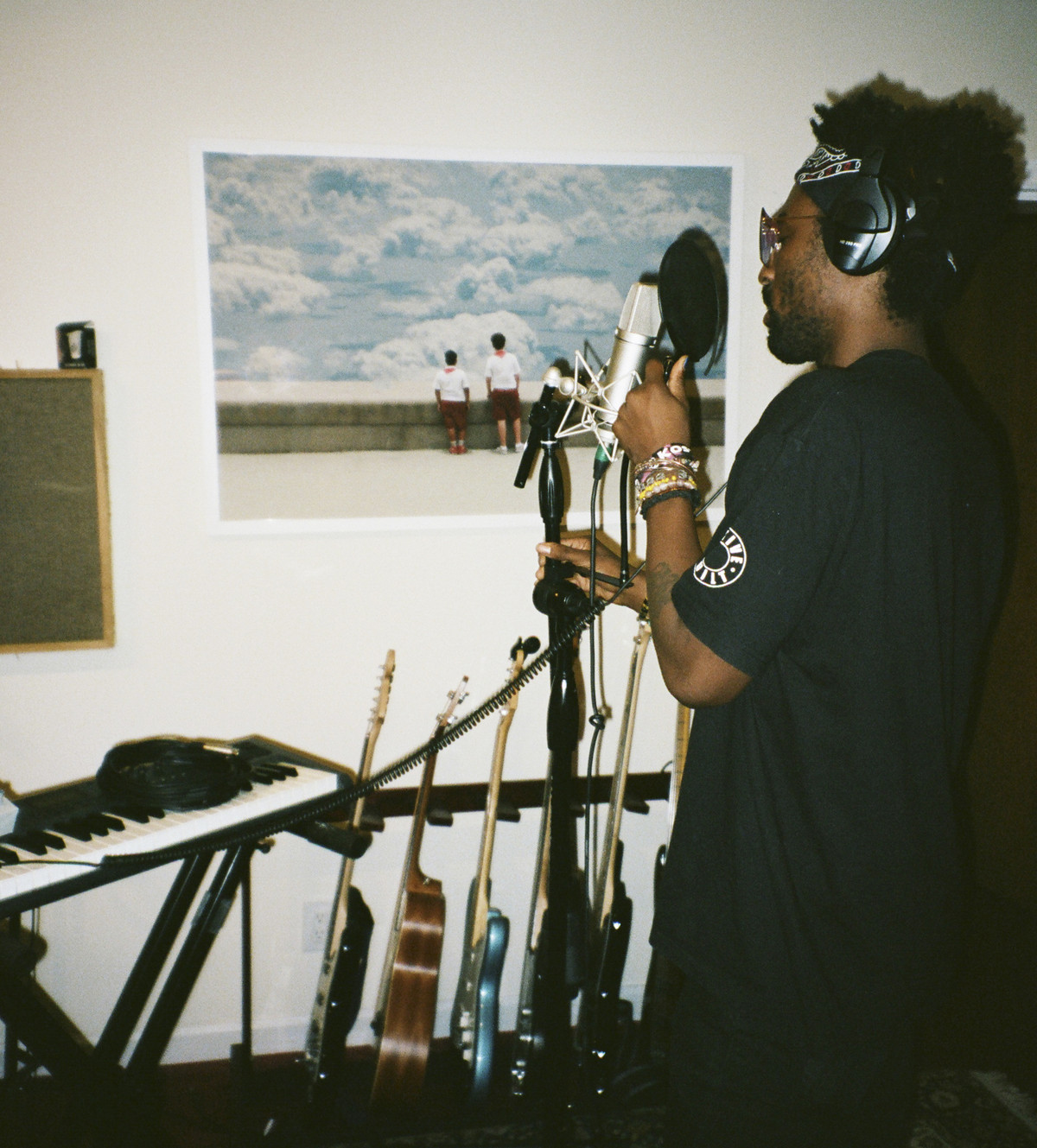
I asked my Danish friend and great musician Claus Norreen if he would like to work with me on the project, and some ideas I had for these ambient moods. We recorded it in his studio since it's just amazing and full of old vintage analog synthesizers. We set it up in a way so that we could record all these long live sessions into the computer and never use the computer for anything else than a recording device.
Then I brought back these takes to my own studio, and started arranging and editing and mixing them. After that, I asked my friend Jakob Littauer, or Jangze, to play piano parts that I wanted to be very Steve Reich-inspired on some of the compositions, to create movement and rhythm, and others, I just wanted subtle chords to support the synthesizers. The arpeggios and the pianos create the rhythm on the album—there's not a single drum hit. The last part of the process was having my Italian friend and string composer Davide Rossi play the cello, violin and viola on top of these recordings. That made a huge impact on the sound and opened it up completely. So, despite this being a very personal story, that I shared with these musicians during the recordings, I wanted to credit the project as the efforts of a quartet—it's something we made together and I could never have created on my own.
How did making this music get you through your diagnosis and recovery?
I started recording the album right after my last check up in October 2016. I wanted that final all clear from the hospital before I could start a new chapter of my life—and in the studio. But I was already recording the album in my mind during those five years when I was going to regular CT scans and check ups. I had the album all planned out basically. Once I started recording, it was a very smooth and healing process—I somehow started to let go of a lot of that fear and anxiety that had been building up over the past five years. So, in that sense, it was also very therapeutic to create this project.