BLOCKBUSTER
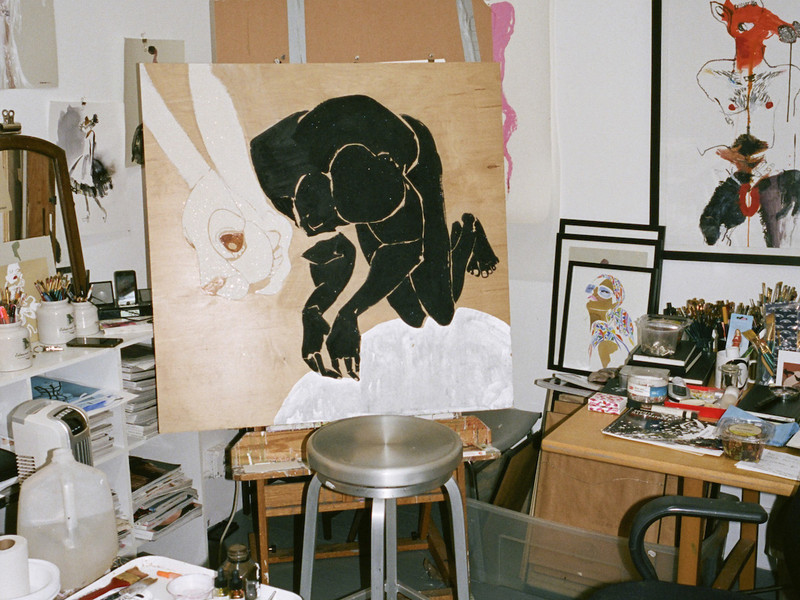
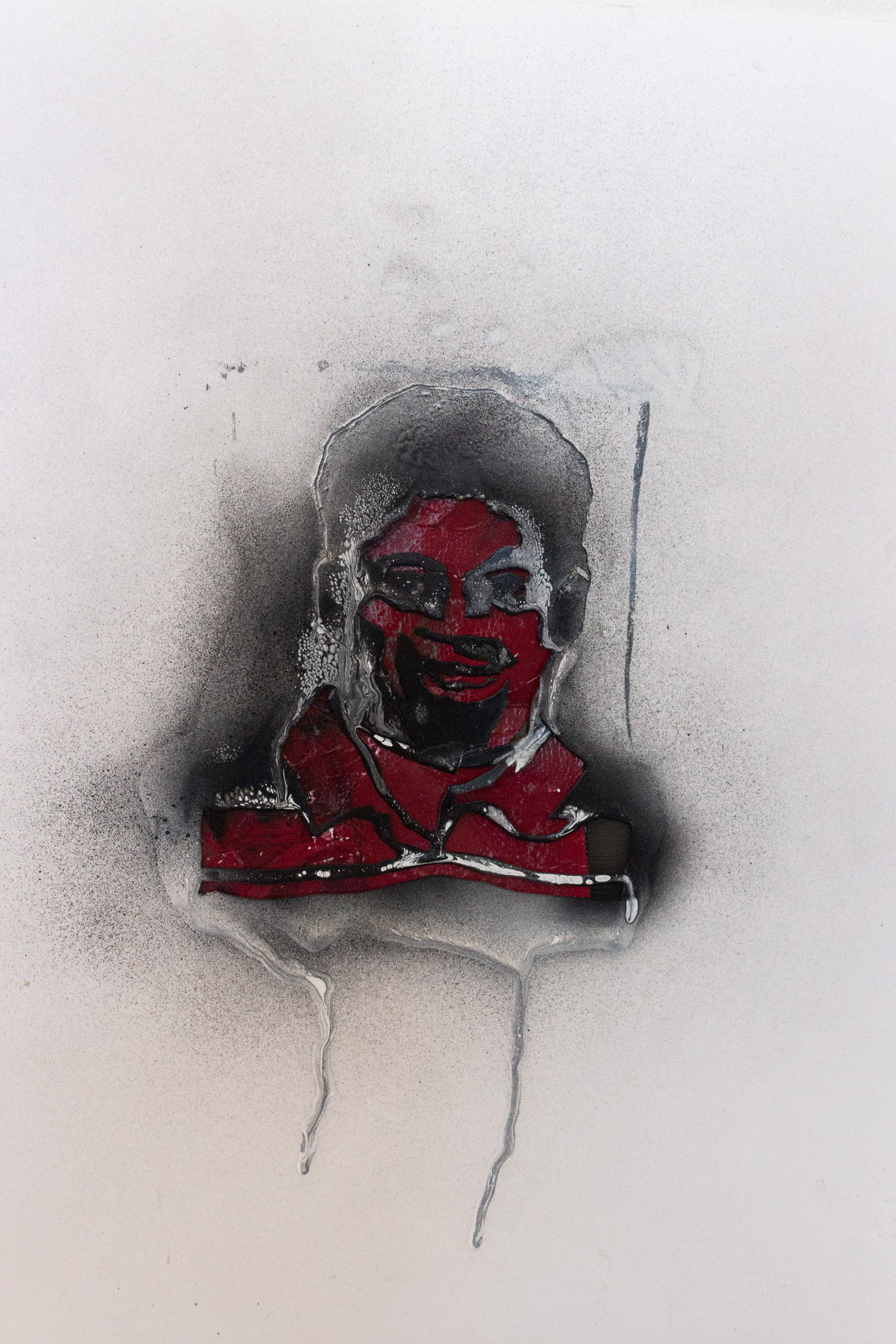
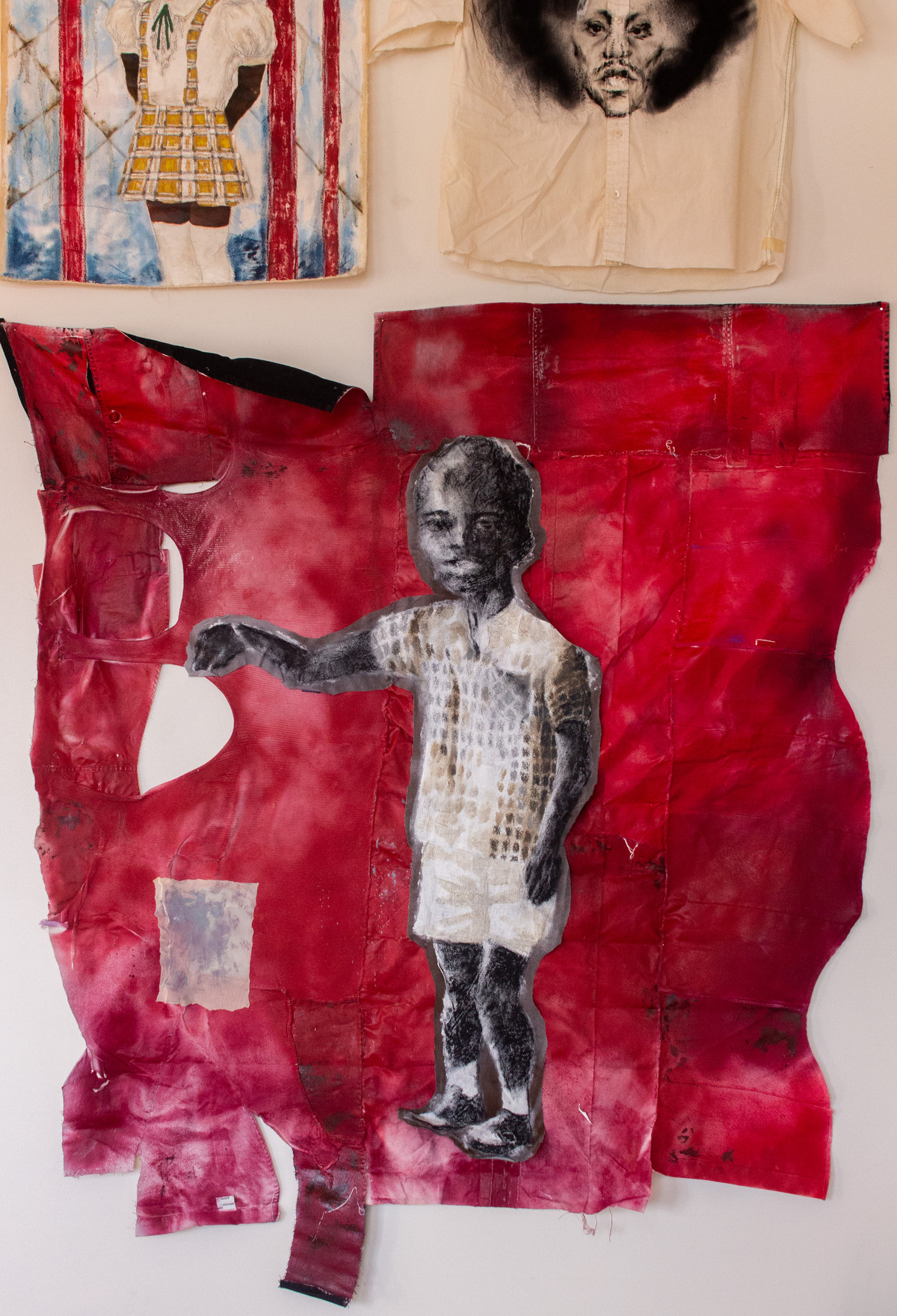
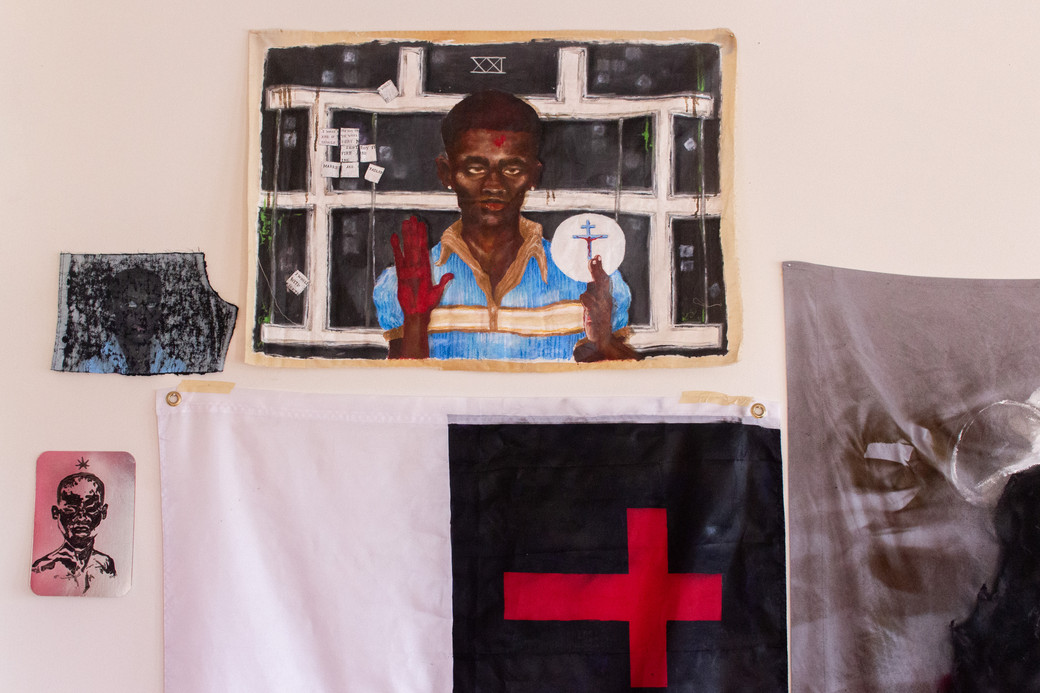
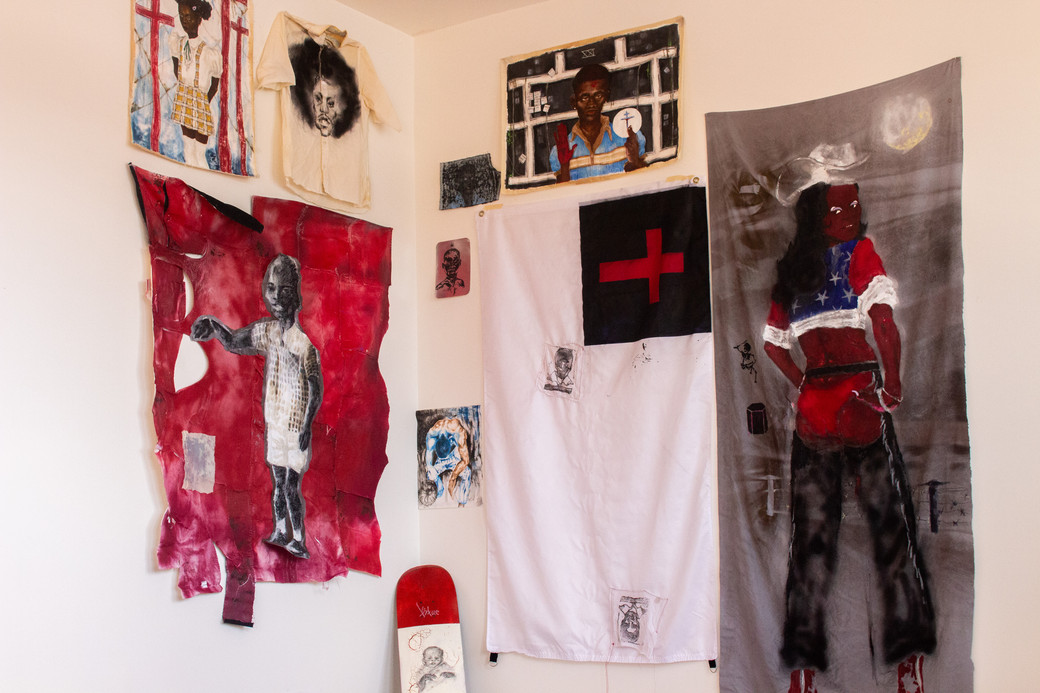
Be kind, rewind—and peep some of Korine’s pieces, below.
'BLOCKBUSTER' is open now until October 20, at Gagosian in NYC.
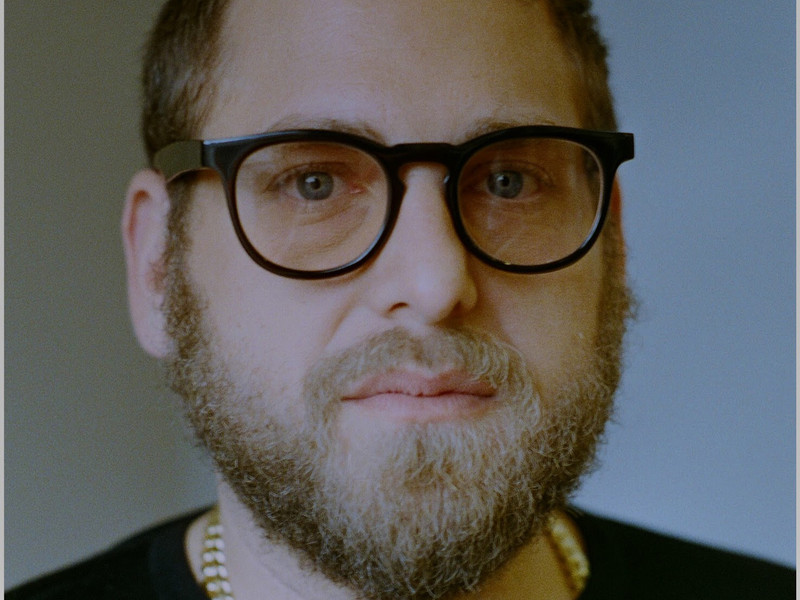
Lead photo by Sam Hayes; art photos by Rob McKeever; all courtesy of Gagosian.
Stay informed on our latest news!

Be kind, rewind—and peep some of Korine’s pieces, below.
'BLOCKBUSTER' is open now until October 20, at Gagosian in NYC.
Lead photo by Sam Hayes; art photos by Rob McKeever; all courtesy of Gagosian.

office had the chance to sit down with Emily and discuss the nuances of her mixed-media work, the interplay between self-reflection and a sense of community, and what it means to her to be able to continually honor her heritage through her pieces.
Your work focuses on showing how vivacious and close-knit New York’s Caribbean communities are. How do you encapsulate such a colorful, familial community just within the scope of a canvas?
Spending time in communities like Flatbush and Jamaica, Queens emphasizes the time I spent in Haiti and Trinidad. In these communities, I get a true sense of home, from the conversations I have with others to the food from the family-owned shops. The time spent in these neighborhoods is very intentional as I think about a way to commemorate and honor these spaces. I think about my work existing in Caribbean homes and aunties sharing and passing along my work. For me, each piece conveys thoughts on how I can memorialize moments in my life that make me feel at peace and at home in my heart.
What does true joy mean to you?
True joy for me looks like hanging out with my friends, dancing to a song that holds a specific memory, eating something that reminds me of where I’m from, talking about something I’m passionate about, and watching a movie from childhood. The truth in joy transforms our existence; it is a renewable source that bridges us with one another.
When you do feel undeniable, unbridled joy, how do you portray an intangible feeling as such in your work?
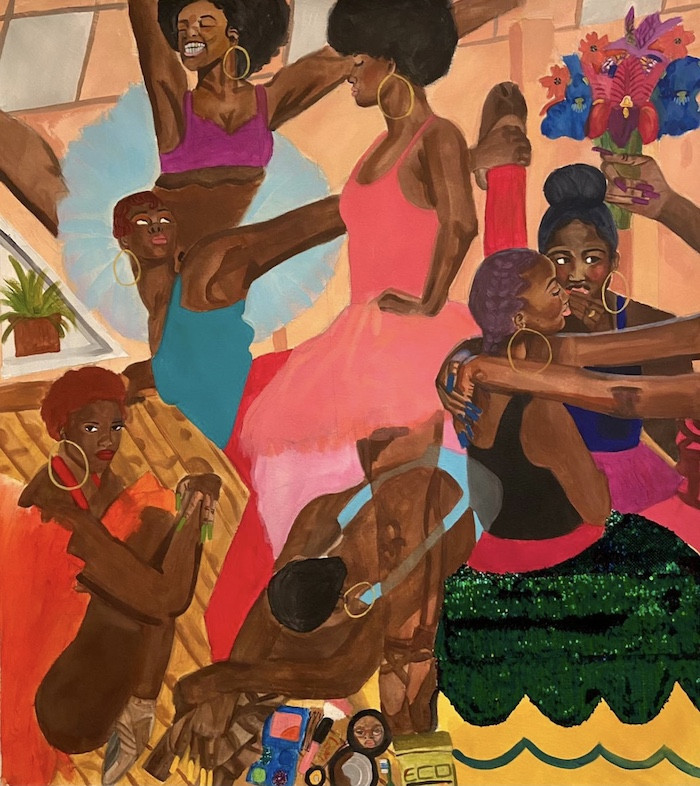
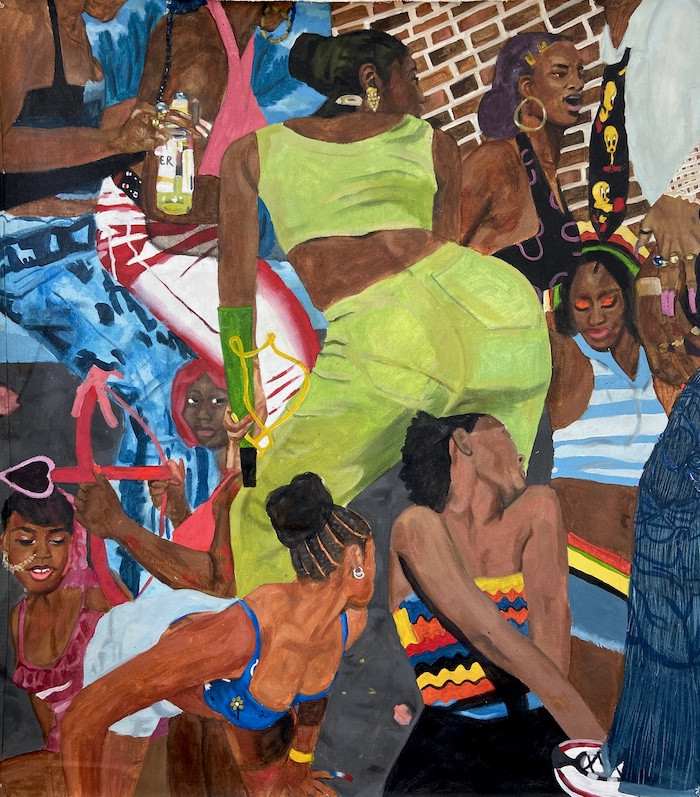
Through color, I am able to physically depict this intangible feeling. Selecting colors and associating them with each emotion allows me to create a full image of vivaciousness. The 3D materials I use in each painting are a very joyous additive; they help the work become more existent. When I form a collage for my work, I look at the expressions of all the people and how they communicate with each other. The paintings contain a lot of the actions and movements that remind me of joy.


Your paintings resonate in such a profound way as they conjure feelings of nostalgia, even if depicting a place or moment that viewers may have never experienced themselves. How has your use of vignettes portraying everyday life helped you work through your own past, experiences, and relationships?
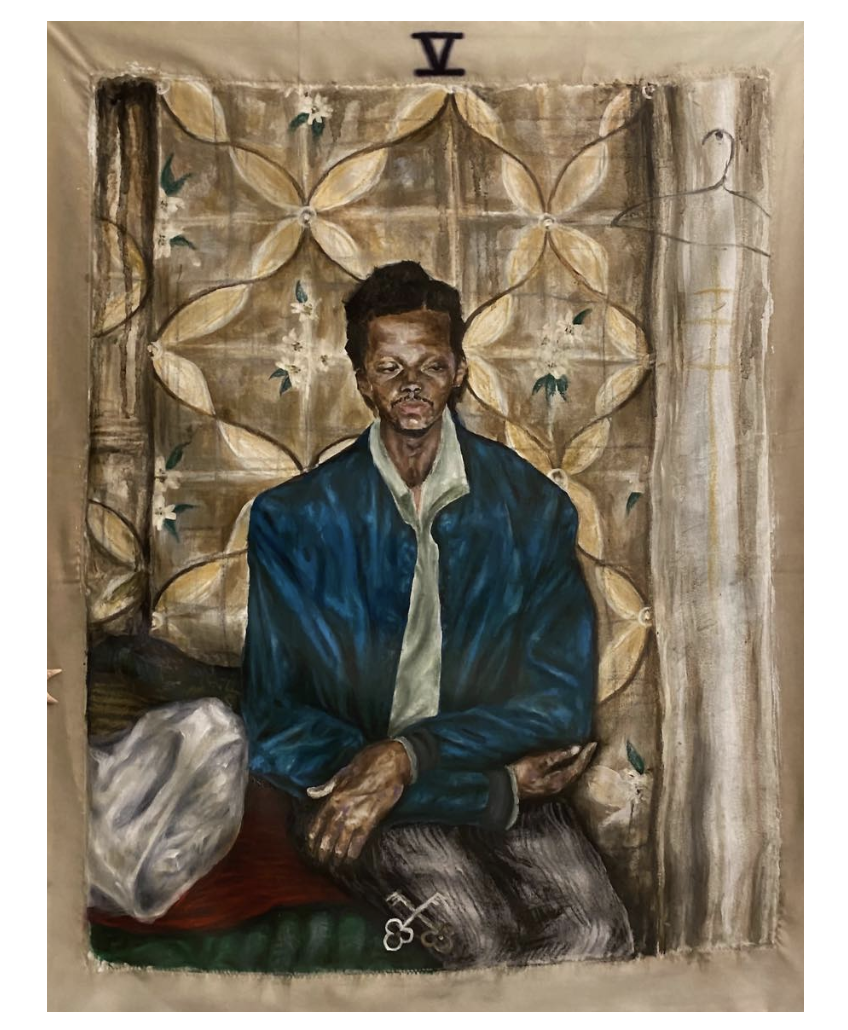
Nostalgia is like the key to anyone’s heart; its ability to unlock the memories of our lifetime helps us navigate our experiences and relationships. Viewers take this journey with me from my childhood memories to futuristic ones that have yet to be physically proven but feel precise in the heart. These vignettes become records of celebration, where I have been, and who I spend these precious moments with. My paintings begin to function like a photo album, images that are not set to one specific time but contain all from one’s life. To take an ephemeral adventure and create longevity with these beloved moments allows me to honor my memory and give thanks for these occasions. It has been very healing for me taking time to paint these vignettes.
What is the most significant lesson you have learned about yourself and your identity through your ever-evolving artistic experience?
I learned that you can begin again over and over. I’ve learned to start over whenever I’m faced with a blockade. The lesson of “what will be for you will always be” helps me to think about my ever-evolving future and how ablaze it is. Thinking about each day one day at a time keeps my peace within arms reach and allows me to understand my artistic practice at the pace I’m comfortable with. I’m attentive to the many lessons I’ll learn along my travels.
What do you hope others gather from your work? Do you hope it inspires a similar process of self-reflection and realization in viewers?
I'm hopeful that my work inspires others to love the ones around them and hold them close tenderly. I hope all my Caribbean people see my work as a shoutout to them and me giving thanks to the culture I was brought up in. I think the process of self-reflection is important in making my work universal. I enjoy viewers looking and thinking about their families and the memories they share. I remember at a gallery show, a grandmother came up to me and told me this painting reminded me of all her grandchildren and that she had to show them — that, to me, is the highest accomplishment in my eyes.
I’ve read that along with your upbringing and those close to you — a large part of artistic inspiration for you comes from music. If you could design one album cover for an artist, who would you choose?
Yes! A lot of music keeps me going in my visual practice. Just listening to music and dancing in my studio helps me paint. That was my first love. I was singing before I even picked up a brush. My favorite cover artists are Robert Springett who did work for Herbie Hancock and Corky McCoy who has done work for Miles Davis. I would love to design cover art for Kelela. I can envision the cover already, with a dynamic composition of women taking up volume. Another part of me wants to time travel and do a cover for Diana Ross for all my 70s babes.
As a young artist, you have so much room to grow in your craft still. You’ve worked within the mediums of painting, sculpture, and collage — is there any other method you’d like to try?
Somehow, I would love to incorporate more music in my visual practice. Thinking about how sound can exist in my work is something that I’m beginning to open up to. Dance as well is a medium that transforms space and carries the same movement held in my paintings. Also, a lot of the work my dad makes through architecture interests me in world-building. I wonder what it would be like working with him on something. I can also see myself going back to school for culinary arts to be able to make the dishes I enjoy and take on art visually in that realm. Art is so vast in that way — there are so many different mediums that become languages for your overall message. I believe I can do it all — there’s a lot of life to live!

At this moment, you’re like a well-kept secret ready to make its grand entrance. How would you like to introduce yourself to the world?
Ideally, in a cloud of smoke, some thunder and lightning, and something tragic playing softly. I wouldn’t have anything specific to say, as long as my presence is felt.
Since you started out, how have you developed the style and themes within your work?
I have always been someone that has had an intense internal world. Fantasy has pushed me since the beginning, so it was only natural for my work to take its form. The process of getting to this point was just me focusing on specific feelings that caught my attention the most — currently using religion, romance, metaphysical, and familial ties as concepts.
Like many artists before you, you dropped out of school to pursue your craft exclusively. How has that been for you and your practice?
It’s gone well so far. In my opinion, a fundamental piece of being an artist is studying, so I don't feel like I’ve missed out on anything necessarily. The other artists I've met along the way became stand-in teachers just by being enthusiastic about their own work.
You recently had an art showing at a local art exhibit in Richmond, as well as having some of your artwork being sold; how was it having the public perceive you and your work?
It was very odd, honestly. Obviously, I am thankful for the opportunity and appreciative that people want to look at my work at all. It produces a weird feeling because I never intend to sell when starting a piece. However, watching people walk up to my paintings is extremely heartwarming. That moment is probably the most enjoyable part of being an artist — apart from creating the work of course.
Is there a specific goal you’re trying to accomplish with your work?
Maybe to appreciate the world around you. If you start to pay attention to the things around you I think you’d find a lot more is meant to cherish. I think my goal is first nostalgia and second romance. Something that tugs at the back of your mind. Like a baby photo of yourself. It looks nothing like you now, but you know it is you, so you cherish it.

In your works, you use a variety of materials to convey your message. How do you choose a certain type of media for each piece?
I often paint on bed sheets, pillowcases, and things of that nature. I think it brings a sense of comfort and familiarity to the work. To me, it feels overdone only to use canvas, so I align more with making art from found objects like discarded wood blocks and so forth. I guess I enjoy giving things a second chance. Other than fabrics, I don't really plan once I've started a piece. Recently though, I have been using oil pastels a lot more... I do whatever I can to get a feeling out. Mostly through my painting work, but I am interested in and play around with design and sonics often. They are kind of secret projects that I don't really share with anyone but my close friends.
Your work entails that you have a very complex relationship with religion, with a lot of your works giving nods toward biblical stories. Would you say religion has played an important role in your life? Is your art a reaction to your experience with faith?
Very much so. I don’t think religion will ever not be a part of my work. I personally am not a believer in anything specific. Religion, to me, is just something you are taught. I was raised to believe in something, so I can't really rewrite my brain now. Short answer: It’s complicated.
Two pieces that stuck out to me were “Cain” and “Abel,” which are clear references to the Old Testament story of that same name.
Cain was the first work of mine that held real emotion. I was dumping everything I had into that painting. He is very important to me. The work really set me on the path I'm on now. Cain was just all negativity, it was everything bad I was feeling at the time towards my friends and family members. And then Abel came after that, and that was just the regret I was feeling to the people I was supposed to be loving towards.


In many of your pieces, your figures look perturbed or afflicted. What kind of emotions are they a reflection of?
I don't know if they are afflicted with anything but heartache. Most of my work revolves around love as a concept. Perhaps my perception is a little more melancholic than normal.
What was the last movie you watched that reinforced your view on love or otherwise tore it down?
Everything I experience reinforces love. I’ll find love in anything. That being said, there's this one scene from a movie called Super Dark Times where the main antagonist kills his best friend. The best friend's reaction is really what catches my attention, though. Instead of fighting back and trying to save himself, he mumbles “I love you” before the person closest to him takes his life. This particular scene just stuck with me ever since I first saw it. Not sure if it’s necessarily moving me towards a greater or lesser view on love or even romance.
Relationships seem to be a driving force in your work. There is this air to some of your pieces that scream “obsession.” Is there a couple out there that you admire?
Recently Yoko Ono and her relationship with John Lennon. I like them together. It seems like gravity between them. Choosing to be together even if others disagree. They complemented each other perfectly. It was like this beautiful, twisted marriage, where John moved over to making artworks and movies while Yoko Ono took over his role and started creating experimental music... But I don’t care about The Beatles.

WORTHLESSSTUDIOS fuels the flame in every artist. The Brooklyn-based not-for-profit was founded by artist Neil Hamamoto, who gained clarity through his own experiences, realizing that there was a pressing need to bridge the gap between accessibility and realization in the art world. WORTHLESSSTUDIOS provides artists tools and space to bring even the most fantastical and ambitious projects to life.
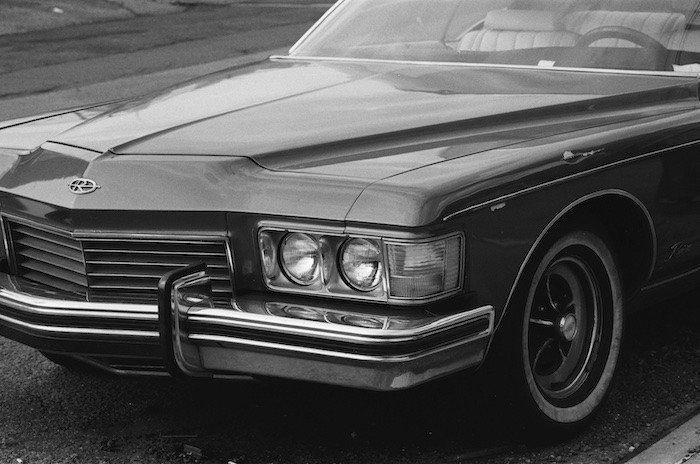
Although diminishing the hurdles that artists must navigate is imperative to a flourishing art community, perhaps the most resonant aspect of WORTHLESSSTUDIOS is the close-knit family that it created and continues to build upon. This family and their progress thus far was celebrated this past month upon the stunning backdrop of The Reform Club Inn in Amagansett with the studio’s second annual Summer Social, a night that honored the enigmatic creative community.
The night began with a panel in partnership with Fairchain, where Allison Glenn of Public Art Fund, Charlie Jarvis of Fairchain, Stephanie Dockery of Bloomberg, and artists Eric Fischl and Kennedy Yanko discussed why it is important to fund artist’s projects and inspire creativity, even amongst the madness of the contemporary world. “We exchange materials for time and creativity,” stated Neil Hamamoto, and it is through fostering this unbridled creativity that we can impact the world on a profound level.
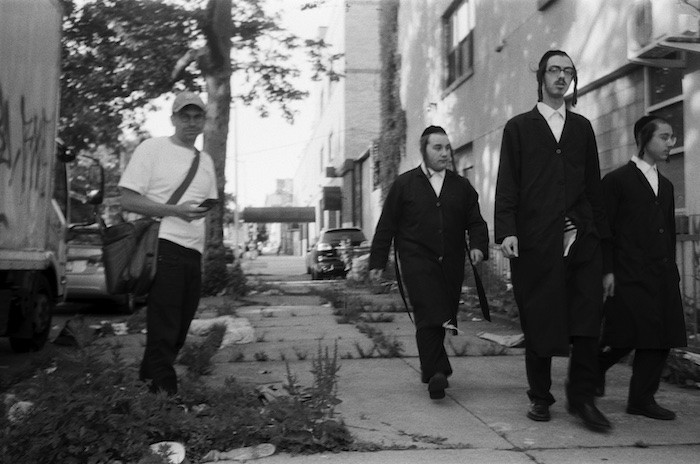
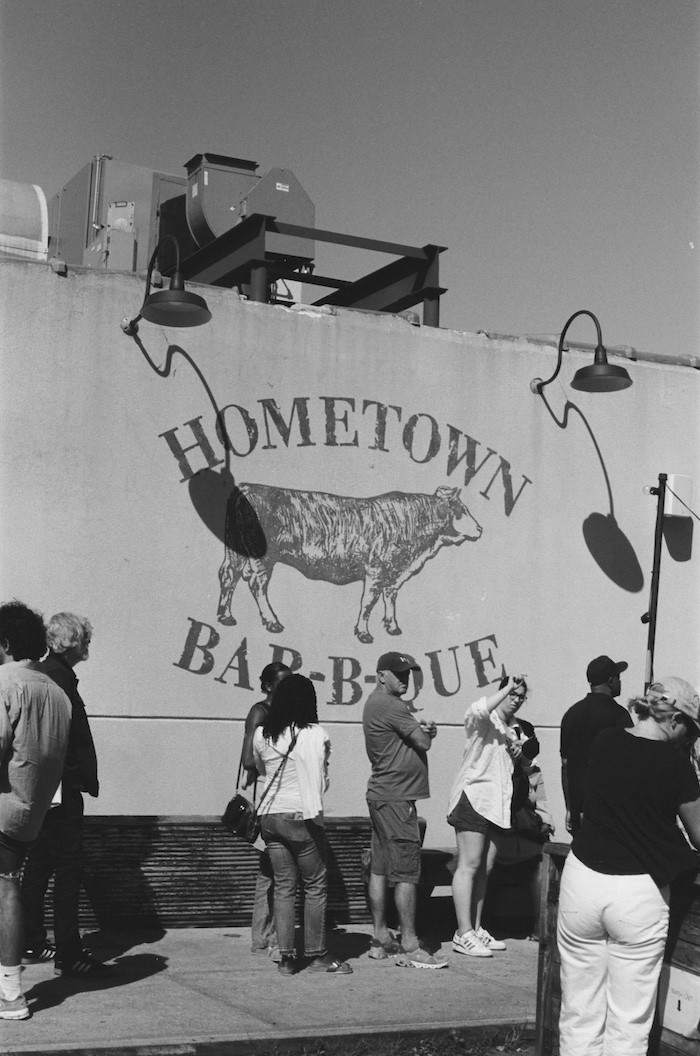
The commemoration was well-deserved, as the past year has given WORTHLESSSTUDIOS a lot to be proud of. The organization spearheaded the fourth edition of its “FREE FILM” project earlier this summer, which began in 2019 after Neil journeyed on a road trip across the United States handing out free rolls of 35mm film to creatives and developing them in an Airstream converted into an on-the-go dark room.
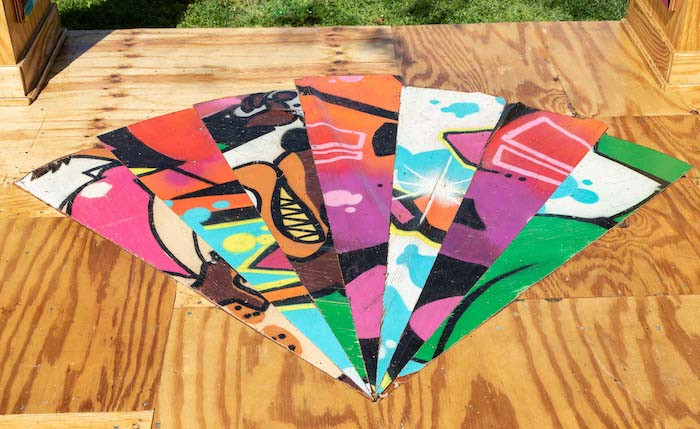
A year later, as mass protests struck out combating institutional and systemic racism, the project continued as “FREE FILM: JUNE 2020,” giving photographers and artists an opportunity to document these turbulent times and provide visibility to the issues at hand. Simultaneously, during these times of unrest, WORTHLESSSTUDIOS facilitated the “Plywood Protection Project,” collecting leftover plywood from boarded-up businesses and redistributing it to artists who transformed them into beautiful pieces of public art.
This time around, the “FREE FILM” project will take to the streets of New York City, once again allowing those who may not have proper access to film, cameras, and development the chance to step behind the lens. WORTHLESSSTUDIOS will also be expanding upon their brilliant milestones with their brand new 10,000 square foot warehouse, located in East Williamsburg, which will host its first exhibition, 1-800 Happy Birthday, this September. “By making our home here, we can support more artists through fabrication, technical assistance and other resources, while continuing to challenge and engage the public with major projects,” says the organization’s Executive Director, Marcia Santoni.
1-800 Happy Birthday is being produced in collaboration with creative production studio Even/Odd Films and it is co-founded by filmmaker Mohammad Gorjestani. The large-scale exhibition honors Sean Monterrosa, Oscar Grant, Philando Castile, and Sandra Bland, along with the many more Black and brown lives who devastatingly fell victim to police killings and systemic racism. To celebrate their lives and legacies, the team worked closely with contributors, curators, and the families of the celebrants themselves, to bring in upcycled New York City payphones that will play voicemails left for the celebrants on their birthdays. Visitors will have the opportunity to leave their own voicemails as well, and there will be an array of support resources available for families and visitors — “One of the hallmark programs for 1-800 Happy Birthday will be Family Meeting, an open discussion with mothers and families who have lost loved ones to police violence. The design of the exhibition itself provides space for visitors to take it in and then process the experience,” Marcia explains.
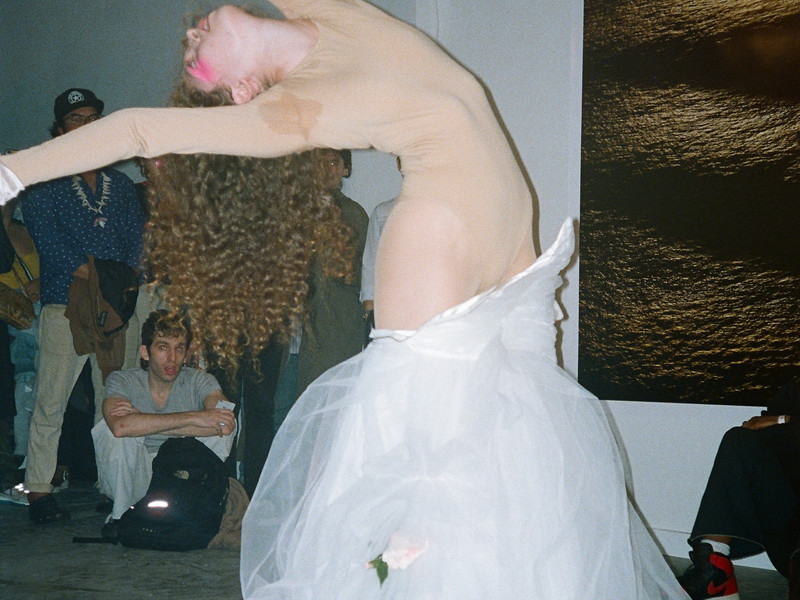
1-800 Happy Birthday is still in the works, as WORTHLESSSTUDIOS is an ever-evolving entity, but you can take a look into all of the groundbreaking work that they and their wildly gifted collaborators have accomplished in past projects, below.