Boiling Over
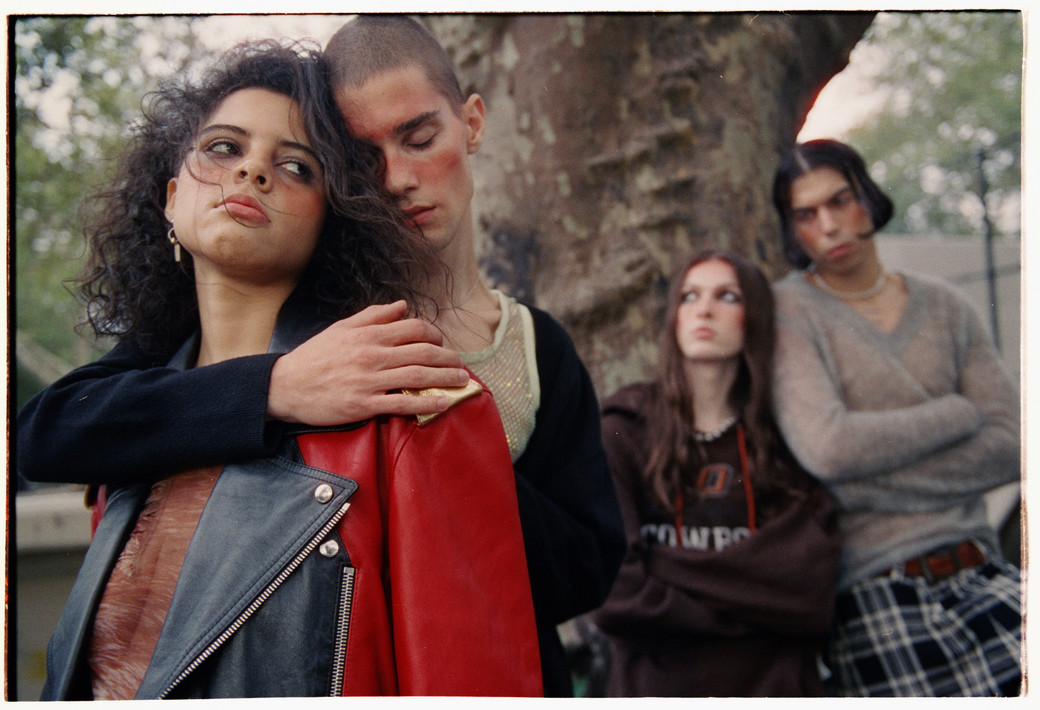
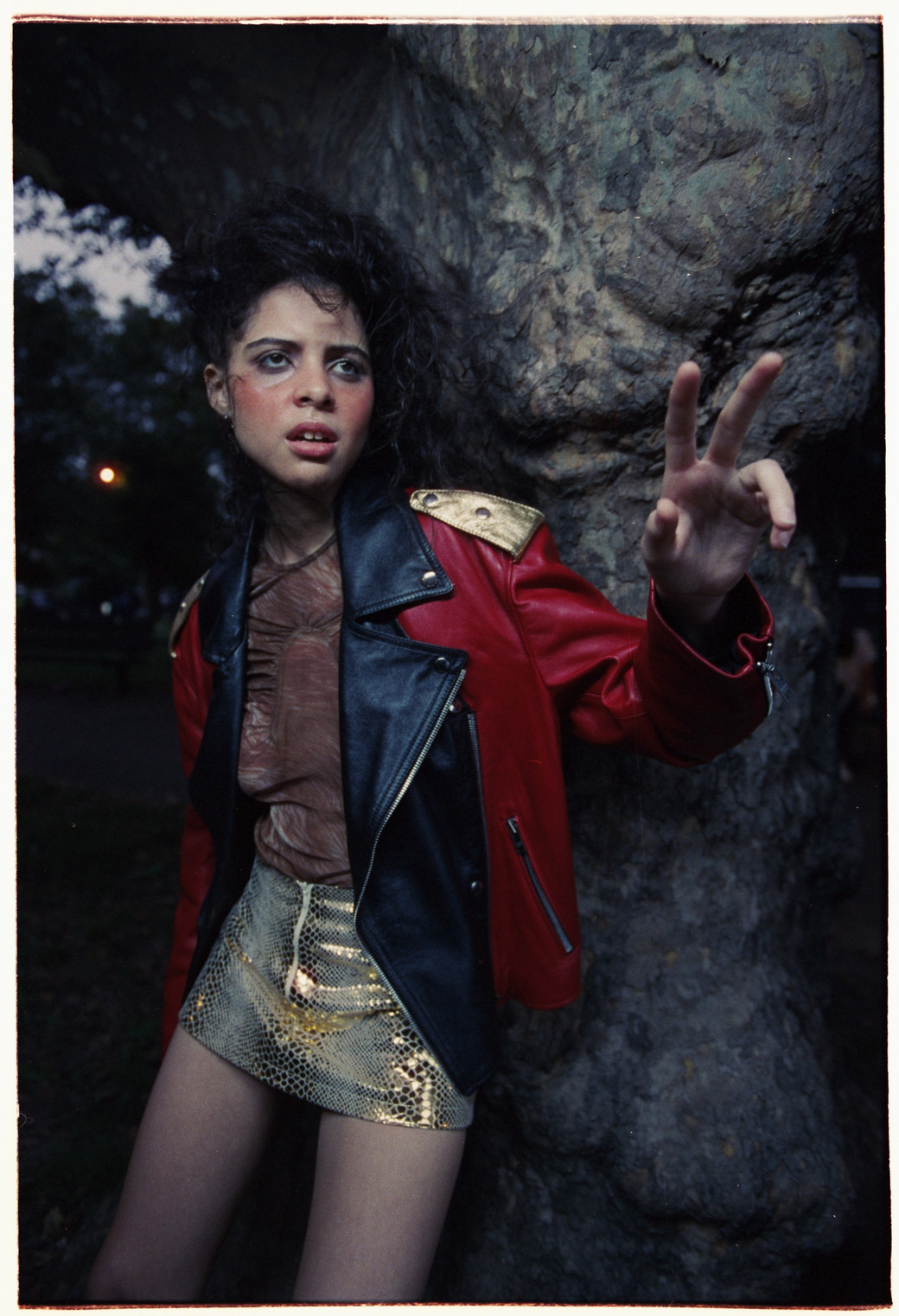
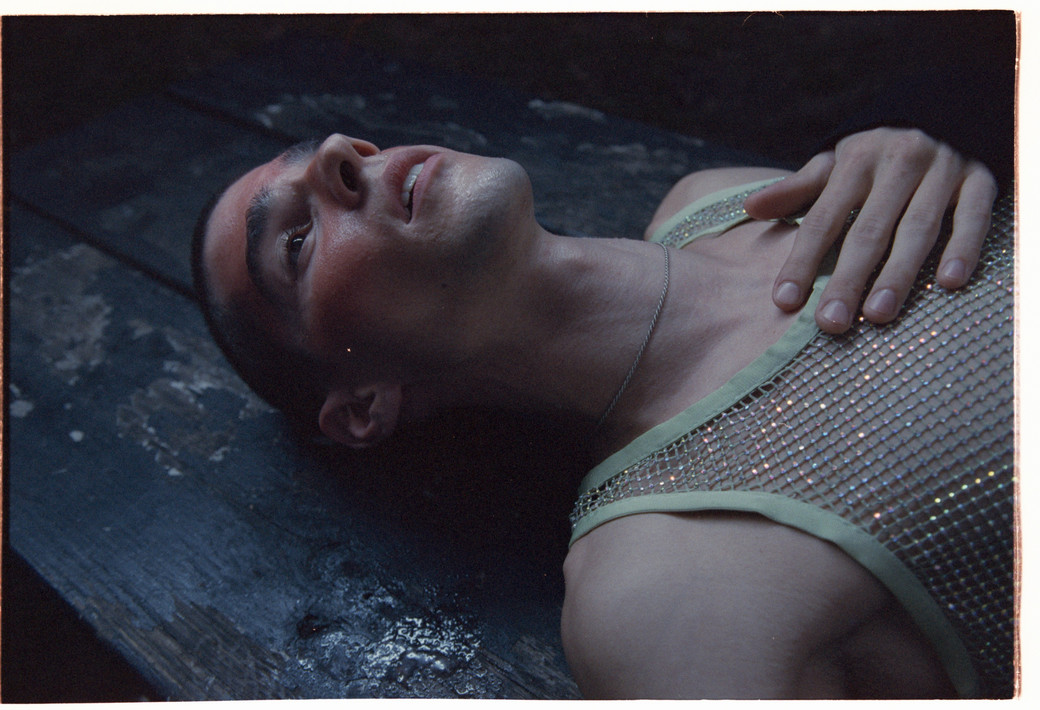
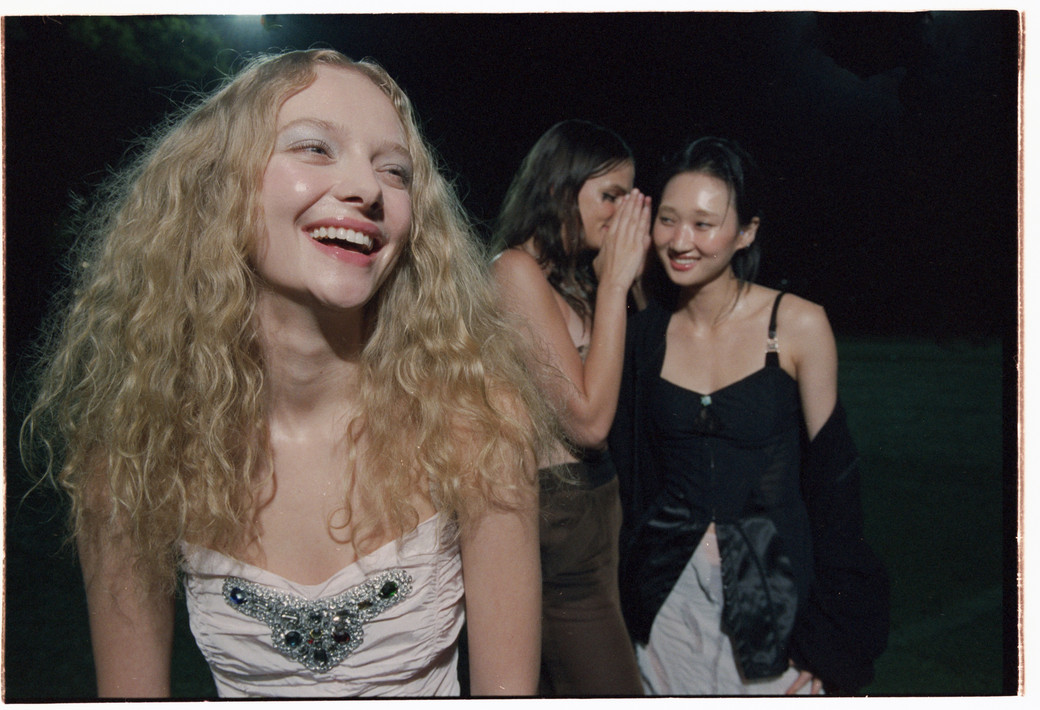
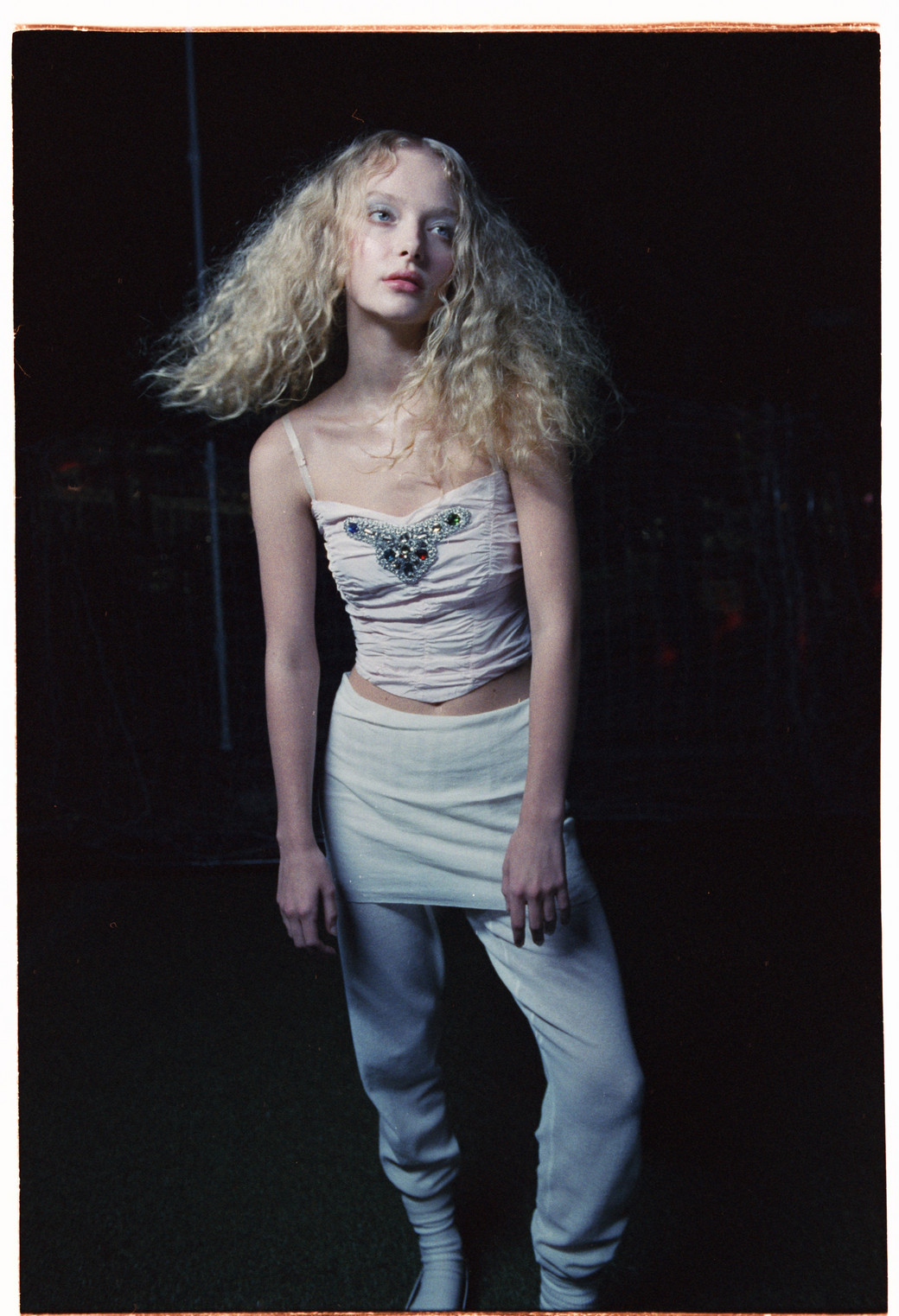
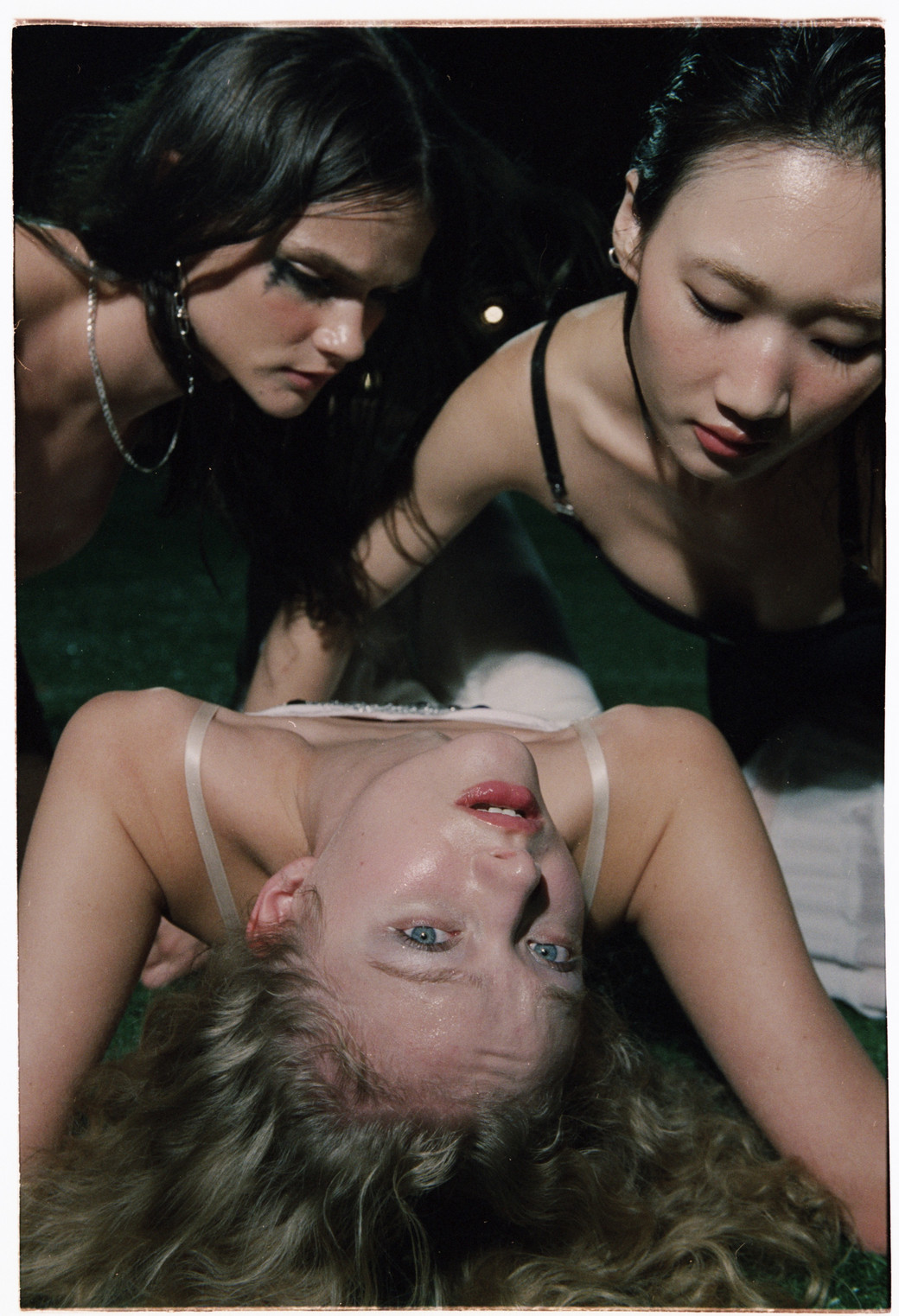
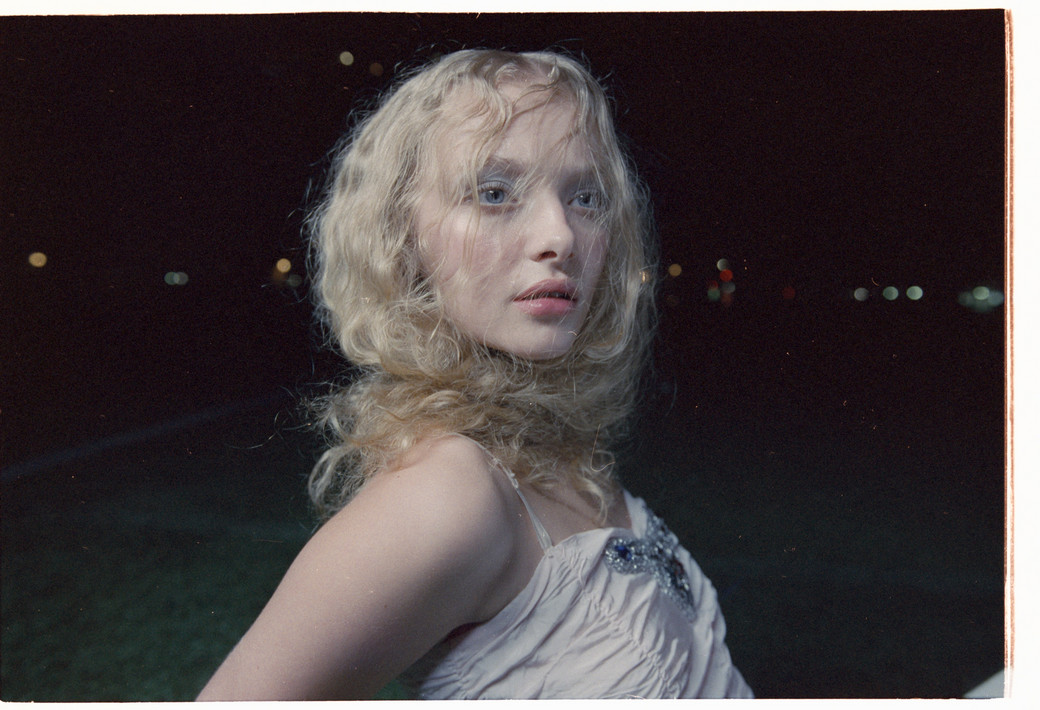
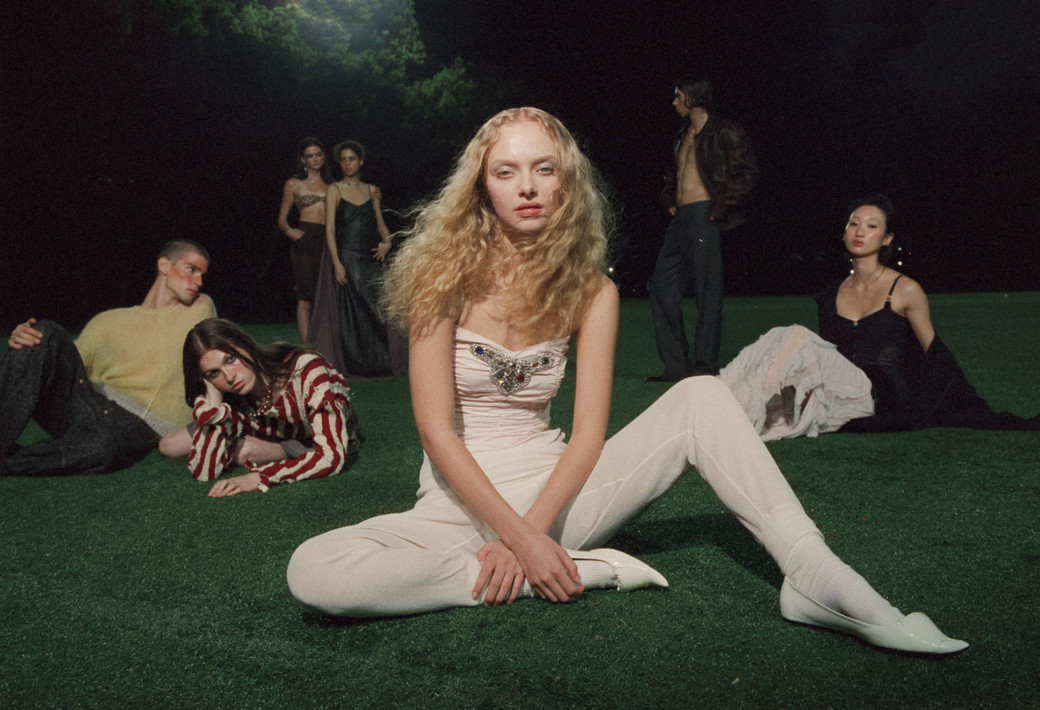
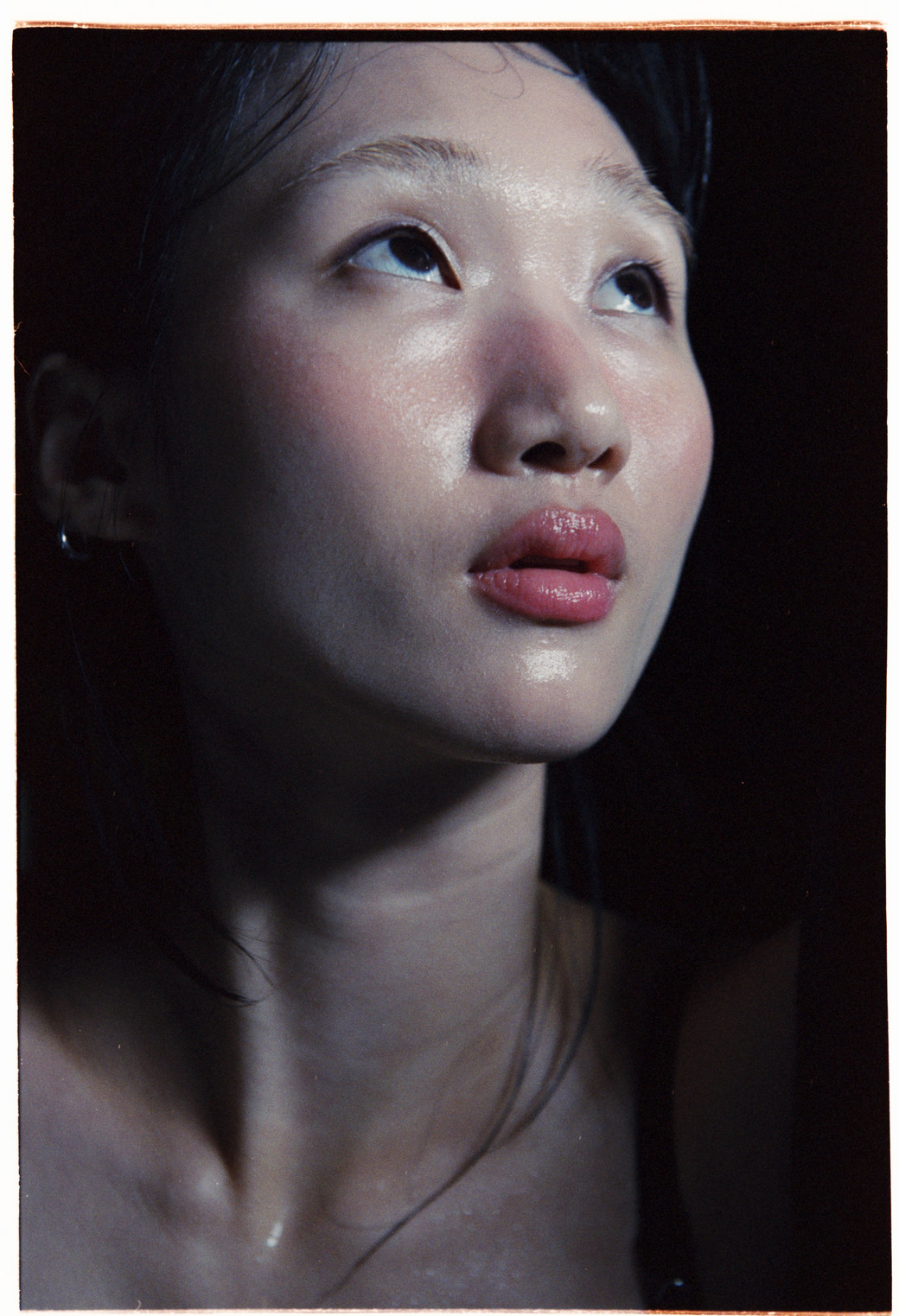
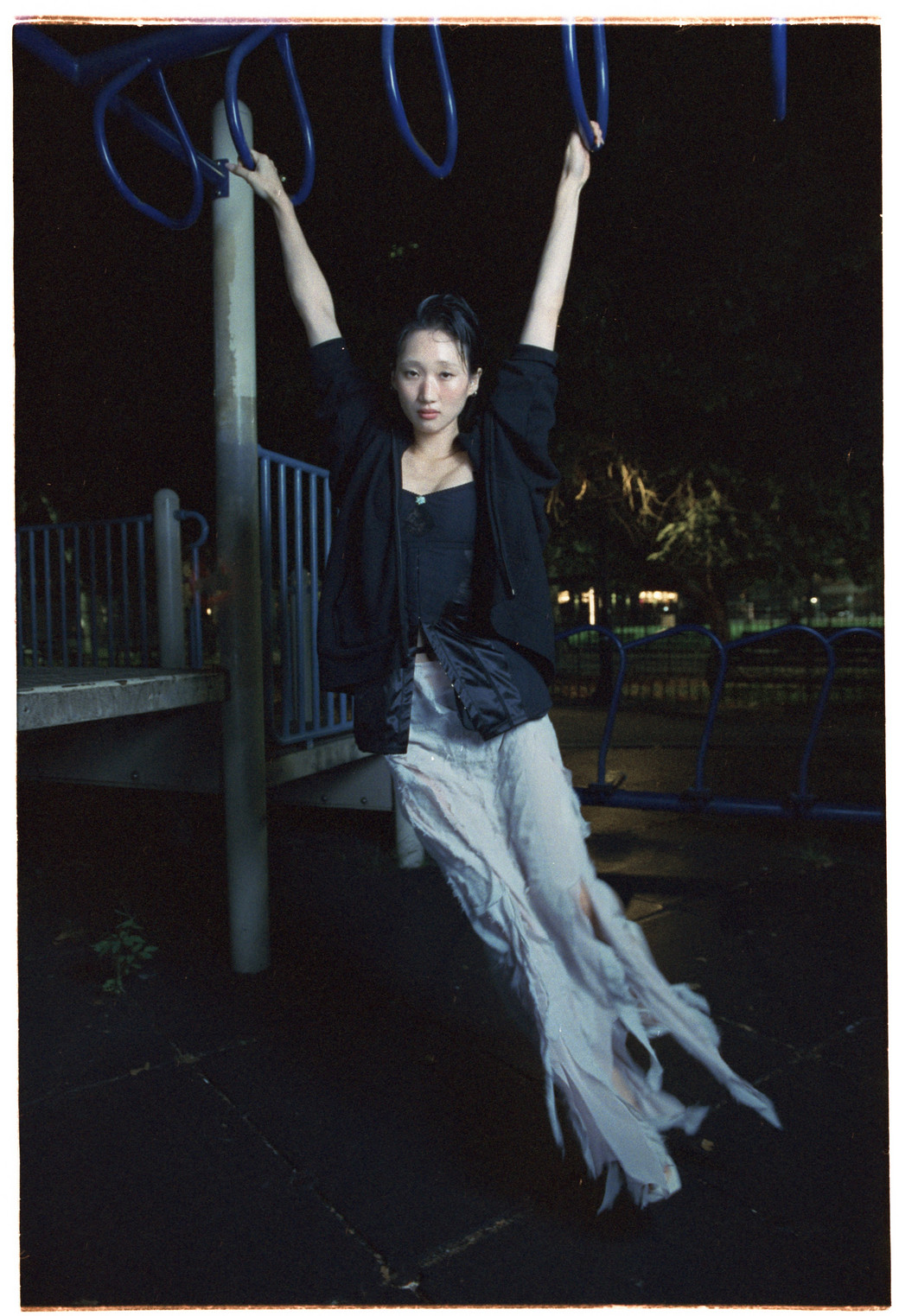
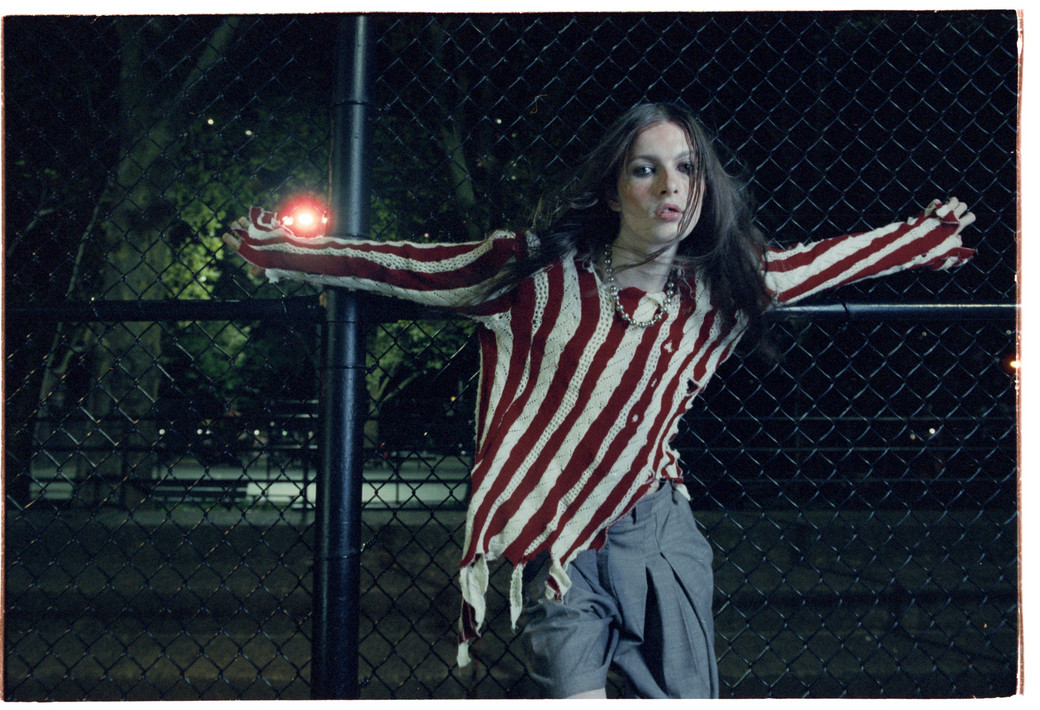
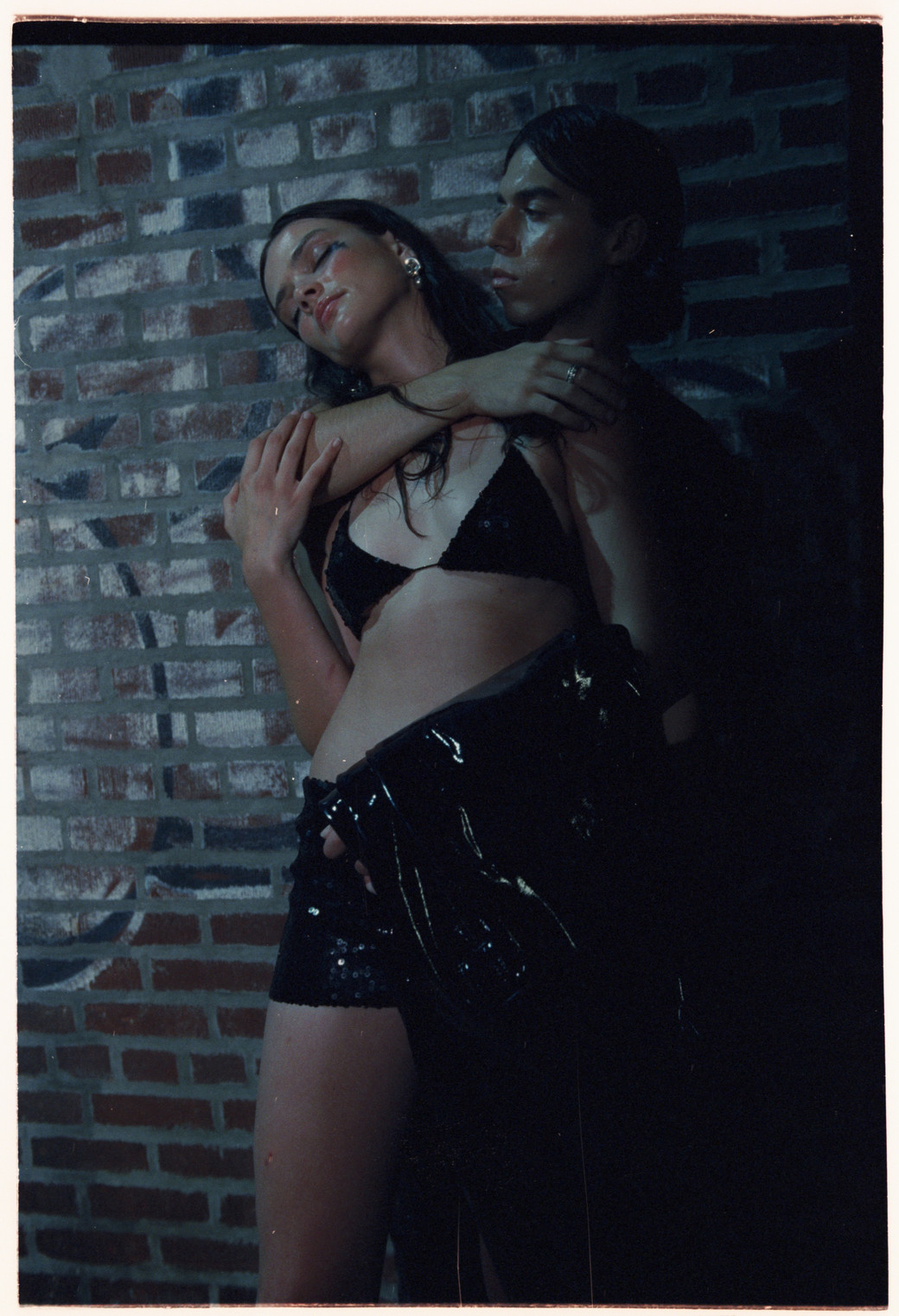

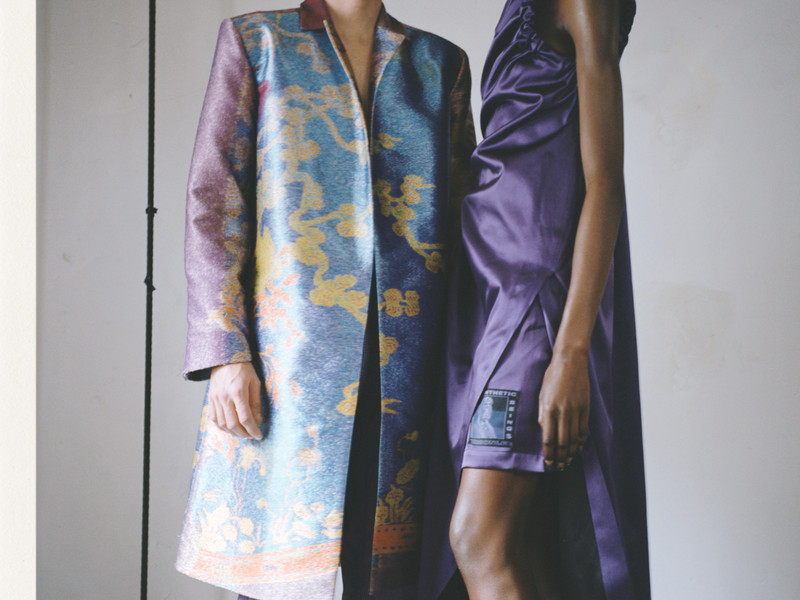
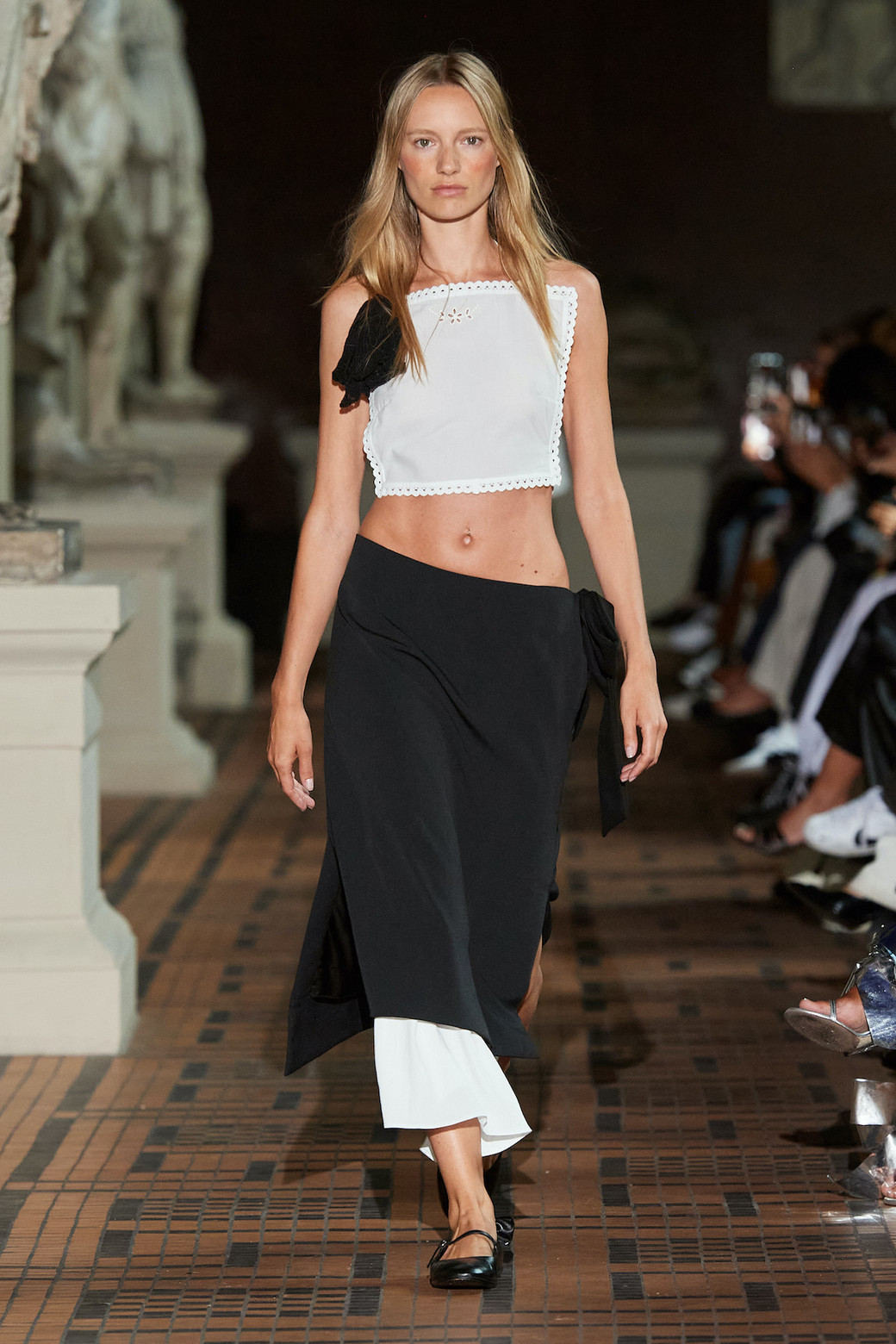
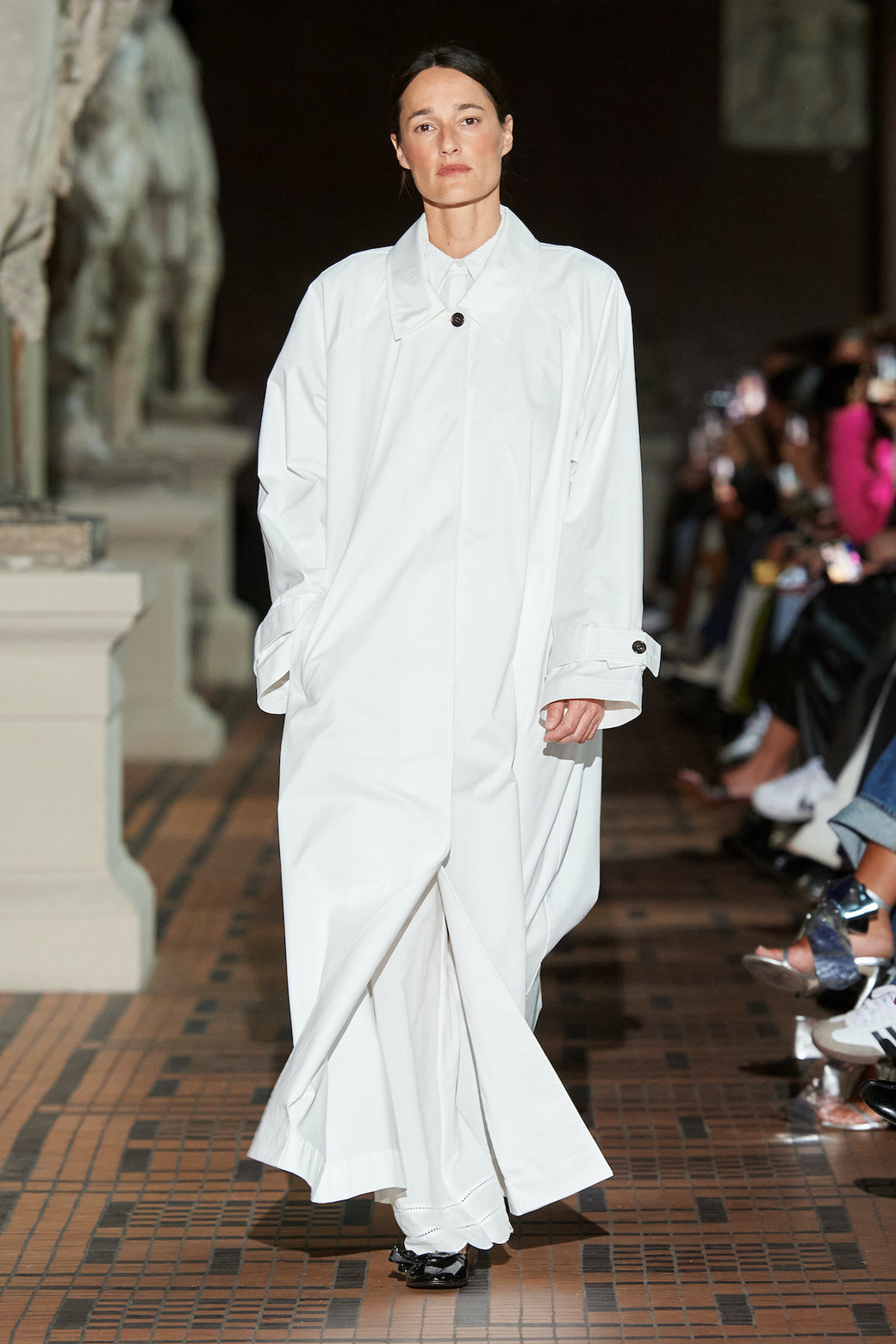
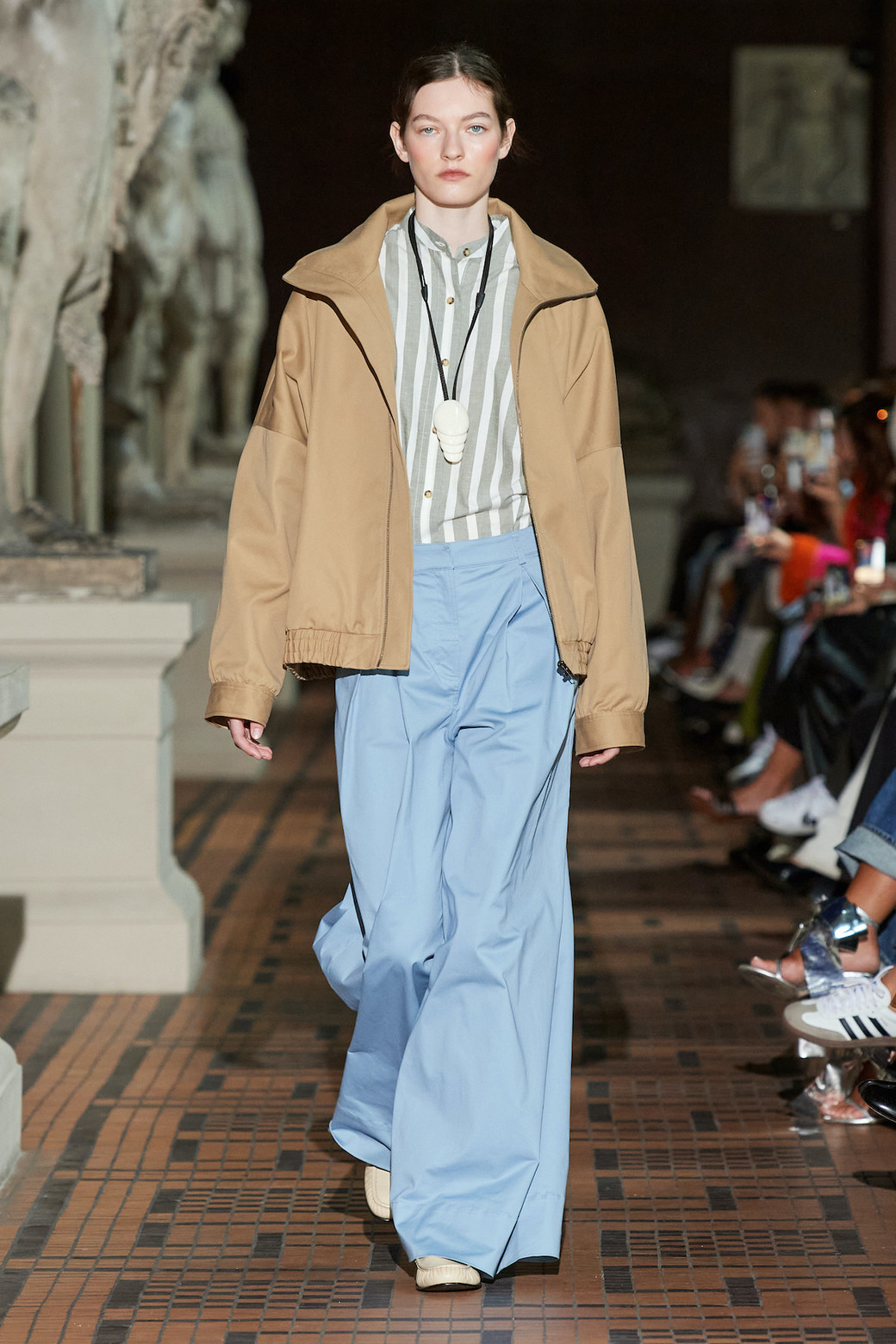
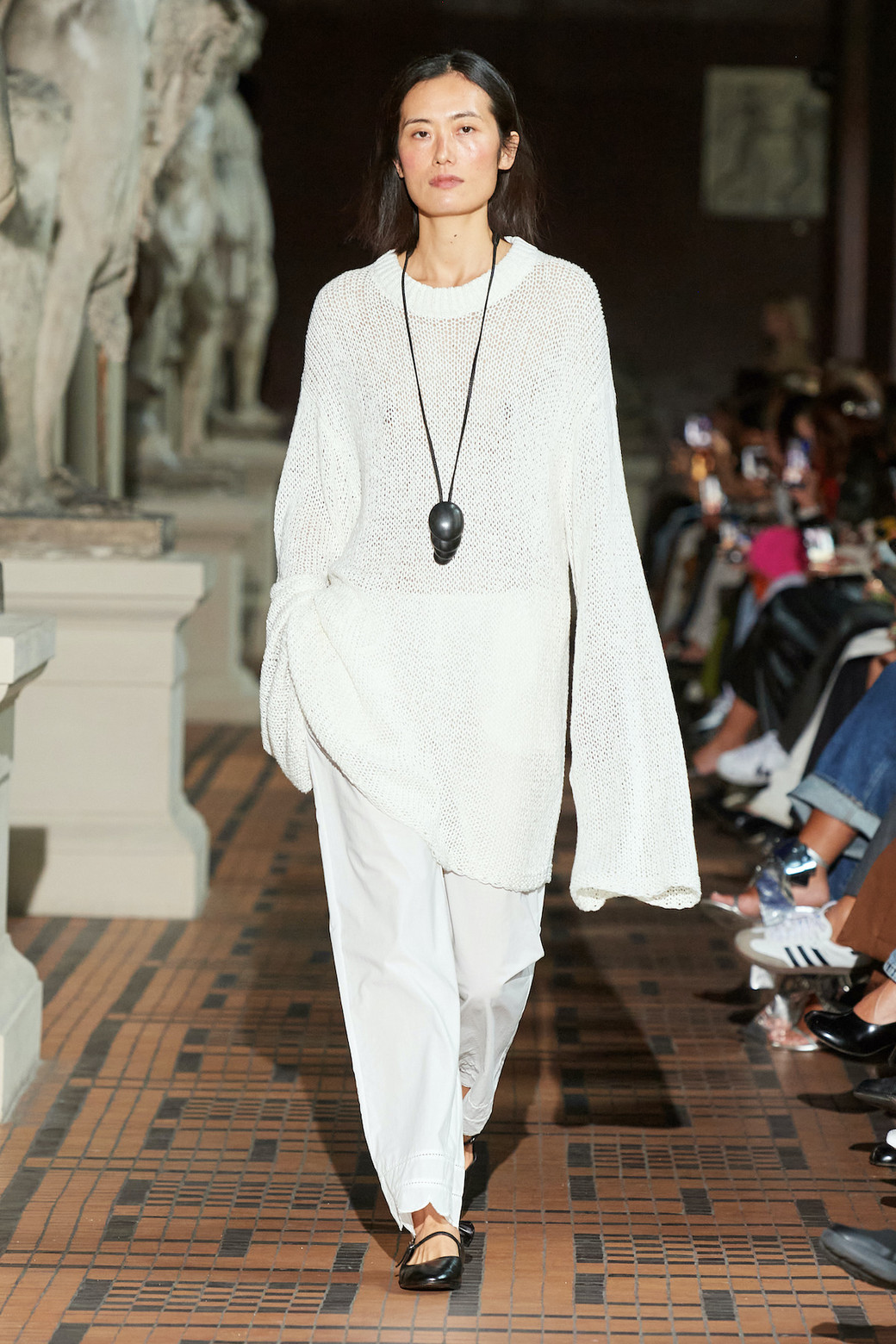
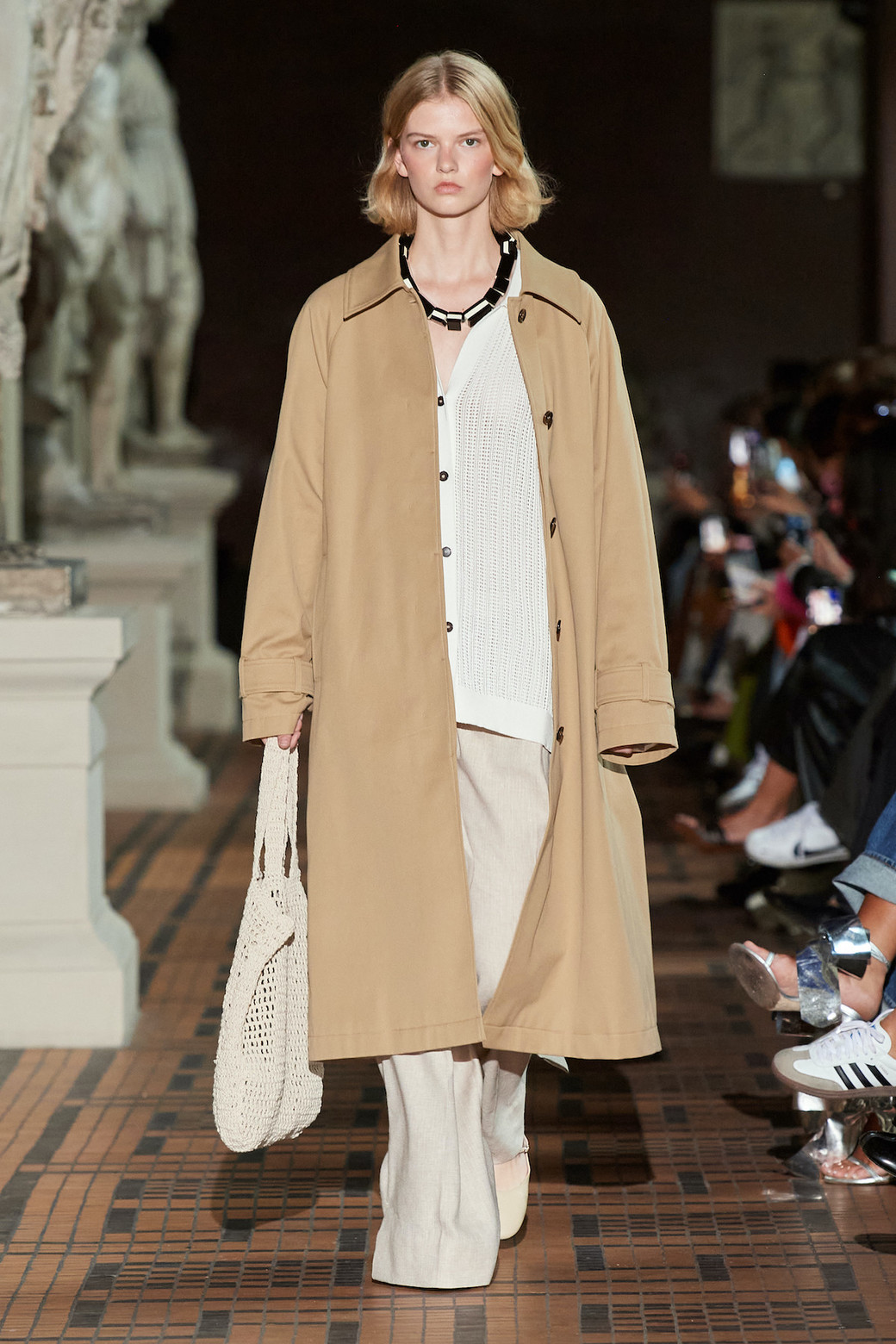
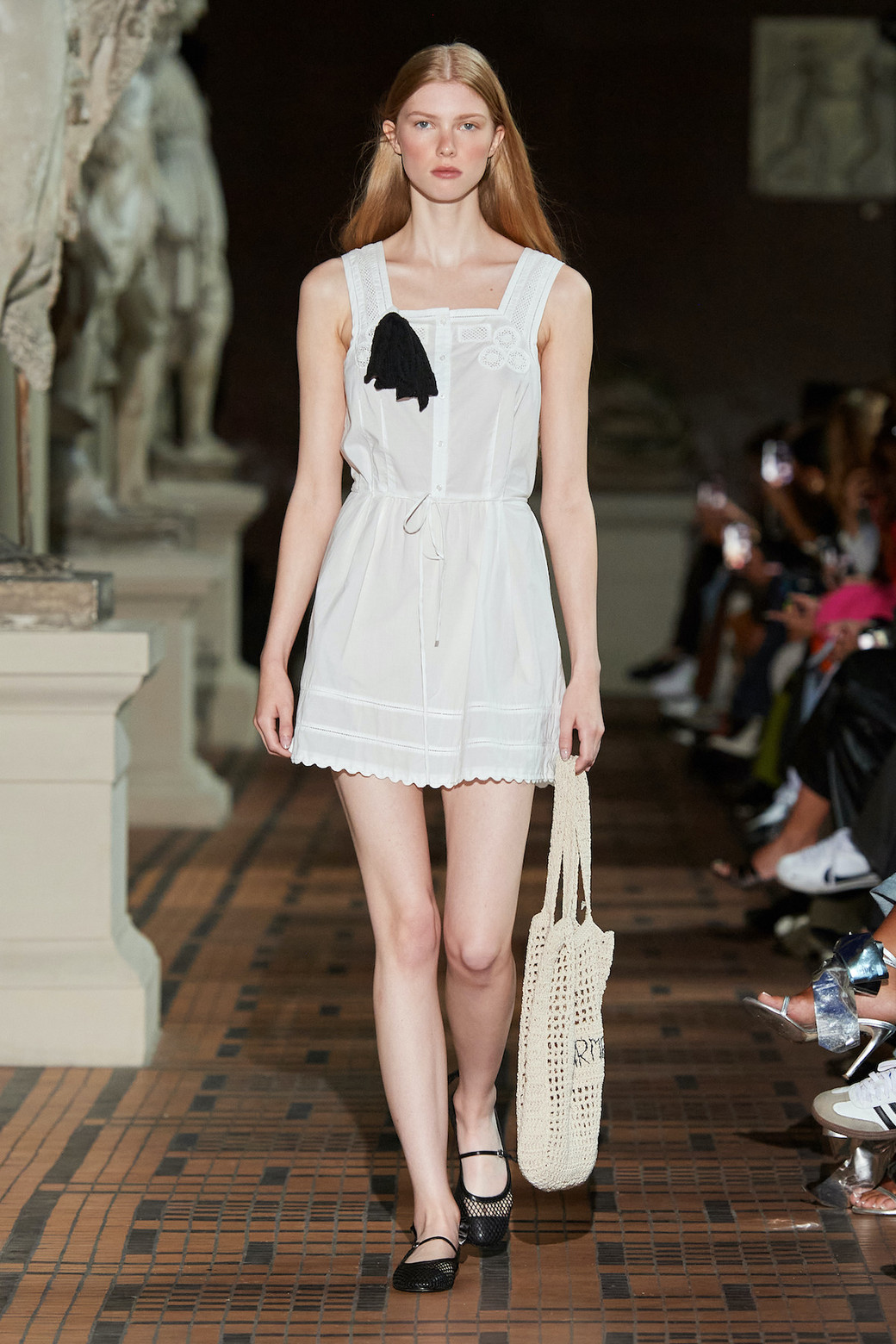
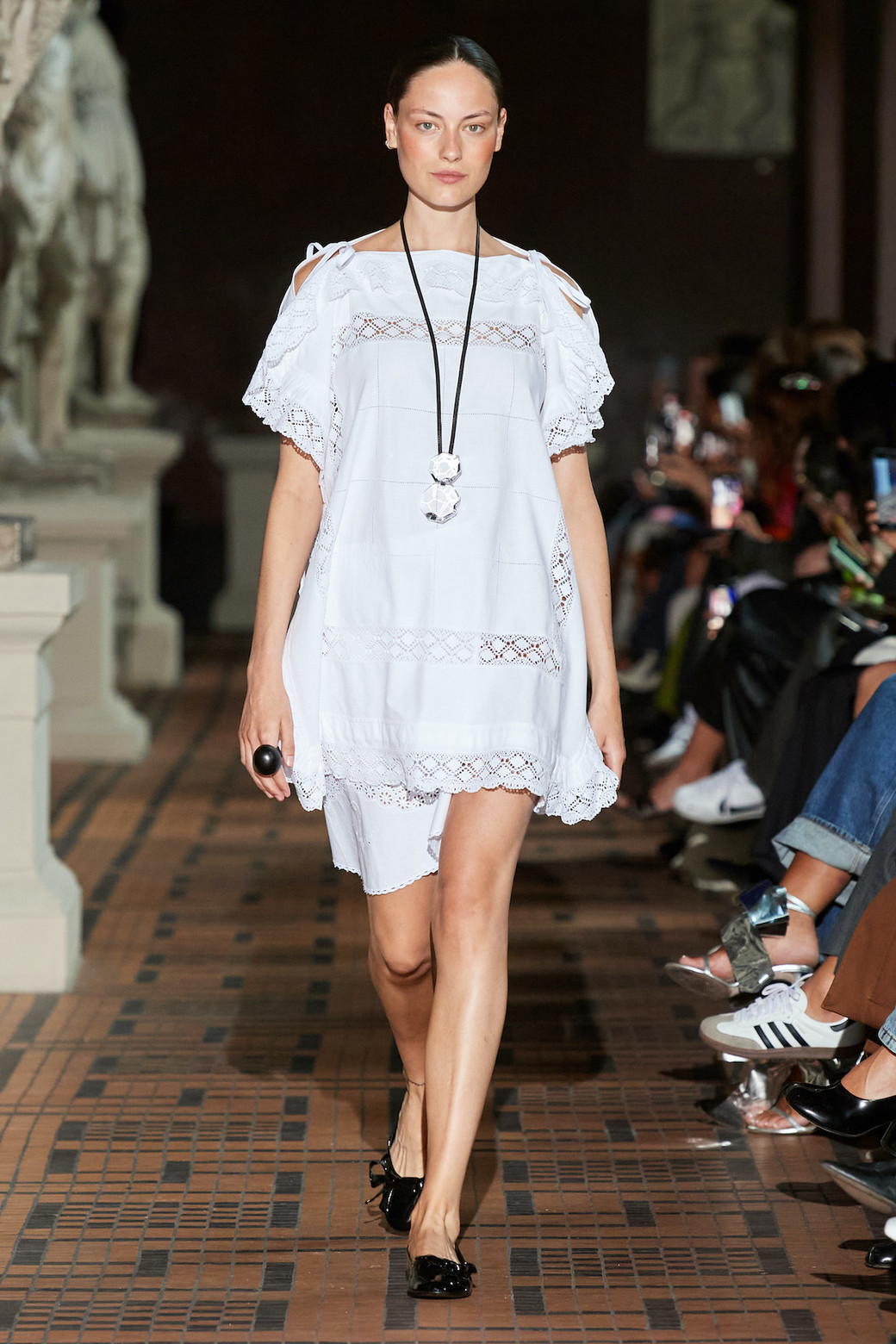
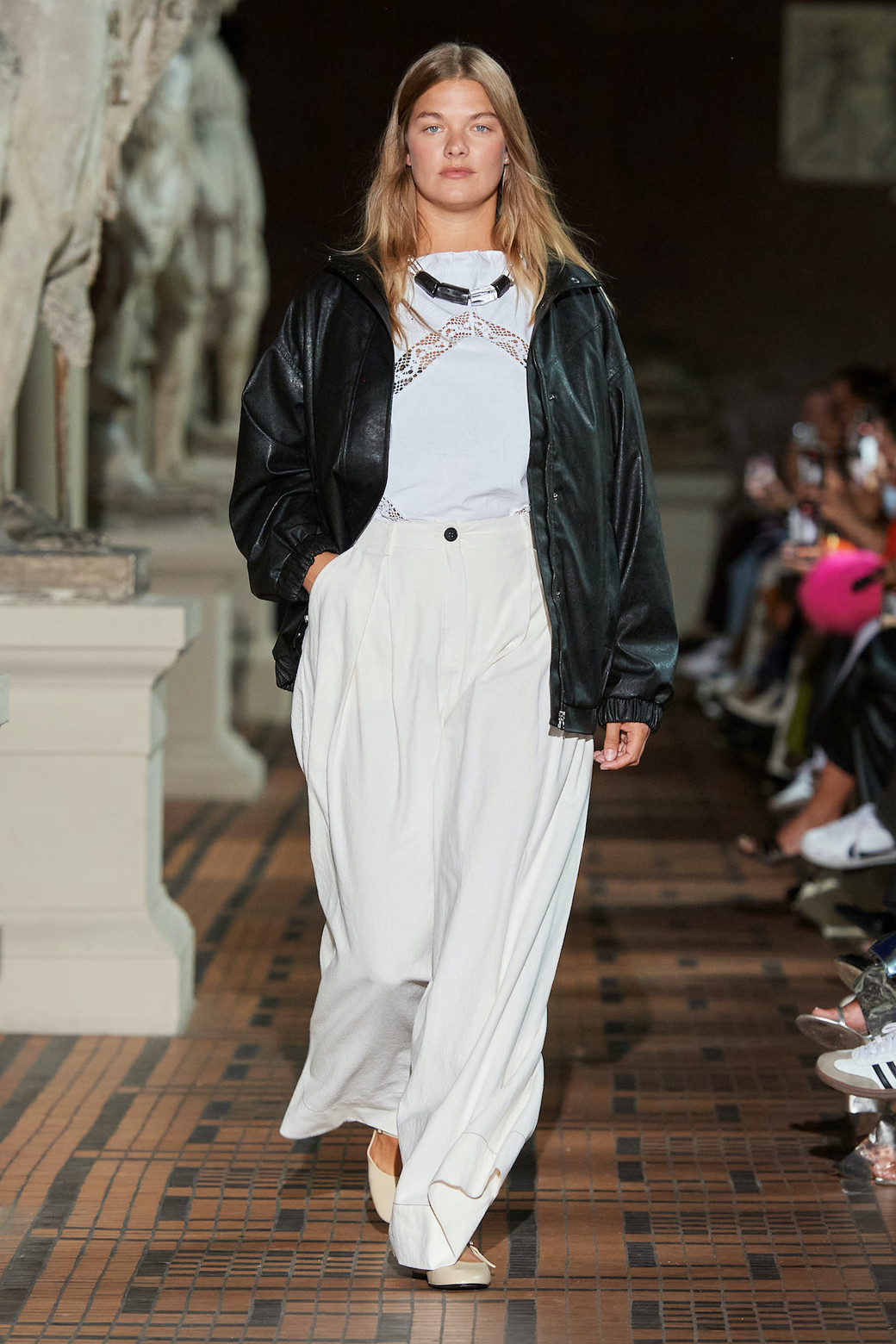
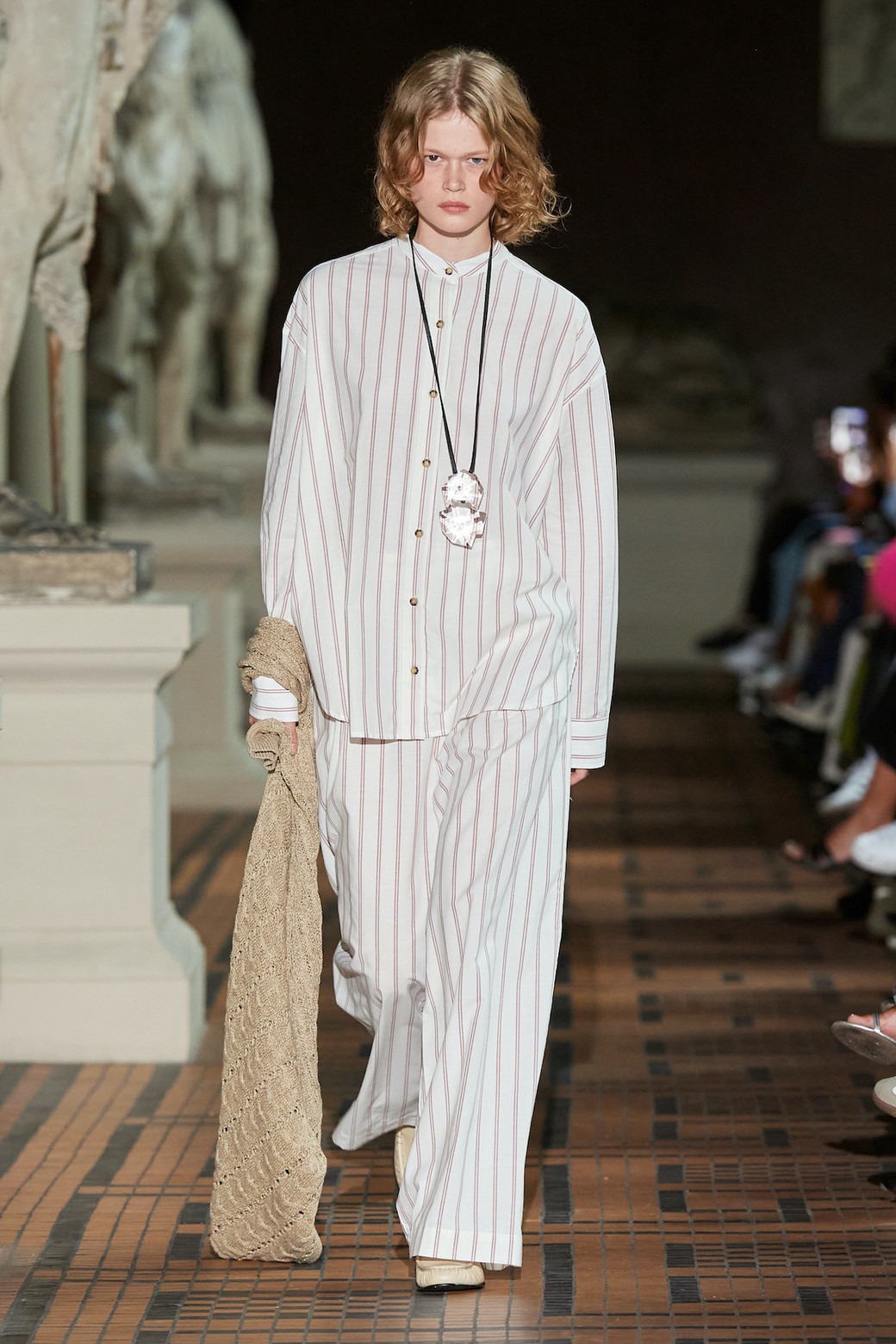
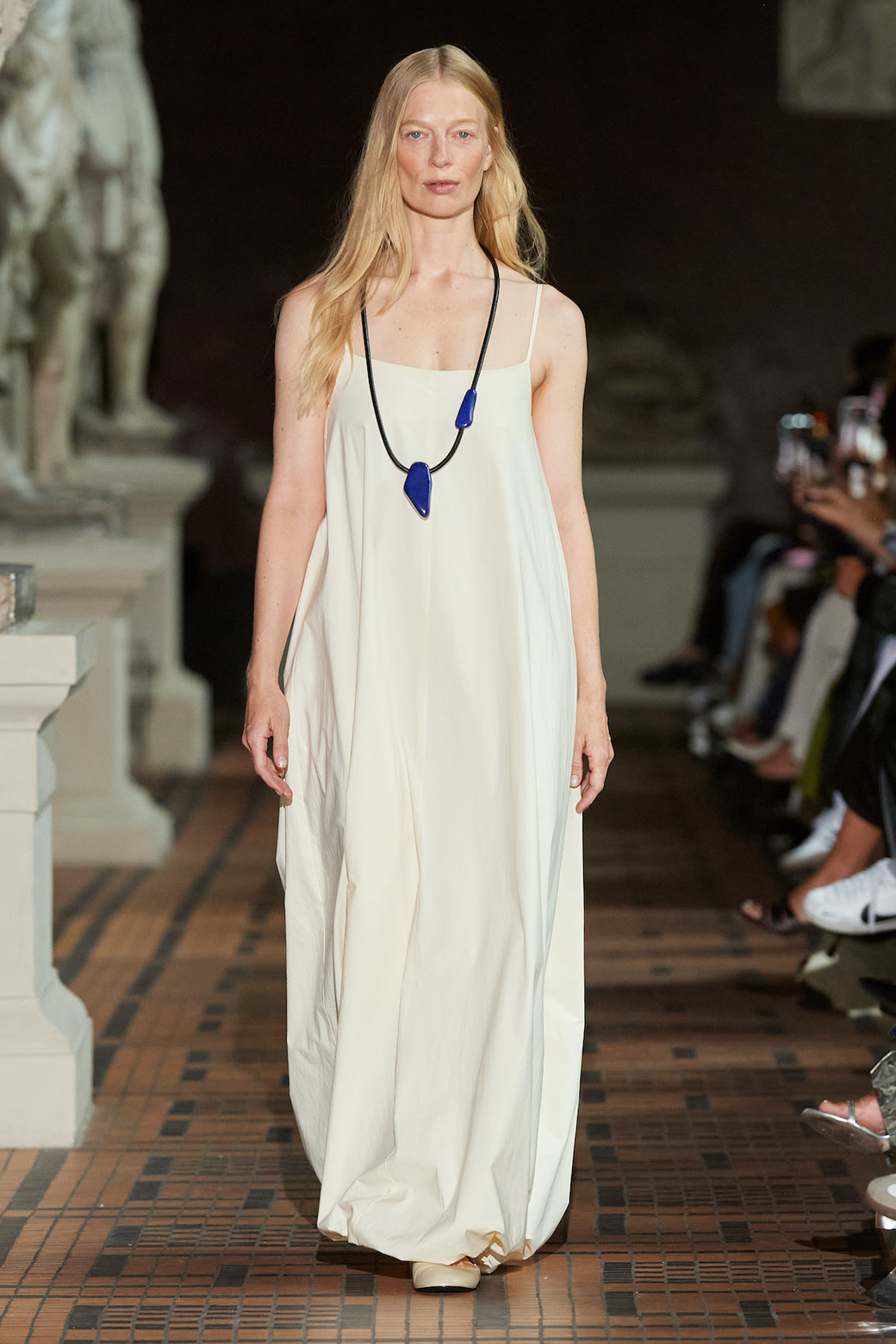
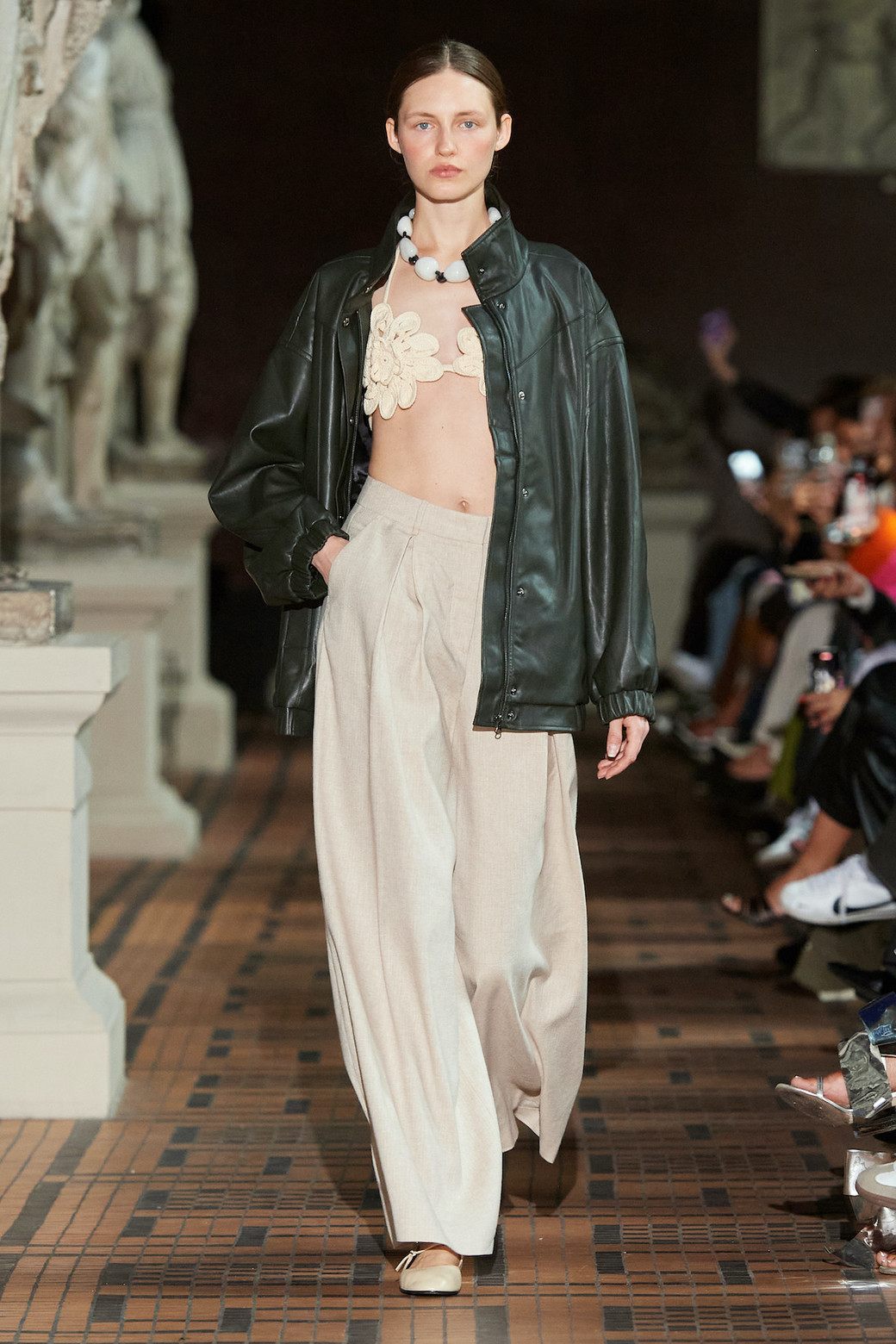
The dressed up casual looks were the key winners: That’s because Roe and Eskildsen share a passion for craftsmanship and a creative edge that outstrips a du jour aesthetic. Simple? Yes, somewhat — but the fitted shape and the quietly sensual dresses kept the lineup nicely pulled together. The designers have worked with the gracious blend of minimalist design, muted colors, and organic textures, creating a serene atmosphere by way of delicate crocheted pieces, and-sewn and tailored garments with special design details. The fatal touch? The bow, which plays a central part. As the ultimate symbol of the feminine, it leaps out in different ways and reappears in the many masculine silhouettes.
The biggest takeaway, staple-wise, was a shift into what Roe, Eskildsen and their team are calling “feminine effortlessness.” We’ve heard that term for a while now. Yet even though the trendiness of relaxedwear has come and gone, it doesn't make cropped toppers and plunging necklines with sharp edges or billowing trousers any less desirable. In a way, the dynamism and elegance apparent in these pieces felt a little like Haute Parisian take on color, volume and proportion. Only this being The Garment, there’s a subtler, everyone appeal.
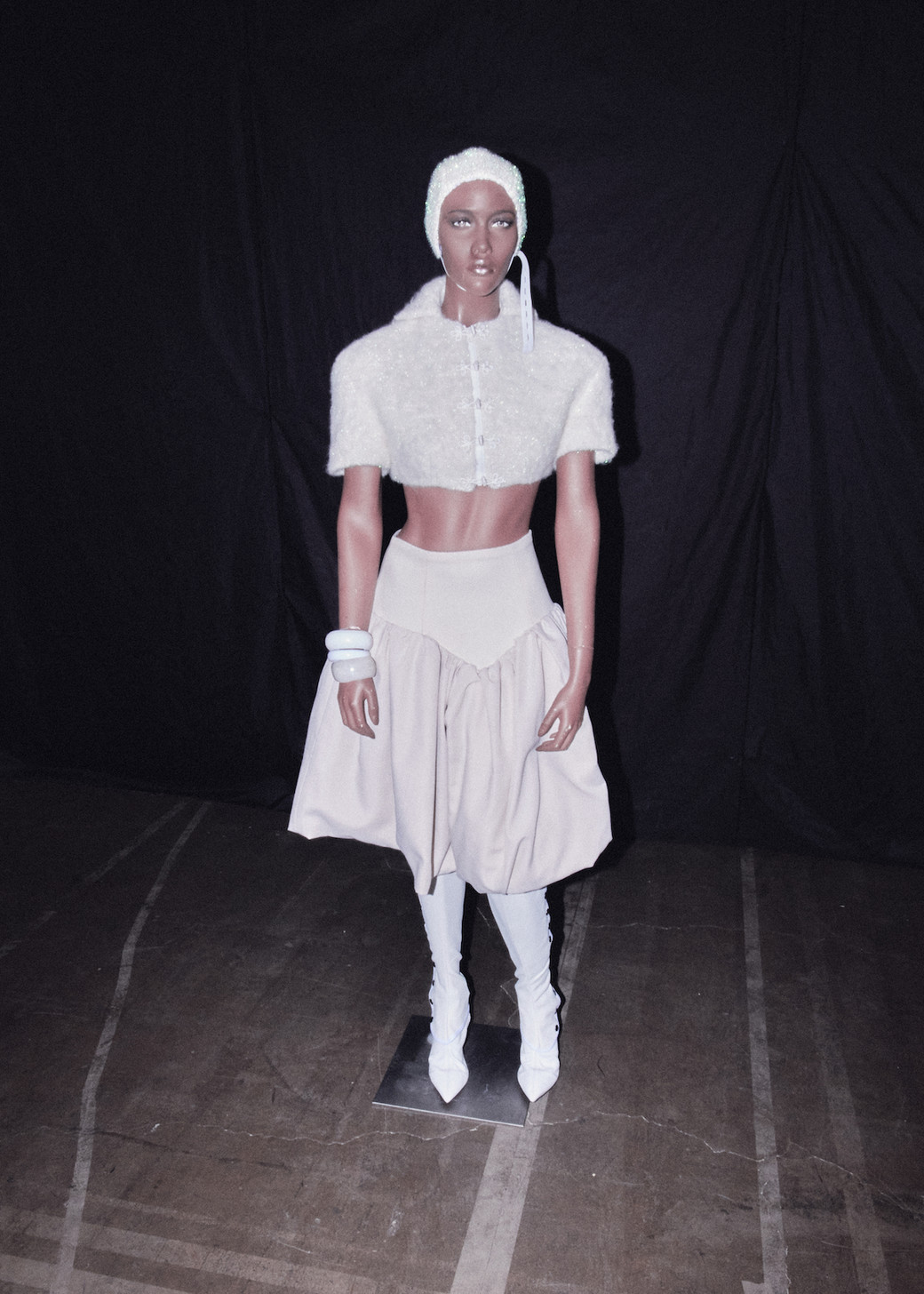
What might be more challenging for their fans: a 19th-century headwear piece in an off white color, a black see-through figure-hugging bodysuit or a white knitted two-piece that had arms extremely lengthened to the knee. These marked a little overly crumbly section of the lineup and not quite as poised and streamlined as the sharply-cut, earth-tinged outerwear and stylish shirts seen elsewhere. That Scandi workwear combo has been the chicest thing we’ve seen so far at Copenhagen Fashion Week Spring 2024. Functional, but highly covetable, it’s a nudge that most customers will likely respond to.

Ever since Instagram introduced us to Skovgaard’s early work – thank you, dear algorithm – many of us have fervently traced his creative evolution. From the outset, Skovgaard’s designs have radiated a wisdom beyond his years, an essence that typically blossoms with the passage of time. His 28 years – four of which he has spent in close relation to his beloved vintage loom – took me by pleasant surprise.
Not schooled in the traditional fashion structure, Skovgaard has carved out his own unorthodox path, which naturally demanded an equally unconventional stage. Much like Marc Jacobs in his Fall 2023 show at the New York Public Library, Skovgaard chose to abandon the timeworn catwalk, opting instead for an exhibition that could only be described as a masterful artistic performance.
Skovgaard appears to have transcended temporal boundaries, reminiscent of the semiotic eras overseen by Galliano and McQueen. He stands as a testament to transcending the very phenomenon that Susan Sontag sounded the alarm for in 1976; a time when fashion ceased to merely imitate images and evolved into a form of self-expression. His presentation resonated with authenticity, extending far beyond the confines of a 6.7-inch screen, undeterred even when the audience's devices occasionally made an appearance. An embodiment of a [Jean] Baudrillard simulation, crafted without the intention of merely going viral – a refreshing departure from the norm.
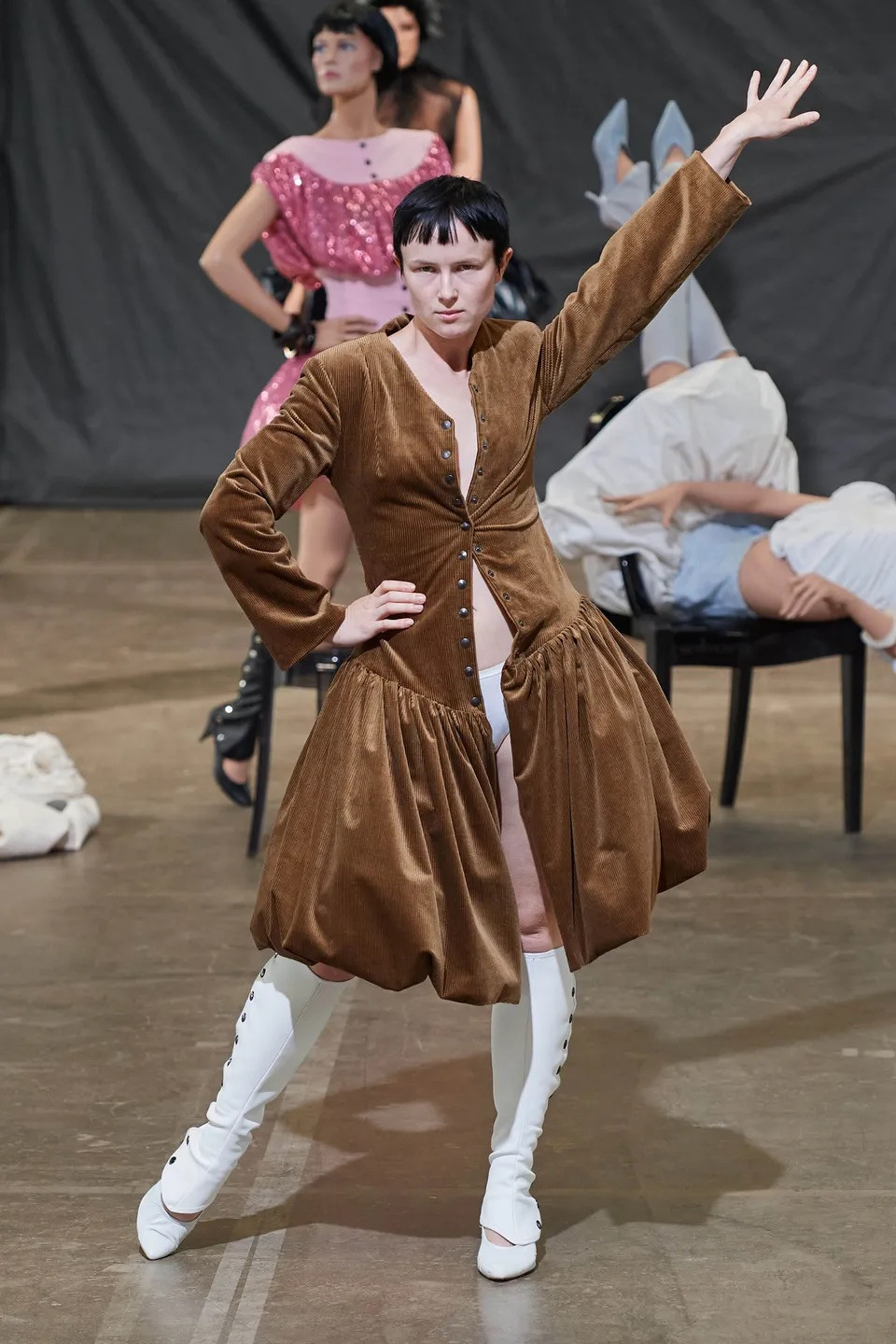
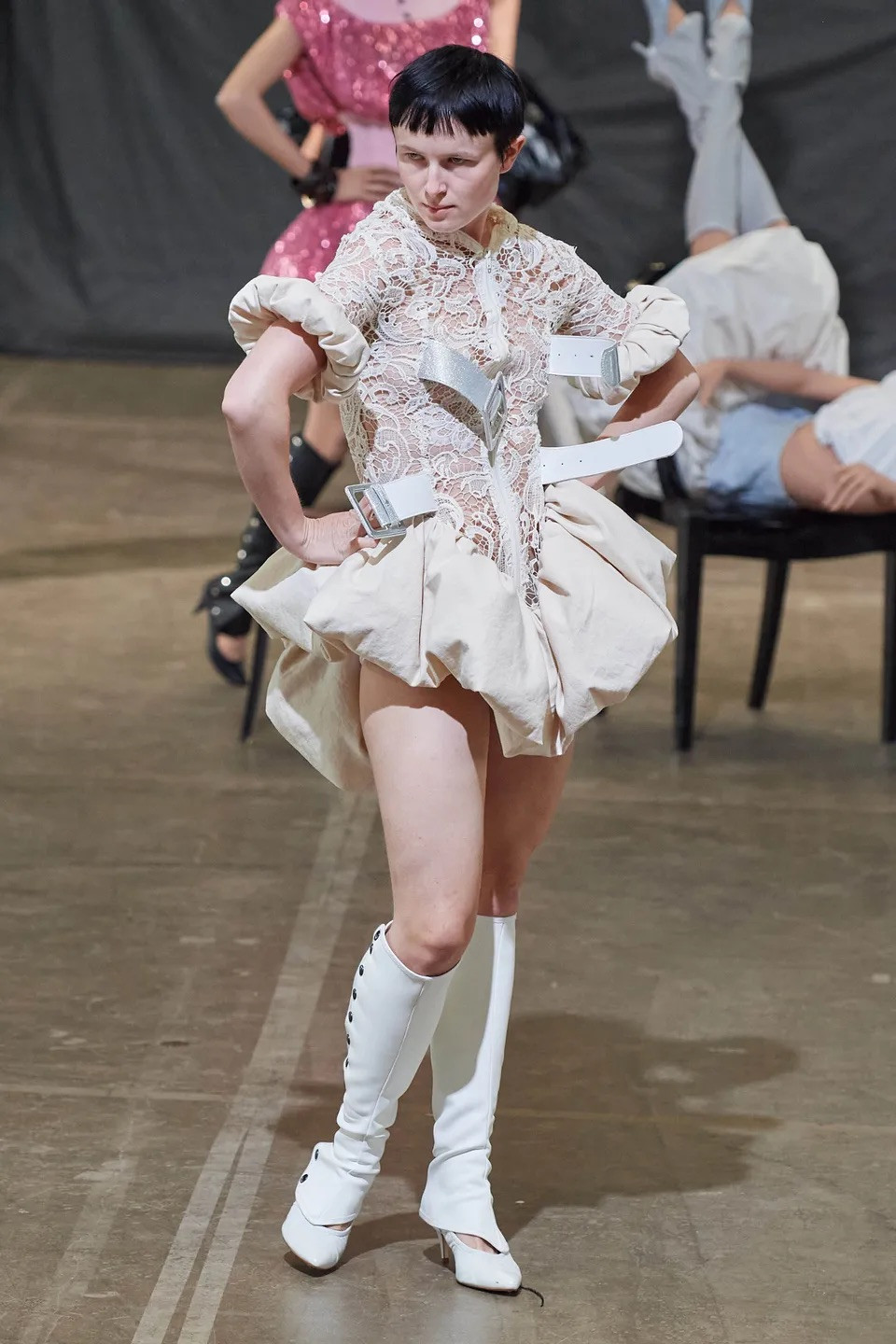
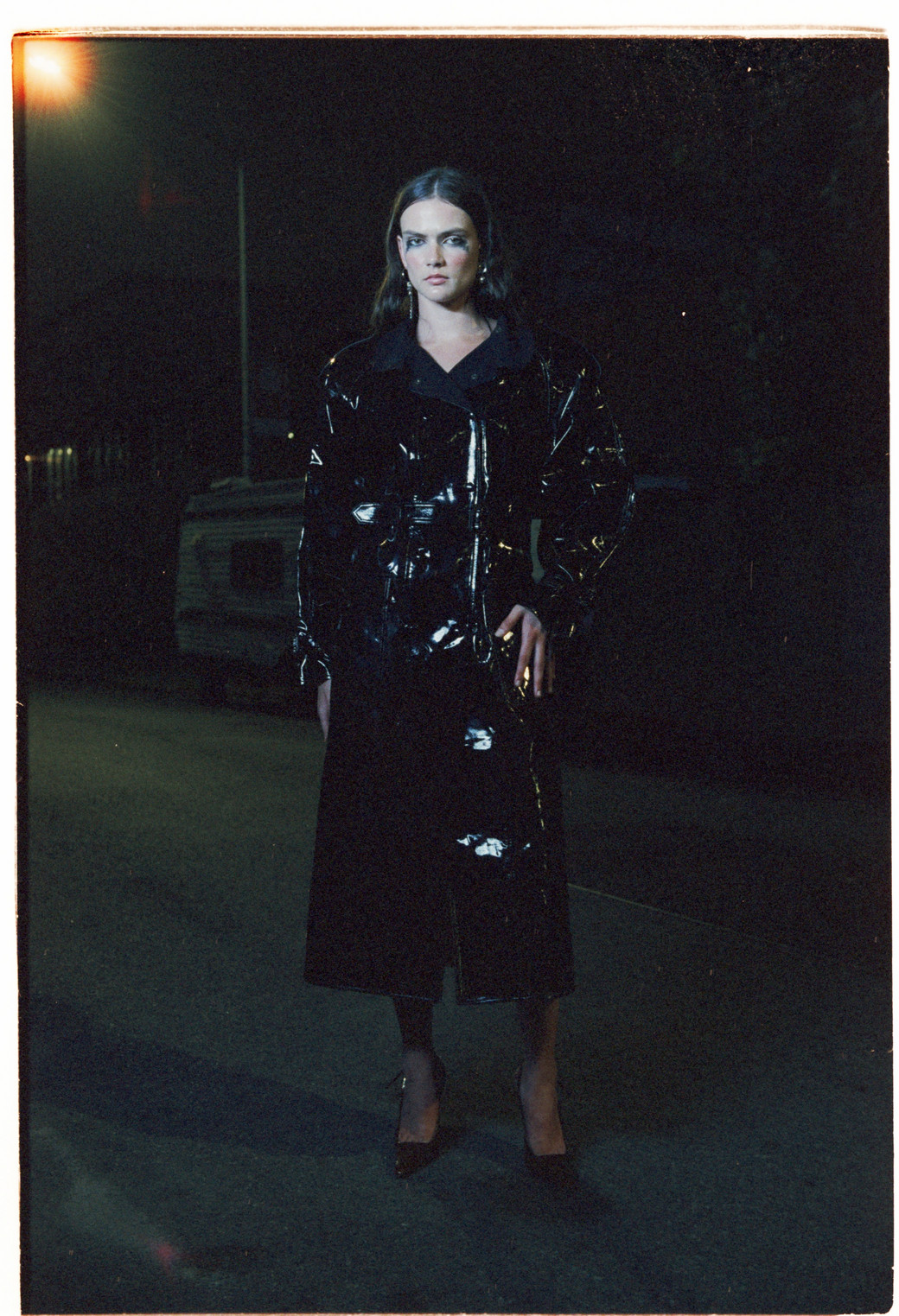
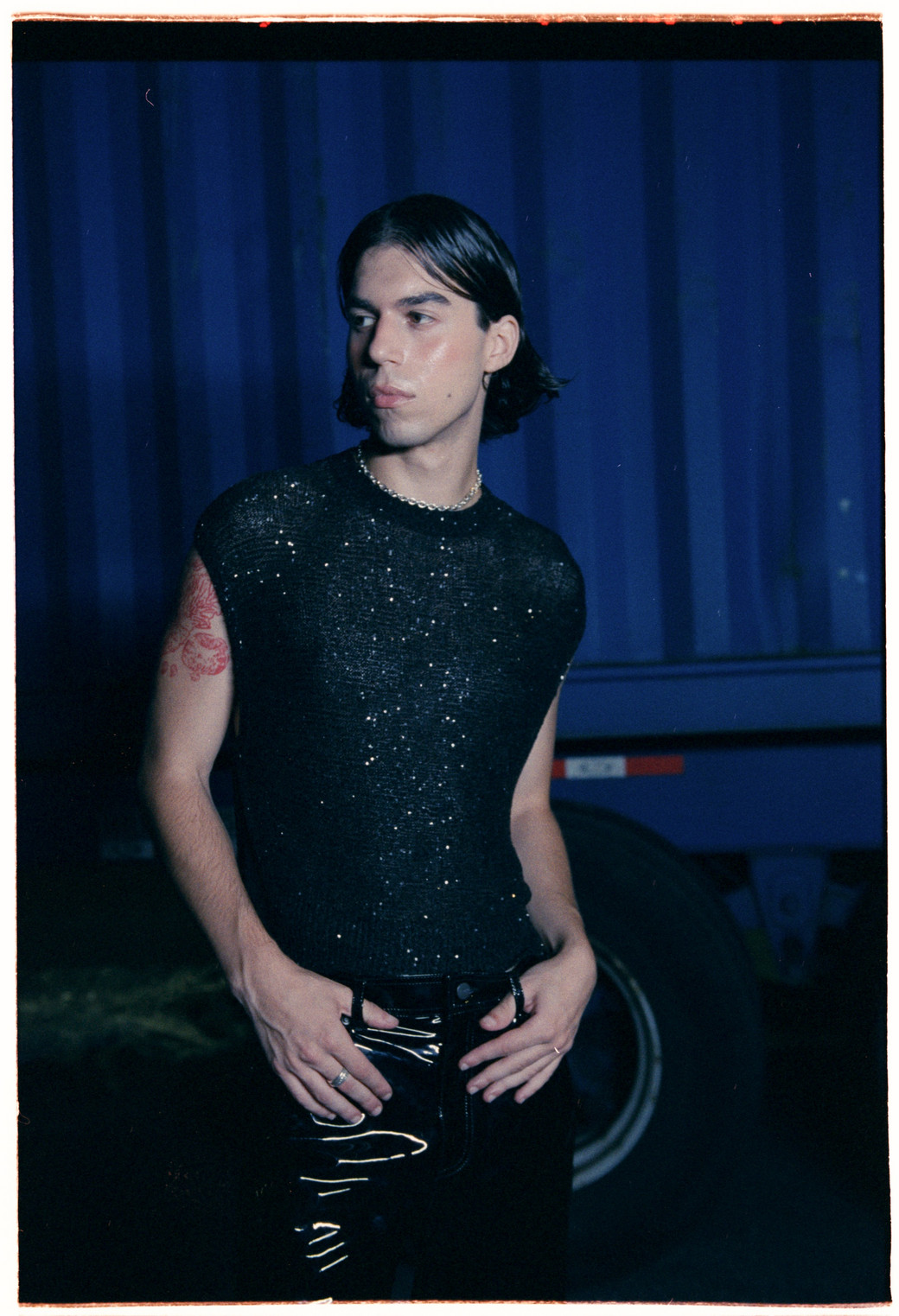
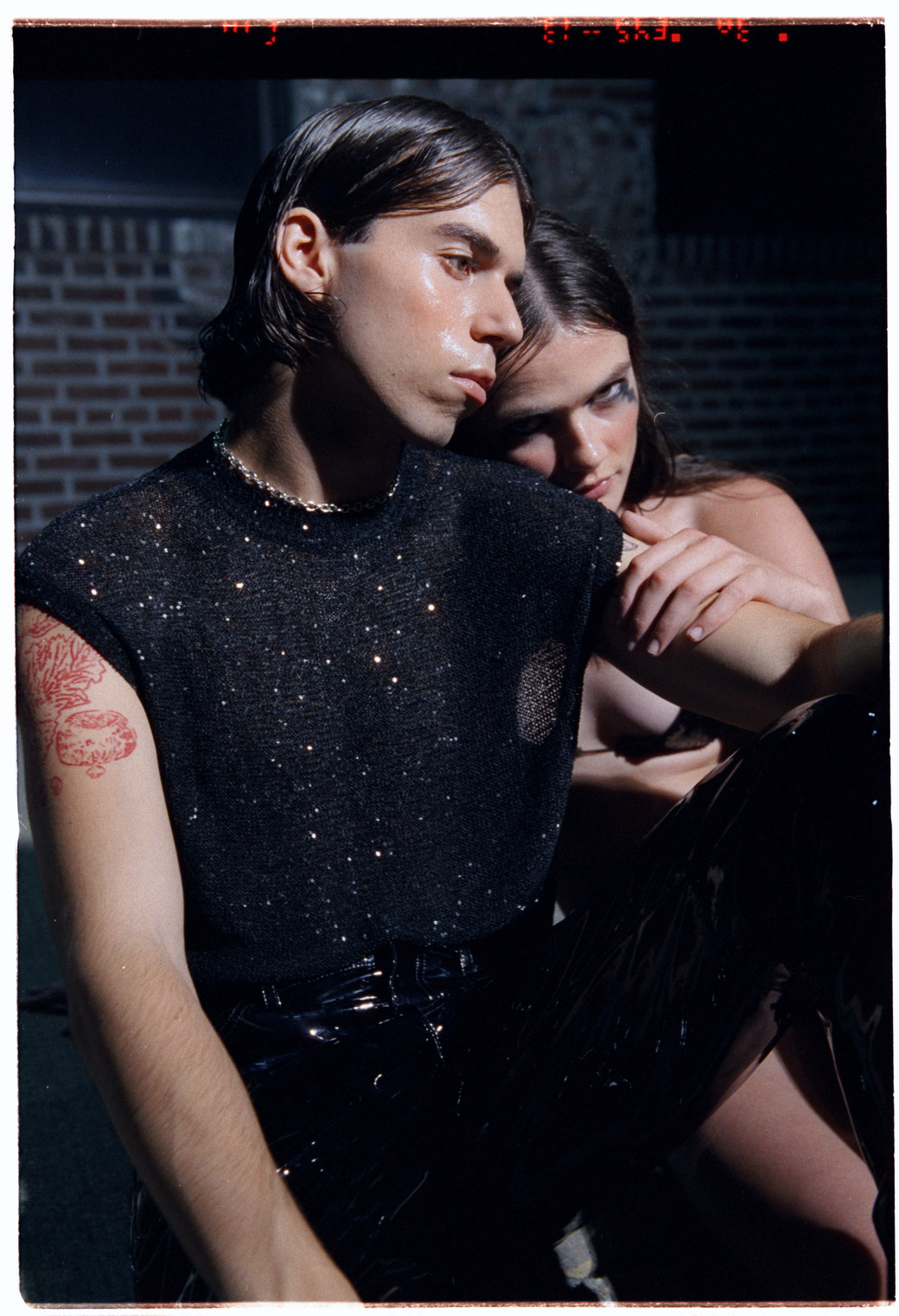
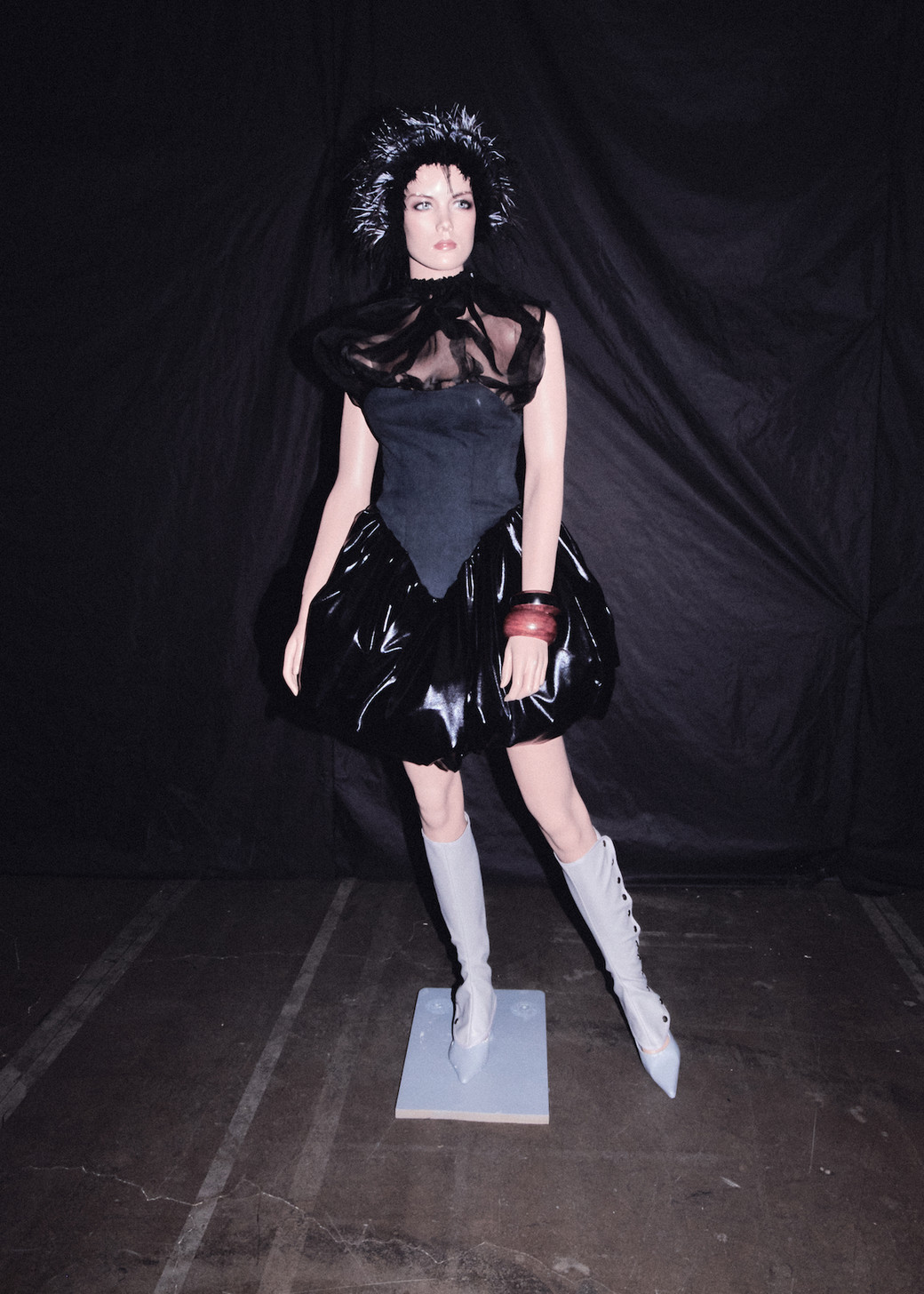
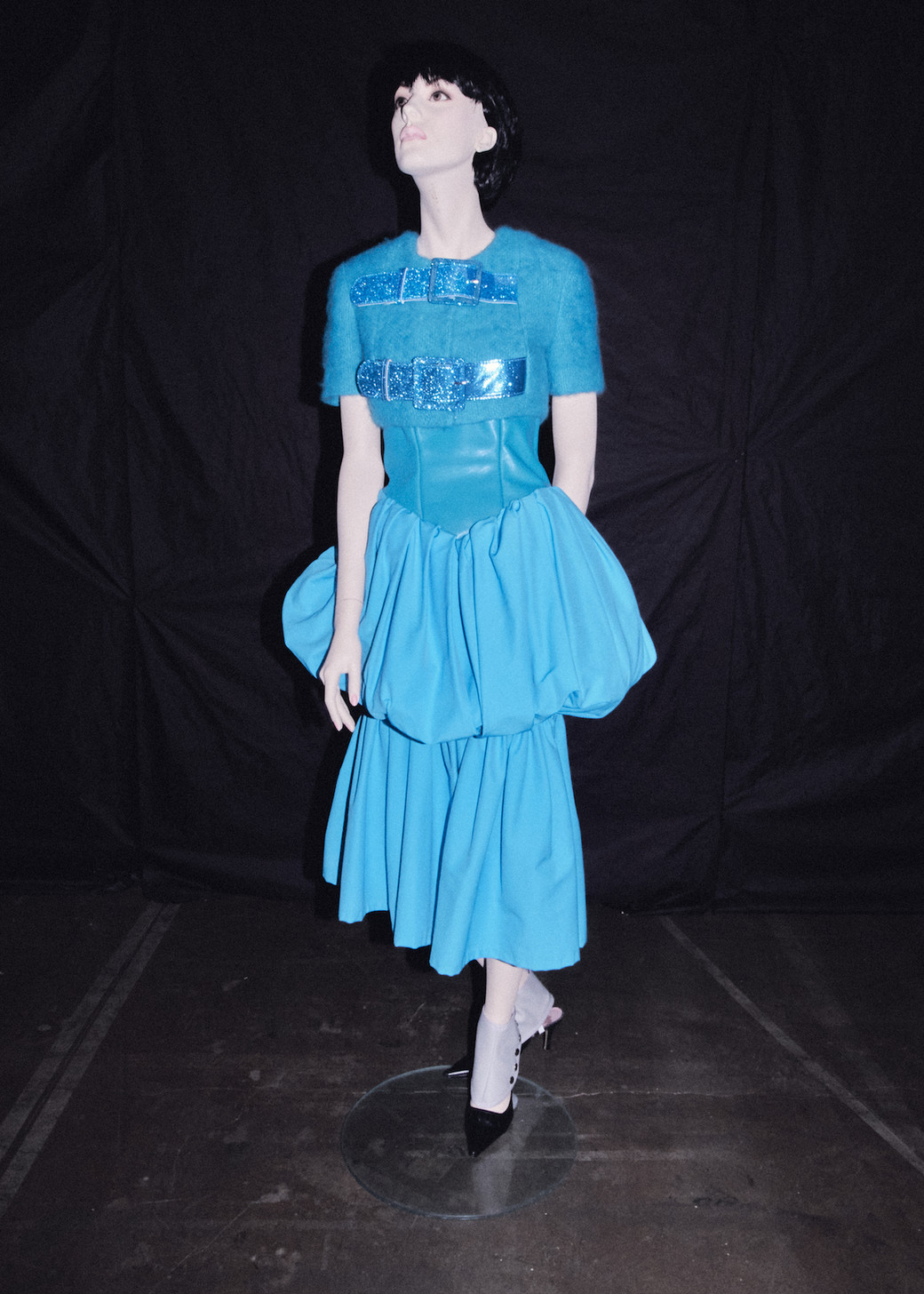
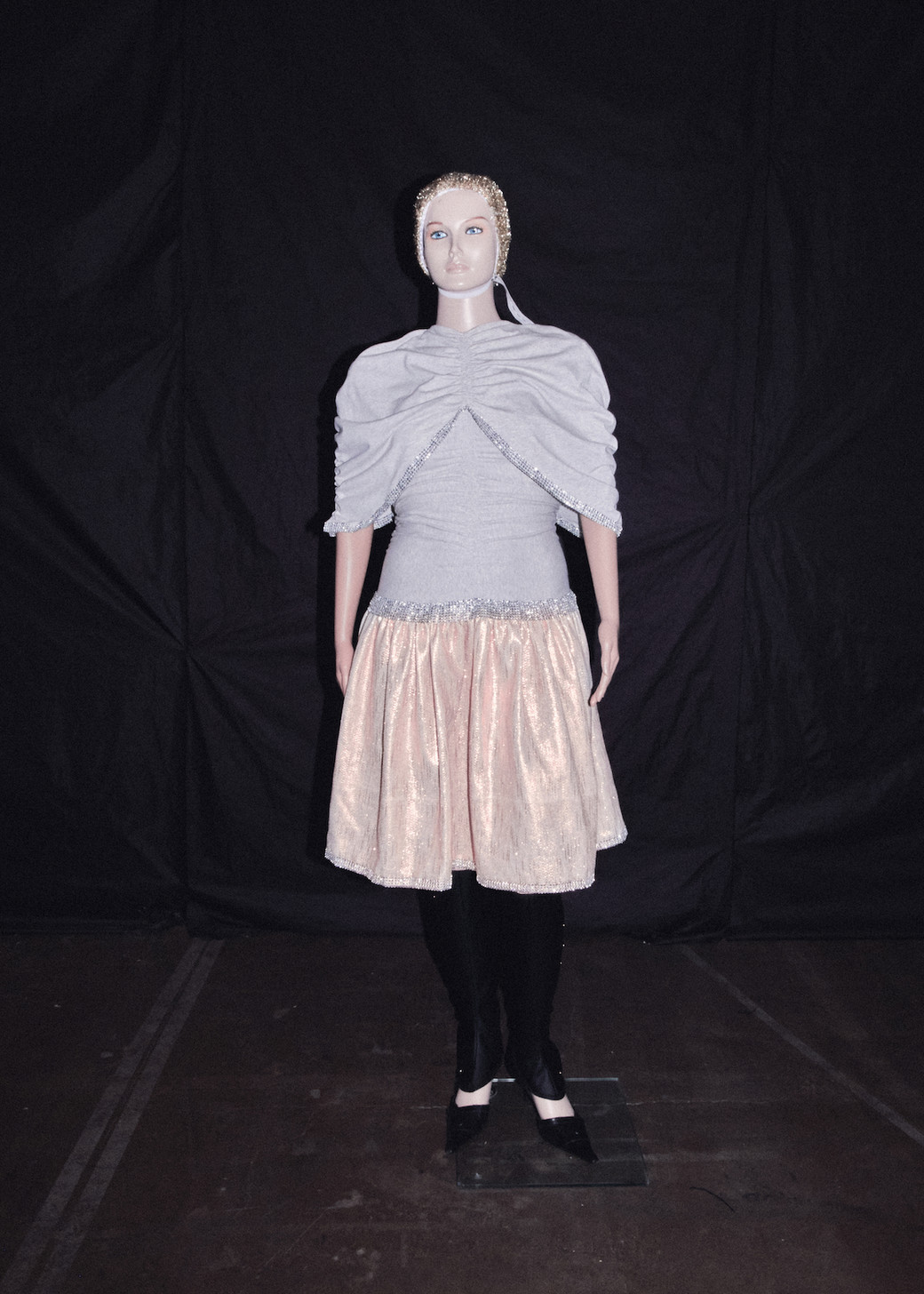
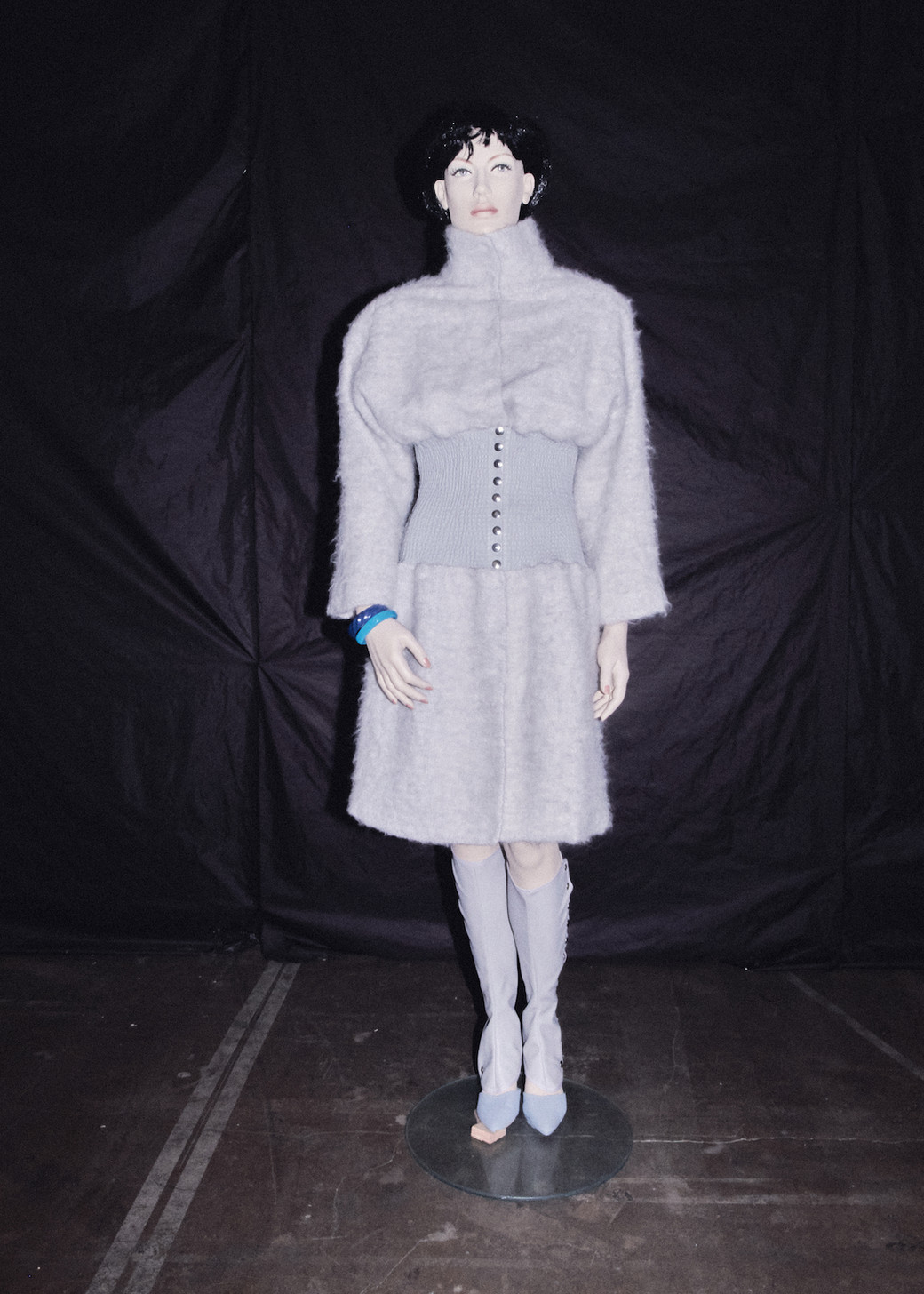
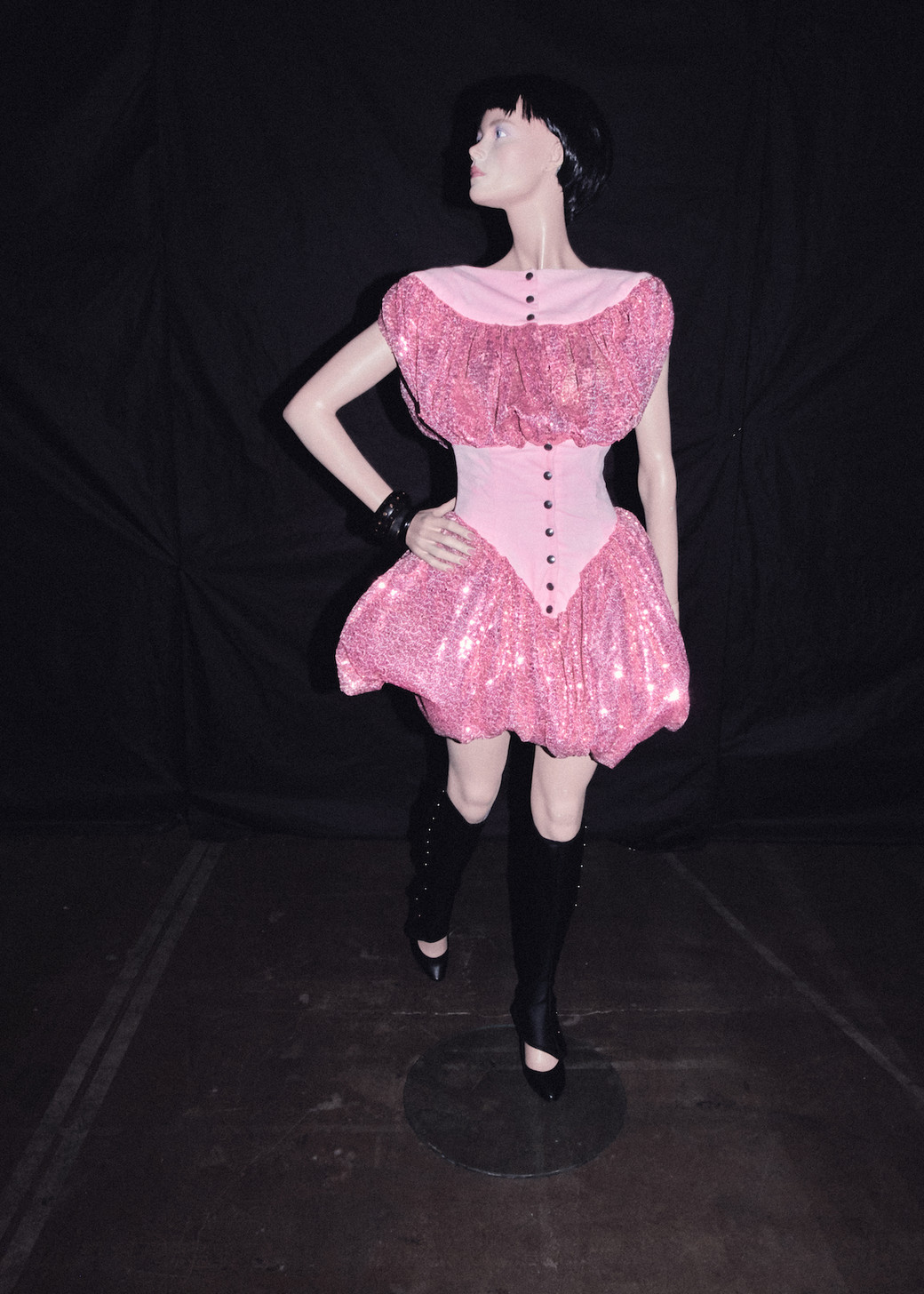
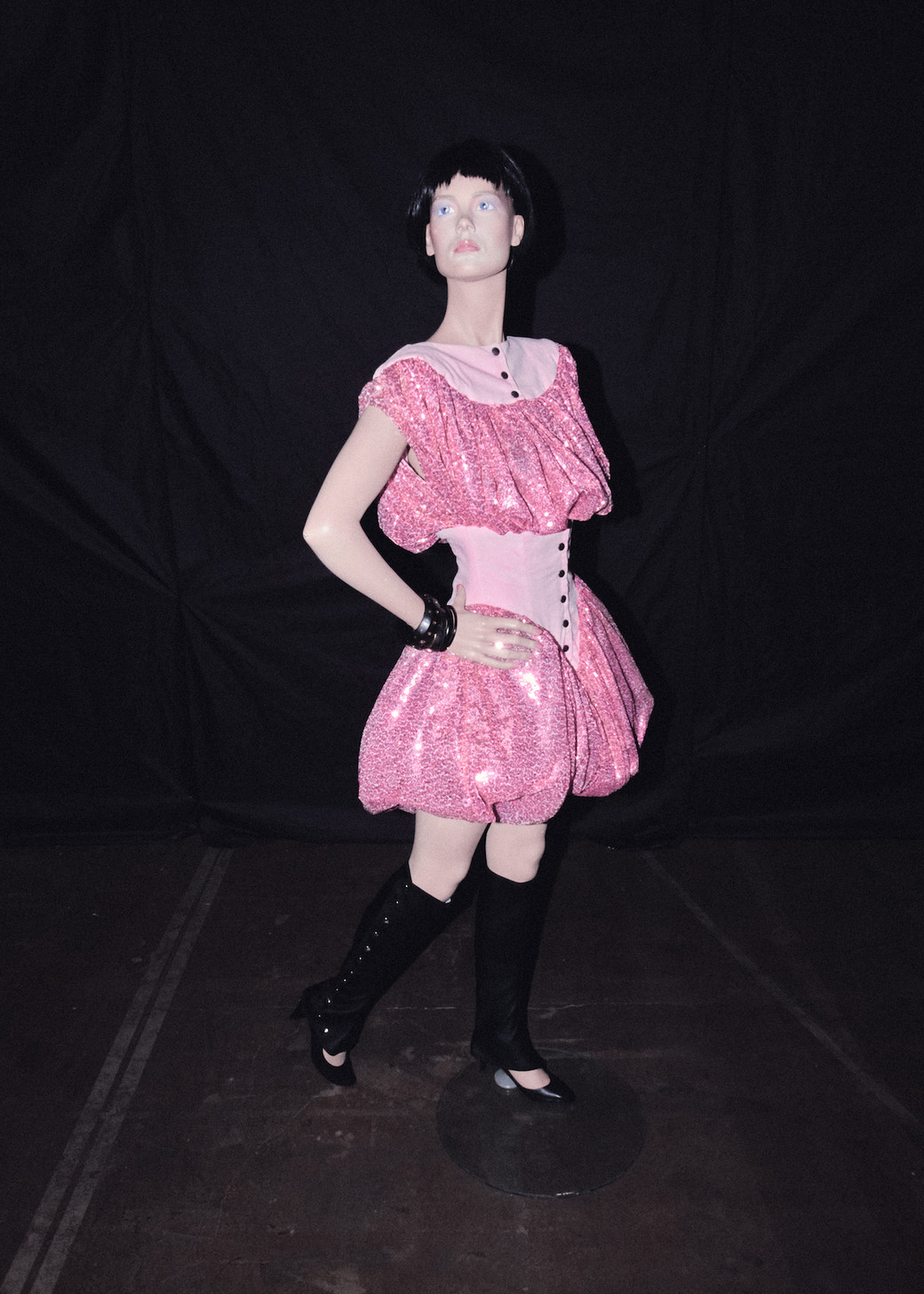
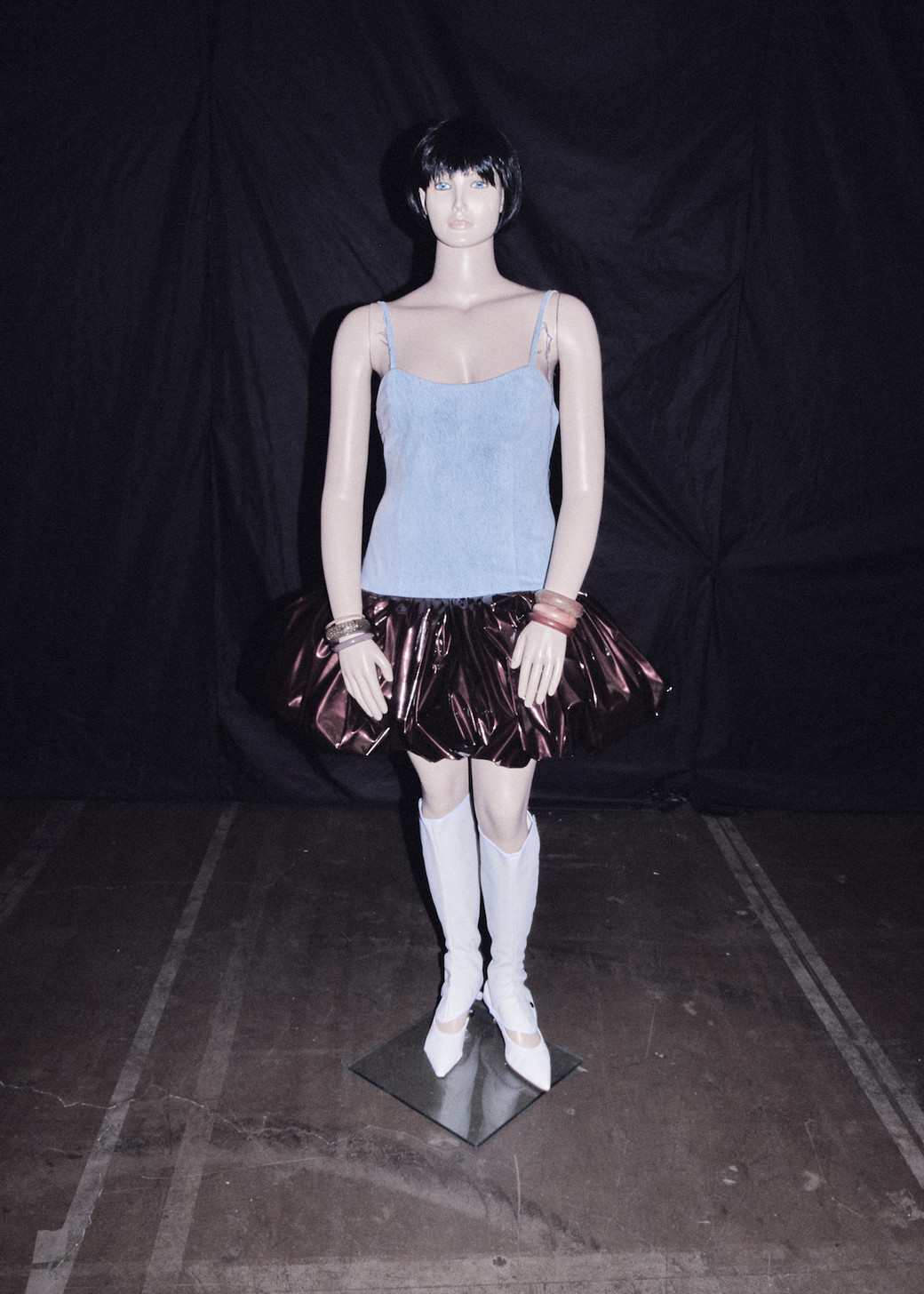
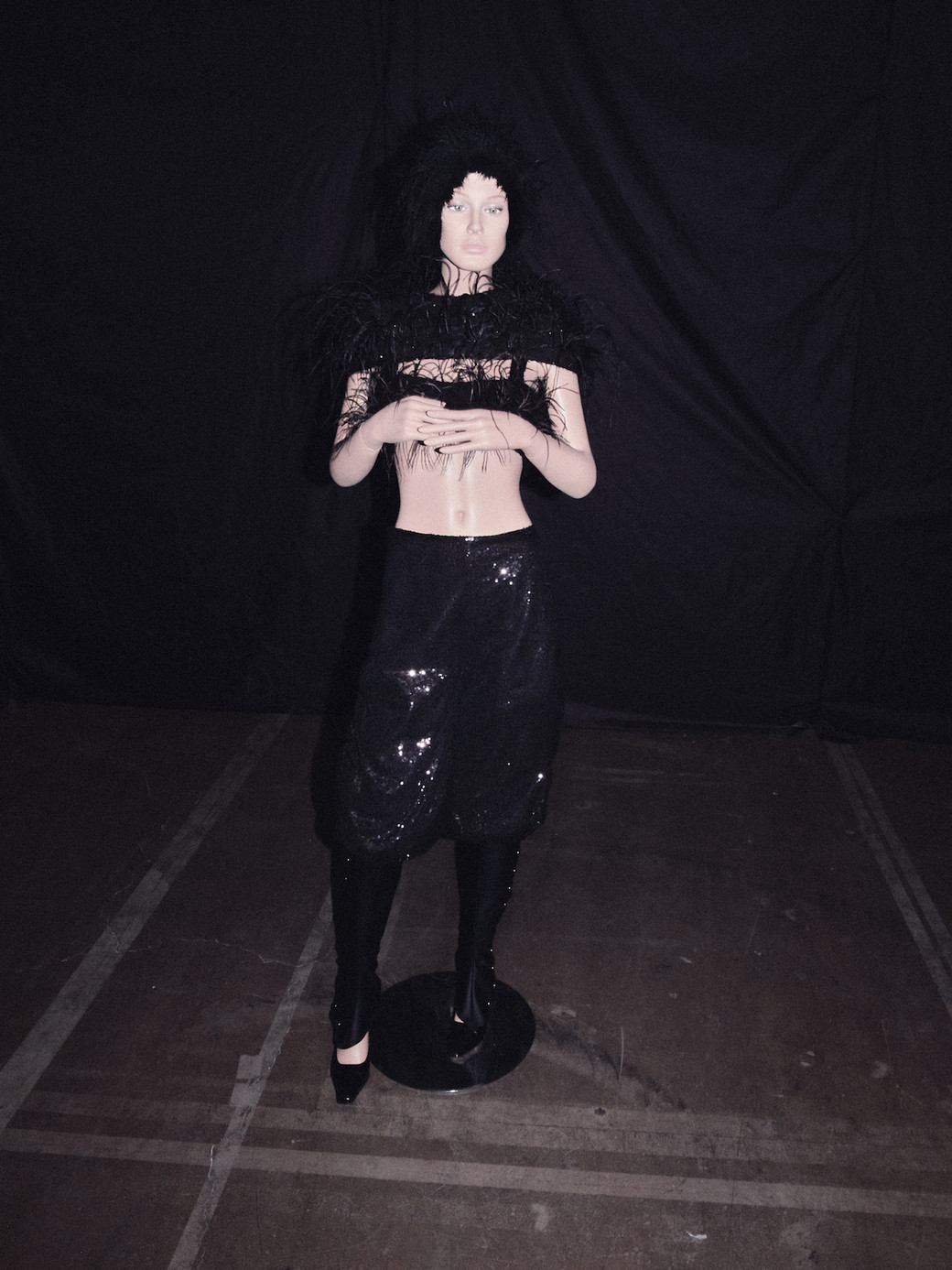
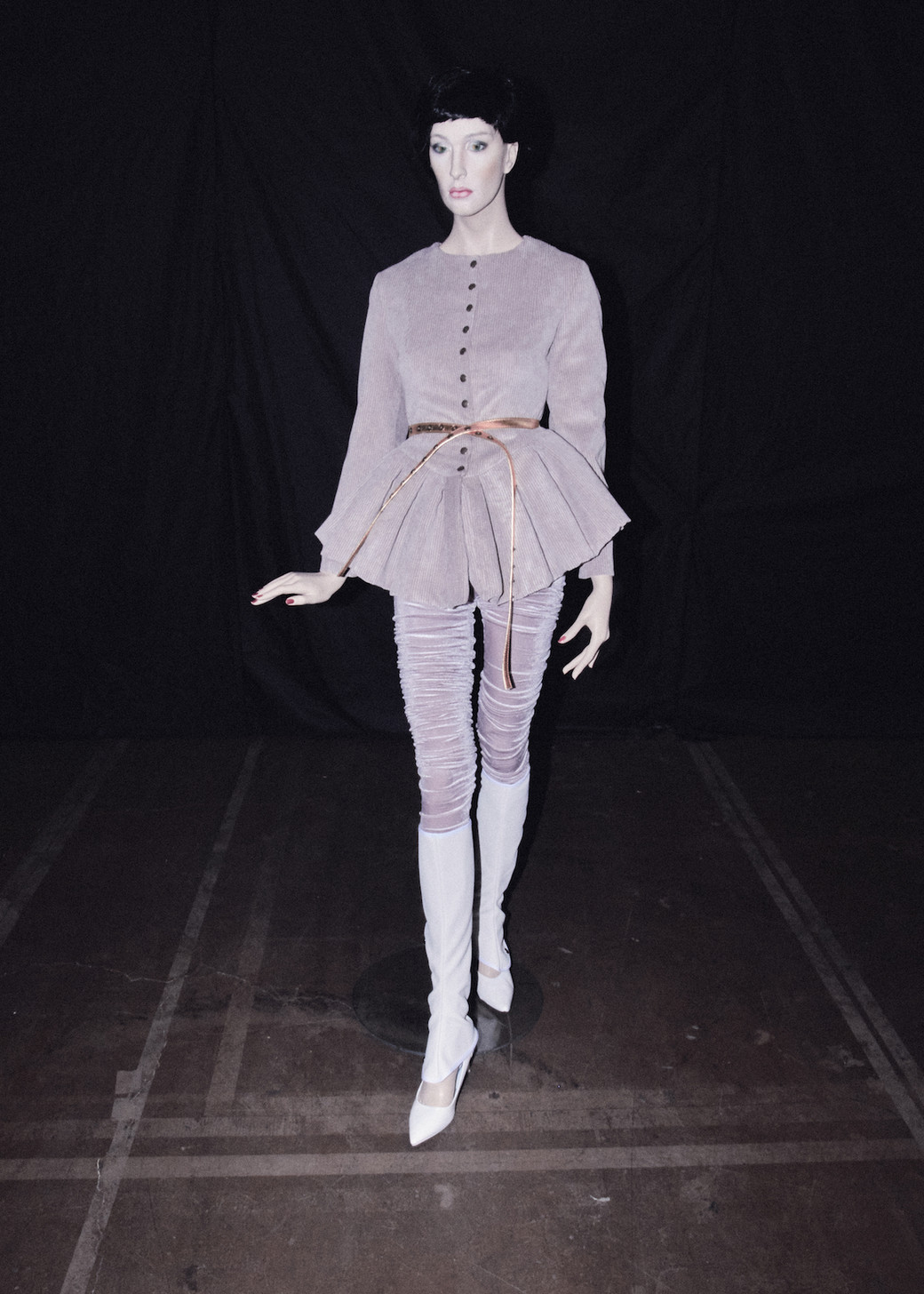
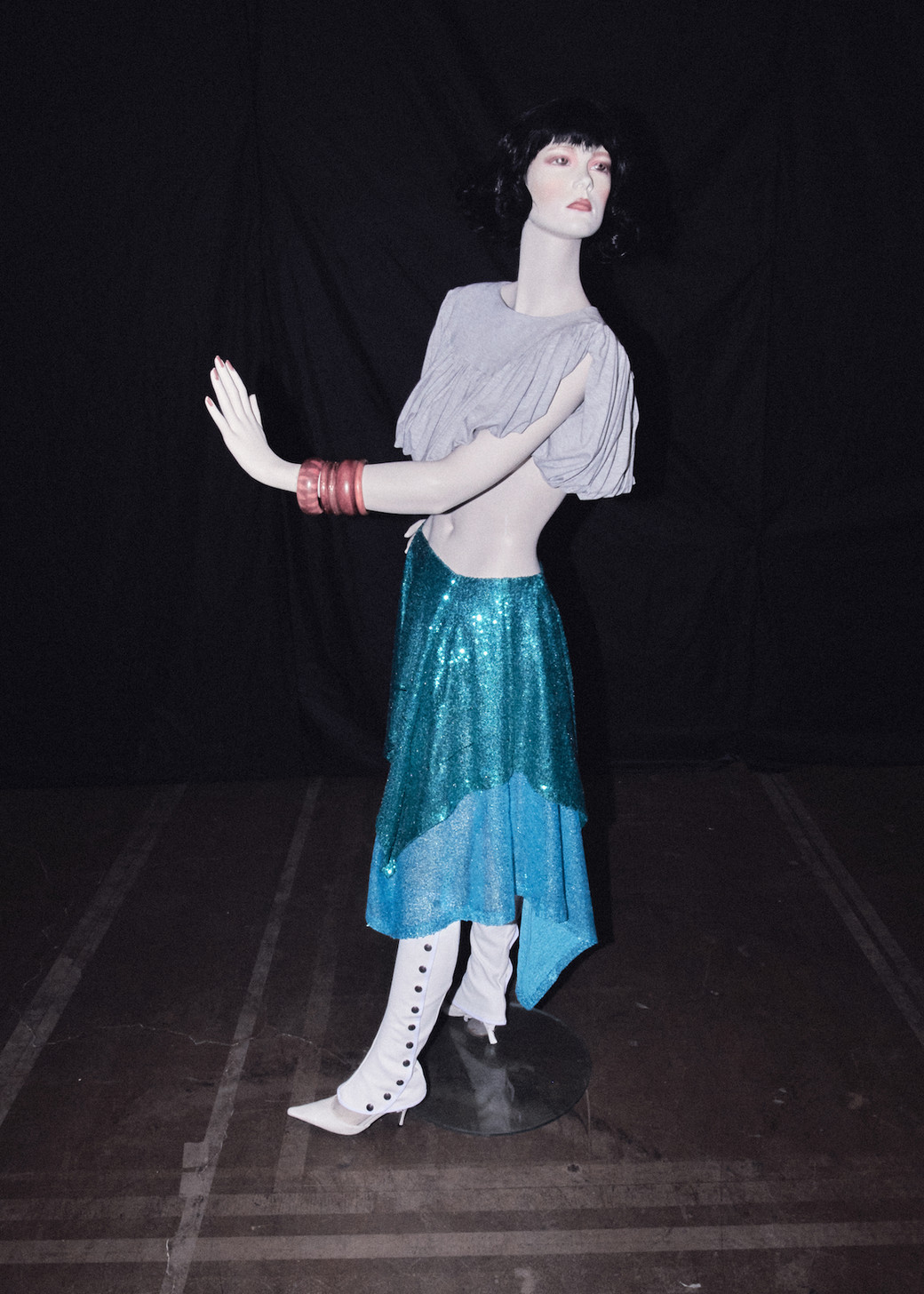
As for Liberg—once described as the next Mata Hari by a fortune teller—her performance left us entranced and disrobed to our most unadorned essence. Through her chaste embodiment, dominant choreography and fearless gaze, Liberg’s nude silhouette paradoxically transformed her into the most attired presence in the room. The spectators' ravenous gazes found themselves bared, while amidst the interplay of actual nudity, she enshrined Skovgaard's creations—each dress, meticulously woven with threads of silver, suffused with silk, and adorned with sequins, brimming with enhanced volume. These ensembles gracefully cascaded low on the hips, seamlessly enveloping the upper torsos, a harmonious fit for her sensuous form.
Skovgaard, as an artist, possesses an insightful comprehension of the women he designs for. Moreover, he adeptly practices the skill of imbuing garments with a dichotomous potency, woven into the very fabric under his loom's guidance. Yet, he skillfully shatters preconceived notions: Is she an innocent maiden or a provocateur? A victim or a perpetrator? Does she exude femme fatale allure or embody the role of the scapegoat?
Culminating in an ensemble of ethereal all-white lace, adorned with buoyant, radiant latex cocoons, Liberg transformed into an unexpectedly unblemished bride. In a moment of acknowledgment, Skovgaard emerged to greet both her and his audience, earning applause infused with a mix of reverence and awe. As the curtains descended, a chapter concluded, yet for Skovgaard, the grand narrative had merely unfurled.
The next chapter lies in whether he succeeds in transforming admirers into patrons, capitalizing commercially as well—only time will unveil that tale.
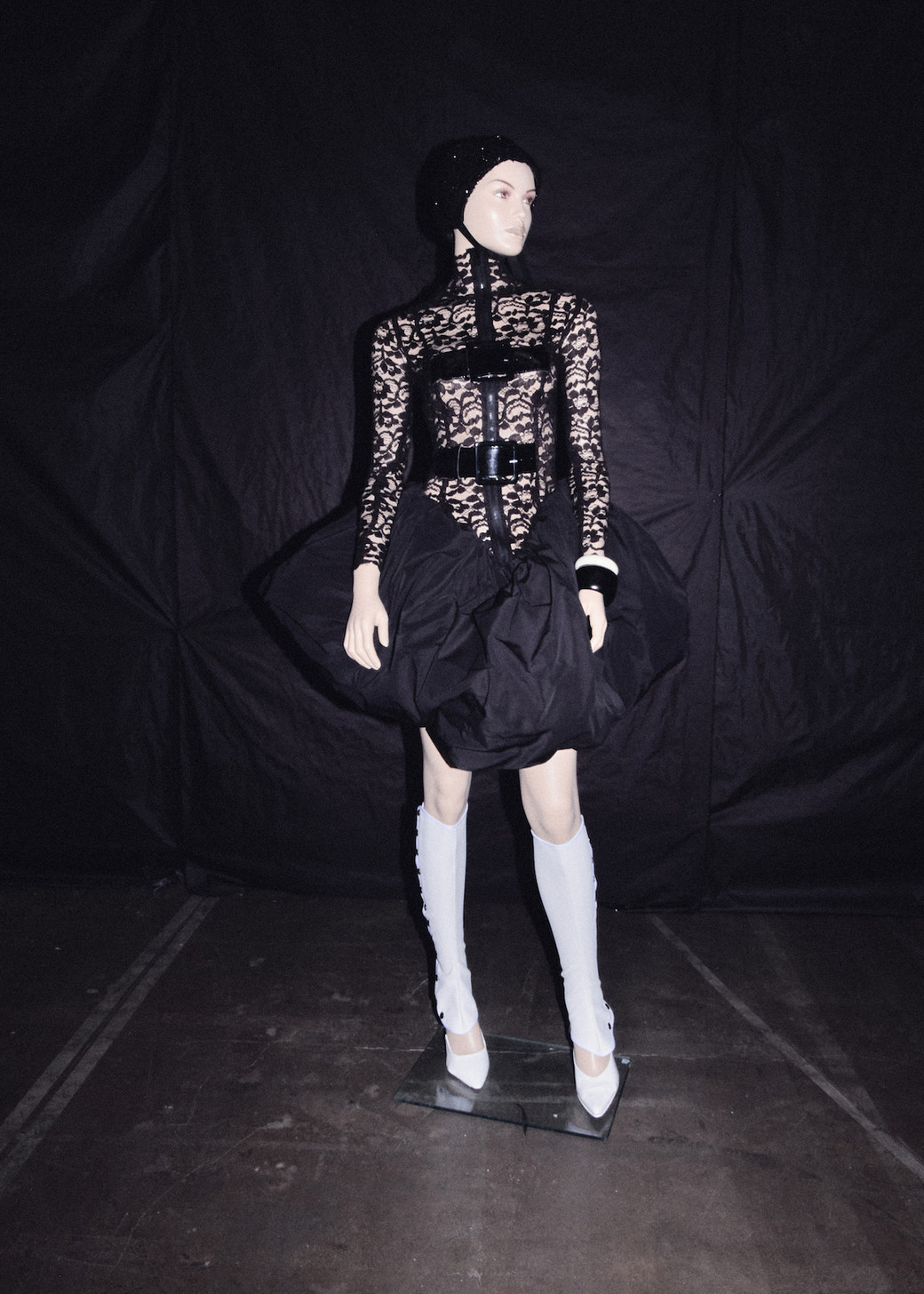
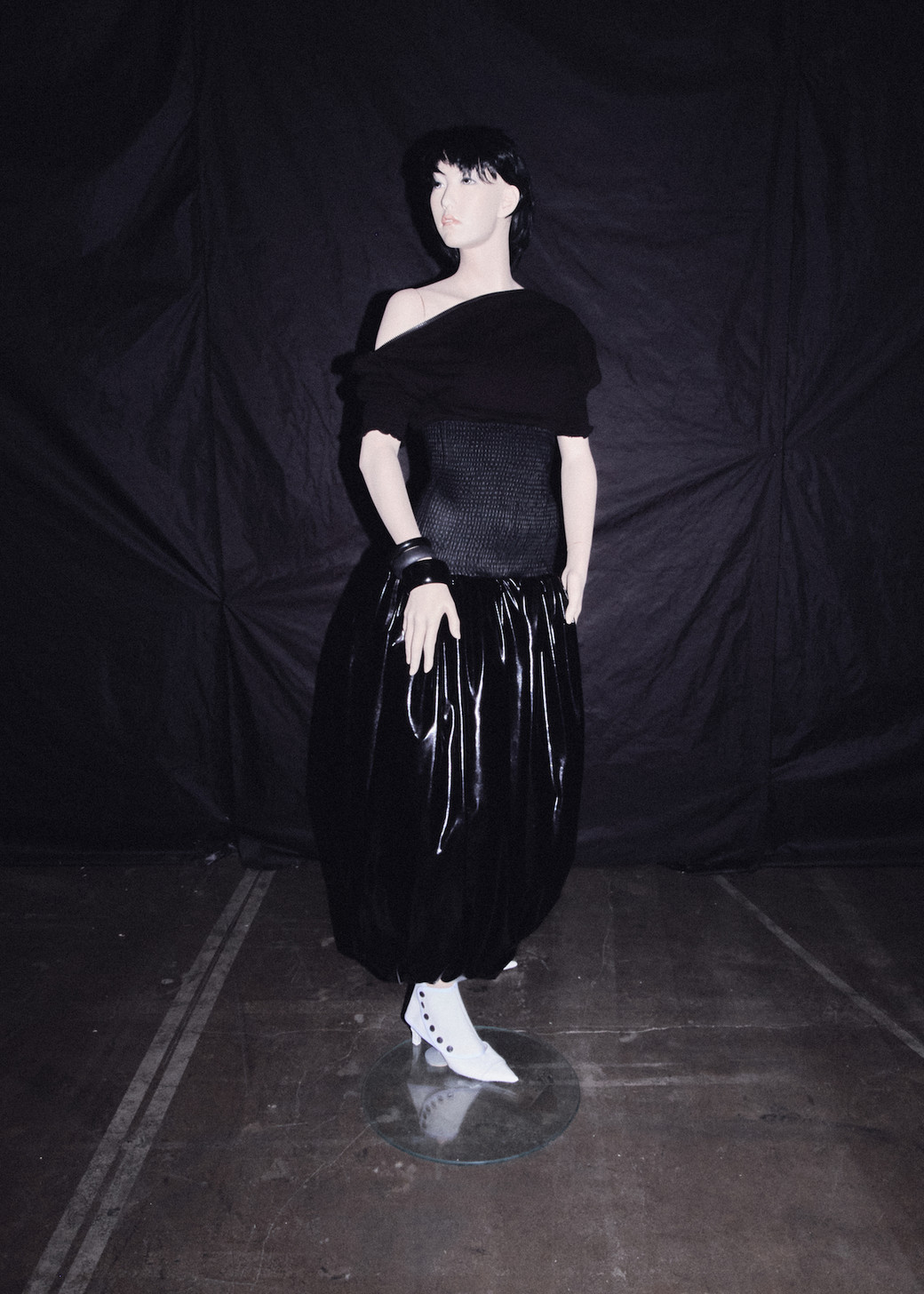
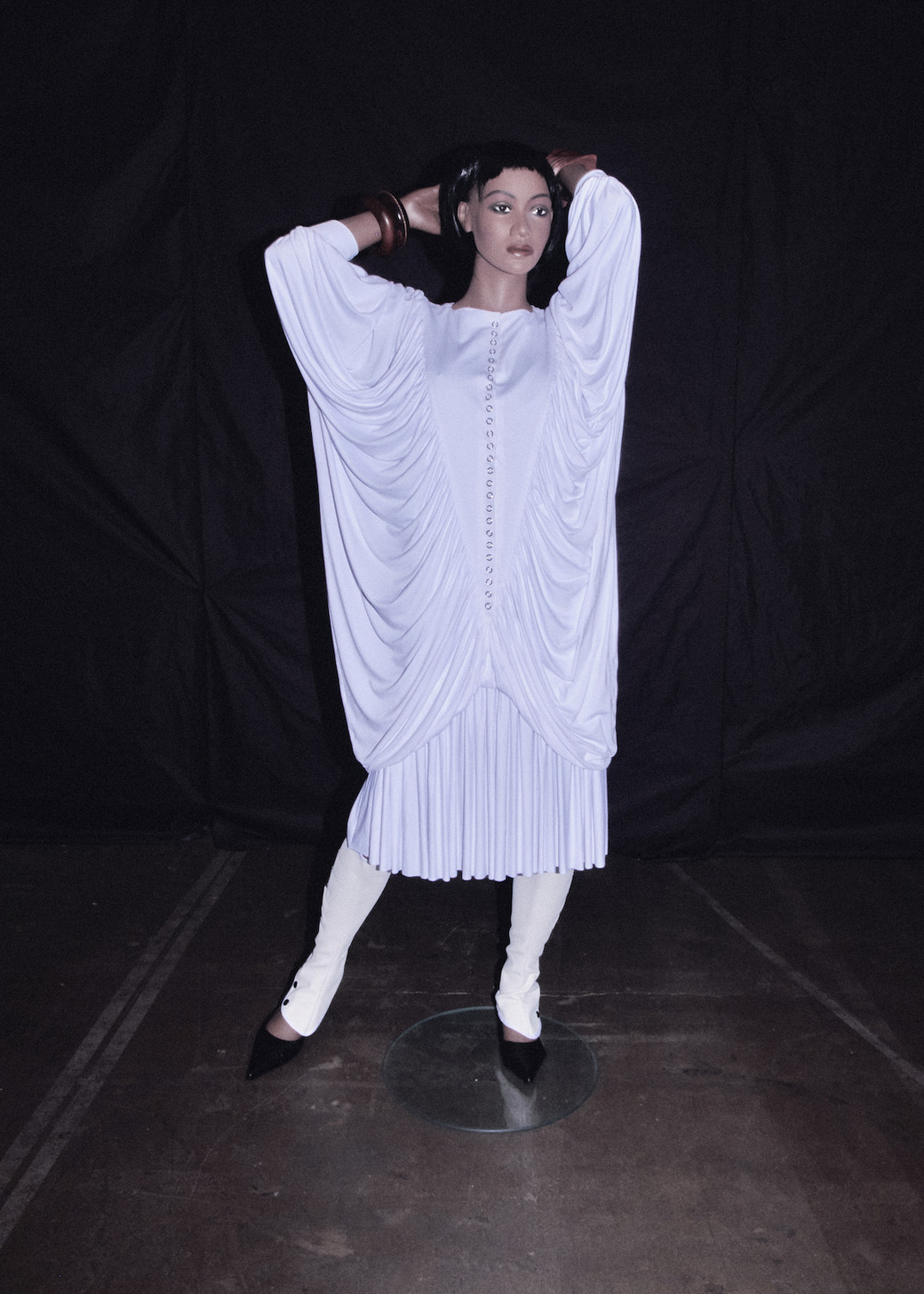
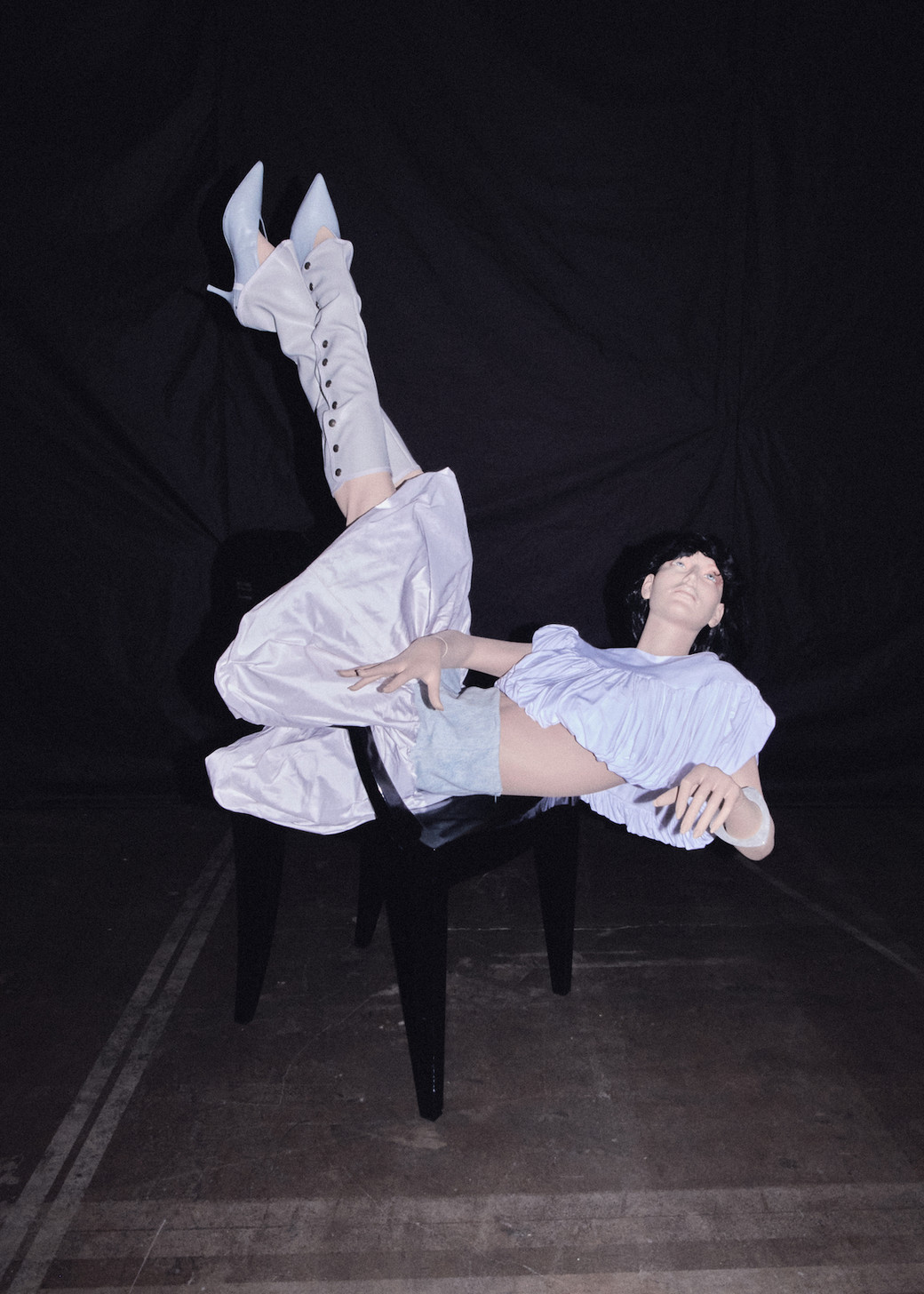

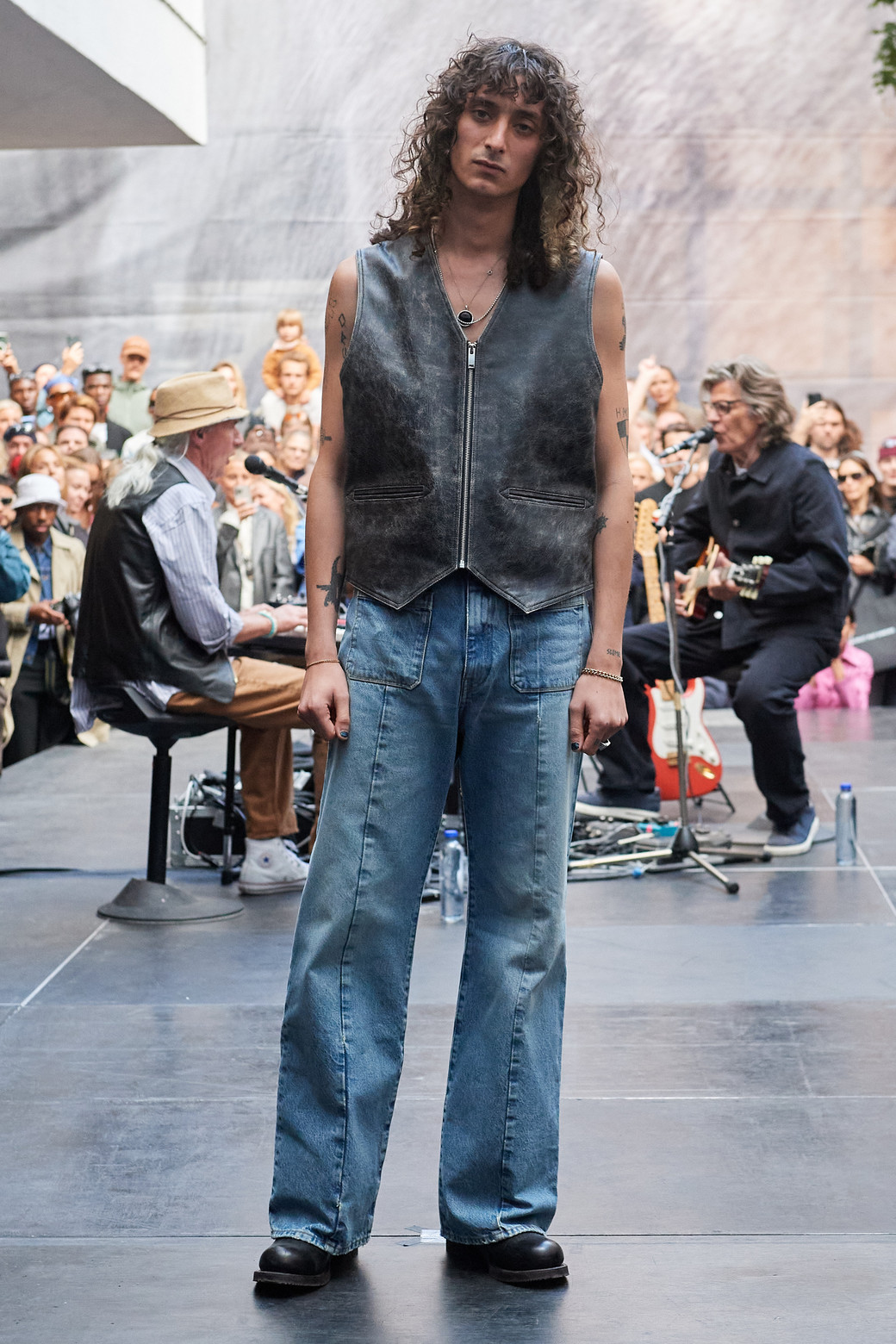
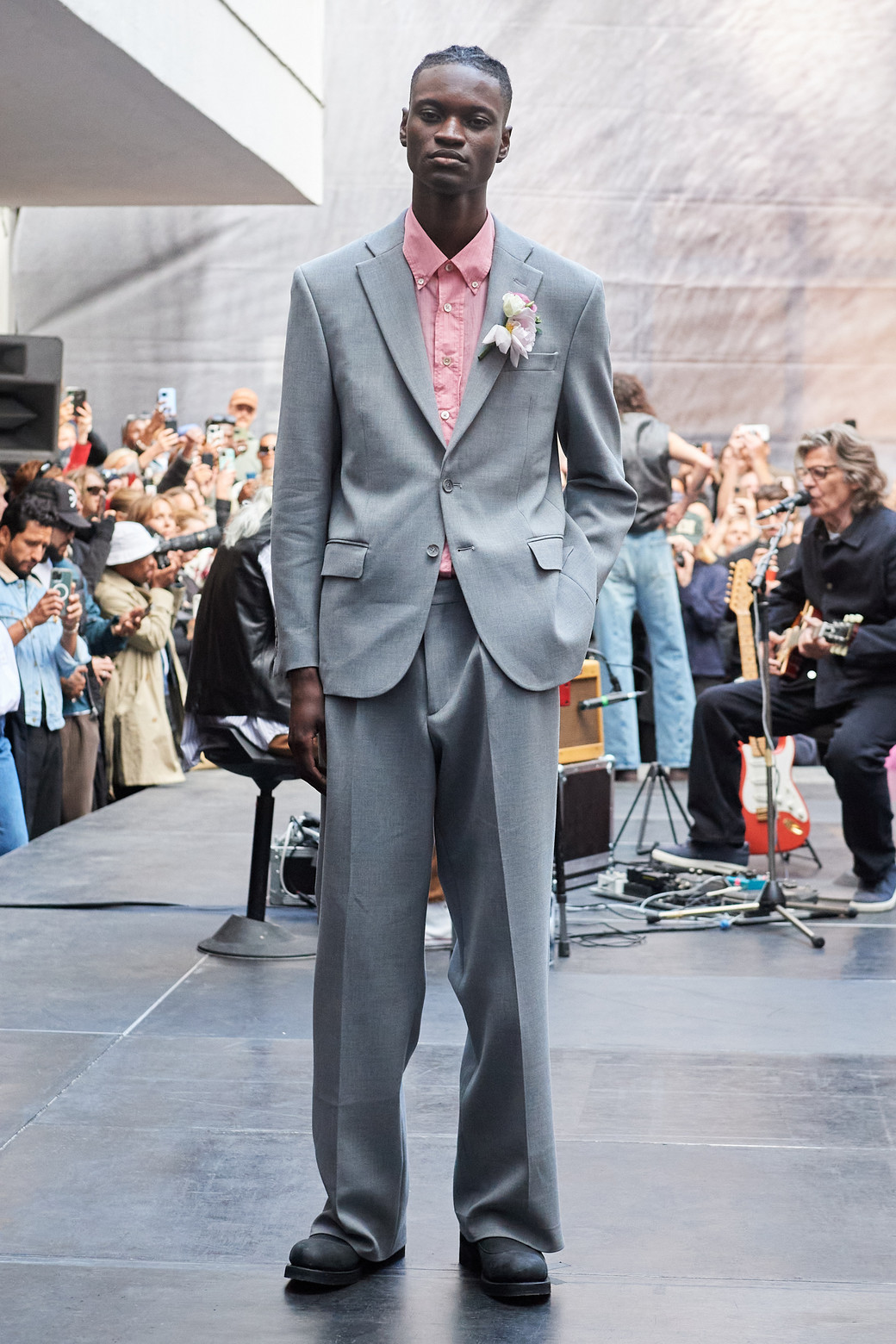
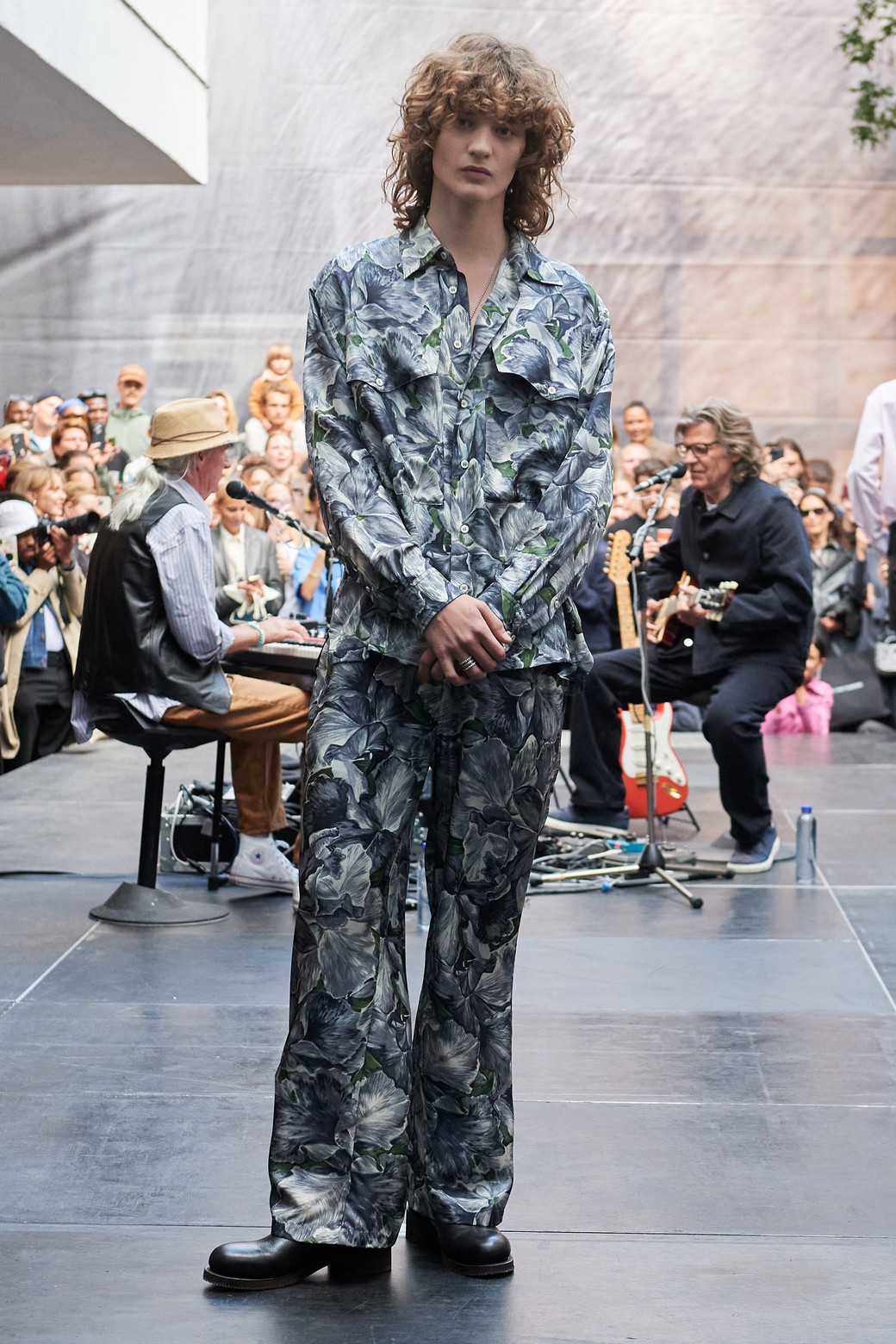
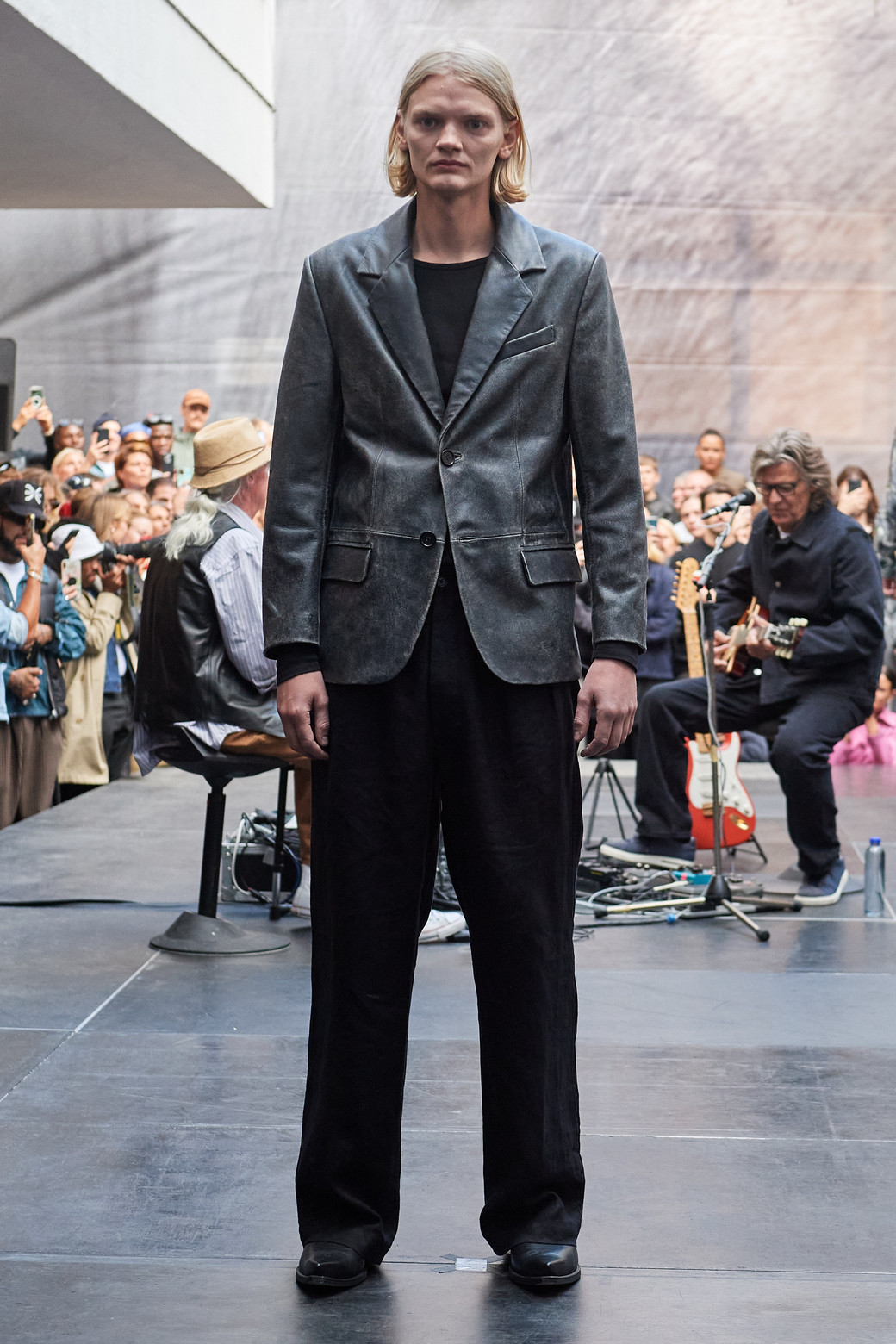
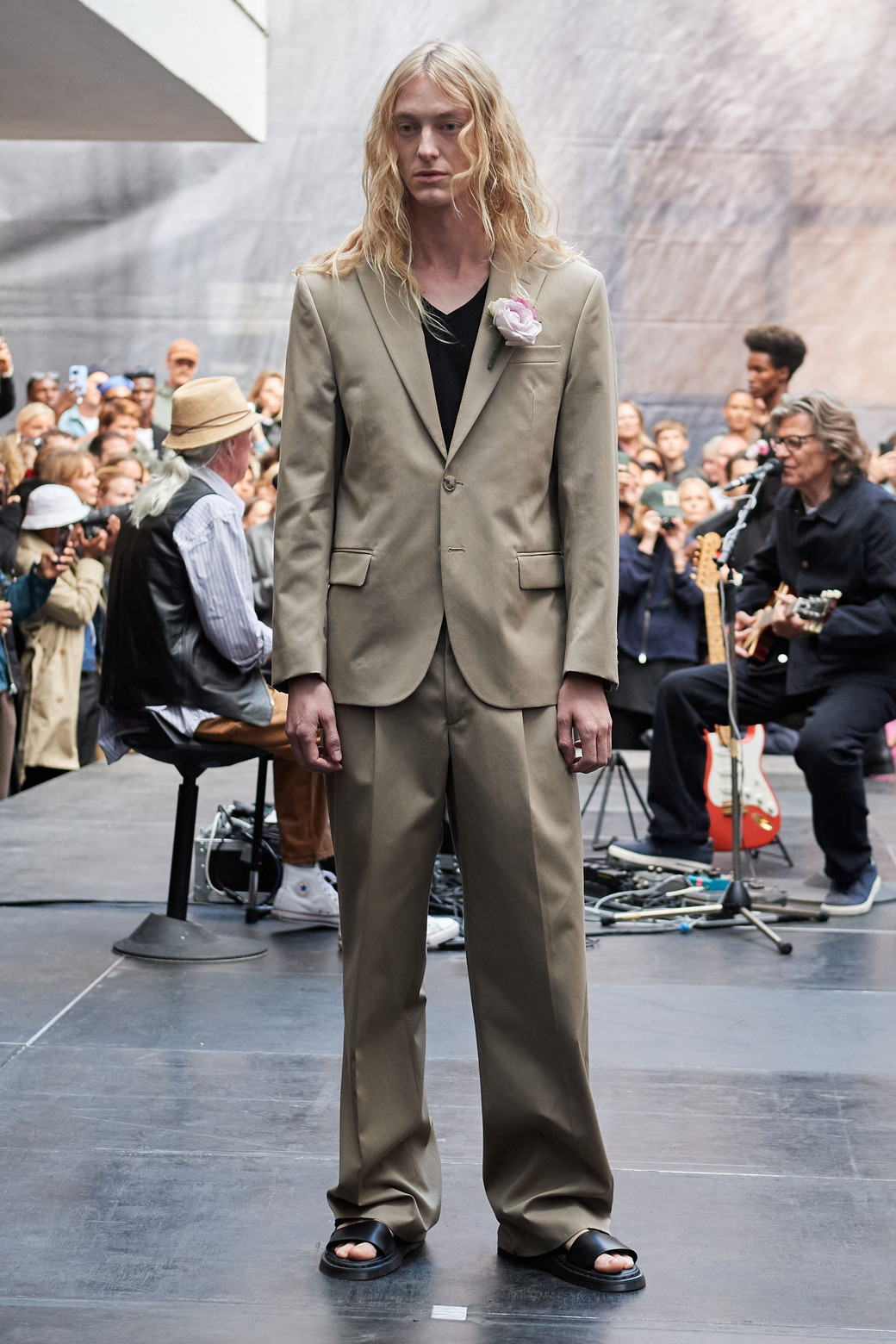
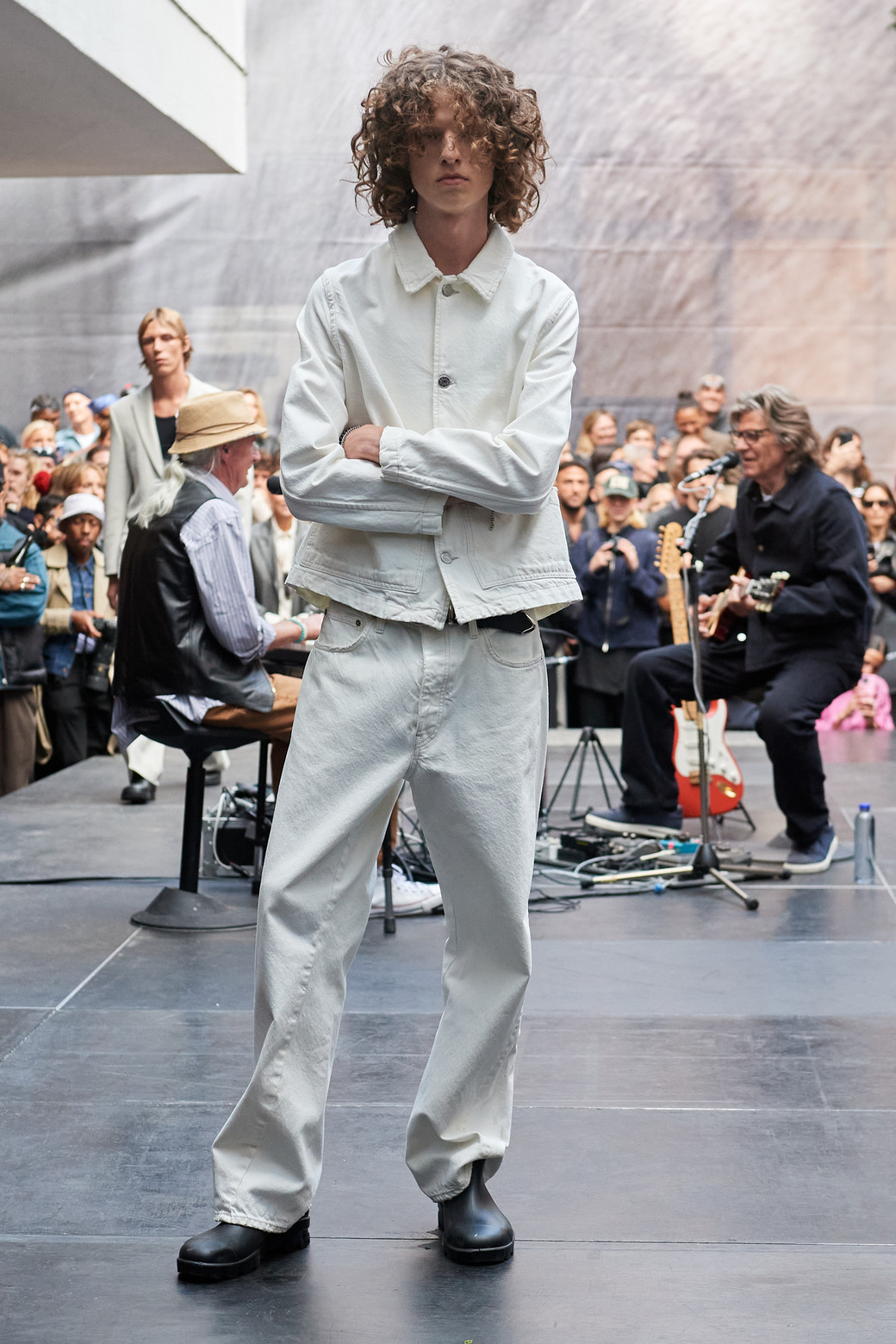
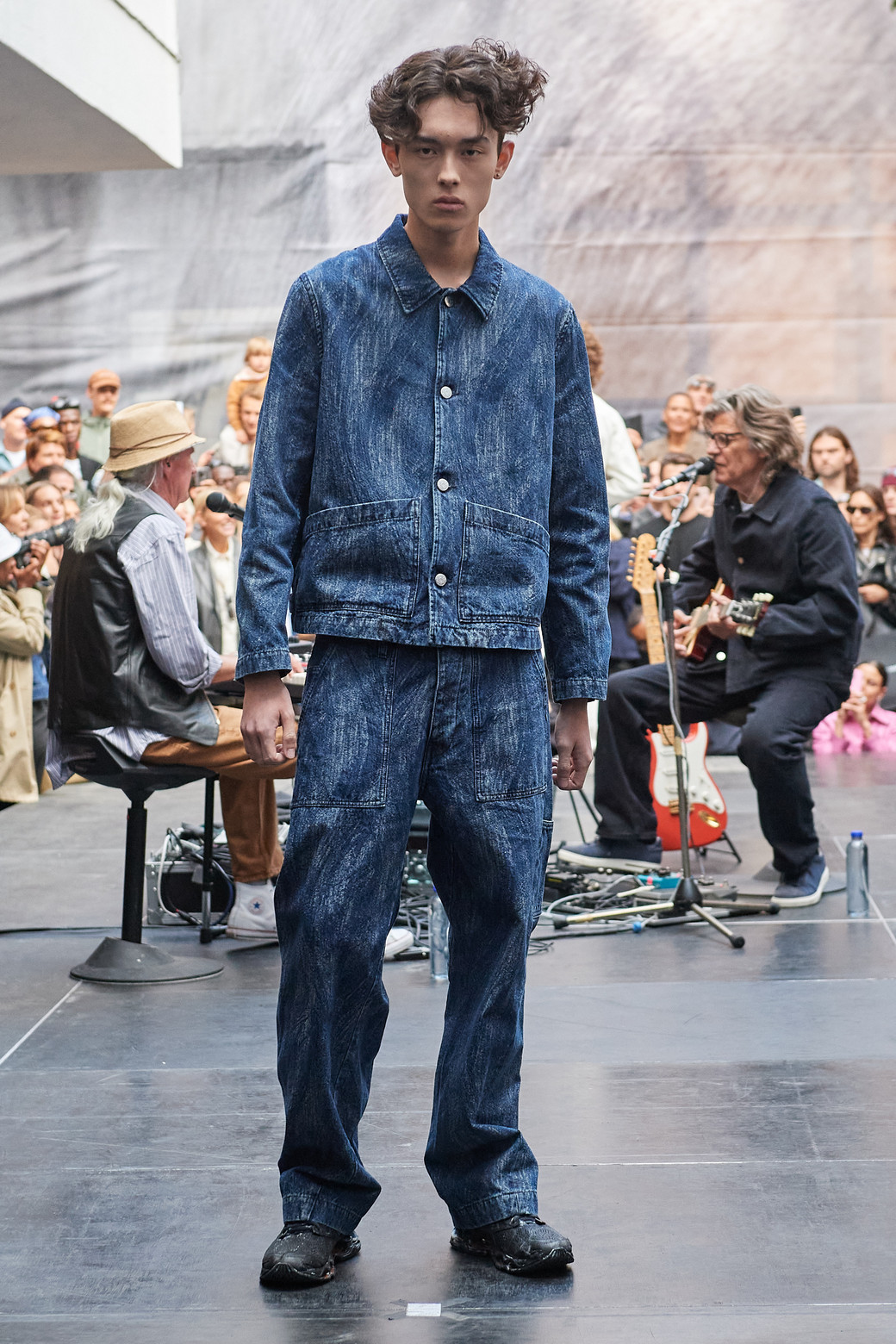
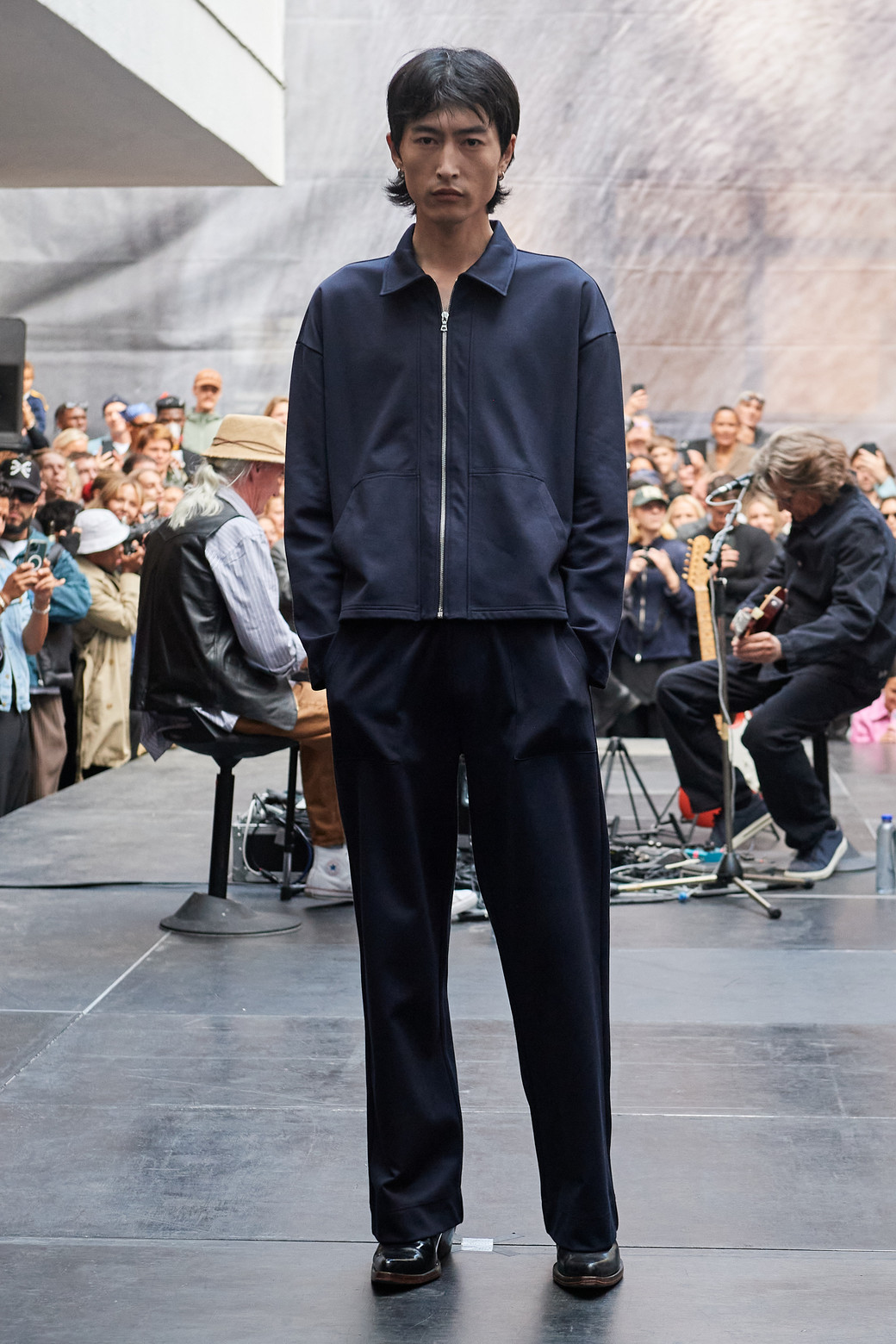
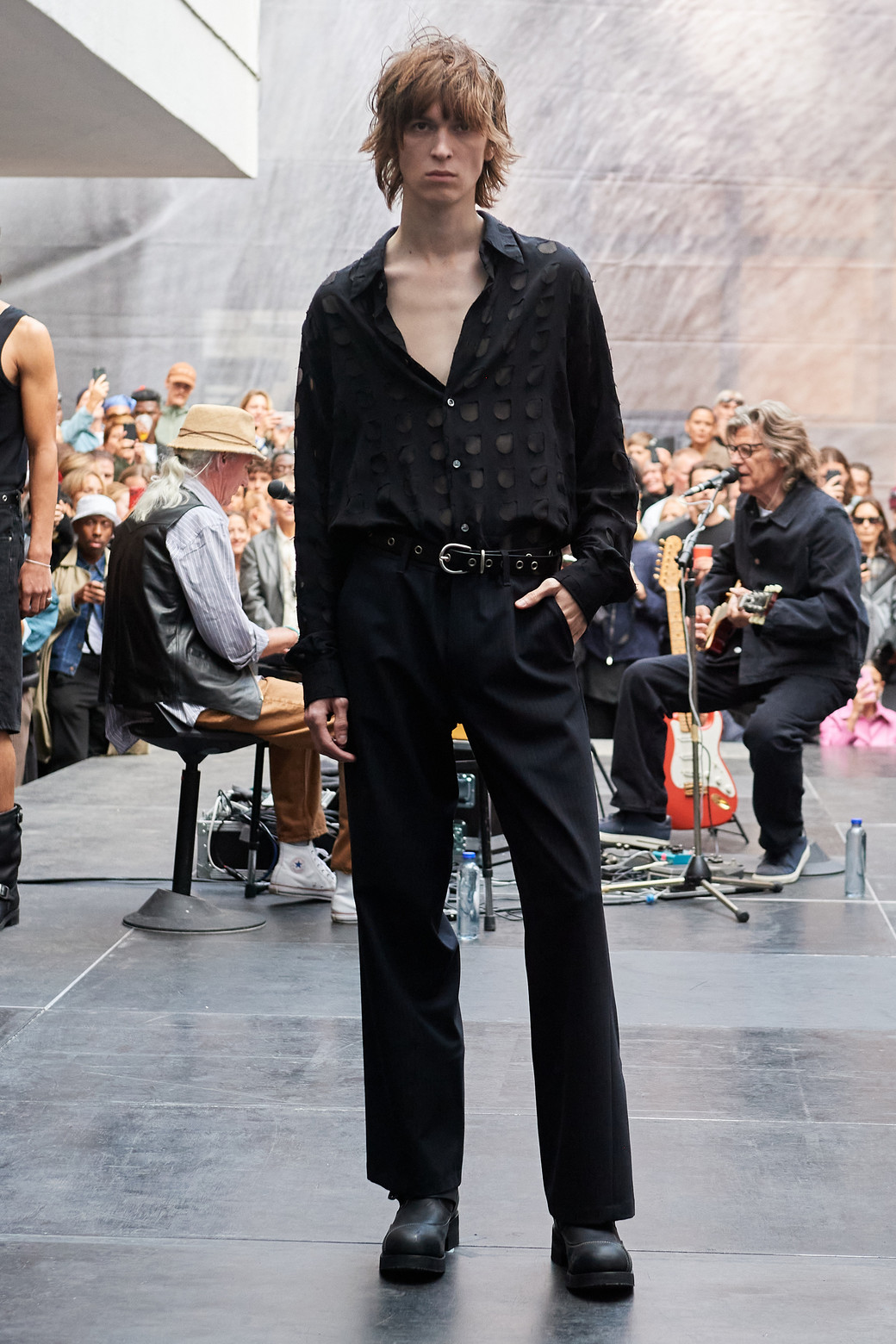
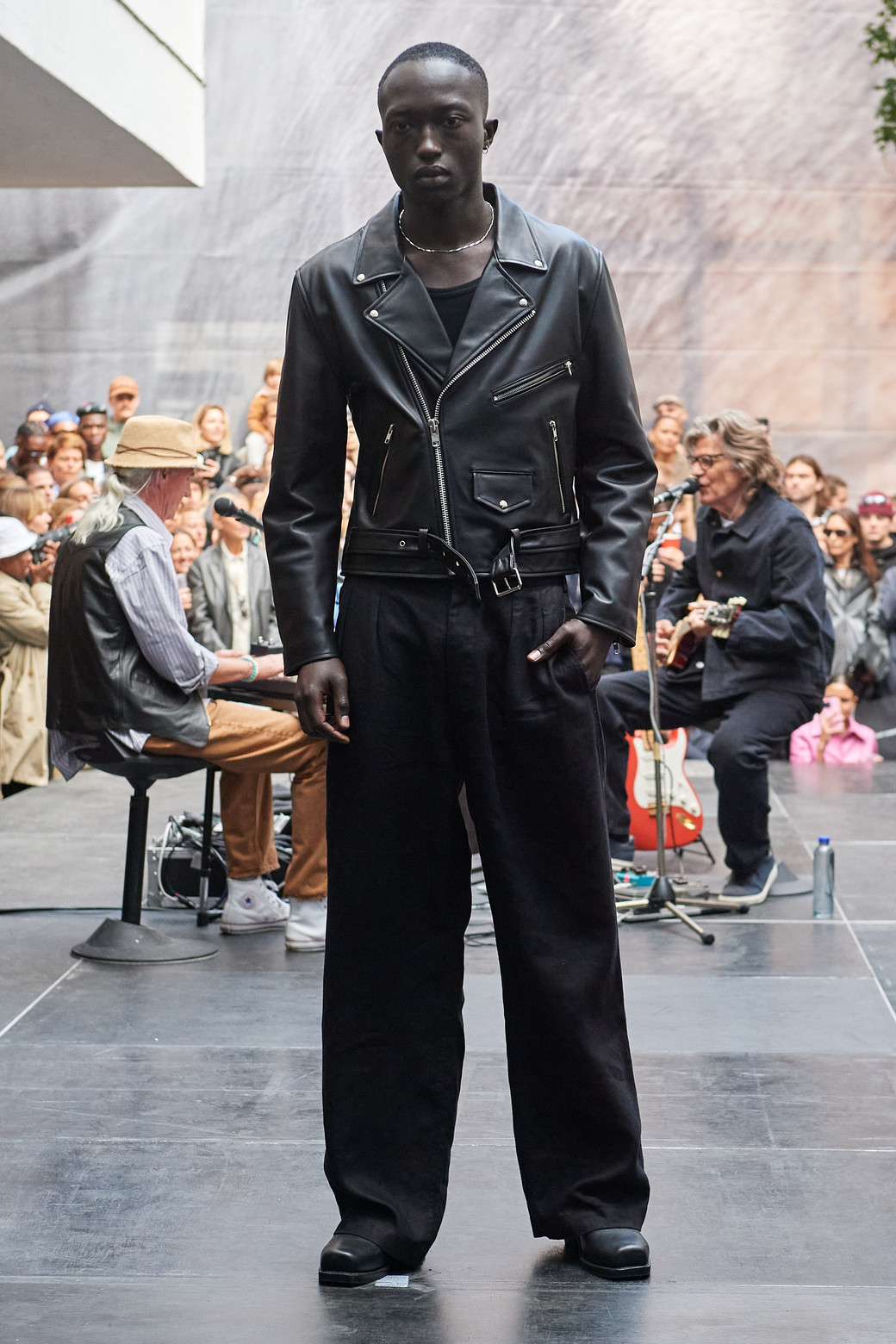
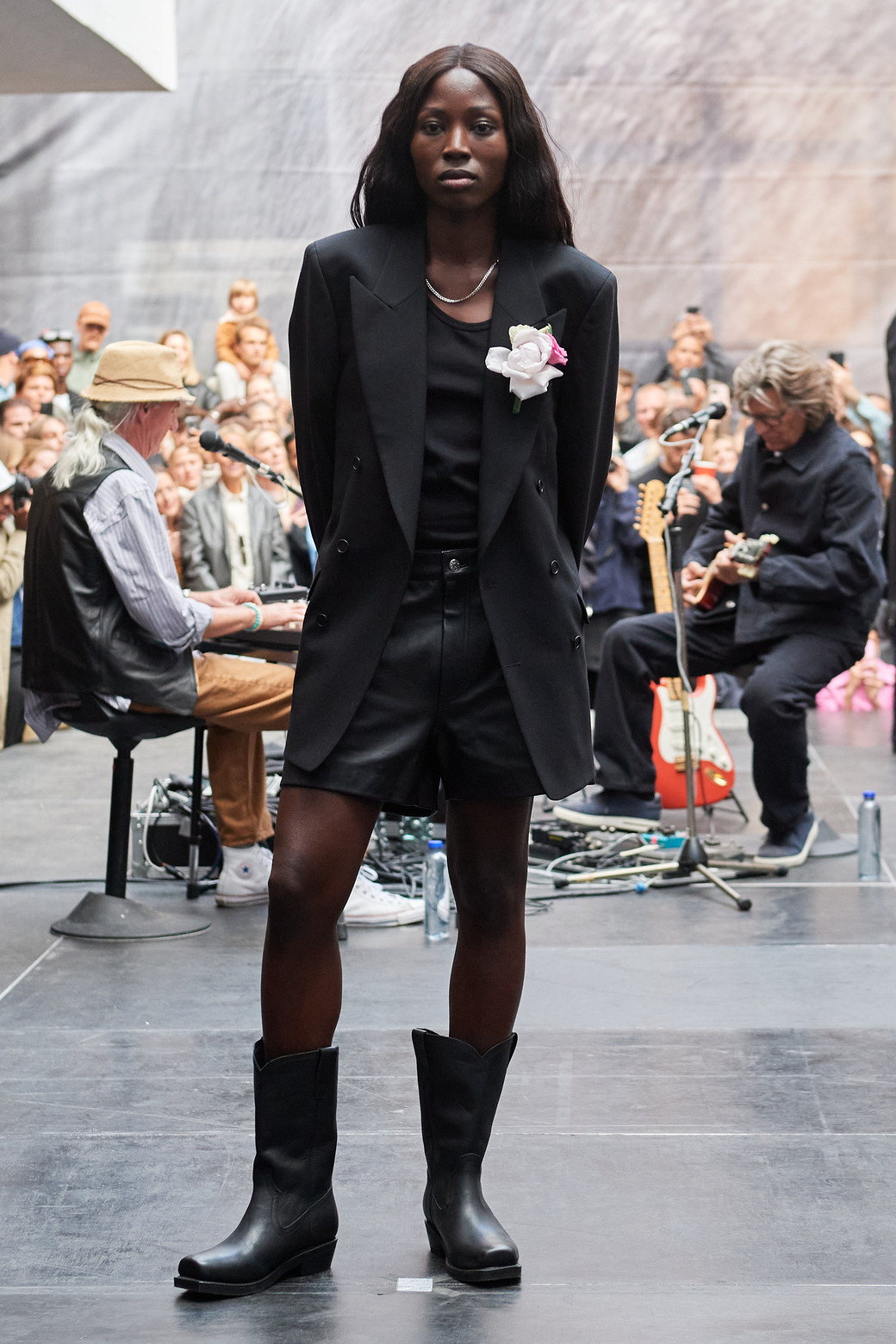
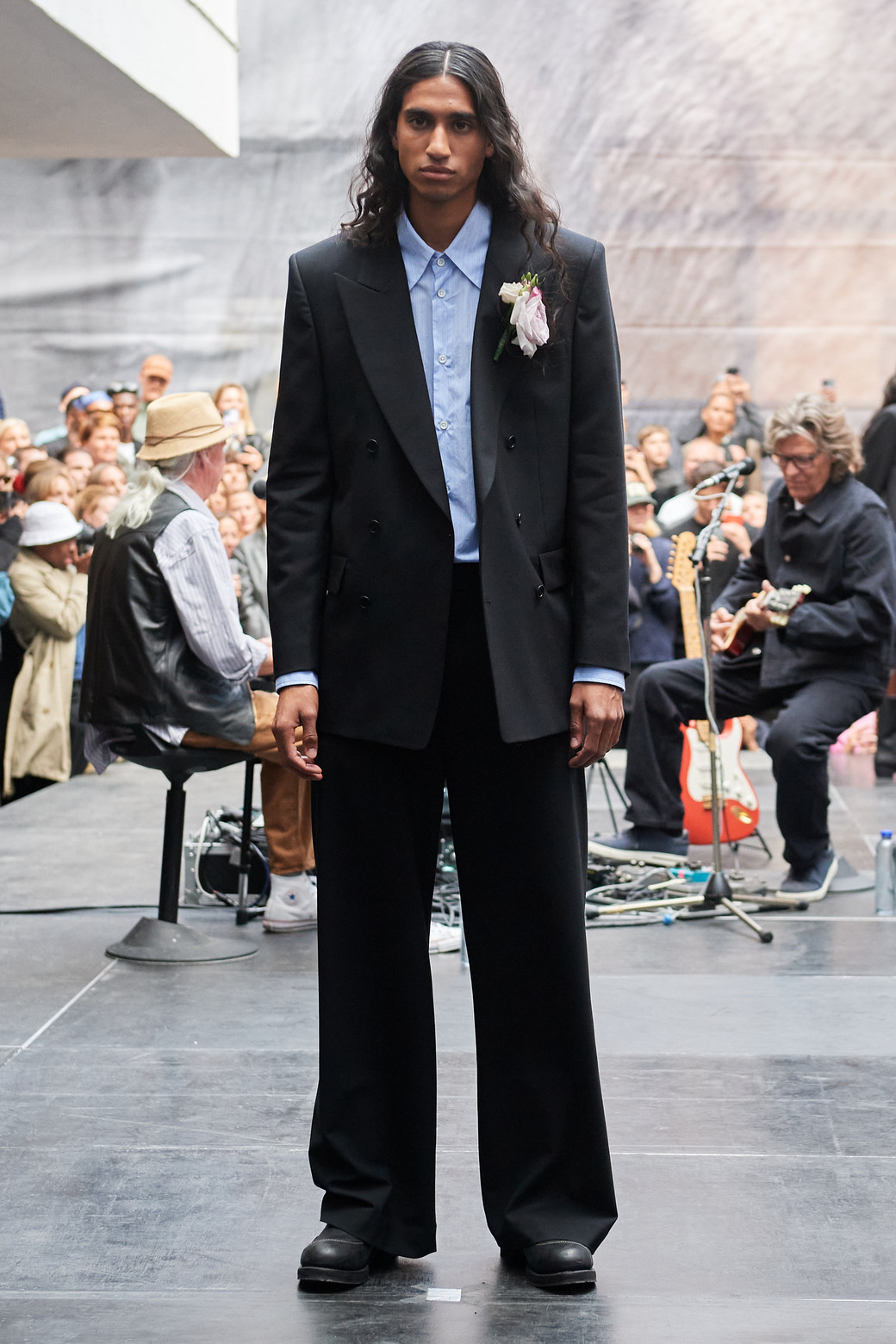
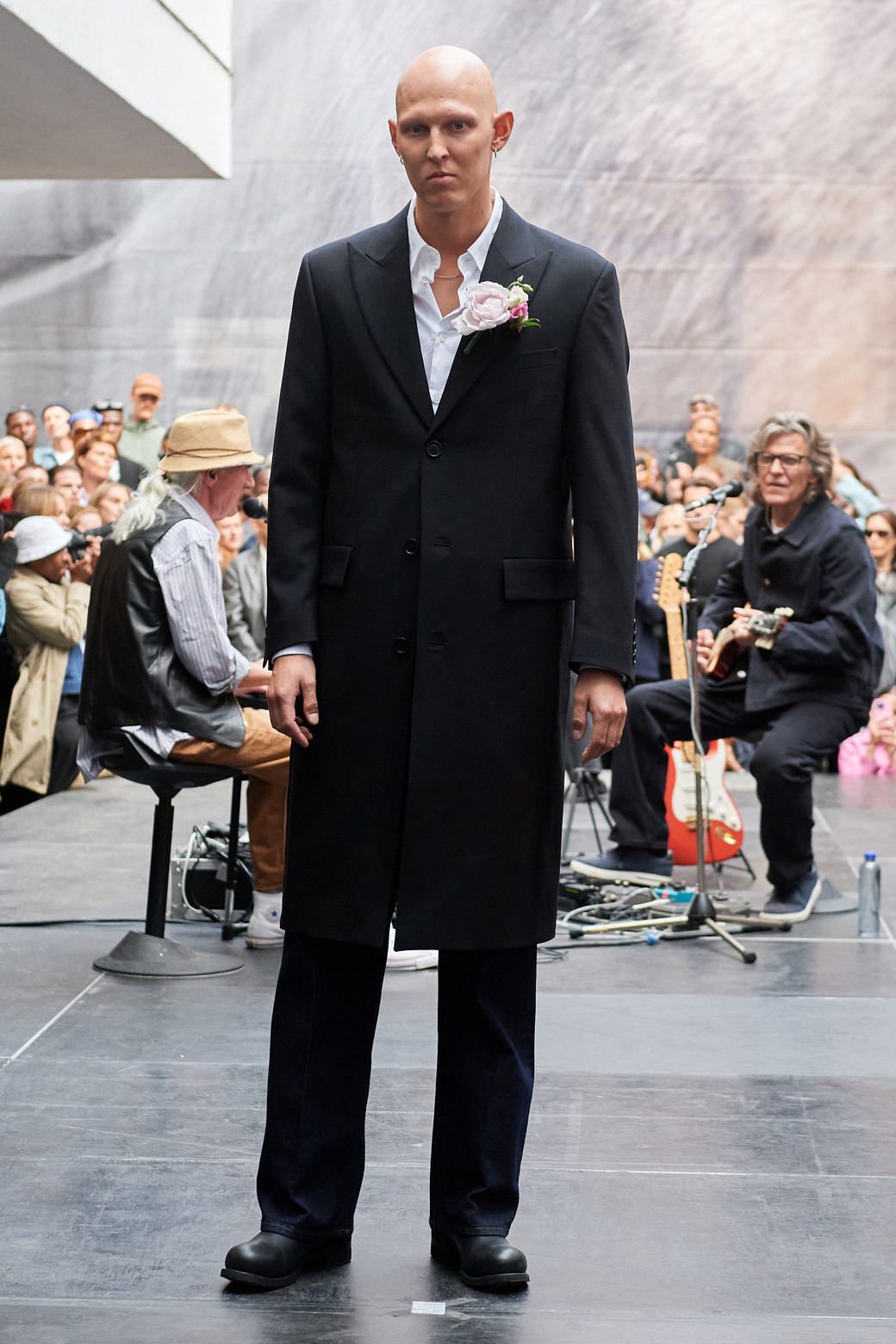
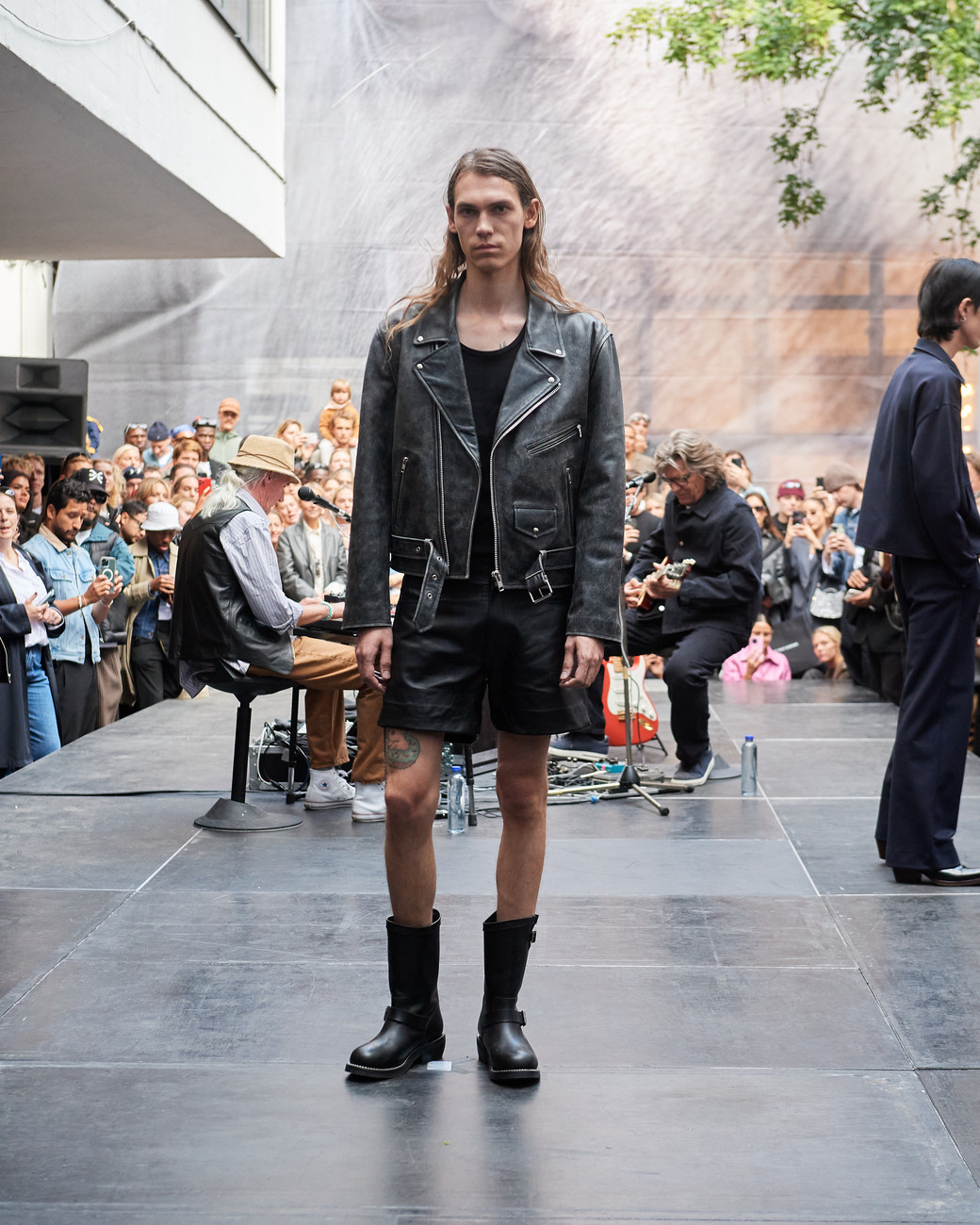
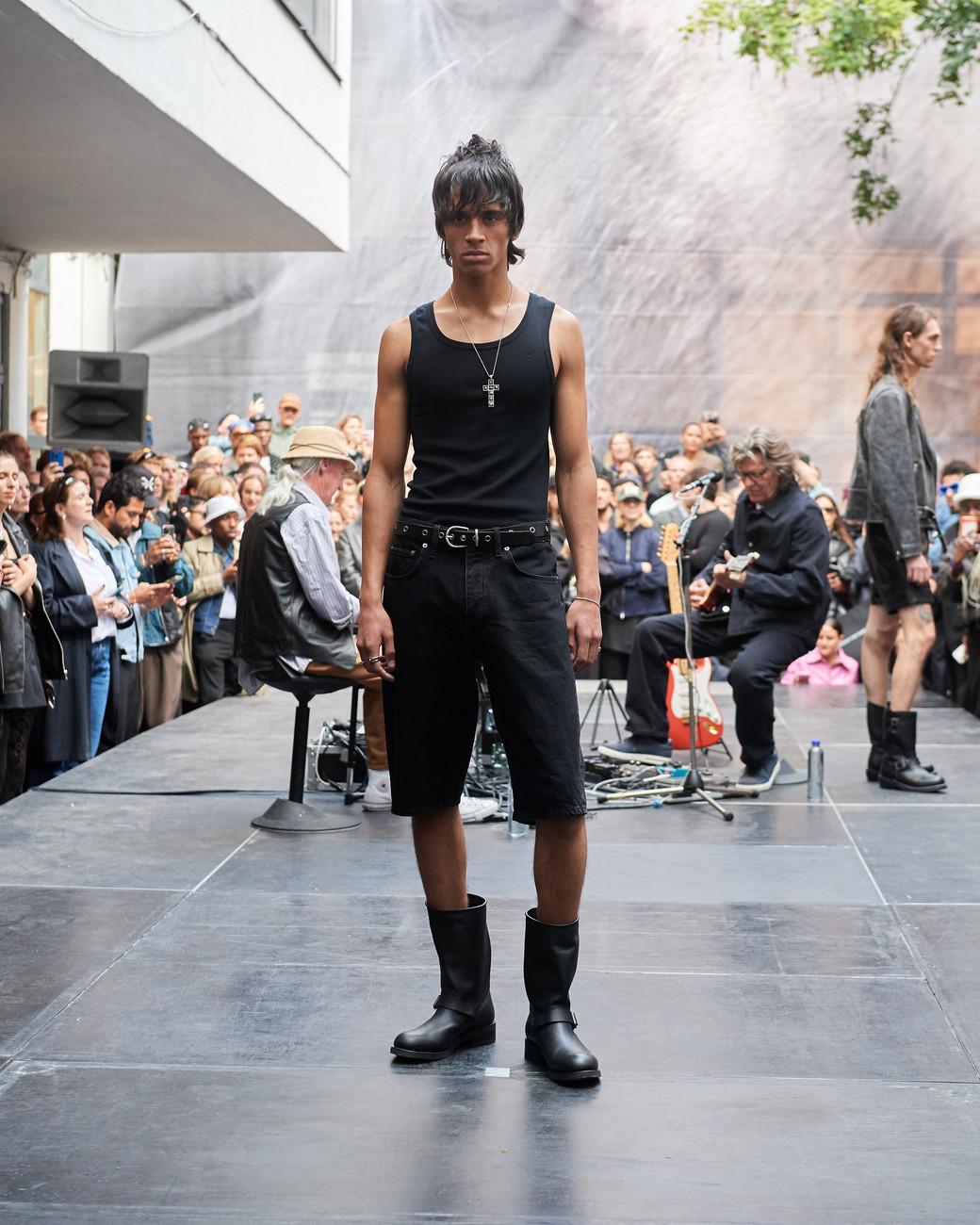
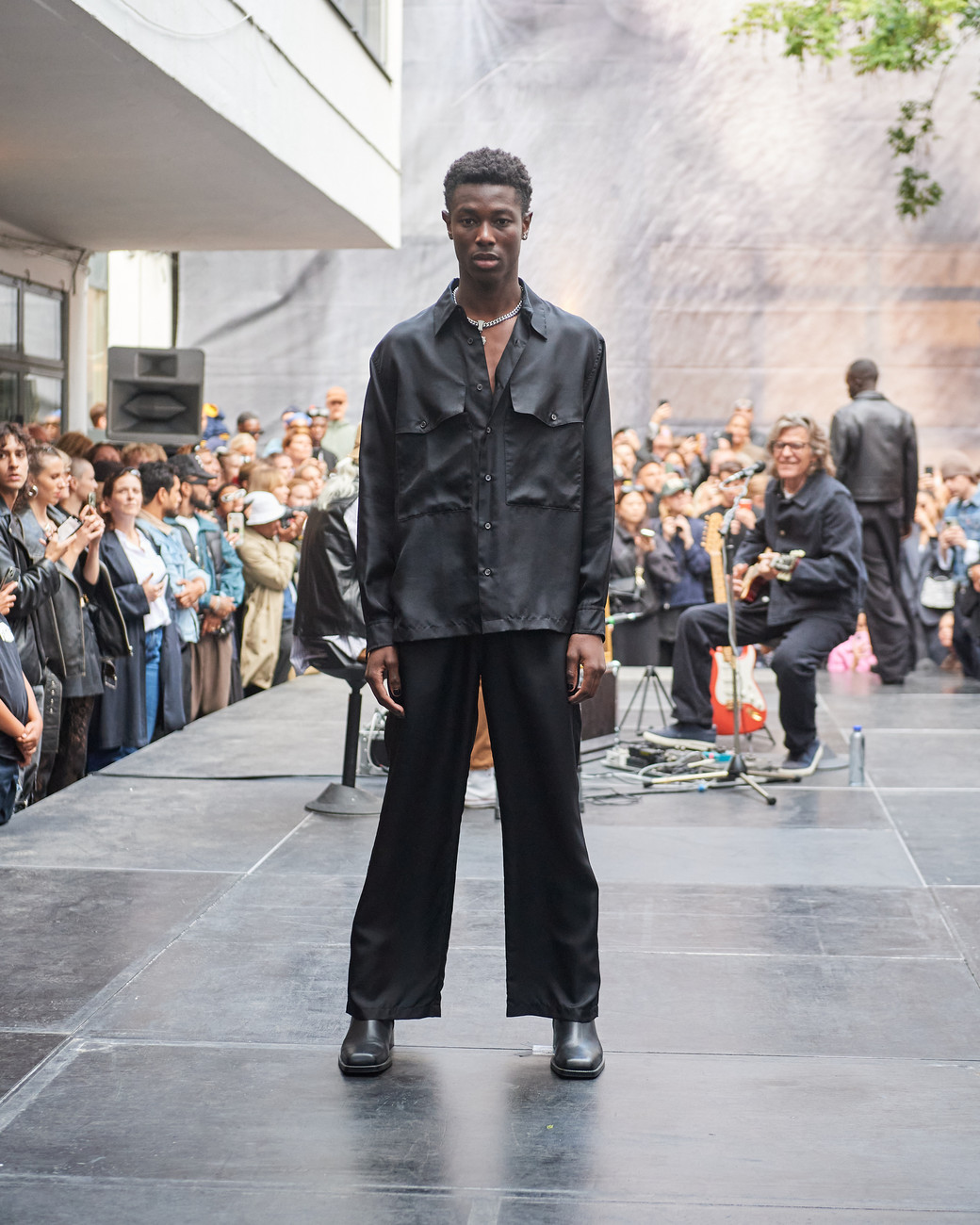
Conversely, the blazers leaned too heavily towards what formerly peaked on the market, from the see-through shirting, denim pants kicking into a (bold) flare, shorts and pants tailored in leather. However, Pedersen’s affinity with the beauty of the quotidian seems rather confident. “Creating a wardrobe that resonates with the rhythm of everyday life is at the heart of our vision,” he notes. “We believe in crafting real clothes that endure, where quality, innovation, and craftsmanship intertwine to redefine men’s fashion. As designers, we find endless inspiration in lost decades like the 80s, allowing us to infuse our creations with a touch of nostalgia and timeless appeal.”
Speaking of direction, this season Sunflower Collection 11 took key inspiration from the legendary Copenhagen electronic duo Laid Back, Tim Stahl and John Guldberg, and the show staged their classic 1983 track White Horse with its catchy synth riff and beat blending funk, disco and wave. It will be interesting to see whether Pedersen will bring forth his creative narrative into edgier territory next season. There’s no wrong move: the brand could stick to this flow, but it would be nice to see it reach full potential.
Once Ulrik Pedersen got his top jacket in place, aficionados might have realized they could resonate with that sole piece. For the meantime, at least, there’s just enough sartorialism to please.