Book of Love
Stampa per sempre!
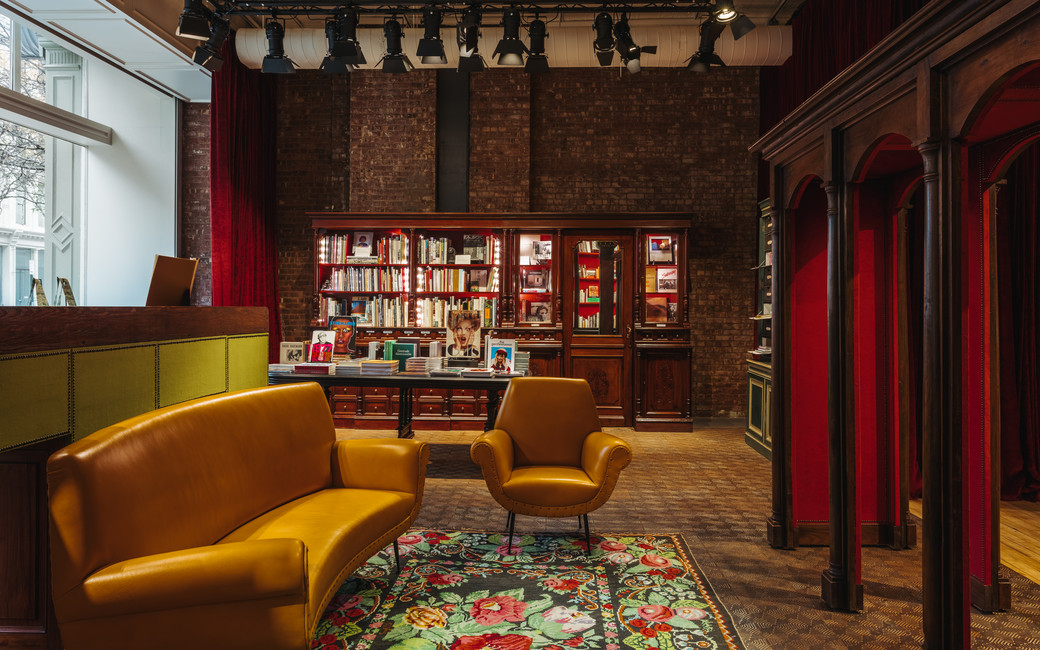
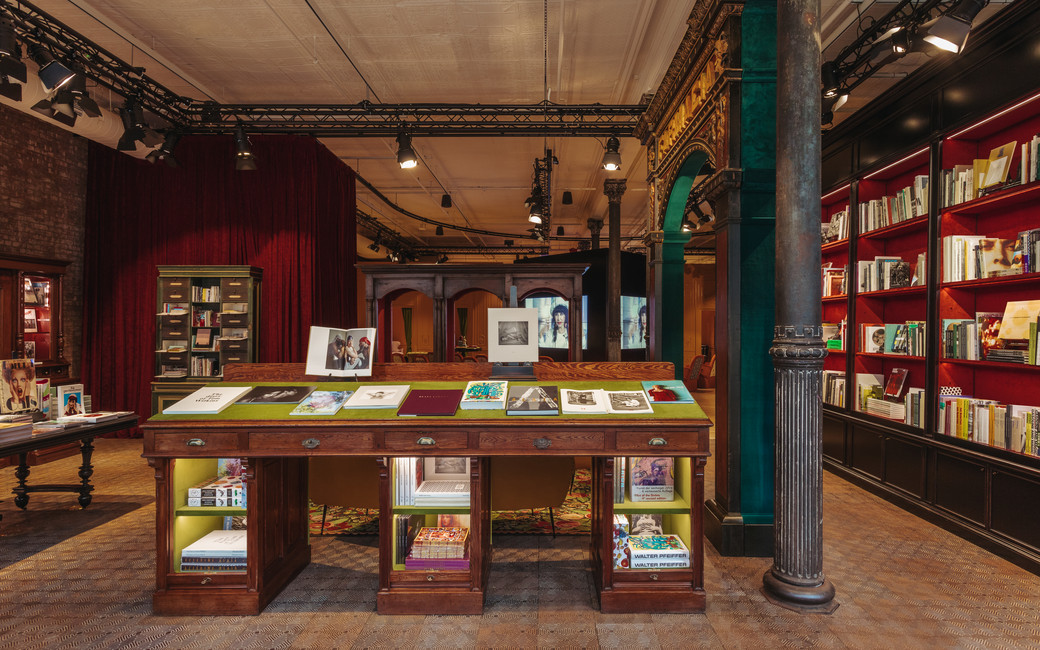
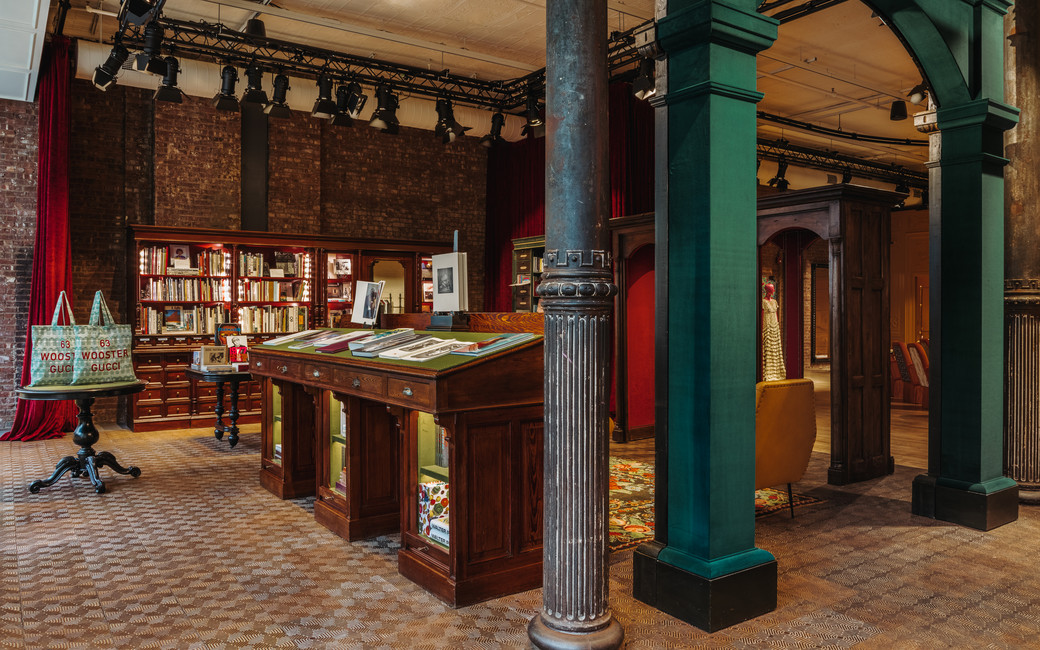
The Gucci Wooster Bookstore is open now at 375 West Broadway in Manhattan.
Photos courtesy of Gucci.
Stampa per sempre!
The Gucci Wooster Bookstore is open now at 375 West Broadway in Manhattan.
Photos courtesy of Gucci.
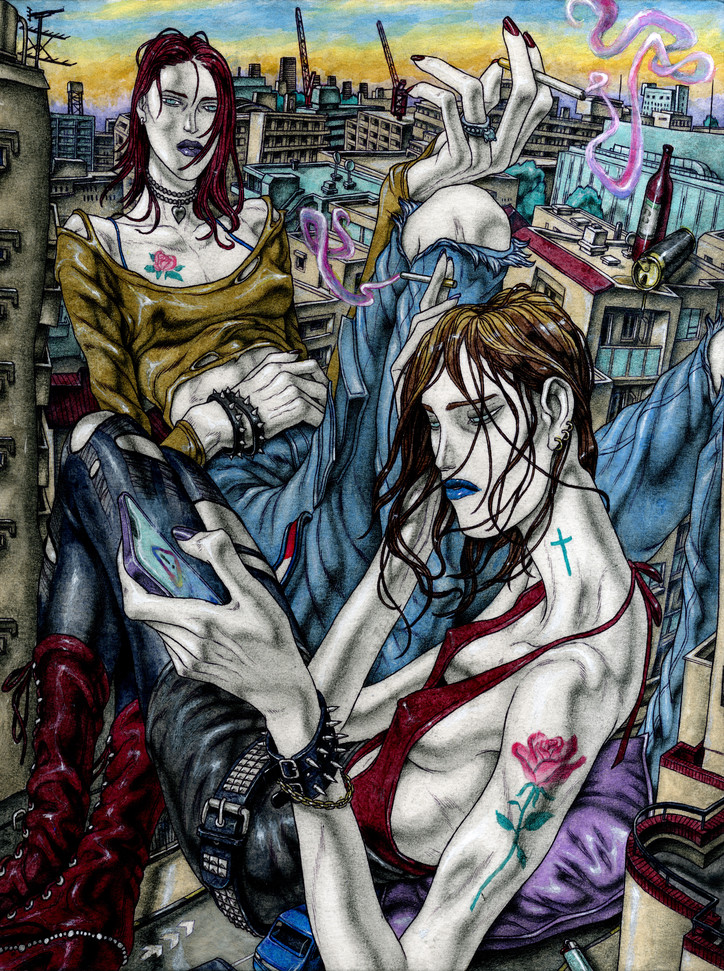
In an attempt leave the veil unpierced, I spoke with those who know Rappeneau’s practice. Followers, collectors, collaborators. Even they seemed caught in a slightly sick, indulgent dream when they described him, their displaced memories of his work clinging close to the heart, close enough to rip it out and hand it over, allowing Rappeneau to sketch them a new one on a scrap of skimpy lingerie.
A common trick of the graffiti world lesser seen in gallery spaces, anonymity is rare: Daft Punk, Elana Ferrante, MF Doom, the occasional Caravaggio in exile. Rappeneau belongs in that lineage, not through absence but through distortion. Since his first show at Queer Thoughts, he has bent our sightlines into warped POVs. Brand names like Armani, Coca-Cola and Balmain flatten into labels that act less like endorsements and more like portals. The clothes become characters, and the world—not the work—starts to warp.
Charlie Fox, artist, feral animal, and writer of essay for American Art Catalogues’ David Rappeneau
Cooke Maroney from Gladstone asked me to write a press release for David’s first solo show with the gallery in Brussels. This was deep in the Covid lockdown era, maybe spring 2020. When I saw the artist’s work, I was immediately hot for it. Or maybe haunted by it. I mean, I never thought somebody would mate the drug-blitzed urchins from the Corinne Day pix I remember swooning over when I was a teen with Dürer’s angels and animé and throw them all into our contemporary dystopia with woozy K hole distortion on top but David did and it’s magical.
All the numinously glowing stuff of now is there, like the iMessages in kanji and the Balenciaga bags and the vape smoke in neon light. And somehow it’s about the sadness deep inside the texture of living online, but it’s also whispering about ancient stuff: grief, loss, angel-hood, the body in its beauty and its strangeness, and melancholy, too. I always feel something religious in David’s work or maybe its ghost. Something about the possibility of ecstasy and transcendence within being fucked up… or just within fucking or within grief. Pass the Bataille. Of course, I can’t know for sure. David’s a man of mystery, too— what’s not to love?
Another story, that is possibly tragic: I wrote this big essay/story for David’s catalogue narrated by a model who’s mourning her dead boyfriend while leafing through the same catalogue, watching that Bresson movie, The Devil, Probably. Which, to me, is the most David movie possible. It’s about this hot teenage nihilist called Charles who wants to kill himself. All his friends in the movie are hot and awfully depressed, too, and they're acting like they’re zonked on opioids which was just Bresson’s style but it’s also very now, obviously. It’s not really ‘about’ Catholicism but haunted by it, ecocide, and the looming apocalypse… It’s a movie about wanting to be an angel. David should remake it or maybe he already has.
Anyway, he named his next show after I wrote that piece, The Devil, Probably. And every once in a while, somebody will DM me about that story to tell me it traumatised them in a great way and I just feel thrilled about the whole thing. I guess me writing about him works somehow because we both make work about these fantasy images of drugs and sorrow and romance, dreams about a certain kind of beauty, how they formed and deformed you, and how they broke your heart. If I meet him, I’ll bring him roses and ask him to draw them for me and the petals will look like pieces of stained glass.
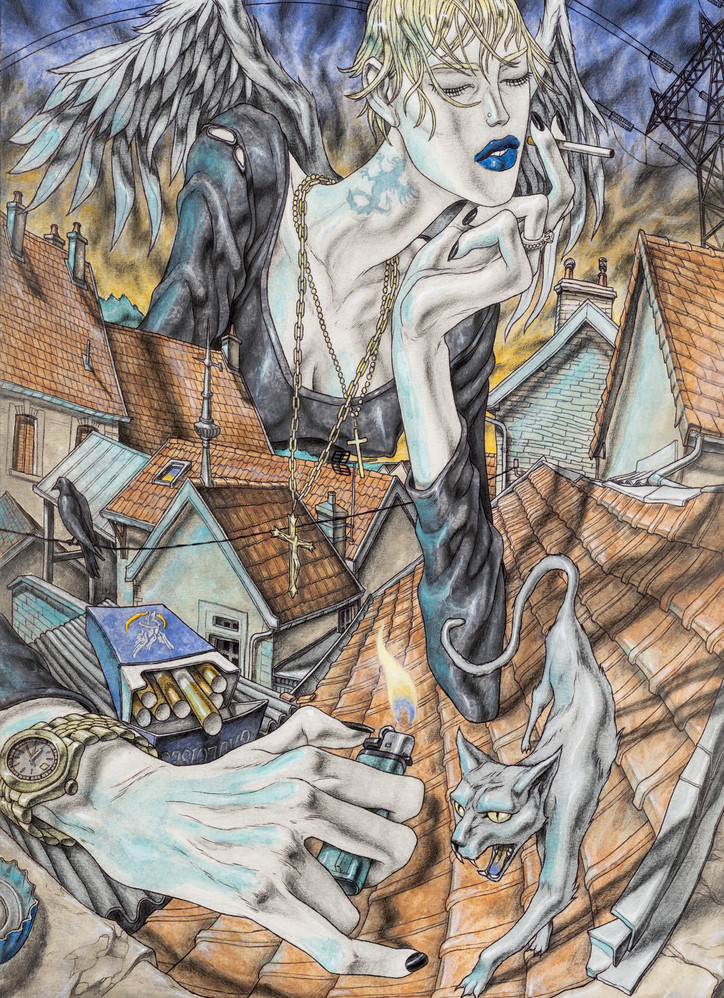
Sam Lipp, artist, curator, and previous director of Queer Thoughts gallery
I first discovered David’s work as he was making a stylistic breakthrough around 2014, developing from digital drawings with manga influence to works on paper in a more expressionistic figuration, and eventually refined into the sleek graphic style that has become his signature. It felt electric to witness the depth of his imagined subjects, which combined the bold talent of his hand with an intellectual elan and a sick sense of humor. I immediately wanted to exhibit the works at the original Queer Thoughts location in Chicago, and David soon agreed. He sent us the works in a manilla envelope and we hung them on the wall with tape, unframed. The show was an instant hit, and the works from that period remain some of my all time favorites.
The truly canny quality in David’s work is his unflinching deadpan. The indifference of his disaffected characters mirrors the intransigent withholding of his public persona. The impressive powers of his practice are consistency and refusal: consistency of format, materials and scale; and his refusal of biography, language, the public, canvas. His formal constraints allow him a greater creative freedom. His work inspires the possibility to excavate fully realized worlds that lie deeper than what’s bobbing on the aesthetic surface.
David’s work has always caused a frenzy, from outrage to intrigue and covetous lust. During the first solo show, a duo of hothead NYC dealers who were also a romantic couple called us incessantly seeking his work, and informed us they were “holding each other crying in bed,” hoping to acquire David’s work.
I also can’t help but love David’s frequent use of bathrooms and bathhouses as a psychologically potent and seductive setting for his scenes.
Danijela Nedelijkovic, mathematician and artist
My first impression of David’s work was that it felt both intimate and unsettling. His figures seemed to carry stories that were unfinished, like fragments of a dream you can’t quite remember. In David’s drawings I recognize the same fragile intensity that I seek in my own work. He finds it through figures and stories, while I explore it through digital collapse and glitch. Both approaches search for human presence inside disruption.
What drew me into his drawings was that sense of tension — how something so carefully rendered could still feel unstable and fragile— but what has always stayed with me is the vulnerability in his characters. There’s a quietness in their expressions, even when the environment around them feels heavy or chaotic. That paradox of stillness inside turbulence is something I often think about when I’m working.
Sometimes, I imagine his characters stepping into the digital spaces of my own work. The idea of them wandering through a glitch or getting lost in a collapsed system always makes me smile — it feels like our practices could overlap in some parallel world
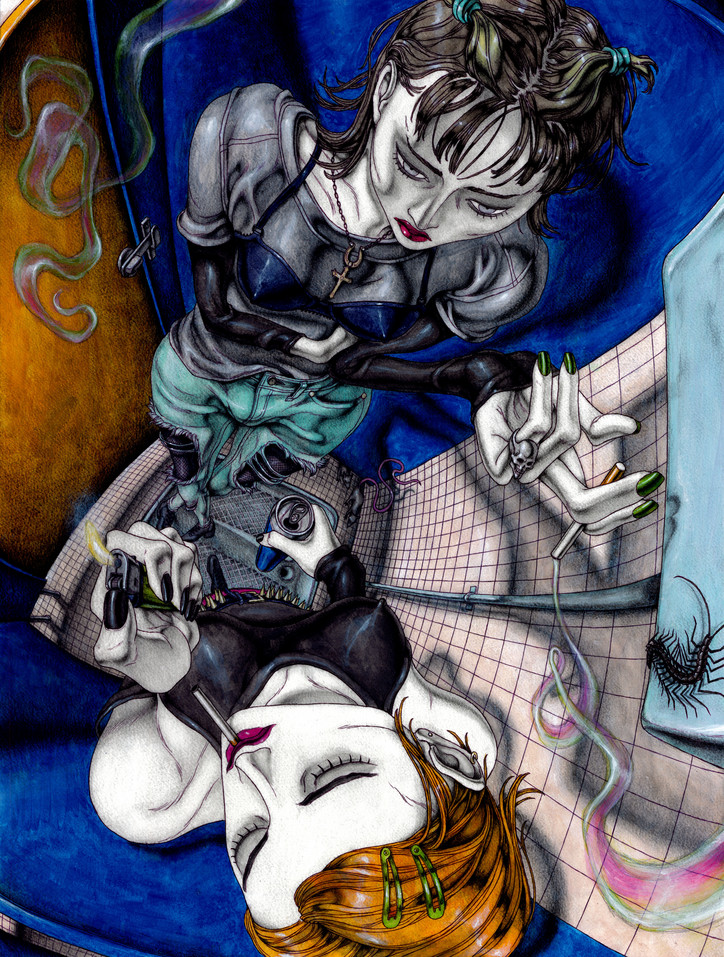
David Rappeneau, Untitled (2024). Courtesy of the artist and Gladstone Gallery. Copyright: David Rappeneau
Mindy Rose Schwartz, sculptor, figurine collector, and installation artist
In 2015, I was invited to have a two person show with David Rappeneau at Queer Thoughts in New York, and it was the first time I came to realize that he was anonymous. I'd been showing with the gallery since their early days in Chicago, and had been in group shows with Rappeneau before. But, his anonymity really dawned on me when I met with Sam and Miguel to set up the show, and they were his stand-ins, helping make decisions on where things should hang and what goes where. When our work was installed, I could really see the appeal of taking the artists out of the mix. I respect that some people want to keep themselves more private. He’s making a fantasy space with the work for the viewer to enter into. with or without assumptions about the artist. Between my alien farm animals and his friends in altered states, there were plenty of characters in the room.
I couldn’t help but imagine who he was, what he looked like, and what he thought of our work together. At the opening I had a conversation with him in my head and tried to send him psychic messages about what the show was like in-person. Ultimately, I conflated him with the figures in his work. In my mind he is always wearing a high vis sweat suit.


RF Alvarez
I'm a huge fan, man. Thank you for taking the time to talk.
Caleb Hahne Quintana
Yeah, likewise.
RF
This new body work you put together is really something. What I love about your work is you've really sunk into this idea of myth-making and creating allegoric spaces. So much of my work has previously been real life moments. Painting is how I process the world, and I imagine you too. Trying to understand my place in all of this–in the Texas landscape and my heritage, and I’m just starting to get into the allegorical creation. I’ve really been impressed by how you're using imagery to tell a more emotional story, something happening beneath the surface.
Caleb
I appreciate you saying all that, and I want to reciprocate the sentiment of the way I've been looking at your work. One of the paintings I really love is Gimme Shelter. That painting was super fascinating. It’s really tipping into this mythic, almost compression of time.
RF
Yeah, yeah removed from reality. One of the things I thought was interesting, and I do want to talk about, is the description of a more somber tone to the work. I think your color palette has sort of retreated. And I feel the same way about this body work I just made too. There's a somberness to it.
Caleb
You know, the ‘somber’ adjective was kind of placed on these paintings. That was one that I hadn't thought of. Those paintings kind of stemmed out of an accident. Painting with color has always been like the highlight of my work, I guess? People have always kind of talked about it, which is funny, because I never used color early on in my career, mostly because I just didn’t know how.
RF
Me too! I had like two years of black and white. It took awhile to figure out, for sure.
Caleb
I mean it’s intimidating.
RF
Yes, absolutely. How much are you coming in with, when you put together a show like this, with intention of the narrative you want to tell, and how much of it is sort of born out of painting and experimenting?


Caleb
I think it's a bit of both. This show I started working on in May of last year, and I didn't fully have a clear idea of what I wanted. I've always been a pretty voracious reader and always used fiction and the power of fiction as this jump off point of, like, how do I want to talk about something.
But for years I’ve made a lot of work about my family, their migration especially through Texas.
My dad's from Lubbock and my family lives in McAllen and Houston, and I'm from Colorado. I think similarly to your grandfather, my great grandfather was a horse Wrangler, and so I was, like, deeply obsessed with the preservation of, or the myth of one's own story.
When I started this exhibition, I was so obsessed with my family that my own kind of awareness or introspection became secondary. You know, I competed in boxing and jiu jitsu for the past 10 years–these very carnal, raw spaces–and the title of the show, A boy that don't bleed, is a line from a poem I wrote about boxing. I wanted to make an exhibition about a nameless boy through this kind of like, becoming, I'm sure yourself and other men in general have this kind of awakening that I think gets eclipsed by maybe a misunderstanding of juvenile behavior that may be aggressive, but I think is actually emotional and not given the right outlet to respond to this really complex change to your physiology, your life, and so I wanted to make an exhibition about that.
RF
Yeah, that really comes through. I love the piece of the two versions of the boy wrestling with himself–this sort of physicality. You’re right, in Gimme Shelter, it’s the same sort of idea. You and I have both been unpacking or trying to understand where we fit into masculinity as a concept and how much of it is just a paper veil. I use the cowboy as a motif to sort create this image of the trappings of stoic, cold masculinity, which for a long time I didn't feel like I belonged to.
I think it’s really nice that we are having conversations about masculinity and manhood and what it means to be a part of it. A lot of my work has been about trying to approach it from a queer perspective. Like, where's the line between strength and tenderness, right? How do you embody both of those things? I think the expectation of stoicism, or maybe coldness and austerity has left a lot of people feeling lonely.
Caleb
Oh my god, yeah totally. That's one of the things I really loved about that painting–I don't know if it's a self portrait, but Gimme Shelter for me is this unadulterated joy and awareness of self that I think is maybe misunderstood or mislabeled?
I don’t know how you and your family are, but as I've gotten older, my dad is much more affectionate with me. He’ll kiss me and hug me, but as a kid, it was very machismo. I kind of had to be a cowboy, and I think I was really conflicted, and maybe you felt a similar way too. I kind of want to go back to what you said about finding your own masculinity, because I'm really curious what that means for you?
RF
I've sort of always approached my practice not as a particularly queer figurative practice, but as just a personal narrative practice, and the queerness is just part of it. On the subject of trying to understand masculinity, I did have a similar upbringing, absolutely. The great thing about fathers as they get older is they tend to get softer, right? I was also really close to my grandfather.
Caleb
Same, yeah.
RF
He was a cowboy, and he was really loving and gregarious to everyone except the men in his life. And I was always craving that. Honestly the painting The Fall is about that. One time, I was riding with him, and I fell off of a horse, and it was one of the only times he scooped me up and, like, really held me. There's something there about how the intensity or moments of pain are actually an entry point to the tenderness I’m sort of craving.
I think a lot of this body of work I just made is also about my marriage–I’ve been with my partners for 10 years–and trying to understand yourself as part of a partnership that's been going on for that long. I think it's possible to wake up one day and suddenly feel like a stranger all over again to everything in your life. Painting has always been how I try to find home in myself and how I play with all these relationships I have. In the Gimme Shelter painting, I'm wearing my grandfather's hat. In almost every show I've ever done, I've done a self portrait with grandfather's hat.
Caleb
I appreciate you sharing that. I always value knowing the objects that populate people's paintings as like their own relics, you know?
RF
Yeah. Do you want to talk about the horse? I want to talk about your horse!
Caleb
Yeah, I’ll talk about my horses. I've painted horses for so long. Even before it was my full-time job. Just being from Colorado, as I'm sure, you being from Texas–it’s just language and a thing that’s just around you. Just my visual lexicon.
I've been sober for about nine years and when I first got sober, in my early 20s, man, I was really going through it, like a lot of men, I think, and people in general. I went and got a limpia [Mexican spiritual cleansing]. I went to a healer, and did this whole practice. It was a really insane experience. I started hallucinating and one of these images I saw was a bunch of white horses running through a blue field. She calls all of your ancestors into the room. It's like a deeply spiritual and kind of overwhelming thing. I went to Texas shortly after that and I just kept seeing these horses, and then I started talking to my family and started uncovering this myth of my family as horse thieves.
I've just always revisited the horse as this specter that has followed me along this Odyssey that is my life. And so the horse, this white thoroughbred in the exhibition, kind of functions as this specter that is following the boy. It's almost this thing that is telling him, maybe not literally where to go, but almost this spiritual message through God, like “you’re okay.” In the exhibition, they meet at this waterfall.


RF
Great piece by the way. The sense of scale, man. Shit, that one knocked me to the ground.
Caleb
Thank you, I really appreciate that.
RF
I like this idea of the horse, sort of bearing witness. There's something about, you know, when you stare into the abyss, the abyss stares back. I do love this idea of these ‘familiars’ who are there just to bear witness to your journey.


From September 1st 2025 - October 17th 2025, ten to twelve films are to be selected annually; there are no restrictions regarding geographic location of artist or film, genre, theme, or language. The chosen films will be highlighted for their artistic merit, innovation, and foresight. Fondazione Prada requires only that production companies involved be vetted for their integrity and accountability as part of the initial submission.
Paolo Moretti, Head of Fondazione Prada Film Fund, explains that “this project represents a natural evolution of Fondazione Prada’s activities in the field of cinema, which over the years have included film restoration and collaboration with international directors. The aim is to provide concrete support for creating works with high artistic value that often lack a place in market dynamics, but are fully consistent with the research that Fondazione Prada has been pursuing for over twenty years.”
After production companies and their proposed project are reviewed - first by readers and secondly by an international committee of cultural and film experts, selected projects will be announced in early 2026, around January or February. These selected projects will be financially supported by up to €250,000 - €1.5 million the total annual contribution of the Fondazione Film Fund. Submissions can be made via Prada Fondazione’s website.