Taking it back to Toro Y Moi’s roots, I was wondering about when you were first coming up and being associated with the chill wave movement? Did you feel a connection to that group of artists and the mindset and philosophy that was linked to it?
When I first started to do electronic music it was definitely an awareness of wanting to reference something. I think having references is always key for something that is going to be released for a large audience to give something to relate to and to quickly put it into context. The same goes for visual art. You can get it and be drawn to it. As far as being associated with chill wave- the whole time it was happening I was very accepting of it. It was funny to see it develop into an Internet phenomenon, but at the same time it was like two years later and people were still asking about it, then five years, and then eight years later, so it’s a thing now, and I’m honored to be a part of it.
What is the title of the new record?
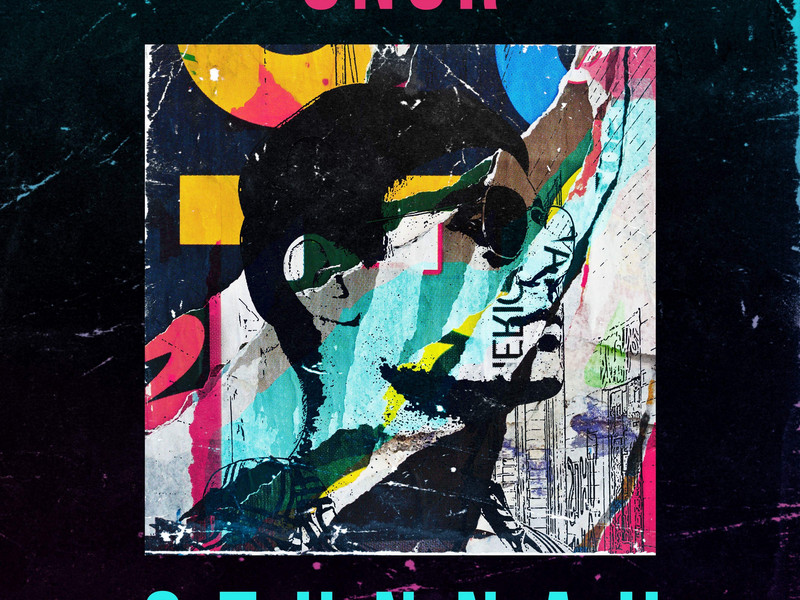
Boo-Boo.
Can you tell me the place that this record came from? You mentioned that it was a therapeutic process, and a way to deal with a period of personal upheaval?
It’s about relationships and love, coming and fading, and coming back again as a cycle. I wanted to document it from where I was observing it, seeing the space that’s created by the absence of someone who you have loved, and who has left. I feel like embracing space in all aspects whether it’s in sound or physical objects or walls is important to find balance and keep your head on, because it’s going to get crazier.
You talked about reaching the end of a seven-year cycle of releasing music, touring, and finding wider recognition- and then arriving at a place of reflection?
A lot of the lyrical content was about my personal life, but I feel certain things- like seeing myself dealing with fame, or which audiences were reacting to what, it was a moment, which boosted my confidence, to be like no- I’m not just Asian, I’m Black too- I like to make Black music. I think a lot of people just like to box people in, so it’s like no, you don’t really know me, here’s another side of me. That’s all I’m trying to do- show all my sides.
That being said, can you elaborate on your upbringing and your perspective from that?
I grew up in South Carolina. My Dad is Black and my Mother is Filipino. I grew up in a suburban neighborhood. I went to a mostly black high school. It was an eye opening experience for someone like me growing up in that environment because you’re constantly being told that you’re not black. You just shrug it off and find wherever you can to sit at the lunch table. I ended up with the skateboarders and musicians, and all the kids listening to the Misfits. I fell into this world of skateboarding and punk music, that’s mostly white culture in its background. That’s where I come from, which is embracing three different cultures, so it’s hard for me to judge or to side with anything. The thing is, is that I’m comfortable with who I am. I’ve kind of been the same since I was fifteen. I still appreciate subculture, and I think that being open minded to all sides of culture is a plus. I’m a bi-racial person of color, who comes from a nice neighborhood, so I have privilege, but then I don’t at the same time.
It seems that lots of times in discussions about race in our society there’s often disregard for complexity, and that people generalize and brush aside the fact that people’s lives have nuance and details.
It’s a difficult subject because no matter what you say you’re going to alienate someone, but at the same time if you’re hearing someone talk about it, you should be aware that that’s what’s going to happen when you talk about race. You should almost become a neutral vessel. There’s no easy way to talk about politics, sex, race, religion. It’s always been the same cycle and debate. I think you have to keep moving and find likeminded people that are trying their best to step out and be conscious and aware of how they should be in society. It’s one the things that drew me to California. I love the south but it’s behind in some ways.
Do you have plans to tour this record?
There’s not going to be a tour for this one. This was a cathartic record. I wanted to write it and get out of my system. It’s been awhile since I’ve sat down at a computer and just made something there. There’s no drum set-ups- just me, a microphone, and a my computer.
Were there any references that played a part in the process? You talked about listening to certain ambient tracks on repeat. Did this relate to the concept of space you were mentioning?
I think the thing that attracted me most to what I was doing with Causers, and the whole movement with what Washed Out was doing was the ambient and atmospheric elements. I liked the stuff in the background that came in to fill in the space. For this record the beats are pretty straightforward. I wanted to experiment with pads and making ambient environments because it helps me mentally- just to have me walk down the street a little bit calmer listening to an ambient track.
Are there any ambient artists you feel a tight affinity with?
I love Gigi Masin. He’s on the Music From Memory label. And I like Dream Carpets who are a cassette tape loop type of project. Brian Eno is always great, and there’s lot’s of Japanese ambient releases from the 80s. I feel like Oneohtrix Point Never has really revamped the melancholic type of ambient music, and that’s resonated with me so much for some reason, probably because I feel dark most of the time. I think that’s probably how most people feel- just dark. You’ve gotta wake up and deal with this struggle and do it again. I’ve also listened to a shit ton of Larajii. He’s amazing. He’s from New York. He would play on a modified electric zither in the streets and subway. He’s full on new age, saying quotes in his music- he was discovered by Brian Eno when he was playing in Washington Square Park, and his music was recorded as the third installment of Eno’s ambient series.