NZ: You have to be tough, when it’s your vision. So, what was your vision for this documentary?
BC: I really wanted to make a film, so I wanted to see if they would trust me to make something different. There were a lot of ideas, and there was one I was interested in that would have been pretty difficult—
NZ: Puppets.
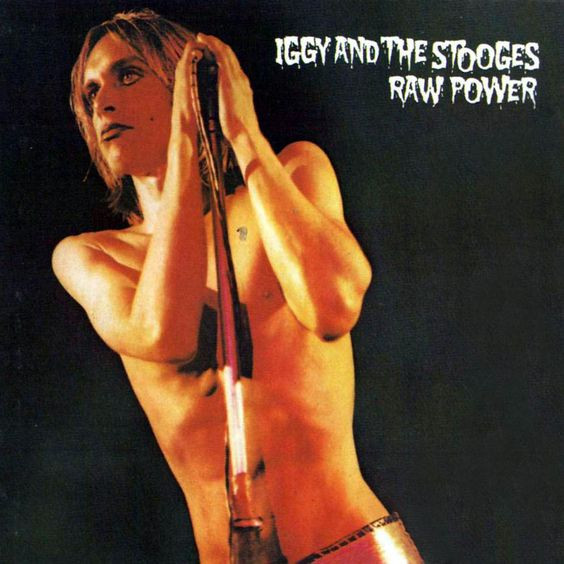
BC: [Laughs] Yeah, puppets. No, but it was all going to take place in a diner or a dive bar or something like that in New York, and it was just going to be like—what’s the funny series of paitings? Rock Dreams? There was an artist [Guy Peellaert] who did all these fancy pictures of celebrities, some living, some dead, all hanging out in some places together. It was kind of like that in a way. So basically everybody in this diner or café would have something to do with the film. So someone like Iggy Pop would come in and sit down and have a chat with Mick, or Debbie Harry would be the waitress.
NZ: Recreating her job at Max’s Kansas City. [Laughs] I always feel like creatively, sometimes the most challenging thing is that first step, that first moment. It presents all the steps you need to take and the way the film wants to be.
BC: I think as long as there’s some people who recognize that you’re doing what you’re doing for a reason, and not just to look cool, it’s good. It never starts with that. It starts with, “how do tell a story differently?”
Ultimately, with Mick’s story, and as amazing a photographer as he is, and as interesting and funny character as he is, his story is a pretty old story. It’s been told a million times. It’s like Icarus, it’s the oldest story in the book. So how do you tell that differently and make it interesting? You have to try.
NZ: So how did you end up doing that? Did you have a vision for the entire film, or did you start somewhere and decide to see what would happen next? Did you plan things out with Mick, or did you work in chunks? Essentially, did you have a vision of the finished product from the beginning, or did it change throughout the process?
BC: I basically had the central idea at the beginning, which is that it’s going to take place in this space which I kind of saw as Mick’s psyche. We get taken into this operating theater at the beginning of the film, which is obviously a stylized version of Mick’s psyche, and that’s where we spend the rest of the movie. So that’s the basic idea. And then from there I was like, what else do we need to do? I want to show him going through his stuff, going through his work. I want to show him working.
NZ: But all within that space, right?
BC: Yeah, I liked the idea of being within that space. Obviously I couldn’t keep the entire film there because that would be too much, so I had to use another tool to get me out of there, basically.
The earlier cuts were way more arty and weirder. I was going for this memory-based approached, and it was kind of too weird for most people I think. I think if anything, the main things which changed throughout was just it becoming more chronological. More conventional in a way, I guess. Mick had done a lot of books, a lot of interviews, tv, radio, magazines, for years and years and years. He’s well-trodden in telling these stories. So he kind of thought it was just going to be that, that it was enough to just tell these stories about his work. But I think the biggest struggle was basically us—as in myself and the producers—persuading him that it needed to be more than that, that it needed to have a personal feel, that he needed to open up on the personal side of things. You can’t have ninety minutes of just talking about pictures. I mean, you can, and there are a lot of things like that.
NZ: From his point of view, it’s probably hard to let go of that idea as well. To his credit, I could see how that could be a difficult thing. It’s his life.
BC: Definitely. And it was really probably a year or two on and off of shooting, but most of the time was spent in editing. And much of that time was really a continuing argument between Mick and myself about those kinds of things. And some of it was me wanting to keep ahold of things that I’d shot because I liked them a lot, and some of that was Mick not being ready to open up. It was difficult. It was a constant process of argument and going back and forth, until the end, basically. I guess for me, when you’re in it you don’t really see it, and I had to remind myself—or Karen would remind me—that this is his life story, that this is somebody else’s life and you have to listen to them. Even though they have no objectivity, you have to listen to them because it’s their life. They’re the ones who have to live with it. And I mean my thoughts were that I have to live with it too, I’m a director and I’m going to be labeled based on my work. So it was difficult.
And that central theme of him nearly dying became very contentious as well. At first he was really into it, and he came to all the shoots and did all this stuff, and he was kind of intrigued by it. He didn’t really understand it. He was like, “why are you doing all this stuff when it’s about pictures?” But it wasn’t just about pictures, it’s about him. But then when he saw it, he began to kind of get more and more concerned by it, because he found it uncomfortable to see himself that way.