BY:ERA Reframes Skincare
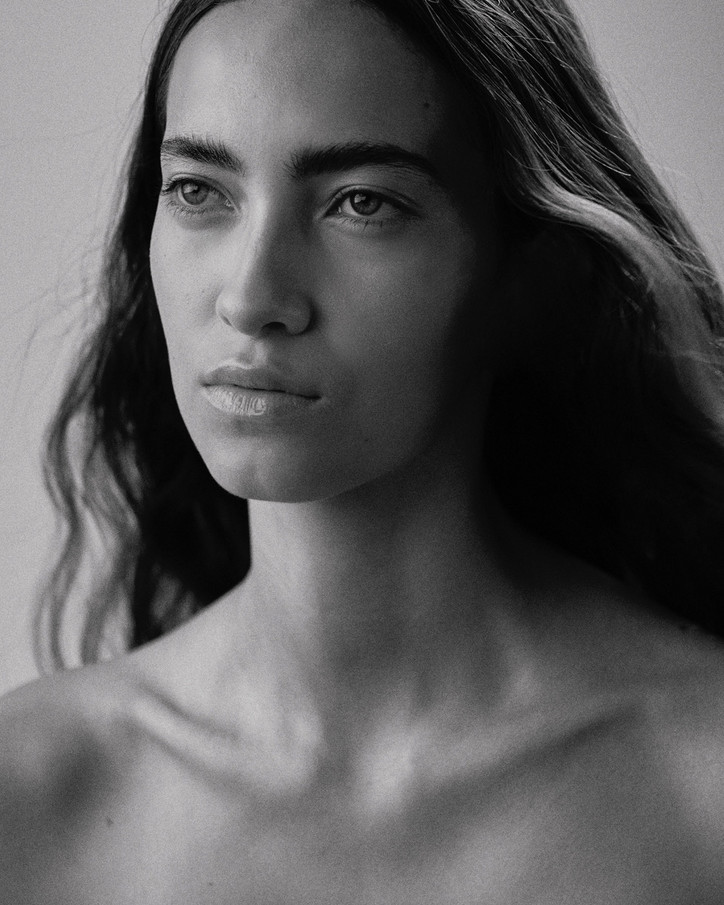
With its focus on balance and longevity, BY:ERA positions skincare as an ongoing dialogue with time, one that values patience, consistency, and clinical intelligence over quick fixes.
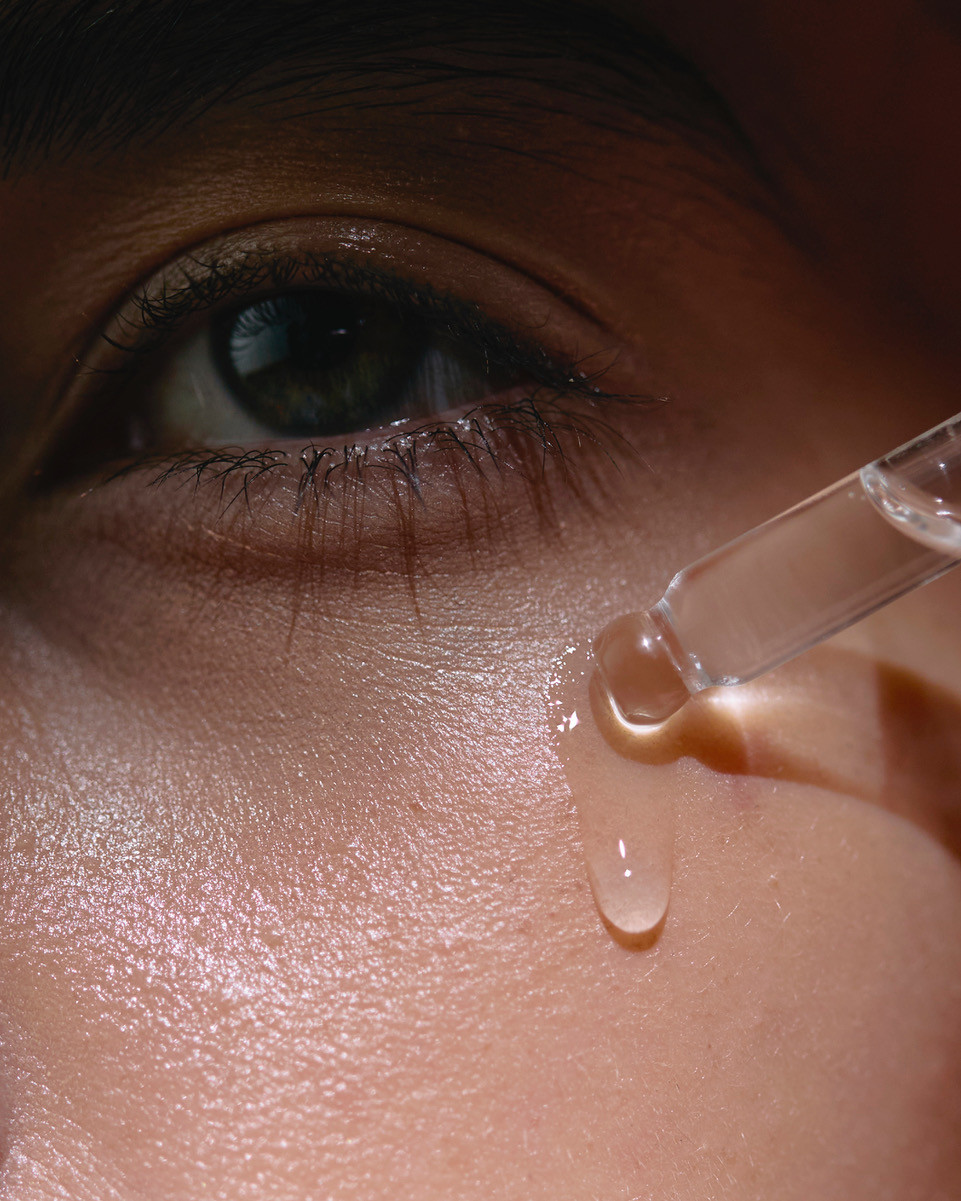
With its focus on balance and longevity, BY:ERA positions skincare as an ongoing dialogue with time, one that values patience, consistency, and clinical intelligence over quick fixes.

Never having felt fulfilled by pursuing the mainstream idea of femininity—one that panders directly to the male gaze—she found inspiration elsewhere. "My makeup and my beauty allow me to embrace my femininity and be really extreme with [it], but in a way that’s a ‘fuck you’ to men."
And while the nightlife and drag communities have embraced her form of protest beauty, she still witnesses the subtle prejudice that comes with being a woman—in any space. “I think that’s just what it’s like being a woman, even a woman artist,” she said. “I also do a lot of fashion, and nobody is being outright misogynistic, but it’s there—in the undertones.” That’s why her designs and her drag have become such a mainstay in the city’s queer community; because they’re an antidote to sexist double-standards—a woman’s own version of high femme.
How would you describe your signature look? What's the inspiration behind it?
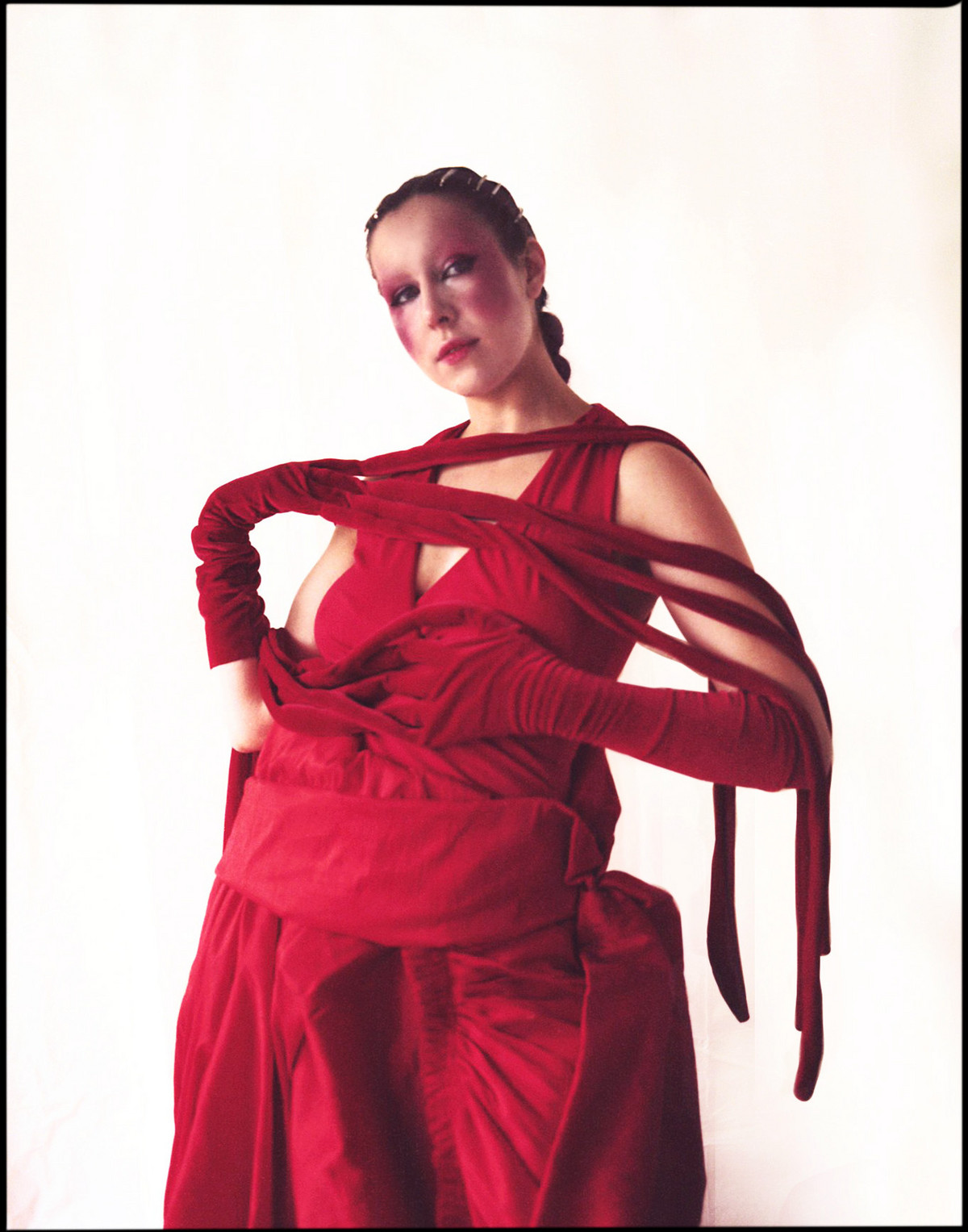
It’s so funny because I feel like I have my drag look and my day look, and I feel like the inspiration for my day look is my drag look. I like the way I look in drag, but I don’t have time to do that every day. So, my day look is a mini version of that. What inspired my drag look, though, was sort of looking like a doll, because that’s what all my outfits look like—these big ball gown, doll moments with the cheeks and white face and super exact lips. Also, Pat McGrath and Galliano’s Dior. Everyone in nightlife is such a big fan of both, and that’s what I’ve always been trying to look like—and my version is that of a doll.
You've essentially been doing a mini version of drag since you were very young, before even knowing what it was. How did it manifest? Do you remember at what age you started creating looks?
I’ve always been such a weird little kid—I remember being in probably early middle school, going on the internet and finding Doe Deere’s blog, and thinking, ‘Oh my God’—that was the first time I saw a woman that I wanted to look like. From then on, it was really about wearing blue lipstick and dying my hair crazy colors. I was also a little kid, so I was just experimenting and having fun.
Is there a drag scene where you’re from in Philadelphia?
There is an interesting drag scene there. When I was there, I was super underage, but I was really lucky—I met some cool women and some cool drag queens and there was one drag venue you could go to underage. I went out like, twice, in drag in Philadelphia.

So, participating in the drag scene for you didn’t really start until later, when you moved to New York?
I was doing drag back then in the sense that I would just practice and make looks myself, and then my poor high school friends—there’d be high school parties and I’d show up in drag and they’d be like, ‘I don’t know what you’re doing, but okay.’ Then we did these senior projects in high school where basically the seniors have three weeks to not come into school and just have to present a project. So, for that, I did drag and my poor statistics teacher had to hear me talk about drag for three weeks. He was like, ‘What on earth is this girl?’ So, I did do drag in high school, but in a weird way. Being underage made it hard—I had to be sneaky.
Being a cis woman, inherently you are a bit of an outsider in the drag community. Do you feel like you’ve been accepted regardless?
Everyone in nightlife who I’ve met has been very accepting of me. I’m a queer woman, so I have every right to be in those spaces, just like everyone else. I have run into some subtle misogyny, but I don’t think it’s because I’m a drag queen—it’s because I’m a woman. All these subtle comments and stuff where it’s like, if I was a man I know I’d be more popular than I am. But I could say that about being a female DJ or dancer in queer spaces.
It’s crazy that still happens, even in queer spaces.
What’s so funny to me is that, I’m this woman in nightlife, and I’ll say something in a queer space about being gay, and people are surprised. I don’t know why, but I think there’s a running theme of people just not believing that a woman is queer. They’ll think that I’m straight, and I don’t know why they’d automatically think that. Maybe it’s because I am so feminine.
And the association between presentation and an assumed sexuality is an issue queer women run into a lot.
That’s the thing—I’ve told a lot of people I’m gay and then they see me out with a woman I’m with and they’ll be like, ‘Oh! You actually are gay.’ And it’s like, ‘what do you mean I actually am? If I tell you I’m something, you should believe it.’ I shouldn’t have to have proof—it’s a frustrating thing that happens a lot.
How would you describe your idea of beauty within the drag and queer communities?
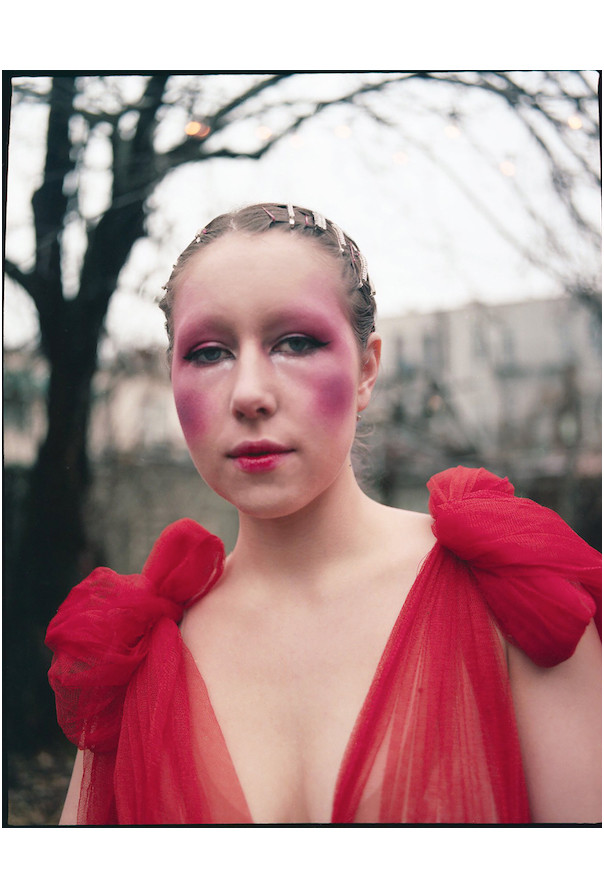
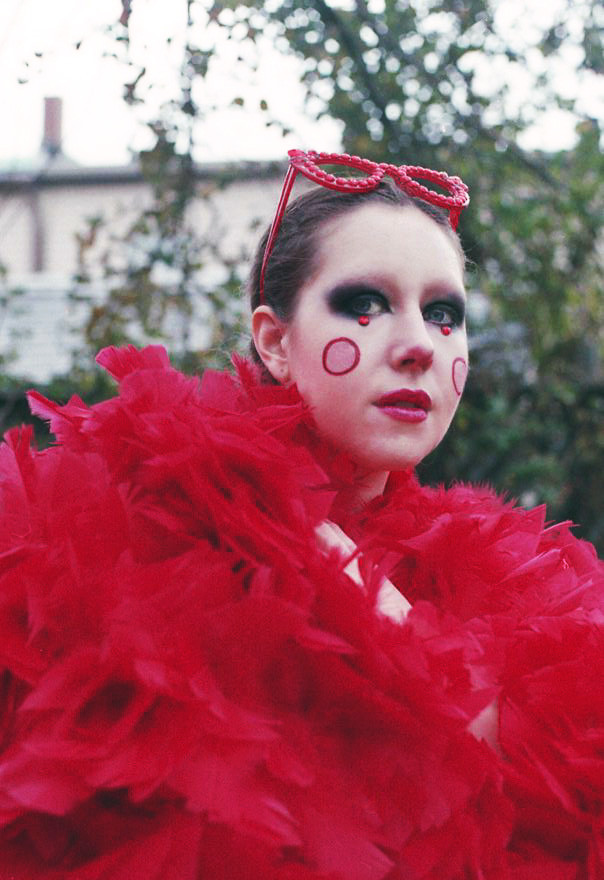
I think beauty is super important to my queerness. I identify so much as a high femme, and for me, the definition of high femme has two meanings: it has a literal meaning of being an exaggerated version of femininity, and my everyday doll look is the most exaggerated take on femininity you can have—these round circular cheeks and giant black eyes, and I wear these hair clips—it’s very doll-like. But I think in order to be high femme, there’s this idea of being feminine outside of the male gaze and outside of traditional femininity. My makeup allows me to do that, too. People see me and think I’m an actress, and I know no straight man probably likes my look. It’s kind of clownish. So, a lot of people don’t understand why I look like this—and it’s because I want to. This is something I do for myself, not for anyone else—not for any man. It’s a way for me to be super feminine outside of the male gaze.
What are some of your favorite party memories or looks?
Going with Susanne Bartsch to the Vienna Life Ball. I’ve done it twice, and those are definitely the absolute craziest. It was a dream come true and those were the biggest looks I’ve ever done. Ladyfag’s Battle Hymn has been my favorite party—I used to go every single week. Anything with bunny ears that I did, I really liked. Bushwig is also so fun.
How have things changed for you over the past few years that you’ve been in the city? What transformations have you gone through?
For me, drag absolutely is what taught me confidence and it’s what gave me a platform. But I think I focused on drag for so many years, and within the last two years, I’ve realized who I am as a woman. I kind of left that out of a lot of my life—it was always drag—and to be like, ‘I’m actually a queer woman and I’m a female designer, and those things are important’ was super powerful for me.
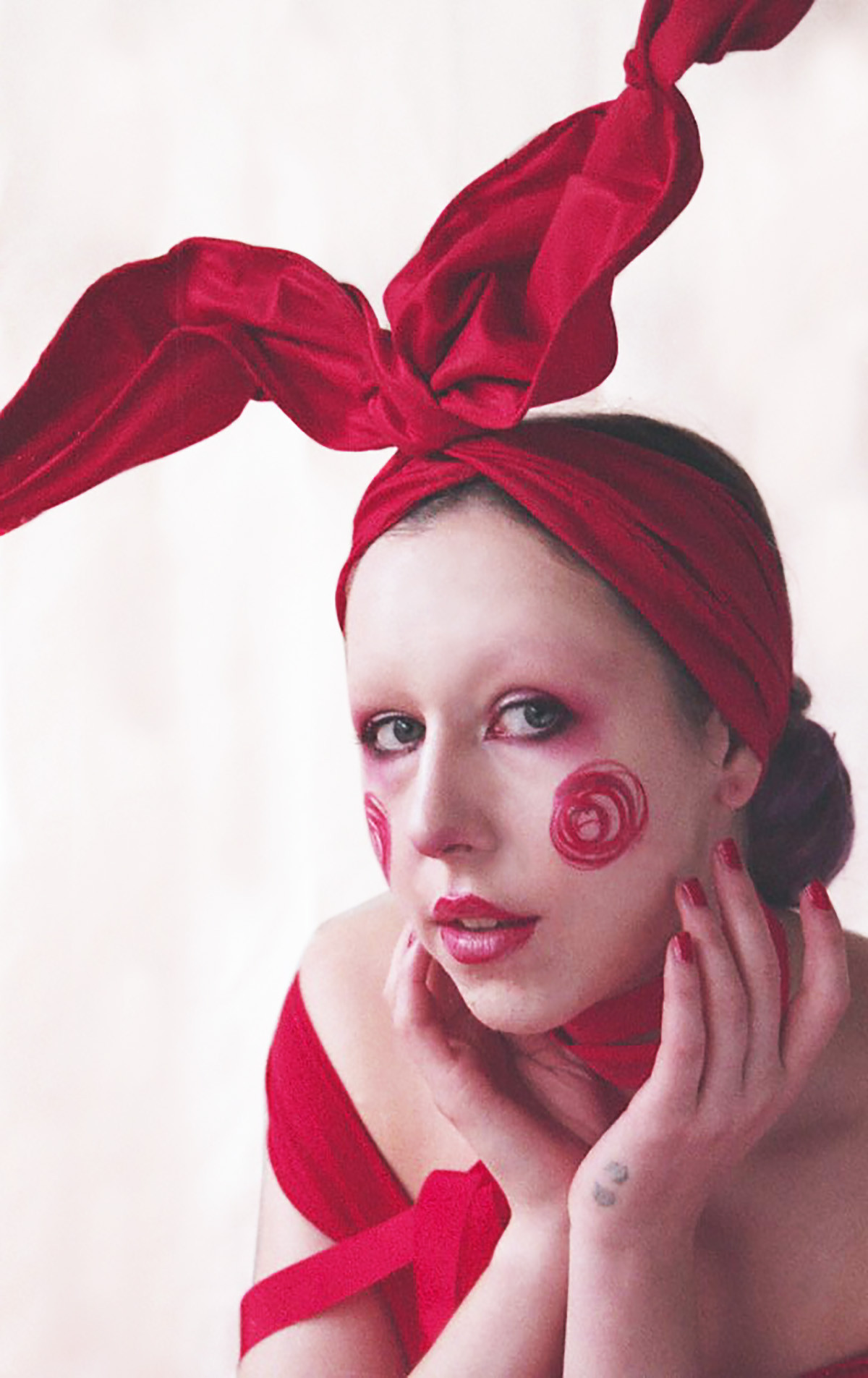
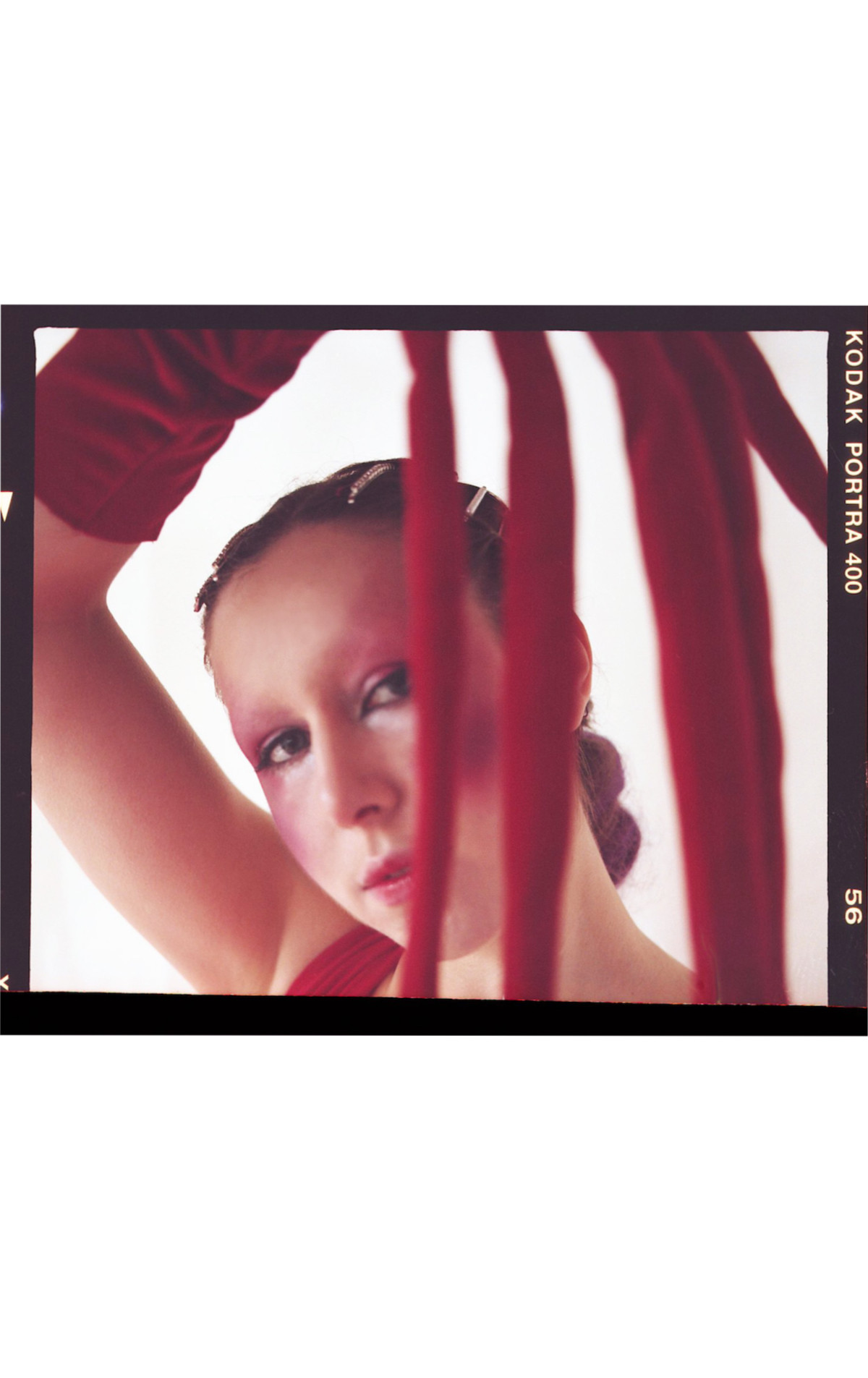
I think drag and nightlife are so fun and they’ll always be a part of my life, and it’s where my friends are. But I also think [I’ve been] realizing that fashion is what I want to focus on and do with the rest of my life, and letting drag become more of a fun thing for me, especially because drag really taught me I can look crazy and feminine all the time. Drag allowed me to transfer some of that love of fantasy and dressing up into my day-to-day life, and that was a major shift for me, because that’s part of accepting who I am as a woman.
Do you feel like you’ve been able to garner more openness towards yourself through the process of drag?
It was this huge confidence boost for me. Drag is so addictive because you get so used to all this makeup and clothing, and I have no desire to ever take those things off. I entered into drag because I had this love of intense femininity and dressing up, and I felt like I wasn’t getting that every day as a girl. That was just because I was young and didn’t know I could look however I wanted. Drag was the answer to this search for more femininity, and weird femininity. And when I started getting comfortable with drag, I realized I could incorporate it into my everyday life. Who cares what people think? Why don’t I just look the way I want all the time? Who cares if people stare at me and ask a lot of questions and take my picture on the subway? I don’t—not anymore.
And it’s interesting because part of the idea of this glossy magazine version of femininity is that you’re supposed to be modest and care about those things.
Femininity is either hyper-sexualized or hyper-infantilized, and it’s so ridiculous. You can be hyper-feminine and not be sexualized, or you can be hyper-feminine and not wanting to be a child. I think the more women and people who exist in the world being hyper-femme, the more [we] can teach people and girls that there’s nothing shameful, sexual or childish about femininity, or being a woman. It’s important if you’re someone who looks weird to be proud of it and out in the world.
Is there one person you always dream of wearing your designs?
Lynn Yaeger. I love her.
When you’re designing outside of drag is your approach different from when you’re designing your drag looks?
Definitely. Drag is like a costume. When I design more in terms of fashion, it’s more for—I don’t want to say practicality because I think practicality is silly. In nightlife, it’s fine to wear a sheer corset, but I wouldn’t be on the New York City subway in one. So, for me, making clothing people can actually wear is important. With drag, I can be uncomfortable for a couple of hours, and be over the top, but designing for real women—creating things that will flatter multiple body types—that’s so important to me. My drag is incredibly personal, whereas when I design for fashion, I’m thinking of a much wider range of people, and bodies, and circumstances.
Follow @officebeautynyc for more on our favorite club kids, models, makeup artists and product reviews from our office Beauty Committee.

So, I put my fear aside and asked her some questions. Naturally, she was just as inspiring as I imagined. See for yourself, below.
What was your experience at Pratt as a fashion design major and how did that help you figure out that you wanted to pursue makeup?
I grew up being pretty obsessive about makeup. I wasn't like, super crazy about it when I was younger, but I was very obsessed with getting perfect eyeliner. Like, people would say things about it. When I went to Pratt, I was very interested in fashion at the time, and my experience there was intense. There was definitely a culture shock coming from Nashville—I think Pratt, in general, was really stressful. My reaction when I got out was like, ‘Wow, I hate the fashion industry.’ It’s not that I hate New York, but it was just shoved in my face for so long and the teachers at the school were trying to push so many things down my throat. Forcing someone to be creative is a hilarious way to go about creativity.
But it ended up kind of serving me in a way, because I hated it so much that I blossomed in another way. So, I left for three years and kind of chilled out, figured out what it was that I wanted to do. I started posting makeup and people just responded to it like that. It was not something I ever thought about doing before—it was very in response to people. It's like, you're getting a huge response to something and you think, ‘Well, what if I push it a little more this way?’ It's almost like a communication between your followers and you. That’s how it happened and it just grew from there.
What do you see as the biggest differences between fashion and beauty?
I would say that makeup, in a way, is really more inclusive than fashion because you don't have to be a particular way to wear makeup. In my mind, I have less pressure to show off my entire body instead of just creating a picture on my face where I can contort it into any shape that I want. You can do that with fashion, too, but it's almost more work to source clothing, and making clothing is very time consuming. I do love making clothes and I would want to do it more, but makeup is so fast in the social media world. Also, people are automatically attracted to faces. I’m responsive to what people like, and I want to give the people what they want—but in my own way.
Do you ever think about the images you’re posting on Instagram in a historical context? Are product arrangements and your own content this generation’s version of a still lifes?
Absolutely. Thinking about it in a historical context is very strange. Not everyone is on Instagram, but not everyone was in an art museum. It feels to me like it’s at that level. I feel like less people go into museums now—they go online. Also, I just got a VR headset the other day for the first time, and I’m so excited. You can go anywhere. It’s freaky, but I love it. There are art museum tours in the headset. I know it’s going to be the future of a lot of things. Of course, real things will exist, too. But it's so interesting that we're so hooked into social media that they're going to keep pushing it into different dimensions.
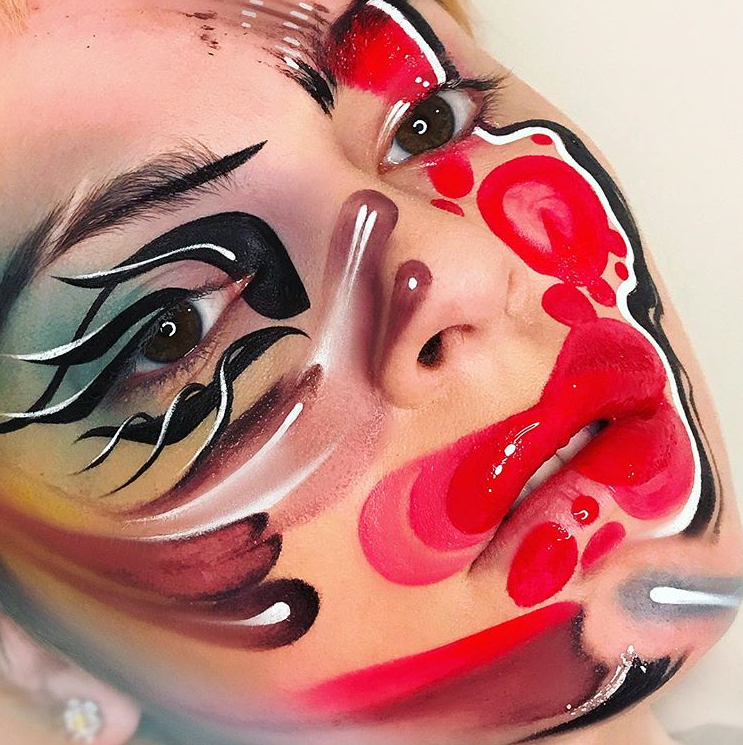
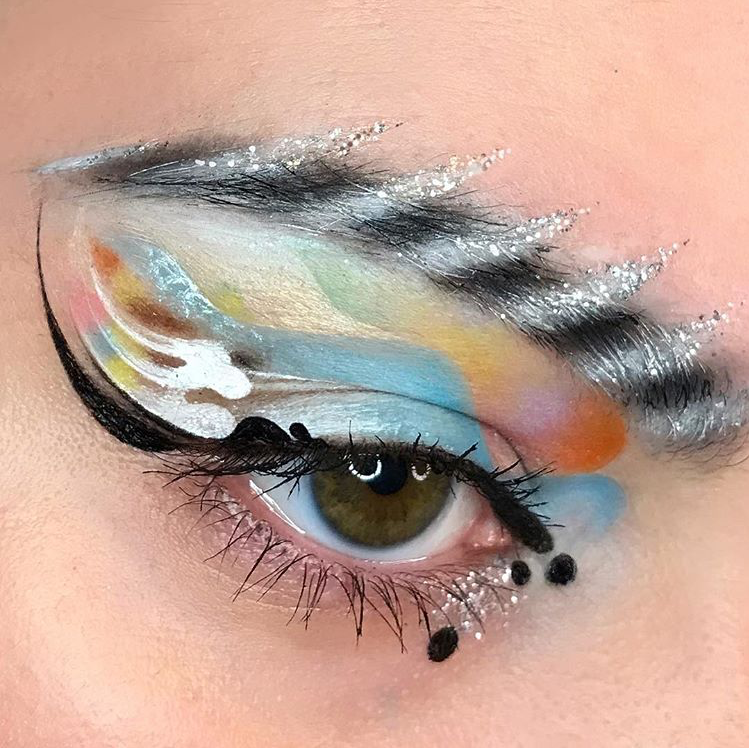
I actually just watched the video that you posted for your palette where you're layering it all over your face and I was just like, ‘Thank you, yes, someone needed to do this!’
I know! I would post stuff like that all the time because I love doing super perfect lines and everything—for years I would just film myself drawing all over my face. Some people's responses were hilarious. They were like, ‘What's wrong with you? You need to go to the psych ward.’ People post way crazier shit—that’s actually not that intense. And it just feels good. What is the level of what’s okay to post? Six, seven, eight years ago, this platform didn’t even exist. So, should there be any rules?
I also feel like I’m drawn to maximalist beauty, but I grew up with people telling me to find colors that ‘matched’ my look and to always tone it down.
That’s the bane of my existence! I want to do whatever I want, whenever. People have done palettes a million times, I'm aware of that—I’m aware I’m not bringing anything new in terms of that. But the assortment of colors is new, I think. And I think partially what I’m selling and trying to promote is a freedom from whatever the current beauty world is trying to do. I like yellow highlighting my cheeks; you can literally put whatever shape you want on your face. You look to the past, and there's so many different types of adornments, culturally. Why don't we create something new that's specific to our generation that has nothing to do with perfect winged eyeliner? As much as I love to wear it, we’ve got to push through!
How did you find the confidence to put yourself out there and be so colorful, with your beauty routine and your personality?
I can't help it. My mom’s a designer—she designs fabric—and I was just around a lot of color growing up, so it's natural to me. When I see people dress in a certain way, I think, ‘I have to break out of this.’ But it's like I'm not wearing crazy things all the time. It's mostly on the internet that I act this way, and I really like pushing people. Like, ‘Oh, you hate this? Great. I’m doing something right.’
I think that’s needed. Going back to your Claropsyche palette—how did you go about picking the colors?
Well, I've tried a lot of different makeup in my lifetime, and I knew that I love creating bases for any intricate design that I'm doing with just matte colors, because it creates more of another layer, if that makes sense. Sometimes I think about it like I'm on PhotoShop—like, there are different layers when I'm putting things on my face. So, I would think of this palette as my background layer before I put on everything else. Color-wise, I really want it to be vibrant because it really sticks out when you're posting online.
Also, the pastels—two are my favorite colors, in general. So, I just combined basic colors with my favorite pastels and black and white. It really is the perfect palette! Anyone can use it, and you can make whatever you want.
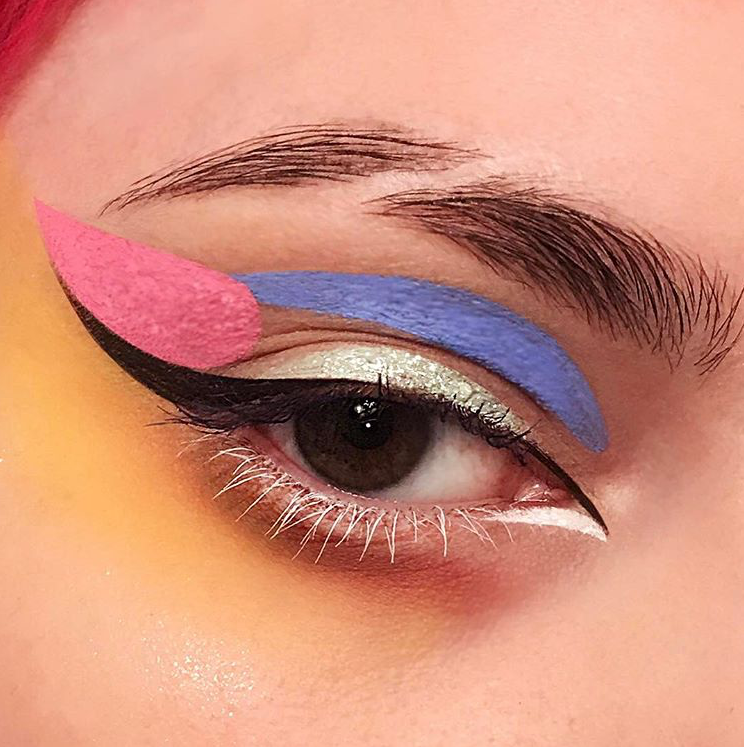
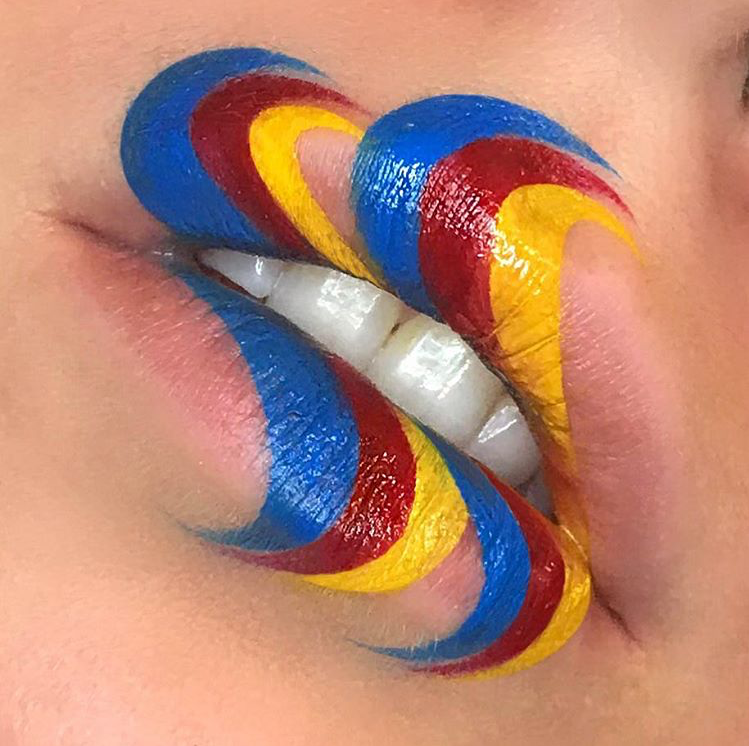
Where did the name ‘Claropsyche’ come from?
A few years ago, I had I started with the account name @lettersmack, and that's when I started doing makeup. People were re-blogging my pictures like crazy and not crediting me, and it was driving me so insane that I deleted the account. This was before you could archive stuff. So, I deleted all of my pictures and changed my name to Claropsyche. I just wanted something clean-feeling. Claro means clear, and in Greek ‘psyche’ stands for soul or butterfly. So, ‘clear soul’ is what I wanted to use—I just made up the word basically.
Do you ever wear your designs in public? Or are they solely for artistic purposes?
It's totally half and half—it depends on what the situation is. I used to wear them out a lot more, but it would really stress me out. I’d be like, ‘I'm gonna wash this entire thing off my face and do a new look,’ but lately I've been very okay with not putting on a base before I put makeup on, and just kind of letting it be because I've been having a more freestyle feeling, which really feels good. So, I'll just rub a little bit away and leave purposeful things in some places. It just depends on the context. If I'm going to a party with a bunch of people I know, then I'll just leave it on my face. But if I'm going out—I live in Nashville—so, if I don't feel like being confronted on the driveway about what I’m wearing, I'm just not going to do it. There’s this weird stigma like, ‘Do they wear that makeup out or not?’ But why does it matter? I created it in the first place, and it's an image that I put in the universe, stuck in our psyches. That's the only way people see me, anyway—people on the internet see me through that view, because they're never gonna see me in real life.
I’m really fascinated by that idea of ‘Did this look really exist if you didn’t wear it outside?’ Like, ‘Pics or it didn’t happen.’
I honestly feel like whenever I take a picture of it, I'm getting a specific angle of the look that looks good. Oftentimes, when I’m editing it, I make it look nice. So, it's never going to live up to the perfection that you see in the picture IRL.
Lately, I just love drawing big flowers on my cheek because I think I get the best reactions from people with those naturally. Like, I wore a flower on my cheek one night and nobody treated me differently, whereas the next morning, I was going through a coffee shop and people were like, ‘I like your flower!’ I like it too—it’s really simplistic. But I'm changing all of the time. Right now, I feel like I'm moving away from eyes and going into more face stuff. I’ve gotten attention for eyes for so long that now I'm over it. Like I said, I want to do whatever I want, whenever, and when I see people wearing certain things, or liking certain things, I have to break out it and do something new. That’s just how I am.
Follow @officebeautynyc for more on our favorite club kids, models, makeup artists and product reviews from our office Beauty Committee.

Who is Mr. Muffinhead?
Oh, he's just me in a party mood. The trade name of the firm, a whimsical CEO, a scrapbook of phantoms, a dream dictionary—all of those things.
You're from LA and mentioned in a video with James St. James that a major difference between New York and LA is NYC's openness to confrontation. How has that changed you as an artist since moving here?
I'm not sure that it has. If anything, the city will either melt an artist down into something golden for itself to play with, or it'll just chew you up and spit you out. For me, the pieces were already in place.
What is the general reaction to your work when you're walking down the street?
People here are wonderful when I'm out and about. It feels similar to what a bungee-jumping experience must feel like—you get a little nervous just before walking out the door, but once you've plunged in, it's magical. Mostly they just want to know where the party is and [if they can] take a selfie. Children are hesitant but extremely alert. The people I come across are almost always complimentary and eager to tell me so, which definitely fuels what I do—I want them to be inspired, maybe more than anything else.
You speak often about the beneficial effects hallucinogens have had on your art. What do you think about the stereotype that artists and drugs go hand-in-hand? And what are your thoughts, in retrospect, on how hallucinogens have specifically shaped your work?
I guess I do play directly into that stereotype, but hallucinations have just always worked for me. I'm also one for simple daydreams and visions—anything that is untethered by reality is helpful to my work. I think artists thrive when unencumbered, so the lure of a free ticket to the unknown and the ability to see between the lines and puppet strings is potent, and the relationship is inevitable. A lot of the characters I create could easily have walked straight out of a DMT dream and some of them probably originated in that dimension.
After a few experiences with hallucinogens, I find that there's an intimate conversation occurring, even more so than it being a handy textbook for abstract shapes and their maneuvers. For me, it can be a reassuring communiqué. It’s also not hesitant to clearly state its purpose.

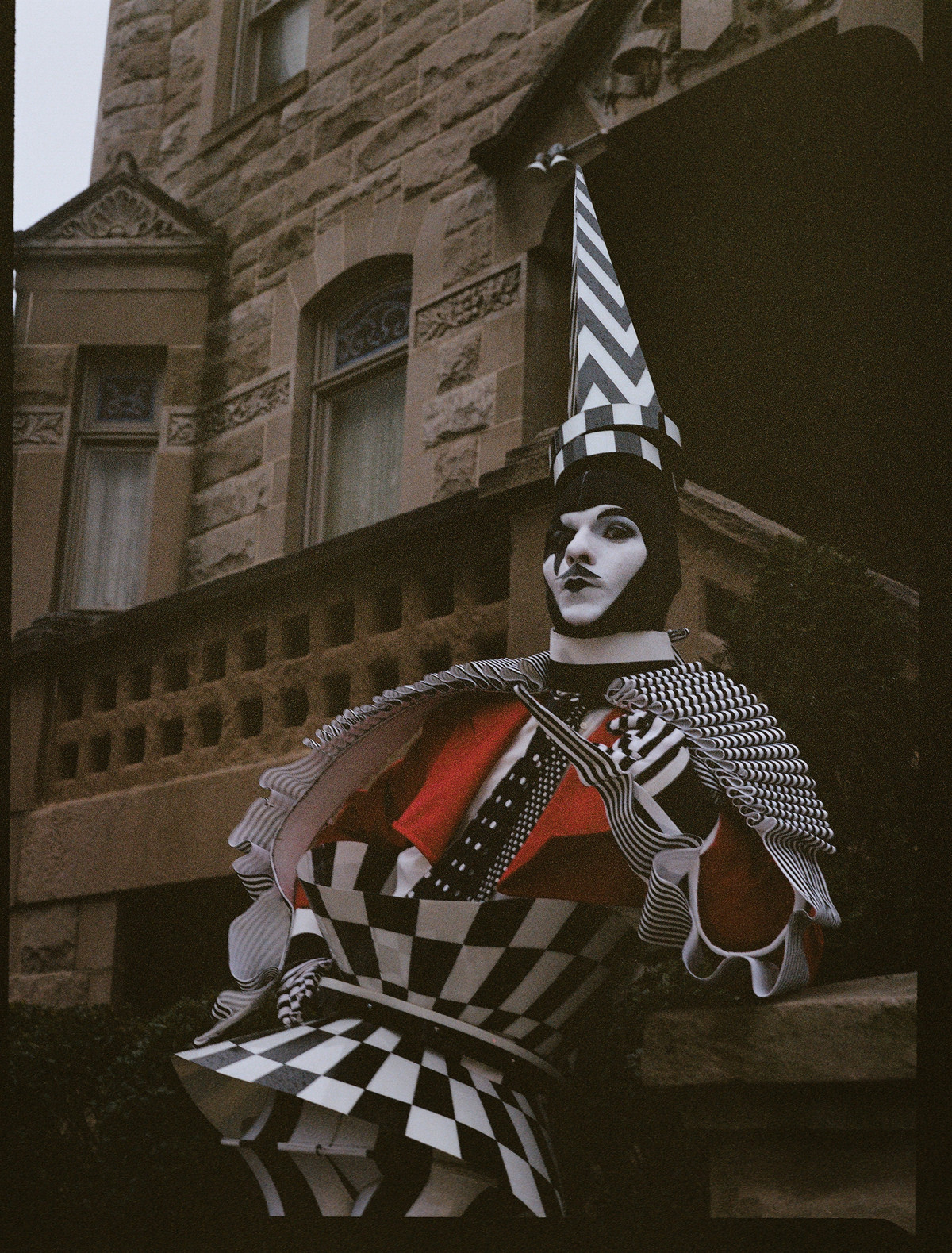
Your art often involves extremes—how do you know which ideas to follow and which to ignore?
I tend to stick with the ones that elicit an emotional response. Most of my memorable pieces start with a sketch and me laughing out loud at the result. Most of the good stuff comes from the deepest deep, though. You've got to mark the parts where the cracks set in—that's the job, creatively.
What are you thinking about when you transform into Mr. Muffinhead?
Oh God, ‘WHAT TIME IS IT?’ is my usual mindframe. I'm honestly a bundle of nerves until the headpiece and gloves are on and I'm where I need to be on time. And then, there's this lovely release which lasts a few hours and gets me through the evening.
What’s been your favorite reaction to one of your pieces?
Nick Zedd wrote on my 'Death of Muffinhead' movie poster he'd given me, ‘To my favorite artist in the world. You are the greatest. I love you, Nick Zedd.’ I had to keep looking at it to see if he was just messing with me and it's still totally unreal. I have out of body experiences when people compliment me—it's almost like my system rejects it so I don't get lazy.
I was doing the KaPOW! outfit on a train going downtown and this sweet kid was sitting on his mom's lap and read me out loud, saying, ‘Look Mom, he's like a karate fighter, a famous clown and a fairy.’
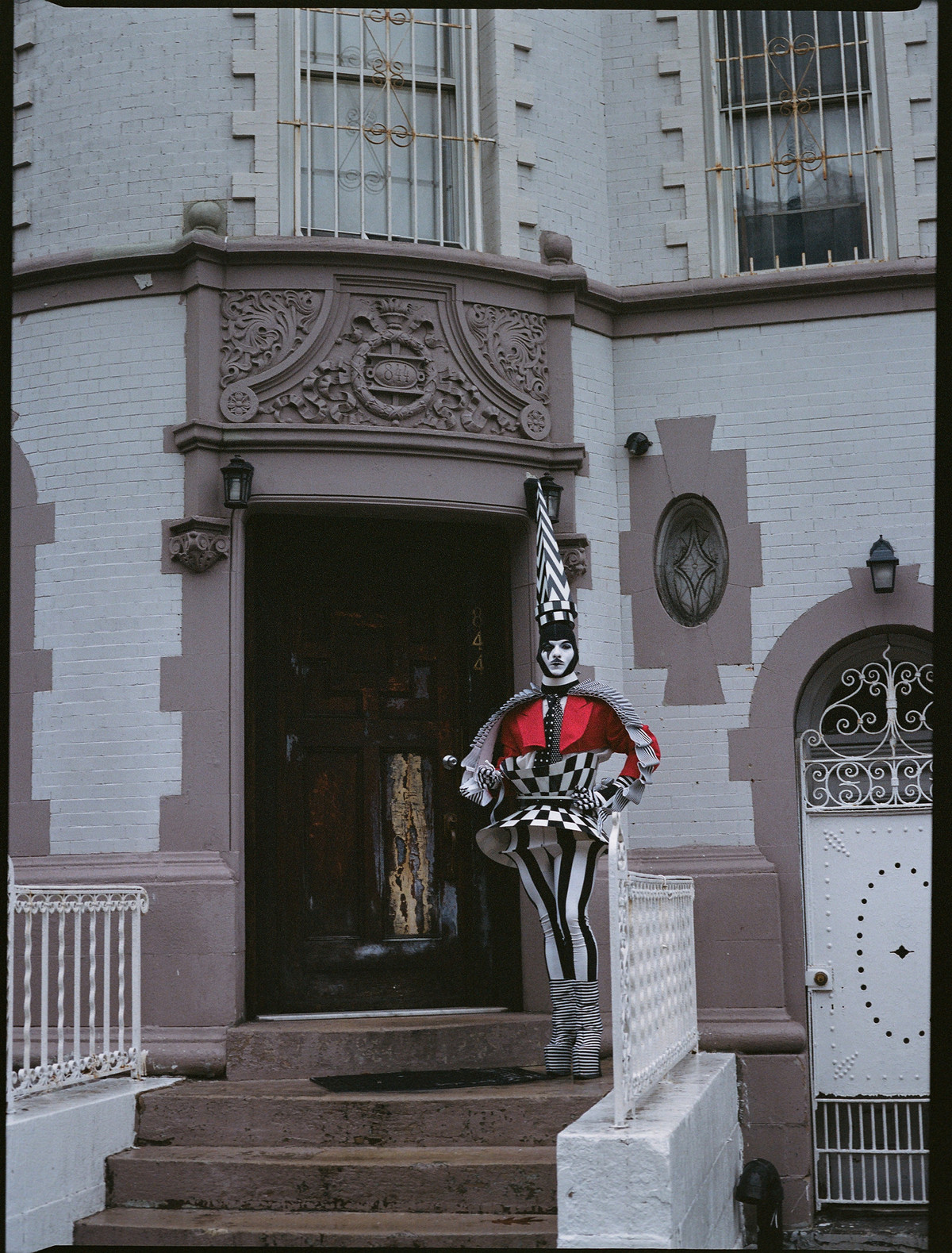
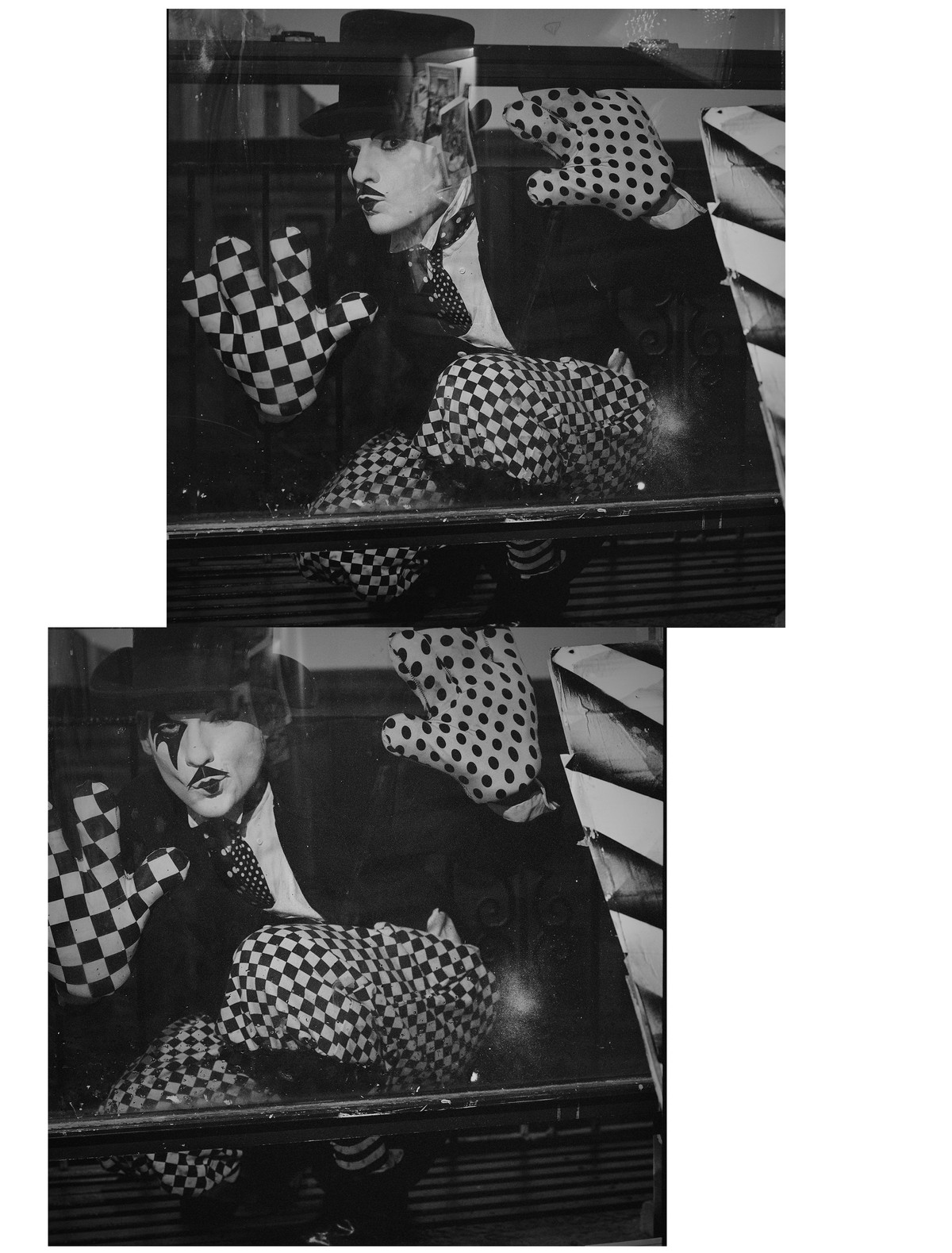
What kind of impression do you want to leave on the city?
I just want to leave a warm ray of joy, you know? You want to try to leave a teeny little lift, partly because I've been met with such sweetness here—such support where I'd never expected it.
As an expert on the NYC club scene, what do you wish woud change in Clubland? What do you hope stays the same forever?
As a not really anything expert, I always hope for a more imaginative stretch to the proceedings. I'd love to see more video artists, more sculptors, more mixed media artists get involved. After all, it's a cultural mish-mosh—it should represent the most extreme and colorful elements of us all. We benefit as a culture creatively, when we combine our talents and shoot—and that's the way it needs to be. At the same time, nothing good will be attained through uniformity. Clubland cannot be the mainstream. Forget the contour, get in a fight and show up at the party with a busted lip and a party hat. That's New York.
I like Dolly Dharma a lot. He's this great, post-sort of anti-club kid who shows up with a full 24" pizza on his head—he's fantastic. I like most anything artistically that poses a challenge to the present.
How is Clubland’s reaction to your art different from the general public's?
Actually, they're similar, but club love, for me, is the bottom line. I'm like Grandpa Munster nowadays, though, but I get treated overall really sweetly.
What nightlife trends do you think will influence the art and fashion scenes this year and vice versa?
I think you'll start seeing some 3D print and design in Clubland produced by some young, talented artists. More art in nightlife is always a must, period. Mugler will have a big year and it will be a year of big, zig-zag extremes. Glitch will play a big part, but what will come after that will be incredibly interesting...and I'll keep making weird city ghosts.
Follow @officebeautynyc for more on our favorite club kids, models, makeup artists and product reviews from our office Beauty Committee.