At The Circus

Oh and the peacock feathered suit was killer. See it, and our other favorite looks from backstage at the presentation, below.
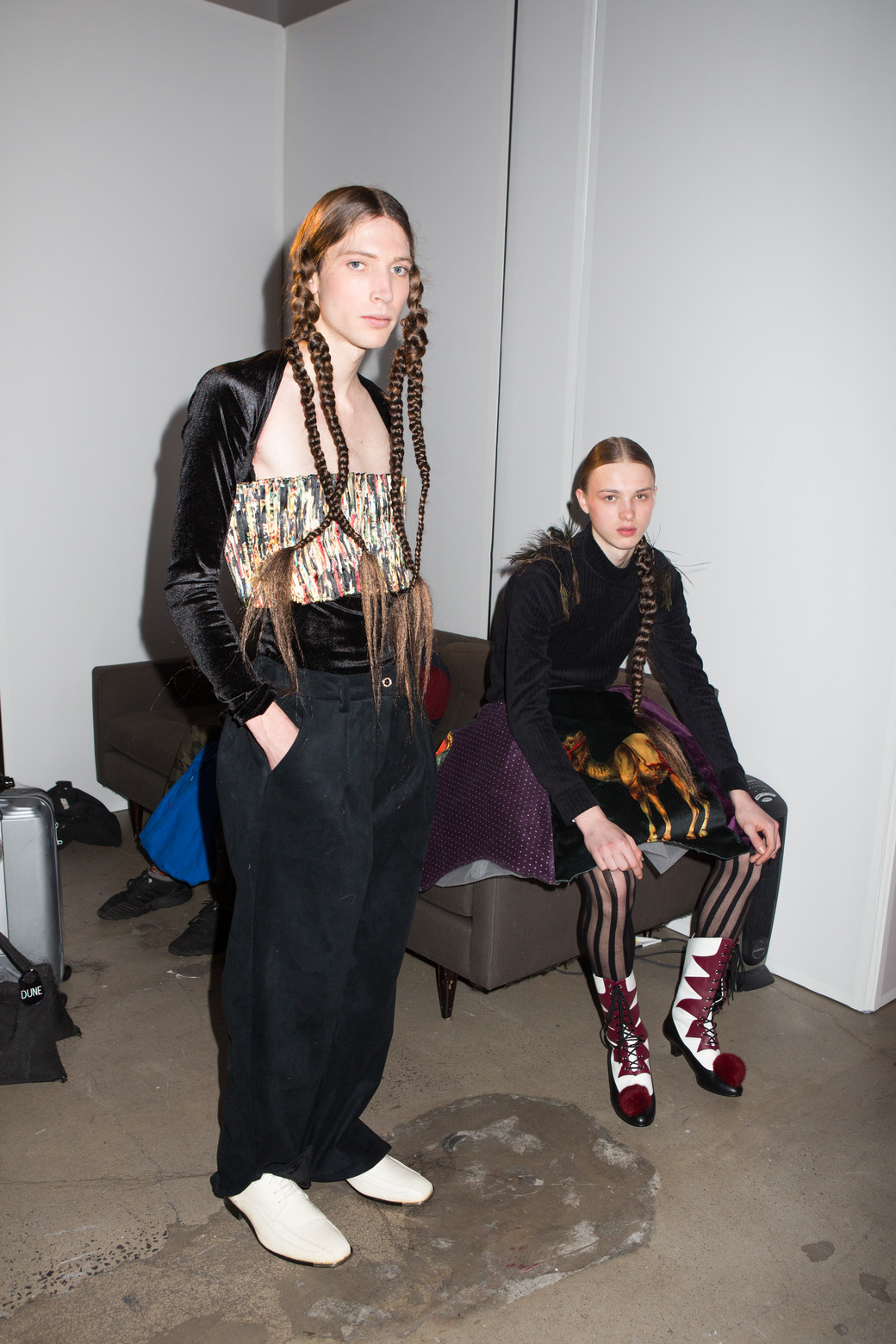
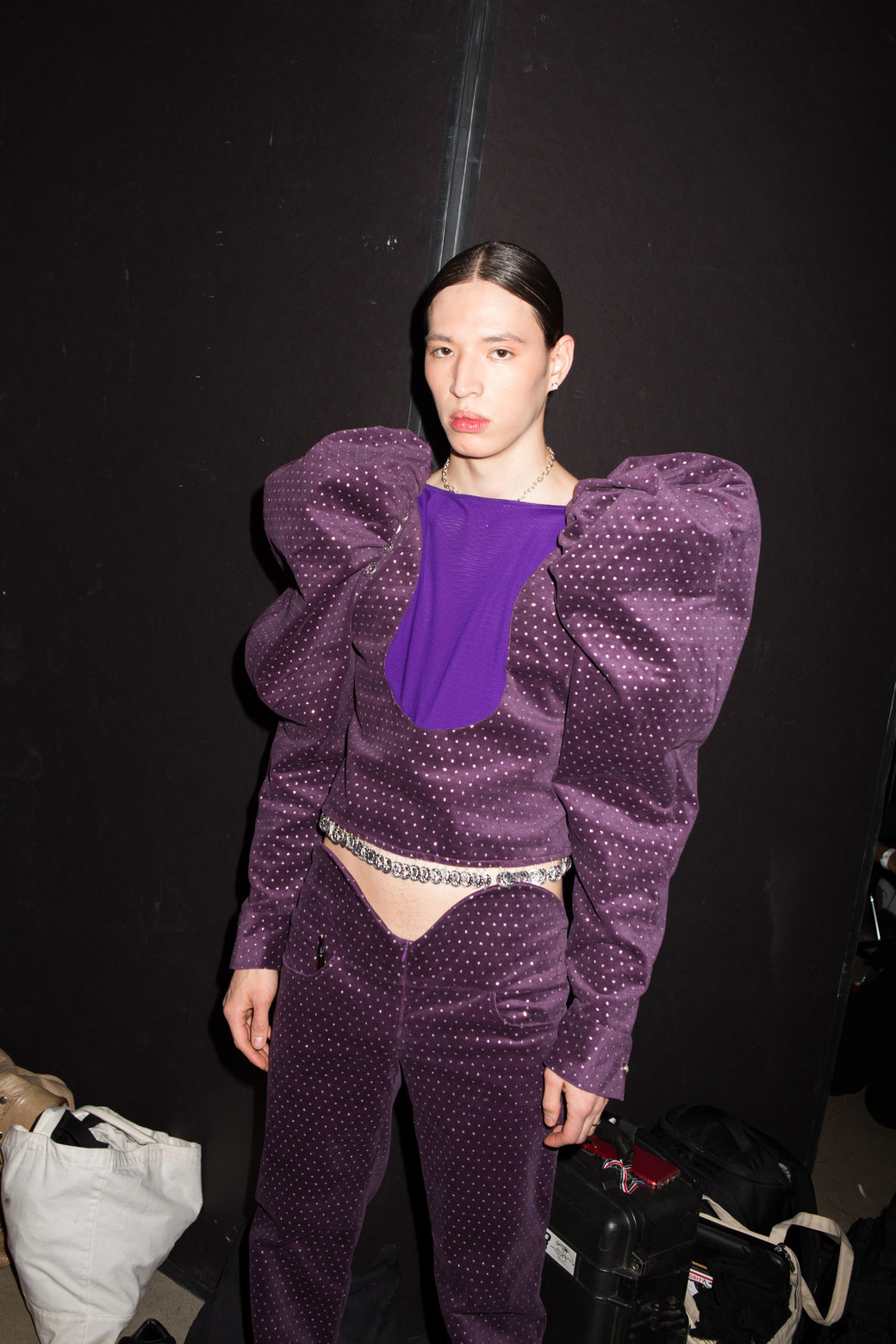


Oh and the peacock feathered suit was killer. See it, and our other favorite looks from backstage at the presentation, below.

office caught up with Prisca right after the runway show to talk about her personal connection to this season’s pieces — sharing a moment of self-reflection with a refreshingly genuine warmth and heartfulness.
How do you look at your last collection in comparison to this one?
I feel in a similar way to you. It feels more personal too — it feels more like me. I think the last collection was very much about celebrating your body and being empowered. I’ve always been very interested in the definition of empowerment, and what that really means. And it means such different things for so many different people — especially women. Last season was more about a sense of fun and confidence, but also feeling good within yourself, and this season it was really bringing that conversation that you have with yourself — in terms of wardrobe — of having more of a choice of what you want to say to the viewer. The person who you’re meeting for an office job, or if you’re going out to a party. What you’re trying to say for how to express yourself, but in a deeper, more personal way.


Do you see yourself represented in this collection?
I was talking to a friend about it recently — where we were all talking about how we dress, and why, and it was a very interesting conversation to me because it's kind of like the whole point of why I’m doing what I do, and some friends were like, “I know who I want to be, and I look for a wardrobe to help me convey that sense.” And others are just, “I really want to be a character tonight. I want to be like a warrior, and then today I want to wear sweatpants.” Not only with yourself, but also with the way people see you as the chill, relaxed person, or like really bossy. So, I think personally, I really feel like I like to be different characters. And I like the way I dress to even surprise people — you know, on a personal level. If I’m going out, I can show up anyway, in pajamas, or I can just say, “tonight I’m going to really dress up, and wear something very loud, and I feel very good in,” and I think in my personal way, I really try to tackle every potential character. I related more to that.
You mentioned the word bossy. How would you describe ‘bossiness’ being part of these looks?
What does it mean to be a leader in the work or in your life? I think being bossy is saying what you want, and how you want it. It’s not always been super easy for me to do that. And I think that if you understand how you want to say that, it doesn’t need to be bitchy. You can be bossy, and be pretty nice, and very respectful. It’s also that definition of bossy for me. I like women saying what they want.
Yeah, I know, the way you’re talking about it, you’re making me emotional just thinking about that.
It was very emotional for me — the process.
In general, I’ve seen your work also related to humor. How would you say humor shows up?
I think that in order to live today and be a contemporary person, you need to understand that we’re living in a very absurd world, and everything is absurd. And if you don’t have a sense of humor, you just get completely lost. So, if you have to dress for a party, you want to wear something cheeky, you want to show this and that, it has to be with irony. I don’t think you should ever take yourself too seriously because that never helps anyone.


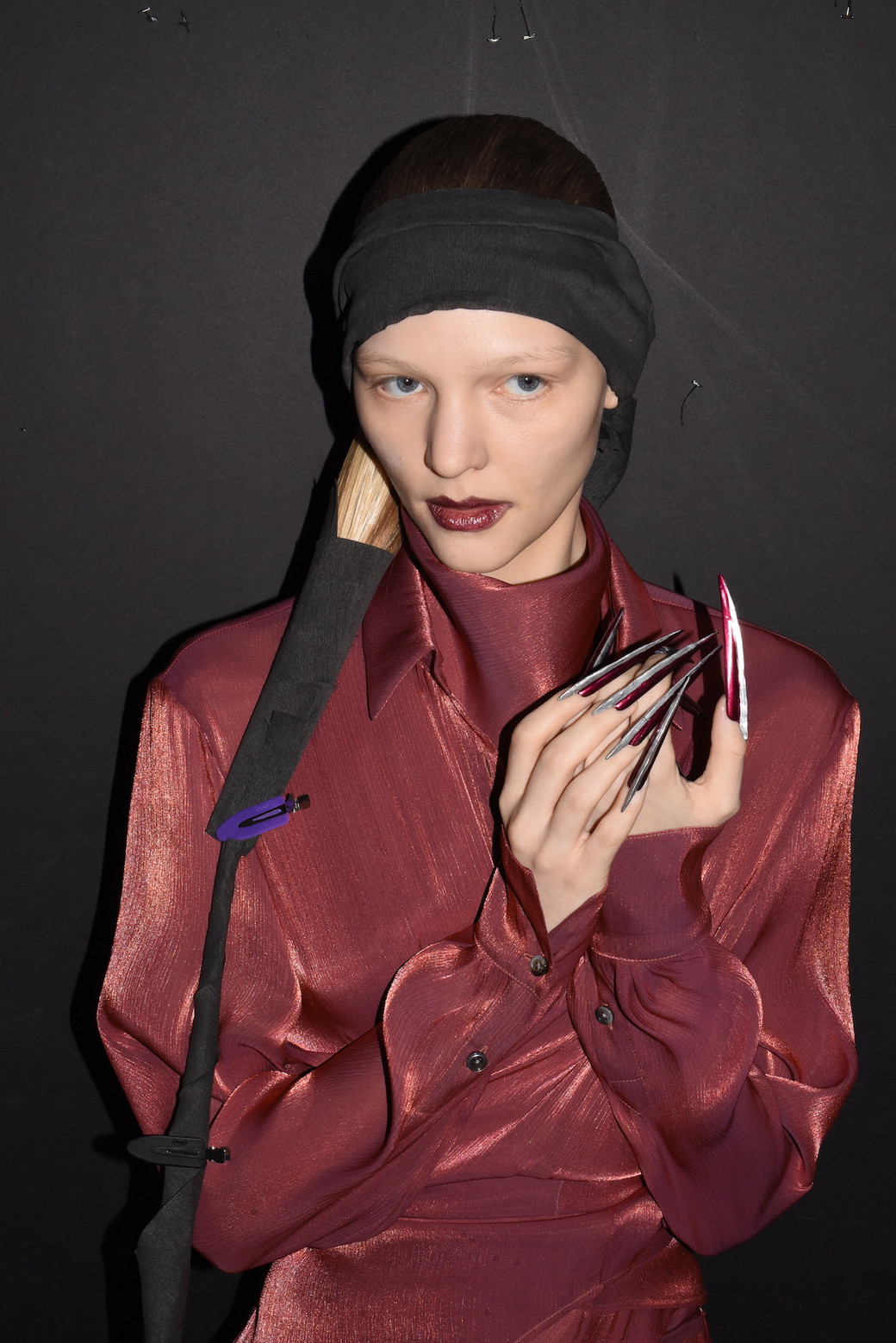

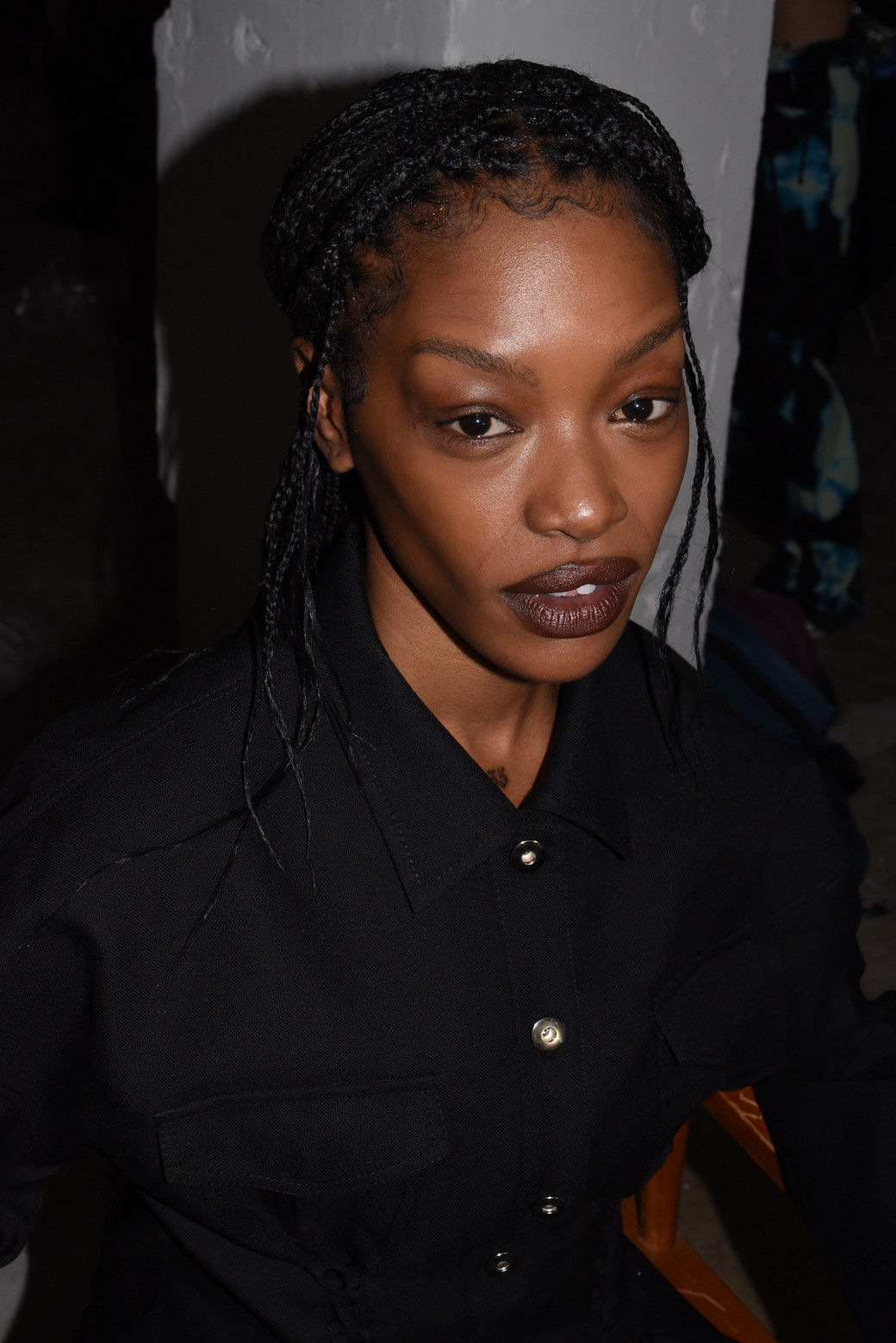

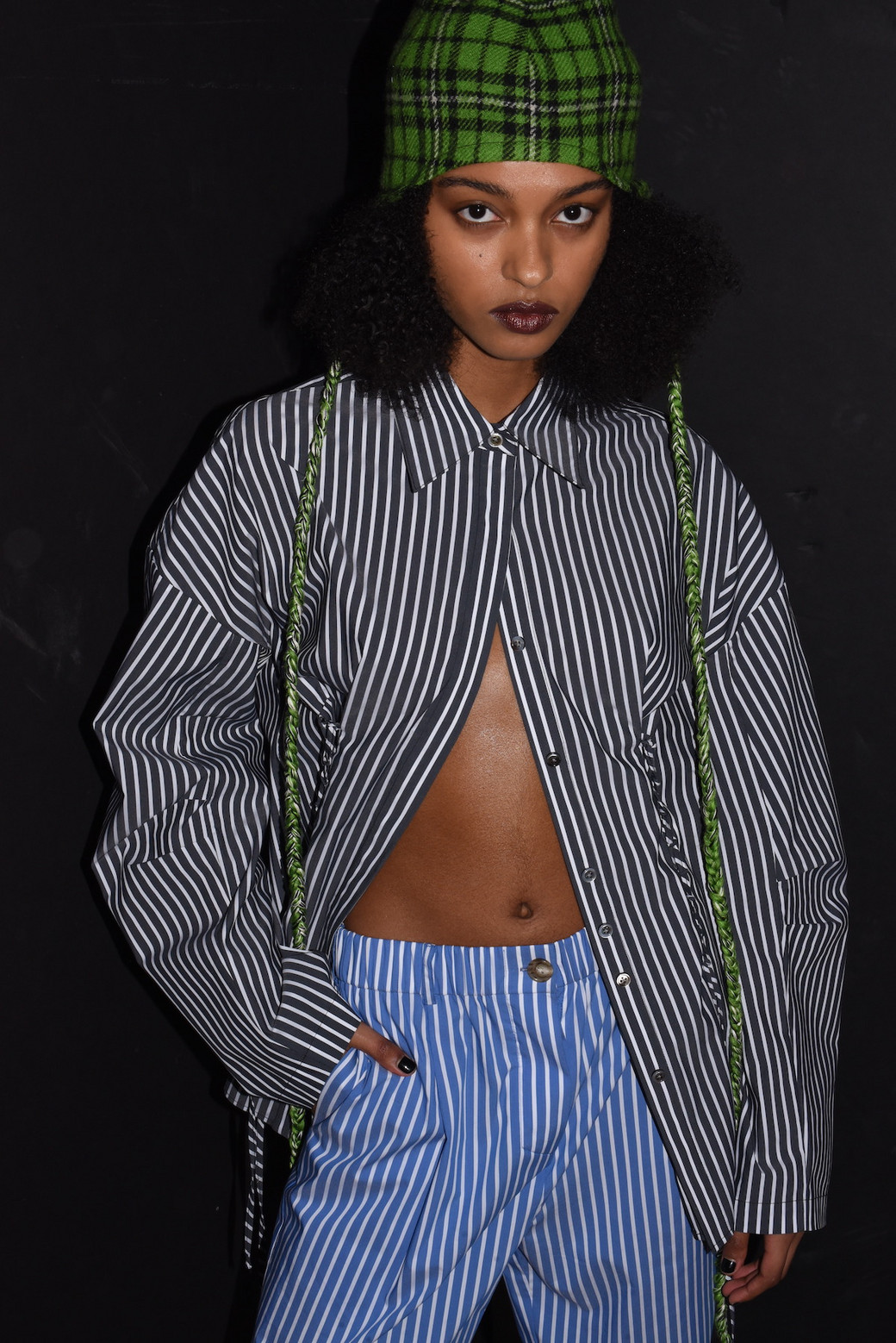
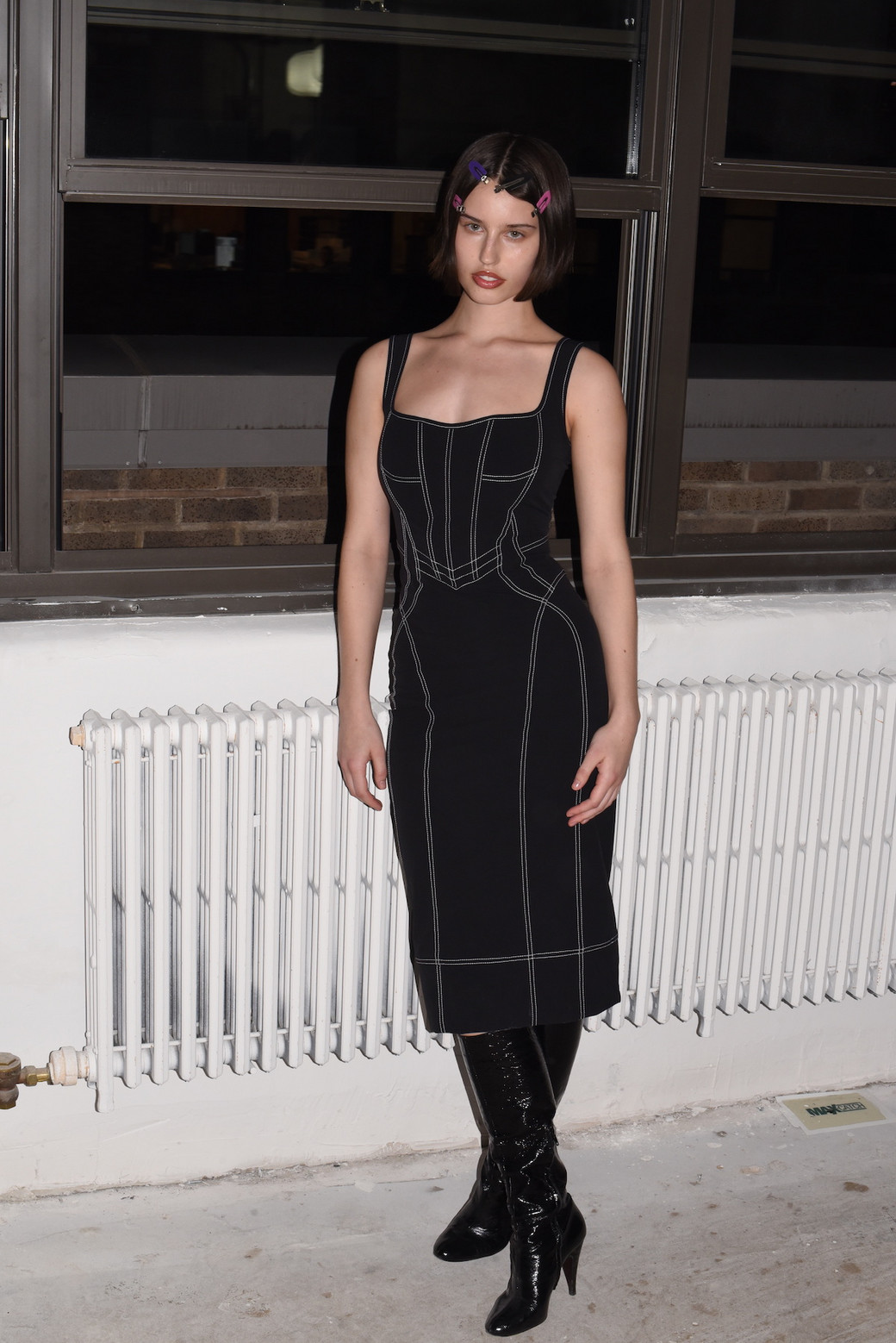

office caught up with designer Kim Shui before the opulent runway show on February 12, to talk collection inspiration, empowerment, and demanding freedom through clothing and beyond.
Your collections always celebrate fierce femininity and unbridled confidence in the self. In what ways does the AW23 collection portray these signature themes of yours, but in new and unprecedented ways?
This collection speaks to topical events that have been going on lately and in the past year. It's really looking at this contrast between public versus private spaces and how women move within public and private spheres. So I think it's taking what's part of our brand DNA and now looking at it in a context that's relevant to what's going on today. I would say the overarching theme for it that we really look at is public versus private and what that dialogue means because I think women are held to different standards in both spaces. I wanted to start this conversation about, 'Okay, what really are those standards? What is expected of women in those environments?' And I wanted to examine that, especially when it comes to what we are expected to wear.


Definitely, I feel like fashion is one of the biggest embodiments of that idea of the private versus public — especially when we think of the notion of censorship. It makes me think of how Instagram just removed its ban on women's nipples.
Do you know what's funny, I once posted a story of a friend wearing a mesh top at a party. You could see everything since it was sheer, and this girl responded saying, 'Oh my God.' I thought, Oh my God, doesn't she look good? But she thought it was indecent. And I just thought it was funny that someone would still respond to something like that, in that way. But obviously, this is not just about 'free the nipple.' It goes beyond that into all of the current events of the past year. I just feel like it's wrong to not say anything now. As a brand that is about empowering femininity and celebrating the female body, I think it's just important that we speak on these topics.
On that note of empowerment, what does true freedom signify to you and how do you express that notion through these designs?
I think a lot of it is about having the freedom and choice to wear what you want. Not submitting when you hear, 'You shouldn't be stepping out in something like that,' or being told how much you should be concealed and not concealed. I think it's about being comfortable — if you want to be covered up, then go for it, but if you don't want to be, then that's totally fine too.
I think that's a really important point too. It's allowing people to interpret that sense of 'freedom' in whatever way makes the most sense for them. Comfort is a subjective thing.
Exactly. I'm totally not trying to say that everyone should be exposed, but a big part of it is also celebrating sexuality. I've seen a lot of instances that place the blame on women for the way they dress in terms of how 'sexy' it is, instead of behavior. It all feeds into that idea of interior versus exterior, or at home versus a public space. And another interesting part for me that I thought was really symbolic of the collection was us doing this in a former bank space, because this is a location that has historically withheld power or access for women. I wanted them to be able to command that space.
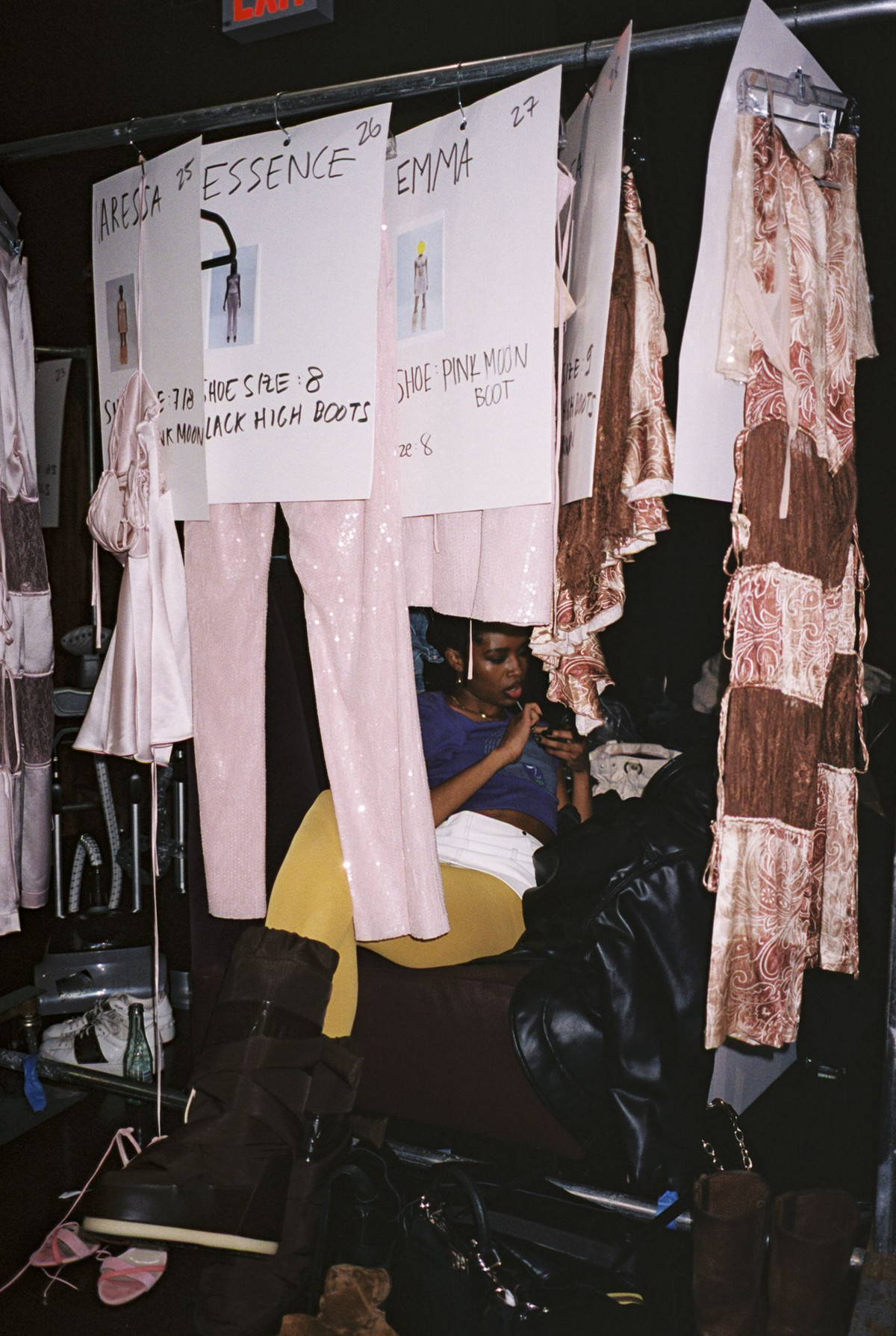
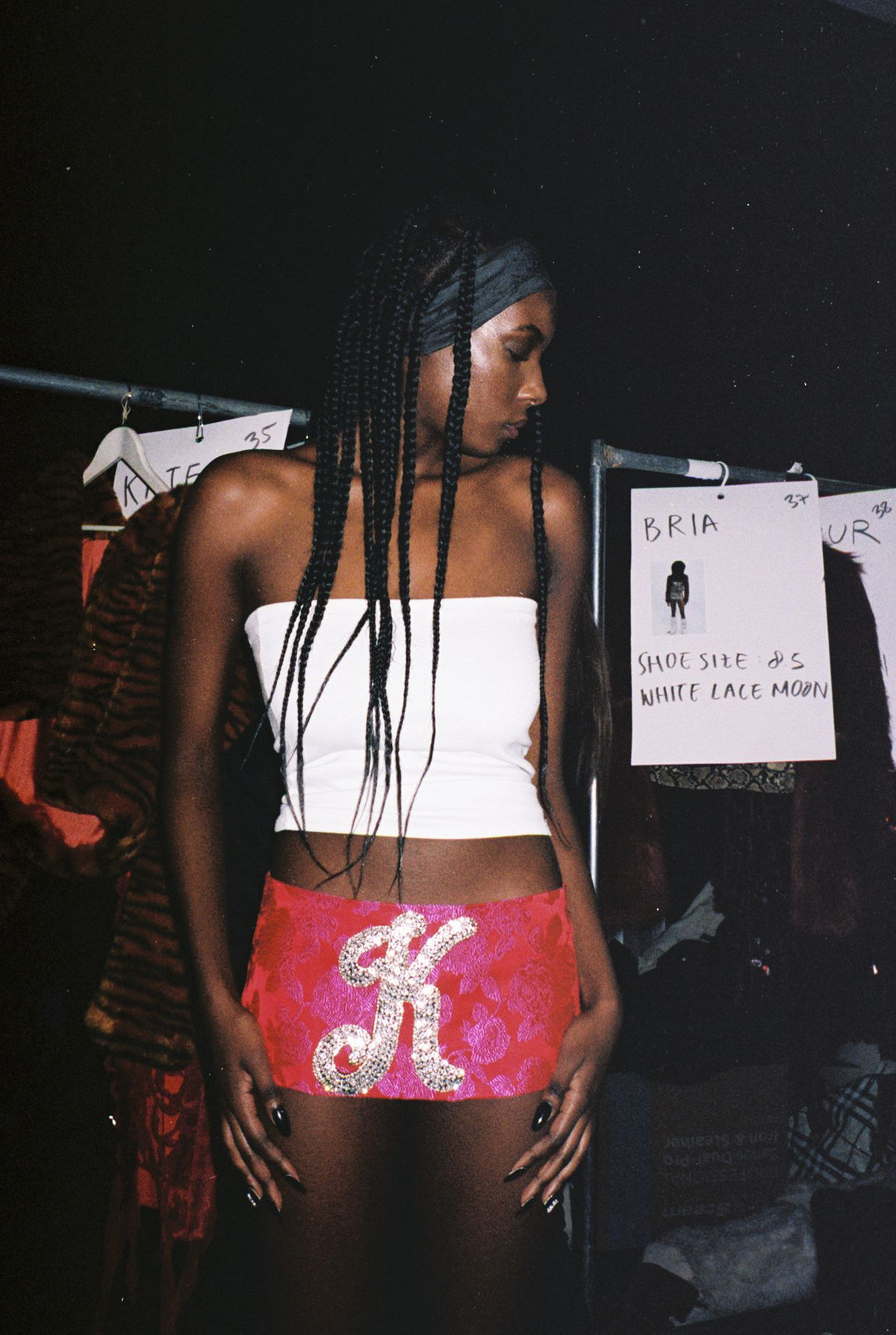
Watching your past shows, I admire how the entire experience tells a story and adds another layer to your craft. I know you employed certain materials or textiles to also draw upon the message that the entire collection represents. Can you tell me a little bit about that — how do some of the materials used tie into the wider collection story?
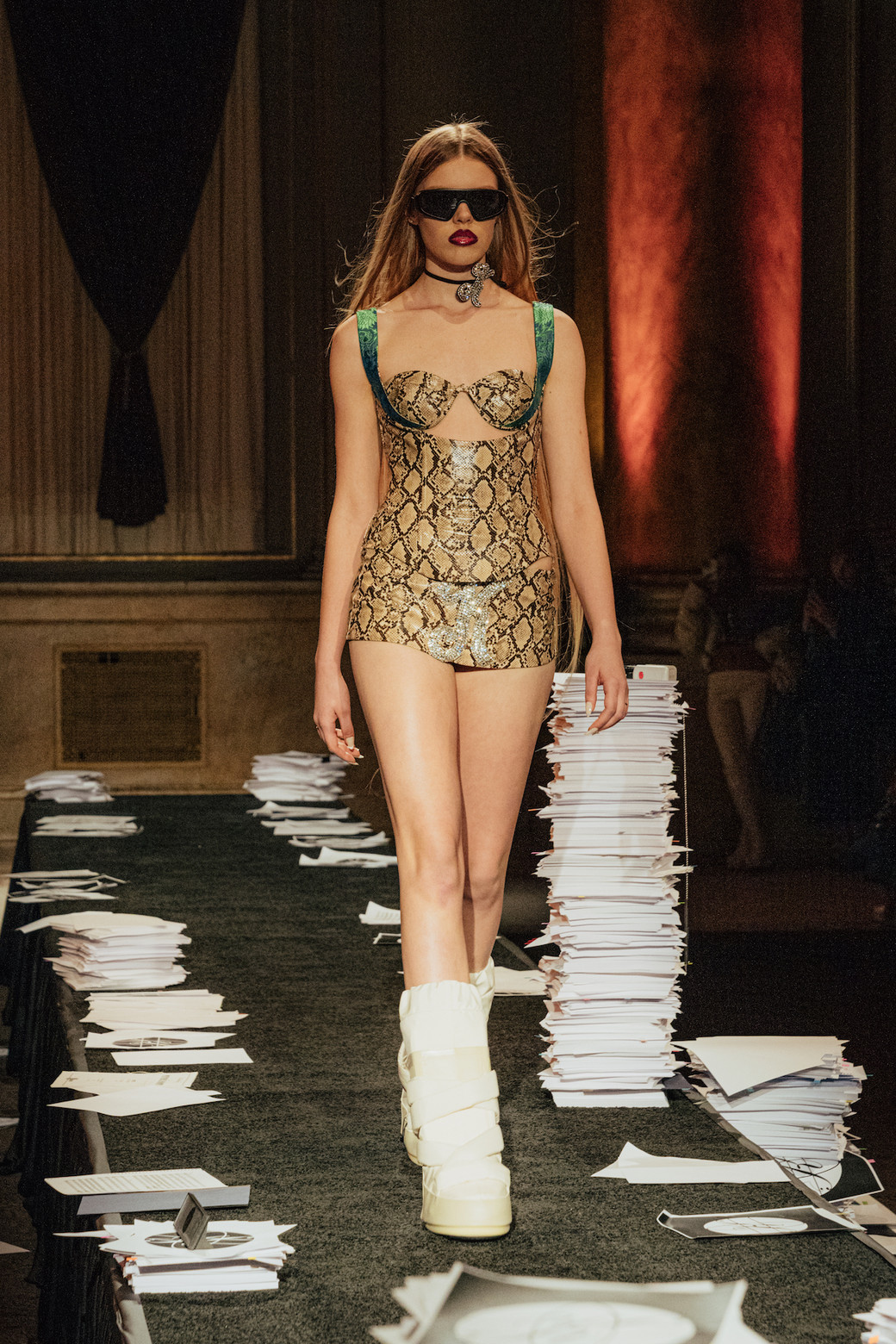
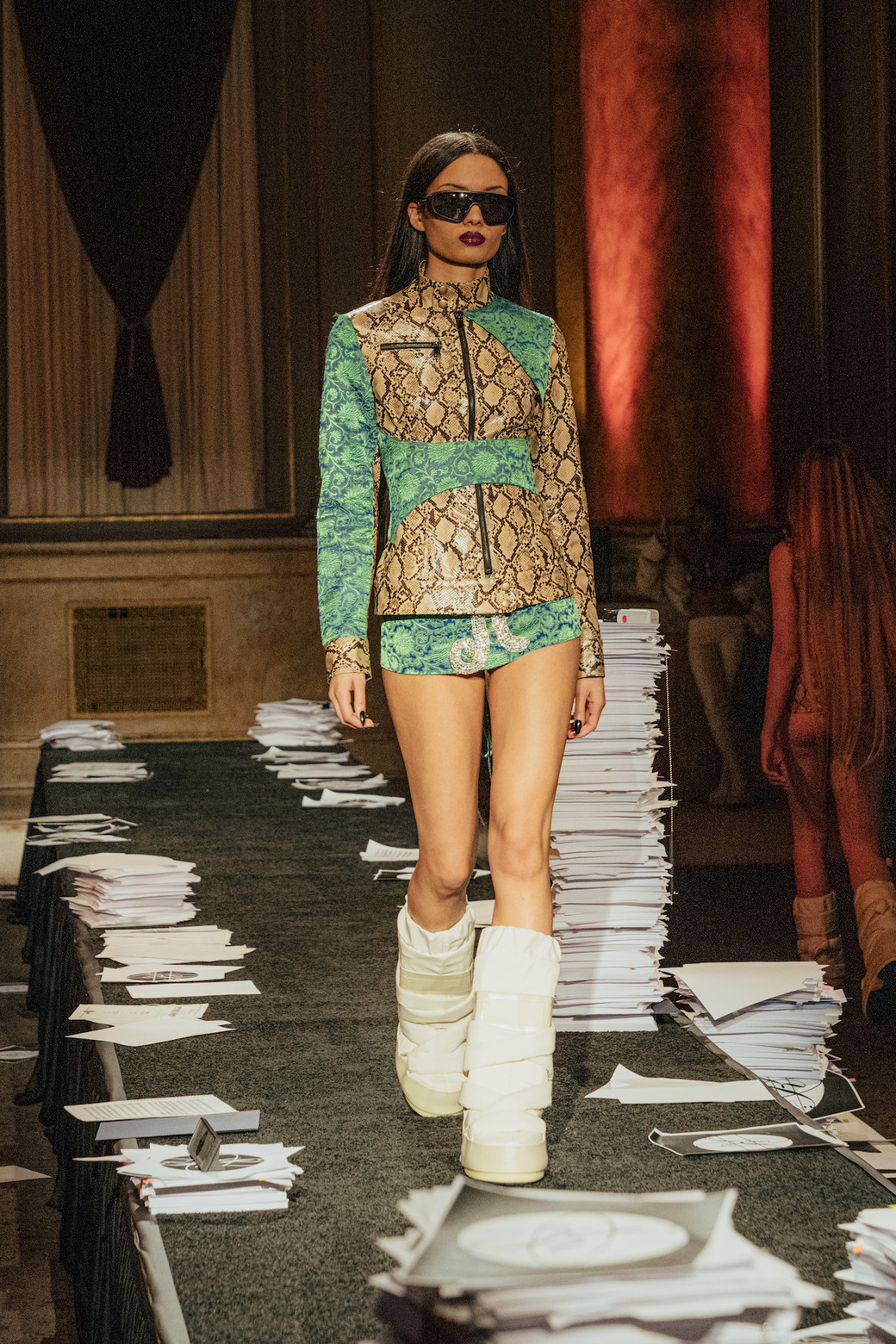
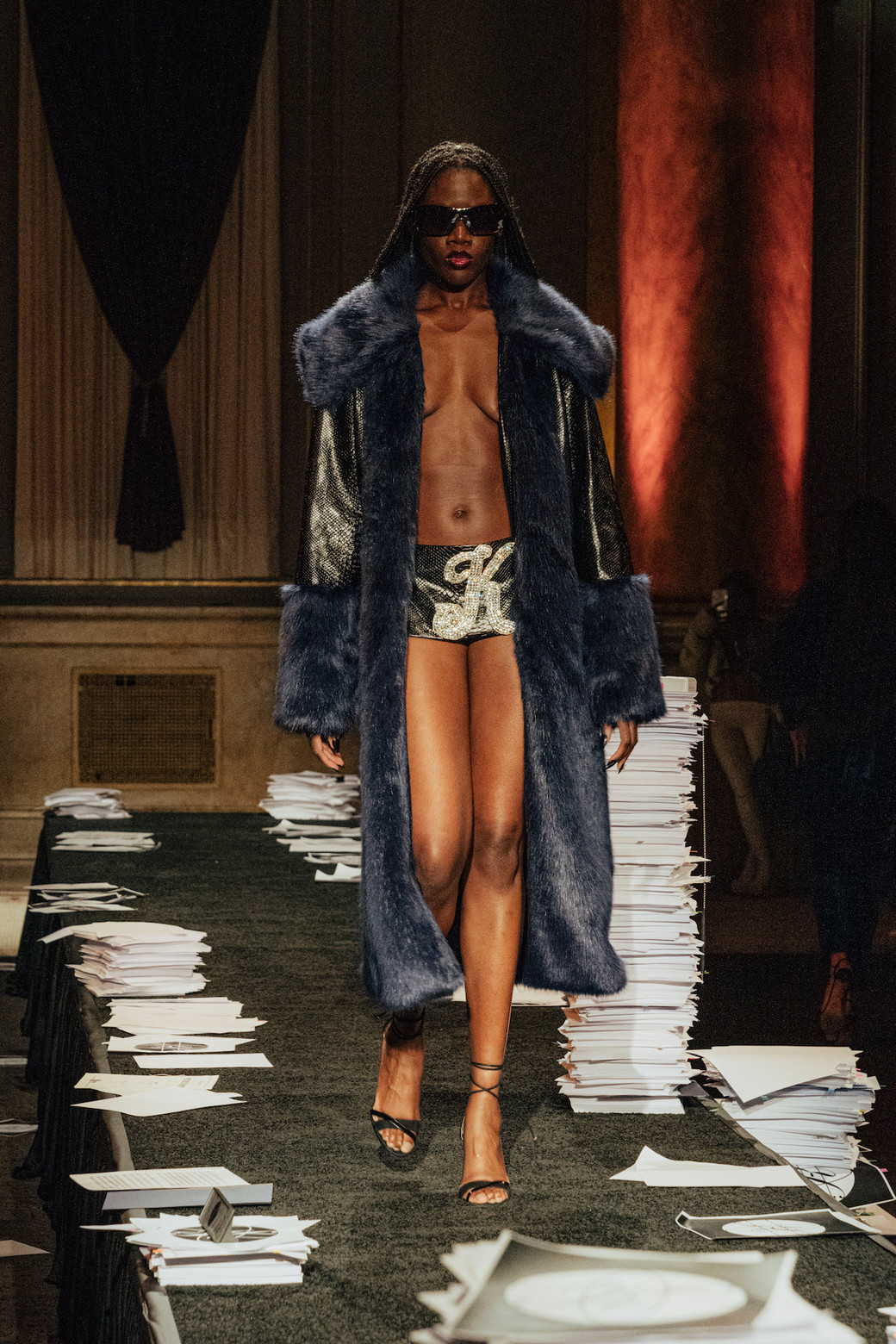
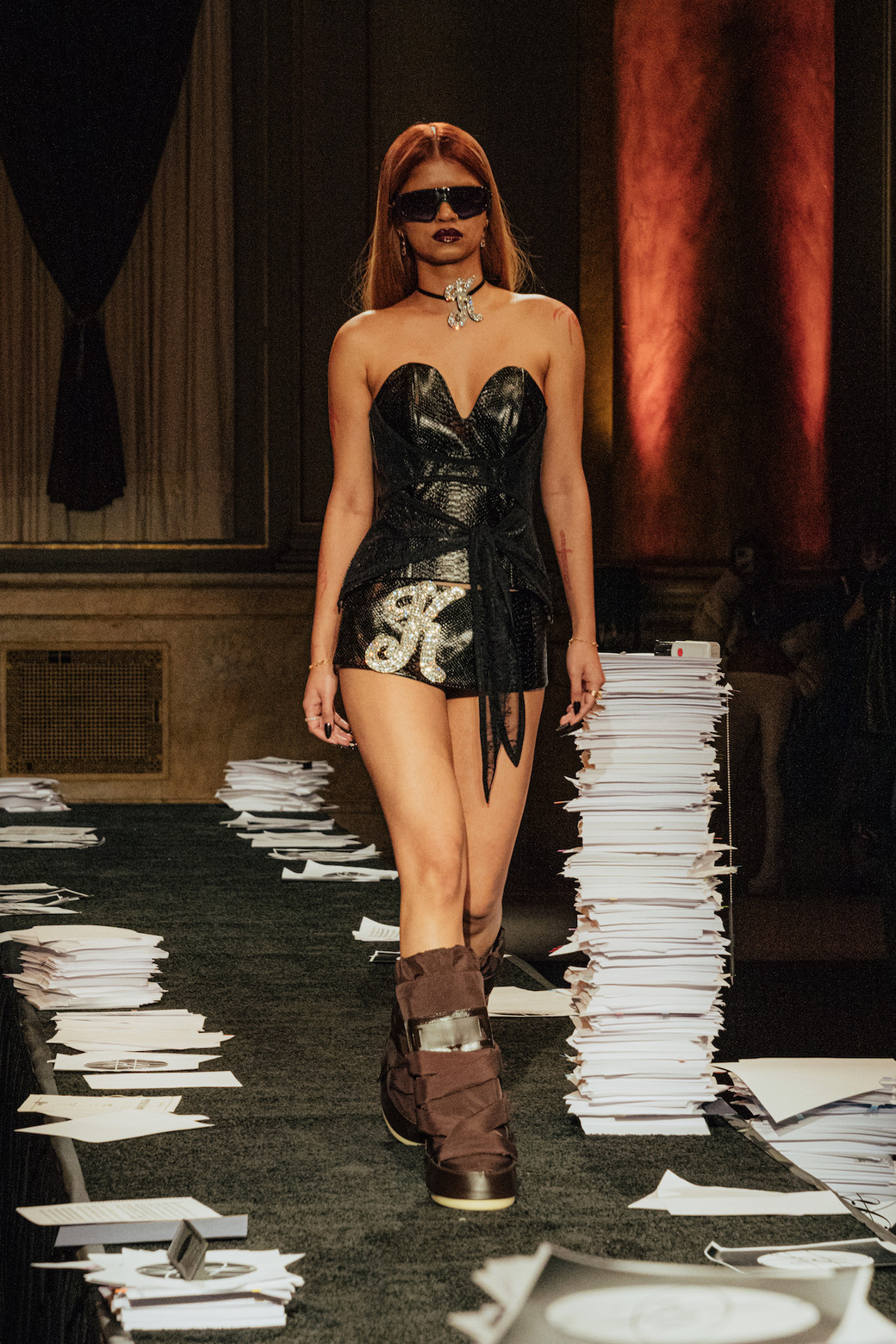
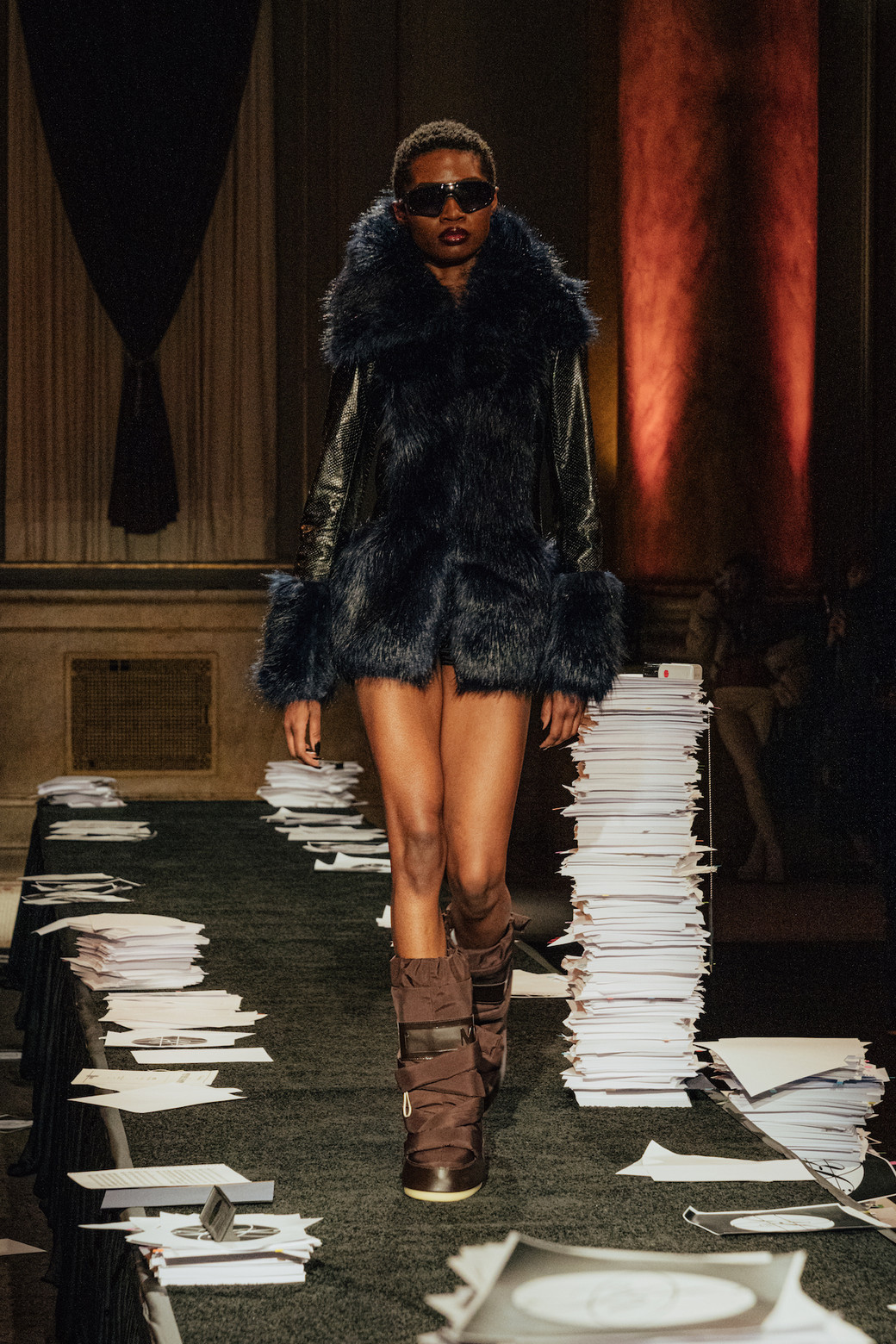
I feel like the materials used can be divided into three different themes that we explored. One is this chain link, barrier motif that you will see throughout in terms of both shapes and also in the ways the fabric is folded and manipulated. The second notion is the use of fabrics that signify intimacy and privacy. And then the third — probably my favorite symbol — is the snake regenerating. When a snake regenerates, it peels off a layer of clear skin. So that's why you'll see a lot of protective animal skin elements too, like the snakeskin, vegan fur, and clear vinyl with a snake skin imprint on it. It represents shedding the old and bringing new in. So maybe shedding old ways of thought and bringing in new ones.
We talked a lot about this dichotomy between the public sphere and the private sphere. I know that in this case, autonomy is achieved by means of protest through fashion. But how do you believe that we, as women, can advocate for dissolving that dichotomy, beyond what we're wearing?
It's really about women having agency and being able to speak out on the expression that they want to display. Not just in terms of clothing, but in terms of voice and action. Even in terms of the way we're going to set up the show, that autonomy will be reflected. We're working with a choreographer, Sigrid Lauren. She's an amazing performance artist. I'm really excited to be working with her because we don't want the models to be just walking down a runway. I want each of them to have a role in this story. I love this idea of showcasing extraordinary women's stories. To be empowered doesn't mean you have to be a CEO or a 'girl boss.' It can include women as mothers or whatever profession you can think of.


I definitely agree with that. I think that we're moving toward a space where what empowerment entails is shifting. We're seeing all different iterations of that and different representations of it. In the show notes, there's a mention of how this collection calls to future generations to pass this message along so that they can continue the work that we're starting right now. How do you hope that future generations are able to rewrite this narrative and propel that message?
I think just in terms of a global perspective, I hope that women aren't held back from what they desire. There are so many lenses to examine this through. If you look at, for example, Iran, then that's a different case and they are still fighting. And that's a big part of this conversation too. I think that what matters, in the long run, is that these are things we have to push forward on. So that's what I hope to see, not in just terms of clothing, but for women to be able to have the agency to kind of move with freedom of self-expression and to have solid bodily autonomy.
While confidence is the throughline with most of your pieces, as well as self-expression in an unrestricted sense, I think this collection is really special because it's about encapsulating that in this even more concentrated way.
Exactly. Another point I wanted to make, is even with this discourse being had, we still sometimes see a lot of women tearing other women down. So I also wanted this collection to be about the unity of women standing together and supporting each other.


Do you have a look that you feel most embodies you stylistically from this collection, or a favorite look in general?
I think my favorite is going to be the opening look and then personally from what I would wear — there are a lot of looks that have some intimate touches to them that I think will be very cute. But I think that the opening look is still my favorite and the look I'd like to wear most.
What state of mind do you hope to conjure in viewers or people who are attending after they see the show and the collection?
I hope people walk away feeling hopeful. And feeling like they're able to celebrate this too. I want to emphasize that aspect of unity and make it a celebration. I think that's the part that is really special about this show. I put a lot more thought into the setup and the flow and even the styling of everything. You'll notice details in the hair, makeup, and even nails — it was all very intentional.
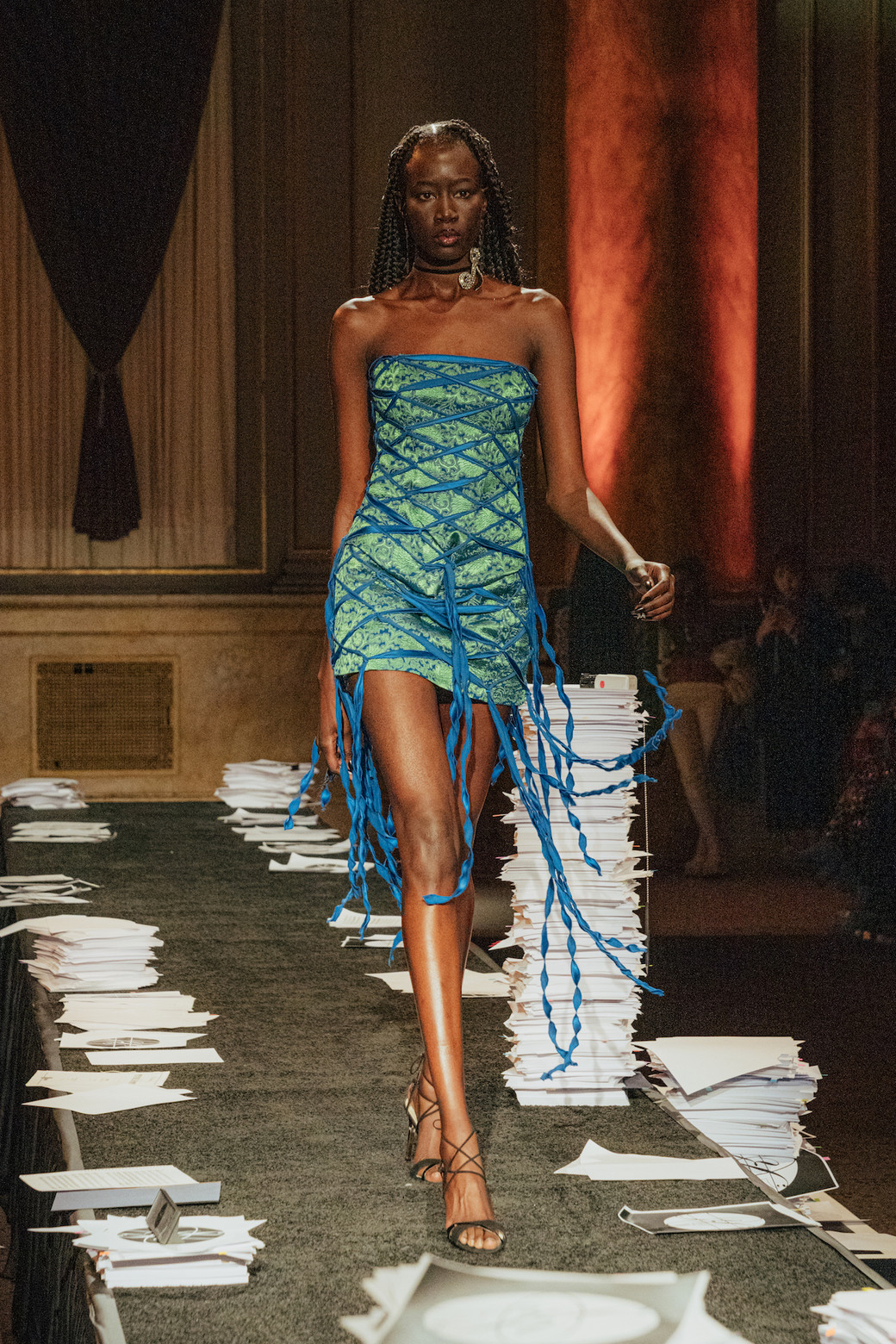
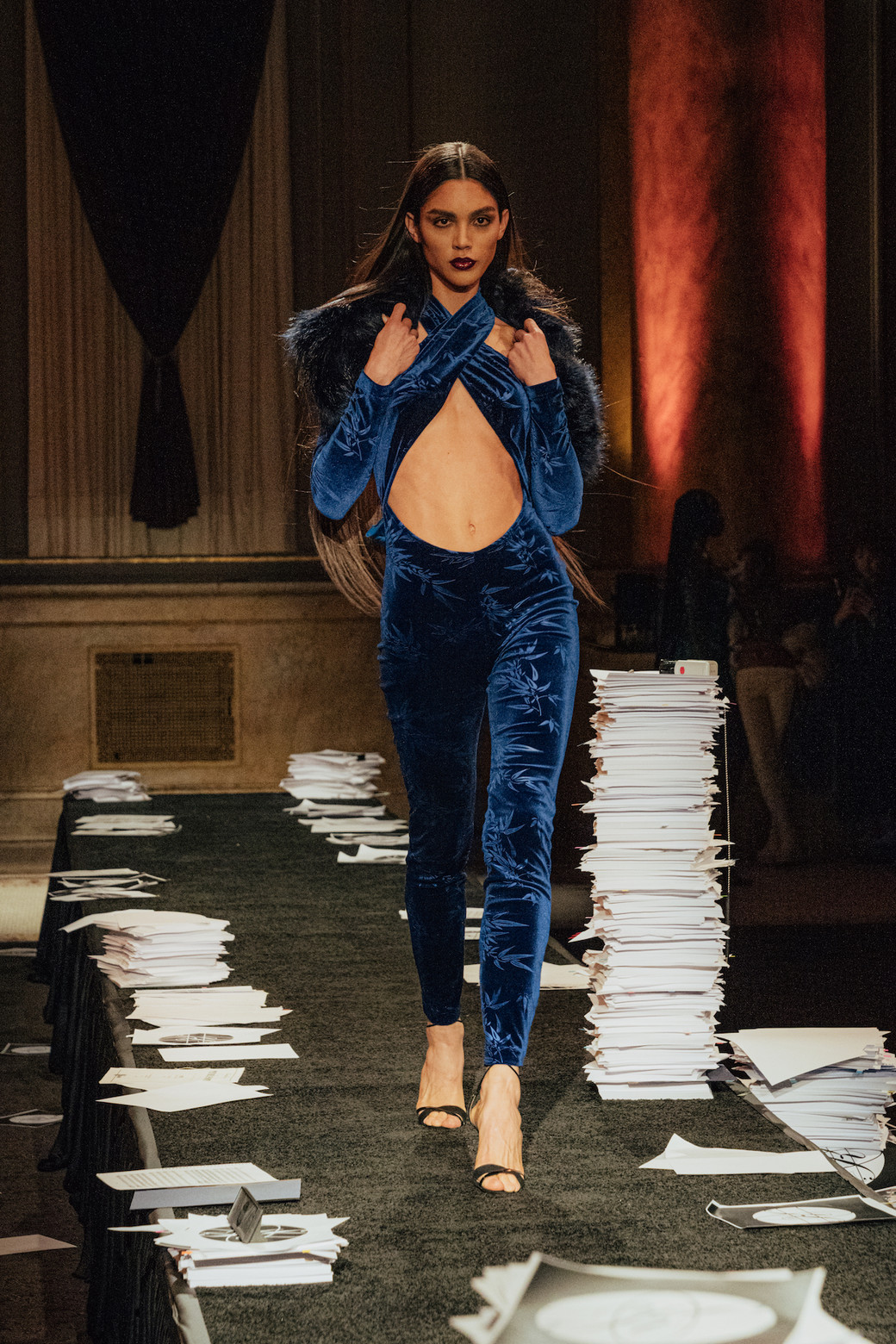
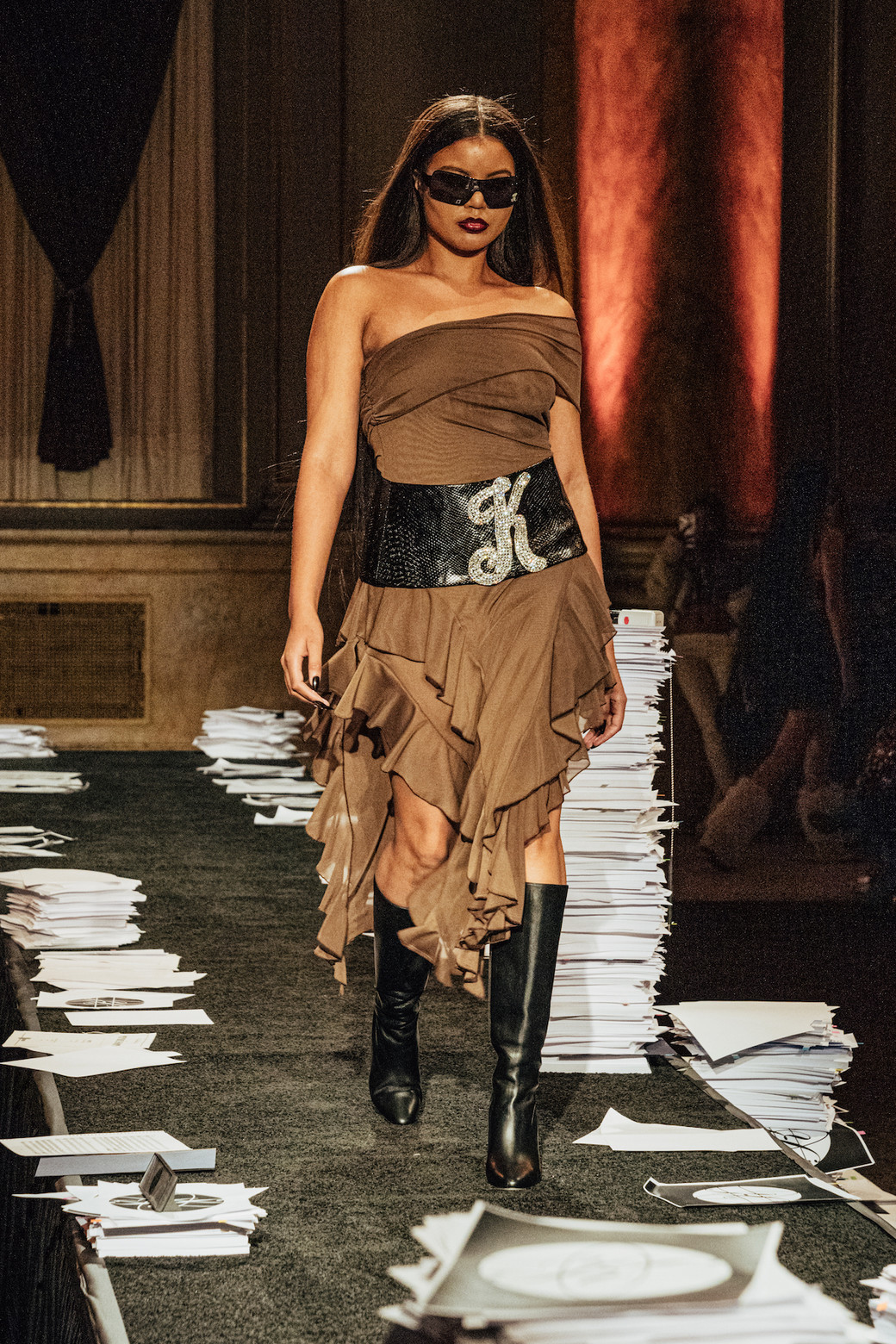
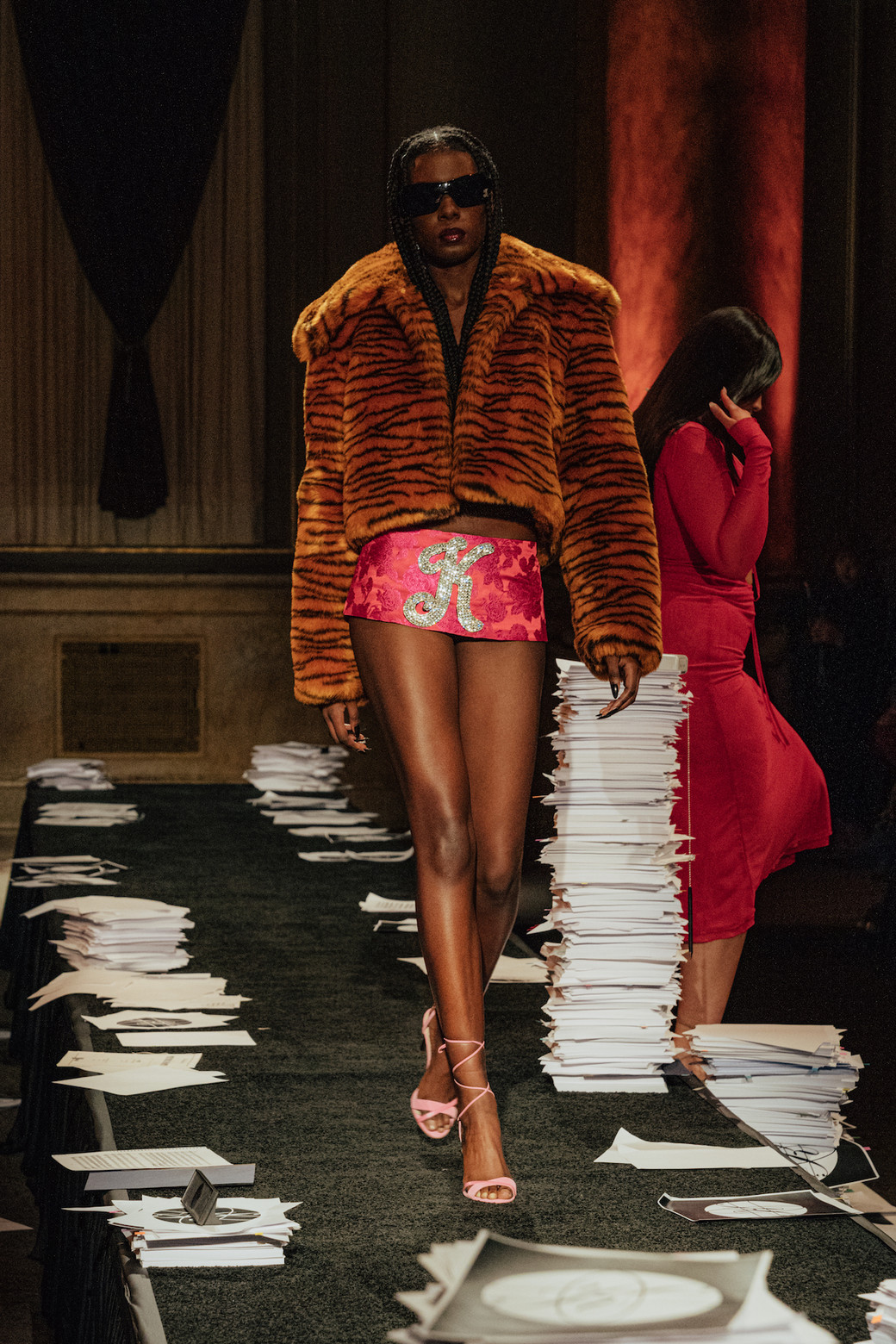
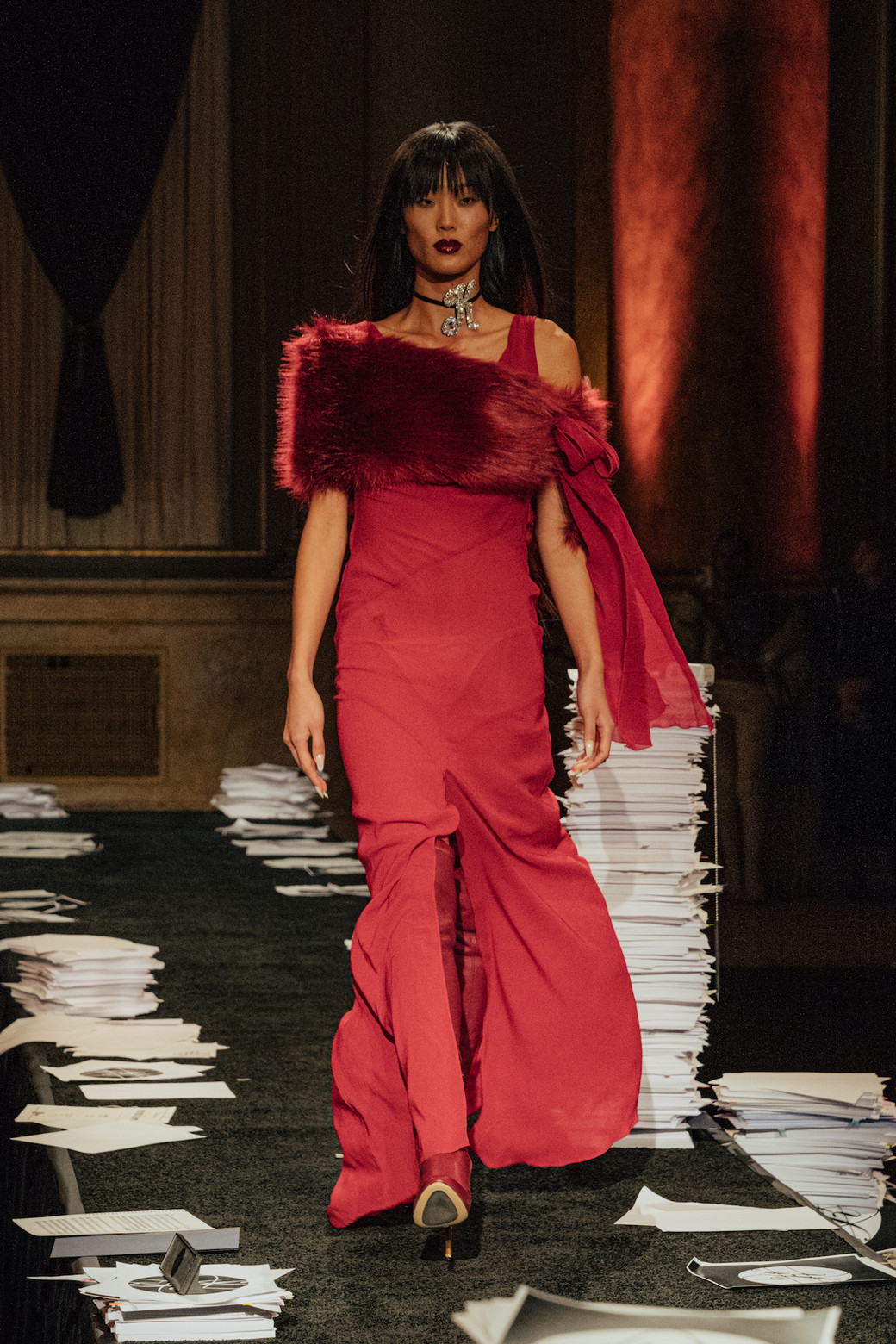
View the looks from the AW23 collection below.
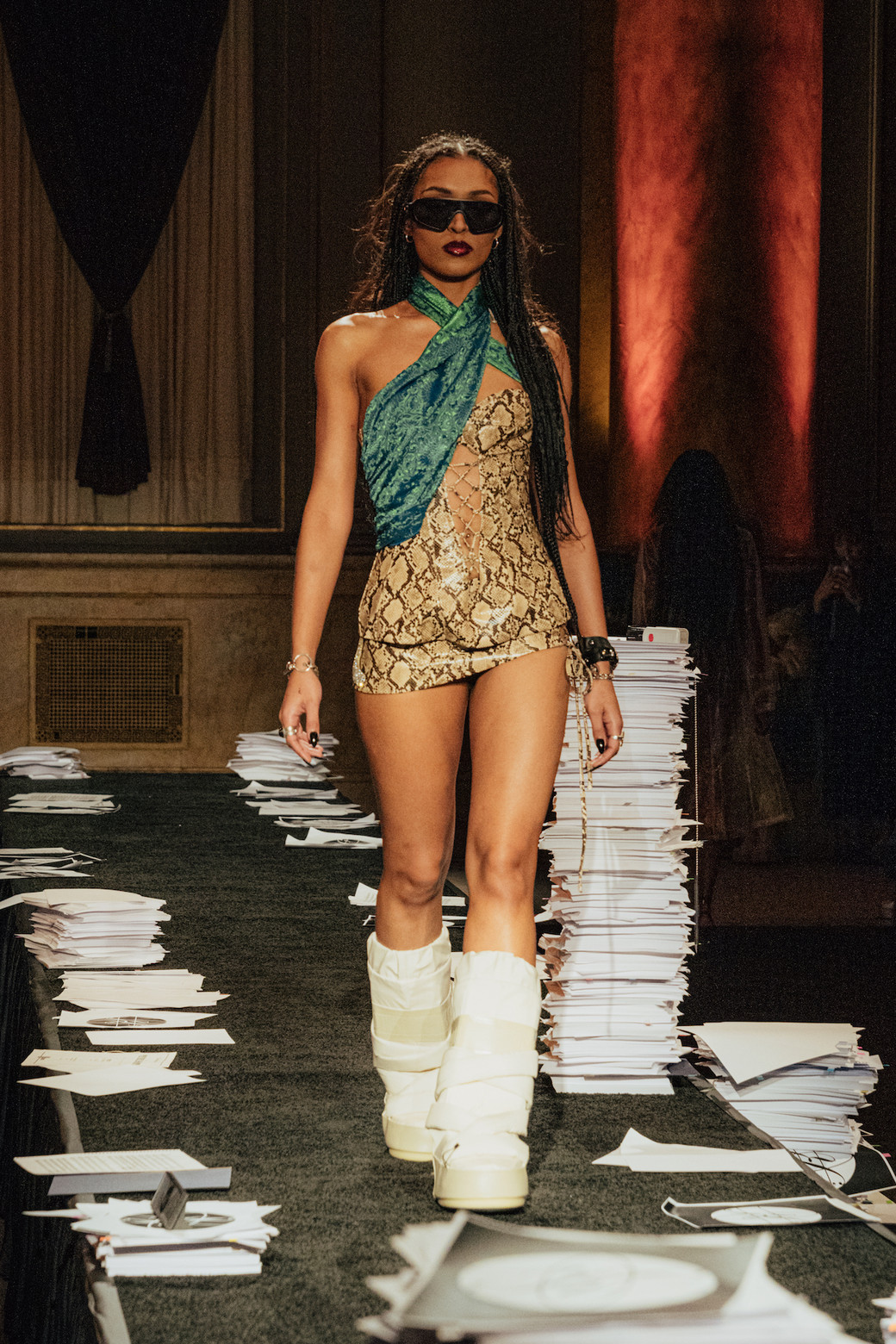
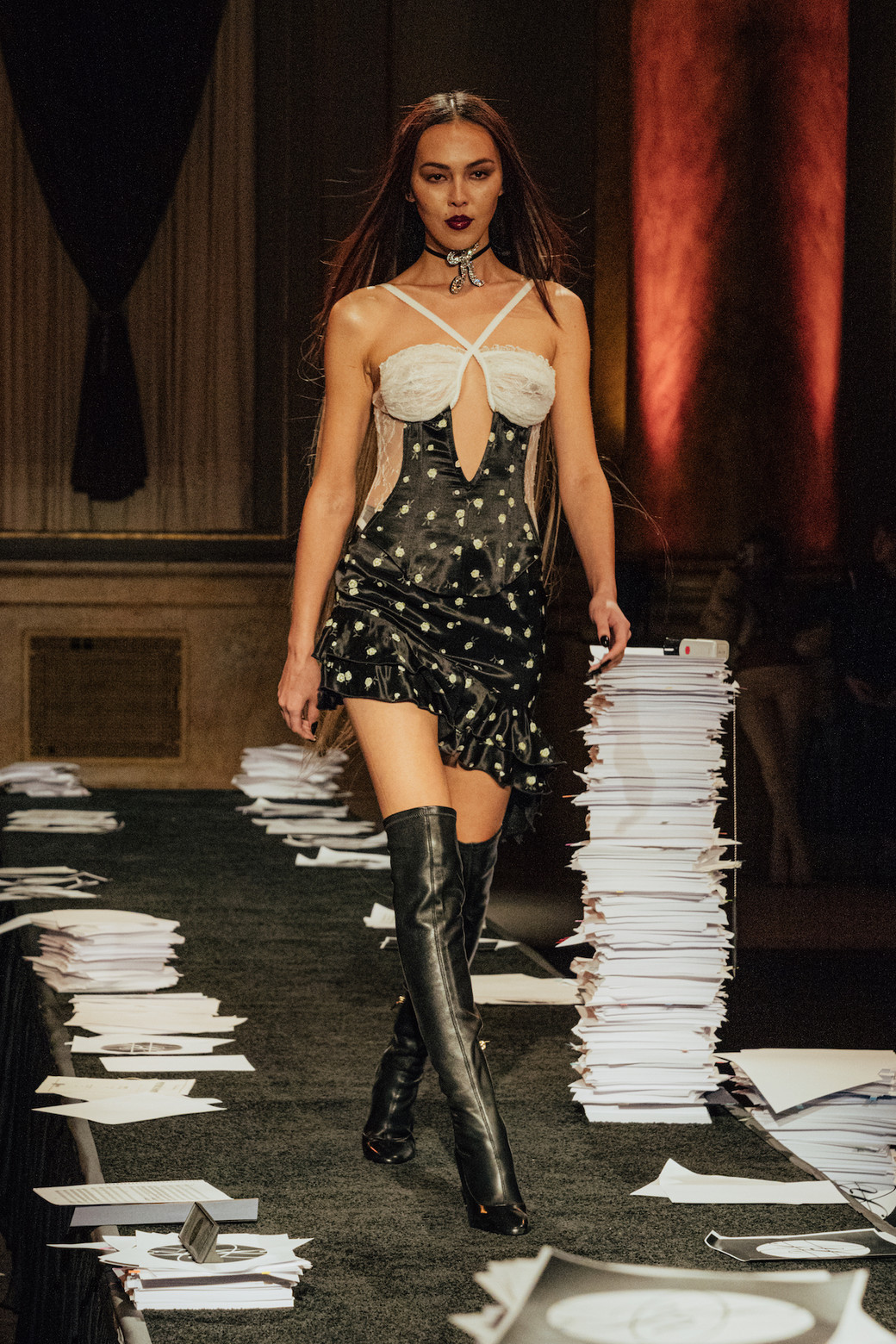
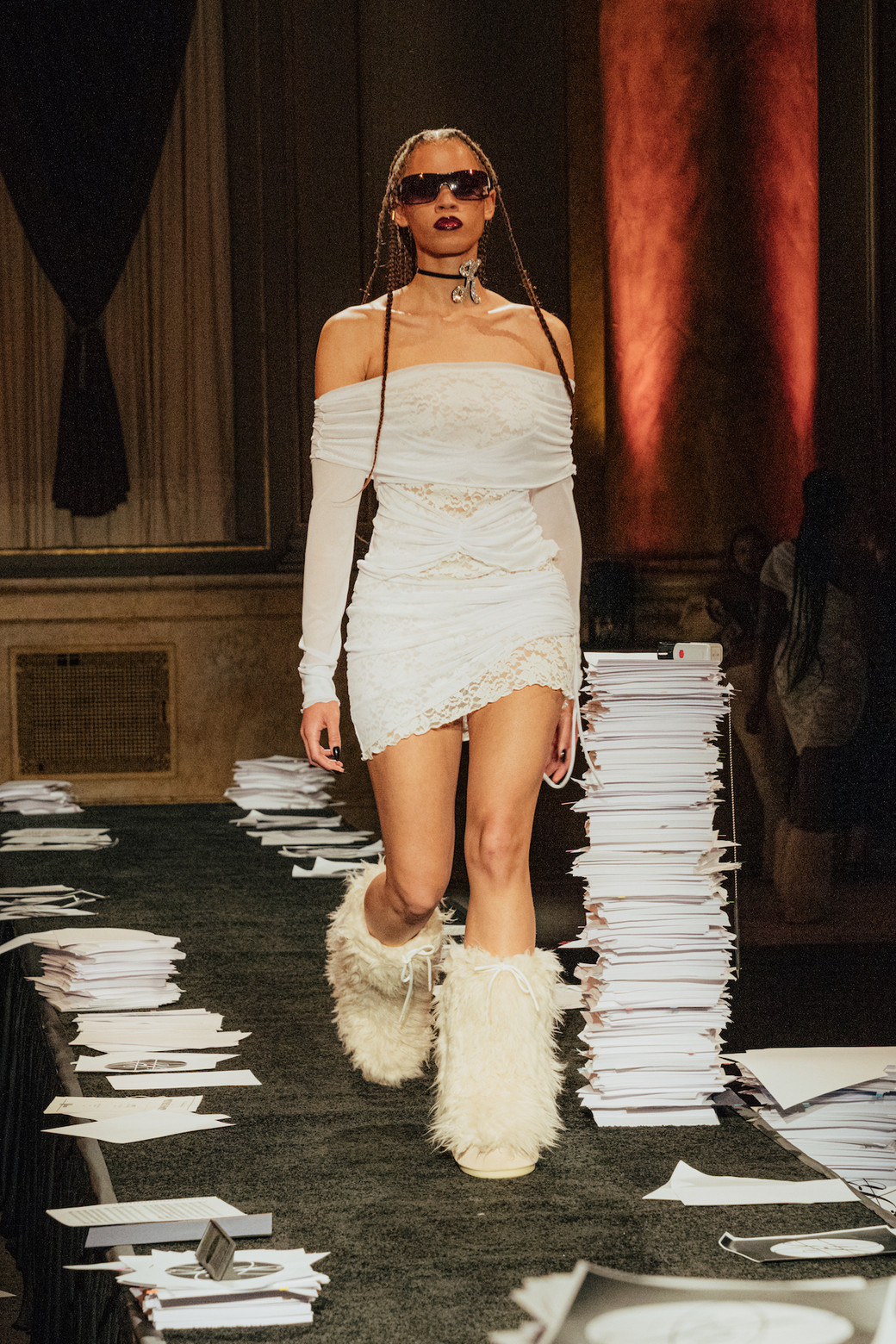
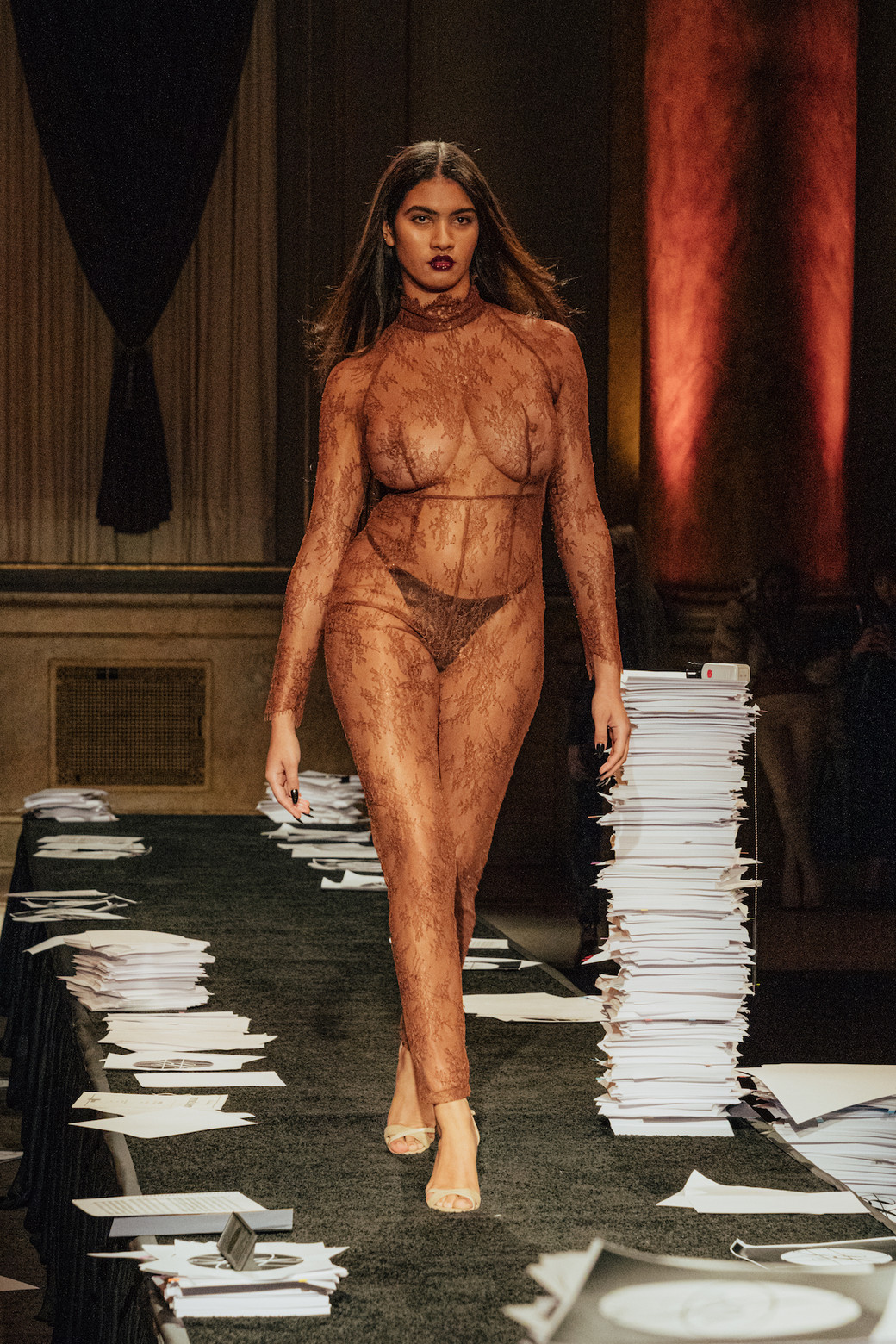
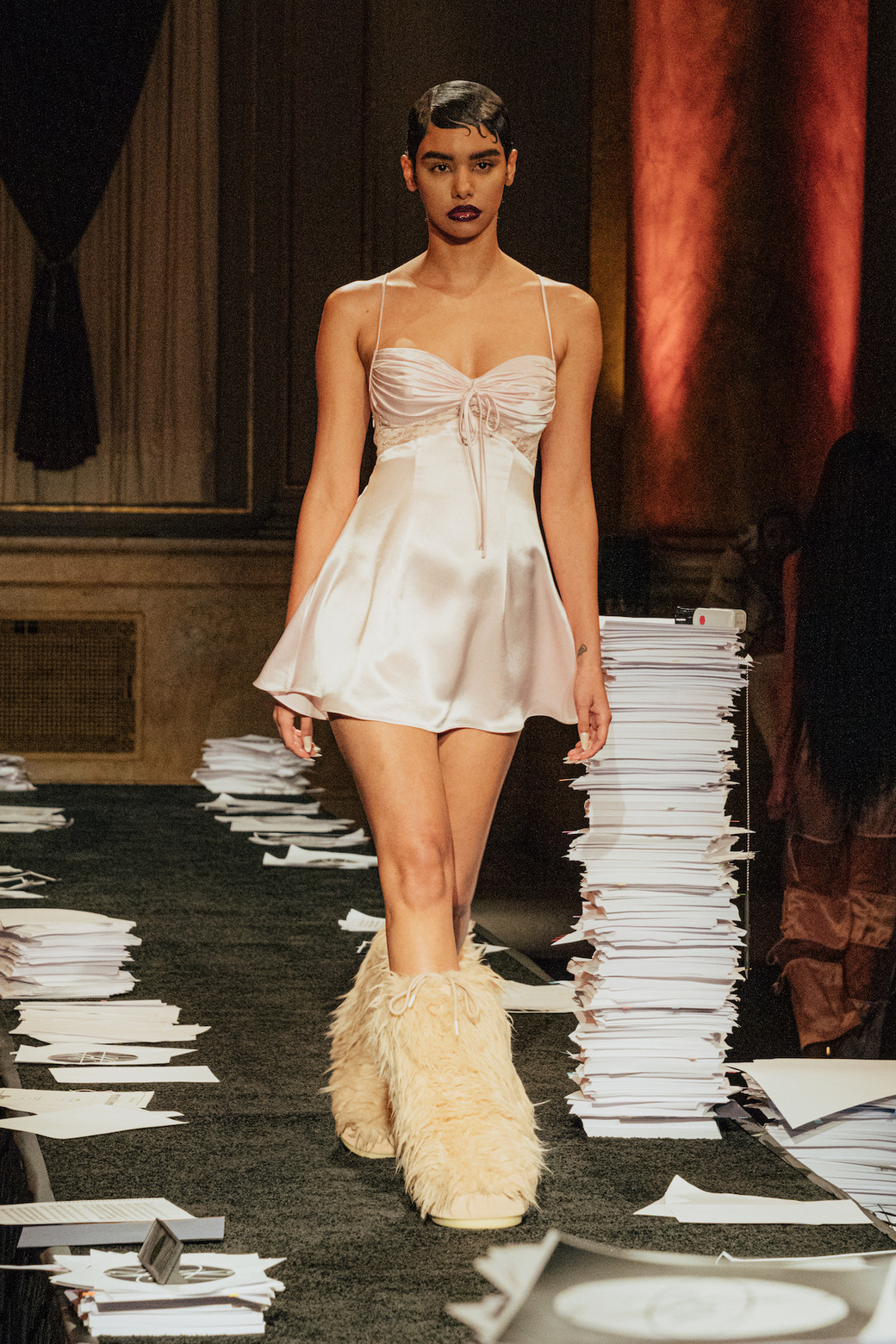
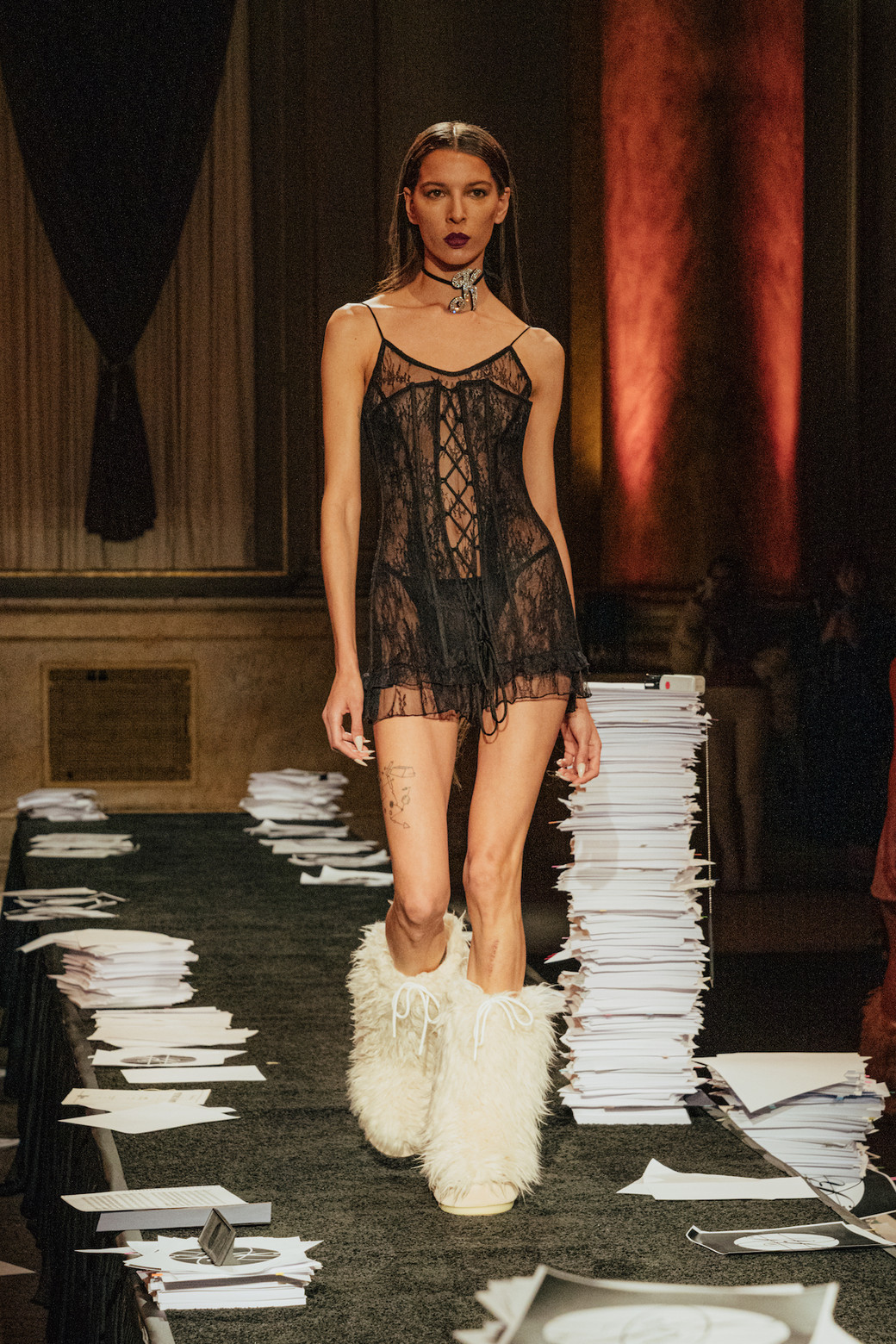
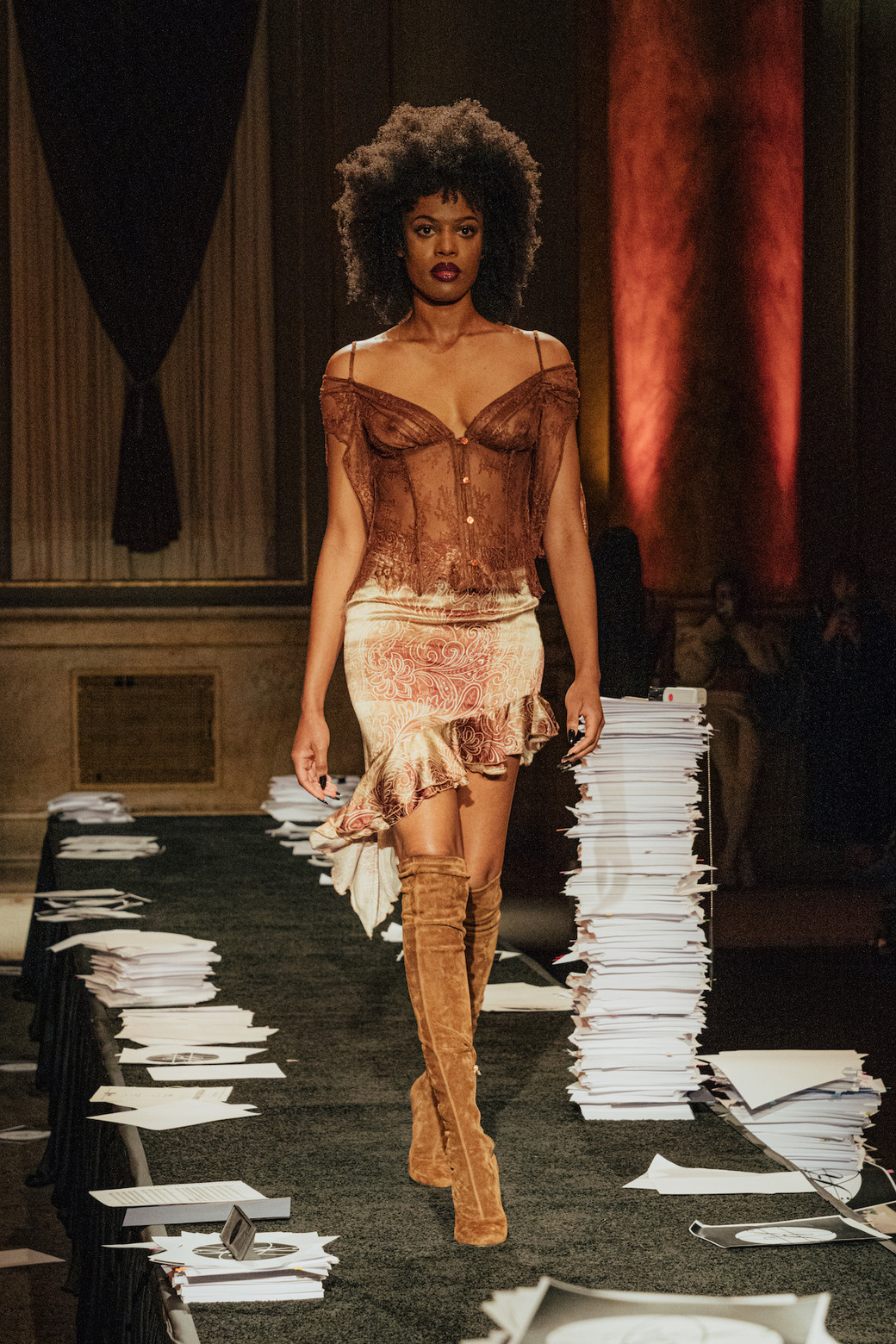
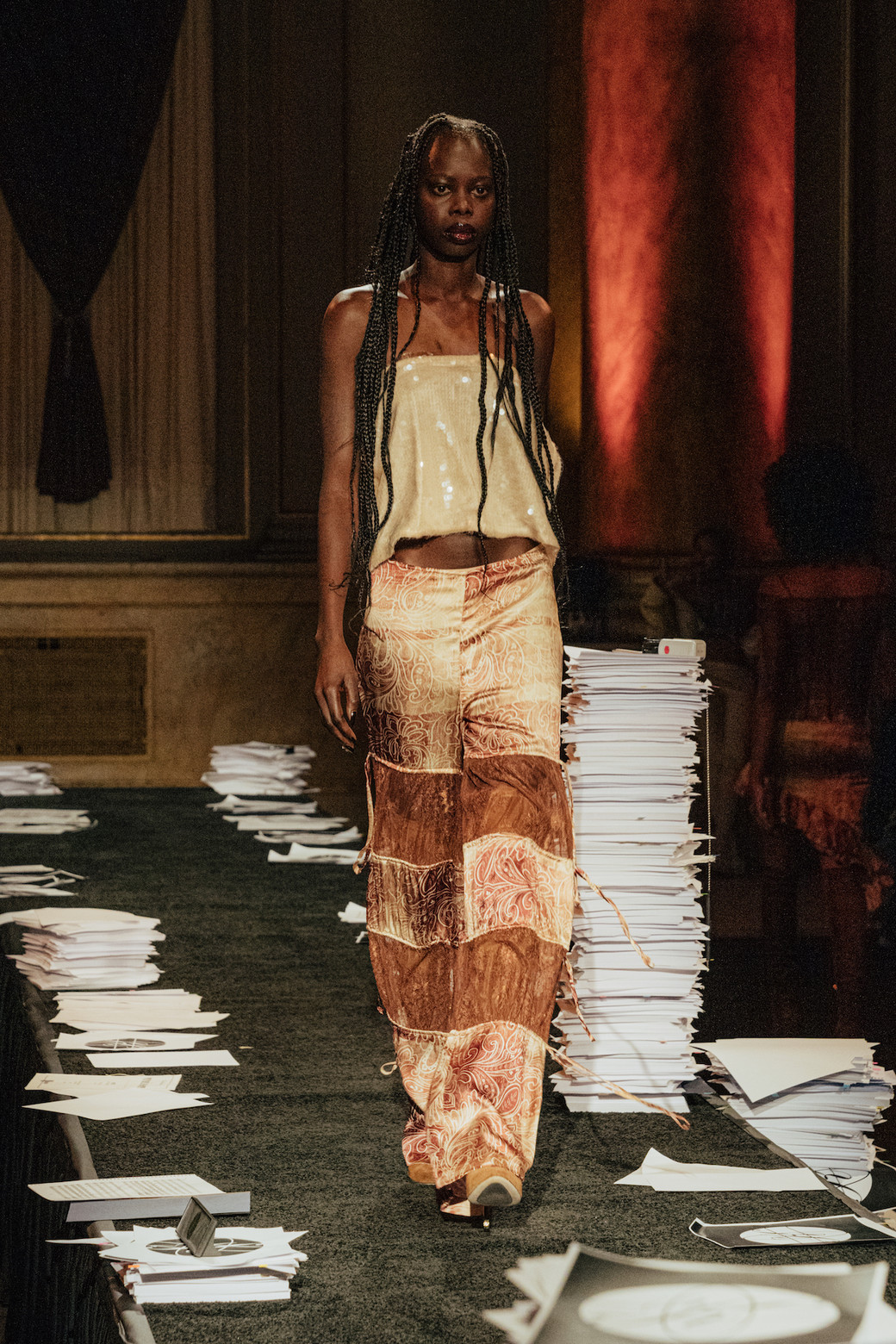
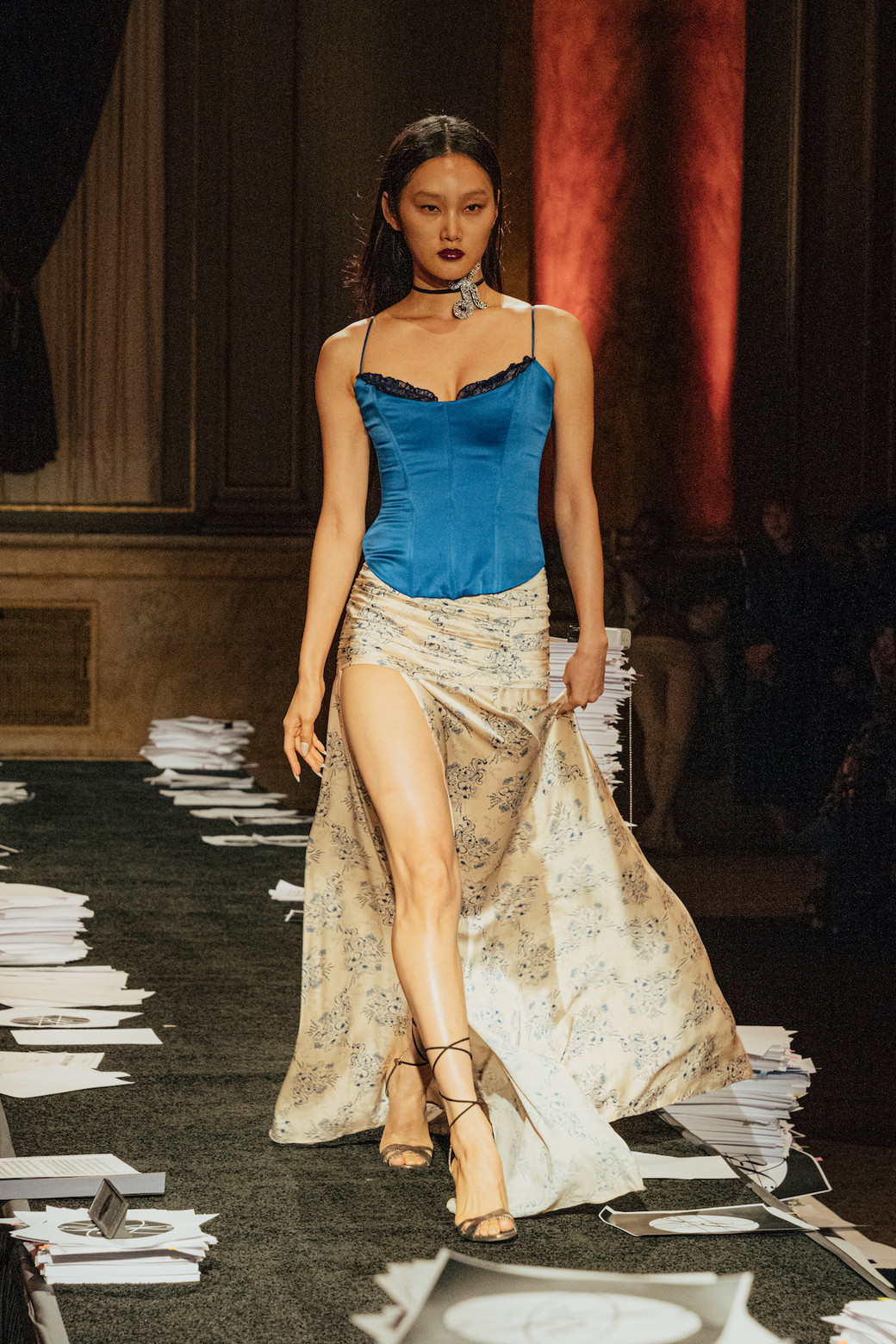

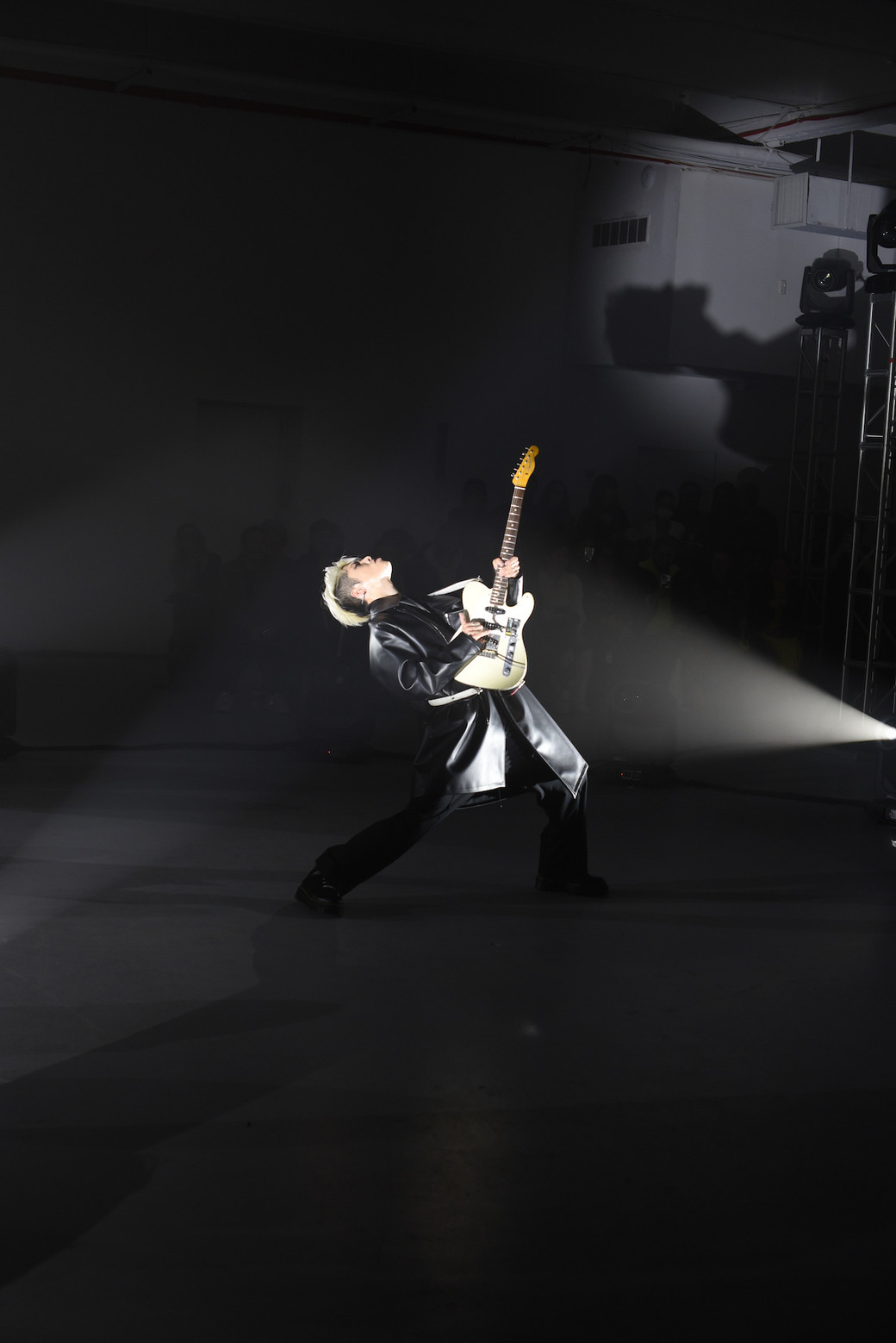
While the presentations are often exciting, the time in-between shows during fashion week can make it all feel so monotonous. Hanako’s presentation was a reminder that fashion week is meant to be fun. The show, which included dramatic staging by lighting expert Thierry Dreyfus and a live guitar solo by Japanese model-rockstar Miyavi, felt more like a concert with its theatrics than a fashion show. It was shocking, exciting, and unfortunately, over within minutes, but the nostalgia that surfaced while watching the display will hopefully last a little while longer.
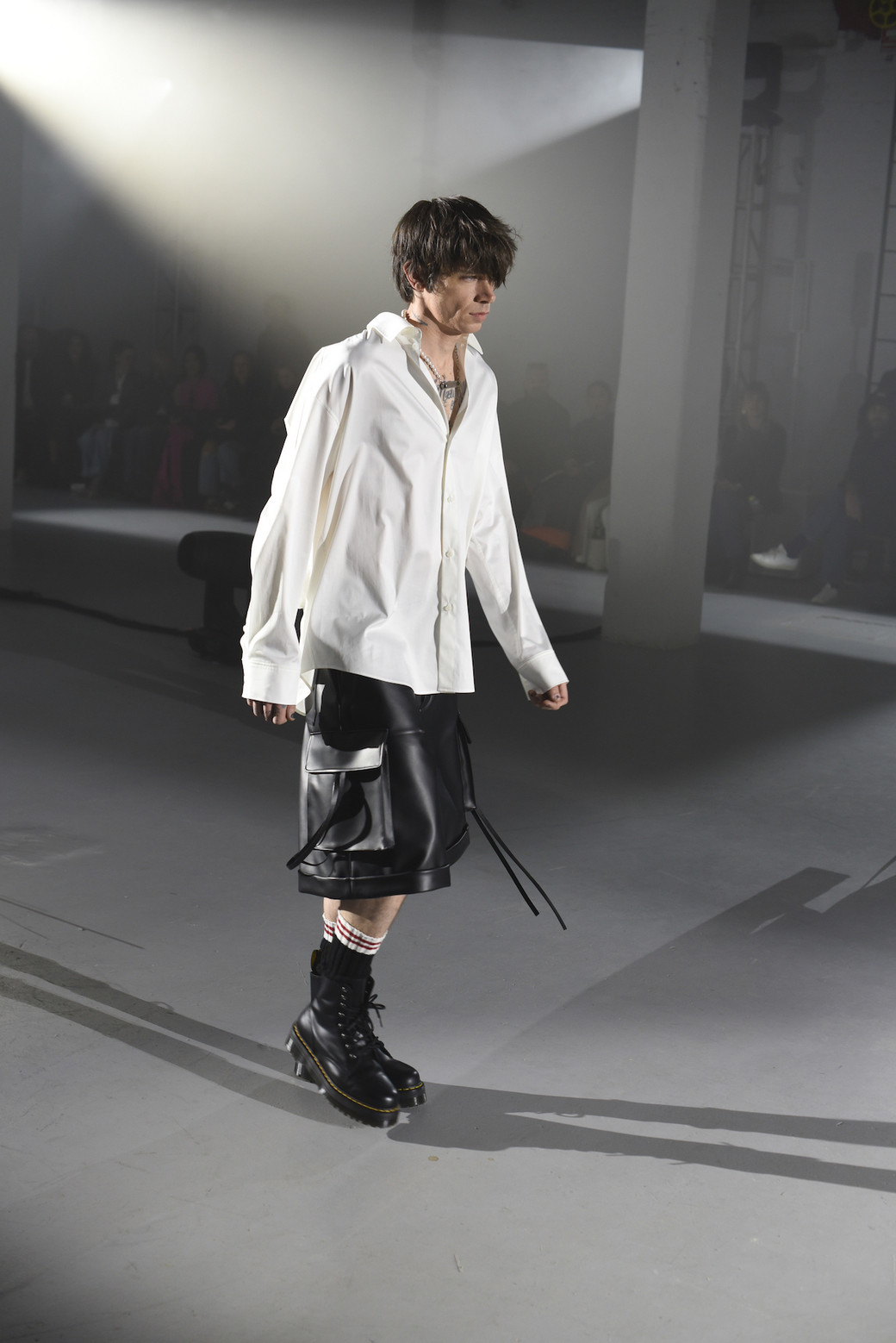
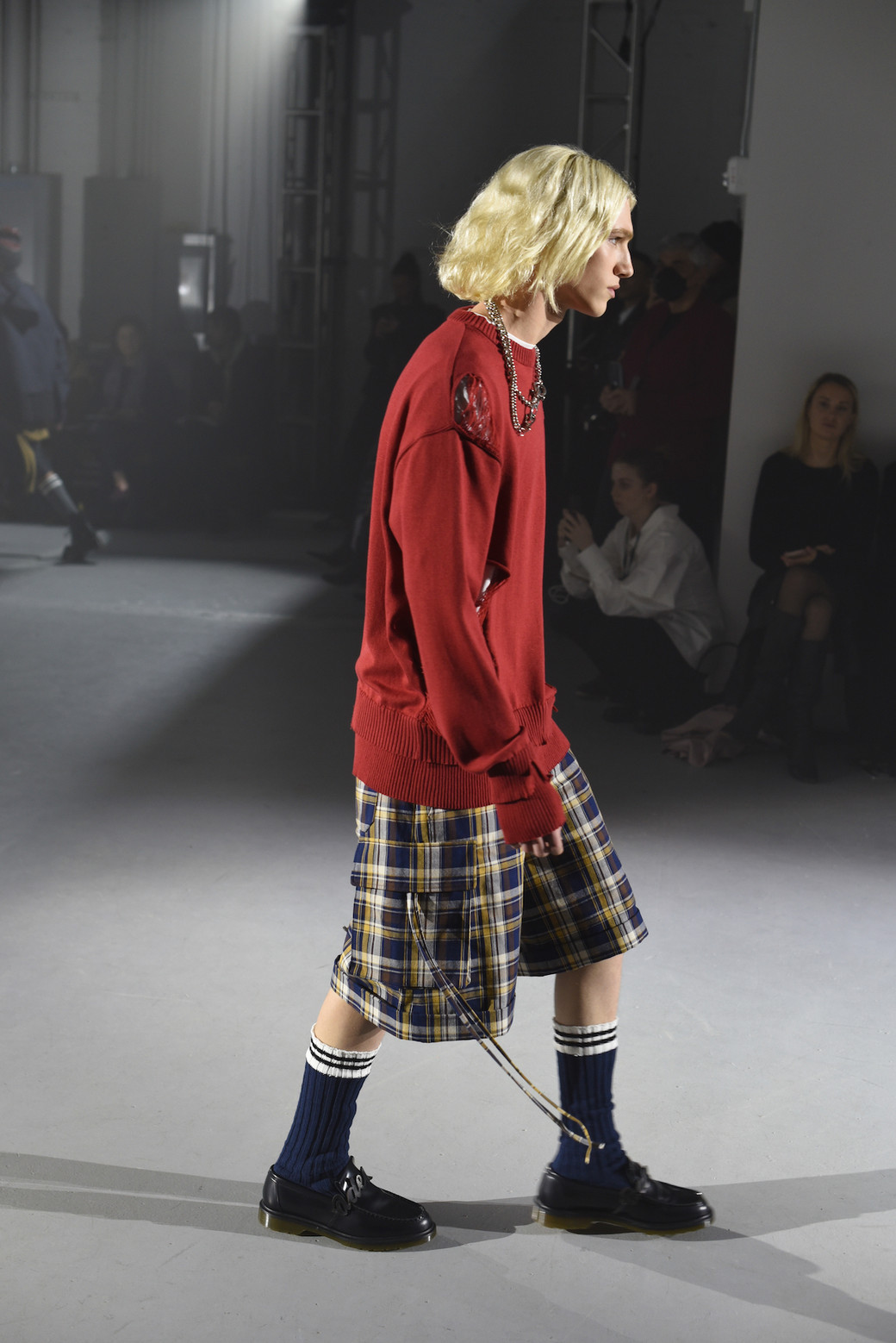
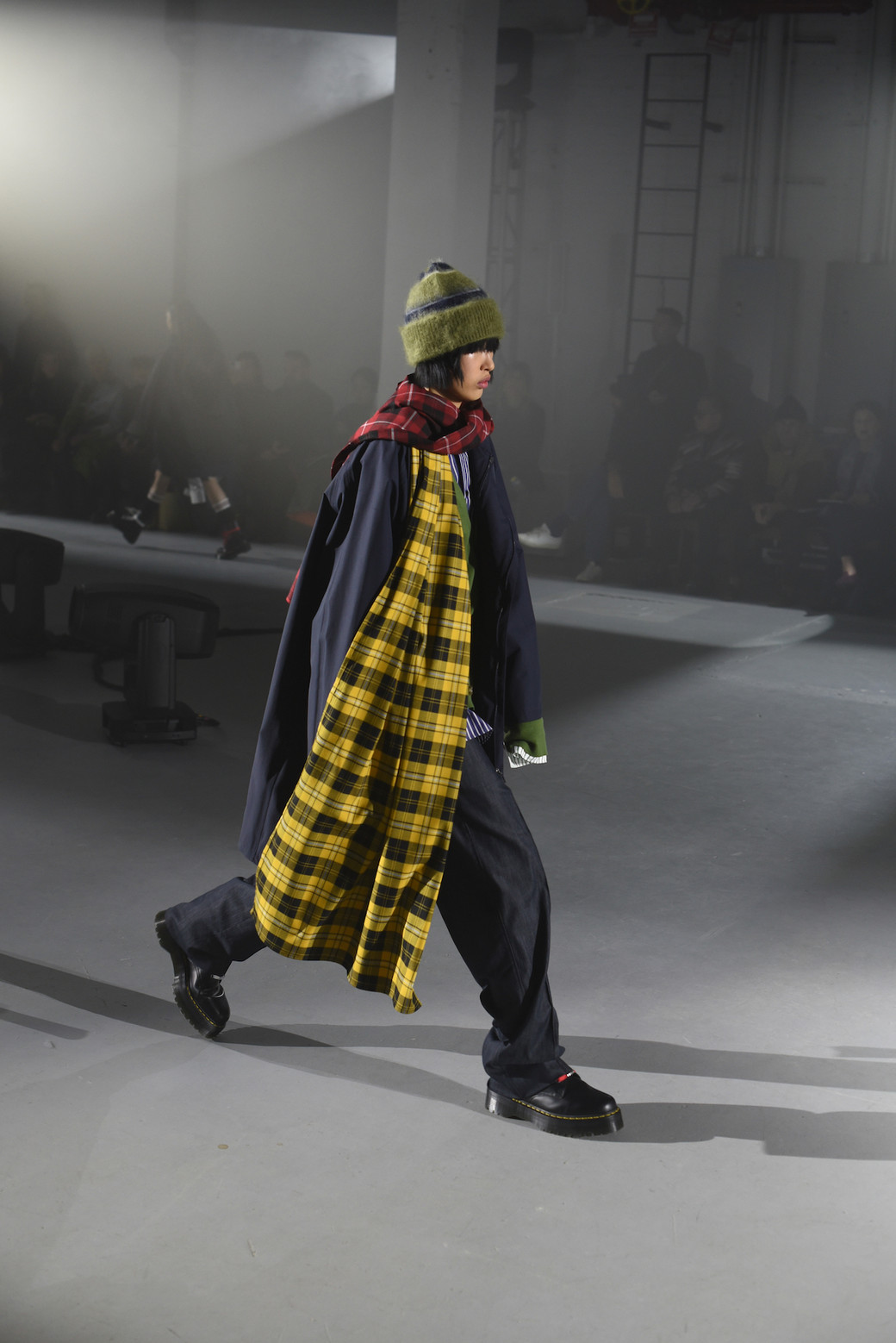
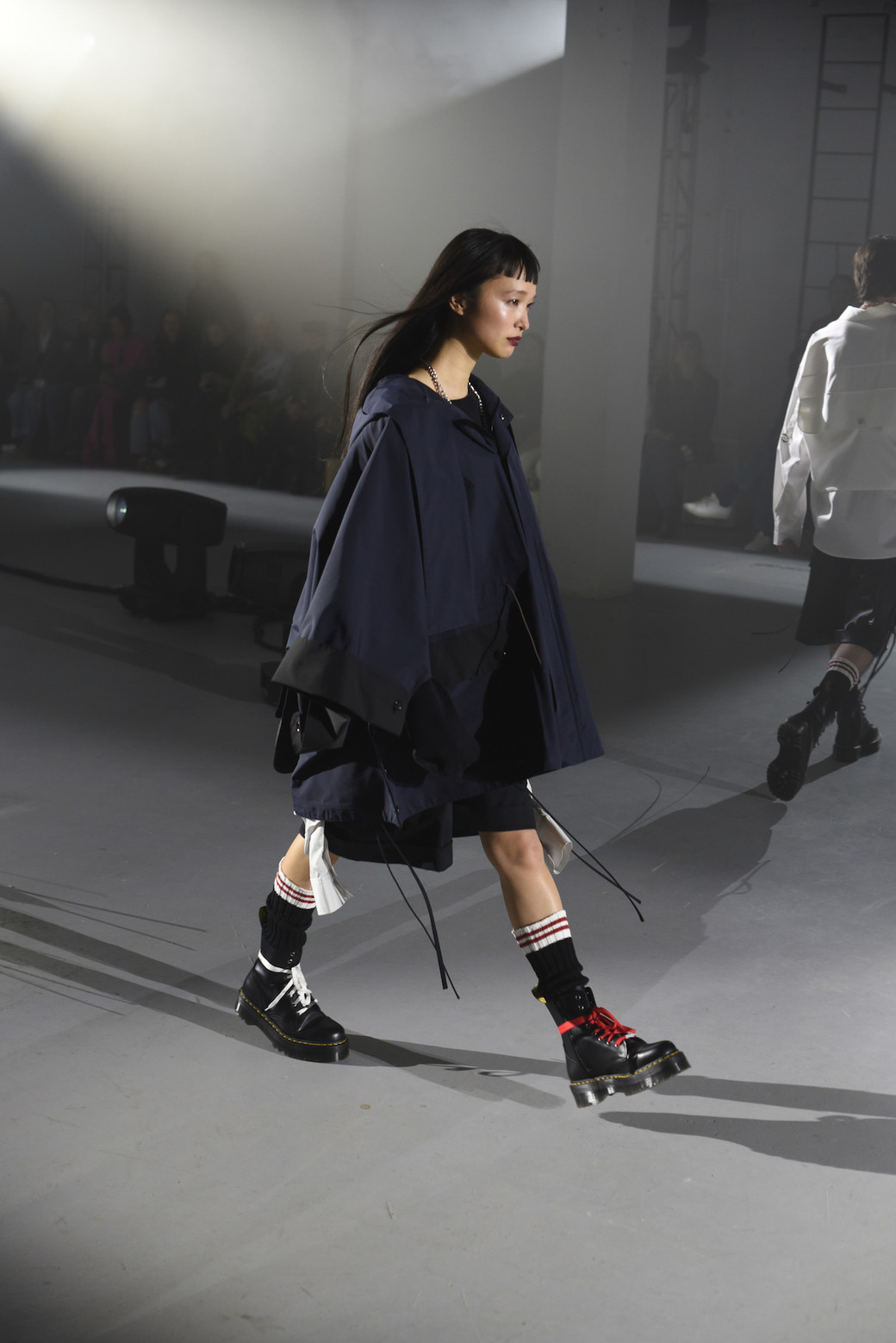
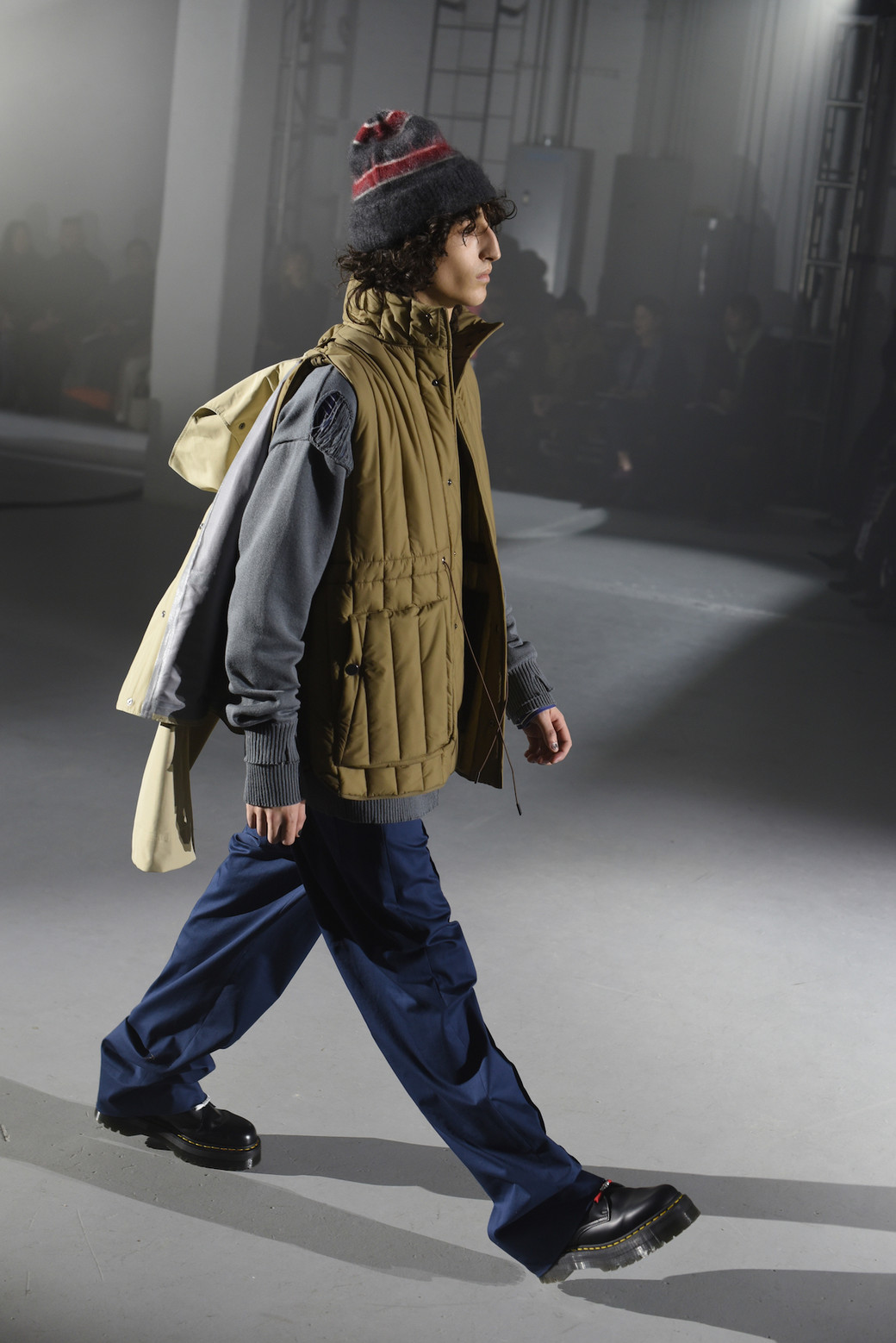
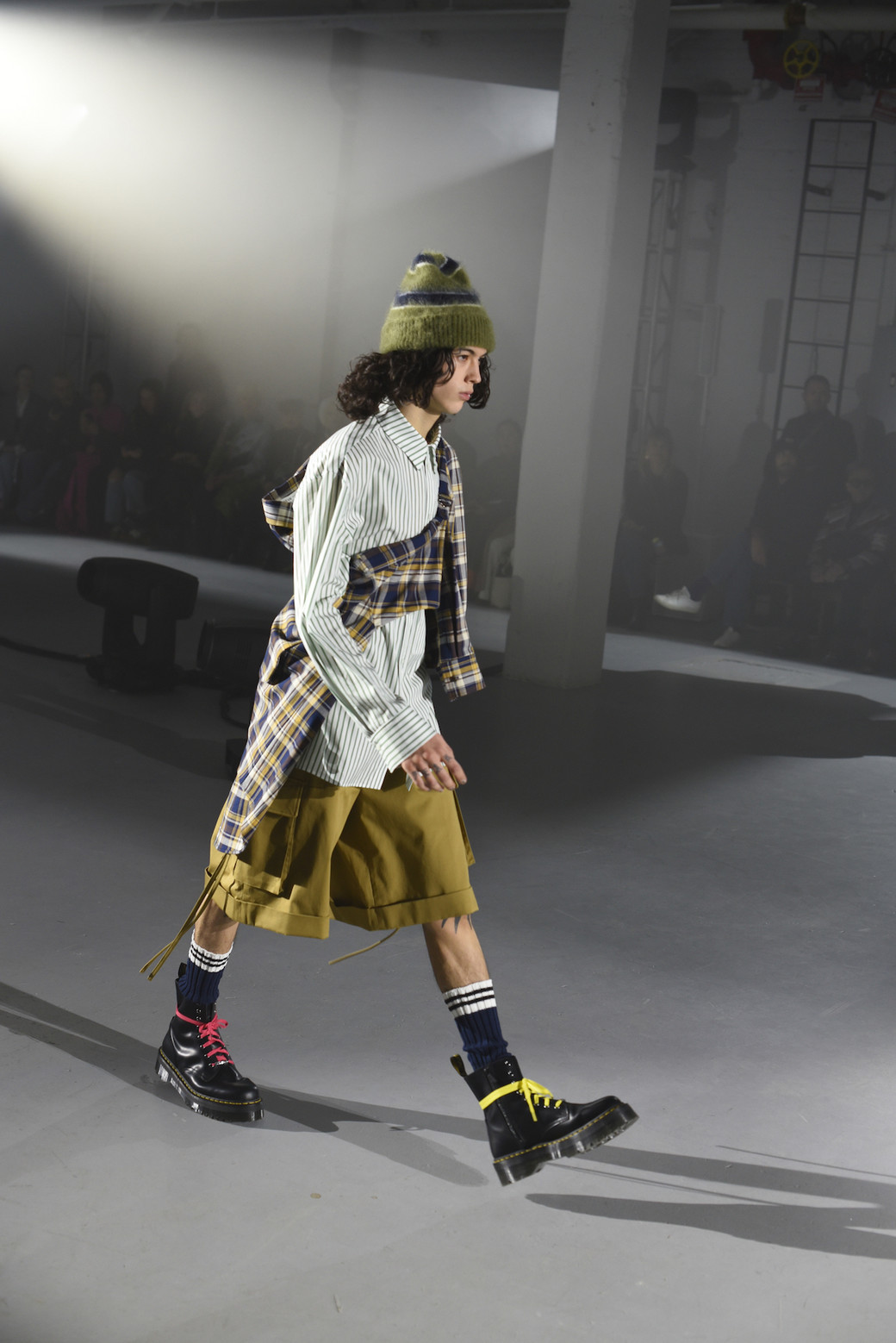
The primary collection embodies punk style in its casual, carefree nature, and deliberate deconstruction. The clothes complement the label’s vision of eveningwear as a progression from daywear — dramatic faux leather silhouettes, sharp suiting, angel hair cardigans, and sweatshirts live harmoniously in the same wardrobe.
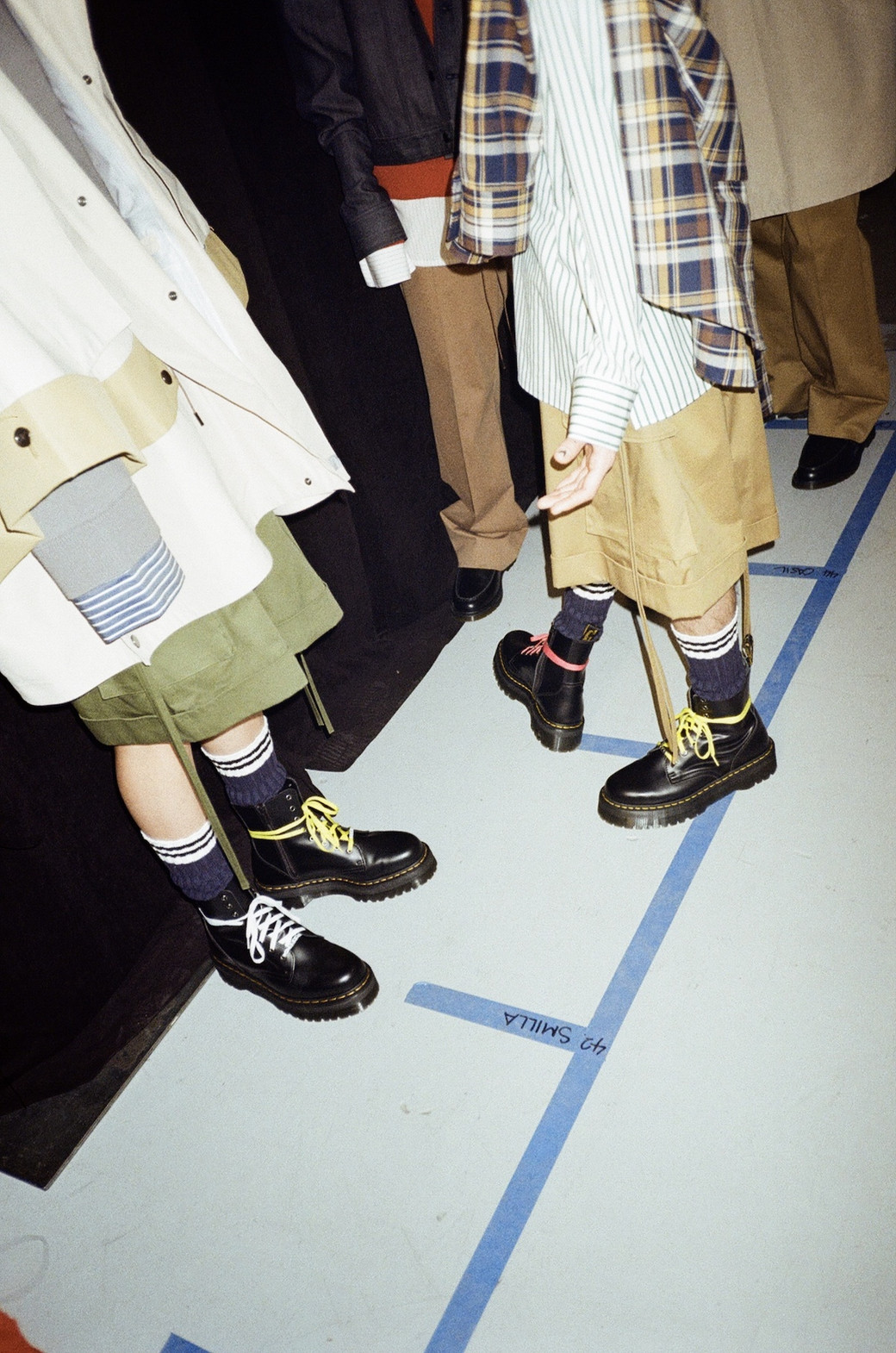
ADEAM ICHI, the label’s gender-neutral counterpart, taps into grunge’s utilitarian androgyny, a characteristic that makes the assortment of clothing both intentional and playful. The silhouettes are oversized; the fabrics are durable. Hanako’s love of Japanese workwear led her to incorporate utility features such as pockets, belts and convertible structures. When asked if there was a Nirvana song she’d used to describe ICHI, she didn’t hesitate to say “Smells Like Teen Spirit,” and what a fitting reference, I couldn’t imagine there to be a better display of what teenage angst might look like in 2023.