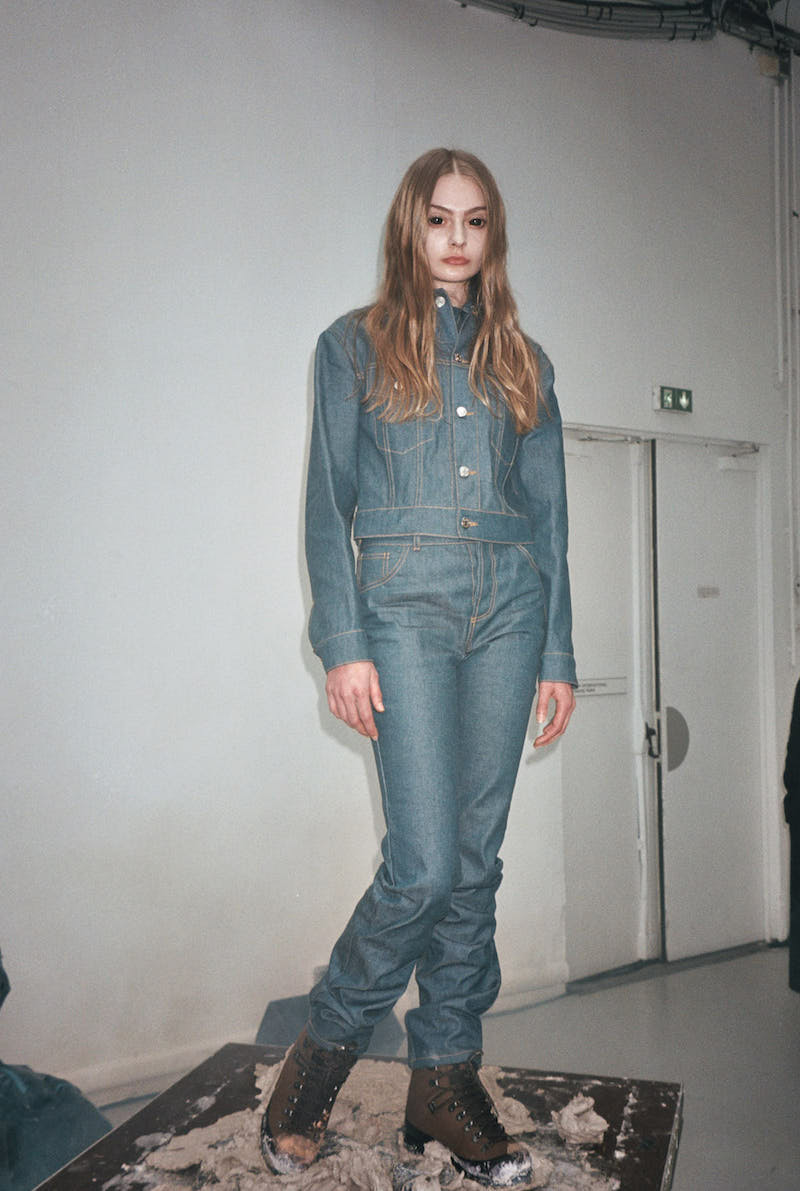
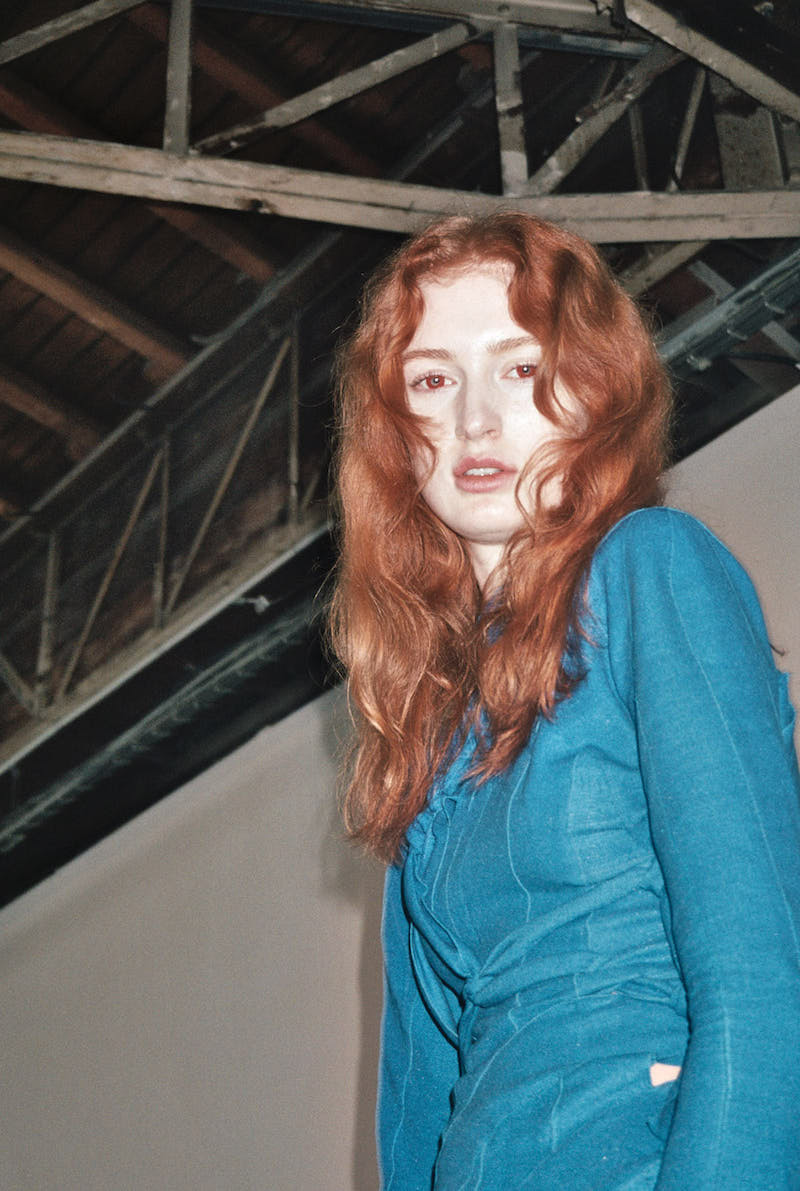
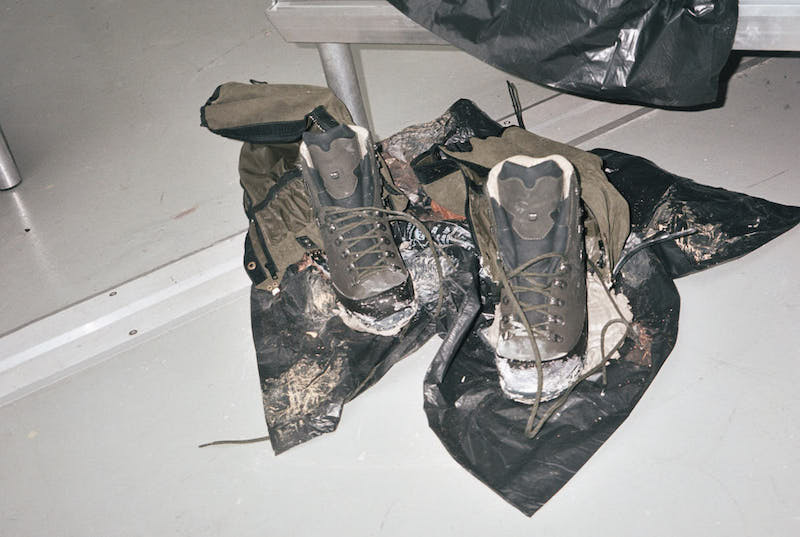
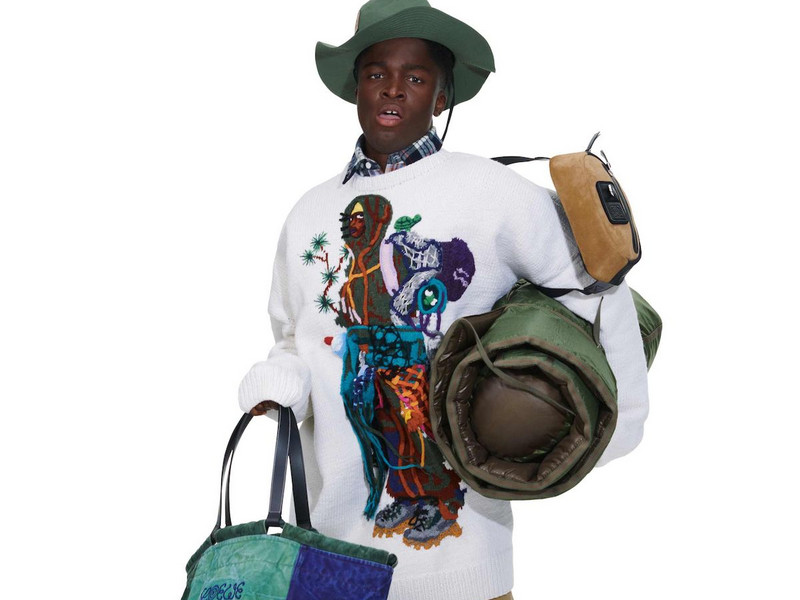
I hate when we're forced to wear something like Lululemon after the gym. [Laughs] This is a great way of keeping up a certain elegance.
And there's a level of trying to incorporate activity into your daily life in a way that's very regimented for certain people. And it's worse for women than men, right? You gotta have your gym clothes, and your work clothes, and your going out clothes, and we're kind of like "No, fuck that. We should smash through it." You get dressed and if a friend says, "let's go climbing," you go climbing, your friend says, "let's go to the club," you go to the club, you go to work—whatever it is. You should be able to navigate the physical side of it and the social side of it.
This is gross, but what about controlling sweat smells?
Merino is a big part of that. Merino does not smell like it sweat—it just doesn't. I mean you can wear it like five days in a row and it will smell better than your cotton after something like eight hours. So that's an aspect of it there. Not all fabrics are like that, but that's a huge thing.
We work with what they call a lot of "self-cleaning" treatments. They are clothes that stay cleaner because they have these chemical processes that transform the fibers or literally bond to the surface of the fibers, and they can repel oil or repel water. That keeps them cleaner, but it also prevents things from binding and growing and that's where a lot of odor comes from. Even without the merino we find that a lot of our products can handle odor a lot better. But you know, sometimes there's just things where you just gotta change, you know?
That's the best advertisement I've ever heard in my life. [Laughs]
Everybody smells. [Laughs] Especially when you're used to merino. Like, at the end of the day that thing's going in the hamper, you know? But that's life, you gotta deal with the good and the bad.
On your website, you said "the world needs less design, not more." In your own words, can you elaborate on that a little more?
We live in social-economic climate that wants more, more, more all the time, and our livelihoods depend on that a certain way. We're part of the system, but if we want it to improve we have to figure out how to do better. So we always try and look at it like, "Can we make an object that can replace two?"
Ultimately, we're a business, we're selling clothing, we're selling objects. But when you buy ours, is there a way that we're sort of enabling you to have less? So that could be how long it lasts, how durable it is, or how versatile it is, and that's kind of something that we always have to bear in mind while we're making stuff. It’s easy to get caught up in a more, more, more flow, and then we're surrounded by garbage. We want to live in a cleaner and healthier world, so we just have to be really cognizant of what we do.
Check out more from Outlier here.