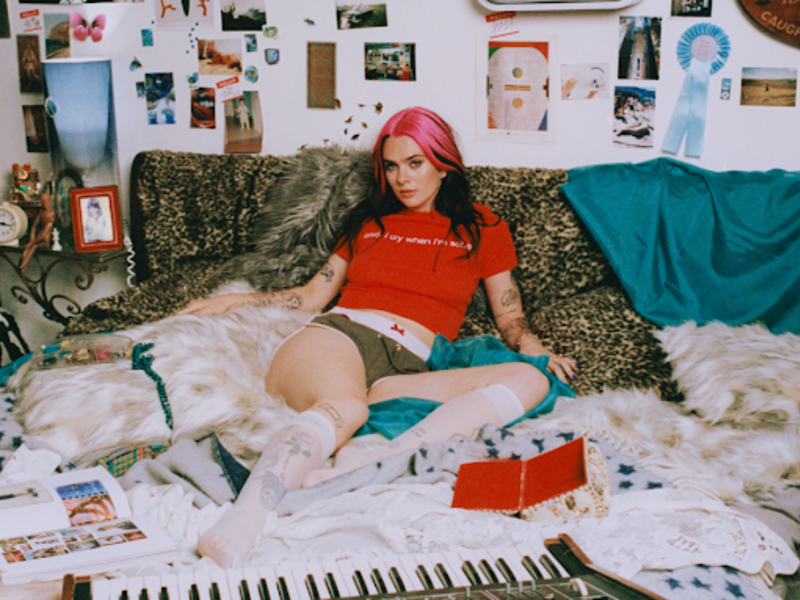
So your real name's Laureen. Is "Lolo" a nickname someone gave you, or a name you created yourself?
Lolo is a nickname that someone gave me in elementary school, but I forgot about it and went by Laureen pretty much my whole life. While I was growing up in San Francisco, I was just Laureen. But when I was nineteen, I moved to New York and decided to try and make it in the music industry, so I felt that I needed to have an artist name. I wanted something to separate myself from what my mom calls me and what the public would know me as. So, I thought let's use Lolo because people have called me that before, and let's use my last name, because it has a lot of vowels, and I think they look good together. I've always liked stage-names that have two parts. Even though I think "Rihanna" or "Beyoncé" is really fire, I don't think Laureen can stand on its own. I think it's better for a country or really sweet pop album.
Like a Dolly Parton song?
Oh, yes. I love Dolly Parton. She’s such a great lyricist.
I'm sure you've been asked this question a lot, but what does your album High Highs to Low Lows mean to you, especially right now?
Oof. It's about to be the year anniversary of the album. I wrote it at a time when I was kinda depressed. I was working at a restaurant and had little money—but I was hustling and trying to get in the studio whenever I could. So that album to me is forever ingrained in my brain as the time when I was hustling, struggling, but really, really passionate. Which, I still am, but it was a different kind of passion back then. A, "If I don't do this, I'm going to work at a restaurant forever" kind of passion.
Given that your music tends to be about your personal experiences, what do you think your next project is going to reflect? Especially now that you've established yourself more financially and artistically. You seem to be experiencing more high highs than low lows at the moment.
Well, you would think. But I think last year was a pretty difficult year for me. I was adjusting to everything, so I still had a lot of the lows—even though you'd imagine I'd have more of the highs. I have three songs that I'm working on, which I'm going to put out, that are really moody. I would say that my album had a lot of emotions; it was going up and down and up and down. These new songs don't have that as much. They're looking internally, but I’m still trying to figure out what the narrative of the new album is going to be now that my life has changed.
You've mentioned before that you used to suffer from stage fright, which is obviously a debilitating thing to have as a musician. How'd you get over it?
Oh, man. To get over it, you just have to jump into it. The stage fright is worse when you don't really have a fan base and no one supporting you when you go out to perform. But once I started going on tour and I had three-hundred people singing my lyrics and telling me that they loved my music, that gave me confidence. I could dive into it and just be myself on stage.
That approach seems pretty analogous to how you broke into the music industry writ large.
Yeah, I guess that's true. You just have to go for it and put yourself out there. I think, especially nowadays, people can really tell if an artist is genuine or if it's forced. People want to see something real, and they want to see something unique. That's my approach when it comes to everything. All you can do as an artist is be yourself, put out music, and tour.
Do you like touring?
I like it, but I like it less than I like making music. My energy gets strained really easily. I'm just sensitive to the people around me, so when you're experiencing all that energy up on stage, all at once, and then go to nothing, it's really hard to find some sort of balance. I mean, I've only been touring for a year and a half or two years, so as time goes on, I'm sure I'll get better at managing it. I was really, really looking forward to the Dua tour that was supposed to start this spring.
I was just about to bring that up! At least it's still going to happen.
Yeah, it's still happening. But see, that's different because that tour isn't my tour. So, for me, it's just an exciting opportunity to make new fans and see how an arena tour works.
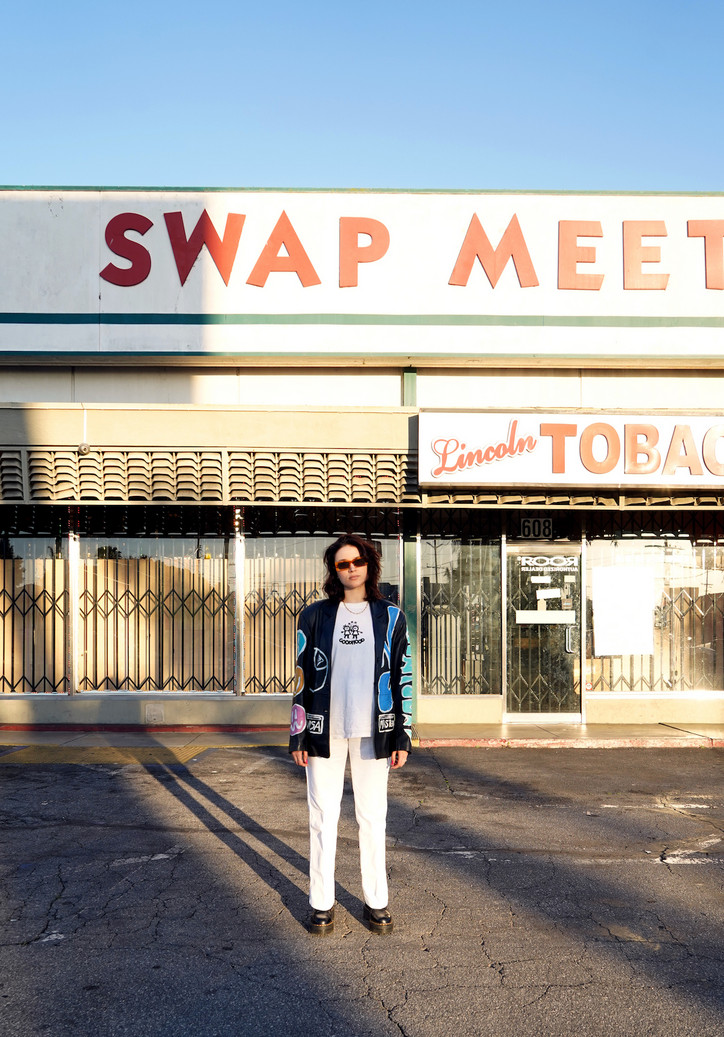
So like everyone seems to do with you, let’s talk fashion. I’ve read you’re a big thrifter, where’d you get your style-inspiration from? Big hoops, berets, vintage NASCAR jackets—it’s an eclectic look.
Well, I think my love for the NASCAR jackets comes from Le Mans. My family is from this place in France called Le Mans, and there's this classic race there, where drivers drive for twenty-four hours. When I was younger, I went to one of those races, and I was actually the girl who gave the winners Champagne. I remember I was fifteen-years old, and it was my first time on TV. I was super hyped. So finding these jackets in thrift stores in Brooklyn—these beautiful, colorful pieces—reminds me of that. They just have so much history. You don't know who wore it last. Like it could've been some sixty-year-old man who smokes cigarettes in his basement, but there's something about the history of those clothes that I love. I want to be a sixty-year-old lady with this room full of vintage NASCAR jackets.
You're really close with the Brooklyn designer Kidsuper. You went from crashing in his apartment to walking in his New York Fashion Week show. How'd you get to know him?
So my manager, Doug, DM'd me for the first time four years ago when I just had one song out, and he was like, "Hey you should come by Kidsuper's," because he works with him and the company. So he brought me by, and I basically moved in a week later. I was living with my mom at the time, but I wanted to live with people my age and experience Brooklyn, so I moved in with Kidsuper for six months. And that's when I really started realizing the value of the DIY approach. They had worked with other artists who were putting music out independently, and they inspired me to put out my own singles. They told me I could just put them out on this website for ten dollars, and I was like, "Oh, shit." Everyone really assumes you need a label to put music out, and I just thought that was the case. With Kidsuper it's really more like a family than anything.
Colm's really has a magnetism about him. He attracts a lot of talented people. What was it like to live in that sort of incubator environment he created?
It was really eye-opening. I saw a group of guys who really did everything themselves. Like there's one guy who designs the website and merch and cover art, and another guy who designs the clothes and these crazy claymation videos. And it really made me realize that there's always someone out there working harder than you. Nobody's waiting for you to be successful. Being there really motivated me.
Your mother's French, and your Father's Algerian. How do you stay connected with your French and Algerian roots?
Putting a little touch of french or arabic into my music has brought me closer to my origins. I've been able to go to France so many times in the last two years, and that's part of how I've been tapping into my french culture. And my song "Desert Rose" allowed me to go to Morocco, which has a really similar culture to Algeria. It's really amazing that my music is allowing me to get back to where I came from.
In relation to "Desert Rose," you mentioned on Instagram that you were apprehensive to share that part of your life.
It was a very vulnerable subject, and I didn't want to offend my family. It was more that I was being sensitive to them; I didn't want anyone to feel like I was exposing or talking bad about my family. It was just my side of the story because I had a really hard time; some of my family members didn't want me to be a singer. They didn't want me to have their name out there—it's just not part of the culture or religion to be a public figure. I was just fearful of offending my family and them thinking that it wasn't out of love, which it was.