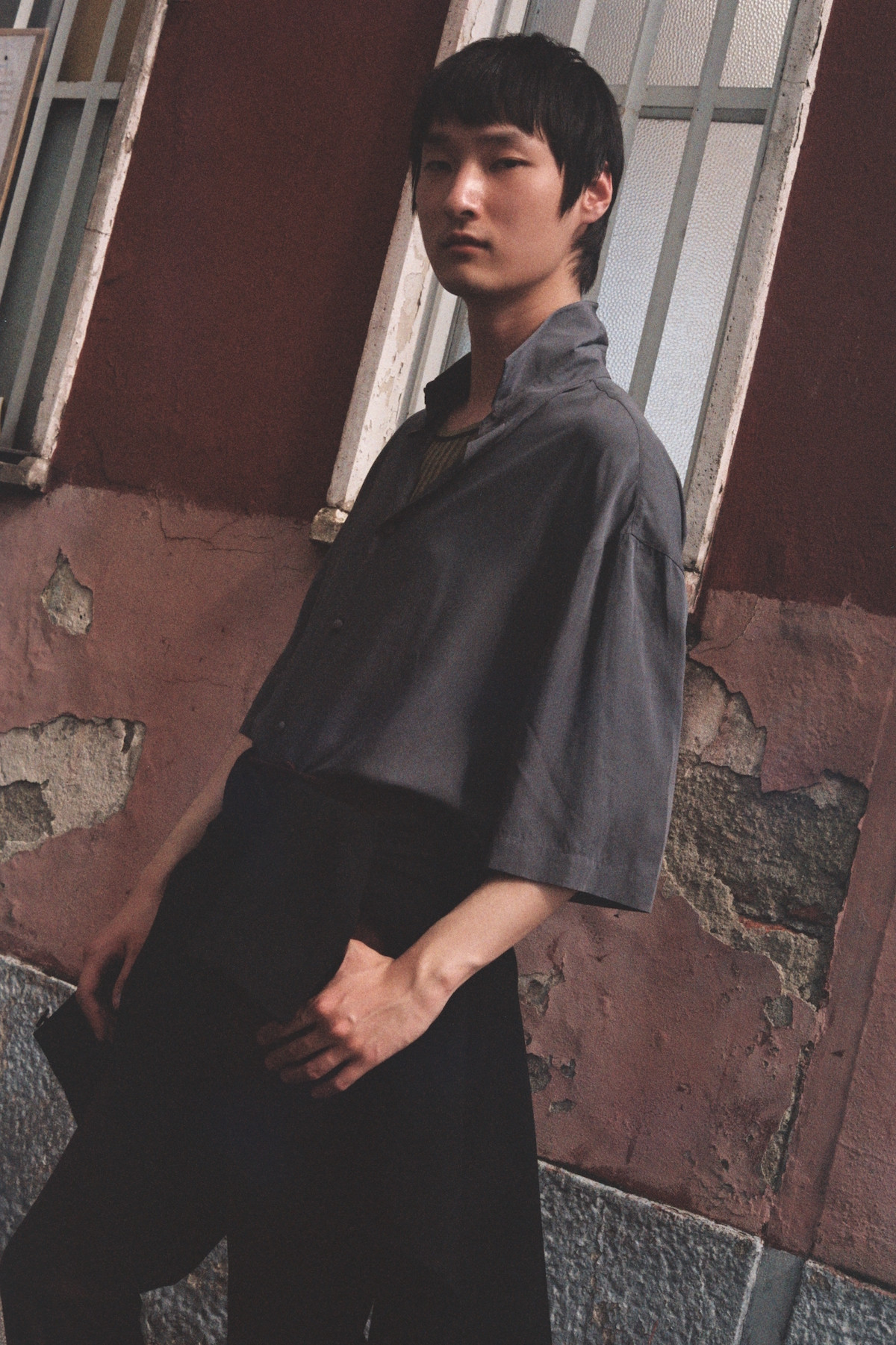
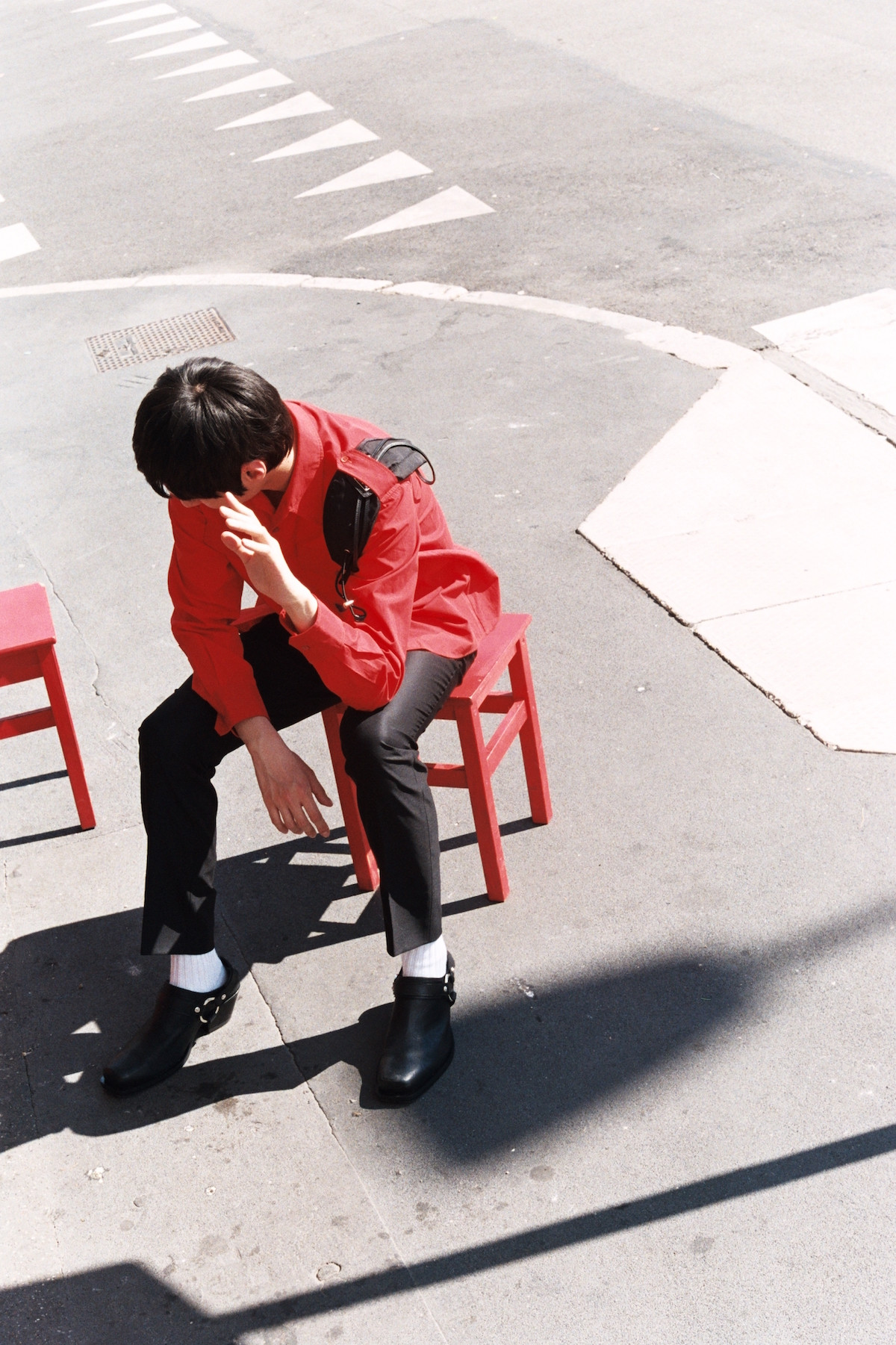
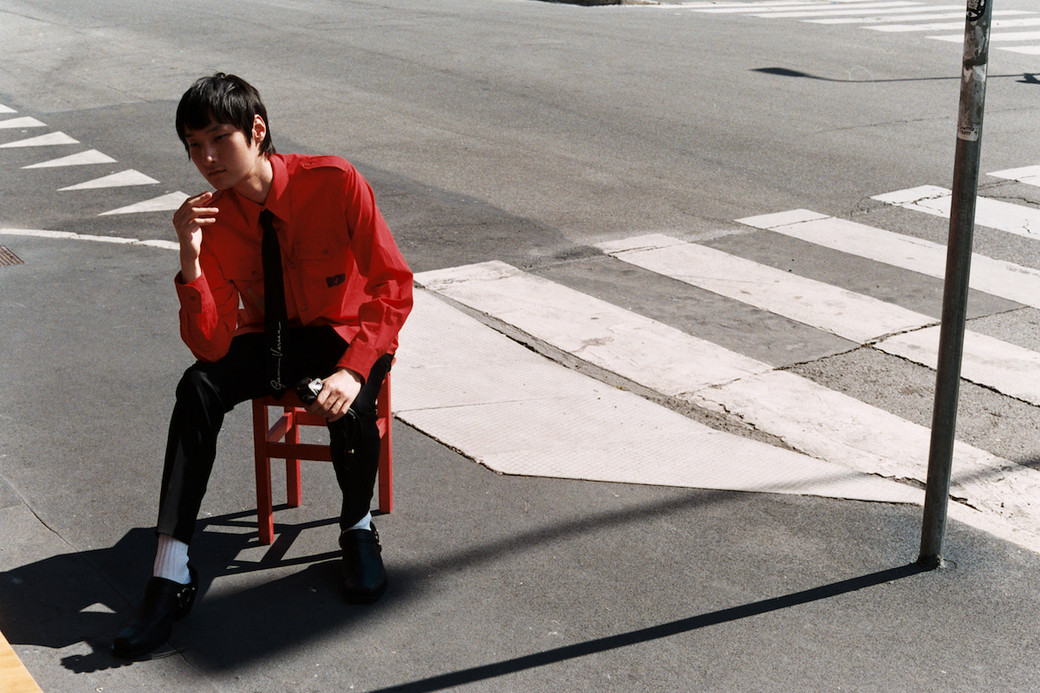
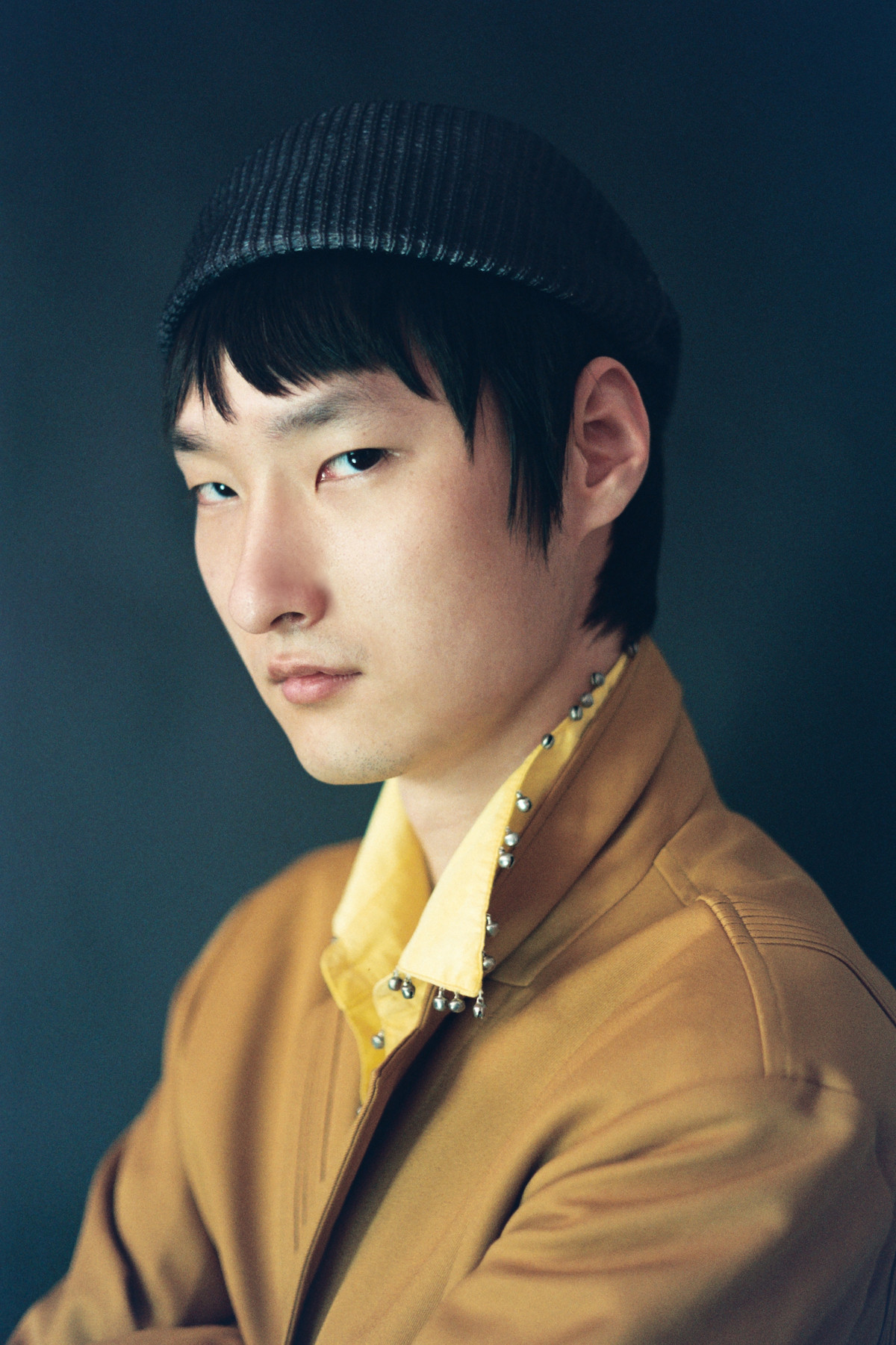
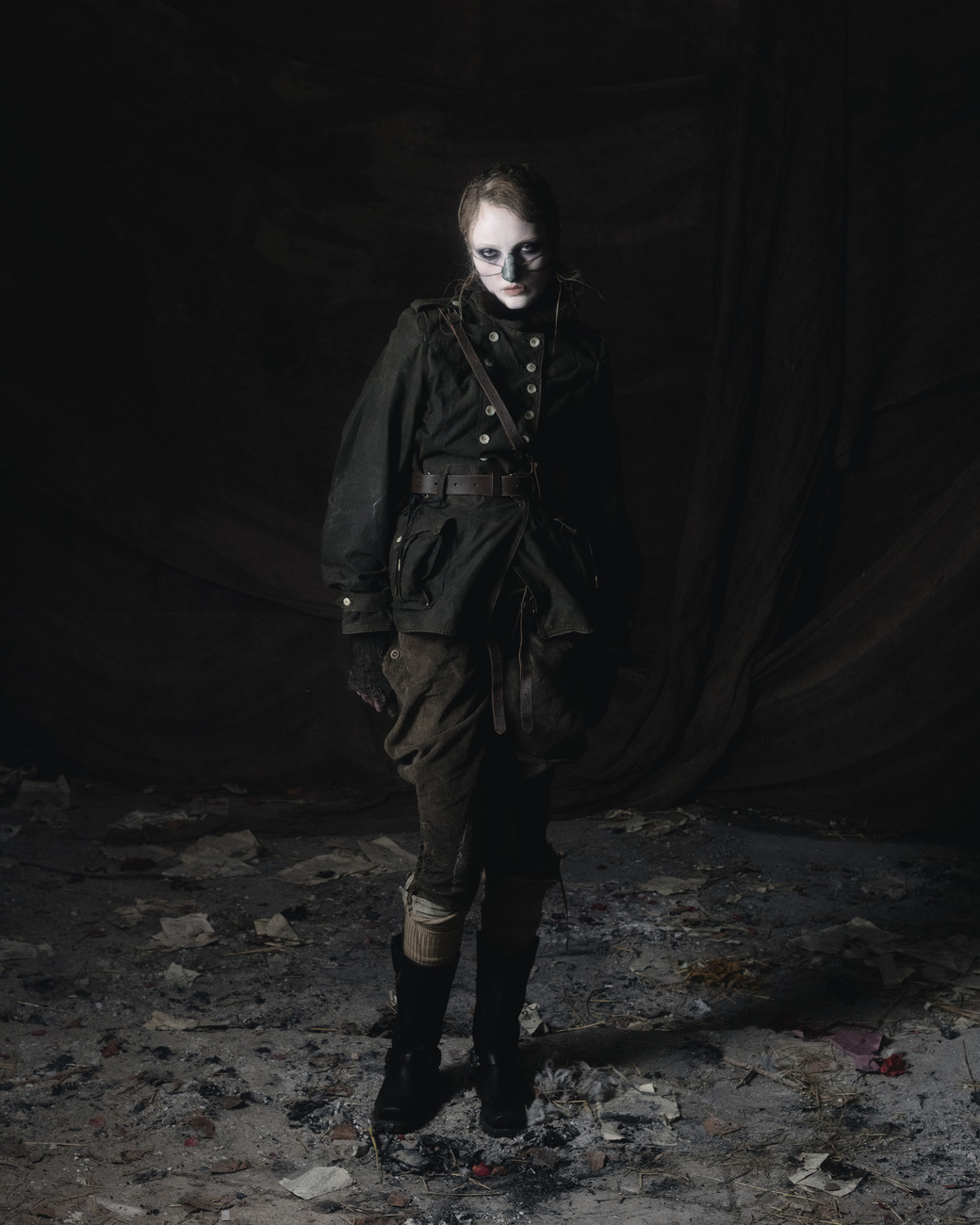
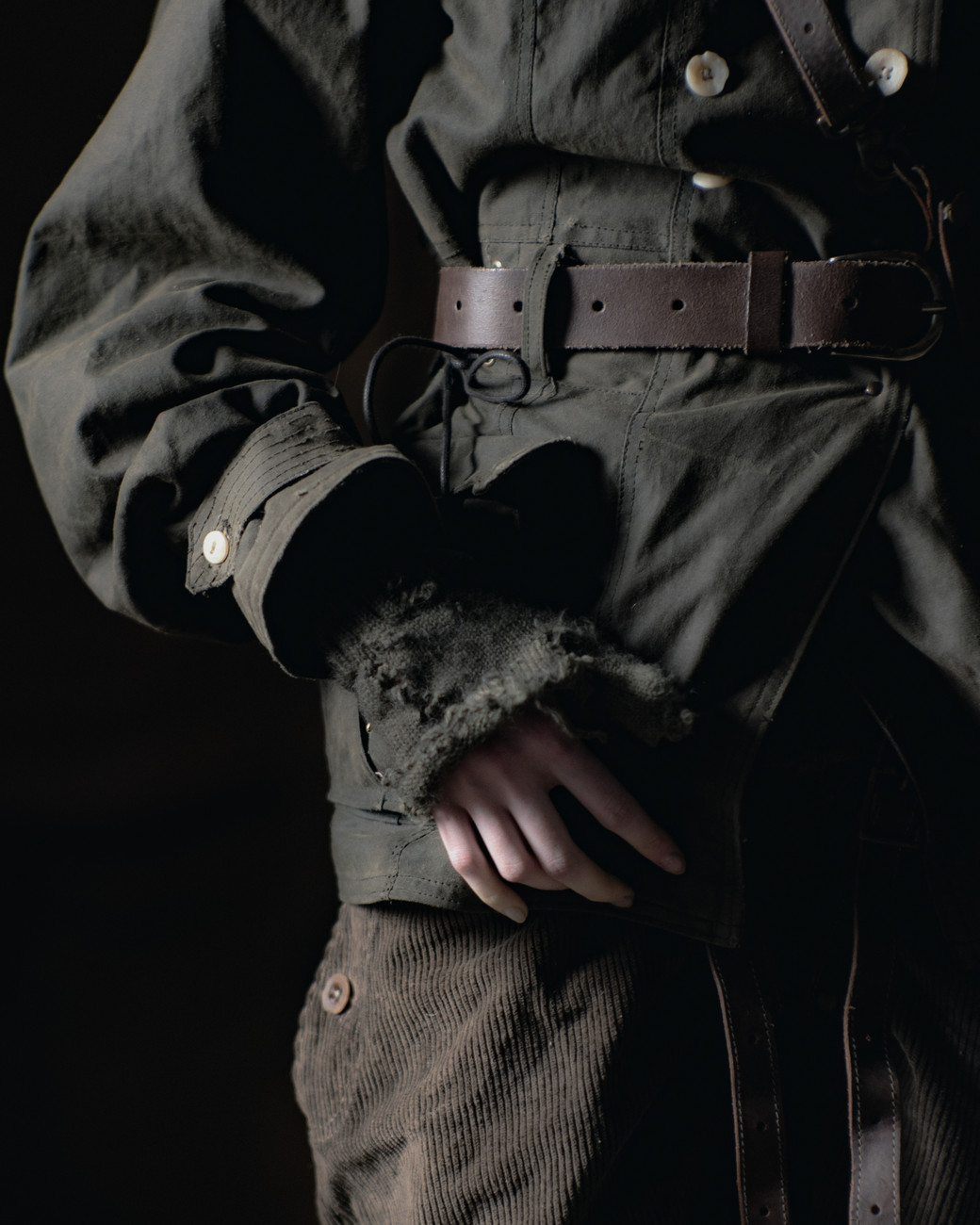
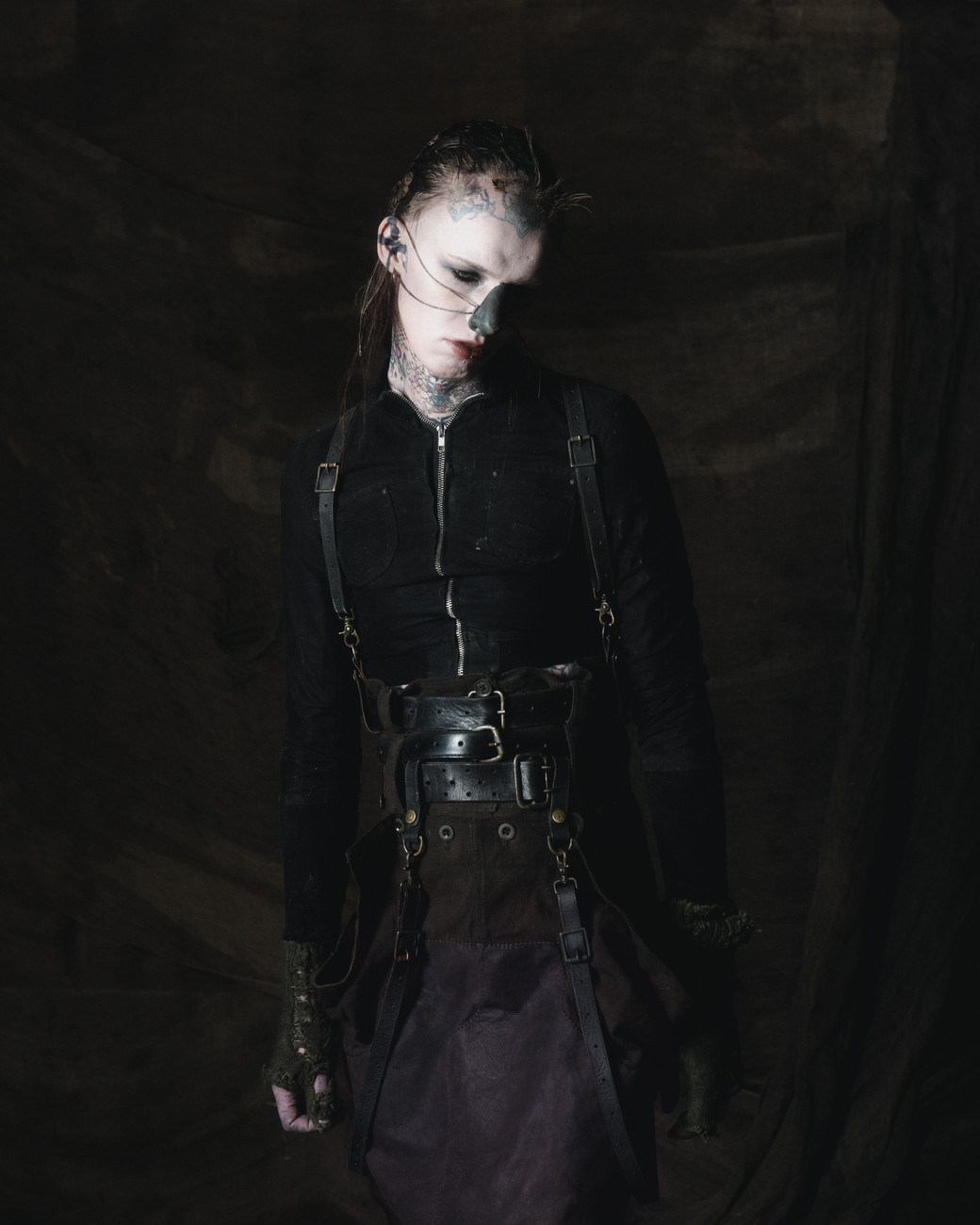
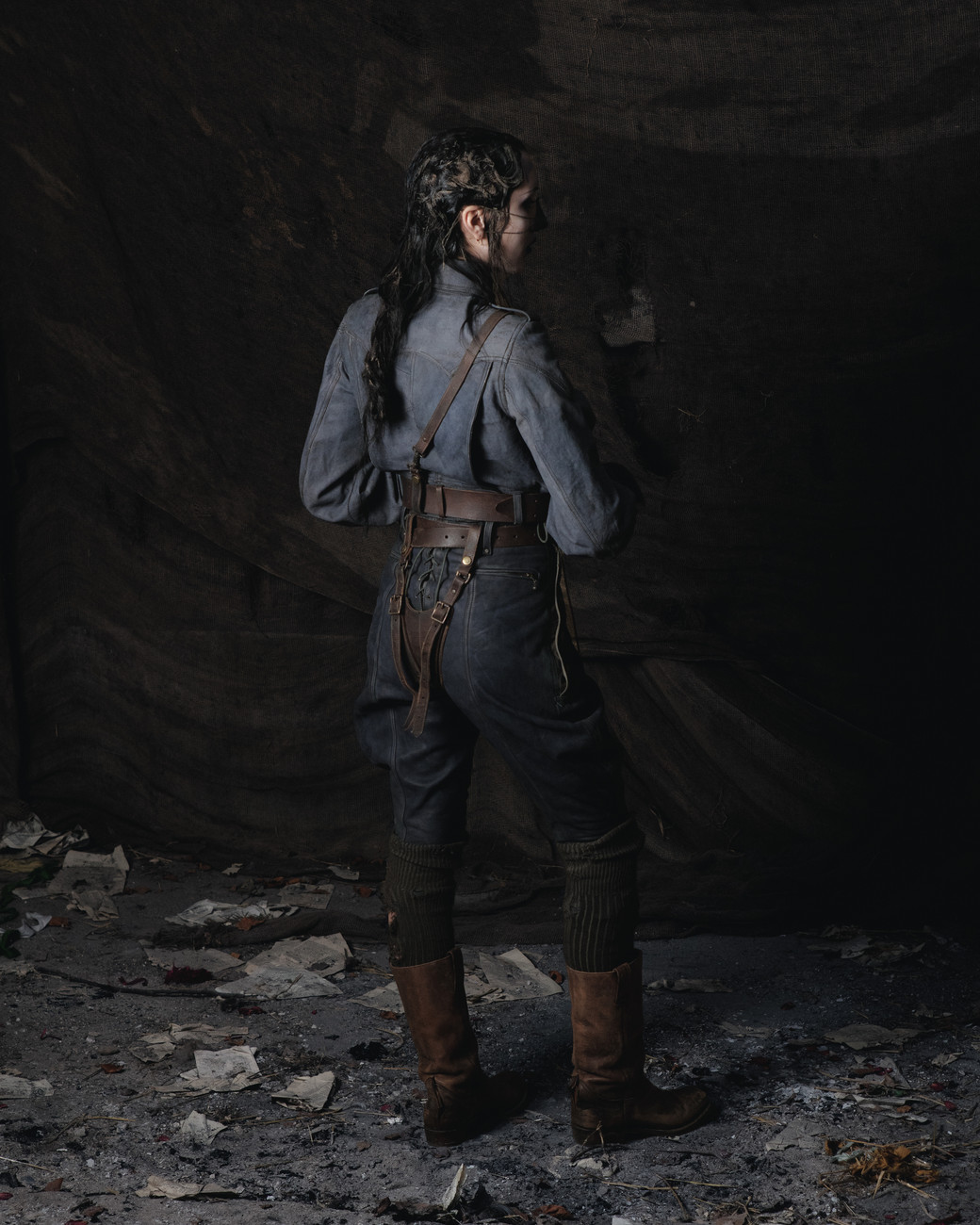
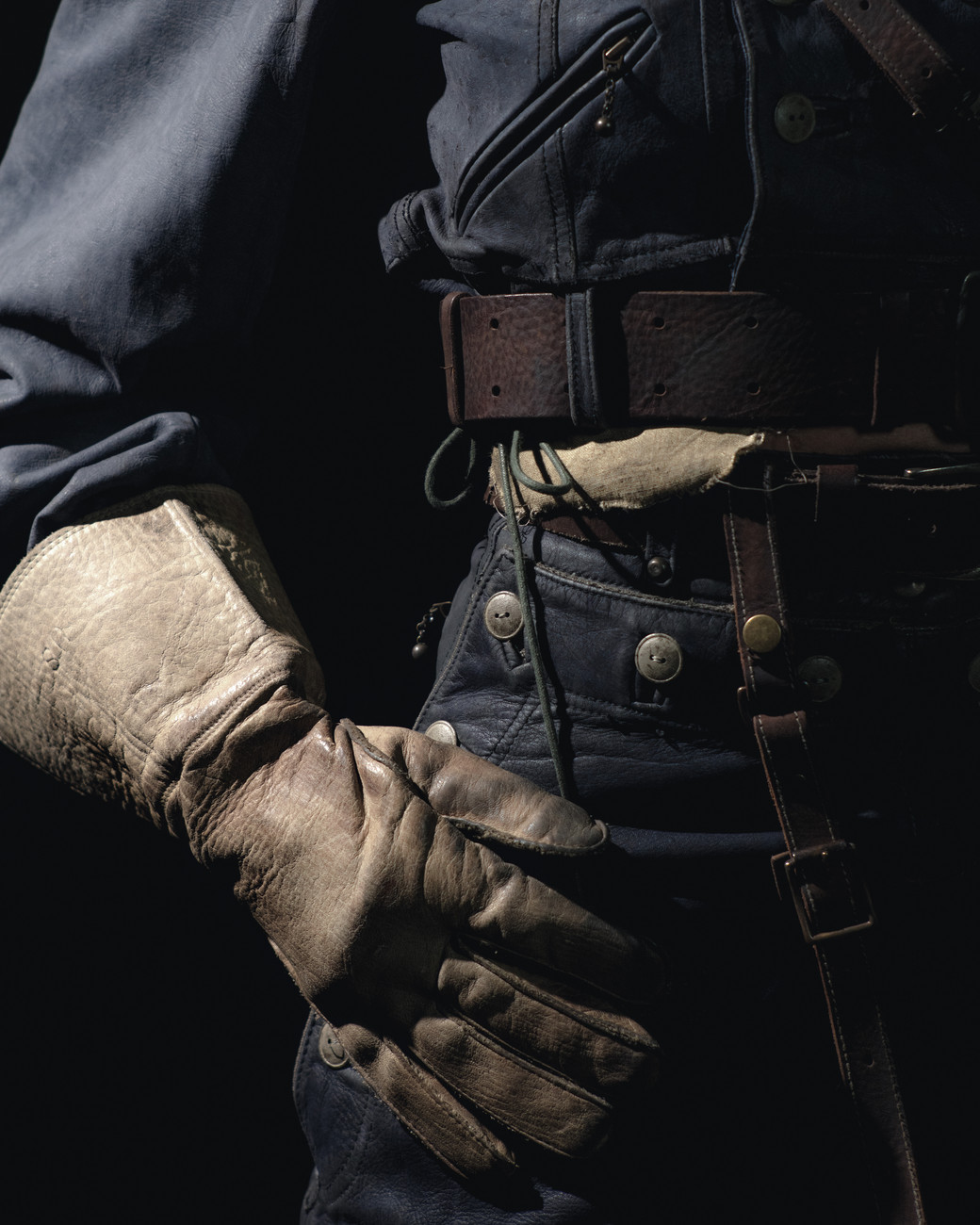
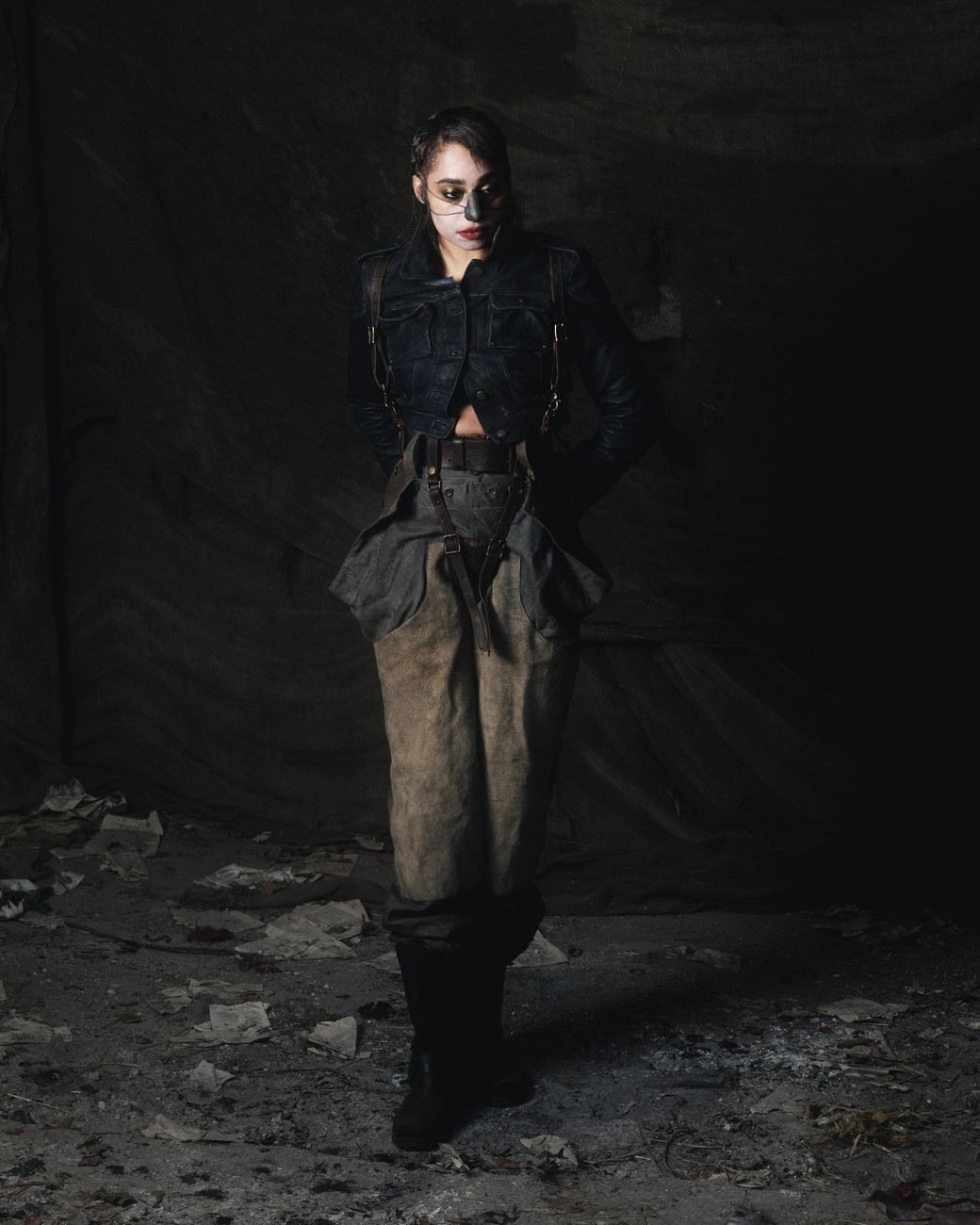
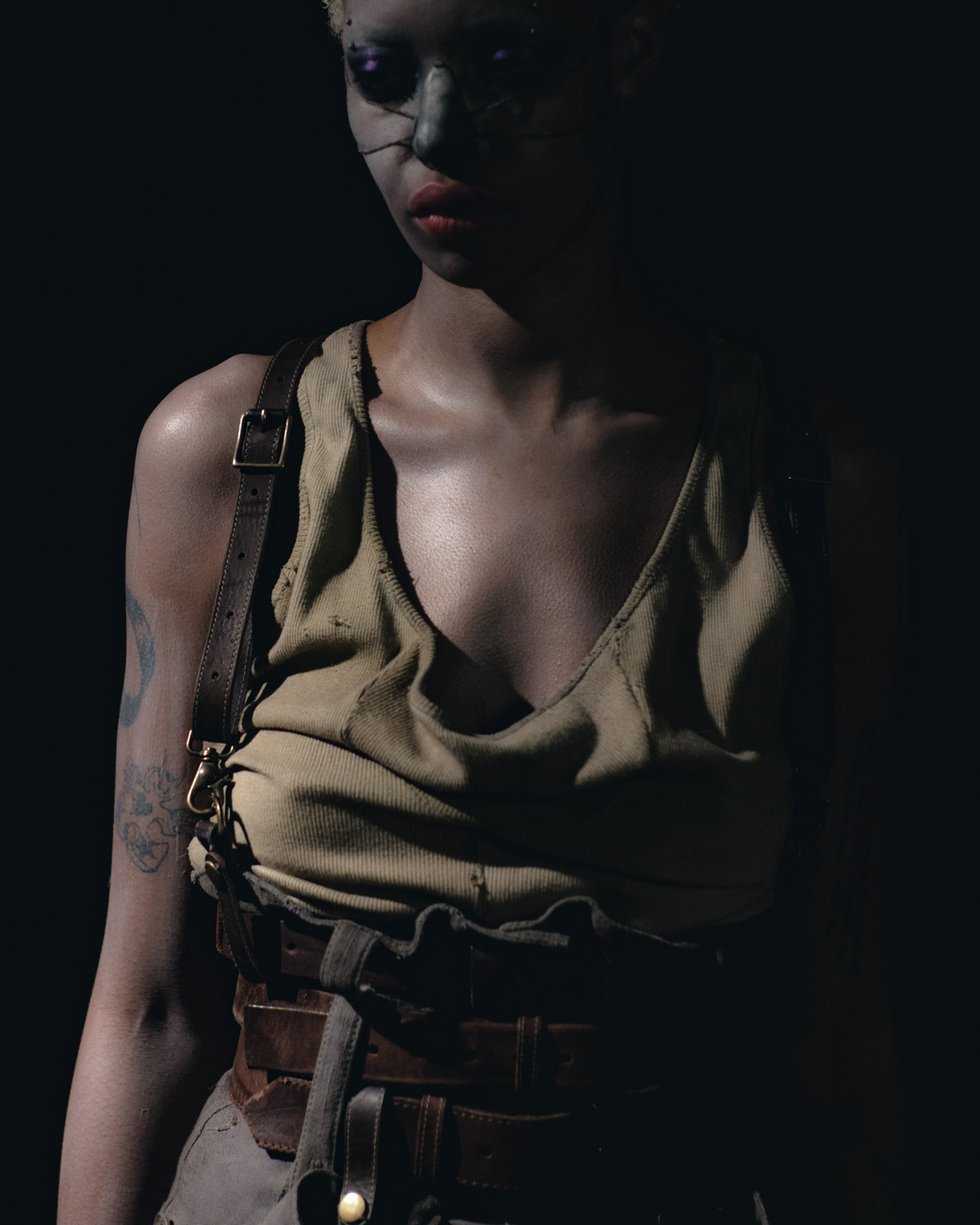
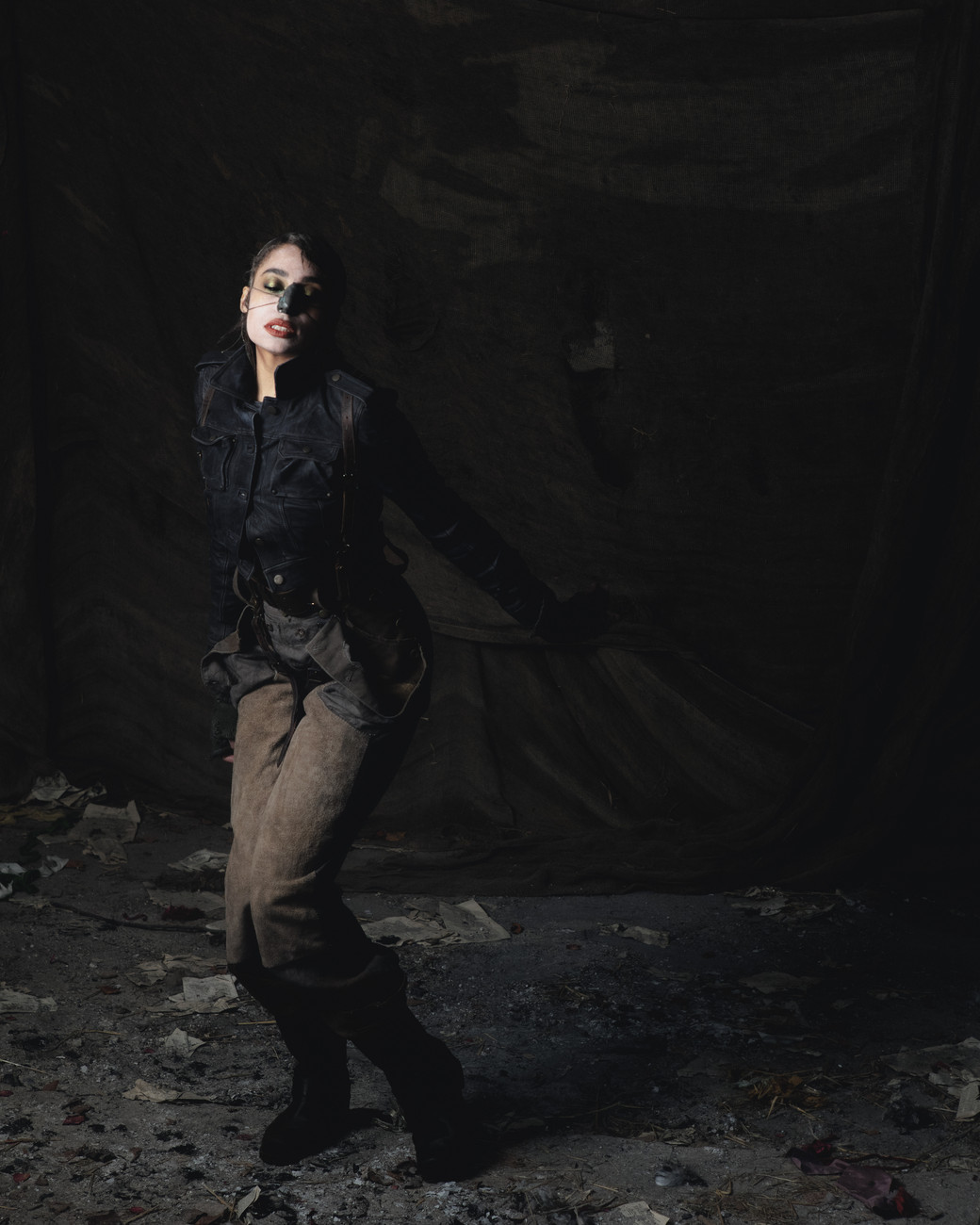
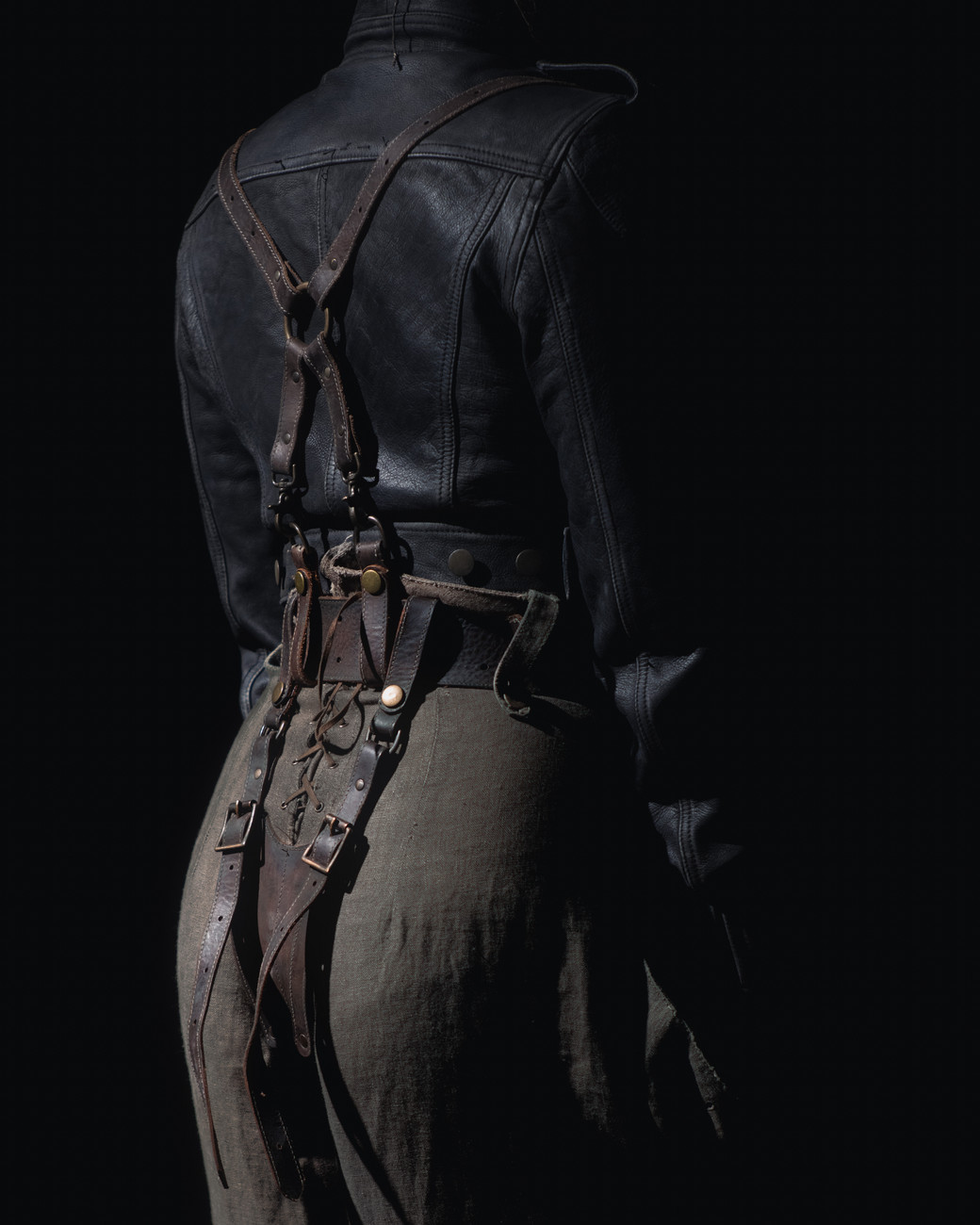
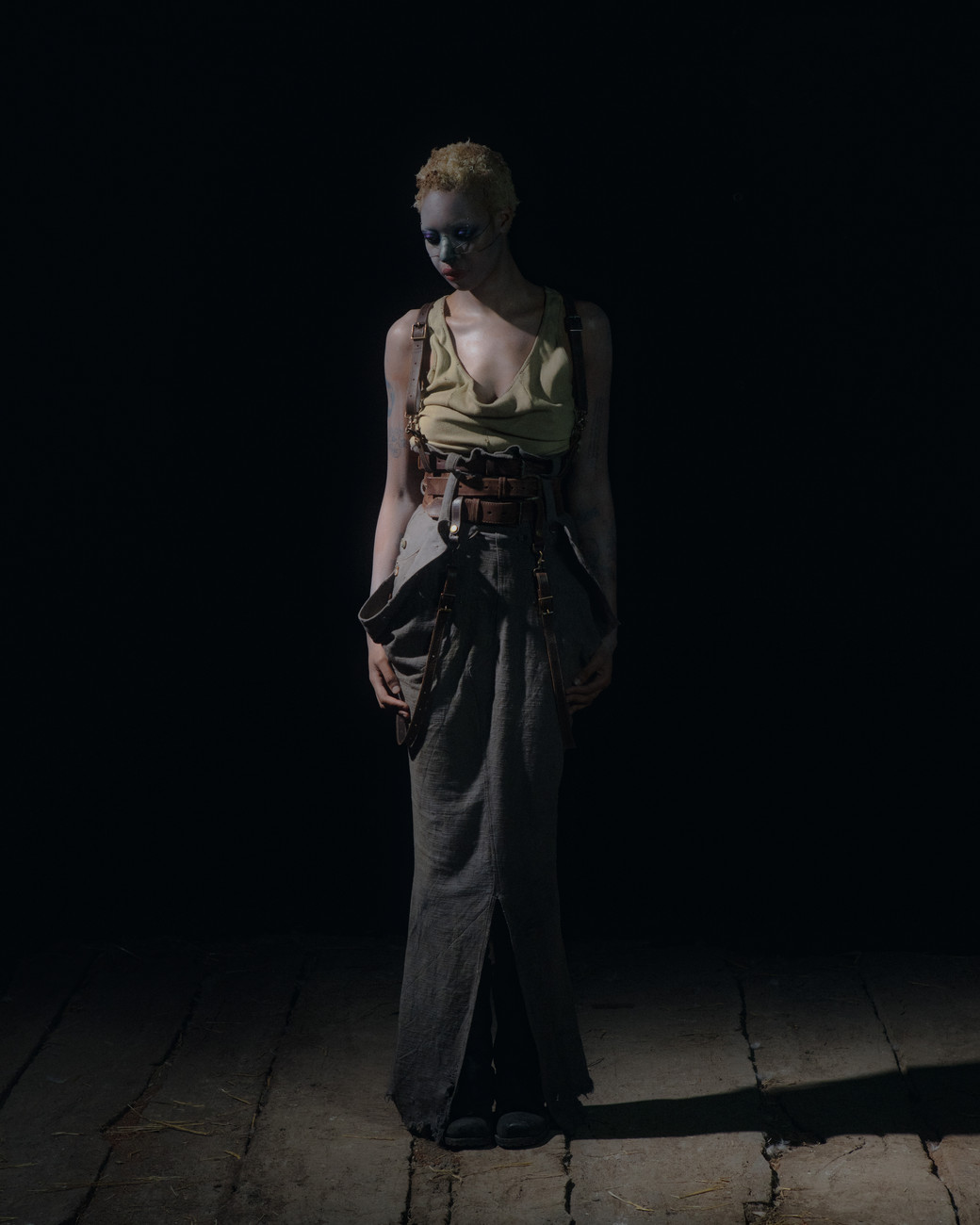
Around us, Faitanin’s visual language was striking; military jackets, leather crotch straps and aged buttons transformed mannequins into perverse historical artefacts. The pieces held a deliberate tension between familiarity and subversive sexuality. When I asked her about this unconventional expression, she said, “There’s so many more subtle ways [to be sexy] than dressing someone like a dominatrix.” Even something as deceptively simple as well-placed crease lines, pointing towards the crotch of a pair of trousers, carries the same sexual throughline.
Details like this place Faitanin within a new wave of designers reworking historical dress through a personal lens; one irreversibly shaped by the internet’s culture of social commentary and hyper-reference. Historical points of reference for her are varied, spanning Napoleonic military wear, 1950s biker culture and the Roaring Twenties. Intentional or not, these inspirations are linked by a sense of reclaimed freedom and power, whether through military revolution, open-road independence or post-war liberation. For her, the idea of purpose is key to bringing these disparate inspirations together. “Everything has a reason to be there […] but then it’s obviously incredibly stylised,” she explained.
Faitanin’s fascination with history traces back to her experience growing up in Amsterdam, where much of her youth was spent in her father’s vintage wholesale warehouse, sorting clothing and digging through bags of leather jackets. Amsterdam’s visual influence is also important, with iconic architecture such as the Amrâth Hotel being a recurring source of inspiration, noted for its imposing structure and weathered surfaces.
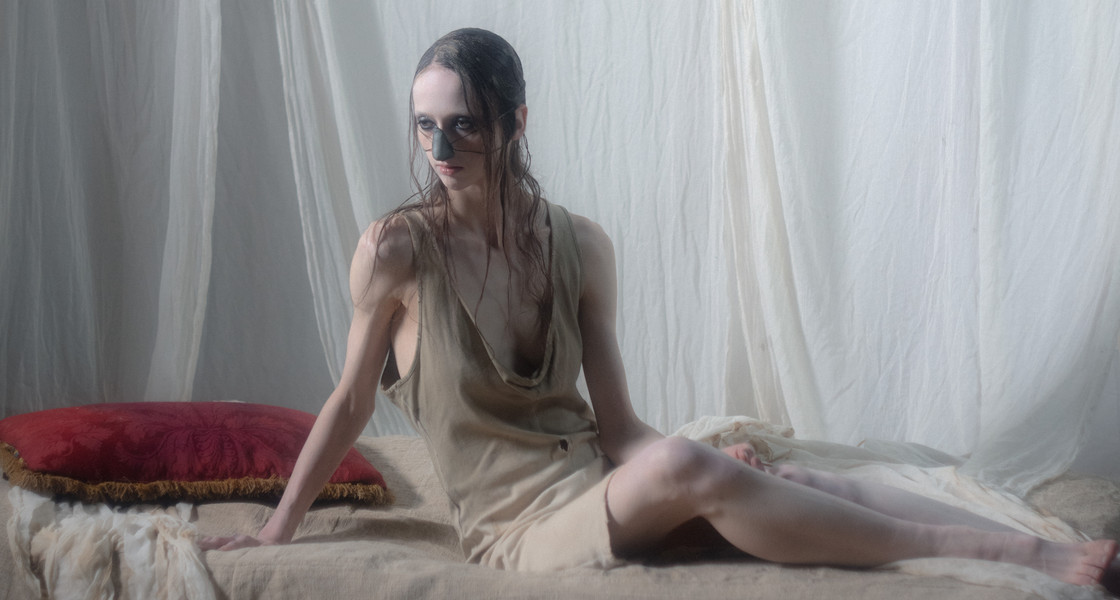
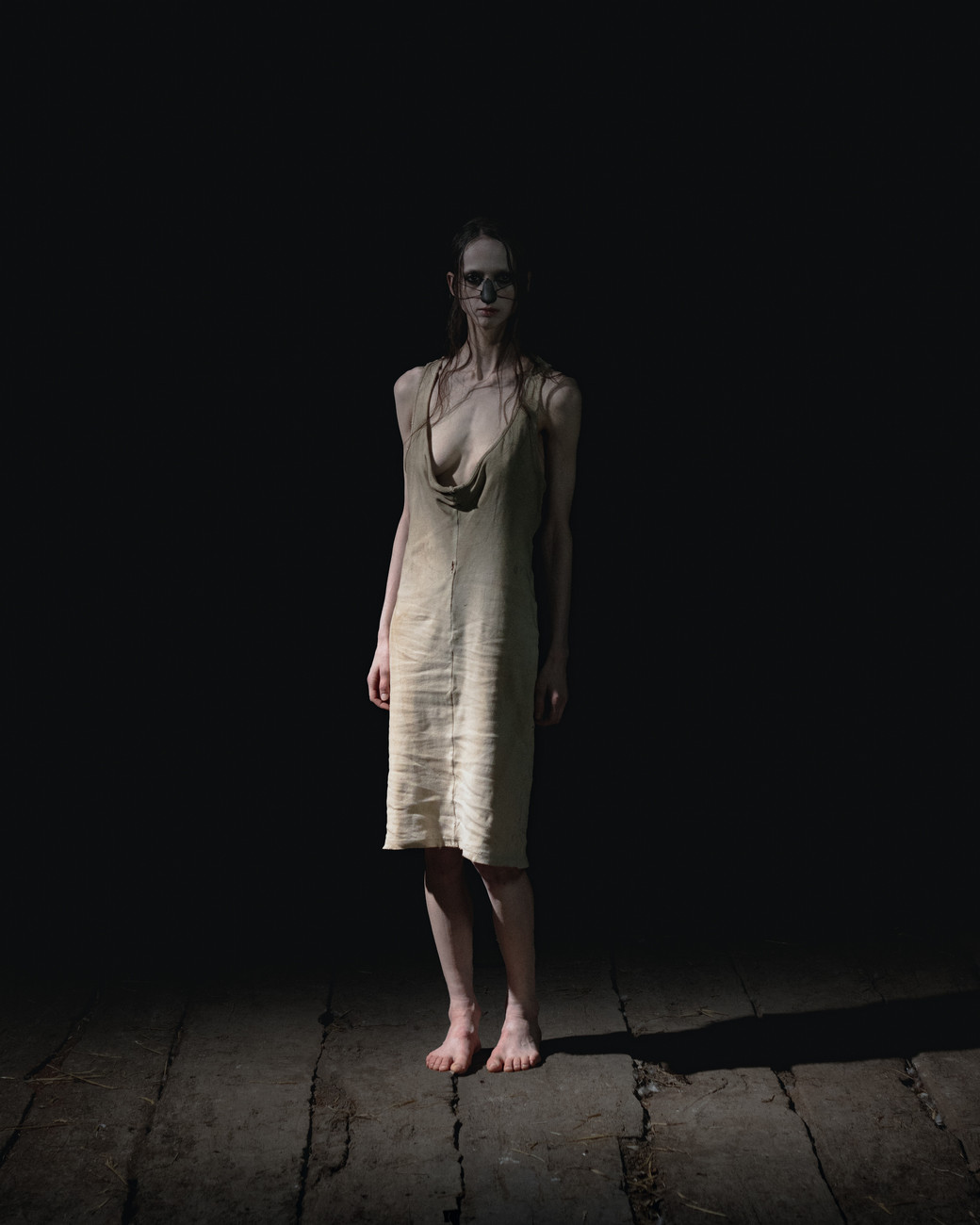
She translates this idea of weathering and aging directly into her garments through layered textile techniques. Dry brushing, distressing and natural dyeing are cornerstones of this practice. The Belgian contemporary artist Berlinde De Bruyckere’s focus on fragility in her sculpture further informs this approach to imitating the effects of time and wear. For Faitanin, these details become about the lasting effect of the wearer. “What I really love is the little marks that people leave [behind]. It’s the teeny tiny things, like a button falling off. I guess [it’s] changed by whoever wears it.” Working within this garment lifecycle, Faitanin also upcycles materials, showing me a jacket trimmed with salvaged fur.
This sense of memory is not limited to the physical. “Garments have a soul of their own kind,” she suggested, hinting at an intangible quality beyond the garment itself, shaped by an invisible journey between wearers.