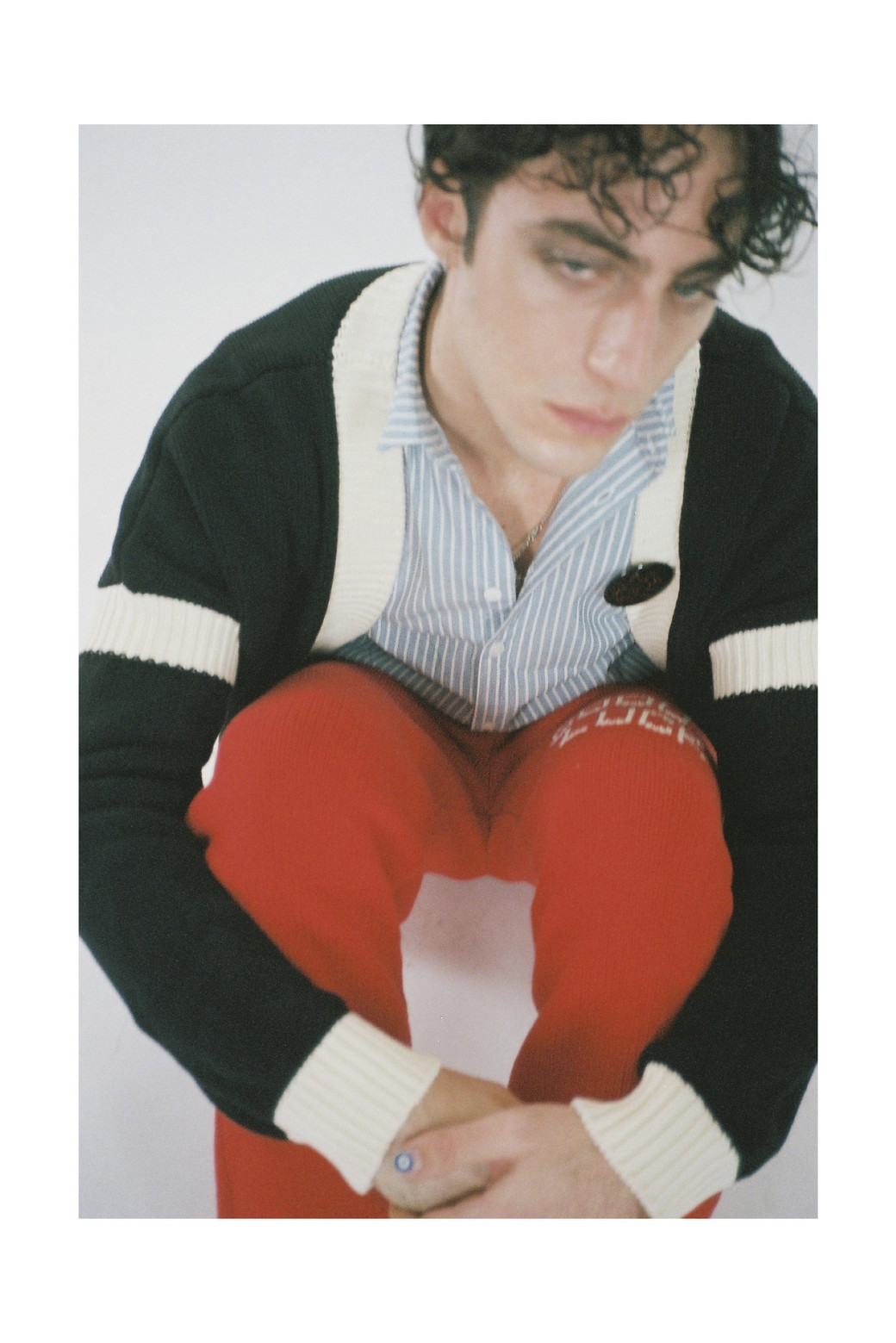
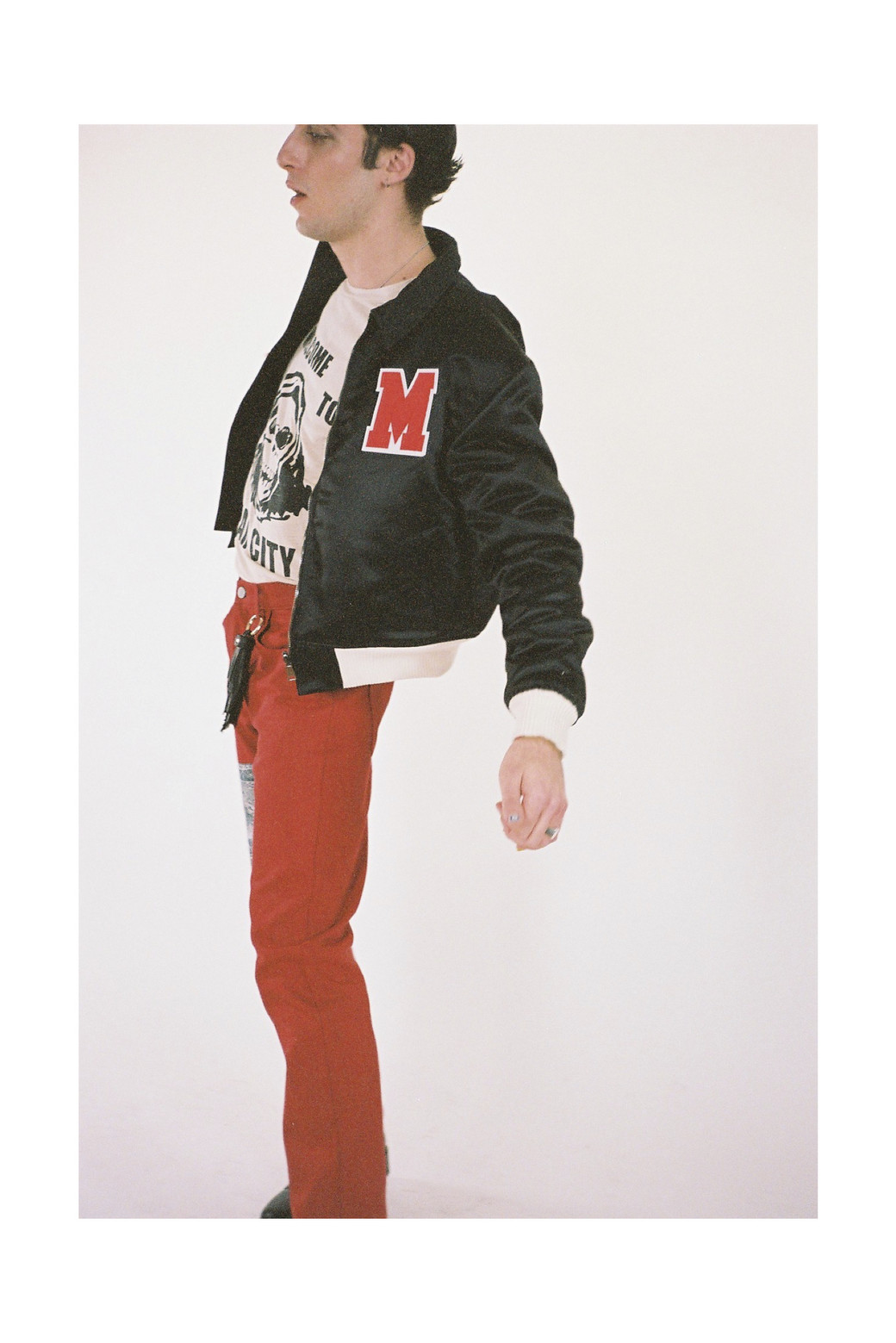
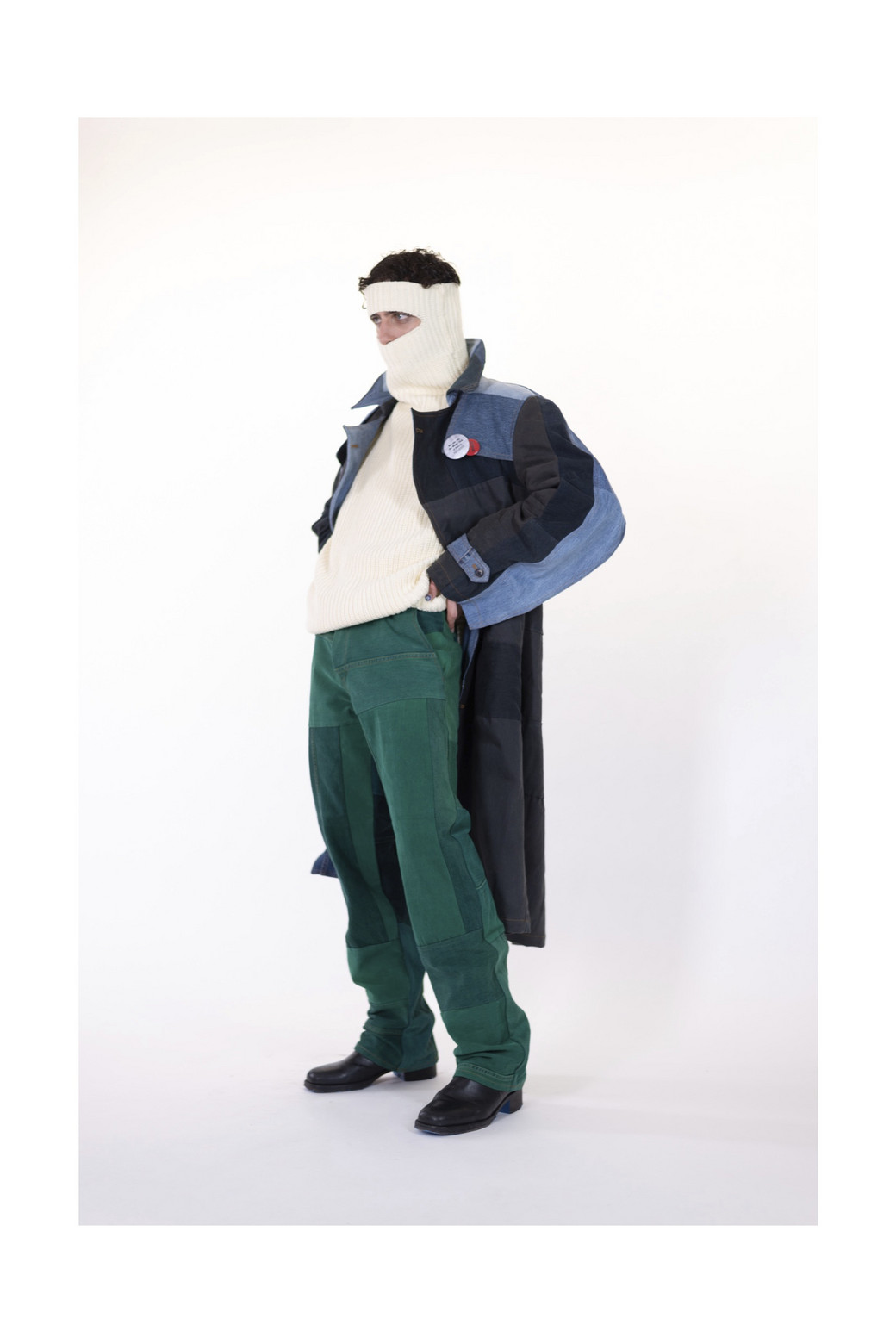
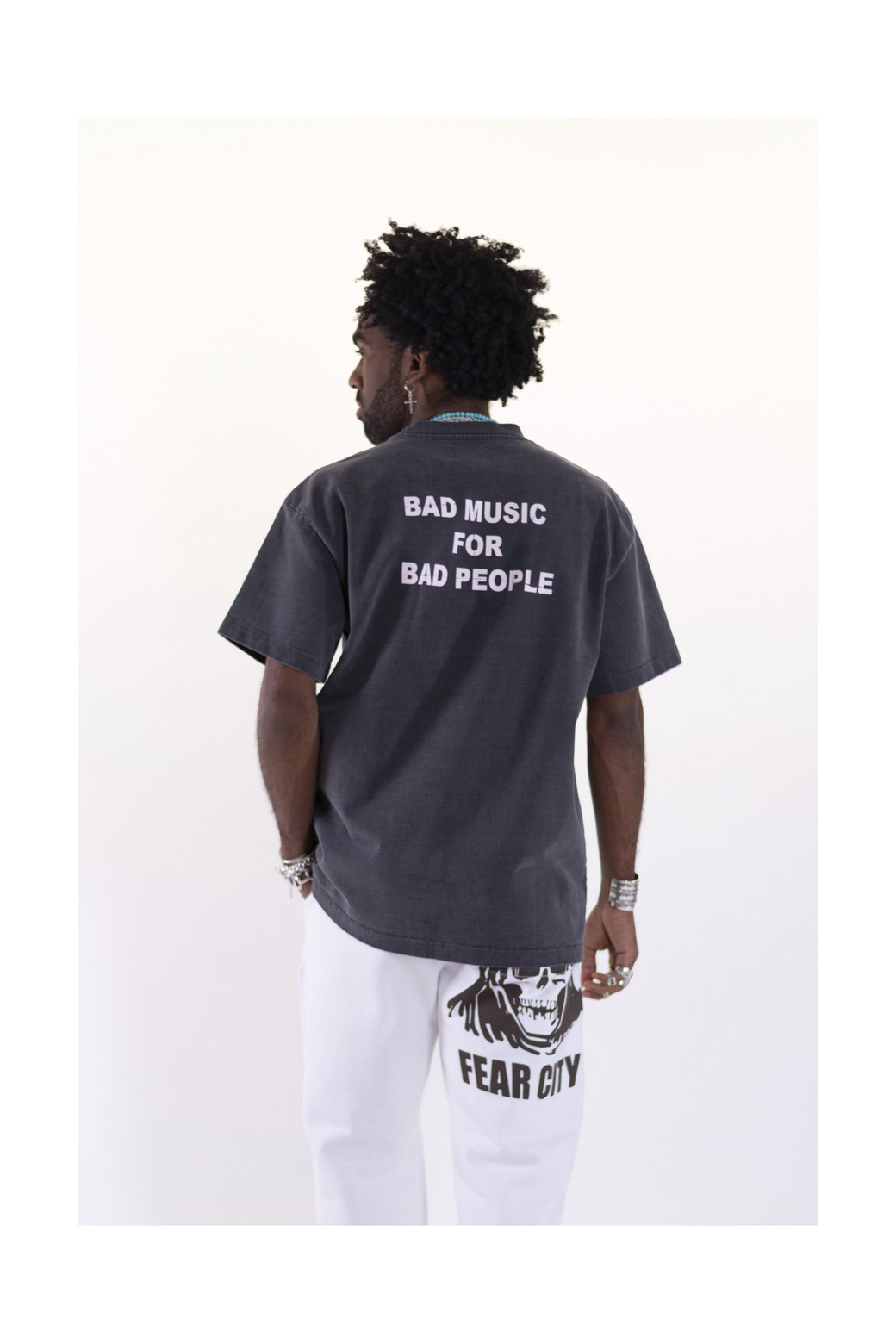
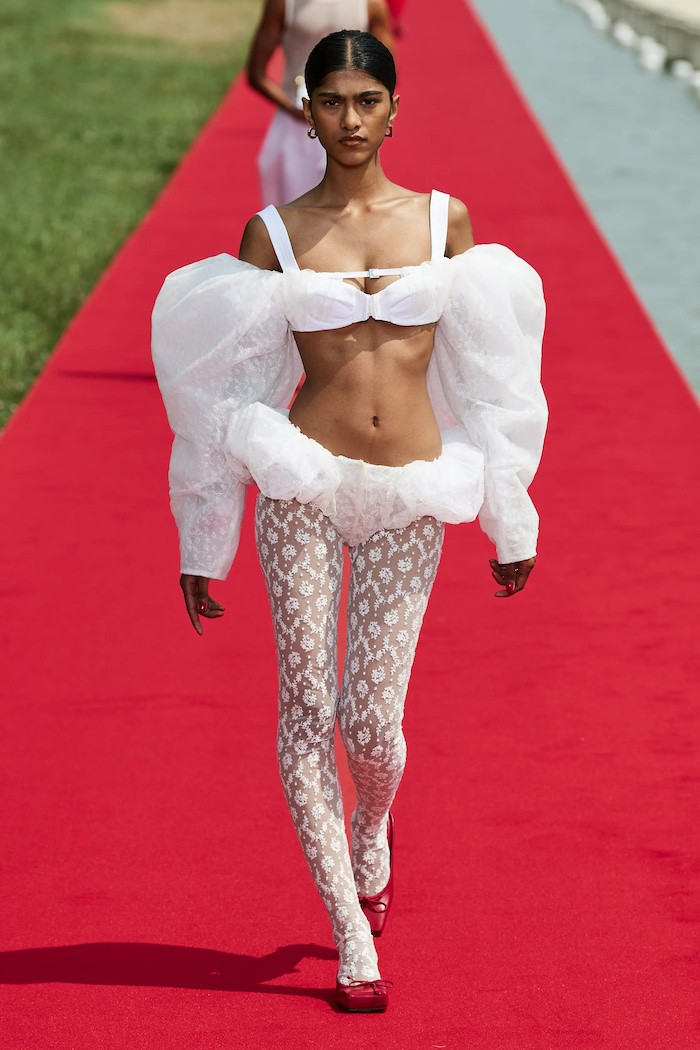
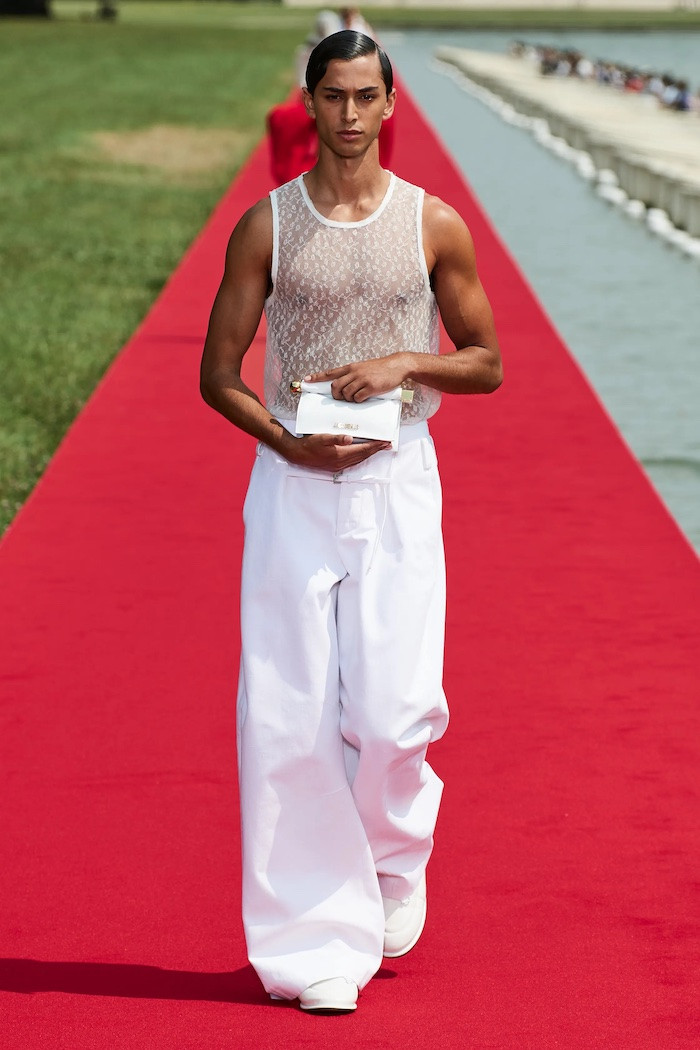
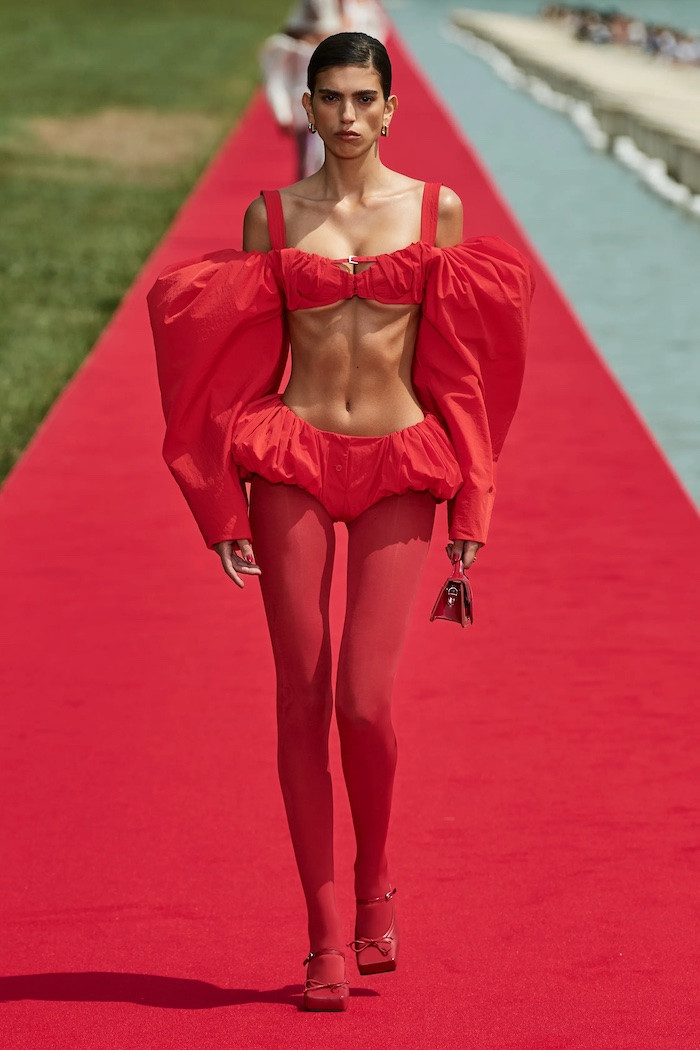
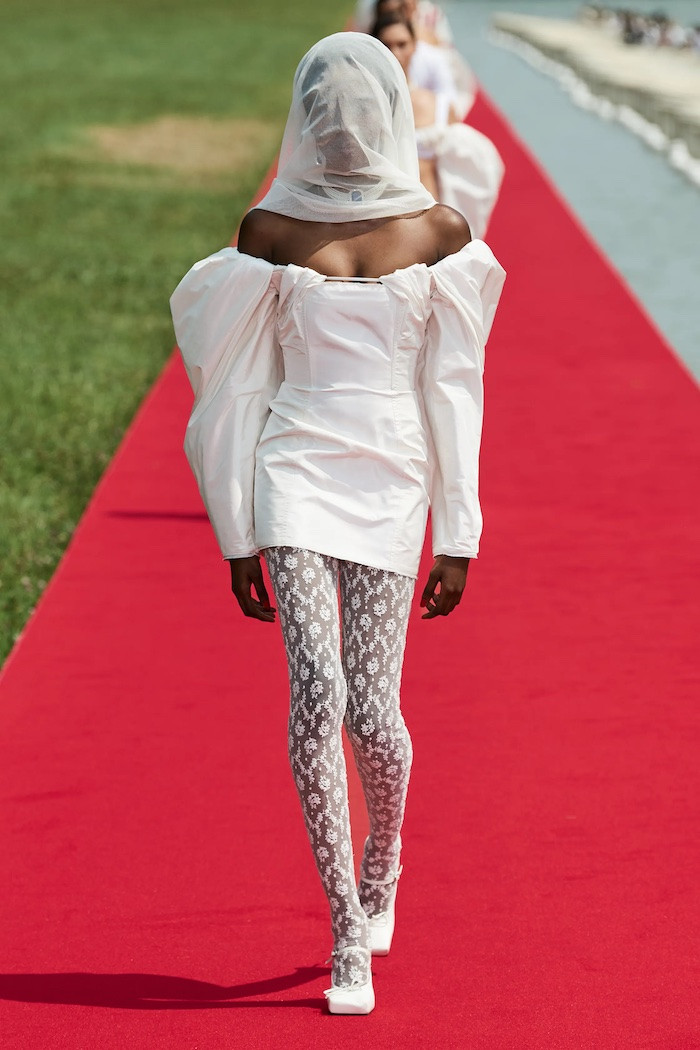
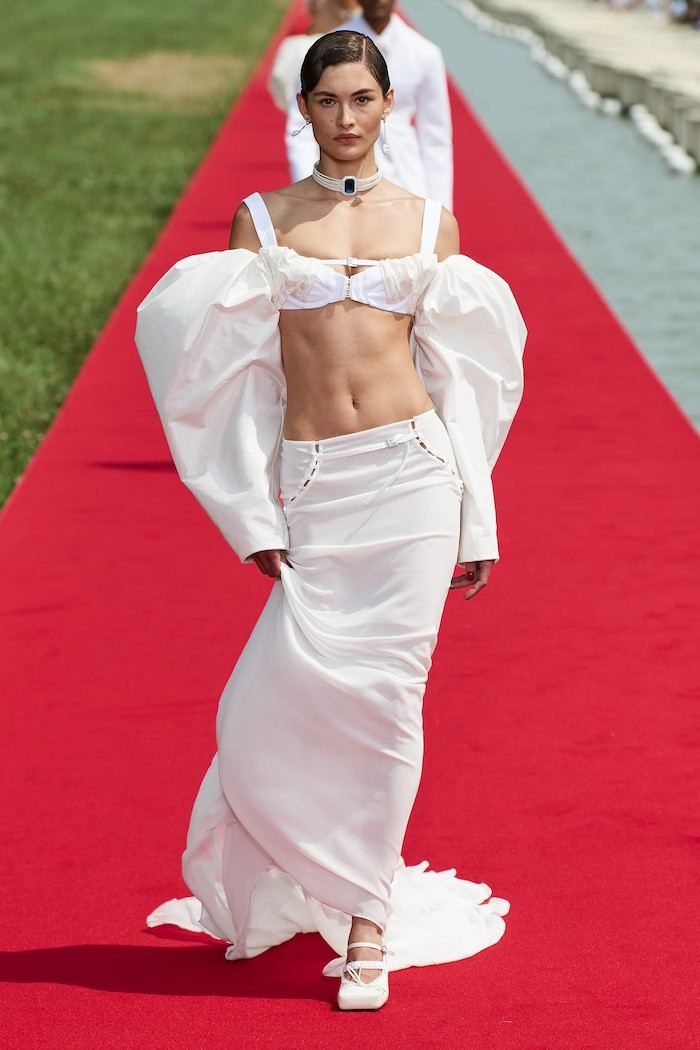
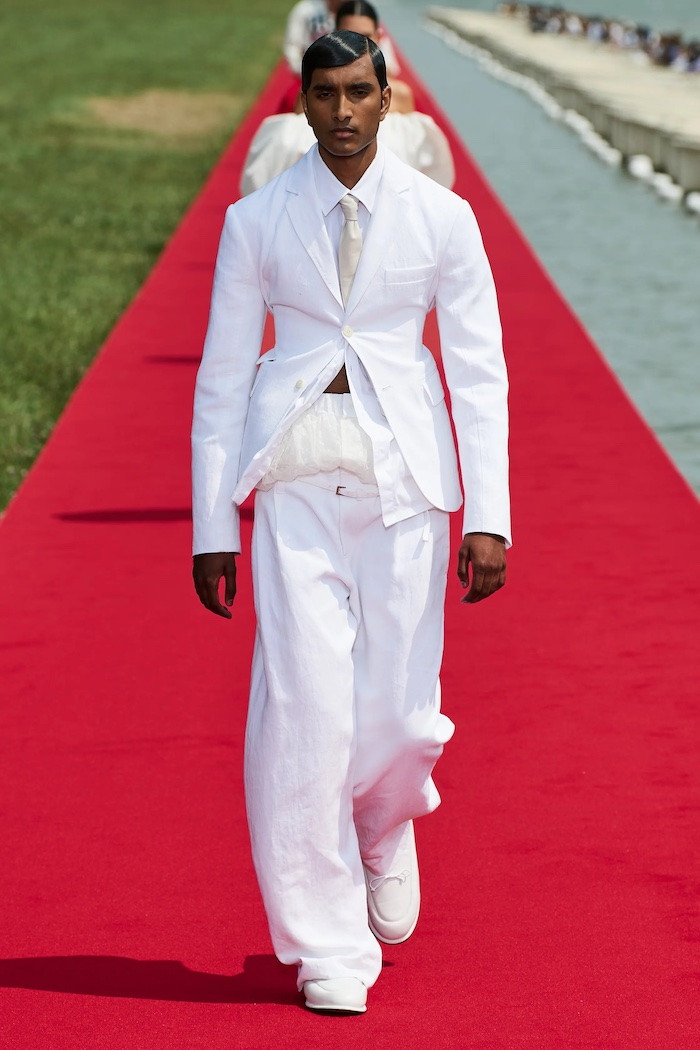
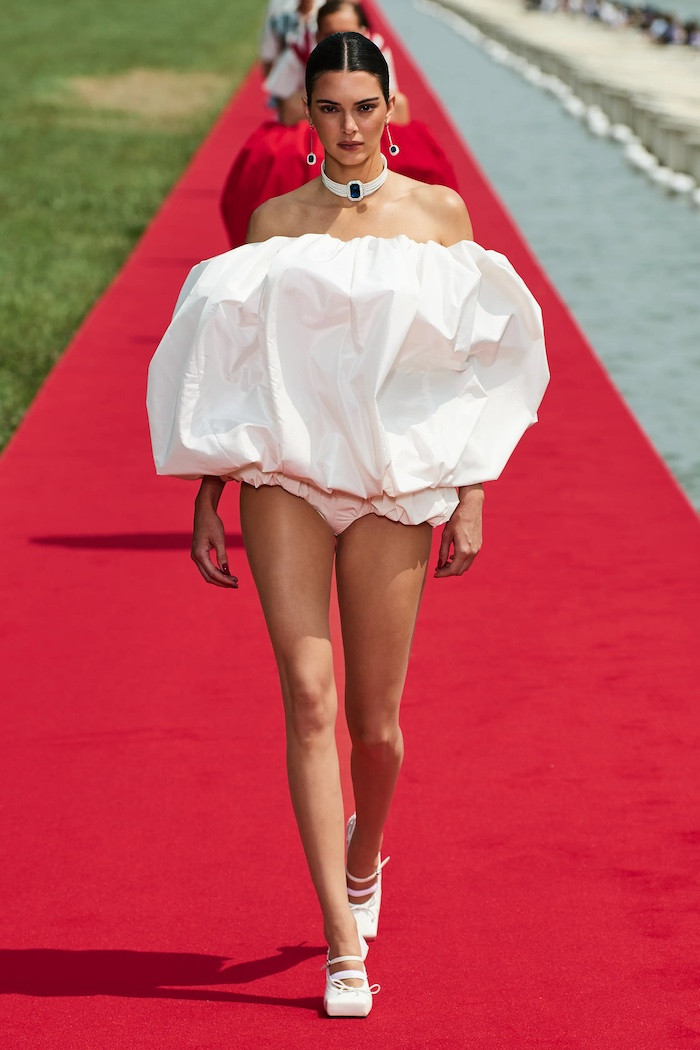
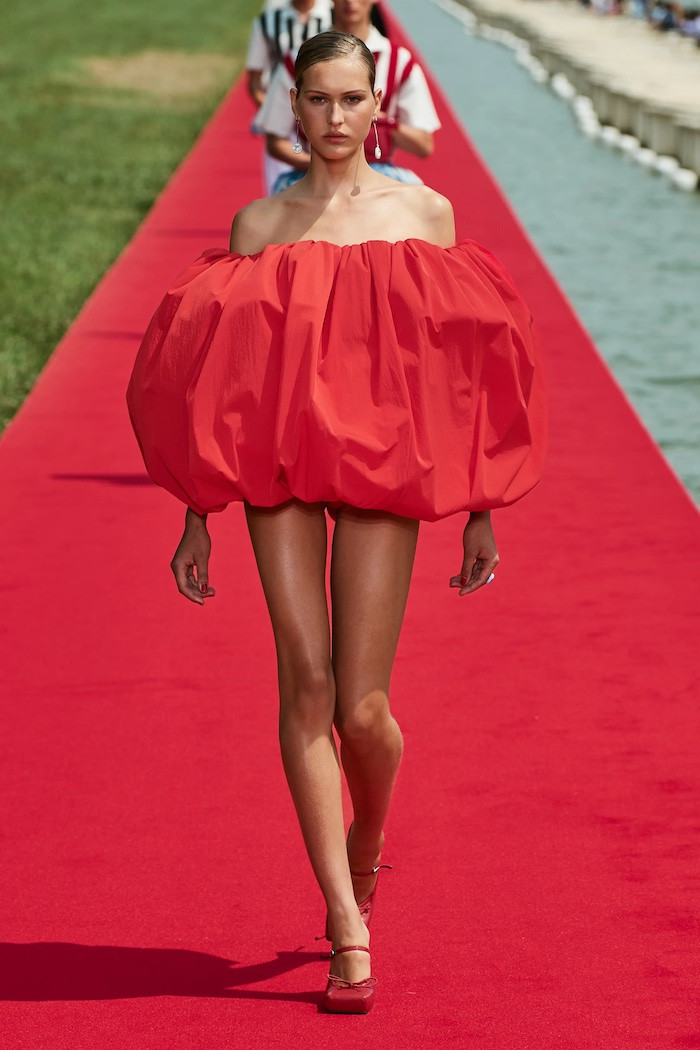
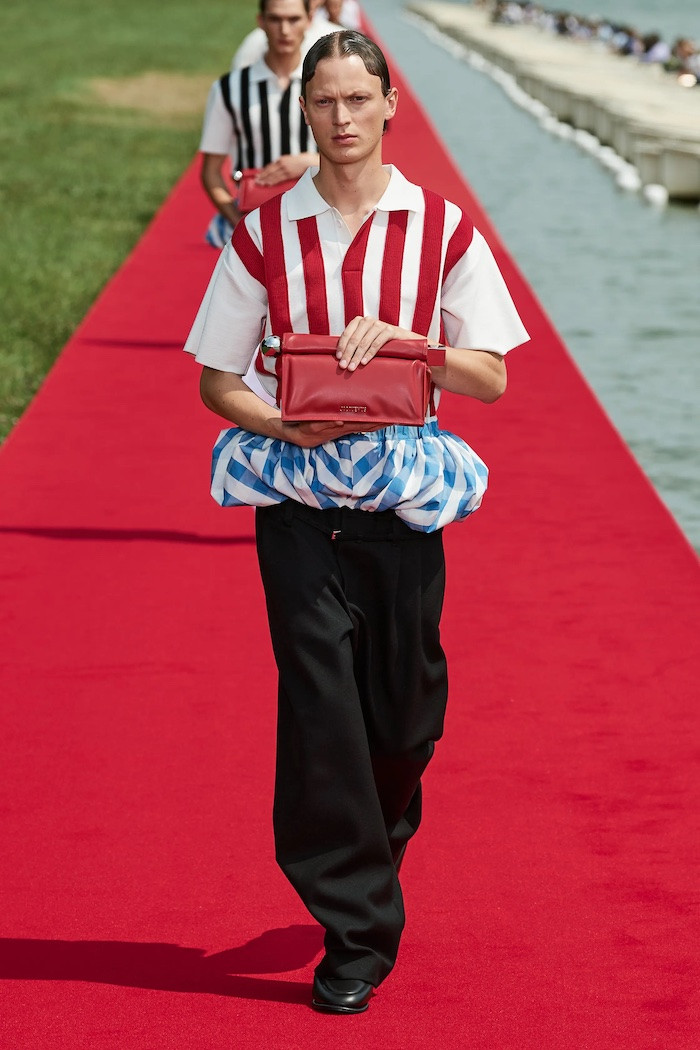
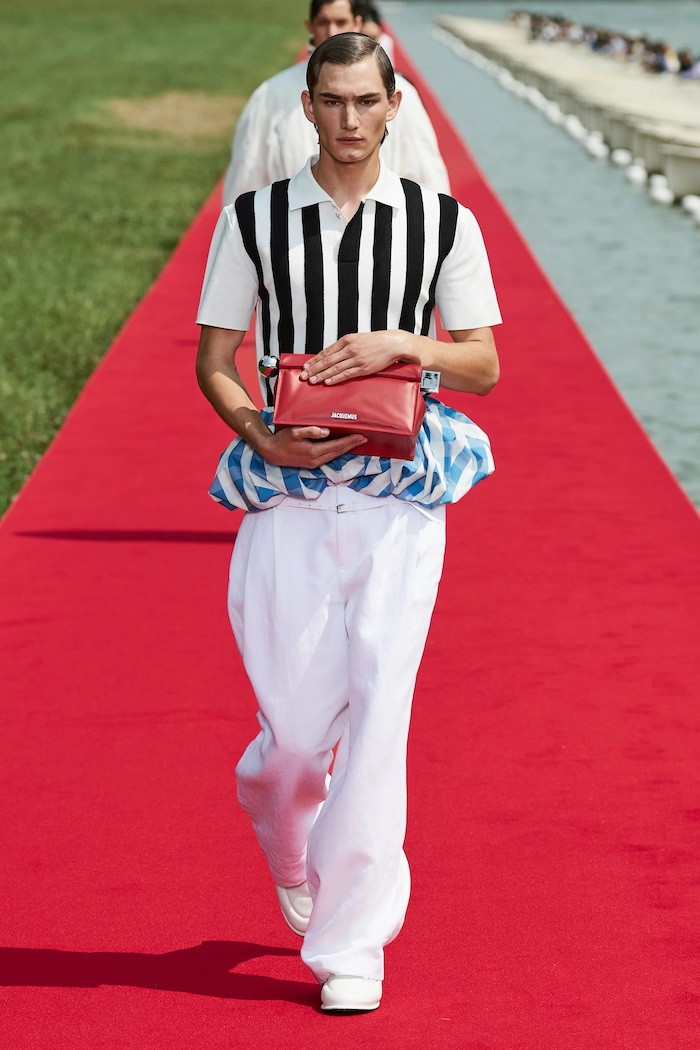
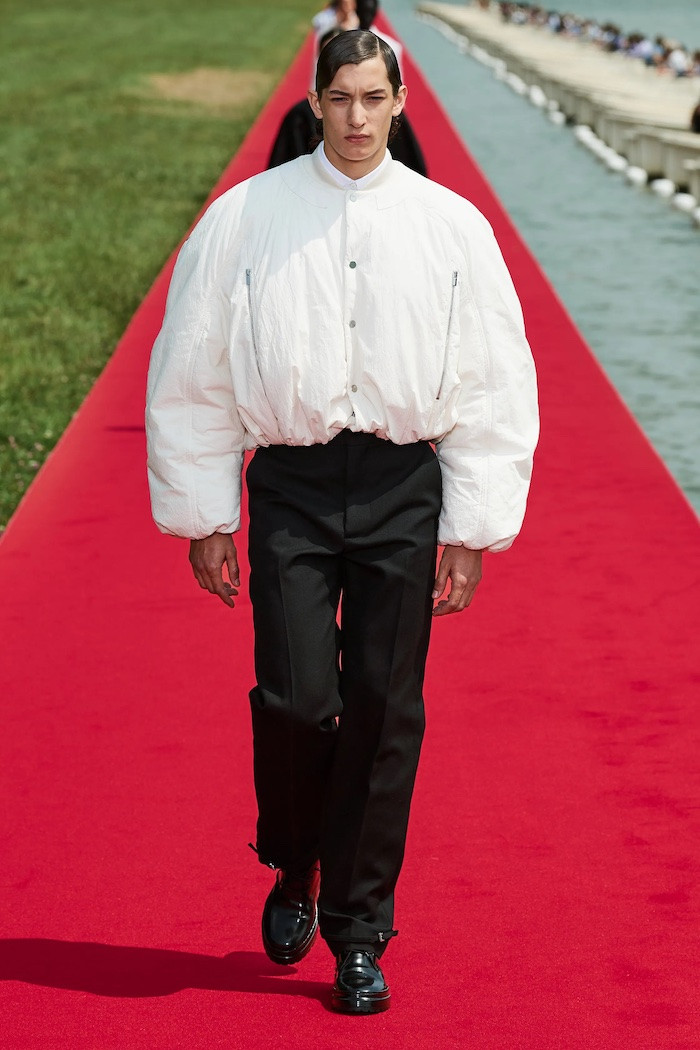
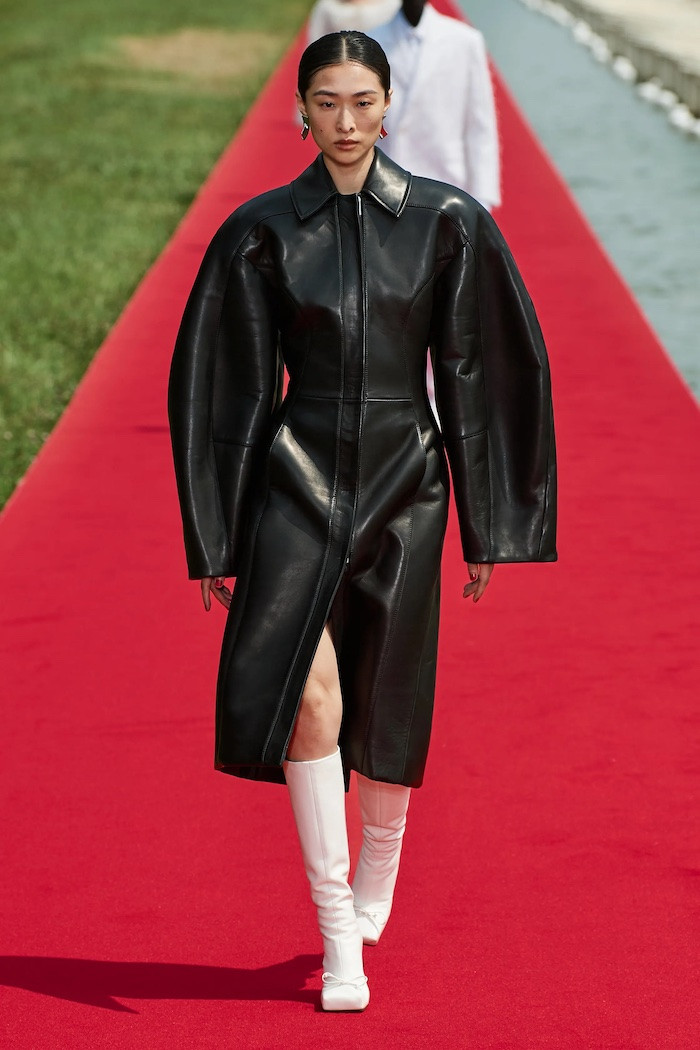
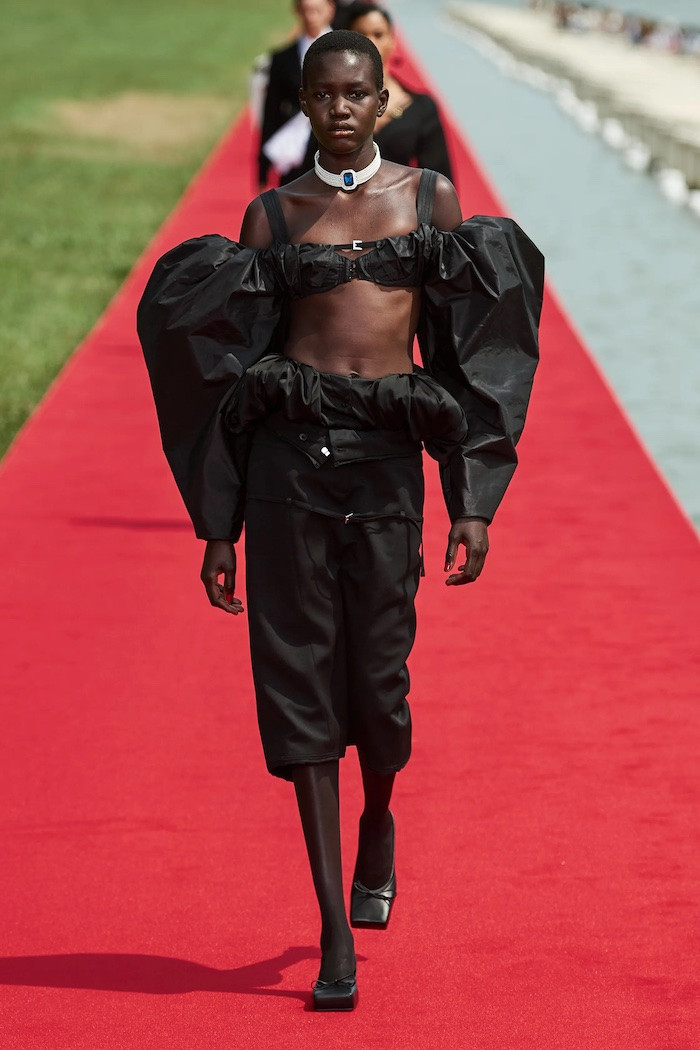
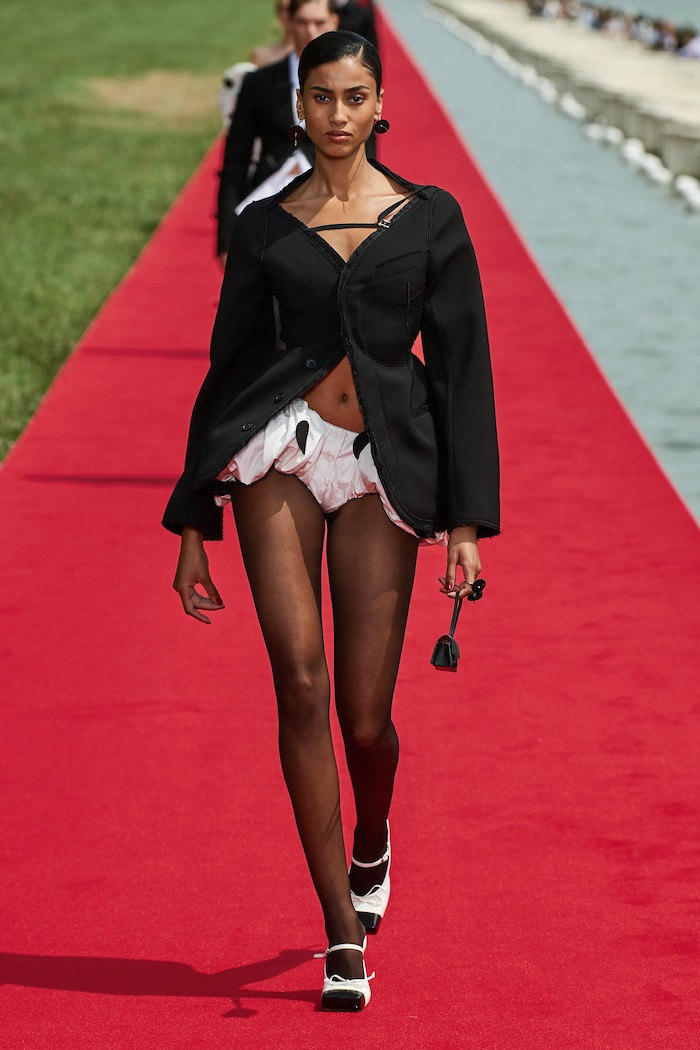
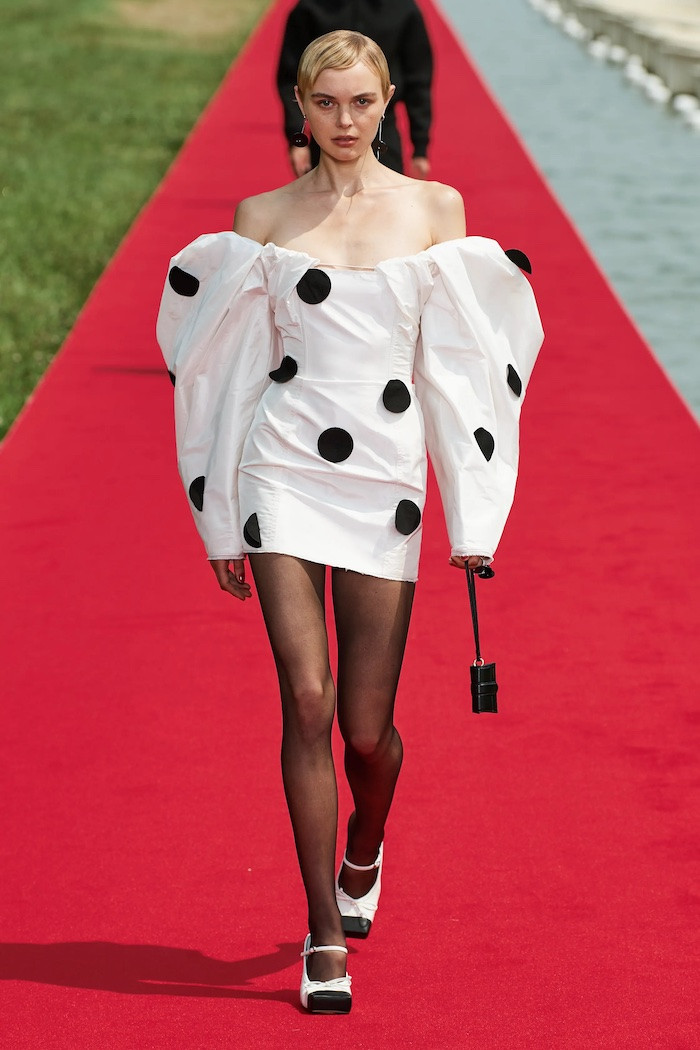
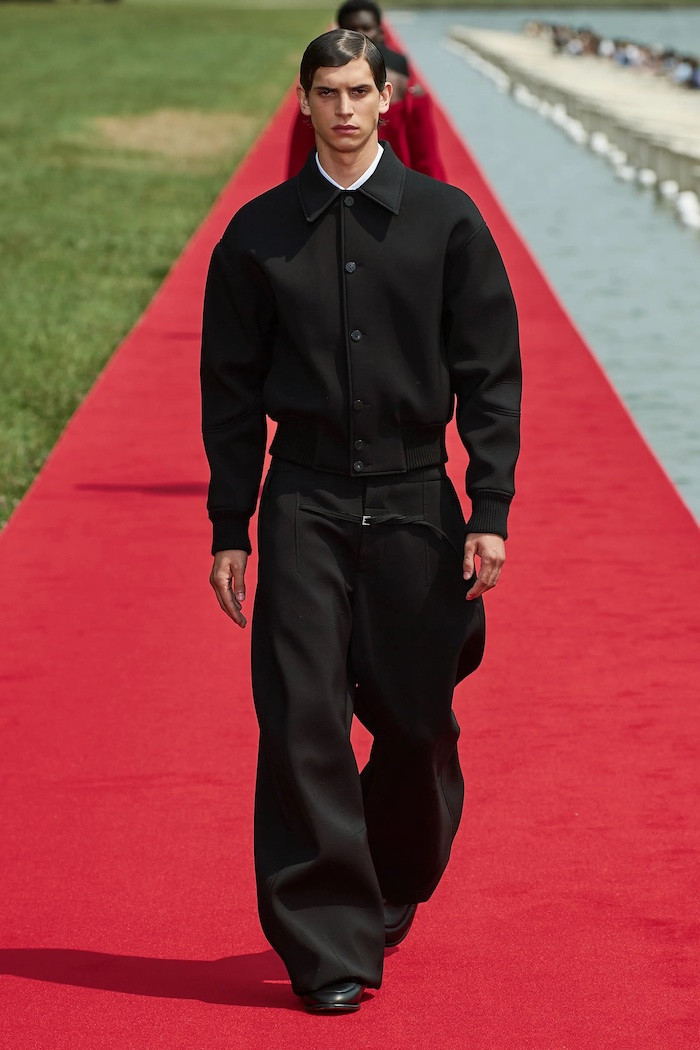
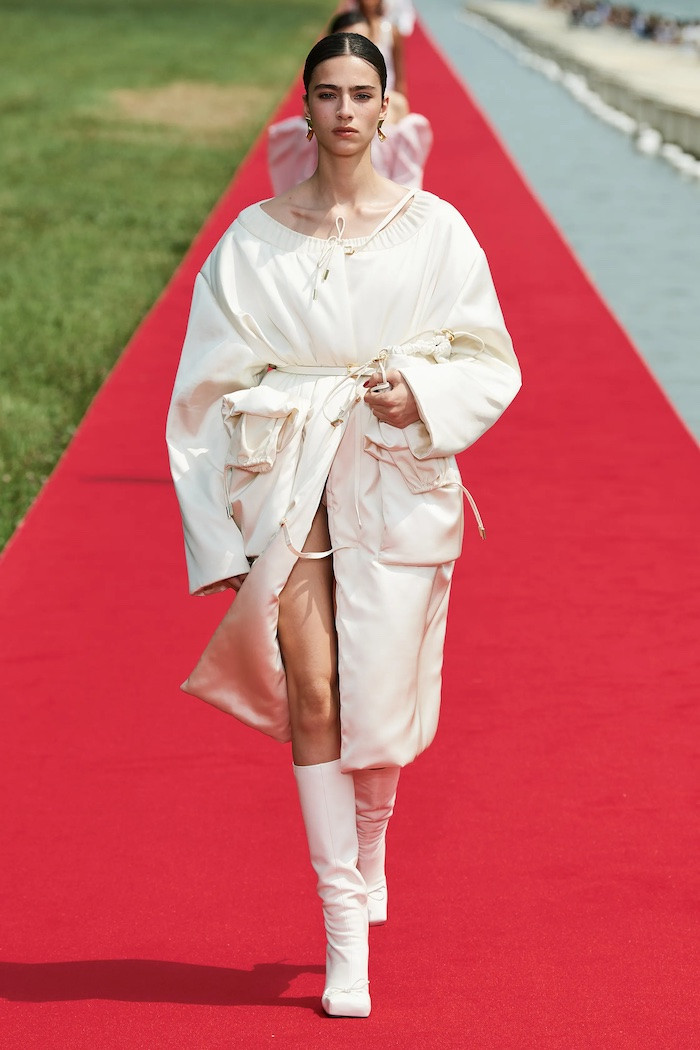
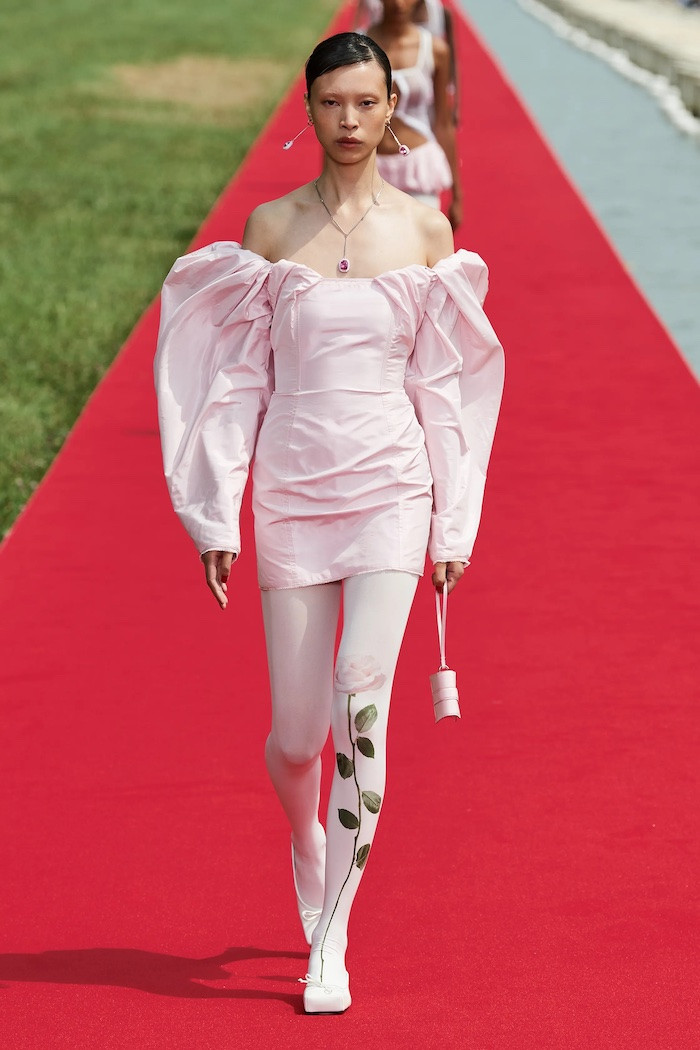
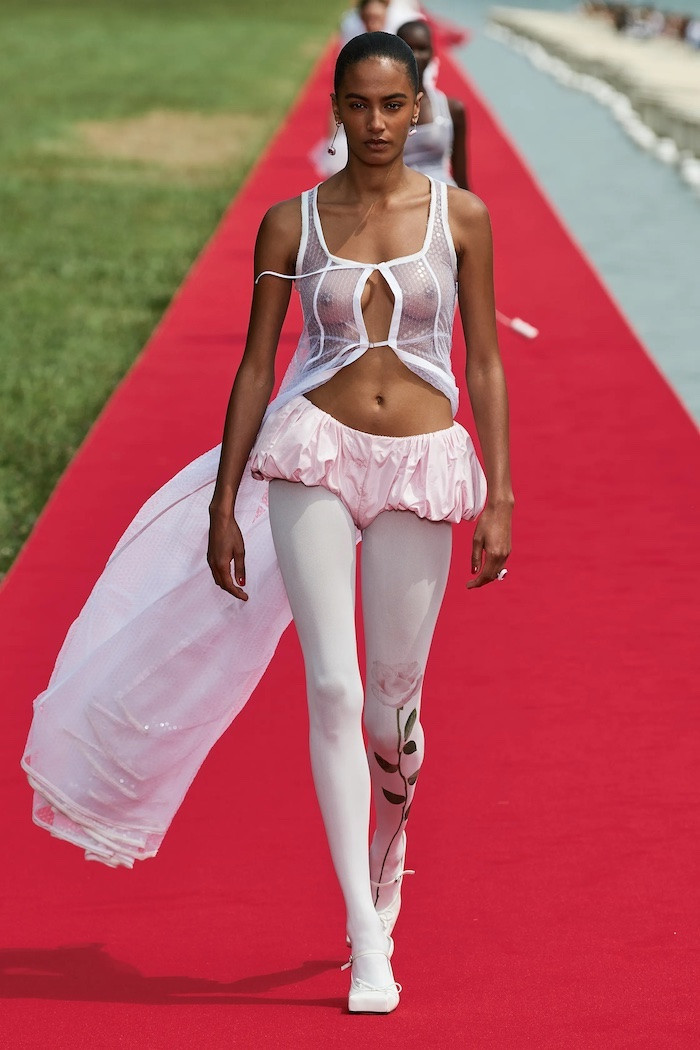
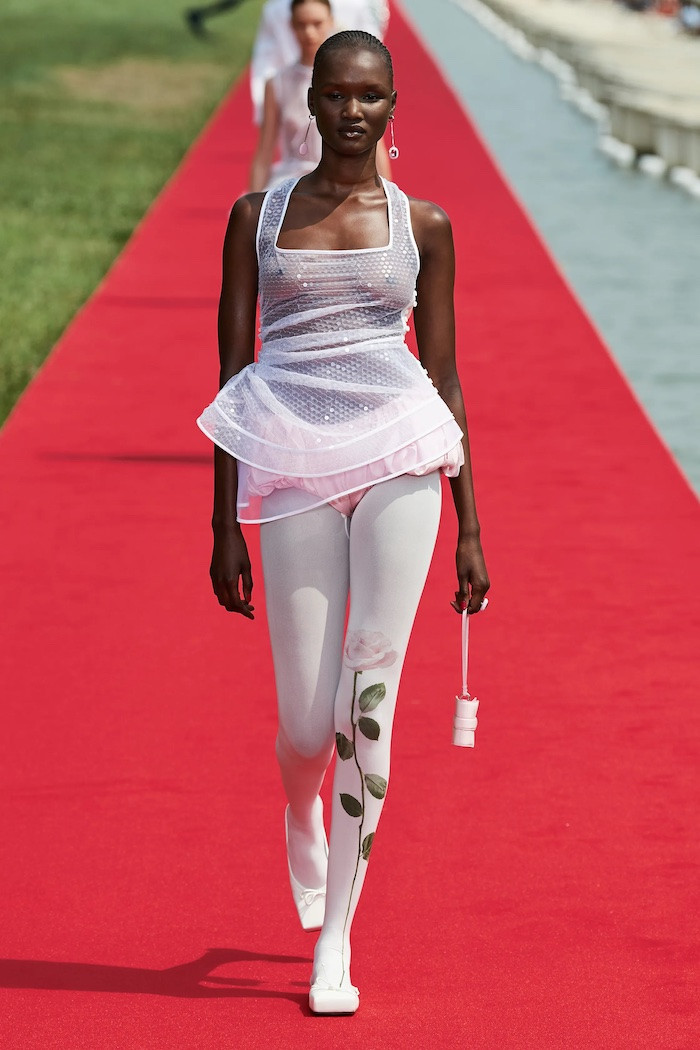
Check out more from the collection below.
Stay informed on our latest news!

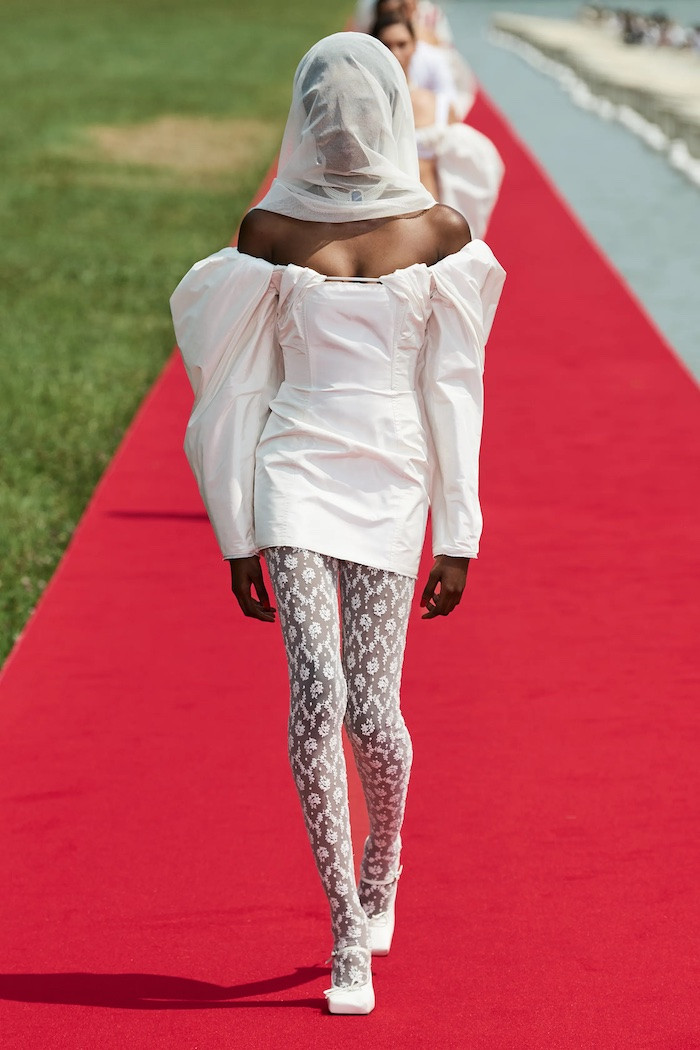
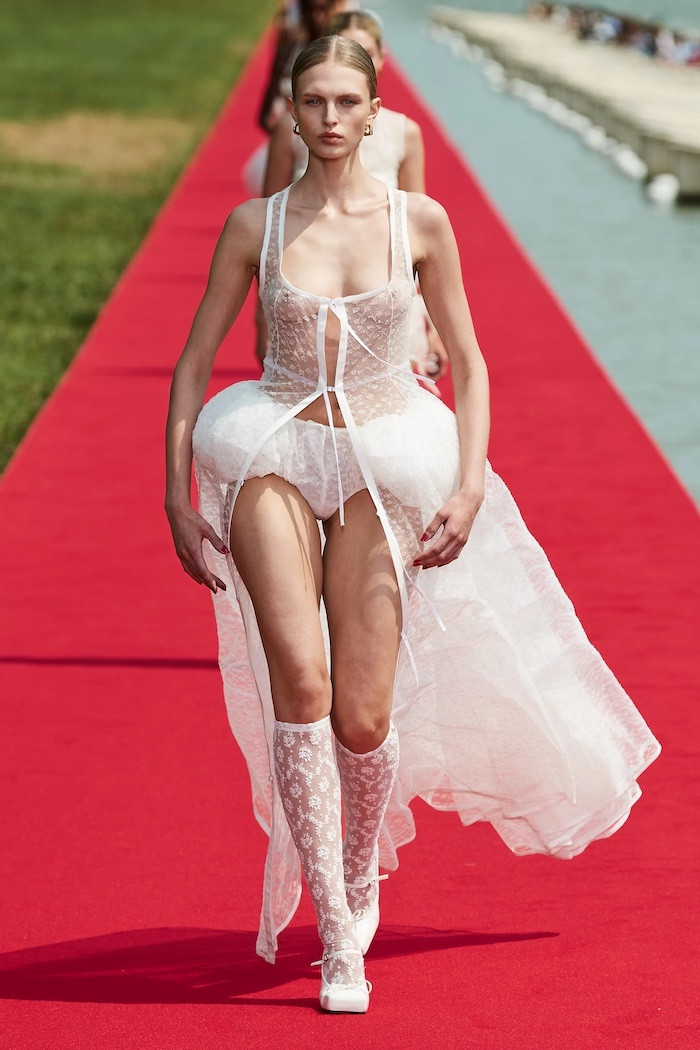
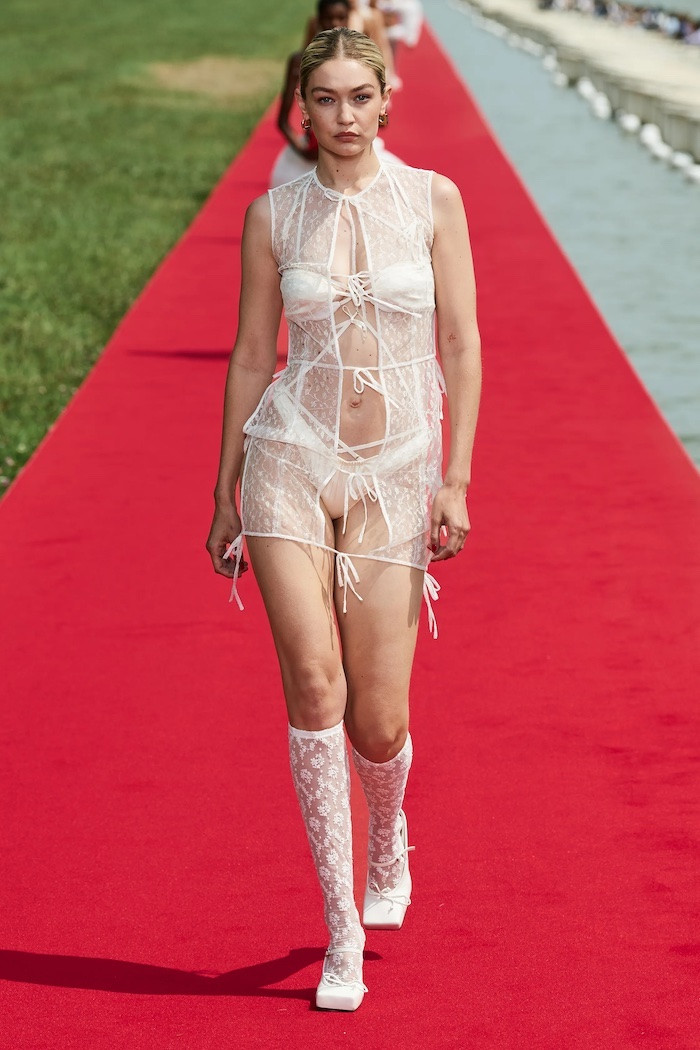
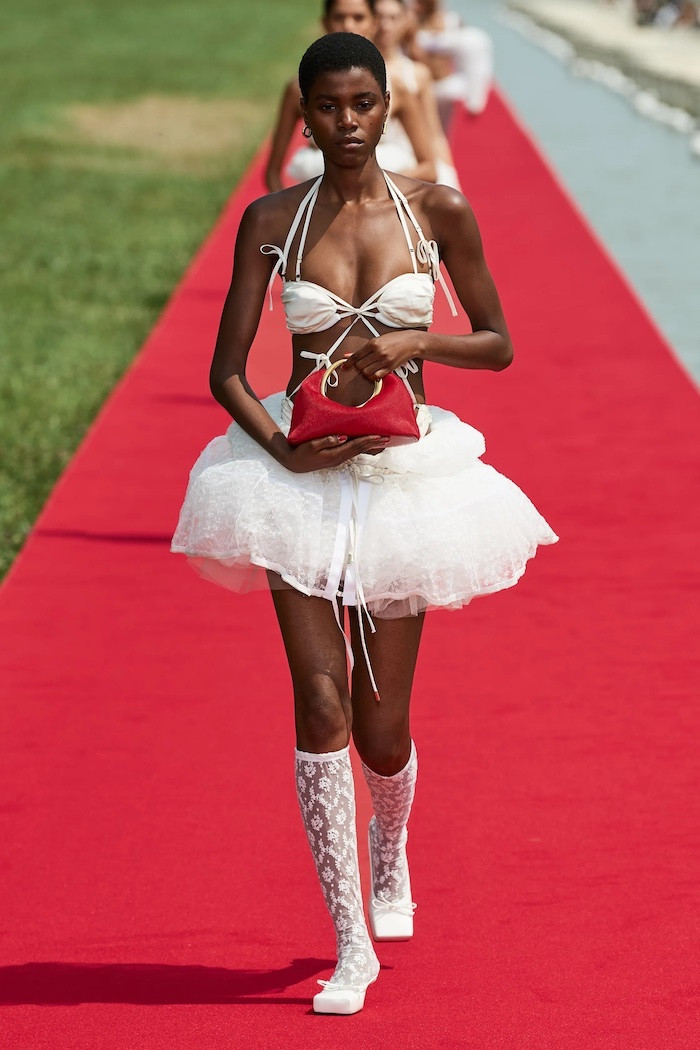
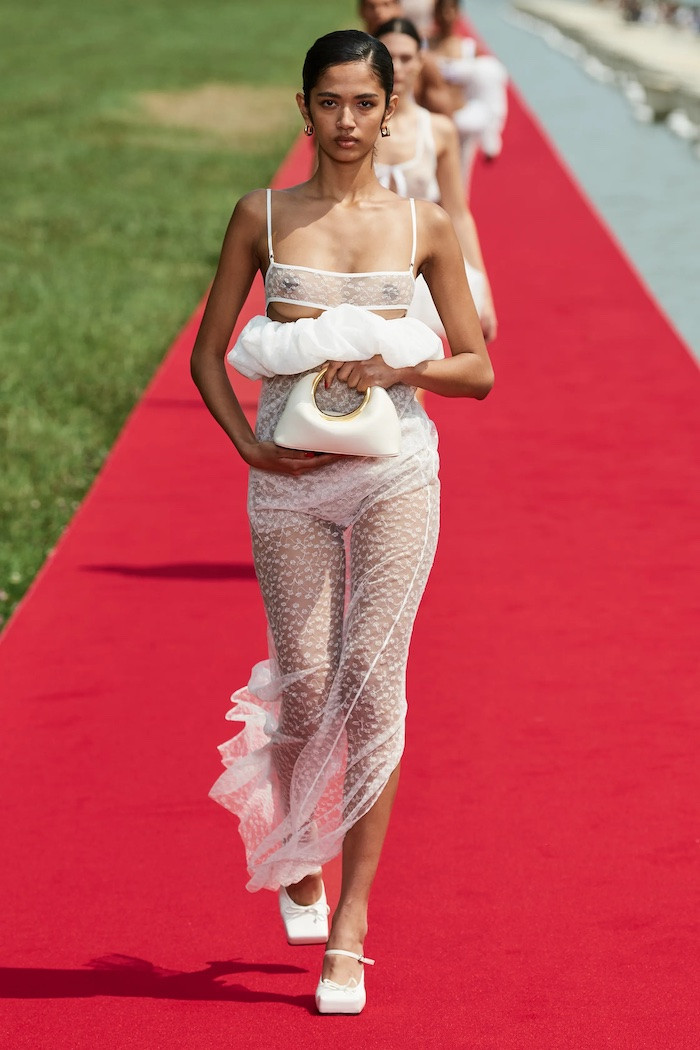
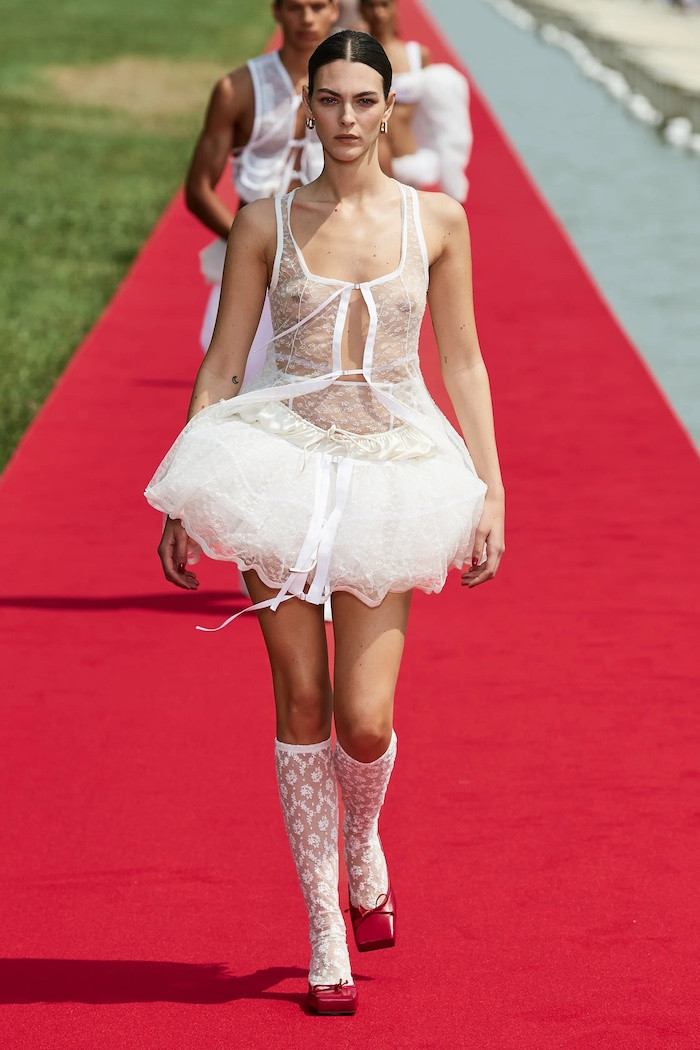
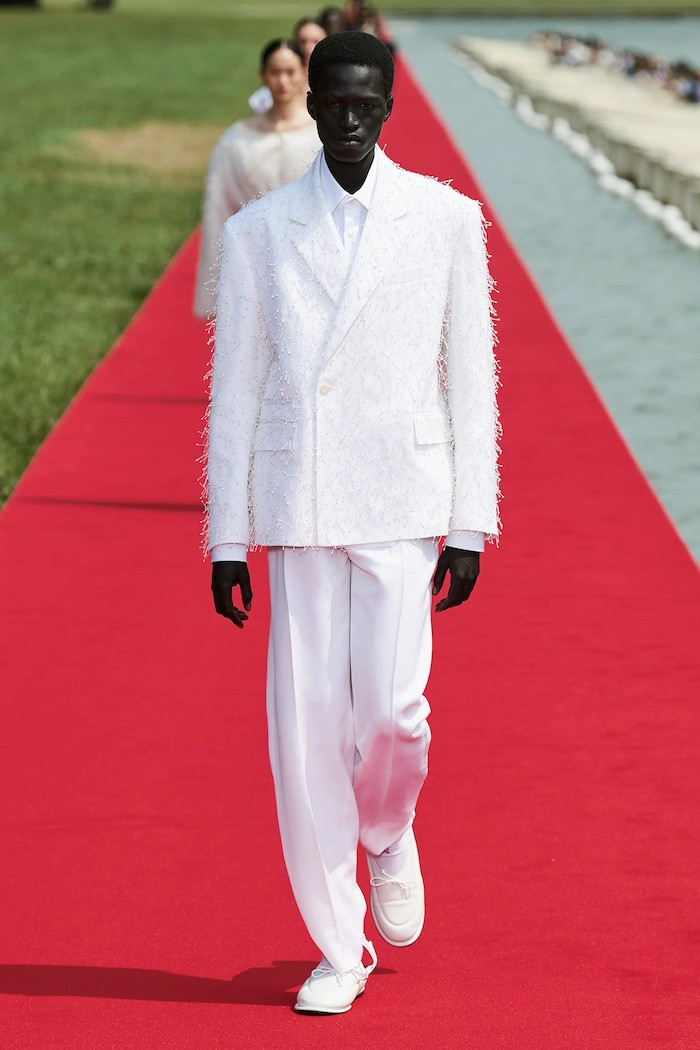
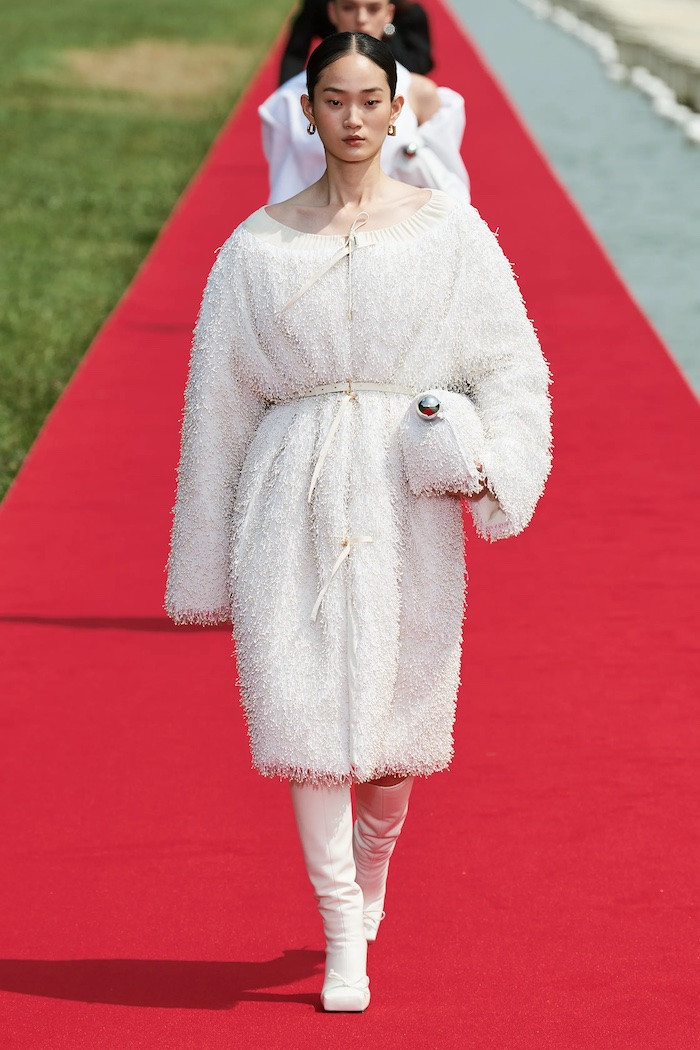
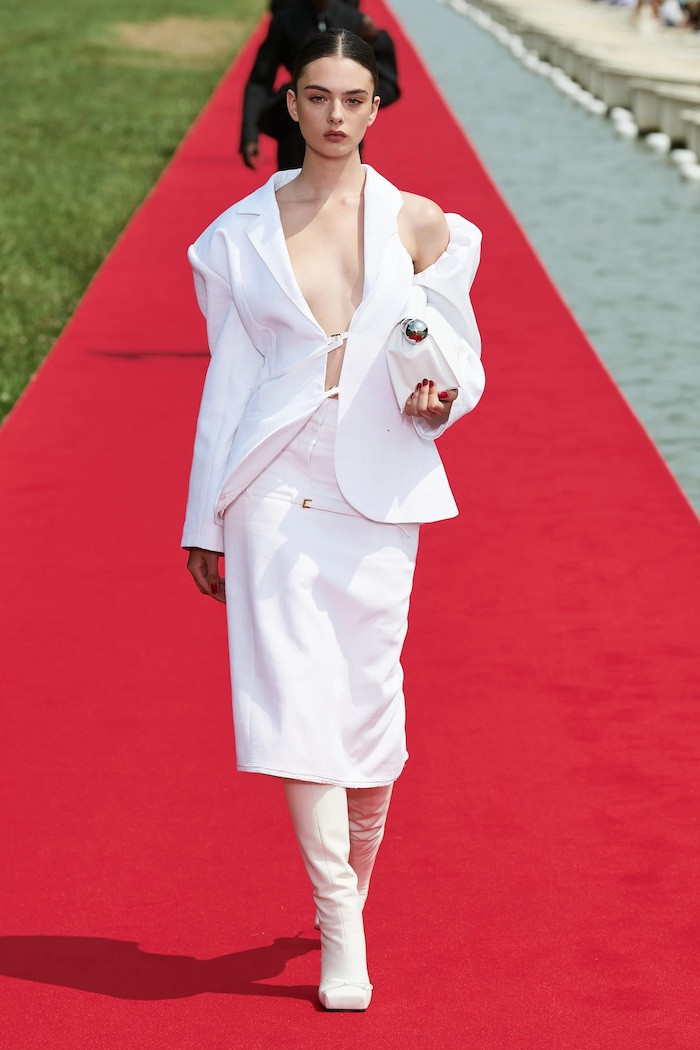
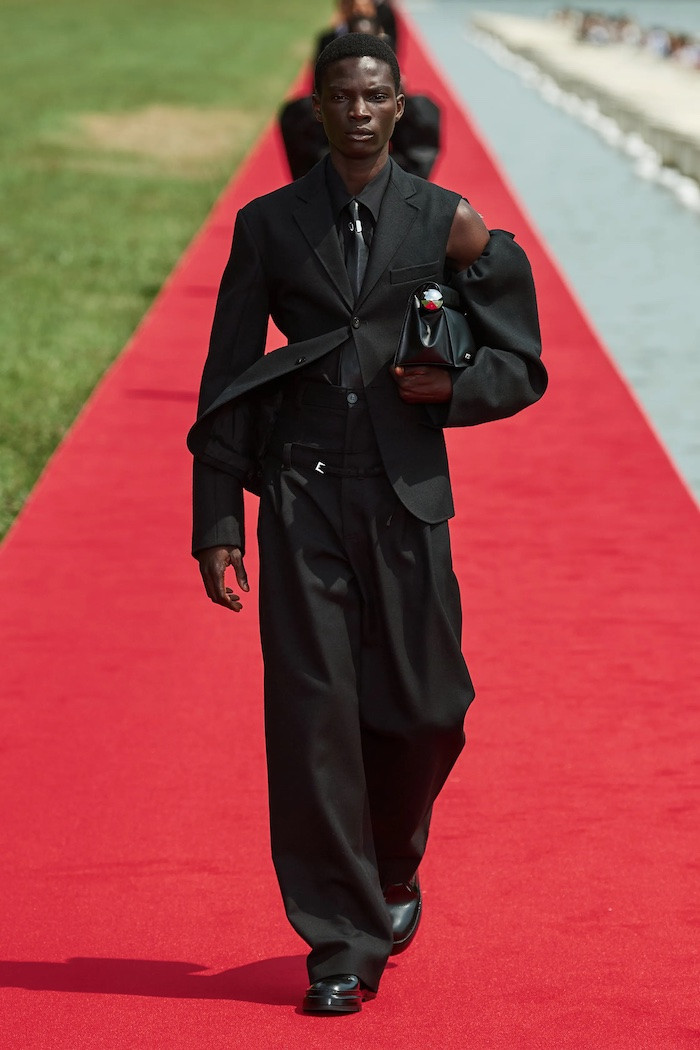
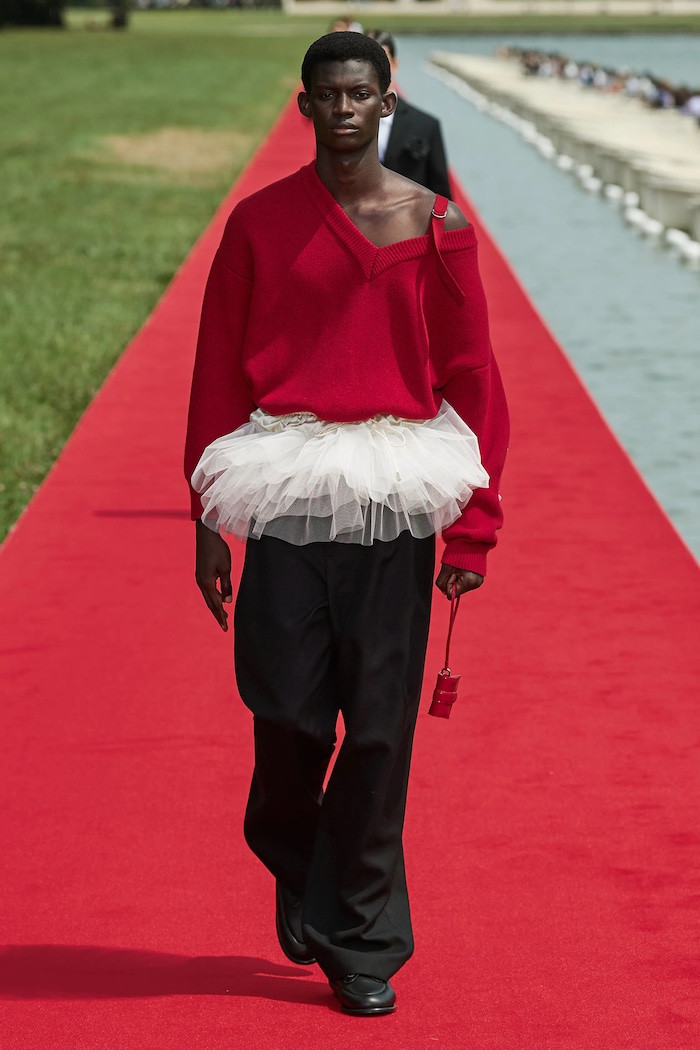
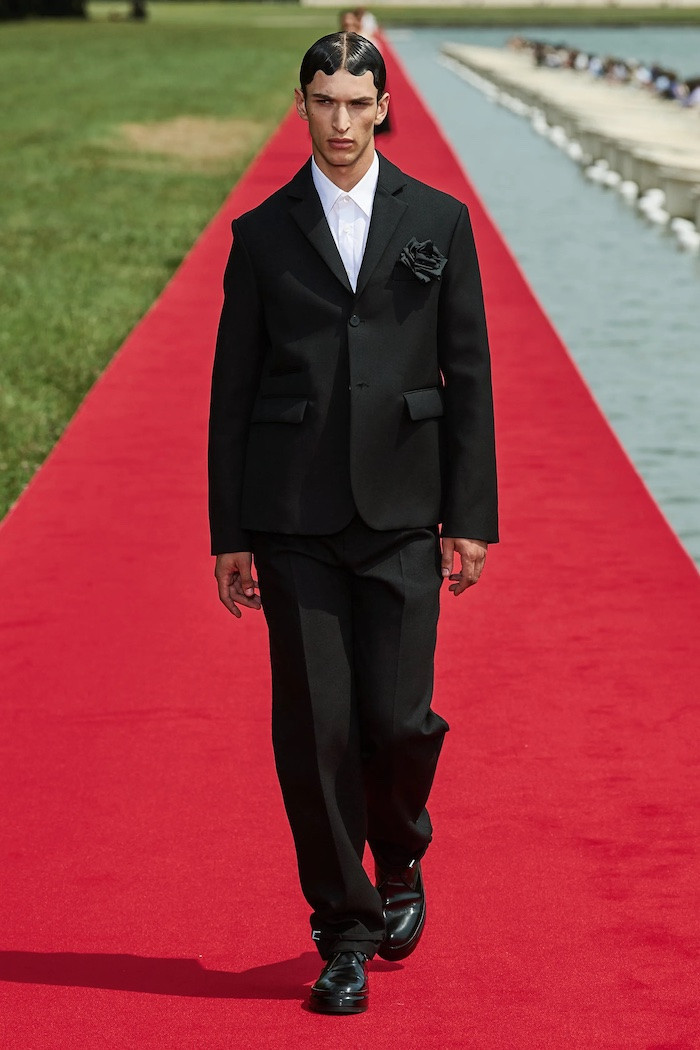
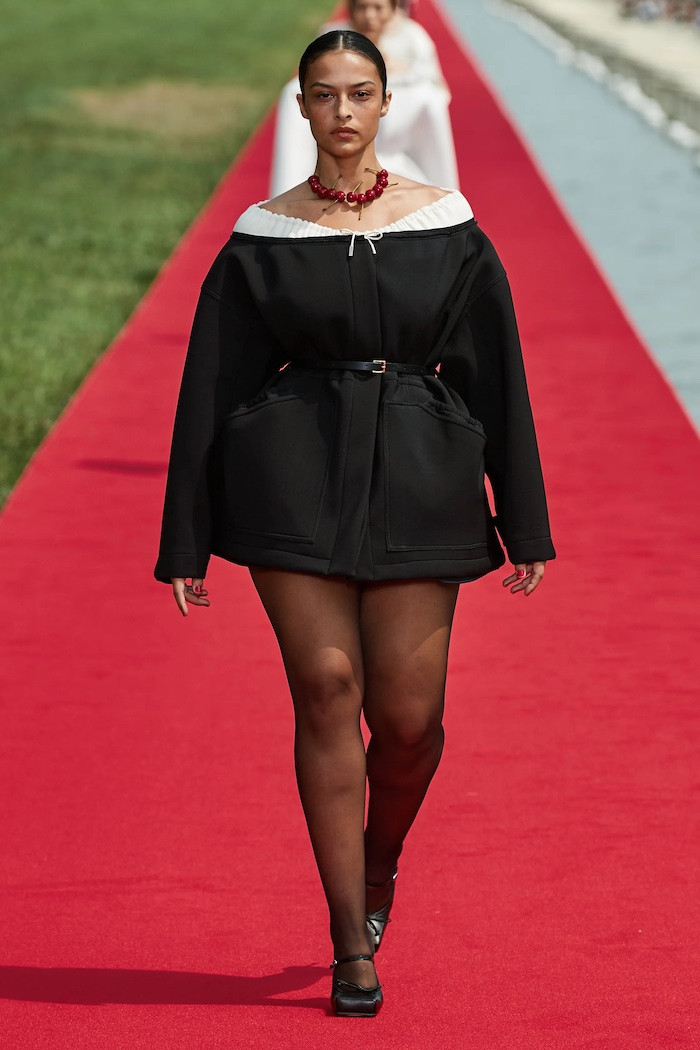
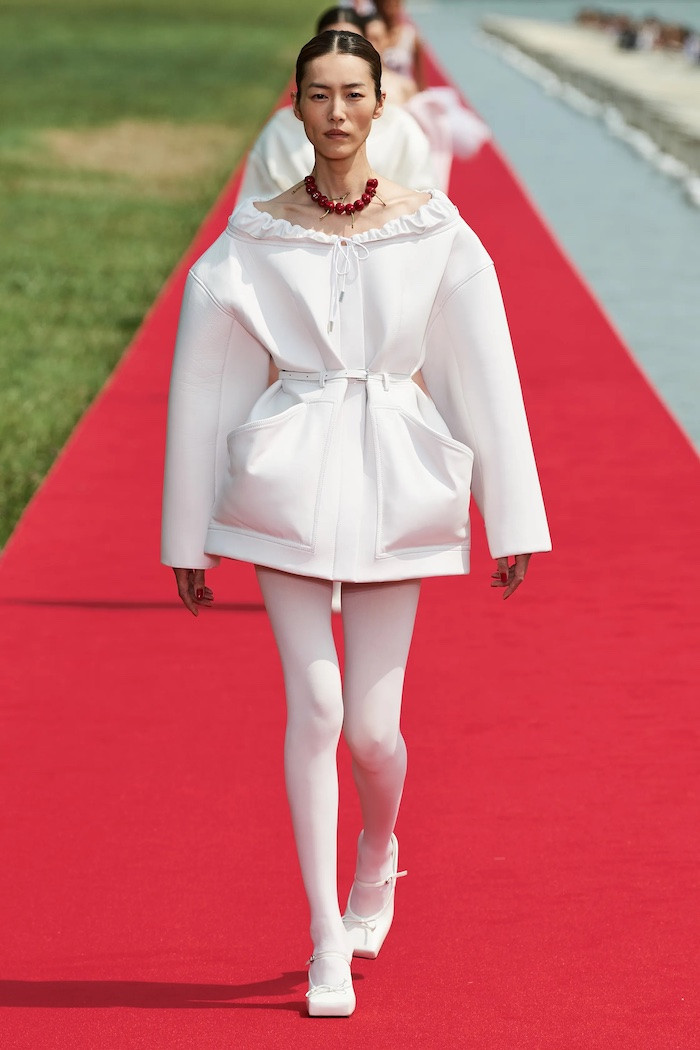
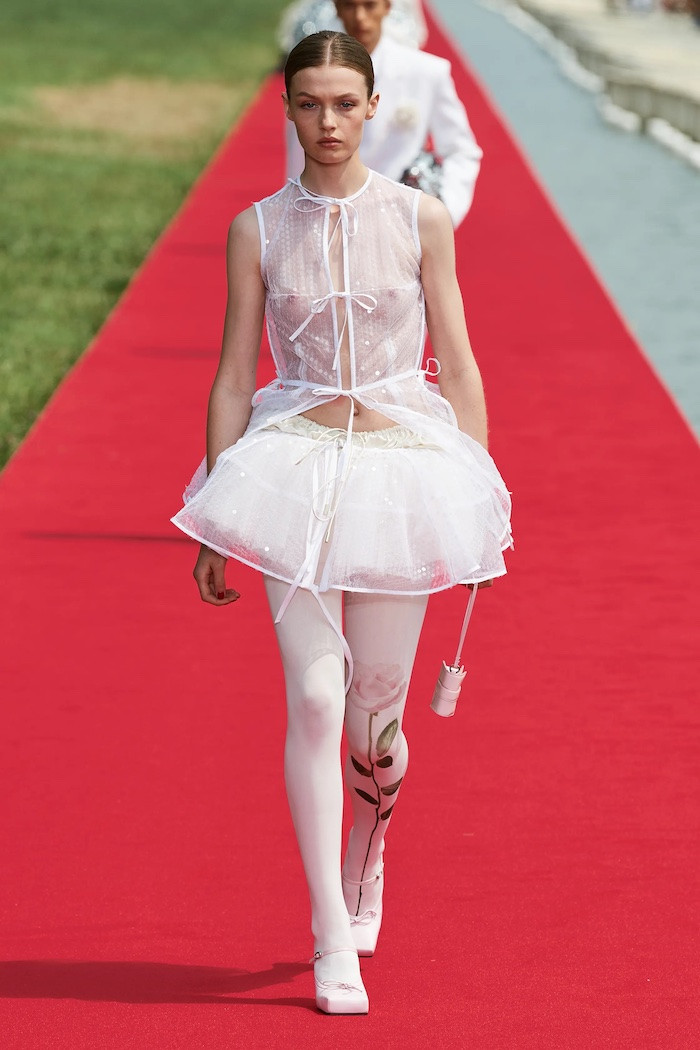
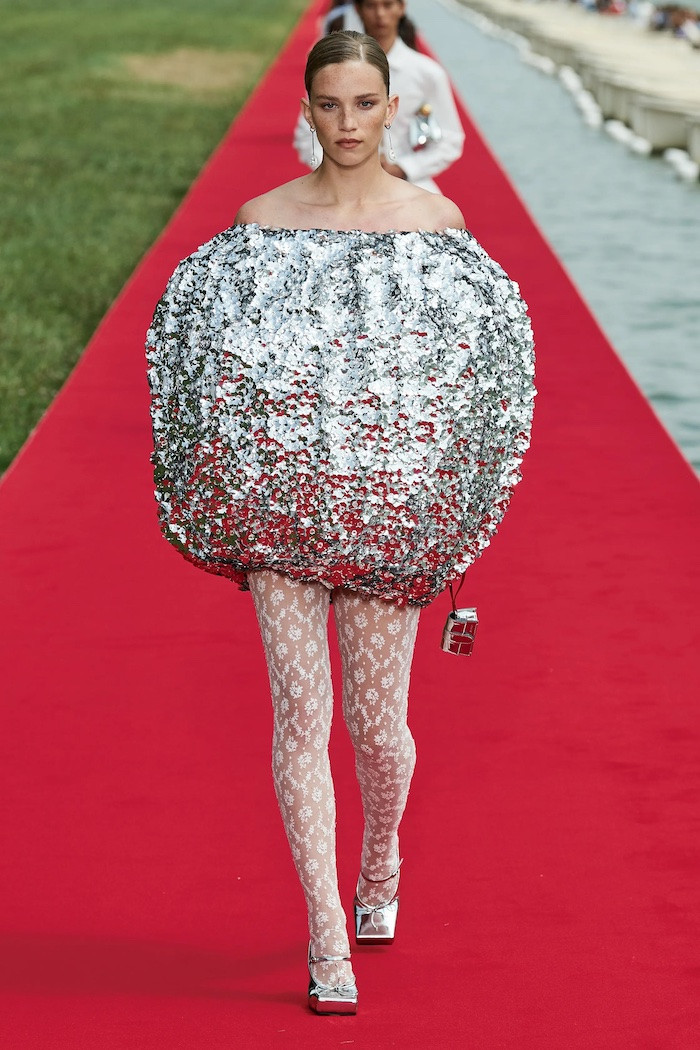
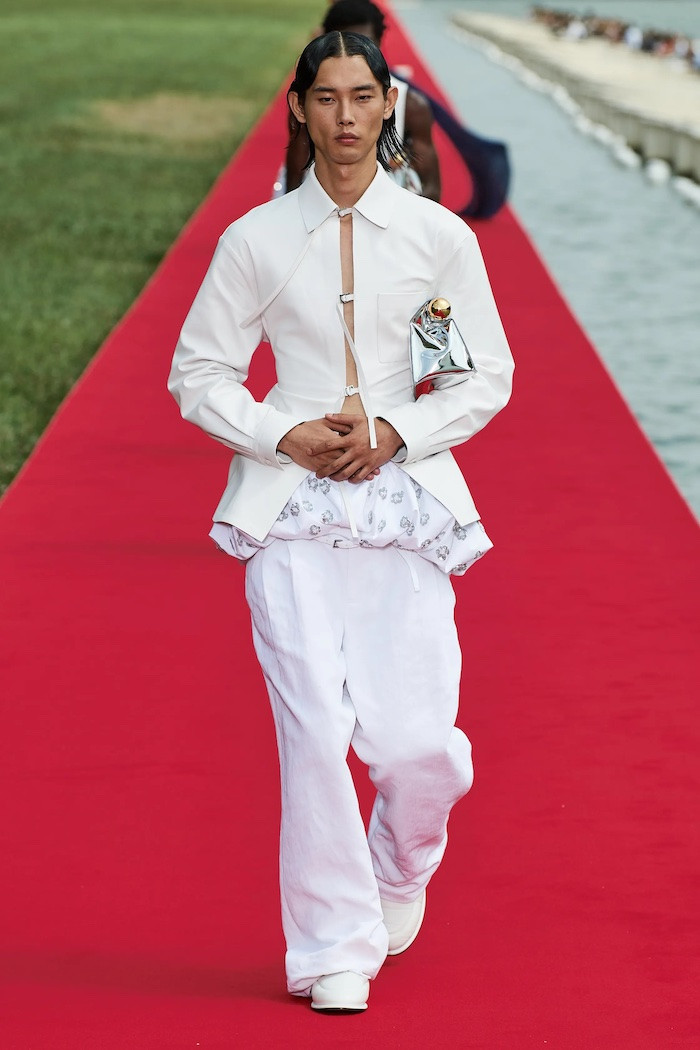
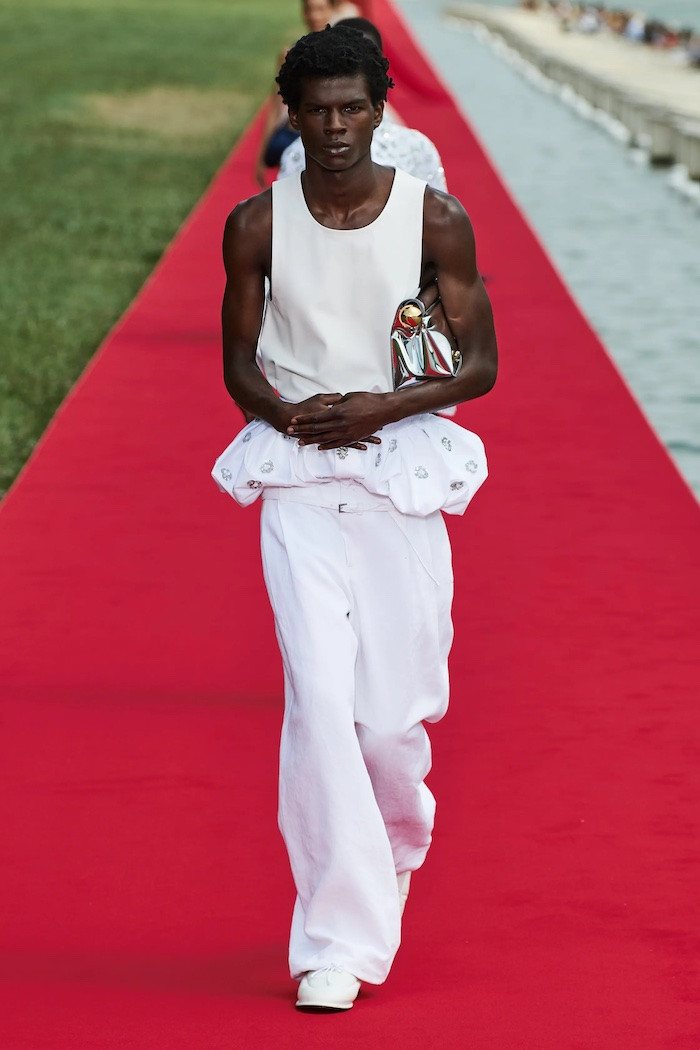
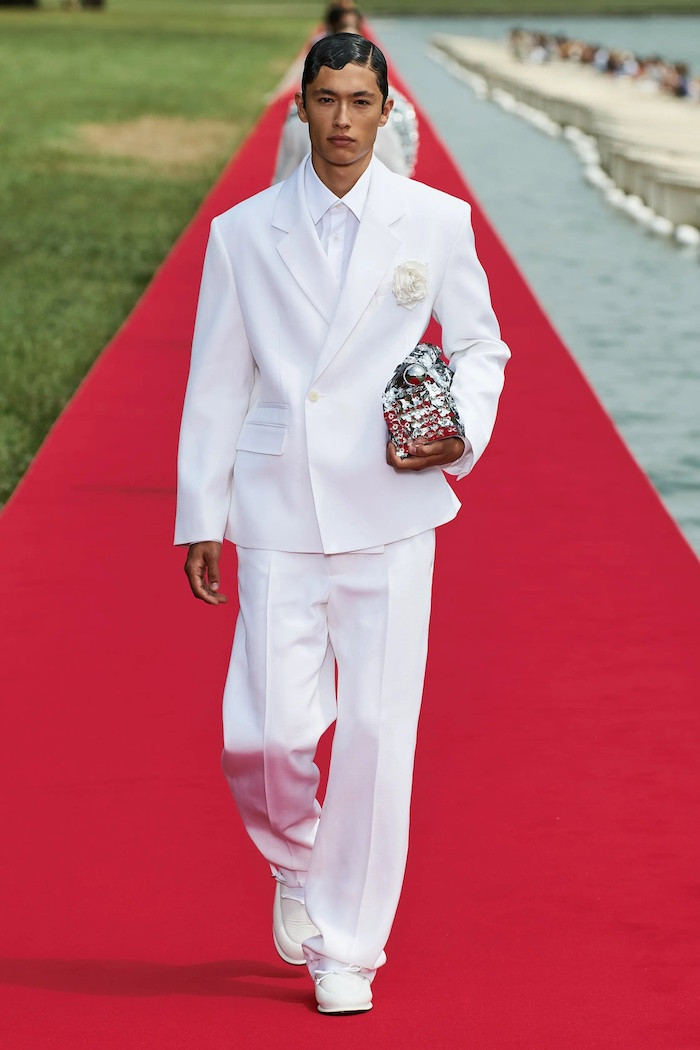
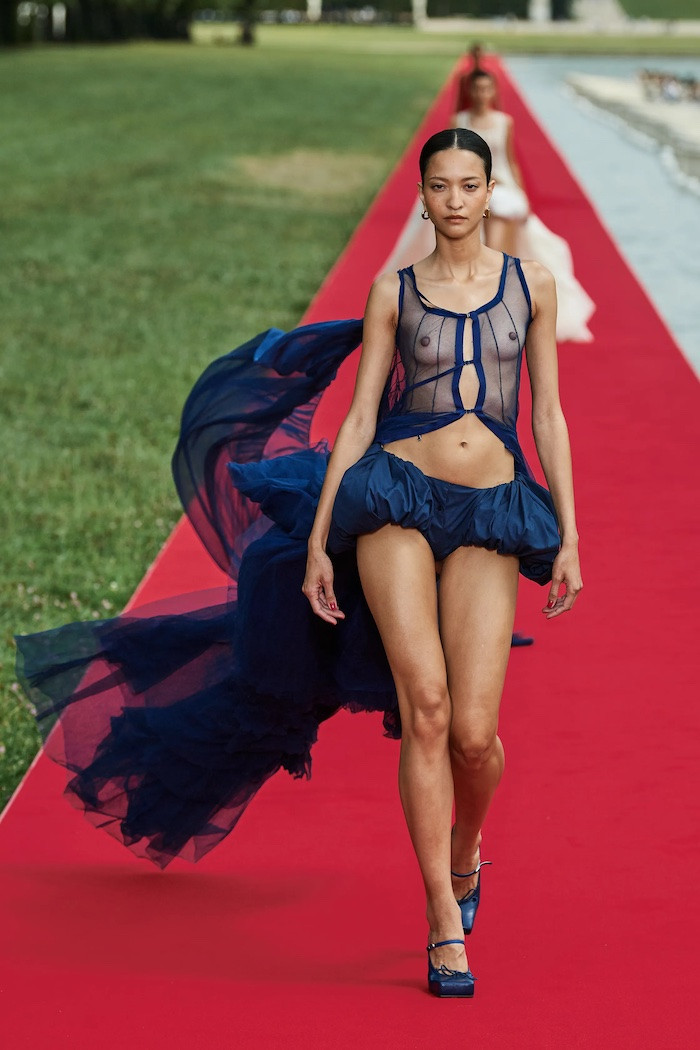
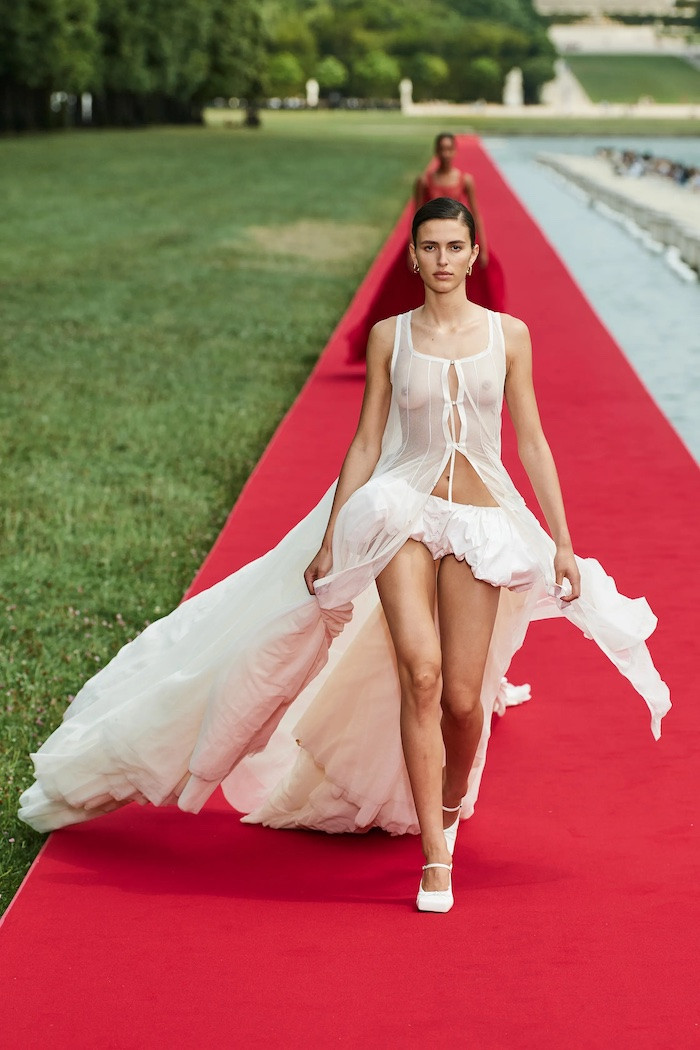
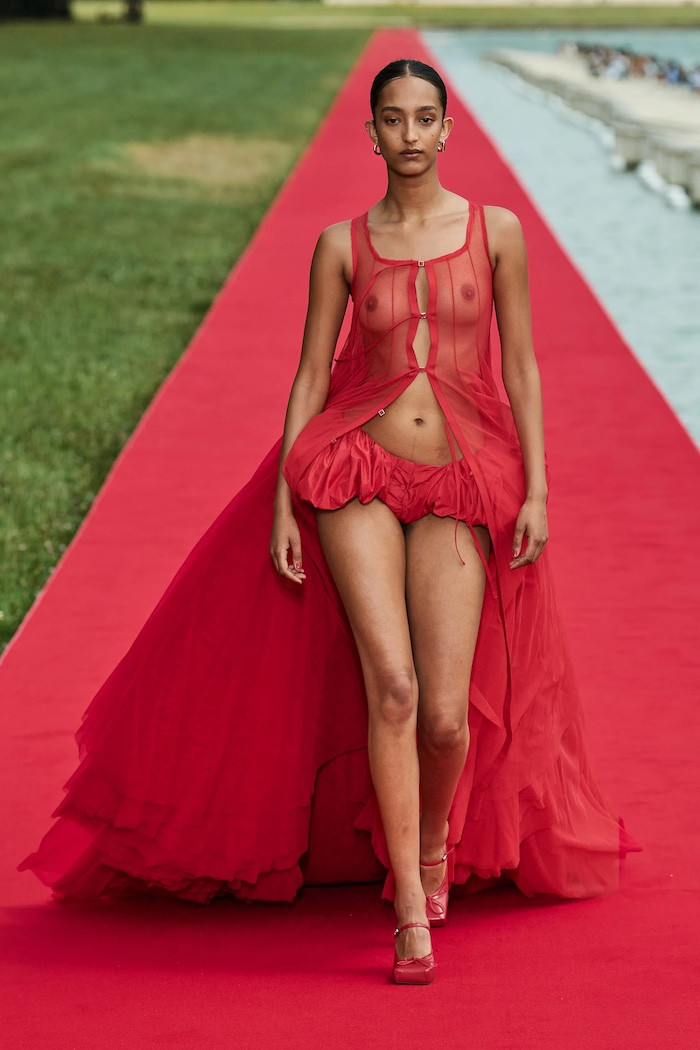
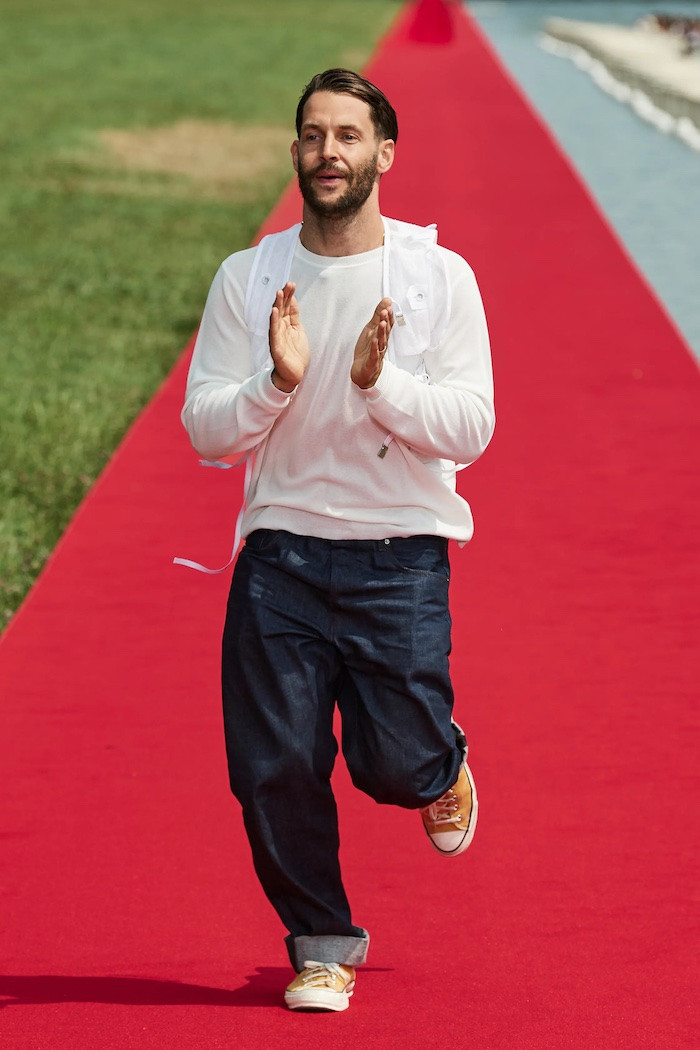
For Spring/Summer 2020, Jacquemus paid homage to quaint country living by presenting at a lush lavender field situated in the South of France. For Fall 2022, guests were transported to what felt like a strange planet painted in white, the salt marshes of Aigues-Mortes — a nod to a new chapter for the brand, a carte blanche if you will. This season, guests arrived at the esteemed Palace of Versailles, where they were guided by boat to a cherry-red runway. This royal treatment only seemed fitting, as the collection revealed nods to some of the Palace’s most regal guests: Marie Antoinette and Princess Diana.
The “balletcore” trend has dominated social media over the past year, but where the fad often falls flat is in properly referencing traditional ballet elements, Jacquemus assured that the proper historic relevance was provided in each design, while still managing to permeate every look with a sense of modern playfulness. Coquette adornments ooze from every element, many of which are outfitted in lace and accented by elongated ribbons. These delicate details are effortlessly balanced by just the right amount of contrast: sultry sheerness and the sans-pants phenomenon that continues to prevail within many House’s collections.
Between a baby pink, red, and gentle white color palette, precisely tailored suiting, fanciful ruffled frocks, micro-tutus, square-toed ballet-slipper inspired pumps — and the literal cherry on top — imaginative cherry-shaped baubles, Jacquemus presented a new interpretation of regality that the Palace of Versailles has never seen.
Take a look at the entire collection below.

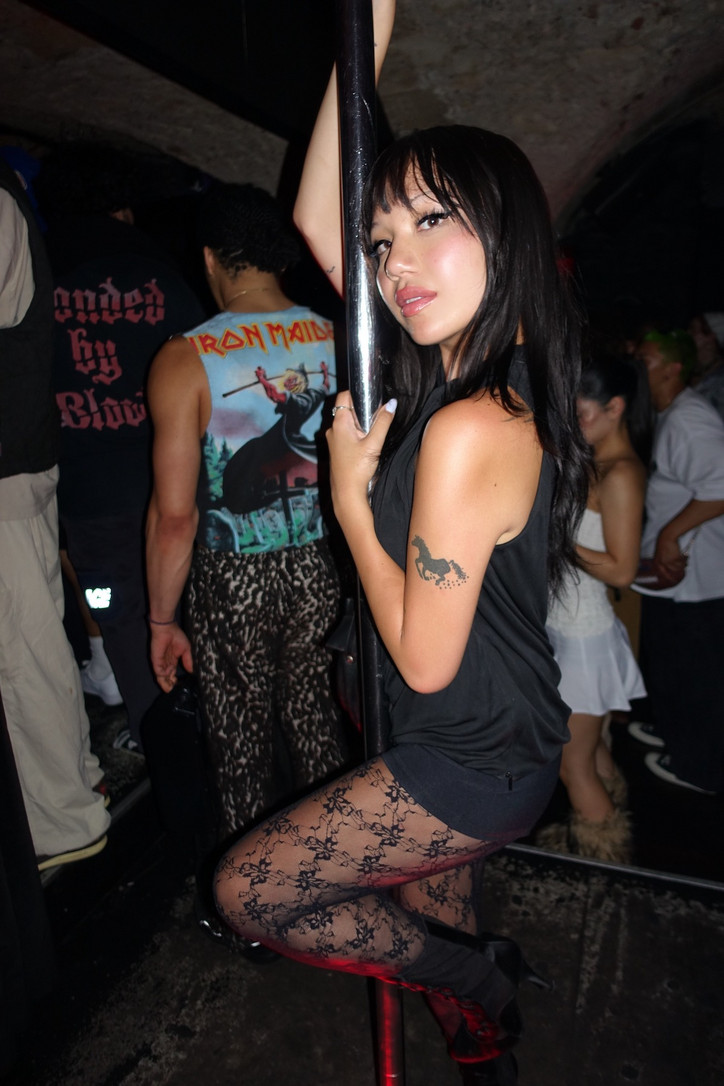
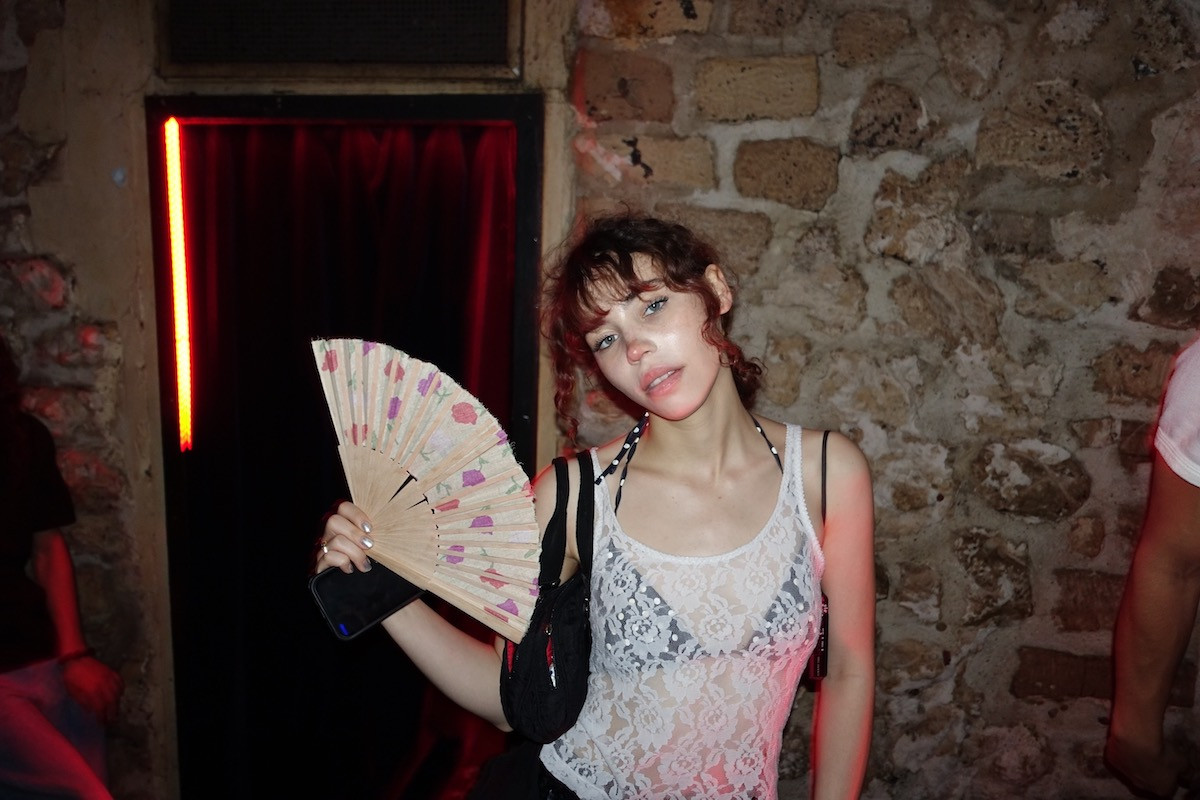
You can prepare for fashion week all you want, plan your outfits, book your meetings, and even color code your schedule, but I can guarantee that the chaos will still somehow sweep you under. I kicked off PFW on its first day with a party at Pamela, a red-lit club in a stone cave with stripper poles adorning the dance floor and disco ball chandeliers. Obviously an amazing time. The first day of the week is the rarest because everyone is still excited and hasn’t had a 4 am night yet, that being said I made a Cinderella exit to get some rest for the Issey Miyake show the next morning.


I arrived at Musee Des Arts Decoratifs early in the morning and walked through an incredible garden to reach the entrance despite the rain. The show was beautiful and like nothing I have ever experienced — something about Issey Miyake reminds me of joy and happiness. The first few looks were wrapped in pleated cloth, cut open by hand, and put on the models in front of us. This wasn’t only a show but an incredible performance. Following Issey, I headed to Amiri, by subway of course. No one tells you this but the city during fashion week is so busy that it is nearly impossible to get an Uber unless you are blessed with a miracle. Upon Arriving at Amiri I was greeted by not only an usher but a waiter with a tray of Aperol Spritz and was led to my seat while songs that could only be described as the soundtrack of summer played. It was overcast but I still felt like I was in the south of France on vacation. The runway surrounded a garden bar with barstools and cafe tables as seats for important guests.
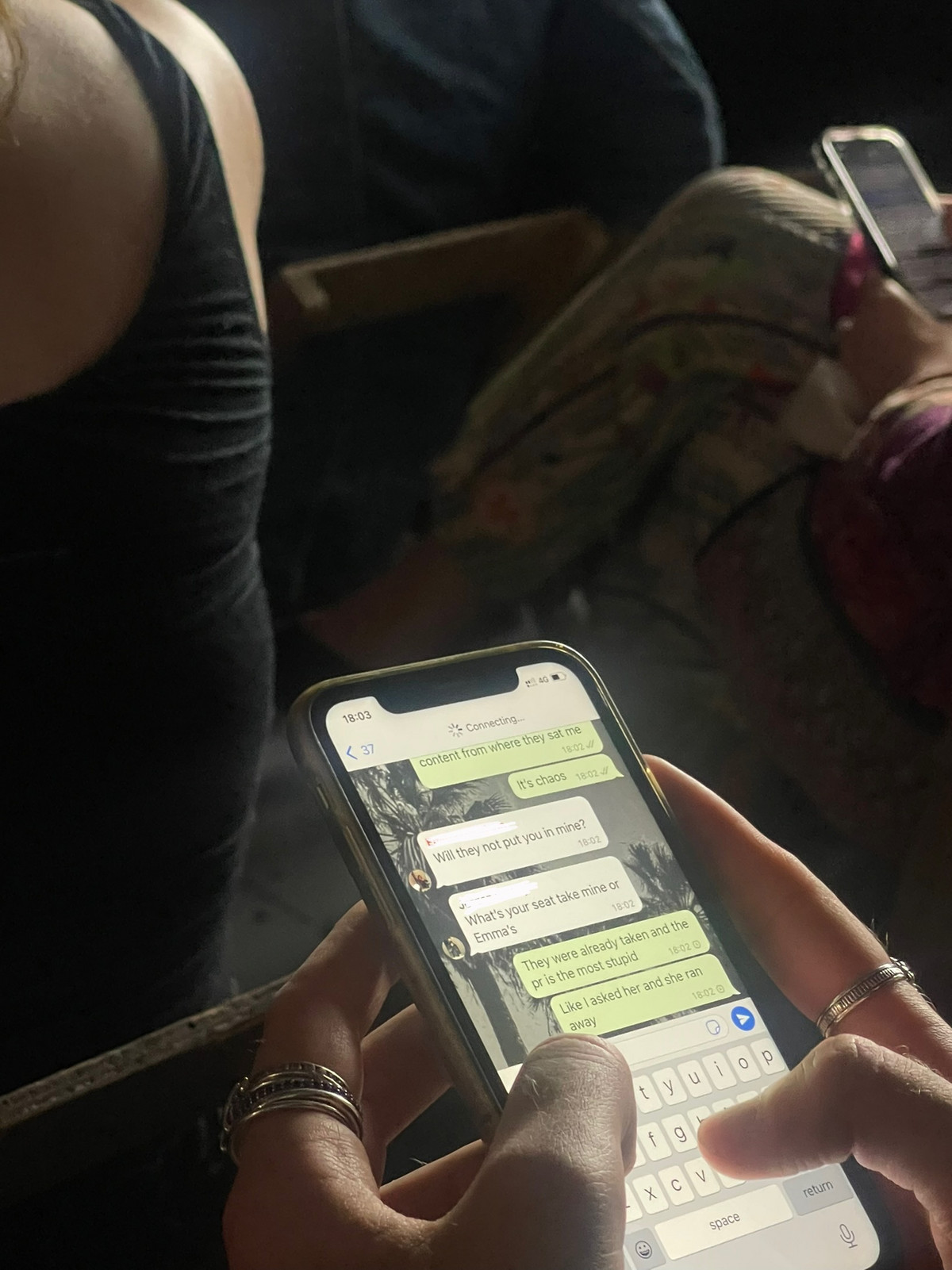
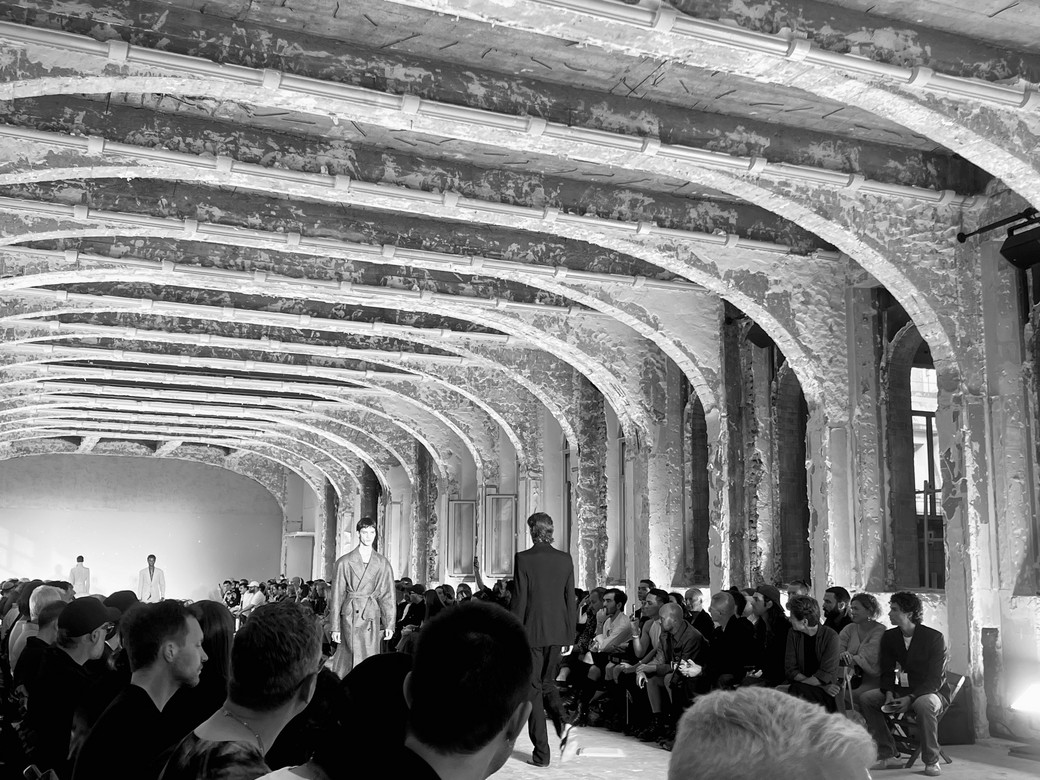
Afternoon hit and I had to practically run to Yohji Yamamoto. I was excited about this show not only because I am a huge fan but because they sent me a huge envelope with a tailored burlap bag that had the show details printed onto it with a ceramic yohji tile inside. I had high expectations for this show based on the invite alone. As I arrived, each PR person had difficulty finding my name as the entrance was being swarmed with guests invited or not, yet they still had it under control. Without PR teams fashion week would be impossible in my mind, and for these men and women, I am extremely grateful. I was led into the room, hot and dark with people sitting in their seats. I had time to kill and peeked at the phone screen next to me.


The person next to me was right, we were in the very back, something you’ll clearly be able to see from the picture I took of Yohji below, but this still made me laugh so hard I had to sneak a photo. I was fortunate enough to see my friend Finlay Mangan walk the show and asked him what he considered the best and worst part of fashion week. He said, “The best is the moment you make eye contact with a friend from another country that you haven’t seen since the season prior, and the worst, holding in pee for 2 hours because you don’t have a single second between call times.”
My last show of the day was Dries Van Noten and I had 30 minutes to get across town in traffic, I was saved by my taxi driver who weaved in between fashion week shuttles and Mercedes trucks filled with celebrities. The invite strictly stated “To access the show space, guests will need to walk up a few levels of inclined ramps and stairs. Please keep this in mind for footwear as heels might be difficult.” Fortunately, I LOVE a challenge especially if it's in the name of fashion. I quickly strutted up the stairs of what seemed to be an abandoned building in my Miu Miu kitten heels and found my seat with two minutes to spare. All I can say about this show is wow. I would’ve climbed up a million more flights to see this show if I had to. It was in the most unexpectedly beautiful venue with looks that took the words out of my mouth. Truly a favorite of the season.
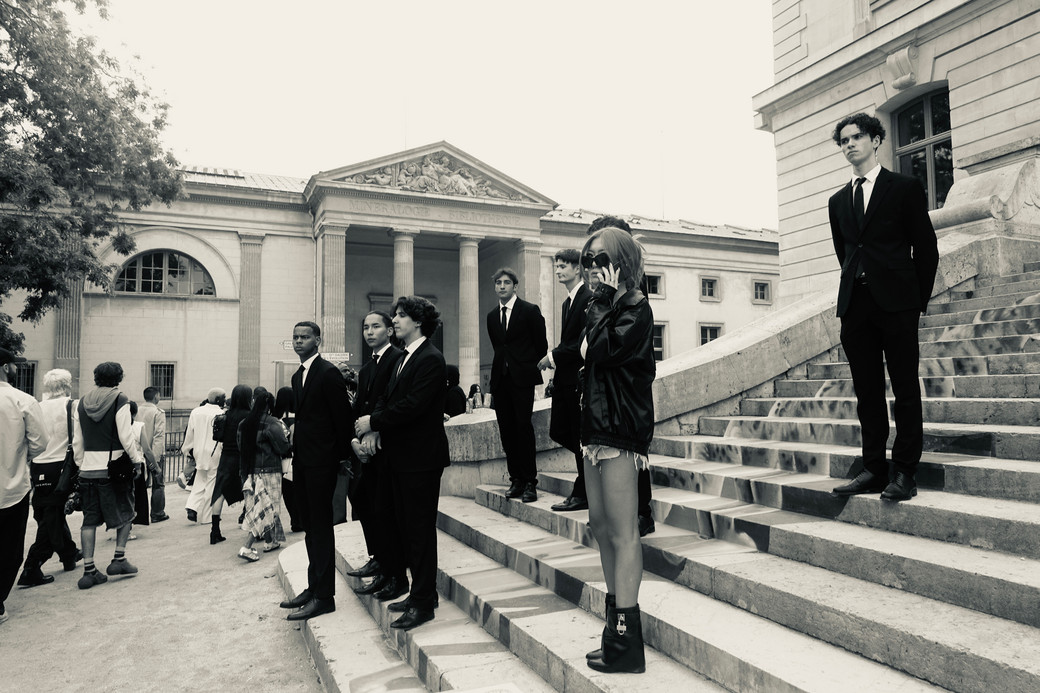
The last day of fashion week crept up on me fast with only two more things to do, Comme Des Garcons Homme Plus and one of the ten parties happening that night. I rested and attended the show in the early afternoon which was actually located in a parking garage pending demolition. It was hot but thankfully the air conditioning was blasting which is another fashion week miracle. Personally, the CDG and Junya crowds have always had my favorite looks and afterward, I was lucky enough to take some photos of the attendees before I prepared for my fashion week finale.
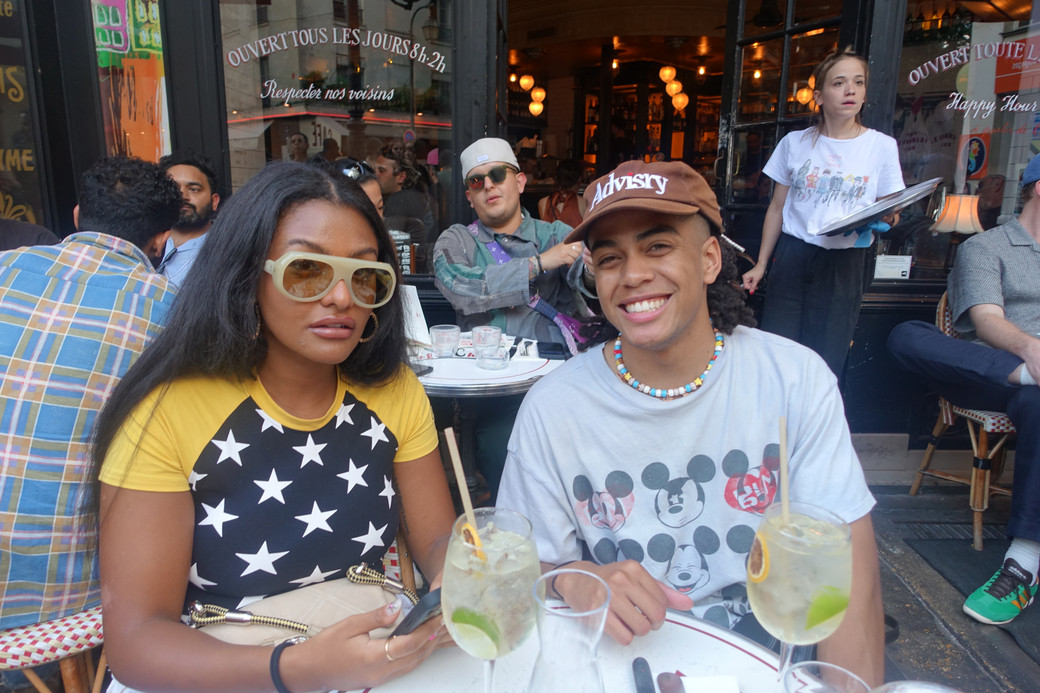
I sat down at Cafe Charlot with my friend Tinbete Daniel, an amazing LA-based stylist, and Keith Herron, creative director of Advisry. I have known them both since we were all young kids with dreams of doing this work someday and seeing them in Paris was a bit monumental. Back to Charlot, this place was truly the NYC downtown meeting point in Paris. I made the joke that it felt like Instagram in real life and there must be a creative director at every table to which my friend showed me a meme that said “Y’all got Paris looking like Pianos this month.”
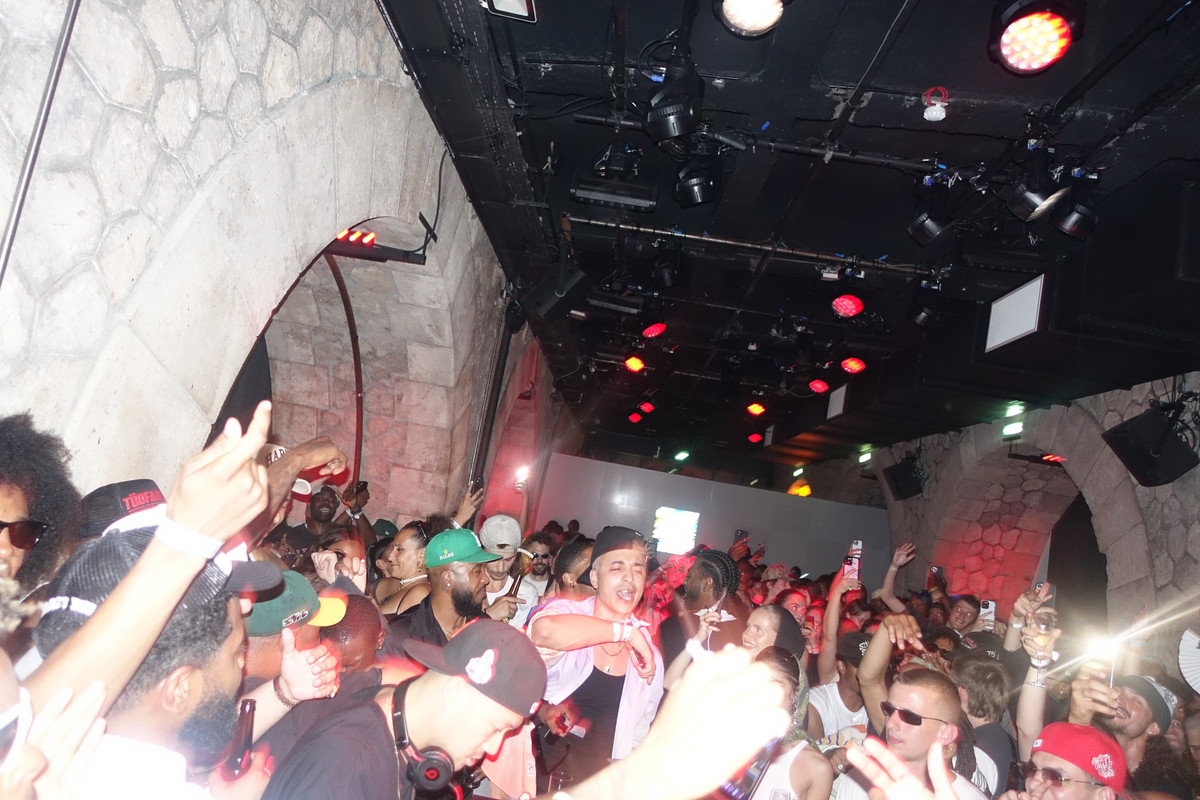
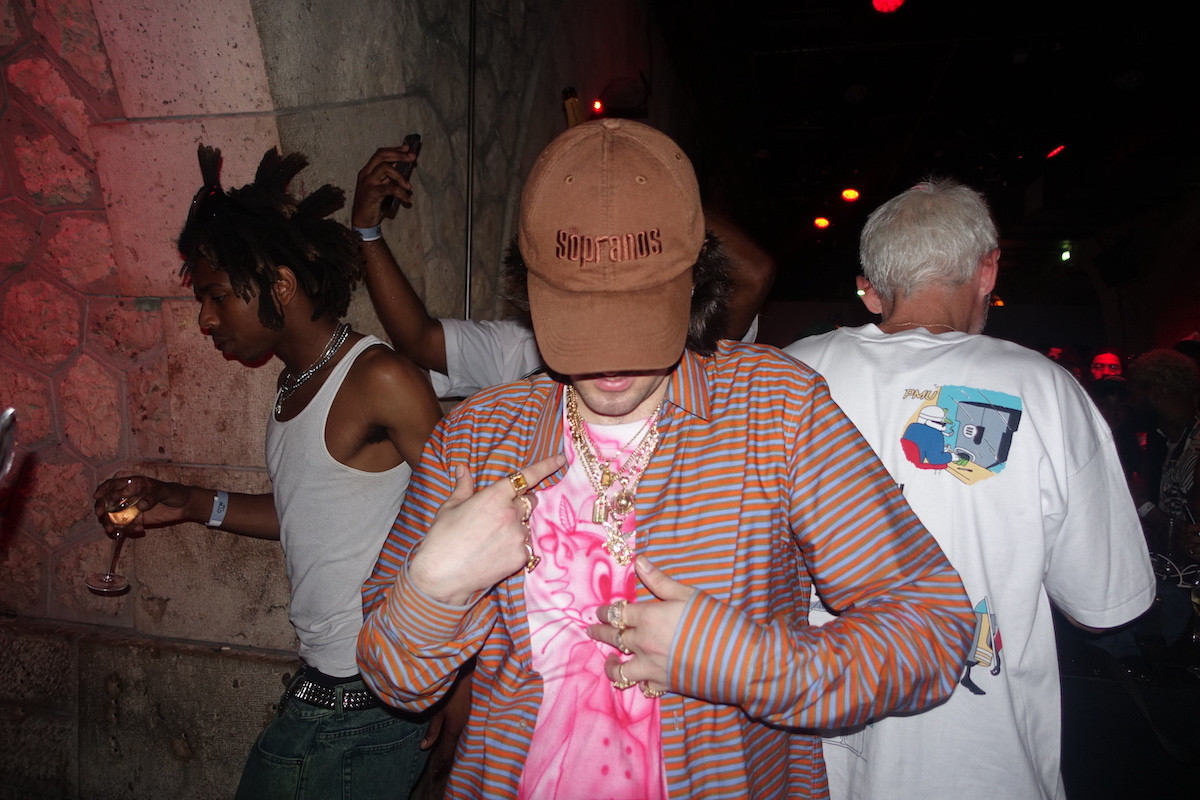
Keith and I finally decided to go to the Donovan’s Yard x Vans party after two hours of contemplating. We arrived and I was ready to face the fact that I was absolutely not on any list, but at that moment a friend of his grabbed us and put VIP wristbands on us. We walked into the club and they were playing Los Angeles rap music that I hadn’t heard since high school so I was obviously having the time of my life. I ran into Ally Bo, NYC legend and airbrush artist who told me it was his first time at Paris fashion week. I asked him the same thing I asked Finley, the best part and worst part of fashion week. He took a minute to think as Sweet Lady by 03 Greedo came on and the entire party started singing. He finally said “Best part: partying. Worst part: partying.”


I know that you previously worked in fashion and that sparked your inspiration. What were some of your earliest fashion memories? Where were the places that you visited to buy your own unique pieces?
I really feel like fashion was in my blood. I was raised in this kind of eccentric environment with my grandma on my dad's side, she lived in LA, so I was around her a lot. She was an artist and also very into fashion and collecting. She aired on the side of major eccentricity and I was always around her and in her house. Her home was incredibly decorated all the time and she was always in an incredibly put-together outfit. As a young child, it was something that really appealed to me. And then my mom was always incredibly well-dressed growing up. She was a trial attorney in the eighties, so it was a world of powerful women wearing powerful outfits all the time. I think growing up surrounded by these women who weren't afraid to express themselves visually was really important for how I ended up becoming who I am and how I ended up being confident in my own way. I can also remember my mom telling me so many stories about how before I could even talk, I was basically telling her what I wanted to wear. I really feel like it was inside of me the whole time.
It's amazing that you also felt like you had the support to go off and do these things. Were you always interested in vintage items growing up? What were some places in LA that you would hit to find one-of-a-kind pieces?
When I was in middle school, I started really being into vintage and I started going obsessively to Rose Bowl every month. I would go to Fairfax Flea almost every weekend. I grew up in Hermosa Beach, which is in the South Bay in LA so it's a little beach town and there were all these tiny vintage stores around. My favorite one isn't there anymore, but it was called Granny Takes a Trip, and it was amazing. For the longest time, everything in the store was $10 or less. I loved the owner too; she and I would always get into these long conversations about clothes and it was never about anything other than the physical item of clothing. It wasn't about who made it or any sort of clout or prestige behind it. It ignited this passion in me for something other than just the physical item in front of me, but the story behind it as well.
Tell me about your experiences working in the high fashion world before you started Lidow Archive. What are some meaningful lessons you still consciously bring with you in your day to day?
I started at Vogue when I was 17 and that was a huge learning experience in so many ways, but specifically in certain pieces and designers because I didn't really know anything about designers before that. That was a really cool way to be introduced to it because it was so hands-on. It gave me both knowledge and an appreciation for a different kind of fashion that I think has really helped me throughout my career and brought me to where I am now. And as for the work experience in general, it was hard. It's not easy working in the fashion industry, as anyone who works in the fashion industry knows. It's a high-pressure environment and so you either have to learn or move on. And my first boss at Vogue, her name's Jessica Cantor, was probably one of the most influential people in my career. She's still in my life. I can't half-ass anything because I always have her voice in my head being like, 'This is Vogue!'
It's such a formative environment to learn the ropes and learn how those little details matter.
Another thing that I think about a lot that has really benefited me is, she told me that one of the biggest mistakes young people make starting off in their career is to suck up to the very powerful people and then they almost try to compete with their peers and they don't spend any time trying to connect with them. Jessica told me that that's such a mistake because your peers are actually the next powerful people and if all goes well, you're all gonna be coming up with each other. And isn't it cool that you get to support each other? Isn't that a better way of doing it?
Definitely one of the best parts of what we do is the community that you're able to create in these creative realms. It's important, especially because it's kind of a unique path. So it's good to have other people around you who are going through the same things and can understand your journey. With all of your prior fashion knowledge and collecting, do you have some favorite collections from past eras that are very inspiring to you?
I really gravitate toward the 1960s through the 1980s. I feel that my specialty is actually more of the unbranded versions of those times, and I also take a lot of fashion inspiration from movies as well. I think that my love for fashion came naturally and then the love for design came later. There are a lot of really amazing collections that I love, especially from Franco Moschino. He is one of my all-time favorite designers and I still think he's a bit underrated. I think he's starting to get his time in the sun. He did all these 'Cruise Me Baby' collections through the late 80s and early 90s where essentially one time a year he would pick a different city in Italy. So he did Florence, Venice, and Rome, and he would make a themed collection for those different cities. And I just love that he did that because I think that is true to what a fashion collection should be. It's taking one central concept and really making the most of it. And he just had such a kitschy way of doing things that almost poked fun at himself and poked fun at the industry that he was working in. That's so inspiring to me because he wasn't scared of what would happen if he poked the beast.
I'm sure there are so many parts of your life that you derive inspiration from, but you also mentioned film. What were some movies that really caught your attention for costuming and fashion?
I was a gymnast through most of my childhood and you get injured a lot. The way that I would deal with that was I would watch all these old movies. I just became obsessed with, specifically, movies from the 50s and 60s. In those eras, there was just so much more emphasis put on creating these dramatic fashion moments. Like Edith Head, the costume designer created movie after movie of these larger-than-life looks — it's not just fashion, it's really art. My favorite movie of all is this film from 1968 called What A Way to Go, starring Shirley MacLaine. It's still something that I reference all the time. And there are tons of moments where the clothes become like performance art. It's not just that they're sitting there lifeless, they're actually becoming part of the scene and becoming part of the acting. And I think that kind of gave me a whole new understanding of what clothes can do and what they can be.


I love the idea of clothing being more than just something you consume to put on your body. I think it's so interesting how you can look at certain eras and look at what people were wearing and it can tell you so much more about the political climate of the time, the economic occurrences — there are just so many different things that you can derive from that. Even from a young age, it seems you were really confident in expressing yourself. How does your identity as a queer woman, but also just a confident and self-expressive individual, manifest in your work and your process?
It's always been very clear to me that I've been different. Especially growing up in a little beach town — I was very much different than the people wearing sandals and Abercrombie. I was the odd one out and I never really understood the concept of wanting to fit in. I really truly didn't understand why people would want that. And now, that's something that I look back on as being a huge privilege of my personality and also the way that I was raised. I think that that's also been really intertwined with being a lesbian and being confident in who I am and the fact that I am different. I do identify with more of a counterculture. I think that it's always been very important to me to express myself the way that I want to. And because my art form is through clothes, it's something that is the first thing you notice about me. So I think it's hard for me to hide who I am sometimes and that can be a bit vulnerable. Having the confidence to wear what you want to wear is really indicative of a larger notion of feeling comfortable with who you are and that has really helped me.
I think fashion is a really cool connection point for so many people from different walks of life or different backgrounds. In what ways did being able to express yourself through clothing, even from a young age, help you come out of your shell and feel more confident in yourself? Especially in a place, as you referenced, where maybe there were a lot of people who you didn't feel like you could connect to as easily?
I think when you're a person who is visually different, people can't really ignore it. But I don't think it has to create a boundary — I think it can actually create more of an opening. Growing up, it was something that I had to kind of figure out what it meant. I remember in high school, there were all these water polo kids that were making fun of the way that I dressed, and I didn't care. I was kind of confused as to why they were making fun of me because it just was like, 'This is what I want to be doing and I'm not making fun of you for your choices.' Why are you making fun of me? They eventually stopped trying to make me feel bad about it and that was such a big lesson for me because since then I've realized how powerful it is to just not engage with negativity. And instead, create this extreme positivity and embrace your differences.
I admire that that was something you taught yourself even at a younger age. How would you describe your process when you are curating certain pieces; what speaks to you?
I feel like there's something about craftsmanship that is impossible to ignore. And I think with vintage clothing you get that more frequently just because people put more care into what they were making because they were consuming less. I think that it's sad that that's something that's kind of been lost with fast fashion and people only wanting to wear things once. There's more of a story behind vintage clothing. Something that I feel very lucky to do, by having a rental archive, is that I can have these pieces that can then go on and live all these other lives. My taste and my interests change constantly. And I think it is a bit of a battle sometimes to keep myself focused and aligned with my own taste instead of getting caught up in maybe what people are looking for at the moment.
I think there totally doesn't always have to be an equation or a certain method that you follow to find your pieces. What is one piece that was something you couldn't believe you got your hands on?
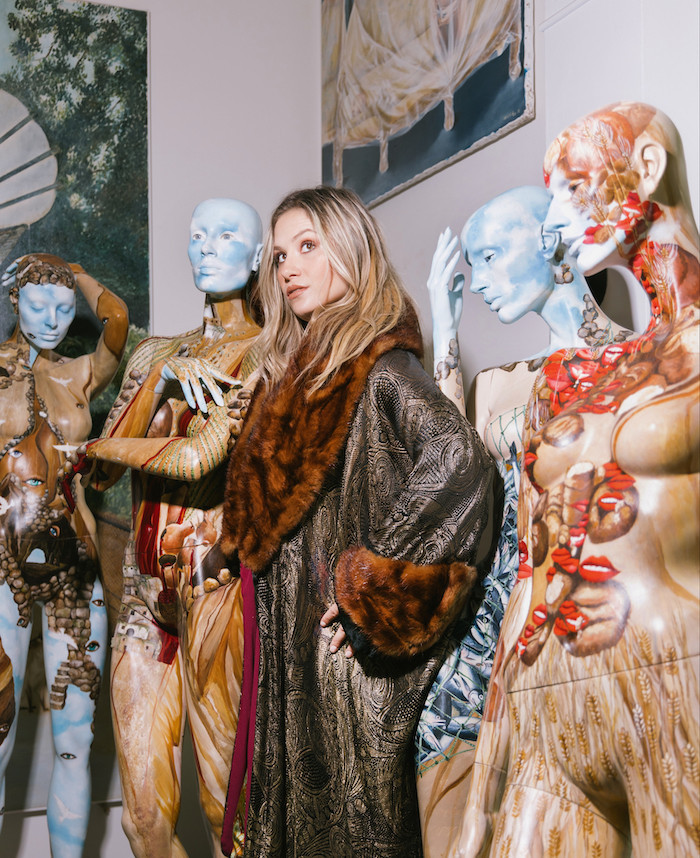
One of the pieces I'm wearing in these photos — it’s a 1920s Jeanne Lanvin coat. I didn't track that down; that actually came in one of 36 boxes of my grandma's clothing that I just had shipped to my house in New York before I moved back to LA. I had no idea what was gonna be in there but it was perfectly preserved, in amazing condition. I sat there staring at this coat for hours because this is something that could be in a museum. It's so crazy and I still to this day cannot believe that I have it. It's so special to see the craftsmanship. There are all these little details inside of it that no one on the outside would see. It's only for the person that's putting it on. And that's also another thing that you don't get with modern clothes, you don't have these little secrets. It's just really cool to feel like I have that part of history.
It's the coolest part about when people come to you to rent your stuff, then they become a part of that story. You've found a lot of magic in what you do. So I think in a lot of ways this is like your own fantasy land. If you could create your own planet, what would Haile's planet look like? What would it be like, what would people be wearing?
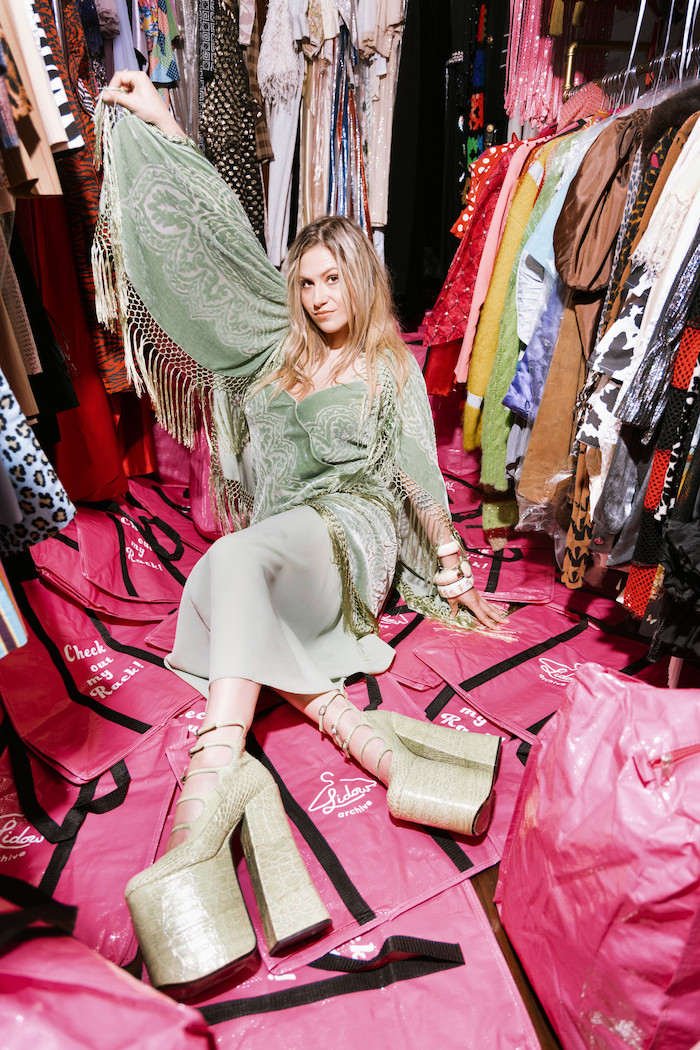
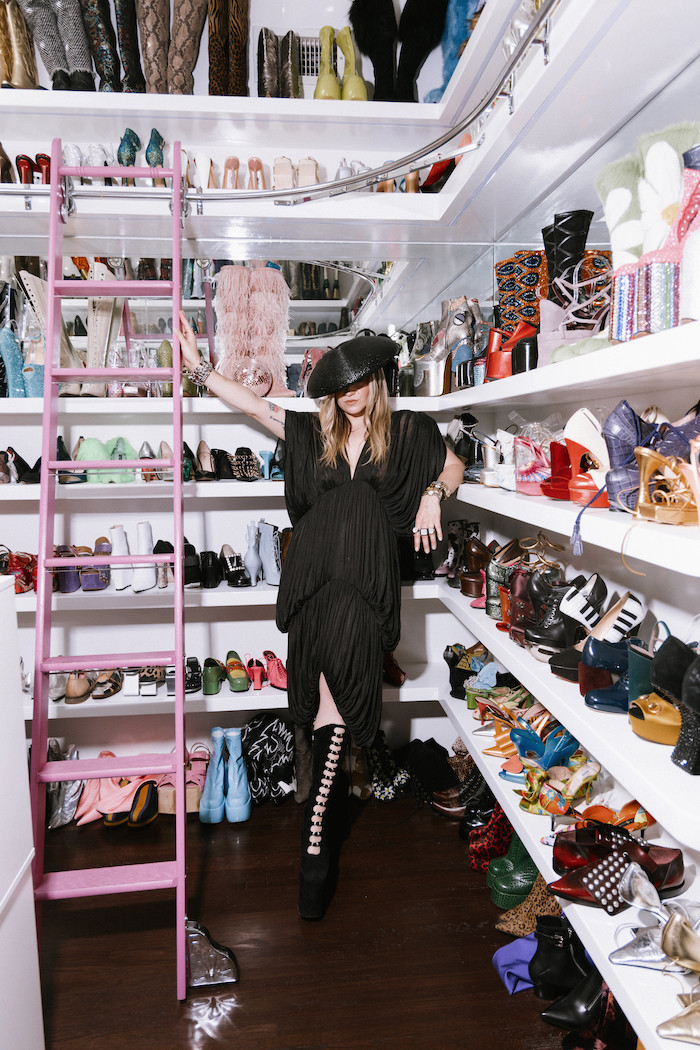
I love this question. So I feel like this is actually my real-life goal, just to create a version of my own planet. Or a Lidow universe. The house that I have the archive in right now is Lidow Land. And I hope to expand to other planets as well. I actually do want to create this experience that I think I already have on a small scale; it’s not just a warehouse full of clothes but a 1930s Spanish-style home with each room standing in as its own little world in a larger world. It's all very eccentric and thematic. Every room is a different bright color with super unique vintage furniture and I have maybe 80 or 90 mannequins. But then others are wearing Lidow Archive and I style them out every week and I put them in crazy wigs. It becomes its own world that you walk into and hopefully, you feel transported from the reality that you leave behind when you step in the door. That's something that I truly hope to continue creating by not just offering clothes for rent, but by also creating these spaces that eventually people can use as film locations or for prop rentals. And also that I can hopefully start doing this for other brands as well, as a creative director.
How do you hope that Lidow Archive changes people's perceptions of the way that they consume certain pieces of clothing and how else do you hope to evolve and grow over time?
People are definitely starting to see that there are more options than just buying from fast fashion. But I think, with that, also comes this idea of resale and that's great. That's very sustainable too. But I think that also feeds a little bit into the whole concept of things being disposable, in a sense. There's a point that's being missed in this kind of way of viewing clothes as just wearing them once and then moving on because it takes away the art. There's an art in turning one piece into all these different moments. And then maybe you rent everything else from me, you know? Impact-wise in the fashion industry, something that I was really thinking about when I first started my business was my origins. I worked in many different aspects of the fashion industry — magazines, styling, I worked in fashion PR as well — which all taught me a lot about running a business. But I think that there are a lot of pockets of the fashion industry that are really toxic and that promote feeling less than. And that's never something that I wanted to be a part of. Being able to create my own little space in this crazy world where it is incredibly inclusive and understanding different people's perspectives is the coolest thing ever. We're doing something that's an art, we're doing something that is beautiful, and it's also not life-threatening. So why are we taking it so seriously?