Did your experience in school help you with what you do now? Or did you kind of figure things out on your own?
That’s a tough question. I don’t want to phrase it in a way where it sounds like education isn’t important, but at the same time I think the experience you have outside of school really helps you become who you are today. So for me, the reason why education was very important was A) I got to choose what I learned, but B) It instilled a work ethic in me that I don’t necessarily see so much in my peers. Most of my friends didn’t go to school in New York and didn’t grow up in a fast paced environment, so when they moved to New York they were very overwhelmed. But for me, going to school in New York instilled this work ethic that helps me with my career now, if that make sense. It helped me adapt much quicker.
What do you do now?
I work as a full time buyer for a luxury company called The Webster, which is based out of Miami, but we have four stores and counting. I haven’t really been doing so much styling work, but sometimes I will pick up a freelance on the weekends. Most people think buying is very based in business and structure, but for me it’s creative because you have to understand the market and understand where all of these creative designers and individuals are pushing the market towards. That’s what you’re buying, so it goes hand in hand.
How do you like to research what designers are pushing?
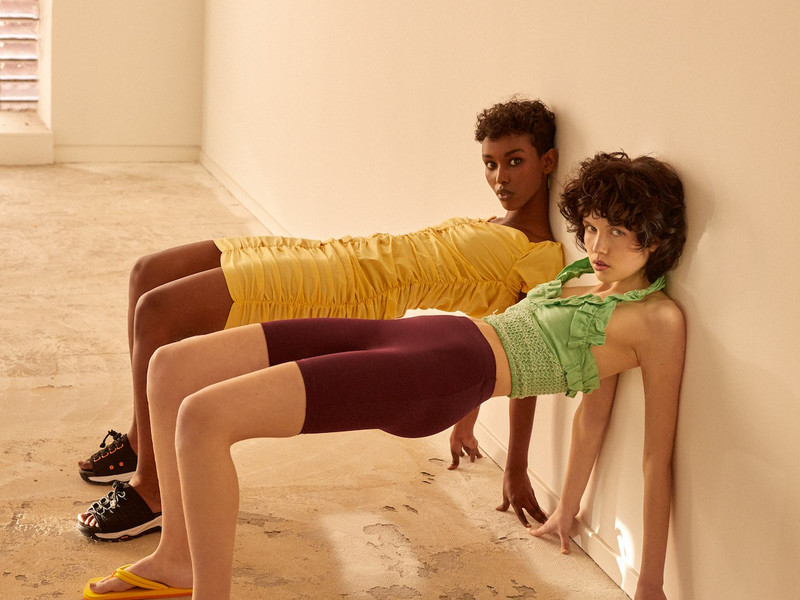
Let’s say that you see the first three shows that open up New York Fashion Week—you kind of understand what trend your market is going to be in because you see the set up. You’re gonna see kind of the colors that all of the designers are picking this season, but for me what really helps is to look at all of the trends for castings. There are millions of people out there who are blogging all the time about what they expect and want to see in the industry. I think what has really been amazing in the past couple of years is that the industry is listening, you know? They’re no longer solely looking for very thin models. There’s more diversity now in terms of race, in terms of size, and in terms of the fact that brands like Chanel are no longer doing the heavily history-driven luxury type stuff. They did something at the Ritz, but the complete line up was all of these very young girls and boys that you haven’t really seen in the past.
Do you look at any bloggers in particular?
To be really honest—I hate to say this—but I don’t follow bloggers. I have a lot of friends who do blog, but I think that it’s a really contrived market. What used to be very innocent, with people blogging about the things that they were buying or the things they were really invested in that season, has turned into brands reaching out to you for special promotions once you’ve gained a certain amount of fame on Instagram. What I’ve noticed a lot in the blogging industry world and what I’ve heard a lot about is that it’s no longer about personal style. It’s more about what brands you are aligned with and what they can send to you to promote. So, for me personally, I don’t really follow bloggers. I do follow a lot of creative directors, though, because I think that they’re a much different influx of the market. I love Harley Weir, obviously, who is also a photographer in her own right. Yeah, that’s kind of the world I look at personally.
How has being a buyer affected what you purchase for yourself?
I hate to be that girl, but I do love shopping. But I think being a buyer has made me a much smarter and more of an investment shopper. I’m not buying things because I see it on the runway and I see that hundreds of people have it and it’s a “must have” item. What I’m looking for more are the styles that are coming back in season—can I get it vintage? Can I get it more as a special piece? I think I’m more invested in the history of where the brands and the clothing are coming from rather than what’s trendy now. I don’t really love the trend of the market. I should have maybe prefaced with that. But at the same time, it’s been interesting to kind of see designers who are making their own trends, whereas before I think the trends were kind of agreed upon before the shows went live.
What’s one accomplishment you’re particularly proud of?
Honestly, one accomplishment I’m proud of is how much of an individual I have become. I went to boarding school when I was 15, and I kind of pretty much grew up without any family members when I was 18 to 21, and here I am now at 25. I think that’s my biggest accomplishment—knowing that I’m still living in New York and I haven’t lost my mind. I have great friends, and I really love being in New York. It’s very stimulating.
Was the goal always to live in New York?
I honestly didn’t even think about New York until I was in high school. I went to a very academic sports-related high school. But it was there that I discovered that I don’t have to go to a state school, and I don’t even have to stay in Alaska. What caught my eye about NYU was the way they approach diversity. My high school was predominantly very aristocratic white. Here, you meet so many different types of people. You see so many different types of things.
I keep hearing you say diversity. What does diversity mean for you?
By diversity, I don’t mean that when talking about race, gender, or sexuality. It’s more “diversity” in the sense that there’s always so much going on at all times in New York. There’s always so many different kinds of people you can encounter, good and bad. I think it’s really the bad people who make you good.