every cell met with instant ease
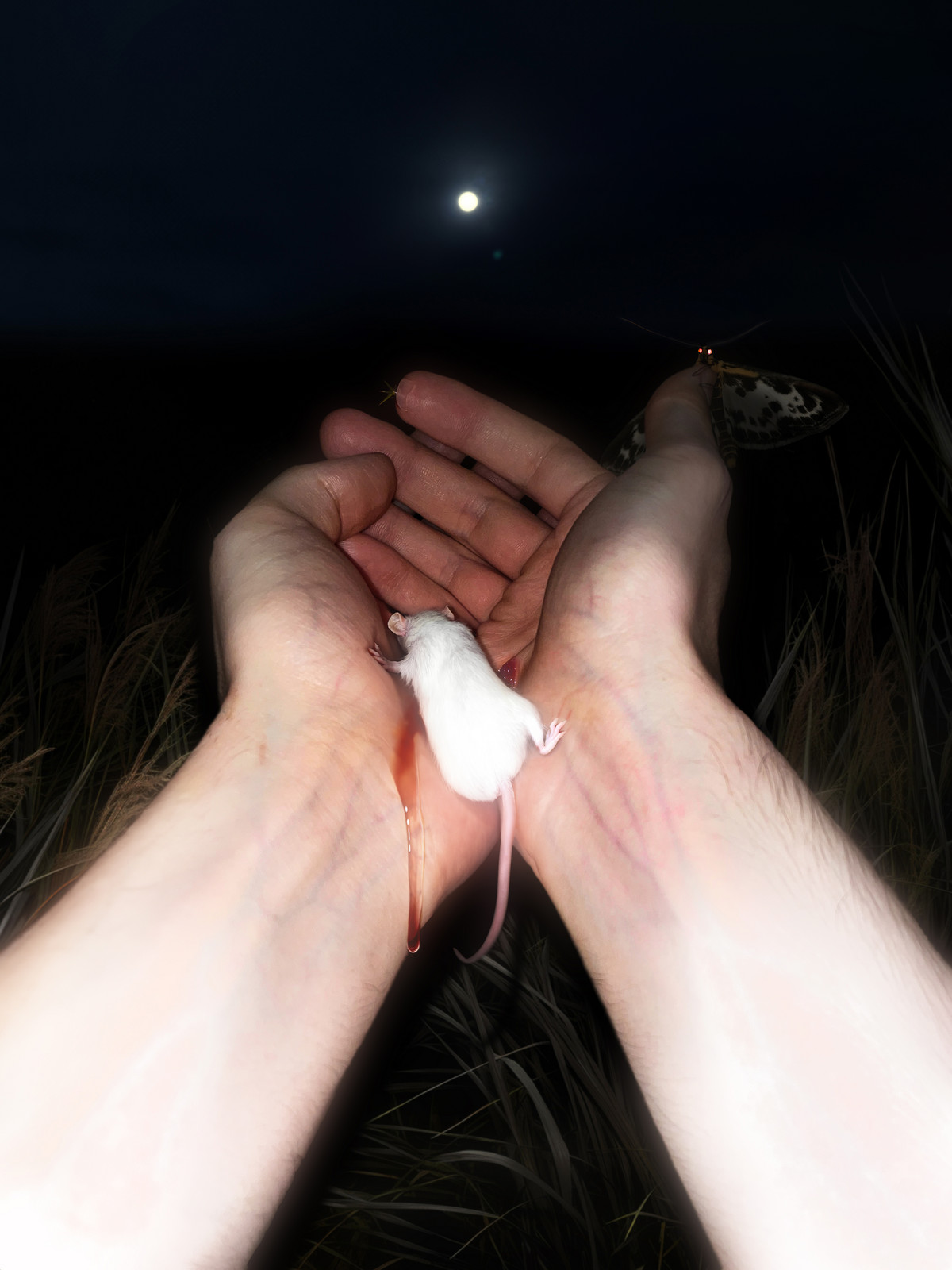
when i speak to myself i use the kindest language i can summon, i am allowed the same grace i give others
and once i gave myself permission i was radiant
when i speak to myself i use the kindest language i can summon, i am allowed the same grace i give others
and once i gave myself permission i was radiant

When you first got to Cannes to shoot for NME, what were your first impressions of the city and the festival’s energy?
I was amazed. I’d never seen anything like it before. Thousands of people wandering around the Croisette trying to spot famous film stars. First the crowds would all rush one way, then they’d rush another. Almost like a murmuration of starlings. And when the weekend came, it seemed like all of France had turned up in Cannes. Over the years, I went to Cannes a couple of times when the Film Festival wasn’t on—once during the music festival Midem—and it just didn’t have the same fervent energy at all.
What made Cannes such a good setting for your work? You’ve called it “hugely photogenic despite the chaos”—what did you mean by that?
Wherever big crowds gather together with one intention in mind, it’s liable to be photogenic. Big outdoor rock festivals, Carnival, Pride Weekend, sporting events like the F1 Grand Prix (Monaco is only half an hour's drive from Cannes). As a photographer, I’m like a kid in a candy store at those sorts of events. Add to that, the blazing sun, the beautiful people on the beach, the expensive cars and the smell of grilled seafood coming from all the beachside cafes, and it’s quite an intoxicating mixture.
You were in Cannes from 1984 to 1996. How did the festival—and your experience of it—change over the years?
The first few times I went, I was amazed at how close one could get to the stars. If you had festival accreditation, you could just wander into the lobby of any of the big hotels and bump into a huge Hollywood star, sometimes several. Or you could see them eating on the hotel terraces or at one of the many fancy restaurants in town. If you could find out what room they were in, you could give them a call, say who you were shooting for, and sometimes they’d allow you up to photograph them. I did it a few times myself. Once, one of the English press photographers told me what room number Helena Bonham Carter was in at the Carlton. This was long before she was a big star. I called her and asked if I could come up and take some photos. She told me she didn’t have any time but she didn’t actually say “no.” And late at night, after all the beach photographers and film fans had left, one could sometimes see big stars walking, and occasionally staggering, back to their hotel rooms after a night out. I think there’s zero chance of any of that happening today. By 1996, the Hot D’Or awards had moved to Paris, and the craziness had subsided a notch or two.
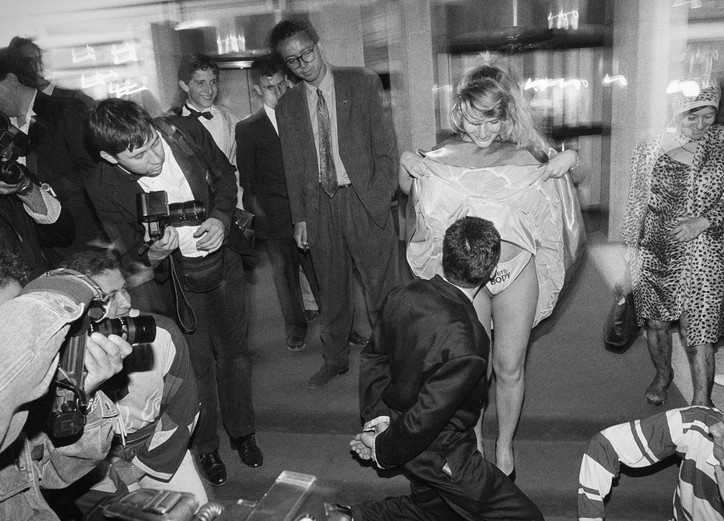
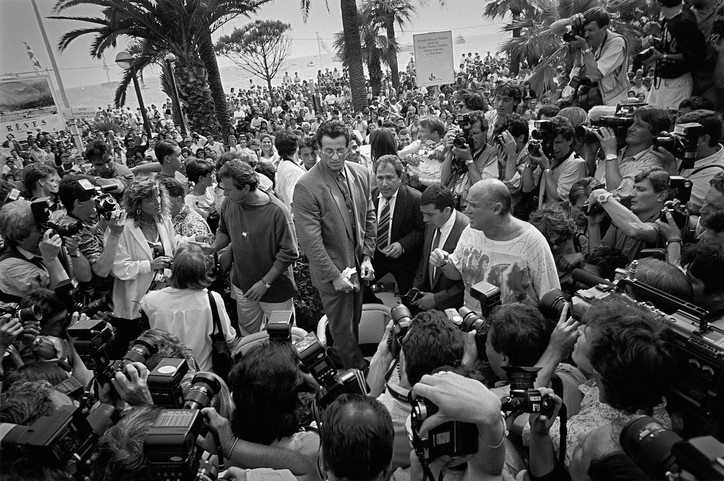
When you’re photographing something more polished like Cannes versus a more raw or underground scene, do you change how you shoot—either technically or emotionally?
It never felt like I was photographing the polished side of Cannes. I never once photographed the stars on the red carpet or attended any of the organised Film Festival photo calls. And being pushed around in the mosh pit at a rock gig or elbows out amongst a big crowd of pushing, jostling film fans at Cannes is emotionally not so very different. Last year I published a zine of photographs of crowds at the front of rock gigs. The atmosphere of excited eagerness was quite similar.
Do you rely more on instinct or experience when deciding what moments to capture in a setting as dynamic as Cannes?
Every moment of every day there’s a photograph waiting to be taken and, yes, with experience, one does learn to be open to every possibility. Whether that amounts to it ever becoming instinctive, I’m not sure. But I am absolutely sure that I miss far more decisive moments than I ever manage to capture. Probably all photographers do.
What usually catches your eye in that environment? Are there certain moods or moments you’re always drawn to?
I’m certainly drawn to all the craziness on the Cannes beach. I’m drawn to all the exhibitionism. Life’s show-offs, peacocks and all those demanding attention will always find a willing participant here.
How do you decide which quick, passing moments are worth capturing? Has your sense of timing or what’s important in a shot changed over time?
One thing I did learn from Cannes is that although there’s a decent photograph to be taken almost anywhere you look, quite often a better photographic opportunity will be happening behind you. Or it’ll be in the opposite direction to where most of the crowd is looking. So you need to be quite clever and learn to anticipate what might be about to happen. I don’t credit myself with any special ability in this regard. Across 12 years of attending the Cannes Film Festival, I shot many thousands of photographs, but there were undoubtedly thousands more great photographs that I must have missed.
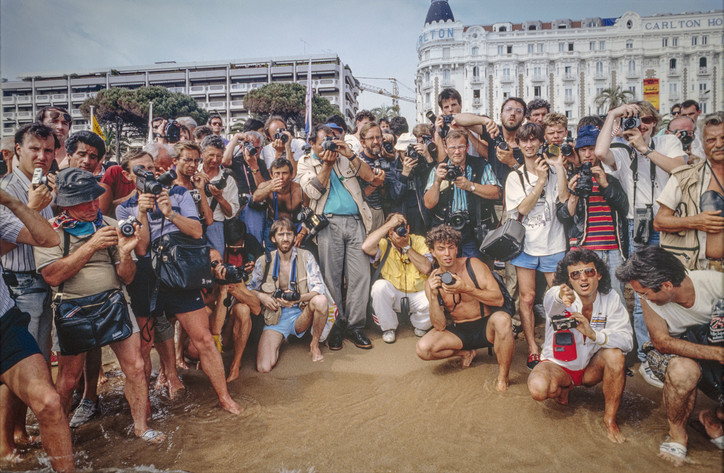
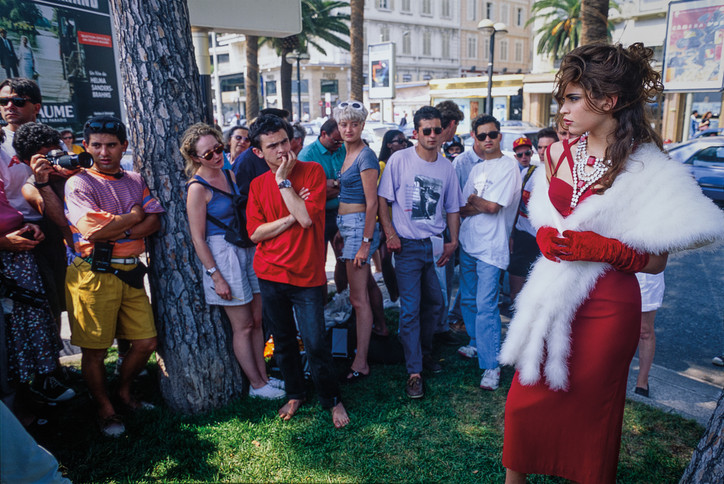
You started out in graphic design and advertising—how has that background shaped how you shoot photos back then but also now?
When I started out, I always imagined my photographs going on the cover of magazines. So I always thought about the eye contact of my subjects and also leaving space for a masthead or typography. Over the last forty years or more, I’ve done well over 200 front covers, so that attitude must have worked out okay. I’m not at all precious about how my work is used. I love working with graphic designers—who might crop or in some way alter my photographs—and I suppose that’s because I used to be a graphic designer myself. These days, when my photographs more rarely go on front covers, I’m still leaving space for mastheads and type.
Your photos often feel like you’re quietly watching from the sidelines—close but not intrusive. Do you see yourself more as someone documenting, telling a story, or something else?
If I was forced to categorise myself, I would say that I consider that I’m primarily a documentary portrait photographer. Shooting reportage is a bit of a departure for me. But I also think I’m something of a photographic opportunist. If I see something that will make a good picture, whatever it is, I’m there. I don’t really think of myself as a storyteller. Not in any real sense. My photographs are just moments stolen from life. They do have a story but it’s not really mine to tell.
Looking back, what does your Cannes series mean to you today? Is it more than just a set of photos—does it feel like a time capsule of that era?
I’m pleased that these photographs are now being published in book form, but I can’t help feeling ambivalent about some of them. They don’t always show male photographers—and maybe men in general—in the best light, do they? But, as everyone will no doubt say, those were very different times. So yes, a time capsule of an era.


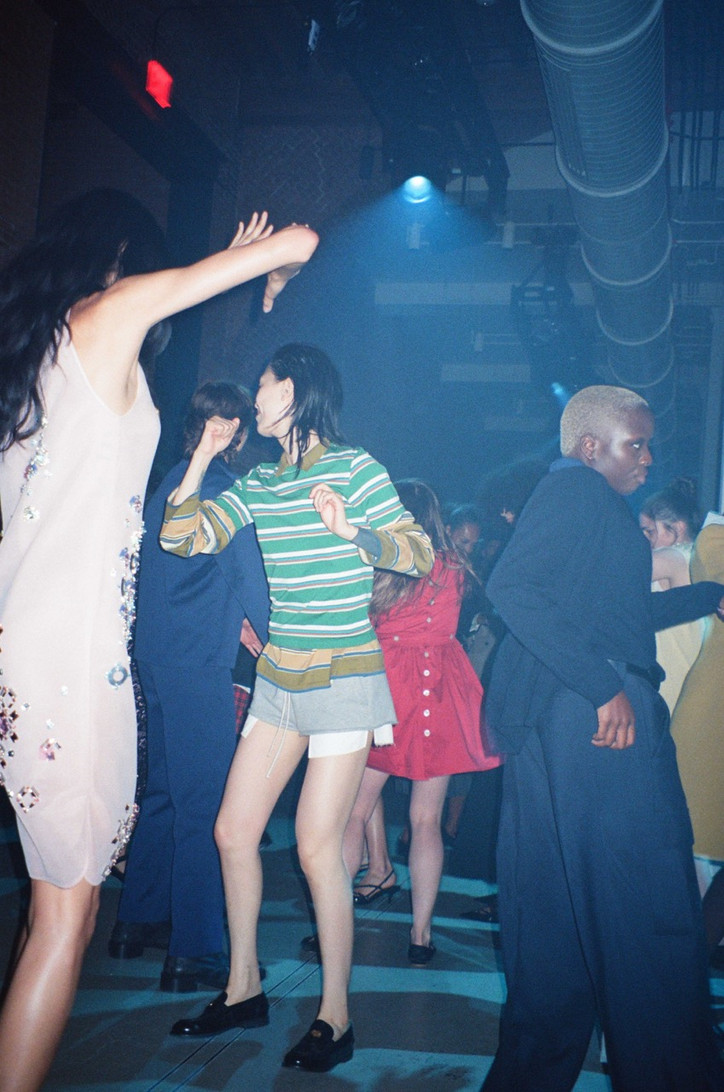
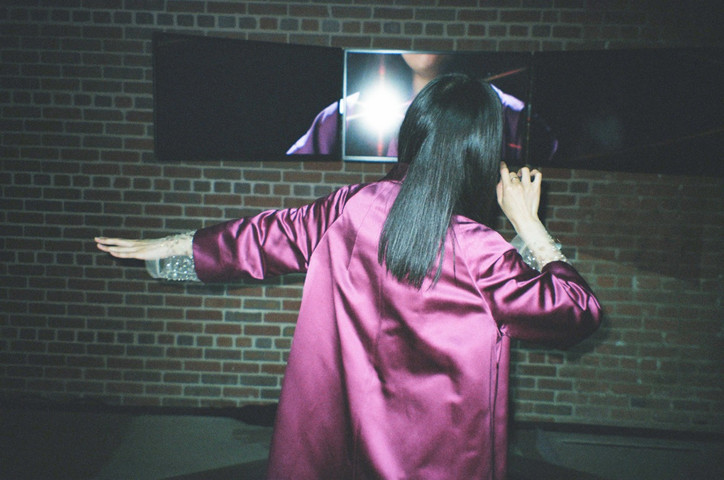
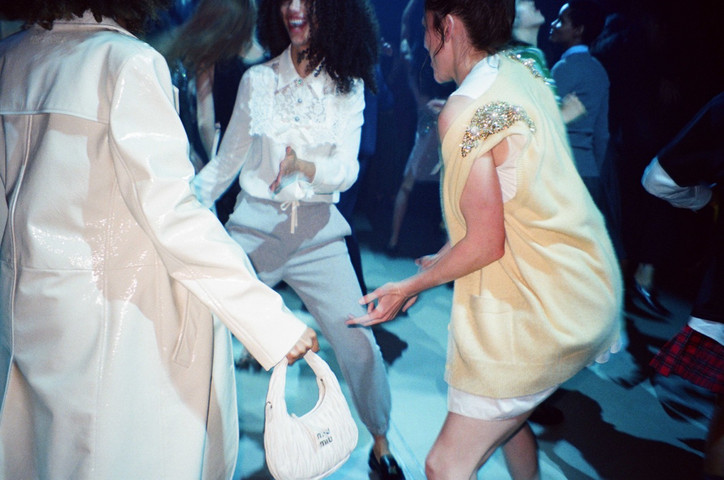
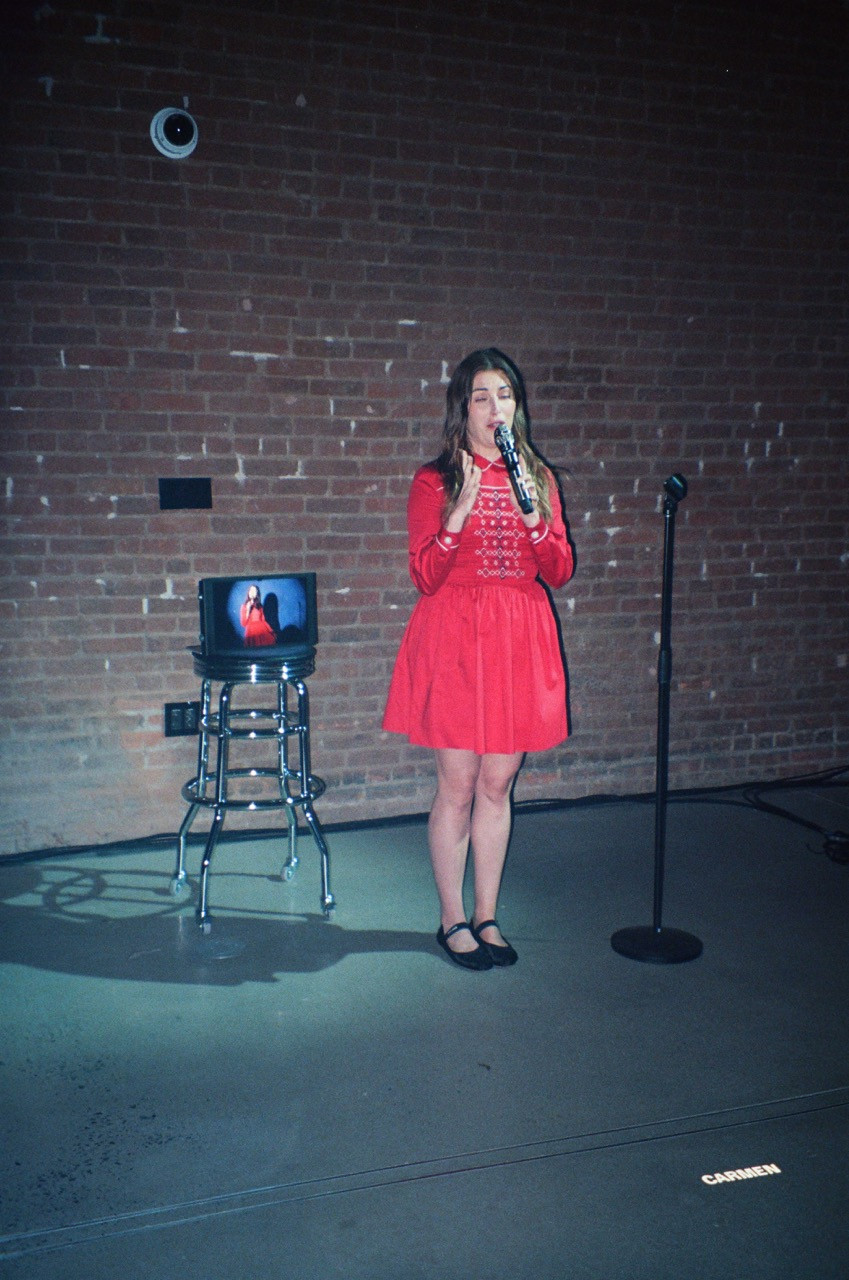
Each installation and character a depiction of a woman you might know, or think you’ve met before. I ended up staying long enough to see the performance twice, which only deepened the sense of a fragmented story looping not just on screens but in real time, unfolding all around us. The scenes eventually converged — the characters came together, dancing, raving — before it all reset and began again.
With my film camera in hand, I tried to document the dreamlike, cinematic tension between performance and reality. The stillness of the images, set against the movement of the performance, revealed something unexpectedly tender in each subject: a glimpse of character beyond the fabric they wore.
Tales & Tellers left me wondering. I couldn’t possibly encounter all 36 characters — I left wanting more. Raised in art school since I was four, I grew up believing that fashion and art couldn’t mix — that fashion was inherently commercial, and art had to remain untouched by market logic. But walking out of the Terminal Warehouse on Friday night, I found myself questioning that belief. Maybe in the postmodern era, fashion can be art, and art can be fashion — and revenue doesn’t have to be what defines the difference.






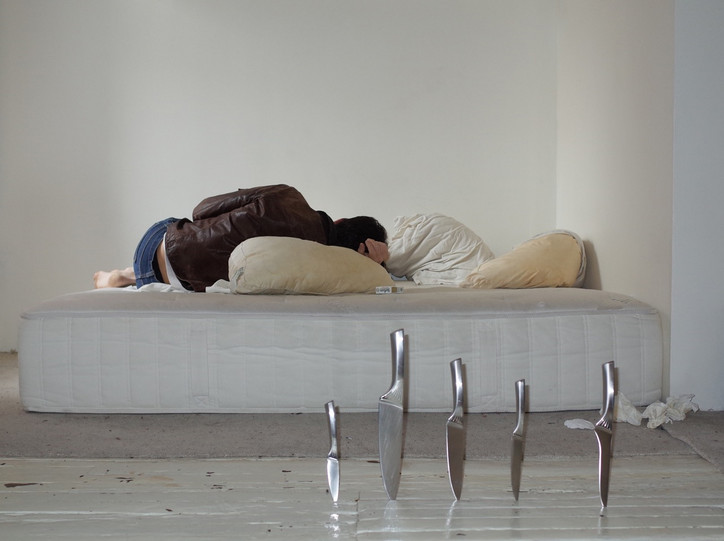
Jack Ludkey A lot of people are curious about who you are. I was surprised when you said you were down to do this.
John Doe Yeah, I mean I get it. Being anonymous is kind of what you do when you really want people to know who you are. I’m very narcissistic.
JL Is that the only reason you decided to be anonymous?
JD To be honest, I thought John Doe as a pen name had an authority, which made me want to use it. I hadn’t really thought through any of the implications involved in writing anonymously. I’m glad I did it, though. I like being anonymous.
JL You don’t wish you had your name attached for ego reasons?
JD No, I don’t care about that. This still strokes my ego.
JL You came up posting little images with prose poems on Twitter, without really getting published anymore. Watching your Twitter unfold I picked up on an aversion to doing things the institutional route. Does that resonate?
JD It does and it doesn’t. When I started writing in fall 2022 I was in a bit of a manic episode, of sorts. I think the aversion you’re talking about is more me wanting things to be finished and realized immediately. It’s a very childlike quality of mine, not wanting to wait. I wouldn’t even edit those pieces, I posted them the second they were finished.
JL A shit posting ethos.
JD Yes, a shit posting ethos.
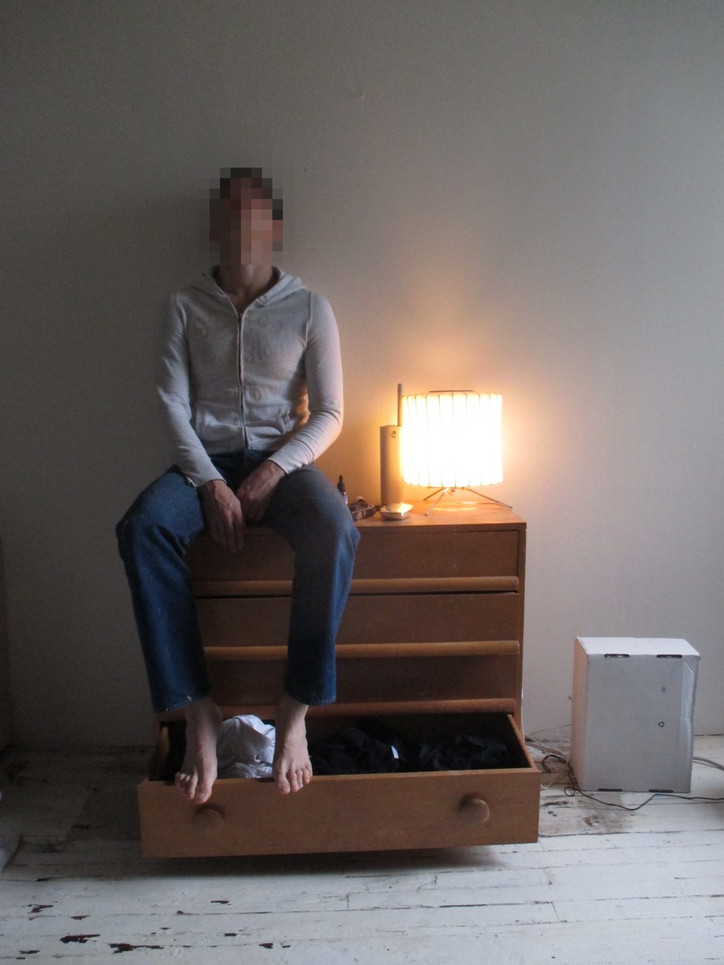
JL And yet you chose to do a book.
JD I did, Manuel hit me up and asked me if I wanted to do a book and we churned out very quickly. My book is not timeless, it feels very dated now. I’m glad he let me work the way I like to.
JL Have you been surprised at the reception?
JD I had a very commonplace fantasy that the book would either not sell at all and get panned or become a New York Times bestseller. I was convinced of that, actually. It did alright. I feel satisfied.
JL Are you still writing?
JD Yes, I am. I’m writing a novel about a guy who works at a tollbooth. I won’t talk about that, though.
JL I’m surprised you’re working on fiction.
JD I know, I am too. I want to do another poetry book as well. We’ll see what happens.
JL What made you start writing?
JD I was in a bunch of shitty punk bands in high school. I “played drums” in them. I don’t know how to play drums, but it was fun. I would definitely be a musician if I had any aptitude for it. You do what you have to do.
JL Are there still videos online? Can I find them?
JD There wasn’t a lot of hype around the high school, front lawn punk scene in suburban Michigan in the mid 2010s, believe it or not. I have some, though. They’re fun.
JL What do you do in your spare time?
JD Honestly? Video games.
JL What do you play?
JD I mean, Rockstar got me into video games. I love L.A. Noire. Have you played Stellar Blade?
JL What’s that?
JD It’s this Korean action RPG. You’re a sexy cyborg girl fighting these weird intergalactic parasites. And it turns out the parasites are human and you’re this weird cyborg who was sent to like… Exterminate all remaining people. It’s awesome.
JL Damn. PS5?
JD Yup, it’s wild. And horny.
JL I would describe your book cover as iconic. It’s in memes and starter packs now.
JD I kind of mentioned this, but I really cranked the book out quickly. Choosing a cover was by far the hardest part. I really wanted to have an epic egirl image, and scoured Instagram and Tumblr for one. None of them felt right, except for two girls who passed.
JL Cancel rocks.
JD Agreed. I was actually just staying with him during the Los Angeles fires. We were smoking cigarettes and watching the Knicks while the city burned down around us. It was weird to watch so much get destroyed, and it was weird to see a landscape so lit up with orange amidst the pitch-black sky. It was also right after my book came out and I left my shitty restaurant job. Things felt very apocalyptic.
JL Yeah, that must have been insane. Are you into sports? Are the Knicks your team?
JD I actually do, which is funny because everyone accuses me of living in New York, which I don’t. I’ve always been a Timberwolves fan, but I got attached to Townes and kind of followed to the Knicks. They rock.
JL You write about God, which a lot of people do for aesthetic purposes. Are you actually spiritual?
JD I am, which I imagine everyone would say. The worst part about doing drugs is having to believe in God and work a 12 Step program after, I’m joking. But yes, I pray every day. I’m not “Christian,” or whatever. I think a lot of people start praying when they’re at their lowest.
JL One time I took molly in Florida with my ex-girlfriend. COVID era. She made out with her gay best friend. I prayed into my pillow after. Like, “what have I done.” Do you like drugs?
JD I mean, of course. But I’ve been sober a long time. I think users are losers, I post on our behalf.