



Tell me about your work.
I can start with my background — I’m from Israel, from Tel Aviv, and I moved here four years ago for my MFA studies at Hunter College, which was an amazing experience. I just graduated last May and then I started this residency for nine months. I think it’s important to know about the biography of a person in order to understand their work.
Do you think your biography plays into your work?
Definitely, coming from Israel, the Israeli conflict, or Jewish identity questions, are definitely a part of the work. A lot of my work is about identity — I try to use architecture as a mediator, as a tool to talk about those issues. For example, in Israel we have a lot of Bauhaus architecture, and we see that as a part of Israeli identity, but it’s an international style, you can find it in many countries. In Israel we are very proud to have it because we have this need to generate identity. This is an example of how architecture and identity can be related, but confusing in a way.
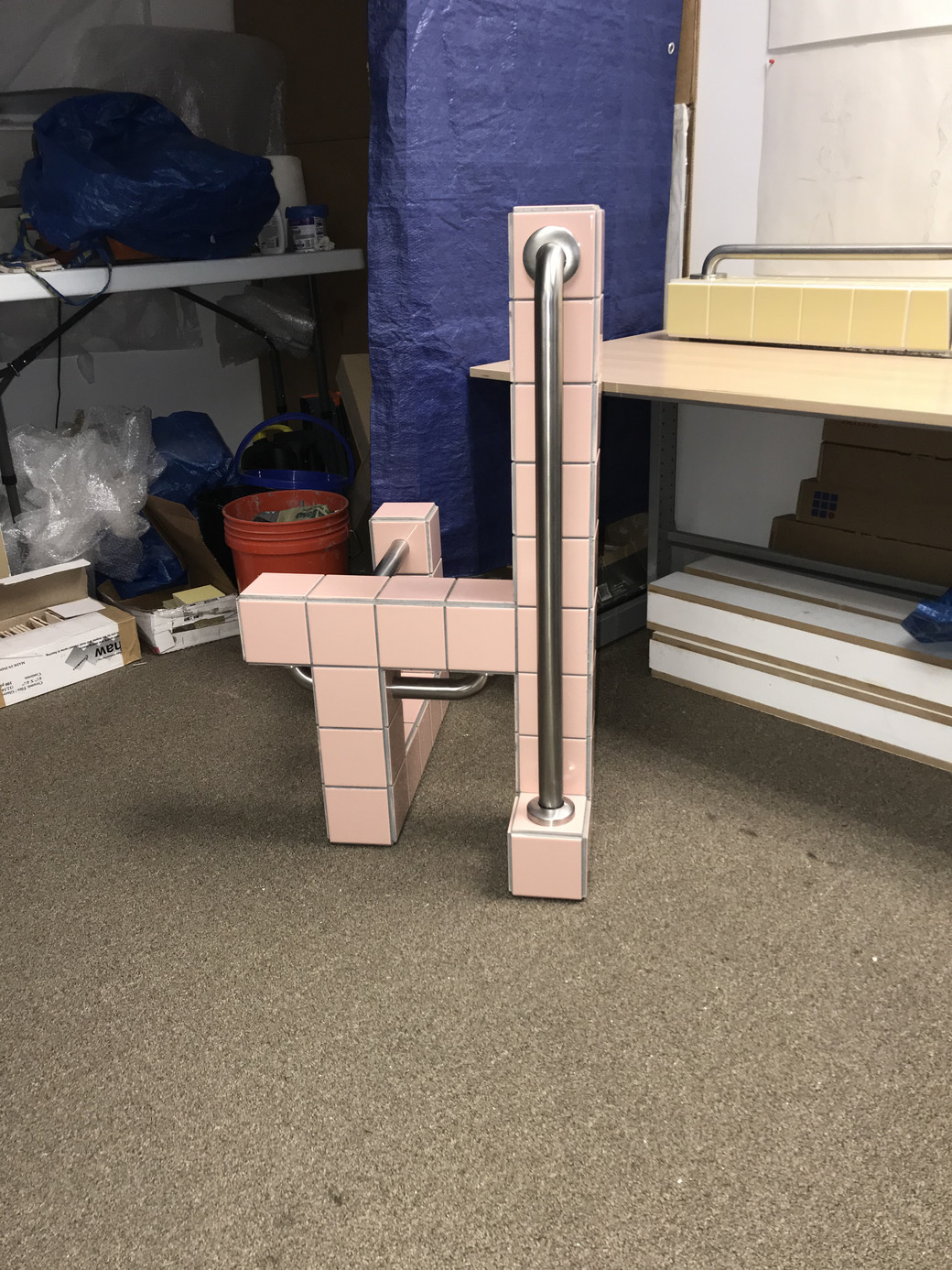
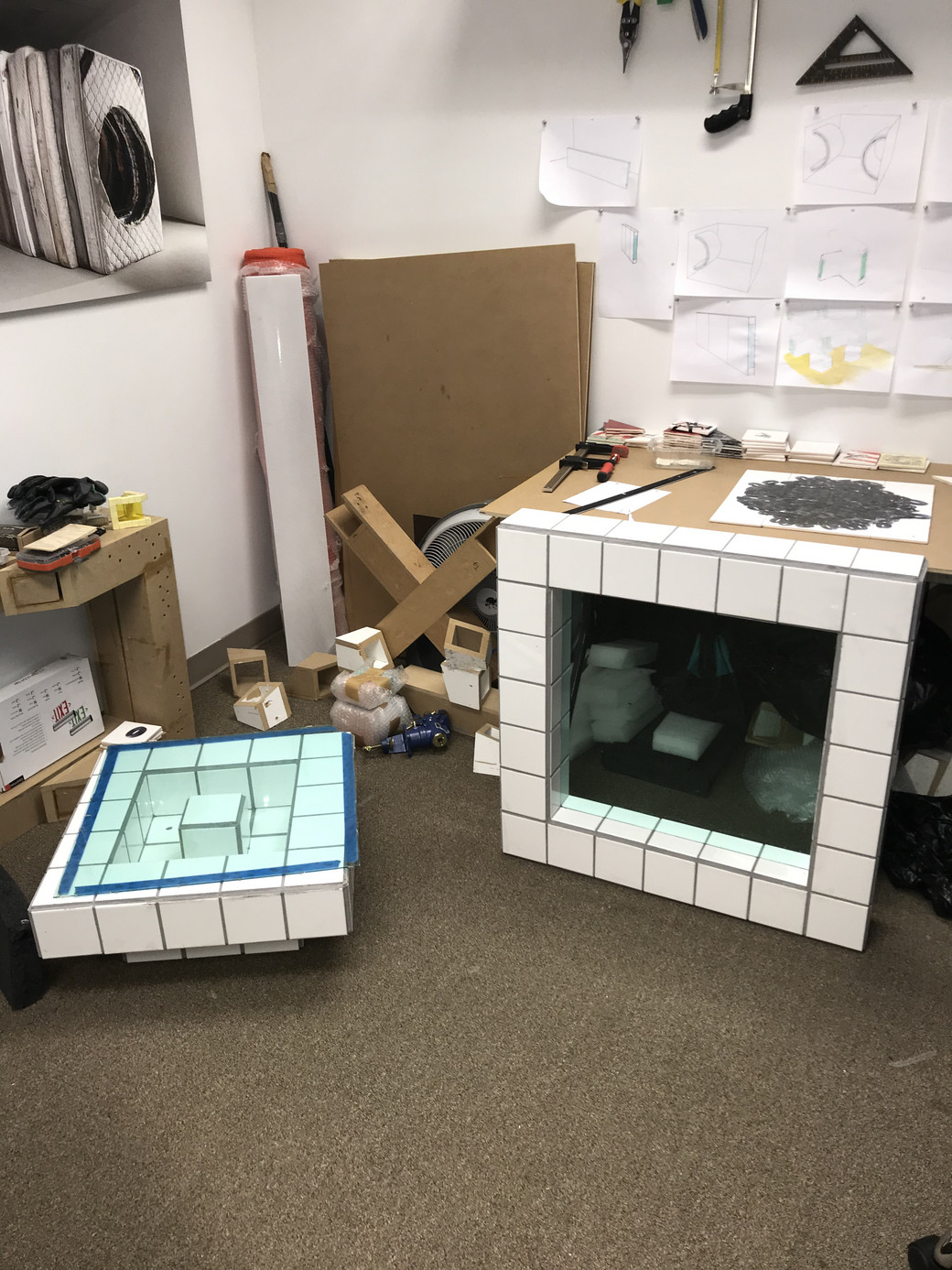
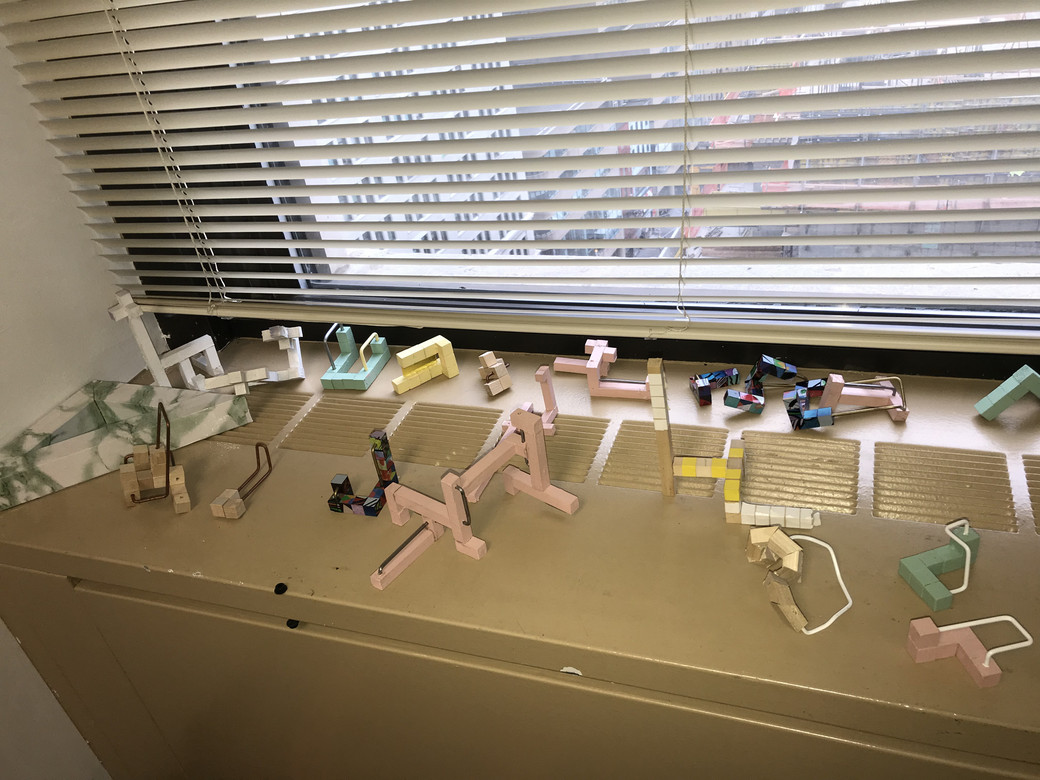
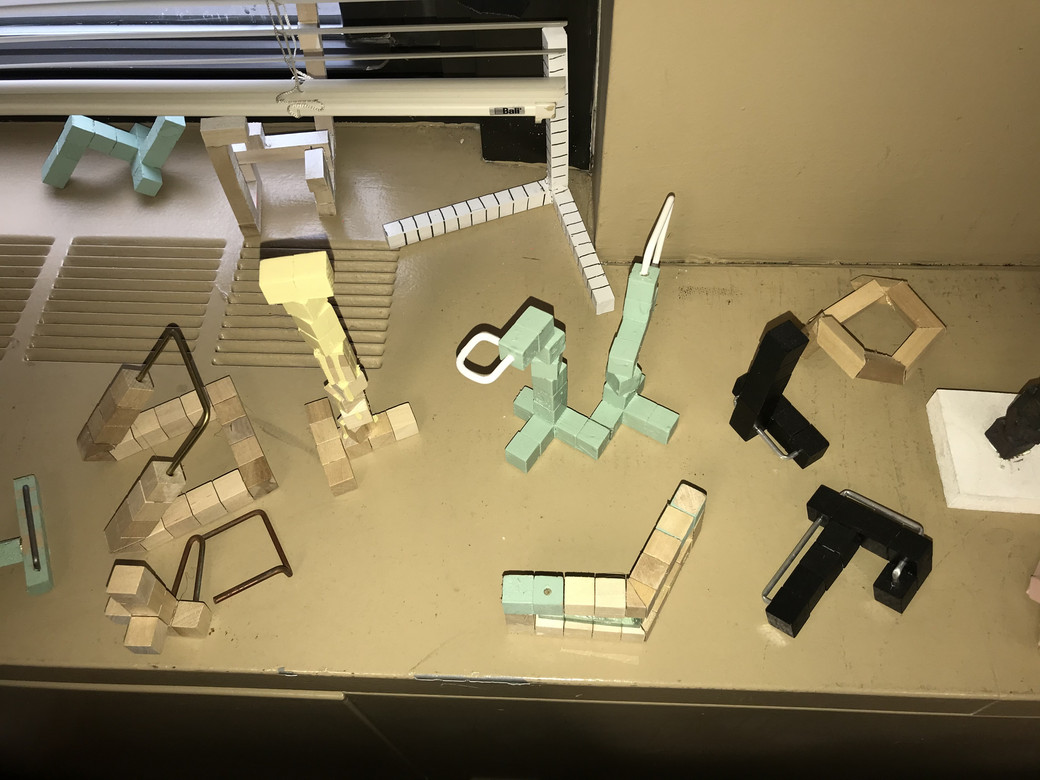
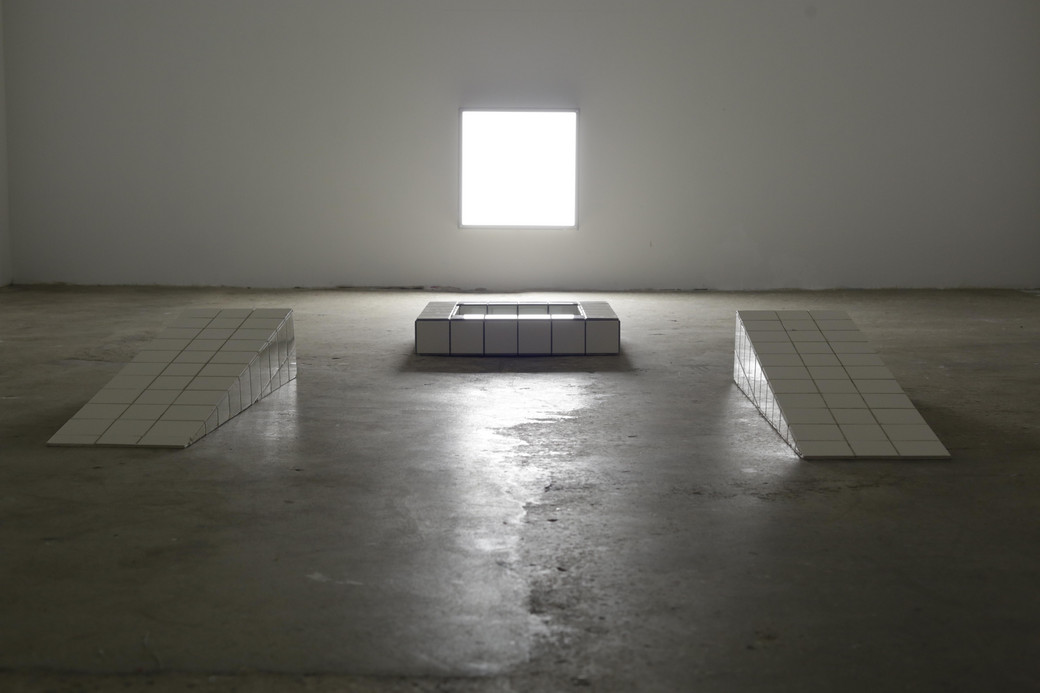
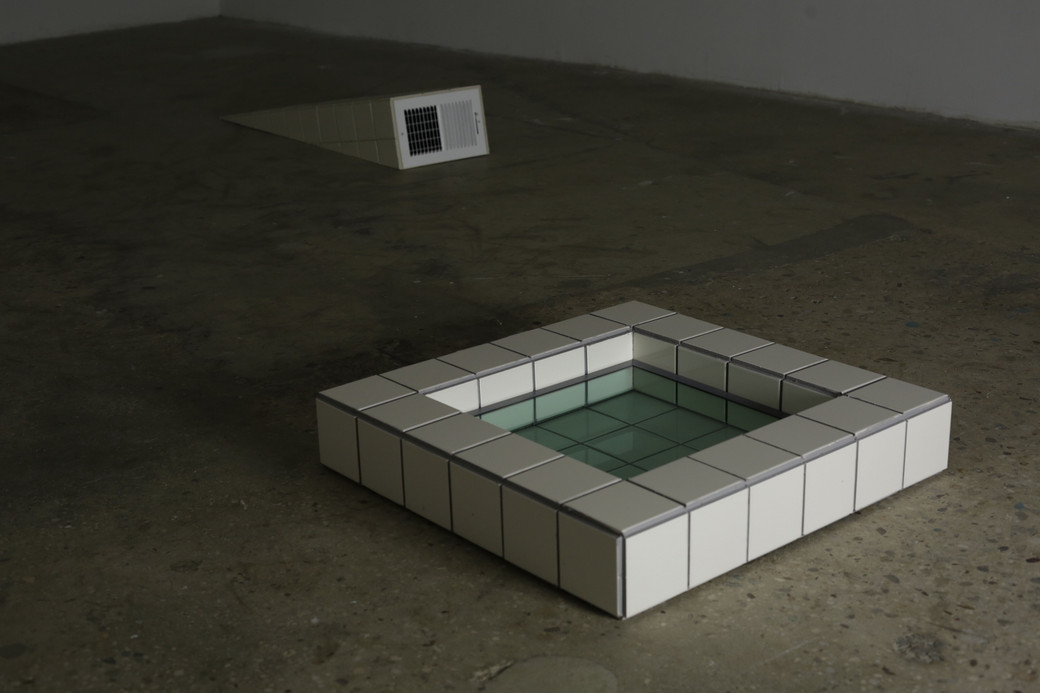
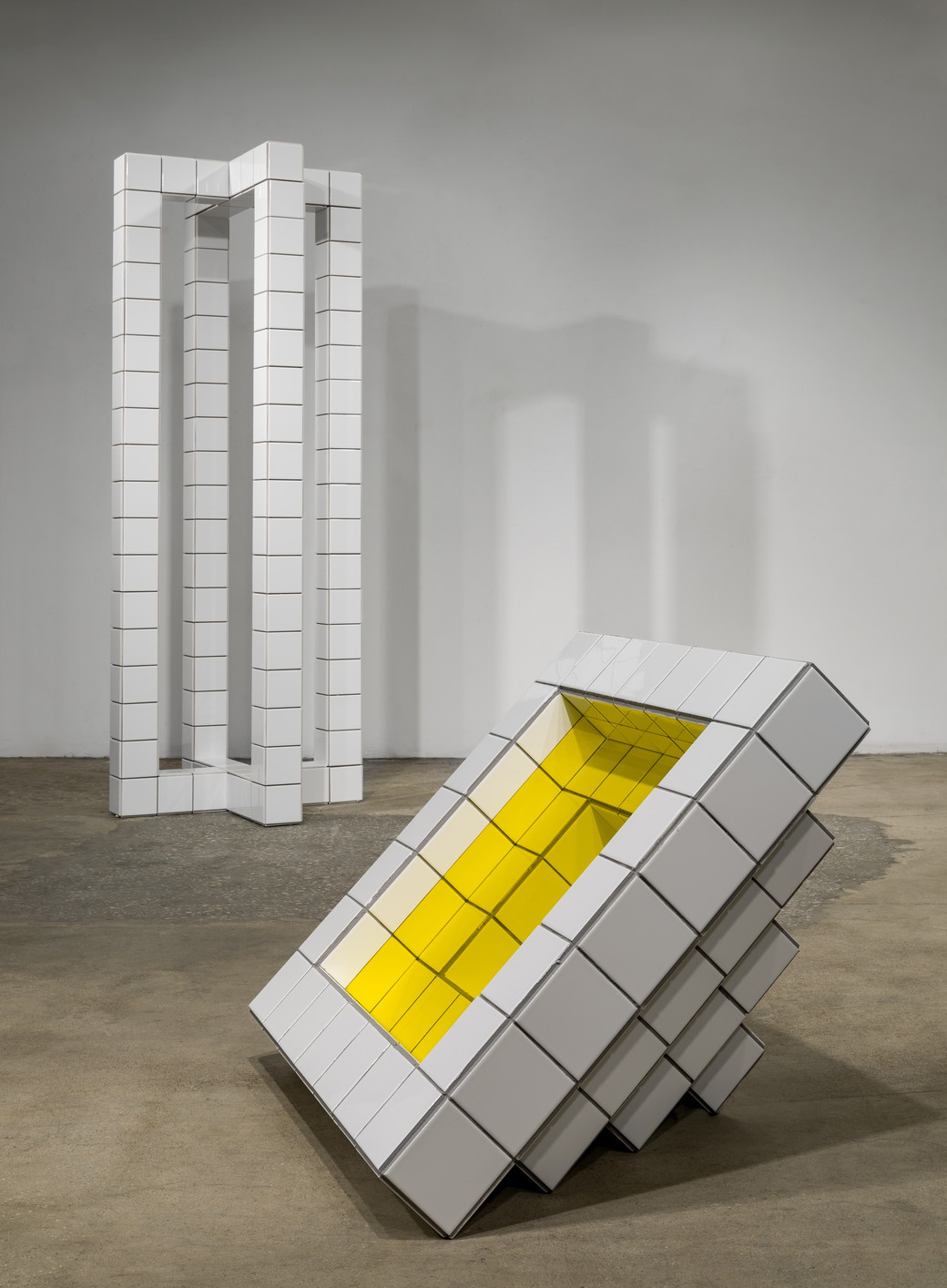
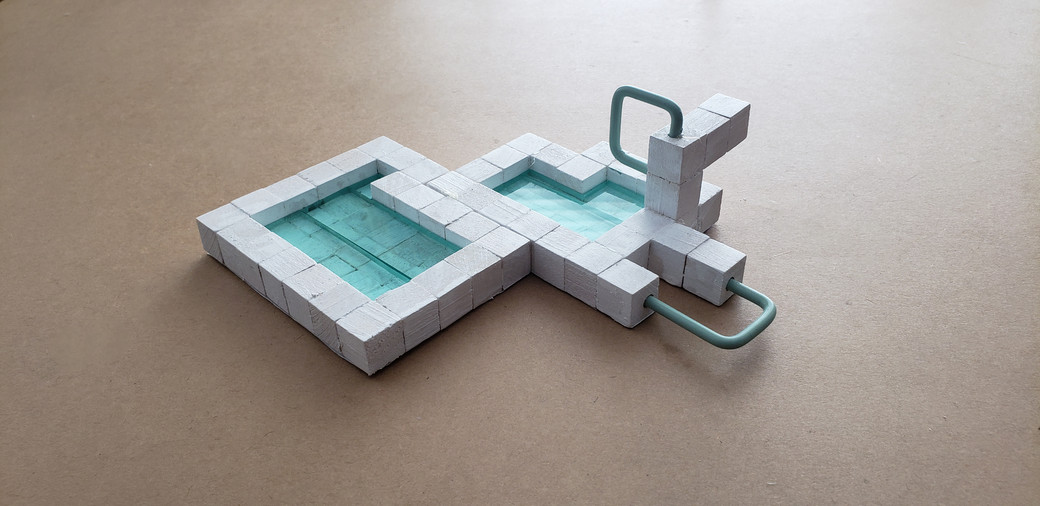
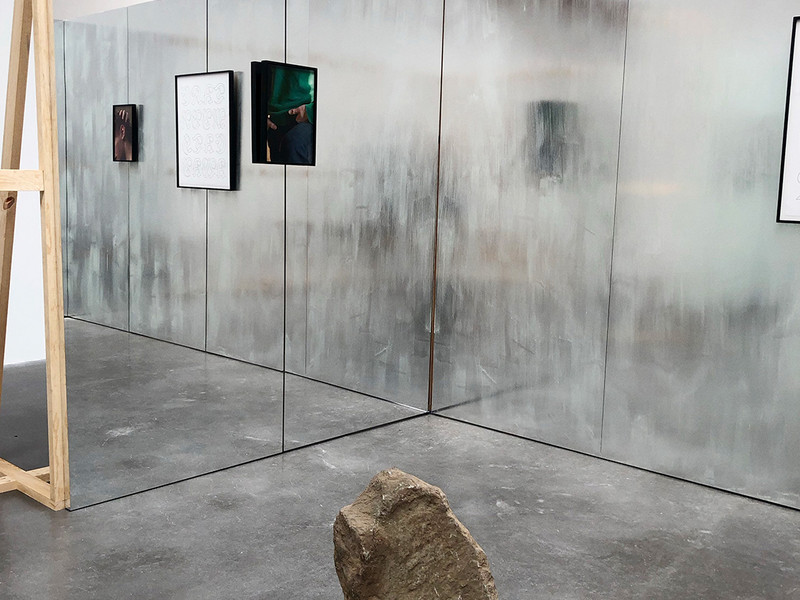
My current body of work, which you see here with the ceramic tiles, also kind of relates to that. It’s more inspired by my surroundings here in New York, like the subway, places that are in between destinations, in between identities in some way. I’m trying also to create my own architecture, my own structures, I’m trying to create something that is autonomous, that’s able to hold itself, but it’s not clear what it is, what’s the function, what’s the purpose of the object.
It does look as if it has a function, maybe just because we’re used to those bars having some kind of use.
We’re used to that language. It’s the same thing with the high security of getting into the building, we’ve gotten used to it — you have to identify yourself and be in the system to get in. Also, the grab bars are a language that we are trained or have a relation to.
Like safety.
Like over-safety, yeah.
They remind me of the bars in bathrooms and I’m always like, who actually uses these? I’ve always found them very strange.
Me too!
I guess they could be handy if you’re old or something. But it’s also always a really nice bathroom that has them, it’s like ‘wow, swanky,’ and they’ll have four or five of them, and it’s like, why do they have all these bars, it’s so unnecessary.
It almost becomes a design thing at one point. It’s not about aesthetics, it’s about safety regulation concerns, so maybe there it’s a distinction between regulations and aesthetics with safety that I find interesting.