
Tell me about your work and the show.
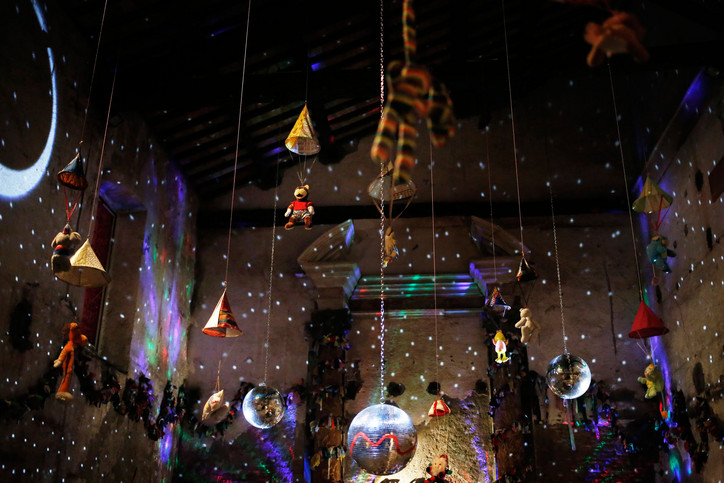
Which show are you talking about? I actually have two shows up right now — one in Rome, in the old chapel of Gavin Brown, and then I have one that just opened yesterday at the MUHKA, which is like the MoMa of Antwerp here in Belgium, which is one the most important modern art museums in Belgium, and I just had an installation open there for three and a half months.
I looked at your publication in the art section and what I liked about it was that it was so weirdly diverse. I found it’s not snobby, not in one direction but it’s very everywhere, and I’m an everywhere kind of artist. I was born in Brooklyn, and I was an early New York City artist in the late 60s, early 70s and came up with a whole generation, and I found myself well-appreciated in Europe, so I’ve been exhibited on many continents, but when I accessed your website, I liked the everywhere-ness of it. That’s what I do, even after 50 years — I’m 71 years old, I started at the High School of Music and Art in New York City, I kept out of the Vietnam War by being at the New School, Pratt, Columbia, NYU, I was at Manus College of Music, Parsons School of Design to keep out of the Vietnam War, so I’m a real New York boy who now lives in Europe. I didn’t know your publication before, but I appreciate what I see, I like the diversity of it.
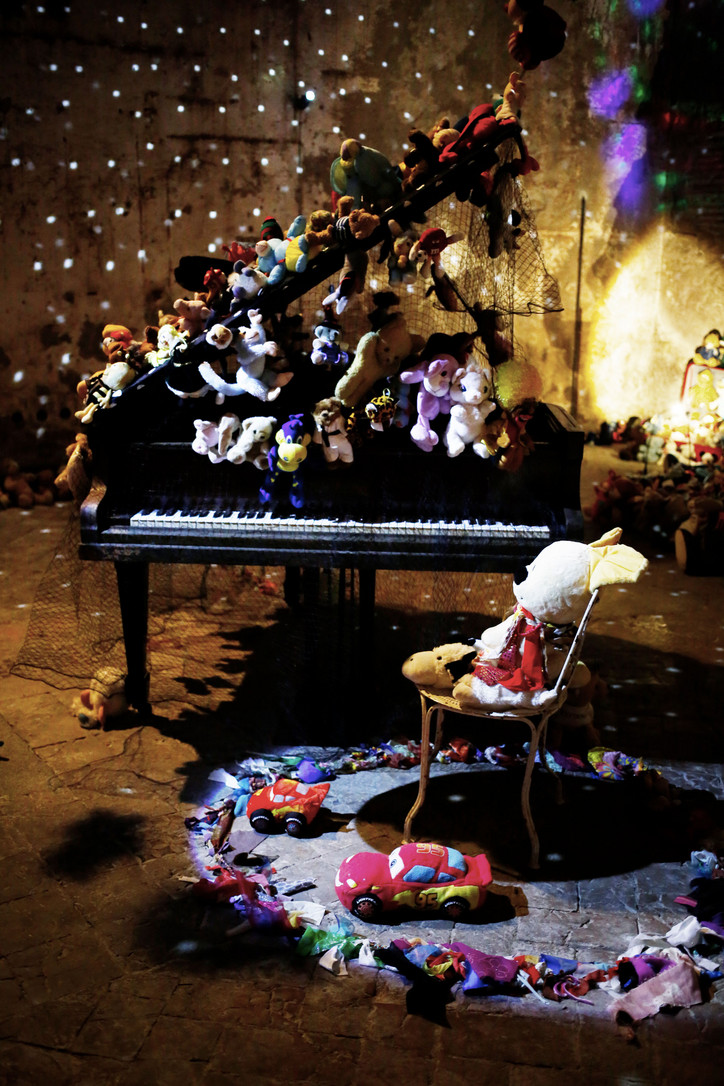
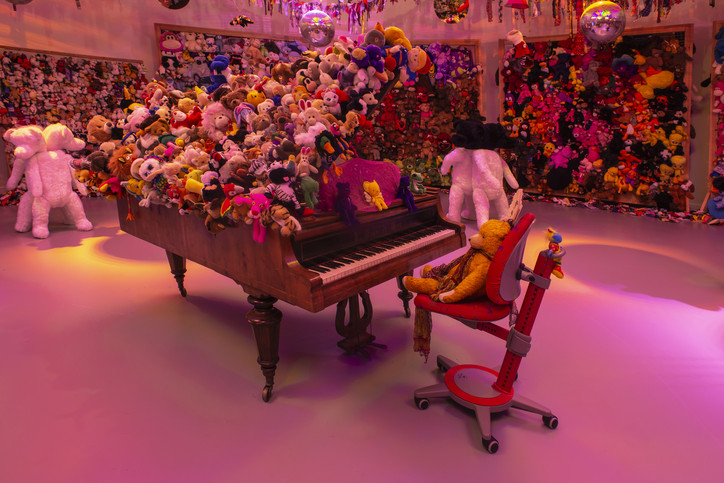
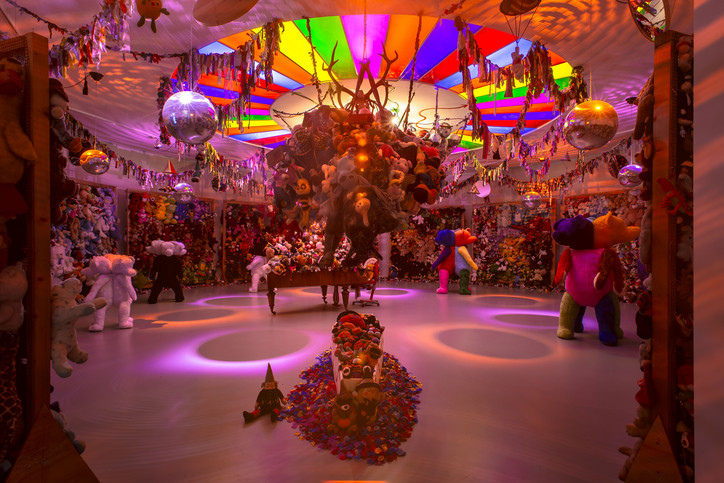
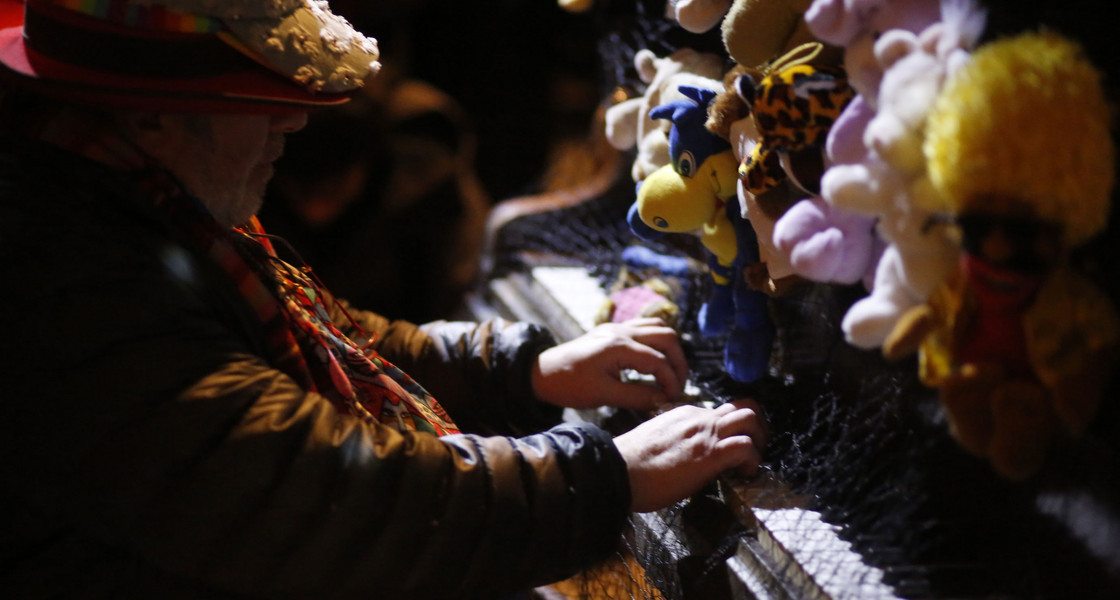
We do our best! I’m obsessed with the show with the stuffed animals and the piano —
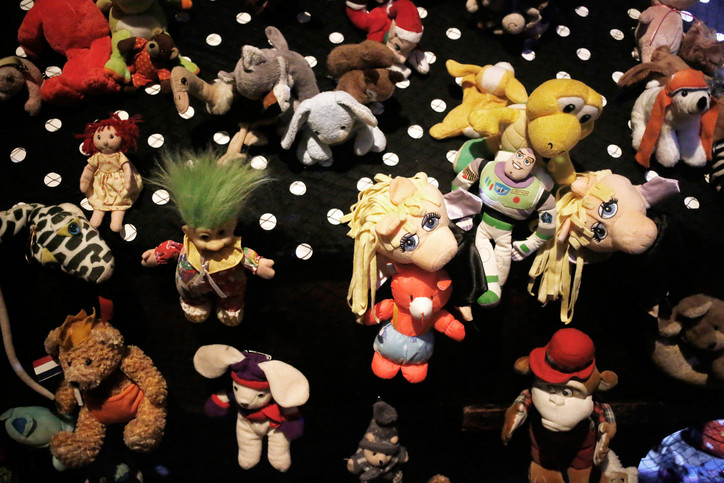
Well I don’t call them stuffed animals! You know the actual, first, most important, what you call ‘stuffed animal’ was invented in Brooklyn in 1902, which was the subject of my show at the Jewish Museum about a year and a half ago, which was all about the history — it was a ‘Bearmitzvah’ in ‘Meshugaland,’ because the Teddy bear was invented by a Jewish couple in Brooklyn for the president Teddy Roosevelt. Joan Jonas, who I’ve known for over 50 years, has her dogs in her performances and installations, and I have, I call them ‘divinities,’ you call them ‘stuffed animals.’
Why do you call them ‘divinities’?
Well, the inspiration for the Teddy bear was born only about three miles from where I was born, from an Eastern European Jewish couple, and my family immigrated to New York about the same time, but actually my first, most inspirational creature was Ganesh, which is a Hindu god, who has a big tummy — which now I have, when I was an early artist I was thin, but now I have a Ganesh tummy, too — but Ganesh is my favorite divinity because he’s an elephant man, and he’s adored by all of the Hindu nation all over the world.
Is Ganesh the one that’s destructive?
No, he’s actually the opposite! He’s actually like a Teddy bear, he’s for the stability and goodness of the household. And he’s a real divinity in the culture. So for me, my Teddy bear became a divinity too after the Teddy bear met Ganesh the Hindu god, and he decided, ‘I like this idea, too, I don’t want to be a toy, I want to be a god.’ So he and I created, in my work, not the Teddy bear, but a god. And the rest of them were, ‘Okay, I’m a rabbit,’ ‘Okay, I’m a tortoise,’ or ‘Okay, I’m a pig, and I want to be a divinity, too,’ and I said, ‘Okay,’ because when you’re the artist you get to create your own planet and that’s what I created 50 years ago. It’s half a century, it’s not thousands of years, but in these last 50 years, born in Brooklyn, I created an entire universe of divinities.