Wow, that is such a huge accomplishment.
Yeah, I'm pretty proud of that. I think that's what I'm most proud of. For Habibi Collective, even now that it’s getting more popular, the people that it’s made for are the people that are consuming it. Maybe because I'm a very shrewd businesswoman. I have my very strict politics of production. I'm very strict with how I run things and that has helped me keep control. It hasn't been swept up by brands.
What is your relationship with the films that you deciding? I read something you said in an interview, a film archivist is the part of the film industry that isn't appreciated but they're doing the most work. And I wanted to know what is your actual mentality behind choosing a film and how do you engage with the politics of the films you choose?
Well, there’s a lot to say about politics. The people that I admire in the industry are, first and foremost, P.K. Nair, who was an Indian film archivist, and also kind of Henri Langlois, who was a film archivist in Paris. We don't have an equivalent in the region. In London we have the BFI, in New York, we have the Anthology Film Archives. In the region, I get friends sending me all the time film reels that they've saved from the garbage. And with the heat, people don't know how to preserve these reels. Everyone wants to be a filmmaker. Yet, there’s so much work to be done. So much work. And there's a huge lack of people willing to do that work. So I guess I'm just trying to inspire other people to do similar things.
As for the politics of how I choose films, when I started getting commissions it was from London-based white institutions. And then I realized the program's presence in their public program was just to tick those diversity boxes that would get them more funding that I should have been getting. I've always rejected them because they're fine showing a Black artist, but they're not willing to represent that diversity in their boards or in their staff. So a lot of what I do is working beyond the politics of representation and towards the politics of production.
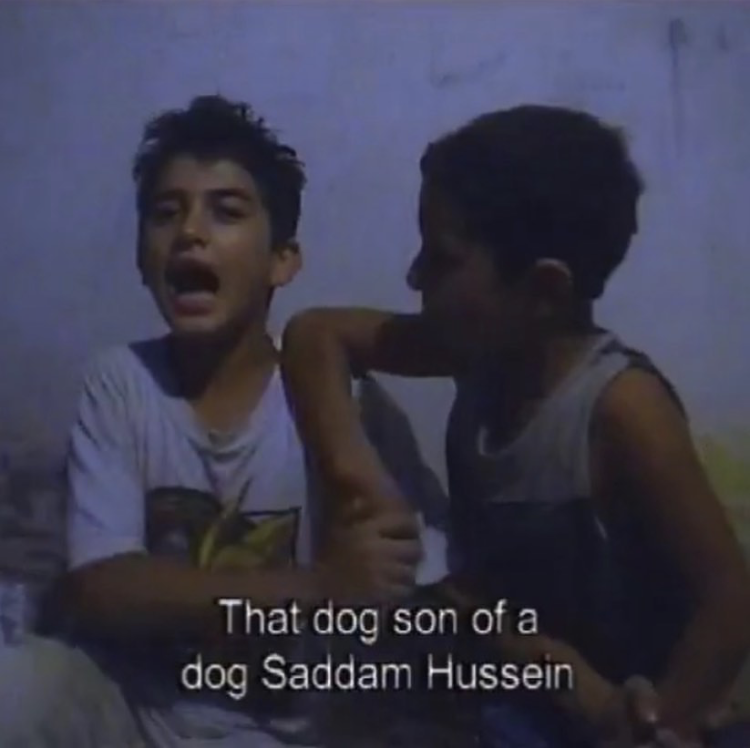
And by that, I mean supporting the filmmakers beyond just screening their films. And, I'm a moving, breathing film. So I will link people up with suitable people like scriptwriters, producers, or I'll help submit their films to festivals or I'll offer advice or give talks. It’s kind of like a directory. I feel like a feel directory. I come across people like that. And then that's how I gain exposure to their work. And then I work with their film. So that's how I find films. The whole project came out of a lack of resources. There’s no online directory where you can search for an Iraqi film on the revolution in Tahrir Square. Everything I receive is from contacts, from people in the film industry who I know and hear.
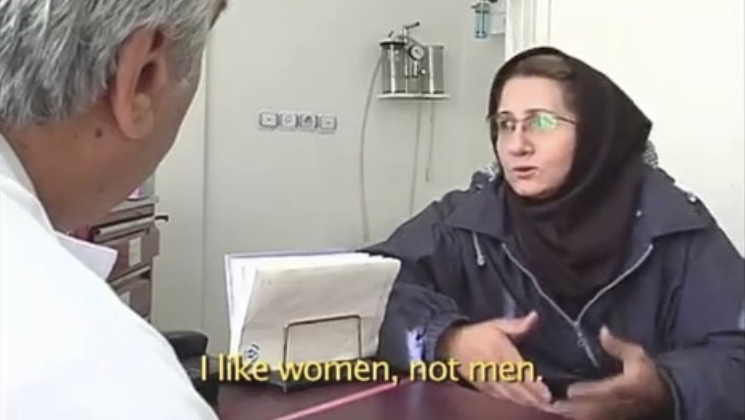
I'm a bit bored of institutional critique. I used to think that my presence in these spaces would help diversify them, but it doesn't. I like to work in my own kind of space. I have quite a lot of freedom within how I program the films. For example, I directed the Queer MENA Film Festival and that was something that I never would have been able to do in collaboration with an institution in the region. And even distribution is very political. So, distributors, especially now that we've all moved online, have to do this thing called geo-blocking. Neighboring countries who they don't like don't get to see the films.
I was looking into the Independent Iraqi Film Festival, and I wanted to know what that whole experience was like and the reception of it. I read too somewhere that you were talking about how doing it online and independently from an institution in the region saves you the trouble of going through the politics, but how was the actual process of the festival, and did it start online or did it move into that with the pandemic?
I don't particularly like film festivals. They're very, very cold. They’re culturally gatekeeping. They're very exclusive. With Cannes, the biggest independent film festival in the world, they didn't even show it online and it's just that kind of behavior.
So it was built on being creative and finding a new way that film festivals can be run. I was working with three really incredible, amazing people, Israa Al-Kamali, Shahnaz Dulaimy, and Ahmed Habib, all Iraqis. I was directing and doing the programming mainly. We decided, well, I kind of put forward that we don't charge. If you're a filmmaker applying for a film festival, you need to pay an entry fee, usually quite an extortionate one. You need to have a certified producer and you need to have a European distributor among many other things. So we scrapped all of that. Anyone who wants to apply can apply. And also, we were going to pay you as well. We're going to pay your screening fees. And we eliminated the competition element because that's something I really hate. If we wanted to mobilize filmmakers and create an industry, create community, I'm not going to pit them against each other.
We made it open internationally to anyone for free. Obviously no money in it at all. Zero. We didn't apply for any funding. And, it was online because it could reach more people, and also, none of us are living in Iraq. There’s a huge diaspora and the diaspora is very, very strong. I don’t think there’s any other SWANA community that compares. I guess because of the war.
So yeah, that's why we wanted to make it online so most Iraqis could access it. We also had everything in Arabic and English. and I think that's a big part of how we managed to get the huge Iraqi viewership, which is, again, the thing I'm most proud of. We managed to get our biggest viewers were Iraqis in Iraq.
Wow.
As for selecting the films, I watched over eighty films, and they were all very lo-fi, handhelds, all of this documentary, some really beautiful ones. We showed, obviously the ones that were of the highest quality. The women filmmakers were actually really difficult to find for Iraqi cinema. All of the women filmmakers, apart from Zahraa Ghandour, were a part of the diaspora. I think it's maybe because Iraq is a war zone. It’s very easy to ask, ‘Why aren’t there more Iraqi filmmakers?’ You have to respect that. People can’t just do that. It’s not safe.
We're going to have it next year as well. and we might have it. We'd like to have in real life. It will be very, very easy to have it in London, but I'm more interested to have it in Iraq. Although, I don't think the Iraqi government likes me much. I just don't think it will be a good idea or safe.
So you’re starting a streaming service, Shasha.
Yeah! So Shaha is Arabic for 'Screen.' That’s taking up all of my time right now. It’s a huge operation. There's a lot of us. I’ve always run Habibi Collective, I'm the only person involved. I didn't have money to pay a salary and free labor is one of the worst crimes in the art industry. So that was always my reasoning behind that. It’s just me on my phone. But, obviously, I need a lot of people to make a streaming service, so a huge web development team, UI designers, UX designers, graphic designers, brand identity people, programming, team marketing, blah, blah, blah.
So I made it separate from Habibi because we’re going to show films by men. Habibi's women and women-identifying folk, but Shasha is going to be everyone. And also it's a business, it's a streaming service, there's money, there are transactions. Habibi, I want it to stay beautiful, pure. Me on my phone.
It’ll be ready in January. It's the first independent streaming service for SWANA film, which is very exciting. It’s going to be like 20 films per month.