Tell me about your work.
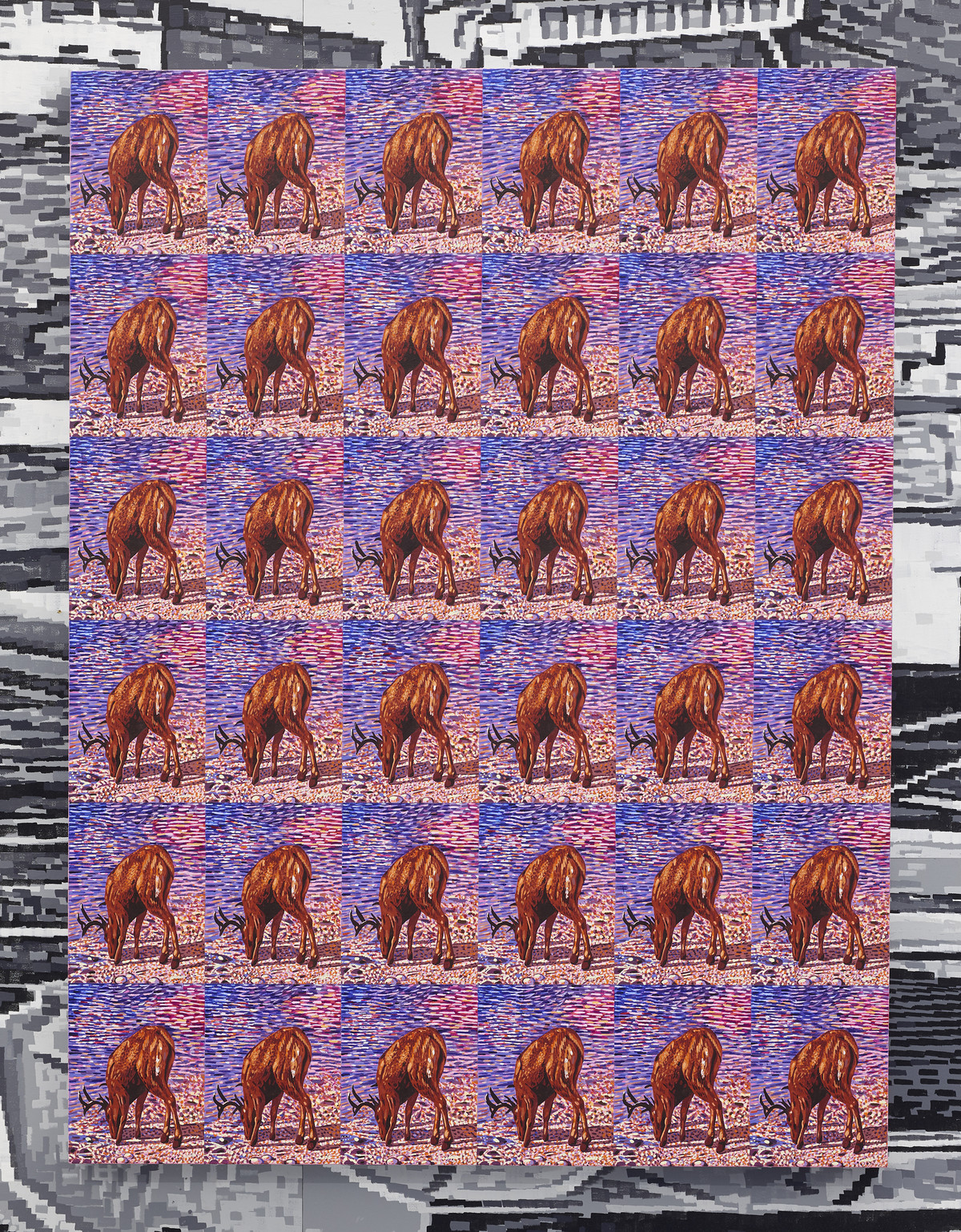
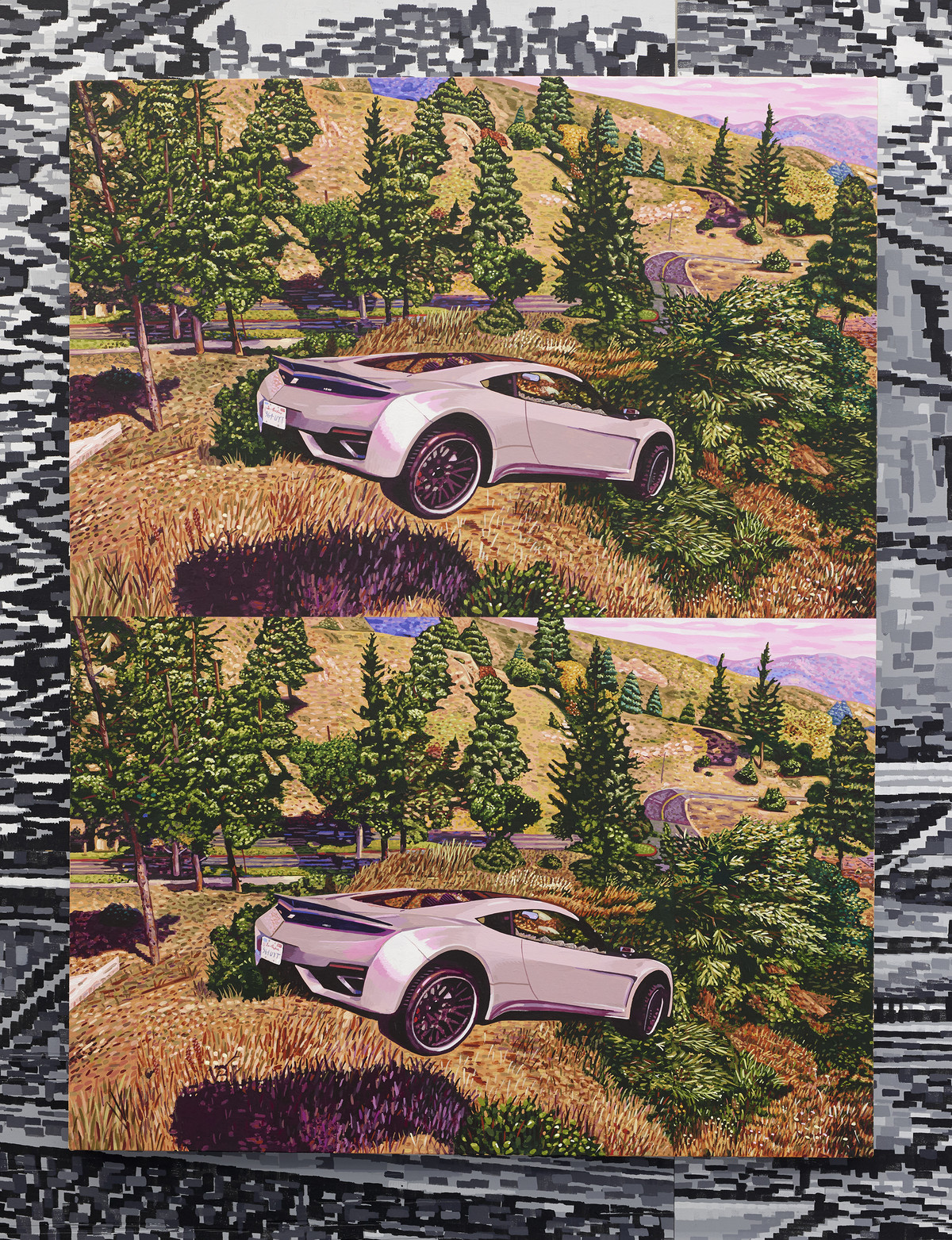
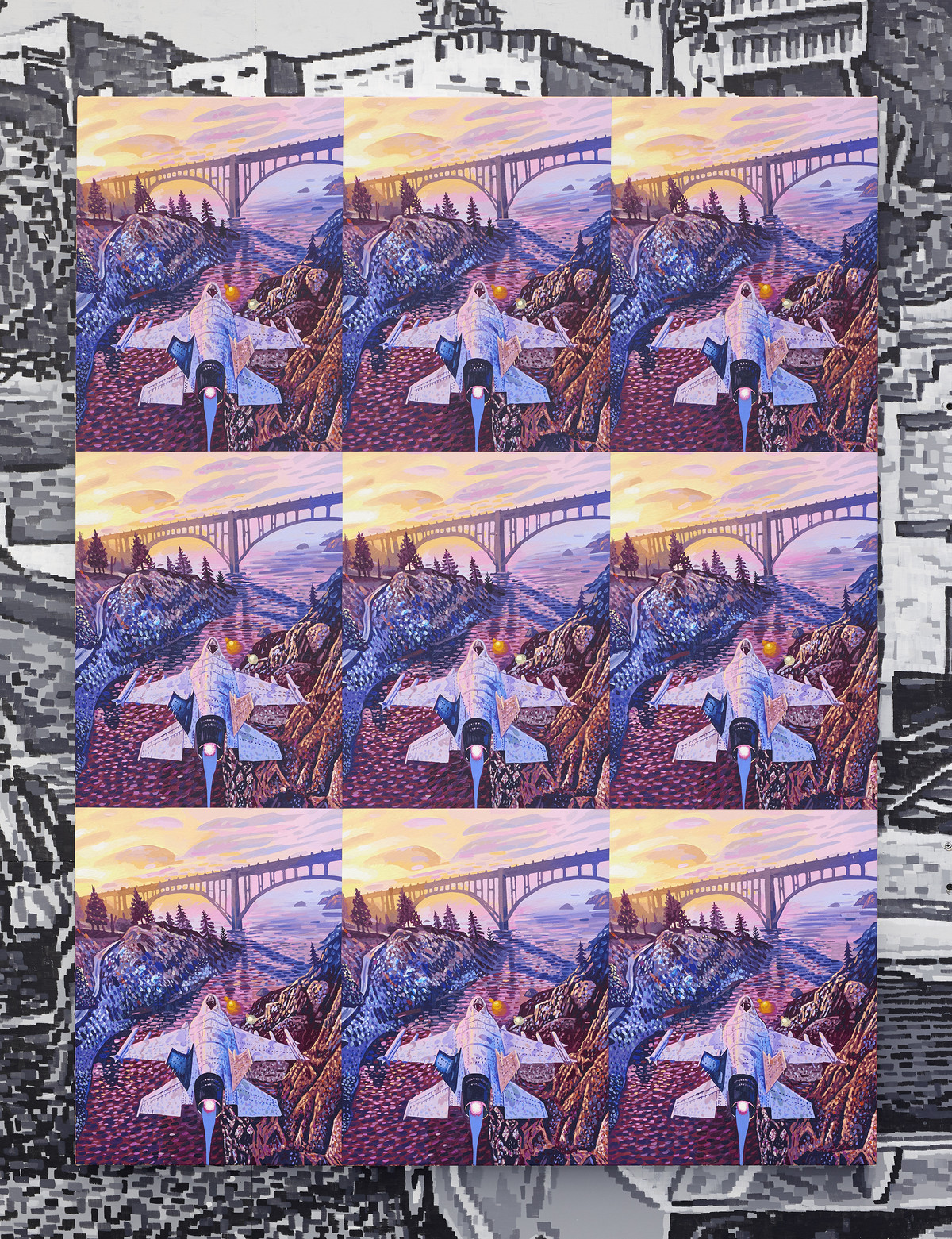
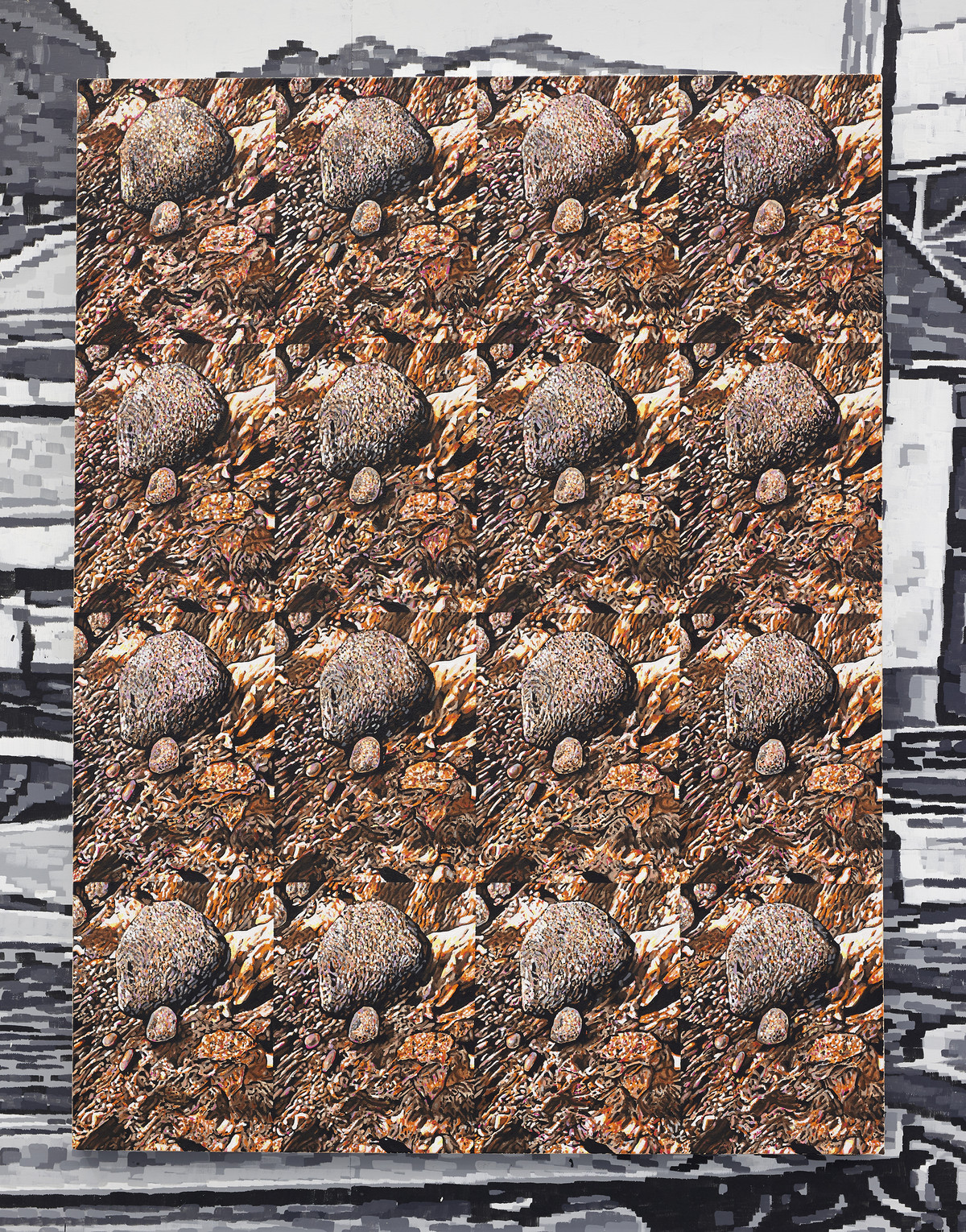
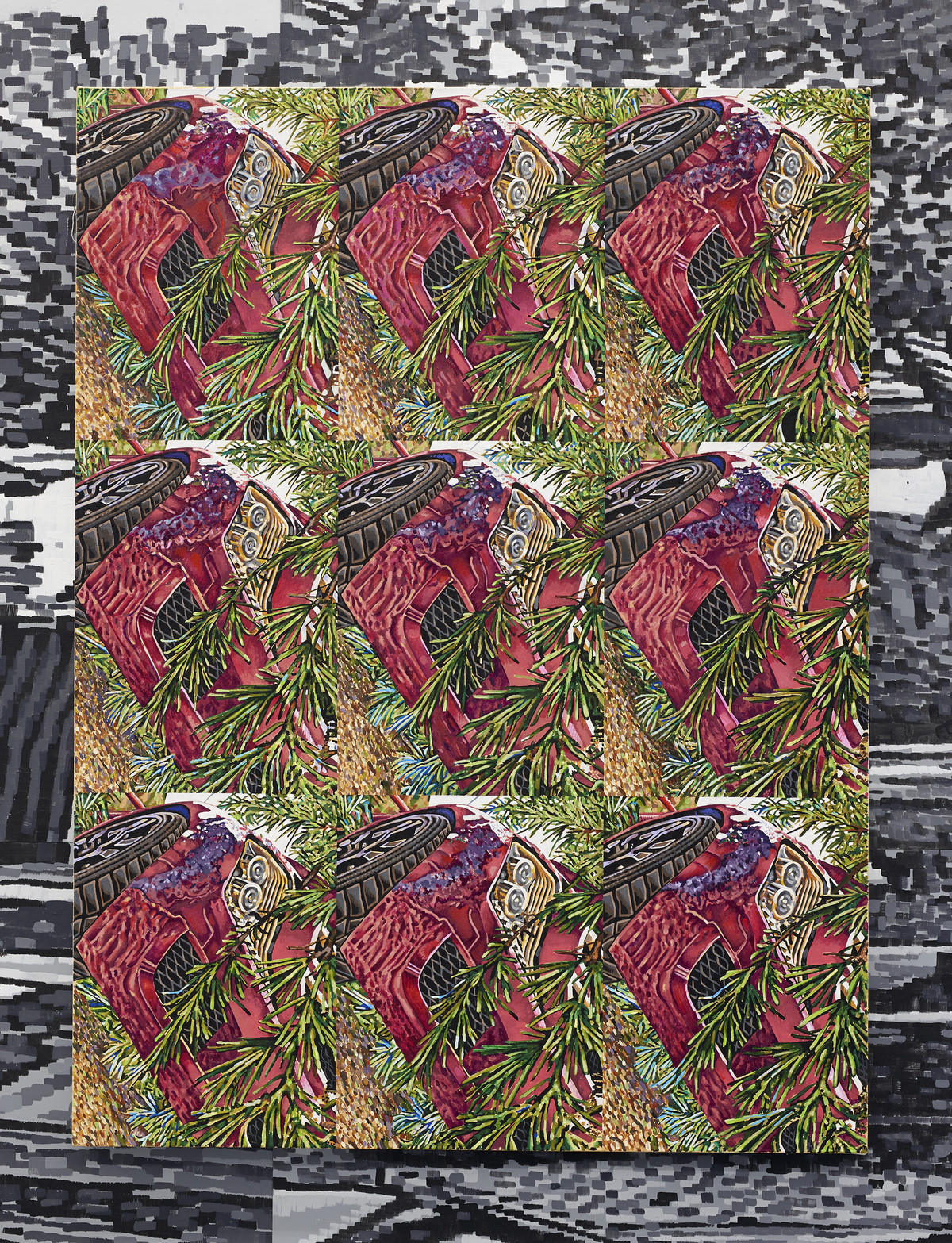
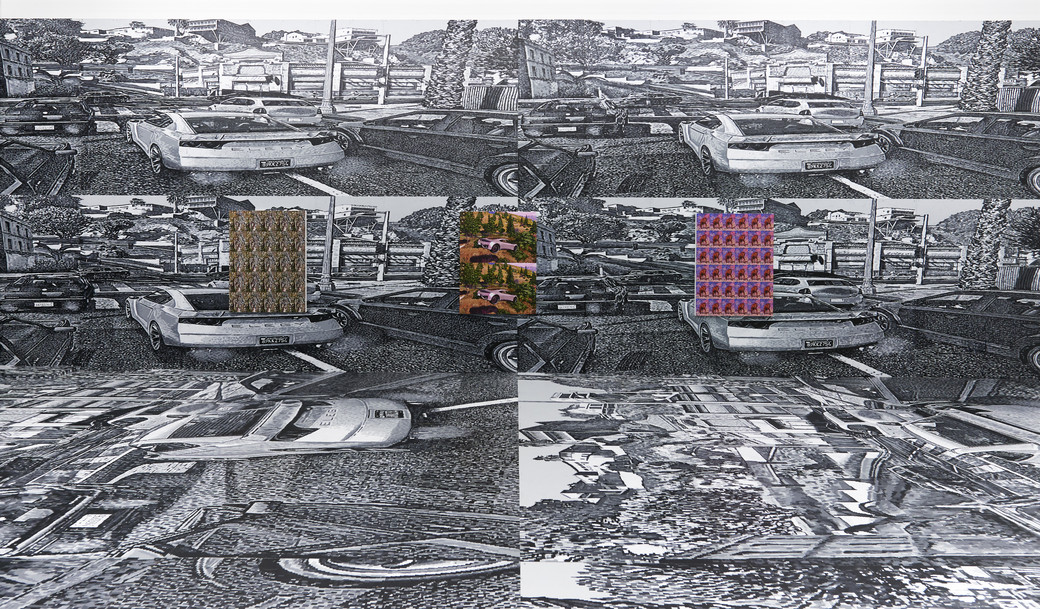
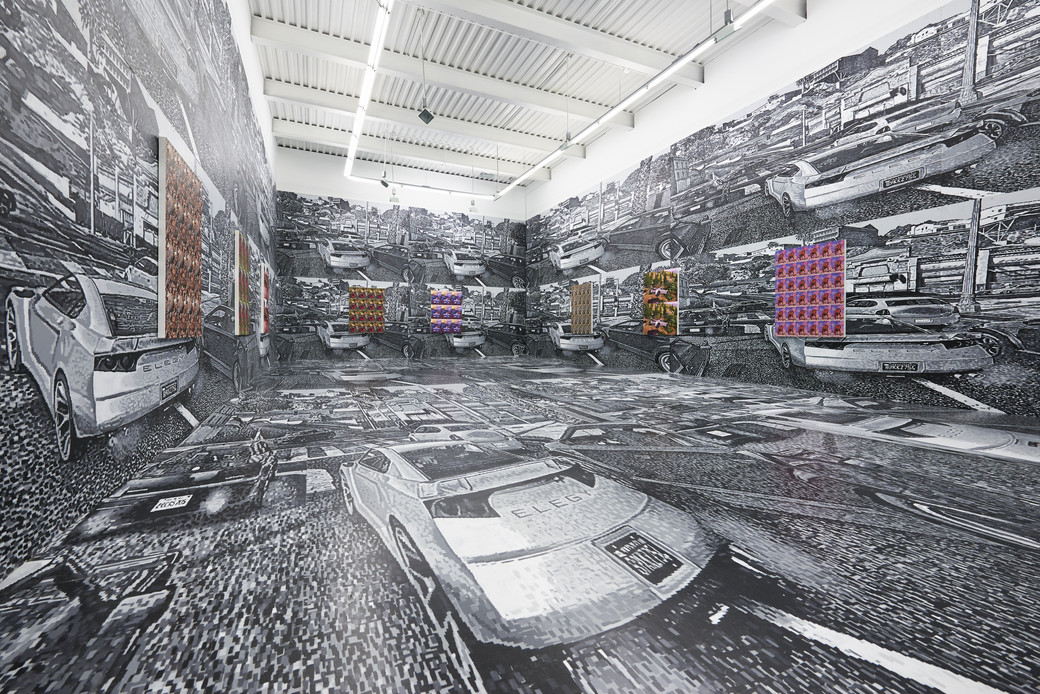
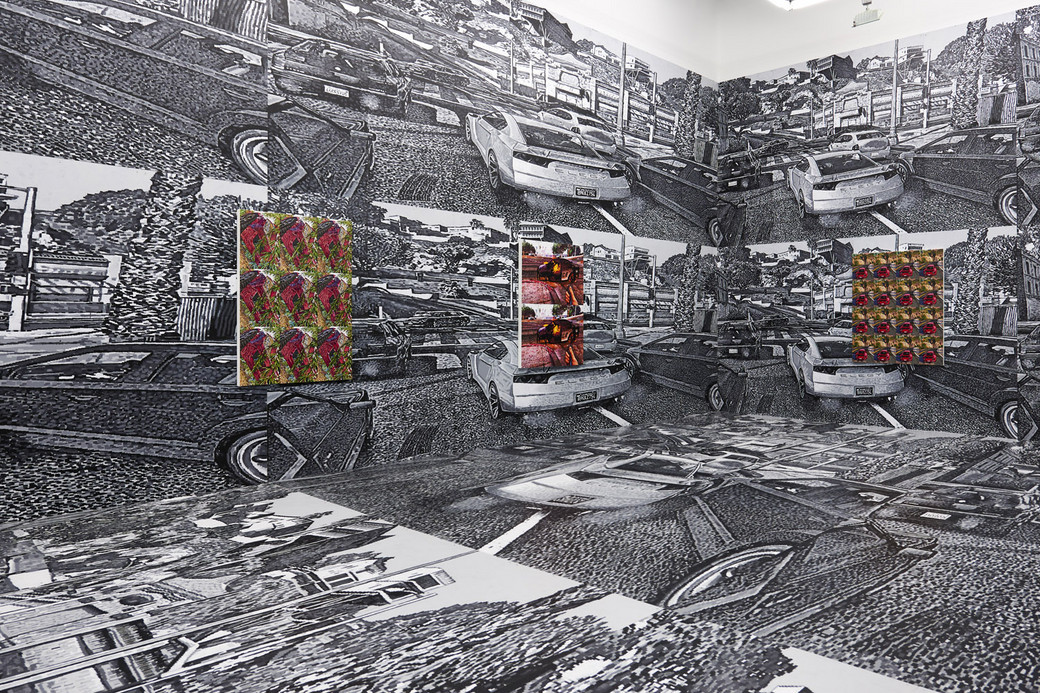
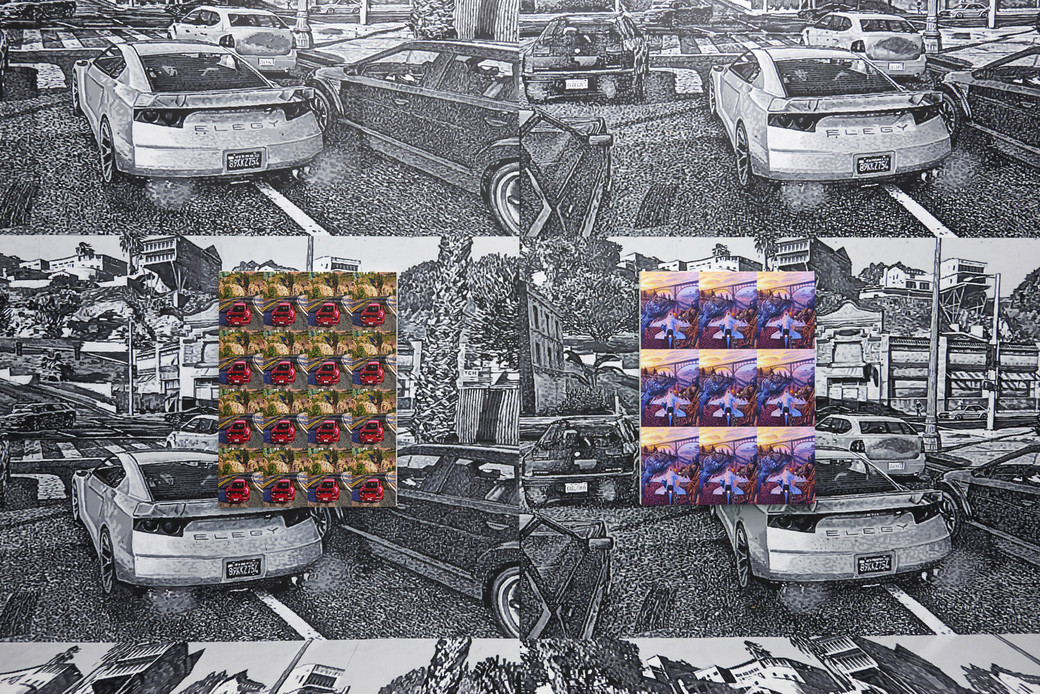
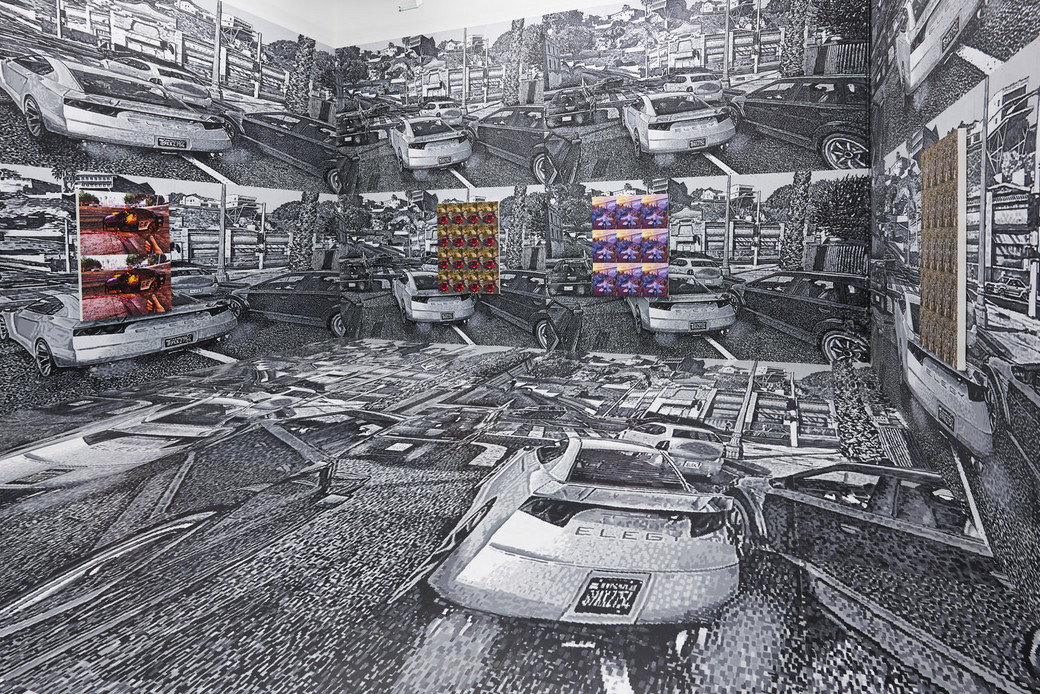
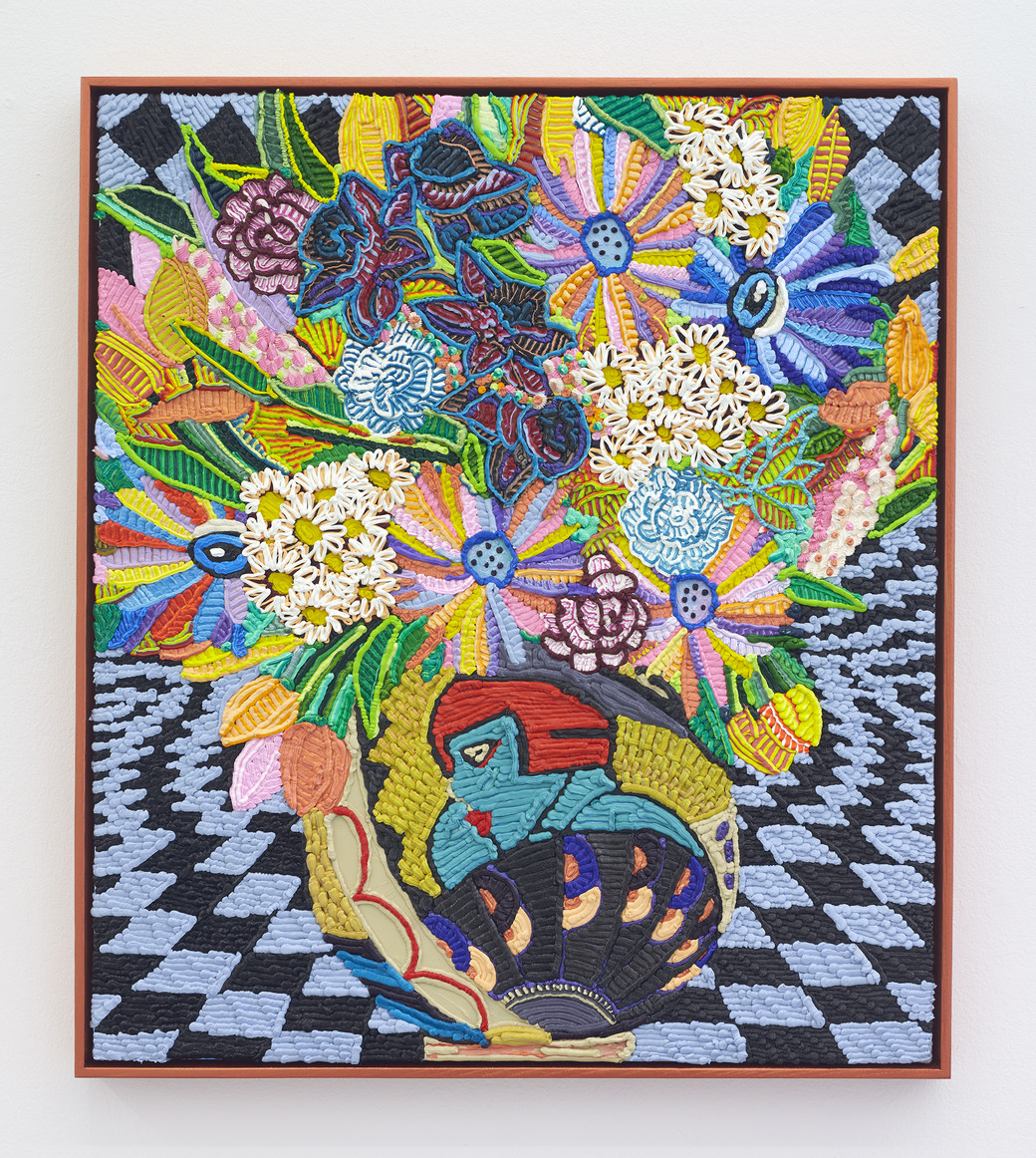
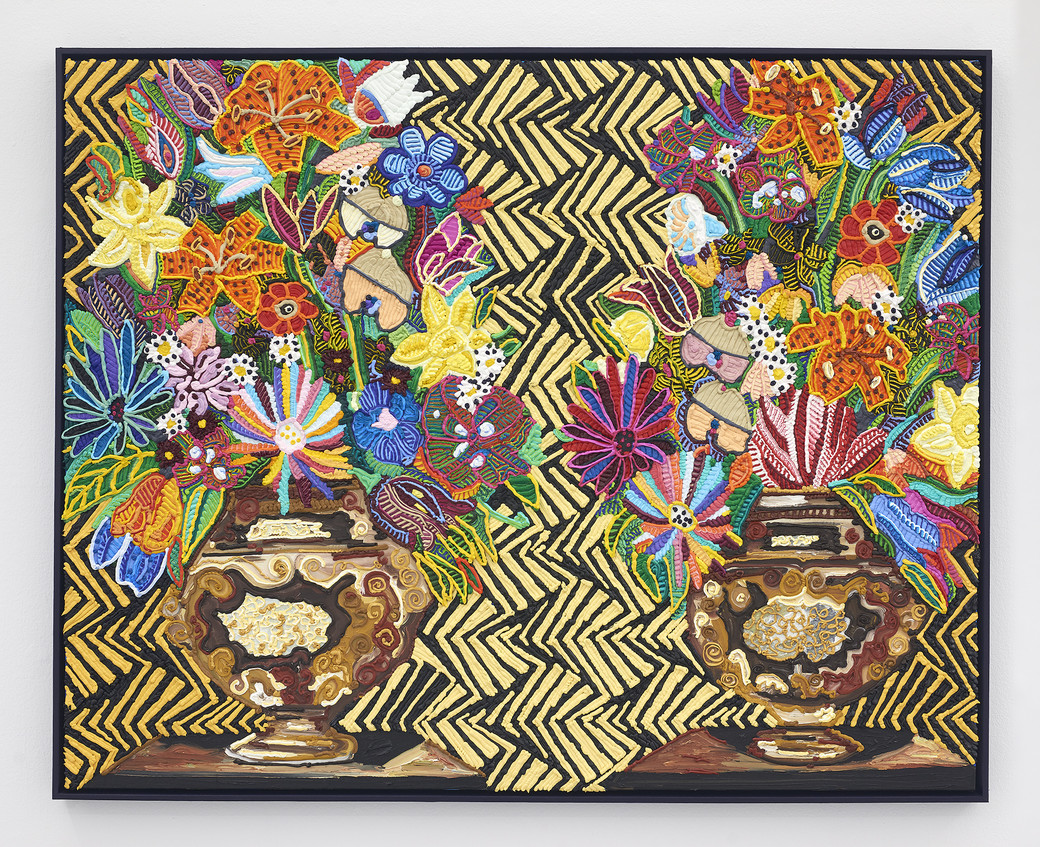
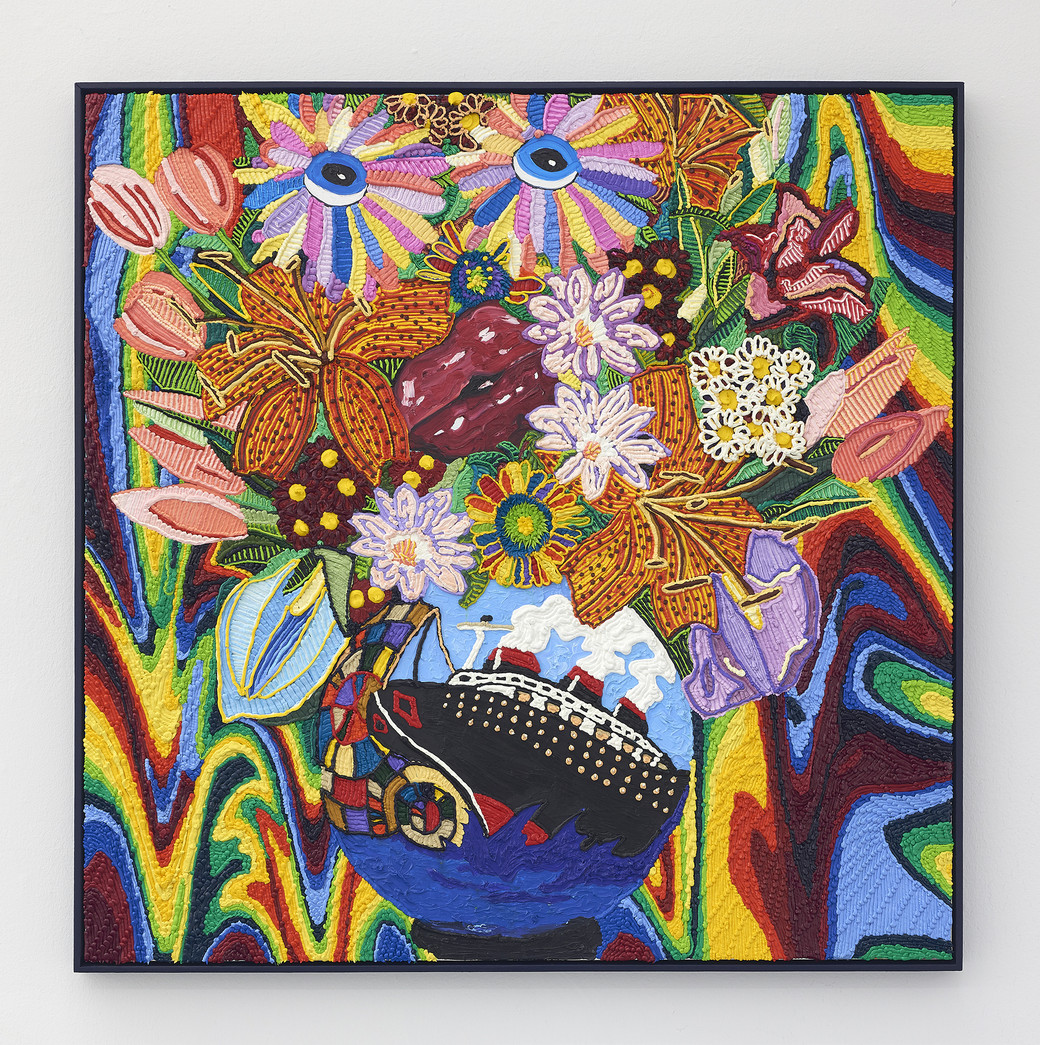
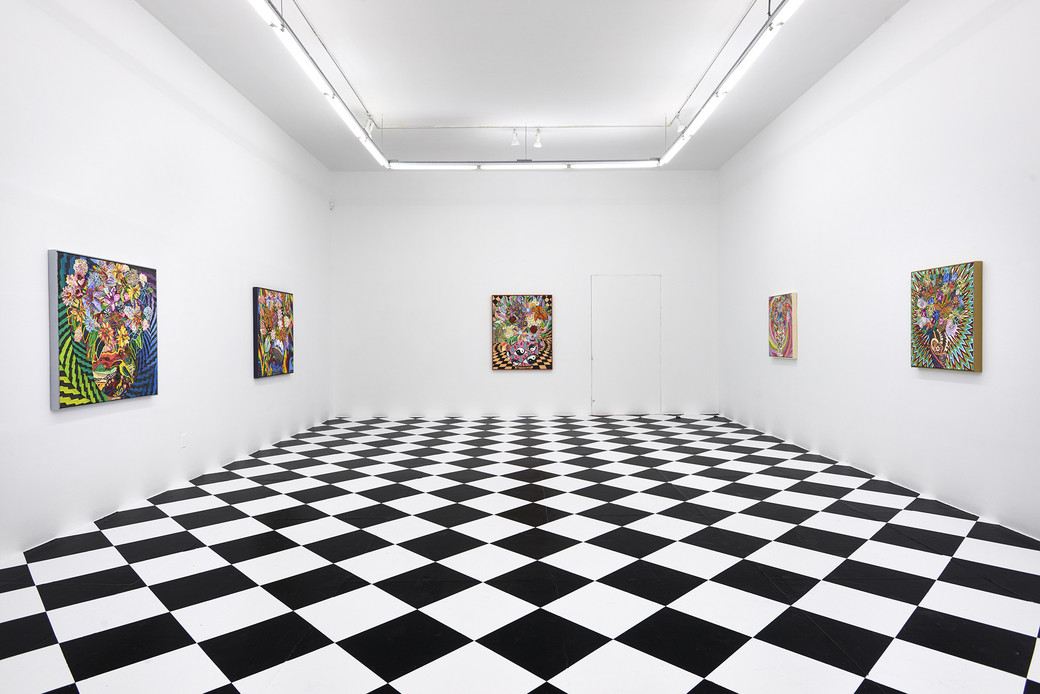
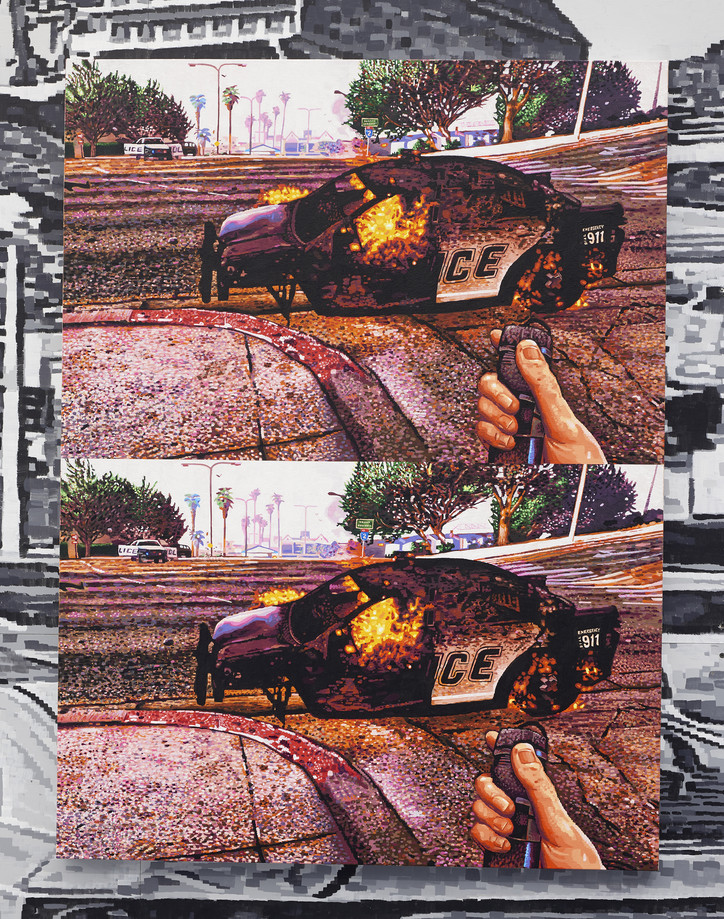
For the last two years, I’ve been making paintings that are sort of inspired by the digital world, in the broadest sense, before being more digital collage aesthetics, like Photoshop languages and traditional painting. So, trying to transform some of those digital gestures into gestures on the canvas. And then more recently I’ve been honing in a bit more and being a little more specific about what types of digital languages I’m painting from. The show that’s up at The Hole right now is exclusively from a game that came out in 2013, Grand Theft Auto 5, which is super popular—I think it’s the best-selling video game of all time. The reason I wanted drawn to it was because of how expansive it is—it’s an open world fan-box kind of game where players can kind of do whatever they want within that world; it’s not like a narrative that’s on rails—it’s more of a choose-your-own-adventure, there’s an immense amount of freedom in that. There’s also a great deal of beauty in the game—it’s like this parallel, bizarro Los Angelos—but there’s just amazing lighting and modeling and things like that—it really does feel like a world that you enter into, which is sort of a pre-cursor to virtual reality, maybe. To explore these kinds of exciting, new digital frontier ideas through painting is exciting for me.
Do you play video games?
I sure do, yeah. It’s part of the research now, but before I was making paintings from video games, I was still playing them, too. My relationship with video games goes all over the map, whether I’m obsessed with a game and really immersing myself in it or if it’s just like ten minutes of Rocket League or MarioKart or something that feels more arcade-y.
I love art that comes from video games. My brothers were gamers—I find it very strange when people aren’t into video games, just because they’re so everywhere. I remember when Grand Theft Auto came out and it was such an interesting concept, because I feel like it was one of the first open world games—there’s something about that open world concept.
There’s that game Second Life that got a lot of discourse, too. I never played that because it was on PC, but that had similar game play features, kind of like you can live your own life within this world, and it’s not like the game is telling you what, exactly, you should do.
I love the use of repetition and the focus on cars—that, to me was really incredible. What is repetition for you—how are you using that, why are you using that?
That’s a really good question. It was good timing too because the Warhol show is up at the Whitney right now, so I got to see that, but it was nice that it was open during the opening of my show, because Warhol was one who was using repetition in a really interesting way through screenprinting and I’m doing it through painting. To me, I’m interested in painting images more than once to subvert that idea that paintings are these precious, unique objects with auras, you know what I mean? In a way, they are—none of the copies I do are exactly the same, so maybe I’m not necessarily trying to subvert it, but I’m playing with that idea. If you look at a jpeg of one of these paintings, it looks like a simple tile function in Photoshop, from faraway they look like a very simple drag-and-drop gesture, not something that is painstakingly reproduced by the human hand.
Also, painting the same thing over and over again is almost like when you say the same word over and over again—it begins to lose its meaning, it becomes abstracted in a way, psychologically. That happens to me when I’m painting—I don’t think, ‘I’m painting a tire,’ it’s just like, ‘Here’s a pink brushstroke on top of a gray brushstroke.’ I guess a lot of painters think that way when they’re painting, but when you’re painting the same thing over and over again, you get to that meditative headspace even more. That’s interesting and engaging for me.