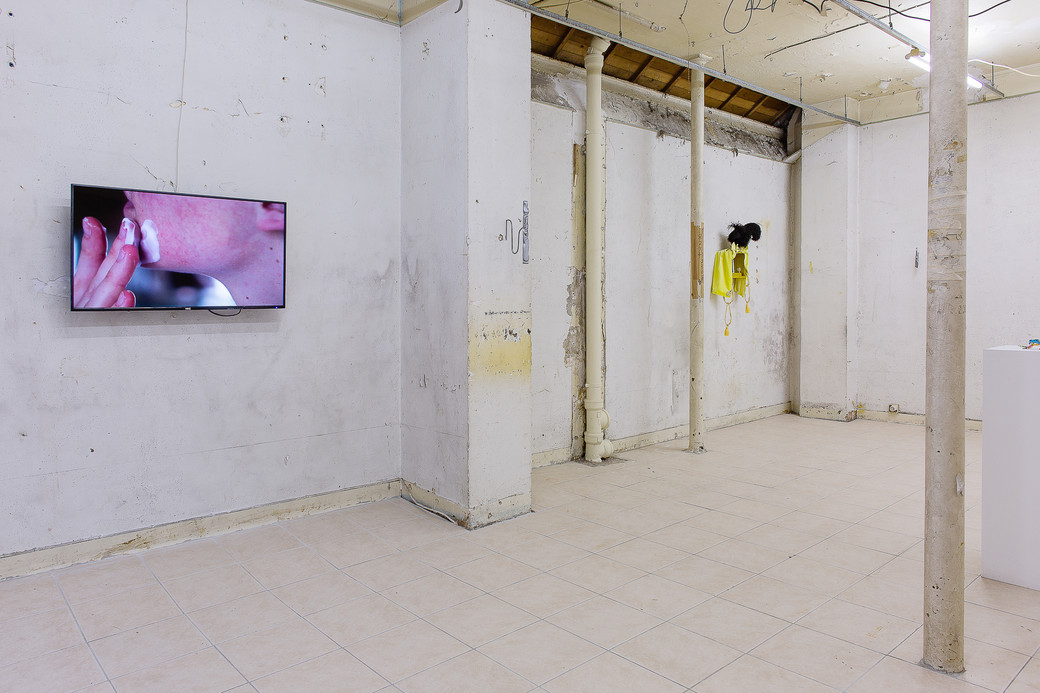
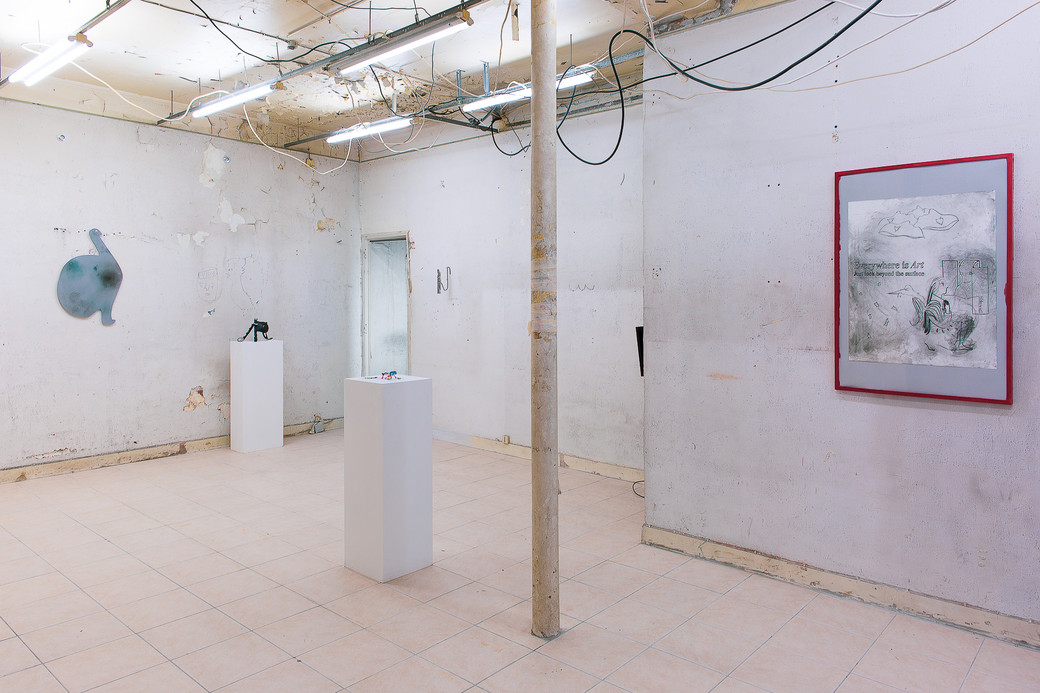
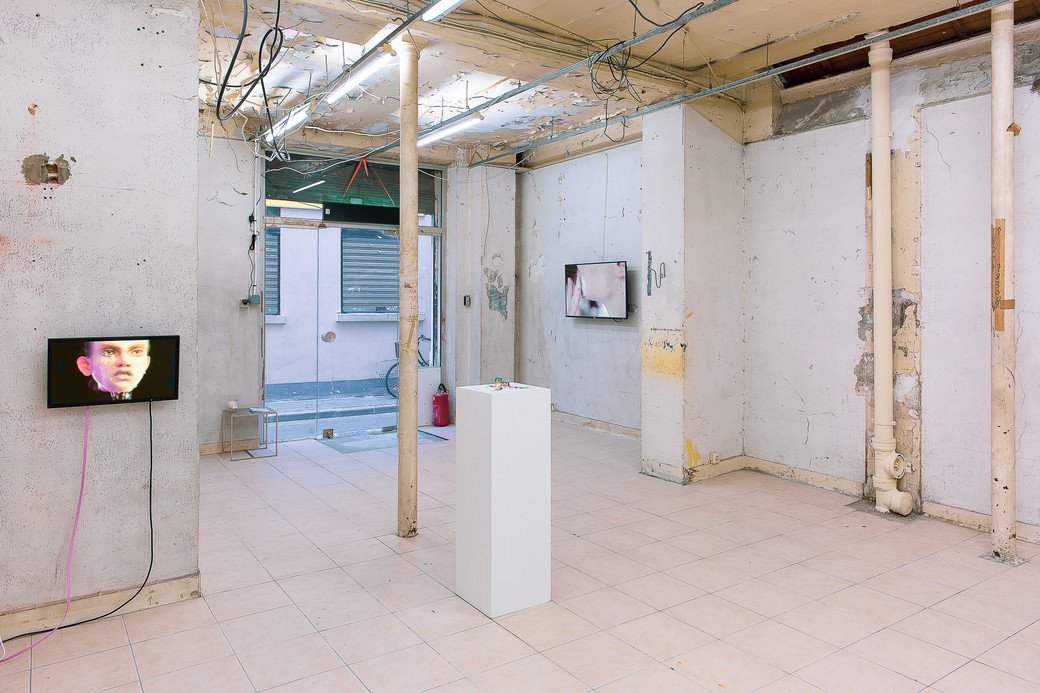
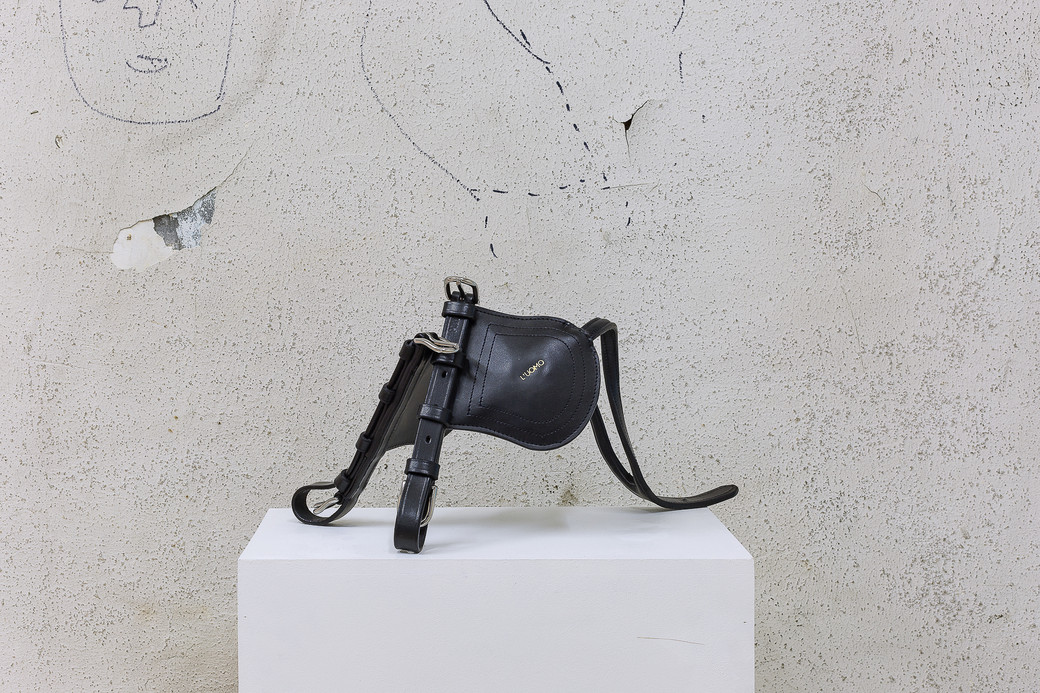
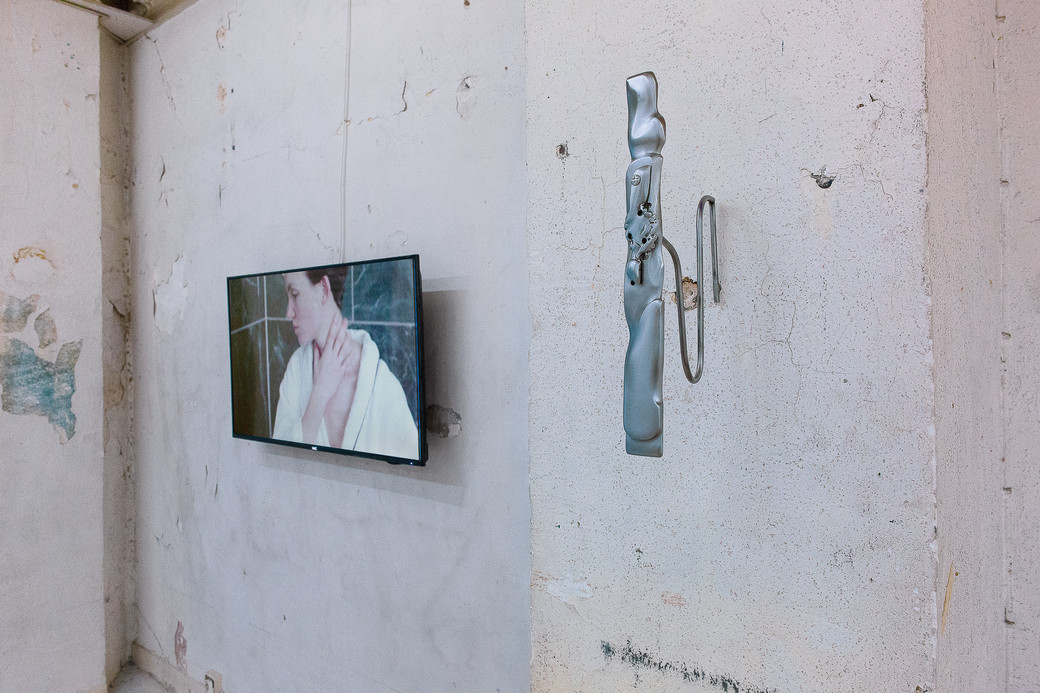
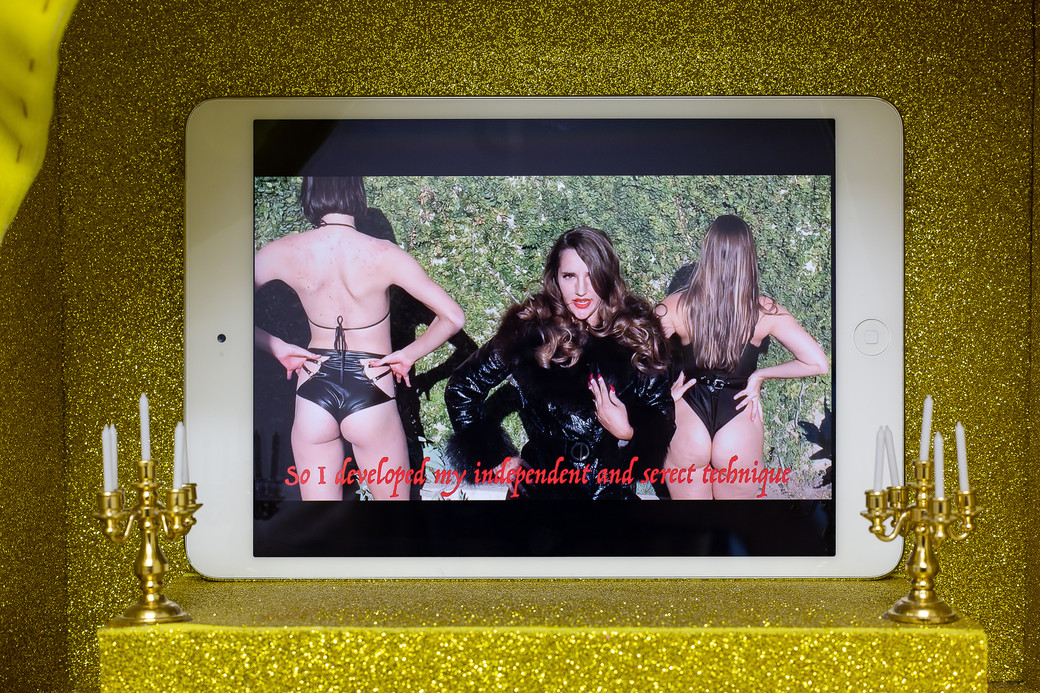
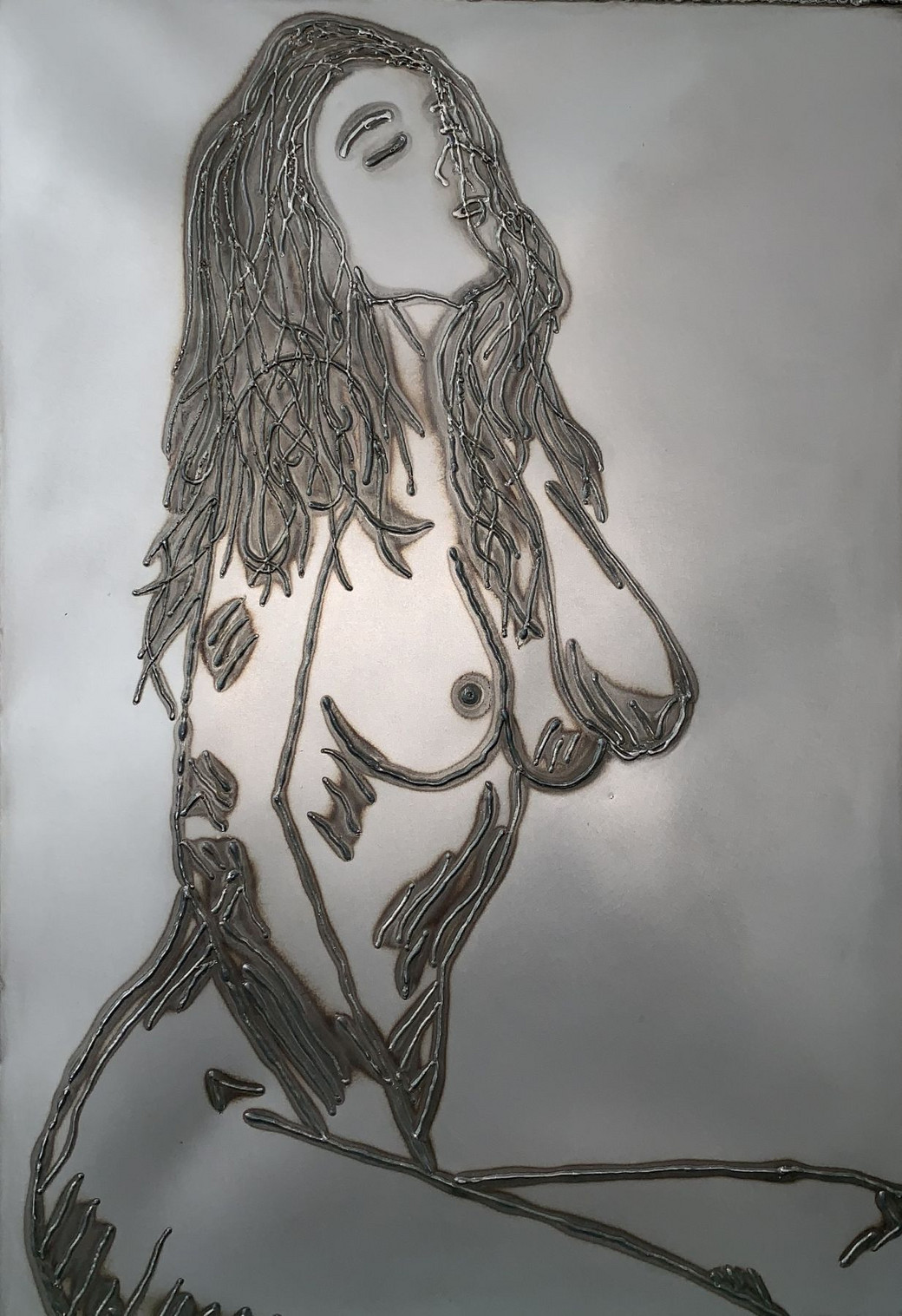
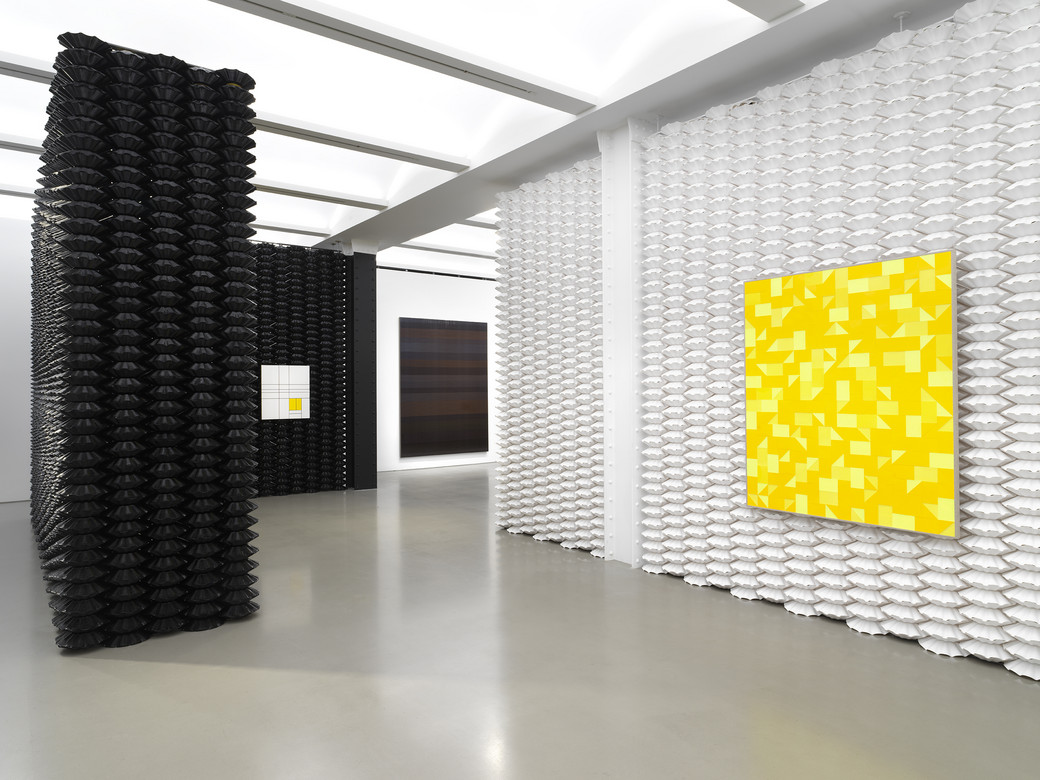
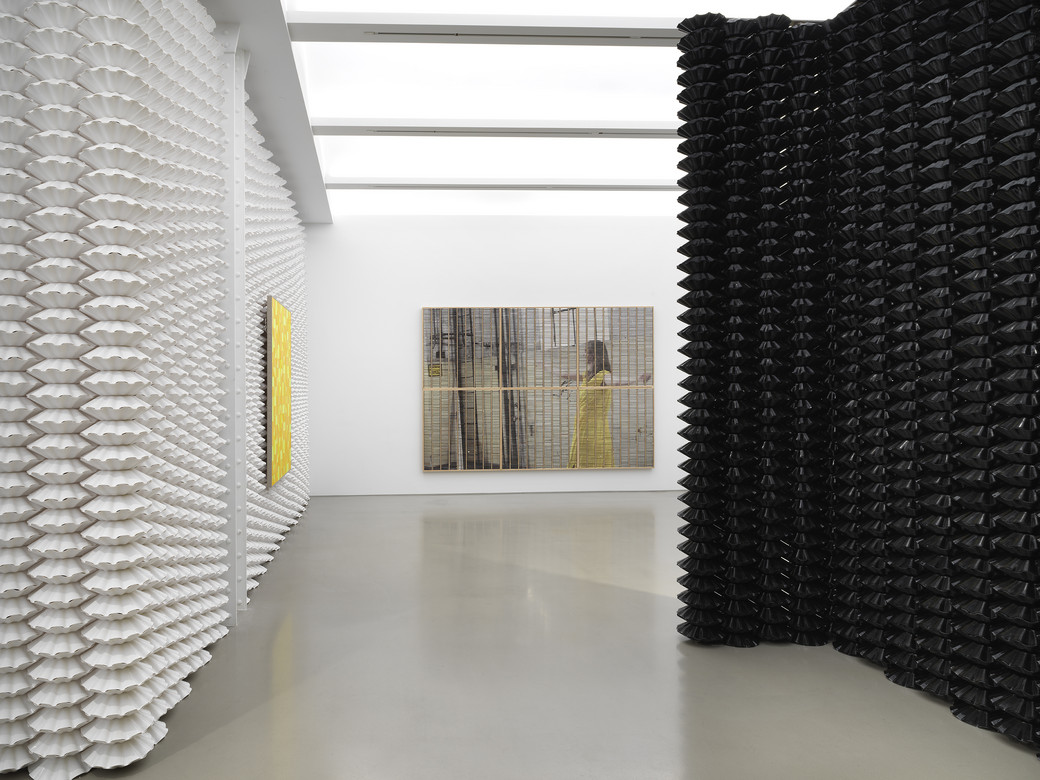
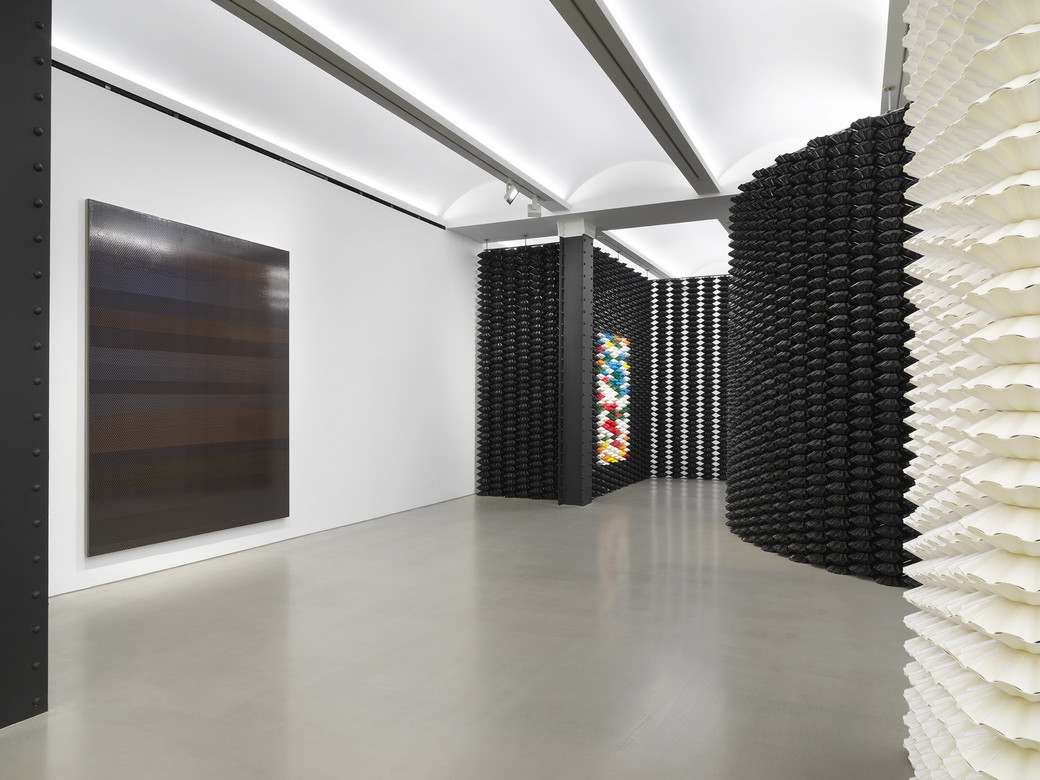
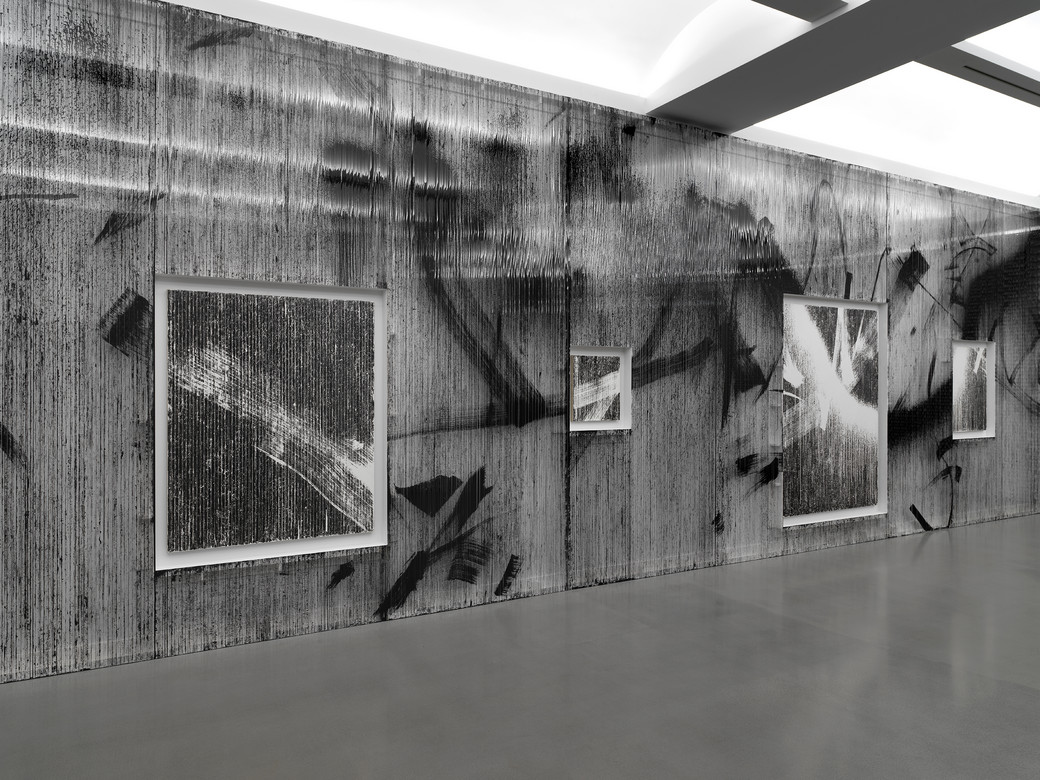
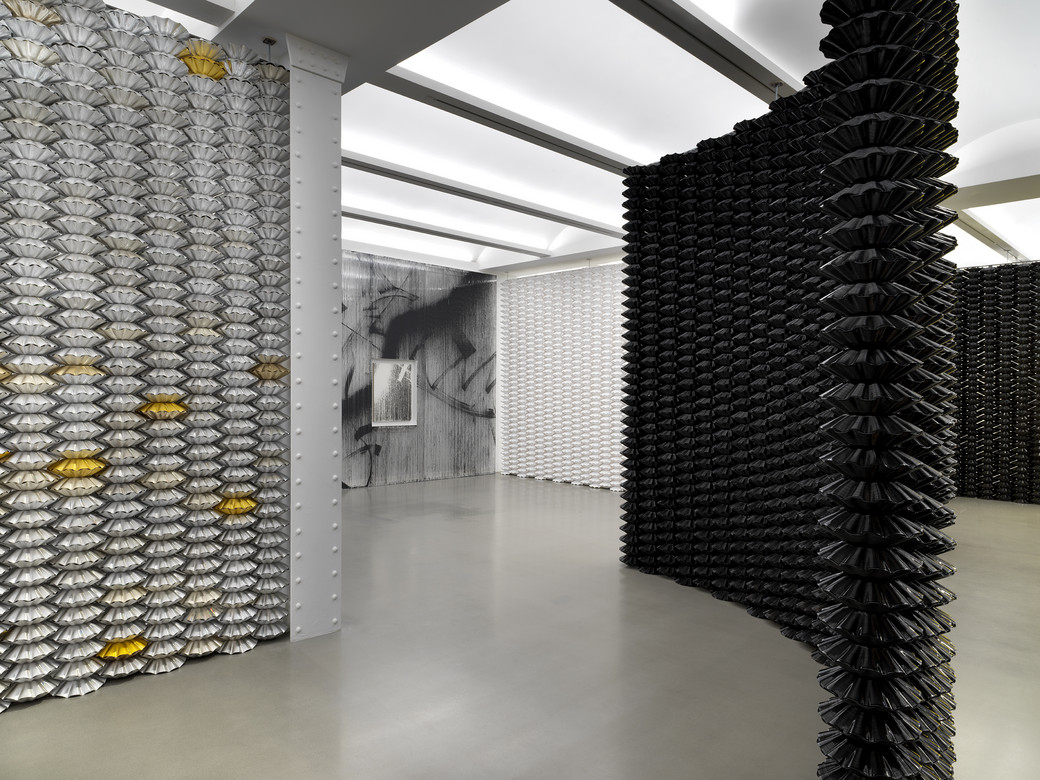
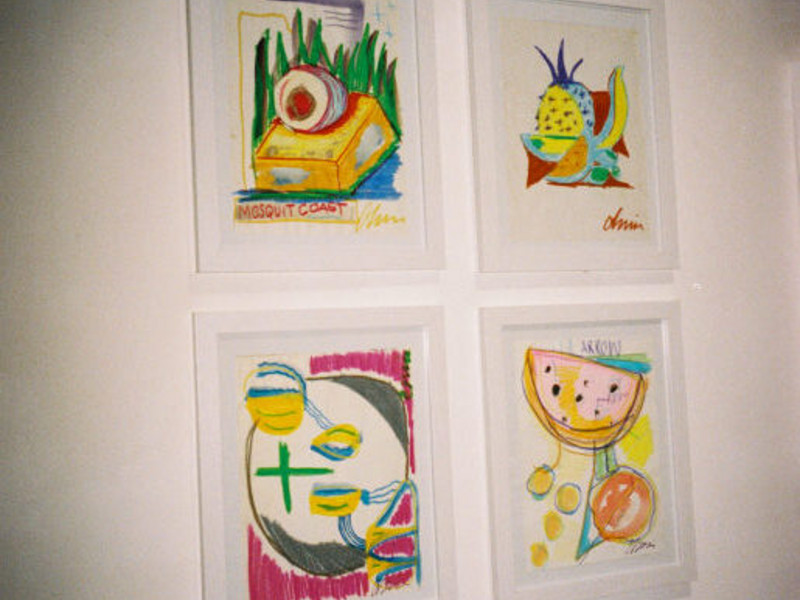
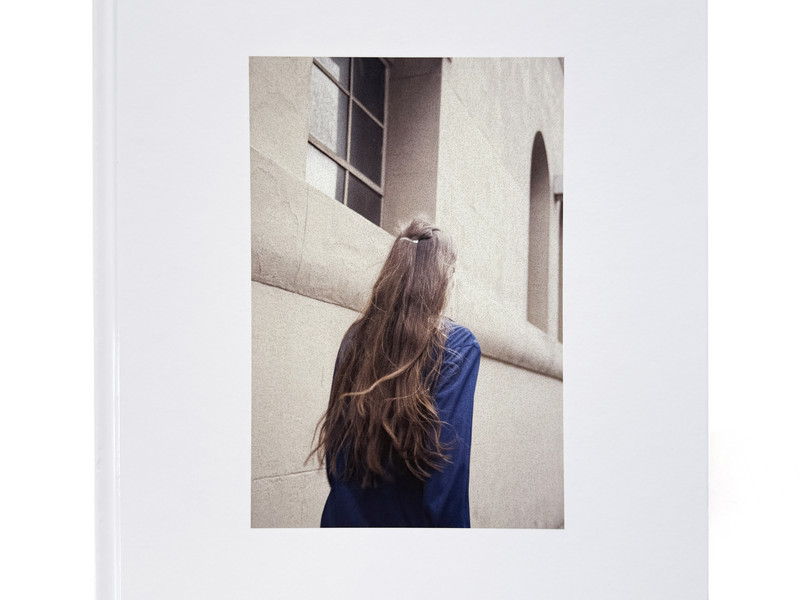
Above: 'Kleines Feld' and 'weiße Bewegungn (zu PAAR),' 2018.
In the first inner chamber lies a photograph of a woman in yellow dancing, the picture broken up across a wall-size grid of cassette tape cases. “I loved it so much,” Hildebrandt said. “She gives you the movement that you have to come in. I call it ‘Follow the Yellow.’”
In the largest section at the heart of the show is a giant painting that runs across miles of cassette tape that is built into the walls of the gallery like a curtain, the painting running in gigantic strokes that dip into a negative—becoming, all of a sudden, not only set back into the wall, but black becomes white, white becomes black, then the same paint stroke flows out and returns to its original, positive iteration, leaving the viewer to wonder which is the positive and which the negative. This monumental piece was done in a single session while a friend played live music and Sonya, the woman in yellow, danced. On top of music and film being hidden in the materials of his work, he has taken it one step further: he’s embedded a live performance with no audience.
It’s Abstract Expressionism with a soundtrack—the opening pieces he pointed out in the beginning are made on cassette recordings of a band Hildebrandt collaborated with for this show, a Munich-based group called, simply, PAAR. The bold, painterly gestures are direct references to the group’s music, just as the gigantic room-size piece is reference to the live music that played as he made it. One music is inaccessible, a performance that only exists in the memory of those who saw it, and the other is available in the bookstore: the PAAR record, pre-warped, is available on the way in (or out).